He begins with the RV behind him, inside the corridor behind the slot gate, and he is already walking before he remembers to say what any of this is. I haven't even described my project yet. What's wrong with me, right? The correction is offhand, almost amused — the kind of thing a person says when the thing they're describing is so continuous with where they're standing that announcing it feels redundant. He names himself, names the platform, and keeps moving toward the trail. Autonomy Realms, he says. Built for nomads, for explorers, for people who document their lives.
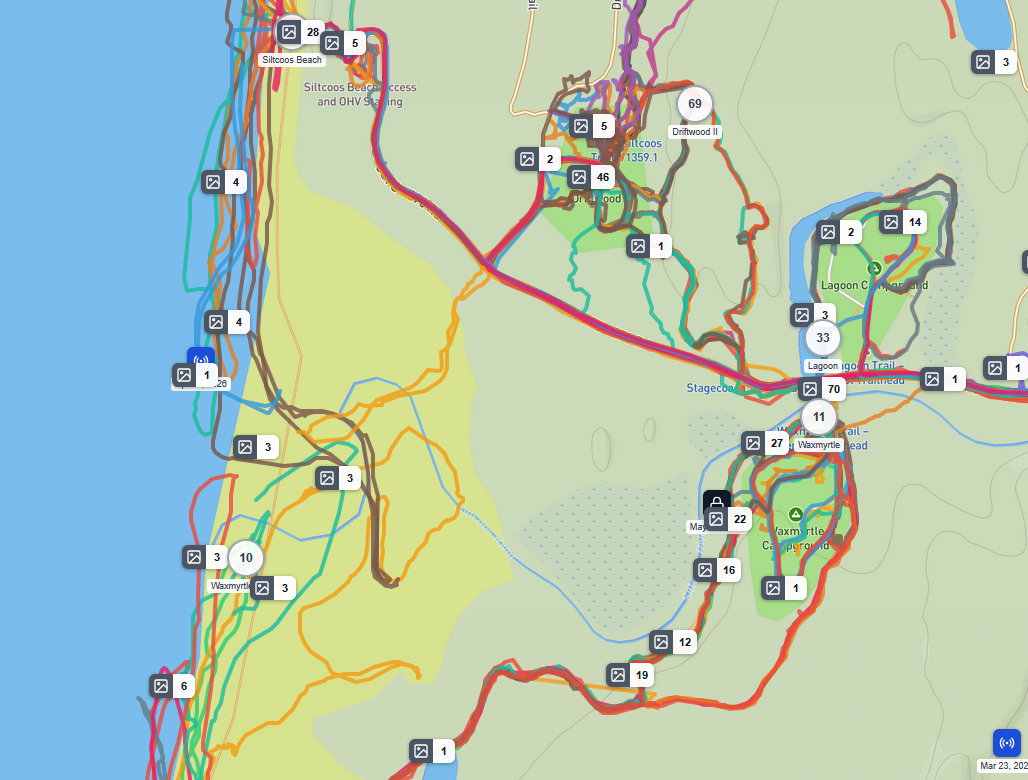
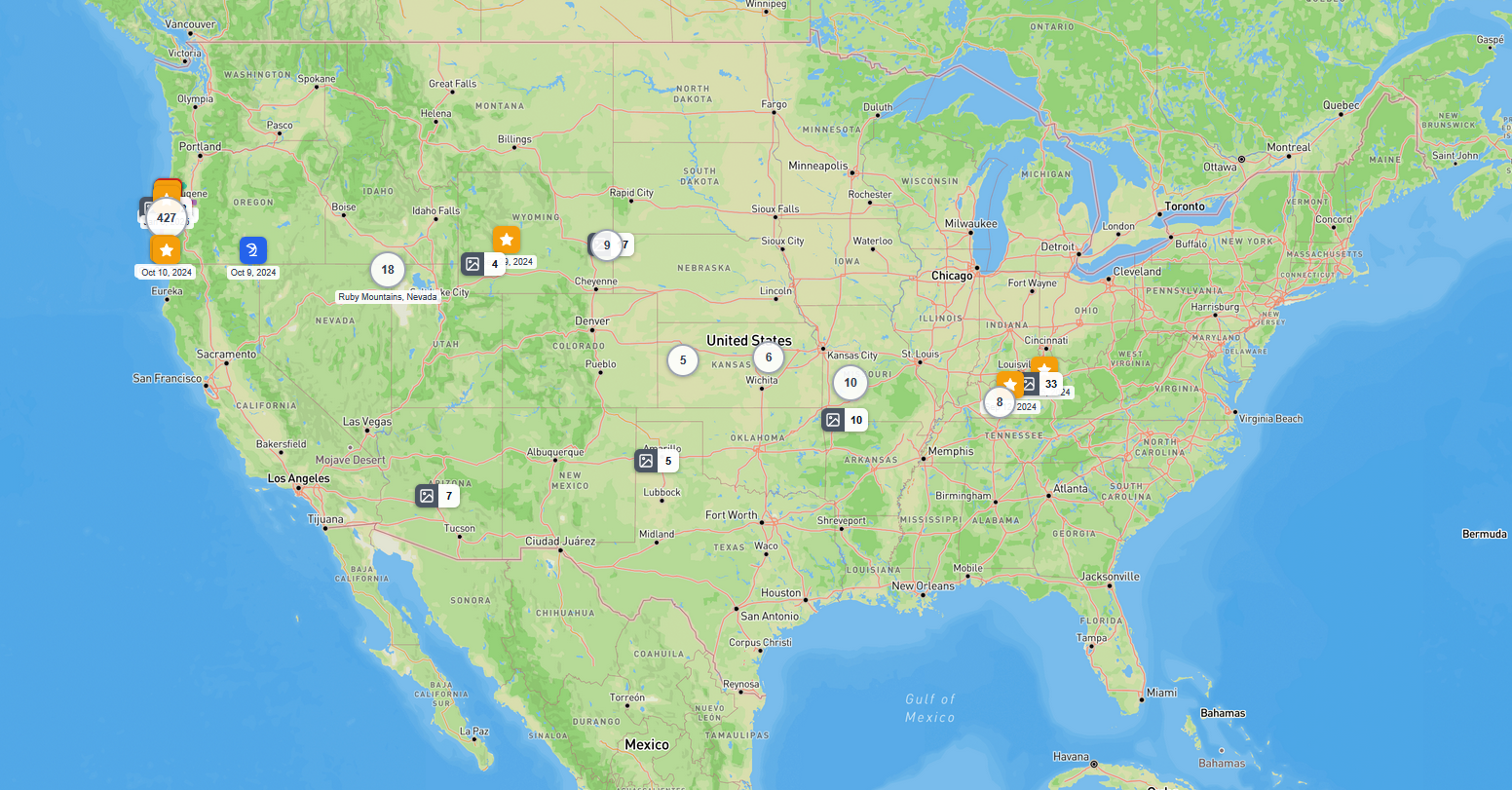
The story he tells while walking runs backward and then forward. Two years in that RV. Kentucky first, six months of acclimating, moving every two weeks from one campground to the next, learning his own state by increments. Then a month crossing the country, arriving at Brookings on the southern end of the 101 and turning north — Brookings to Newport, the whole coast taken in sequence. All of it documented on a map. Then the Forest Service, the volunteer position, the word caretaker, and the corridor he now lives inside: three campgrounds, day use areas, a lagoon, a river overlook, the ocean one to two miles out depending on the direction of travel. I live in a national forest, he says. And I think that's worth documenting.
He explains the container problem next, and he explains it as history rather than grievance. When he decided to move into the RV he started a YouTube channel — out of character, he says, but he wanted the challenges witnessed, wanted people to see that fears could be crossed and skills acquired and a life lived differently. Over 900 videos in two years. And the discovery, arrived at through that volume: YouTube was the wrong container, because it flattens. Only the most recent surfaces. The back catalog goes dark. If you don't say everything in every video, you leave people behind. He does not linger on it. It is a structural finding, stated once, and he walks on.
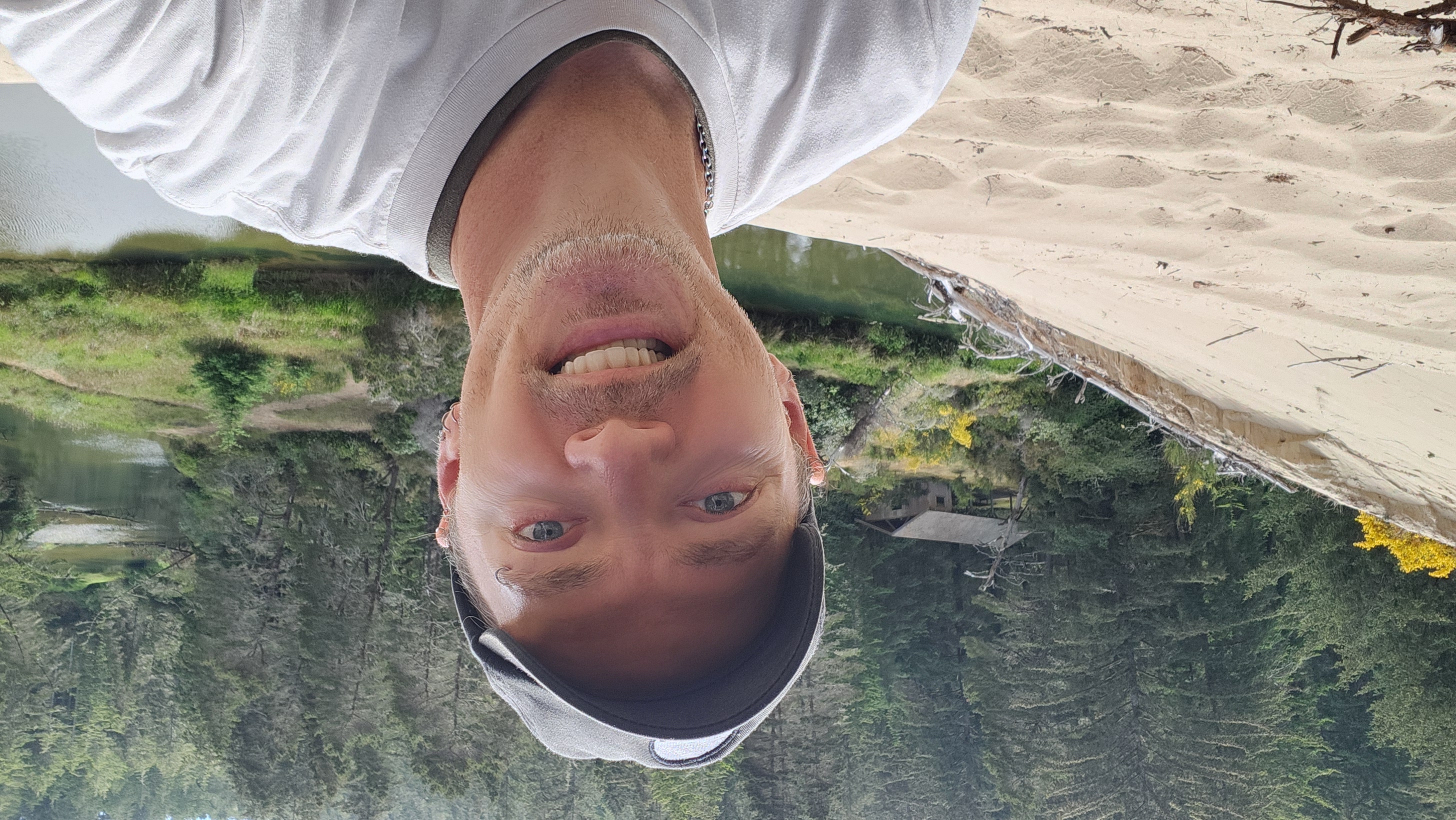
What he says instead is what the map does. There is something extraordinary, he says, about seeing your life plotted for the first time — unflattened, stretched over land, tagged by time so the date ranges can filter it, processed by artificial intelligence that reads everything placed there. He repeats the phrase twice, there's something extraordinary when you see that for the first time, and then the trail opens and he interrupts himself for the landscape. He has been walking beside the Siltcoos River the whole time. The Waxmyrtle Bridge stands in the background. Across the way there is a lagoon — horseshoe-shaped, except this one is only half a lagoon, because the other half has become a meadow. This is literally what happens, he says, which is just amazing to me. A half-form, still legible as what it was, already something else.
Then back to the trail, and the second admission of the same thing: he can't separate the project from the life because they're integrated, literally the same thing. And the proof is running in his pocket. His phone is recording a trace — recording him walking, right now, hiking toward the ocean — and it will be a colored line on his map when he gets home. The transmission is entering the map it describes while he speaks. He says he cannot wait for the day others discover how good this is. He says he wants to see people fill the map with their own lives.
The dune comes next. He climbs it, and from above the Siltcoos he describes the practice that made the platform: transcribing the videos, handing them to artificial intelligence, reflecting together. He says he learned a lot about himself that way, that he said a lot of things that weren't his, that he discovered who he really is. I have never been happier in my life. Then he is sitting, facing the Pacific, one to two miles from where he started. Isn't that amazing? He says he realized he had stumbled onto something that would be deeply helpful to others, and that this is what the system was built to solve.
He closes by naming the original impulse. This was meant to be a launch video. He only wanted to describe the project, because it is finally ready — robust, ready to be used, ready for other people to use it and for him to see what it becomes. It's a big moment for me. It's a big deal. Behind him is the corridor, the gate, the RV. In front of him is the ocean. Between the two, a line is being drawn onto the map, and the man drawing it is sitting still at the far end of it, describing the instrument in his own hand.