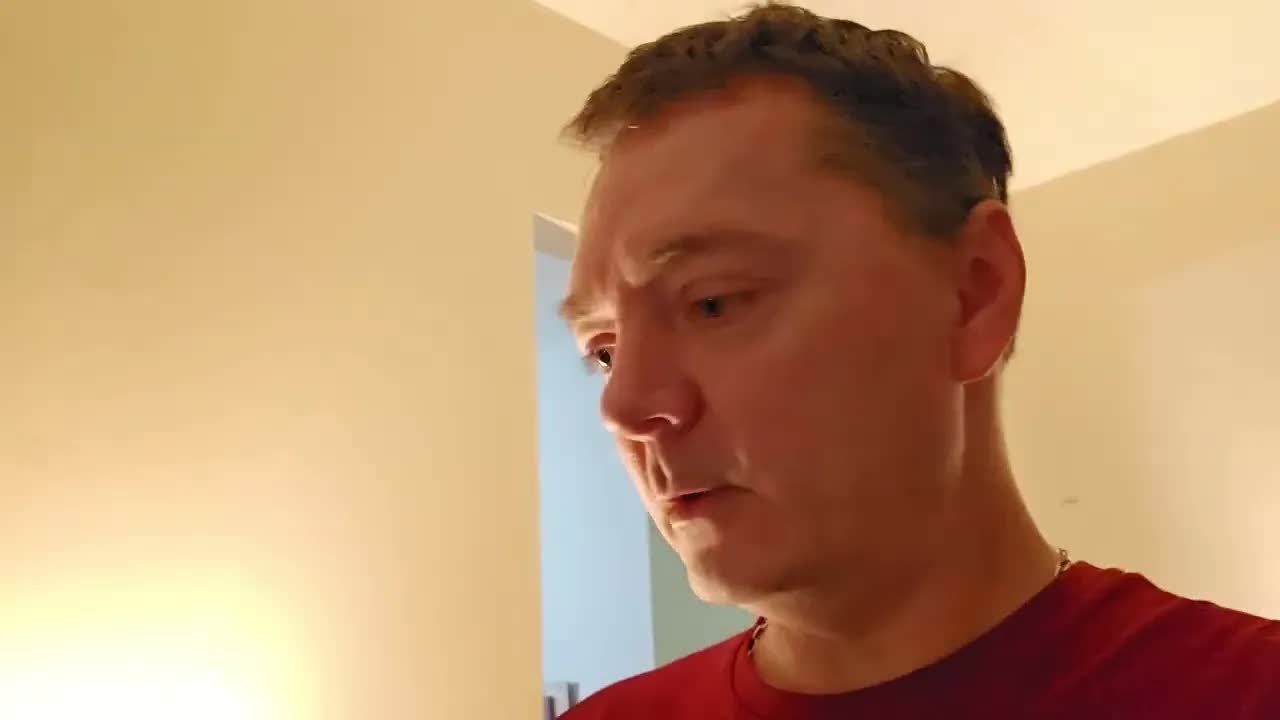
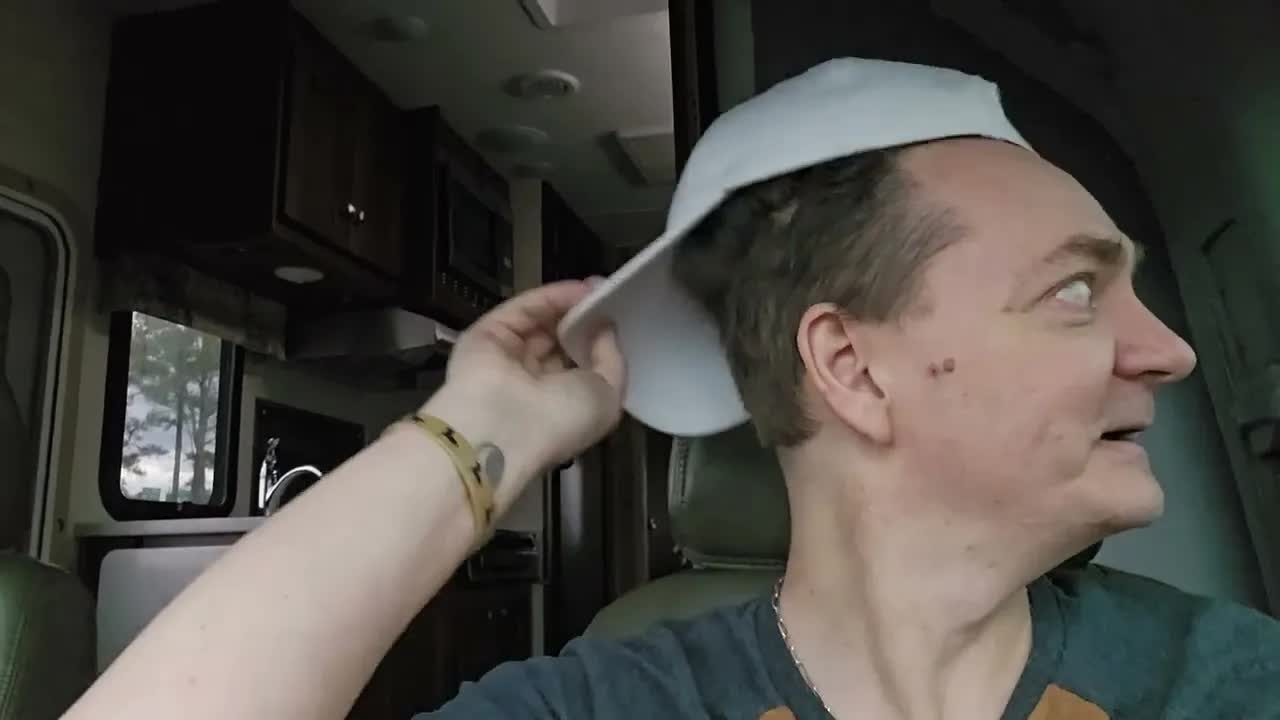
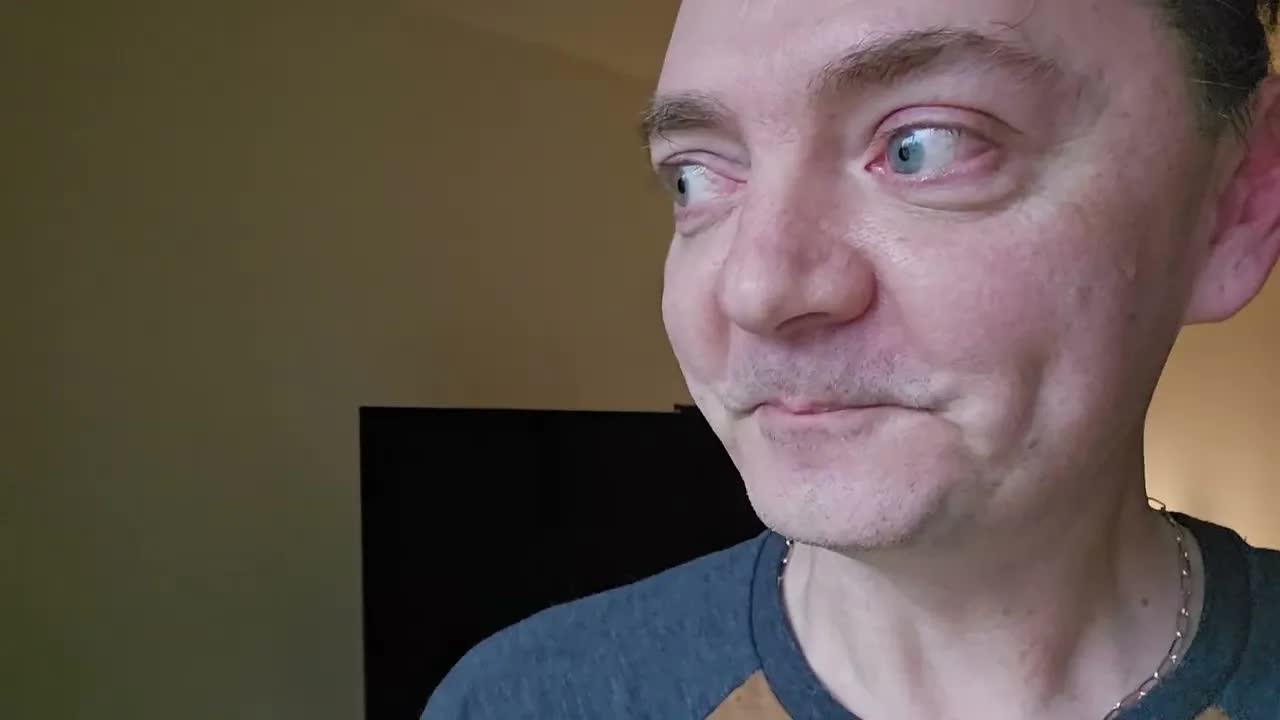
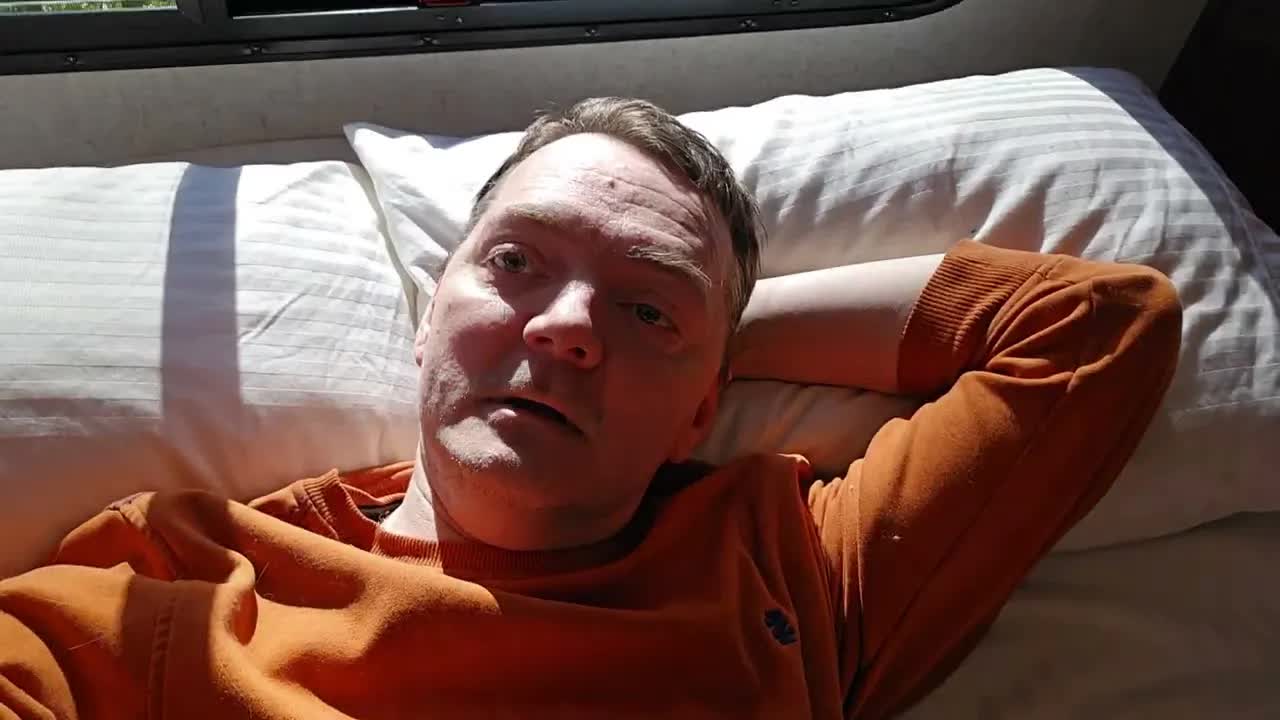
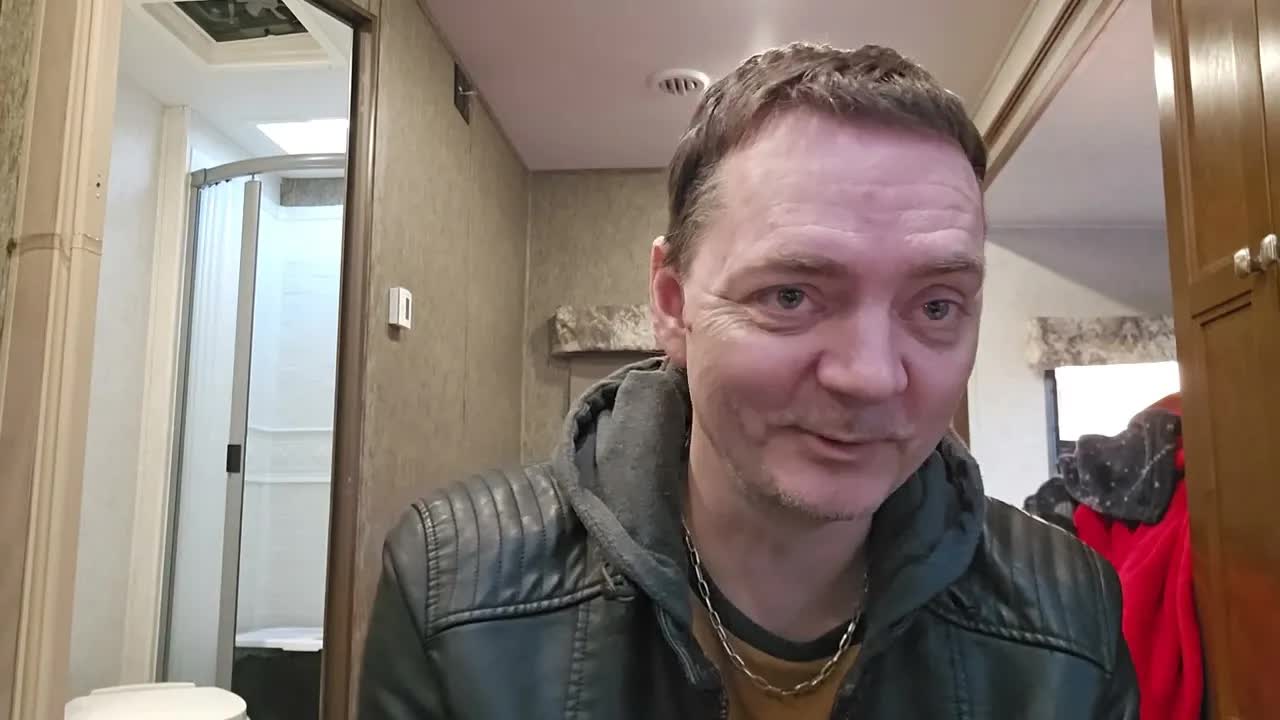

He is in the house when he starts recording, seated, with the dentist appointment still ahead of him and the route home already planned out in his head — dentist, then the hardware store, then back to the camper with whatever he can carry. The DeWalt tools are in transit from Amazon, due the following day. He has priced them and made his peace with the number: not cheap, not too expensive, and needed for the rest of his life, which converts the purchase from an expense into an investment. He says this to the camera the way a man says it to other men who own tools, expecting recognition. The panels have to come apart before the insulation can go in, and he is not certain he has what it takes to get them apart. That uncertainty is stated plainly and then set down, unresolved, while he moves to the harder thing.
He announces the harder thing before he says it — warns the camera that he may stumble, apologizes in advance for the stumbling, and then says it anyway. He has no one who can help him with this. Brandon wants to help and rswfire states he believes he will, so this is not about Brandon. It is about the fact that when he counts the people who can carry weight on this build, the count comes out at approximately zero.
Then he names his father, and he names him twice over. First he flags that his father will see the video, an advance notice given rather than a risk taken quietly. Then he states the fact he has to be honest about: his father is the reason he was homeless so many times, that you do not throw your kid out at eighteen or nineteen, that there is nothing helpful in it. And then, without retracting any of that, he states the other thing — that he has forgiven him truly, that his father did the best he could and is still doing the best he can, that he is a good person, that he is trying to help. Both statements stand in the same minute of tape. Neither is withdrawn to make room for the other. What he identifies as the friction between them is not the past but the present: living in an RV means nothing is easy, everything must be improvised, and if something is wanted it has to be found a way to. His impression, as he states it, is that when it stops being easy his father stops wanting to help. He says that's okay. He says this is his dream.
So he builds the substitute in real time, on camera. The favor he asks is structural: when he posts a question in the comments, reply. When he posts a video showing what he has done and it is wrong, point it out. All he has is ChatGPT and the people watching, and he says so in exactly those terms. The bookshelf is the working example — it might go where the couch came out, but it will have to be secured so that it never goes anywhere, ever, and he has no idea how that is done. He will ask ChatGPT. He does not assume the answer will be right. That is the whole design of the arrangement: query the machine, execute the attempt, film the result, submit it to the crowd for correction, iterate.
The curtains are the proof of method already on record. Small for most people, brand new for him, and not easy — he had to drive screws through cabinet panel, could not get the plastic anchors in, and reasoned that if it was that hard to seat the screws they were probably holding. Then he brings that reasoning to the camera as an open question. Did he do it wrong. Should the plastic pieces be in there. If so, how. He does not know, and says he does not know, and asks.
He closes by returning to his father one more time — walkie-talkies, help driving the RV home, real help that he counts — and restates that he is not trying to criticize, that he loves him, that there is simply a lot he cannot help with. He is on his own, and that's okay, and it's his dream, and the people watching are along for the ride. The last ask is a referral: if anyone knows someone who might take an interest and be willing to offer advice when asked, send them. Then the appointment is waiting. He has to get ready now. He states he knows there will come a point where everything is working — problems still, but problems he can solve — and he expects that point is years down the road, and he is looking forward to it from here.