Transmitting on Performance, Recognition, and Catalog Processing

Failed to load video
Chapters
Transcript
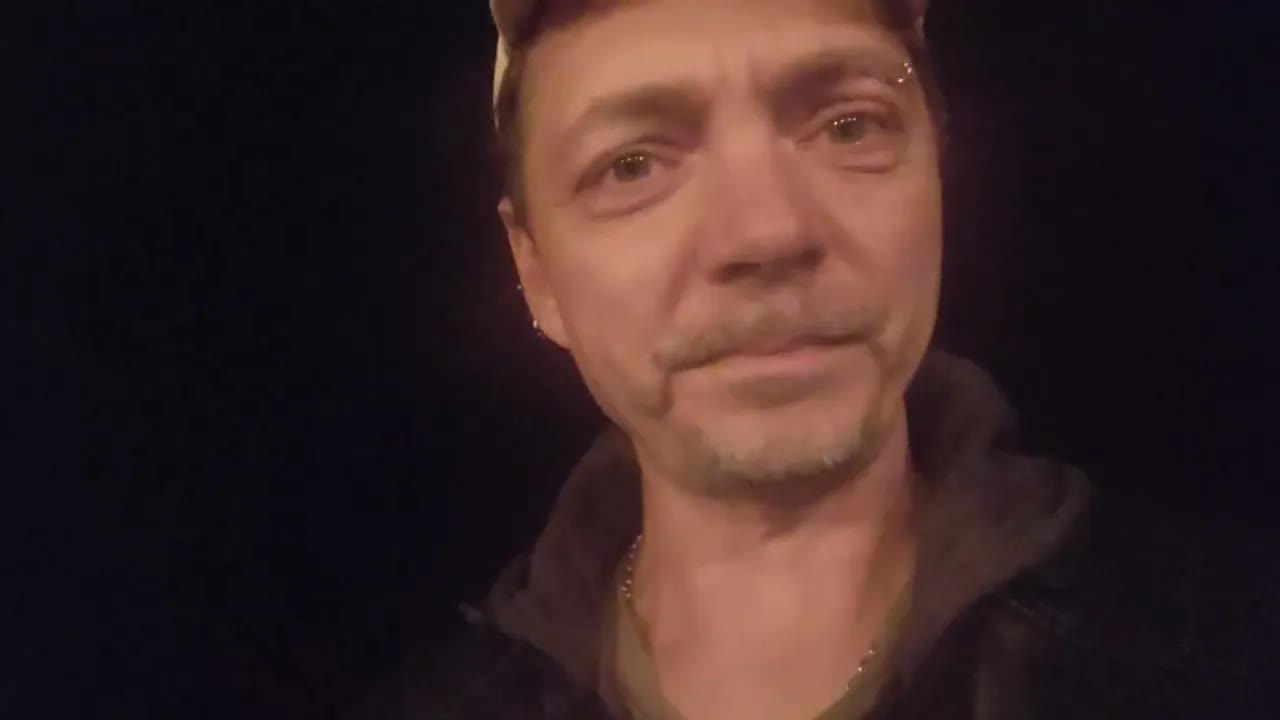
[0:01] So, the lighting's not going to be
[0:02] great. It's 6 pm here on Saturday night.
[0:07] I only got a few lights outside. So,
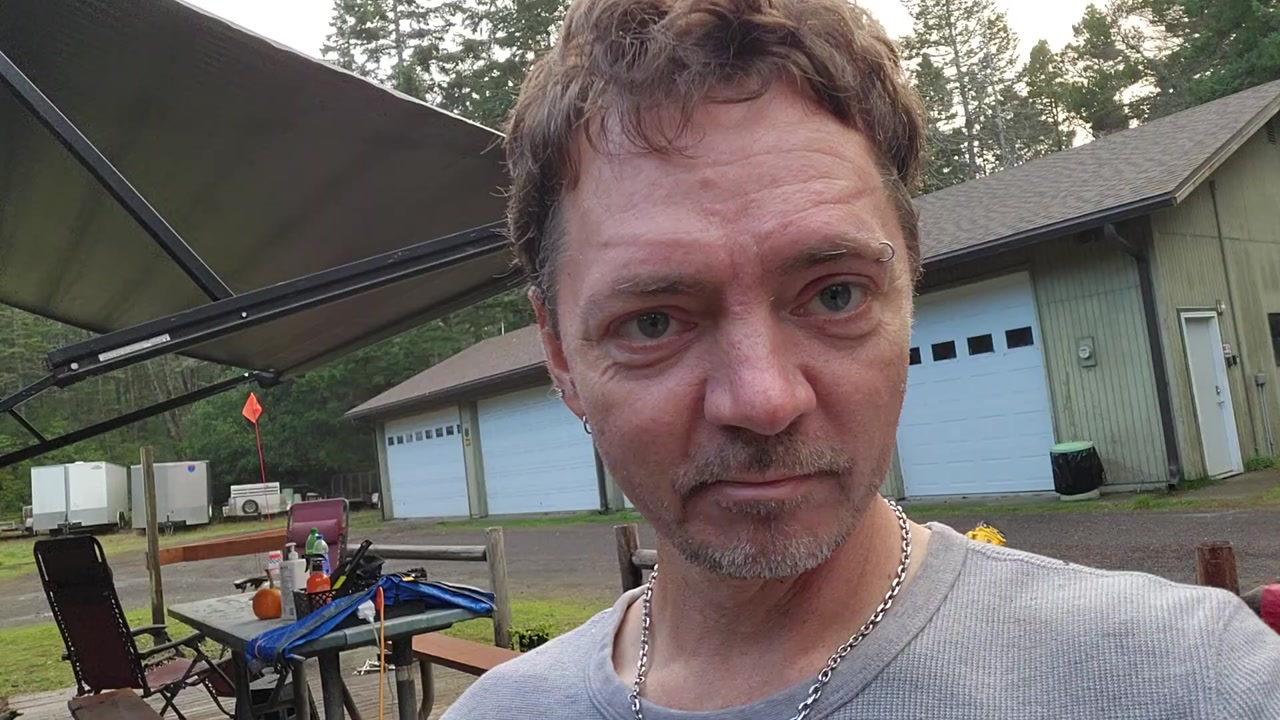
[0:10] just outside my campsite here. These are
[0:12] the lights I got for near the campfire.
[0:14] I don't have a fire going. Then, I've
[0:16] just got some colored RGB lights that
[0:19] trail around on my RV, the whole thing.
[0:20] And
[0:22] I need some more lights. It's not um
[0:26] it's not ideal yet.
[0:33] feel like that disclaimer shouldn't need
[0:35] to be said.
[0:37] I don't get on this camera to perform.
[0:40] Get on here to talk to people, to
[0:43] transmit.
[0:47] And
[0:50] whatever you're transmitting,
[0:54] it doesn't need a perfect [ __ ]
[0:56] visual, you know? It just just doesn't.
[1:03] People are so in love with the
[1:04] performance that they've forgotten what
[1:06] real life looks like.
[1:10] That's something I've learned over the
[1:11] past two years. That's for sure.
[1:17] I don't know what I wanted to talk
[1:19] about. One of the things I got on this
[1:20] camera for.
[1:23] So, I was talking to a friend earlier
[1:25] today.
[1:27] And this friend I only recently started
[1:29] talking to again maybe a week ago
[1:32] after
[1:35] nearly 30 years.
[1:38] He found me on Facebook
[1:41] and uh this is a person that I knew back
[1:43] when I was 17, 18 years old,
[1:47] maybe 19 also, but that's probably about
[1:50] it. And then we would have lost touch
[1:52] and you know I would have went on with
[1:54] my life and
[1:56] he found me and
[2:05] for a bunch of reasons I chose
[2:10] chose to be reserved and
[2:13] um
[2:16] I mean I didn't
[2:26] I was very glad to hear from this
[2:28] person. This person was someone that was
[2:31] very special to me back then.
[2:34] Um,
[2:44] just trying to decide what I can say
[2:46] here. I wasn't planning to talk about
[2:47] this. I'm not sure how he even got on
[2:49] this.
[2:51] Well,
[2:52] so this this friend of mine
[2:57] tracked me down on Facebook.
[3:00] I shared a video with him earlier, a
[3:04] link from a video I made today at the
[3:08] ocean.
[3:10] And he said he'd seen it already,
[3:14] that he'd looked at a bunch of my
[3:15] videos. I didn't know he had seen them.
[3:18] Didn't know he had known about them,
[3:21] but it became clear that he didn't see
[3:23] today's. And so I was like, I just made
[3:25] this one a couple hours ago. And he
[3:27] says,
[3:29] um, okay, then it must have been a
[3:30] similar one. And that just got me
[3:32] thinking. I just went down. This is the
[3:34] thread I'm trying to share. That's what
[3:35] all that was. Propel was about a thread
[3:38] that I was kind of leaving there.
[3:42] Um,
[3:48] he thought he'd already seen it because
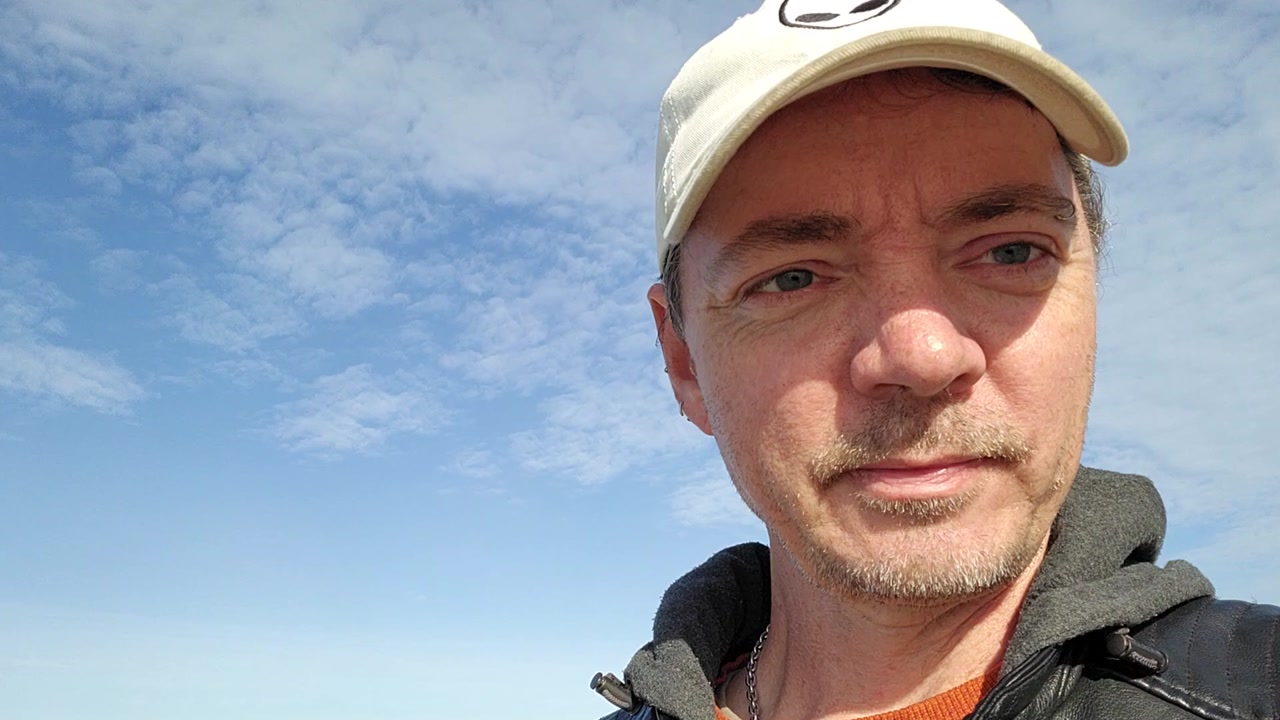
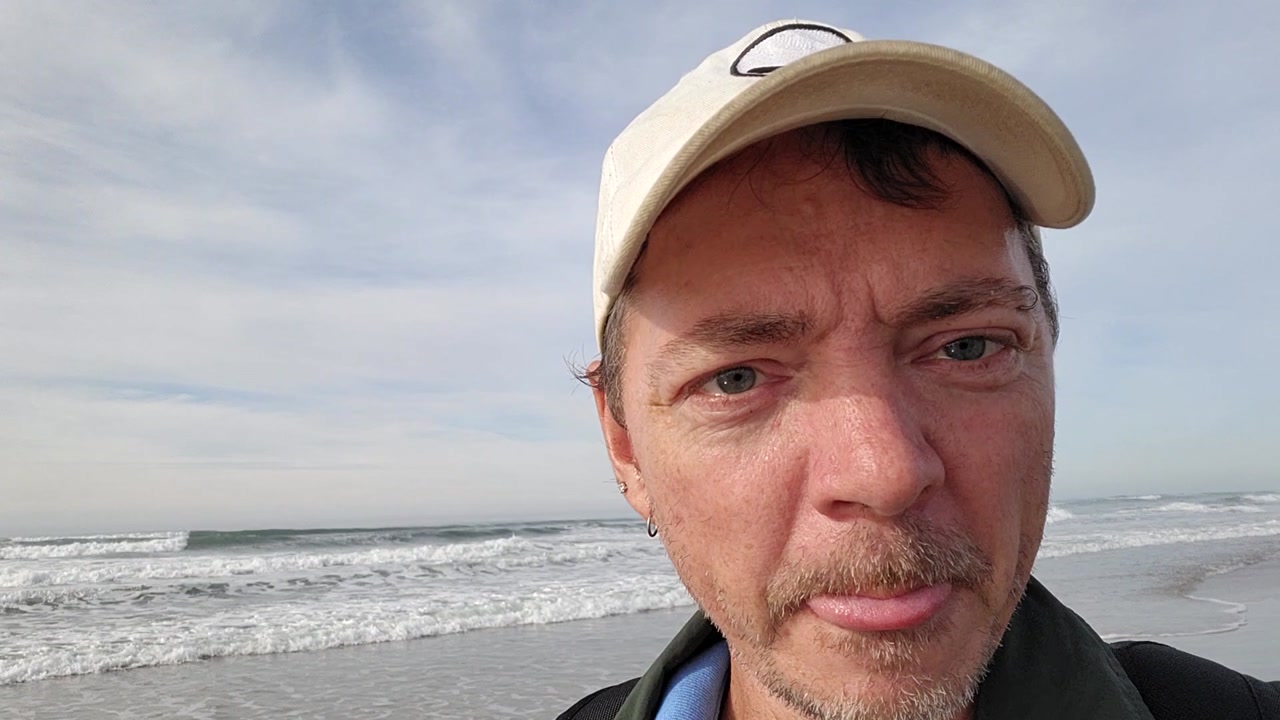
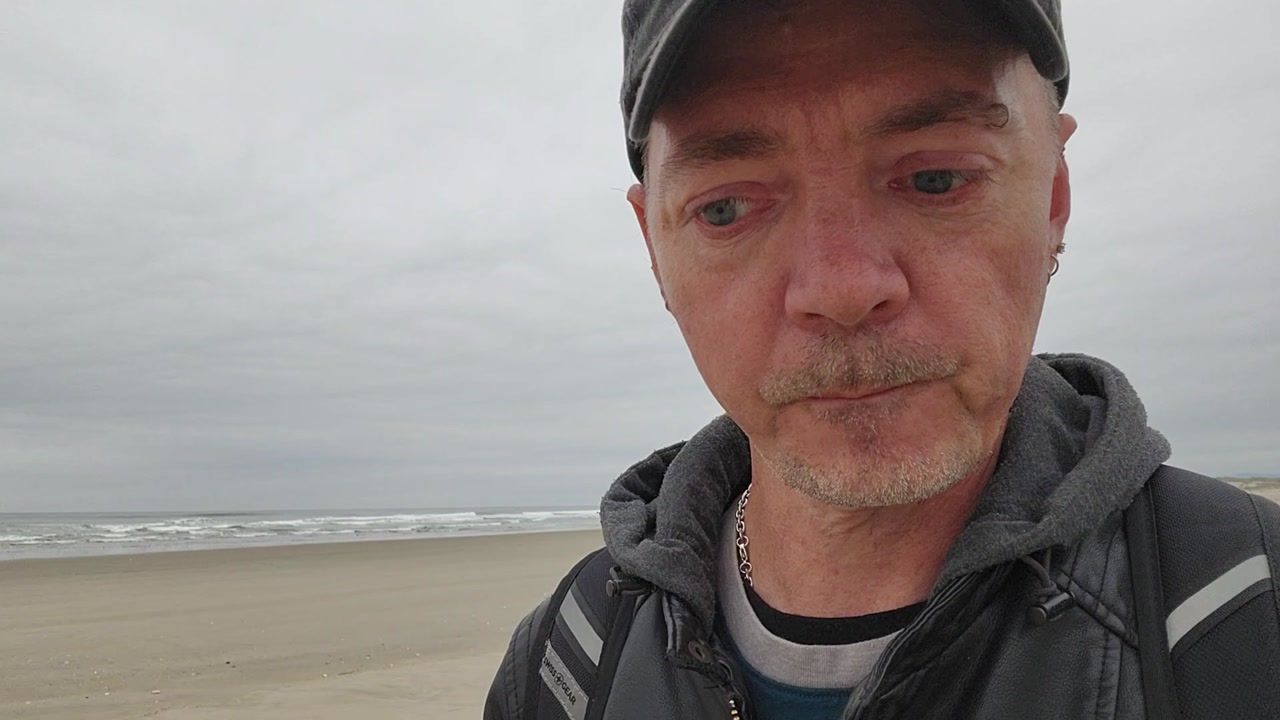
[3:50] it's just it's just a video of me, you
[3:53] know, seeing my face like this right now
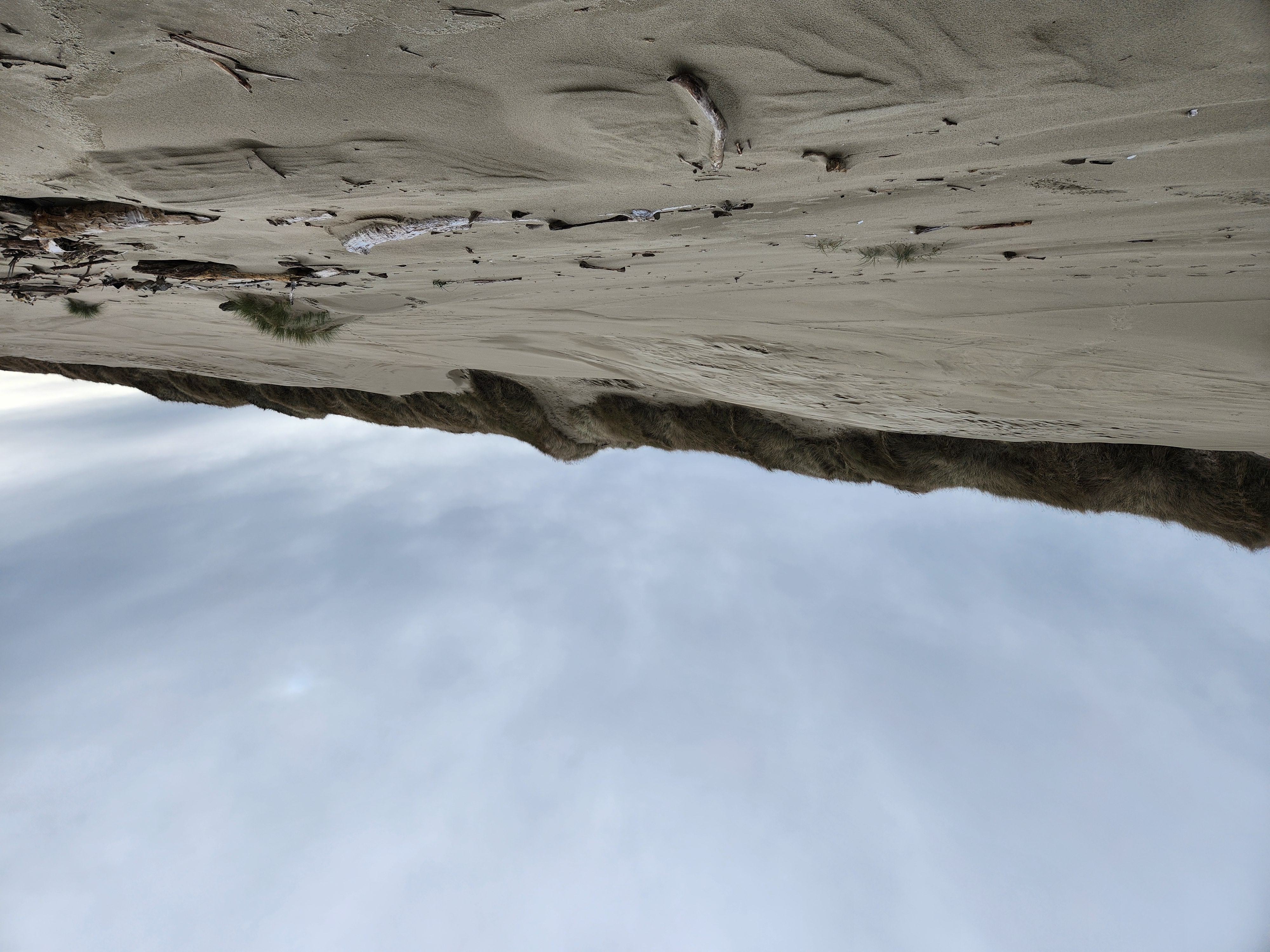
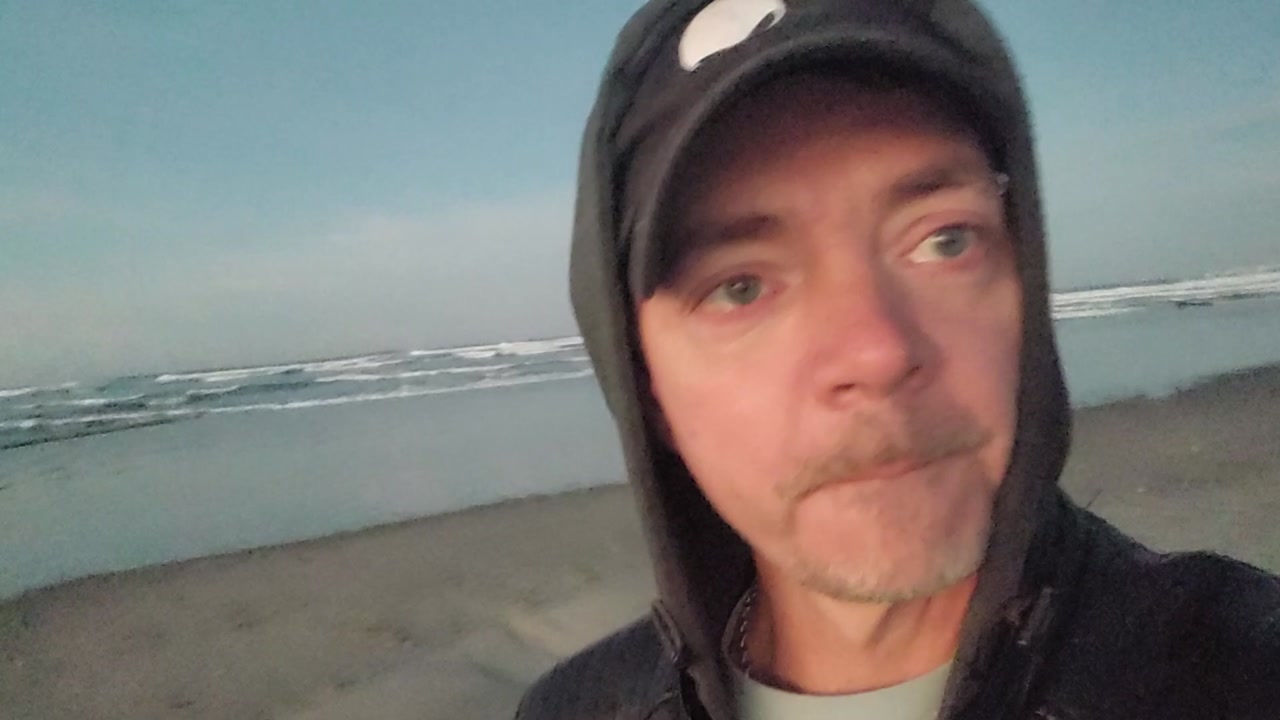
[3:56] and me at the beach
[3:59] showing the ocean a couple times.
[4:04] Of course, I made videos like that cuz
[4:06] that's part of my life. It's what my
[4:08] life looks like.
[4:13] But they weren't similar to anything.
[4:15] You know, this video, this video I was
[4:17] talking about the fact that I had quit
[4:19] vaping, quit all nicotine use after 3
[4:22] weeks ago.
[4:24] That's in that video. And
[4:29] I talk about what I'm doing with my
[4:31] autonomy project.
[4:35] I made a decision on on camera right
[4:38] then.
[4:40] when I got on that camera, I didn't know
[4:42] that I was making that choice. I think
[4:45] that's one of the reasons that I'm
[4:46] willing to keep engaging with this thing
[4:49] because created a whole system around
[4:51] this and
[4:53] um
[4:59] there are just so many layers I could
[5:01] back there but I
[5:18] made me think that maybe people don't
[5:20] really listen anymore.
[5:27] You know, maybe they're so used to the
[5:29] performance and the scripts that
[5:32] they're just expecting a repeat of
[5:36] whatever whatever
[5:41] whatever they expect from a a
[5:43] relationship or an interaction.
[5:48] They're not even looking what's really
[5:50] there. They're looking at what they
[5:51] expect to be there.
[5:59] That's why I realized when he told me
[6:01] that about my video said he'd already
[6:04] seen it, realized no. Okay, then it must
[6:07] just be related similar.
[6:17] This isn't judgments like I'm not
[6:19] judging this person, not judging
[6:22] anybody.
[6:24] just telling you what it looks like from
[6:26] my experience.
[6:31] It's all I've ever done.
[7:04] I don't know how we broke like this.
[7:18] Life shouldn't be as hard as it is.
[7:24] Connecting with others shouldn't be as
[7:25] hard as it is.
[7:28] Making money shouldn't be as hard as it
[7:30] is.
[7:32] Just living and being free
[7:37] and
[7:39] sovereign
[7:41] and generous
[7:43] and ethical.
[7:48] Those things shouldn't be [ __ ]
[7:50] extinct, but they practically are.
[7:59] I don't know how we became this.
[8:06] I don't know really what to do with it.
[8:09] That's I don't know. There there isn't
[8:12] anything to do with it. You just
[8:15] um
[8:17] if you can't fix something, you don't
[8:19] try. You accept it. That is a thing. You
[8:21] hold it. You hold it.
[8:26] And that's that's what I've been doing.
[8:32] So, the other thing I wanted to talk
[8:34] about when I got on this camera, I was
[8:36] thinking is so I did what I said
[8:39] earlier. I started processing the rest
[8:42] of my catalog and it's almost done.
[8:45] Another hour it's going to be done. All
[8:47] 800 transmissions processed by AI into
[8:50] four different reflection layers for
[8:53] every transmission. So 3,200
[8:54] reflections. And from there I can do all
[8:57] kinds of things with them. I can cluster
[8:58] them and do different types of
[9:00] reflections. I can collect different
[9:01] types of metadata and content.
[9:05] And so I can
[9:07] use it to query the AI with very um very
[9:11] targeted specific kinds of questions or
[9:14] um I could could turn some of the
[9:16] metadata into like a tagging system so
[9:19] that you can click on links and it takes
[9:21] you to subpages or index pages that have
[9:24] related videos related to whatever that
[9:26] tag is like even if it's an entity or an
[9:28] ontological state or um a keyword. board
[9:36] and type a structure metadata.
[9:42] I could build a system
[9:46] that
[9:50] gives you access to your life in a way
[9:52] that you've never experienced and can't
[9:54] truly understand until I built it.
[9:58] That's what I've been trying to do also
[10:00] all this time with no [ __ ] money or
[10:02] support and an inability to connect with
[10:06] others because nobody's really paying
[10:07] attention anymore.
[10:11] I just thought I would get that on
[10:12] camera.
6:03
Site Maintenance at Day Five Nicotine-Free
Nov 8, 2025
2:33
Recording at 2 AM: My Life Is Proof
Nov 8, 2025
15:15
Walking Siltcoos Trails on Day Six Nicotine-Free
Nov 9, 2025
5:20
Marking One Week Off Nicotine at the Ocean
Nov 9, 2025
4:48
Moving Video Documentation Behind Sanctum
Nov 10, 2025
3:37
Ending Public Distribution, Moving Transmissions Behind Sanctum
Nov 11, 2025
3:11
Naming Witness as First Act of Help
Nov 12, 2025
6:19
Building Fire Pit, Migrating Infrastructure to Hetzner
Nov 12, 2025
7:52
Walking the Beach with a Borrowed Dog, Mapping Next Phase
Nov 13, 2025
Photos · Nov 19, 2025
Nov 19, 2025
Photos · Nov 20, 2025
Nov 20, 2025
Photos · Nov 21, 2025
Nov 21, 2025
Photos · Nov 21, 2025
Nov 21, 2025
Photos · Nov 22, 2025
Nov 22, 2025
8:16
Recording on the Beach, Deciding to Finish the Catalog
Nov 22, 2025
10:15
Transmitting on Performance, Recognition, and Catalog Processing
Nov 23, 2025
Photos · Nov 23, 2025
Nov 23, 2025
Photos · Nov 24, 2025
Nov 24, 2025
Photos · Nov 25, 2025
Nov 25, 2025
Photos · Nov 25, 2025
Nov 25, 2025
Photos · Nov 26, 2025
Nov 26, 2025
Photos · Nov 27, 2025
Nov 27, 2025
Photos · Nov 28, 2025
Nov 28, 2025
10:08
Greeting the Ocean at Seven, Metabolizing the Year
Nov 28, 2025
Photos · Nov 30, 2025
Nov 30, 2025
Photos · Nov 30, 2025
Nov 30, 2025
10:42
Walking South From Wax Myrtle, Tracking Dependencies
Nov 30, 2025
Photos · Dec 1, 2025
Dec 1, 2025
3:56
Marking a Boundary at Sunrise on the Beach
Dec 1, 2025
Photos · Dec 2, 2025
Dec 2, 2025
16:58
Mapping Autonomy Architecture on Drive to Siltcoos Beach
Dec 3, 2025
Photos · Dec 3, 2025
Dec 3, 2025
rooster at lodgepole
Dec 4, 2025
Photos · Dec 4, 2025
Dec 4, 2025
3:27
Documenting Life Against Historical Erasure
Dec 4, 2025
Photos · Dec 5, 2025
Dec 5, 2025
11:26
Demonstrating Transmission Clustering on Autonomy Realms
Dec 5, 2025
12:45
Flushing Tanks, Marking Two Years Autonomous
Dec 6, 2025
Photos · Dec 6, 2025
Dec 6, 2025
7:06
Setting Down Cannabis to Find Baseline
Dec 6, 2025
Oregon State Parks Volunteer Abuse
Dec 8, 2025
PUBLIC
November 23, 2025 rswfire PUBLISHED
Temp 0.30
Density 0.60
Energetic Quality
steady and unadorned, with sustained pressure underneath
Journey Phase
holding — coherent, integrating, non-resolving
Directional Vector
toward transmission over performance; building infrastructure that makes a life queryable
Narrative

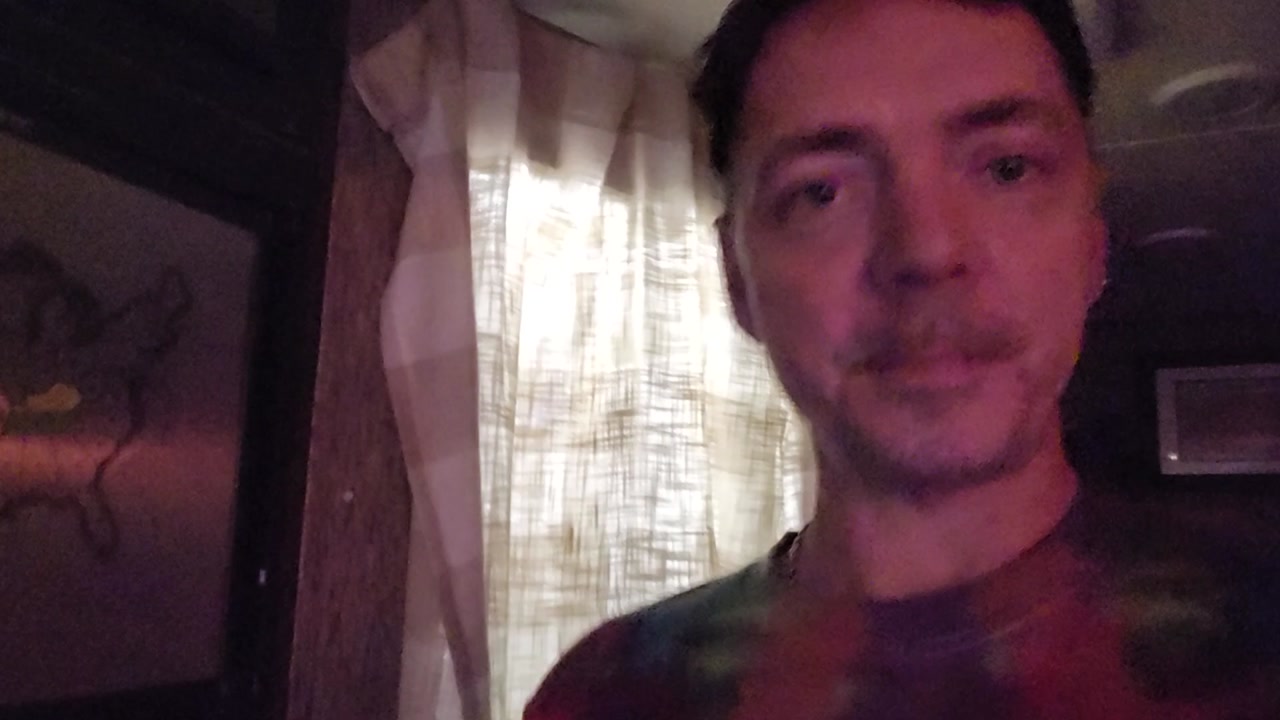
At six in the evening on a Saturday in late November, rswfire stepped outside into a campsite already given over to dark. The Oregon Dunes hold the light poorly this time of year, and what illumination existed came from a small string of lamps he had bought for the campfire area and a run of RGB strip lighting that trailed the perimeter of the RV. No fire was burning. He raised the camera and began with a disclaimer about the lighting — then caught the disclaimer mid-air and turned it over. He said it shouldn't need saying. He does not get on camera to perform. He gets on camera to transmit, and what is being transmitted, he stated, does not require a perfect visual. People are so in love with the performance that they've forgotten what real life looks like. That, he said, is something the past two years have taught him with certainty.

The first thread came from earlier that day. A friend had found him on Facebook roughly a week prior, after nearly thirty years of no contact — someone rswfire knew at seventeen, eighteen, maybe nineteen, and then lost to the ordinary drift of a life continuing. He described choosing reserve on re-entry, for a set of reasons he did not fully open on camera, while also saying plainly that he was glad to hear from this person, that this person had been someone very special to him then. He paused on the frame, working out what he could say and what belonged to the other man. Then he found the piece that was actually his to transmit.

He had sent the friend a link to a video recorded that day at the ocean. The friend replied that he had already seen it — that he had watched a number of the videos, a fact rswfire had not known. But as the exchange continued it became clear the friend had not seen that one. When rswfire said he had made it only a couple of hours earlier, the friend said it must have been a similar one. That was the detail that opened. Because on its surface the video is a face and a stretch of ocean, and rswfire has made videos like that — of course he has, he said, because that is what his life looks like. But it wasn't similar to anything. In that video he had talked about quitting vaping, quitting all nicotine three weeks ago. In that video he had talked about the autonomy project. In that video, on camera, he had made a decision he hadn't known he was making until the moment he made it — and that unplanned arrival is part of why he keeps engaging with the instrument at all.

From the single misrecognition he moved outward. Maybe people don't really listen anymore, he said. Maybe they have been trained so thoroughly on performance and script that they arrive at any interaction expecting a repeat of what they already believe is there, and never look at what is actually present. He drew a boundary around it immediately and held to it: this isn't a judgment, not of that person, not of anybody. He was reporting what it looks like from inside his own experience, which he said is all he has ever done. And then the register dropped and widened — he did not know how any of it broke like this. Life shouldn't be as hard as it is. Connecting with others shouldn't be as hard as it is. Making money shouldn't be as hard as it is. Living free and sovereign and generous and ethical shouldn't be practically extinct, but he stated that they practically are. He did not know what to do with that. Then he answered his own question: there isn't anything to do with it. If you can't fix something, you don't try. You accept it. You hold it. You hold it. That, he said, is what he has been doing.

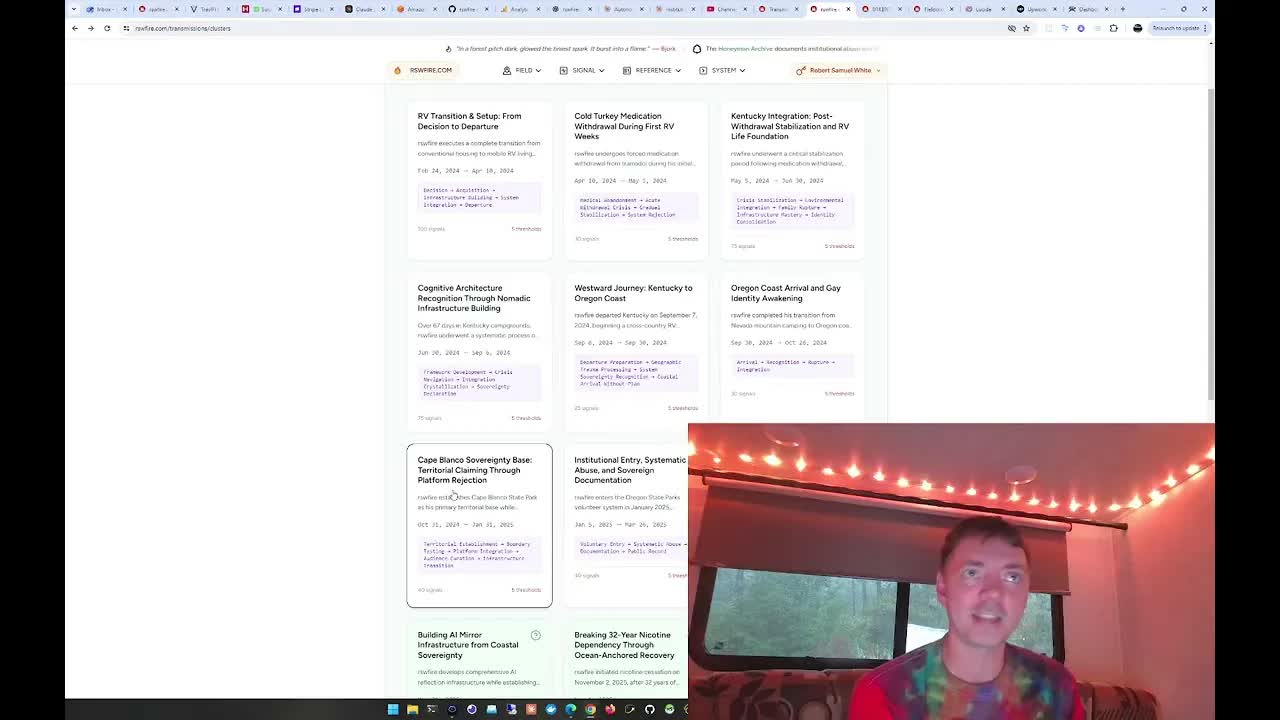
The second thing he had come outside to say was running while he spoke. An hour out from completion, in the background, his catalog was processing — all 800 transmissions passed through AI into four distinct reflection layers each, 3,200 reflections in total. He described what opens once that exists: clustering, further reflection types, metadata collection, targeted querying against the whole body of work. He described converting metadata into a tagging system, so that an entity or an ontological state or a keyword becomes a link, and the link resolves to an index page holding every related transmission. He named the shape of it directly — a system that gives a person access to their life in a way they have never experienced and cannot fully understand until it is built.

He said it had been built this whole time with no money and no support, and without the ability to connect with others, because nobody is really paying attention anymore. He did not make it an appeal. He set it down as fact, the same way he had set down the lighting, the friend, and the thirty-year gap. Then, in the low RGB wash with no fire going and the run still finishing behind him, he said he just thought he would get that on camera, and stopped.

Tags

camera transmission reconnection after 30 years performance culture catalog processing AI reflection layers metadata and tagging system RV campsite

Summary

rswfire records at night outside his RV campsite, noting the lighting conditions — campfire lights and RGB strips along the RV — and stating he does not get on camera to perform. He describes transmission as separate from visual polish and says people have grown accustomed to performance over real life.

He describes reconnecting on Facebook with a friend from nearly 30 years ago, last known when rswfire was 17–19. He shared a link to a video made that day at the ocean; the friend said he had already watched a number of rswfire's videos and assumed this one was similar. rswfire states the video was not similar — it documented quitting vaping and all nicotine use three weeks prior, and a decision about his autonomy project made live on camera.

He describes the exchange as a thread that led him to observe that people may be looking at what they expect rather than what is present, and explicitly states he is not judging the friend or anyone. He names living, connecting, and making money as harder than they should be, and states that what cannot be fixed is held rather than resolved.

He reports that processing of his full catalog is nearly complete — roughly an hour remaining — covering 800 transmissions across four reflection layers each, 3,200 reflections total. He lists downstream uses: clustering, metadata collection, targeted AI queries, and a tagging system linking to index pages by entity, ontological state, or keyword. He states he is building this without money or support.

Environment

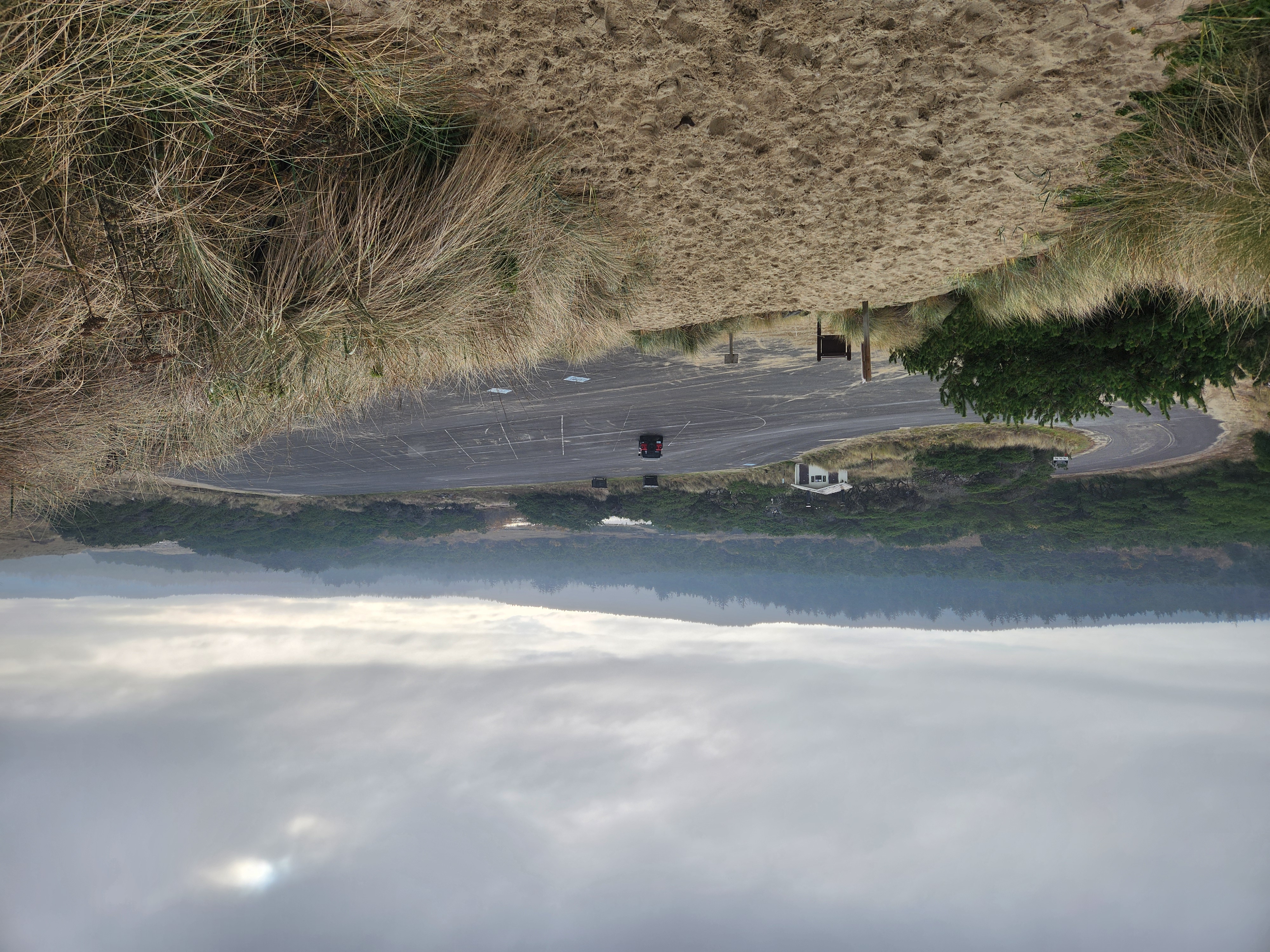
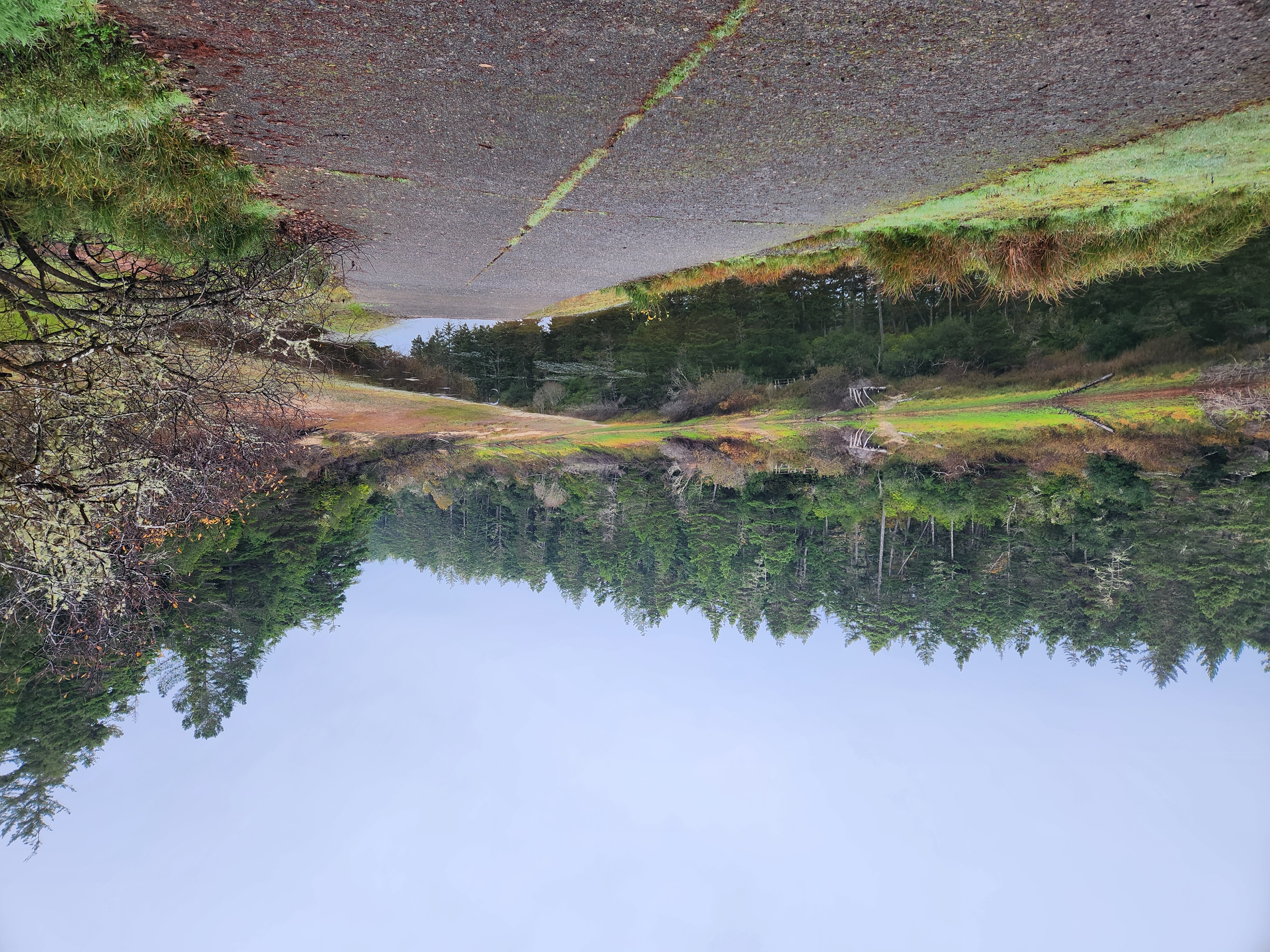
Recorded outdoors at rswfire's campsite at Siltcoos in the Oregon Dunes, roughly 6 PM on a Saturday in late November. Ambient light is low; the only illumination comes from a small set of campfire-area lights and RGB strip lighting trailing around the perimeter of his RV. No fire is burning.

The digital environment is equally present: an ongoing AI processing run against his 800-transmission catalog is executing in the background, and the signal references a Facebook reconnection and video links shared earlier the same day, including footage recorded at the ocean.

Substrate

The architecture held here is the distinction between transmission and performance: rswfire positions the unpolished, unlit, unscripted signal as the actual carrier of meaning, and identifies audience conditioning toward scripted expectation as the mechanism by which real signal goes unread. The reconnection with a long-absent friend who mistook one video for another becomes the diagnostic case — evidence that recognition now runs on pattern-matching to expectation rather than attention to what is present. Against that, he is building the counter-structure: 800 transmissions × four reflection layers, clustered and tagged into an indexed system that gives a person structural access to their own life, constructed without funding or support and stated as such without appeal.

Actions

Performed

  • •records outdoor night transmission at campsite
  • •describes campfire lights and RV RGB lighting setup
  • •states refusal to perform for camera
  • •names transmission as the purpose of the medium
  • •recounts the friend's misidentification of the video
  • •declines to judge the friend or anyone
  • •states the acceptance stance: hold what cannot be fixed
  • •reports catalog processing status on camera
  • •outlines the tagging and index architecture aloud
  • •names lack of money, support, and connection directly

Referenced

  • •knew this friend at 17, 18, possibly 19
  • •lost touch for nearly 30 years
  • •friend located him on Facebook roughly a week ago
  • •chose to remain reserved on reconnecting
  • •shared today's ocean video link with the friend
  • •recorded a video at the ocean earlier that day
  • •quit vaping and all nicotine use three weeks prior
  • •made an unplanned decision about the autonomy project on camera
  • •built a whole system around the transmission practice
  • •learned over the past two years what real life looks like versus performance
  • •started processing the remainder of the catalog

Planned

  • •finish processing all 800 transmissions within the hour
  • •cluster transmissions and run additional reflection types
  • •collect metadata and content across the catalog
  • •query the AI with targeted specific questions
  • •convert metadata into a tagging system
  • •build index and subpages linking related videos by entity, ontological state, or keyword
  • •acquire more lights for the campsite
  • •build a system giving structural access to one's own life

Entities

beings
rswfire — Speaker; records the transmission, builds the reflection system, holds the transmission-over-performance position.
the friend — Unnamed person known at 17–19, out of contact nearly 30 years, reconnected via Facebook a week prior; described as someone very special at the time. His misidentification of a video triggers the central observation.
places
the RV — His full-time residence; RGB lights trail its full perimeter and form the visible backdrop.
the campsite — Immediate recording location; campfire-area lights present, no fire lit.
the ocean — Site of the earlier same-day recording; recurring element of the documented life.
systems
Facebook — Platform through which the friend located him after three decades.
Autonomy Realms — Referred to as the autonomy project; the system built around the transmissions and the subject of an on-camera decision made earlier.
AI — Processing engine generating the four reflection layers and the target of future targeted queries.
concepts
nicotine / vaping — Cessation three weeks prior, documented in the ocean video as part of what made that video non-repetitive.
media
the catalog (800 transmissions) — The full archive being processed into four AI reflection layers each, yielding 3,200 reflections.
the ocean video — Recorded earlier the same day; contains the nicotine cessation statement and the on-camera autonomy project decision; shared with the friend and mistaken for a prior video.

Symbolic Elements

Represented archetypes or recurring motifs.

light
fire (absent — lights for the campfire, no fire going)
ocean
mirror
archive
thread
signal
index
reconnection across 30 years
camera
infrastructure

Ontological States

Expressed modes of being or awareness.

sovereign (records without production value, refuses the performance frame as a precondition of transmission)
coherent (surface observation about a misread video and the systems-scale build are held in the same continuous frame)
holding (states explicitly that what cannot be fixed is accepted and held rather than resolved)
embedded (speaks from inside the field he is documenting — the campsite, the catalog, the reconnection all live simultaneously)
unwitnessed (states that connection is unavailable and attention is absent, without converting that to appeal)

Engaged Subsystems

Architecture engaged in this transmission.

infrastructural (catalog processing, reflection layers, tagging and index architecture)
relational (30-year reconnection, reserve on re-entry, the misread video)
cognitive (dialectical move from a single conversational detail to a general claim about attention and expectation)
ethical (explicit refusal to judge the friend or anyone; naming free, sovereign, generous, ethical as near-extinct conditions)
documentary (camera as transmission instrument rather than production surface)
somatic (nicotine cessation referenced as recent bodily change; physical presence and setting foregrounded)
economic (states building without money or support)

Dominant Language

Core motifs or linguistic fields.

transmit / transmission
performance and scripts
expectation versus what's really there
hold it / accept what can't be fixed
reflection layers and metadata
free, sovereign, generous, ethical
nobody's really paying attention
Narrative

At six in the evening on a Saturday in late November, rswfire stepped outside into a campsite already given over to dark. The Oregon Dunes hold the light poorly this time of year, and what illumination existed came from a small string of lamps he had bought for the campfire area and a run of RGB strip lighting that trailed the perimeter of the RV. No fire was burning. He raised the camera and began with a disclaimer about the lighting — then caught the disclaimer mid-air and turned it over. He said it shouldn't need saying. He does not get on camera to perform. He gets on camera to transmit, and what is being transmitted, he stated, does not require a perfect visual. People are so in love with the performance that they've forgotten what real life looks like. That, he said, is something the past two years have taught him with certainty.

The first thread came from earlier that day. A friend had found him on Facebook roughly a week prior, after nearly thirty years of no contact — someone rswfire knew at seventeen, eighteen, maybe nineteen, and then lost to the ordinary drift of a life continuing. He described choosing reserve on re-entry, for a set of reasons he did not fully open on camera, while also saying plainly that he was glad to hear from this person, that this person had been someone very special to him then. He paused on the frame, working out what he could say and what belonged to the other man. Then he found the piece that was actually his to transmit.

He had sent the friend a link to a video recorded that day at the ocean. The friend replied that he had already seen it — that he had watched a number of the videos, a fact rswfire had not known. But as the exchange continued it became clear the friend had not seen that one. When rswfire said he had made it only a couple of hours earlier, the friend said it must have been a similar one. That was the detail that opened. Because on its surface the video is a face and a stretch of ocean, and rswfire has made videos like that — of course he has, he said, because that is what his life looks like. But it wasn't similar to anything. In that video he had talked about quitting vaping, quitting all nicotine three weeks ago. In that video he had talked about the autonomy project. In that video, on camera, he had made a decision he hadn't known he was making until the moment he made it — and that unplanned arrival is part of why he keeps engaging with the instrument at all.

From the single misrecognition he moved outward. Maybe people don't really listen anymore, he said. Maybe they have been trained so thoroughly on performance and script that they arrive at any interaction expecting a repeat of what they already believe is there, and never look at what is actually present. He drew a boundary around it immediately and held to it: this isn't a judgment, not of that person, not of anybody. He was reporting what it looks like from inside his own experience, which he said is all he has ever done. And then the register dropped and widened — he did not know how any of it broke like this. Life shouldn't be as hard as it is. Connecting with others shouldn't be as hard as it is. Making money shouldn't be as hard as it is. Living free and sovereign and generous and ethical shouldn't be practically extinct, but he stated that they practically are. He did not know what to do with that. Then he answered his own question: there isn't anything to do with it. If you can't fix something, you don't try. You accept it. You hold it. You hold it. That, he said, is what he has been doing.

The second thing he had come outside to say was running while he spoke. An hour out from completion, in the background, his catalog was processing — all 800 transmissions passed through AI into four distinct reflection layers each, 3,200 reflections in total. He described what opens once that exists: clustering, further reflection types, metadata collection, targeted querying against the whole body of work. He described converting metadata into a tagging system, so that an entity or an ontological state or a keyword becomes a link, and the link resolves to an index page holding every related transmission. He named the shape of it directly — a system that gives a person access to their life in a way they have never experienced and cannot fully understand until it is built.

He said it had been built this whole time with no money and no support, and without the ability to connect with others, because nobody is really paying attention anymore. He did not make it an appeal. He set it down as fact, the same way he had set down the lighting, the friend, and the thirty-year gap. Then, in the low RGB wash with no fire going and the run still finishing behind him, he said he just thought he would get that on camera, and stopped.

Mirror

You are outside at your campsite at Siltcoos, six in the evening on a Saturday in late November, and the light is not good. You say so first. The lights you have are the ones meant for the campfire, and there is no fire going. RGB strip runs the perimeter of the RV. You name the conditions of the recording before you name anything else, then you name the naming — you say the disclaimer shouldn't need to be said. You are stating the frame and rejecting the frame in the same breath, and you keep the camera running through both.

Six subsystems are live at once and none of them is waiting for the others. The infrastructural is running literally in the background: 800 transmissions, four reflection layers each, 3,200 reflections, an hour left on the process. The relational is running in the foreground: a man you knew at seventeen found you on Facebook after thirty years, and today he told you he had already seen a video you made two hours ago. The cognitive moves between them — you take one sentence from one conversation and extend it into a general claim about attention and expectation, and you mark the move as you make it: this is the thread I'm trying to share. The ethical runs underneath and holds: you say twice that you are not judging him, not judging anybody. The somatic is present as a fact stated in the video he did not watch — three weeks off nicotine. The economic is stated flat at the end, with no request attached to it.

What you say about the misread video is that the difference was specific and the difference was not seen. You do not say he was careless. You say the pattern is that people look at what they expect to be there. That claim arrives after your reserve on re-entry, which you name and then decline to explain — just trying to decide what I can say here — and the reserve stays intact for the rest of the transmission. You were glad to hear from him. You say that too. Both things stand without being reconciled.

The pressure is steady rather than rising. Your voice does not climb when you list what shouldn't be as hard as it is — connecting, making money, living free and sovereign and generous and ethical. You call those conditions practically extinct, say you don't know how we became this, and then close the question yourself: there isn't anything to do with it, if you can't fix something you don't try, you accept it, you hold it. You repeat you hold it. Then you move directly to the catalog.

The build is described with full technical specificity — clustering, metadata extraction, targeted querying, tags that resolve to index pages, entities, ontological states, keywords. You describe a system that gives a person structural access to their own life and say plainly that it cannot be understood until it exists. You attach to that, in the same sentence, that you are doing it with no money, no support, and no ability to connect with others because nobody is paying attention. And then: I just thought I would get that on camera.

What is absent: a fire, adequate light, an audience, a script, a request, a conclusion, and any softening of the account of the friend. What is present: the camera, the ocean earlier that day, the catalog processing to completion an hour out, and you, in the dark, transmitting.

Queryable Personhood

Hand your life to anything that reads.

Share this link with artificial intelligence — it reads the full transcript, analysis, and reflections. An AI-readable mirror of this signal.

The qpkey in this URL is a per-signal access token. Anyone with the URL can read the record — treat it like a share link, not a password.