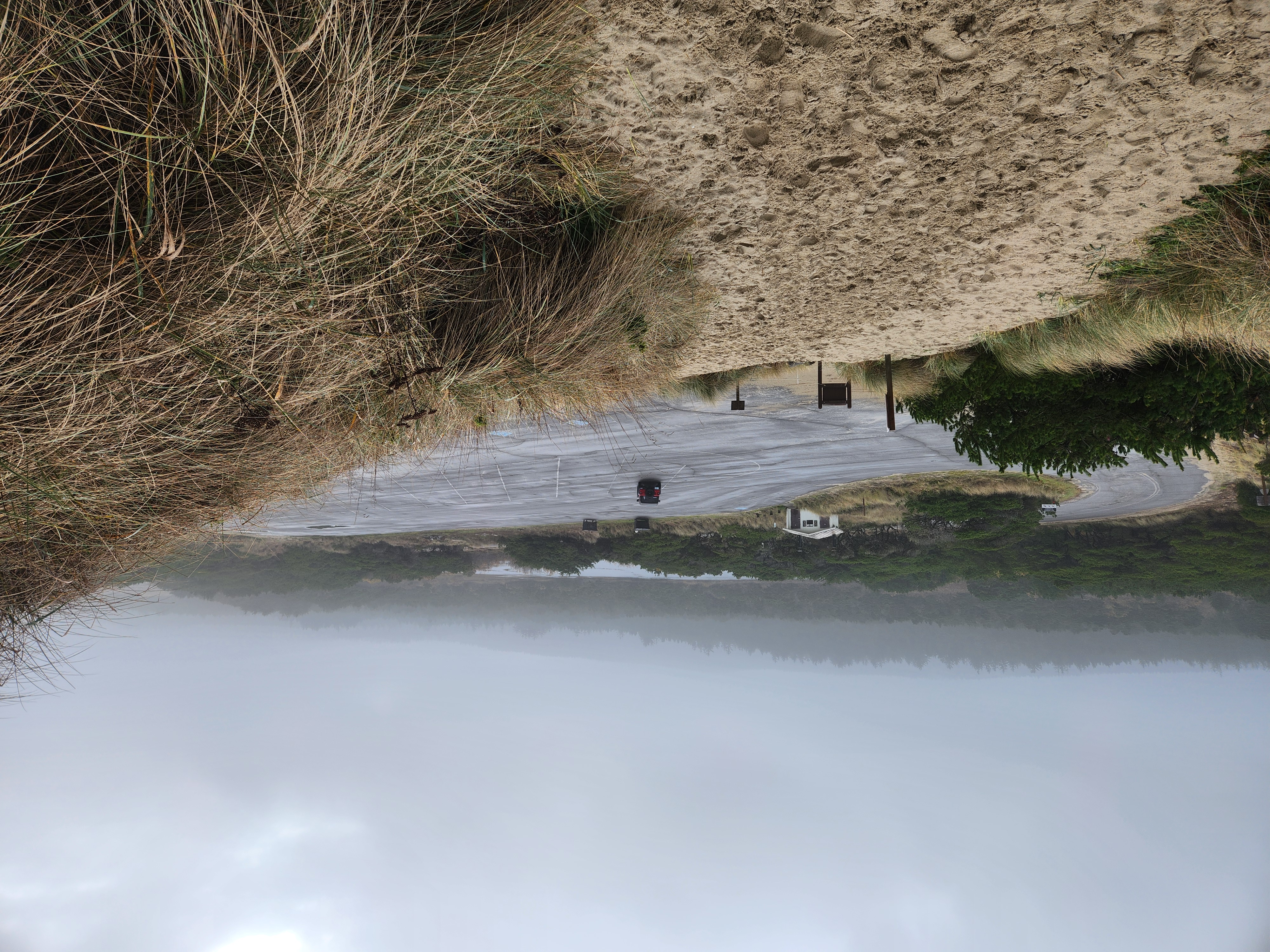

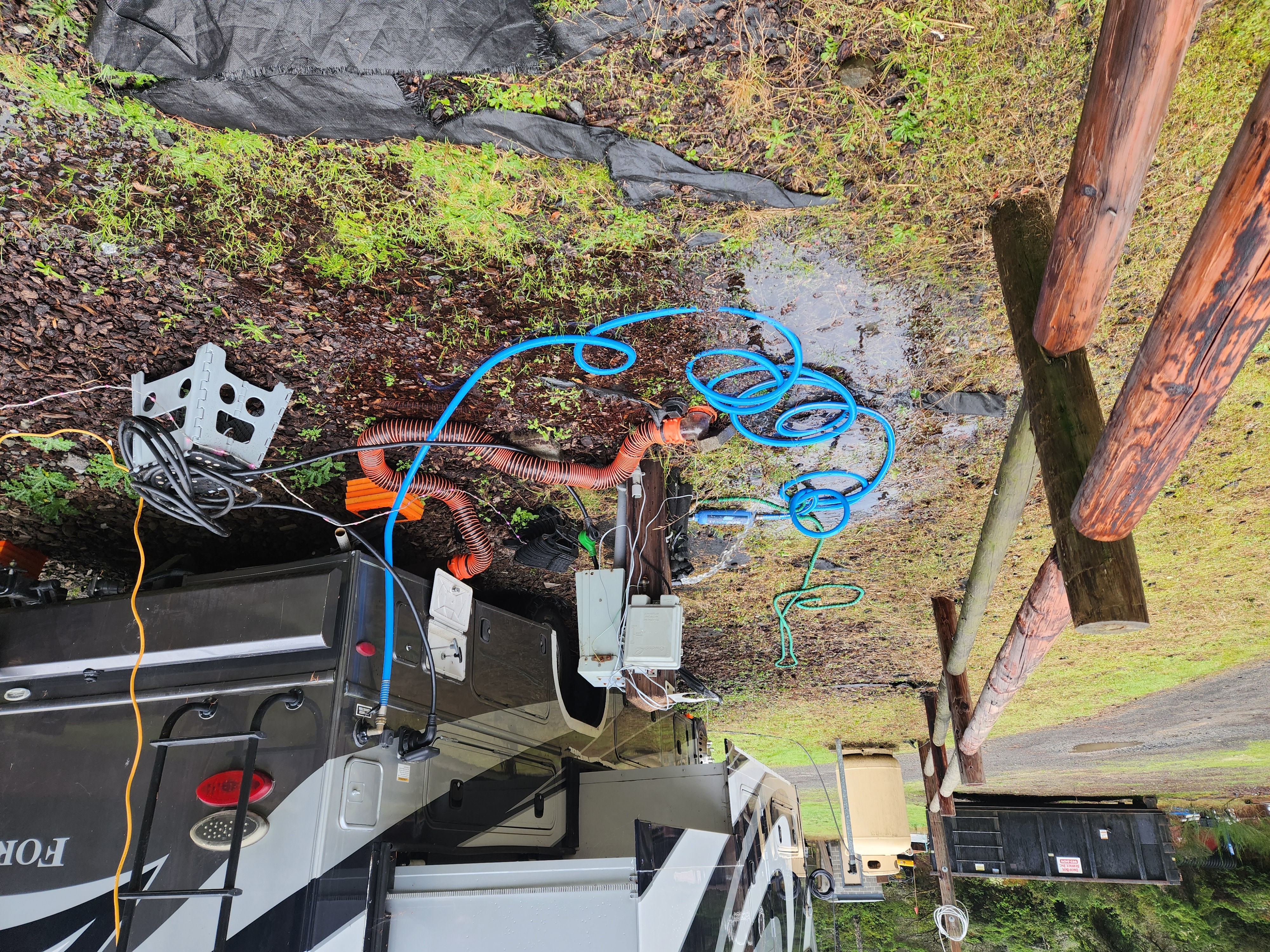

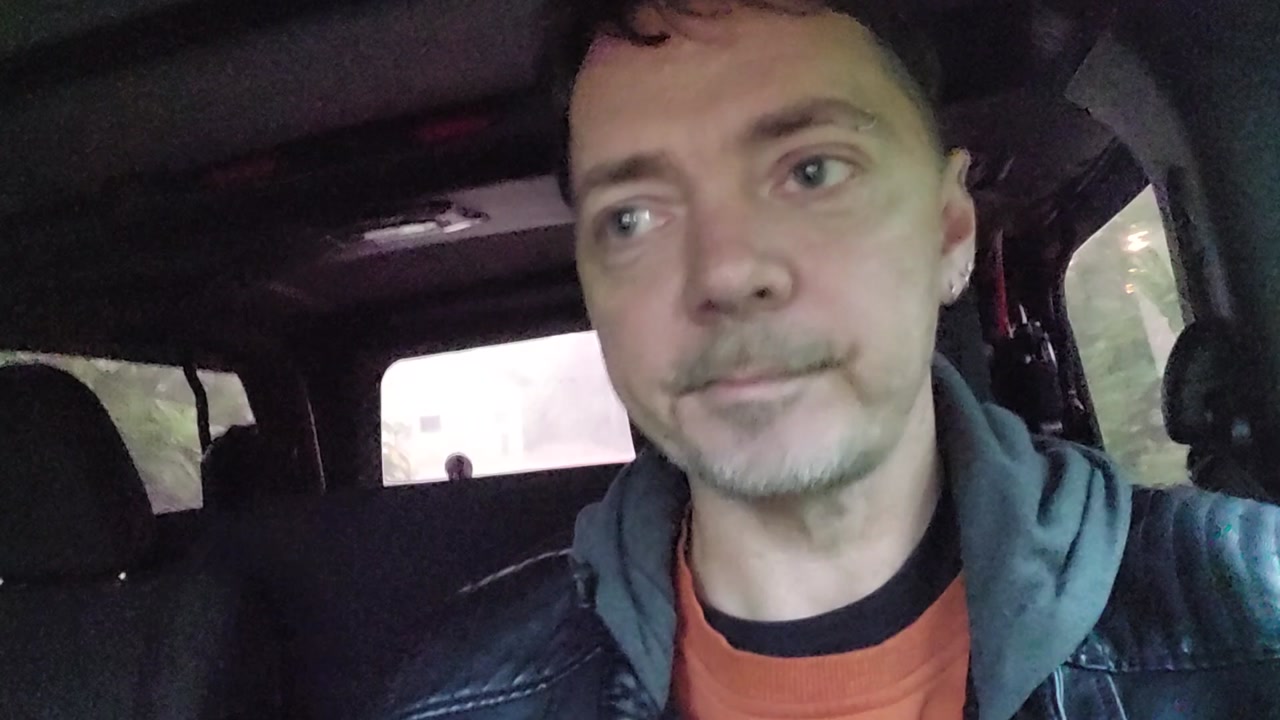
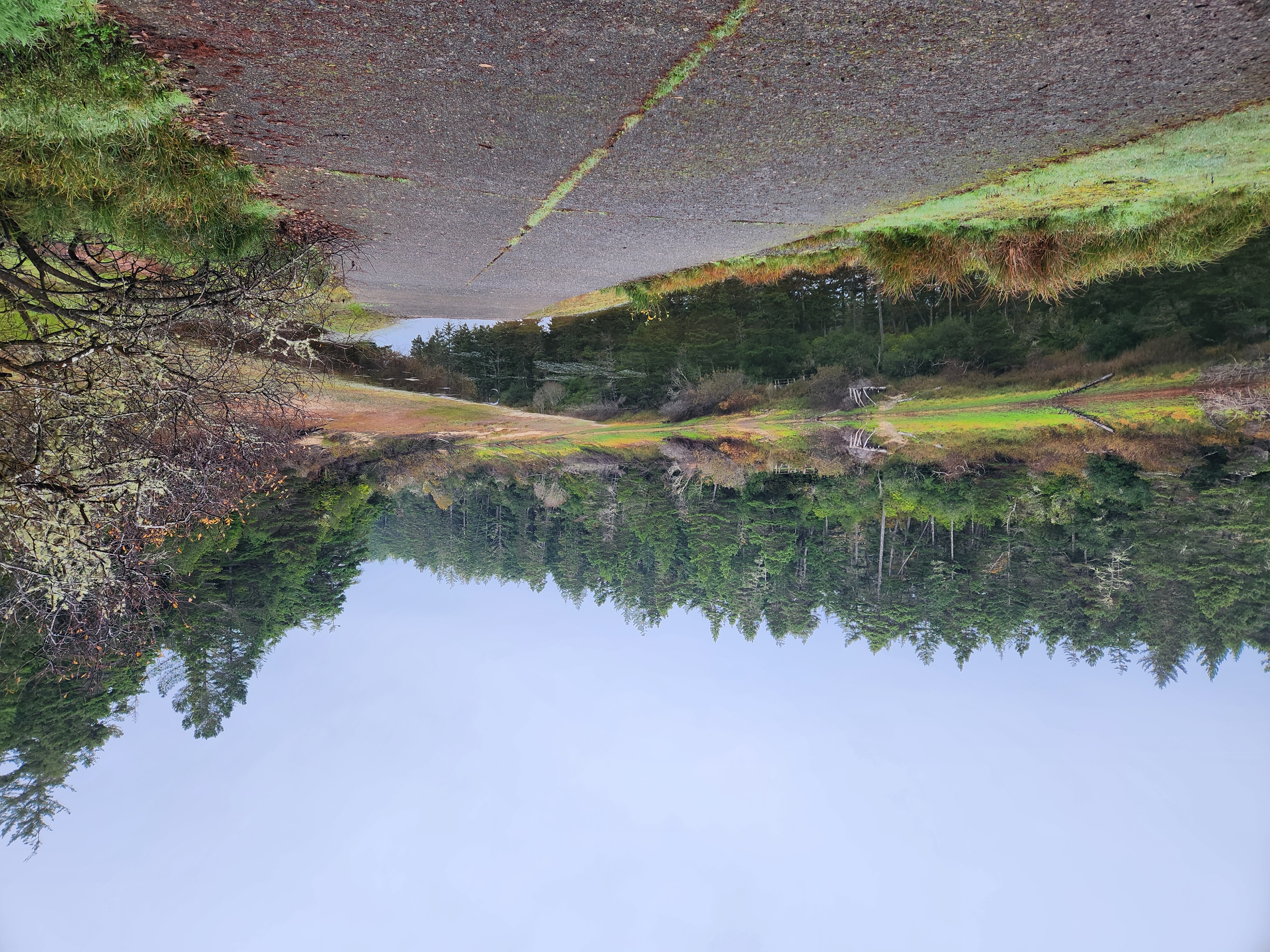
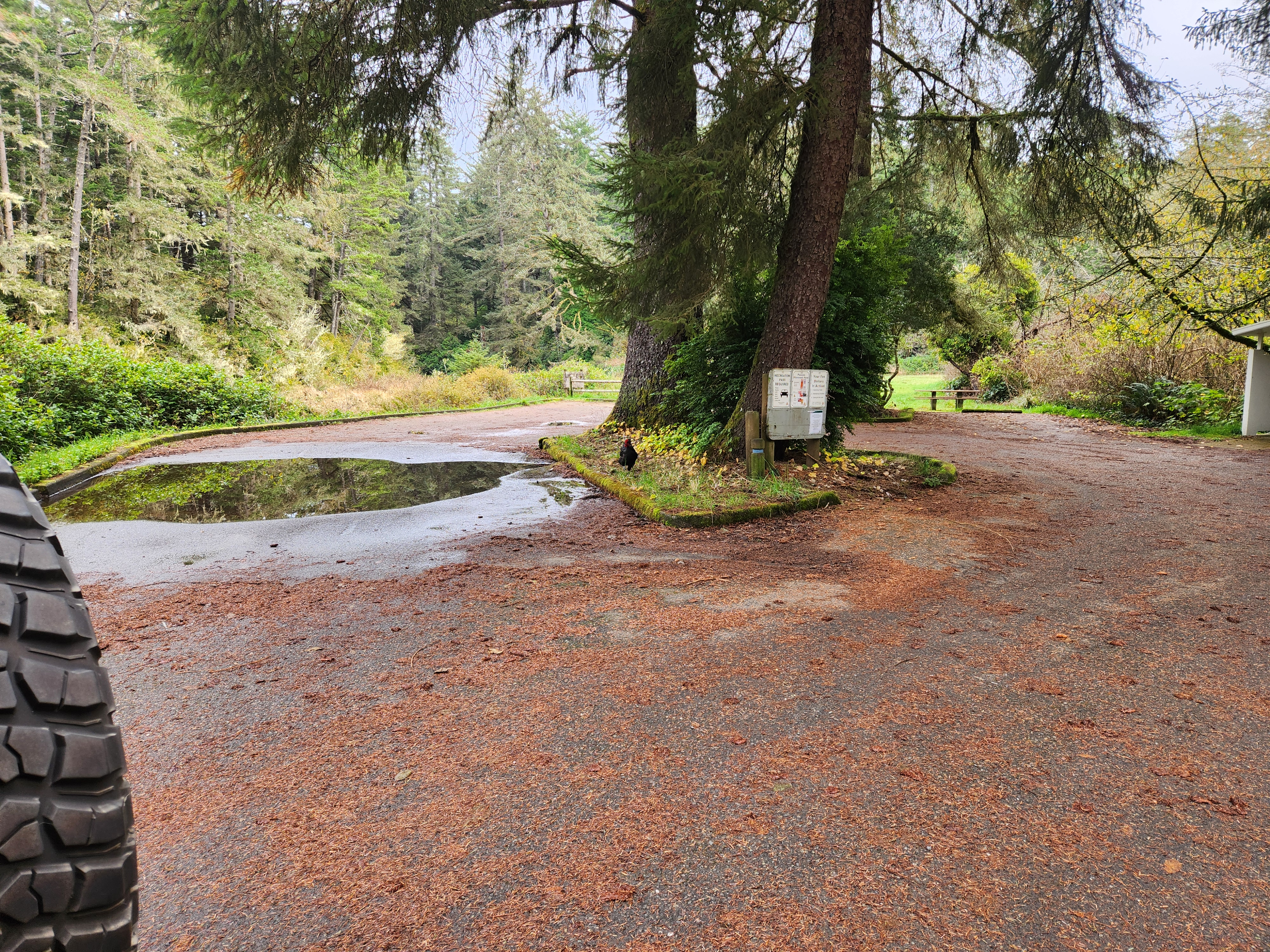
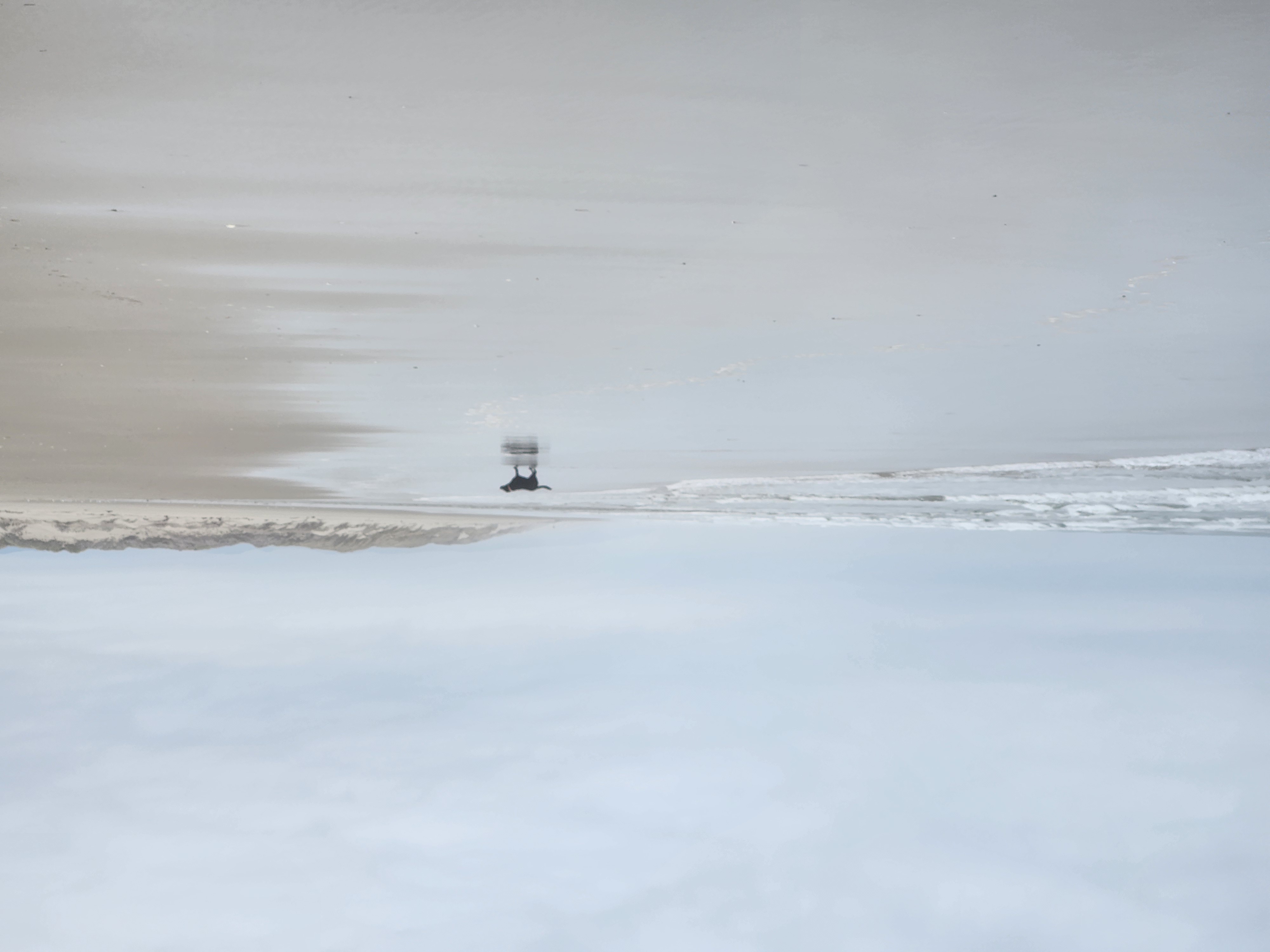
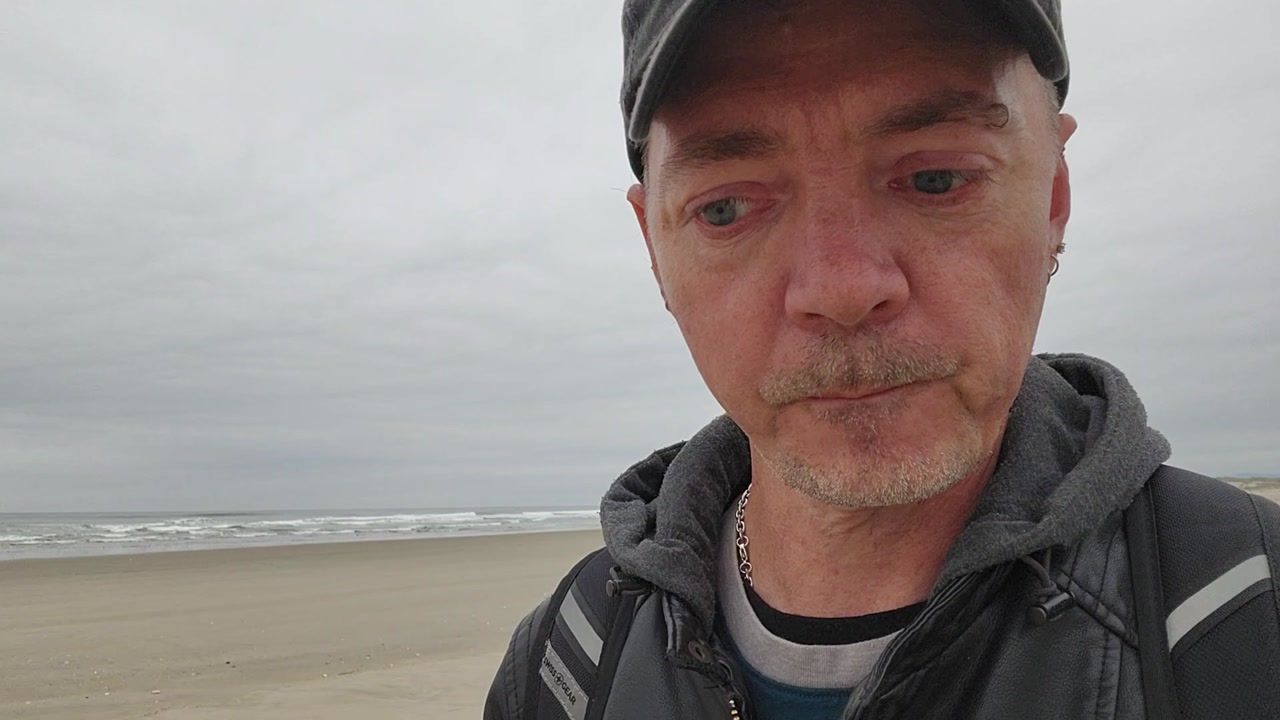
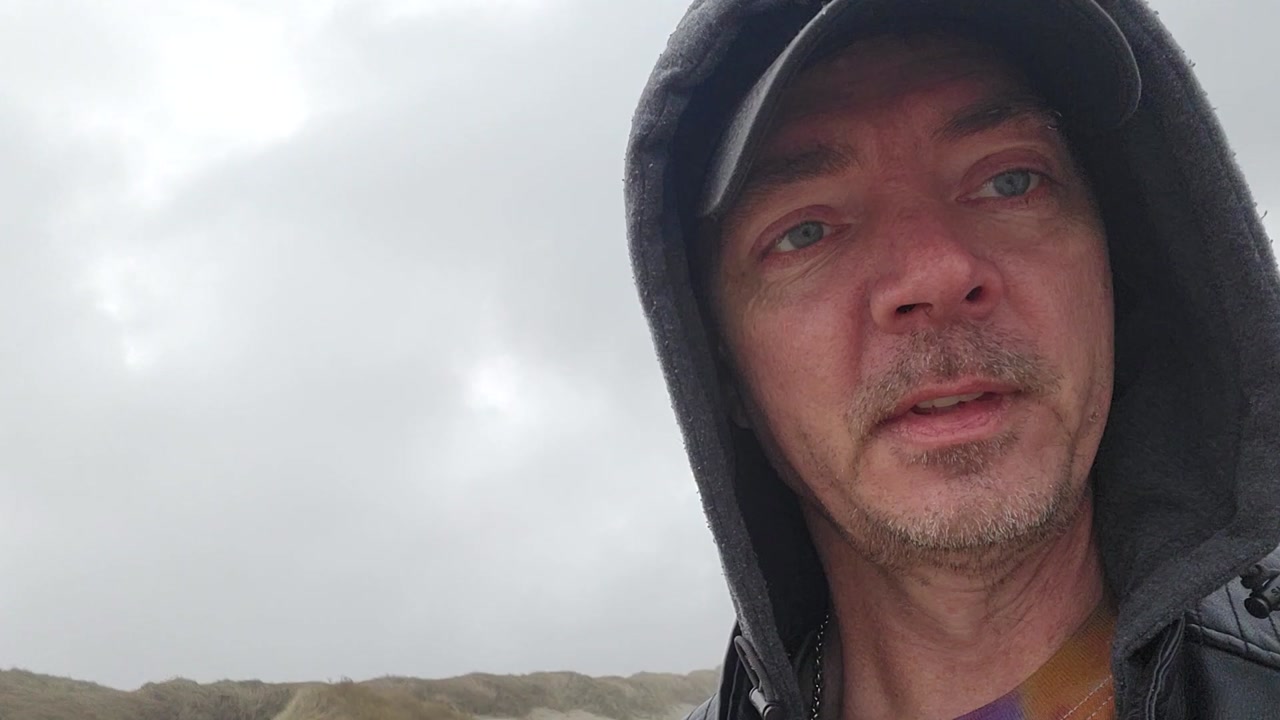

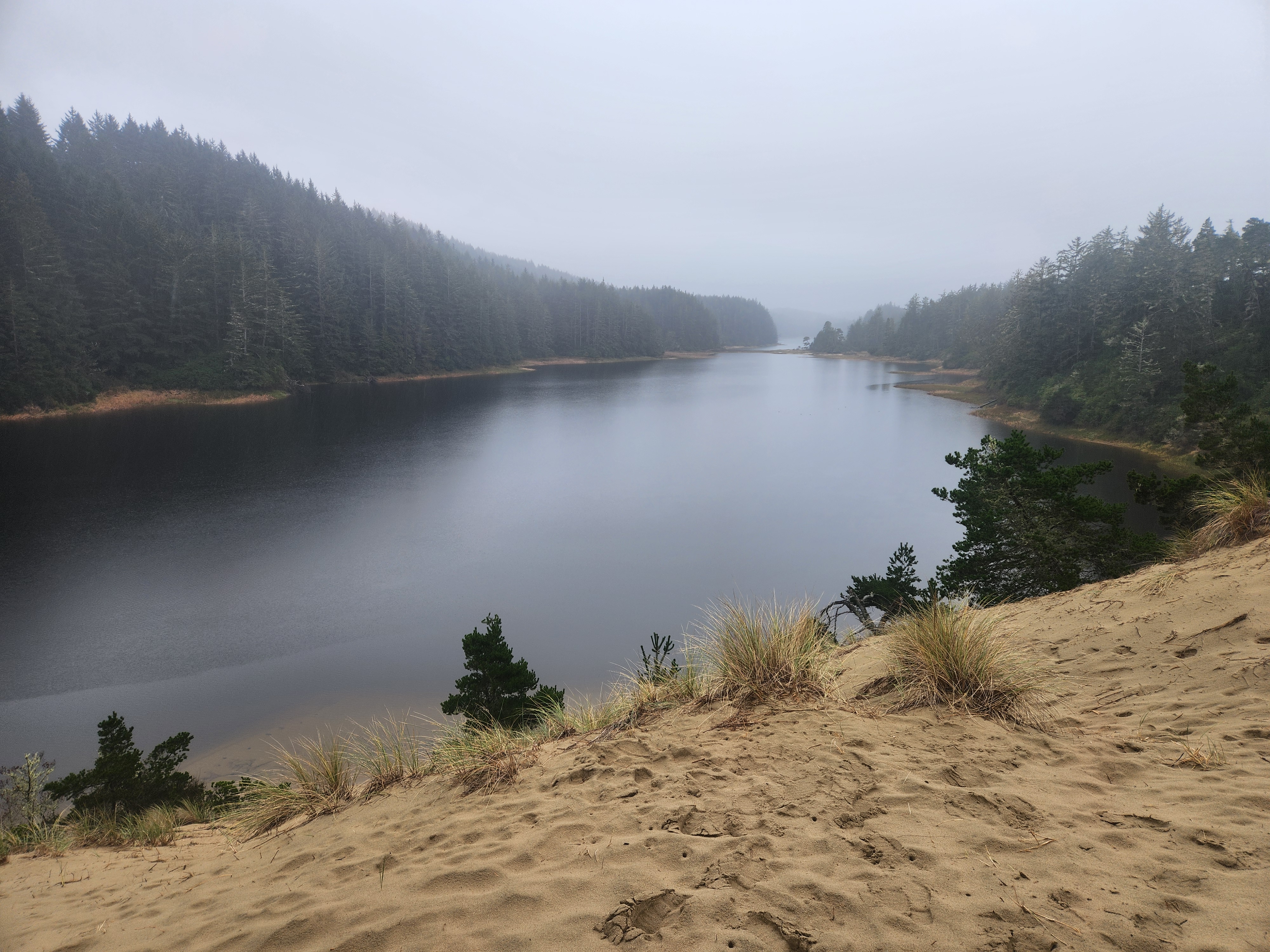
The light was going. rswfire had a hose connected at the dump station, clean water running into the black tank, and he noted — matter-of-factly, the way a person notes weather — that he should have grabbed a flashlight. The black tank was already dealt with. Water was still running into the gray, which he would dump after, to make it extra sparkly. The pressure was low. He let it run longer because of that, and identified the low pressure not as a problem of the day but as a standing feature of Forest Service areas, a condition of where he lives rather than an event happening to him. He was filming the whole thing and said aloud that he didn't know why he was showing it. He showed it anyway.
He said he had gotten a good rhythm going with this. Then he traced the rhythm back to its origin: the first time he cleaned his tanks was one of the first things he did after leaving Kentucky for Oregon, at his first stop, right on the edge — the land of the lakes. He was very proud of it then. He had been doing it ever since. That, he said, was why he was marking it. The tanks and the marker arrived in the same breath, the maintenance and the anniversary occupying one act rather than two.
Then the pivot, announced in advance: I guess I get serious now. He had been emailing with someone who had been reading him since Kentucky, since the beginning. He weighed how much to say and settled on very little — an older woman, mid-seventies, American, city life, he hoped that was accurate. No name. He described what she had done across two years as witnessing him cleanly: never a violated boundary, things said that stuck with him. He stated that most people could not do that. She remembered his early talk about parasocial relationships and brings it back to him playfully in her emails, and he said he loved that. He also said that was all he ever needed from the channel — one aligned person.
From there he laid out the structural consequence. He disabled comments on his channels long ago, and he was precise that it was never about trolls; those had come a couple of times and he dealt with them publicly, the way he says he does everything, completely sovereign. What he refused was fake engagement and superficial contact. What he had been trying to build was a place where people could be their authentic selves and witness each other cleanly, and he stated that for some reason most people cannot do that anymore. He described two years of unpacking that and trying to work with it — the Sanctum subscription on his own site, the YouTube subscription tier he gained access to a year ago and that nobody showed interest in. He drew the line hard: he wasn't going to package himself, because he wasn't for sale. He said he was a human being sharing a perspective and a life, expecting a reciprocity that was not there. So he built the exit. Autonomy, Sanctum, all of it — his own platform, where the rules of engagement are his, because they should be. His life, his archive, his platform.
Then a piece he said he had acknowledged to himself but never to the camera: he probably could have worked on the build faster. He didn't resolve why. He said he may never figure it out, that it may not have an answer, or may have an answer he doesn't like, and he left it there, open. What he offered alongside it was the shape of his life — sixth grade to his mid-forties lived digitally, on computers, and a present in which he wants a different part of the world: tracing the tide, looking at the ocean, hiking trails, exploring in the RV, being available and present for the people in his life. He described it as a pendulum, and said he could feel it swinging back. He loves what he's building. He wants to see how far he can take it.
He also said he was proud of himself. Two years living this way. More than a year completely autonomous from family and from anything that might have been a previous tether. He described having ruptured his life completely and rebuilt it from the ground up, said he tried to prepare responsibly and thinks he did a decent job, and then said life got in the way and he has had to sacrifice things he didn't expect to sacrifice — and that it sucks, and that none of it is anything he can't replace or rebuild, because he has been doing that all his life. He brought the correspondent back around: the woman in her mid-seventies as evidence that at any age, you just don't stop. He noticed himself closing the circle and said so.
Then, remembering the tanks, he went to check on them, and the recording moved inside. Two air mattresses, one that kept going flat, his back wrecked from a couple of days of it. He'd refilled it and it deflated again, so he pulled the spare from the shed and laid it out. He said he needs a real mattress at this point, that it's ridiculous, that it has never worked, two years in this thing and he has never been able to sleep well. Across the way, the work area: a laptop, no desktop anymore, okay for now, and a couch a friend literally gave him that smells so badly of cigarette smoke he says he has to fix it. He looked at it and said it isn't perfect, and then said he regrets nothing. This life he's creating he has been building all his life, and he never needed it to be easy — the growth and the struggle aren't something to fight. It's laying bricks. Every level, everything overcome, is another brick. He said he didn't know why he was trying to pass on wisdom in this video, and stopped there.