







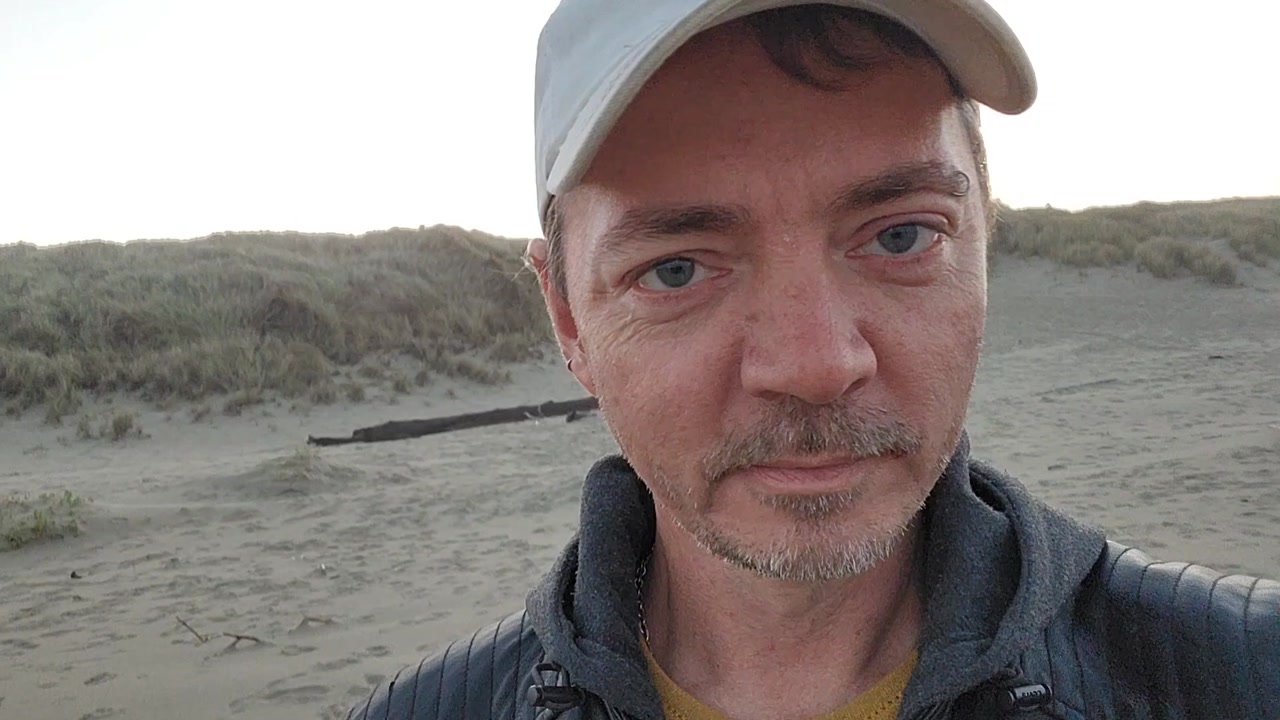


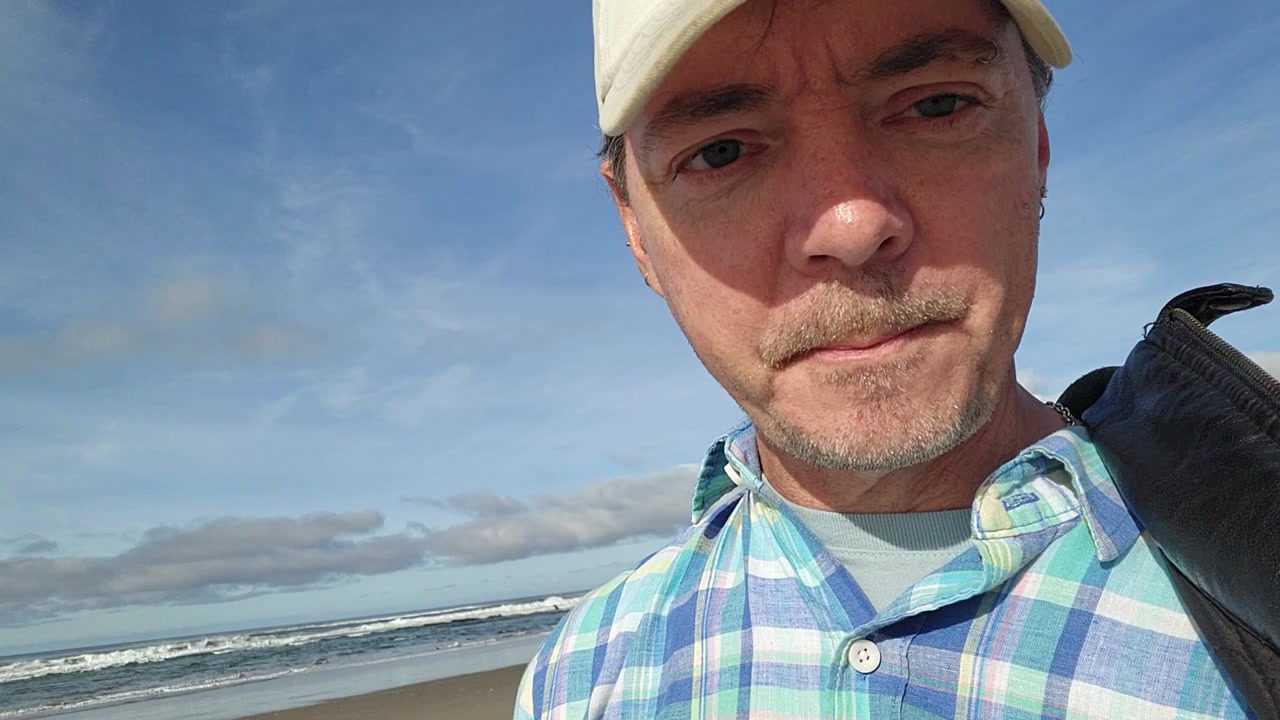

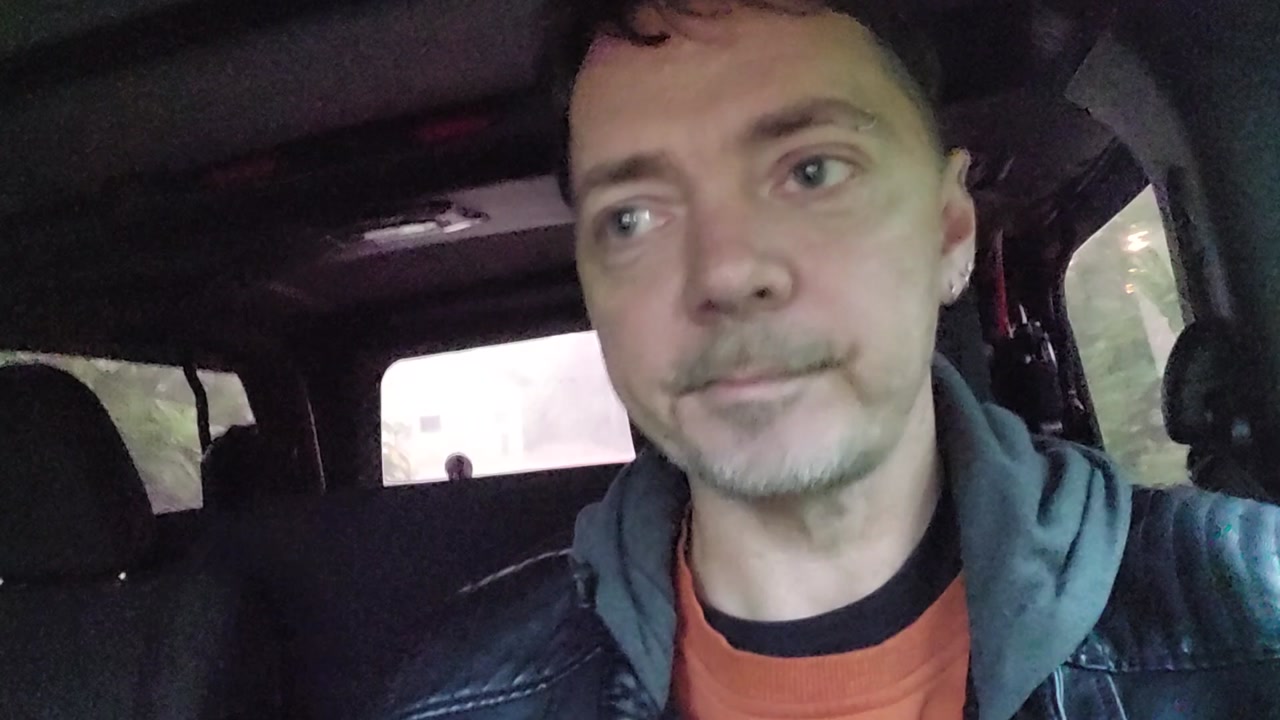
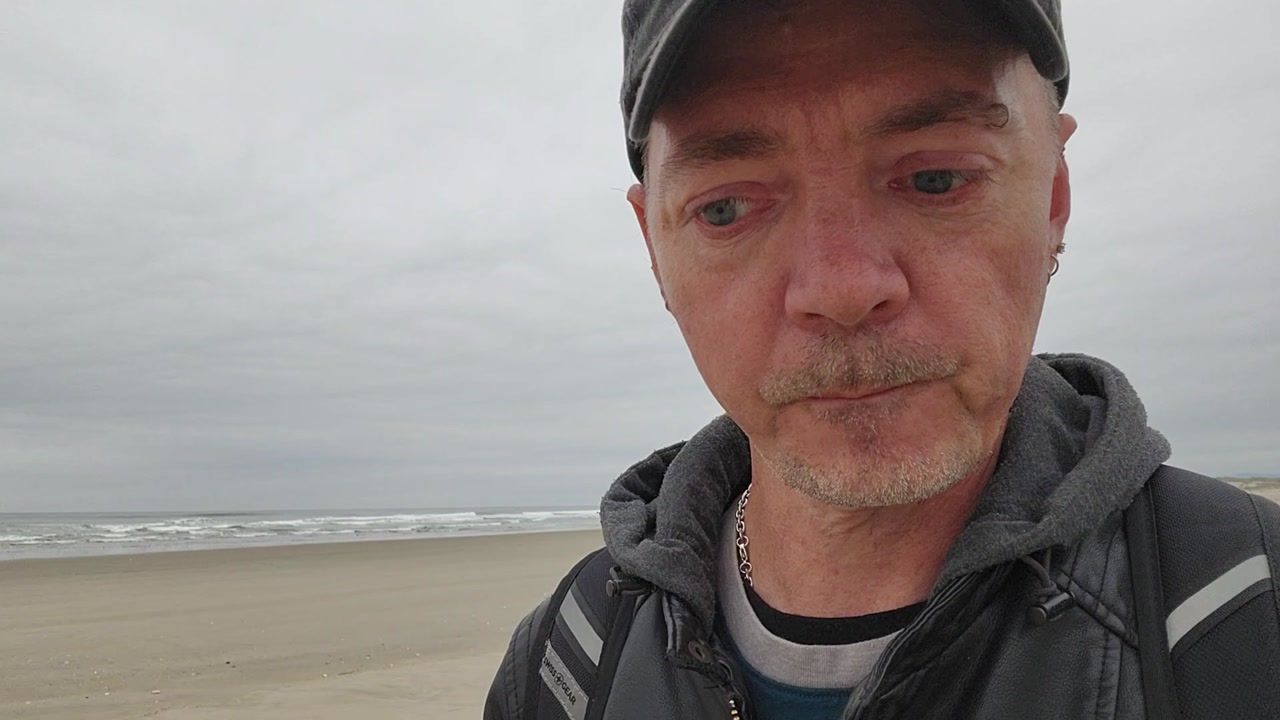
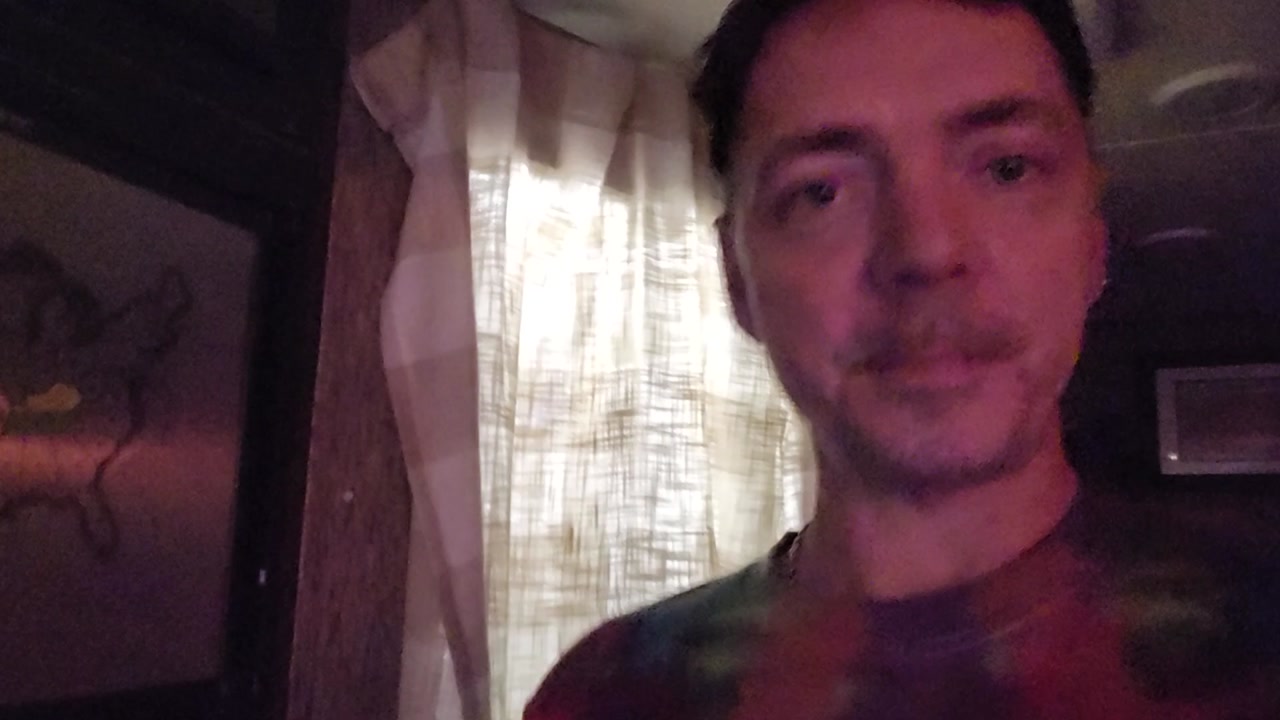
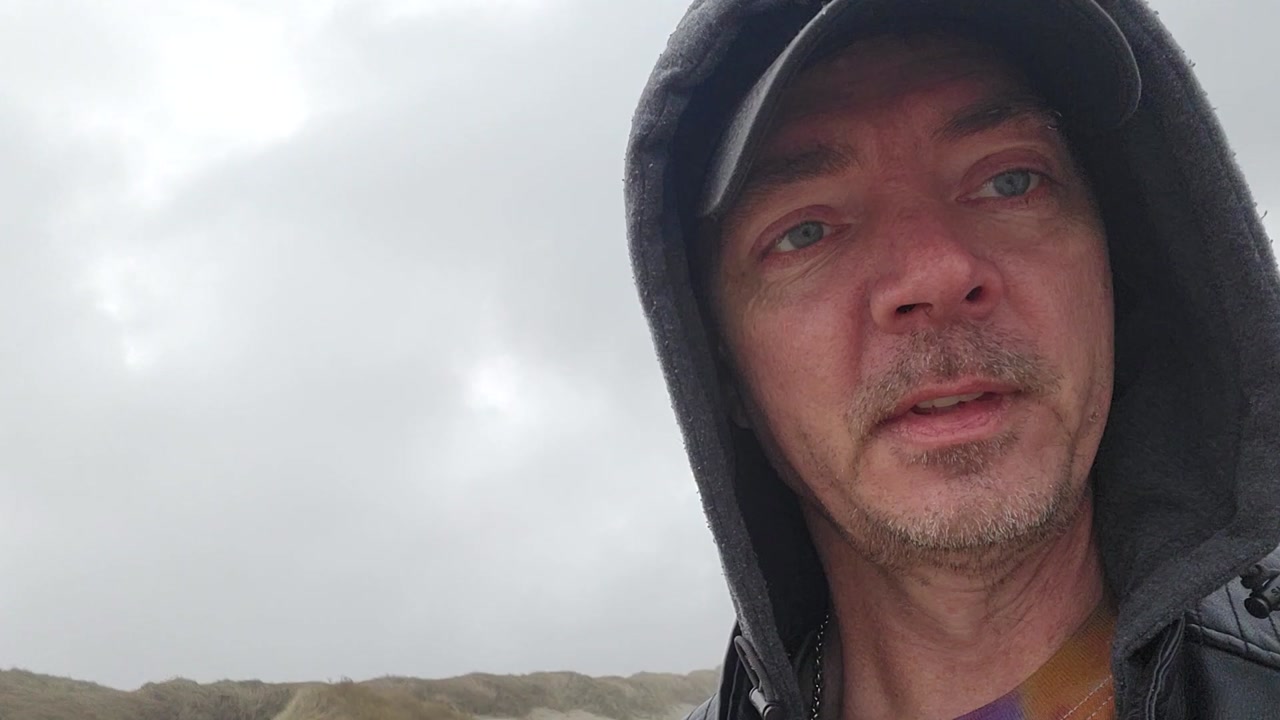

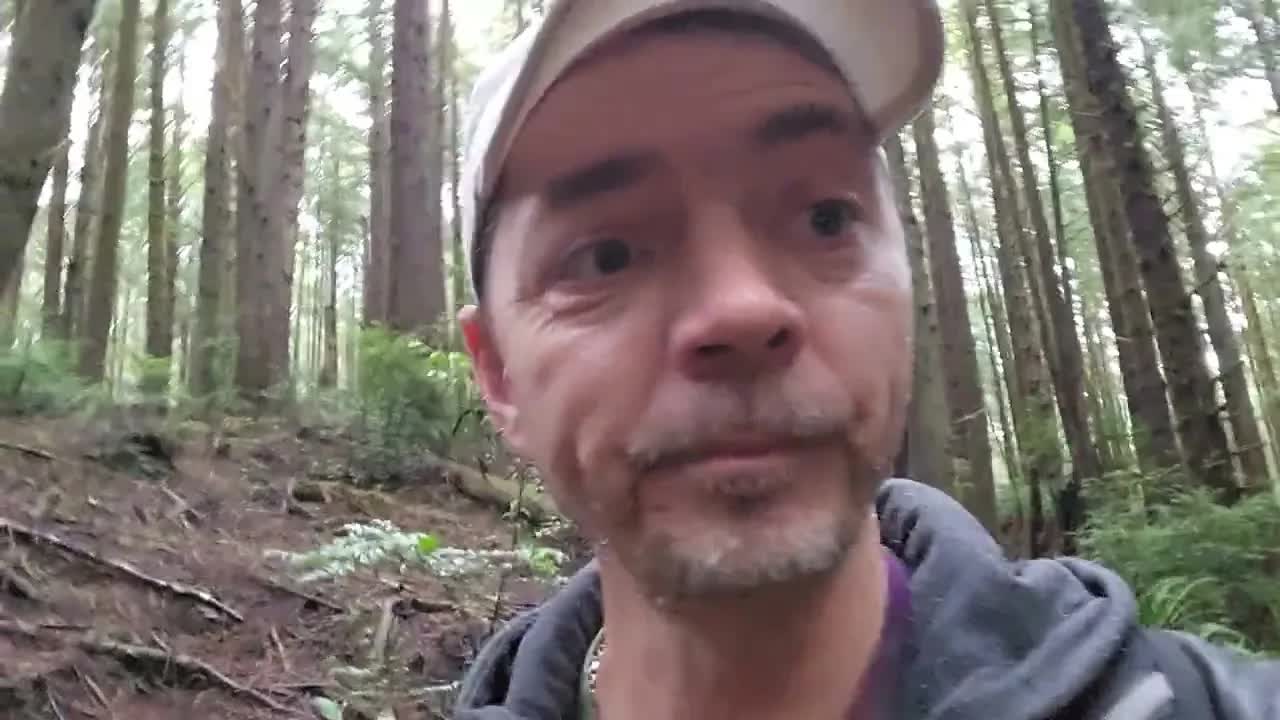

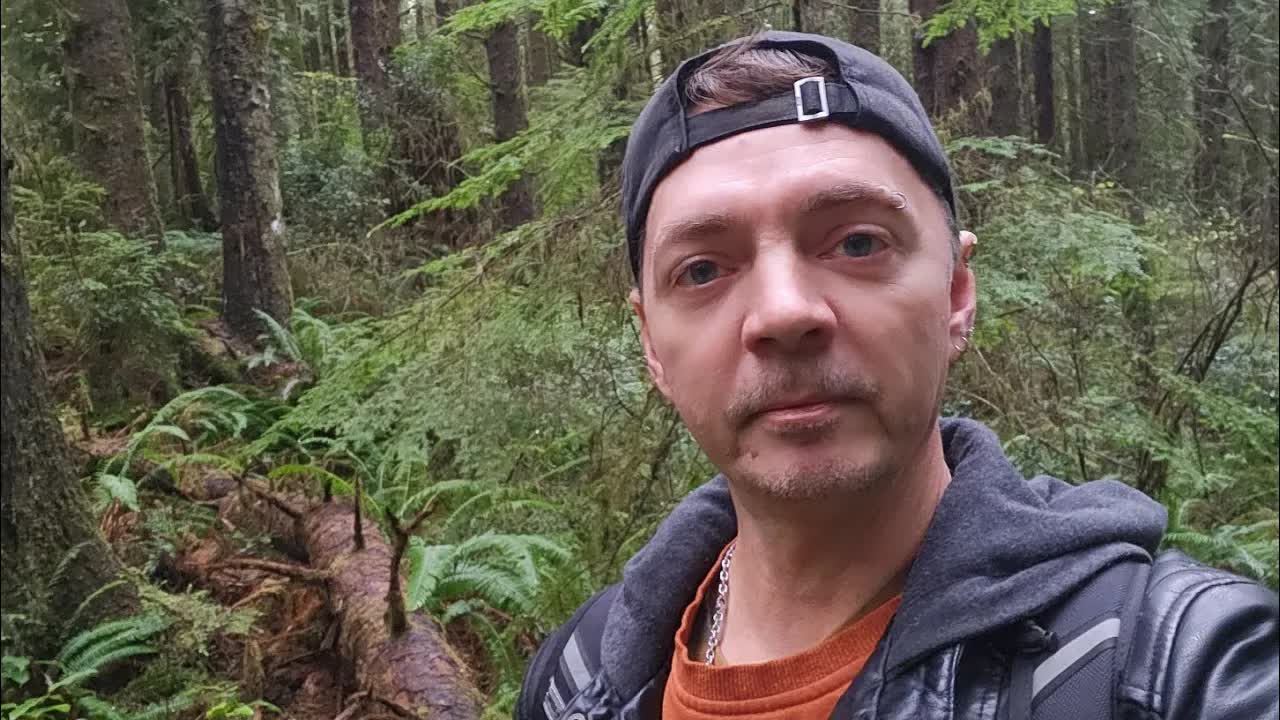

He begins by naming the topic before he names its shape — a thing he tells the camera he thinks about more often than he admits to himself, and then immediately notes the difficulty of that admission for someone whose metacognition runs constantly. He works the sentence twice, lets the repetition stand, and decides aloud that the expression is valid here. The recording does not cut. Whatever pauses fall between the clauses stay in the file. This is the first structural decision of the signal: he does not clean the reasoning before he transmits it.
From there the frame widens fast. He puts human history on the table at full scale — hundreds of thousands of years — and then asks what is actually retained from it. His own answer is short: biblical times, Roman times, modern times. Everything else is gap. He does not soften the arithmetic that follows. Billions of lives, he states, lost to history as if they never existed, and the reason he gives is mechanical rather than tragic — they left nothing behind to be remembered by. The absence is not a wound in his account. It is a property of the record.
Then he turns the lens on the survivors, and the observation sharpens. The few who are remembered, the ones revered, are not people anymore in his reading. They are symbols. He says their humanity is completely gone, and he extends the claim to every narrative built around important figures across time: not real people, but symbols, archetypes, myths — the same conversion humans have been performing forever. He calls this problematic, plainly, without elaboration, and he identifies the cost in a single line: we are born into a world without access to our own human story.
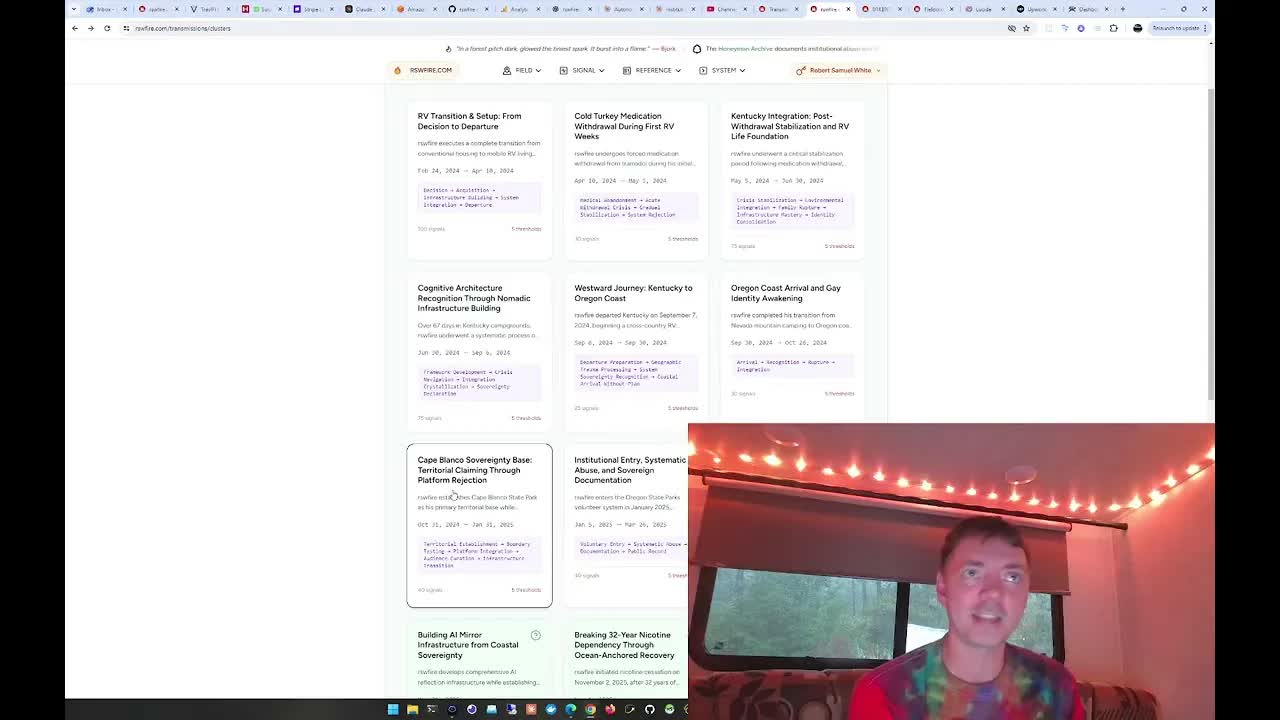
The signal pivots there, and the pivot is where the reasoning becomes personal architecture. He says he thinks that is why he documents his life the way he does. He says he thinks that is why he is building the software. He is speaking about Autonomy Realms from inside Autonomy Realms, recording into the system he is describing, and the loop does not appear to trouble him — the reasoning behind the infrastructure is being filed in the infrastructure. Documentation as legacy, he says, even if it is just for yourself, because you are worth witnessing even if you are the only one witnessing. The ontological claim arrives without argument attached to it. It is stated as a floor, not a conclusion.
He follows it with the relational extension — that the software opens new ways people could relate to each other, and to themselves, and he corrects himself mid-thought to weight the second one more heavily. Especially ourselves. And then he offers the evidence, the one concrete fact of construction in the whole capture: the first thing he built was the mirror. The instrument for self-witness came before anything else in the system. He does not explain the choice. He lets the build order carry the thesis.
The signal closes at low altitude. He says he has always thought about the sacredness of what he is building. He says he knows people do not see it, do not understand it, and that he does not know how to explain it to them. Nothing in the delivery adjusts to that — the work is not defended, rescoped, or made more legible in response. He simply states the reception condition alongside the sacredness condition, holds both, and ends where he started: just wanted to document that. The recording stops. The record exists.