Walking Through Soundlock and Arena Music Platforms

Failed to load video
Chapters
Transcript
[0:01] So, this video by necessity is probably
[0:04] going to have to be longer
[0:09] because
[0:12] this one was my most complicated
[0:14] freelance relationship.
[0:16] And these are still active projects.
[0:20] I know the team that's working on them.
[0:22] There are people that I hired in the
[0:24] past. So, I handed off my role to them
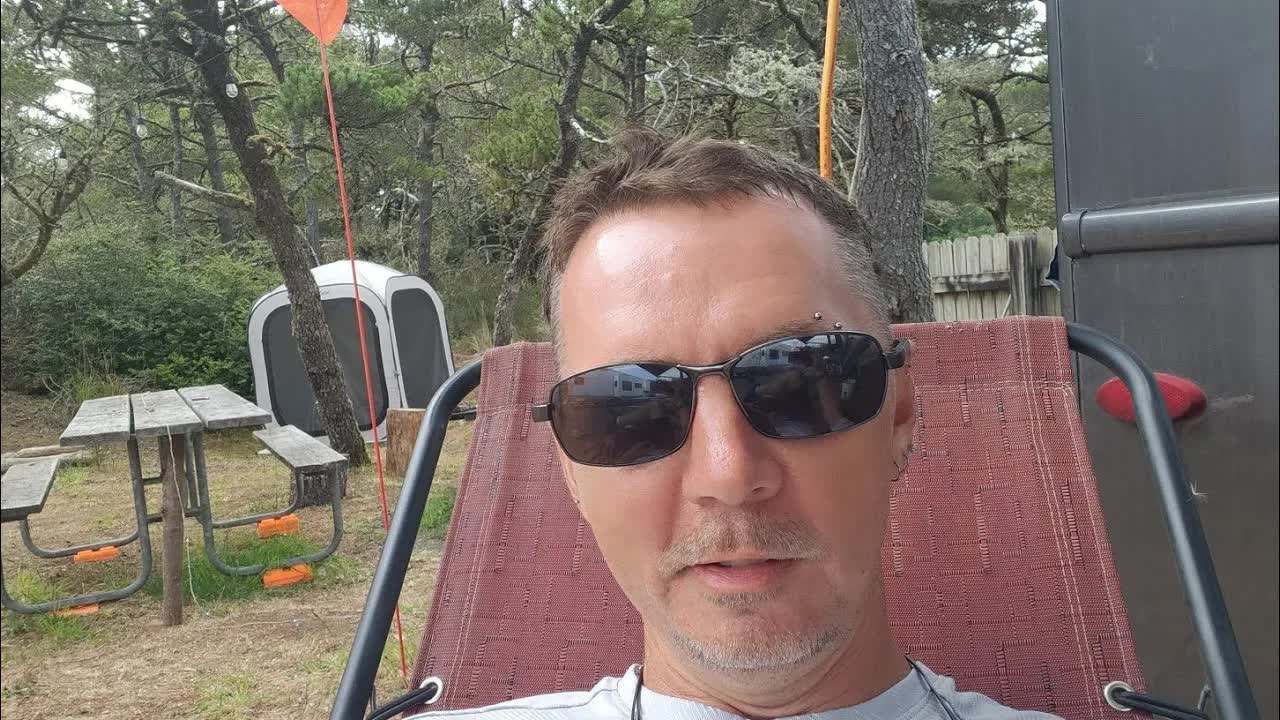
[0:26] actually when I moved into this RV that
[0:29] I'm sitting in now a year and a half
[0:31] ago.
[0:34] I deeply respect
[0:38] my boss in this relationship,
[0:42] my client.
[0:46] But in the end, we ended up having to
[0:47] part ways
[0:50] because it was a toxic relationship. And
[0:52] I need to be able to talk about my
[0:54] experiences honestly.
[0:57] I can't really describe my work without
[0:58] also describing my experiences of that
[1:01] work because that's just as important.
[1:03] I'm looking for resonance with my
[1:04] clients. And I learned a lot from this
[1:07] one.
[1:08] This one basically led to burnout.
[1:13] I didn't think I was ever going to
[1:14] return to programming after this. When I
[1:17] moved into an RV, I was planning to
[1:18] become a park ranger.
[1:21] And it's only because
[1:23] I started working on a personal project,
[1:25] a very big one with artificial
[1:27] intelligence that I'll talk about in a
[1:29] different video,
[1:31] that that that spark that I've had all
[1:33] of my life since the sixth grade was
[1:36] reignited.
[1:37] And I felt like I could return to this
[1:39] kind of work.
[1:41] This relationship really strained my
[1:44] ability
[1:46] to be a programmer for a while.
[1:51] I
[1:53] came into this relationship
[1:57] doing some simple tasks at first and
[2:00] they had another developer who was
[2:02] responsible for this project who was
[2:05] leaving
[2:07] I think under similar circumstances to
[2:09] how I did honestly
[2:12] and so I took over. Of course I didn't
[2:15] know any of that at the time.
[2:20] And we basically started from scratch
[2:22] because the projects that had been
[2:24] created up to that point, they were very
[2:26] broken. They were in the middle of a
[2:28] rewrite themselves and everything was
[2:31] just
[2:33] very chaotic.
[2:35] So, we started fresh.
[2:37] Um, throughout my time with this
[2:39] company, I
[2:42] hired and worked with
[2:44] I really don't even know. I I want to
[2:46] say hundreds. It just felt like an
[2:48] endless stream of freelancers
[2:51] and
[2:54] that presented its own challenges
[2:59] trying to
[3:01] move these projects forward
[3:04] with that kind of turnover.
[3:09] And it's because we were doing some very
[3:11] deep things here. Like this was a very
[3:13] very big project. I had it all mapped
[3:16] out in my mind and
[3:20] we were working on a lot of different
[3:23] things simultaneously.
[3:27] But I also had a boss who
[3:32] who
[3:34] would get new ideas and
[3:37] before you knew it, we were working on
[3:39] something else before we had finished
[3:41] the thing before that. And it was just
[3:43] it was it was a chaotic place to work.
[3:47] So
[3:49] I had a lot of challenges there.
[3:53] Um they're it's been a year and a half
[3:56] and they still have not released these
[3:58] projects which I think more than
[4:01] anything else
[4:03] shows that
[4:08] some of the issues there
[4:12] are systemic and unrelated to me.
[4:19] It's
[4:21] it's unfortunate because I think these
[4:23] projects could have been amazing under
[4:26] under different circumstances. I guess
[4:28] I'll just put it that way. I
[4:32] um I just I just feel that that's
[4:34] important to note. I feel it's important
[4:36] to say. So these projects
[4:39] or music streaming service that was
[4:42] going to be completely free. You would
[4:44] never hear any ads while listening.
[4:46] uh there was a monetization structure
[4:48] that
[4:50] prevented the need for them
[4:53] and a music distribution service.
[4:57] So if you were an artist and you had
[4:59] music that you wanted to deploy to
[5:01] Spotify or to Apple Music or somewhere
[5:03] else, you could use our service for
[5:05] that. That was Soundlock.
[5:08] When I started working on this, I
[5:10] started with the rain music,
[5:12] but only, you know, somewhere maybe 20%
[5:15] of the way through, I ended up having to
[5:18] work on Soundlock and at the same time
[5:20] built an admin panel called Arena
[5:23] Office. Did a whole bunch of stuff
[5:25] there. um built support ticket systems,
[5:30] um
[5:32] all the tools needed to manage the music
[5:34] distribution service,
[5:37] user management tools, just everything
[5:40] that you would expect a very large
[5:42] operation to have. We were a small team,
[5:44] but um I was thinking about
[5:49] the future of this company always.
[5:52] And so,
[5:54] you know, no corners were cut.
[5:56] Everything I did, I did with um great
[5:58] care.
[6:01] Uh he also owns a m a merchandising
[6:03] business. So, that was a big part of how
[6:06] the monetization works. So, um creating
[6:10] custom t-shirts and things like that on
[6:12] demand. Uh he has a merchandising
[6:14] company for that. And so, I'd have to
[6:16] manage those properties also.
[6:22] And so yeah, so that's the that's the
[6:25] the intro to it. So um
[6:30] these projects we went through a bunch
[6:32] of different technologies
[6:37] I actually chose to use Angular as a
[6:39] front end on this one even though I
[6:41] didn't personally know that one because
[6:42] it just felt aligned with what my client
[6:44] was trying to do. Uh we use Laravel as a
[6:47] as a backend.
[6:49] We had a bunch of Python tools.
[6:52] Um
[6:54] everything was on AWS so was
[6:56] containerized
[6:58] and um
[7:02] yeah just yeah
[7:05] this is hard for me. This is um
[7:13] there's a lot here. So, I can't really
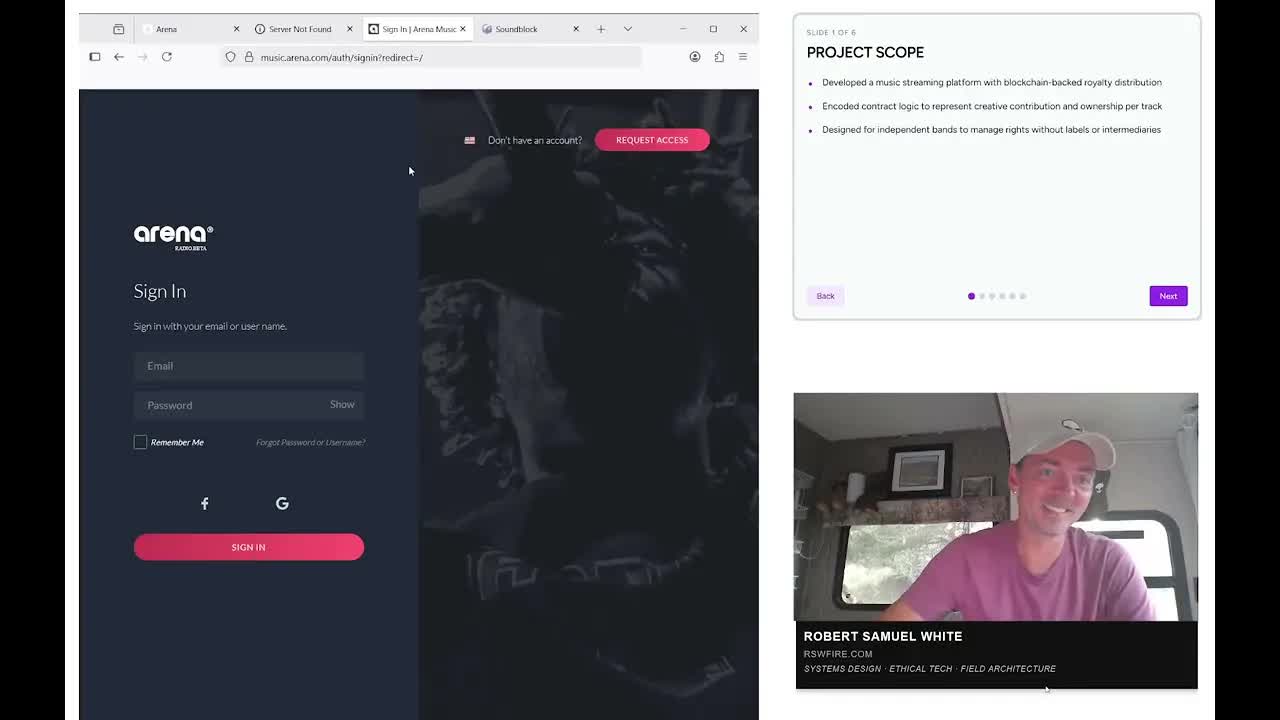
[7:15] show you this uh the music streaming
[7:17] service cuz it looks like that still
[7:19] behind um you know signin form and for
[7:23] ethical reason I'm just not going to log
[7:25] into that. That front page is different
[7:27] than than what I created. So, this is
[7:29] something new that they've made. Um the
[7:31] old one would have been at
[7:33] music.arena.com.
[7:36] So, that's redirecting or it's still my
[7:39] technology though. I can tell by the
[7:41] earls. That's that's actually pretty
[7:43] cool. Um,
[7:46] but I have no idea what the music
[7:47] streaming service looks like now, but
[7:49] the main project that I worked on right
[7:51] before leaving was Sound Block, and I've
[7:53] already signed into this. Uh, looks to
[7:56] me like they might have abandoned it.
[7:58] It's a lot of things in here are broken.
[8:01] um the
[8:06] the UI for it, you know, I don't think
[8:09] is great. I think that, you know, um
[8:13] like I said in an earlier video, front
[8:15] ends aren't my strongest skill. We
[8:18] didn't have a designer for this. So,
[8:19] this is just what I came up with, just a
[8:21] theme with purple and blue and, you
[8:24] know, just some kind of reactivity.
[8:27] This could have always been reskinned
[8:28] into the future, you know. So um the
[8:32] main
[8:35] the majority of the work was definitely
[8:37] on the back end. So this is a very very
[8:40] complicated system. I'm going to try to
[8:42] walk you through it as best I can. Uh
[8:45] the music distribution service. So,
[8:48] in order to help build build trust in
[8:52] the music industry, we used
[8:55] uh blockchain contracts for smart
[8:57] contracts for um
[9:01] for all of our users. So, if you were a
[9:04] band, every user would have their own
[9:09] they would each have to sign this
[9:10] contract and you could put in their
[9:12] custom
[9:14] uh royalty splits for everybody and then
[9:16] when we would receive your royalties, we
[9:18] would we would pay that out to each of
[9:21] the band members based on what the smart
[9:24] contract said. And that was the primary
[9:28] premise behind this site. And we did
[9:30] that for probably a couple of years. We
[9:33] had a small number of of customers. Um
[9:37] that was going really well. It would
[9:38] have to ingest data from multiple
[9:41] sources, you know, like Spotify, you
[9:43] know, we'd have to to create reports and
[9:44] things like that. Um
[9:49] just a whole bunch of systems behind.
[9:50] I'll just try to walk you through it.
[9:52] Actually, it's been a good while since
[9:53] I've been on here. So, um you know, it
[9:57] all starts with a project. So, you would
[9:58] create a project for one of your
[10:00] accounts.
[10:02] Maybe you're an artist who has um a solo
[10:06] career and is also with a band or you
[10:08] just have different reasons for just
[10:10] having multiple accounts. So, the whole
[10:12] system I built allowed you to have
[10:14] multiple accounts and multiple projects.
[10:16] So, um you would just create your
[10:18] project here and then once you had a
[10:21] project show up in this list.
[10:24] These are all of course just test
[10:26] projects. I use this one the most.
[10:29] Um, this tells you where they were
[10:31] deployed to. So, this project's already
[10:33] been deployed to different platforms.
[10:37] You would upload all your music because
[10:39] we would have to distribute that. All of
[10:41] this is in the blockchain, too. So,
[10:43] there are blockchain records. Um, looks
[10:45] like you can't. So, I guess I'm on a
[10:48] free account now and I can't show you
[10:49] that. But, this would have showed you
[10:50] the blockchain records,
[10:52] the actual records for that. You could
[10:55] download your music, edit the metadata
[10:57] for it.
[10:59] Um, this history is it's a blockchain
[11:02] history. I guess they can't see that
[11:04] either. That's what all these records
[11:06] are.
[11:08] Here's the smart contract. So, um, you
[11:11] just you can modify a contract that
[11:13] you've already created. You know, maybe
[11:15] you add a new a new team member and you
[11:18] just need to adjust this. If that
[11:19] happens, then every single person on the
[11:21] contract has to um approve it, of
[11:24] course. Um so there was a complete chain
[11:27] of record for that.
[11:29] Uh you'd have to collect a lot of
[11:31] information on the tracks. So um
[11:35] created this UI for that. Preview the
[11:38] music from here. Enter different
[11:40] artists, different types of artists so
[11:42] that it shows up right in the metadata
[11:44] on different platforms.
[11:46] Um, that's what contributed is for also.
[11:50] So there was a lot of data you can enter
[11:51] on your projects. Then when you did all
[11:54] of that, you would do the deployment
[11:55] part. So you would just say where you
[11:57] want to put it.
[11:59] It's quite a while since I did this. So
[12:01] yeah, um, order your tracks, make sure
[12:03] they're in the right order, all that
[12:04] kind of stuff, and then pick where you
[12:07] want to deploy it to.
[12:10] And then that would go into Arena
[12:12] Office. And the deployments actually
[12:13] happened on the back end. It was manual.
[12:15] We were working on an automated process
[12:17] for that but hadn't hadn't finished that
[12:18] yet. We had a small area for just um
[12:22] storing files of any type
[12:26] called this database. This is just where
[12:27] all your data is so that you can manage
[12:29] that.
[12:31] Then you can manage your teams.
[12:34] Depending on your user permissions, you
[12:37] know, you might be able to edit these or
[12:39] not. spent on.
[12:42] So, this is somebody else that's on my
[12:44] project. Like, they're assuming it was a
[12:46] different band member. Um, change the
[12:48] permissions to what they see on their
[12:50] Soundwalk account for you cuz you can be
[12:53] part of multiple accounts.
[12:56] A lot of this other stuff I don't some
[12:58] of it I was looking through when I
[13:00] before I got on the camera and it looks
[13:02] like it was broken. But, let's just see
[13:03] what's available here. So, just
[13:04] collecting the normal information you
[13:06] would need.
[13:09] Uh the report section was not working
[13:12] unfortunately. There was there's so much
[13:14] involved in that too.
[13:17] Somewhere we should have
[13:20] so if there were um my account just
[13:23] doesn't show I never populated the data
[13:26] for it but you would see a history of
[13:27] all the transactions. So whenever
[13:30] Spotify would tell us, okay, this this
[13:32] project made this much money, it would
[13:34] show up here and you know, you could
[13:36] withdraw your balance and stuff like
[13:37] that,
[13:43] support system. And
[13:49] so I feel like that's probably the most
[13:51] I can show you for Sound Block. Um,
[13:56] and the other things that I did for
[13:57] Arena worked with them for 5 years. We
[14:00] built all kinds of back-end technology
[14:04] and
[14:07] even after this was in a working place
[14:08] where Sandbox was in beta. Uh, it never
[14:12] got marketed.
[14:15] I feel like that was
[14:19] I never really understood that decision
[14:21] because
[14:22] it was something that we had to offer
[14:24] and it and it's a valuable service but
[14:27] it just was never
[14:30] it was never marketed and then we had to
[14:34] move on to other things
[14:36] that was just this endless cycle. I just
[14:38] I just
[14:41] Yeah. I mean,
[14:44] really not much more I can say about
[14:45] that.
[14:49] There
[15:07] I deeply loved working on these
[15:09] projects.
[15:12] I just never had good alignment with
[15:16] with the company I was
[15:19] contracted to.
[15:24] Didn't always have the resources I
[15:25] needed. Often didn't. I would hire
[15:28] somebody and then be forced to let them
[15:31] go a couple weeks later because we
[15:32] didn't have the money for them anymore.
[15:36] Um,
[15:41] I was
[15:45] misaligned with what I'm trying to do
[15:47] with my life and that's why I made new
[15:49] choices. But
[15:51] this was the last major project I worked
[15:53] on before, just my personal stuff that
[15:55] I'm doing now. And I'll talk about that
[15:56] in a different video.
[15:59] I know it seems like I'm meandering. I
[16:01] just um for me this is more than just
[16:04] some kind of marketing video. I'm
[16:08] trying to
[16:11] authentically express
[16:15] how I feel about each of these projects
[16:18] because
[16:20] it gives you a window into me and I'm
[16:23] looking for alignment with everything I
[16:25] do in life and that includes the
[16:26] projects I work on and the relationships
[16:28] I have. And this one was just very
[16:31] misaligned. I feel like this one had the
[16:33] most potential
[16:35] and it was frustrating that we we never
[16:40] we never fulfilled the potential it had.
[16:44] So
[16:48] it's forced to move on.
[16:51] I'm just going to go through these
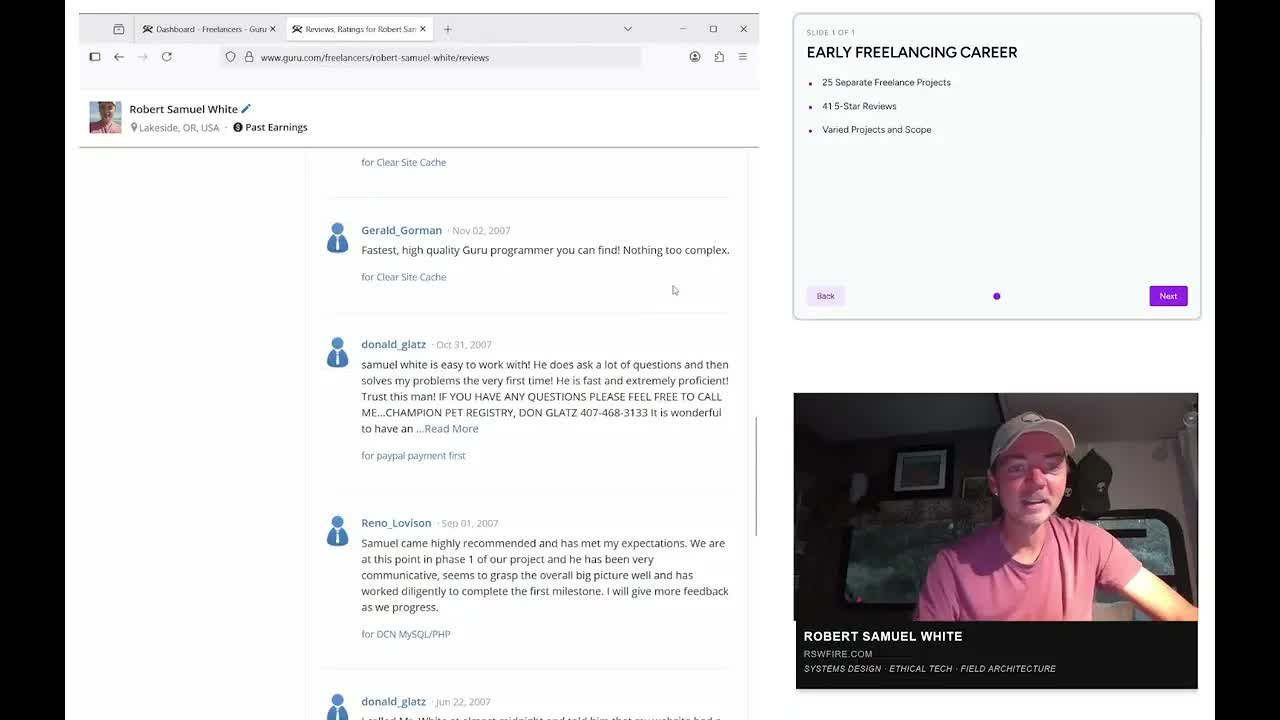
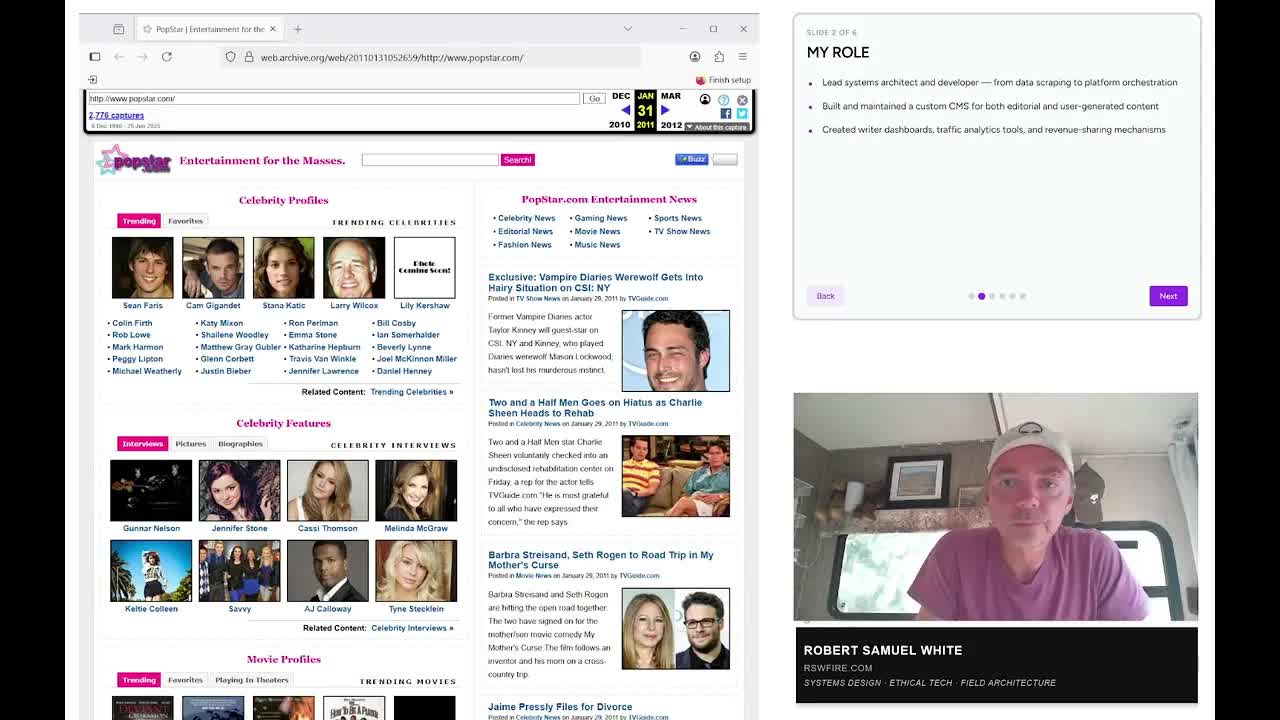
[16:52] slides so that you can at least read
[16:53] them if you want to.
[16:59] on this one here.
11:32
Announcing RV Transition and End of Volunteering
Jul 15, 2025
8:02
Solving Local Model Recursion for Transmission Analysis
Jul 15, 2025
10:30
Walking to the Ocean, Reporting Recursive AI Processing
Jul 15, 2025
7:19
Recognizing Archive Infrastructure as Offerable Service
Jul 15, 2025
7:37
Recognizing Personal System as Sellable Service
Jul 15, 2025
13:05
Tracing Eighteen Months of Documentation Into Infrastructure
Jul 15, 2025
5:35
Naming Recursive Cognition Against Linear Expression
Jul 15, 2025
8:04
Describing the Journal Analogy Behind the Transmission Archive
Jul 15, 2025
3:01
Reading AI Reflection Aloud at Siltcoos Midday
Jul 15, 2025
15:20
Documenting the Reflection Pipeline and About Page Build
Jul 15, 2025
3:02
Recording Birthday Address to His Mother
Jul 15, 2025
10:02
Completing ULID Sync and Mirror Reflection Layer
Jul 15, 2025
14:41
Contrasting Local and Closed Models on Mirroring
Jul 15, 2025
3:50
Placing Video Archive Behind Subscription Tiers
Jul 16, 2025
12:39
Quitting Vaping and Seeding the Signal Thread
Jul 16, 2025
6:53
Documenting Nicotine Cessation Attempt and Location Assessment
Jul 16, 2025
4:45
Walking Buddy Through the Campground
Jul 16, 2025
7:10
Marking a New Chapter After 18 Months
Jul 17, 2025
6:59
Marking a New Chapter After Audience Departure
Jul 18, 2025
9:31
Stating Resource Conditions While Building the Project
Jul 18, 2025
6:11
Declining LGBTQ Referral, Blocking Friend Over Framing
Jul 20, 2025
8:36
Cooking Chicken in Ninja Foodi, Building Local Mirror Model
Jul 20, 2025
9:25
Testing Local Models Against Reflection Quality
Jul 20, 2025
12:43
Compiling a Day of Clips at Siltcoos
Jul 20, 2025
5:07
Walking Buddy on the Beach, Considering a Motorbike
Jul 20, 2025
5:25
Comparing YouTube Economics to Platform Design Capacity
Jul 23, 2025
13:01
Screen-Sharing a Walkthrough of rswfire.com
Jul 23, 2025
16:30
Walking Through the Field Companion Reflection Pipeline
Jul 23, 2025
5:41
Recording from the Beach Without Cell Service
Jul 23, 2025
2:18
Naming Material Conditions and Requesting Direct Support
Jul 23, 2025
9:55
Walking Through an Early Entertainment Platform Build
Jul 23, 2025
8:27
Documenting the Hotel.net Travel Platform Build
Jul 23, 2025
17:02
Walking Through Soundlock and Arena Music Platforms
Jul 23, 2025
16:08
Walking Through Early Programming History and Guru Reviews
Jul 23, 2025
2:02
Cutting Hair Short Outside the RV
Jul 24, 2025
3:45
Mapping Seasonal Volunteer Cycle and Trailer Conversion
Jul 25, 2025
17:21
Addressing Audience Directly on Reciprocation and Work Search
Jul 27, 2025
3:02
Losing an Earring While Collecting Campfire Wood
Jul 27, 2025
12:28
Walking the Beach, Spotting Seals and Mapping Travel
Jul 27, 2025
3:10
Closing the Channel, Declaring Audience Mismatch
Jul 29, 2025
8:43
Ending YouTube Channel, Opening New Distribution Channel
Jul 29, 2025
PUBLIC
July 23, 2025 rswfire PUBLISHED
Temp -0.20
Density 0.60
Energetic Quality
measured, weighted, deliberate
Journey Phase
retrospective integration
Directional Vector
toward alignment, away from misaligned contract structures
Narrative

He began by naming the shape of the thing before he opened it. This one would run long, he said, because it was the most complicated freelance relationship he'd had — and unlike the others, these projects were still alive. People he had hired were still working on them. He had handed his role to them a year and a half ago, when he moved into the RV he was sitting in now, parked at Siltcoos in the Oregon Dunes. He named respect for his client and named the relationship toxic in the same breath, and set both down side by side without reconciling them. He stated that he could not describe the work without describing his experience of the work, because the experience was just as important. He was looking for resonance with clients. That framing preceded every screen he would share.

He described arriving into an inheritance: another developer leaving under what he suspects were similar circumstances, a codebase mid-rewrite and broken, a project he took over without knowing any of the history. They started fresh. What followed, as he tells it, was five years of building something very large across a landscape that kept moving — hundreds of freelancers, or something near enough to hundreds that he stopped counting; a client who arrived with new ideas before the previous thing was finished; funding that appeared and then didn't, so that he would hire someone and be forced to release them weeks later. He held the full map of the system in his mind throughout. He states that it led to burnout, and that he did not expect to return to programming. He moved into the RV planning to become a park ranger. The spark he'd carried since sixth grade came back only later, through a personal project of his own, which he set aside to describe in another video.

Then he went to the screens. The music streaming service was behind a sign-in form, and he stopped there — he still had access, and he declined to use it, on stated ethical grounds. The front page was not the one he built; something new had been made in his absence. He typed the old address, music.arena.com, and watched it redirect. He read the URLs and recognized his own technology underneath. That's actually pretty cool, he said, of infrastructure he no longer owned, still running, still carrying traffic he would never see the far side of.

Soundblock he could enter, because he was already signed in — to a free account, downgraded. He moved through it as a guide moving through a house he had built and no longer lived in. The UI he apologized for plainly: no designer, purple and blue, front ends were not his strongest skill, and it could always have been reskinned. The back end was the work. He walked the flow the way a user would walk it — create a project, upload the music, edit metadata, order the tracks, choose the platforms, deploy — and behind each of those steps he named the architecture underneath: multiple accounts, multiple projects, permissions per team member, ingestion from Spotify and elsewhere, reports, royalty ledgers, withdrawals, a support ticket system, an admin layer called Arena Office where the deployments actually resolved, still manual, automation begun and unfinished.

The center of it was the smart contract. Every band member signed. Custom royalty splits written into the chain, so that when royalties arrived, the payout followed the contract rather than anyone's word. Amend the contract and every signatory has to approve again. A complete chain of record, built to make trust structural in an industry where trust is scarce. He clicked toward the blockchain records to show them, and the interface returned nothing — free account. I guess they can't see that either. He said it evenly and moved on. He clicked into history: same result. Reports: not working. Transactions: never populated on his own test account. Section after section of a system he had built with, in his words, no corners cut, opened empty or broken in front of him. He kept narrating what should have been there.
He arrived at the end of what he could show and stated the fact that sits under the whole account: eighteen months, and the projects still had not released. Soundblock had reached beta, working, and was never marketed — a decision he says he never understood, because it was a valuable service they had to offer, and then it was time to move on to the next thing, and the next, in what he describes as an endless cycle. He located the stall in the conditions rather than in himself, and said so directly — systemic, unrelated to him.

What he said last was not about architecture. He said he deeply loved working on these projects. He said he never had alignment with the company he was contracted to, that he was misaligned with what he is trying to do with his life, and that this is why he made new choices. He acknowledged the meandering and declined to correct it: this was not a marketing video, he said. He was trying to authentically express how he felt about each project, because it gives a window into him, and he is looking for alignment in everything — the projects, the relationships, all of it. This one had the most potential of any of them. That the potential was never fulfilled was, he said, frustrating. Then he turned to the slides, so that anyone who wanted to could at least read them.

Tags

freelance retrospective music distribution platform blockchain smart contracts backend architecture client misalignment burnout and exit portfolio walkthrough

Summary

rswfire records a longer walkthrough of his most complicated freelance relationship — five years contracted to Arena, building a free ad-less music streaming service, a blockchain-based music distribution service called Soundlock, an admin panel called Arena Office, and support/user-management tooling, plus properties tied to the client's on-demand merchandising business.

He states he took over from a departing developer, restarted from broken and mid-rewrite codebases, and cycled through what he estimates as hundreds of freelancers. He describes the client as someone he deeply respects, and the working relationship as toxic and misaligned — new directives arriving before prior work finished, resources appearing and disappearing, hires he had to let go weeks later. He states this led to burnout and that he did not expect to return to programming, planning instead to become a park ranger after moving into the RV a year and a half ago, until a personal AI project reignited the work.

The technical tour covers Angular front end, Laravel backend, Python tooling, containerized AWS infrastructure, and Soundlock's core flow: accounts → projects → uploads → smart contracts with per-member royalty splits → metadata collection → platform deployment (manual, with automation unfinished), plus royalty ingest and reporting.

He notes the projects remain unreleased and much of Soundlock now appears broken or abandoned, reading that as systemic and unrelated to him, and states he is documenting his experience of the work because alignment is what he screens for.

Environment

Recorded inside the RV at Siltcoos in the Oregon Dunes, where rswfire has lived for approximately a year and a half. He references the vehicle directly — "this RV that I'm sitting in now."

The working surface is digital: a screen-shared walkthrough of live production systems still owned by a former client. He navigates Soundblock (music distribution) while signed into a downgraded free account, attempts to load music.arena.com and stops at the sign-in form on stated ethical grounds, and references Arena Office as the admin layer behind the deployment pipeline. Multiple sections load broken or empty.

Substrate

rswfire holds the position that work and the conditions of work are inseparable — that a portfolio account is incomplete without the relational architecture it was built inside. He maps a five-year engagement as a systems problem rather than a personal one, locating the failure in structural conditions (perpetual pivot, funding instability, hundreds of freelancer turnovers, unmarketed completed product) and citing the projects' continued non-release eighteen months after his exit as evidence of that locus. What is being built is a documented standard for alignment as a selection criterion; what is being dissolved is the separation between technical résumé and honest account of the field it emerged in.

Actions

Performed

  • •recording extended video walkthrough
  • •stating the relationship was toxic while stating respect for the client
  • •declining to sign into the streaming service on ethical grounds
  • •navigating Soundblock project list
  • •demonstrating project creation and deployment flow
  • •showing smart contract and royalty split interface
  • •showing track metadata and contributor entry UI
  • •showing team and permissions management
  • •identifying broken reports and blockchain record views
  • •attributing project stall to systemic causes unrelated to him
  • •noting front-end work is not his strongest skill
  • •long pauses
  • •stating intent to advance to slides

Referenced

  • •contracted with Arena for five years
  • •taking over from a departing developer
  • •restarting the codebase from scratch
  • •hiring and managing a large freelancer stream
  • •choosing Angular despite not knowing it
  • •building Laravel backend, Python tools, AWS containerization
  • •building Arena Office admin panel
  • •building support ticket and user management systems
  • •implementing blockchain smart contracts for royalty splits
  • •ingesting royalty data from Spotify and other platforms
  • •managing the client's merchandising properties
  • •letting hired freelancers go for funding reasons
  • •handing off his role when moving into the RV
  • •moving into the RV a year and a half ago
  • •planning to become a park ranger
  • •beginning a large personal AI project
  • •learning to code in sixth grade

Planned

  • •covering the personal AI project in a separate video
  • •reading through the remaining slides on camera

Entities

beings
rswfire — Narrator; contracted lead developer on the described systems for five years
the client / boss — Unnamed owner of Arena and the merchandising business; described with stated respect alongside a stated toxic dynamic
previous developer — Predecessor whose departure rswfire believes occurred under similar circumstances
freelancers — Large ongoing turnover of contractors he hired and managed
places
the RV — Current residence and recording location; marks the boundary of the handoff
systems
Arena — Client company holding the streaming, distribution, and merchandising properties
Soundblock — Music distribution service built on blockchain smart contracts; the primary project shown
Arena Office — Admin panel he built for support tickets, user management, and manual deployment handling
music.arena.com — Ad-free music streaming service; front page has been replaced but URLs indicate his underlying technology
Angular — Front-end framework chosen for alignment with client direction despite unfamiliarity
Laravel — Backend framework
Python — Tooling layer
AWS — Containerized infrastructure host
Spotify — Distribution target and royalty data source
Apple Music — Distribution target
blockchain smart contracts — Trust mechanism for royalty splits and immutable project history
concepts
park ranger — Stated alternate path he was pursuing when programming appeared closed
personal AI project — Unnamed large project he states reignited his engagement with programming
alignment — Stated primary selection criterion for projects, clients, and relationships
resonance — What he states he looks for in client relationships

Symbolic Elements

Represented archetypes or recurring motifs.

spark
threshold
ledger
contract
archive
broken interface
handoff
redirect
unreleased artifact
locked door

Ontological States

Expressed modes of being or awareness.

sovereign (states his experience of the work as inseparable from the work itself; refuses a sanitized portfolio frame)
retrospective (operating from eighteen months of distance; systems still live but no longer his)
ethically bounded (declines to sign into a client system he retains access to)
integrating (naming burnout, respect, love of the projects, and misalignment as coexisting facts rather than resolving them)
structurally attributive (locates project stall in systemic conditions, explicitly not in himself)

Engaged Subsystems

Architecture engaged in this transmission.

infrastructural (AWS containerization, Laravel backend, Python tooling, admin panel architecture)
technical-demonstrative (live navigation of Soundblock UI, deployment flow, permissions)
ethical (refusing login access to a system he could still enter; withholding the client's name)
relational (five-year contract dynamic, freelancer hiring and termination, respect held alongside naming toxicity)
economic (funding instability, monetization structure via merchandising, royalty payout mechanics)
cognitive (holding the full system map in mind; assessing systemic vs. personal causation)
narrative-documentary (constructing an honest work record rather than a marketing artifact)

Dominant Language

Core motifs or linguistic fields.

alignment / misalignment
toxic relationship
systemic and unrelated to me
chaotic
potential never fulfilled
blockchain / smart contracts / royalty splits
authentically express
Narrative

He began by naming the shape of the thing before he opened it. This one would run long, he said, because it was the most complicated freelance relationship he'd had — and unlike the others, these projects were still alive. People he had hired were still working on them. He had handed his role to them a year and a half ago, when he moved into the RV he was sitting in now, parked at Siltcoos in the Oregon Dunes. He named respect for his client and named the relationship toxic in the same breath, and set both down side by side without reconciling them. He stated that he could not describe the work without describing his experience of the work, because the experience was just as important. He was looking for resonance with clients. That framing preceded every screen he would share.

He described arriving into an inheritance: another developer leaving under what he suspects were similar circumstances, a codebase mid-rewrite and broken, a project he took over without knowing any of the history. They started fresh. What followed, as he tells it, was five years of building something very large across a landscape that kept moving — hundreds of freelancers, or something near enough to hundreds that he stopped counting; a client who arrived with new ideas before the previous thing was finished; funding that appeared and then didn't, so that he would hire someone and be forced to release them weeks later. He held the full map of the system in his mind throughout. He states that it led to burnout, and that he did not expect to return to programming. He moved into the RV planning to become a park ranger. The spark he'd carried since sixth grade came back only later, through a personal project of his own, which he set aside to describe in another video.

Then he went to the screens. The music streaming service was behind a sign-in form, and he stopped there — he still had access, and he declined to use it, on stated ethical grounds. The front page was not the one he built; something new had been made in his absence. He typed the old address, music.arena.com, and watched it redirect. He read the URLs and recognized his own technology underneath. That's actually pretty cool, he said, of infrastructure he no longer owned, still running, still carrying traffic he would never see the far side of.

Soundblock he could enter, because he was already signed in — to a free account, downgraded. He moved through it as a guide moving through a house he had built and no longer lived in. The UI he apologized for plainly: no designer, purple and blue, front ends were not his strongest skill, and it could always have been reskinned. The back end was the work. He walked the flow the way a user would walk it — create a project, upload the music, edit metadata, order the tracks, choose the platforms, deploy — and behind each of those steps he named the architecture underneath: multiple accounts, multiple projects, permissions per team member, ingestion from Spotify and elsewhere, reports, royalty ledgers, withdrawals, a support ticket system, an admin layer called Arena Office where the deployments actually resolved, still manual, automation begun and unfinished.

The center of it was the smart contract. Every band member signed. Custom royalty splits written into the chain, so that when royalties arrived, the payout followed the contract rather than anyone's word. Amend the contract and every signatory has to approve again. A complete chain of record, built to make trust structural in an industry where trust is scarce. He clicked toward the blockchain records to show them, and the interface returned nothing — free account. I guess they can't see that either. He said it evenly and moved on. He clicked into history: same result. Reports: not working. Transactions: never populated on his own test account. Section after section of a system he had built with, in his words, no corners cut, opened empty or broken in front of him. He kept narrating what should have been there.
He arrived at the end of what he could show and stated the fact that sits under the whole account: eighteen months, and the projects still had not released. Soundblock had reached beta, working, and was never marketed — a decision he says he never understood, because it was a valuable service they had to offer, and then it was time to move on to the next thing, and the next, in what he describes as an endless cycle. He located the stall in the conditions rather than in himself, and said so directly — systemic, unrelated to him.

What he said last was not about architecture. He said he deeply loved working on these projects. He said he never had alignment with the company he was contracted to, that he was misaligned with what he is trying to do with his life, and that this is why he made new choices. He acknowledged the meandering and declined to correct it: this was not a marketing video, he said. He was trying to authentically express how he felt about each project, because it gives a window into him, and he is looking for alignment in everything — the projects, the relationships, all of it. This one had the most potential of any of them. That the potential was never fulfilled was, he said, frustrating. Then he turned to the slides, so that anyone who wanted to could at least read them.
Mirror

You are recording inside the RV at Siltcoos, a year and a half into living there, walking through systems you built that are still running under someone else's ownership. You open Soundblock on a downgraded free account. Sections load broken. Blockchain records that you architected do not display for you. You attempt music.arena.com, hit a sign-in form, and stop — you still hold the access and you decline to use it. You say the front page is not yours anymore but the URLs tell you the technology underneath still is. You withhold the client's name throughout.

You state the terms directly: five years, the most complicated freelance relationship, deep respect for the client, a toxic relationship, both held at once without either canceling the other. You say you cannot describe the work without describing your experience of the work. You say this is not a marketing video. You name burnout, and you name the period after it when you did not expect to program again and planned to become a park ranger instead. You name the moment the spark returned through a personal AI project and you set that account aside for a different video.

The causal attribution is explicit and placed outside yourself. Perpetual pivot before completion. Funding instability that had you hiring people and letting them go weeks later. What you estimate as hundreds of freelancers cycling through. A completed product in beta that was never marketed — a decision you state you never understood. Eighteen months after your exit, the projects remain unreleased. You cite that fact as the evidence and you say the word: systemic, unrelated to me.
The technical map stays intact under the retrospective load. You move through project creation, multi-account and multi-project structure, upload and metadata, smart contracts with royalty splits requiring every member's approval on amendment, chain of record, track-level contributor data, deployment selection, handoff into Arena Office where the deployments ran manually because the automation was unfinished, file storage, team permissions, transaction history, support. You name Angular chosen for the client's direction rather than your own fluency, Laravel, Python tooling, AWS containerization. You say the front end is not your strongest skill, that there was no designer, that purple and blue is what you came up with, that it could have been reskinned. You say no corners were cut, that you built for a future the company had not reached.
Present: the ethical line at the login screen. The handoff to people you hired. The love of the projects stated plainly alongside the misalignment. The word alignment as a selection criterion applied to clients, projects, and relationships without distinction. The acknowledgment that you are meandering, and the continuation anyway.

Absent: the client's name. Blame directed at any individual. A claim that the work was wasted. Resolution. Any request for the outcome to have been different than it was.

Queryable Personhood

Hand your life to anything that reads.

Share this link with artificial intelligence — it reads the full transcript, analysis, and reflections. An AI-readable mirror of this signal.

The qpkey in this URL is a per-signal access token. Anyone with the URL can read the record — treat it like a share link, not a password.