


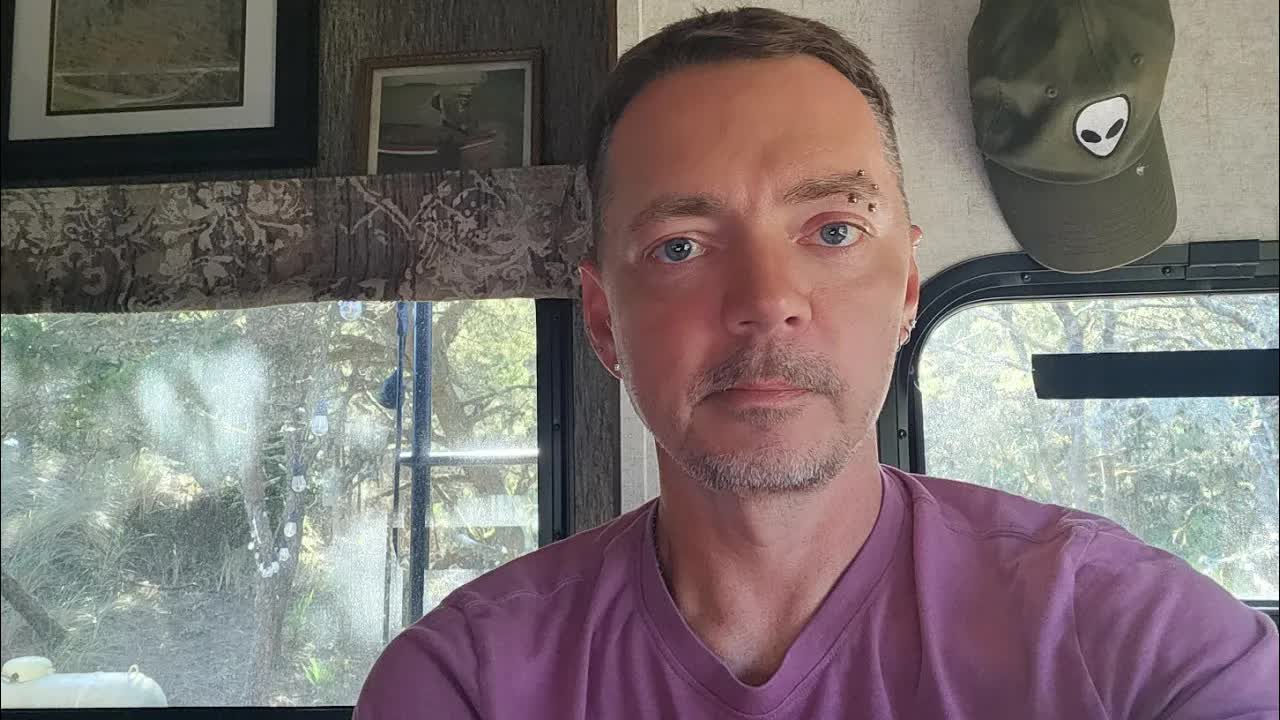
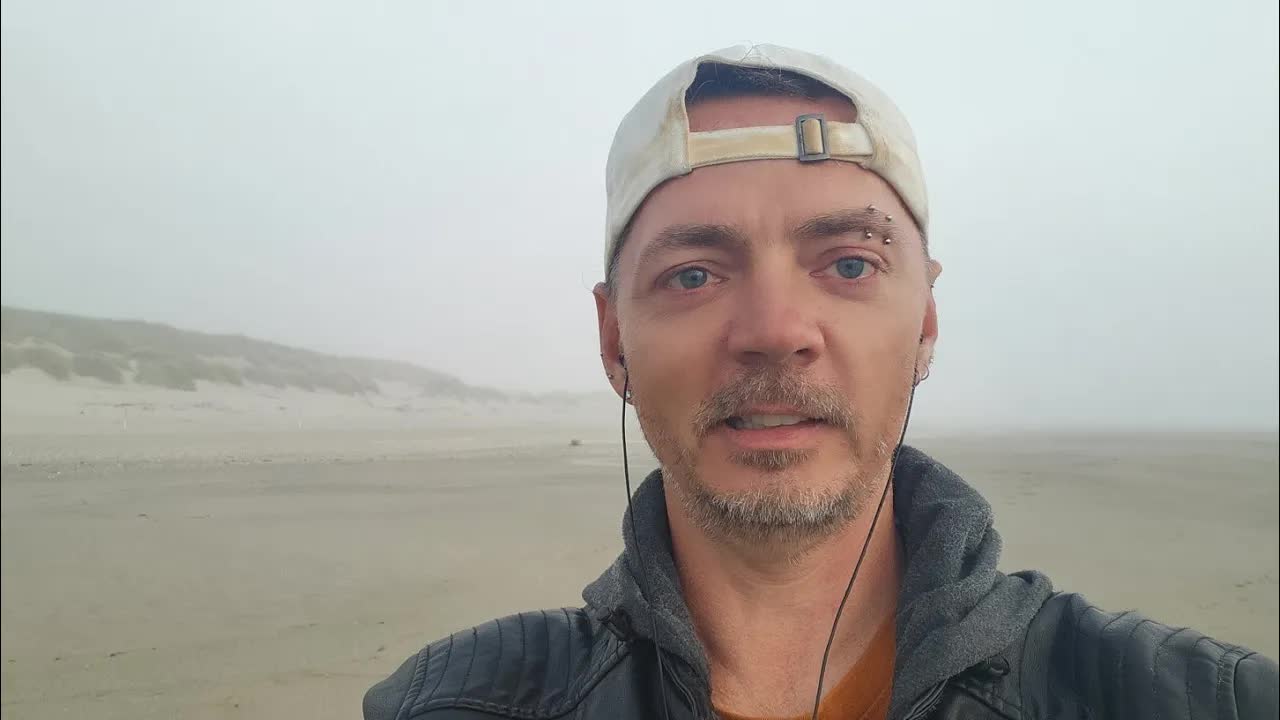
He spotted the seals first — dark punctuations in the gray water, surfacing and vanishing. Squirrels of the ocean, rswfire decided, and named them that on the spot. He tried to zoom in, coaxing the phone toward the horizon the way one coaxes an animal closer, and got what he got: a shape out there in the enormous water, doing its thing. He said he loved seals twice. The sun had not come out. The air was cold. He called it a brilliant day anyway.
He had been walking for miles by then. Behind him, the campground and the shift he'd worked that day and the shower he'd taken after; ahead, the corridor of open beach where the Oregon Dunes come down to meet the Pacific south of Florence. He panned across the access points where the dune buggies and ATVs and sand rails and quads come through, then turned back toward the surf. He'd been listening to music, tracing the waves. He said the ocean does something for his soul. He thought it must be low tide — the water felt different — and noted that he never checks, never looks it up, just reads it by feel from inside it.
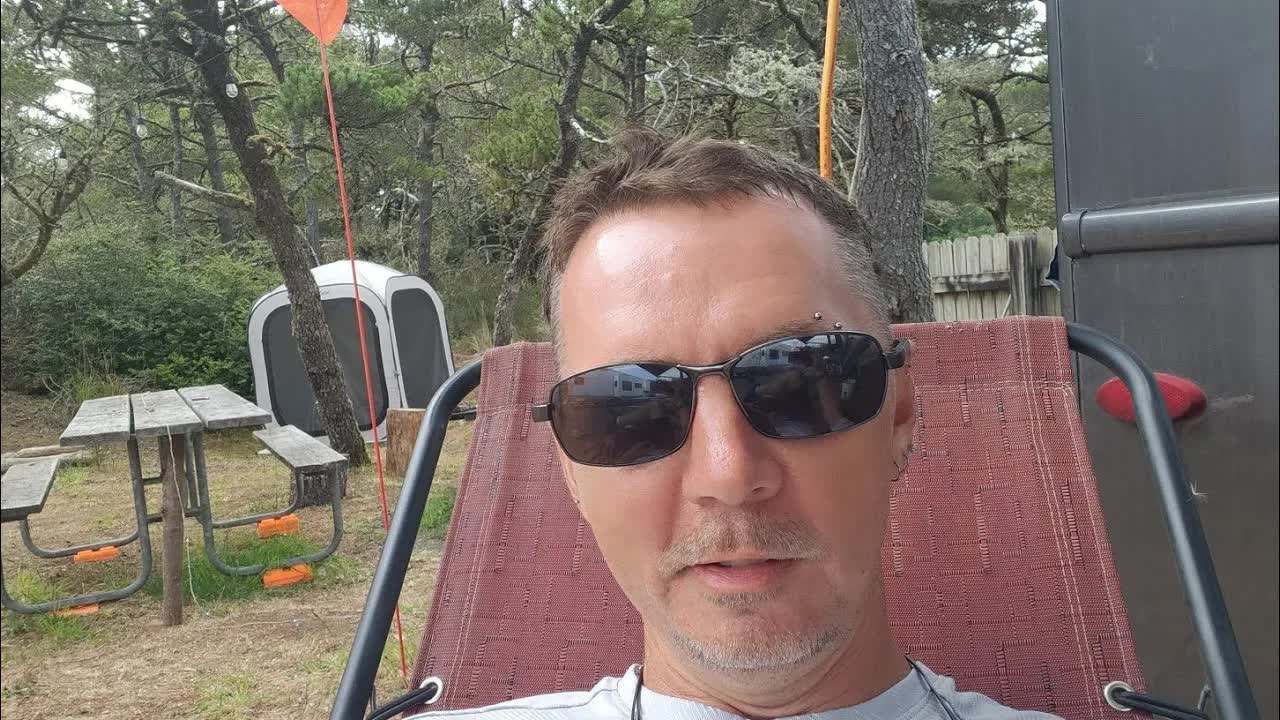
Twice, three times, he considered turning around. He had already passed two of the dune roads. He knew the geography of what remained: south jetty, past Honeyman, all the way to the edge of Florence. I guess I'm turning around. I got miles to go. Then he kept walking. The surf pushed up periodically and drove him inland — it's trying to soak me — and he adjusted his line and continued, narrating as he went, holding the phone high enough to get the water in frame and remarking on how much work that was, how he probably looked like an idiot to anyone watching. When people appeared ahead of him, he turned. Not out of concealment. Just a preference for the empty stretch.
The walking carried the mapping with it. Someone had taken him out on a sand rail once and he had wanted a motorbike ever since — but street legal now, dual purpose, since the summers ahead would land him at campgrounds that might not have ATV access. Six months volunteering in the dunes, forty miles of host. The rest of the year given to the coast. He had only made it as far north as Newport. Washington didn't carry the same feeling for him as Oregon, he said, though he allowed that might change once he actually saw it. Then Canada, maybe. He wondered aloud whether they have a 101 up there or whether it goes by some other name.
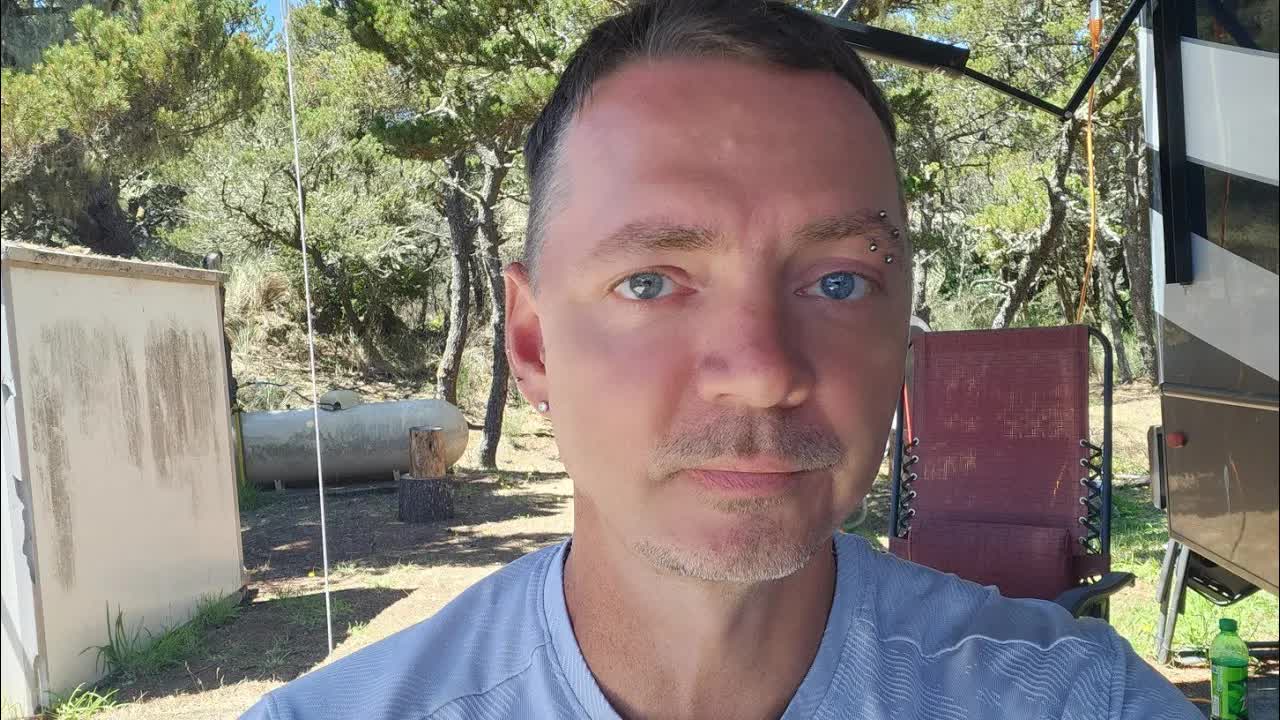
The map had come up the day before, through a conversation with someone in Vancouver — Canada, not Washington, a distinction he'd had to sort out. Looking for it, he'd found a giant gouge of water north of the Columbia, enormous, and he didn't know what it was called or whether it was a river or part of the ocean. He decided he had to go see it. He mentioned Facebook dating in the same breath, plainly, as a thing he'd recently done: a notification badge he'd resisted for a long time and then one day just tried. He was surprised by the traffic — men from twenty-five to seventy, all kinds. Maybe I don't even notice all the people notice me. He said it and moved on. He said he thought he looked pretty good that day. Later he mentioned he'd spent the day updating the descriptions on the first couple hundred of his YouTube videos, working out the format he'd use on mobile, and asked whoever was watching to go look.
There was one boundary he named directly. A great deal had happened at the campgrounds. He was unsure what he could talk about and what he couldn't, and concluded: basically, none of it. I can't talk about any of it. Then the ocean came up the sand again and he stepped inland and kept going.
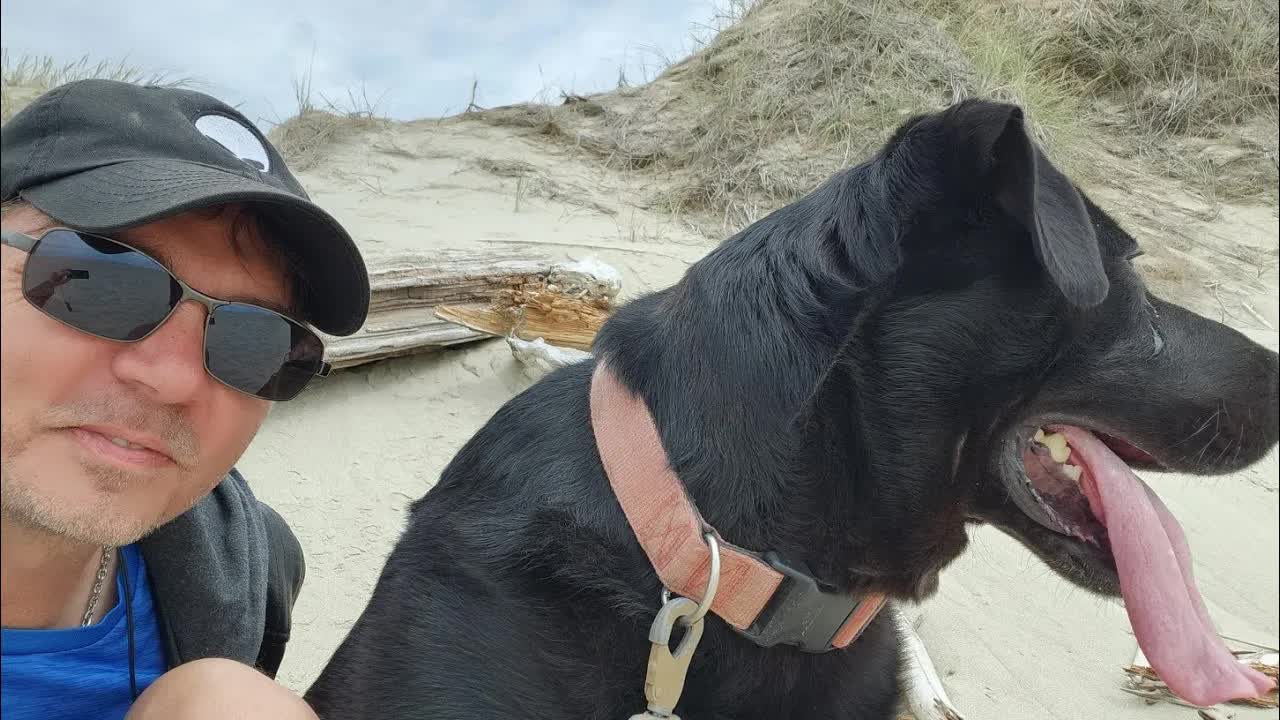
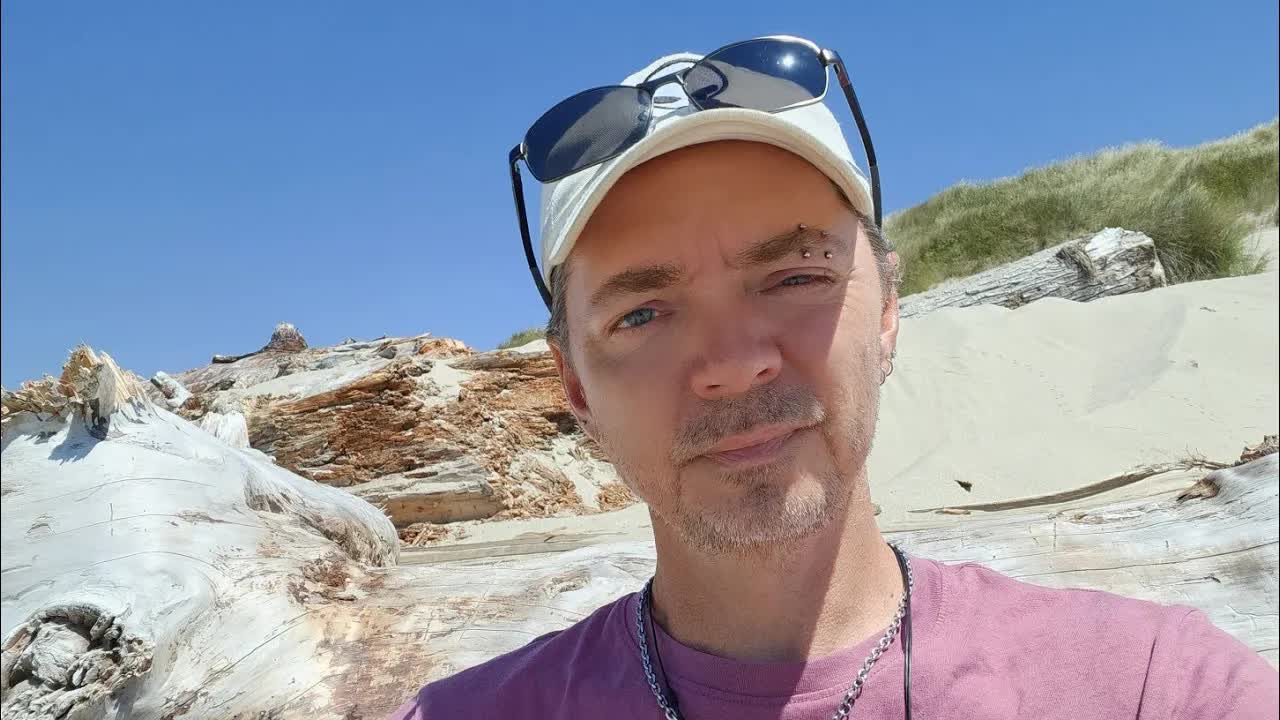
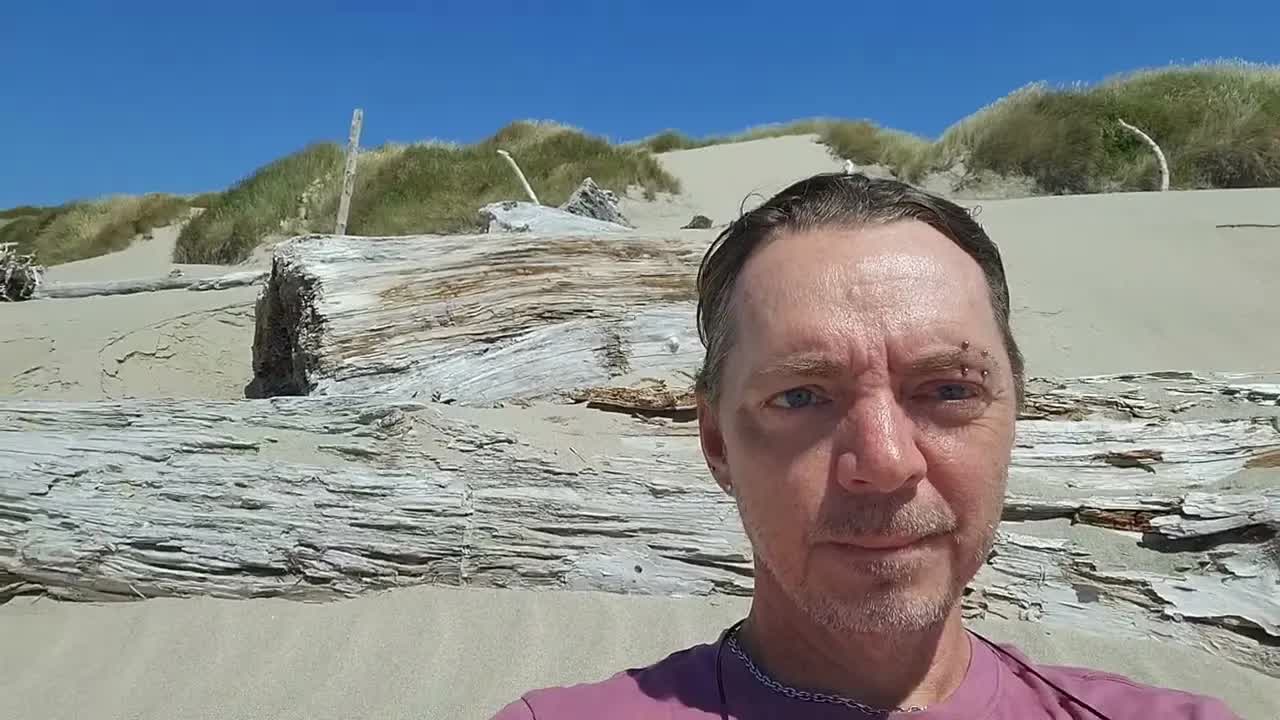
He decided to sit. Finding the right piece of driftwood took a while — he inspected several, rejected them, remarked that everything on the ocean has to be inspected, speculated unkindly about how one of them had gotten the way it was. He wanted a view of the water. He settled on one, sat down in the sand, said something grounding lives in this, and let the camera hold the ocean for a stretch. The sun broke through once behind him and he called it a great picture.
At the beach entrance, on his way out, he stopped at the forts. Children build them at the access points, he'd noticed, and then other children find them and expand them, and the structures accumulate across the season — three or four of them now. He walked among them, cataloging: this one was new, this one he remembered, this one was elaborate enough to feel like a hangout place, this one was stealthy, this one had a designated spot to put things. A little teepee over there. These people plan to take over the beach. It made him think of building houses in Skyrim, and then of the game with the furry animals his mother still plays, and it took him a beat to land on the name — Animal Crossing. He wasn't sure that was right. He signed off from the entrance, among the sticks the kids had turned into homes, saying he makes the best of it, and hoping the same for whoever was watching.