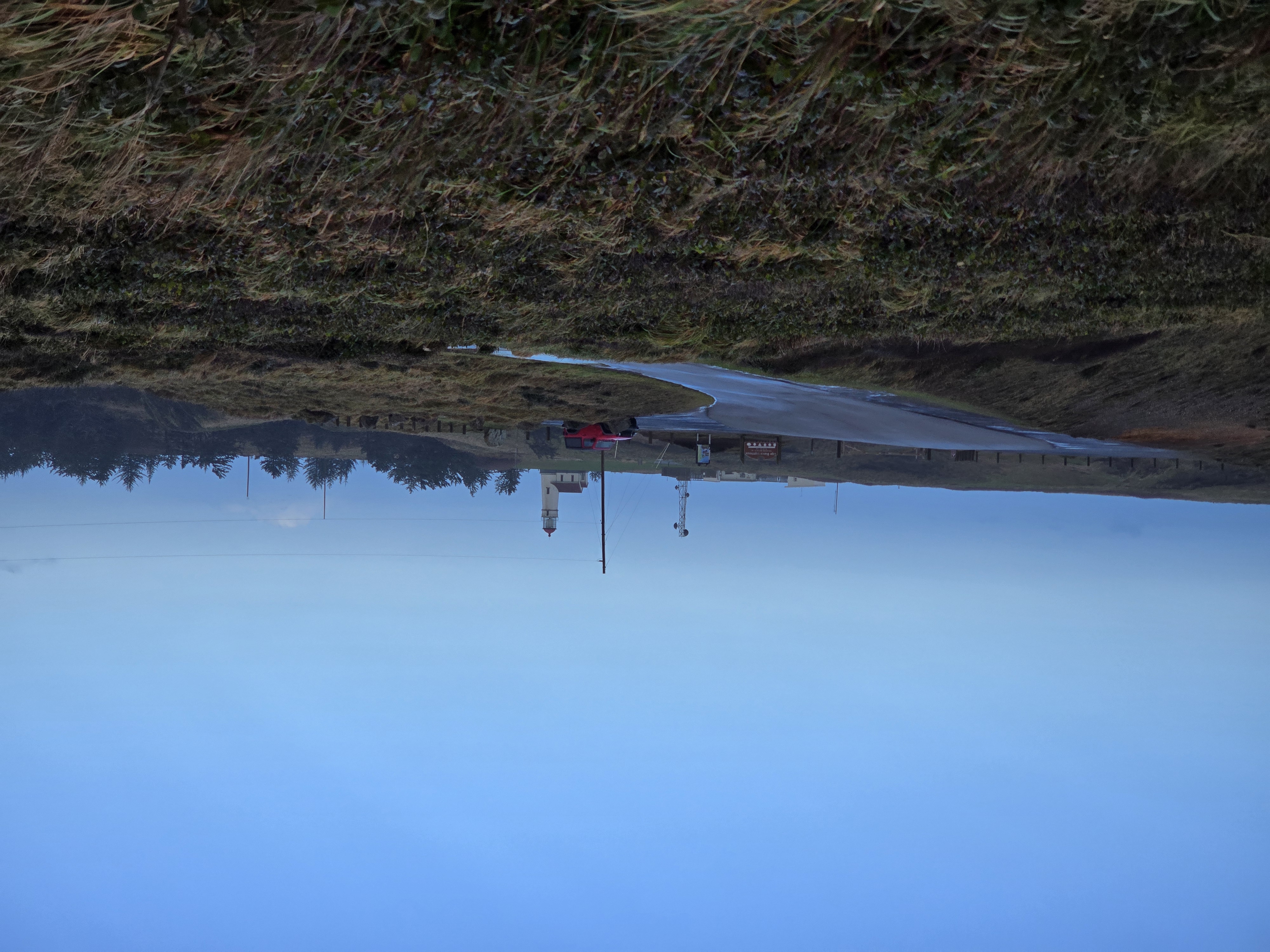
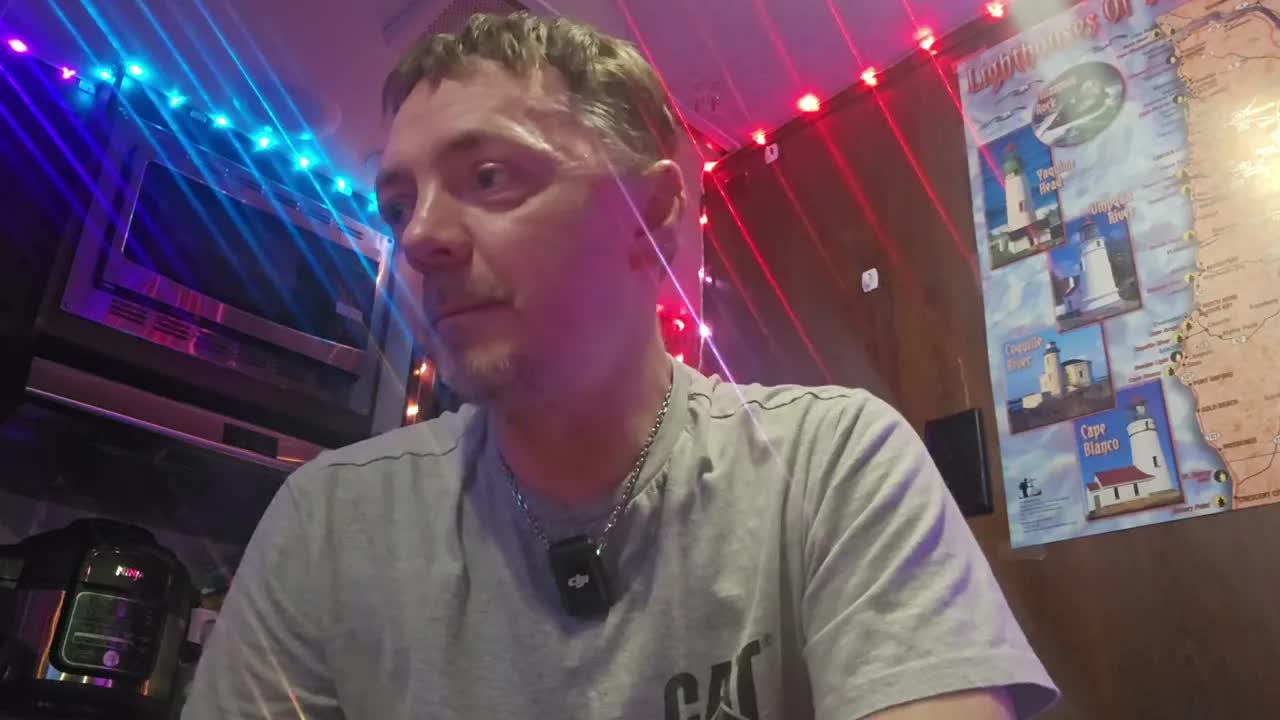
He was the only one on that day. Four sites, and the earth of them — the flattened duff, the ash, the leavings of people who had already gone. rswfire cleaned what needed cleaning and left two of them alone because they had been cleaned up already, then came back to the RV at site number one to make lunch before going out for the last one. Between the sites he took the golf cart around the loop, checked on people, met some, helped some. He described it as fun. The campground in January on the Oregon coast is a quiet operation, mostly empty pads and the sound of a small electric motor moving between them, and he was moving through it as the person responsible for it.
Somewhere in the middle of that day the other thread surfaced. His cousin had told him to get a job — that volunteering wasn't good enough. He named what volunteering actually does: it pays his rent, his electric, his water, his laundry, gives him a place to shower, connects him to the Park Service, integrates him into the kind of life he wants to have. He said she doesn't think about any of that. Neither did the people on his YouTube channel when he asked for help and was told to get a job. He stated the through-line plainly — that this is why he doesn't ask for help, why it's hard to receive it, why he is always the one giving it. And then the ethic underneath, stated as a rule he holds himself to: somebody needs help, he doesn't make it conditional, he doesn't make them feel bad. You can say no. You can say you can't or you don't want to. Just don't wrap it in that much patronizing.
The day tested the rule within the hour. Two women at a campsite couldn't get out — they needed a crowbar-type tool to raise their jack, and their departure time had come and gone two hours earlier, and he needed the site cleaned to finish his shift. He got his boss on the phone. Park Service policy: no lending tools. He already knew that and had already told them. They asked him to just leave it on the ground. He said he didn't even know what the tool looked like. As he was leaving, one of them told him he shouldn't be working there if he didn't know what he was doing, honey. He registered it as remarkable rudeness and said outright he would never understand people. Later, on the loop, he set it down himself: that was about her, having a bad day, unable to get out of her campsite, expecting everyone else to solve her problems. It could put you in a bad mood if you wanted it to.
He finished anyway — cleaned the site, checked the others several times, did work in the yard, got the curtain up, screwed in, though he noted the method didn't seem efficient. Then the drive to Lakeside, where he opened a post office box and picked up a few groceries. He acknowledged how it might look, getting a PO box while poor, and gave the reasons: he needs one nearby, he needs a place to receive mail, and it establishes residency here. The boxes turned out to be cheap, which surprised him. On the way back he caught himself doing thirty in a fifty-five, thinking rather than driving, and laughed at it. He had worked from eight until almost three — seven hours against a four-hour cap. His boss for the day let the limit slide past without a second's pause, and he was fine with that, because he is making himself part of this campground.
Back at site one, an hour and a half of daylight left, he met a woman camping there. She had asked him questions while he was out in the golf cart and he could tell she was new to it, so he went and checked on her. She lives in a van. He told her she needed a surge protector for the power pedestal, explained that the ones she'd need are harder to find than the thirty- and fifty-amp versions, showed her which to get. They kept talking. She told him she has a transgender son and that she worries for him — the elections, the climate disasters. He told her she was prepared, that this is why she got the van, the same reason he got the RV. He told her she was afraid to run her electric heater at night and she shouldn't be: use it, be warm, it's okay. She had been trying to smoke stealthily when he showed up, and before he left he told her she could do that here, she wasn't doing anything wrong. He told her she gets it, she sees the direction things are heading, she's going to be okay. He said he's right there at site number one if she needs anything.
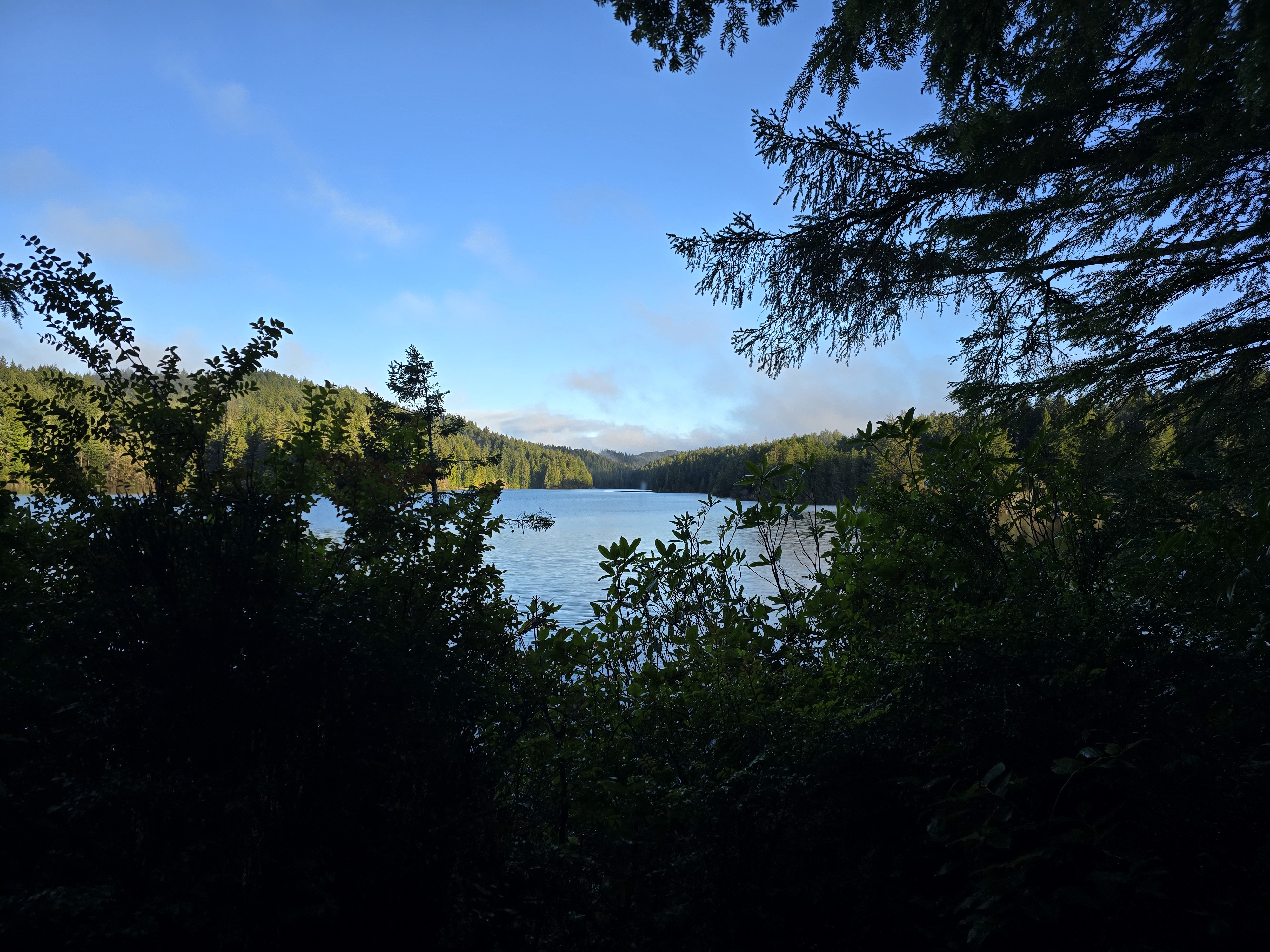
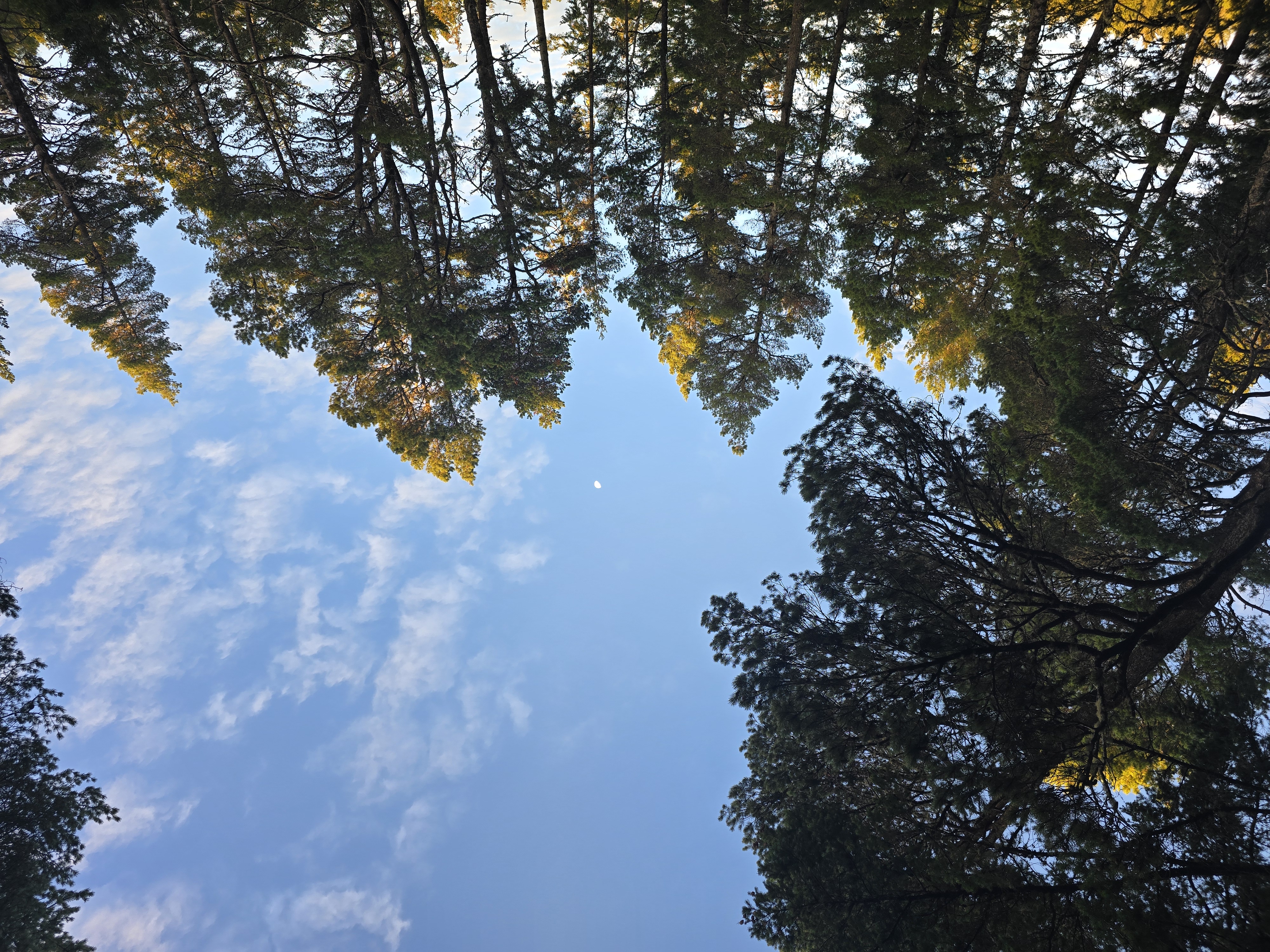
Then the hike — up to the bench, a good distance, maybe a mile, maybe a mile and a half, out toward the lake in the last of the light. He sat at his spot for a while. He said the encounter really affected him, because he has been resisting his path for a long time. He stated that he believes he was put on this earth for a certain purpose, molded for what's coming, and that he resisted it because he didn't like his path being out of his control — something he didn't ask for, something he didn't create himself. He had intended to escape into the forest; a gatekeeper woke his heart up and he decided not to abandon the world. He named the cost still standing: credit at 770 or 780 before he came here, now four hundred, maybe three, a done thing; not many friends or family left to ask, and he has asked everyone. Alongside it he named his own footing — faith in himself, and an expectation, which he said isn't a spiritual thing, that the universe will meet him halfway. He helped this woman, he said. He helped her feel seen. He knew she did, and it moved him. That's his path, and it feels right.