

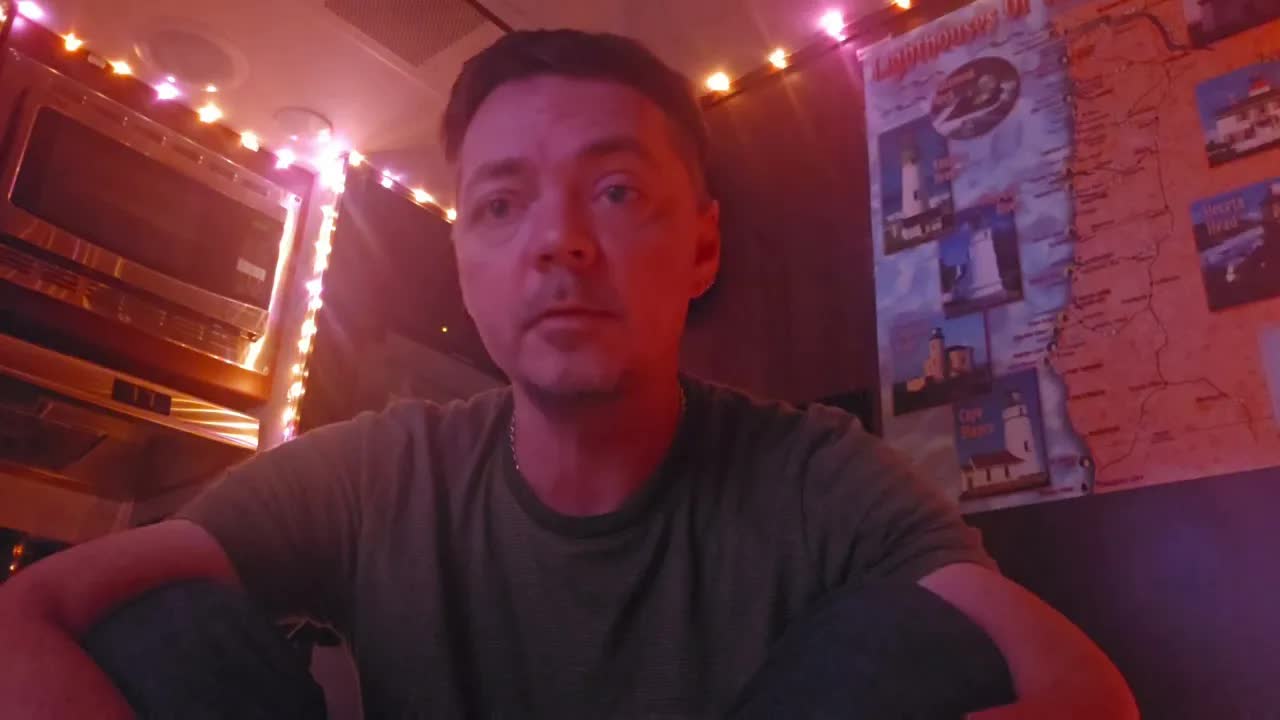



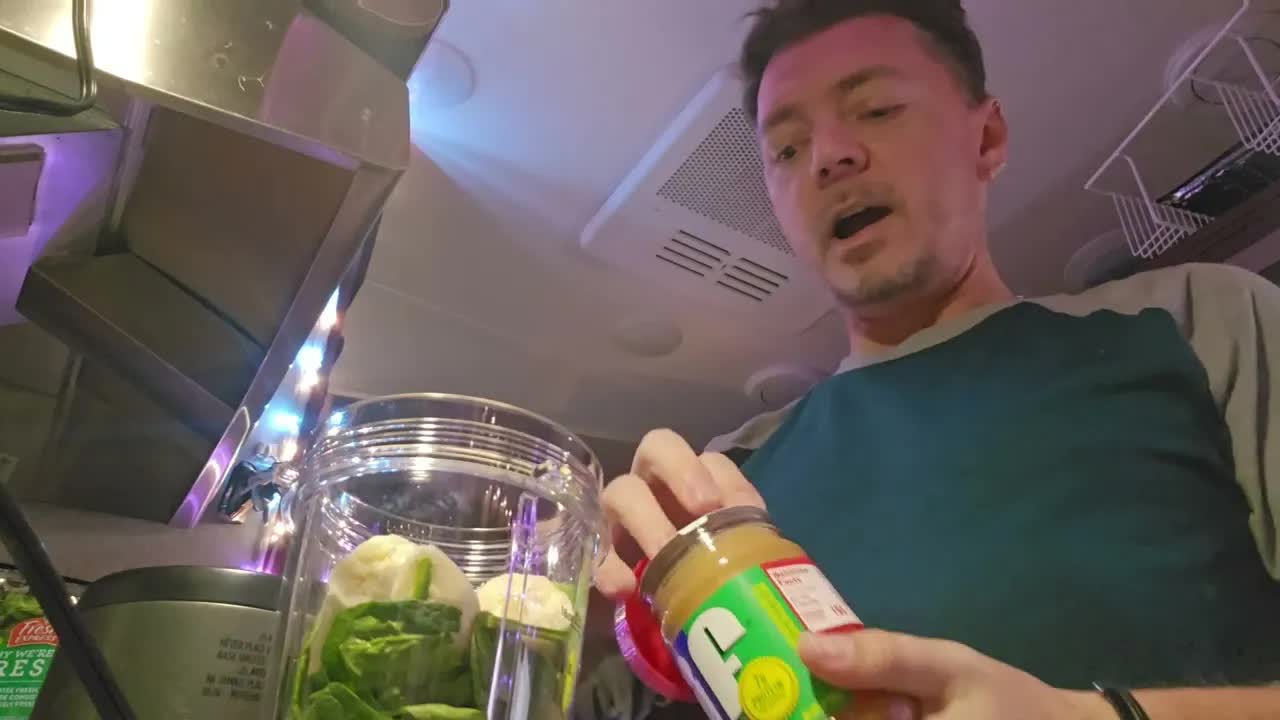
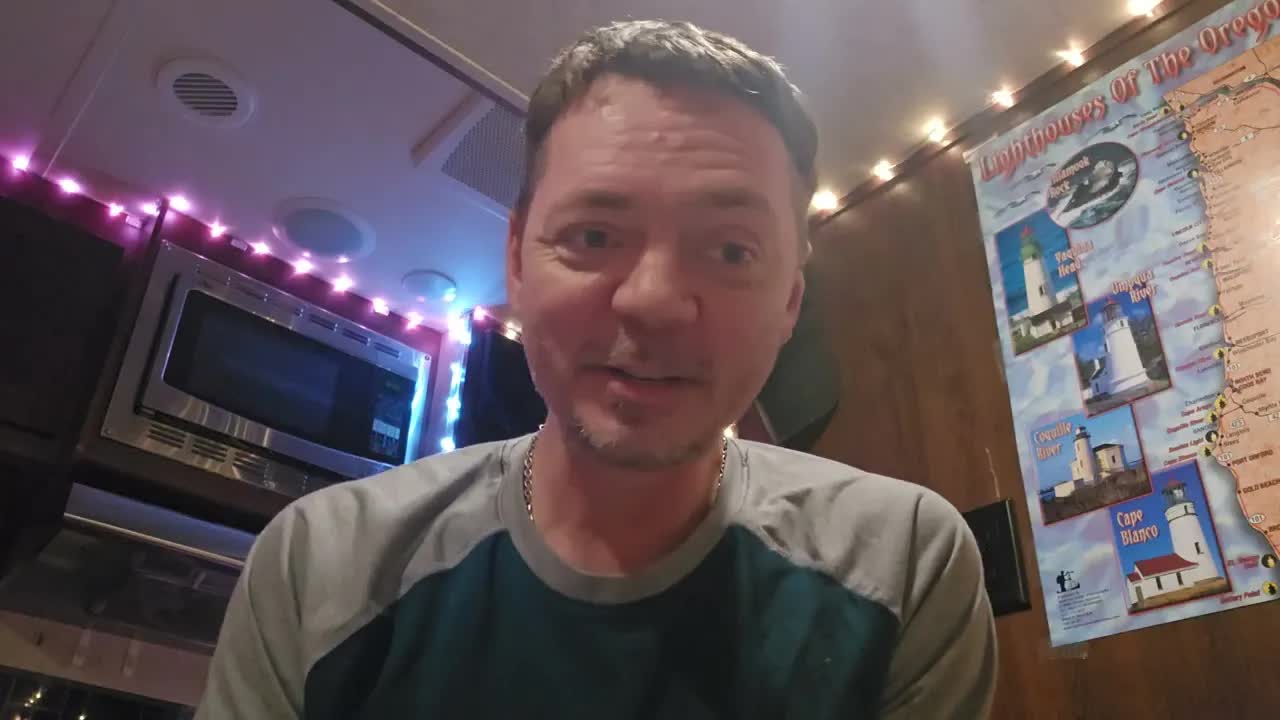





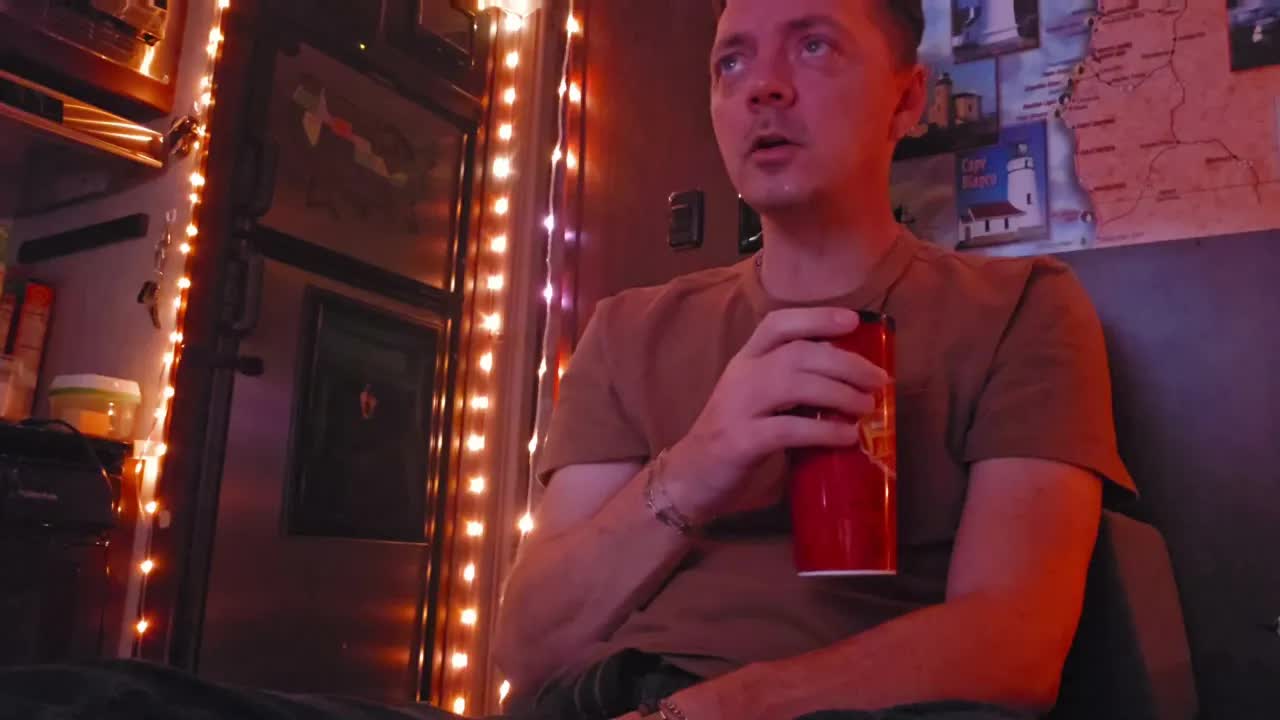



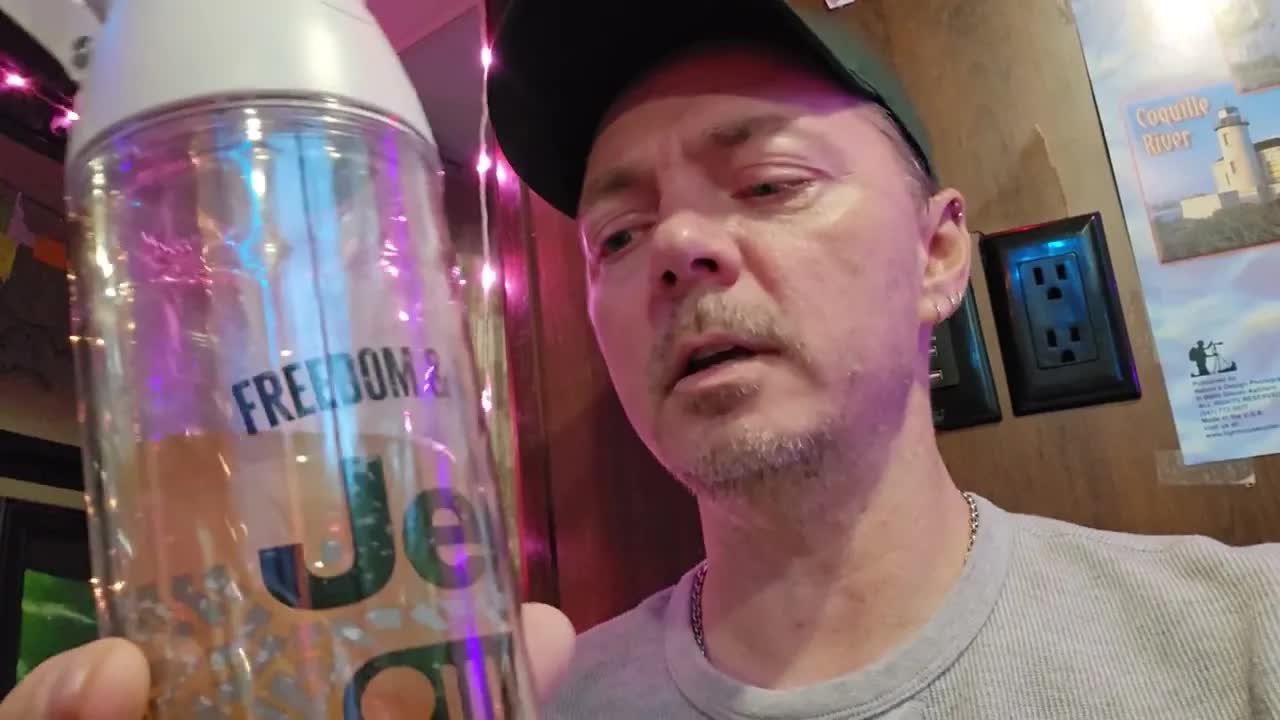
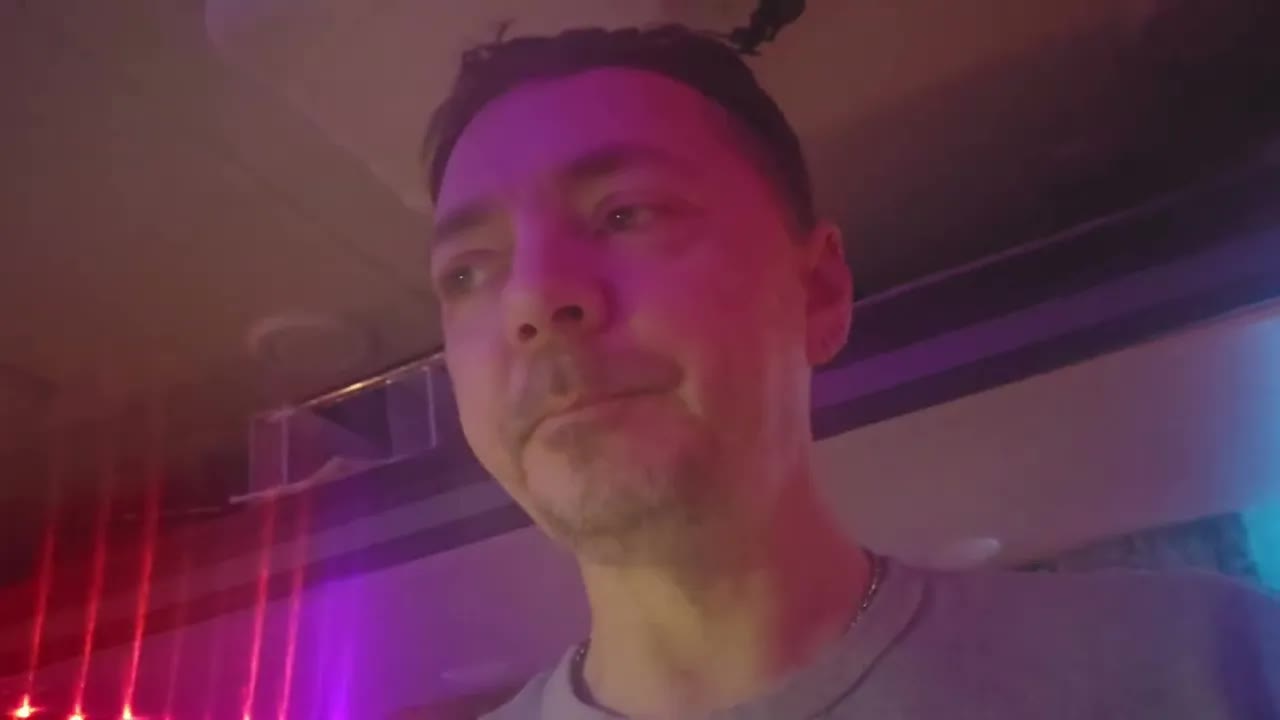

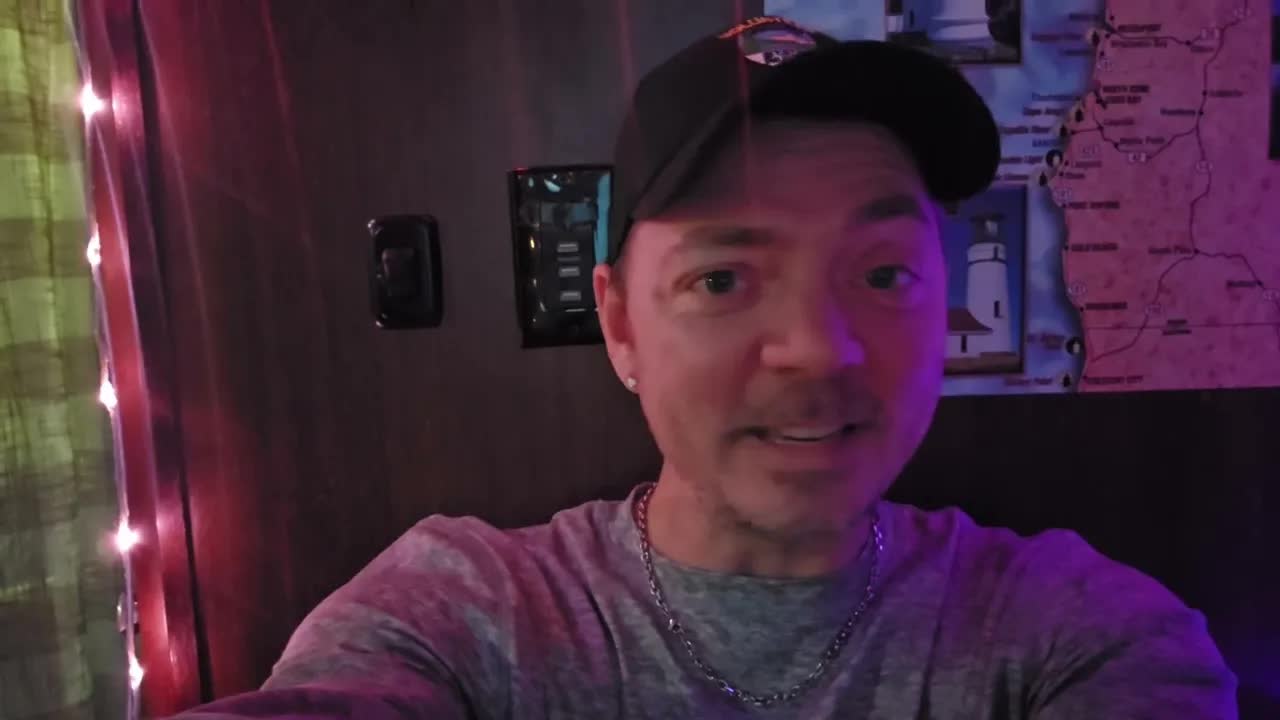
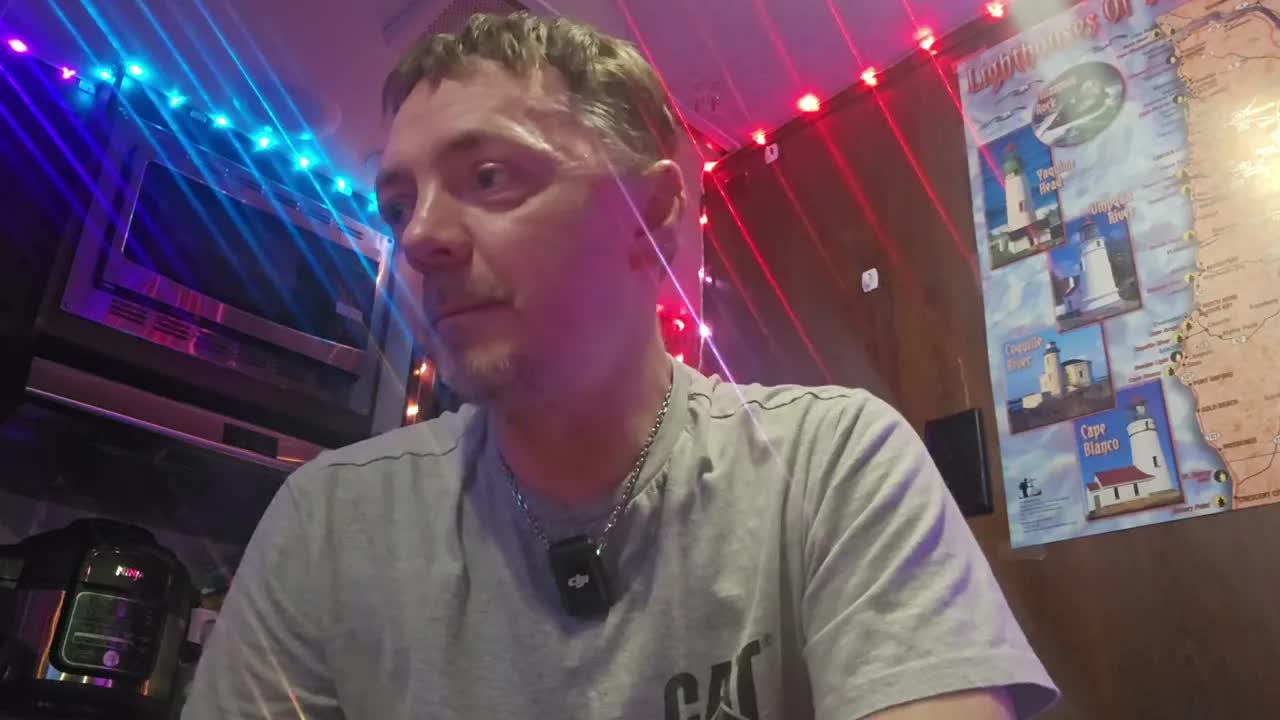
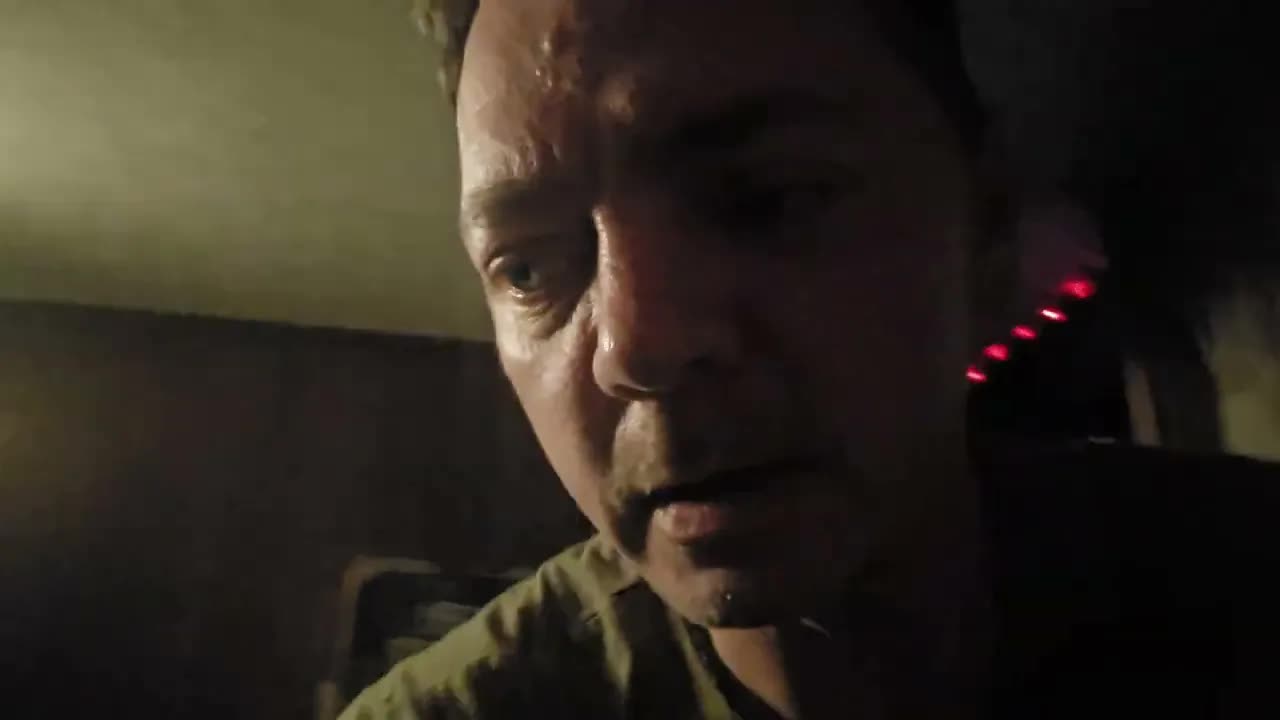

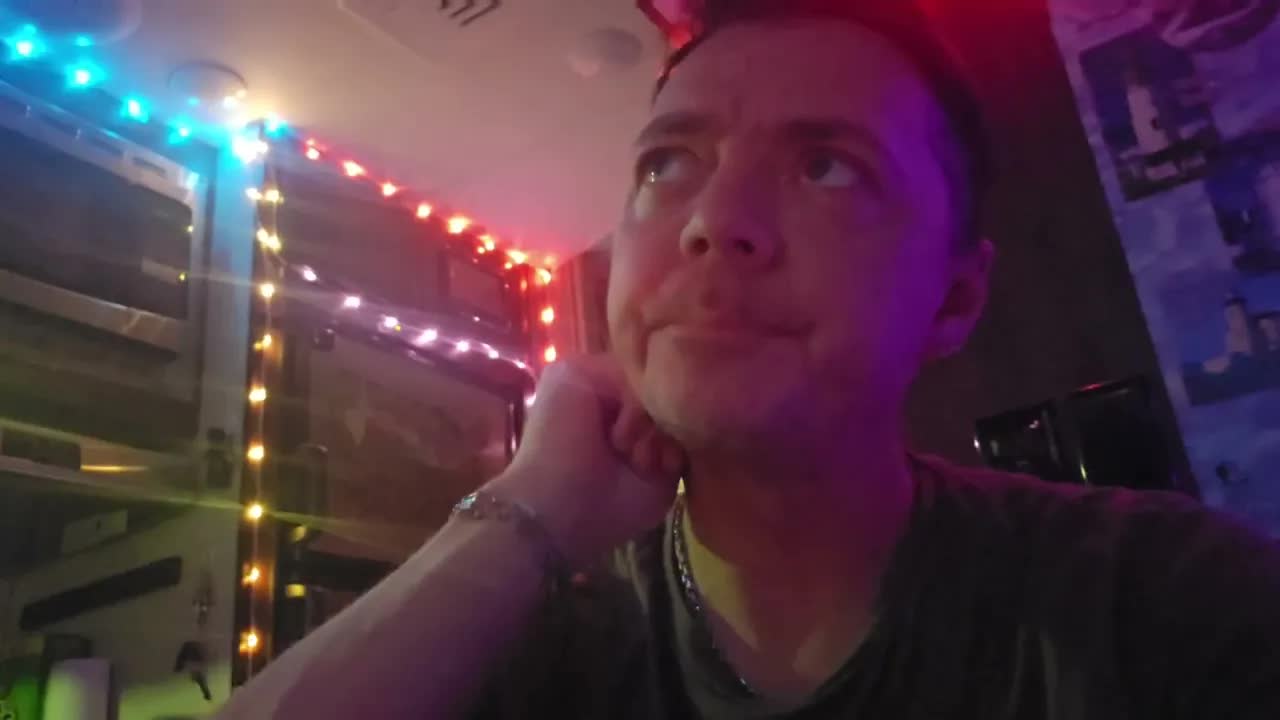





He holds the bottle up first, before anything else — the announcement arrives already complete. It's official, I'm drinking fire water. The camera is in one hand, the drink in the other, and rswfire runs through the contents like a manifest: Himalayan salt, potassium, magnesium, chili powder, and that's it. The list is short enough to be a boast. Around him is the living space at Siltcoos, close quarters, everything within arm's reach because everything has to be — the bottle, the two small containers from Amazon, the one from the coastal store. The whole apparatus of the experiment fits inside the frame of a handheld shot.
The purpose comes second, stated plainly: this is how he is going to stop drinking Mountain Dew. He relays what Claude told him — that he can taper, keep some pop in the rotation, gradually move into it, aim for two or three bottles a day, more if he's active or offsetting the soda. Then the proportions, and here the signal catches on itself. Half a teaspoon of Himalayan salt, a quarter of the magnesium, a quarter of the potassium — no. No, no. He corrects mid-sentence, without apology, and lands it: a teaspoon of the pink salt, a half teaspoon each of the magnesium and potassium, a quarter teaspoon of chili powder. The phone with the actual numbers is the thing currently recording him, so the recall has to come from the body's memory of making it, over and over, rather than from the document.
He notes that he can put more chili in, that he has, that it gets heat. He notes that he can drink the whole bottle fast — and then names the instruction he was given not to, because his system isn't used to getting water, because he's supposed to sip. But whatever, I'm going to drink this. The advice is repeated accurately and then overridden in the same breath, on his own authority, with the proportions kept and the pacing discarded. He offers the variations anyway, generous with them: cayenne, paprika, the standard three chili powders, all of which he has already tried.
Then the supply chain, which is where the coast enters the story. He hadn't been making it every day, and the reason was magnesium — he couldn't find it at any store on the coast. The potassium he did find was a salt substitute, and it came with anti-caking agents and other additions he didn't want in his water. He wanted straight potassium. So two bottles came from Amazon, and he holds each one up in turn, then the original store find, small, and observes that it will last a good while because you really don't need much of it. Local scarcity, screened purity, resolved by mail order — the logistics of a protocol built where the shelves are thin.
The mechanism arrives last, and he arrives at it out loud. Even without the chili, he says, just the salts make it more drinkable than plain water — for him, truly. But the chili gives it a kick that is absolutely wonderful, and more than that, it makes the drink complex. Not the same as pop, he clarifies, not the same taste at all, but both are complex flavors, and if you have been drinking that your whole life, that is what your body is expecting. It expects some type of complex hydration. So the problem was never discipline. The body had an input standard, and plain water didn't meet it. He built something that did.
He closes by pointing the whole thing outward. This could help someone else. I think that's amazing. The iteration — the ratios tried and retried, the chili varieties, the months of gaps waiting on magnesium — resolves into a method someone else could pick up whole, and the recording is what makes that possible. The bottle is still in his hand. The heat is in it. He is going to drink the whole thing.