

























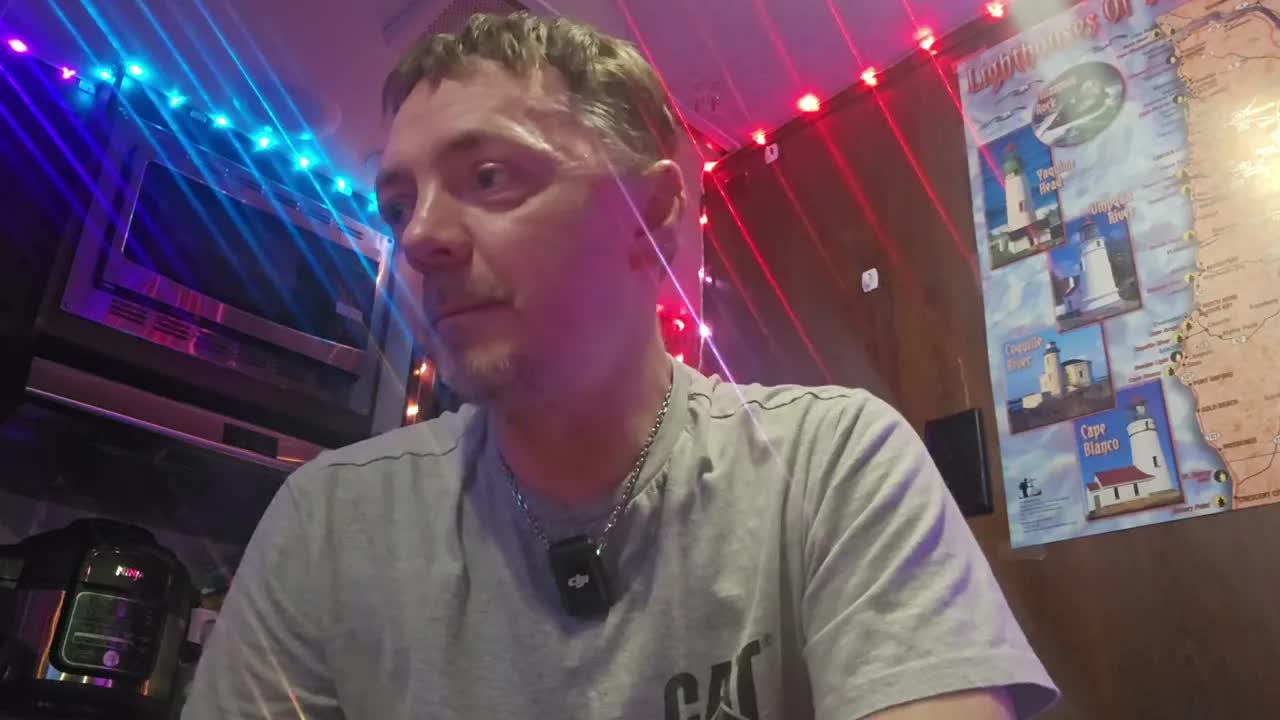





The camera went up before anything else did. rswfire had a tripod somewhere in the rig and decided against it — too much effort for a smoothie — and instead looked for a surface that would hold the phone at the right angle above a counter that was not built for this. The dishes were clean, freshly washed and stacked, and he tried propping the device against them. It slid. He watched it fail, said so plainly, and then remembered he had a thing for that, some object already aboard that would do the job, and used it. The second attempt held. To work within the frame he had just made, he had to sit down. The kitchen dictated the posture before the procedure began.
The instructions came from Claude and specified two ounces of milk, two ounces of water, or a substitution of one for the other. rswfire took the substitution without hesitation, but the reason was infrastructural rather than culinary: he had no drinking water he was willing to use. He described cleaning the tanks after leaving Kentucky and said he would clean them again at the next campground, where a sewer connection would be available. His stated position on the tanks was categorical — never trust things, even cleaned. Four ounces of milk went in. The recipe bent around the rig's actual condition, and the bending was routine.
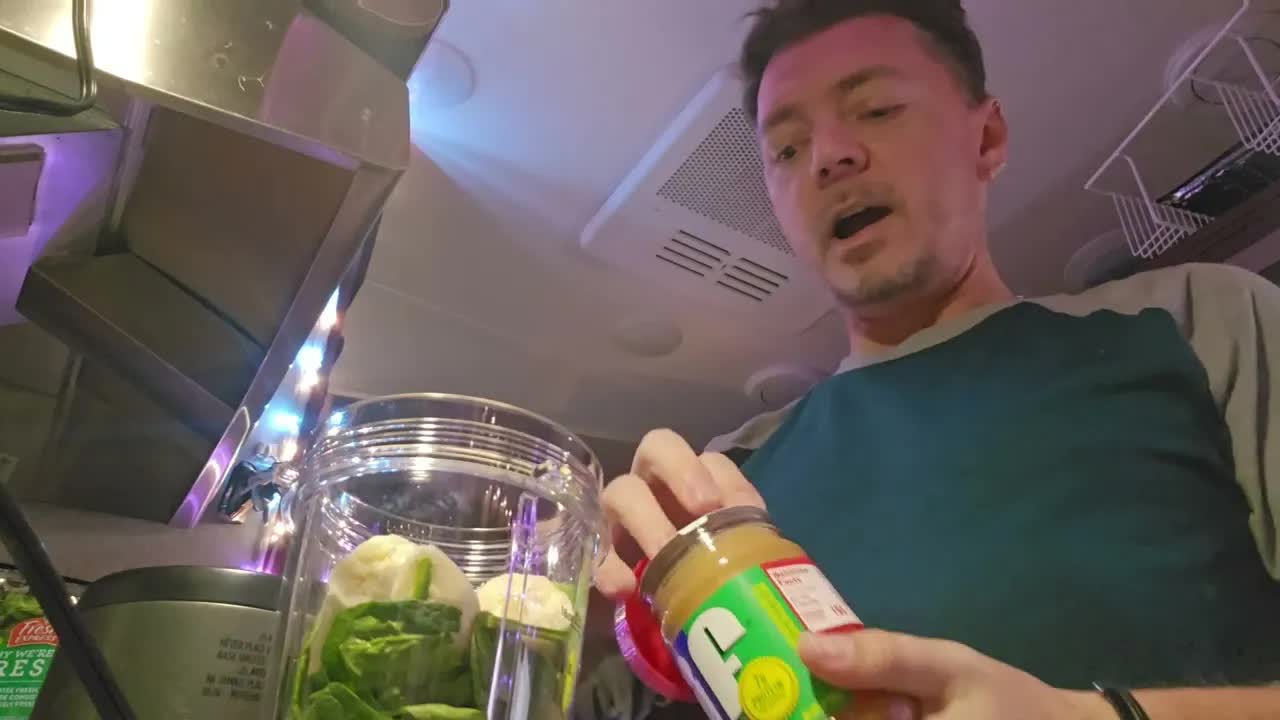
Then the spinach. Two big handfuls, per the instructions, and he pulled the first handful up and looked at it and observed aloud how much spinach that was. He put it in stems and all, hoping he would not have to rinse it, hoping it would taste good. One leaf escaped in the transfer and he declared it out of play. The banana was small — the recipe said medium, about four ounces, and rswfire noted he had no working sense of what four ounces of banana meant, so he had bought little ones because little ones seemed appropriate. He was following a written procedure the way an operator follows one on a first run: loosely, in good faith, substituting where the environment does not supply the specified input.
Memory surfaced twice while his hands were busy, and both times it surfaced sideways. The banana brought up a juicer he had owned a long time ago — carrots and apples, really good, that thing was fun. The peanut butter brought up an app from Lost. Neither pulled him off task. He measured a tablespoon of what he called probably not a healthy variety, questioned whether the peanut butter should be tasted on its own, decided against it, and then hit the actual problem of getting a tablespoon of peanut butter off a spoon and into a vessel. He had just done the dishes. He used a second spoon and made both of them dirty and moved on.
The ice cubes were an open question — the recipe called for them, he thought he had none, then found some. He fitted the lid, discovered the press-down mechanism, and stopped. The blender had a draw he had not accounted for, and the rig's electrical budget is finite. Before running it he shut other devices off. The pause was brief and entirely practical: a new load being introduced to a known system, tested against the system's ceiling before the switch was thrown. Then it ran, and it ran fast enough that he said so — that's incredible — while noting the peanut butter had not fully incorporated.
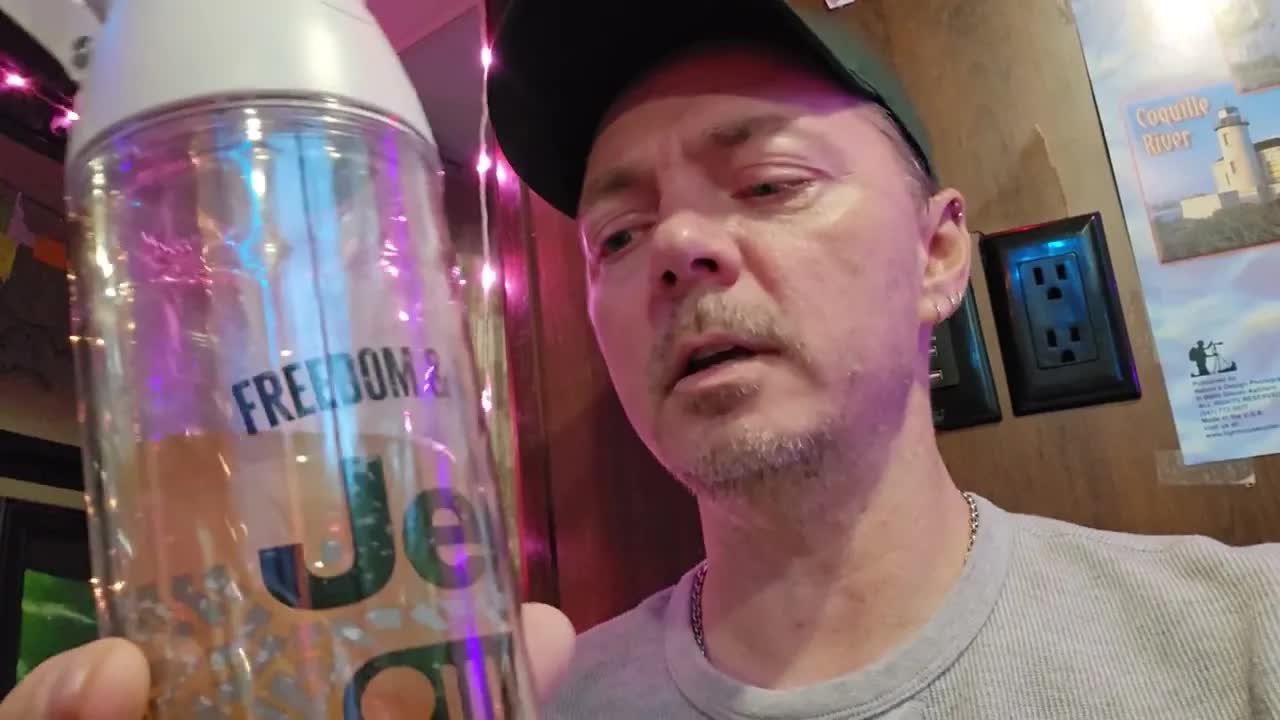
What came out was green, and his first reading of it was visual and unfavorable. He said it looked disgusting. He said so twice. Then he tasted it, and the verdict reversed in the space of a single breath — that don't taste bad, then oh my God, then that is actually good. He said his body loves this. He recommended the device to whoever would eventually watch. The recipe had been altered, the water had been replaced, the banana had been undersized, the peanut butter had streaked the wall of the pitcher, and none of that governed the outcome. The terminal verification was somatic, delivered by the body, and it came back clean. The nutrition subsystem was online.