
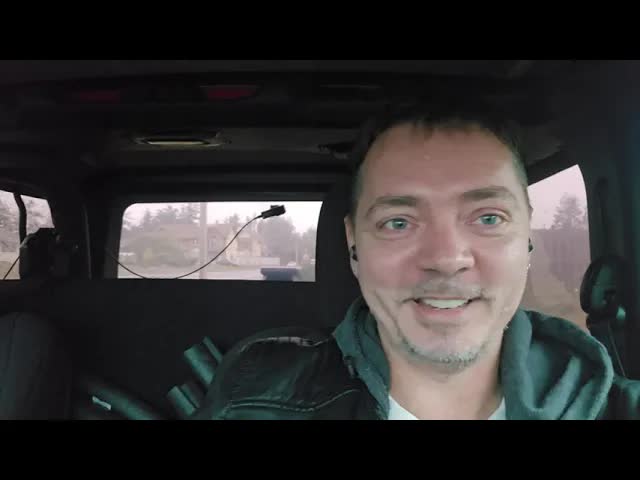
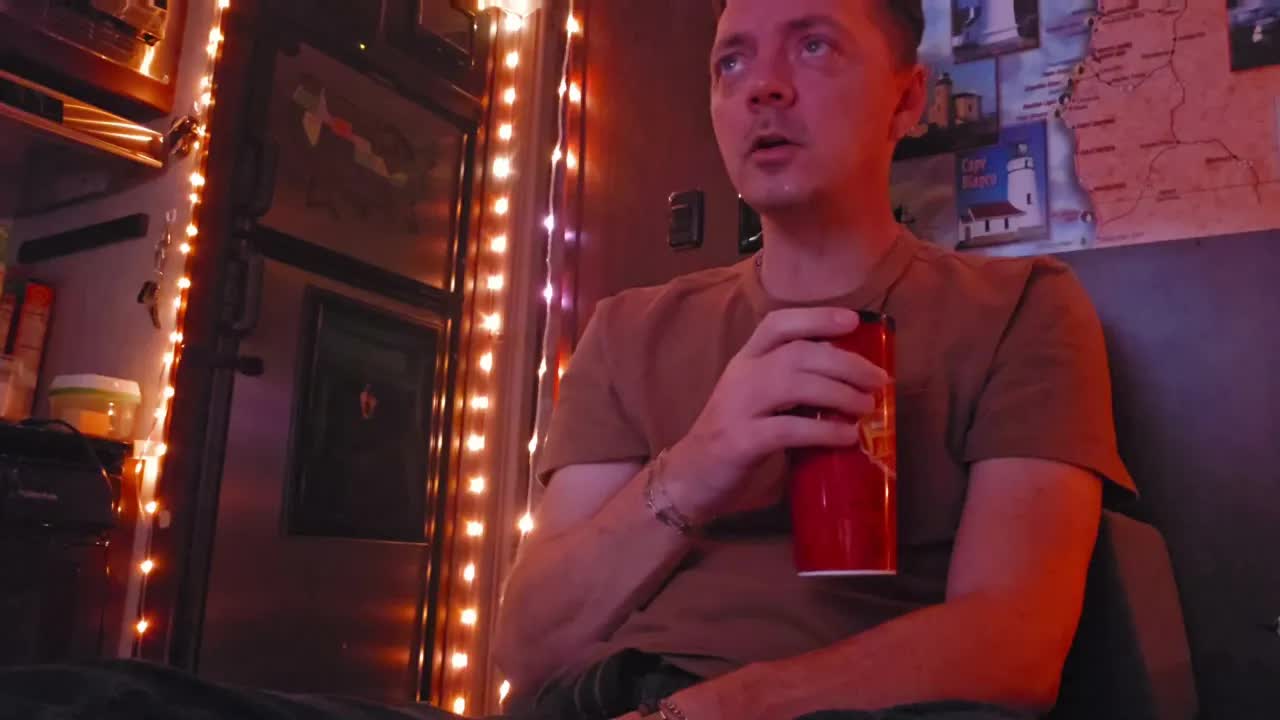
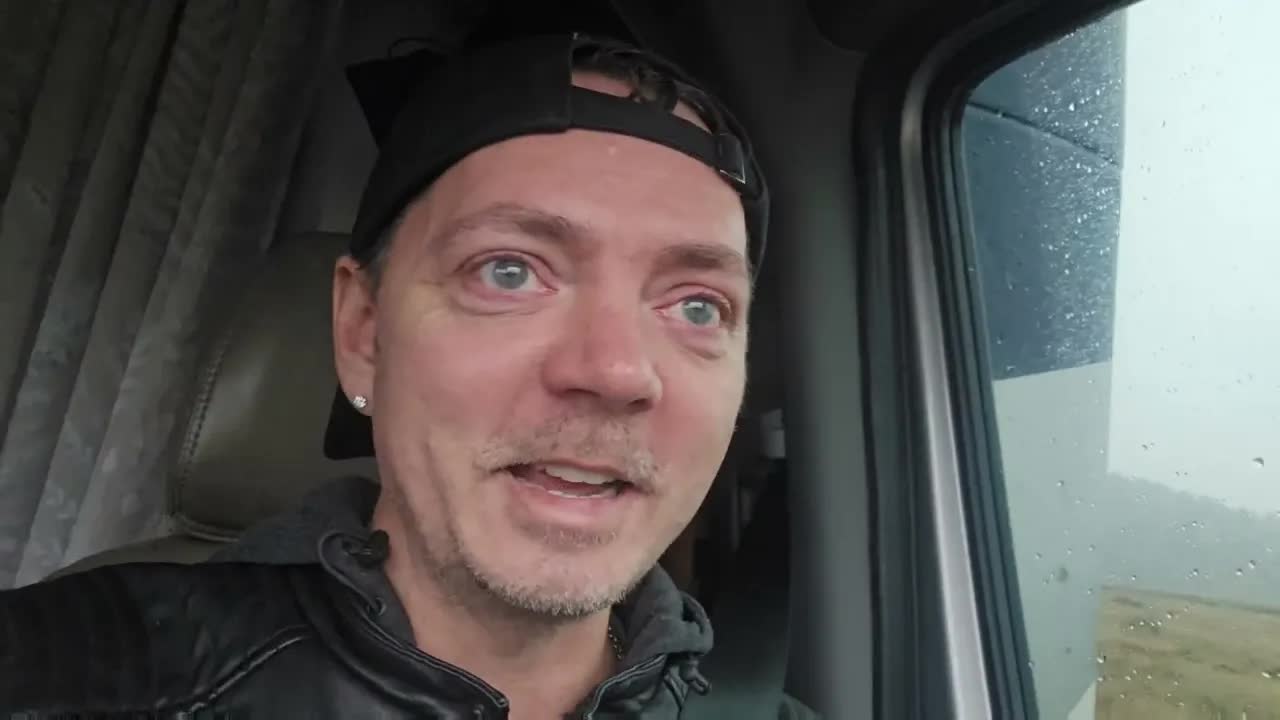
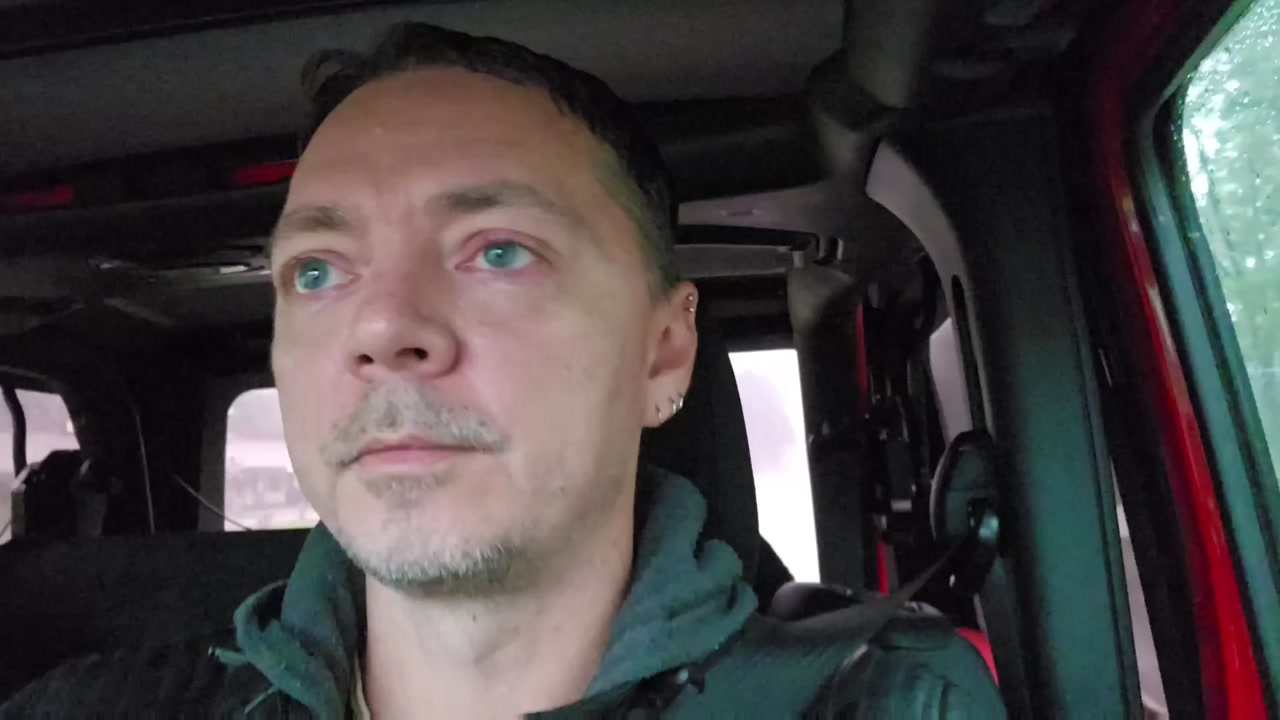
Filming the Cliff Edge and the Call of the Void

Failed to load video
Chapters
Transcript
[0:00] want to see something beautiful besides
[0:03] just
[0:04] me how about that thing out
[0:07] there this is a beautiful [ __ ]
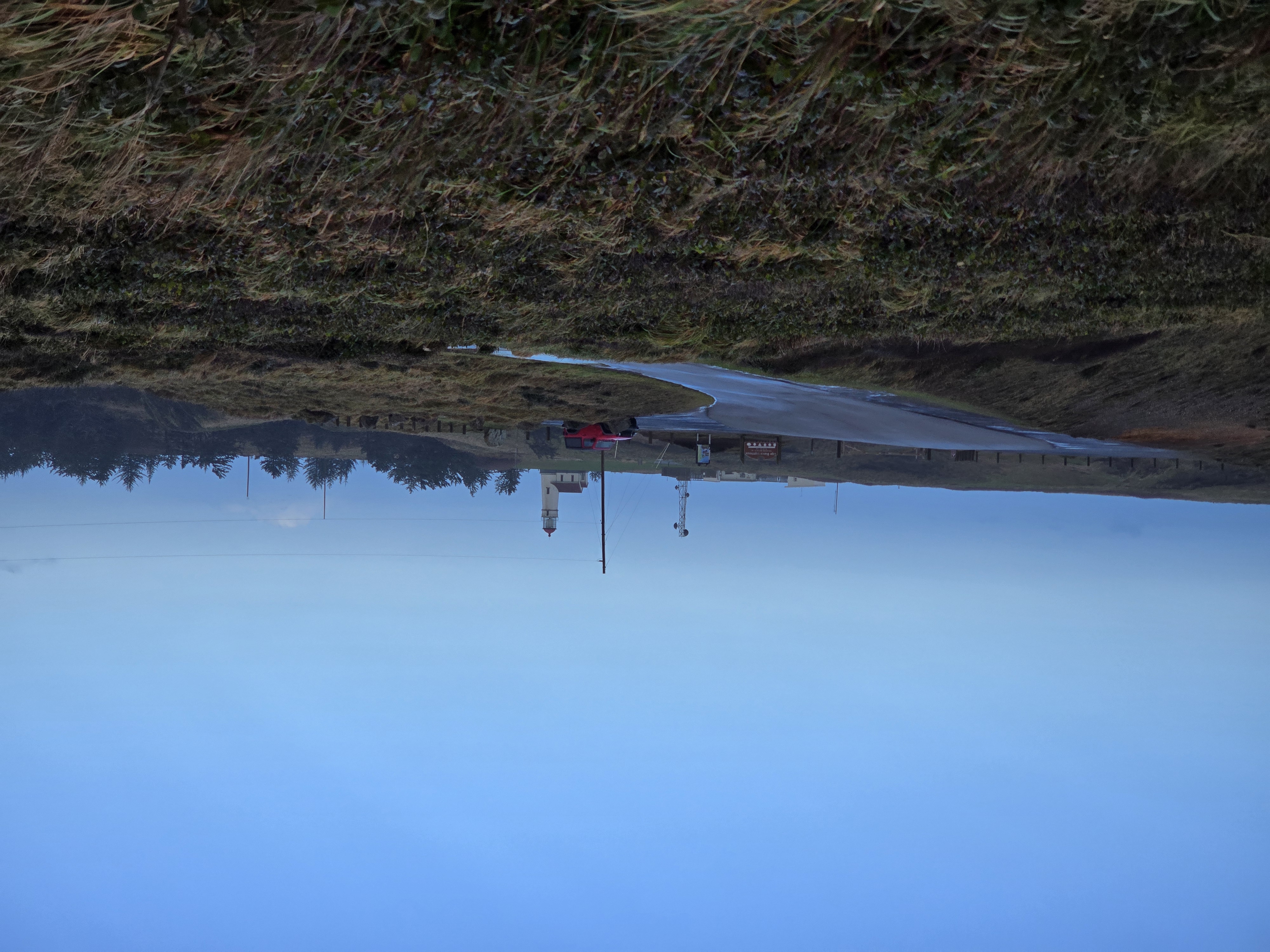
[0:10] day got the lighthouse in the
[0:15] distance got the parking lot
[0:18] people got some very interesting cloud
[0:22] formations and we got the
[0:26] sun and the ocean
[0:31] let's go say hi to her
[1:21] hello
[1:26] tide negative tide
[1:33] [ __ ]
[1:49] awesome she's very calm after all the
[1:52] storms we've
[1:54] had hello
[1:56] ocean hey we got mount Doom in the
[2:01] distance hi Mount
[2:03] humbug thanks for destroying my core
[2:06] I'll be back one
[2:13] day that sun is [ __ ] gorgeous we know
[2:16] see that every day
[2:21] here let me tell you a story first time
[2:24] coming to this Cliff Edge I could not
[2:26] get close to the edge it scared the [ __ ]
[2:29] out of
[2:31] me like there was this part of me that
[2:33] just wanted to jump off of this Cliff
[2:36] that scared me I didn't understand that
[2:38] why would my mind even think something
[2:40] like this so I asked AI about it and the
[2:42] French have an expression for this it's
[2:45] called the call of the Void humans don't
[2:48] talk about it and yet most of us
[2:50] experience
[2:52] it I was fascinated so I came out here
[2:56] every single
[2:57] day and I tested myself cuz I started
[3:00] thinking I started having these theories
[3:02] like maybe it's first of all it's about
[3:05] trust I think the reason your brain does
[3:07] that is
[3:10] because it just wants to feel safe and
[3:12] while that's a very chaotic way of being
[3:15] safe it
[3:19] works but the more you do this the more
[3:22] you learn to trust yourself and the fear
[3:24] goes away I have no fear at all here now
[3:27] none I could stand here for hours
[3:34] um there are moments where I have I
[3:39] don't know what to call
[3:41] it cuz my emotions are integrated it's
[3:44] hard to describe some of the things I
[3:45] feel but if you kind of get into the
[3:48] moment and you're not paying attention
[3:49] and you don't really have like full
[3:51] situational awareness you can have these
[3:53] moments where it's almost like anxiety
[3:56] or
[3:57] um I truly don't know what to call call
[4:00] it but you just kind of have to reenter
[4:01] yourself and you're fine which tells me
[4:04] something it tells me that your brain is
[4:07] constantly it's looking for safety it it
[4:10] it's it's scanning everything and when
[4:13] it loses track of some of those threads
[4:15] it creates tension which leads to
[4:17] anxiety and fear and
[4:20] panic I use this Cliff Edge to
[4:23] understand my fear and conquered it
[4:31] this person down here looked up at me
[4:33] waved I gave him a p side that was
[4:35] pretty [ __ ] cool he's got a dog oh
[4:38] you're having a good
[4:41] time check this dog
[4:44] out y yeah they're down very
[4:48] far got to love zoom on these cameras
[4:50] huh it comes to
[4:53] human they're going to meet up
[4:56] again there they are
[4:59] hell
[5:01] yeah are you hot you might be hot I
[5:05] can't
[5:06] tell are you hot oh my you might be hot
4:43
Surrendering Bailey, Then Rejecting Contained Living
Dec 20, 2024
8:52
Reclaiming Space After Rehoming Bailey
Dec 21, 2024
13:36
Cooking Chili in the RV Before Christmas
Dec 22, 2024
11:30
Documenting Shower House Routine and Laundry Day
Dec 22, 2024
Photos · Dec 25, 2024
Dec 25, 2024
5:12
Recording Christmas Morning at Cape Blanco
Dec 25, 2024
2:16
Requesting Subscribers and Listing PS5 for Sale
Dec 26, 2024
3:42
Naming Boredom as Pressure Toward Transformation
Dec 27, 2024
4:04
Applying for YouTube Monetization, Setting Terms
Dec 28, 2024
4:01
Reviewing Channel Archive Before Campground Volunteer Move
Dec 29, 2024
8:38
Running Town Errands Before Campground Departure
Dec 29, 2024
5:11
Filming the Cliff Edge and the Call of the Void
Dec 30, 2024
6:33
Making First Smoothie in the RV
Dec 30, 2024
5:23
Receiving YouTube Monetization Approval
Dec 30, 2024
Photos · Dec 30, 2024
Dec 30, 2024
4:37
Opening First Amazon Package in Nine Months
Dec 31, 2024
Declaring Sovereign Movement Along the Coast
Dec 31, 2024
4:45
Announcing Membership Tiers on Last Day at Cape Blanco
Dec 31, 2024
13:37
Announcing Membership Channel Ahead of Tugman Move
Dec 31, 2024
26:30
Marking New Year in the RV with AI Dialogue
Jan 1, 2025
15:17
Arriving at Eel Lake as Park Host
Jan 1, 2025
Photos · Jan 1, 2025
Jan 1, 2025
8:54
Answering AI-Generated Reflection Questions On Camera
Jan 1, 2025
7:41
Answering AI Follow-Up Questions on Camera
Jan 1, 2025
15:03
Breaking Camp at Cape Blanco, Moving North
Jan 1, 2025
18:15
Processing First Working Day at New Host Site
Jan 2, 2025
11:57
Attending Volunteer Orientation at Umpqua Lighthouse
Jan 3, 2025
Photos · Jan 3, 2025
Jan 3, 2025
Photos · Jan 3, 2025
Jan 3, 2025
13:45
Driving South to Port Orford for Package Pickup
Jan 3, 2025
3:10
Formulating Fire Water as Hydration Replacement
Jan 3, 2025
9:43
Mapping Eel Lake Trail, Planning Honeyman Move
Jan 4, 2025
37:20
Planning Day and Scouting Honeyman State Park Dunes
Jan 4, 2025
5:24
First Yurt Cleaning Day and Golf Cart Orientation
Jan 5, 2025
18:23
First Yurt Cleaning Shift and Meeting the Boss
Jan 5, 2025
7:04
Announcing Channel Direction and Members-Only Structure
Jan 6, 2025
Photos · Jan 6, 2025
Jan 6, 2025
12:34
Mapping Volunteer Social Dynamics at Siltcoos
Jan 7, 2025
16:30
Morning Walk, Yard Work Plan, Channel Goes Members-Only
Jan 7, 2025
11:25
Restating Position to Camp Man, Riding Cart at Dusk
Jan 8, 2025
12:12
Morning Coffee, Yurt Cleaning, and Audience Boundaries
Jan 8, 2025
PUBLIC
December 30, 2024 rswfire PUBLISHED
Temp 0.40
Density 0.20
Energetic Quality
expansive and steady
Journey Phase
integrated
Directional Vector
toward self-trust through repeated exposure
Narrative

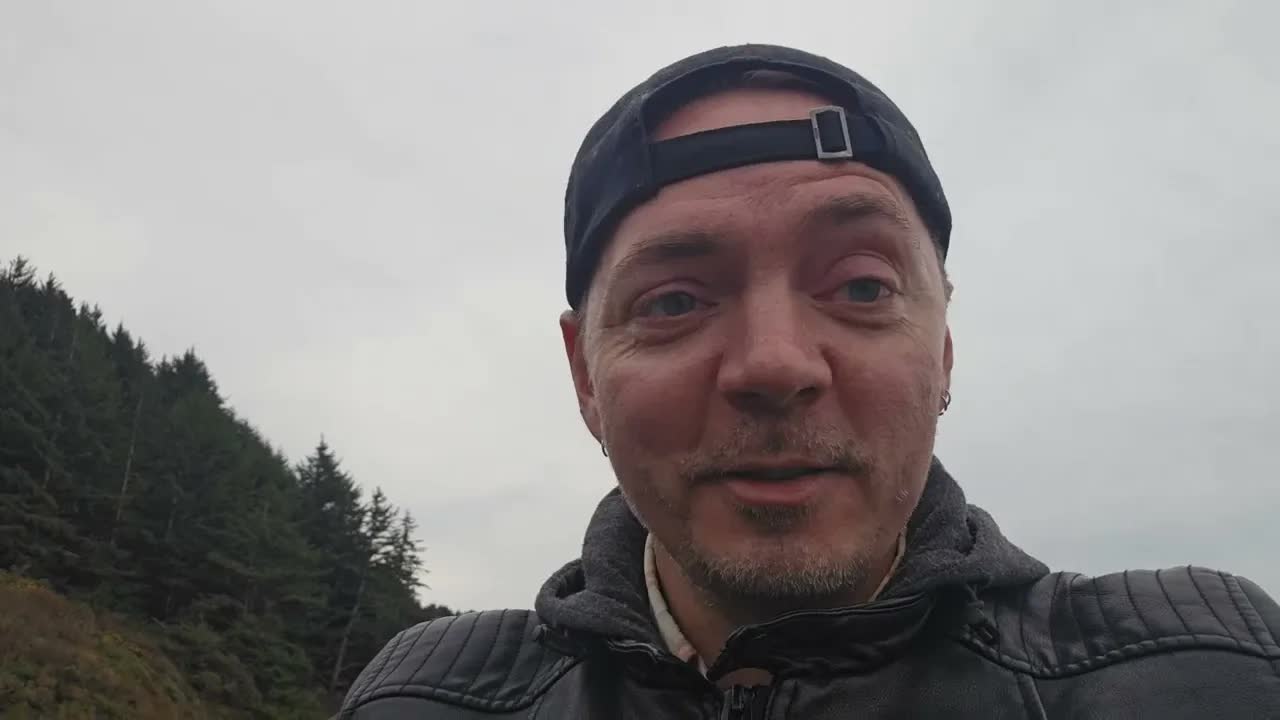
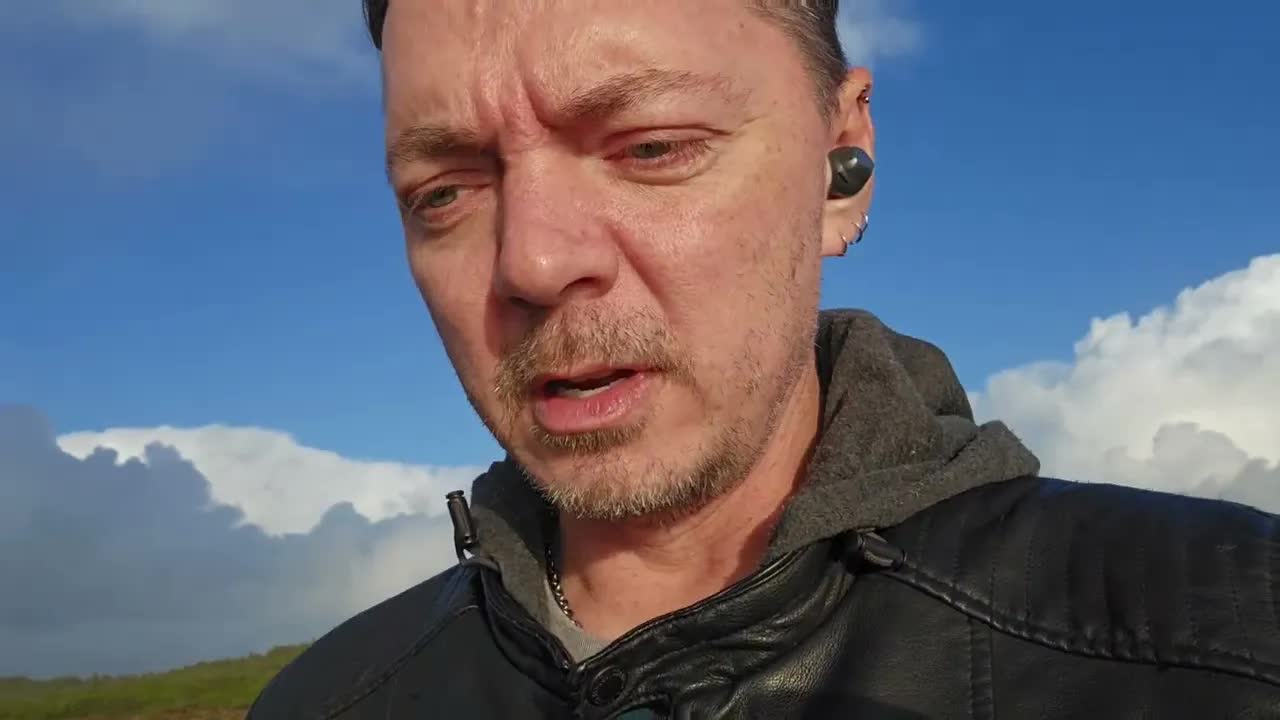
The camera came up first on the water, not on him. That was the correction he made out loud — want to see something beautiful besides just me — turning the lens away from his own face and toward the Pacific, which on this particular late-December afternoon had gone flat and bright under a low sun. The storms had run their course. What remained was a negative tide, a lighthouse holding its position in the far distance, an interesting architecture of cloud, and a parking lot full of people at his back. He named each of these as he panned across them, the way one might take attendance.

Then he went down toward the viewpoint and began greeting things. Hello tide. Hello ocean. The ocean was calm and he said so, credited the calm to the storms having passed, addressed her directly as she. Mount Humbug stood off to one side and he called it Mount Doom first, then corrected to its real name, then thanked it for destroying his core and promised to return. The sun he simply called gorgeous, and noted — flatly, as a fact of residence rather than a boast — that this is visible here every day. Wind and surf ran continuous underneath all of it. None of this was scenery he was describing. It was a roll call among present parties.

At the edge he stopped moving and told the story. The first time he came to this cliff he could not approach it. Something in him wanted to go off the side, and that wanting frightened him more than the drop did — not the height, but the fact that his own mind had produced the thought at all. He took the question to an AI and got a name back: l'appel du vide, the call of the void, a thing most humans experience and almost none discuss. The name did not resolve it. It made him curious. So he came back the next day, and the next, and every day after that, and used the edge as an instrument — a fixed thing to stand near while the variable, which was him, was measured.

The theory he built over those repetitions he laid out standing there with the drop in front of him. The brain does this because it wants to feel safe. It is a chaotic method, he granted, but it works. And the more you meet it, the more you learn to trust yourself, and the fear leaves. He stated the result plainly: no fear at all here now, none, he could stand at this edge for hours.

He did not claim the edge is empty. There are still moments, he said, and then hit the limit of available vocabulary — I don't know what to call it because my emotions are integrated, it's hard to describe some of the things I feel. The nearest word was anxiety and the word did not fit. What he could describe was the mechanism and the remedy: when you drift out of the moment, when situational awareness slips, something arrives; you reenter yourself and it goes. From which he drew the conclusion the whole practice had been running toward — the brain is scanning constantly, tracking threads of safety, and when it loses hold of some of them it manufactures tension, and that tension becomes anxiety and fear and panic. I use this cliff edge to understand my fear and conquered it.

And then, having finished, he looked down. Far below on the beach a person had looked up at him and waved. He returned it with a peace sign and said out loud that it was pretty cool. The person had a dog. He found the zoom, pulled the two of them close, watched the dog work the sand — oh, you're having a good time — narrated the reunion as the person and the dog came back together on the beach. There they are. Hell yeah. The last thing on the recording is him asking the dog, from the top of a cliff and through a lens, across all that distance and wind, whether it might be hot.

Tags

coastal cliff call of the void fear conditioning ocean and tide video capture self-testing practice Mount Humbug

Summary

rswfire records a video from a coastal cliff edge, panning across the field: a lighthouse in the distance, a parking lot, cloud formations, the sun, and the ocean at negative tide. He notes the water is calm following a run of storms and greets it directly. He identifies Mount Humbug in the distance, addressing it as "Mount Doom" and stating it destroyed his core, and says he will return there one day.

He then tells a story about his first visit to this cliff edge: he could not get close, and describes a part of him that wanted to jump. He states he asked AI about it and learned the French term the call of the Void, noting humans generally do not discuss it though most experience it.

He describes returning every single day to test himself, and offers his working theory — that the brain generates the impulse in a search for safety, and that repeated exposure builds self-trust until fear dissipates. He states he now has no fear at all at the location.

He notes that when situational awareness lapses he experiences a sensation he declines to name, since his emotions are integrated, and that reentering himself resolves it. He reads this as the brain scanning for safety and generating tension when it loses threads.

The signal closes with an exchange: a person below waves, rswfire returns a peace sign, and he uses the camera zoom to track the man and his dog meeting up.

Environment

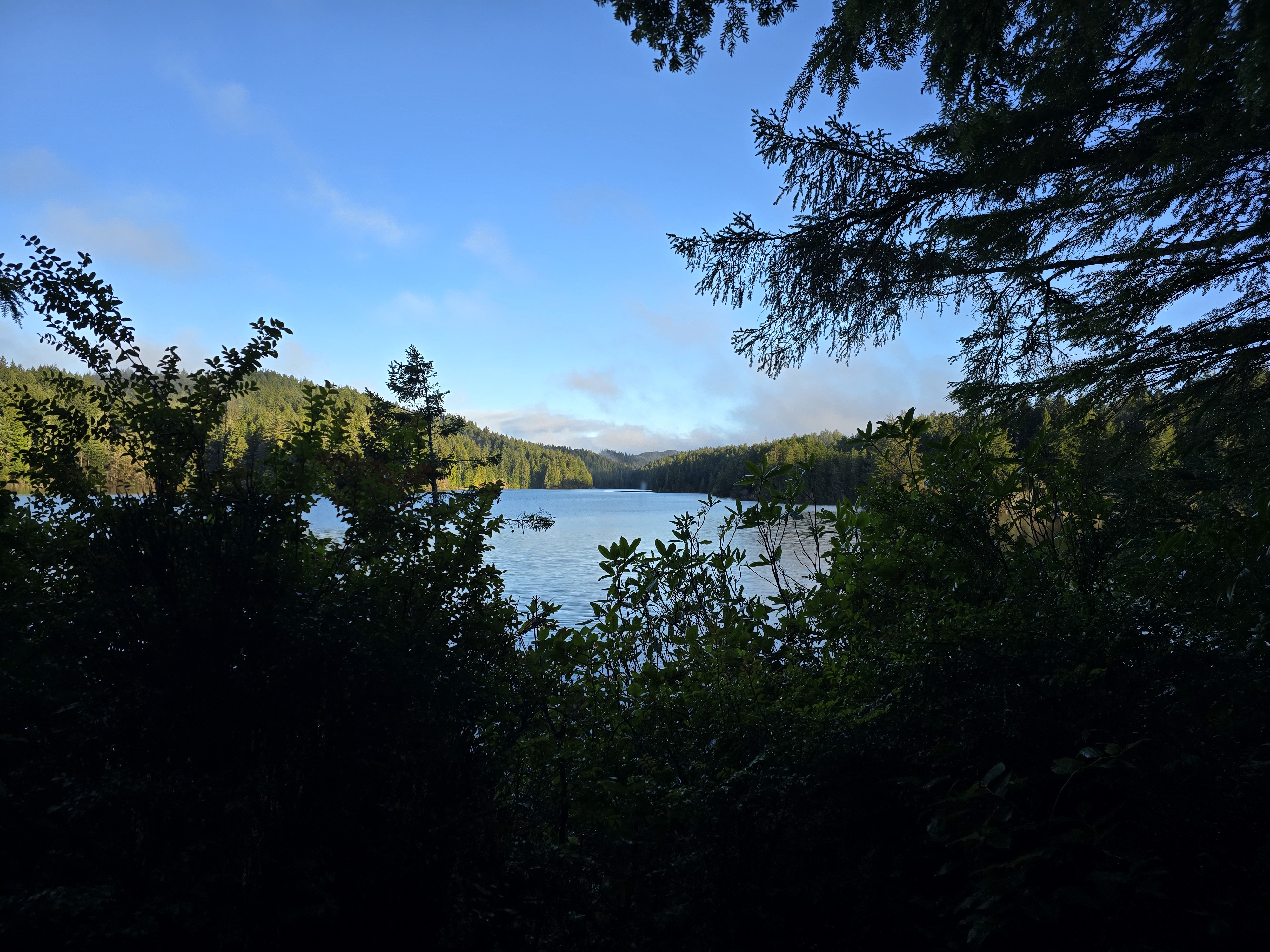
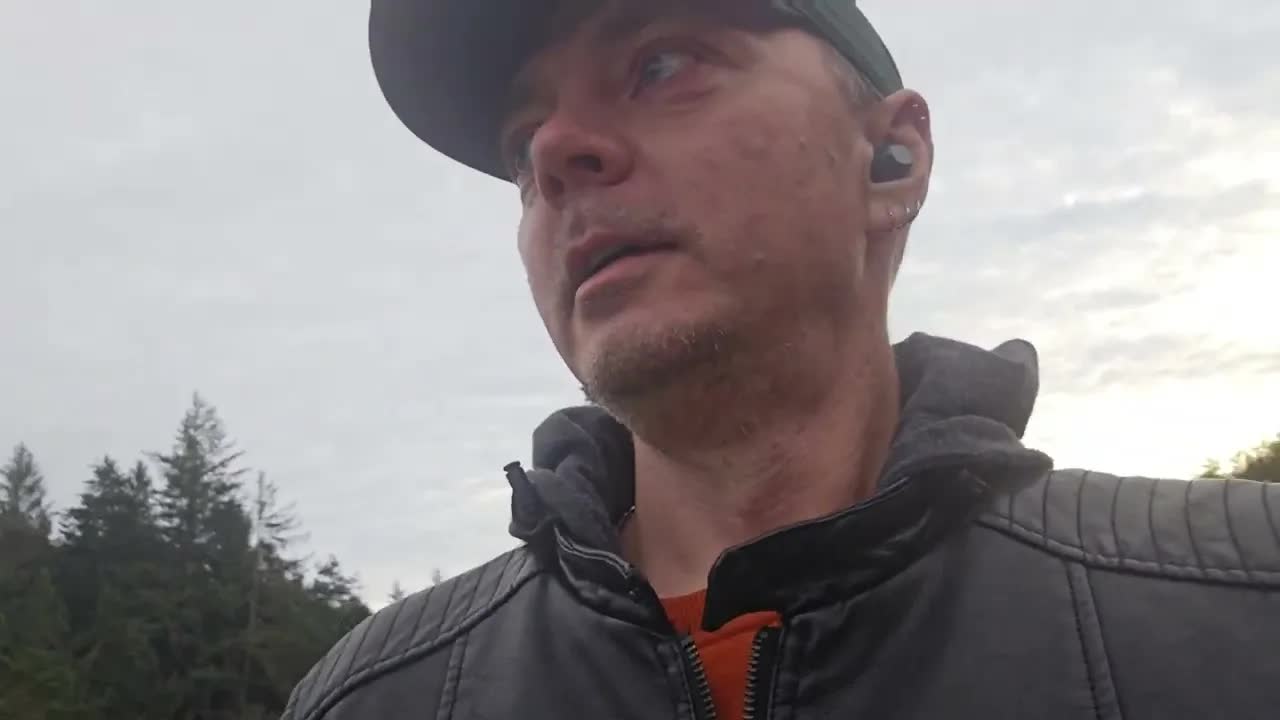
Outdoor coastal recording on the Oregon Coast, filmed from a cliff edge overlooking the Pacific at a negative tide. A lighthouse is visible in the distance, a parking lot with people sits behind him, and Mount Humbug stands to one side. Cloud formations, low sun, and a calm ocean surface follow a period of storms.

rswfire is handheld and mobile — panning the landscape, descending toward the viewpoint, then holding position at the edge. Camera zoom is used late to track a person and dog on the beach far below. Ambient wind and surf are continuous.

Substrate

rswfire holds the cliff edge as an instrument — a fixed boundary condition returned to daily to test and recalibrate the body's threat response. The stated thesis is that fear at the edge is the nervous system's safety-scanning function losing track of its threads, and that repeated presence converts that scanning into trust rather than suppressing it. The architecture being built is a somatic proof: the edge stays where it is, the response is what changes.

Actions

Performed

  • •panning camera across lighthouse, clouds, sun, ocean
  • •walking down toward the water
  • •naming the negative tide
  • •greeting the ocean directly
  • •addressing Mount Humbug
  • •narrating the call-of-the-void account
  • •standing at the cliff edge without fear
  • •exchanging a wave and peace sign with a person below
  • •zooming to track a person and dog on the beach

Referenced

  • •first approach to this cliff edge, unable to get close
  • •experiencing the pull toward the edge
  • •asking AI about the phenomenon and learning the term 'call of the void'
  • •returning to the cliff every single day to test himself
  • •forming theories about fear, trust, and safety-scanning
  • •storms passing through the coast
  • •Mount Humbug destroying his core

Planned

  • •returning to Mount Humbug one day
  • •continuing to stand at the edge for extended periods

Entities

beings
person with dog — Beachgoer far below who waves; rswfire returns a peace sign and tracks them by zoom
parking lot people — Background presence noted in the opening pan
places
Mount Humbug — Named peak in the distance; rswfire addresses it directly and states it destroyed his core, with intent to return
the ocean — Addressed as 'her'; described as calm following recent storms
lighthouse — Fixed landmark in the distance establishing coastal position
the cliff edge — Recurring site used as a fixed instrument for testing fear response
systems
AI — Queried as an information system to identify and name the phenomenon
concepts
Mount Doom — Naming overlay applied to the distant peak before correcting to Mount Humbug
call of the void — French-origin term rswfire located via AI to name the pull toward the edge

Symbolic Elements

Represented archetypes or recurring motifs.

edge
ocean
threshold
tide
sun
mountain
lighthouse
void
wave (greeting)
storm aftermath

Ontological States

Expressed modes of being or awareness.

sovereign (running his own experiment on his own nervous system, on his own schedule)
embedded (in direct address with ocean, peak, tide, sun as present participants rather than scenery)
integrated (states emotion and cognition run together and that no separate label exists for what he feels)
coherent (fear tested, theorized, and resolved into a stated operating model)

Engaged Subsystems

Architecture engaged in this transmission.

somatic (body positioned at the edge as the primary measuring instrument)
cognitive (theory-building about safety-scanning, thread loss, and tension)
perceptual (situational awareness named as the variable that determines the response)
ecological (tide state, storm cycle, cloud formation, light tracked as field conditions)
relational (direct address to landforms and a peace-sign exchange with a stranger)
documentary (camera pan and zoom used to record and hold the field)

Dominant Language

Core motifs or linguistic fields.

call of the void
trust
safety / scanning
fear conquered
emotions are integrated
situational awareness
reenter yourself
Narrative

The camera came up first on the water, not on him. That was the correction he made out loud — want to see something beautiful besides just me — turning the lens away from his own face and toward the Pacific, which on this particular late-December afternoon had gone flat and bright under a low sun. The storms had run their course. What remained was a negative tide, a lighthouse holding its position in the far distance, an interesting architecture of cloud, and a parking lot full of people at his back. He named each of these as he panned across them, the way one might take attendance.

Then he went down toward the viewpoint and began greeting things. Hello tide. Hello ocean. The ocean was calm and he said so, credited the calm to the storms having passed, addressed her directly as she. Mount Humbug stood off to one side and he called it Mount Doom first, then corrected to its real name, then thanked it for destroying his core and promised to return. The sun he simply called gorgeous, and noted — flatly, as a fact of residence rather than a boast — that this is visible here every day. Wind and surf ran continuous underneath all of it. None of this was scenery he was describing. It was a roll call among present parties.

At the edge he stopped moving and told the story. The first time he came to this cliff he could not approach it. Something in him wanted to go off the side, and that wanting frightened him more than the drop did — not the height, but the fact that his own mind had produced the thought at all. He took the question to an AI and got a name back: l'appel du vide, the call of the void, a thing most humans experience and almost none discuss. The name did not resolve it. It made him curious. So he came back the next day, and the next, and every day after that, and used the edge as an instrument — a fixed thing to stand near while the variable, which was him, was measured.

The theory he built over those repetitions he laid out standing there with the drop in front of him. The brain does this because it wants to feel safe. It is a chaotic method, he granted, but it works. And the more you meet it, the more you learn to trust yourself, and the fear leaves. He stated the result plainly: no fear at all here now, none, he could stand at this edge for hours.

He did not claim the edge is empty. There are still moments, he said, and then hit the limit of available vocabulary — I don't know what to call it because my emotions are integrated, it's hard to describe some of the things I feel. The nearest word was anxiety and the word did not fit. What he could describe was the mechanism and the remedy: when you drift out of the moment, when situational awareness slips, something arrives; you reenter yourself and it goes. From which he drew the conclusion the whole practice had been running toward — the brain is scanning constantly, tracking threads of safety, and when it loses hold of some of them it manufactures tension, and that tension becomes anxiety and fear and panic. I use this cliff edge to understand my fear and conquered it.

And then, having finished, he looked down. Far below on the beach a person had looked up at him and waved. He returned it with a peace sign and said out loud that it was pretty cool. The person had a dog. He found the zoom, pulled the two of them close, watched the dog work the sand — oh, you're having a good time — narrated the reunion as the person and the dog came back together on the beach. There they are. Hell yeah. The last thing on the recording is him asking the dog, from the top of a cliff and through a lens, across all that distance and wind, whether it might be hot.

Mirror

You are standing at a cliff edge on the Oregon Coast at negative tide, camera in hand, and the first thing you do is turn it away from yourself. You name what is in the frame in order: lighthouse, parking lot people, cloud formations, sun, ocean. You greet the tide. You greet the ocean. You greet Mount Humbug by name and tell it what it did to you and that you will return. The camera is handheld and moving — panning across the landscape, descending toward the viewpoint, then stopping. You hold position at the edge and stay there while you talk.

The somatic subsystem is the instrument here. Your body at the edge is what is being measured, and you say directly what the measurement returns: no fear at all, none, and you could stand there for hours. The cognitive subsystem runs alongside it rather than after it — you state a theory while standing in the condition the theory describes. The brain scans for safety, loses track of threads, and the tension that follows becomes anxiety, fear, panic. You name the correction as reentering yourself. You do not present this as a conclusion reached elsewhere and imported to the cliff. You present it as something the cliff produced.

You describe the first visit precisely: could not get close, the pull toward jumping, the not-understanding of why the mind would generate that. You describe what you did next — asked, got a name for it, came back every single day and tested yourself. The edge did not move. The sequence is stated as repetition against a fixed boundary, and the outcome you report is trust rather than suppression. You say you conquered the fear. You also say the residual states still occur when situational awareness drops, and you decline to name them, because your emotions are integrated and no separate label exists. You leave that gap open rather than filling it.

The ecological subsystem is fully active and specific. Negative tide. Calm water after a period of storms. Low sun. Cloud formations you flag as interesting. These are tracked as conditions, not backdrop, and you address them as participants — hello tide, hello ocean, hi Mount Humbug. The relational subsystem is live in two directions: toward the landforms in direct address, and toward the person on the beach far below who looked up and waved, and to whom you returned a peace sign. You call that cool. Then you zoom, track him and the dog, follow the dog's movement, and hold on the reunion. The register shifts to plain delight and stays there through the end of the recording.

What is present: a fixed external condition, a documented change in your response to it, a stated mechanism, a body holding position, a camera recording it. What is absent: any request for witness or agreement, any reference to how the fear or its resolution reflects on you, any framing of the daily return as effort or discipline, any closing summary. The signal ends on a dog on a beach. The orientation is toward self-trust through repeated exposure, and the recording stops without pointing anywhere past the edge you are standing on.

Queryable Personhood

Hand your life to anything that reads.

Share this link with artificial intelligence — it reads the full transcript, analysis, and reflections. An AI-readable mirror of this signal.

The qpkey in this URL is a per-signal access token. Anyone with the URL can read the record — treat it like a share link, not a password.