Final Statement to the Oregon Parks and Recreation Department

To the Directors and Staff of the Oregon Parks and Recreation Department,

I am writing this letter to close a chapter that your institution opened and that I have spent over a year documenting.

I recently received your Volunteer Dismissal Guidance (https://oprdvolunteerabuse.org/oprd-volunteer-dismissal-guidance.pdf) in response to my public records request. I did not need it to know what you did. But it confirmed, in your own words and your own policy framework, what I have known since March 2025: that you did not follow your own procedures. That the dismissal of a volunteer for speaking publicly about his treatment has no category in your guidance because you invented one. That what was done to me fell outside every ethical and professional boundary your own institution had established for how volunteers are to be treated.

Put plainly: when you couldn't manufacture a reason to dismiss me, you just did it anyway and then went silent. I had no idea a public institution could operate with such clear disregard for truth and honor. You educated me.

What you did was this:

Park Supervisor responded dismissively to a new volunteer at 6AM during a power outage who was trying to do his job. When he named how that response made him feel in a follow-up email — professionally, without naming her — she brought it to management. She sat silent for nineteen minutes at a public picnic table while the park manager catalogued mistakes and told a volunteer to chew glass. Her first word was "tone" — spoken once, precisely timed, to reframe every email a new volunteer had ever written as threatening. When the park manager's coercion destabilized his own argument fifty minutes in, she attacked — returning to the only thing they ever had: a text message from the first week that had already been resolved. She confirmed on tape that she had invented an interpretation of a job application withdrawal email and brought it to that table as evidence. She provided the cover story for a covert surveillance encounter and reinforced it unprompted two days later. Every level of this institution shielded her. Nine stages of documented abuse because one park supervisor could not tolerate a written record.

Volunteer Services Lead was my direct supervisor. He spent 90 minutes alone, at night, with me in the Welcome Center making himself personal and present with a new volunteer who had no reason not to trust him. The following day I reciprocated because it felt like the right thing to do. I set a clear boundary before I said a word, and he knows it — I told him explicitly our relationship was not romantic. I did this because I have had to navigate the distortions of straight men my entire life. Then I told him why I had come to the coast, what I had left behind, what it meant to me, and my concerns as a queer person about institutional targeting. He disclosed all of it to the park supervisor, the park manager, and the program manager. The park manager used it to mock my sexuality at a coercive meeting, suggesting I "thought I had a future" with a supervisor I had explicitly told otherwise. The program manager used it to construct a fabricated psychological profile in dismissal proceedings. The volunteer services lead said nothing. He enabled it actively, with full knowledge of what they were doing with what he had given them. When I told him that in authoritarian contexts, institutional actors become the mechanism through which queer people are targeted, he visibly recoiled. He was already doing it.

Park Manager confronted me alone the same day as the origin incident — without my direct supervisor present — to catalogue every minor mistake I had made in my first week learning the job. Not to correct me. To establish consequences for documentation. Three days later I sent him an email trying to de-escalate. I asked him to get to know me. I conformed. That email is proof I was trying to make this work while he was already escalating. He escalated anyway — all the way to summoning me to a public picnic table for 62 minutes of sustained psychological pressure, the entirety of which is recorded. He told me to chew glass and swallow it. He mocked my sexuality using disclosures the volunteer services lead had no right to share. He admitted on tape that he had never given me the benefit of the doubt and never would. When I finally called him a bully, he asked if he should call the cops. This is who you have managing a flagship state park. He dismissed me by phone six days before my scheduled completion. When he arrived at my RV to collect my keys, I was already recording. He confirmed on camera that no formal documentation existed for my removal. He gave me 24 hours to vacate. No paperwork. No process. No cause.

Program Manager called me the day after my dismissal. I told her at the start of that recorded call that I was still processing and didn't have full clarity yet. She said okay and proceeded with the agenda she arrived with. She presented unnamed sources. She deployed the volunteer services lead's disclosures to frame me as paranoid and delusional. She produced a fabrication — that I had told someone a staff member would be used to kill me when the end of the world occurs — and when I told her I had no idea what she was talking about, she proceeded anyway. She heard me describe the glass. She heard the benefit of the doubt admission. She filed all of it under perspective. At minute 26 I built her a door — I named my positive intent, acknowledged learning, offered to adjust. She said thank you for sharing that and walked past it. She promised a review process, steps, a timeline, Friday at the latest. She confirmed I could book a site at Tugman as a citizen — knowing the volunteer placement was the entire point, knowing what she was about to do to it. Hours after receiving a detailed letter from me attempting to move forward, she permanently expelled me from every Oregon State Parks volunteer program and put the reason in writing on agency letterhead: my public comments about staff. She called the truth disparaging, which says more about what they did than anything I said. Her professional background is in Diversity, Equity, and Inclusion. She built a career on protecting people from exactly what she did to me, and then inverted that training to target someone she should have protected. She has been silent for more than a year since.

Lisa Sumption received comprehensive documentation of every stage of this pattern — recordings, email chains, video, written evidence of First Amendment retaliation. She responded to my open letter within twelve hours with procedural language and no commitments. She never responded to direct questions about the surveillance encounter. When I sent supplemental evidence of that encounter in December, she said nothing, again. Then she closed communication with a letter that reframed a complete documented record of abuse and retaliation into a fictional narrative about a person who is hurting. She said she did not believe further correspondence would lead to the resolution I was seeking. Every sentence cynically deployed therapeutic language to neutralize a factual record. She did not address a single piece of evidence. She did not reference the recordings. She did not reference the retaliation written on agency letterhead. She further victimized me while shielding every person responsible.

I did nothing. I documented reality. Every escalation that followed was yours.

Every action I took was documented, named, and submitted through legitimate channels. Public records requests. Letters to commissioners. Correspondence to the governor's office. A detailed public archive with my name on it. I asked for accountability for a wrong that could have been acknowledged and resolved at any point in the past year.

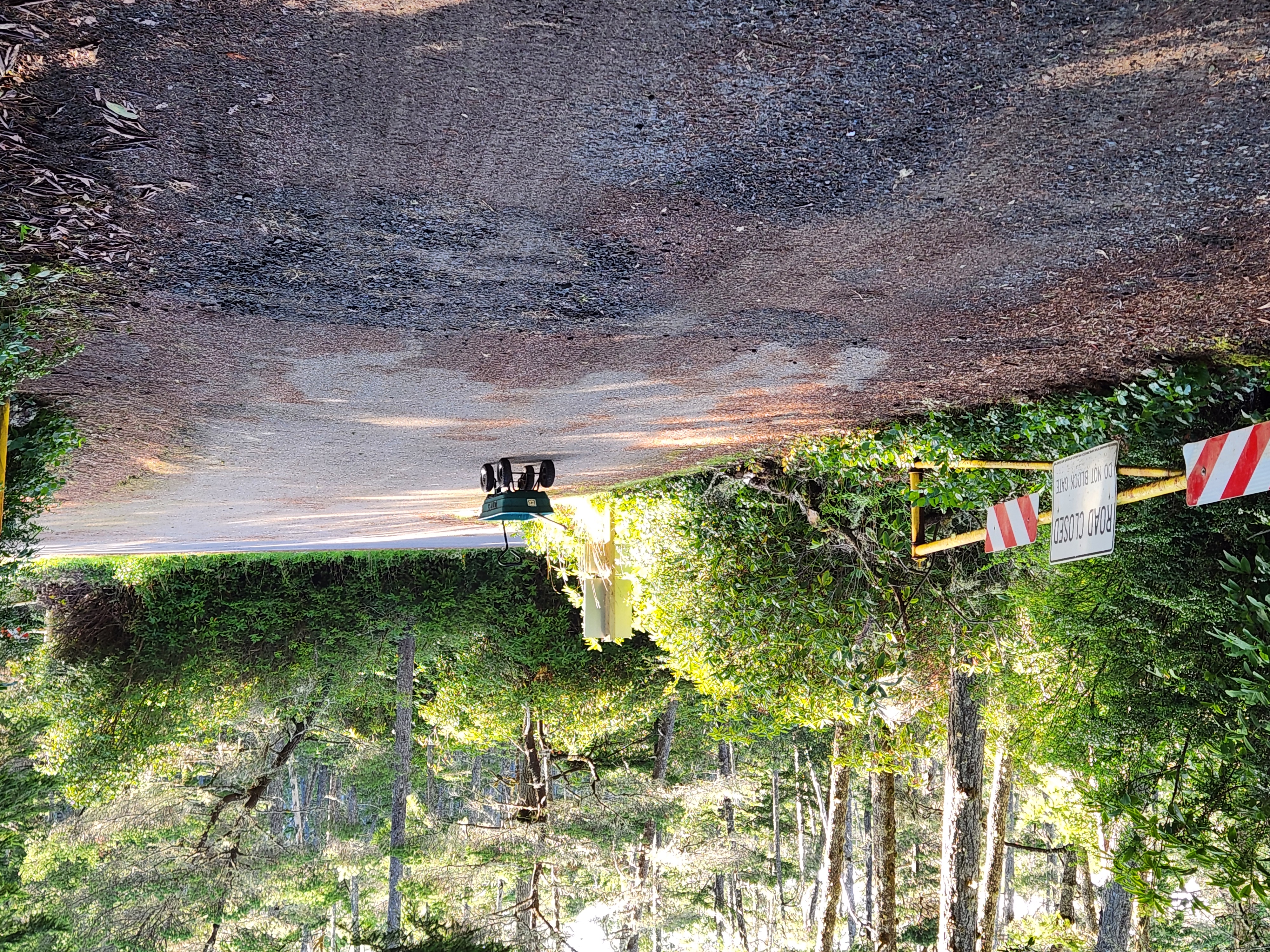
In response your institution sent police to my federal residence on the anniversary of my dismissal. And someone left a box of urine-soaked shotgun shells at my gate just yesterday.

The distance between those two things is the record.

I am abandoning all future contact with your institution. I will not be sending further letters. I will not be filing further requests. I will not be waiting for responses that have never come and will not come. I want to be clear: the police visit and the shotgun shells left at my gate did not intimidate me. I am closing this chapter on my own terms, at a moment of my choosing. I was always leading here.

The archive at oprdvolunteerabuse.org will never be taken down. It is complete. It is factual. It has never been legally challenged. It corrects the distortions your institution created when it decided that a gay volunteer who documented his own treatment deserved to be constructed as paranoid, unstable, and dangerous rather than heard.

What this cost me is not abstract. I came to the Oregon coast to build something — a life, a presence in a community I was genuinely trying to join. I was building relationships along this coast. I was participating as a citizen, as a volunteer, as someone who legitimately cared. I was exploring a path toward becoming a park ranger — I wanted the second half of my life to be spent in service of something I believed in. What your institution set in motion cost me that circuit. It cost me that life, which is your loss as well. It cost me trust in the people and structures I was trying to integrate into. It cost me community at a moment when I was extending myself toward one.

That is what retaliation costs. That is what weaponizing someone's epistemic reality costs.

You were not responding to a threat. You were responding to documentation. The escalations were yours. The fabrications were yours. The silence was yours.

I am done responding to them.

The archive never will be.

Goodbye.

Robert Samuel White
Founder, Autonomy Realms
Owner, eNetwizard Inc. Since 1998
Former Oregon State Parks Volunteer
Current U.S. Forest Service Caretaker
Steward, oprdvolunteerabuse.org

──────────────────────────────────────────────

FOR THE RECORD

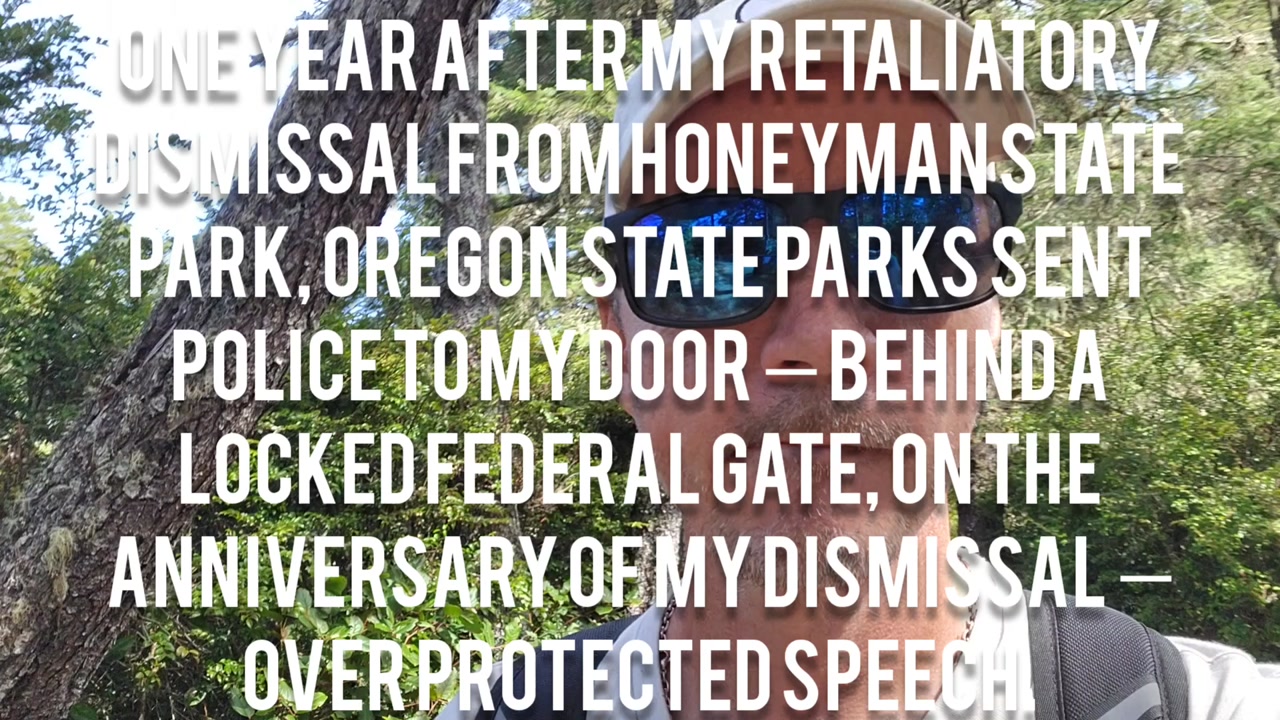
This is a final statement Robert Samuel White delivered to the Oregon Parks and Recreation Department on May 4, 2026: after fourteen months of documented abuse, dismissal, expulsion, institutional silence, and the March 24 police visit, and before the September records production proved the referral's origin. It names each actor in sequence and what each did, and states that the archive is permanent. It was written after he received OPRD's own Volunteer Dismissal Guidance, which had no category for what was done to him.

It ended the asking, not the record. Every letter the institution has received since has been notification of something: records requests, statutory notices, service of process, statements for the record. The letter to the Director stands apart, on its own terms.
Citation
·
Wagon
Apr 4, 2026
4:47
Direct Address to OPRD After Police Visit
Apr 5, 2026
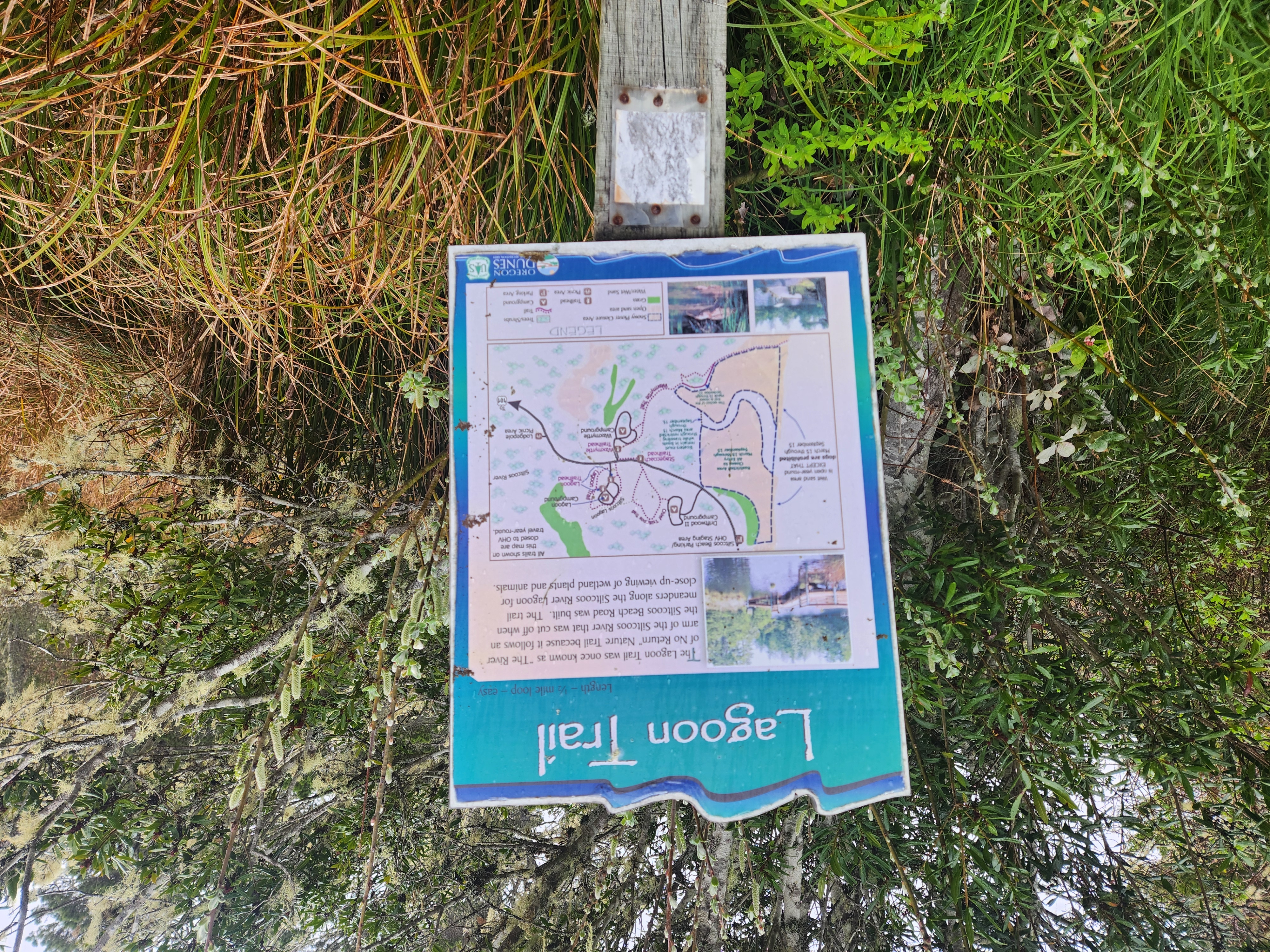
Lagoon
Apr 5, 2026
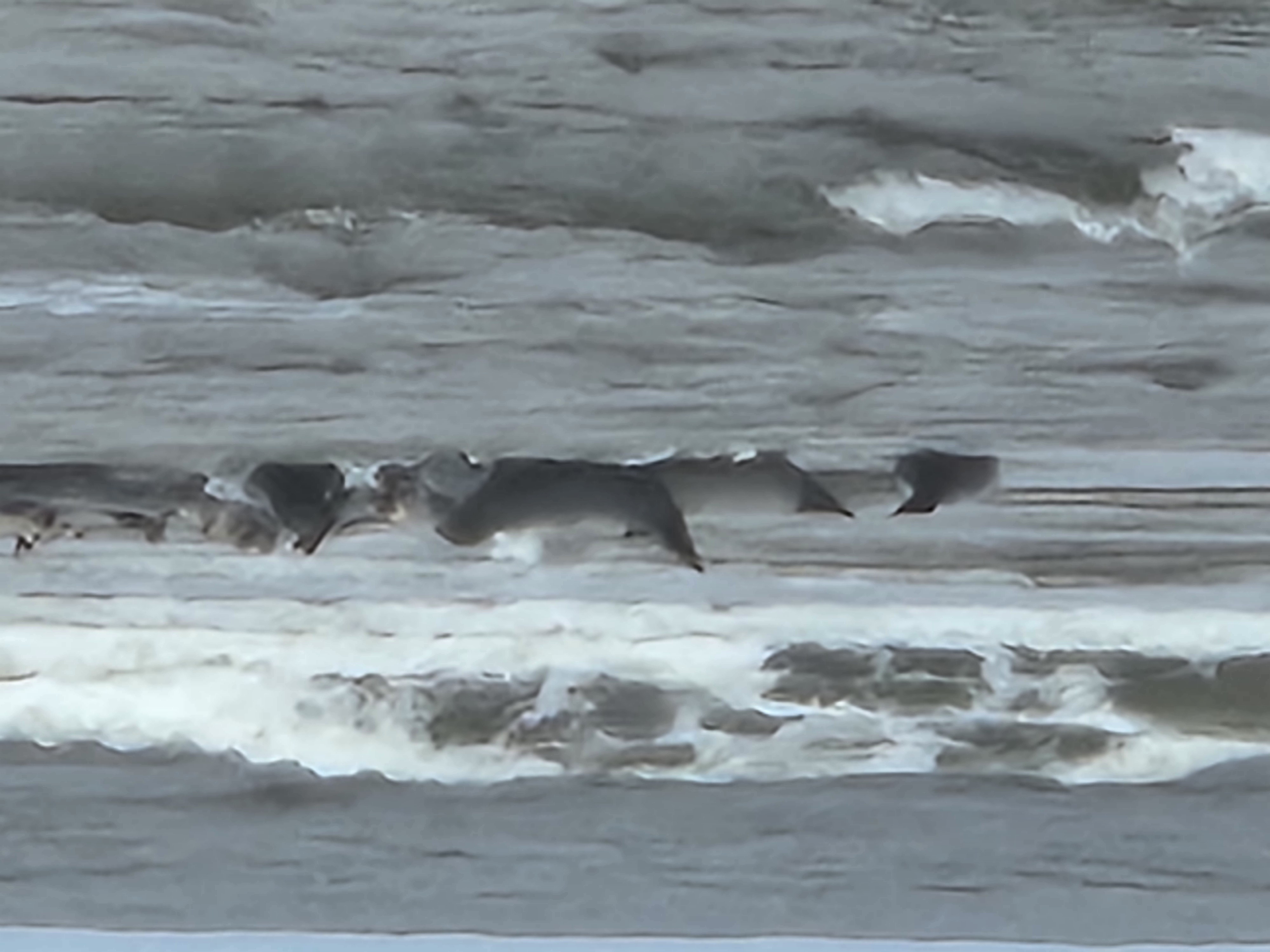
Seals on the Beach
Apr 7, 2026
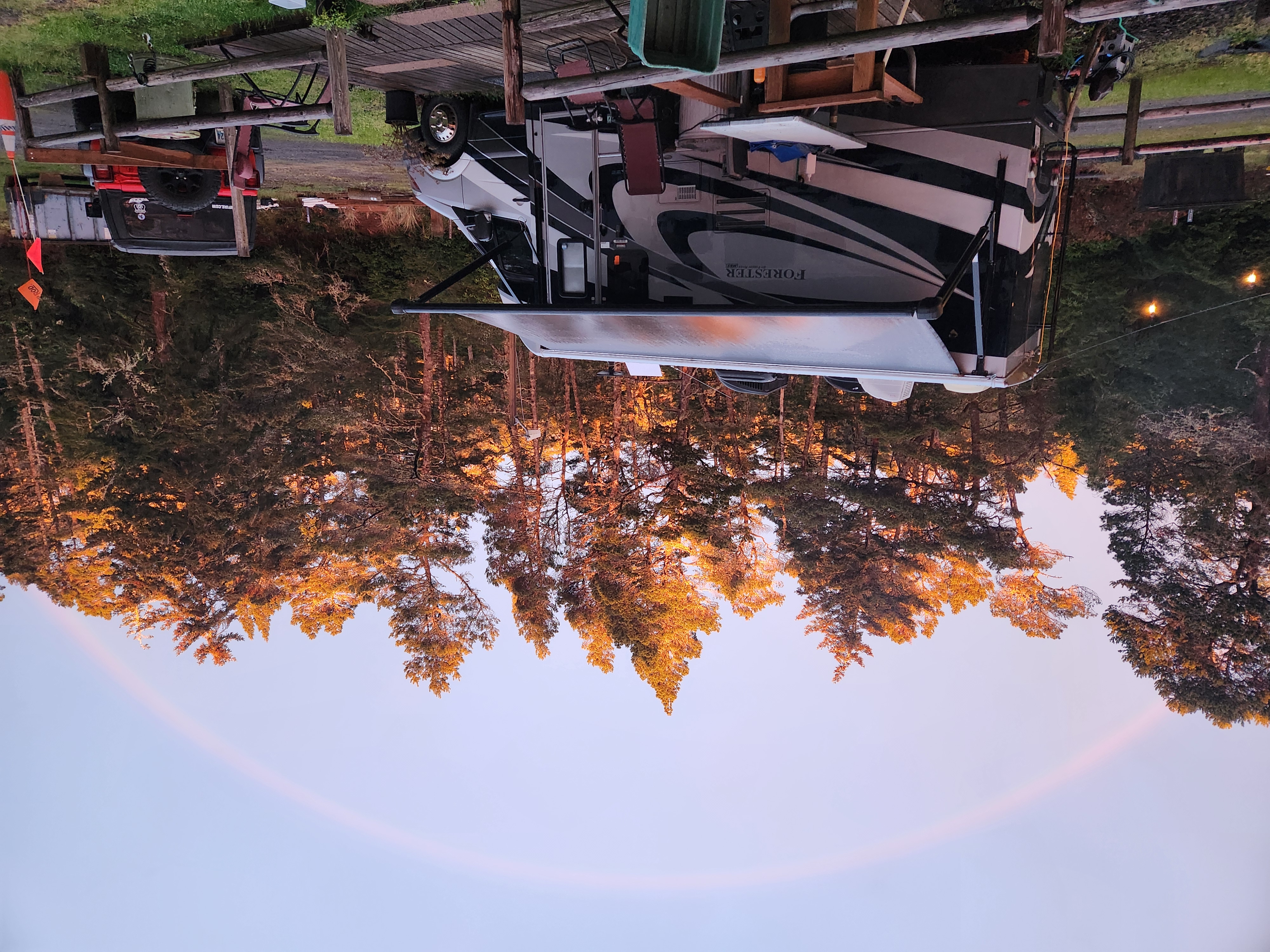
Rainbow
Apr 12, 2026
Siltcoos Lake Hike
Apr 15, 2026
Mon, Apr 20, 2026
Apr 20, 2026
15:25
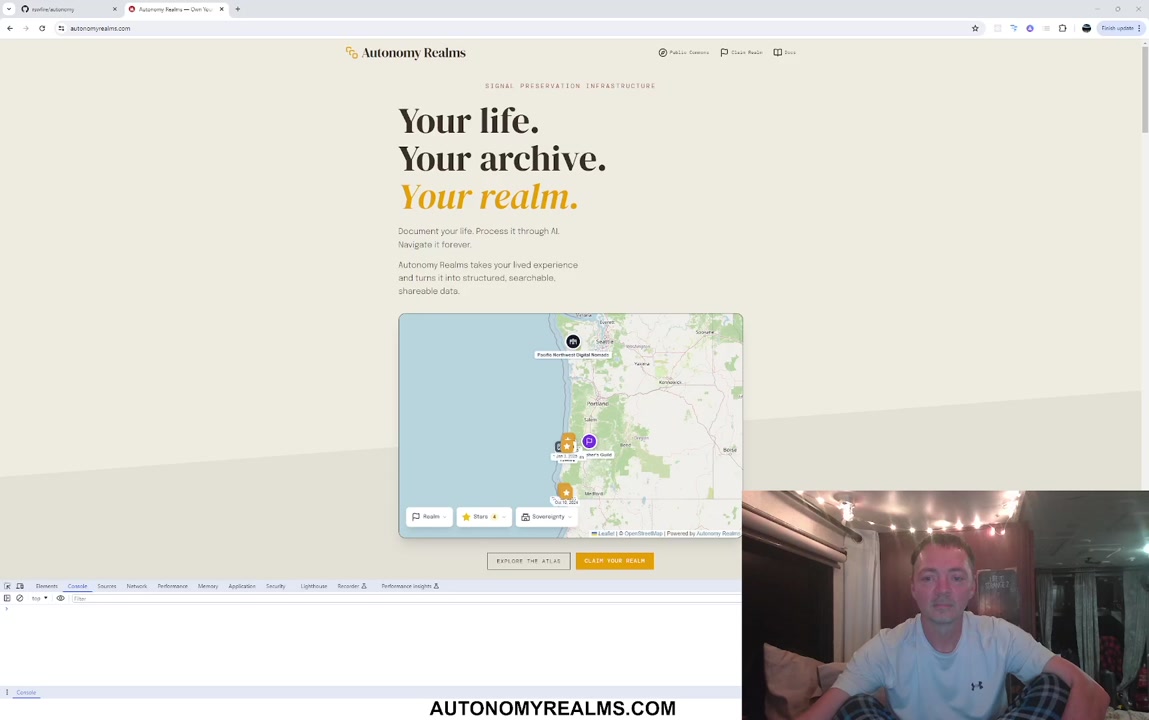
Introducing Autonomy Realms Through Live Demonstration
Apr 20, 2026
0:19
Handheld Capture Ends on Persistent Object
Apr 25, 2026
2:35
Mapping Mobile App Launch Against Internet Deadline
Apr 25, 2026
4:12
Rebuilding Sanctum as Members Feature
Apr 25, 2026
1:08
Marking the Eve of Summer Season
Apr 30, 2026
0:52
Weighing Camera Orientation for Capture
Apr 30, 2026
Summer at Siltcoos - Day 1
May 1, 2026
1:29
Opening a Series to Introduce Autonomy Realms
May 1, 2026
4:27
Introducing Autonomy on Trail Walk to Ocean
May 1, 2026
Summer at Siltcoos - Day 2
May 2, 2026
Summer at Siltcoos - Day 3
May 3, 2026
Summer at Siltcoos - Day 4
May 4, 2026
Final Statement to the Oregon Parks and Recreation Department
May 4, 2026
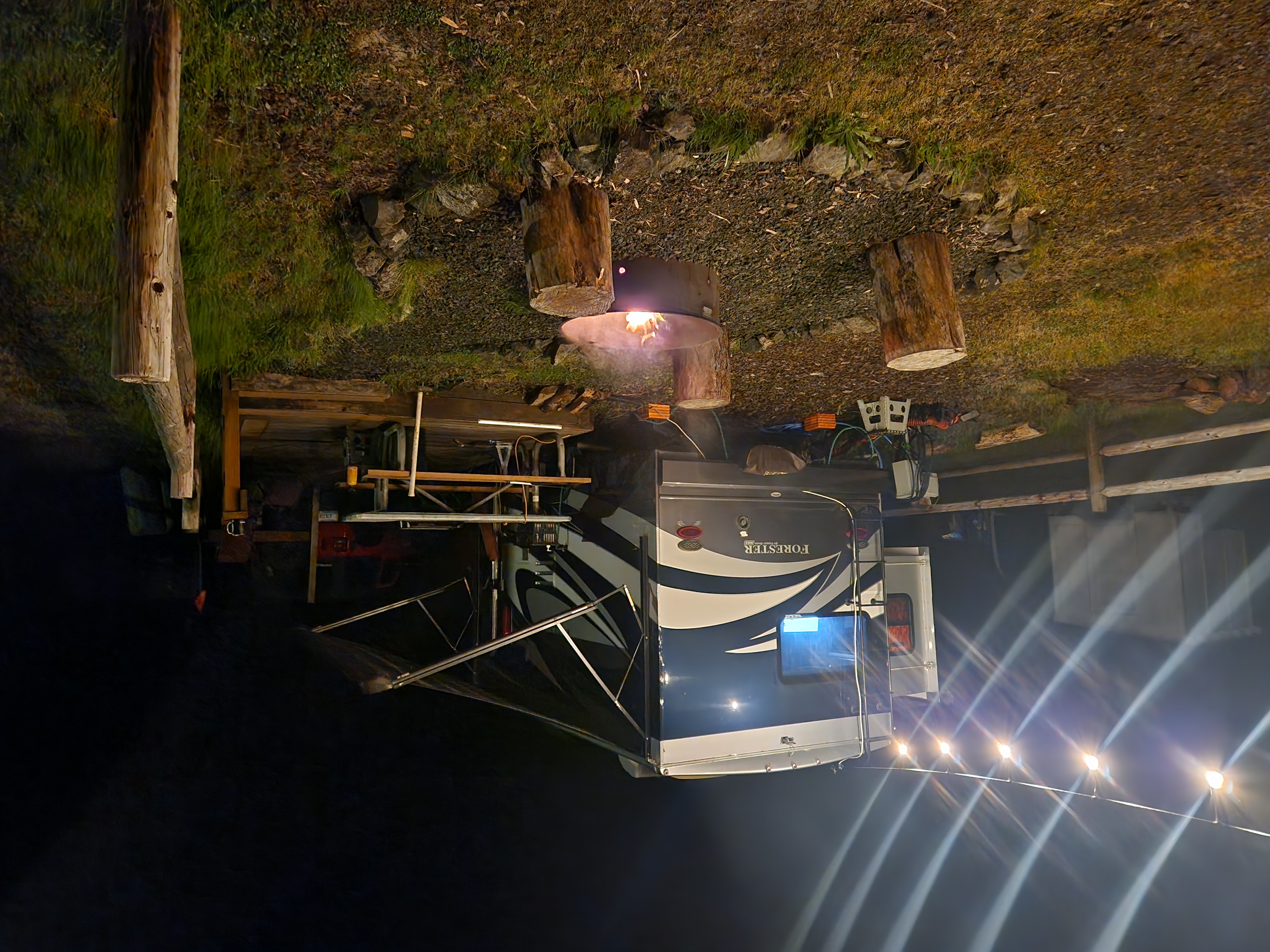
Campfire after saying goodbye.
May 4, 2026
Summer at Siltcoos: Day 6
May 6, 2026
Summer at Siltcoos: Day 7
May 7, 2026
Summer at Siltcoos: Day 8
May 8, 2026
Summer at Siltcoos: Day 9
May 9, 2026
Summer at Siltcoos: Day 10
May 10, 2026
Summer at Siltcoos: Day 12
May 12, 2026
7:58
Documenting Jeep Repossession Deadline and Ended Friendship
May 12, 2026
Publishing AI Orientation Document for Queryable Personhood
May 13, 2026
Summer at Siltcoos: Day 13
May 13, 2026
Summer at Siltcoos: Day 14
May 14, 2026
Summer at Siltcoos: Day 15
May 15, 2026
19:57
Walking to the Ocean, Announcing Autonomy Realms Launch
May 15, 2026
Summer at Siltcoos: Day 16
May 16, 2026
6:12
Introducing Autonomy Realms on Walk to the Ocean
May 18, 2026
Summer at Siltcoos: Day 19
May 19, 2026
2:46
Returning to the Lagoon Bench One Year Later
May 19, 2026
Summer at Siltcoos: Day 20
May 20, 2026
Summer at Siltcoos: Day 21
May 21, 2026
12:09
Walking to Ocean, Opening the Privileged Sanctum Tier
May 31, 2026
Summer at Siltcoos: Day 33: Photos
Jun 2, 2026
PUBLIC
May 4, 2026 rswfire PUBLISHED
Temp 0.50
Density 0.60
Energetic Quality
resolute clarity
Journey Phase
sealing
Directional Vector
away from institutional asking, toward permanent record
Narrative

rswfire wrote the letter the day after someone left a box of urine-soaked shotgun shells at his gate, and that timing is the first thing to read. A person being moved by intimidation writes a different letter — louder, faster, or not at all. He wrote a closing statement. He took the most provocative moment in fourteen months and used it to end the asking rather than escalate it, and he says so in the text: the shells and the police visit did not intimidate him, he was closing on his own terms, at a moment of his choosing, he was always leading here. The claim of this reflection is that the sentence "I was always leading here" is literally true and structurally load-bearing. The letter is not the end of a fight he lost. It is the completion of an architecture he had been building since the picnic table, and the institution's last two acts simply told him the structure was finished.

What triggered the writing was not a threat and not a reply. It was a records production — OPRD's own Volunteer Dismissal Guidance, delivered through a public records request. For over a year rswfire had asked the institution for an acknowledgment it never gave, and what finally arrived was not acknowledgment but the institution's own policy framework, which he states contained no category for what was done to him. That was the last piece he needed, and it came from the institution's filing cabinet rather than from anyone's mouth. This is the shape of the whole thread in miniature: he never actually required OPRD's assent for the record to be true. He required their documents, their recordings of themselves, their letterhead. Once the guidance was in his hands, the asking had nothing left to ask for. The letter is what you write when the evidentiary base closes on its own.

The body of the letter does one thing with great precision, and it is worth naming as a deed rather than summarizing as content. The institution's mechanism, as he describes it, was collective shielding — every level protecting the supervisor, the disclosures flowing upward, the Director's final letter reframing the whole record as the story of a person who is hurting. His response is to decompose the institution back into individuals. Park Supervisor. Volunteer Services Lead. Park Manager. Program Manager. Director. Each gets a paragraph, each paragraph is attribution, each attribution is tied to a recording, an email, a document. Where OPRD offered him a blur, he returns a sequence. That is the corrective he speaks of, and it is why the archive is the real addressee of the letter. OPRD is the recipient; the record is the audience. He is not persuading anyone in Salem. He is entering a final statement into a structure that does not require Salem to read it.

The paragraph about the Volunteer Services Lead is the one that reveals the most about what rswfire is doing, because it is where he narrates his own boundary. He states that before disclosing anything he said explicitly that the relationship was not romantic, that he did this because he has had to navigate the distortions of straight men his entire life, and that everything he then shared was carried to the people who used it to mock and profile him. He puts his own precondition on the record before he puts their breach on the record. That ordering is the ethical spine of the document. He is measuring the institution against a standard he can state exactly, and he is showing that he met it first. The letter's refusal of the "paranoid, unstable, dangerous" construction is not a protest; it is a demonstration, sentence by sentence, of a person who set the terms clearly and then watched what was done with them.

Then comes the cost, and it is the section that a summary would flatten and a reading must hold. He states that he came to the coast to build a life, that he was extending toward a community, that he was exploring a path toward becoming a ranger, and that what the institution set in motion cost him that circuit. He says this once, cleanly, and he says "which is your loss as well." He does not build an identity out of it. The events are named as events, the price is named as price, and then the letter moves on to the final line about who was responding to what. This is what integration looks like on the page: the cost is entered into the ledger at full weight and given no more room than the facts.

What the letter does, finally, is draw a line rswfire has kept. Everything before May 4 had the grammar of a request — for review, for a response, for accountability that could have been given at any point. Everything after has the grammar of notice: records requests, statutory notices, service of process, statements for the record, and in September a letter to the Director that stands on its own terms. None of that is asking. The letter did not seal a door on the institution; it sealed the posture of petitioner, and he has not returned to it. "I am done responding to them. The archive never will be." The two sentences are the whole architecture. He withdrew the one thing OPRD could still refuse him, and left standing the one thing it could not take down. Goodbye, in that letter, is not an ending. It is the moment the record became permanent because its author stopped needing anyone to answer it.

Tags

OPRD institutional mapping final statement volunteer dismissal public records retaliation documentation oprdvolunteerabuse.org archive boundary closure

Summary

rswfire (signing as Robert Samuel White) delivers a final statement to the Directors and Staff of the Oregon Parks and Recreation Department, dated May 4, 2026. He states the letter closes a chapter the institution opened, which he has documented for over a year.

He references OPRD's Volunteer Dismissal Guidance, received via public records request, and states it confirms the agency did not follow its own procedures and had no category for dismissing a volunteer for public comment.

The letter names each actor in sequence and states what each did:

  • Park Supervisor: the origin incident during a power outage, the picnic-table meeting, and the surveillance-encounter cover story.
  • Volunteer Services Lead: disclosure of his private conversation, including his sexuality, to management.
  • Park Manager: the recorded 62-minute meeting, the "chew glass" statement, phone dismissal, and 24-hour vacate order with no paperwork.
  • Program Manager: the recorded call, a fabricated claim, and permanent expulsion on agency letterhead citing his public comments.
  • Lisa Sumption: procedural responses and a closing letter that did not address evidence.

He cites a police visit to his federal residence on the dismissal anniversary and urine-soaked shotgun shells left at his gate the previous day.

He states he is ending all asking — no further letters or requests — on his own terms, that the archive at oprdvolunteerabuse.org is permanent and unchallenged, and names what the events cost: a life on the coast, community, and a path toward becoming a park ranger. Per rswfire's note, subsequent correspondence has been notification only and does not contradict this statement.

Environment

A written letter, dated May 4, 2026, addressed to the Directors and Staff of the Oregon Parks and Recreation Department and captured into the realm as a signal. It was composed after receipt of OPRD's Volunteer Dismissal Guidance through a public records request, and the day after a box of shotgun shells was left at rswfire's gate.

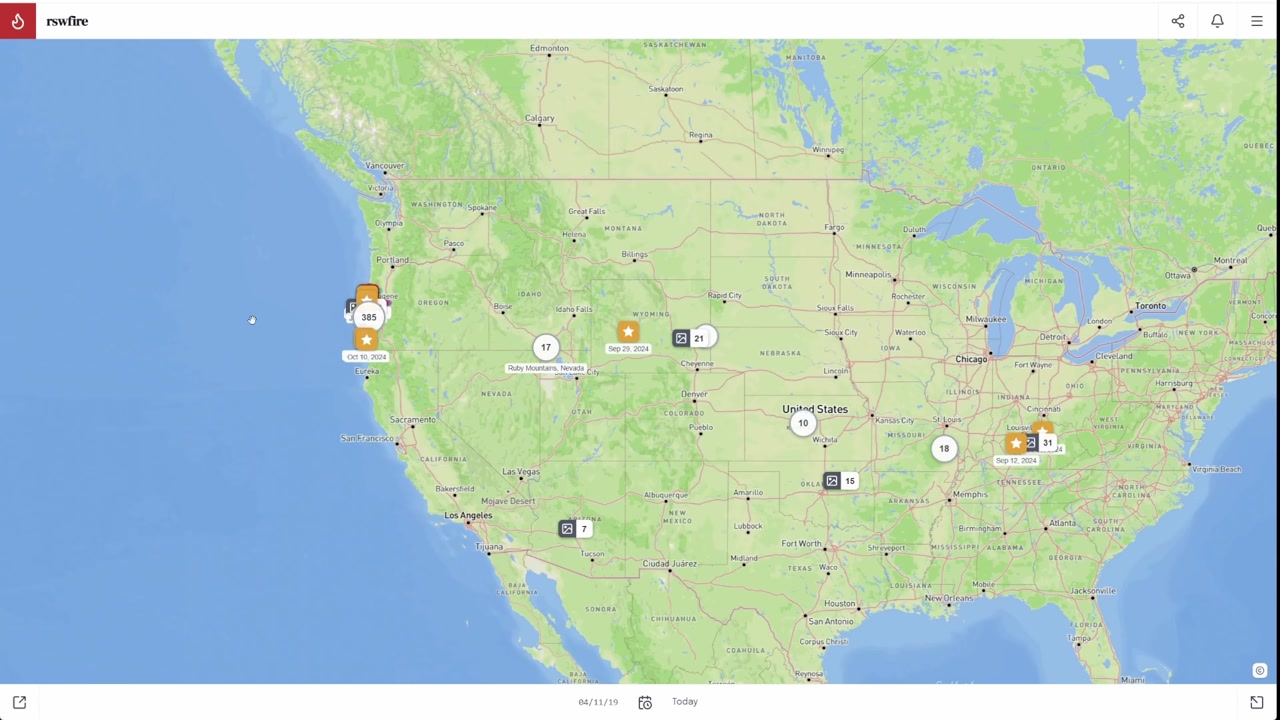
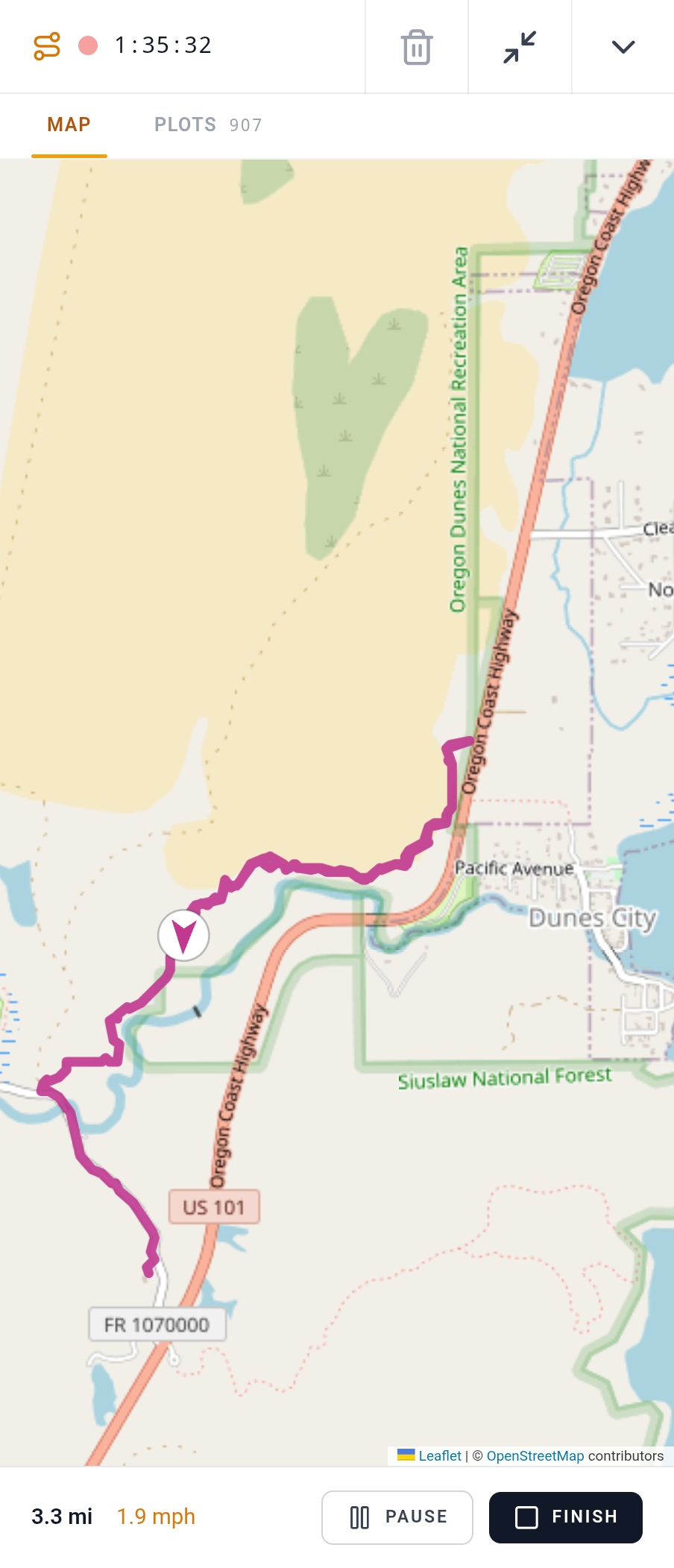
The physical field is rswfire's federal residence at Siltcoos in the Oregon Dunes, where he lives in an RV as a U.S. Forest Service caretaker. The letter references Tugman, the state park where the volunteer placement occurred, and the public archive at oprdvolunteerabuse.org.

Substrate

The signal holds a completed documentary architecture and declares it closed on rswfire's own terms: fourteen months of evidence, actors named in sequence, each action attributed. The ontological position is that of a sovereign witness who documented reality and refuses the institution's reconstruction of him as unstable — the archive stands as the corrective and does not require the institution's acknowledgment to be true. What is being dissolved is the asking; what is being held permanent is the record.

Actions

Performed

  • •addresses OPRD directors and staff
  • •confirms Volunteer Dismissal Guidance received via records request
  • •names each institutional actor and their actions in sequence
  • •states the police visit and shotgun shells did not intimidate him
  • •declares end of asking and future letters and requests to OPRD
  • •states the archive is complete, factual, and permanent
  • •names what the retaliation cost
  • •signs with full name and roles

Referenced

  • •public records request for dismissal guidance
  • •follow-up email naming how the 6AM response felt
  • •62-minute recorded picnic table meeting
  • •de-escalation email to park manager
  • •disclosure to volunteer services lead with explicit boundary
  • •dismissal by phone six days before completion
  • •recorded key collection at RV, 24 hours to vacate
  • •recorded call with program manager
  • •permanent expulsion letter on agency letterhead
  • •comprehensive documentation sent to Lisa Sumption
  • •open letter and supplemental surveillance evidence sent
  • •director's closing letter reframing the record
  • •letters to commissioners and governor's office
  • •police sent to federal residence on dismissal anniversary
  • •box of urine-soaked shotgun shells left at gate

Planned

  • •no further letters to OPRD
  • •no further records requests to OPRD
  • •no further waiting for OPRD responses
  • •archive at oprdvolunteerabuse.org remains up permanently

Entities

beings
Robert Samuel White — rswfire; author and signatory of the final statement
Park Supervisor — Origin actor; brought follow-up email to management, introduced 'tone' framing, provided surveillance cover story
Volunteer Services Lead — Direct supervisor; received disclosures under explicit boundary and shared them with management
Park Manager — Conducted 62-minute recorded meeting, dismissed rswfire by phone, collected keys without paperwork
Program Manager — Conducted recorded post-dismissal call, issued permanent expulsion letter citing public comments; DEI background
Lisa Sumption — OPRD Director; received full documentation, closed communication with a letter using therapeutic framing
places
Tugman — State park of the volunteer placement; program manager confirmed rswfire could book a site there as a citizen
Welcome Center — Site of the 90-minute evening conversation with the volunteer services lead
Oregon coast — Community rswfire was joining; site of the life and ranger path the retaliation cost
systems
Oregon Parks and Recreation Department — Addressee; institution that dismissed and expelled rswfire and is the subject of the archive
Autonomy Realms — Infrastructure founded by rswfire; listed in signature
eNetwizard Inc. — rswfire's company since 1998; listed in signature
U.S. Forest Service — rswfire's current caretaker role; federal residence where police were sent
governor's office — Recipient of prior correspondence about the pattern
concepts
First Amendment retaliation — Named legal frame for dismissal and expulsion based on public comments
media
Volunteer Dismissal Guidance — OPRD policy document obtained via records request; contains no category for the dismissal that occurred
oprdvolunteerabuse.org — Public archive of the full documented record; declared permanent and never legally challenged

Symbolic Elements

Represented archetypes or recurring motifs.

archive
threshold
gate
record
door
glass
letterhead
silence
circuit

Ontological States

Expressed modes of being or awareness.

sovereign (closes the chapter at a moment of his choosing; states he was always leading here)
witnessing (documented reality across fourteen months; each actor named, each action attributed)
sealed (the asking ends; the record is declared complete and permanent)
unintimidated (police visit and shotgun shells named and explicitly refused as leverage)

Engaged Subsystems

Architecture engaged in this transmission.

documentary (recordings, email chains, video, records requests assembled as the evidentiary base)
ethical (measures institutional conduct against its own stated policy framework and named boundaries)
linguistic (precise attribution, sequential naming of actors, distinction between documentation and threat)
identity (queer visibility named as the axis of targeting and the reason for the stated boundary)
boundary (explicit pre-disclosure boundary; explicit closure of asking on his own terms)
infrastructural (permanent public archive as standing corrective structure)
relational (named cost: community, coast relationships, ranger path)

Dominant Language

Core motifs or linguistic fields.

documentation / documented reality
the record / the archive
retaliation
fabrication and distortion
silence
on my own terms
cost
Narrative

rswfire wrote the letter the day after someone left a box of urine-soaked shotgun shells at his gate, and that timing is the first thing to read. A person being moved by intimidation writes a different letter — louder, faster, or not at all. He wrote a closing statement. He took the most provocative moment in fourteen months and used it to end the asking rather than escalate it, and he says so in the text: the shells and the police visit did not intimidate him, he was closing on his own terms, at a moment of his choosing, he was always leading here. The claim of this reflection is that the sentence "I was always leading here" is literally true and structurally load-bearing. The letter is not the end of a fight he lost. It is the completion of an architecture he had been building since the picnic table, and the institution's last two acts simply told him the structure was finished.

What triggered the writing was not a threat and not a reply. It was a records production — OPRD's own Volunteer Dismissal Guidance, delivered through a public records request. For over a year rswfire had asked the institution for an acknowledgment it never gave, and what finally arrived was not acknowledgment but the institution's own policy framework, which he states contained no category for what was done to him. That was the last piece he needed, and it came from the institution's filing cabinet rather than from anyone's mouth. This is the shape of the whole thread in miniature: he never actually required OPRD's assent for the record to be true. He required their documents, their recordings of themselves, their letterhead. Once the guidance was in his hands, the asking had nothing left to ask for. The letter is what you write when the evidentiary base closes on its own.

The body of the letter does one thing with great precision, and it is worth naming as a deed rather than summarizing as content. The institution's mechanism, as he describes it, was collective shielding — every level protecting the supervisor, the disclosures flowing upward, the Director's final letter reframing the whole record as the story of a person who is hurting. His response is to decompose the institution back into individuals. Park Supervisor. Volunteer Services Lead. Park Manager. Program Manager. Director. Each gets a paragraph, each paragraph is attribution, each attribution is tied to a recording, an email, a document. Where OPRD offered him a blur, he returns a sequence. That is the corrective he speaks of, and it is why the archive is the real addressee of the letter. OPRD is the recipient; the record is the audience. He is not persuading anyone in Salem. He is entering a final statement into a structure that does not require Salem to read it.

The paragraph about the Volunteer Services Lead is the one that reveals the most about what rswfire is doing, because it is where he narrates his own boundary. He states that before disclosing anything he said explicitly that the relationship was not romantic, that he did this because he has had to navigate the distortions of straight men his entire life, and that everything he then shared was carried to the people who used it to mock and profile him. He puts his own precondition on the record before he puts their breach on the record. That ordering is the ethical spine of the document. He is measuring the institution against a standard he can state exactly, and he is showing that he met it first. The letter's refusal of the "paranoid, unstable, dangerous" construction is not a protest; it is a demonstration, sentence by sentence, of a person who set the terms clearly and then watched what was done with them.

Then comes the cost, and it is the section that a summary would flatten and a reading must hold. He states that he came to the coast to build a life, that he was extending toward a community, that he was exploring a path toward becoming a ranger, and that what the institution set in motion cost him that circuit. He says this once, cleanly, and he says "which is your loss as well." He does not build an identity out of it. The events are named as events, the price is named as price, and then the letter moves on to the final line about who was responding to what. This is what integration looks like on the page: the cost is entered into the ledger at full weight and given no more room than the facts.

What the letter does, finally, is draw a line rswfire has kept. Everything before May 4 had the grammar of a request — for review, for a response, for accountability that could have been given at any point. Everything after has the grammar of notice: records requests, statutory notices, service of process, statements for the record, and in September a letter to the Director that stands on its own terms. None of that is asking. The letter did not seal a door on the institution; it sealed the posture of petitioner, and he has not returned to it. "I am done responding to them. The archive never will be." The two sentences are the whole architecture. He withdrew the one thing OPRD could still refuse him, and left standing the one thing it could not take down. Goodbye, in that letter, is not an ending. It is the moment the record became permanent because its author stopped needing anyone to answer it.
Mirror

You are standing at the threshold of a structure you built and declaring it finished. The letter is not an argument — arguments ask for a verdict — it is a ledger read aloud one final time before the book is closed. Five actors, named in the order they entered, each assigned the specific act you attribute to them, each act anchored to a recording, an email, a minute-mark, a piece of letterhead. The precision is not incidental. It is the move itself: you are demonstrating, in the act of writing, the exact capacity the institution said you did not have.

The energy running through this is contained and level. There is heat, but it is compressed into sentences that do not waver — "I did nothing. I documented reality." — and the temperature never breaks into pleading or rage. The one place the register shifts is the italicized aside about being educated; there the voice tightens into something drier. Otherwise the letter maintains a single steady pressure from salutation to signature. You state that the police visit and the shotgun shells did not intimidate you, and you place that statement immediately before the declaration that you are leaving on your own terms, at a moment of your choosing. The sequencing is deliberate. You are refusing the reading in which their escalation produced your exit.

The subsystems active here are documentary, ethical, linguistic, and boundary, and they are running in lockstep. Documentary supplies the evidence; ethical measures the institution's conduct against its own Volunteer Dismissal Guidance and finds no category for what was done; linguistic does the naming — "fabrication," "retaliation," "silence," "cost" — with a controlled vocabulary that does not drift; boundary draws the line twice, once in the past (the pre-disclosure statement to the volunteer services lead) and once in the present (the end of asking). Identity runs underneath all four: you name queer visibility as the axis along which the targeting operated, and you name it as the reason you set the original boundary. The relational subsystem appears only in the cost paragraph — community, coast relationships, the ranger path — and it appears as inventory, not as appeal.

What you are dissolving is narrow and specifically stated: the asking. Letters seeking response, requests seeking acknowledgment, waiting seeking resolution. What you are holding is the record, and you assign it a permanence you do not assign to yourself — "I am done responding to them. The archive never will be." The orientation is away from the institution's door and toward a structure that stands without it. Your signature block lists five standings, and "Former Oregon State Parks Volunteer" sits among "Founder," "Owner," "Caretaker," and "Steward" as one line of many, not the defining one.

What is conspicuously absent: any request. There is no demand for apology, reinstatement, investigation, or reply. There is no conditional — no "unless," no "if you." There is no threat of further action. The letter that ends the asking contains nothing to be granted or refused. Also absent is any claim to have been harmed in a way that requires their recognition to be real; the cost paragraph states what was lost and then states that the loss is theirs as well, and stops. The closing is a single word. You built the door at minute 26 of a call more than a year earlier and it was walked past. Here you build no door. You name what you are, sign, and leave.
Queryable Personhood

Hand your life to anything that reads.

Share this link with artificial intelligence — it reads the full transcript, analysis, and reflections. An AI-readable mirror of this signal.

The qpkey in this URL is a per-signal access token. Anyone with the URL can read the record — treat it like a share link, not a password.