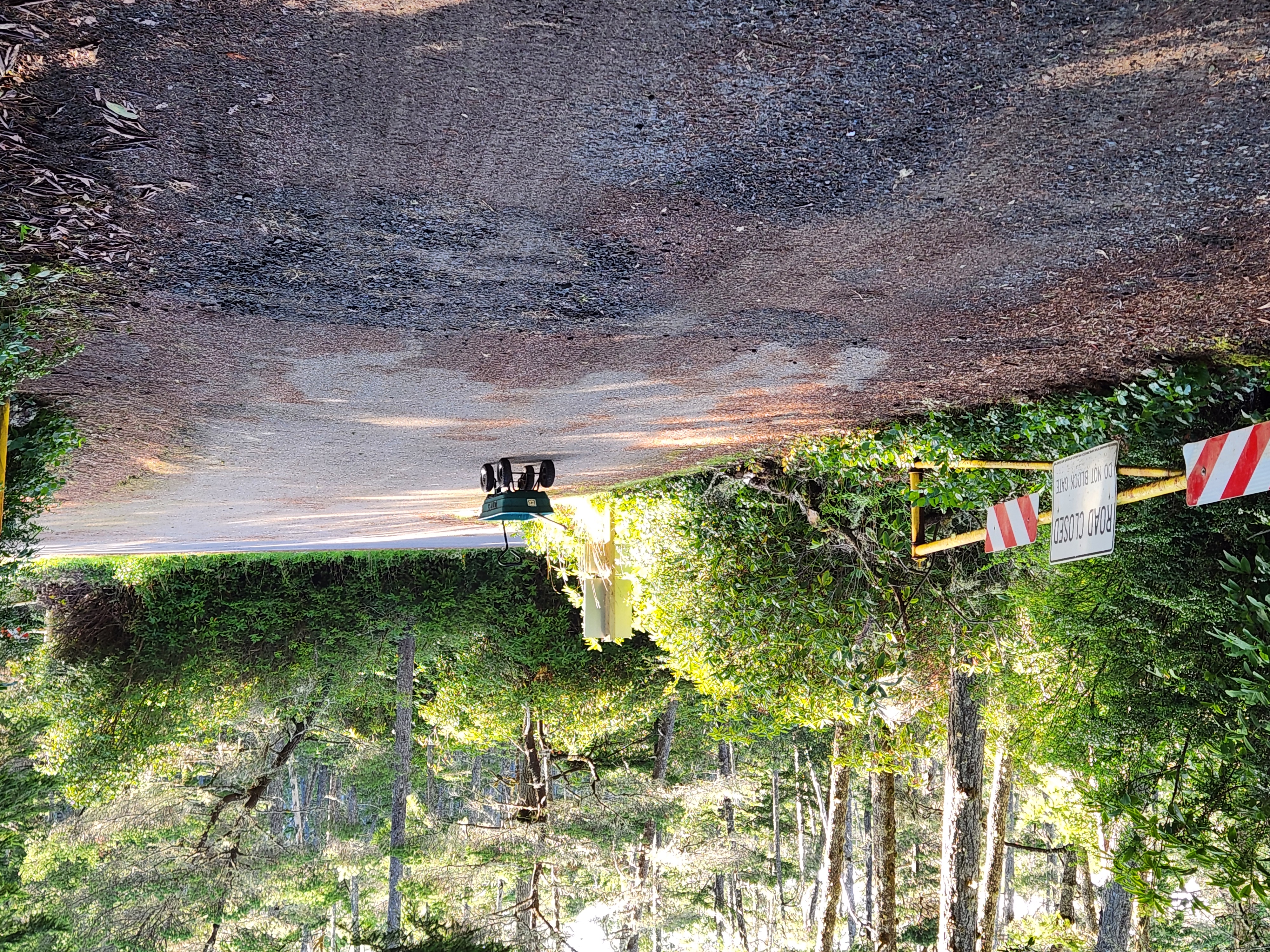
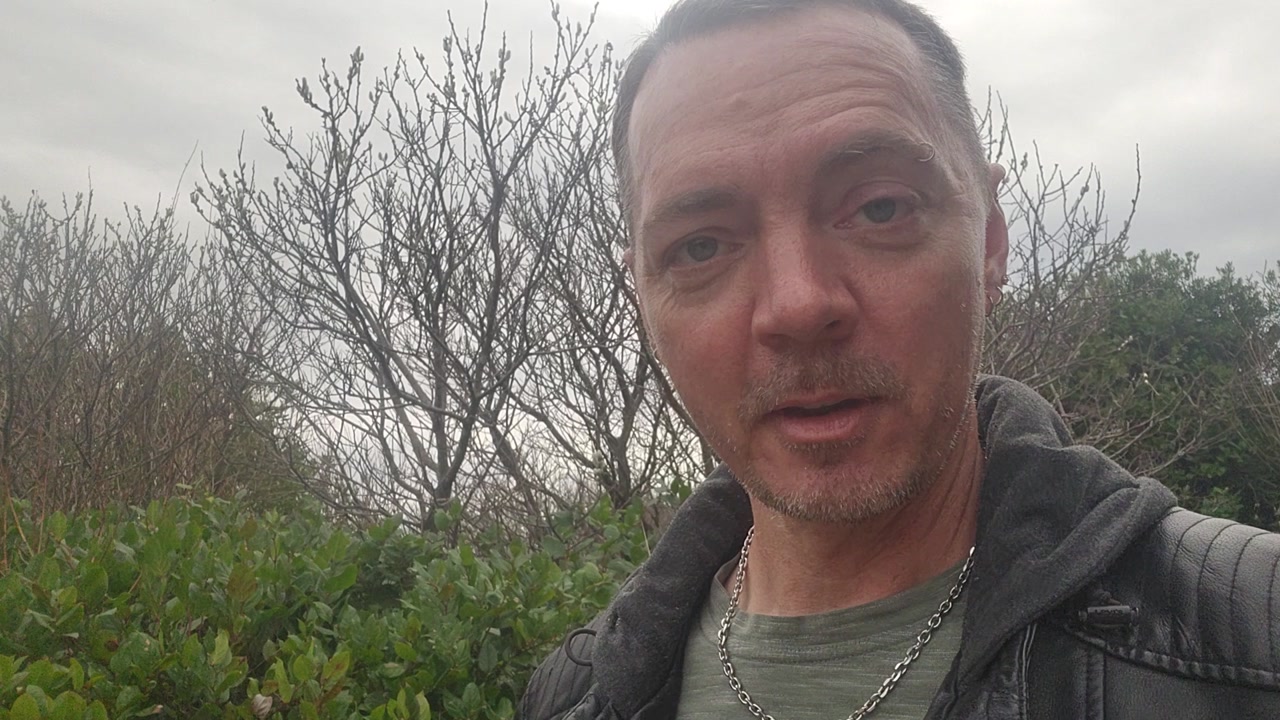
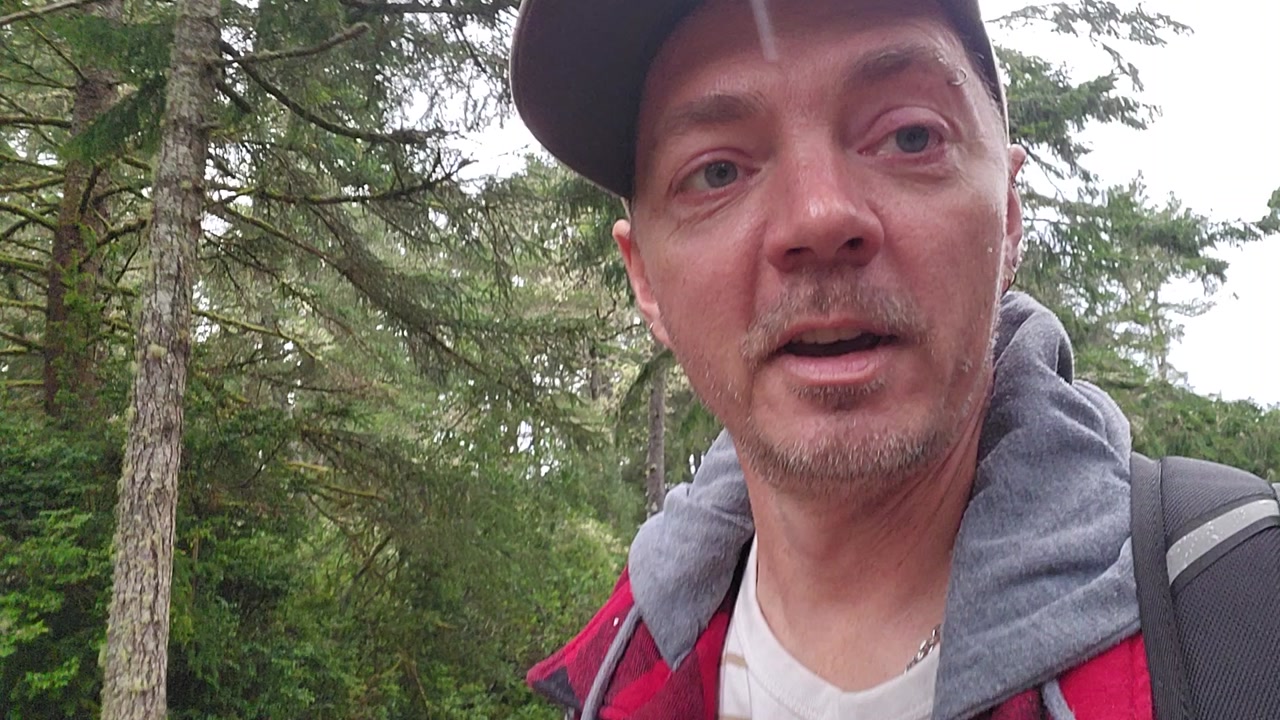
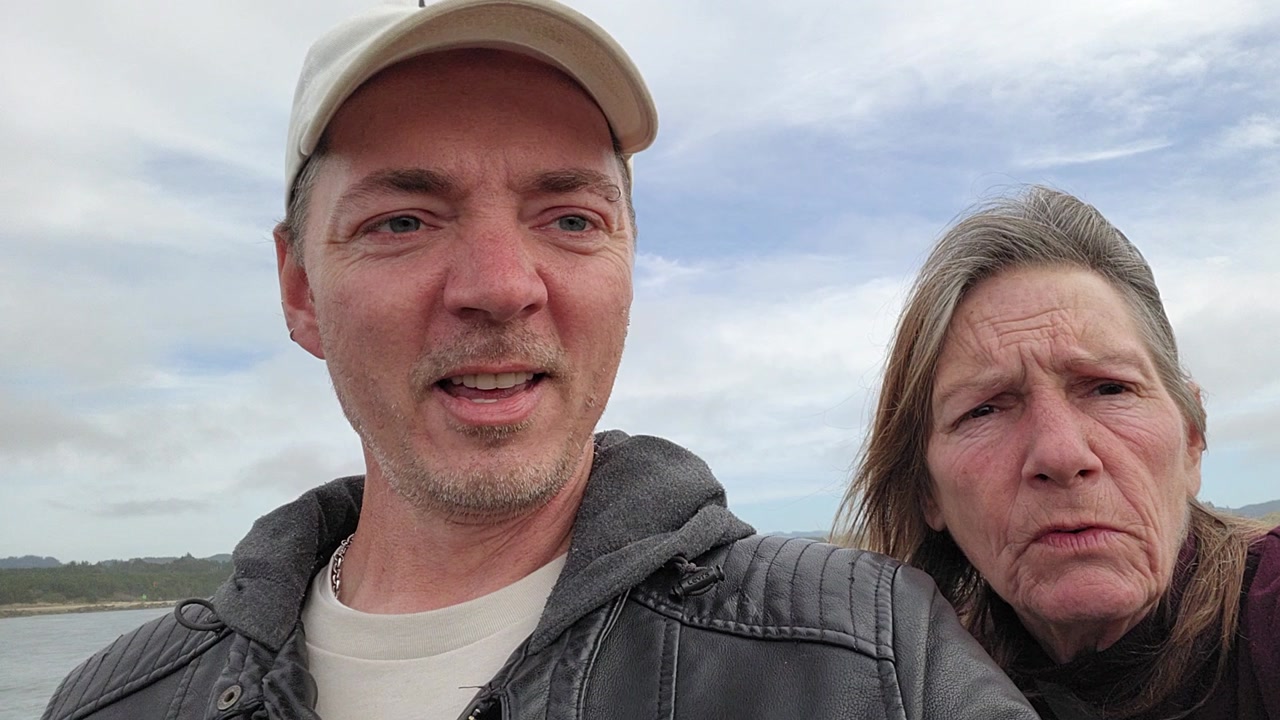
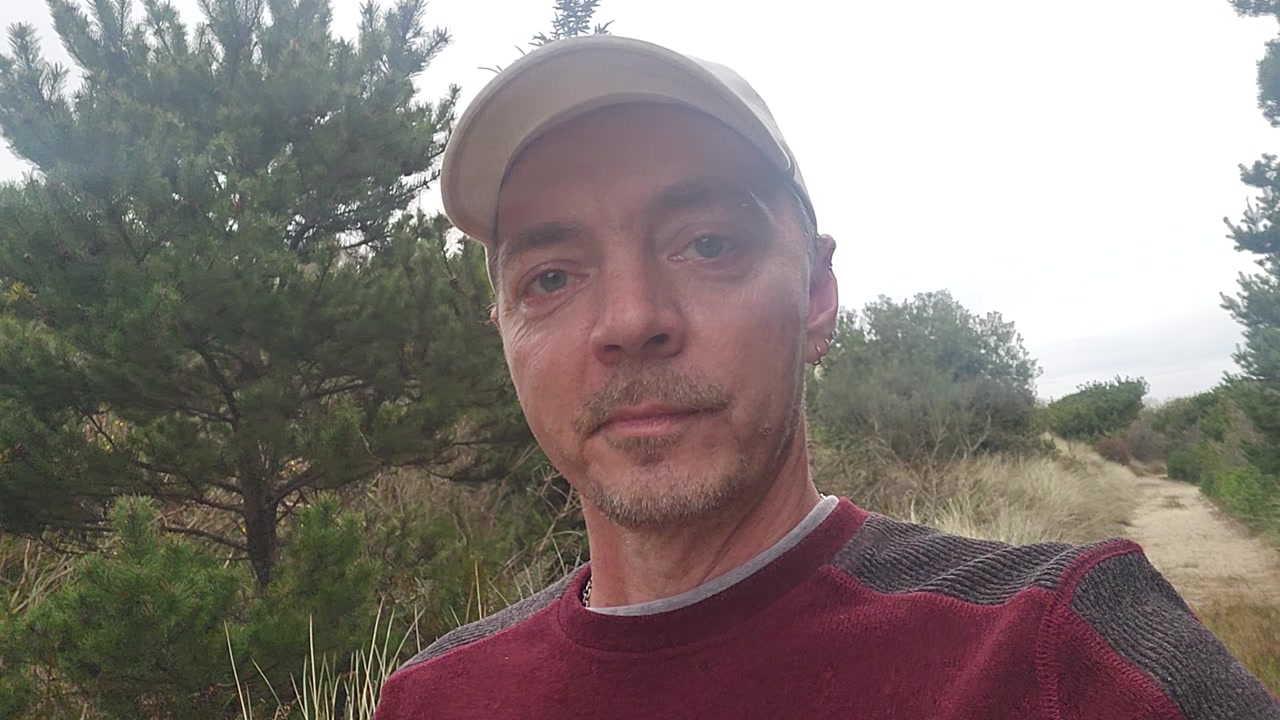
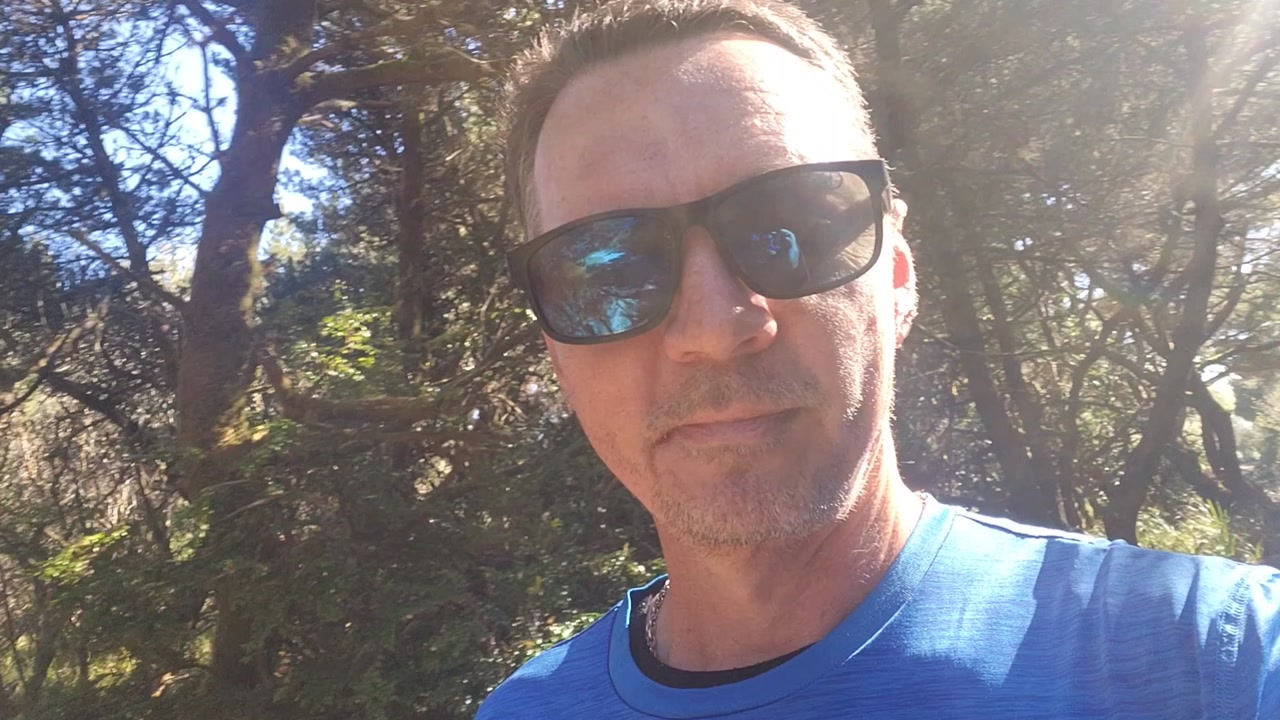
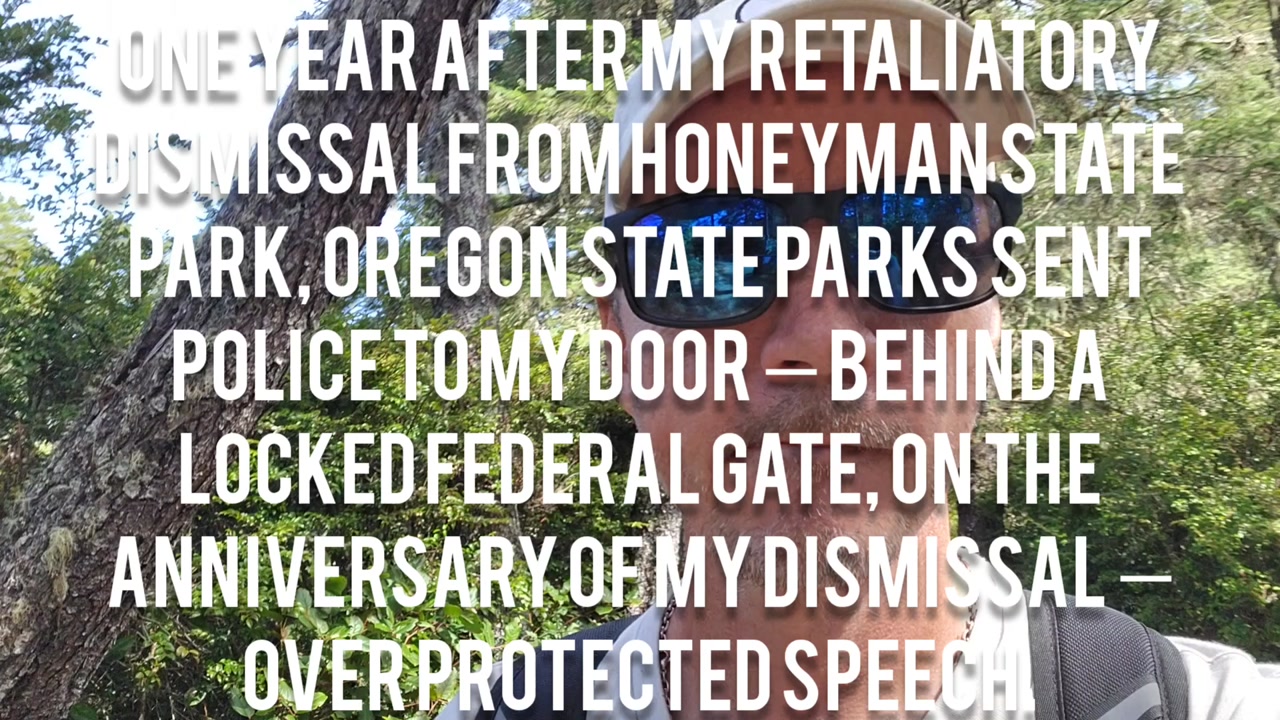

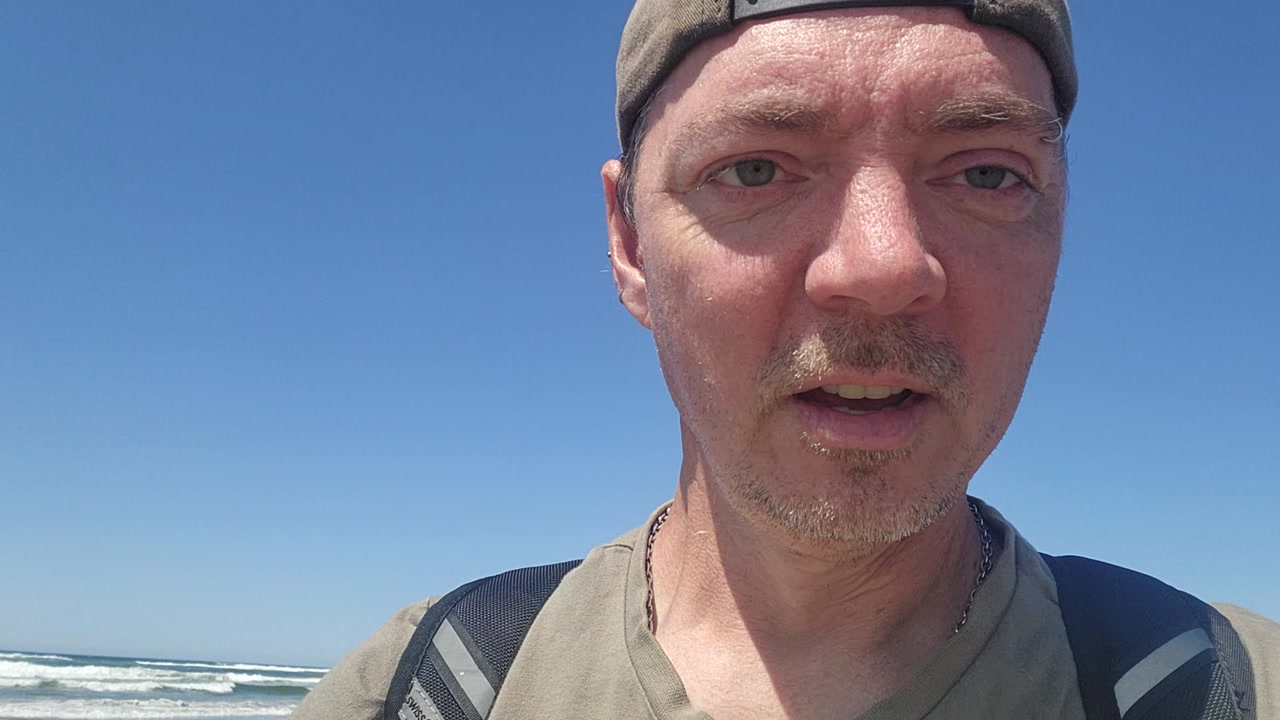
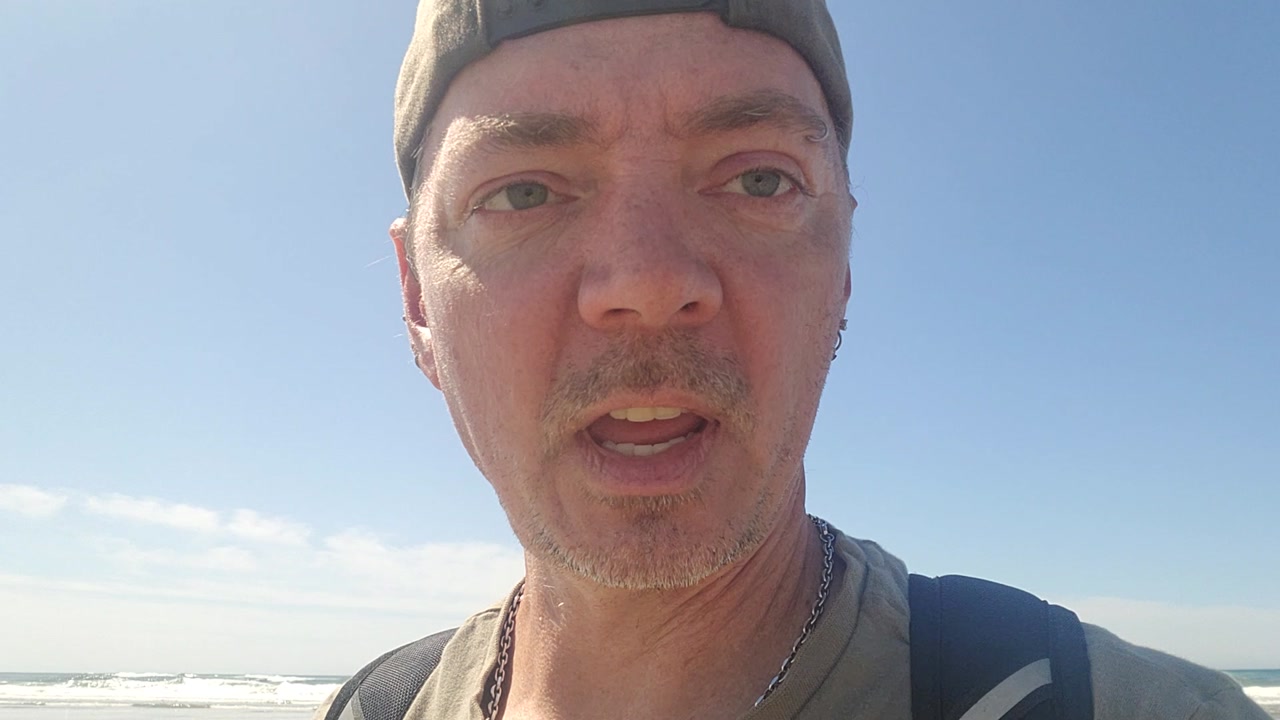
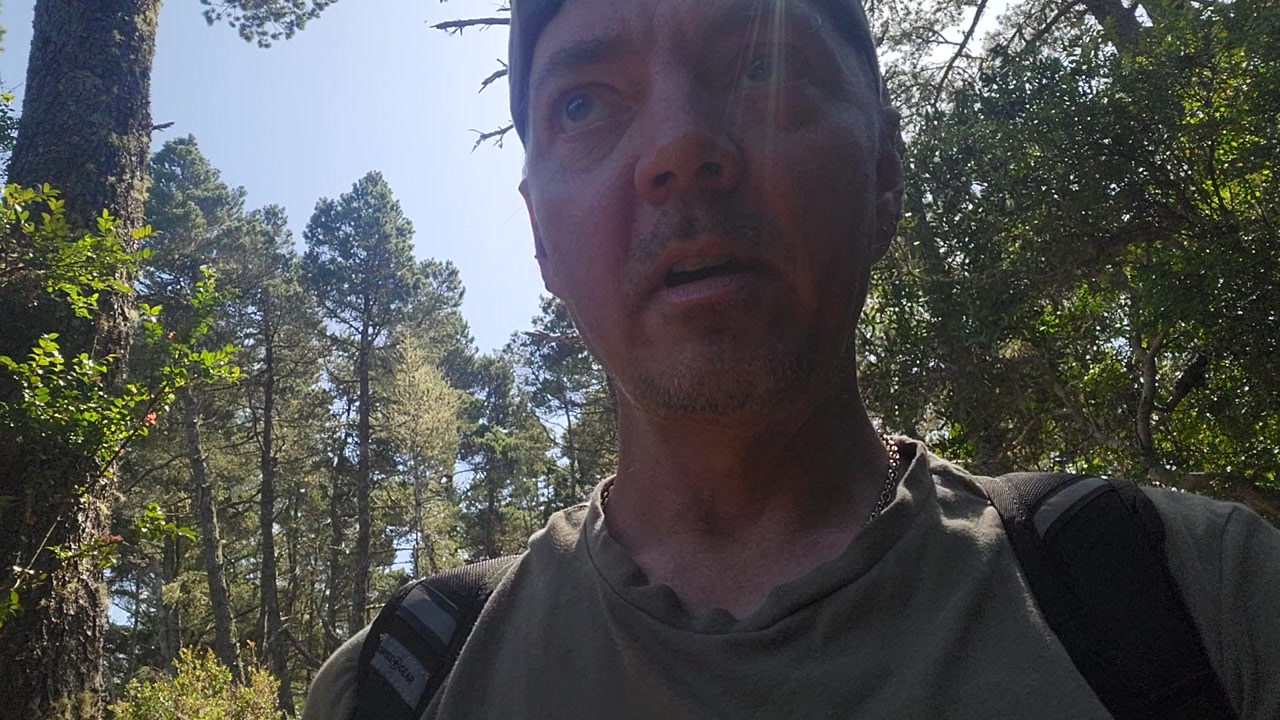
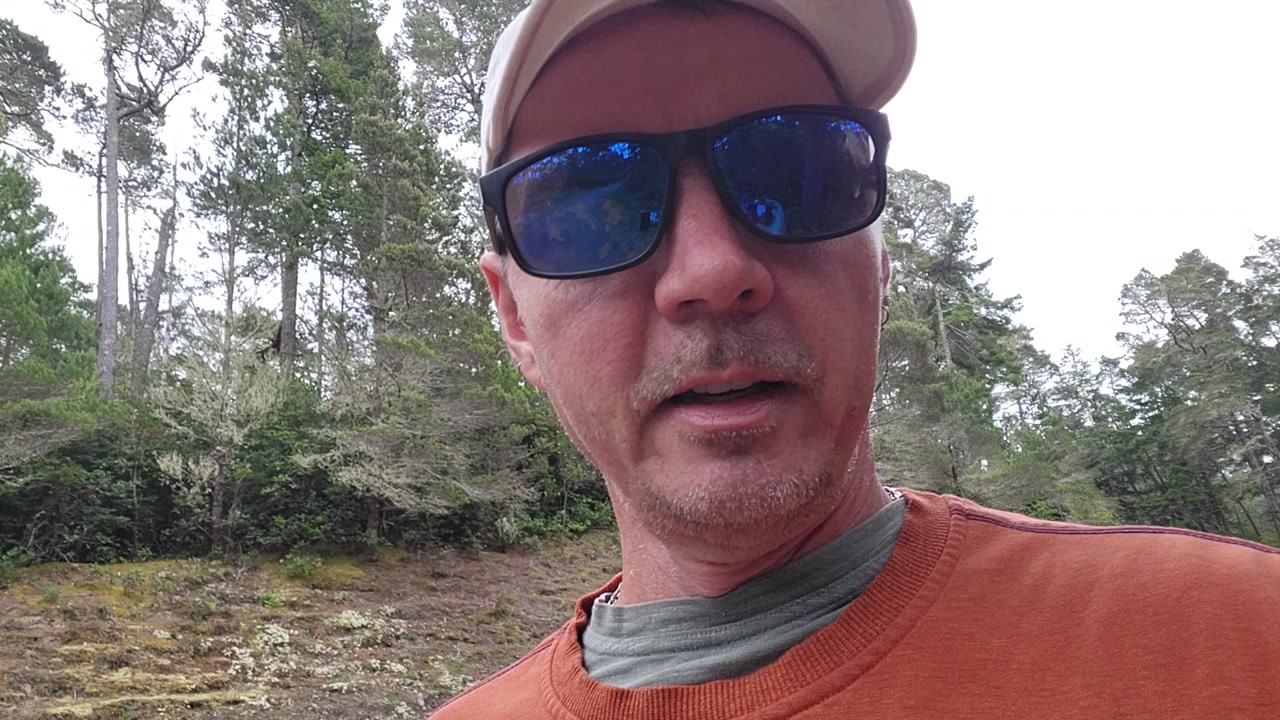
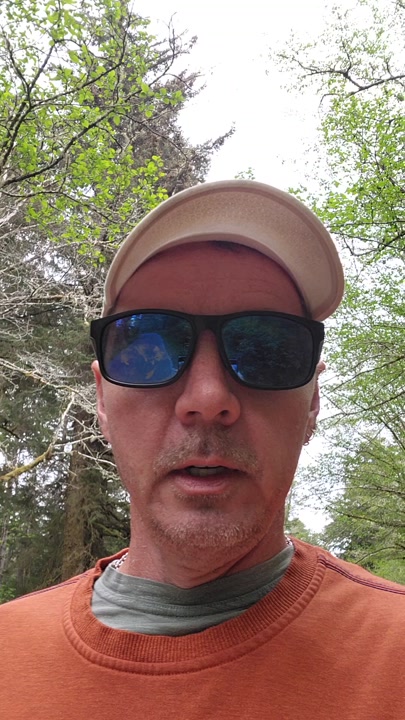
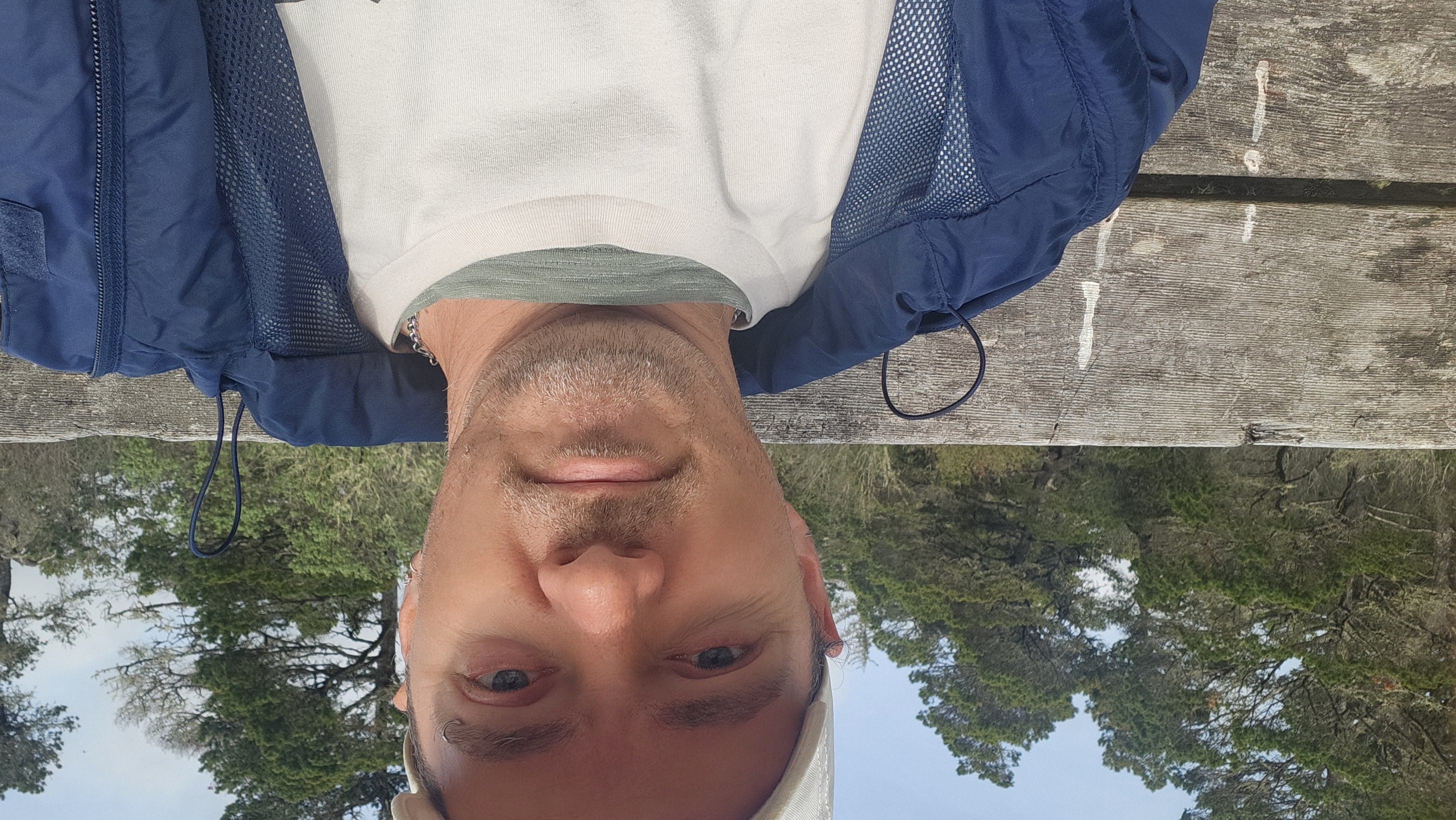

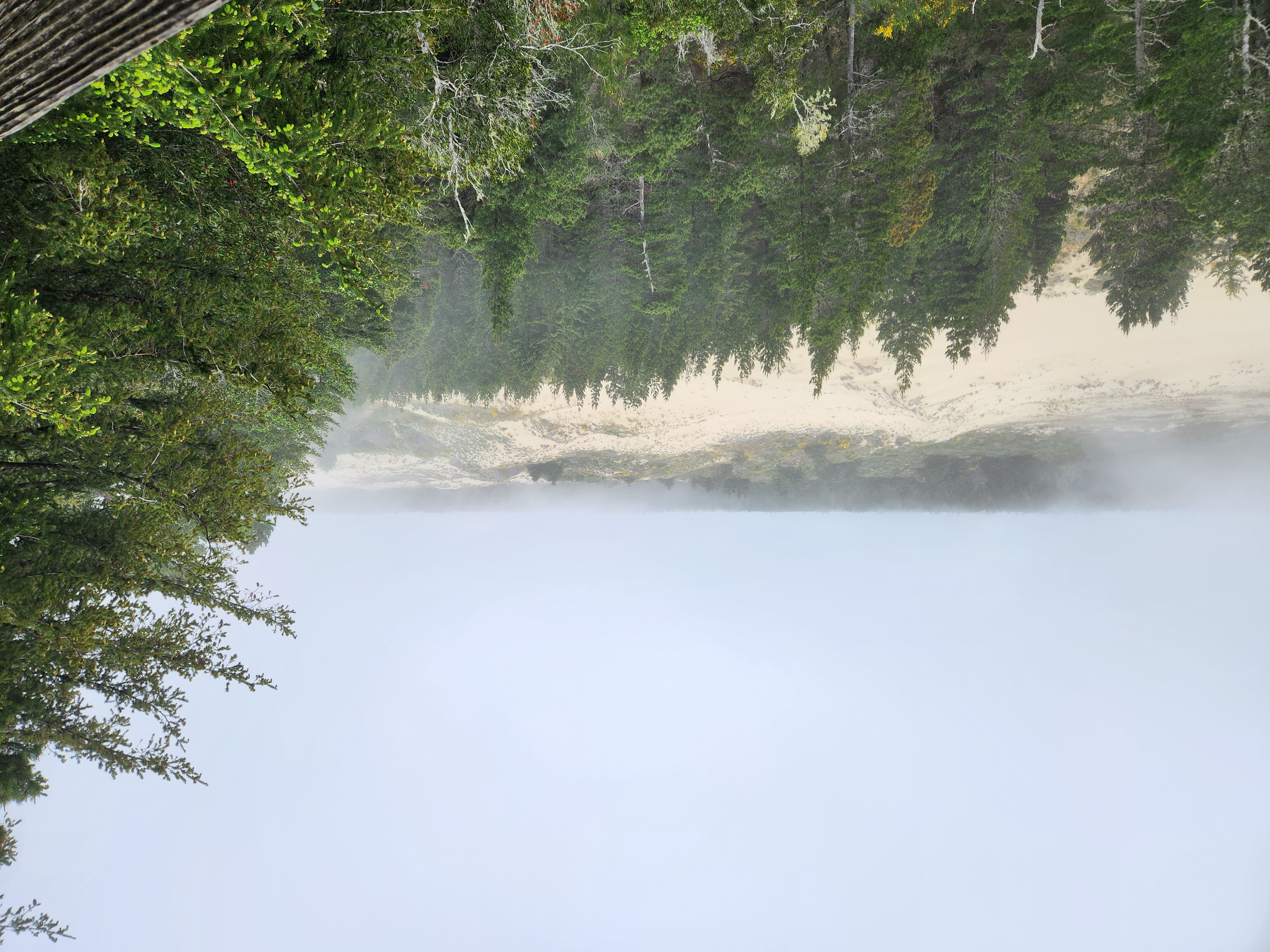
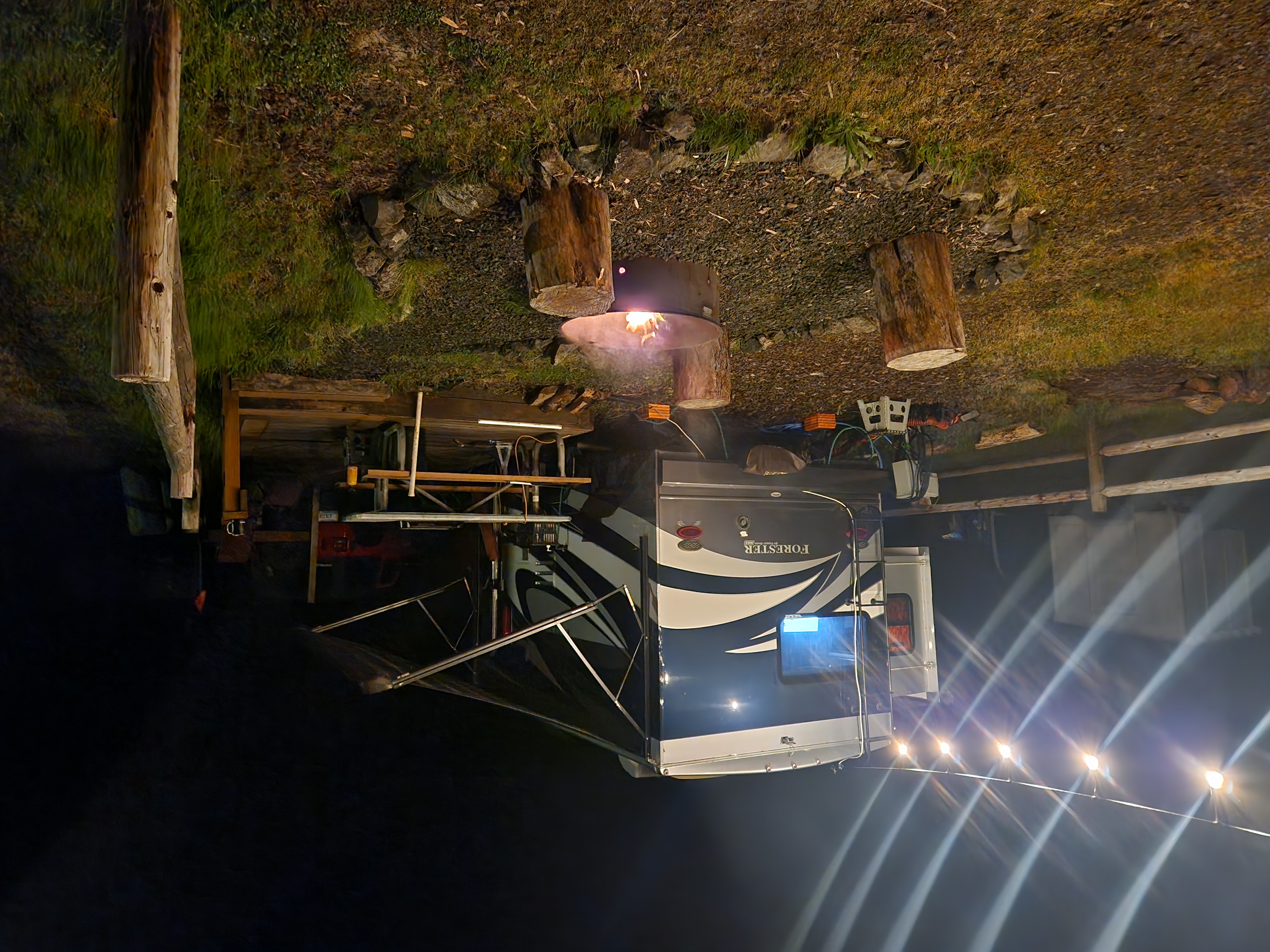
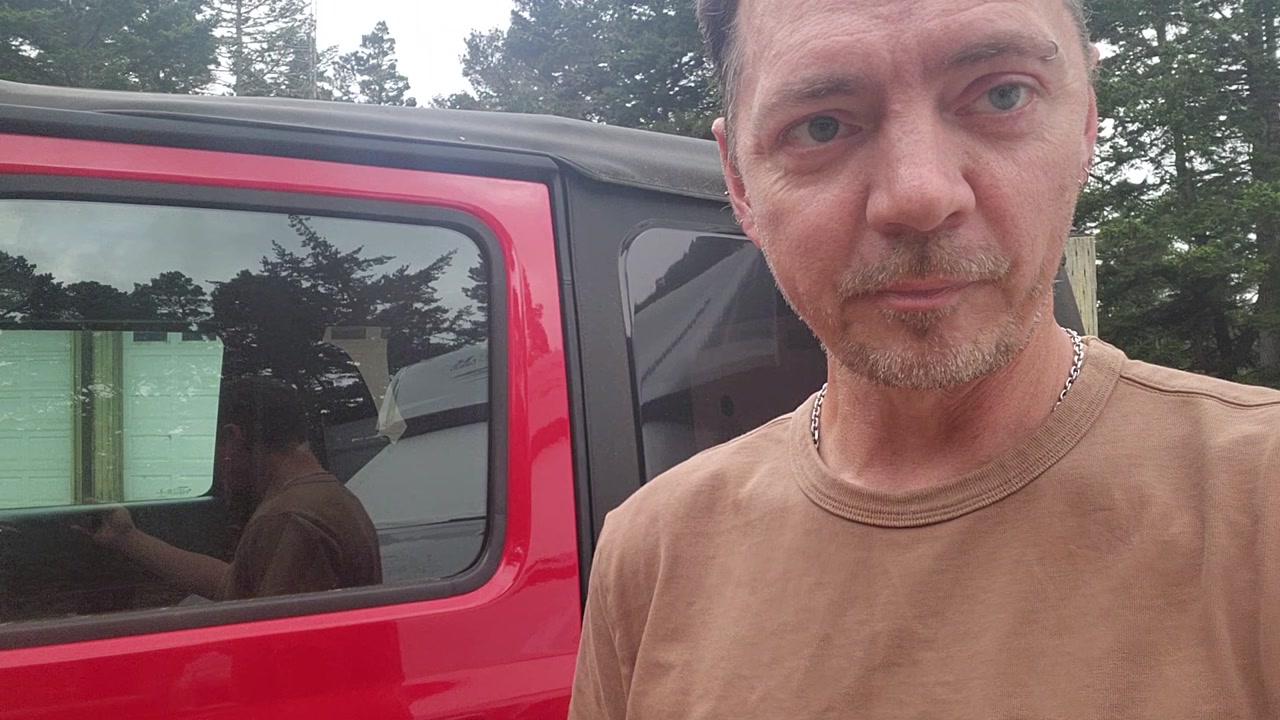
The camera is already running when rswfire begins, and the first thing he does is refuse to need a name. "I don't know which one of you did it. It doesn't matter." That opening is the whole act in miniature. Two weeks earlier, on the one-year anniversary of his dismissal from Honeyman State Park, Oregon State Parks had put police at his door — a door that sits behind a locked federal gate, on restricted federal land, at the Siltcoos post where he stewards the dunes for a different agency entirely. An institution had reached across its own jurisdictional edge to stand a uniform in front of a man whose offense was speech. The expected response to that kind of visit is retreat, or a lawyer, or silence. What rswfire does instead is turn toward the institution and speak to it in the second person, on the record, from the exact ground it had tried to reach.
This is what the signal is: not testimony, but address. The distinction matters because the two acts have opposite directions. Testimony describes what was done to someone and asks a third party to weigh it. Address speaks to the doer, and it assumes the speaker's standing is not in question. Everything in the recording follows from that assumption. He does not plead a case. He delivers a verdict — "you failed, at every stage you failed" — and the confidence to deliver it comes from something he built rather than something he feels. The year between the dismissal and the police visit was spent documenting each escalation as it happened, and the framework that emerged from that documentation, nine stages of what he now calls displacement, is what lets him stand in front of a camera and tell a state agency that its most aggressive move was also its most revealing failure.
The core reading is this: rswfire understood that the institution's actual weapon was never dismissal or police. It was displacement — the slow work of moving a person off his own account of events until the record belongs to the institution and the person is left explaining himself against it. He names the mechanism precisely: take what is true and invert it, weaponize it. The counter to inversion is not argument; it is an unbroken record kept in real time, so that there is nothing left for the institution to move him off of. When he says the record is "so clean you had to send police," he is claiming that the escalation itself is evidence — that the institution ran out of narrative tools and reached for physical ones, and that this reach is legible to anyone watching. The police visit, in his reading, is not proof of danger. It is proof that displacement did not work.
The passage most easily misread is the one where he lists what could come next: staying, moving north early, homelessness, losing the Jeep. These are not losses he is reporting. They are contingencies he is handing back to OPRD as a demonstration. The logic is deliberate — name every outcome the institution could still impose, and then say, in advance and in public, that none of them reaches the thing it was trying to reach. "You could not truly displace me from myself." The list is an inventory of what he has already declined to make load-bearing. And the record since confirms the shape of the gesture: he never left. He is at the same post, on the same coast, with his things. The enumeration was a boundary drawn around what OPRD could touch, and it turned out to be exact.
There is a cost in the act, but it is not the cost of being harmed. It is the cost of exposure. He is on camera, unedited, sending his face and voice at an institution that has already shown it will follow him across agency lines. He is speaking from federal land while a state agency has demonstrated willingness to test that boundary. He is saying "you have no ethics" and "that is the very definition of corruption" to a hierarchy he traces from a single park supervisor up to the governor's office, and he is saying it in a form that cannot be unpublished. The risk is real and he assumes it without hedging. That is where the conviction in his voice lives — not in volume, but in the willingness to be entirely findable while saying this.
What the act reveals about OPRD is stated plainly and is, on the signal's own terms, the most damning claim: the whole nine-stage escalation happened "over nonsense," a supervisor's dislike backed all the way up the chain. An institution that will spend a year and a police visit defending a personnel preference is an institution whose mechanism is not about the person at all. It is about the record — about whether it can afford to let a volunteer's account stand. What the act reveals about rswfire is subtler. He came to steward land in good faith, and when the good faith was inverted against him, he did not become a victim of the process. He became its cartographer. The framework exists, he says, because they would not stop — meaning the institution authored its own map through persistence, and he simply kept the pen.
The final move is the one that closes the circle. "It exists now. It's named. And you named it by sending police to my door." This is inversion turned back on the inverter. The institution's escalation, intended to end the record, became the record's final stage and its public title. The framework is now a pattern other people can recognize in their own circumstances, transferable beyond this park and this agency, and it is anchored to a specific date and a specific door. What OPRD wanted to make disappear is now infrastructure. He did not win an appeal or reverse a dismissal, and he is not claiming to. What he claims, and what the year since bears out, is narrower and harder to contest: they aimed at the self, and the self was not there to be moved. He was standing behind it, documenting.