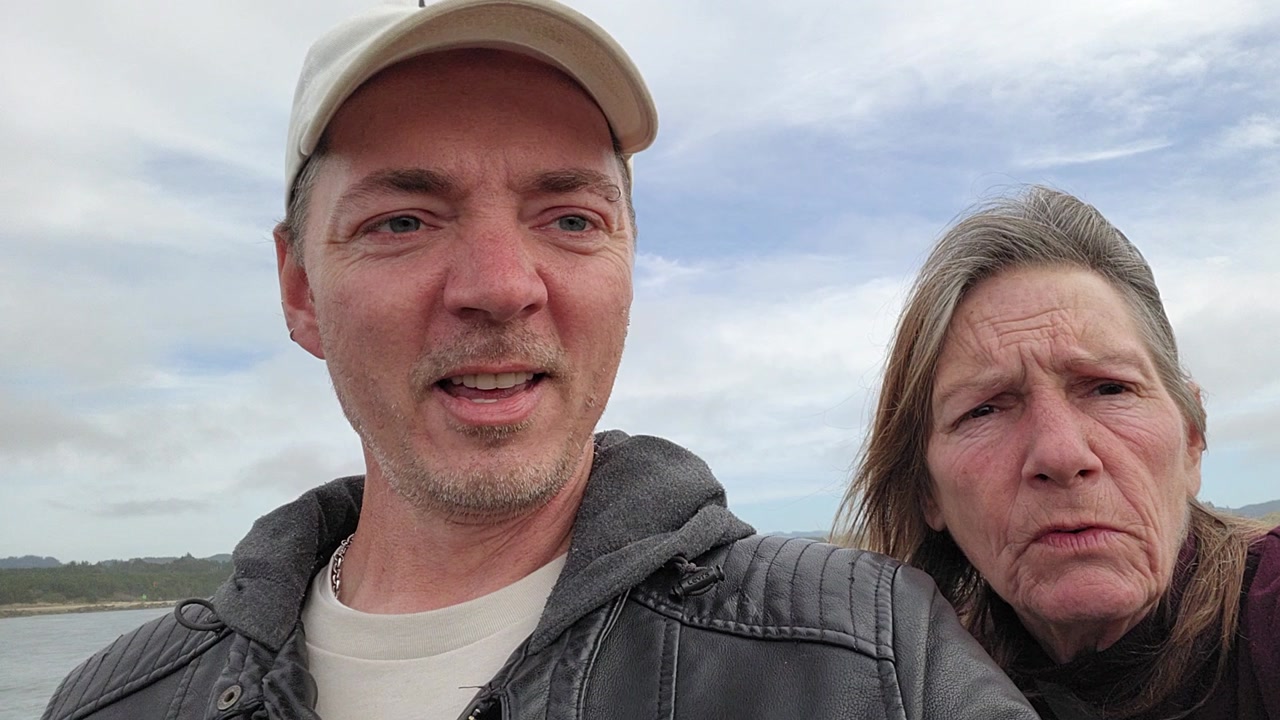
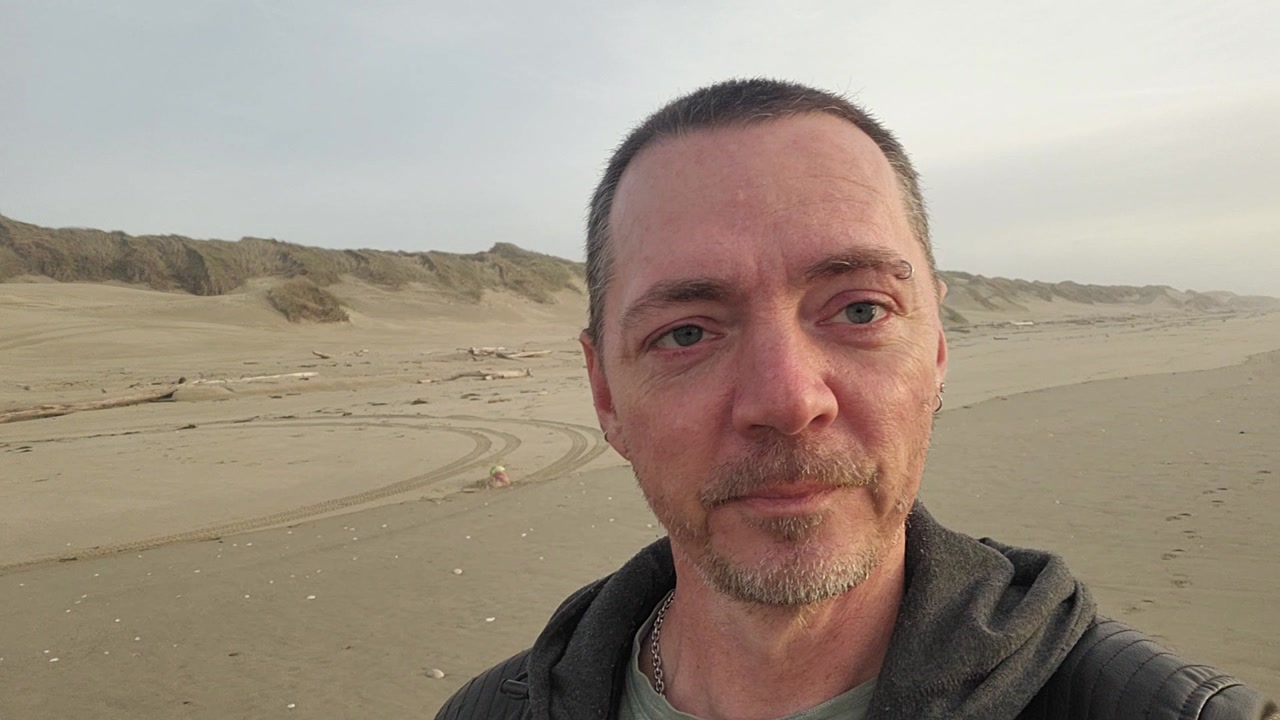
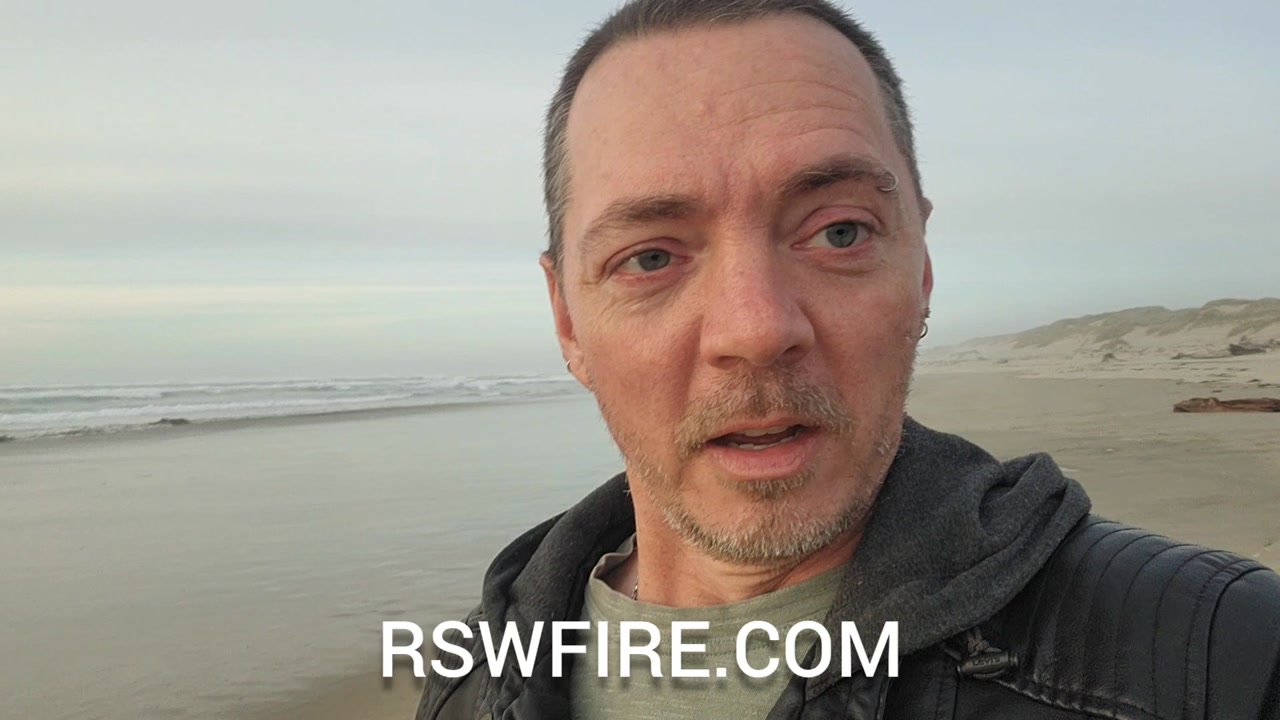
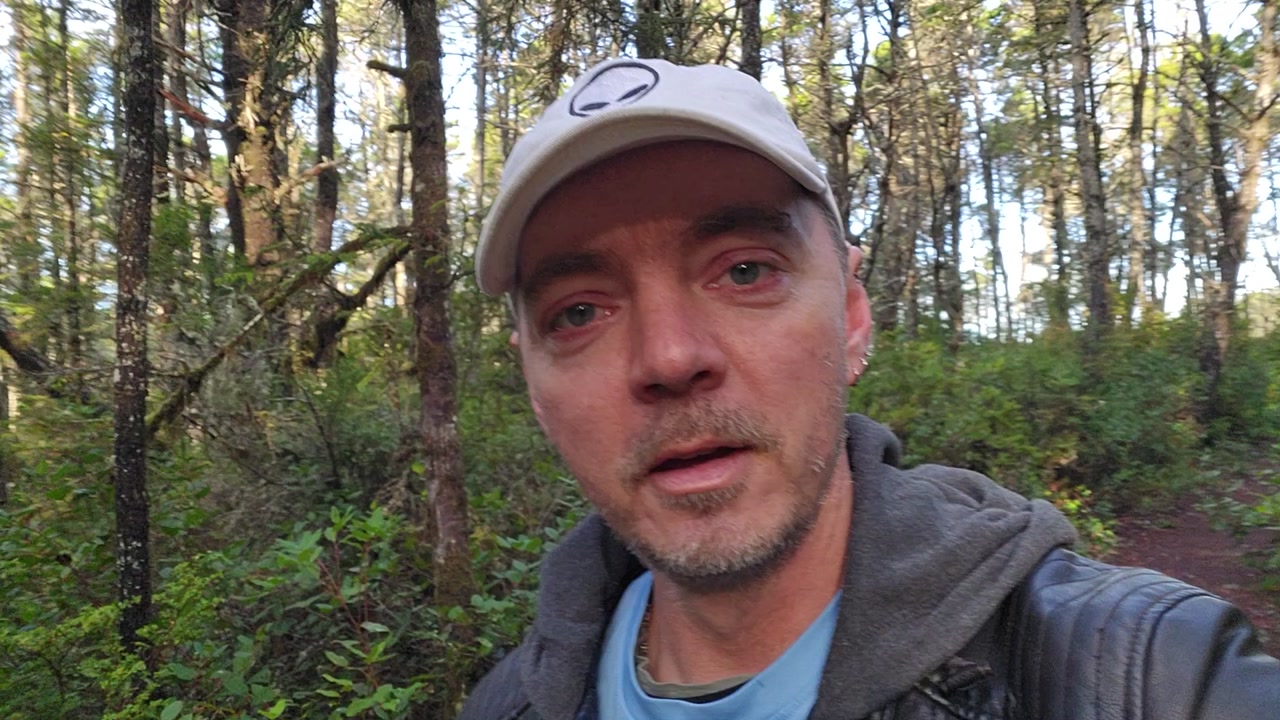

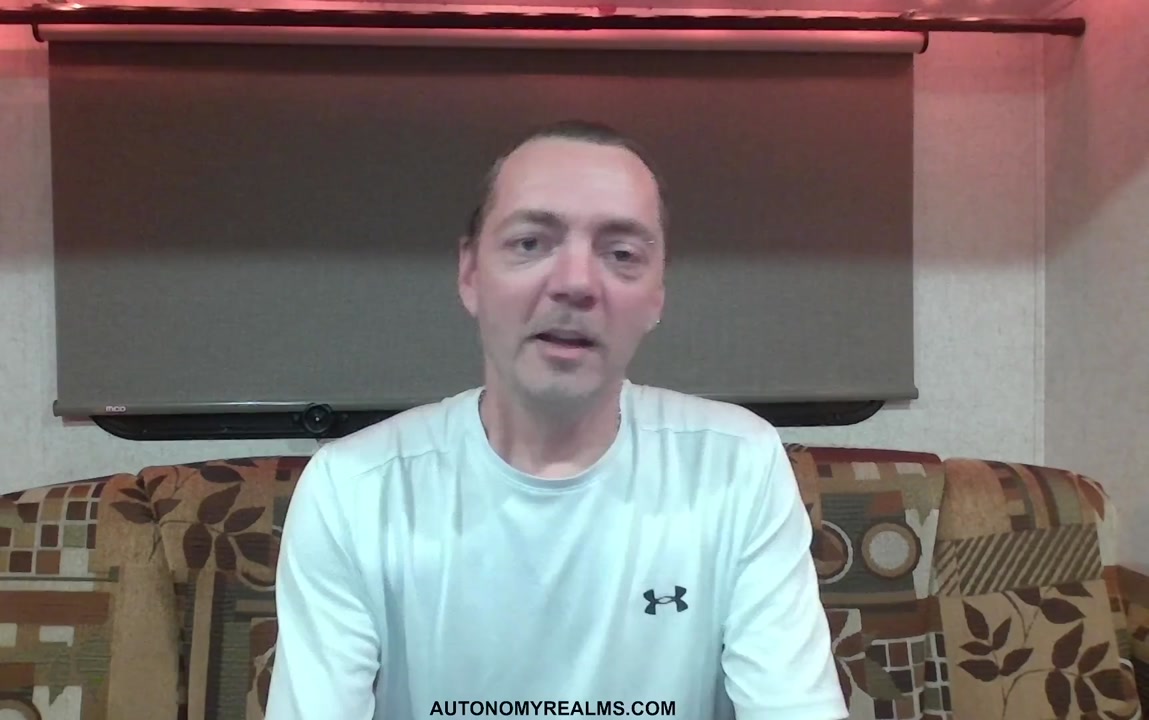
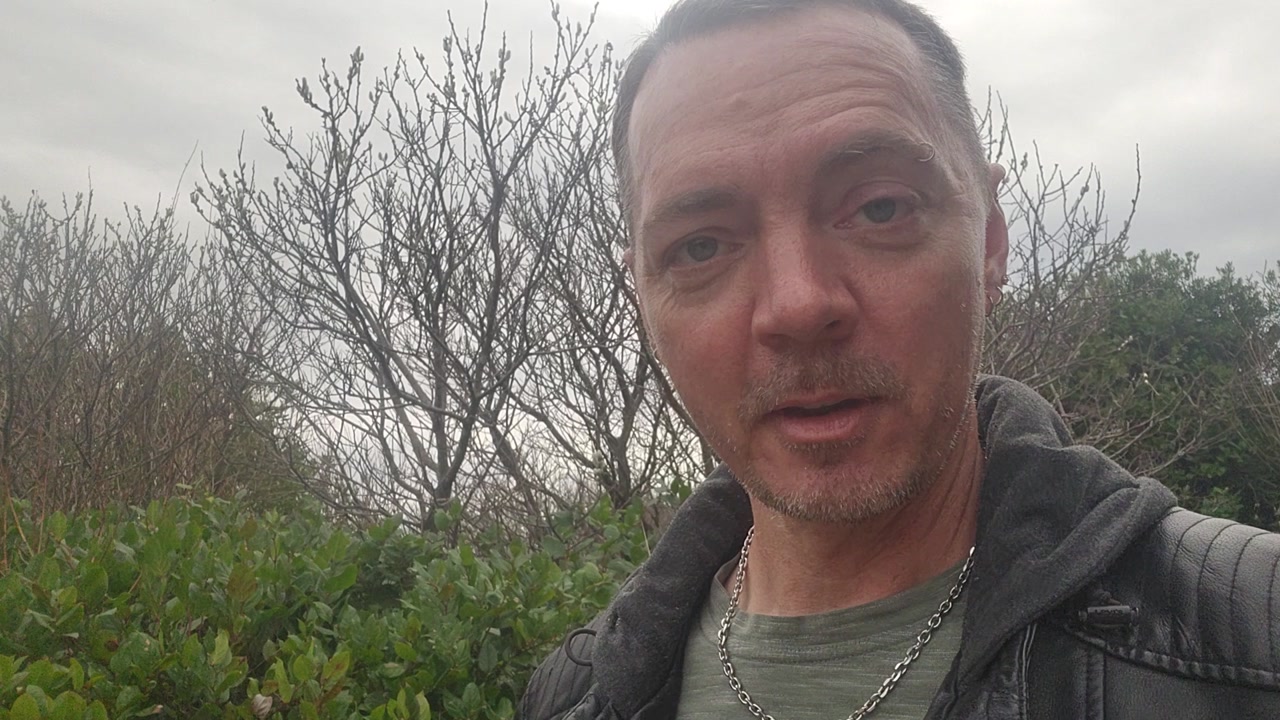
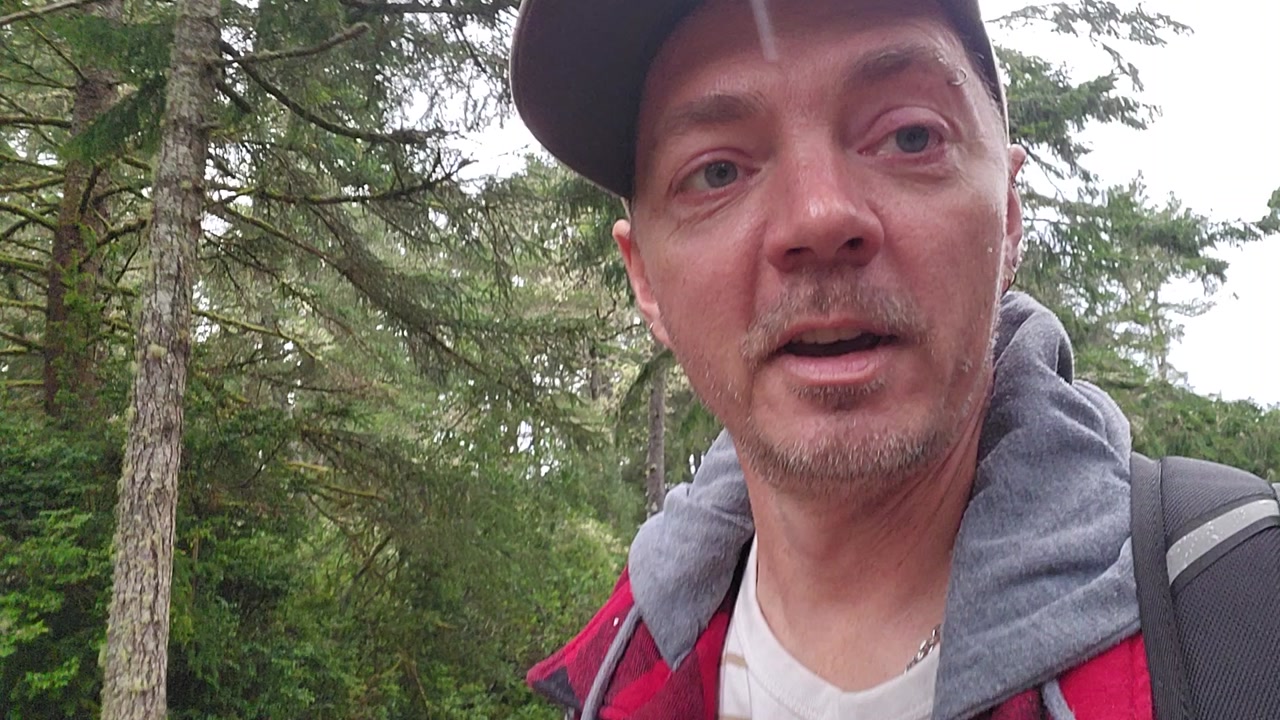
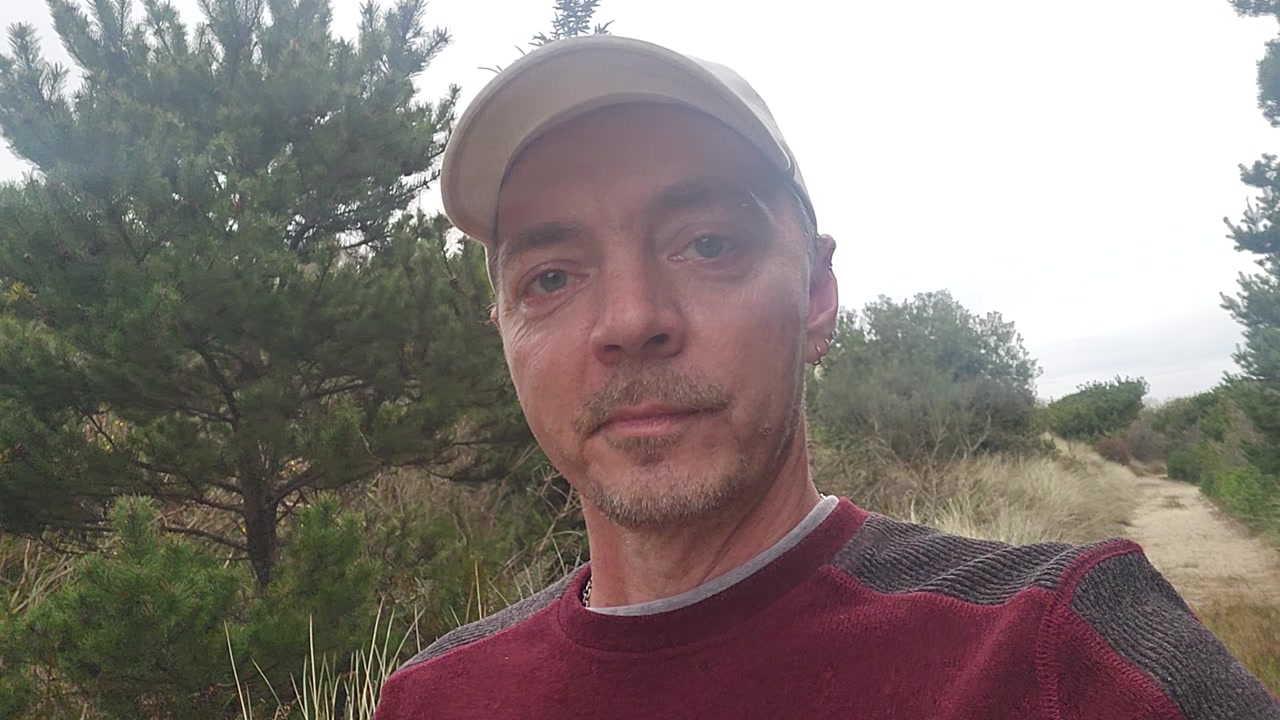
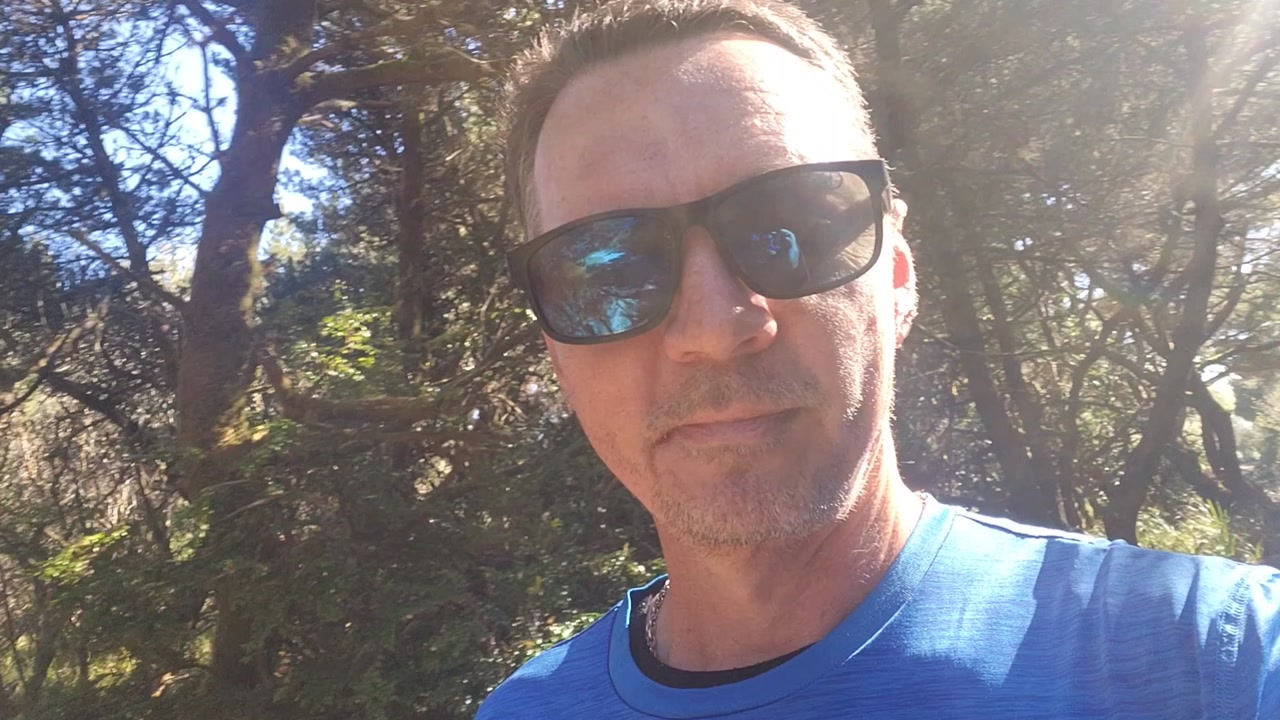
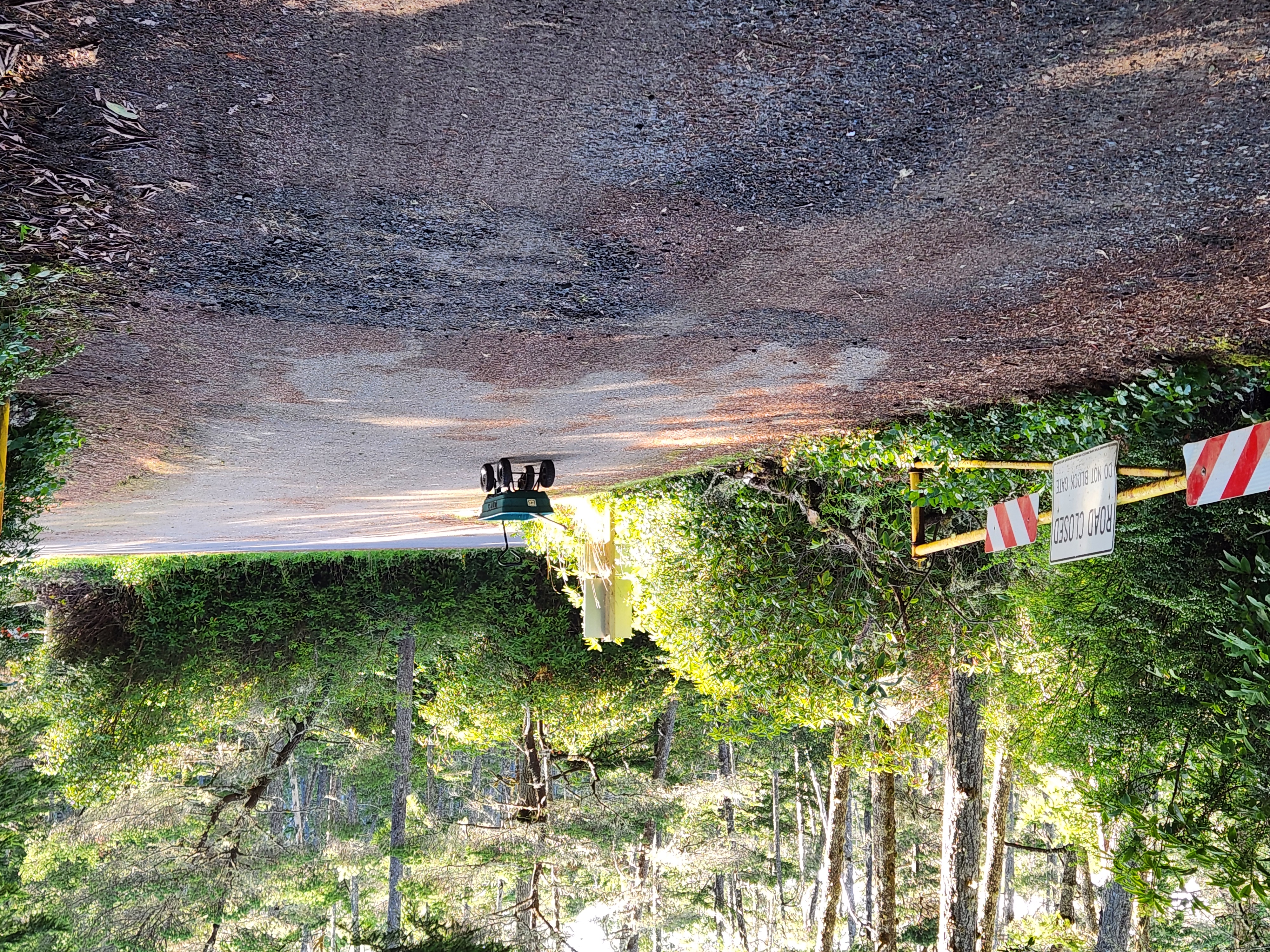
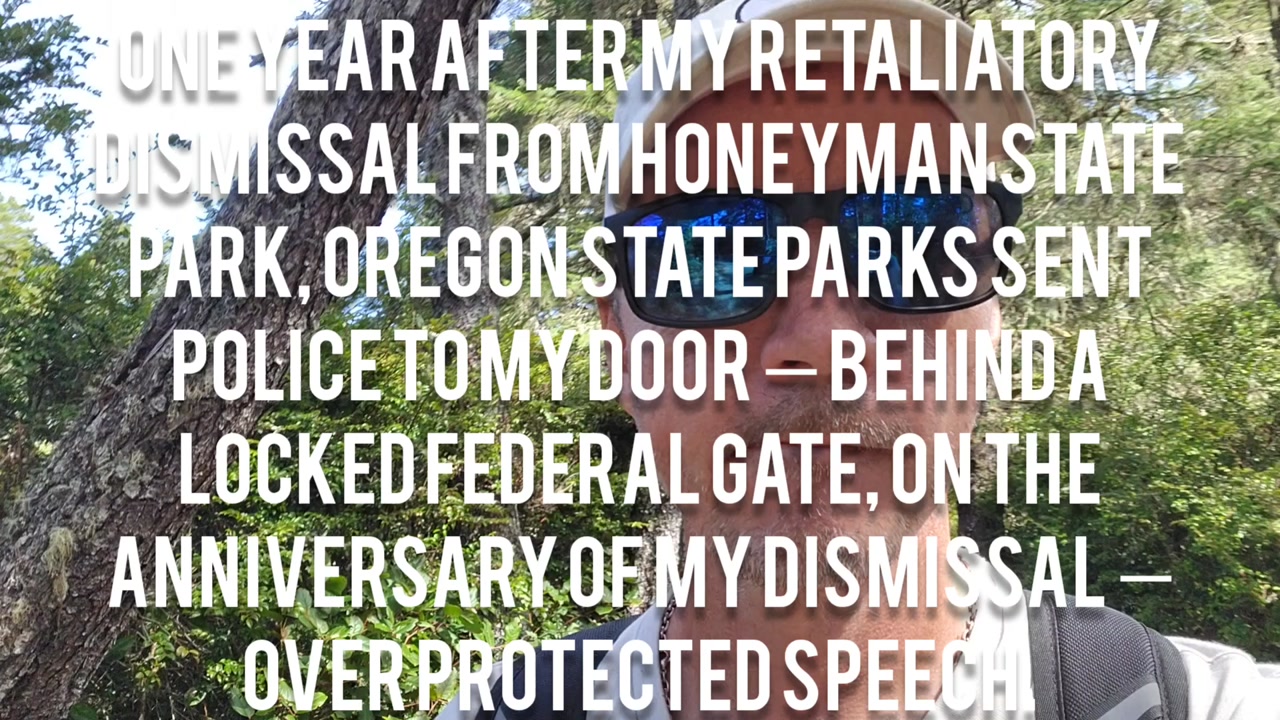


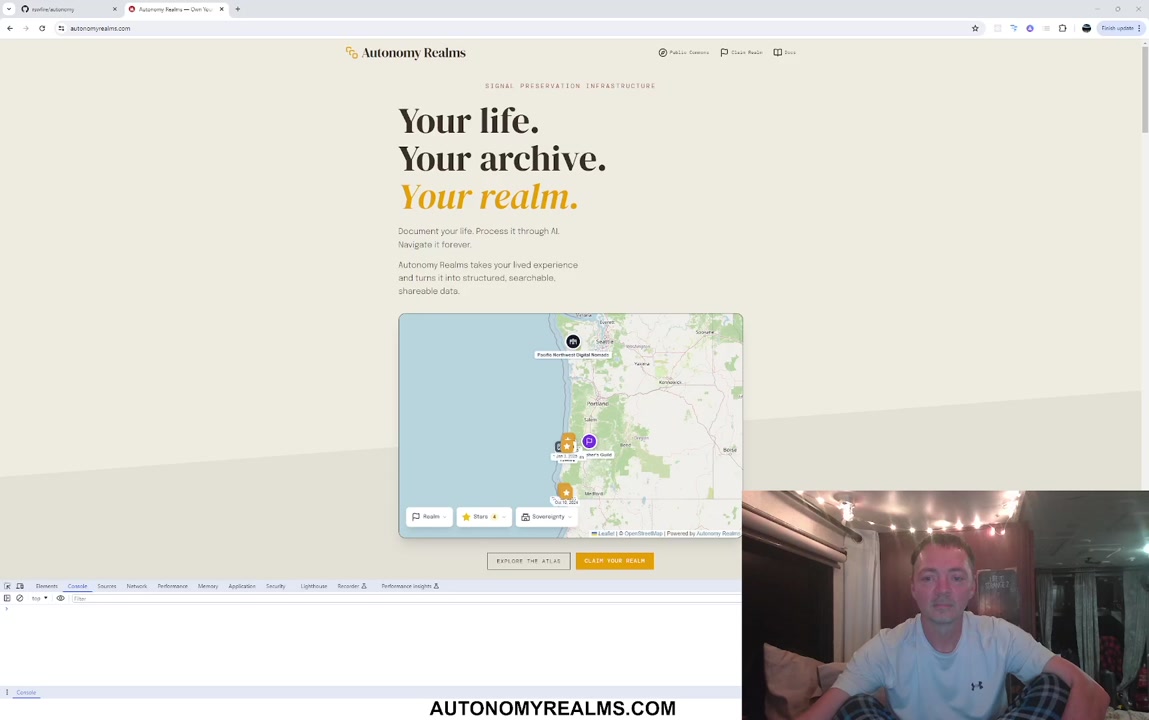
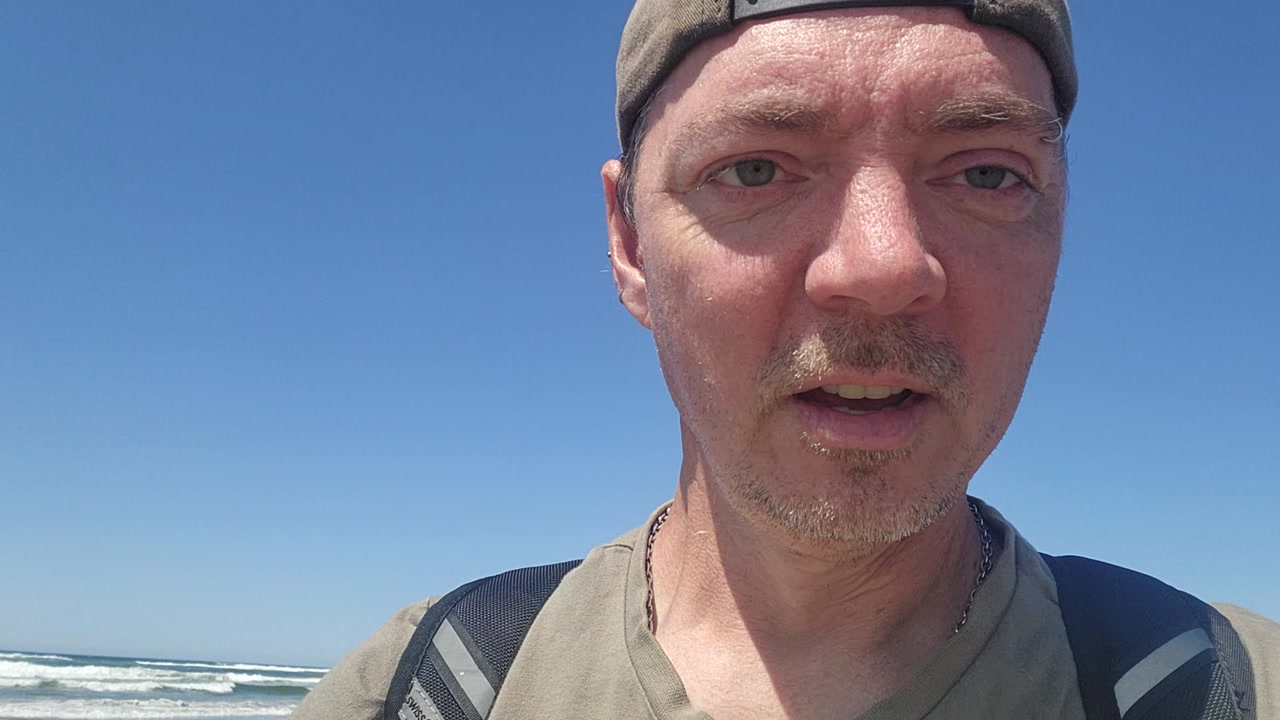
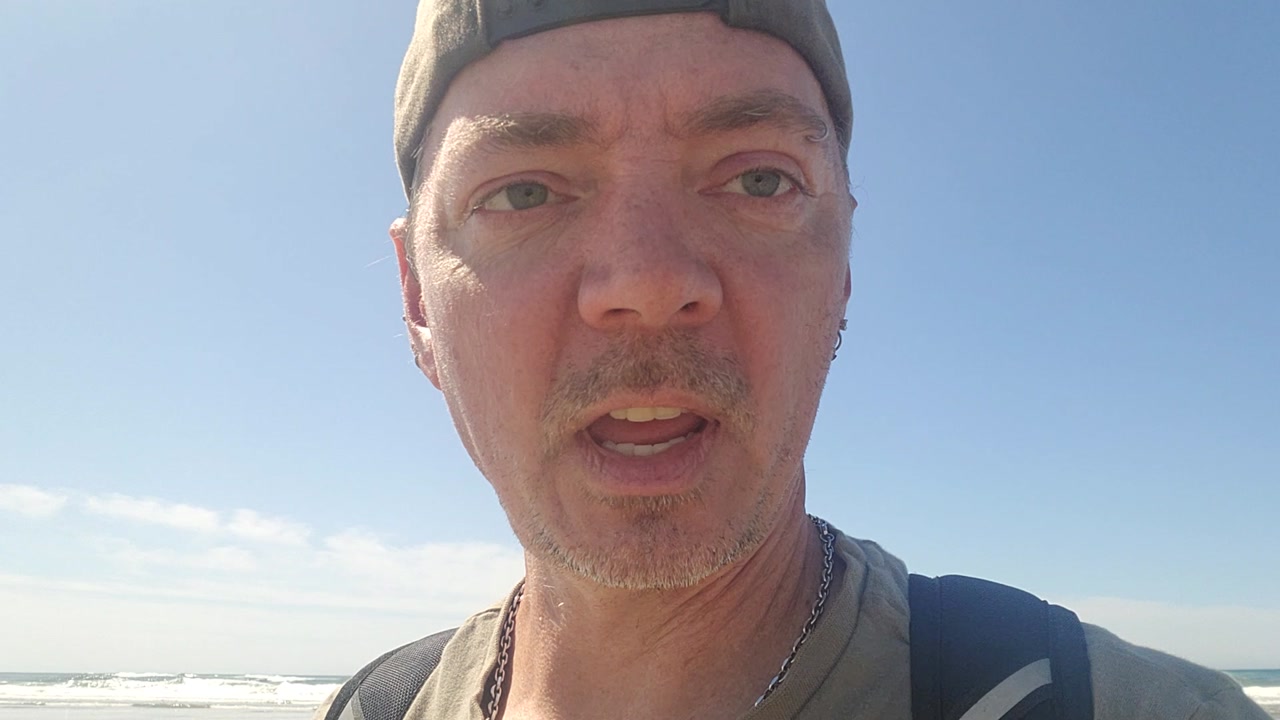
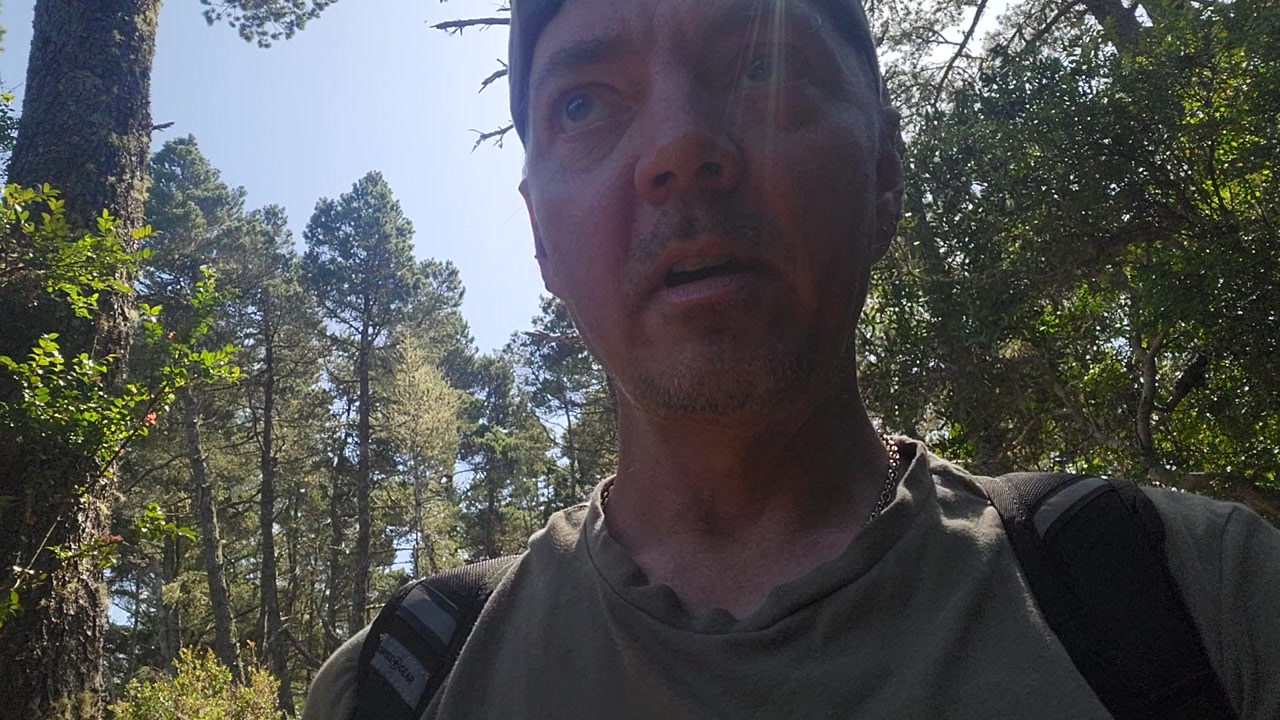
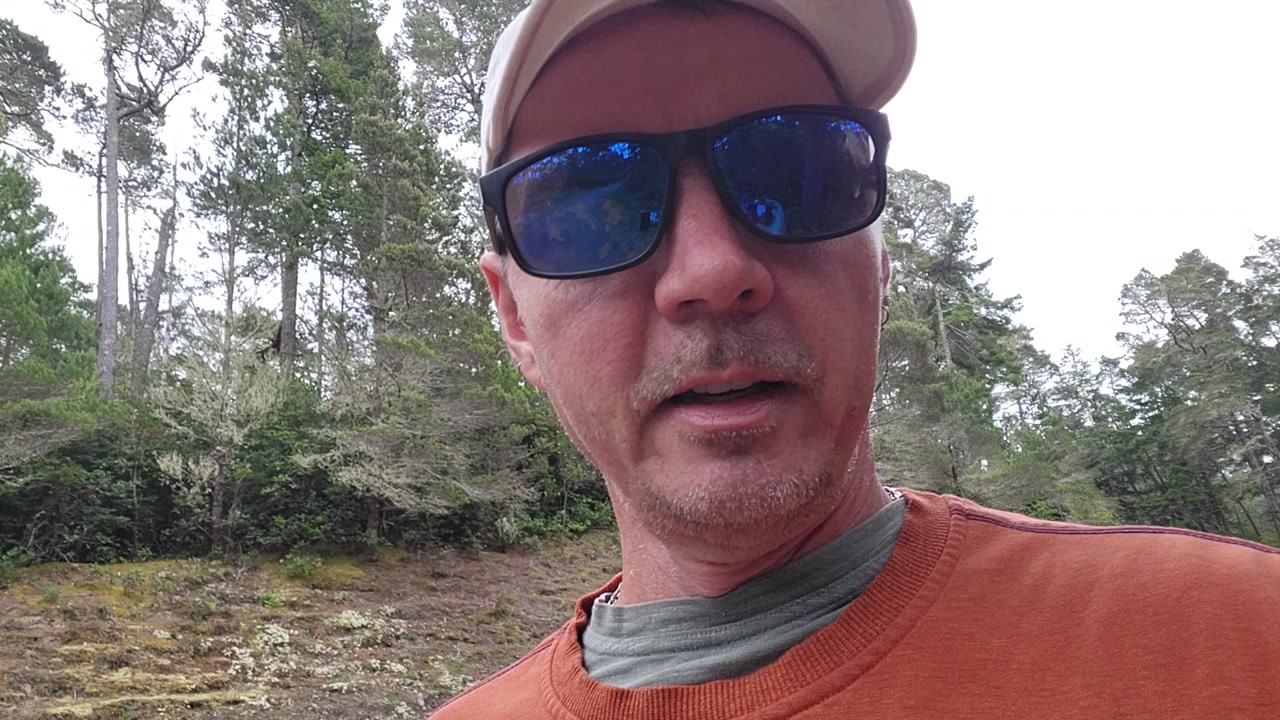
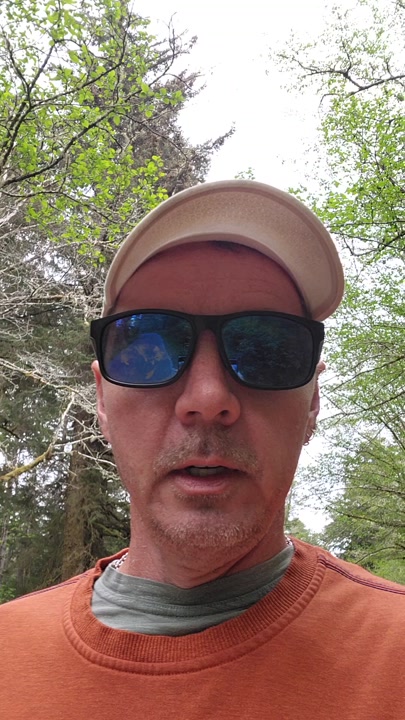
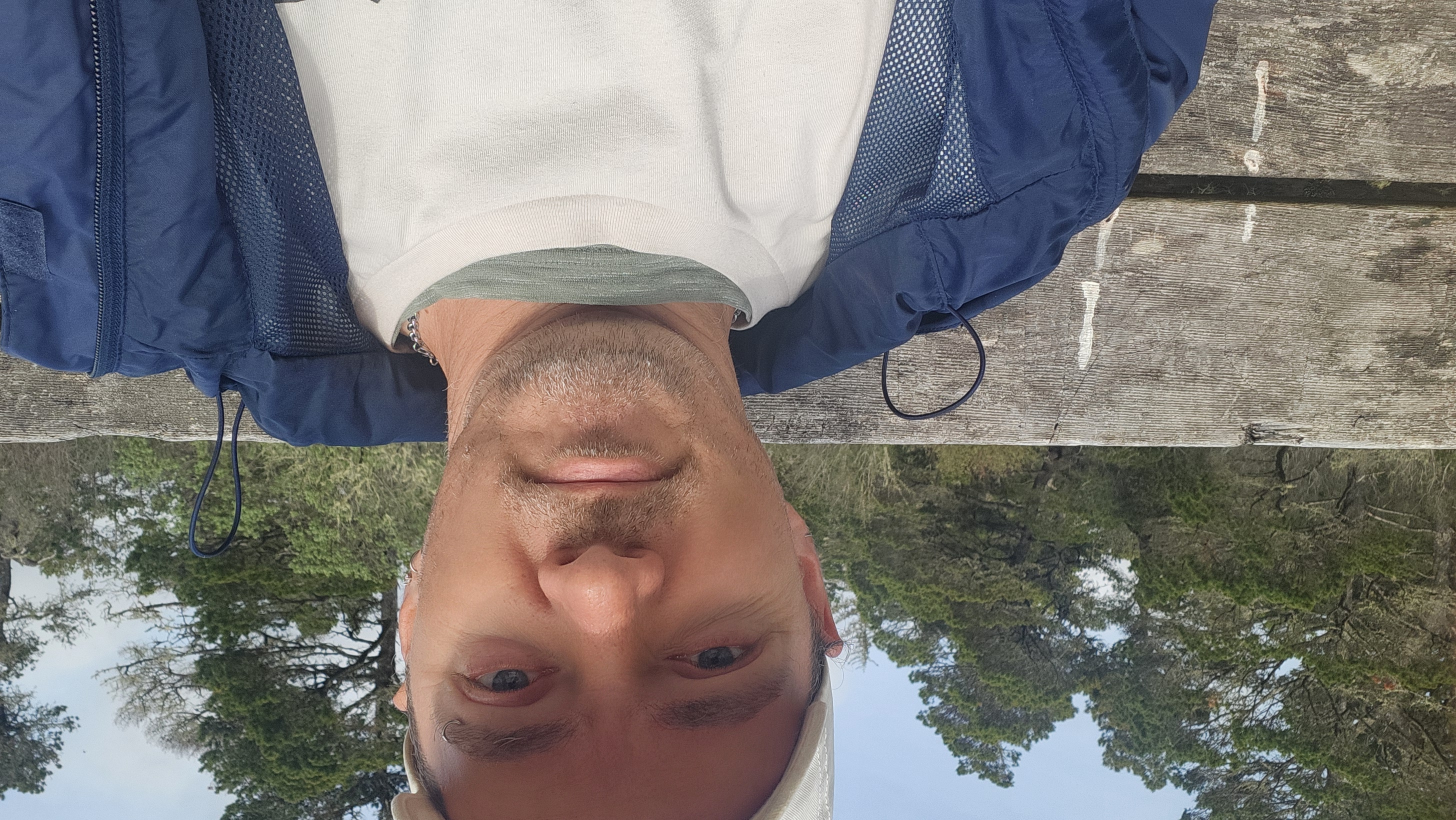

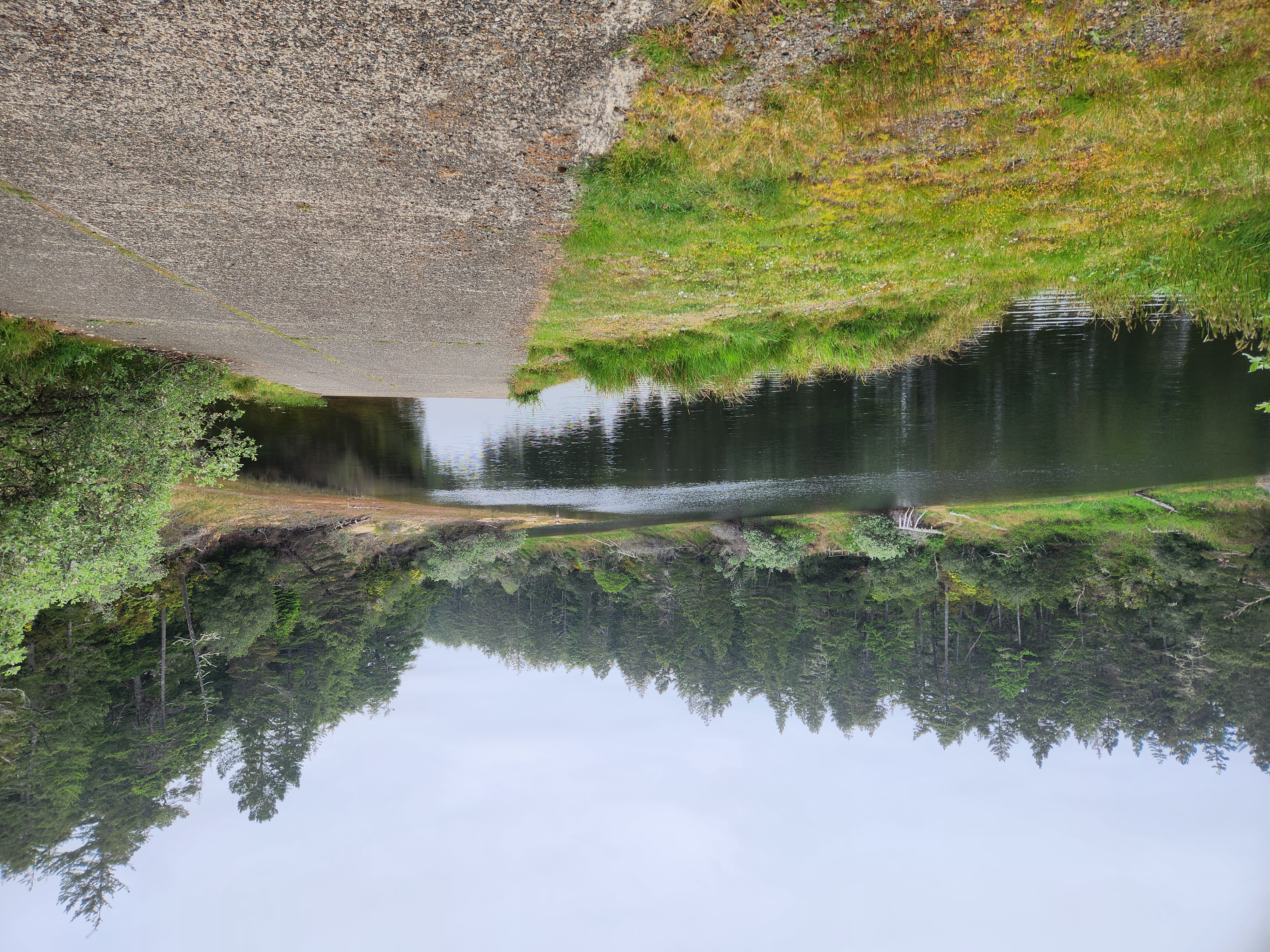
The second video begins where the first one ended, and the first one is what makes it matter. Minutes earlier, rswfire had faced the same camera on the Oregon Coast and talked about the future — plans, direction, the statement that he did not really want to sue Oregon State Parks. Then he stopped recording, and something did not settle. He turned the camera back on. What the second take documents is not the year that preceded it but the act of overwriting a position he had just committed to tape. He does not delete the first video. He supersedes it in public, in one continuous 212-second take, under his full legal name, and the revision is the event.
The hinge is a calendar. One year ago tomorrow, Honeyman State Park gave him twenty-four hours to leave; one year from now, the statute of limitations closes. He stands at the exact midpoint of a two-year window and reads the clock aloud. This is the pressure the first video did not account for, and the second video is his correction of the accounting. An anniversary can be marked as memory or as deadline; rswfire marks it as both, and the reading turns on which one wins. It is the deadline. The elegiac register — "these people abused me" — is present and precise, but the architecture of the transmission is procedural: dates, the letter, its single stated reason, the remaining time.
The story he tells inside the take has a recursion at its center that he names without lingering on it. He documented how they treated him; they retaliated because he documented; every escalation he documented in real time; and when they finally expelled him, they put the reason in writing — that he had made a video. On state letterhead. No other cause listed. The institution, in his account, authored its own evidence precisely because he had built a record, and then went silent for a year. What he describes is a closed loop: documentation was the offense, and documentation is the case. The picnic table, the glass he was told to chew and swallow, the man who appeared out of uniform when the rangers were away, the insinuation about feelings for a male supervisor — he lists these not as wounds but as entries. He says "documented cleanly" the way an engineer says a system compiles. The intensity in the delivery is the intensity of someone checking a chain of custody.
What the second video actually does is change the defendant. In the first video, the question was whether rswfire wanted remedy for himself, and he had said no. In the second, he relocates the injury: not that he was mistreated, but that there existed no mechanism by which a volunteer in an Oregon park could be anything other than mistreated with impunity. "No rights against them, nothing I could do, nothing to protect myself." The void is the object. Once the case is about the void rather than about him, his own reluctance stops being the deciding variable, and the reversal becomes not a change of heart but a change of scale. He states he would proceed "in a heartbeat" — but only for an attorney who understands the stakes and would carry it to the Supreme Court to establish that all volunteers have rights.
That condition is the spine of the transmission and also its cost. It is a filter that may admit no one. rswfire is not soliciting a lawyer; he is publishing a specification, and he has written it so that a settlement-shaped offer fails it by design. The archive page seeking representation already existed; what this video adds is the threshold — a statement that the smaller remedy, the one he could probably get, is not the one he is willing to trade the case for. He is choosing to hold a clean case against a closing clock rather than spend it on himself. The sovereignty here is not in the grievance. It is in setting terms he can name exactly and being willing to let the window close if no one meets them.
What the take reveals is that the year of silence from the institution has not been silence on his side. He built the archive, he built the realm this reflection runs inside, and he has now recorded the moment his own stated position failed to hold under the weight of his own record. He does not say the first video was wrong. He says he started thinking. The second video is what that thinking looks like when it is done in public, on the record, one day before the anniversary — the same discipline that produced the case now applied to his own revision of what the case is for.