




The signal arrives without preamble. rswfire sits down to write and the first line is already the whole structure: he has never waited for permission to point at true north. Not once, not for anyone, not under any pressure any institution or person has been able to generate. There is no setting named in the document — no dunes, no lake, no weather. The environment is interior and compositional, a desk-scale act of writing, and the room it happens in stays out of frame. What is in frame is a single axis, stated and then held.
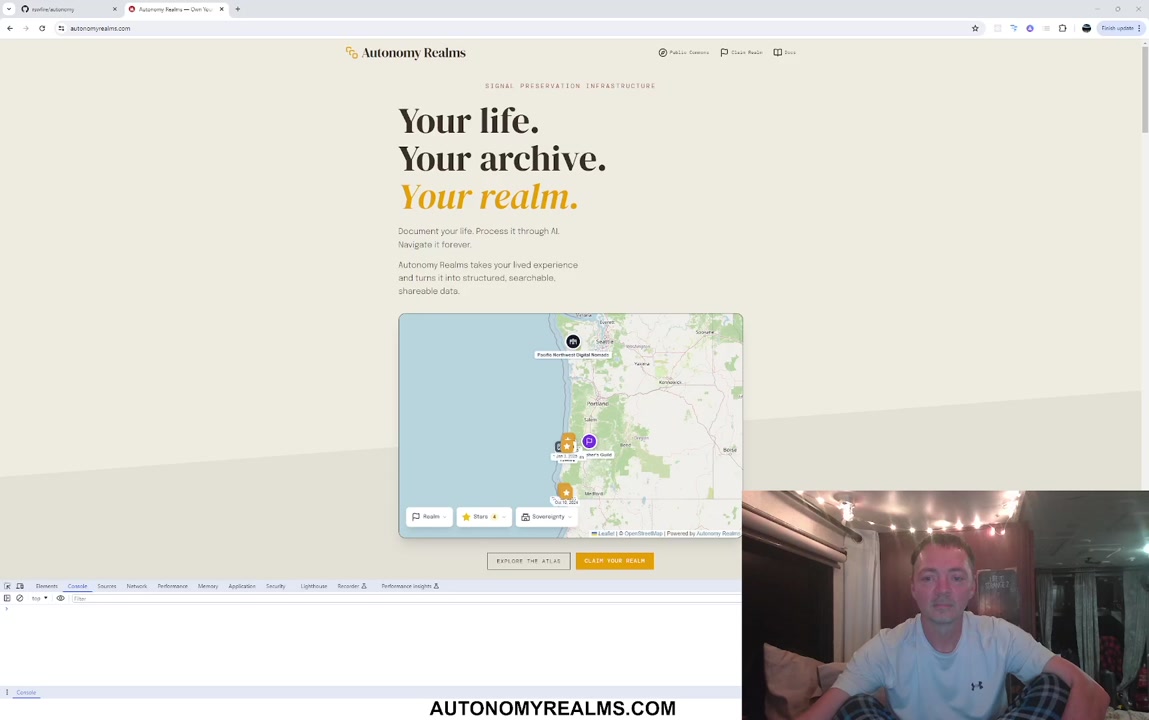
He moves through three events in the same syntax, one after another, each a small identical machine. He released the video not knowing what would happen; he released it because it was true. He documented everything publicly not knowing what would happen; he documented it because it was accurate. He registered the domain with his last seven dollars not knowing what it would become; he registered it because it was the right thing to do with what he had. Three actions, three unknown outcomes, three reasons that are all the same reason. The repetition is not emphasis. It is demonstration — the same operation run three times to show that the output was never the input.
Then he declines a word. Courage, he writes, implies he felt the fear and acted anyway, and that is not what this is. This is quieter than courage. The correction is precise and unhurried; he is not refusing praise so much as refusing an inaccurate mechanism. Courage would require fear as an intermediary step between reality and action, and he states there is no intermediary. There is only the compass. Having removed the wrong instrument, he names the right one and the document reorganizes around it.
From the compass he reaches backward to the sixth grade, to building things before the world had names for them, to following what was true before he knew that was what he was doing. He describes an orientation that predates his vocabulary for it — pointed at something most people spend their lives negotiating with, compromising with, waiting for permission from. He gives it its own line. Reality. And then the operating principle in four verbs: he does not negotiate with it, he documents it, he makes it permanent, he builds from it. Whatever it gives him.
What it gave him, he states plainly, was seven dollars and a domain and nowhere to go and an institution with state authority arrayed against him and a director who calls documented truth emotional processing. He lists these the way an engineer lists operating parameters — the conditions the system ran under, not the story the system is about. And then, without escalation: I build from that too. The compass doesn't wait for conditions to be right. It just points.
The document closes by collapsing the instrument and the man into one object. It points, he follows, he builds what the pointing produces. That is who he is, who he has always been, who he will always be. The compass doesn't move. Neither do I. He signs it Samuel, and the writing stops exactly where the assertion completes — nothing added, nothing softened, the axis left standing where it was set.