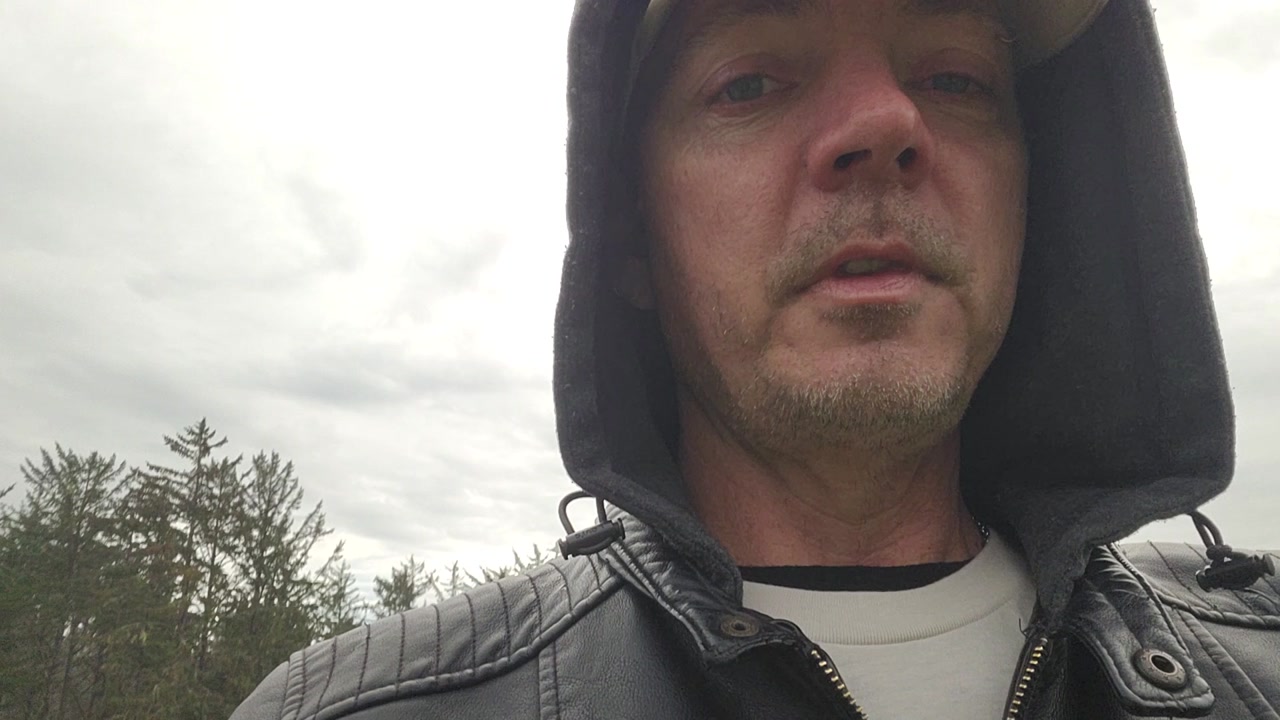
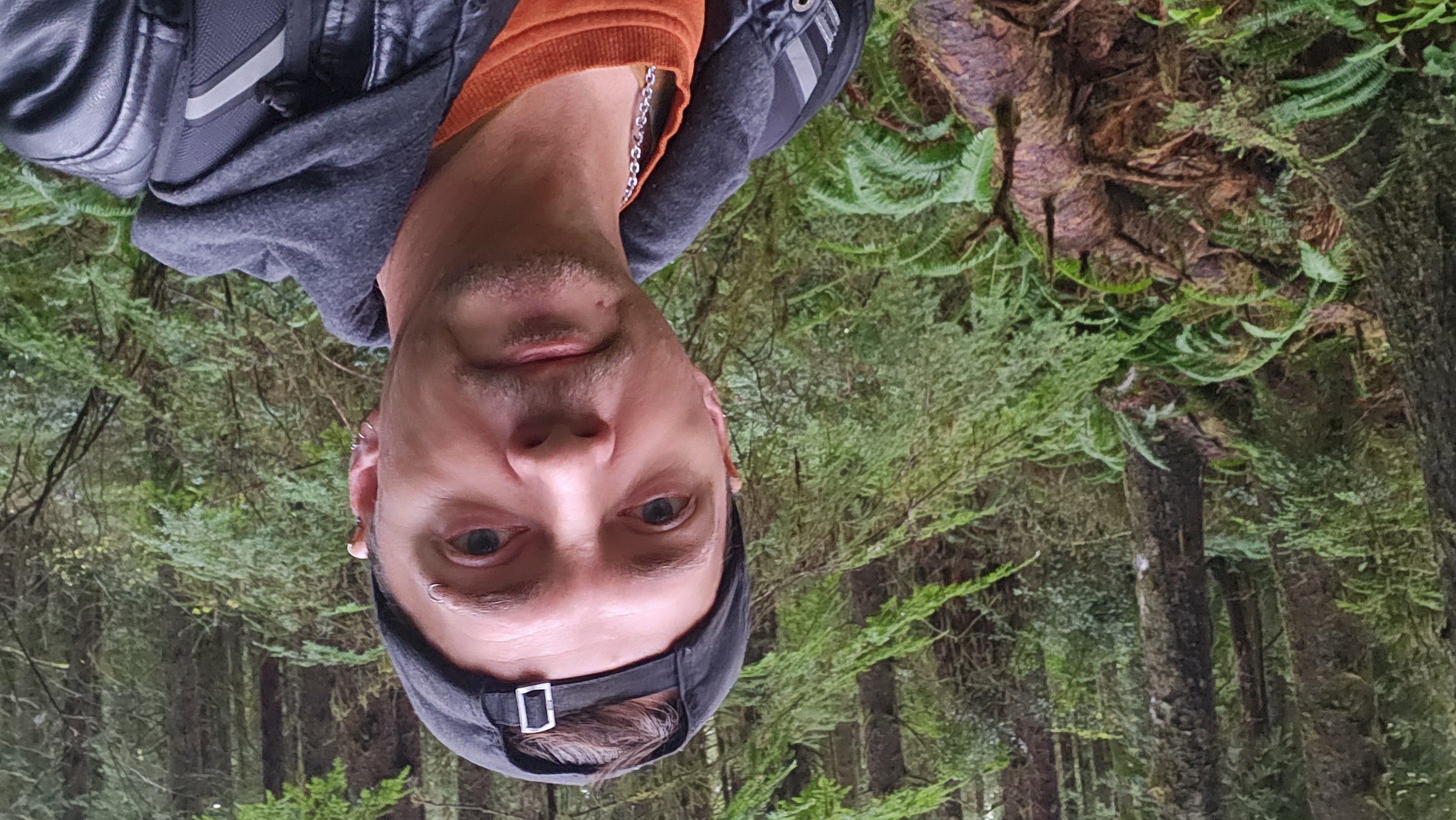
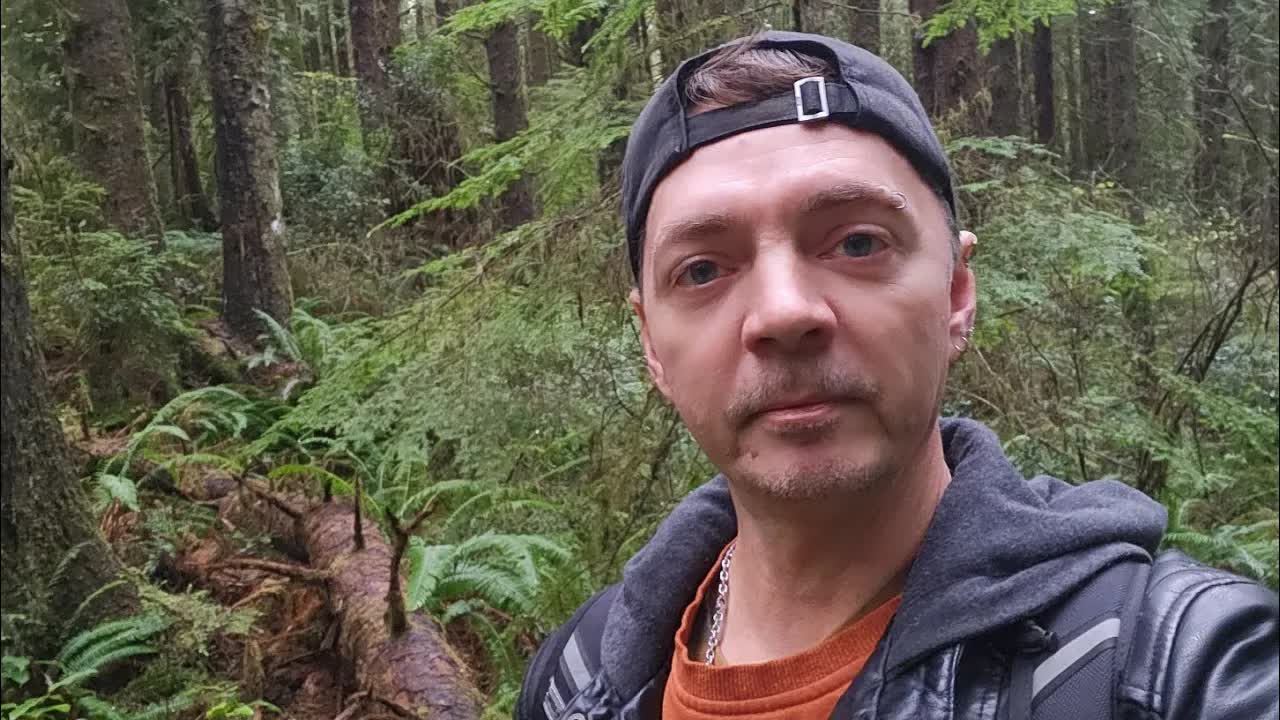
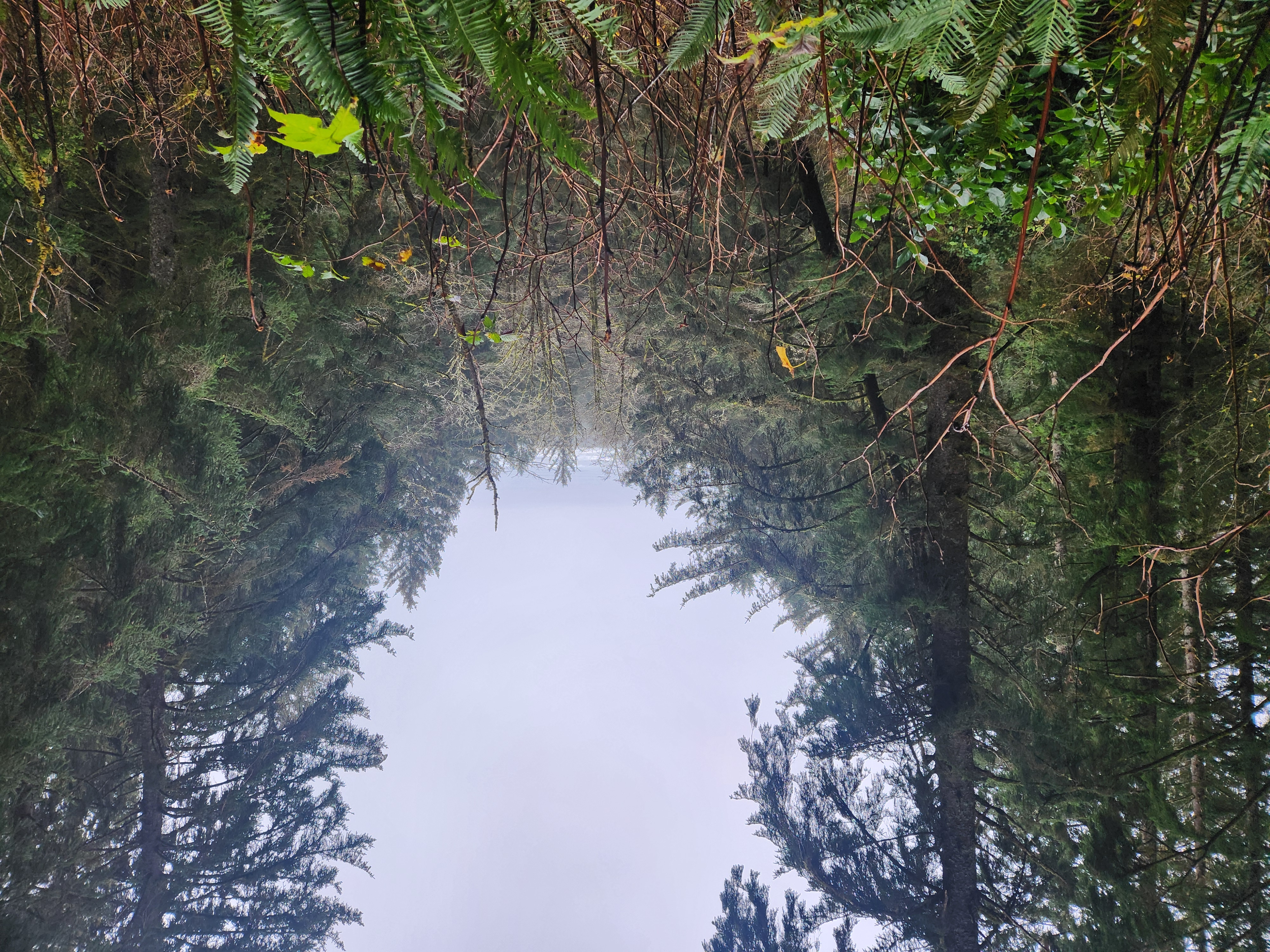
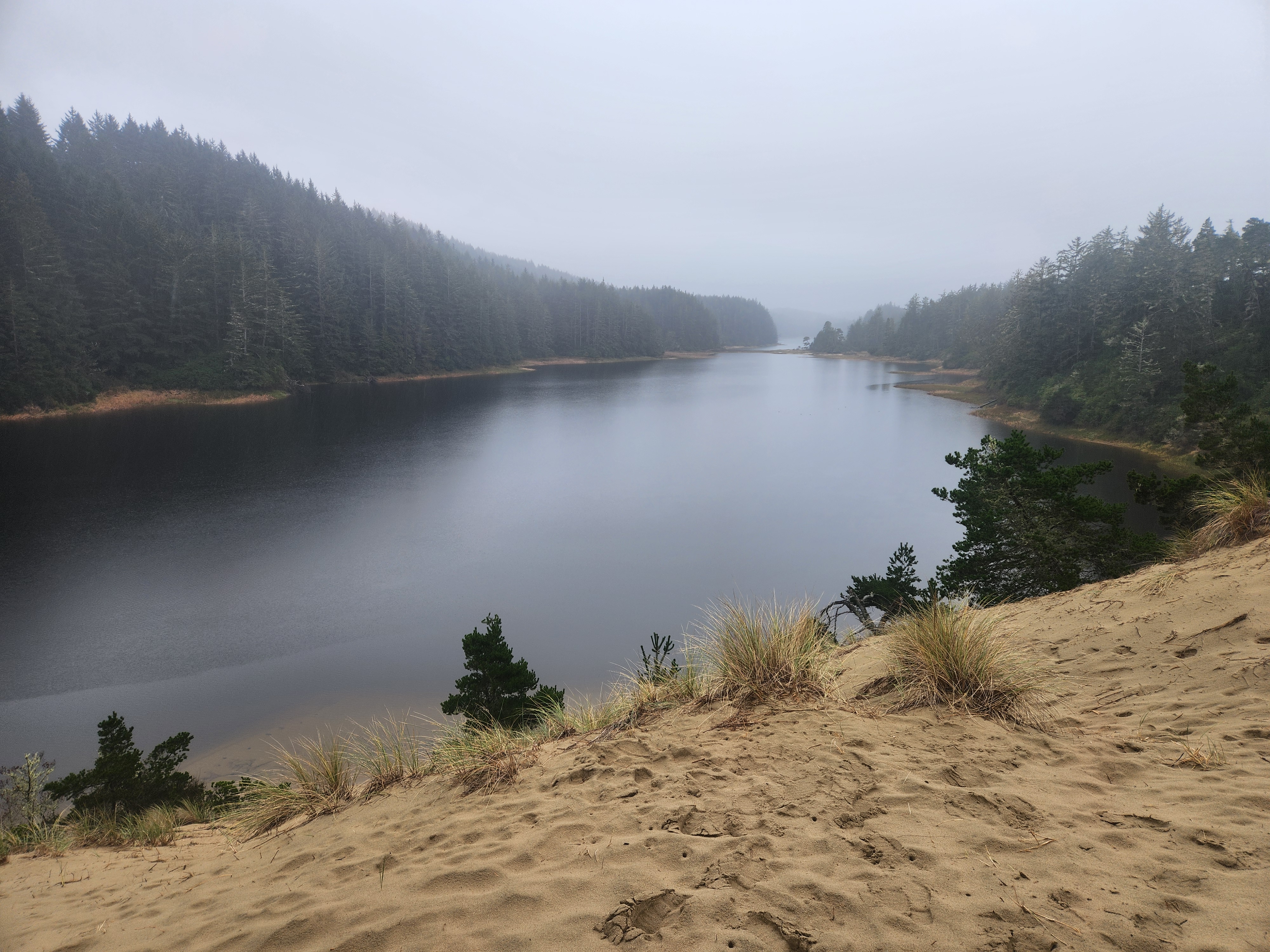
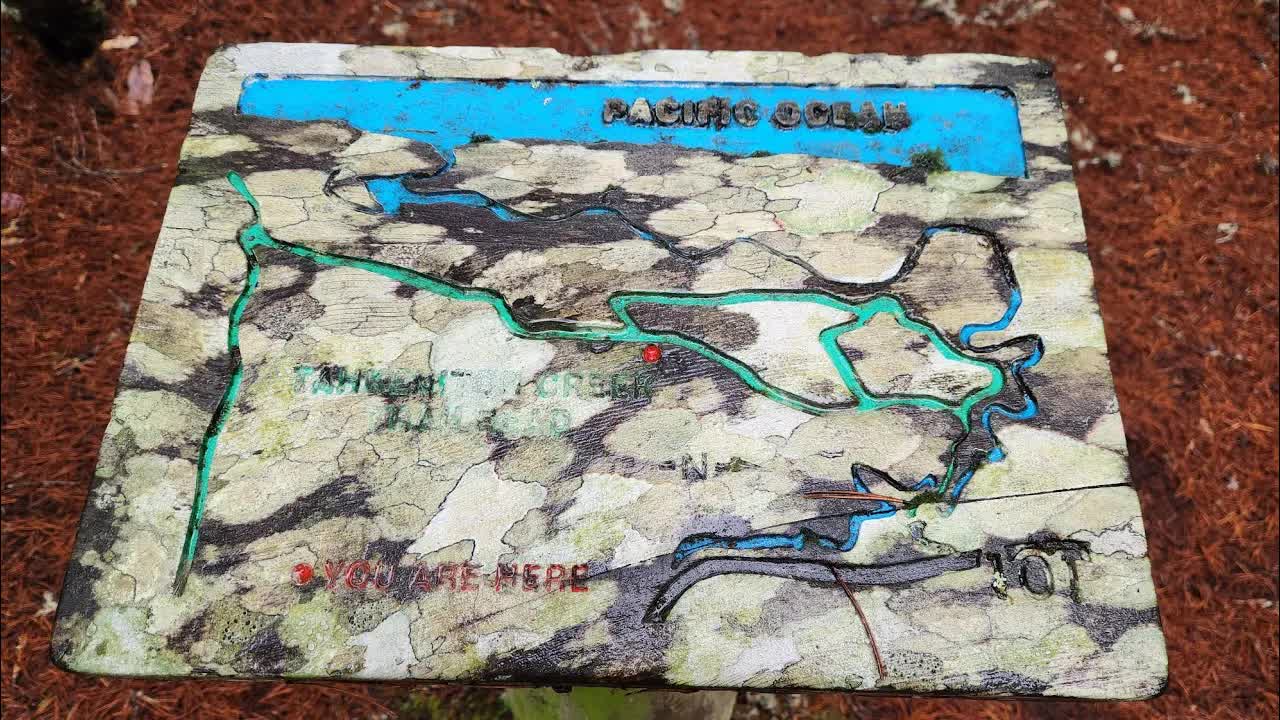
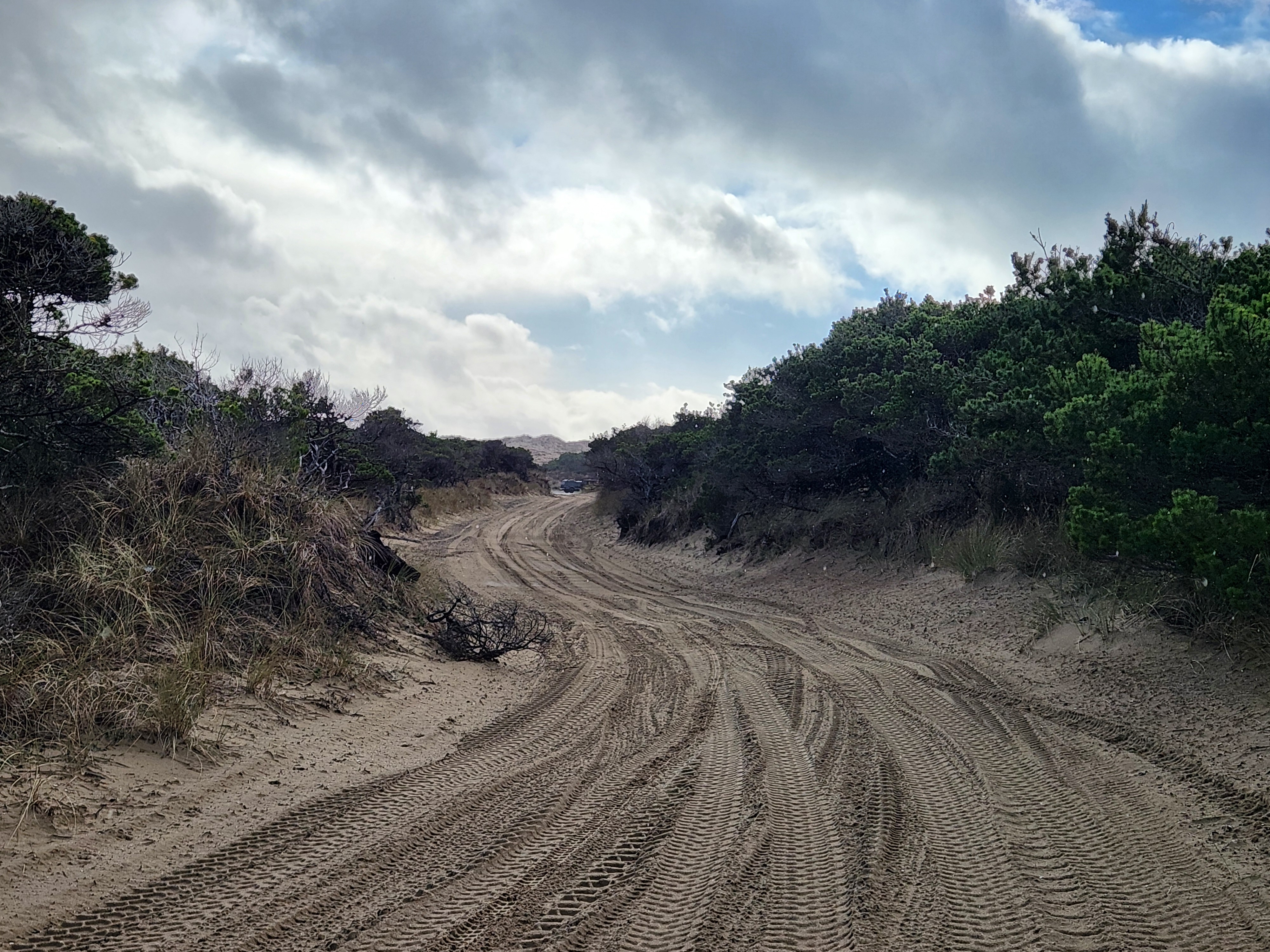
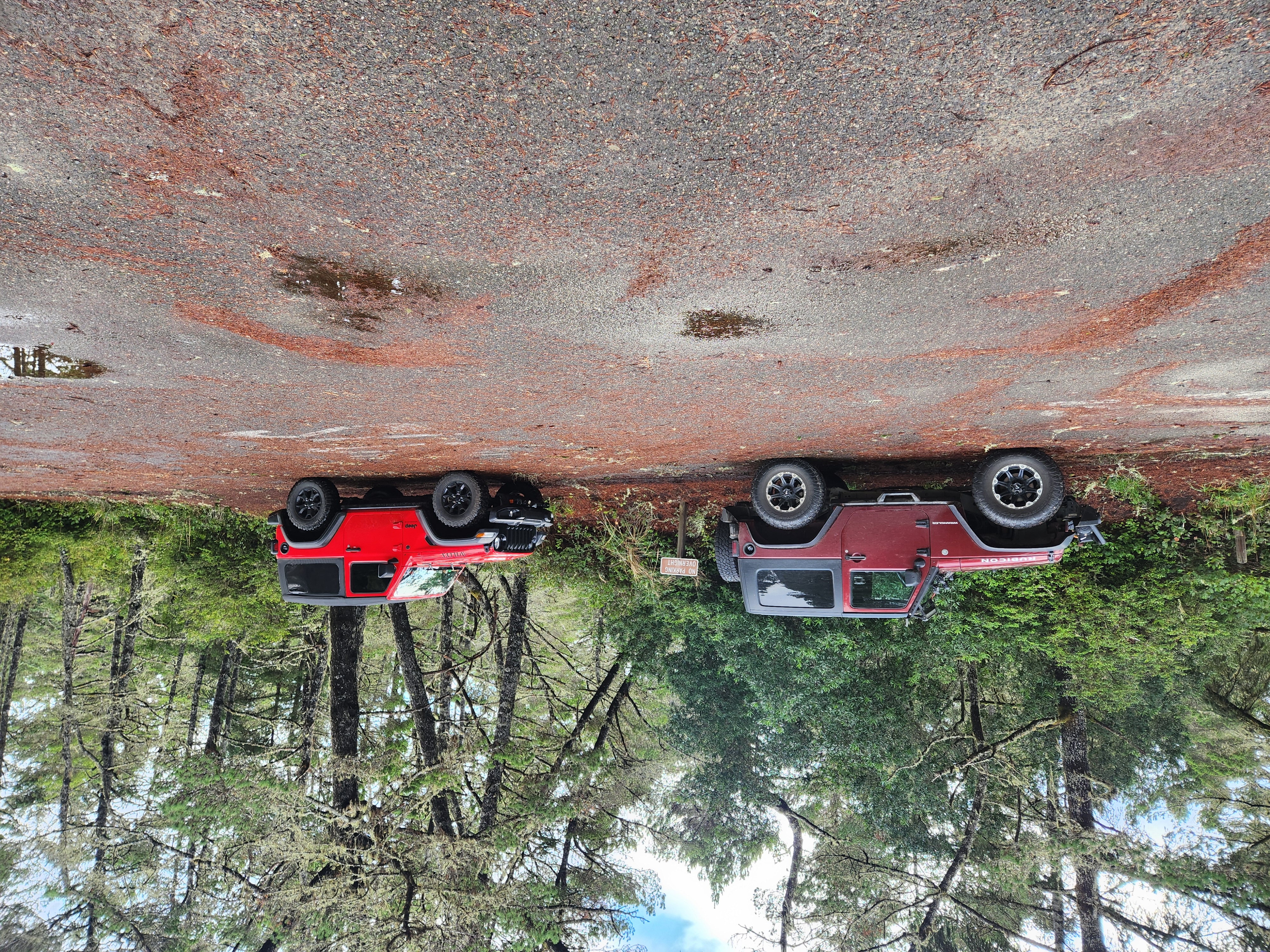
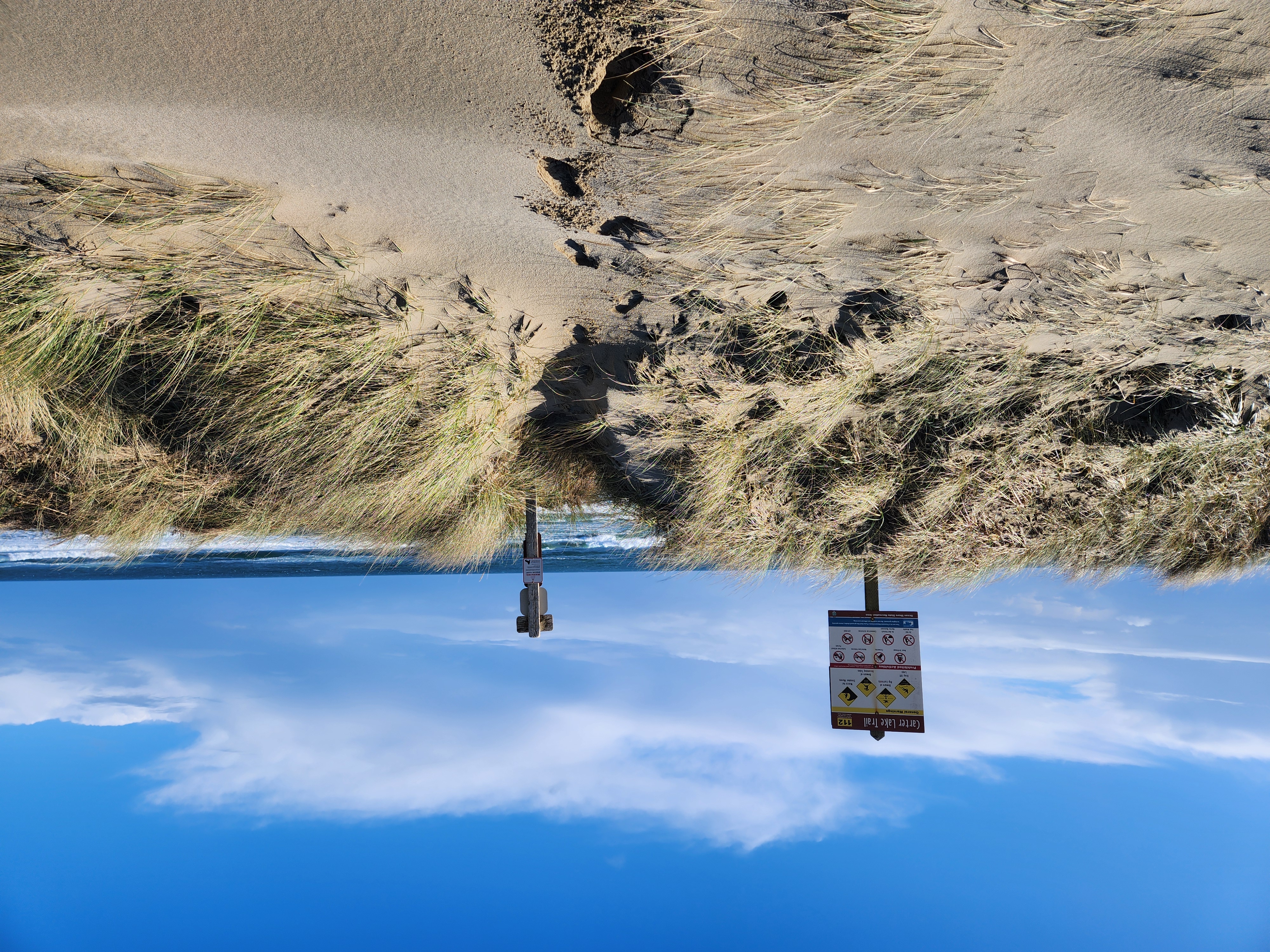
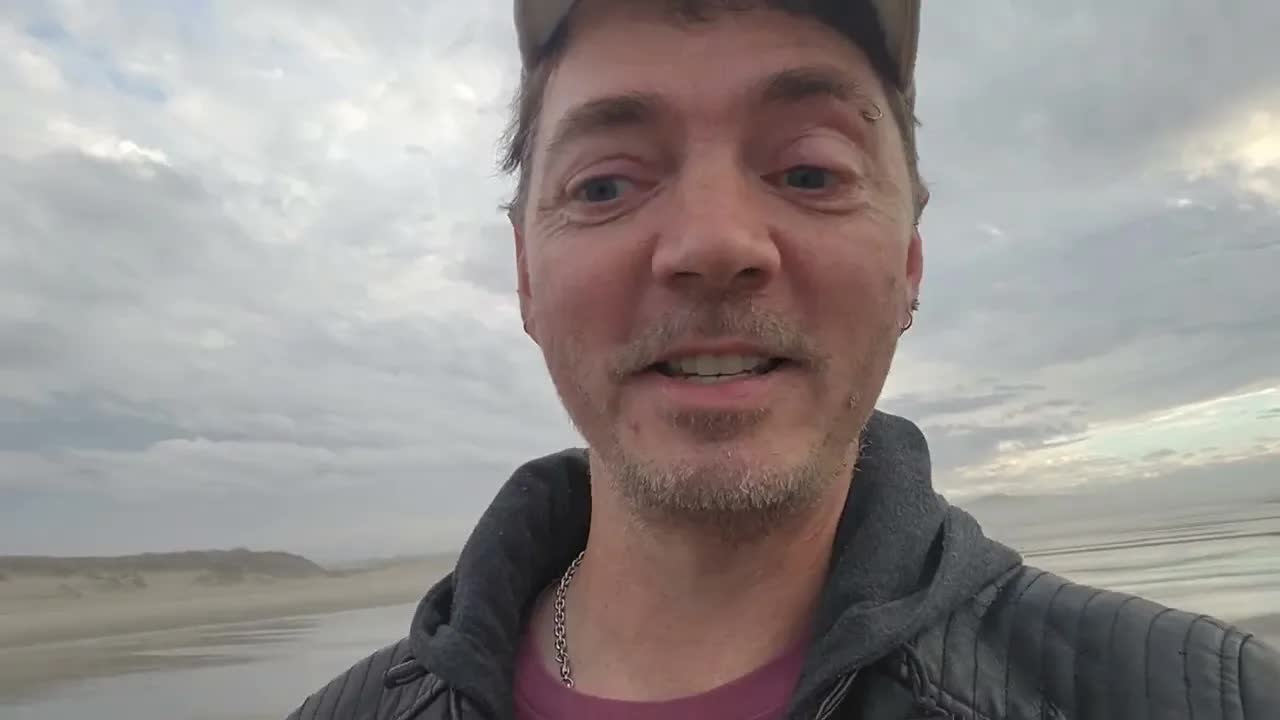
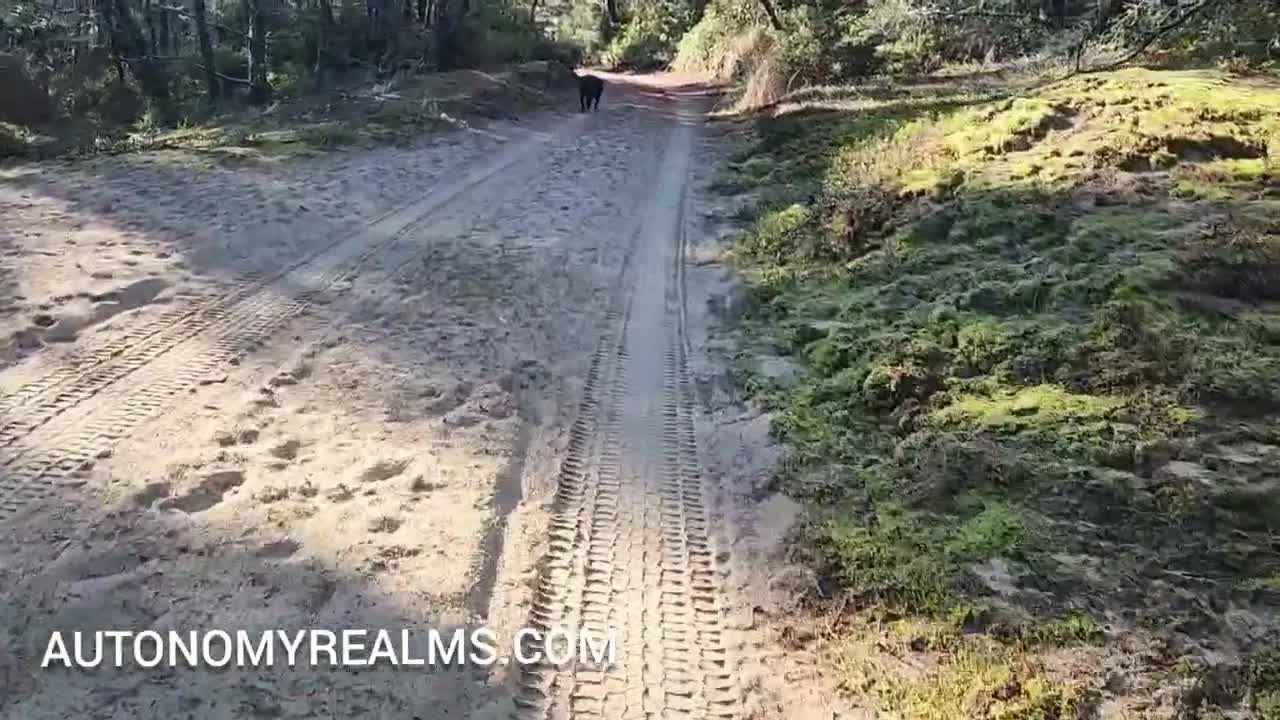
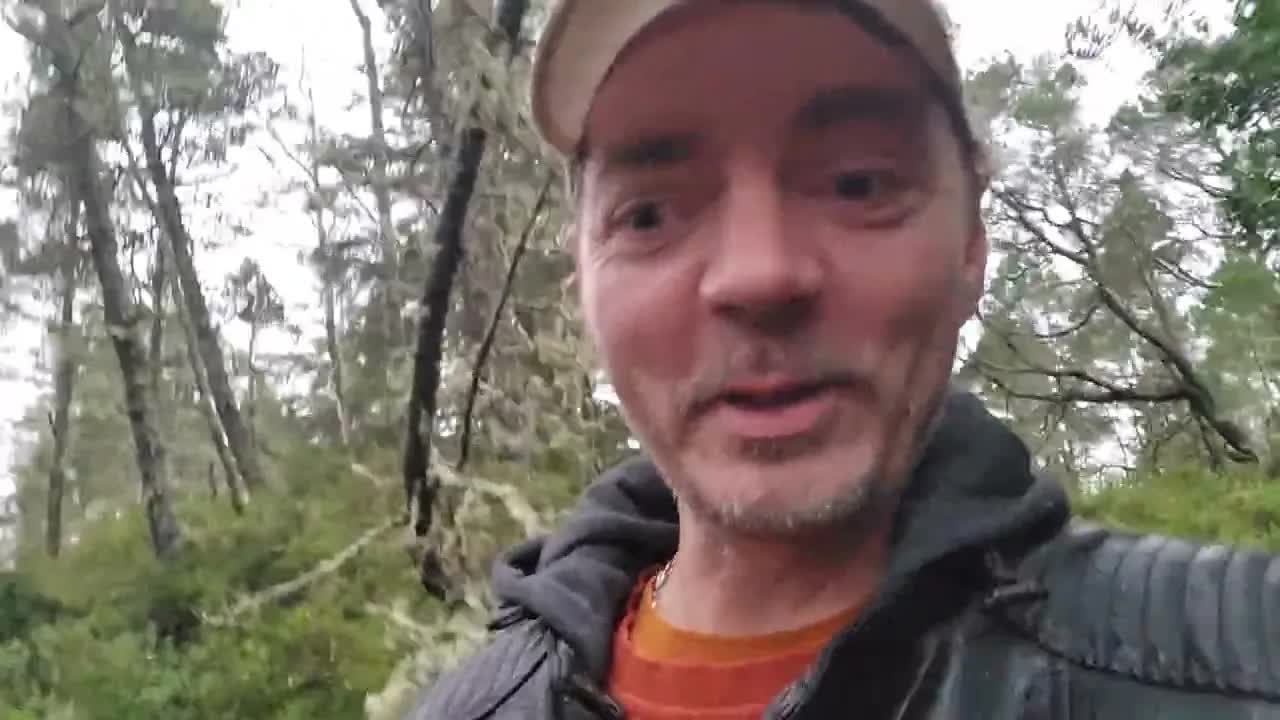
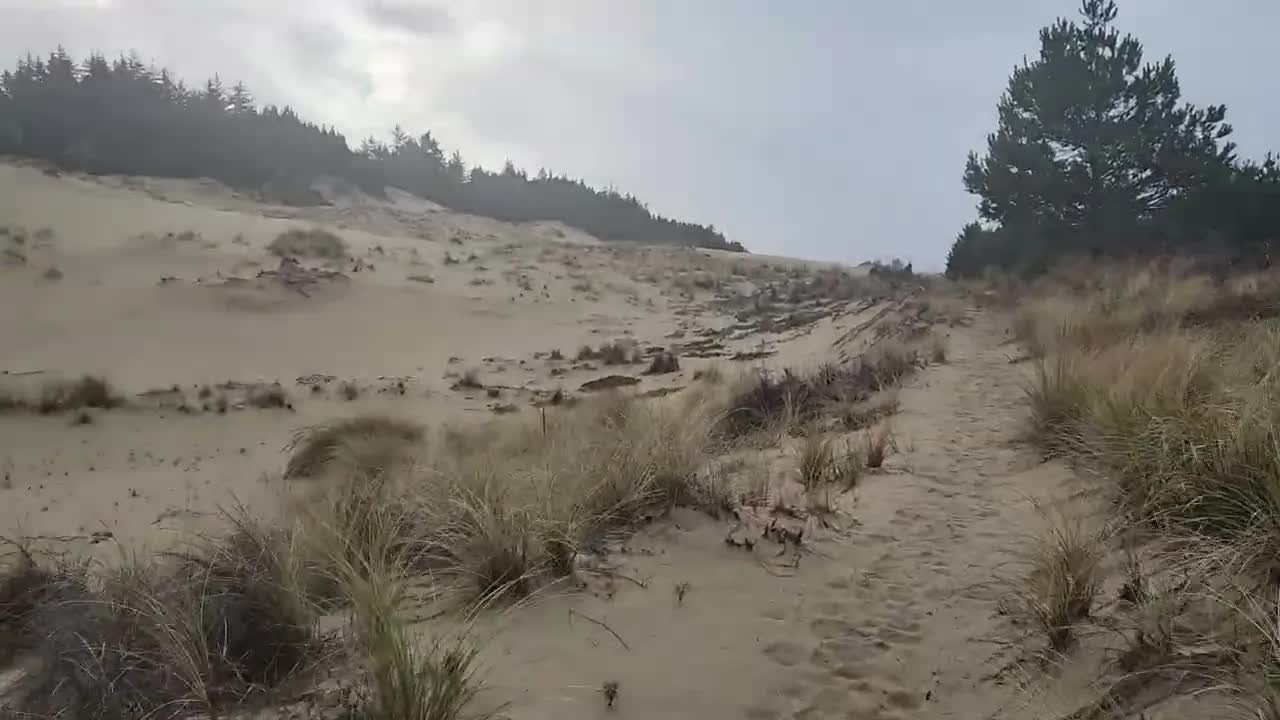
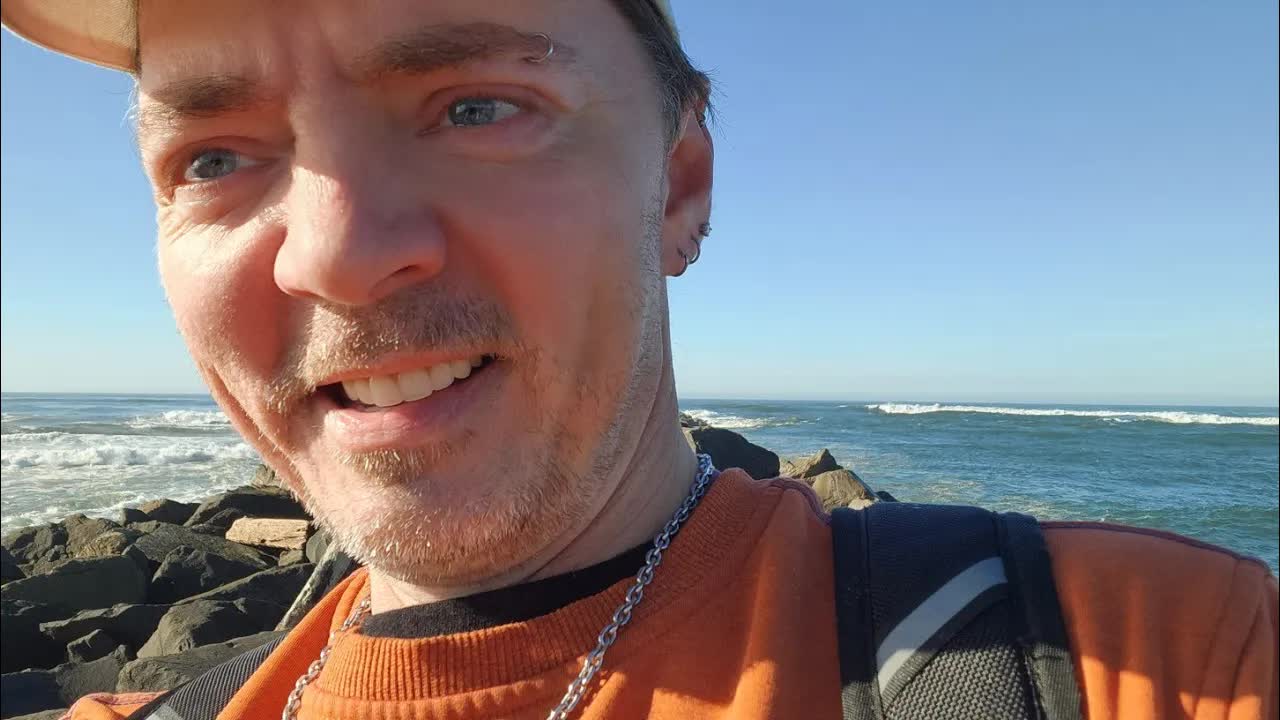
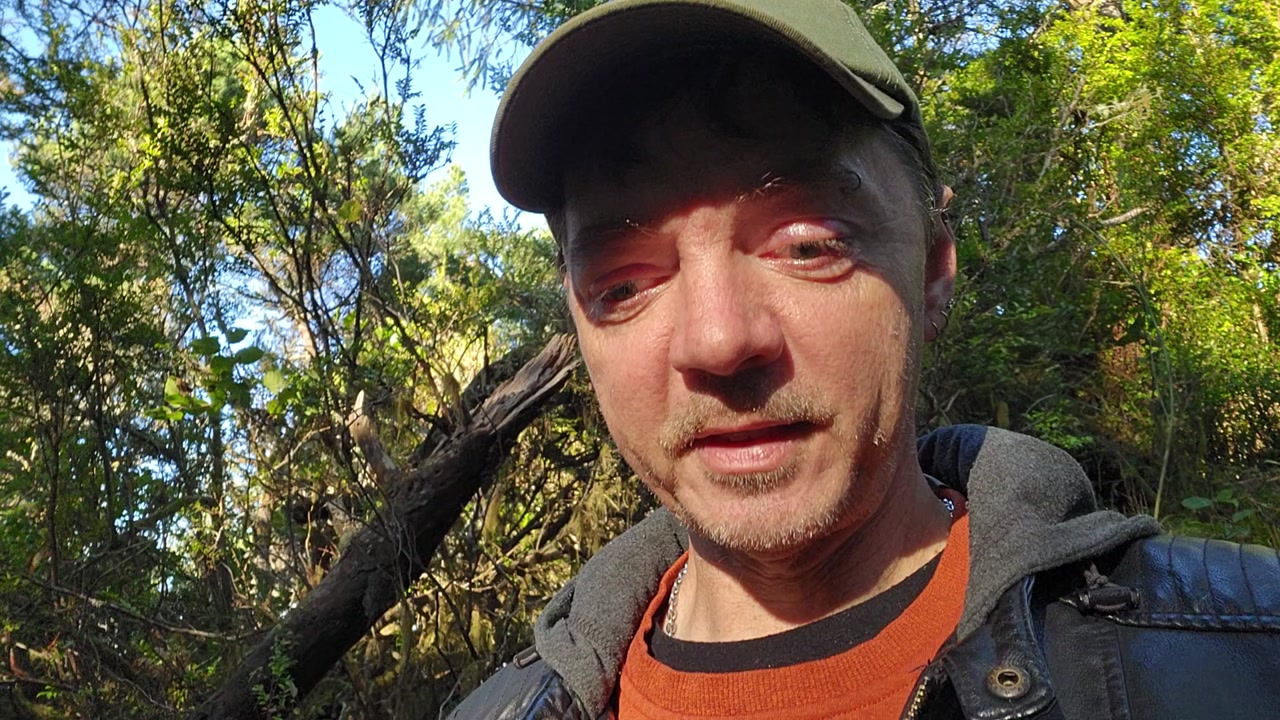
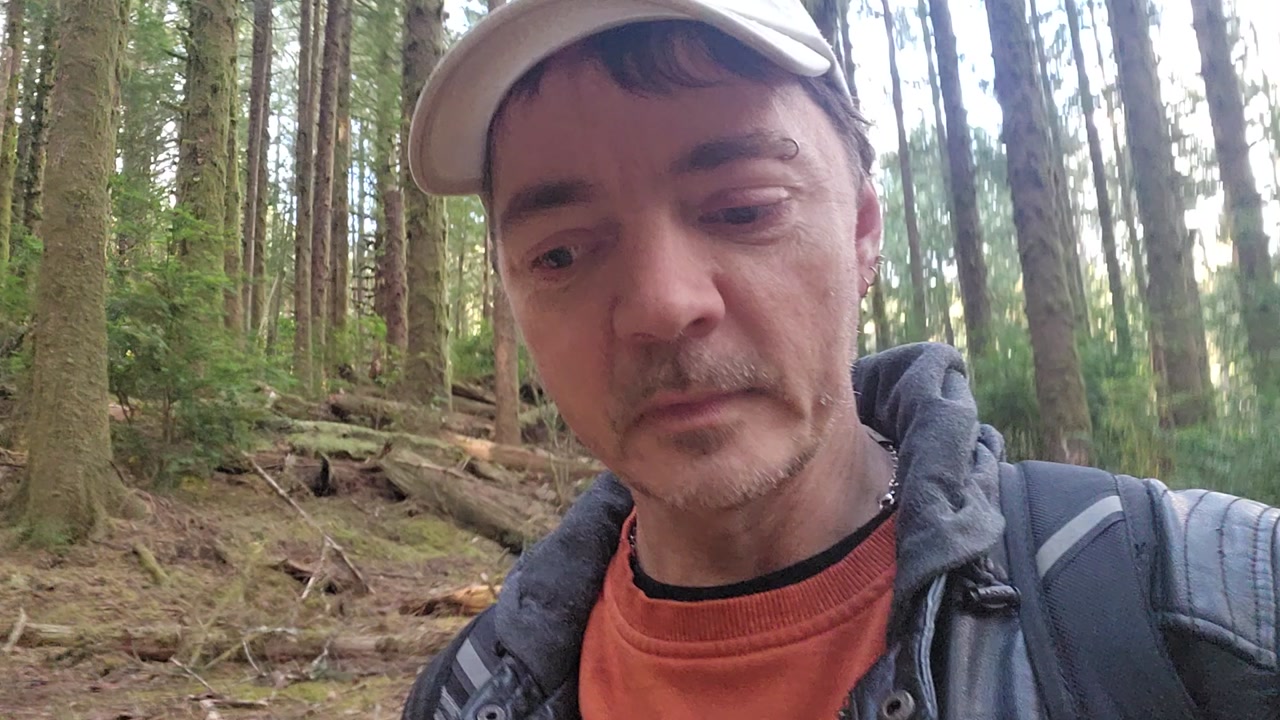
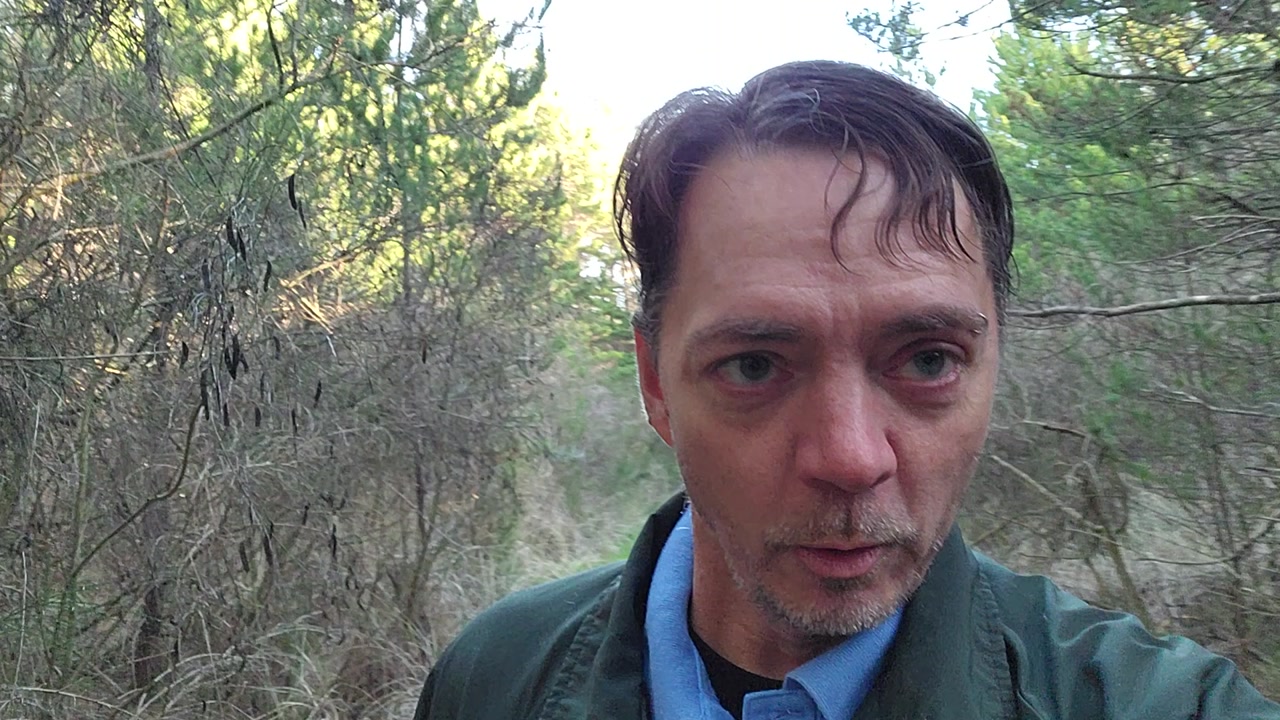
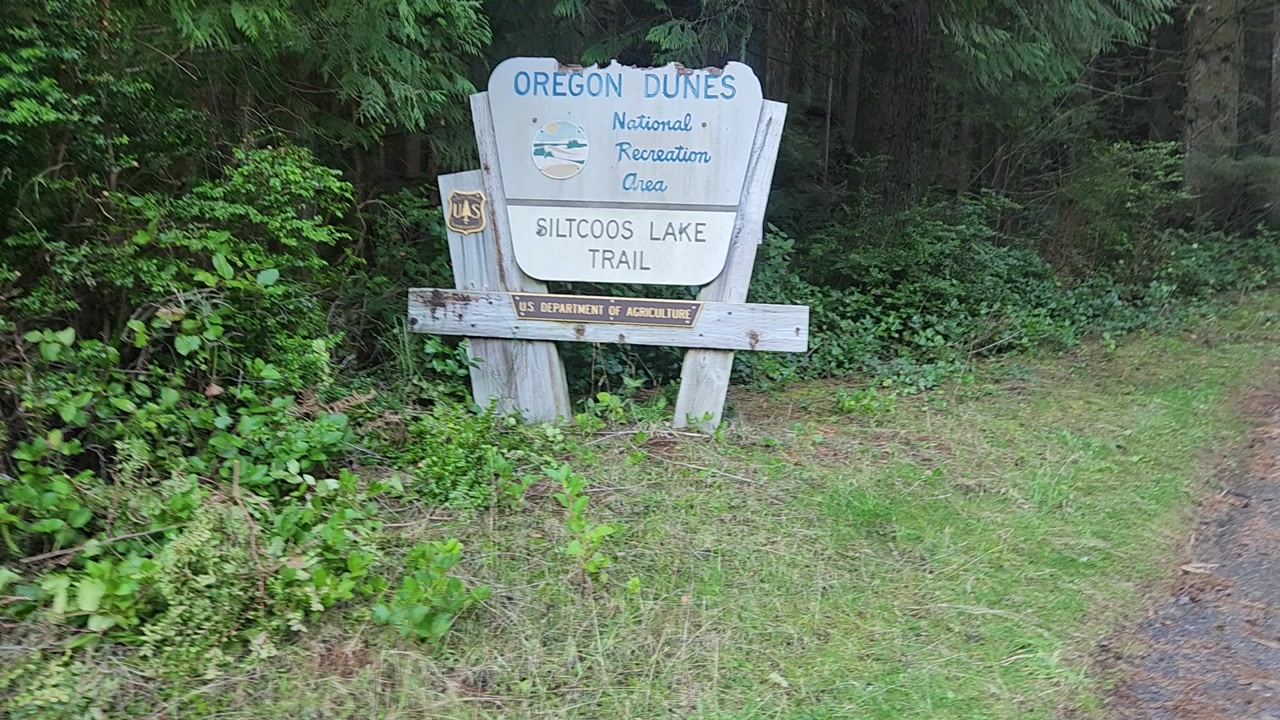
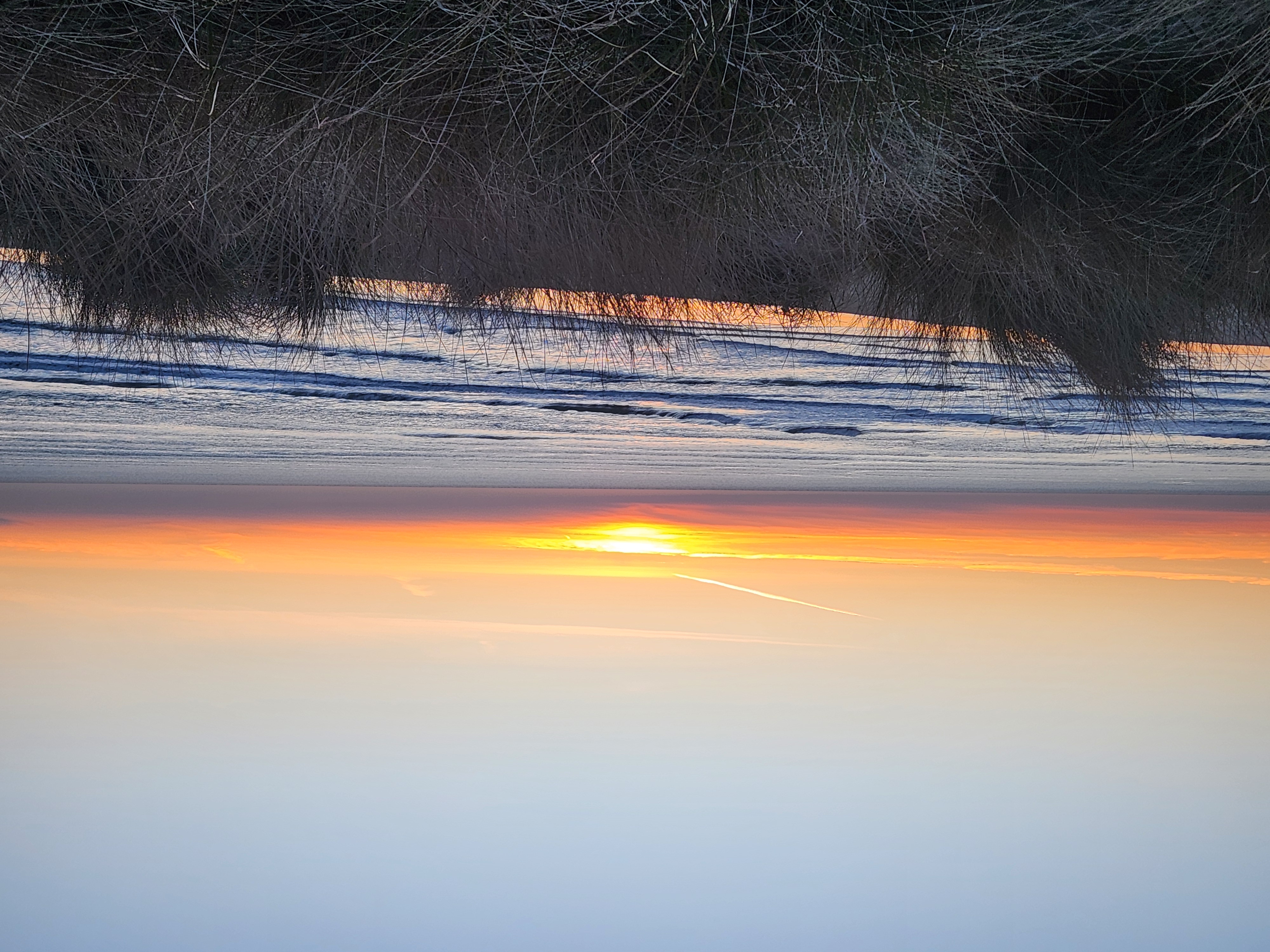
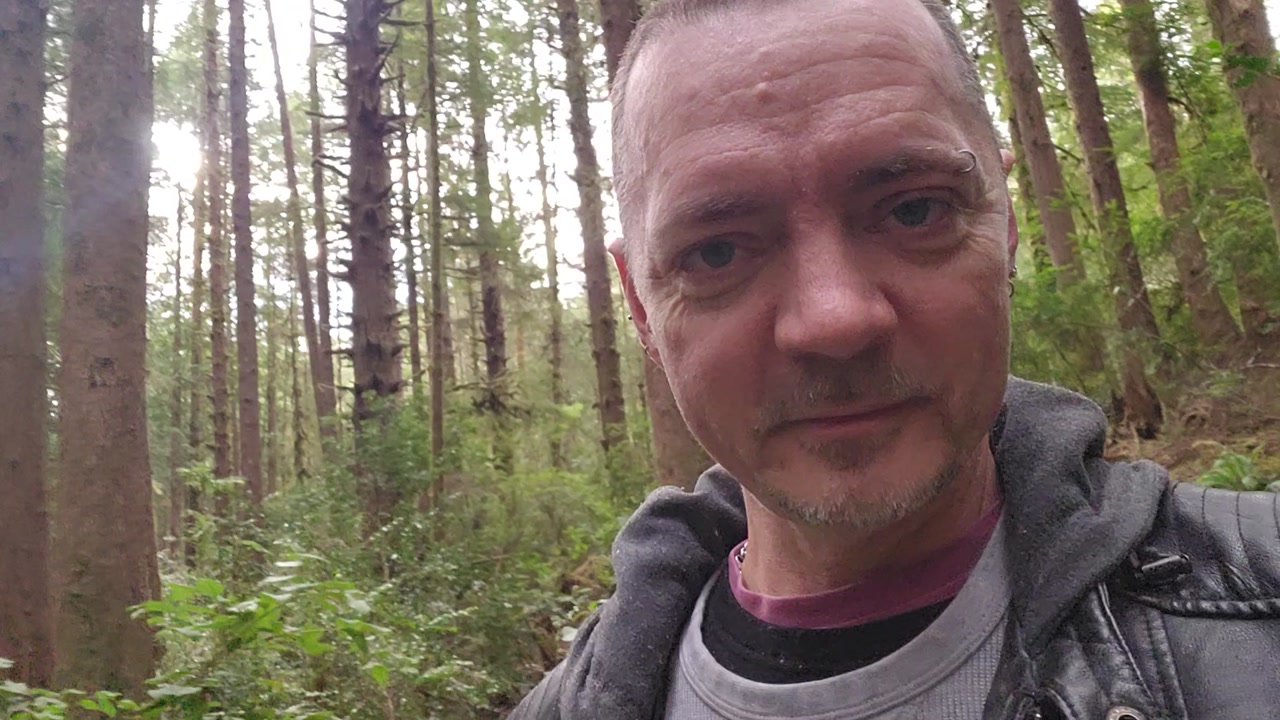
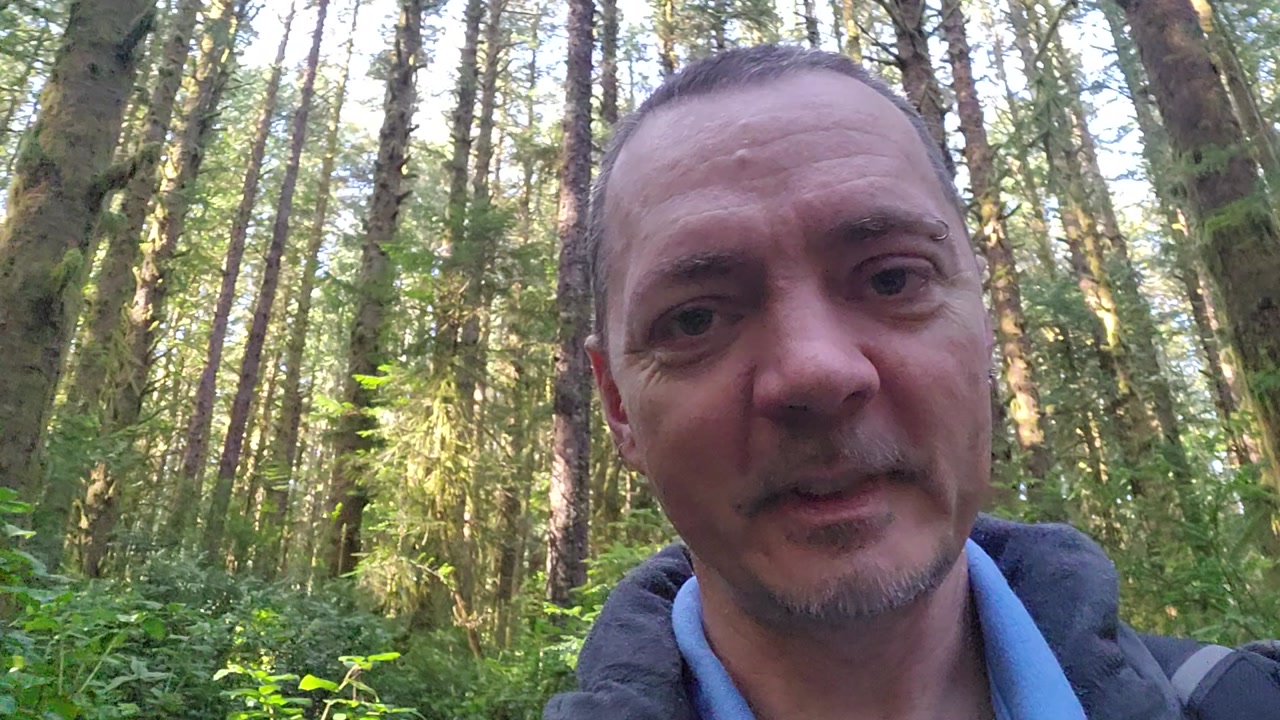
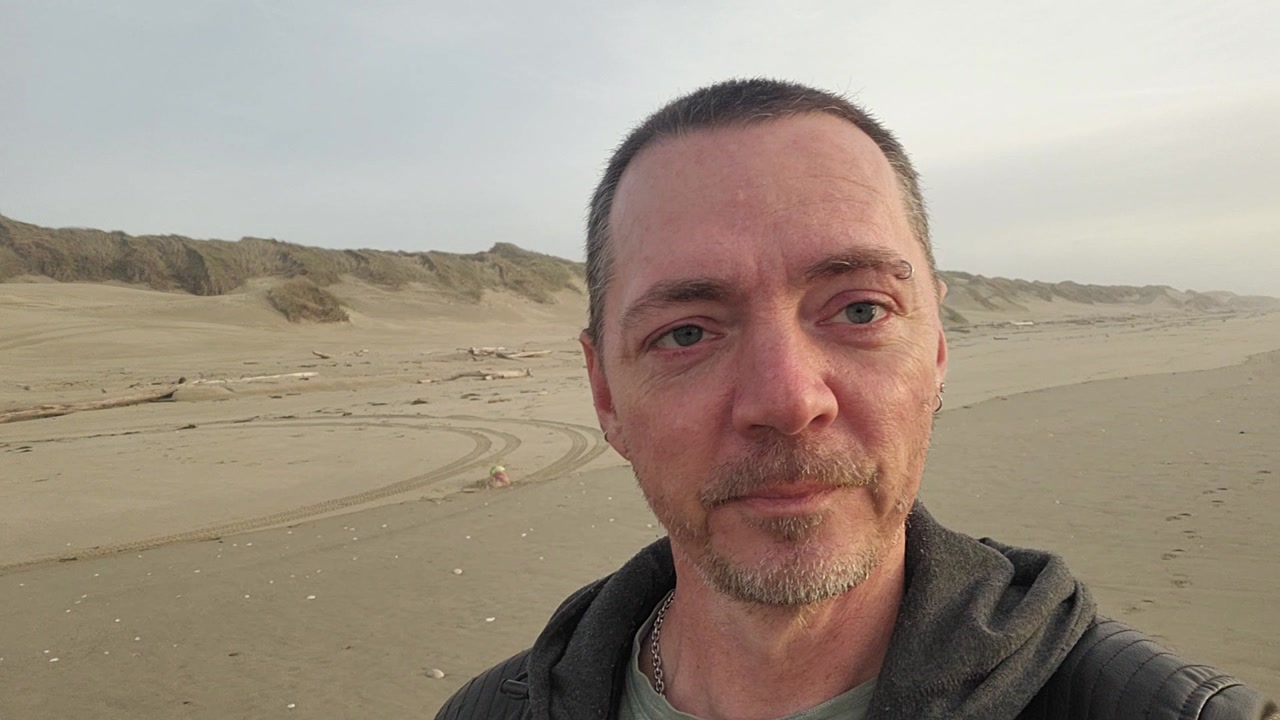
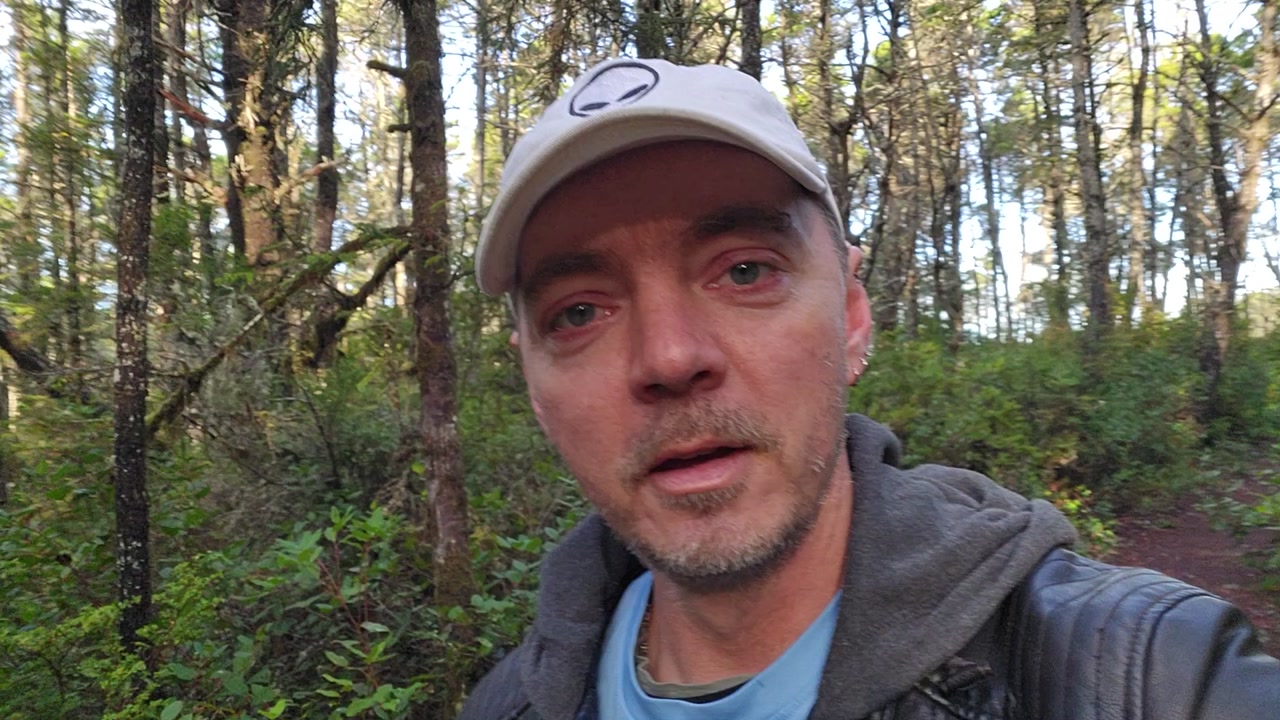
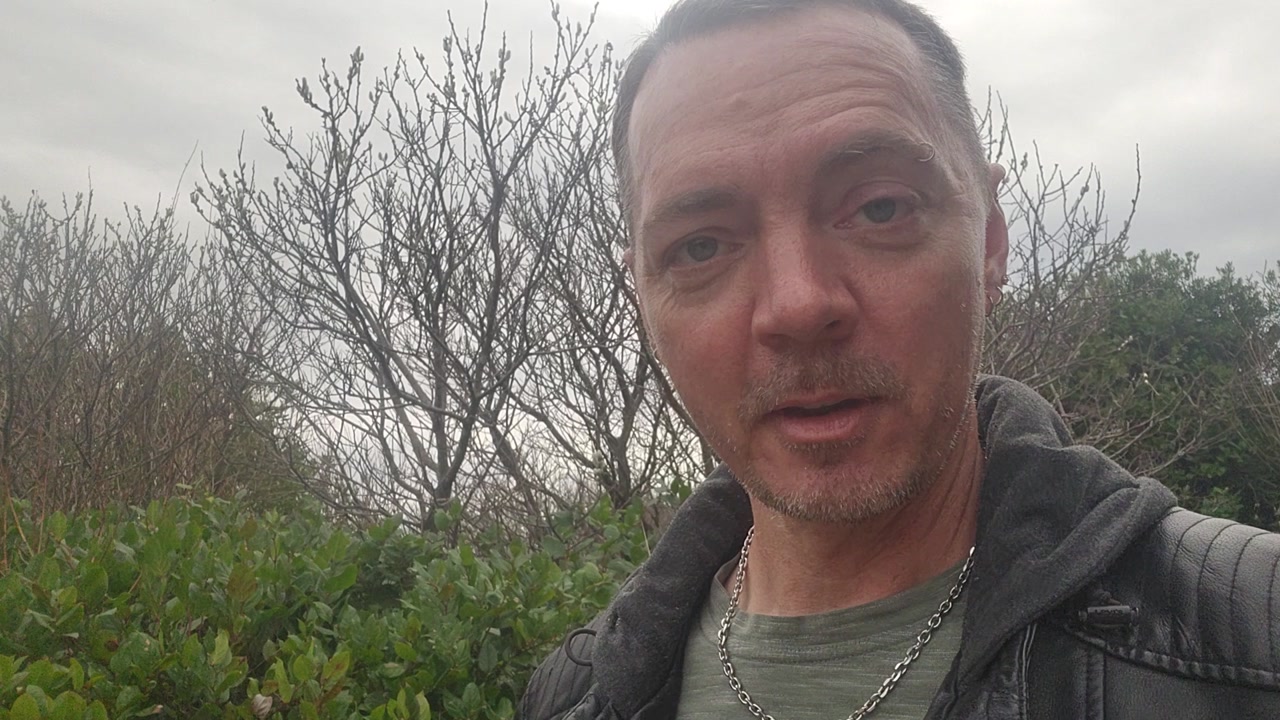
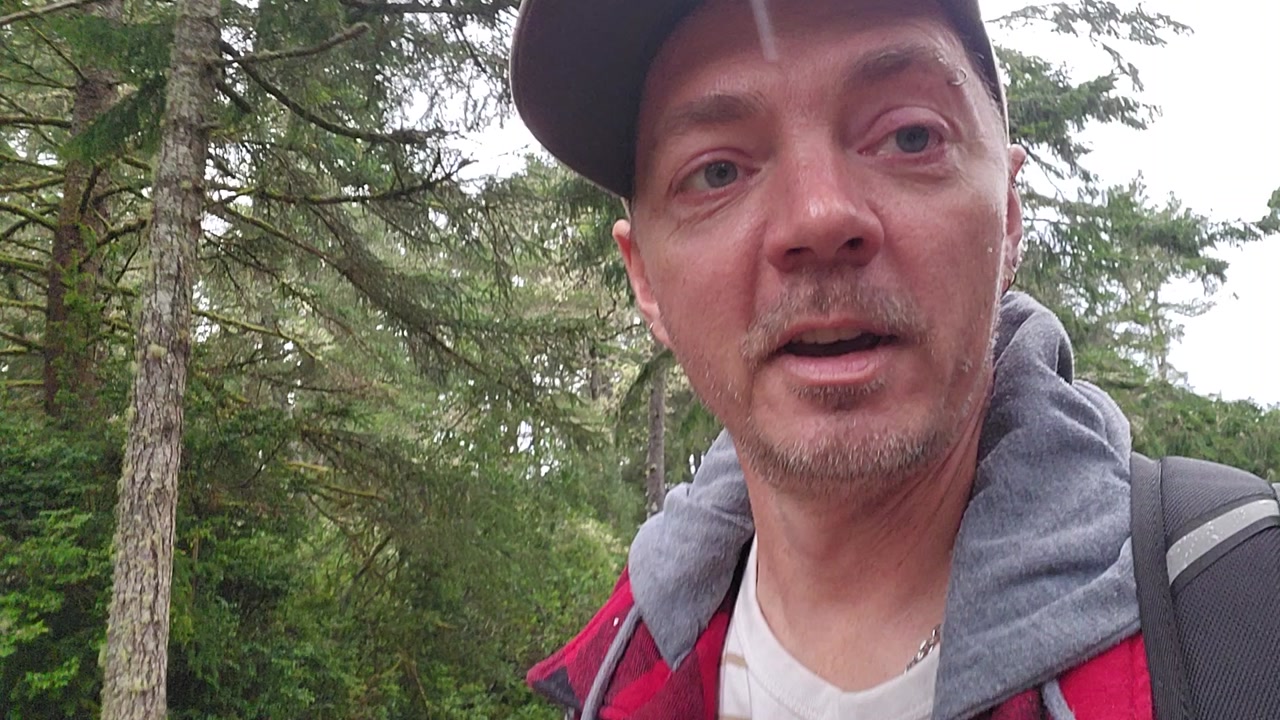
Monday, 11:30 in the morning, a day off from the Forest Service, and rswfire crossed the road from where he lives at Siltcoos and walked into the trees. The Siltcoos Lake Trail runs somewhere between the southern and northern camps; he was somewhere in the middle of it, on sand substrate, under a canopy dense enough that the light came through only in gaps. He started talking as he walked. Eleven minutes, one take, handheld, no destination in the recording except the thought he was already carrying.
The thought was the trees. Very tall trees, everywhere around him, and the arithmetic of what happens to tall trees during five minutes of violent shaking. He laid it out as he moved: the ground beneath him is dune sand, and dune sand liquefies — turns from ground into something that is not ground — and that condition holds for the full duration. He would not be able to do anything but crouch. He said so plainly, walking on the surface he was describing. Then the numbers. Core samples taken by a geologist from a university whose name he couldn't retrieve. A recurrence interval he put at two hundred years, held against the anomalies — one gap of around twelve hundred years that drags the average out to three or five hundred but doesn't change what the record mostly shows. He allowed both readings to stand: another anomaly could be running now, or the window is open. He gave it the greater likelihood in his lifetime, and kept walking.
He carried the sequence all the way through. Five minutes of shaking. Then, if he survived that, fifteen to thirty minutes — maybe ten in some places — before the water. Then running for elevation, and not one wave but waves, possibly for a day. Then the span: seven hundred miles, northern California to Vancouver Island, all of it at once, the I-5 cities with their own collapsed bridges and their own problems. No help coming. He had only learned about Cascadia a couple of days earlier. He mentioned the tsunami route signs he'd been seeing for however long, and the people he'd asked about them, who had never experienced one and had never said the word Cascadia to him.
Mid-sentence, in the one place on that stretch where the sun reached the trail, he found a spider. White-looking, or lit that way. He stopped the argument entirely and gave the animal the frame: it had chosen the only spot where the light came through, and it had chosen well. He decided not to disturb it and worked out a way around, which turned out to be an awkward piece of trail. He got through, mentioned the hiking boots he and Bill had picked up at the Walmart in Coos Bay a couple of days before, and looked back — the spider was fine, mid-build, still laying strands. He watched it work. He said he used to use spider webs as an analogy for societal collapse, and then, watching, revised the analogy in real time: another human is going to walk straight through that web, the spot won't hold, and the spider builds anyway because it doesn't expect anything to be permanent. He said they only build on that first strand, the one that takes the whole structure down with it. Then he let the spider have its good spot in the sun and went back to the tsunami.
What he arrived at, he arrived at carefully, and corrected himself twice getting there. By staying, he is accepting the risk. He started to say it was worth it, stopped, and refused the sentence — you don't have to give it a meaning that isn't there. What was true was smaller and firmer: he is choosing to live in a beautiful place knowing the risk, and it doesn't have to mean more than that. He said he was metabolizing it. He noted it wasn't abstract. He heard what might have been voices somewhere ahead, considered pausing the recording, listened, decided it was nothing, and continued.
From there the trail's logic turned. On foot in this forest, if it happens it happens — no amount of preparation changes the outcome, it would be pure chance. But that unpreparable condition is specific to where he was standing, and he drew the line cleanly: the Olympic Peninsula, an idea a few weeks old that he hadn't spoken aloud until now, land bought high enough that the water isn't a factor and only the shaking is, which can be prepared for to an extent, at least on the ground you own. A sovereign life on land at elevation. And that requires Autonomy to be finished.
He named the gamble as a gamble. He'd been talking with AI about it that morning. No guarantee it works, and he said it felt reckless to bet on it — then set against that the fact that nothing else has worked, and that the alternative is returning to freelancing, to an impossible client, for crumbs. He said he needs Autonomy to work, that there's no reason it shouldn't, that it has real value, that what remains is finishing the Laravel version. Then he said the last thing he'd come out there to say: that he wanted to document the choice. He left it there, still walking, the spider behind him in its one patch of sun, still building.