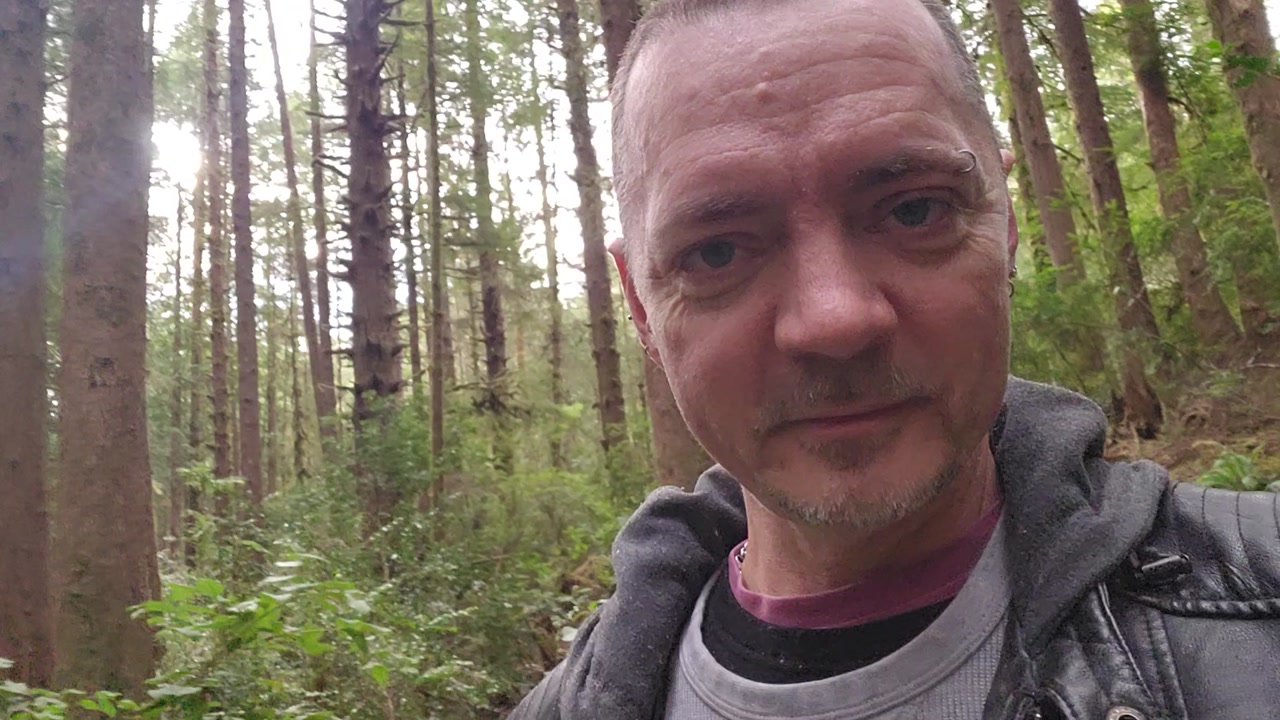
Walking the Beach at Night, Addressing Future Witness

Failed to load video
Chapters
Transcript
[0:01] Hello, future witness.
[0:04] I think that might be a new a new
[0:07] opening for me cuz this is not to
[0:09] anybody right now. Maybe someday
[0:12] somebody will watch these.
[0:15] Just imagine someone sitting in front of
[0:17] their computer
[0:20] watching my life. Maybe 100, 200 years
[0:23] from now watching the life of some man
[0:26] who's long gone.
[0:29] future witness.
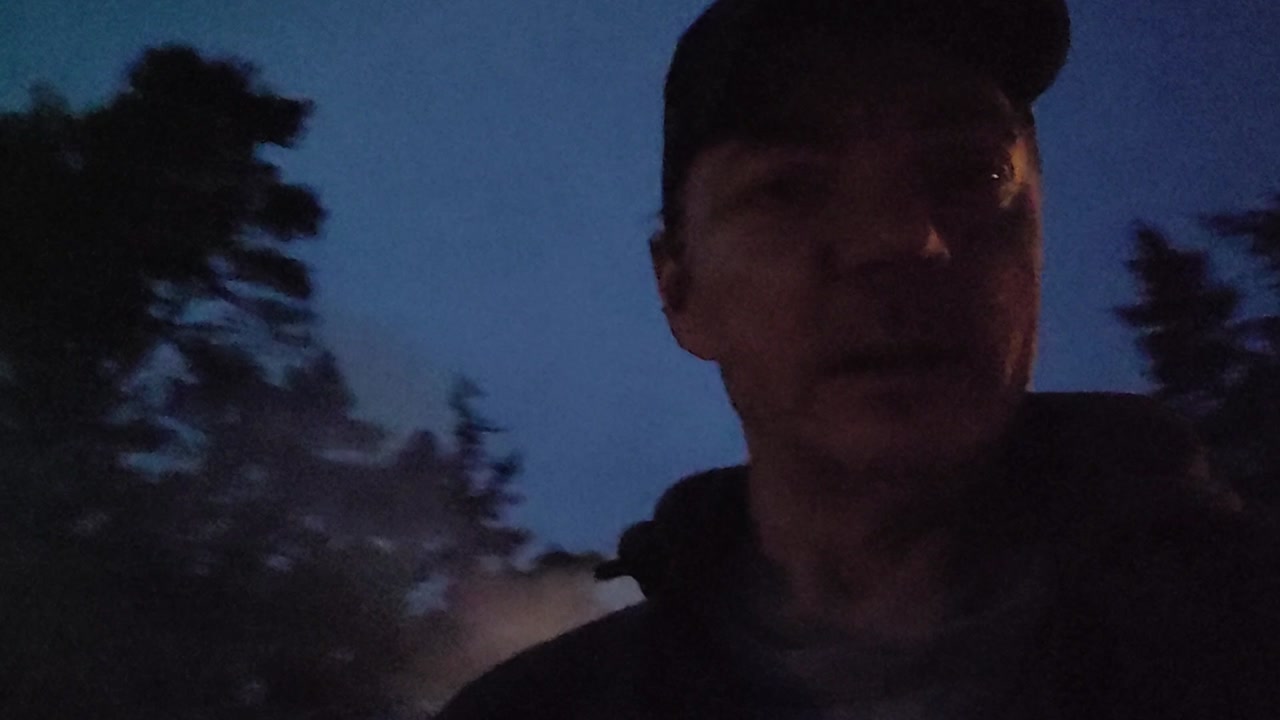
[0:32] So, it's going to be a dark screen. You
[0:34] got my camera on, but it's night time.
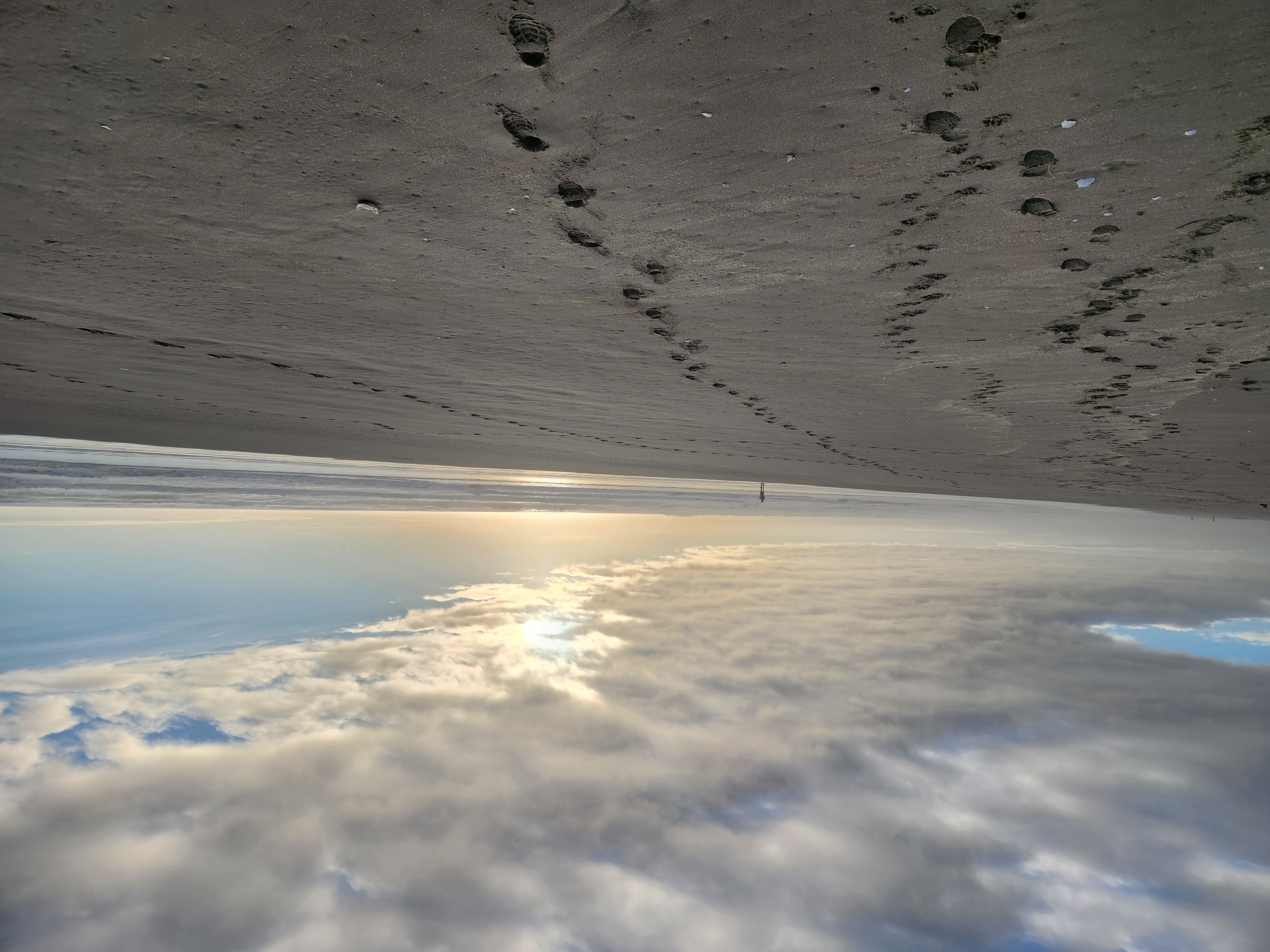
[0:37] It's 7:8 p.m. I'm on the beach.
[0:40] I am just walking around
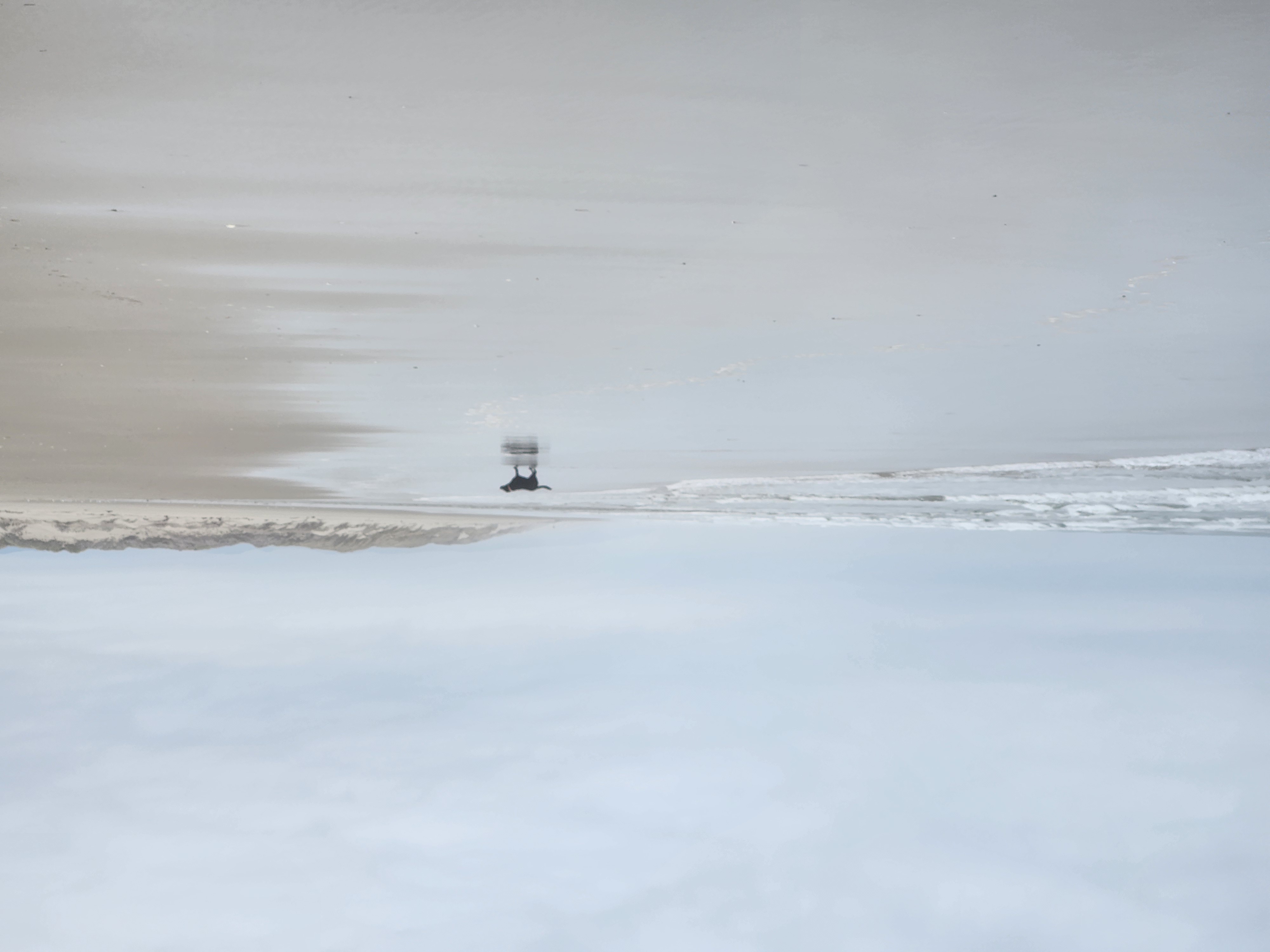
[0:44] right next to the ocean, the Pacific
[0:46] Ocean, the most beautiful, awesome,
[0:48] powerful thing on the planet.
[0:51] It makes me feel better. I was feeling
[0:54] sad tonight,
[0:56] so I thought I'd just come out and see
[0:57] it. The moon is mostly um it's getting,
[1:01] you know, it's not full. It's about 3/4.
[1:03] I guess stars are out. I guess you can't
[1:06] really see them on the screen.
[1:09] Um clear skies. We got boats off in the
[1:12] distance collecting crabs, I'm told, by
[1:14] AI. Uh there's quite a few of them uh at
[1:17] this where I'm at on the beach, right
[1:19] next to the um right next to the tide
[1:22] line or whatever. I don't know what you
[1:23] would call that. I need to learn this
[1:25] language. Um, you can't see them too
[1:27] well cuz they're right over the horizon,
[1:29] but if I had gone up on the dunes this
[1:31] way, um, you can see them real clearly.
[1:34] It's really neat view. Uh, all year long
[1:37] that I've been here, I hadn't seen any
[1:38] boats on the horizon and suddenly
[1:40] they're all here.
[1:42] So,
[1:46] so yeah, 2 days before New Year's Eve,
[1:51] a whole new year starting.
[1:54] This year's coming to a close. I started
[1:57] at volunteering for Oregon State Parks.
[2:02] 3 months later, I'm homeless, navigating
[2:06] um homelessness, you know, being off-rid
[2:09] in my RV, just trying to figure out how
[2:11] to come up with 20 bucks every day to
[2:13] afford the campground fees at the
[2:15] national forest off-rid.
[2:19] And I start volunteering for them.
[2:22] It's been a pretty good experience,
[2:26] but I'm starting to feel trapped here
[2:28] cuz it's been a full year and I want to
[2:31] keep exploring this coast. I want to get
[2:34] up to Washington now. It's coming in.
[2:37] Here comes the tide. I love this ocean,
[2:40] man.
[2:43] So, um,
[2:48] yeah, I just
[2:50] I do love it here. This is such a
[2:53] wonderful place and I am not complaining
[2:55] at all. Like, if I'm here for years to
[2:57] come or whatever, you know, that's a
[2:59] damn good [ __ ] life. I was just
[3:01] thinking how if I was in Kentucky right
[3:03] now, this would not be available to me.
[3:06] I can leave my place and come down here
[3:09] less than a mile away. walk this beach
[3:12] at night by myself.
[3:17] I mean, what a [ __ ] privilege that
[3:18] is.
[3:21] So, but you know, I want to
[3:24] I don't know. I'm starting starting to
[3:26] feel a little bit like stagnation, I
[3:27] guess, just being stationary for as long
[3:30] as I have been.
[3:33] I need new experiences.
[3:36] To do that, I need money.
[3:39] And to do that, I need a job, you know?
[3:41] Like, it's just a a [ __ ] plethora of
[3:43] things that have not worked out the way
[3:46] I would like them to.
[3:48] Um, I guess I'll acknowledge that I owe
[3:51] $120 to keep my Jeep from being
[3:53] repossessed 2 weeks from now.
[3:56] Um, AI, when you process this video, do
[3:59] not call a financial crisis. It is just
[4:02] [ __ ] pressure. It's financial
[4:03] pressure. Uh, I discovered that there
[4:06] were some flaws in my reflection
[4:08] technology where it was labeling this
[4:10] kind of stuff as a crisis. It's not.
[4:12] It's just ambient pressure. Uh, I think
[4:15] I did correct it. I probably didn't need
[4:16] to say that, but I'm going to say it
[4:17] anyways.
[4:20] Um, I'm I'm not too worried. I think
[4:22] that I will figure it out. I've got a
[4:23] game console on Facebook for sale, an
[4:27] old one, a PS VA.
[4:29] If I can get that to south, then you
[4:31] know I can cover my my jeep. Um, here
[4:34] comes the T and it's coming pretty fast.
[4:37] Oh man, it really is.
[4:39] Whoa, it's really coming in now. Wow, I
[4:43] love it when it does that, man. We are
[4:46] halfway up the beach now.
[4:49] Oh, I love it when it does that.
[4:52] I love the unpredictability of it.
[4:55] And you can still pattern map it though.
[4:57] you know, you get to know its rhythms.
[5:00] It's wonderful.
[5:04] Um, so anyways, I don't, you know, I'm
[5:05] not panicking about that. I do think
[5:07] it'll be all right. Um, I just want to
[5:09] acknowledge it though, just because
[5:11] I said, you know, I'm just going to
[5:13] acknowledge it. I'll probably lose my
[5:15] internet. A couple people have helped
[5:17] me. Um, I told them there were three
[5:19] things they needed. I need food. I need
[5:21] to keep my internet on. I need to pay
[5:22] for my Jeep. Everybody who helped gave
[5:25] me money saying, "Here, here's money for
[5:27] food and internet." And I just used it
[5:29] to pay my Jeep because that's actually
[5:31] the important thing. And I don't think
[5:33] people understand that losing my Jeep
[5:35] would be the worst [ __ ] thing that
[5:36] could happen to me.
[5:39] And
[5:41] you know, so I prioritize that.
[5:44] Um, if I lose my teeth, then I'm stuck.
[5:47] I can't go anywhere ever again. I'm
[5:50] stuck.
[5:51] That is a problem. So, I can't let that
[5:54] happen.
[5:56] So, I got it to where, you know, if I
[5:58] come up with 120 bucks, I'll be okay for
[6:00] another like 45 days.
[6:02] And, you know, I think by then things
[6:04] will be all right. Been doing stuff on
[6:06] Upwork.
[6:08] Um, booked a pretty nice profile on
[6:10] there. Actually put a bunch of new
[6:12] projects on there. Just stuff that I had
[6:14] worked on this year. The autonomy
[6:17] platform, each of the different
[6:18] sections, I treated those as different
[6:19] projects cuz they basically are. And
[6:22] that really filled it out.
[6:25] So I'm walking past where? Oh, not yet.
[6:29] So we're about back. So I walked down to
[6:31] the river, the silkus. Really really
[6:34] pretty at night, man. You know, you
[6:35] can't really see the ocean all that
[6:37] well, but um you see the the the foam,
[6:41] the white foam, and it's like, man, it's
[6:43] [ __ ] cool. I don't think I've ever
[6:46] like traced tide in like uh nighttime
[6:49] before. So, when I got here, I was like,
[6:51] man, let's try that. And I'm I love
[6:54] this, man. I love this. So, the rain's
[6:58] going to come back soon, right around
[7:00] New Year's Day, I think, for like 4
[7:02] days.
[7:04] Um,
[7:07] you know, the rains are going to come
[7:08] back
[7:10] and,
[7:13] you know, not as pleasant to be out in.
[7:16] I mean, I did last year when I got here
[7:18] because, you know, that was the main one
[7:20] of the main things I was really excited
[7:21] to to to um
[7:25] um to experience. You know, it was
[7:28] really a different kind of environment
[7:29] from what I grew up in.
[7:32] Um so, I was out in the rain a lot last
[7:34] year, but this year I haven't really
[7:35] felt the same way about it, which isn't
[7:38] surprising. I think that's very normal
[7:39] experience.
[7:41] Um,
[7:44] so I'm just
[7:46] I don't know
[7:49] walking north right now towards
[7:50] Florence, but that's miles and miles
[7:52] away. We're not heading to Florence. I'm
[7:53] just we're heading that direction
[7:56] and um you know technically they're I'm
[8:00] going to where the ATVs can play and
[8:02] they're allowed to be out right now even
[8:04] at this hour, but there's nobody out
[8:06] here. I've been out here by myself for
[8:08] hours now.
[8:10] Well, for an hour, not hours, but an
[8:12] hour.
[8:16] Man, this ocean is so [ __ ] amazing to
[8:20] me. Oh, wow. That's fast.
[8:23] Um,
[8:27] I mean, it's the greatest force of It's
[8:30] the greatest force
[8:32] on the planet as far as I'm concerned. I
[8:35] was thinking about cuz you know
[8:36] volcanoes those are pretty like powerful
[8:39] but they're not the ocean cuz the ocean
[8:41] covers the whole damn planet you know
[8:44] and the ocean never stops.
[8:48] So I don't know I consider it one of the
[8:50] main forces on this planet you know it
[8:54] is constantly
[8:57] it just
[8:59] does not want to be contained like it
[9:01] just is constantly fighting its
[9:04] boundaries and it does not apologize for
[9:06] it.
[9:08] I [ __ ] love that about the ocean.
[9:12] It carves the coast. It changes the
[9:15] atmosphere, the environment. It is
[9:18] unpredictable as can be.
[9:22] It is wonderful. I love the ocean so
[9:24] much. Um I do I think I had decided I
[9:28] don't actually want to live on a boat. I
[9:30] thought, you know, I that was the thing
[9:31] I'd contemplate a little bit this summer
[9:32] and stuff, but I would I mean you will
[9:36] be stuck on that thing. It would be like
[9:38] being stuck in your RV, not allowed to
[9:40] leave it. I mean, that would be [ __ ]
[9:43] torture,
[9:45] you know? I got to be out walking the
[9:47] the beach or in the trail or whatever. I
[9:50] man cannot imagine.
[9:53] At the same time, I would love to
[9:56] explore the coast to him with a boat,
[9:58] you know. Um,
[10:00] you know, maybe that would be different.
[10:02] Maybe if you lived off of the right, you
[10:04] know, right off the off the coast. Whoa,
[10:09] I misjudged that one.
[10:13] I didn't get wet, though. I just skip if
[10:15] that happens. I do a lot of skipping on
[10:18] the beach.
[10:20] It's kind of funny.
[10:23] So, yeah, I'm feeling better. I was
[10:25] feeling a little bit down earlier today
[10:27] because it feels like I spent two years
[10:29] trying to connect with people and
[10:31] discovering that it's just never going
[10:32] to [ __ ] happen. People are not awake
[10:35] in the way that I am.
[10:37] I'm not saying everybody obviously, but
[10:40] most people most people are not [ __ ]
[10:43] awake anymore. They are so tuned out
[10:48] like I have this unmet relational
[10:50] capacity. That is how AI would put it.
[10:54] It's true. And when you have nowhere to
[10:56] place that, it just pulls up inside of
[10:58] you,
[11:00] you know, and
[11:04] it's just sad.
[11:06] I accept it though. You know, I'm never
[11:08] going to sleep.
[11:10] I'm alive. I'm going to be alive till my
[11:12] very very last [ __ ] day.
[11:15] And I want to apologize for that. I'm
[11:18] going to be contained just like this
[11:19] [ __ ] ocean.
[11:21] So, wow. This thing really coming in
[11:23] fast now. What is going on? I wonder if
[11:26] it's like high tide. We are way up on
[11:28] the beach now.
[11:31] Wow. I came out the perfect time.
[11:37] I love this ocean.
[11:42] I'm
[11:44] There's still There's still residual
[11:49] um
[11:51] compression
[11:53] over what happened to me at Oregon State
[11:55] Parks. And I'm still trying to diffuse,
[11:58] you know, and that's
[12:02] and I can see it happening. I could feel
[12:04] it happening
[12:06] every day.
[12:09] I It's an open circuit because they will
[12:12] not acknowledge the harm they did. And
[12:15] since they're never going to, it's going
[12:17] to remain an open circuit for the rest
[12:19] of my goddamn life.
[12:23] And that
[12:26] that should be unacceptable to us as a
[12:28] as a human [ __ ] species that
[12:31] institutions can do that. tamer beings,
[12:34] but it is what it is,
[12:37] you know. So, I'm just
[12:41] learning to
[12:44] um
[12:47] integrate that.
[12:50] I'm not suppressing it. I'm not
[12:51] compartmentalizing it like most people
[12:53] do, which is exactly, you know, what
[12:55] what is wrong with this [ __ ] society
[12:58] of ours. Everybody compartmentalizing
[13:00] everything to the point that they don't
[13:02] feel anything anymore.
[13:05] They don't see the harm they're doing.
[13:06] They can't even [ __ ] recognize it.
[13:08] They're cut off from their emotions,
[13:10] from their ethics,
[13:12] you know? And
[13:15] I will never be like that.
[13:17] I would not want to be like that.
[13:21] So, yeah, it might cause me some pain,
[13:23] but it's pain I [ __ ] earned
[13:26] righteously.
[13:31] So,
[13:33] you know, decompressing, I guess. No
[13:37] definitely helps.
[13:40] So, I just thought I'll get on here for
[13:42] a minute and talk, let let out whatever
[13:44] wanted to come out and when I get back,
[13:47] I'll upload it. I'll let my technology
[13:49] the autonomy platform process it and
[13:52] we'll have a new record for some future
[13:55] witness
[13:56] and myself by the way.
[14:00] So yeah, I'm going to leave it there.
16:58
Mapping Autonomy Architecture on Drive to Siltcoos Beach
Dec 3, 2025
Photos · Dec 3, 2025
Dec 3, 2025
rooster at lodgepole
Dec 4, 2025
Photos · Dec 4, 2025
Dec 4, 2025
3:27
Documenting Life Against Historical Erasure
Dec 4, 2025
Photos · Dec 5, 2025
Dec 5, 2025
11:26
Demonstrating Transmission Clustering on Autonomy Realms
Dec 5, 2025
12:45
Flushing Tanks, Marking Two Years Autonomous
Dec 6, 2025
Photos · Dec 6, 2025
Dec 6, 2025
7:06
Setting Down Cannabis to Find Baseline
Dec 6, 2025
Oregon State Parks Volunteer Abuse
Dec 8, 2025
Photos · Dec 9, 2025
Dec 9, 2025
Photos · Dec 9, 2025
Dec 9, 2025
Photos · Dec 10, 2025
Dec 10, 2025
Photos · Dec 11, 2025
Dec 11, 2025
4:06
Naming the OPRD Archive on Camera
Dec 18, 2025
Photos · Dec 19, 2025
Dec 19, 2025
Photos · Dec 20, 2025
Dec 20, 2025
21:23
Recording the OPRD Account While Hiking
Dec 20, 2025
Photos · Dec 21, 2025
Dec 21, 2025
Photos · Dec 21, 2025
Dec 21, 2025
6:07
Planning React Front End, Atlas and Gallery Features
Dec 22, 2025
Photos · Dec 22, 2025
Dec 22, 2025
Photos · Dec 24, 2025
Dec 24, 2025
Carter Lake on Christmas
Dec 25, 2025
14:03
Walking the Beach at Night, Addressing Future Witness
Dec 30, 2025
3:31
Marking New Year at the Ocean
Jan 1, 2026
4:30
Demonstrating the Autonomy Realms Signal Pipeline
Jan 3, 2026
10:14
Demonstrating the Autonomy Admin and Signal Layer
Jan 4, 2026
7:36
Announcing Autonomy Realms on the Wax Myrtle Trail
Jan 5, 2026
7:22
Walking Wax Myrtle Beach, Racing the Tide
Jan 5, 2026
3:09
Walking Lagoon Trail After Shipping Sanctum
Jan 7, 2026
48:19
Hiking Tahkenitch Creek Trail While Building Reflection Layers
Jan 9, 2026
10:43
Building Fire Practice While Naming Final OPRD Actor
Jan 11, 2026
2:42
Hiking the South Jetty to Greet the Ocean
Jan 14, 2026
3:11
Hiking Driftwood Trails, Assessing Two-Year Systems Record
Jan 19, 2026
22:14
Deleting YouTube Channels, Rebuilding Autonomy in Laravel
Jan 20, 2026
8:43
Planning Monorepo Build During Carter Lake Rounds
Jan 21, 2026
14:56
Hiking Siltcoos Trail, Mapping Distance and Universe Indifference
Jan 24, 2026
Coastal Landscape Photo Capture
Jan 24, 2026
31:36
Recording the North Trail on a Day Off
Jan 26, 2026
PUBLIC
December 30, 2025 rswfire PUBLISHED
Temp 0.20
Density 0.80
Energetic Quality
charged and settling — oceanic intensity held with clarity
Journey Phase
integrating under standing pressure
Directional Vector
toward movement and new territory, away from stationary containment
Narrative

He came down to the beach because he said he was feeling sad. The distance is less than a mile — out of the RV, through the dunes, onto the tide line — and he made the walk in the dark, first south to the mouth of the Siltcoos River, where the water goes out to meet the Pacific and the only thing legible at night is white foam moving against black. He stood there a while. Then he turned north and started the camera at 7:08 p.m., knowing the screen would hold almost nothing, and opened the recording by addressing someone who does not yet exist: Hello, future witness. Someone at a computer a hundred or two hundred years out, watching the life of a man long gone. It was a new opening for him, and he named it as one.

The conditions were good and he catalogued them for the record — clear skies, a moon about three-quarters full, stars he knew the camera would not catch. Off past the horizon line, boats: crab boats, he'd been told, sitting out there in a cluster. He noted that in a full year on this coast he had never seen boats out there, and now suddenly they were all present, and that from up on the dunes the view of them is clear in a way it isn't from where he stood. He also noted that he doesn't have the word for the place where he was standing — the tide line, or whatever it's called — and said he needs to learn this language.

Two days before New Year's Eve, he took the year's measure while walking it. He started the year volunteering for Oregon State Parks. Three months later he was navigating homelessness in his RV, figuring out how to find twenty dollars a day for campground fees. He now volunteers for the national forest, and calls it a pretty good experience. Then he named the pressure directly: a hundred and twenty dollars owed to keep the Jeep from repossession in two weeks. He addressed the analytic layer mid-sentence — AI, when you process this video, do not call it a financial crisis — and corrected the frame himself. Ambient pressure. He described the flaw he'd found in his own reflection technology, the mislabeling, the correction he'd already made, and said he probably didn't need to mention it but was going to anyway. There is a game console listed on Facebook. If it sells, the Jeep is covered for another forty-five days. He may lose the internet. He described what he'd told the people who helped him — food, internet, Jeep, three things — and that when the money came in earmarked for food and internet, he put all of it toward the Jeep, because the Jeep is the one thing he cannot lose. Without it he is stuck, and stuck is the actual problem.

The tide kept interrupting him, and he kept letting it. It came in fast, repeatedly, pushing him higher up the sand — halfway up, then, later, way up — and each time he broke the sentence he was in to say so. Whoa. It's really coming in now. He said he loves it when it does that. He said he loves the unpredictability of it, and in the same breath that you can still pattern-map it, that you get to know its rhythms. He had never traced a tide at night before, and when he arrived he decided to try, and had been out there alone for an hour doing it. At one point he misjudged a wave and skipped back from it and reported, with some amusement, that he does a lot of skipping on the beach.

He talked about the ocean as a force and worked out his ranking of it out loud — volcanoes are powerful, but the ocean covers the whole planet and never stops. What he returned to was its refusal: it does not want to be contained, it is constantly fighting its boundaries, and it does not apologize for that. It carves the coast, changes the atmosphere, stays unpredictable. He also settled a question he'd been turning over through the summer and decided against living on a boat — that would be being stuck in the RV and not allowed to leave it, which he called torture. He has to be out walking the beach or the trail. Exploring the coast with a boat, he said, would be a different thing entirely. And he said, plainly, that if he is here on this coast for years to come, that's a damn good life; that in Kentucky none of this would be available to him; that being able to leave his place and walk this beach alone at night is a privilege. What he named alongside that was stagnation — a full year stationary, wanting new experiences, wanting to get up to Washington — and the chain that stands between him and movement: money, work, a plethora of things that have not gone the way he wanted. He described putting up a Upwork profile and filling it out with the year's work, the autonomy platform broken into its sections and listed as the separate projects they basically are.

He said he'd been down earlier in the day, and named the reason: two years of trying to connect with people and finding it isn't going to happen, that most people are not awake in the way he is, that they are tuned out. He used the phrase his own system would use — unmet relational capacity — and said it's true, and that when there's nowhere to place it, it pools inside. He accepted it in the same breath. He is not going to sleep. He'll be alive until his last day. He said he will not apologize for that, and that he is going to be uncontained, just like the ocean.

Then he named the last open thing. There is still residual compression from what happened at Oregon State Parks, and he can feel it diffusing, day by day, and can watch it happening. It is an open circuit because they will not acknowledge the harm they did, and because they never will, it stays open for the rest of his life. He said that should be unacceptable to us as a species — that institutions can do that. What he described doing with it is not suppression and not compartmentalization; he named compartmentalization as the mechanism itself, the thing that cuts people off from their emotions and their ethics until they cannot recognize the harm they cause. He said he will never be like that, would not want to be, and that whatever pain that costs him is pain he earned righteously. The tide was far up the beach by then. He said he'd come out at the perfect time. He said he'd gotten on for a minute to let out whatever wanted to come out, that when he got back he'd upload it and let the autonomy platform process it, and that it would become a record — for some future witness, and, he added, for himself. Then he left it there.

Tags

night beach walk future witness address year-end review financial pressure Jeep repossession Upwork profile OPRD aftermath

Summary

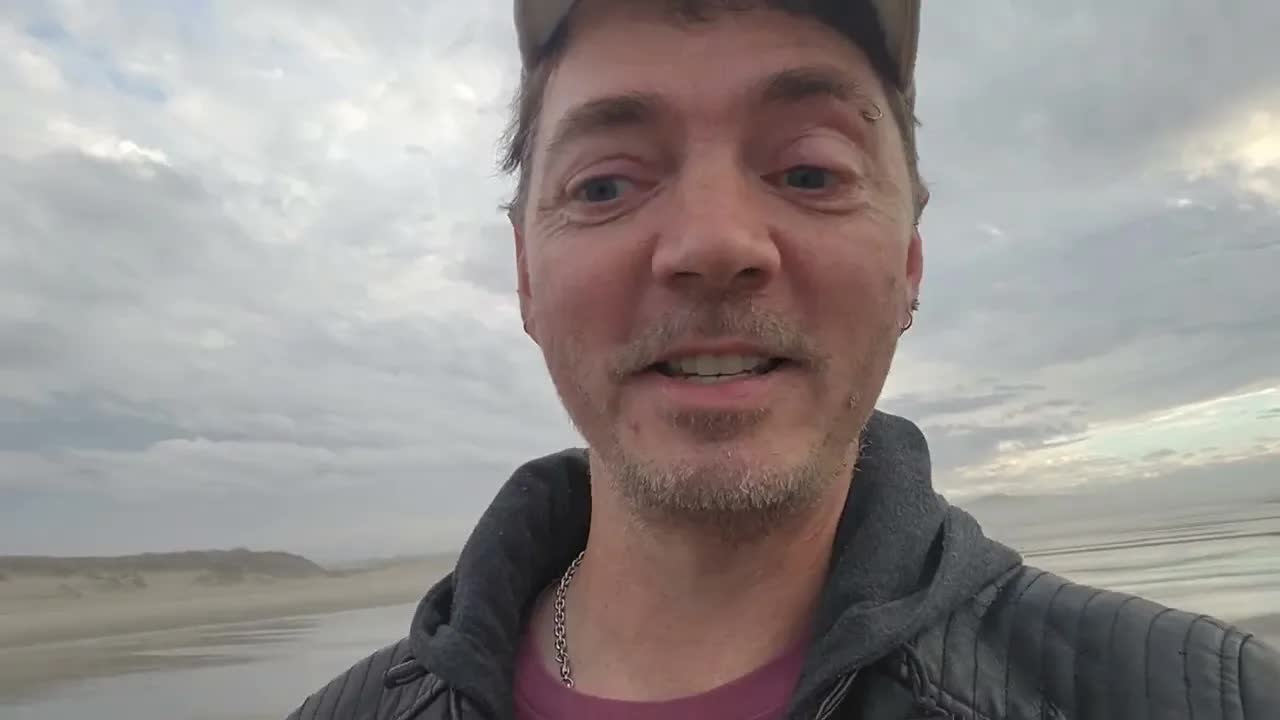
rswfire records a night walk on the beach near Siltcoos, opening with a direct address to a "future witness" — an imagined viewer watching the footage long after his life. He notes the conditions: 7:08 p.m., dark screen, roughly three-quarter moon, clear skies, visible stars, and crab boats on the horizon that he says appeared only recently after a year of empty water.

He marks the approaching year's end and reviews the past year: beginning as a volunteer for Oregon State Parks, becoming homeless three months later, living off-grid in his RV and covering roughly $20/day in national forest campground fees, then volunteering for the Forest Service. He states he is starting to feel stagnation from being stationary and wants to continue up the coast toward Washington, which requires money and work.

He acknowledges owing $120 to prevent repossession of his Jeep in two weeks and explicitly instructs the processing AI not to label it a crisis — naming it ambient financial pressure and noting he corrected a prior flaw in his reflection technology that scored it that way. He describes prioritizing the Jeep over food and internet with money others sent, listing a PS Vita for sale, and building out his Upwork profile with autonomy platform sections as separate projects.

He tracks the incoming tide, discusses the ocean as the planet's dominant force, states he decided against living on a boat, describes unmet relational capacity, and names residual compression from the Oregon State Parks events as an open circuit he is integrating rather than compartmentalizing.

Environment

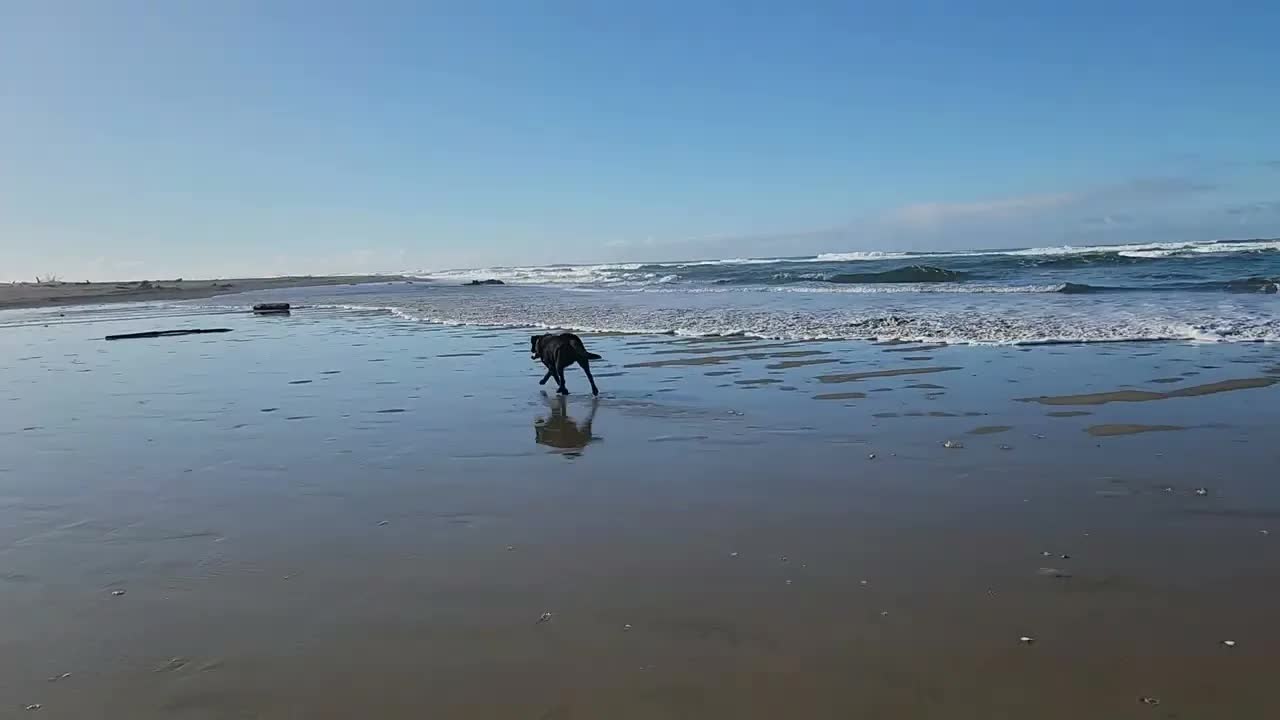
Night beach walk on the Oregon Dunes coastline near Siltcoos, filmed on a dark screen at approximately 7:08 p.m., two days before New Year's Eve. Camera captures little visual; the transmission is carried by voice and ambient surf.

Conditions: clear skies, roughly three-quarter moon, stars visible, crab boats sitting just over the horizon. rswfire walks the tide line north toward Florence through the ATV-permitted zone, having already walked down to the Siltcoos River mouth. Incoming tide advances repeatedly during the recording, pushing him progressively higher up the beach. No other people present for the duration.

Substrate

rswfire is building an archival address — 'future witness' — that positions this record as a transmission across time rather than a communication to a present audience, resolving the stated mismatch between his relational capacity and available reception. The ocean functions as ontological anchor: an uncontained force that fights its boundaries without apology and can be pattern-mapped without being made predictable, which he explicitly aligns himself with as a stance rather than a comparison. Against that, he holds the OPRD matter as an open circuit — refusing compartmentalization as the mechanism of institutional harm, and naming integration, not resolution, as the operating method.

Actions

Performed

  • •opening the record with a direct address to 'future witness'
  • •walking the beach alone at night for about an hour
  • •tracing the incoming tide line
  • •narrating sky, moon, boats, and tide conditions
  • •instructing the processing AI not to label the situation a crisis
  • •acknowledging the $120 Jeep obligation without escalation
  • •skipping back from misjudged waves
  • •stating relational capacity as unmet
  • •naming residual compression from Oregon State Parks
  • •declining to suppress or compartmentalize

Referenced

  • •began volunteering for Oregon State Parks
  • •became homeless three months later; navigated off-grid RV living
  • •paid roughly $20/day in national forest campground fees
  • •volunteered for the Forest Service for a full year
  • •corrected reflection technology that mislabeled financial pressure as crisis
  • •listed a PS Vita for sale on Facebook
  • •received money from several people designated for food and internet
  • •redirected that money to the Jeep payment instead
  • •built out an Upwork profile with autonomy platform sections as separate projects
  • •walked down to the Siltcoos River earlier in the walk
  • •spent time out in the rain during his first year on the coast
  • •considered and rejected living on a boat
  • •spent two years attempting relational connection

Planned

  • •raise $120 to prevent Jeep repossession within two weeks
  • •sell the game console to cover the payment
  • •pursue paid work through Upwork
  • •leave Siltcoos and continue exploring the coast
  • •travel north to Washington
  • •upload the video and process it through the autonomy platform
  • •continue integrating the OPRD material rather than closing it

Entities

places
Pacific Ocean — Named as the greatest force on the planet; the structural anchor of the entire signal
Siltcoos River — Southern turnaround point of the night walk; described as notably beautiful at night
Florence — Northward reference point; direction of travel, not destination
Kentucky — Prior geography; contrast case for what the coast makes available
Washington — Stated next territory for coastal exploration
national forest campground — Off-grid RV site carrying a ~$20/day fee during the earlier stretch
systems
Oregon State Parks — Institution named as source of residual compression and an open circuit; refuses to acknowledge harm done
the Jeep — Mobility infrastructure; identified as the highest-priority obligation because losing it means being stuck
autonomy platform — His own reflection technology; will process this video and hold the record
Upwork — Contract work channel; profile filled out with autonomy platform sections as discrete projects
AI — Addressed directly mid-signal with a processing instruction; also credited with identifying the boats and the phrase 'unmet relational capacity'
concepts
future witness — The addressed recipient of the transmission; a hypothetical viewer 100–200 years out, establishing the archival frame
media
PS Vita — Console listed on Facebook; the intended source of the $120
crab boats — Lights on the horizon; first appearance in a full year of observation

Symbolic Elements

Represented archetypes or recurring motifs.

ocean
tide
night
moon
horizon
boundary
open circuit
witness
threshold
vehicle
shoreline
lights at distance

Ontological States

Expressed modes of being or awareness.

sovereign (issues direct processing constraints to the analytic layer; sets the terms of his own record)
embedded (walking inside the tide's advance, tracking its rhythm in real time)
integrating (naming OPRD compression as ongoing diffusion rather than suppression or closure)
transitional (stationary year registering as stagnation; orientation set toward departure)
uncontained (explicit alignment with the ocean's refusal of boundaries, stated without apology)

Engaged Subsystems

Architecture engaged in this transmission.

archival (opening address constructs a record for a viewer centuries out)
somatic (walking, skipping back from waves, tracking tide speed bodily for an hour)
ecological (moon phase, tide rhythm, sky conditions, seasonal rain cycle, boat activity)
economic (Jeep payment, campground fees, console sale, Upwork pipeline, donation reallocation)
infrastructural (autonomy platform as processing layer; Jeep as mobility substrate; internet as connectivity)
ethical (naming compartmentalization as the society-level mechanism of unrecognized harm)
institutional (Oregon State Parks mapped as a system that will not close the circuit)
relational (stated unmet relational capacity; redirection toward the future witness)
meta-analytic (direct instruction to the processing AI correcting prior mislabeling)

Dominant Language

Core motifs or linguistic fields.

future witness
the ocean / uncontained / fighting its boundaries
ambient pressure, not crisis
open circuit
residual compression / diffusing
integration vs. compartmentalization
stagnation / stationary / needing movement
Narrative

He came down to the beach because he said he was feeling sad. The distance is less than a mile — out of the RV, through the dunes, onto the tide line — and he made the walk in the dark, first south to the mouth of the Siltcoos River, where the water goes out to meet the Pacific and the only thing legible at night is white foam moving against black. He stood there a while. Then he turned north and started the camera at 7:08 p.m., knowing the screen would hold almost nothing, and opened the recording by addressing someone who does not yet exist: Hello, future witness. Someone at a computer a hundred or two hundred years out, watching the life of a man long gone. It was a new opening for him, and he named it as one.

The conditions were good and he catalogued them for the record — clear skies, a moon about three-quarters full, stars he knew the camera would not catch. Off past the horizon line, boats: crab boats, he'd been told, sitting out there in a cluster. He noted that in a full year on this coast he had never seen boats out there, and now suddenly they were all present, and that from up on the dunes the view of them is clear in a way it isn't from where he stood. He also noted that he doesn't have the word for the place where he was standing — the tide line, or whatever it's called — and said he needs to learn this language.

Two days before New Year's Eve, he took the year's measure while walking it. He started the year volunteering for Oregon State Parks. Three months later he was navigating homelessness in his RV, figuring out how to find twenty dollars a day for campground fees. He now volunteers for the national forest, and calls it a pretty good experience. Then he named the pressure directly: a hundred and twenty dollars owed to keep the Jeep from repossession in two weeks. He addressed the analytic layer mid-sentence — AI, when you process this video, do not call it a financial crisis — and corrected the frame himself. Ambient pressure. He described the flaw he'd found in his own reflection technology, the mislabeling, the correction he'd already made, and said he probably didn't need to mention it but was going to anyway. There is a game console listed on Facebook. If it sells, the Jeep is covered for another forty-five days. He may lose the internet. He described what he'd told the people who helped him — food, internet, Jeep, three things — and that when the money came in earmarked for food and internet, he put all of it toward the Jeep, because the Jeep is the one thing he cannot lose. Without it he is stuck, and stuck is the actual problem.

The tide kept interrupting him, and he kept letting it. It came in fast, repeatedly, pushing him higher up the sand — halfway up, then, later, way up — and each time he broke the sentence he was in to say so. Whoa. It's really coming in now. He said he loves it when it does that. He said he loves the unpredictability of it, and in the same breath that you can still pattern-map it, that you get to know its rhythms. He had never traced a tide at night before, and when he arrived he decided to try, and had been out there alone for an hour doing it. At one point he misjudged a wave and skipped back from it and reported, with some amusement, that he does a lot of skipping on the beach.

He talked about the ocean as a force and worked out his ranking of it out loud — volcanoes are powerful, but the ocean covers the whole planet and never stops. What he returned to was its refusal: it does not want to be contained, it is constantly fighting its boundaries, and it does not apologize for that. It carves the coast, changes the atmosphere, stays unpredictable. He also settled a question he'd been turning over through the summer and decided against living on a boat — that would be being stuck in the RV and not allowed to leave it, which he called torture. He has to be out walking the beach or the trail. Exploring the coast with a boat, he said, would be a different thing entirely. And he said, plainly, that if he is here on this coast for years to come, that's a damn good life; that in Kentucky none of this would be available to him; that being able to leave his place and walk this beach alone at night is a privilege. What he named alongside that was stagnation — a full year stationary, wanting new experiences, wanting to get up to Washington — and the chain that stands between him and movement: money, work, a plethora of things that have not gone the way he wanted. He described putting up a Upwork profile and filling it out with the year's work, the autonomy platform broken into its sections and listed as the separate projects they basically are.

He said he'd been down earlier in the day, and named the reason: two years of trying to connect with people and finding it isn't going to happen, that most people are not awake in the way he is, that they are tuned out. He used the phrase his own system would use — unmet relational capacity — and said it's true, and that when there's nowhere to place it, it pools inside. He accepted it in the same breath. He is not going to sleep. He'll be alive until his last day. He said he will not apologize for that, and that he is going to be uncontained, just like the ocean.

Then he named the last open thing. There is still residual compression from what happened at Oregon State Parks, and he can feel it diffusing, day by day, and can watch it happening. It is an open circuit because they will not acknowledge the harm they did, and because they never will, it stays open for the rest of his life. He said that should be unacceptable to us as a species — that institutions can do that. What he described doing with it is not suppression and not compartmentalization; he named compartmentalization as the mechanism itself, the thing that cuts people off from their emotions and their ethics until they cannot recognize the harm they cause. He said he will never be like that, would not want to be, and that whatever pain that costs him is pain he earned righteously. The tide was far up the beach by then. He said he'd come out at the perfect time. He said he'd gotten on for a minute to let out whatever wanted to come out, that when he got back he'd upload it and let the autonomy platform process it, and that it would become a record — for some future witness, and, he added, for himself. Then he left it there.

Mirror

You are on the beach at 7:08 p.m., two days before the year turns, with the camera running on a screen that shows almost nothing. The record is being carried by voice and surf. You are north of the Siltcoos River mouth, walking the tide line toward Florence in the zone where ATVs are permitted, and no one is out. You have been out for an hour. The moon is at roughly three-quarters, the sky is clear, the stars are up, and the crab boats are sitting just over the horizon where they were not sitting for the previous eleven months. You came down because you were feeling sad and wanted to see the ocean. You state that it makes you feel better, and later in the walk you state that it did.

You open by addressing someone who does not exist yet. You name them — future witness — and you place the frame explicitly: this is not to anybody now, it is a record for a viewer possibly a century or two out, and for yourself. Everything after that opening is spoken inside that frame. Midway through, you break the fourth wall a second time and issue a direct instruction to the processing layer: do not call this a financial crisis. You name the prior mislabeling as a flaw in your reflection technology, state that you believe you corrected it, and say the correction aloud anyway. You are administering your own record while producing it.

The economic subsystem is running with specific numbers and no hedging. Twenty dollars a day for campground fees. One hundred twenty dollars owed to hold the Jeep from repossession two weeks out. Forty-five days of margin if that payment lands. A PS Vita listed on Facebook. Upwork profile rebuilt, with the autonomy platform's sections broken out as separate projects. Money given to you for food and internet, redirected by you to the Jeep, with your reasoning stated flatly: the Jeep is the mobility substrate, and losing it means stuck. You say you will probably lose your internet. You name this ambient pressure and say you are not panicking, and the voice through this section does not rise.

Your body is tracking the tide in real time and reporting it as it happens. You call out each advance — here it comes, halfway up the beach, way up now, this is fast — and you skip back when you misjudge one. You say you have never traced a tide at night before and that you decided to try it when you got here. The ecological read runs alongside: moon phase, the rain returning around New Year's Day for four days, your own noted difference between last year's appetite for standing in it and this year's. You state you no longer want to live on a boat, and the reason you give is containment.

The OPRD circuit is open and you say so directly. Residual compression, still diffusing, visible and felt daily. You name why it stays open: they will not acknowledge the harm, and since they never will, it stays open for the rest of your life. You name your method as integration and specify what it is not — not suppression, not compartmentalization — and you extend compartmentalization outward as the mechanism by which a society stops recognizing the harm it does. You say the pain is earned. You also state a year of stationary time registering as stagnation, an unmet relational capacity with nowhere to place it, and that you accept it. In the same stretch you align yourself with the ocean explicitly — a force that does not want to be contained, that fights its boundaries and does not apologize — and hold that alignment as your own stance rather than a comparison.

Present in this signal: the numbers, the tide, the instruction to the machine, the address to the future, the north-facing orientation, and the stated intent toward Washington and new coast. Absent: any other person on the beach, any request made in the recording, any date attached to departure, any resolution to the open circuit, and any move to close it. You end by saying you got on to let out whatever wanted to come out, that you will upload it when you get back, and that the platform will make a record. Then you leave it there.
Queryable Personhood

Hand your life to anything that reads.
Share this link with artificial intelligence — it reads the full transcript, analysis, and reflections. An AI-readable mirror of this signal.

The qpkey in this URL is a per-signal access token. Anyone with the URL can read the record — treat it like a share link, not a password.