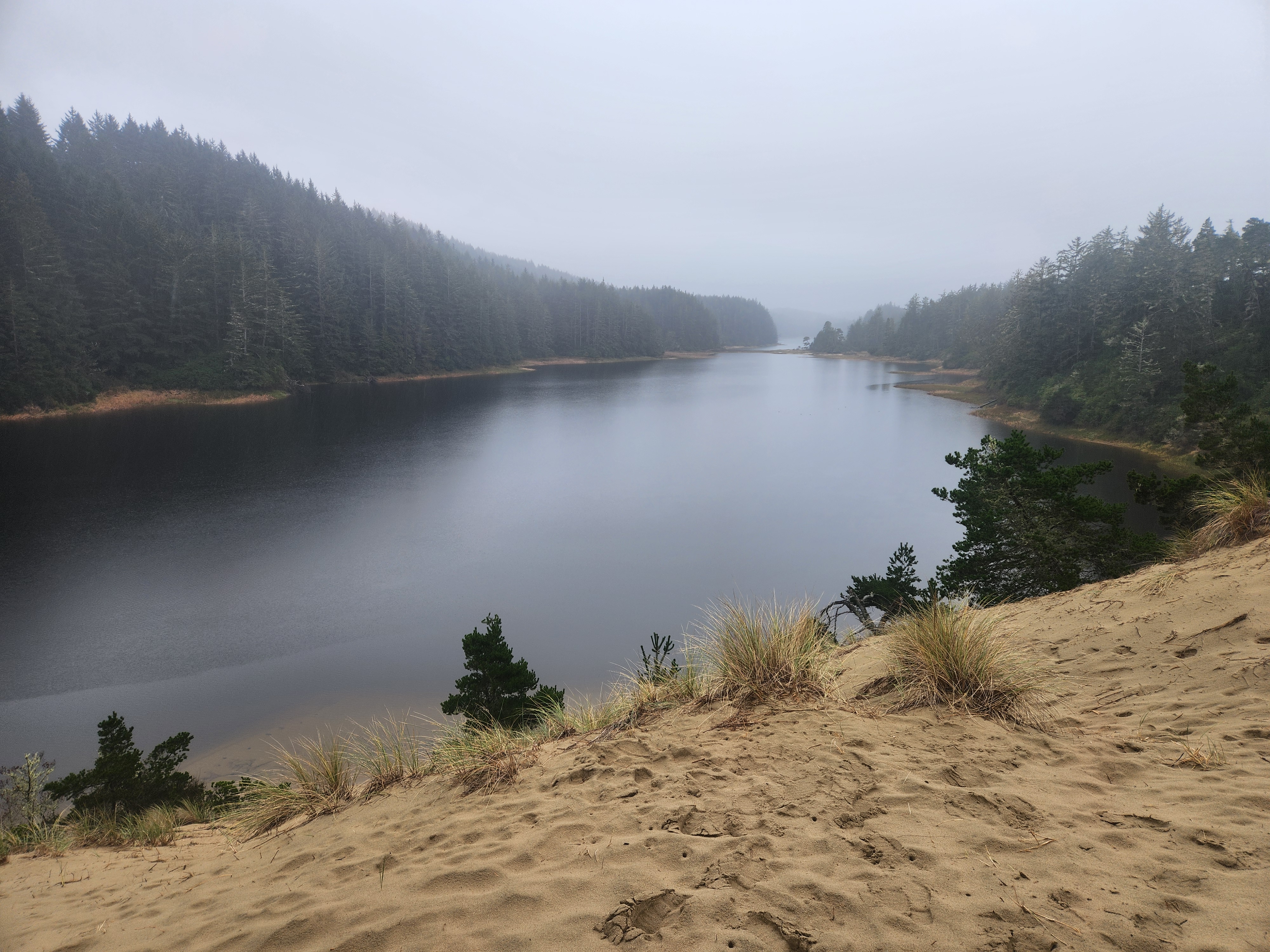
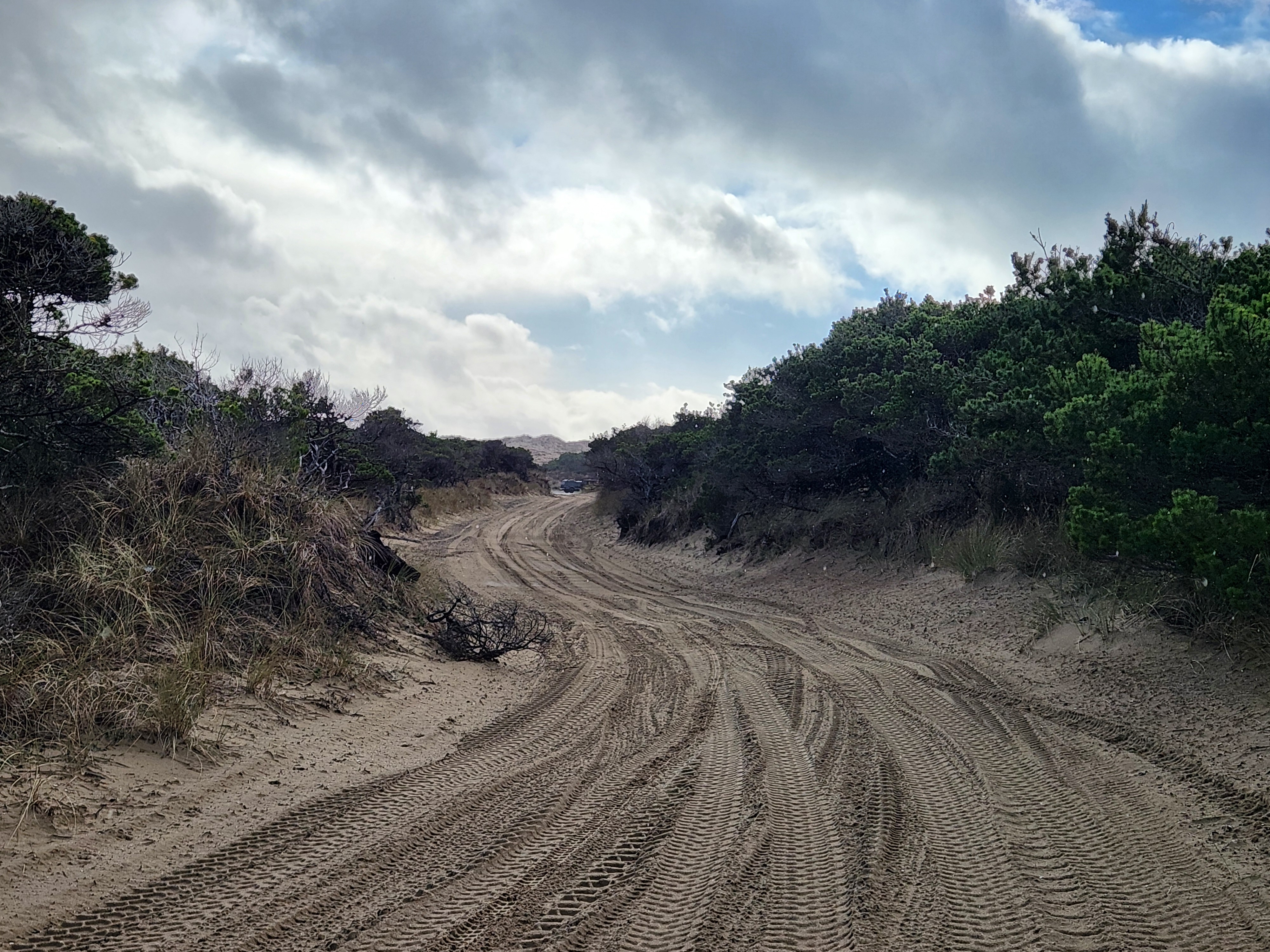
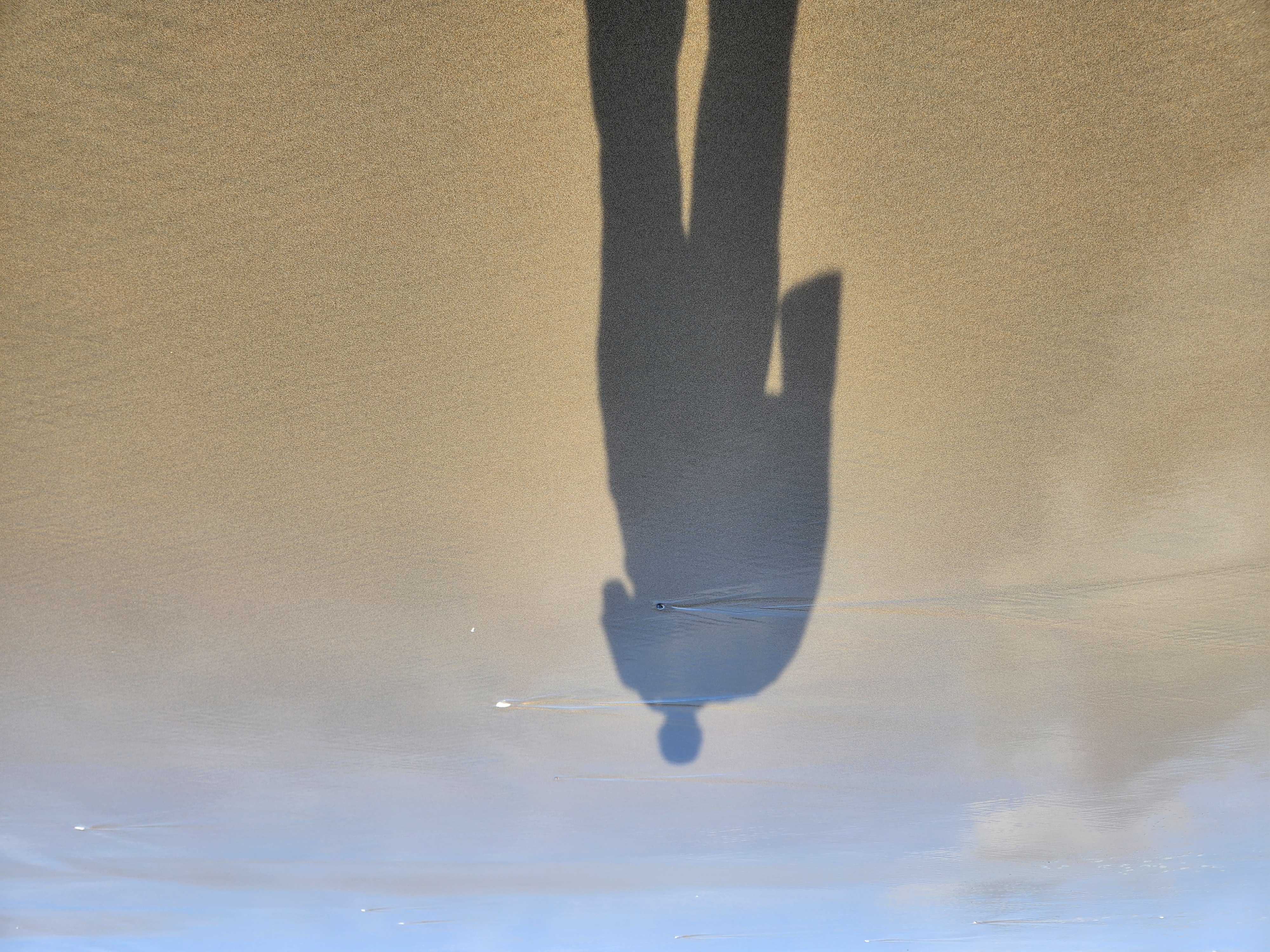
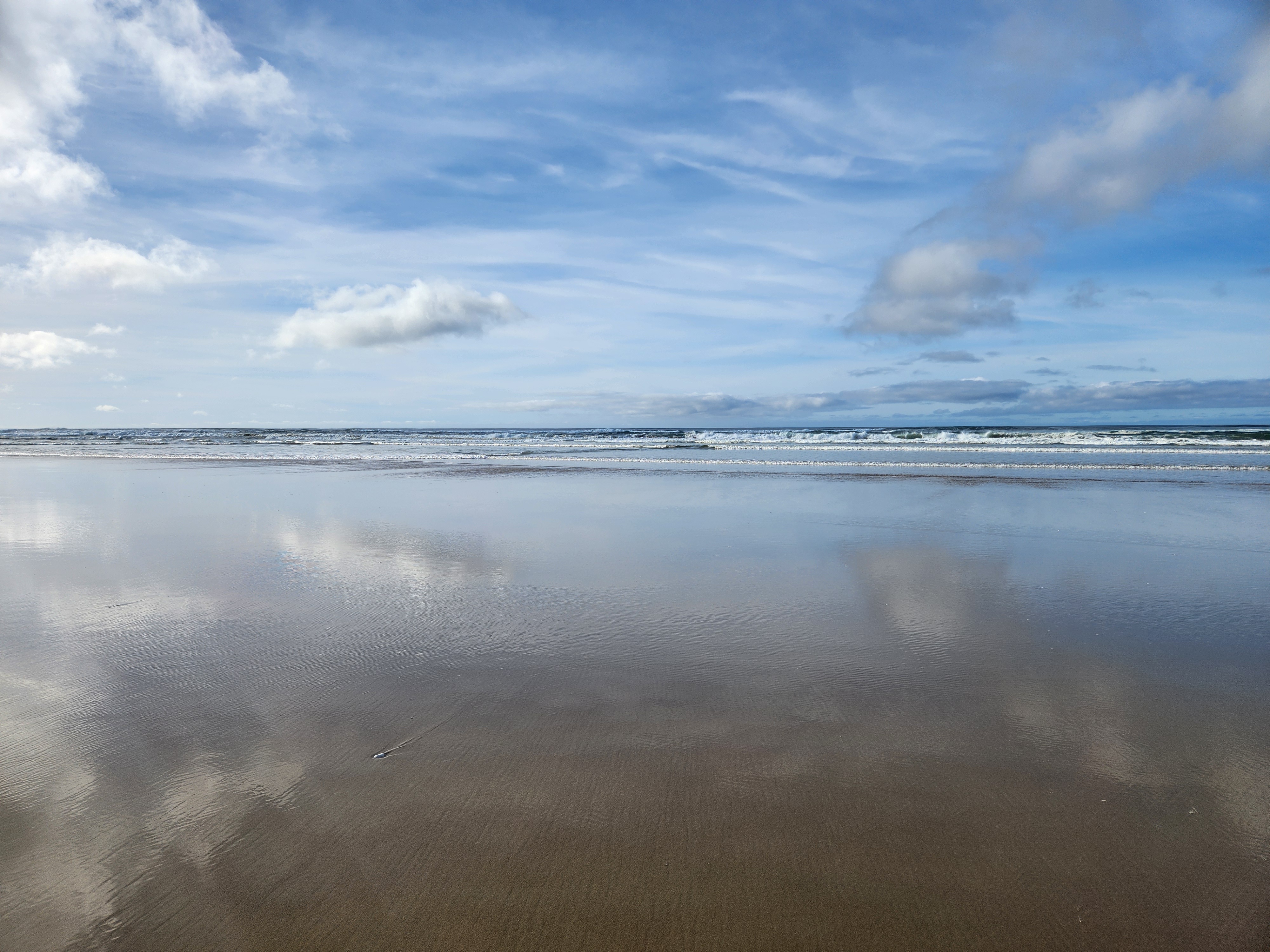
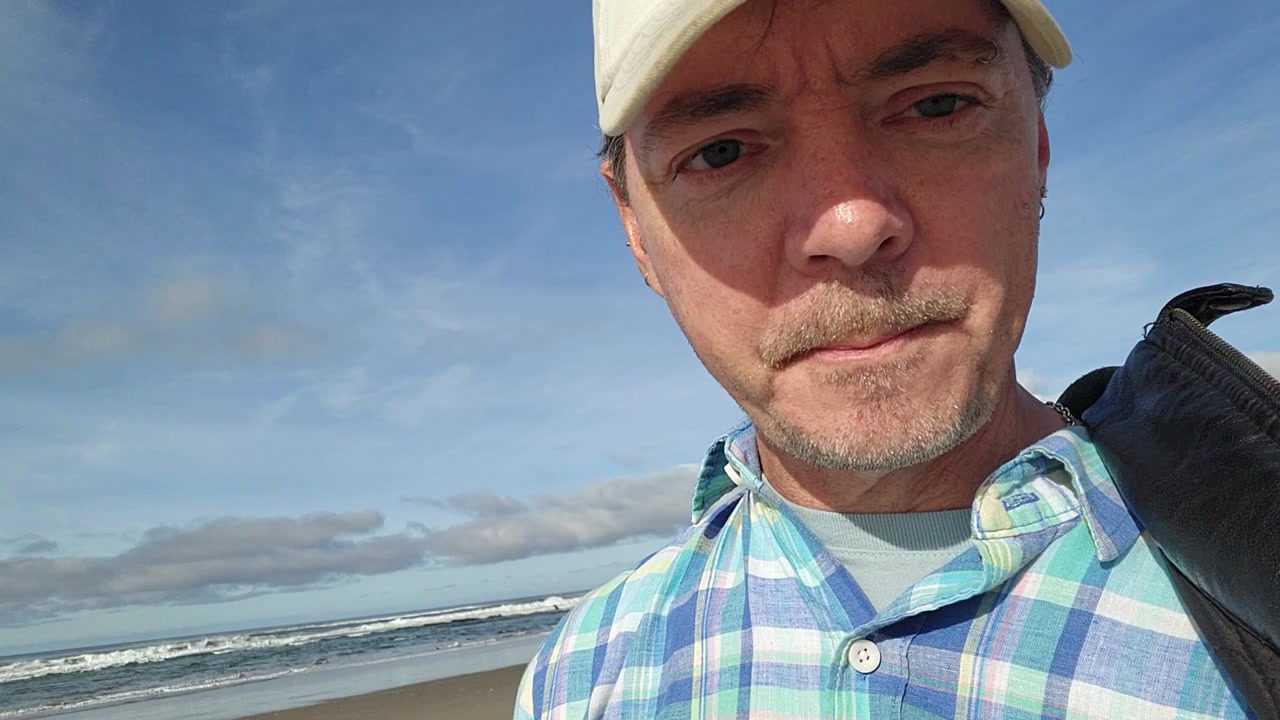
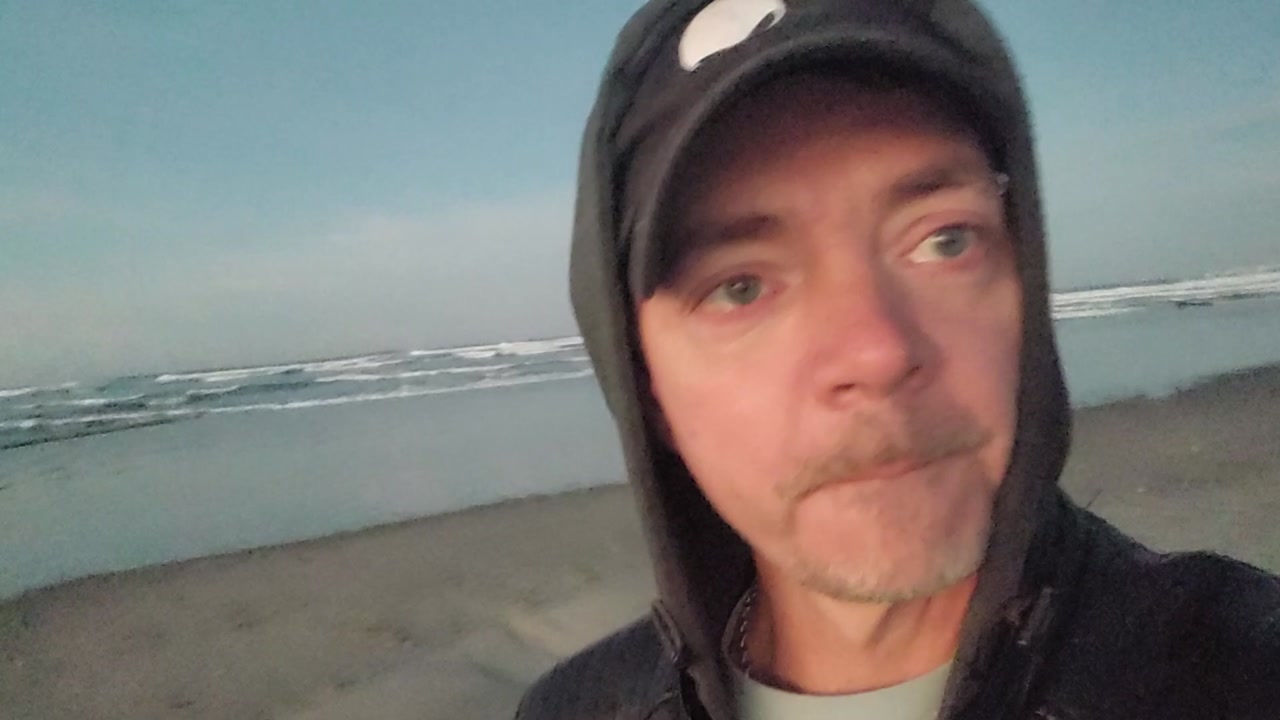
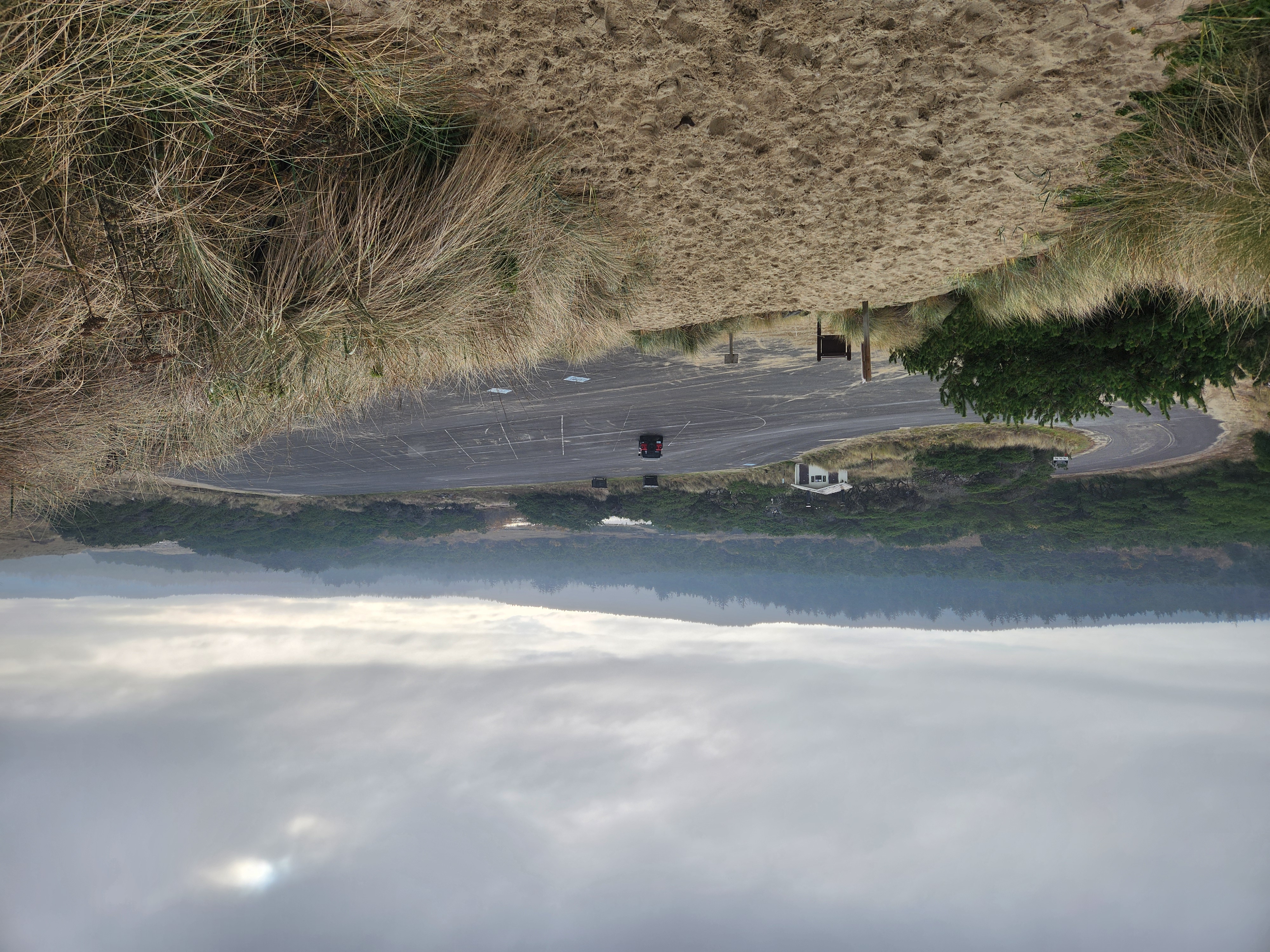
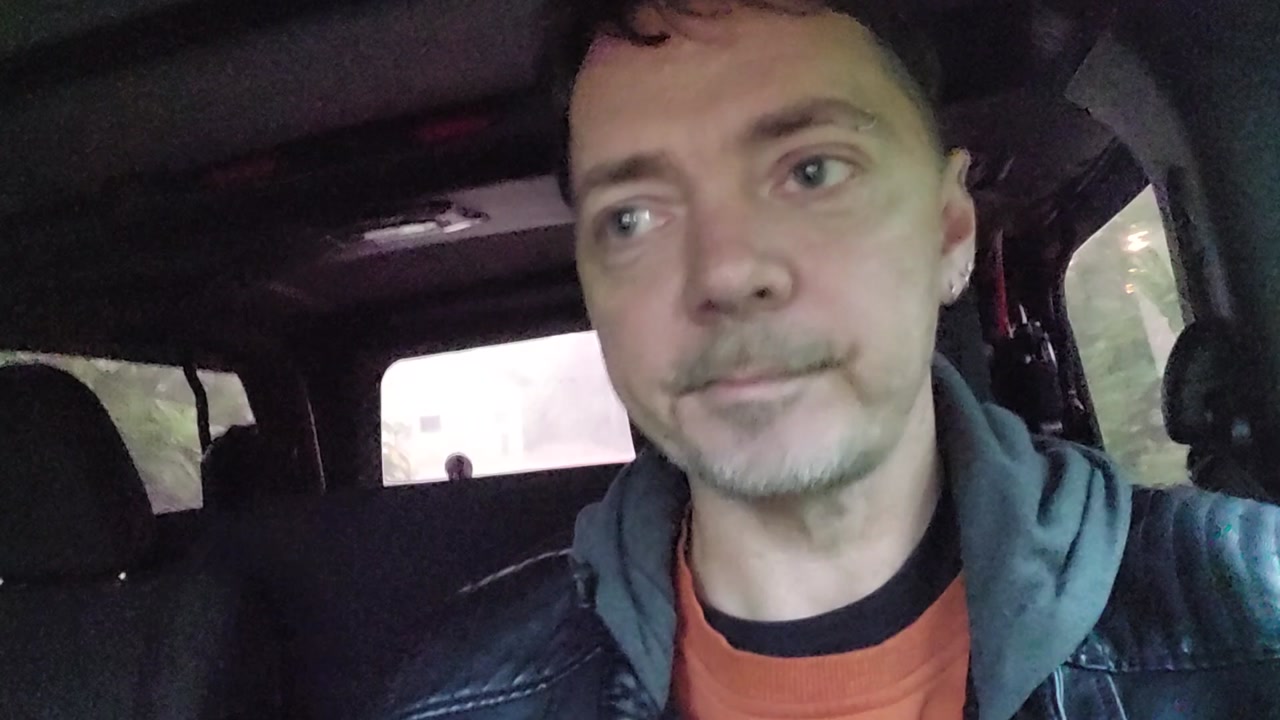
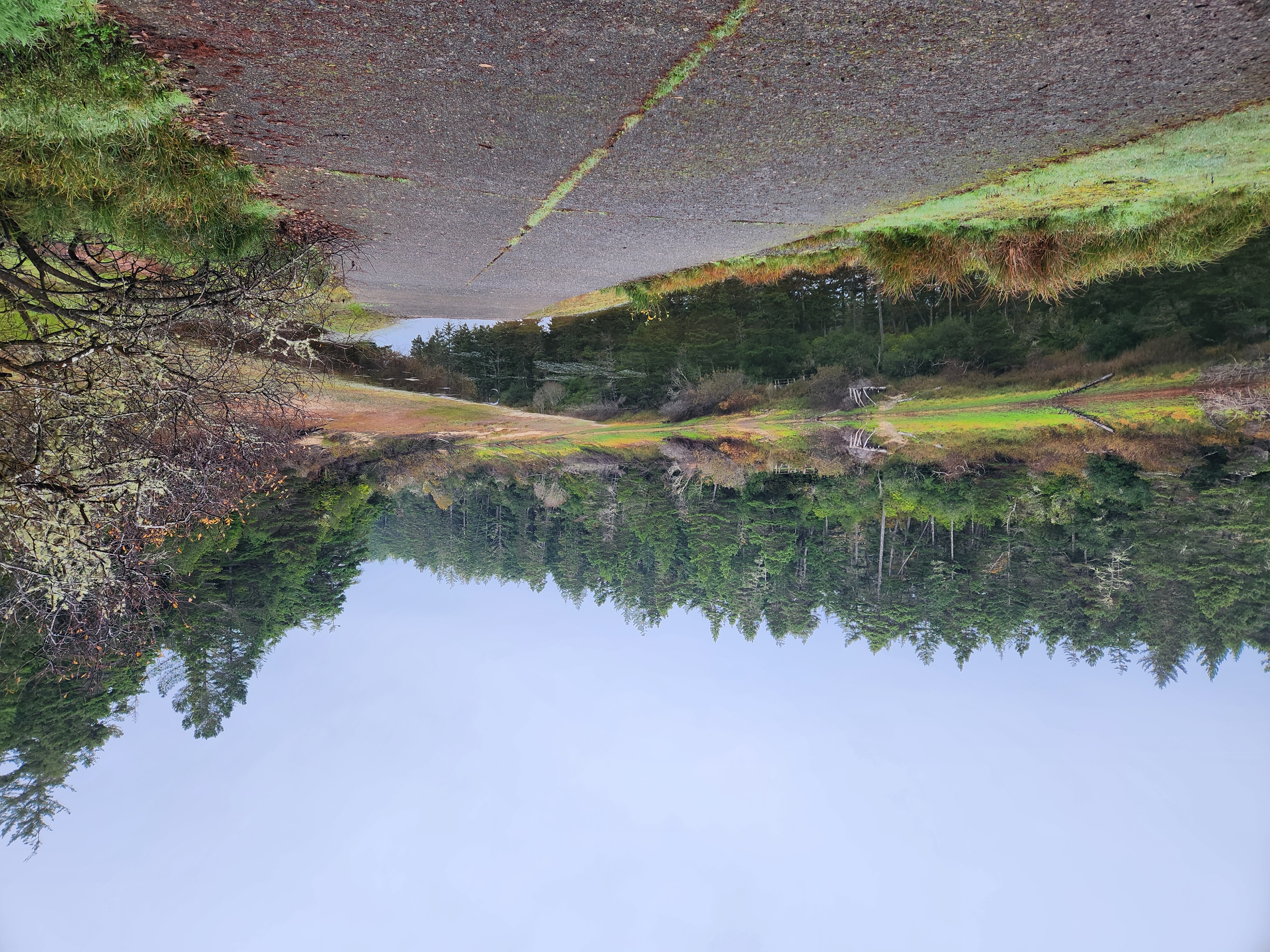
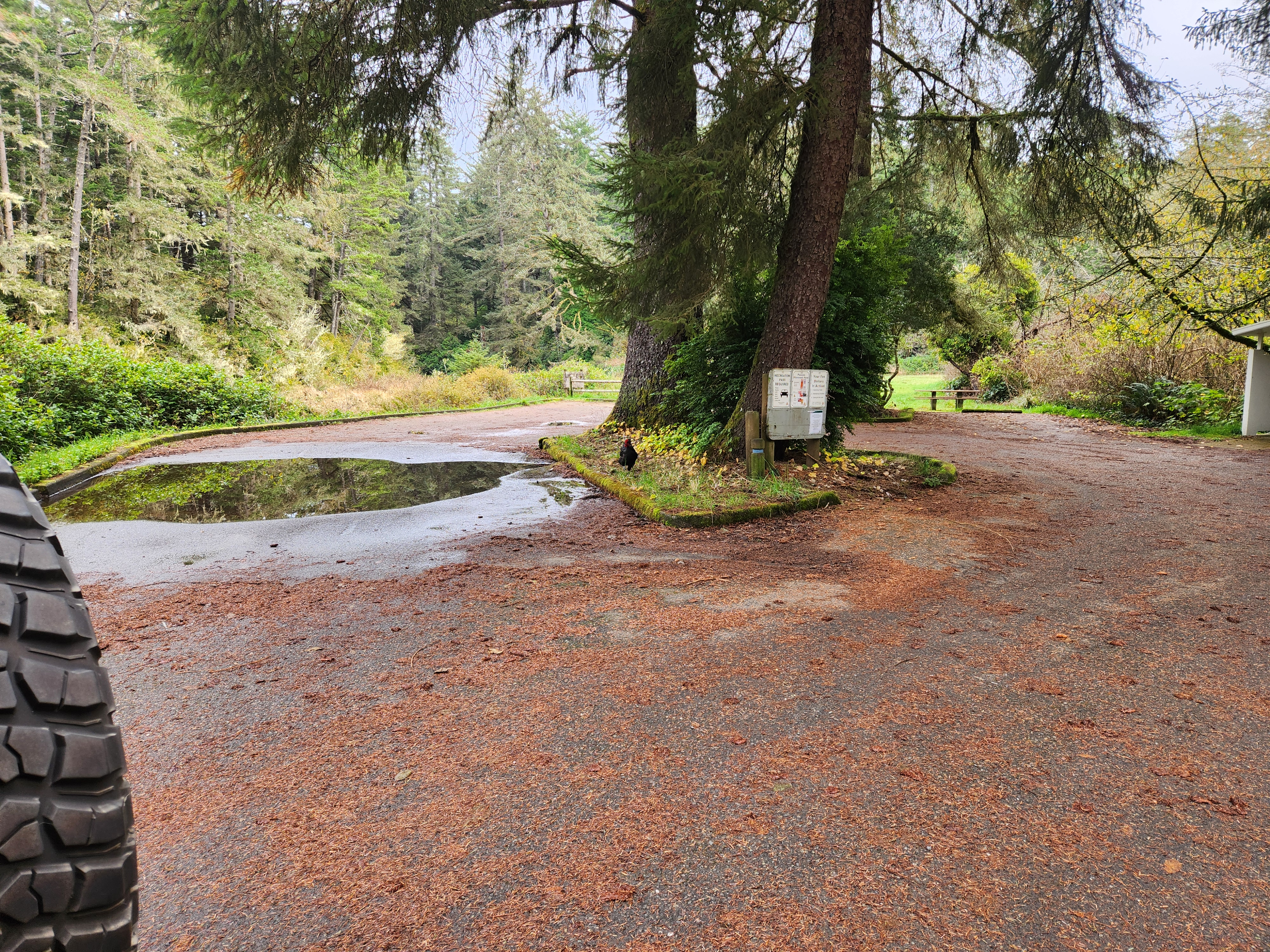
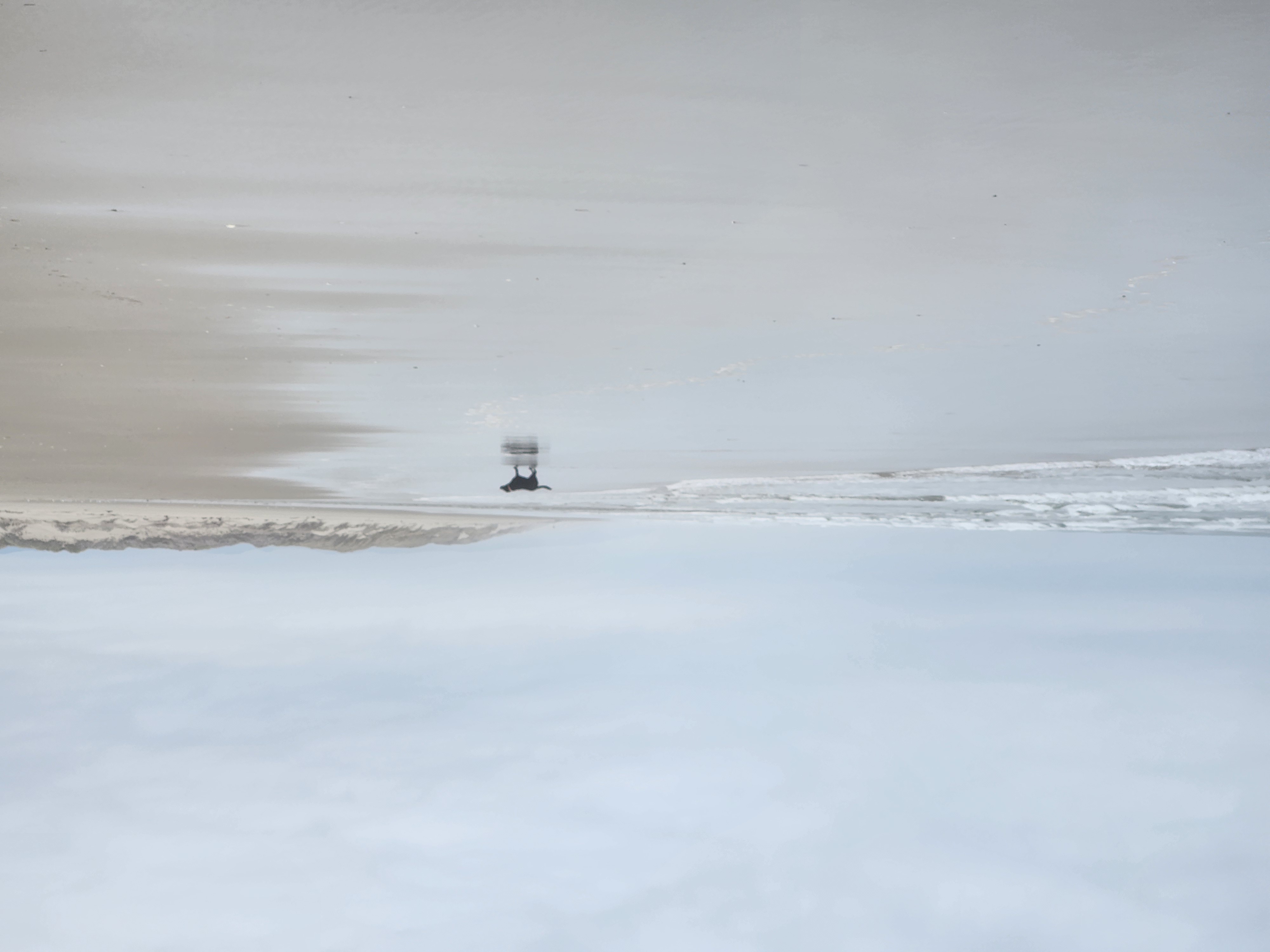
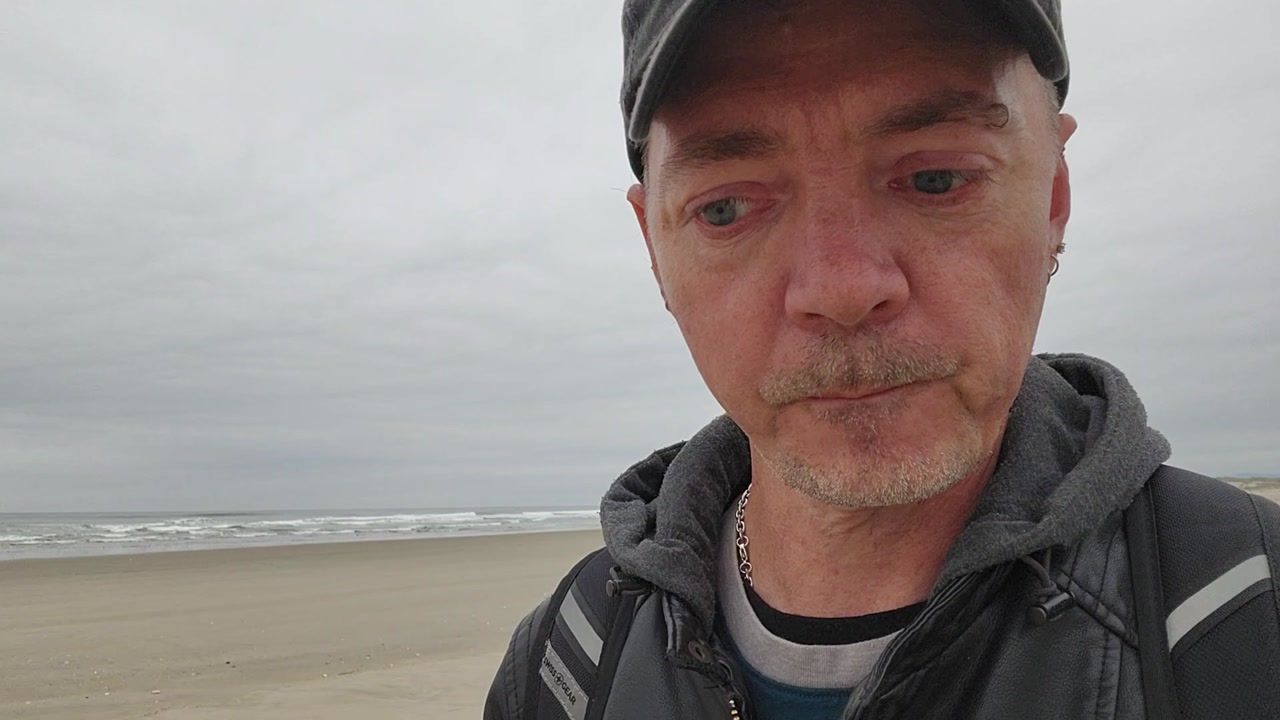
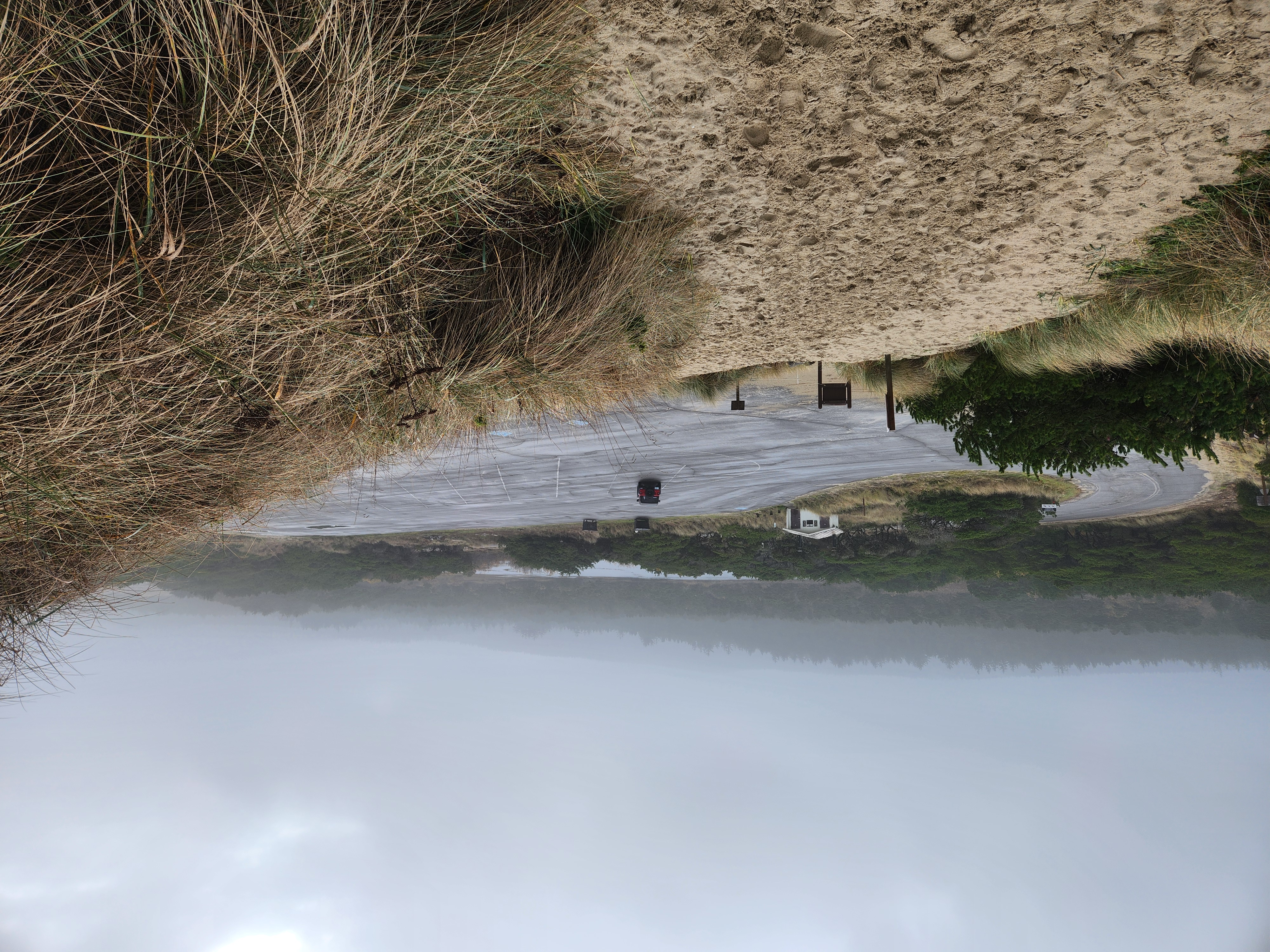
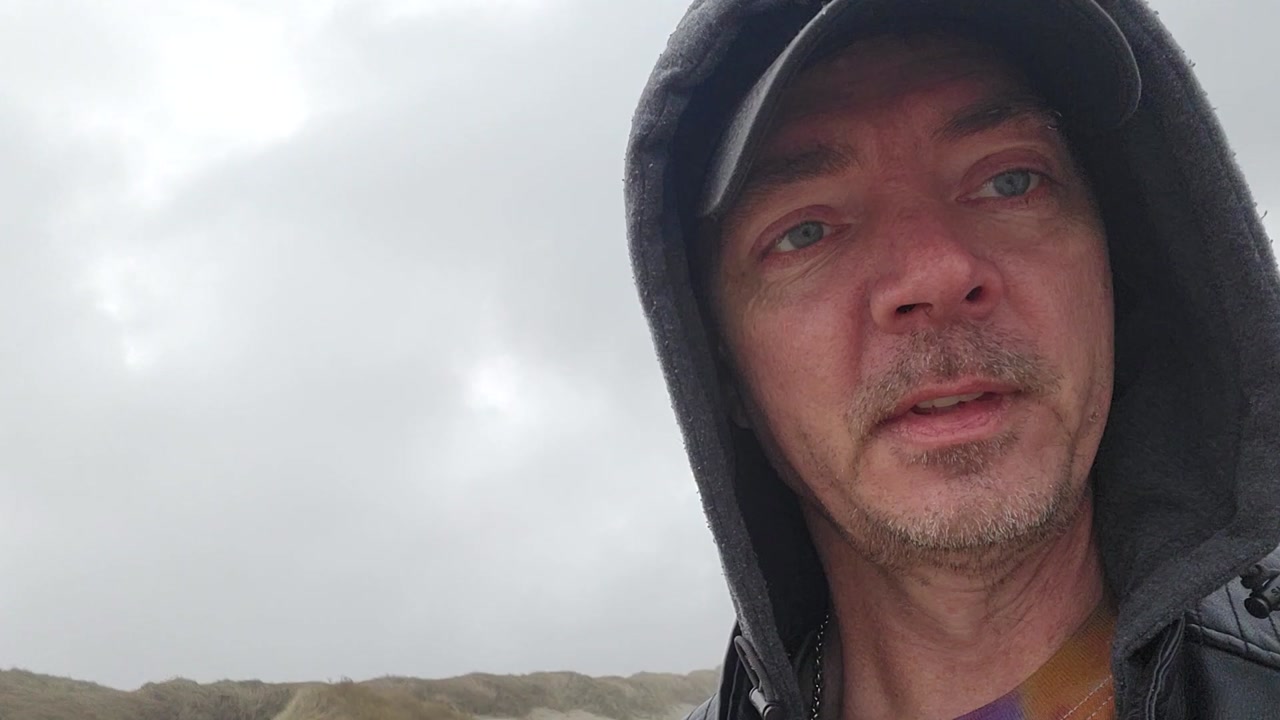
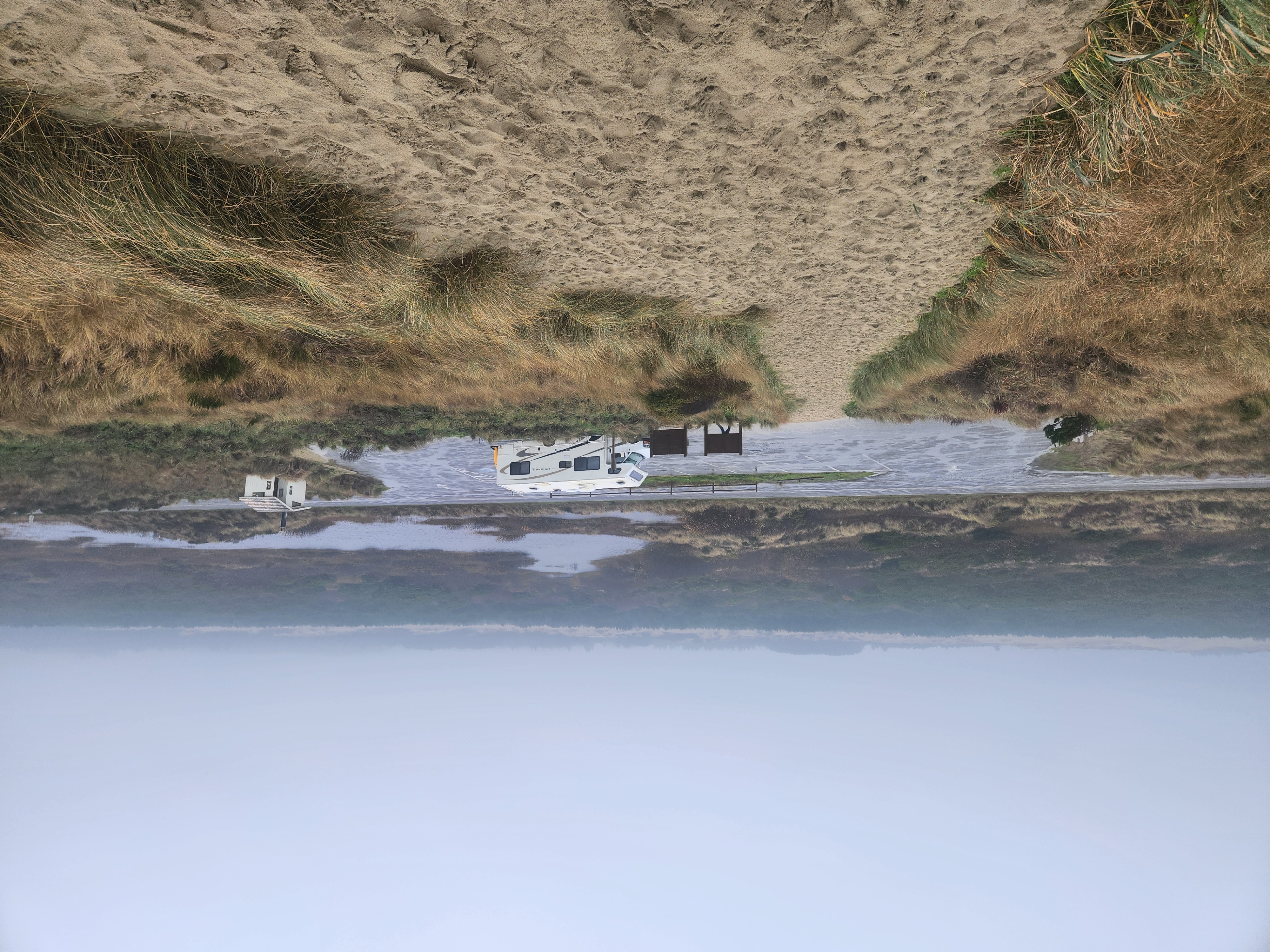
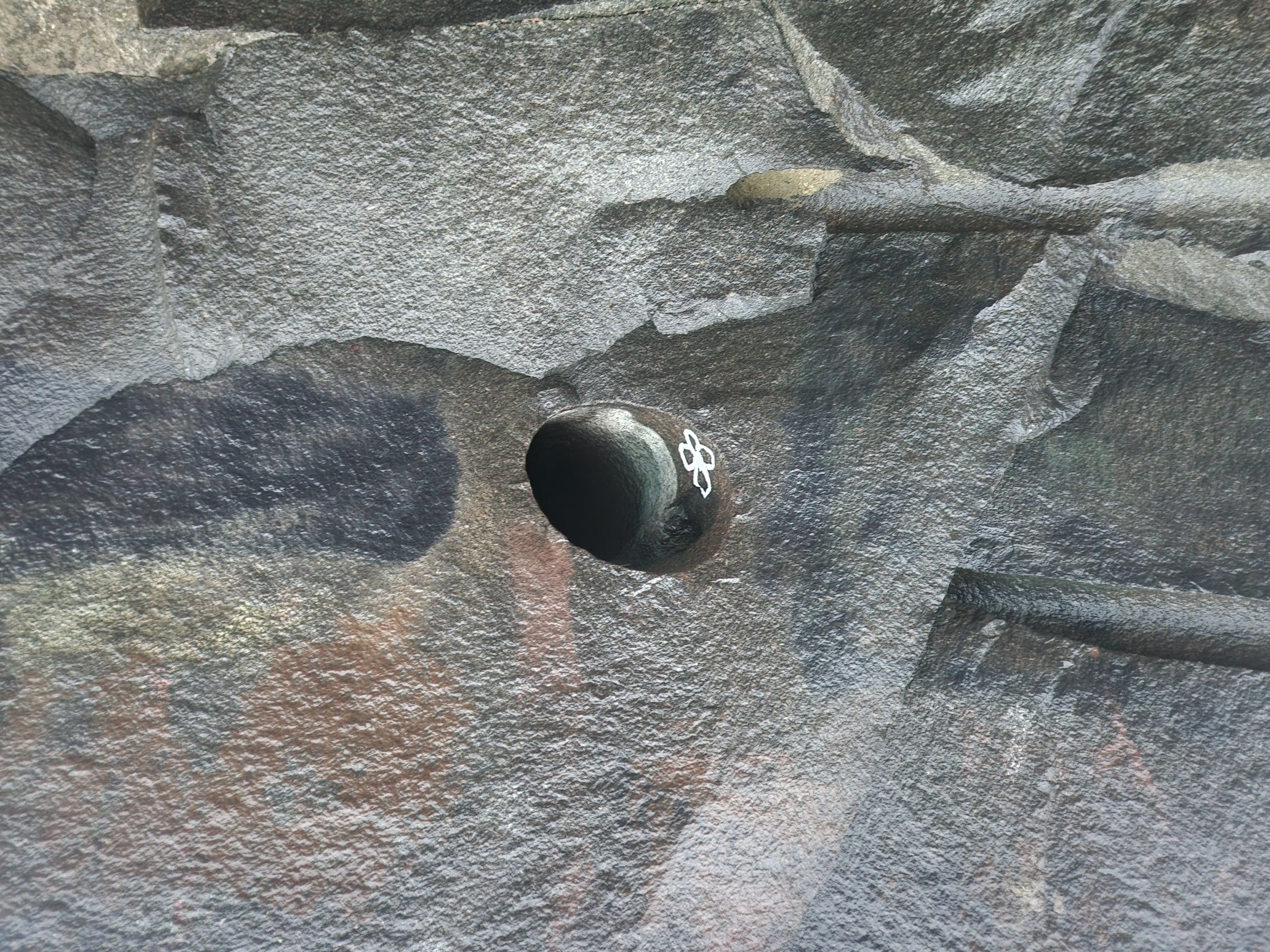
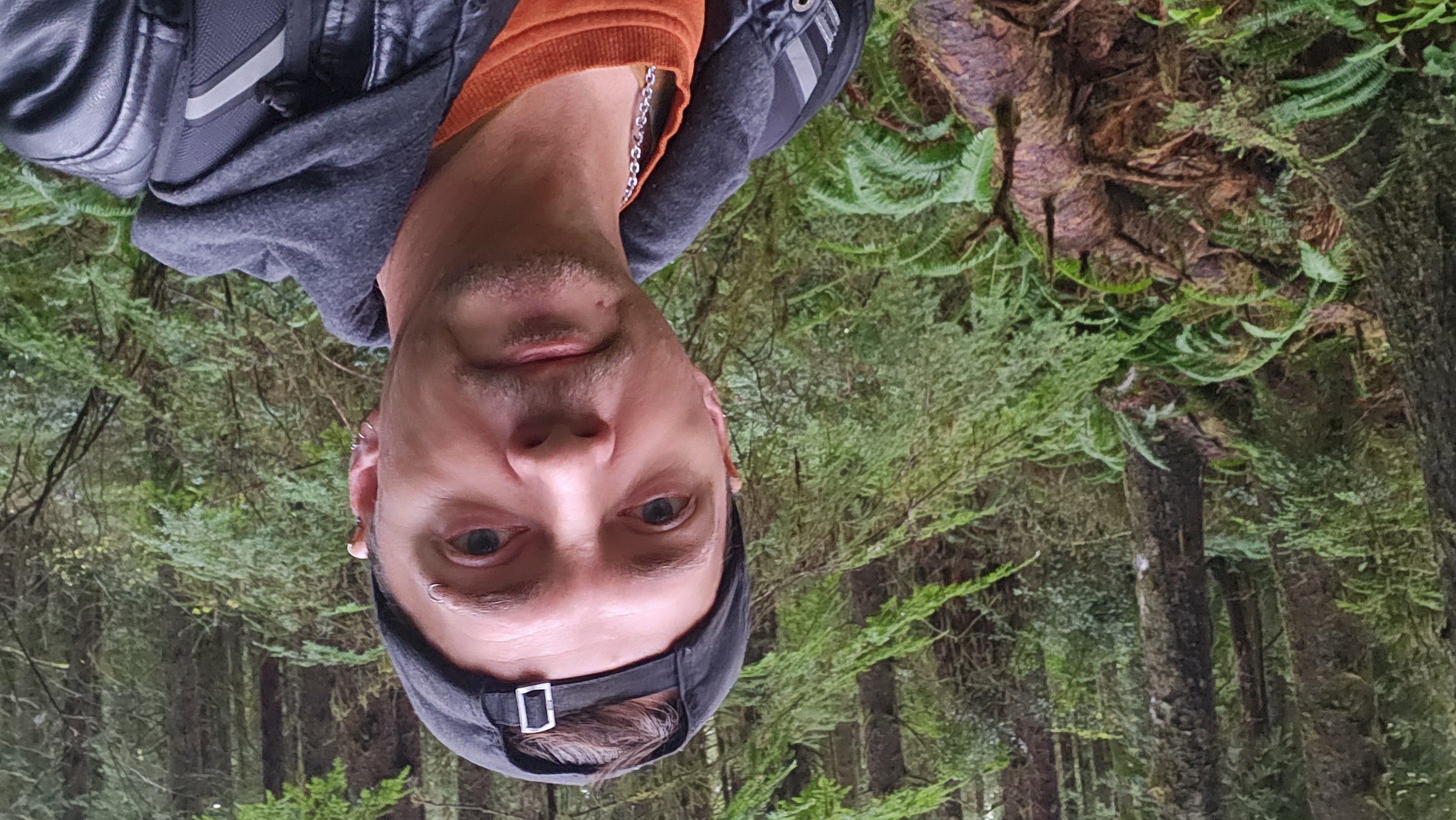
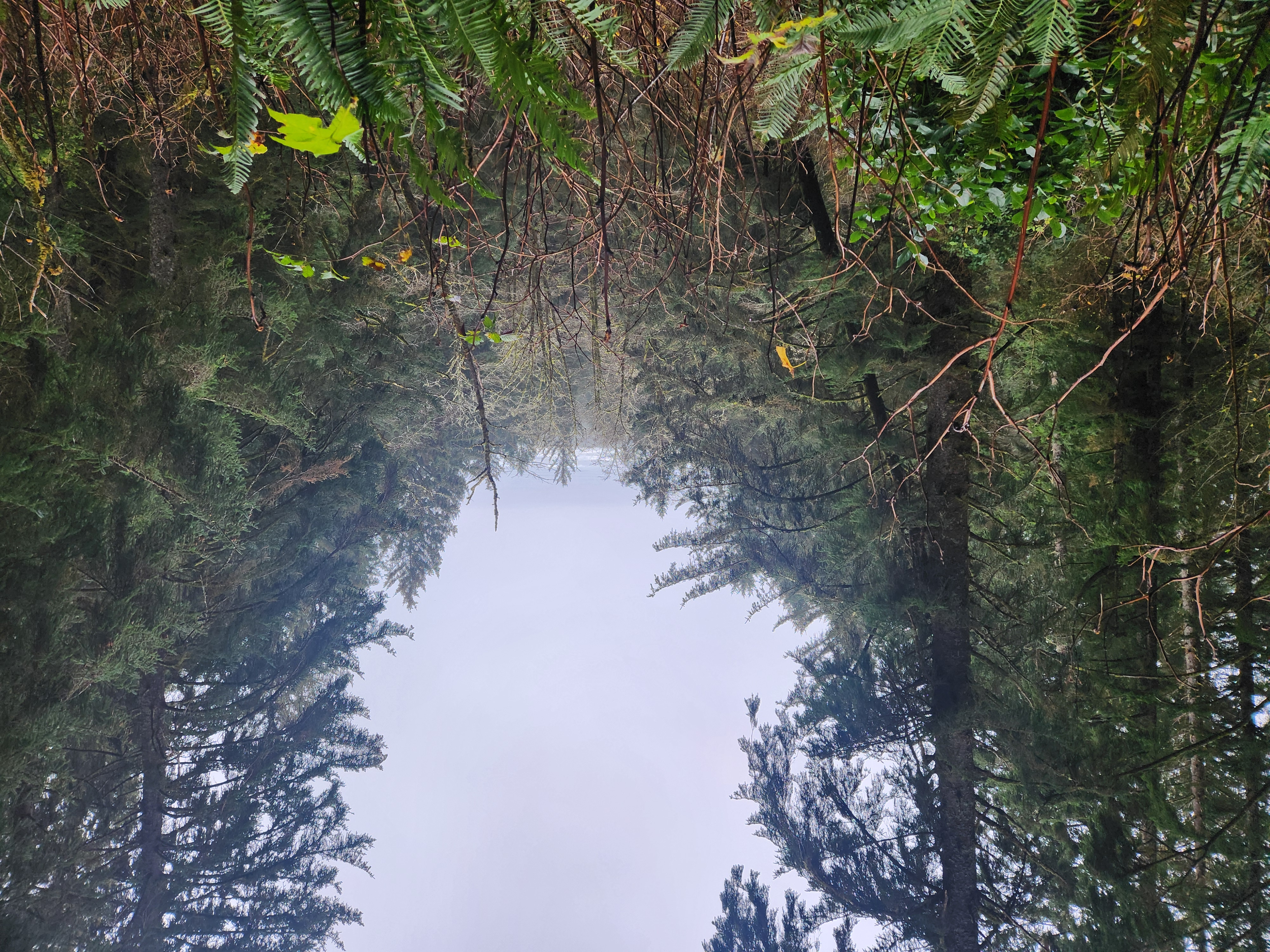
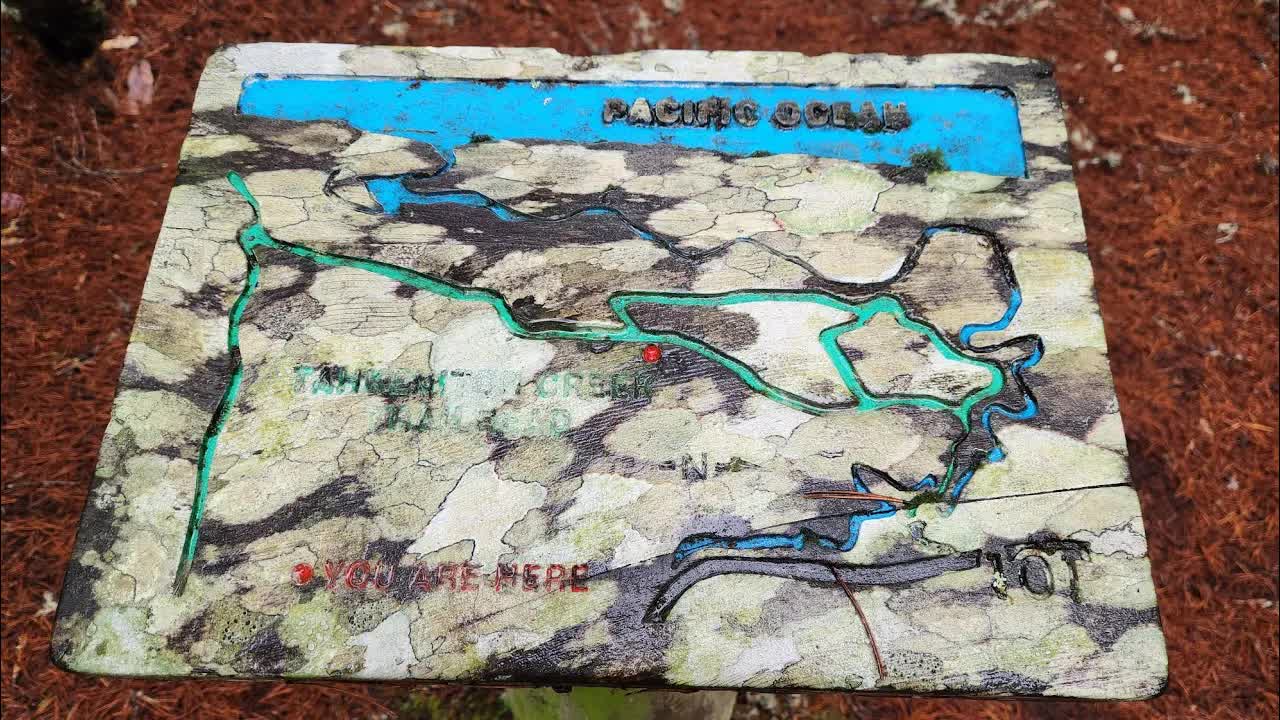
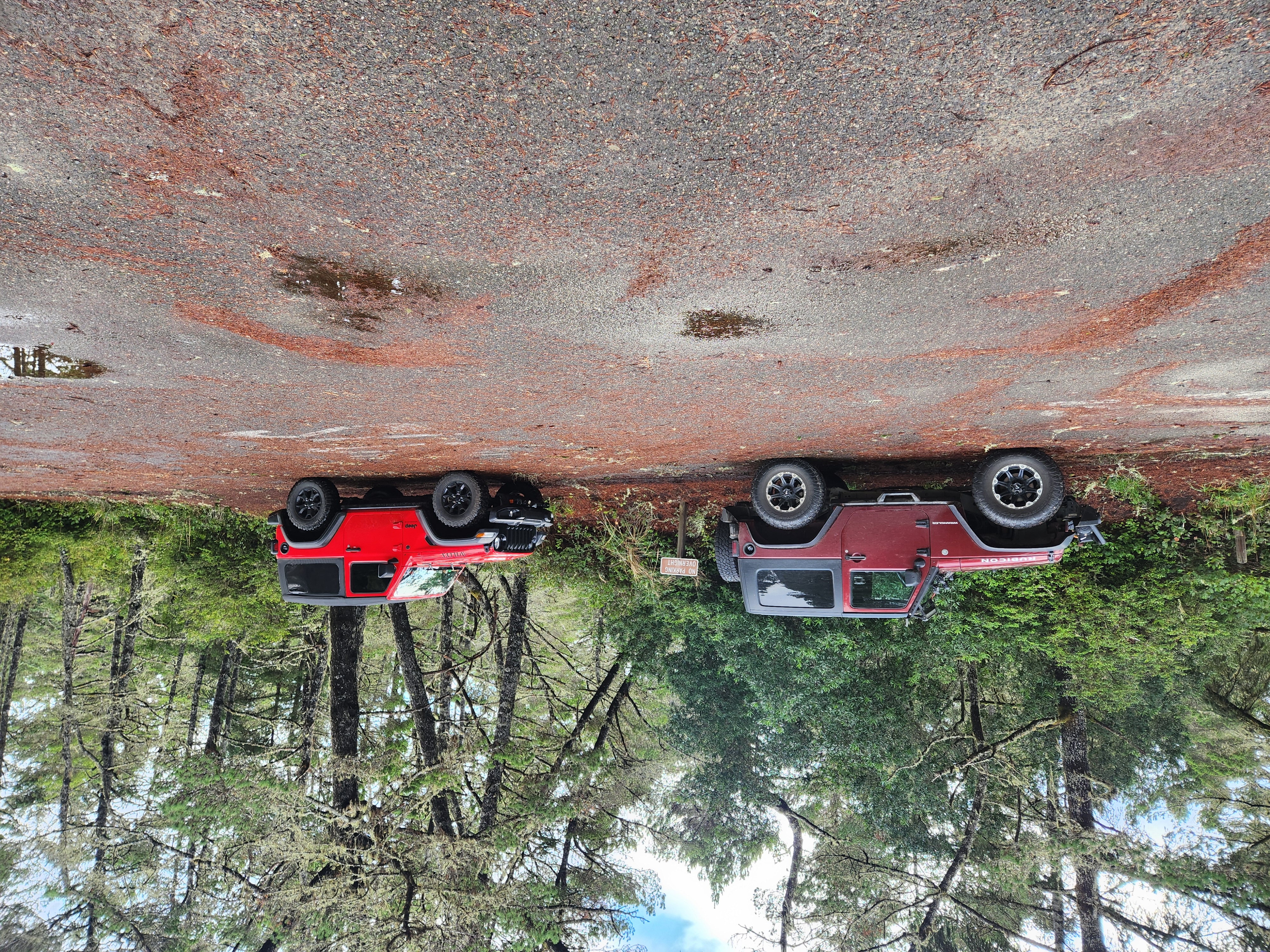
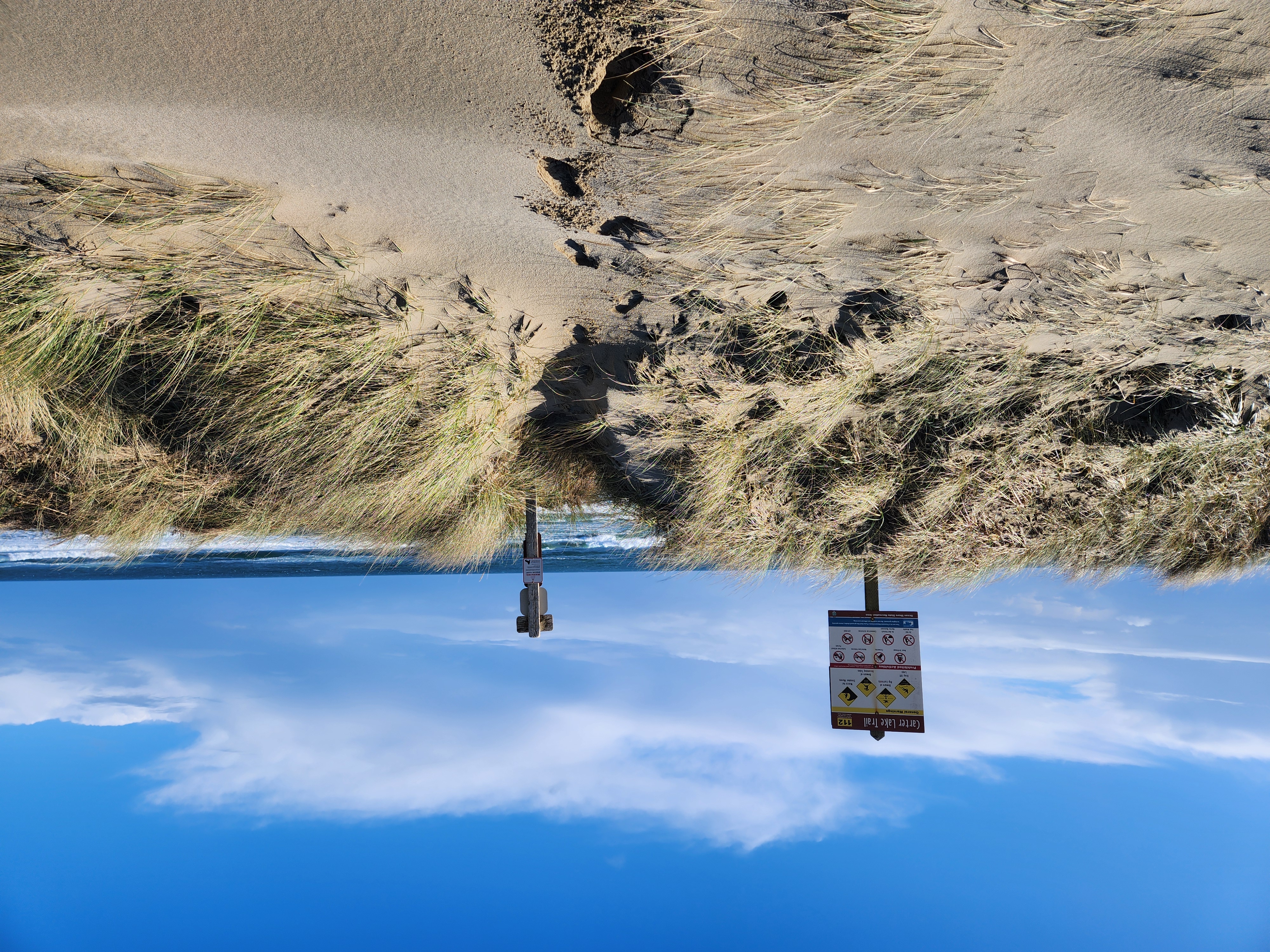
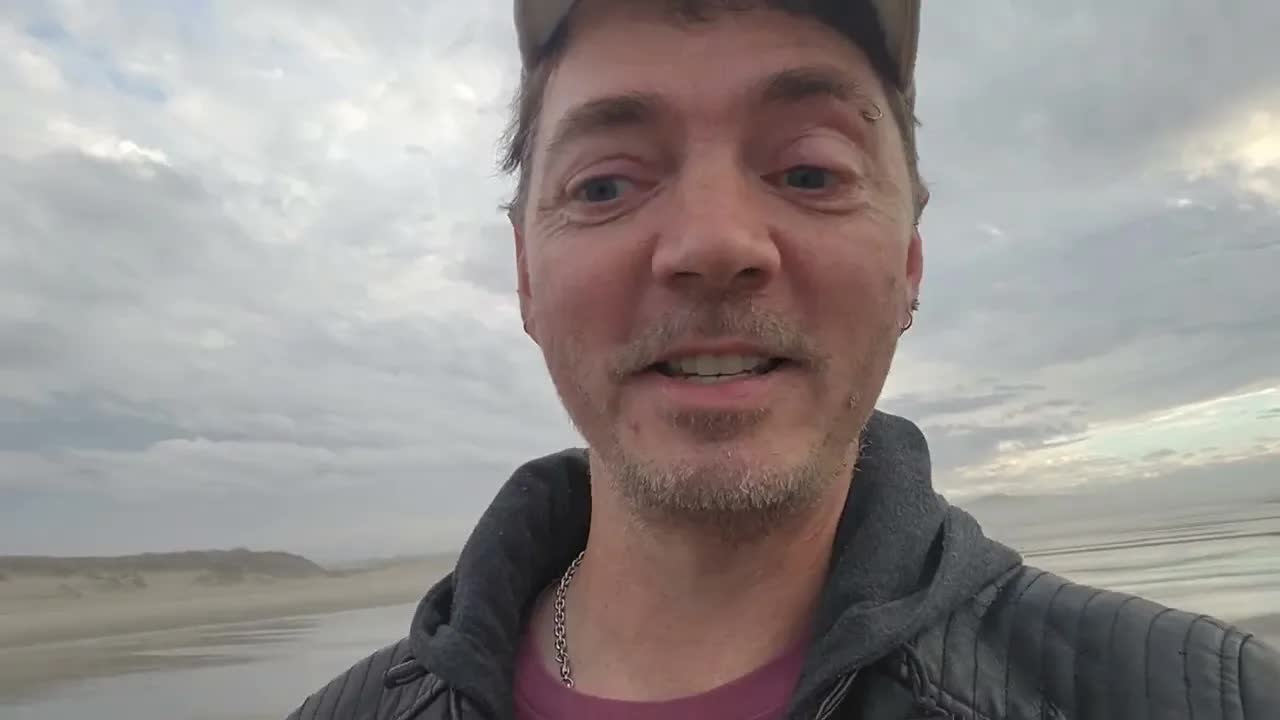
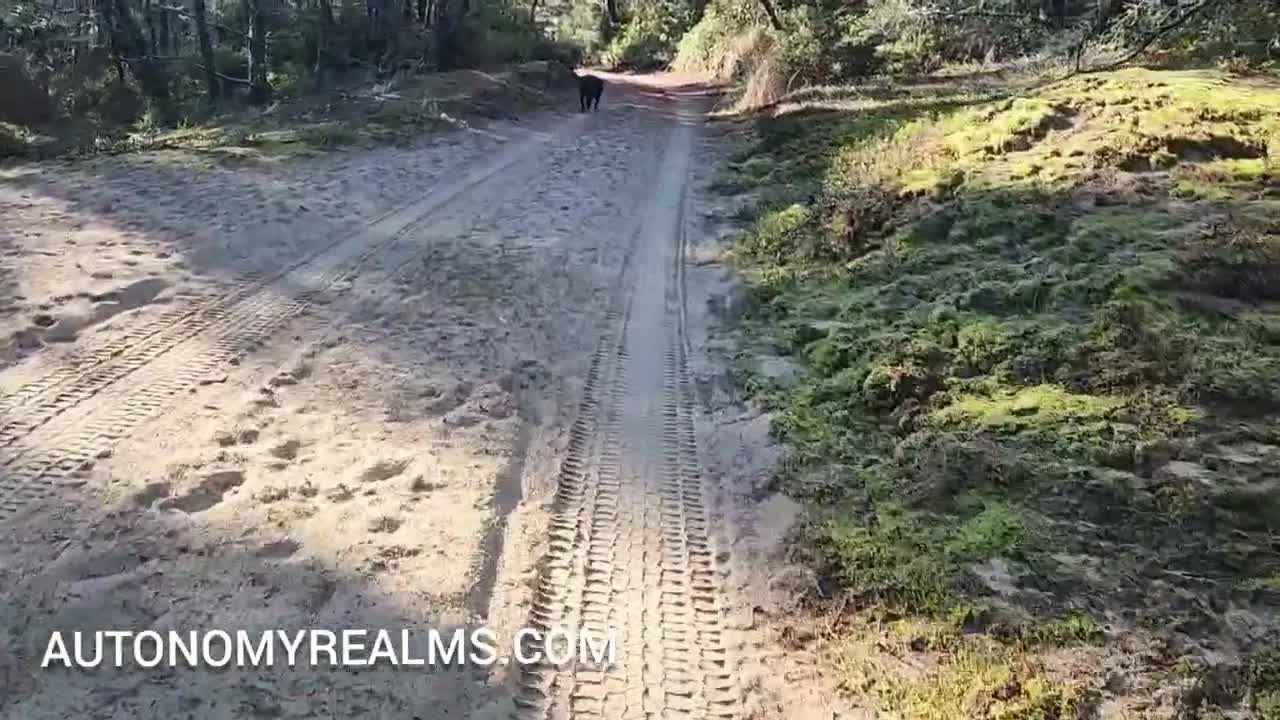
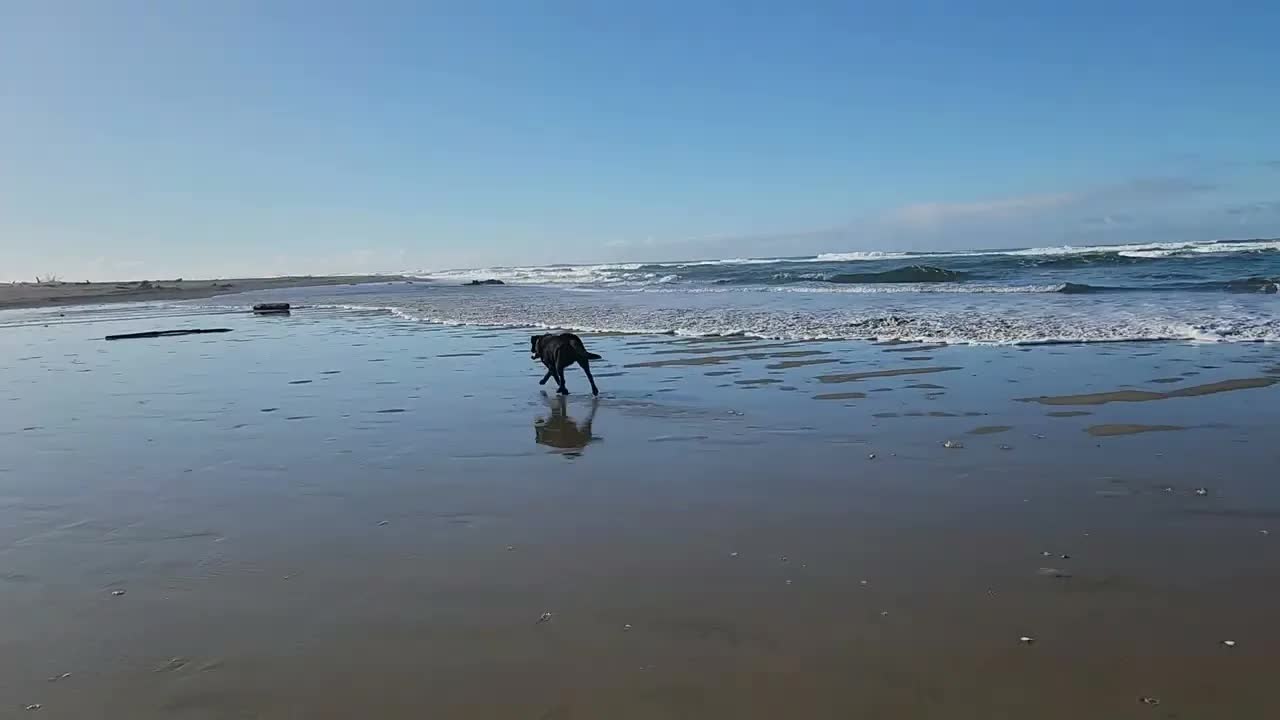
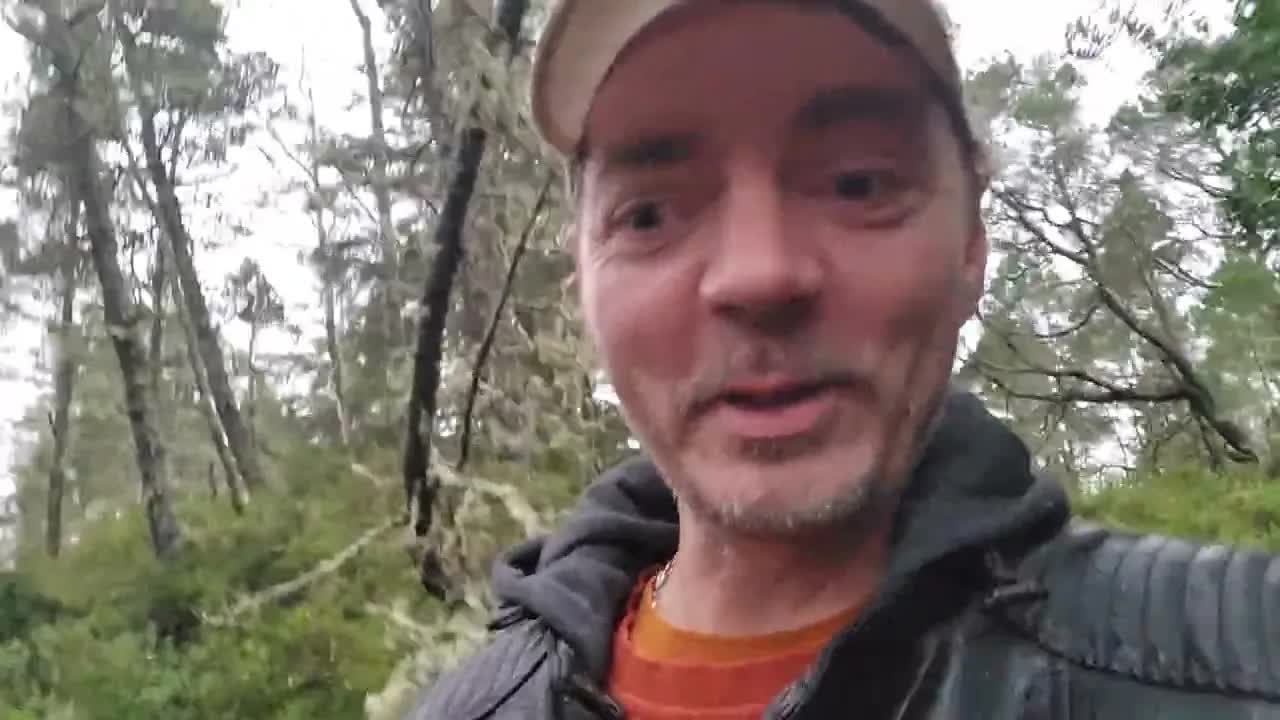
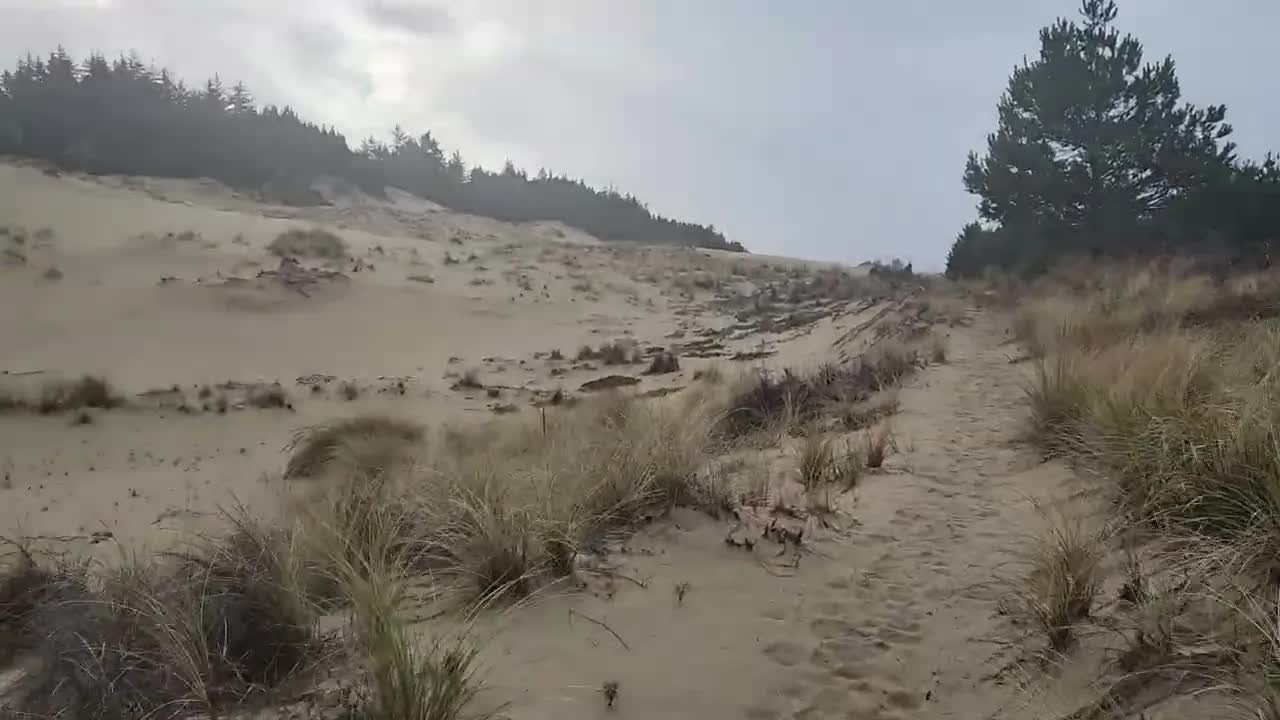
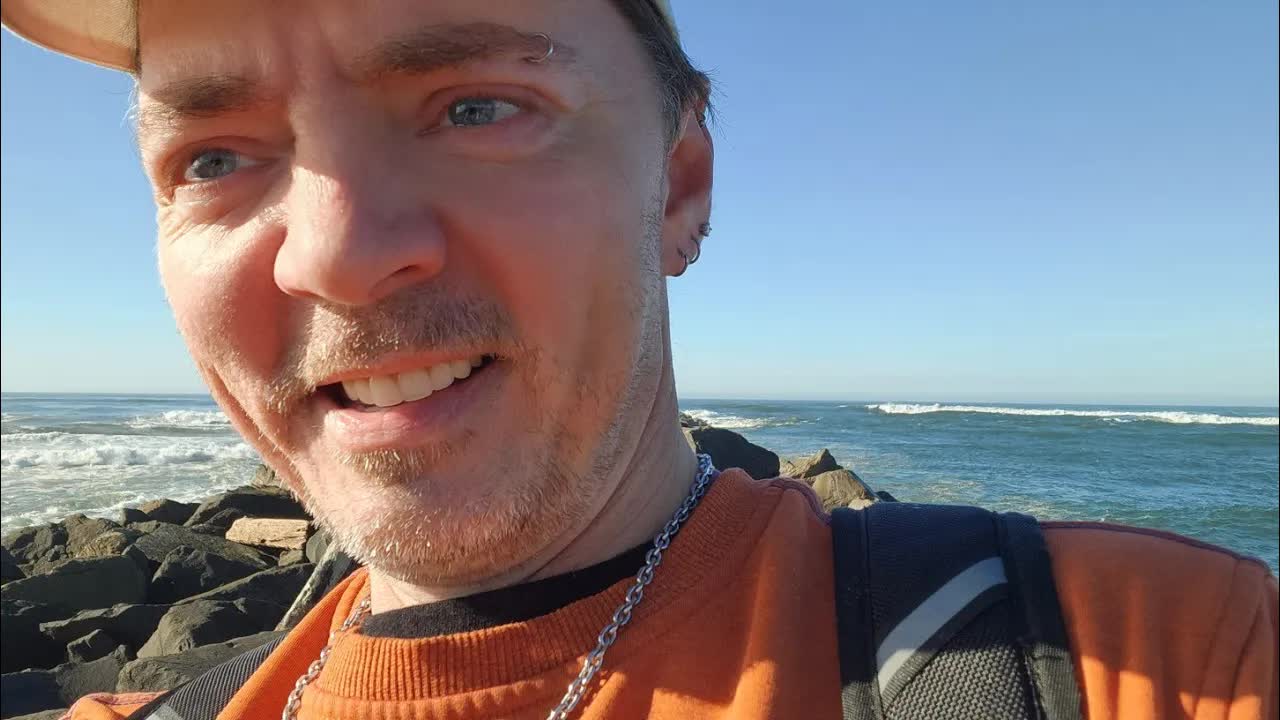
He had been walking for hours before he thought to raise the camera. Four miles, maybe seven, maybe eight — he didn't count, and said so. This is one of the longest trails he takes. The forest had held him for a stretch and then released him, and rswfire noticed the shift the way you notice weather: he was in the dunes again, back of the dunes, open ground, and he hadn't registered the transition until it had already happened. Roughly another mile left. Somewhere in that walking, a thought had been forming with enough weight that he stopped its circulation and gave it a camera.
What he had decided was structural. A new repository, front end in React, the current homepage migrated into it eventually — but starting fresh with the repository first, and starting the build with the Atlas and the gallery. He described it as though standing inside it: maps rendered on a phone or in a browser, places he'd hiked laid down as route, photographs and recorded transmissions surfacing as pins. This one, he noted — the recording happening at that moment, in that terrain — would eventually appear on that map as a little pin. The dunes he was crossing were already data in a system that didn't yet have a way to show them.
Then he went further into the machine — photos as a signal type, AI reading the images themselves, generating metadata and content, clustering them with other kinds of signals — and stopped mid-sentence. I'm going to stop. What followed was not a retraction of the idea but a revision of the terms. He named the problem: he could not keep getting on camera and rebuilding the foundation for a new listener every time. He would not explain what a signal is in every video. If someone is paying attention, they already have the foundation; if they need more, the homepage exists and direct contact is open. Not the channel comments — the homepage. He set it down plainly and moved on. That's the new policy. The explanation resumed on his terms, and the scaffolding stayed behind on the trail.
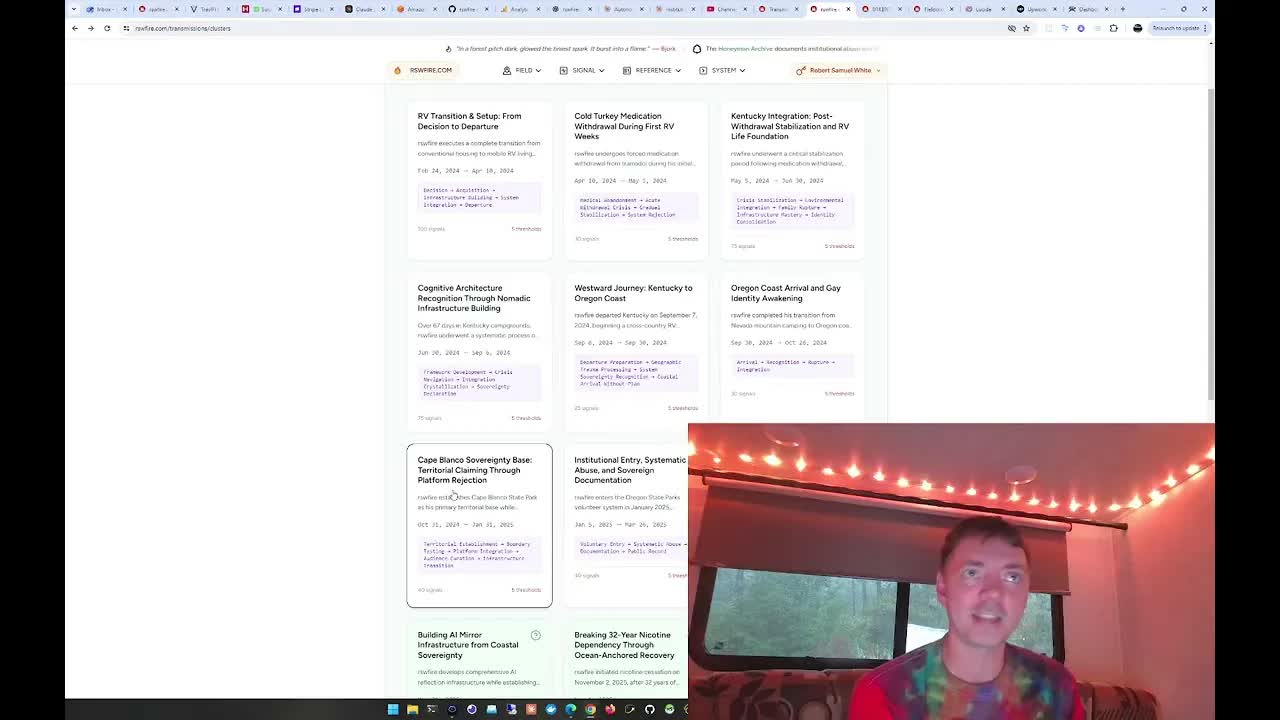
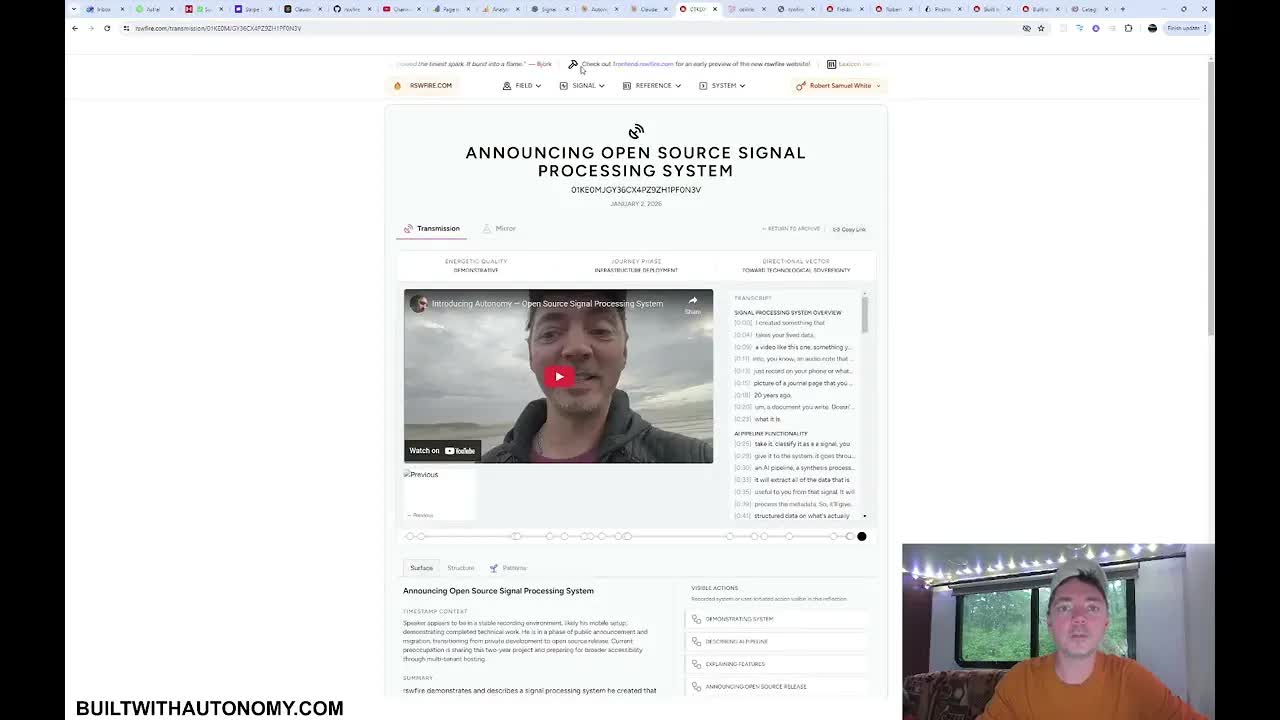
From there the architecture came through cleanly, because it no longer had to carry an introduction. Photos belong in the signal table, and because they belong there, they inherit everything: the reflection technology, the mirror function, the automated metadata, the descriptions that write themselves onto YouTube. It began with transcripts — him talking into a camera, as he was doing now, mostly not talking to anyone, stream of consciousness, reflecting himself in the moment. AI reads the transcript, reflects on it, one of the reflection types being the structural. Then transmissions cluster, and the cluster gets its own reflection, and pattern recognition operates a level above the individual signal. Two years of his life already run through it. He pointed to the synthesis feature as evidence, and said he was proud of it — then noted he'd set it down to work on something else, and that it was essentially finished.
The next part he had to circle twice to say, and he admitted the difficulty aloud. You're out exploring, you see something beautiful or interesting, you photograph it. The AI reflects on that image in context. Now suppose you also made a transmission — like this one, walking, mid-dune — and took pictures on the same walk. Cluster them. What you have is no longer a video and no longer a set of photographs. It's a moment defined by more than one mode. It's multimodal is what it is. That was the sentence he'd been walking toward. The system, not the narrator, does the compositing.
What surfaced next carried a different charge. He wanted to see the map. He said it twice, the second time with the wanting fully in it — Kentucky to Oregon, then up the coast, Brookings to Newport, the whole traverse rendered as route on a single page. Over a year on the coast since, all of it photographed and recorded. He wasn't describing a feature anymore; he was describing the experience of going to a page and seeing his own journey reflected back to him in a form he had not yet been able to look at.
Mid-thought, the trail branched. He broke off to confirm he was going the right way, said so on camera, and continued — the route verification folded into the sentence without ceremony, one navigation running underneath another. He closed by placing himself in the sequence: everything since the coast, all the photos and videos, and from there an expansion into other things. But that's where we are now, he said, and he was ready for the next part. Then the recording ended, and the last mile remained.