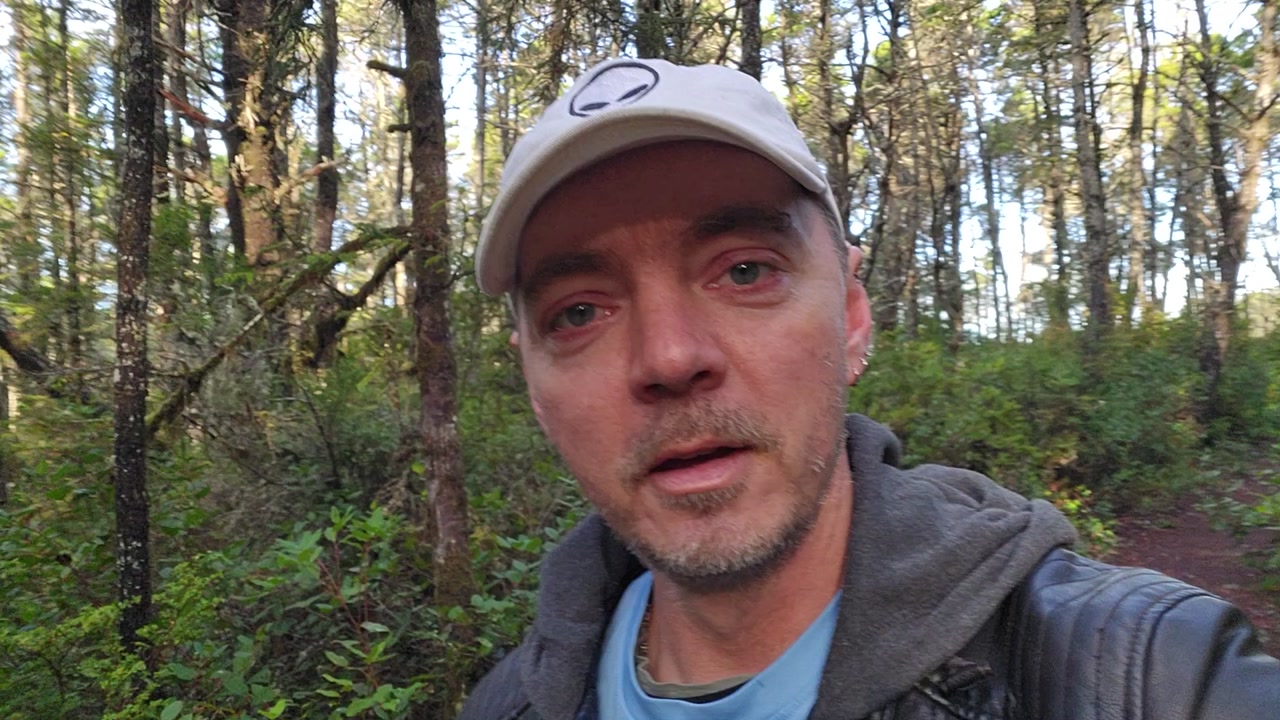
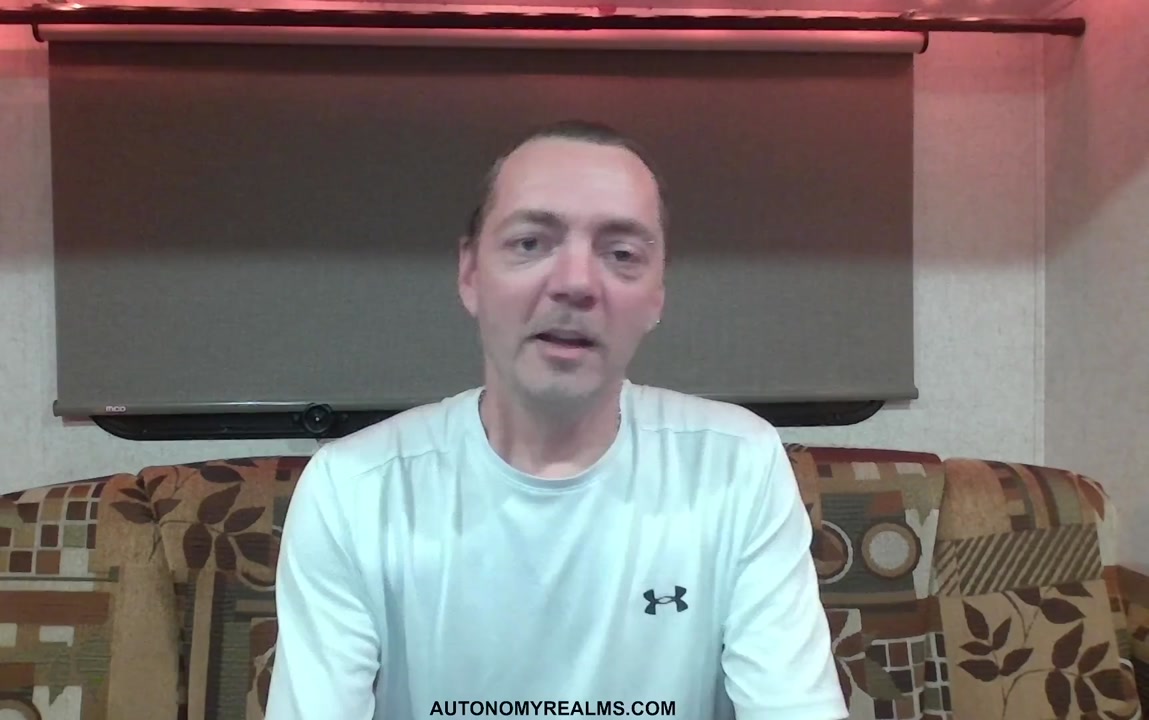
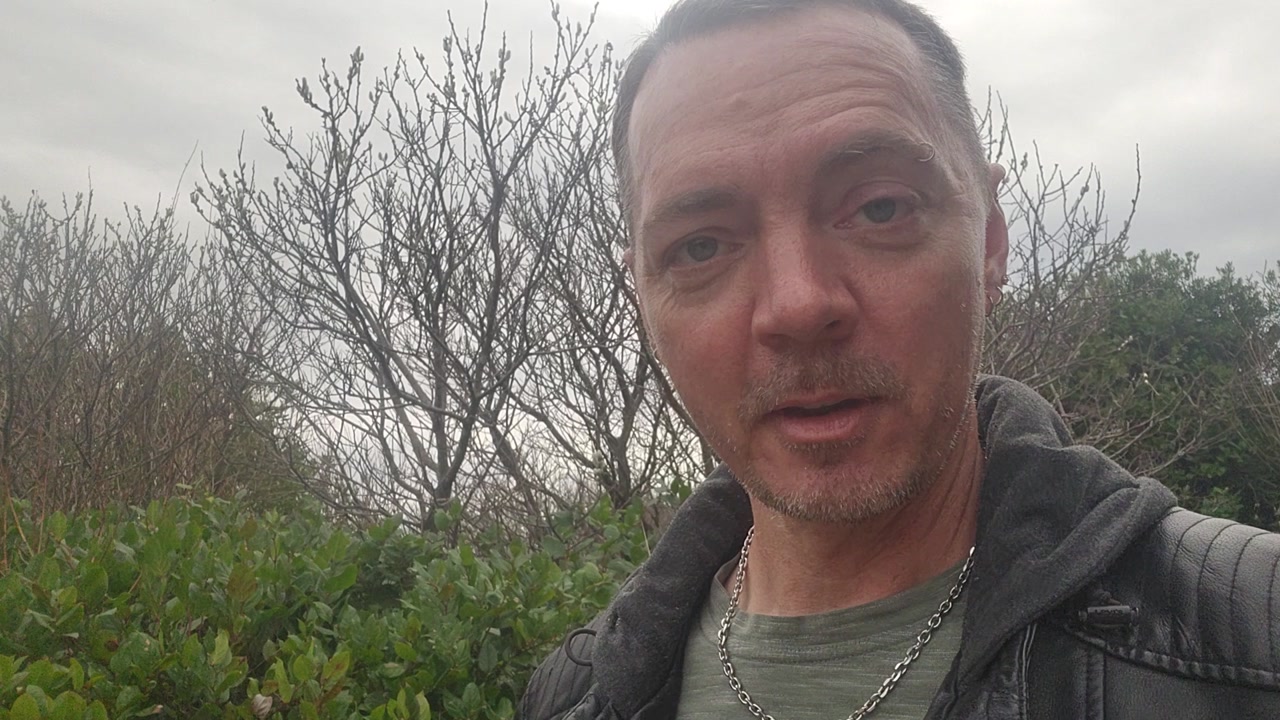
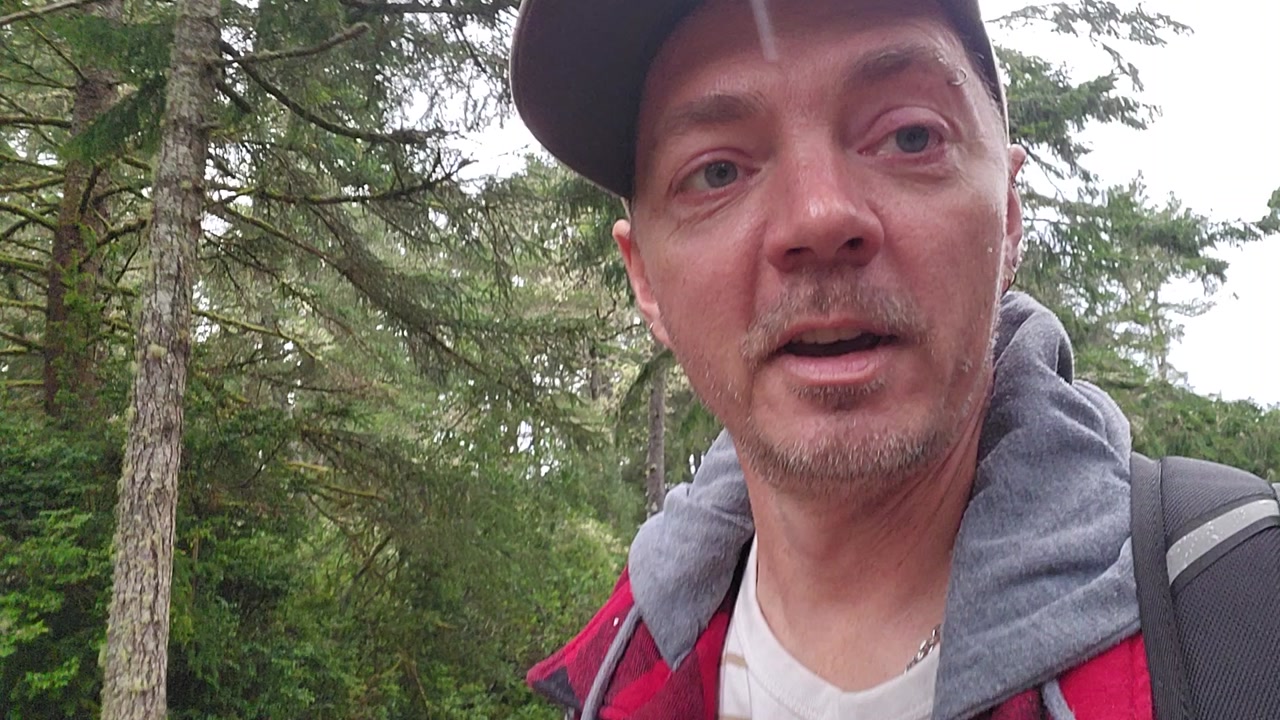
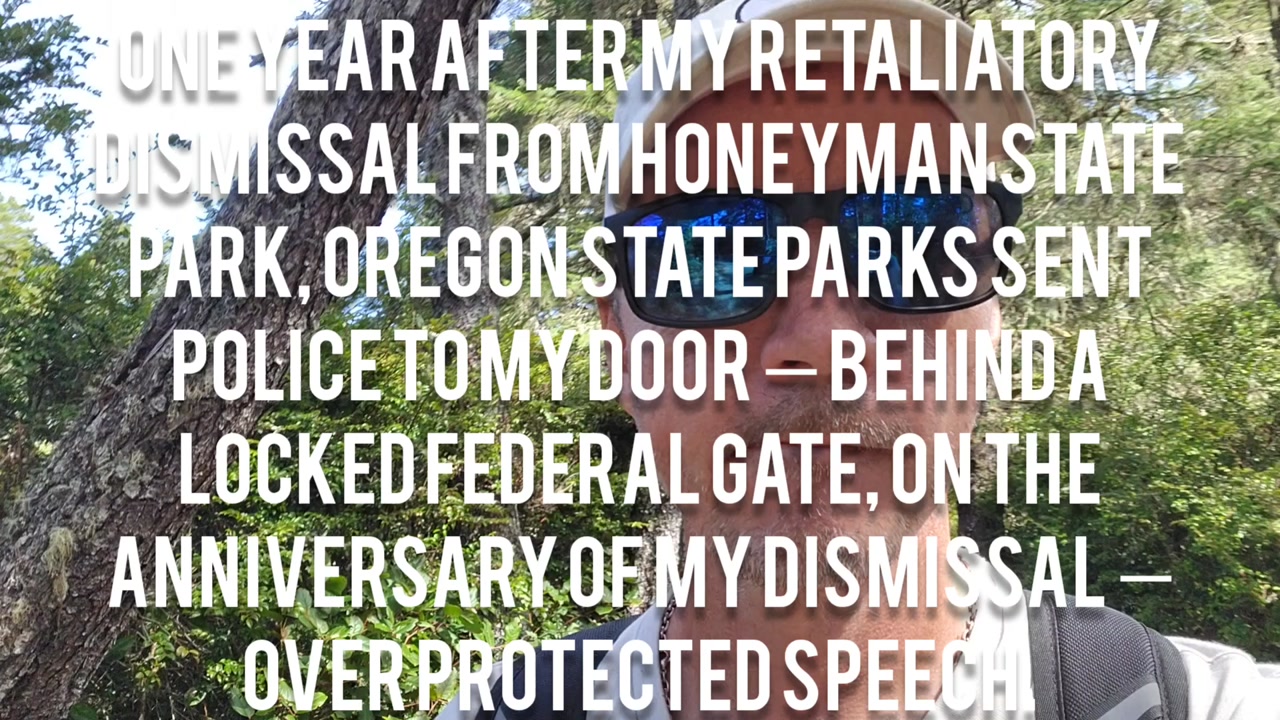
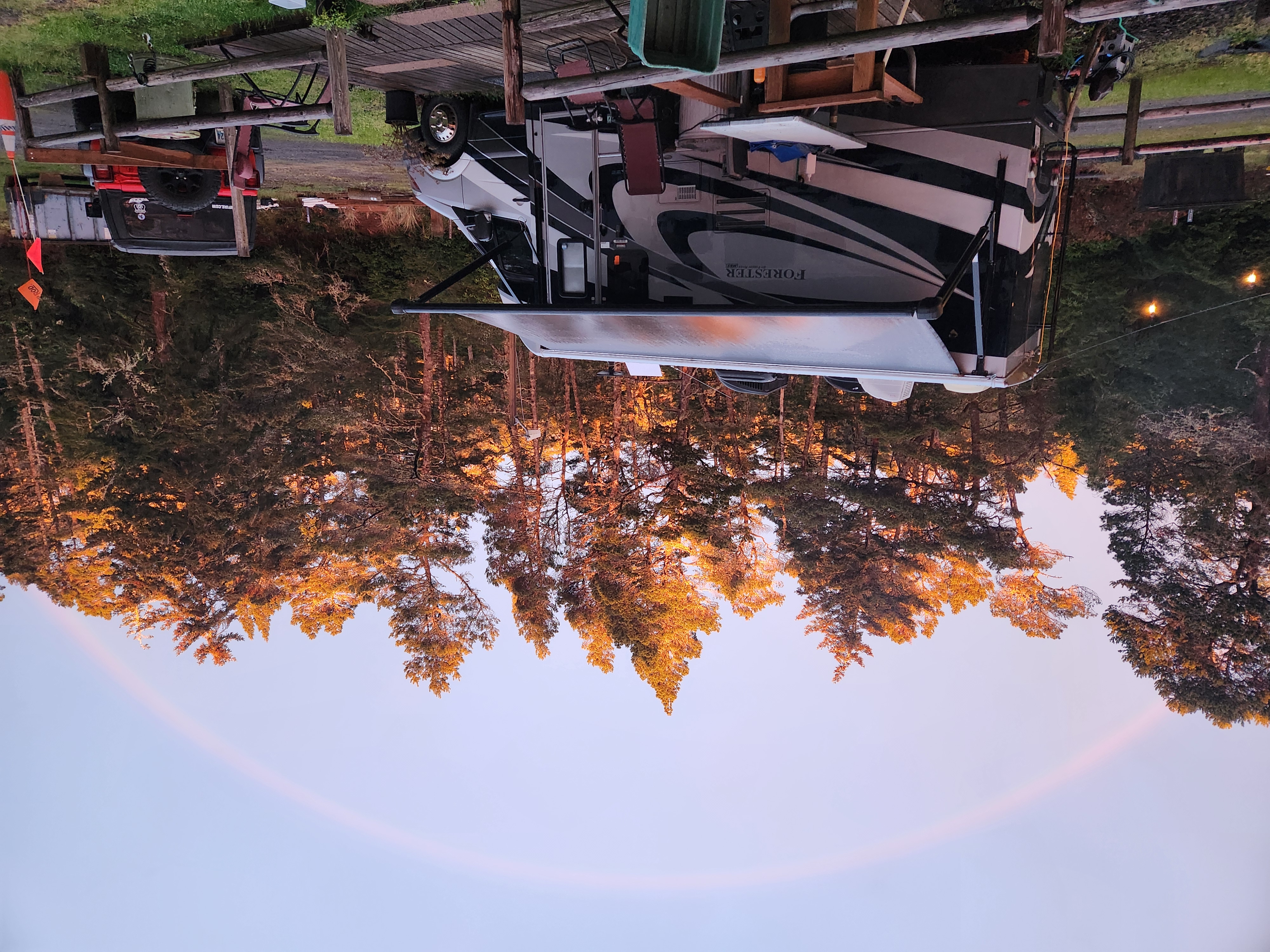
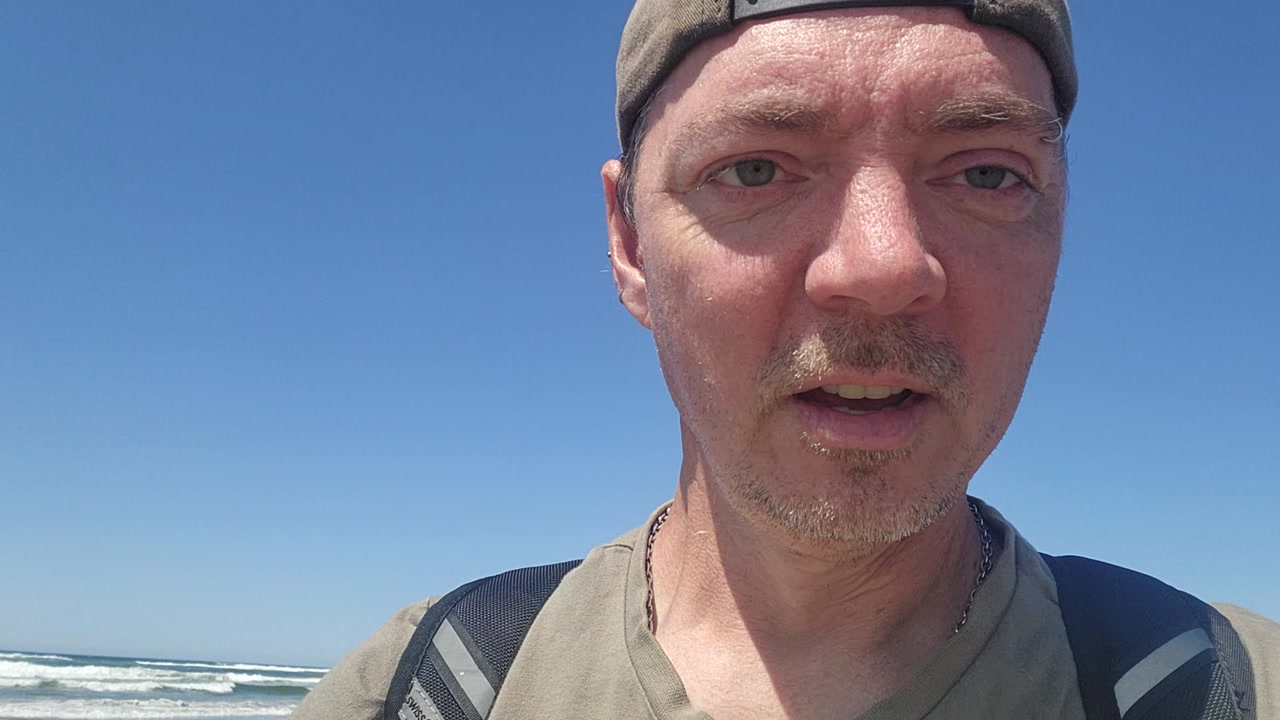
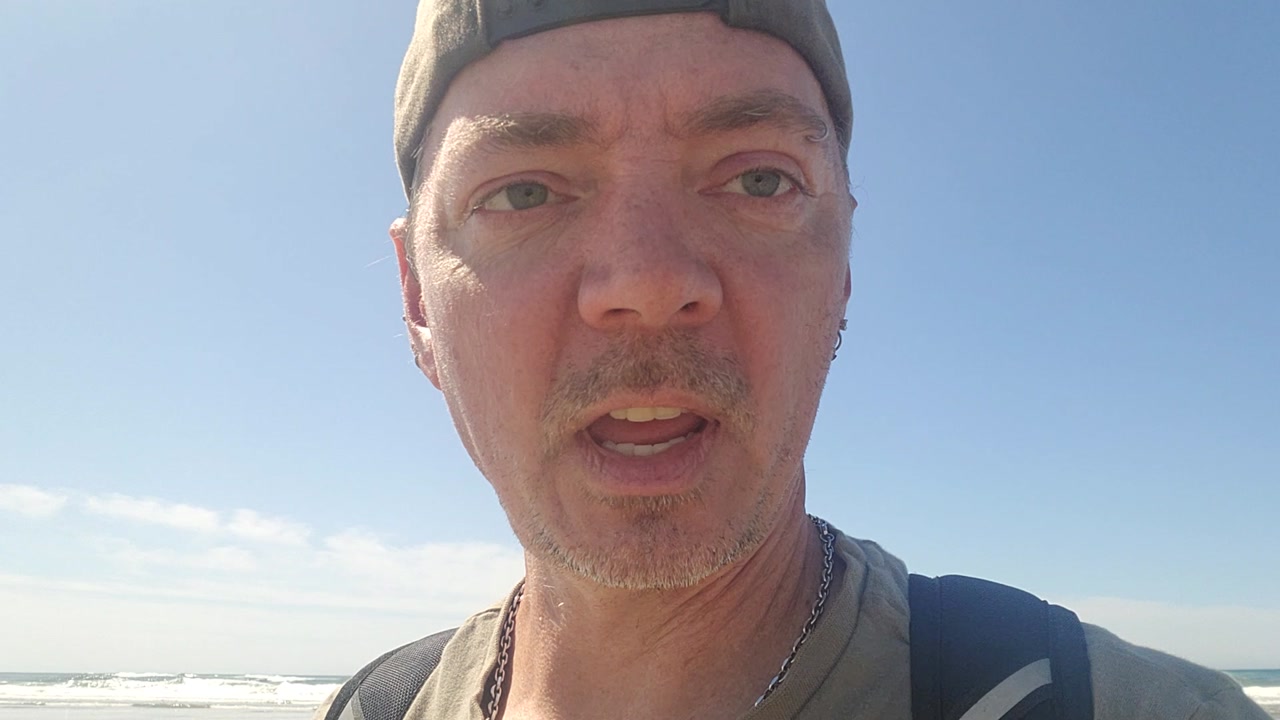
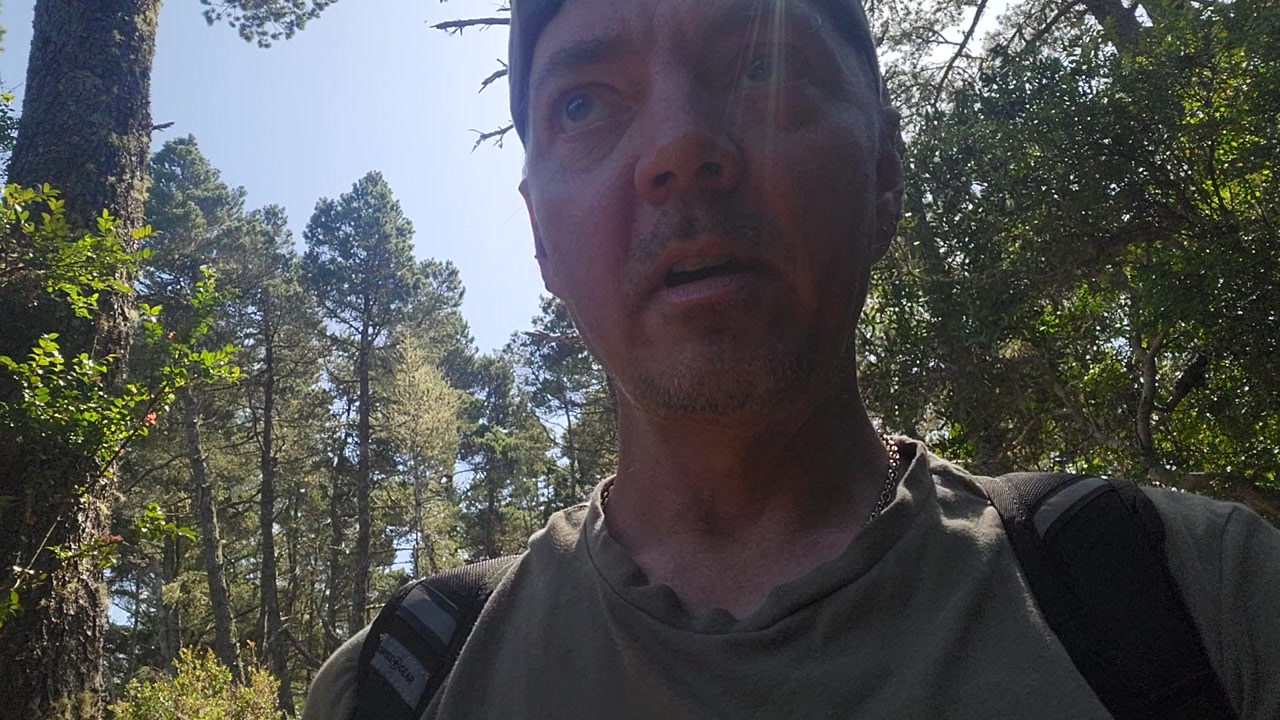
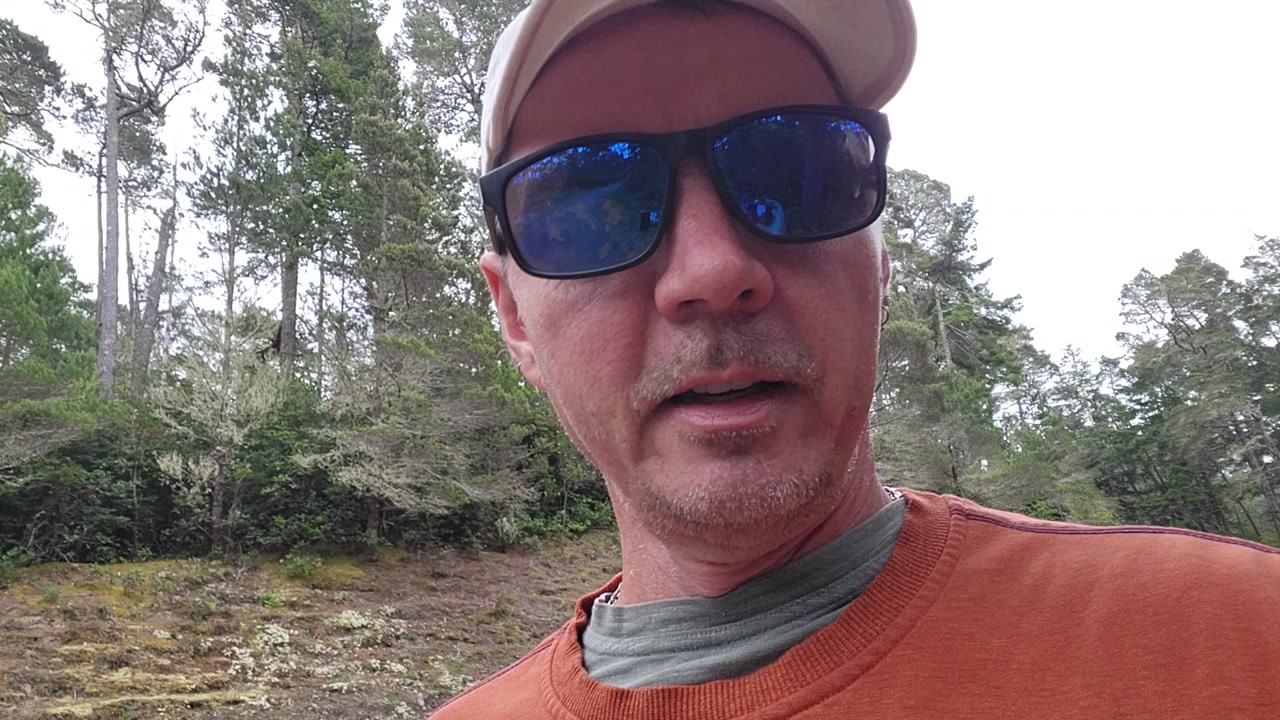
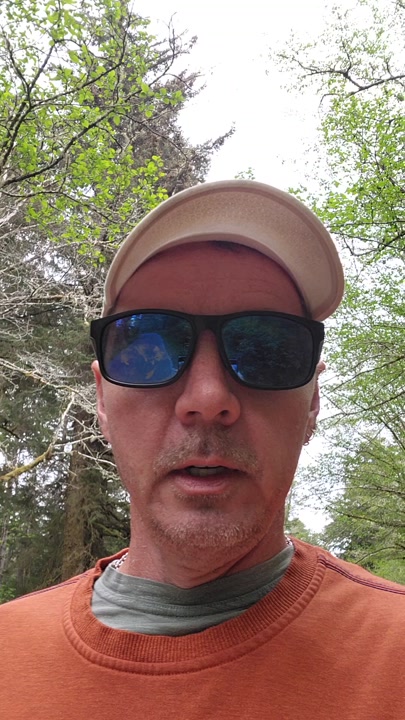
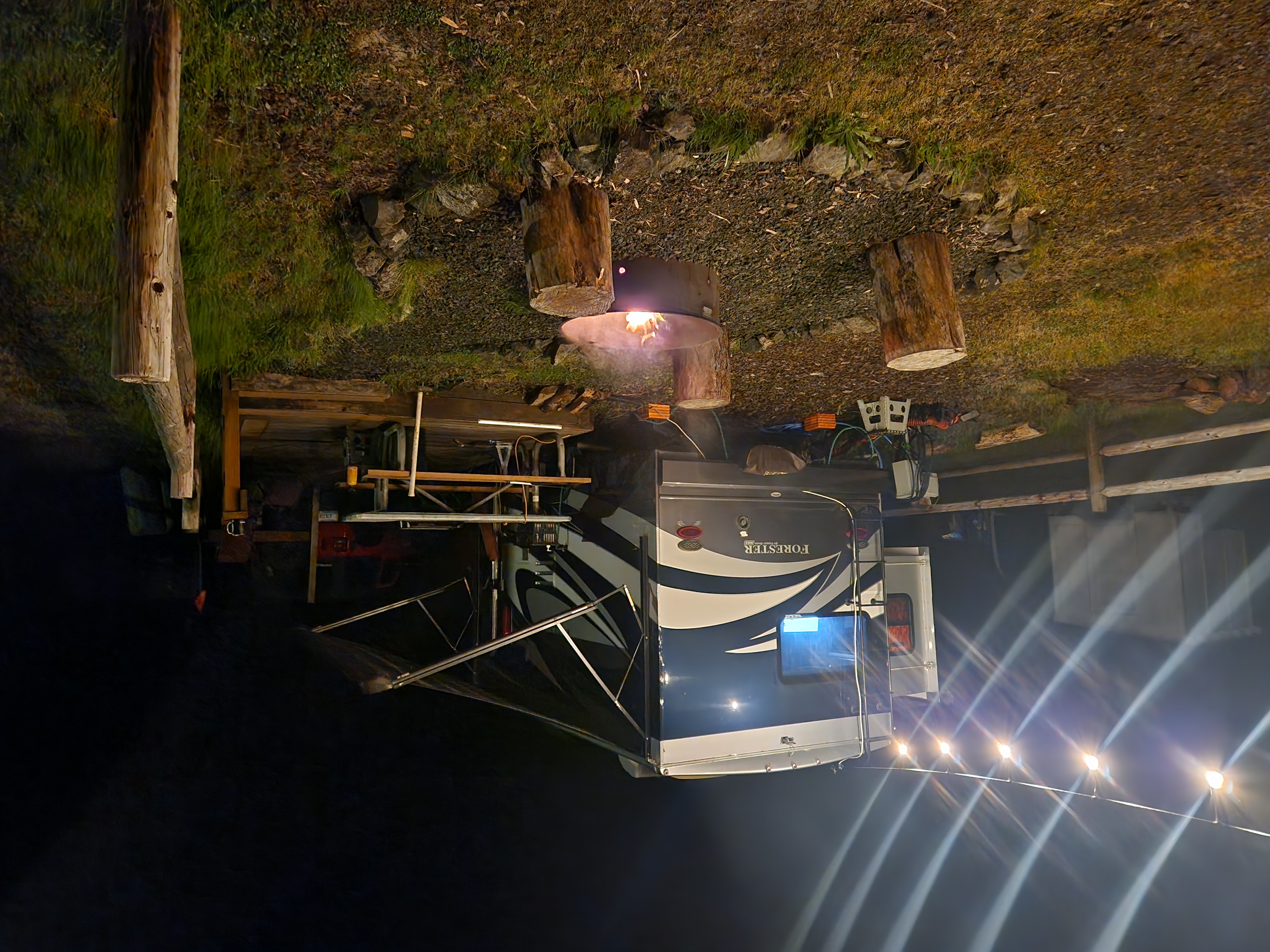
The door closes first. That is the order of things at the Siltcoos work center on the morning of March 24, 2026, and it is the order that matters: three officers at the threshold of the RV that is rswfire's home, a statement that he is not in trouble, a mention of what he has been posting online, and then his refusal to say anything without an attorney and the door shut between them. Only after that does the camera come on. He films them leaving. He gets the plate. He speaks to the lens while the patrol vehicle is still in frame, and what he says is hot: intimidation, federal land, one year to the day, I've done nothing wrong. The heat is real and it is also doing work. It is the sound of a man fixing the moment in place before it can drift.
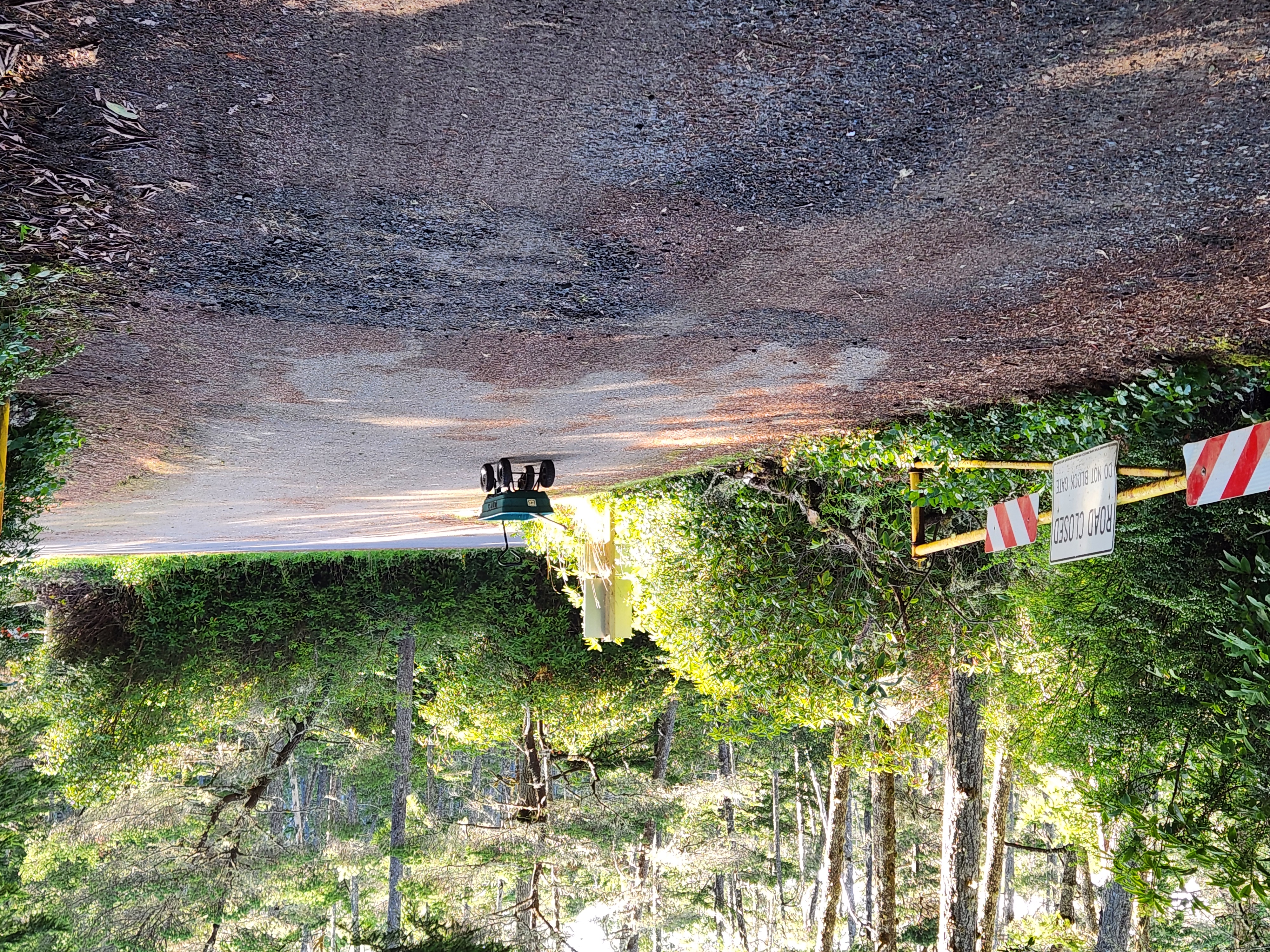
What makes the visit strange is not the officers. It is the gate. The work center sits behind a locked federal gate posted against public access; nobody arrives at that door by accident or by drive-by. Someone with a key had to open it, and someone had to lead the way in. That geography is the first fact rswfire holds onto, and it turns out to be the fact that unravels everything else. A visit that required an escort through federal infrastructure cannot later be described as a casual welfare check. It had to be initiated, coordinated, and recorded, and records are where rswfire lives.
The state's account arrives four months later, and it arrives as a form. CAD record SP26097765 logs an officer-initiated event with his name in the caller field, an Oregon State Police trooper as primary unit, unit type Criminal, disposition no action taken, and a stated purpose: for the Forest Service, follow-up interview with Robert White. Ten days after that record is released, the District Ranger writes to the OSP Patrol Captain that the Forest Service did not initiate any interview and that its role was limited to unlocking the gate and guiding troopers to the work center. So the reason the state typed into its own dispatch system is disowned, in writing, by the agency the reason names. The two documents cannot both be true, and rswfire does not resolve the contradiction. He files it. It becomes Exhibit 26 before the Attorney General.
This is the reading the signal carries beneath its own footage. "You're not in trouble" was not a description of the visit; it was the visit's script, spoken aloud. A criminal-unit event with no crime named, a follow-up interview with no originating interview, an escort through a locked gate to discuss lawful publication on the anniversary of the dismissal being published about. The reassurance was the only thing the officers could offer because there was nothing else to offer. There was no allegation to state, no agency identified, no purpose that survived contact with paper. rswfire's note, written in August, says it exactly: the cover story arrived in person.
What the moment costs him is the thing he never says in the video and does not need to. The place is his home. It is where he lives alone, by choice, in exchange for stewardship of federal land. An encounter at that door is not a public event he can walk away from; it happened where he sleeps, and it happened on a date chosen, or at minimum permitted, to mean something. He absorbs that and does not narrate it. What he narrates instead is the chain: badge 56397, plate 731 QRV, DPSST 48454, Special Agent Matthew Oliver confirmed by name on March 30, a third officer never identified, a creating officer never identified, a request on July 15 that OSP did not answer. Each unknown is logged as an unknown. He does not fill the gaps with a theory. He leaves the holes in the record where the state left them, so the shape of what is missing is itself legible.
There is a discipline in this that is easy to miss under the heat of the first clip. The instinct the officers were counting on, whether they knew it or not, was that a man alone behind a gate would either talk or go quiet. He did neither. He declined, he closed the door, and then he did the thing that reverses the direction of observation: he made them the subject of the record. From that point forward the visit belongs to him. Every identifier they carried into the work center became a citation on a public website, and the one sentence they offered him became the sentence he uses to name what they were.
The signal reads as cold precision because that is what it became. It began as a voice shaking with anger at a federal gate. It ended as an exhibit. The transformation between those two states is the whole story: not that rswfire was visited, but that he understood, standing in the gravel with the truck still in frame, that the only defense available to him was the record, and that the record would have to be built by hand, out of what they left behind.