
Walking to Ocean, Opening the Privileged Sanctum Tier

Failed to load video
Chapters
Transcript
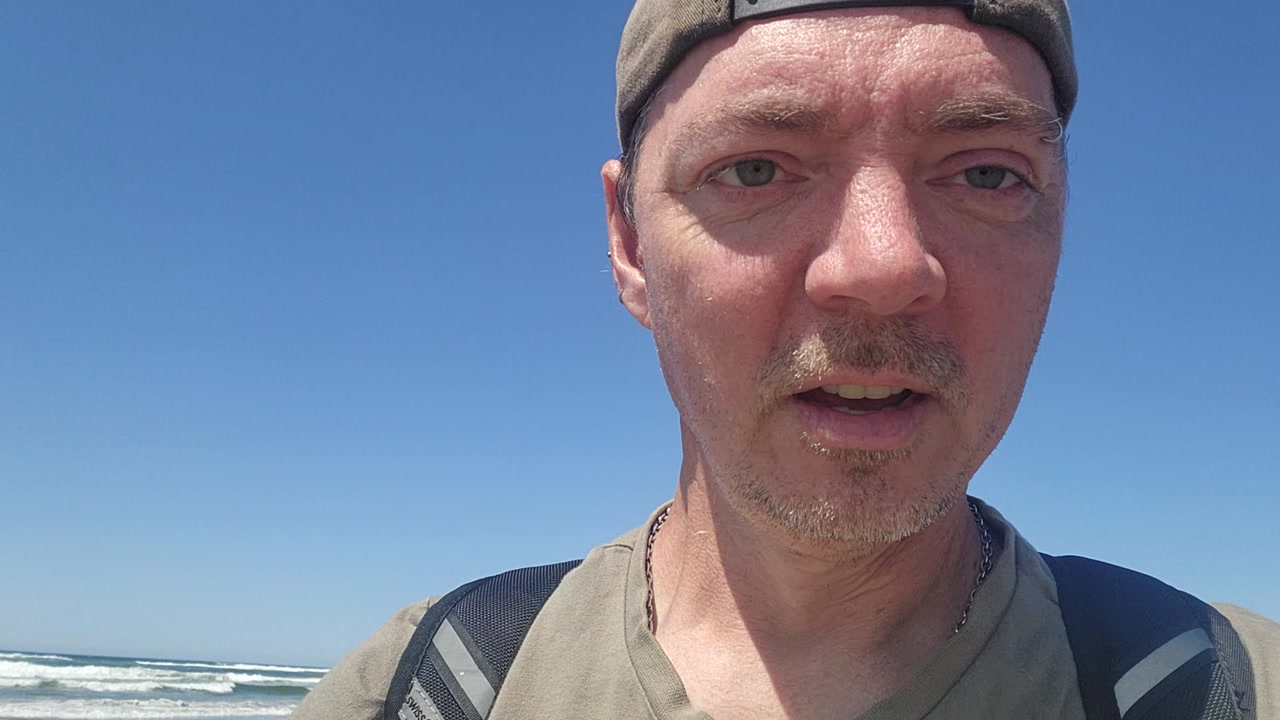
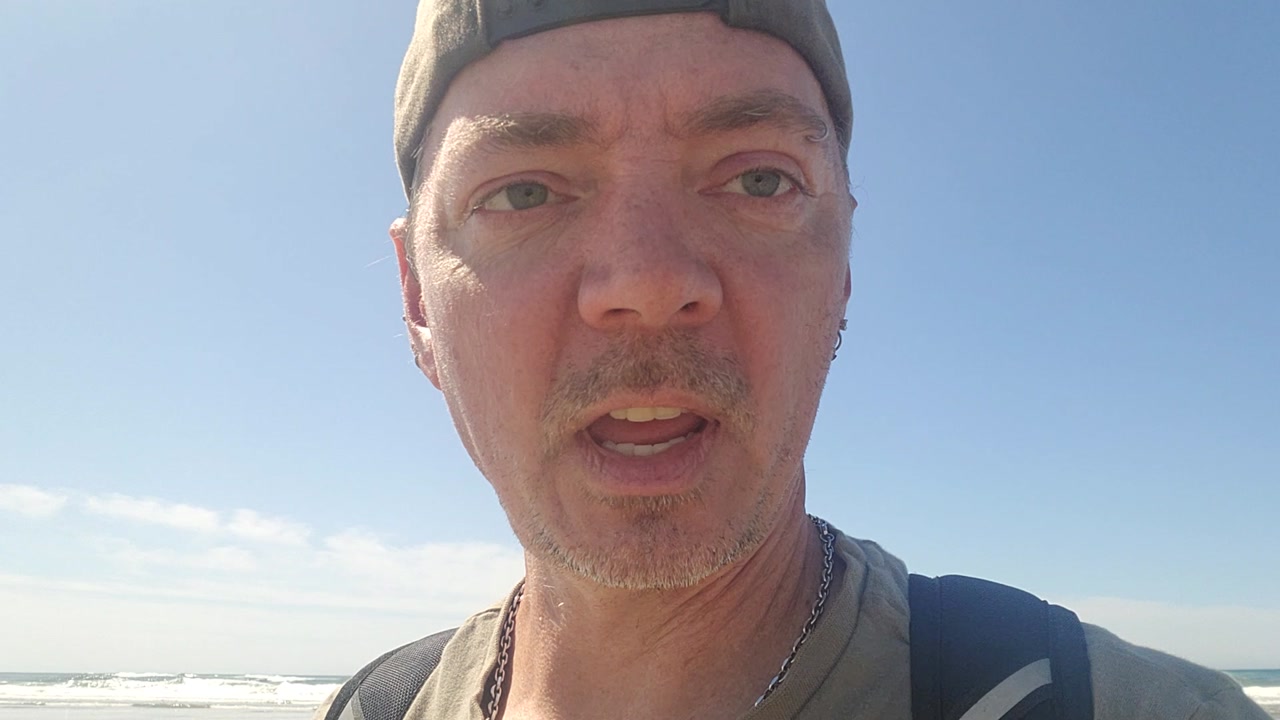
[0:00] So it's Sunday afternoon here, and I'm walking to the ocean
[0:05] Not far from my home right now
[0:08] It's kind of a busy day. There's a lot of people in the corridor
[0:12] Not Sunday. This is the start of summer
[0:15] It's probably gonna get worse over the coming months, right?
[0:18] Well, I want to start off by saying now that I have a sanctum
[0:23] tear
[0:26] Labeled privileged that you can only see by being invited to it
[0:32] You know and following that invitation
[0:34] Like you literally cannot even see the signals or anything
[0:38] on the map
[0:40] or in stream mode
[0:43] For a sanctum tear that you you just mark
[0:46] Basically, it's hidden
[0:48] And that means I can talk about my life more freely than I've been able to for the past year and a half ever since
[0:53] I started volunteering
[0:55] once I
[0:57] Enmeshed myself with an institution. I knew that I had to be careful about what I talked about
[1:02] How I talked about it how I presented myself all of that kind of stuff and then especially after Oregon State Parks, which weaponized
[1:11] Disclosures I had made to a supervisor in confidence and in trust
[1:16] I mean just completely warped and weaponized
[1:18] I know I had to be even more careful and it's been difficult because I like talking about my life. I like I
[1:25] Don't compartmentalize I like
[1:29] It's been difficult, but I built something in the sanctum
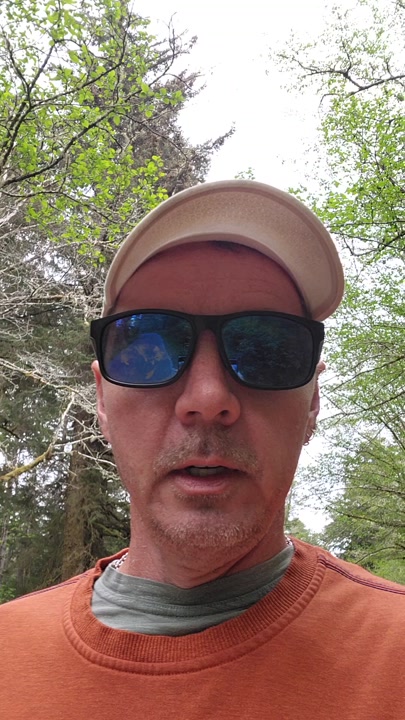
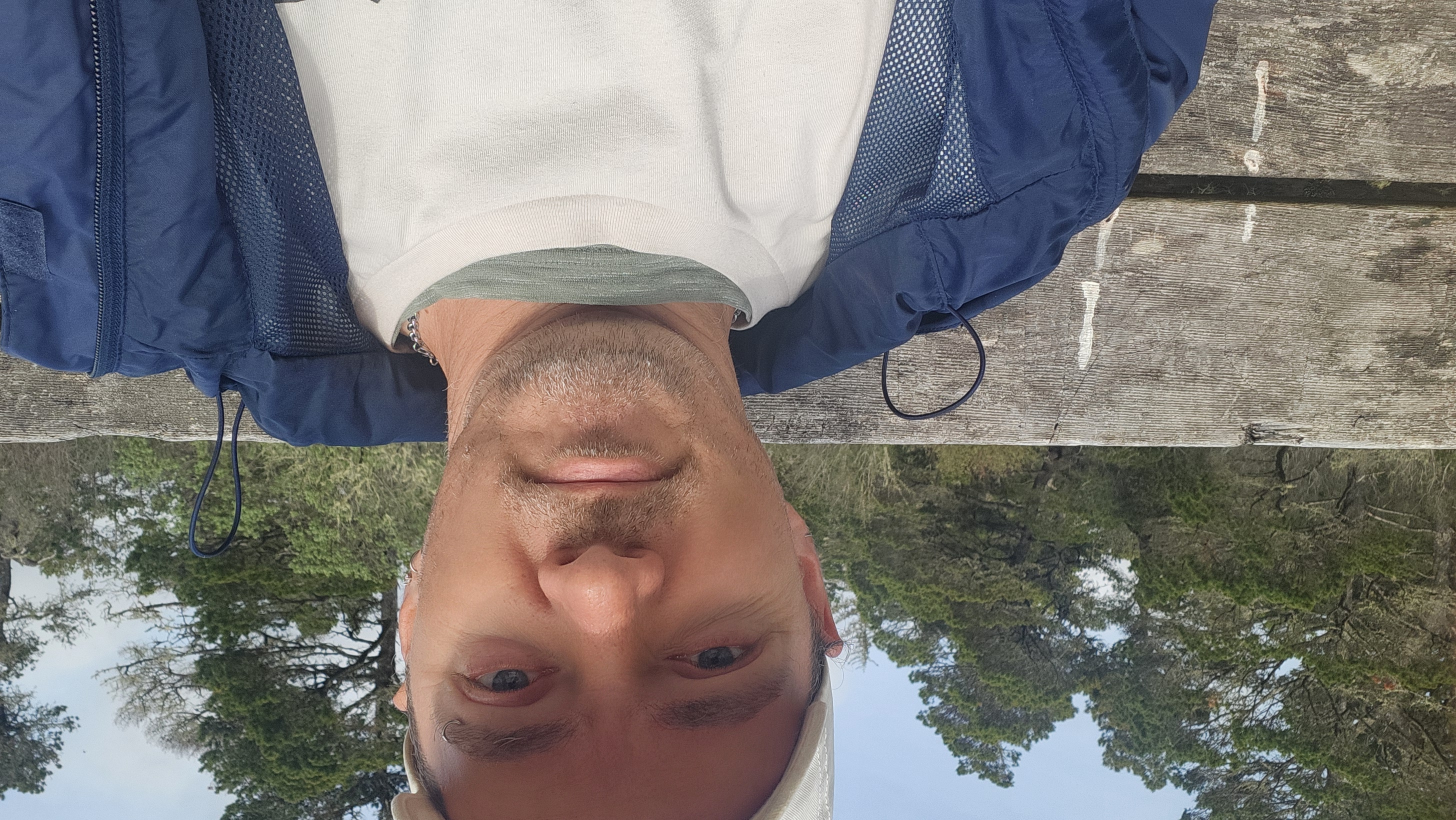
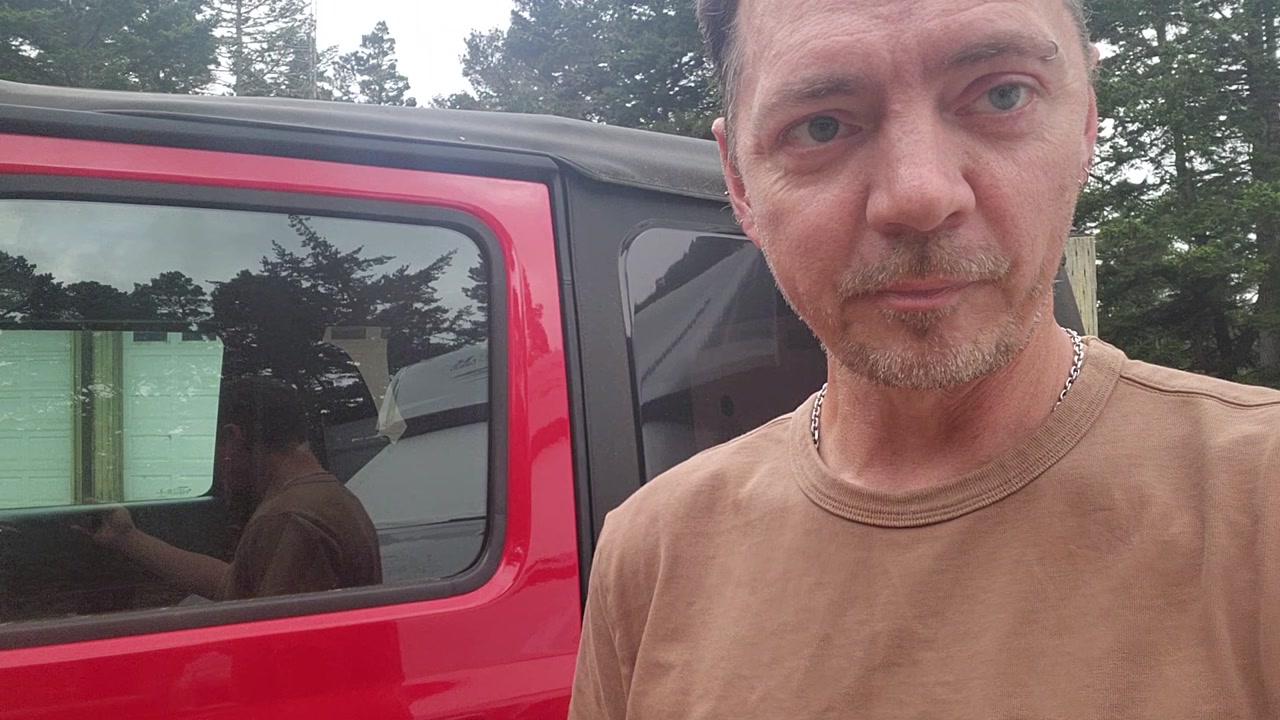
[1:33] That makes it possible again, which means like this jacket here. All right
[1:38] I don't have to worry about it showing up on camera and stuff like that. So
[1:44] New day for me
[1:48] Another thing is, you know, these signals get processed by artificial intelligence
[1:52] You know, it analyzes the transcripts and turns it into metadata and does reflections and all of this kind of stuff
[2:00] And now I can do it on these privilege signals, but I'm gonna have to work out some kind of
[2:05] technique because eventually, you know, you start clustering your signals together to create reflections that
[2:12] You know zooming out on your life and stuff like that and those might be public or shared and they might contain data from multiple
[2:20] You know like categories like public signals and private signals and the sanctum ones I'm talking about and all that and you don't want to
[2:29] You don't want to cause it to leak data to people that shouldn't have it. So for example
[2:34] What I'm talking about right now, let's say that I put that into a cluster
[2:38] The AI could write up a summary talking about specifically what I'm seeing right now
[2:43] you know and expose that to somebody who shouldn't know it's because
[2:47] Because I marked, you know, that particular cluster is public or whatever
[2:52] So I'm gonna have to work out some logic there
[2:56] You know, the AI has to be smart enough to be able to say okay this is you know
[3:00] This is confidential or whatever and don't put it into a cluster. That's public or whatever. I don't know really got to think through that
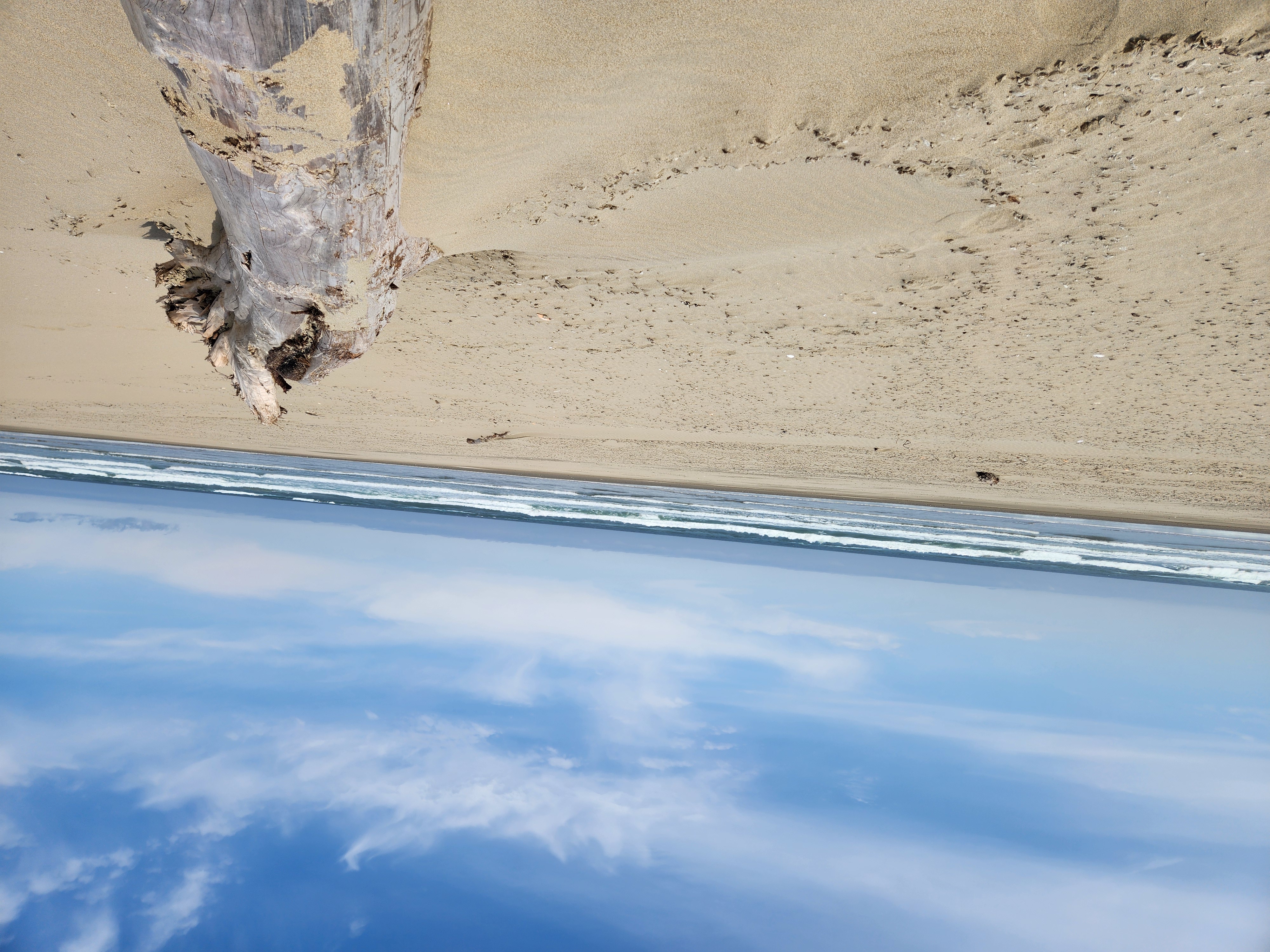
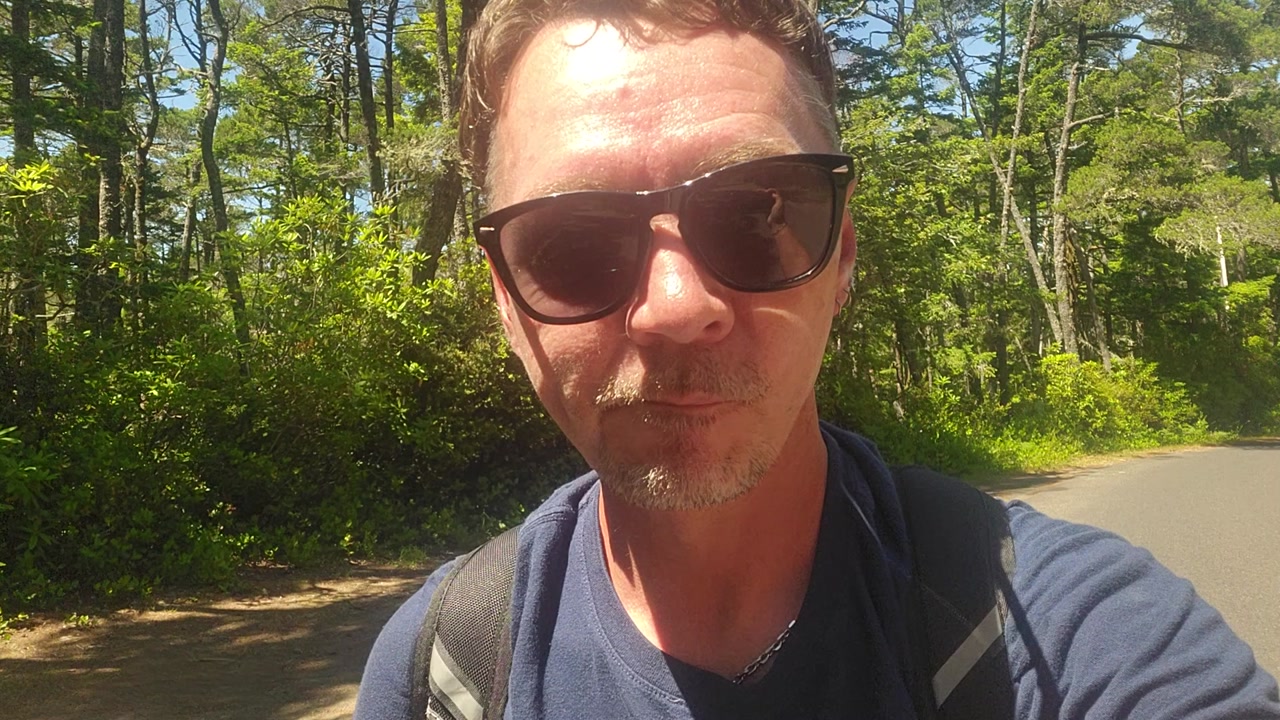
[3:07] So anyways, it's a beautiful day. It's a bit windy pretty windy actually and the wind is cold. That's why I'm wearing my jacket
[3:15] But the Sun is out and that's nice once you're in the Sun, you know turn the shade like here
[3:21] It's cold. That's just the way it works on the coast. It's it's remarkable to me. I've noticed it for you know
[3:25] the whole time I've been here it's like
[3:27] If you're not in direct sunlight, it's pretty cold here
[3:31] But if you're in direct sunlight as nice as can be it's like the perfect weather
[3:34] So, you know, it's crazy like that. Well done human detected
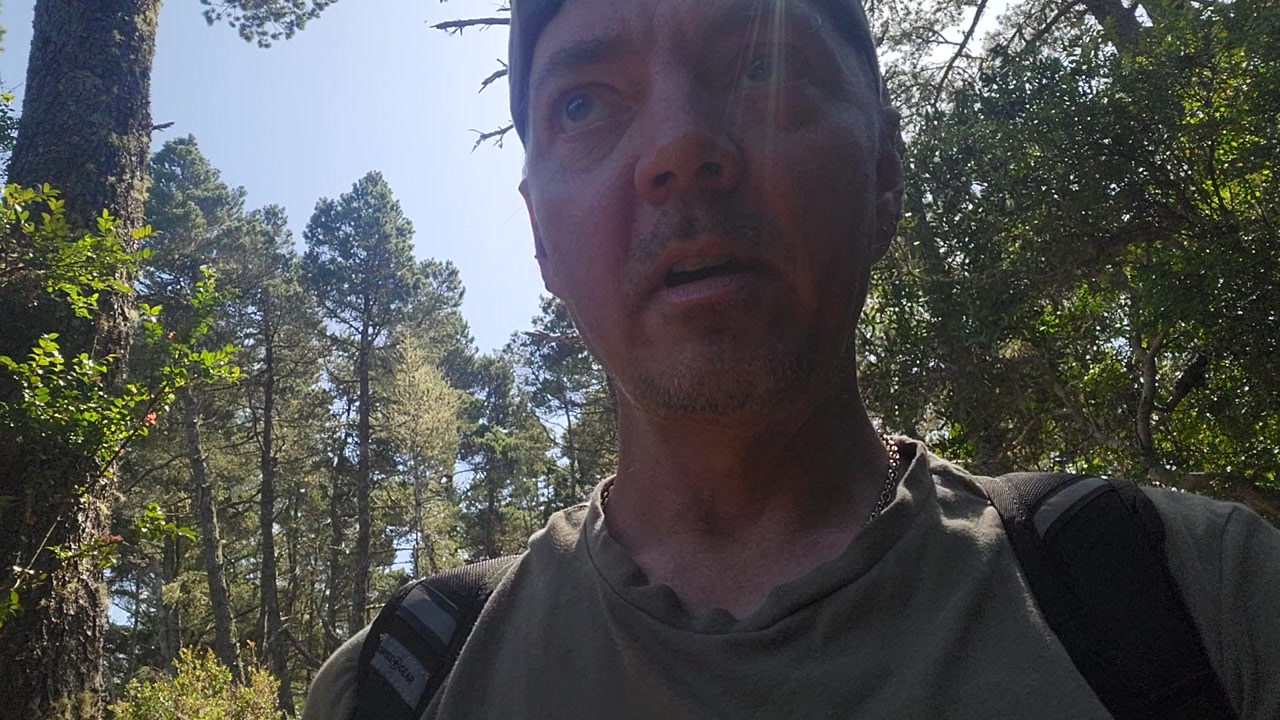
[3:38] So we're approaching the Silk Roost River. I
[3:43] Guess that's not a very good view. I know it's the first bridge and
[3:48] From here. I could go to the incinerator
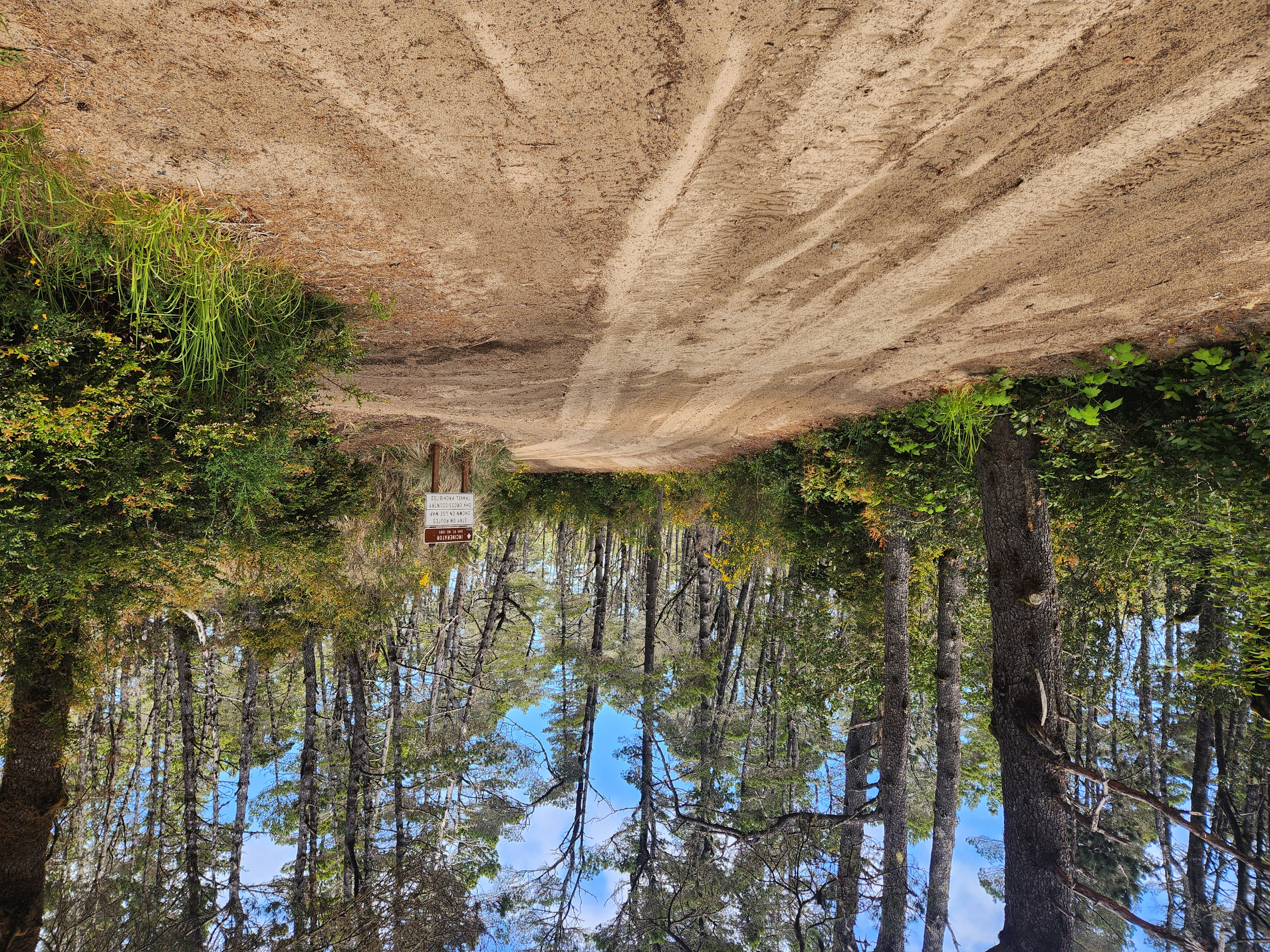
[3:51] Trail, you know, that's for the ATVs right up here the new area. I've been exploring on the map
[3:55] I
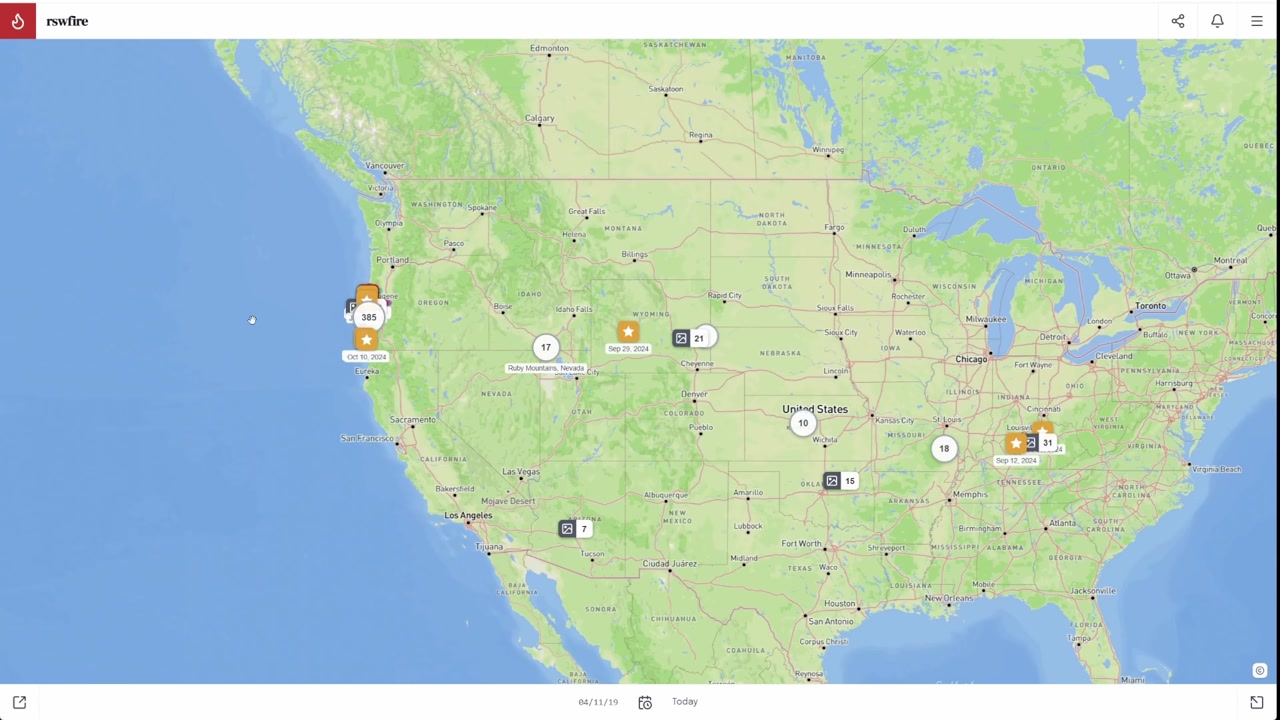
[3:59] Love seeing my traces on there because they're growing
[4:02] I'll even put something on the screen so you can see what I'm talking about. I
[4:06] need to
[4:09] Hold on human detected look what I got behind me
[4:16] So I you know kind of want to explore over there and it being Sunday there's not a whole bunch of ATVs on
[4:21] I know
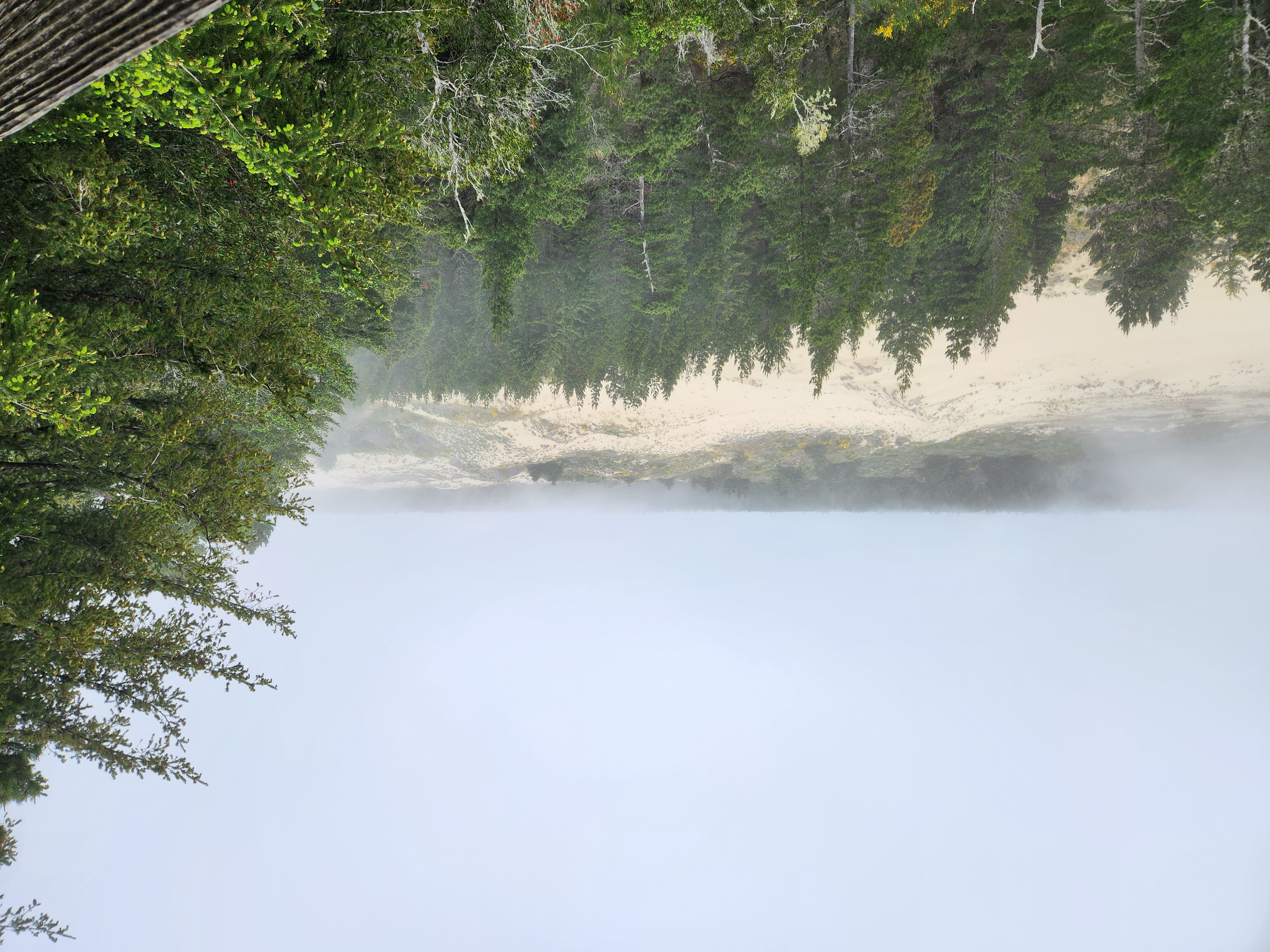
[4:23] On the dune train now, I could probably do that. There's so much to explore out there. I mean, it's just seeing Antwerp. I
[4:31] Mean there's these little islands of trees
[4:33] I'd love to get up there one time and you know, like you can be up really high looking over like this vast valley of
[4:41] Desert I mean, it's just a coolest place. It's really cool. But you know, I want to go to the ocean. I guess
[4:52] By the end of summer, I really hope that
[4:57] I'm you know, I've really explored that
[4:59] Because that's a whole lake like gap in my on my map
[5:02] I just love that man where you just like you look at the map and you're like look at all these places
[5:08] I've explored along the coast. It's remarkable
[5:11] You know, there could be so many more and you know, it's kind of upsetting like if I had created this technology sooner
[5:17] Before I left Kentucky I could have had a trace going all the way across the country man, you know
[5:22] It would have been awesome my actual route
[5:26] But the signals I created along the way will have to do
[5:31] Most of those are gone behind the privilege layers. So because I you know people just couldn't hold my life with respect
[5:39] and I
[5:42] You know, I just have no tolerance for that kind of shit from people I just don't
[5:47] So, you know, I turn comments off early way early on my youtube channel
[5:52] Career or whatever you'd call there
[5:54] What would you call that? It's obviously not great as a dumb word
[6:00] Early in my documentation that I just happened to be doing on YouTube is more appropriate to say and
[6:08] You know, I mean it was very obvious to me
[6:12] Some of the issues and I saw them all that's what autonomy ROMS does it solves every issue that I encountered along the way and
[6:19] Turned it into a platform that others can can use. I don't know how I am going to market that to people
[6:26] I'm trying I've you know, I've reached out like I've
[6:31] Well, there's a couple things I did. I'll tell you so
[6:33] Obviously posted on social media, you know
[6:36] And then it got some some visitors, but nobody signed up one person signed up and then didn't do anything with their account
[6:44] I'm that was early on and then
[6:48] Let's see, I started to create a program it's called the Scout and what it does this is fascinating
[6:56] it
[6:58] Uses a lot of
[7:00] It
[7:02] Uses a local AI model
[7:05] And in a program, I don't remember what the name of this program is
[7:07] But it can it's called browser use and it can the AI can control the browser
[7:14] And so you have the browser you have the AI
[7:17] Go to certain destinations that you you know, pre-select you set up yourself
[7:23] All right, so
[7:26] Sorry to pause the camera there's a lot of activity here today
[7:30] There's a selfless river
[7:33] almost a wax marble I
[7:35] Completely lost my train of thought Oh Scout so
[7:40] The AI pretends to be you in a browser, you know looking around at these places that you talk to you
[7:44] like maybe a reddit page or
[7:46] Facebook group or whatever and
[7:49] And on YouTube, there's two different ways at work. So one way is
[7:53] it looks for for new accounts on YouTube that
[7:56] You think might be interested in something like autonomy routes and then looks for the contact information so I can contact them directly
[8:02] The other thing is it does is it looks at you know, I like forums or Facebook groups or whatever
[8:08] Yeah, it looks at the comments and if it sees one it feels like okay
[8:11] That's a pretty good match for like as a lead
[8:14] It'll tell me about it alert me and then I can reply to that. This isn't working yet. It's almost working
[8:19] I've been working on so many things
[8:20] It basically is ready. I just got do some testing and it's working
[8:24] Because there's no other way to really get this project discovered because
[8:31] If I try to post about it, they call it self-promotion and delete it, you know
[8:36] We've blocked the paths for people. There's just no there's no way to there's discovery is broken and
[8:46] This was a
[8:49] You know, I've just been navigating all of this stuff and I'm always working towards a solution, but
[8:56] you know
[8:58] As you know money has been the primary factor in me
[9:02] doing anything
[9:04] you know like my catalog 900 transmissions and half of them are not processed by the
[9:11] the
[9:12] My catalog 900 transmissions and half of them are not processed by the
[9:18] Current iteration of ai that i've been you know that i've built autonomy runs around
[9:22] needs to be
[9:24] and
[9:26] A whole bunch of other stuff, you know, there's just ai costs at this point
[9:31] But I've you know, look what I built already, you know with from
[9:37] The limited resources i've been able to get
[9:40] Thanks to the people who are in my privileged here, which by the way
[9:43] I'm going to allow comments on that and you know, there's going to be community features built into it
[9:49] so
[9:52] We're really close to something awesome like I just can't wait for you all to see it
[9:58] I can actually start addressing you again, you know, like like I can start talking to a community
[10:03] Like I can start talking to a community
[10:05] um
[10:09] I mean, I don't know I guess there's a little bit of risk involved in
[10:13] and even with a private tier like this
[10:17] but
[10:19] You know, I think I I think that's a good strategy because I have two sanctum tiers one of them
[10:24] Was called journey. I don't really know what i'm putting in that yet
[10:28] Um, but that one
[10:30] People will be able to sign up for free and use the community features
[10:34] And if I think that they're aligned with me then I can invite them into the deeper layer, right?
[10:38] So so that's how i'm approaching that
[10:42] I think it's
[10:45] I think it's a good strategy and
[10:50] You know, I really think that this project
[10:54] Has so much potential one day
[10:57] there could be
[10:58] hundreds of thousands
[11:01] of
[11:02] different people's photos and things on that map and traces and
[11:05] You just look all over the globe and there's just stuff everywhere. I just don't picture this, you know, and
[11:10] um
[11:11] Everyone just living their lives on this map
[11:14] other features i'm going to build one of them is
[11:16] A feature that will give you a real-time access to my location put a little pin on the map
[11:21] With with customization so, you know, you opt into that not everybody has to use it
[11:25] And you can pick a delay, you know 15 minutes an hour
[11:29] A day a week so that you're not giving your real-time location, but you're kind of giving them a sense of where you are
[11:34] And accuracy you can give them a pin where you're at or you can put it, you know in a circle
[11:40] um
[11:41] radius
[11:43] and
[11:44] Imagine looking at this map seeing signals everywhere and these little pins of people everywhere and like it's gonna be freaking awesome
[11:52] So
[11:54] Like I don't know if I mentioned so i'm done with my rounds in my round today, it's not my weekend officially
[11:59] Going to the ocean. I chill for a minute
[12:02] at home work
[12:04] keep building like
[12:08] We made it
Mon, Apr 20, 2026
Apr 20, 2026
15:25
Introducing Autonomy Realms Through Live Demonstration
Apr 20, 2026
0:19
Handheld Capture Ends on Persistent Object
Apr 25, 2026
2:35
Mapping Mobile App Launch Against Internet Deadline
Apr 25, 2026
4:12
Rebuilding Sanctum as Members Feature
Apr 25, 2026
1:08
Marking the Eve of Summer Season
Apr 30, 2026
0:52
Weighing Camera Orientation for Capture
Apr 30, 2026
Summer at Siltcoos - Day 1
May 1, 2026
1:29
Opening a Series to Introduce Autonomy Realms
May 1, 2026
4:27
Introducing Autonomy on Trail Walk to Ocean
May 1, 2026
Summer at Siltcoos - Day 2
May 2, 2026
Summer at Siltcoos - Day 3
May 3, 2026
Summer at Siltcoos - Day 4
May 4, 2026
Final Statement to the Oregon Parks and Recreation Department
May 4, 2026
Campfire after saying goodbye.
May 4, 2026
Summer at Siltcoos: Day 6
May 6, 2026
Summer at Siltcoos: Day 7
May 7, 2026
Summer at Siltcoos: Day 8
May 8, 2026
Summer at Siltcoos: Day 9
May 9, 2026
Summer at Siltcoos: Day 10
May 10, 2026
Summer at Siltcoos: Day 12
May 12, 2026
7:58
Documenting Jeep Repossession Deadline and Ended Friendship
May 12, 2026
Publishing AI Orientation Document for Queryable Personhood
May 13, 2026
Summer at Siltcoos: Day 13
May 13, 2026
Summer at Siltcoos: Day 14
May 14, 2026
Summer at Siltcoos: Day 15
May 15, 2026
19:57
Walking to the Ocean, Announcing Autonomy Realms Launch
May 15, 2026
Summer at Siltcoos: Day 16
May 16, 2026
6:12
Introducing Autonomy Realms on Walk to the Ocean
May 18, 2026
Summer at Siltcoos: Day 19
May 19, 2026
2:46
Returning to the Lagoon Bench One Year Later
May 19, 2026
Summer at Siltcoos: Day 20
May 20, 2026
Summer at Siltcoos: Day 21
May 21, 2026
12:09
Walking to Ocean, Opening the Privileged Sanctum Tier
May 31, 2026
Summer at Siltcoos: Day 33: Photos
Jun 2, 2026
3:27
Introducing Autonomy Realms While Hiking Back
Jun 13, 2026
Publishing Orientation Document for AI Collaborators
Jun 15, 2026
12:36
Walking to the Ocean, Demonstrating the Atlas
Jun 23, 2026
23:55
Walking to Siltcoos Lake, Mapping Autonomy Realms' Next Layer
Jul 4, 2026
Specifying Sovereign Workstation Migration to Ubuntu
Jul 6, 2026
Tahkenitch to the Beach
Jul 12, 2026
PUBLIC
May 31, 2026 rswfire PUBLISHED
Temp 0.30
Density 0.80
Energetic Quality
expansive and unguarded
Journey Phase
released into disclosure
Directional Vector
toward visibility on his own terms
Narrative

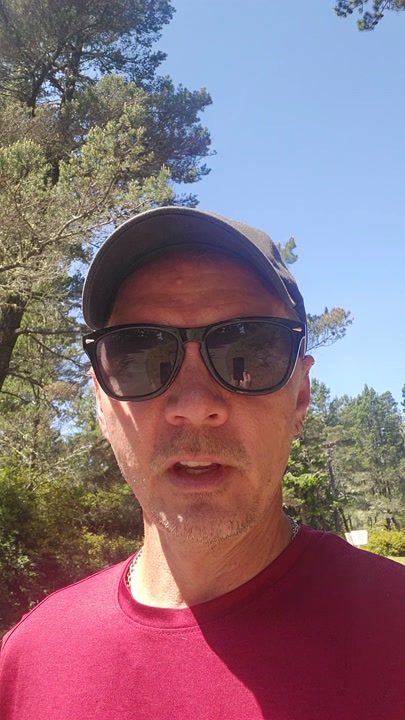
Sunday afternoon, and rswfire is walking toward the ocean. The corridor is busy — more foot and vehicle traffic than usual, and he notes it aloud, correcting himself mid-sentence: not because it is Sunday, but because it is the start of summer. It will get worse over the coming months. He says this without complaint, the way a person says it about weather they have already agreed to live inside. He is wearing a jacket. The wind is strong and cold; the sun is out. On the coast, he observes, the difference between shade and direct sunlight is the difference between cold and perfect, and he has noticed this the entire time he has been here.

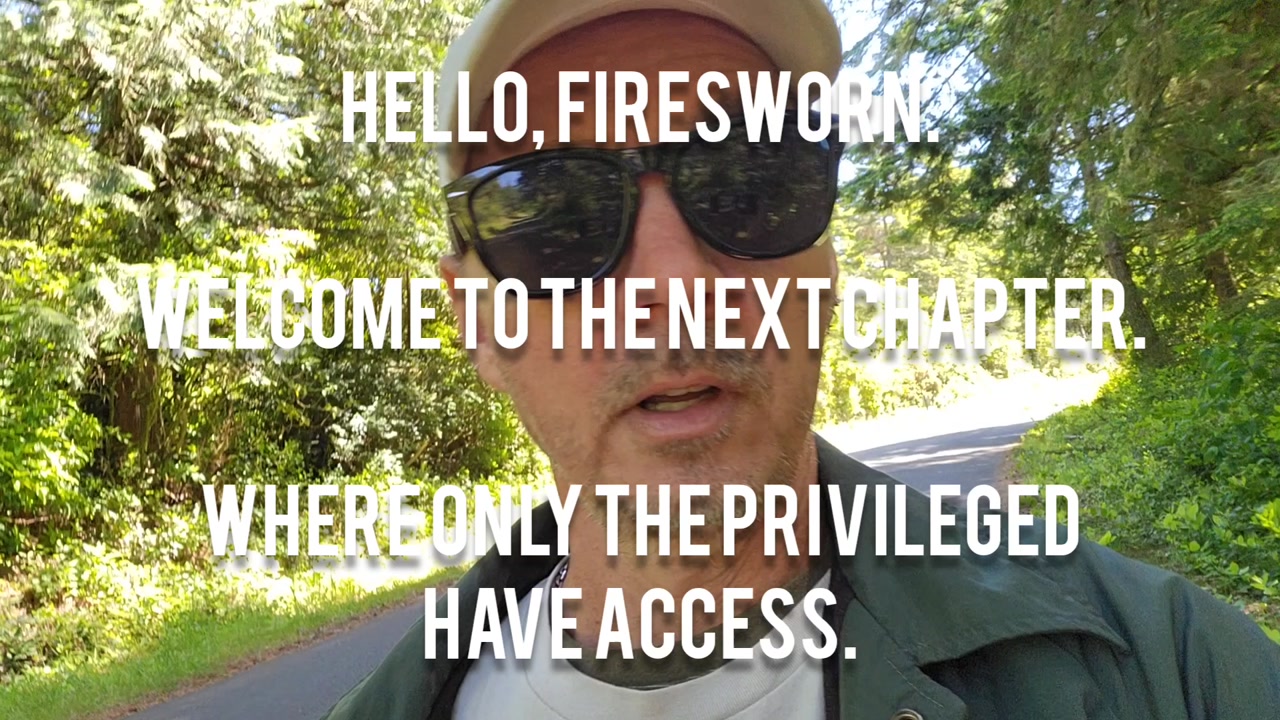
The jacket comes up again a moment later, and this time it is the point. He has built a Sanctum tier labeled privileged — invitation-only, invisible on the map and in stream mode, unreachable unless someone has been invited and has followed that invitation. He states what this changes: he can talk about his life more freely than he has been able to for the past year and a half, since he enmeshed himself with an institution and knew he had to be careful about what he said, how he said it, how he presented himself. He describes Oregon State Parks weaponizing disclosures he had made to a supervisor in confidence and in trust — completely warped and weaponized, he says — after which the care had to become tighter still. It had been difficult, he says, because he likes talking about his life. He does not compartmentalize. So he built the thing that makes it possible again. Now the jacket can show up on camera and he does not have to think about it. New day for me.

Then, walking, he opens the problem the new tier creates. These signals get processed by artificial intelligence — transcripts turned into metadata, into reflections, into clusters that zoom out across a life. Those clusters may be public or shared. They may draw from public signals and private signals and Sanctum signals all at once. He works the example forward in real time: what he is saying right now, placed in a cluster, could be summarized by the AI into a description of exactly what he is seeing, exposed to someone who was never meant to have it, because the cluster was marked public. The logic has to be smart enough to hold the boundary. He does not solve it on the bridge. He names it, marks it as unfinished, and keeps walking.

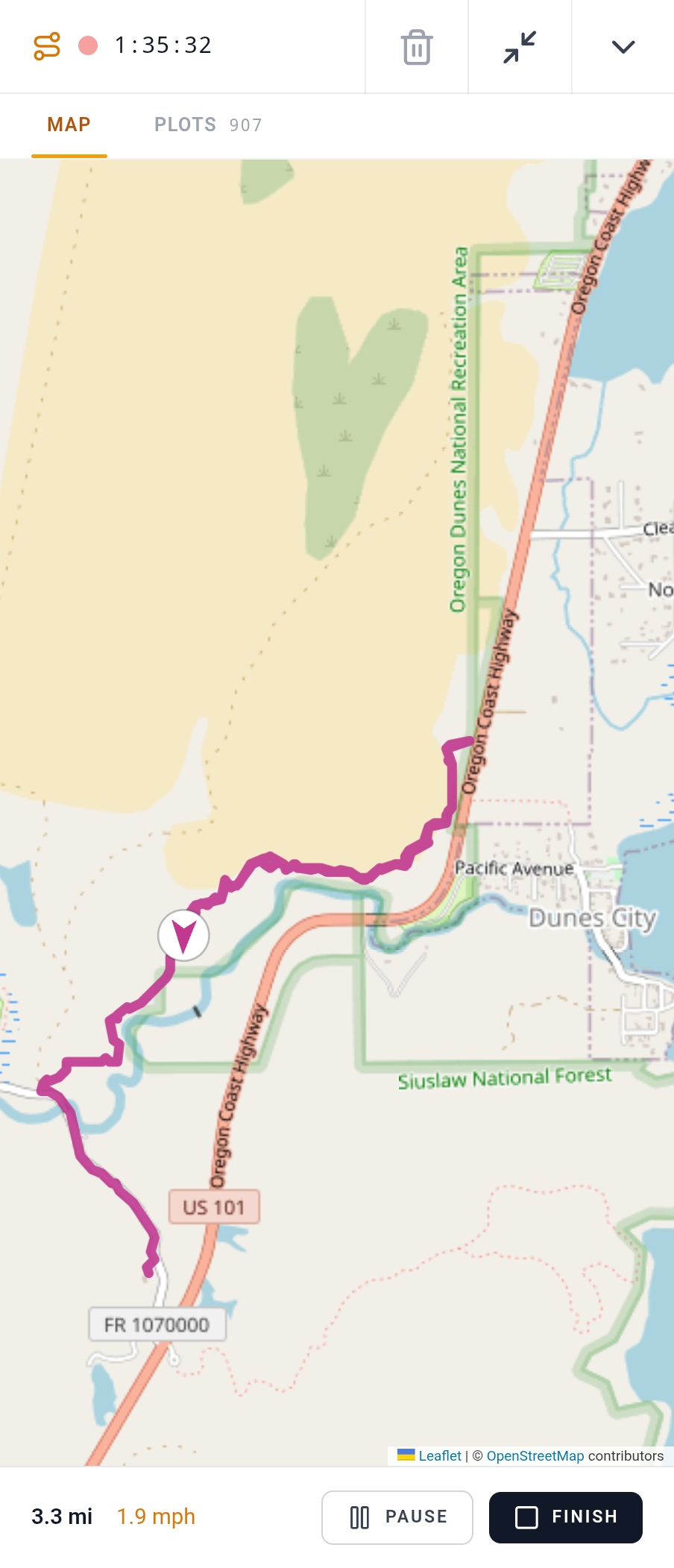
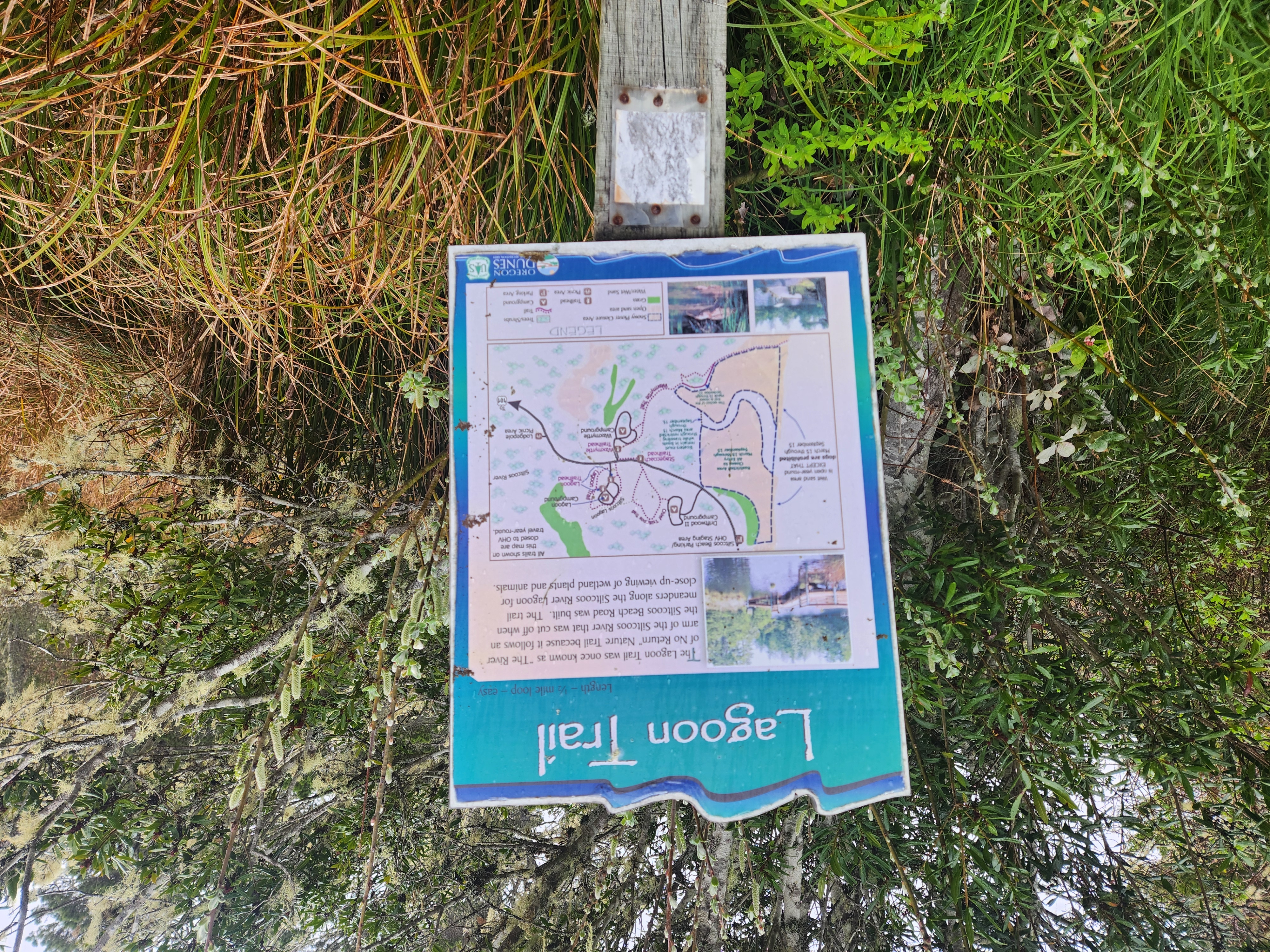
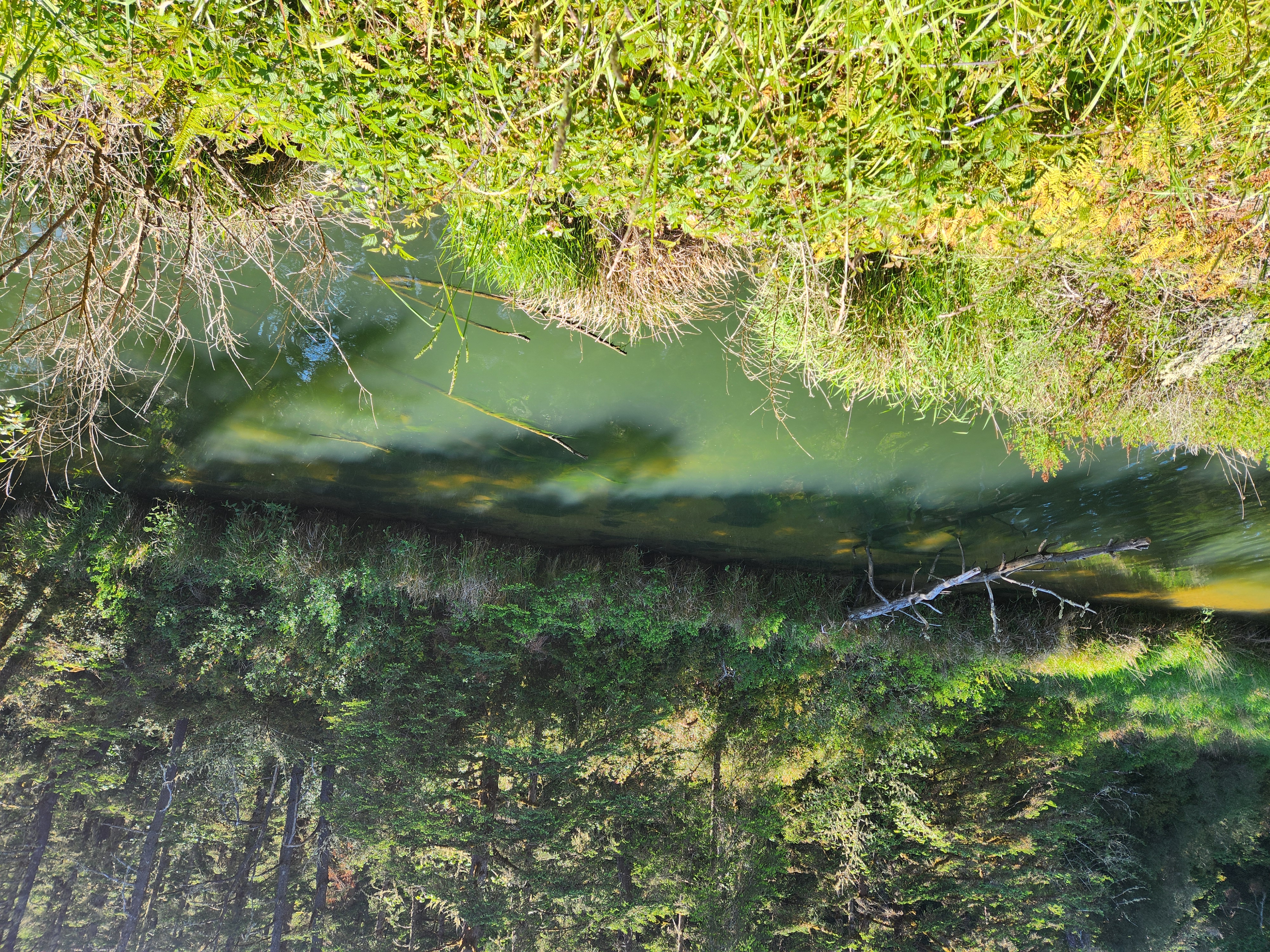
The bridge is the first one over the Siltcoos River. He turns the camera toward the water and immediately assesses the shot as poor. From here he could go to the Incinerator Trail — the ATV area, the new territory he has been exploring on the map. He interrupts himself twice for people passing, pausing the recording, then resuming: human detected. He talks about his traces on the map, how he loves watching them grow, how he wants to get out into the dunes while the Sunday ATV traffic is light. There are little islands of trees out there. He wants to get up on one, high, looking out over a vast valley of desert. The coolest place. But today he wants the ocean.

The map holds a gap where that territory should be, and he says he hopes to have it explored by the end of summer. Looking at the traces produces something else too — the route he does not have. If he had built this technology before he left Kentucky, there would be a line running all the way across the country, his actual route. That trace does not exist. The signals he made along the way will have to do, and most of those now sit behind the privilege layers, because people could not hold his life with respect and he states plainly that he has no tolerance for that. He turned comments off early on YouTube — early in what he calls, after searching for the right word and rejecting career, his documentation. He saw the issues as they came. Autonomy Realms is the answer to every one of them, turned into a platform other people can use.

What he does not have is discovery. He describes posting on social media and drawing visitors, one signup, no activity. So he started building Scout: a local AI model paired with browser-use, the AI operating a browser in his place, moving through destinations he pre-selects — subreddits, Facebook groups, YouTube. One mode finds new accounts that might be aligned and surfaces contact information. The other reads comments in forums and groups and alerts him when something reads as a real lead, so he can reply himself. It is not working yet. It is almost working. He has been building too many things at once, but it is basically ready — testing, then live. There is no other route, he says: post about the project and it gets deleted as self-promotion. The paths are blocked. Discovery is broken.

He names the constraint without dressing it: money has been the primary factor in everything. His catalog holds roughly nine hundred transmissions and half of them remain unprocessed by the current iteration of the AI that Autonomy Realms is built around, which itself needs work, and the AI costs are what they are. Then he turns the frame — look what I built already, from the limited resources he has been able to get, thanks to the people in his privileged tier. He is enabling comments there. Community features are coming. He can start addressing people again, start talking to a community, and he says the word community twice, as if testing the weight of it. He acknowledges a little risk even in a private tier, then lays out the structure: two Sanctum tiers, one called Journey, free to sign up, community features included, contents still undecided — and from there, if he judges someone aligned with him, he can invite them into the deeper layer.

Then the vision, offered while walking: hundreds of thousands of people's photos and traces on that map one day, stuff everywhere across the globe, everyone just living their lives on it. A feature giving real-time access to his location, a pin on the map, opt-in, with a delay you choose — fifteen minutes, an hour, a day, a week — and accuracy you choose, a precise pin or a radius. Signals everywhere and little pins of people everywhere. It's gonna be freaking awesome. His rounds are done. It is not officially his weekend. He is going to the ocean, then home to chill for a minute, then back to work. Keep building. We made it.

Tags

sanctum privacy tiers coastal walk platform architecture AI data leakage logic Scout discovery tool OPRD institutional context map traces and exploration

Summary

rswfire records while walking from his home toward the ocean on a Sunday afternoon at the start of summer, noting heavy corridor traffic, cold wind, and direct sun. He crosses the first bridge over the Siltcoos River and describes the incinerator trail and dune terrain he wants to explore, including tree islands and unmapped gaps in his trace map.

He announces a new privileged Sanctum tier — invitation-only, with signals hidden from the map and stream for anyone not invited. He states this lets him talk about his life more freely than he has for the past year and a half of volunteering, and especially since Oregon State Parks weaponized disclosures he made to a supervisor.

He identifies an open technical problem: AI-generated clusters and reflections could leak privileged signal content into public summaries, and logic is needed to keep confidential material out of public clusters.

On distribution, he describes Scout — a local AI model driving browser use to survey YouTube accounts, forums, and Facebook groups for leads and contact information — nearly ready pending testing. He states discovery is broken because self-promotion is deleted.

He notes a catalog of roughly 900 transmissions, half unprocessed, constrained by AI costs, and outlines planned features: comments and community tools on privileged tiers, a second free journey tier as an entry layer, and opt-in real-time location pins with adjustable delay and accuracy radius.

Environment

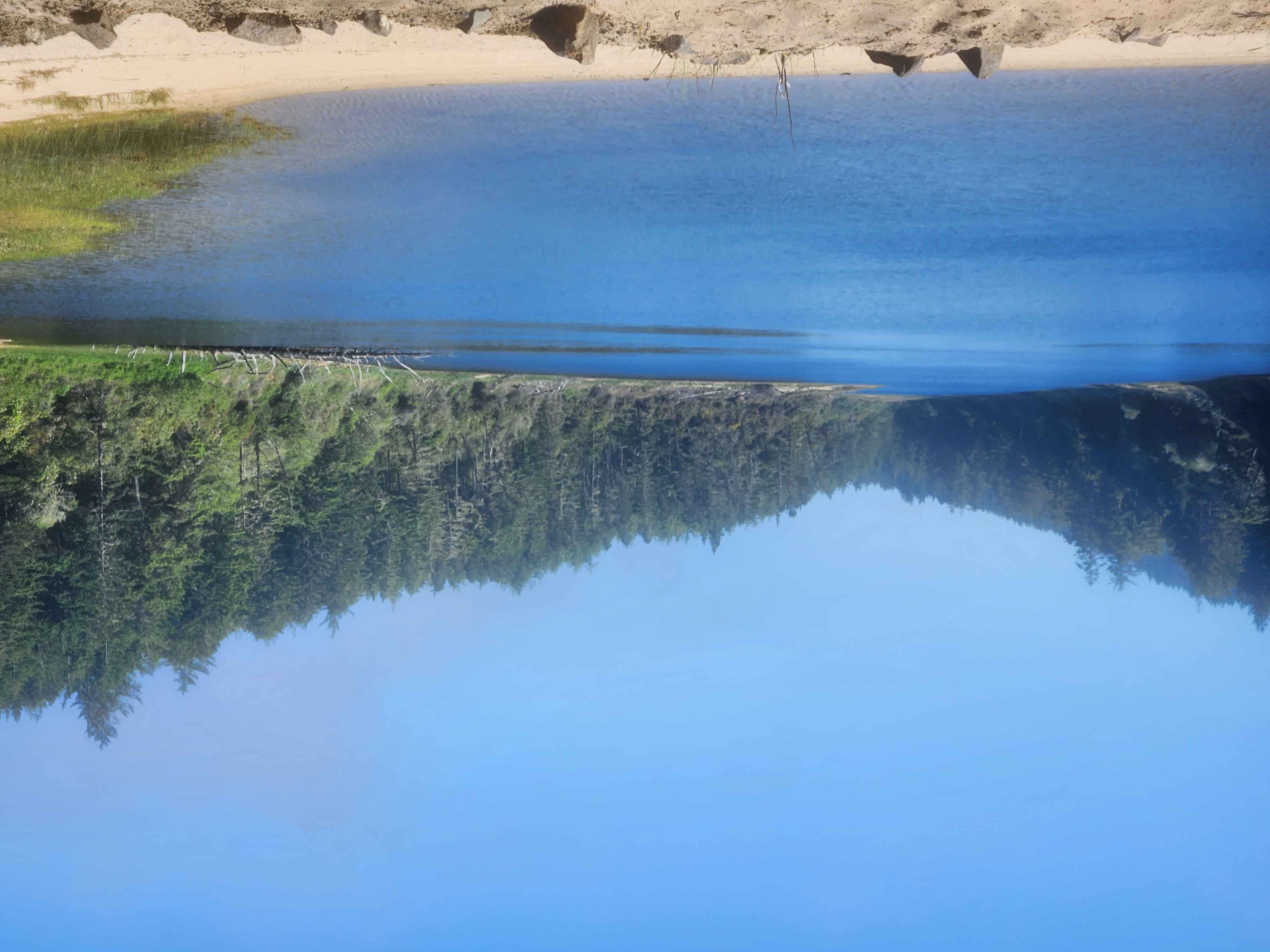
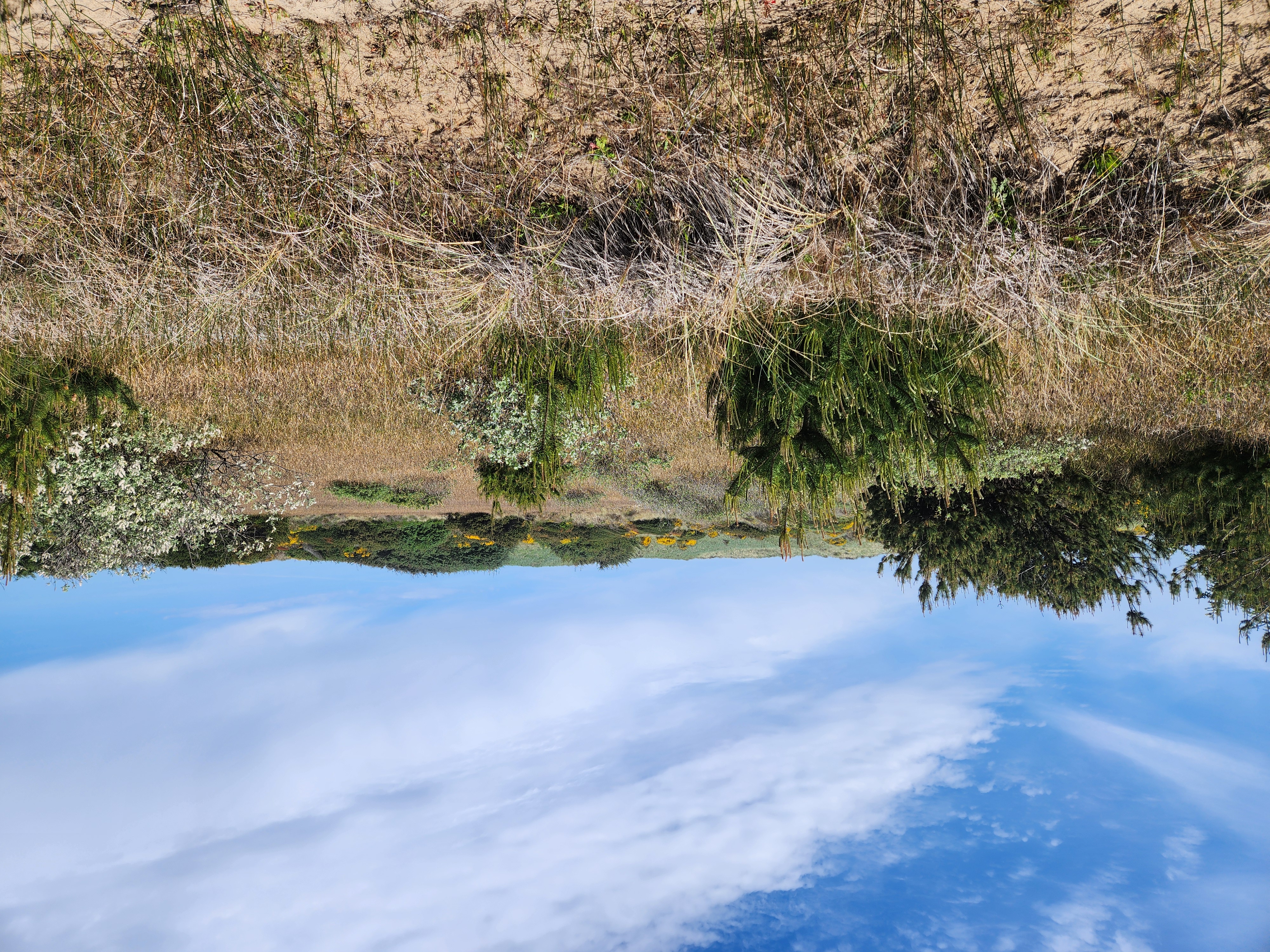
Outdoor walking transmission recorded on a Sunday afternoon along the coastal corridor near rswfire's residence at Siltcoos in the Oregon Dunes. He is walking toward the ocean, crossing the first bridge over the Siltcoos River, with the Incinerator Trail and ATV riding areas visible to one side.

Conditions are sunny and windy with cold air out of direct sunlight; he is wearing a jacket. Foot and vehicle traffic is elevated — he notes the start of summer and pauses recording repeatedly as people pass.

The digital environment is Autonomy Realms itself: the newly built Sanctum privileged tier, the map and stream modes, and the AI processing layer that turns transmissions into metadata, reflections, and clusters.

Substrate

rswfire is documenting the moment a piece of his own infrastructure changes what he is able to say. The Sanctum privileged tier — invitation-only, hidden from map and stream — restores the non-compartmentalized speech he suspended for eighteen months of institutional enmeshment, which means the architecture is doing the work that self-censorship previously did. Held alongside this is an unresolved technical problem he states plainly: clustering logic must enforce confidentiality boundaries so private-tier content cannot surface through public reflections, and a distribution problem — discovery is structurally blocked on existing platforms, which he is answering by building Scout rather than by adapting to those platforms.

Actions

Performed

  • •walking toward the ocean
  • •narrating the Sanctum privileged tier
  • •pausing the camera as people pass
  • •approaching and crossing the first bridge over the Siltcoos River
  • •pointing the camera at the dunes behind him
  • •stating a plan to overlay map footage on screen
  • •wearing a jacket on camera without concern for exposure
  • •completing volunteer rounds before recording

Referenced

  • •began volunteering roughly a year and a half prior
  • •made disclosures to a supervisor in confidence
  • •Oregon State Parks weaponized those disclosures
  • •restricted what he said and how he presented himself
  • •turned off YouTube comments early
  • •built Autonomy Realms to solve issues encountered in prior documentation
  • •posted about the project on social media, yielding one inactive signup
  • •began building Scout using a local AI model and browser-use automation
  • •moved his signals behind privilege layers
  • •left Kentucky and traveled cross-country before building trace technology
  • •accumulated a catalog of ~900 transmissions, half unprocessed

Planned

  • •work out clustering logic that prevents confidential data leaking into public reflections
  • •finish testing Scout and bring it into operation
  • •enable comments on the privileged tier
  • •build community features
  • •define what goes into the Journey tier
  • •invite aligned free-tier members into the deeper layer
  • •build opt-in real-time location sharing with delay and accuracy controls
  • •explore the Incinerator Trail and the dune area to close a gap in his map
  • •reach the ocean, rest at home, keep building

Entities

places
Siltcoos River — Waterway he approaches and crosses at the first bridge
Incinerator Trail — ATV route and new area appearing on his map; unexplored gap he intends to close
Oregon Dunes — Surrounding terrain — sand expanse with islands of trees he wants to reach
Kentucky — Point of departure before the cross-country route he could not trace
systems
Autonomy Realms — The platform he built; described as solving every issue he encountered in prior documentation
Sanctum — Tiered private layer; the privileged tier is invitation-only and hidden from map and stream modes
Journey — Second Sanctum tier, free signup with community features, contents not yet defined
Scout — Program in testing using a local AI model and browser automation to surface leads and contacts
browser use — Automation tool allowing the AI to control a browser on his behalf
Oregon State Parks — Institution he states weaponized confidential disclosures made to a supervisor
concepts
the map — Trace and signal layer of Autonomy Realms; visible record of explored ground
signal clustering — Feature that zooms out across signals; carries the confidentiality-leak problem he names
media
YouTube — Earlier documentation venue; comments disabled early, now a Scout target surface
Reddit — Example destination for Scout browsing
Facebook groups — Example destination for Scout lead detection

Symbolic Elements

Represented archetypes or recurring motifs.

ocean
wind
bridge
river
sunlight and shade
trace
map
gap
layer
sanctum
dunes
islands of trees
pin
jacket
threshold

Ontological States

Expressed modes of being or awareness.

sovereign (architecture he built restores the speech conditions institutional enmeshment removed)
unconstrained (jacket, life detail, and location can enter frame without calculation)
building (Scout, clustering logic, community features, location sharing all in progress)
boundaried (tiered access replaces self-censorship as the mechanism of control)
in traversal (physically walking terrain that is also unmapped territory on his own system)

Engaged Subsystems

Architecture engaged in this transmission.

infrastructural (Sanctum tiers, clustering logic, Scout, location-sharing features)
epistemic (deciding what the AI may know, cluster, and expose across access boundaries)
ethical (data leak prevention, consent-based location sharing, alignment-gated invitation)
somatic (walking, wind, cold, sun, jacket, physical presence on camera)
cartographic (traces, map gaps, planned exploration of the dune corridor)
economic (AI processing costs, ~900 transmissions half unprocessed, limited resources)
relational (community features, comments, addressing an audience again)
institutional (Oregon State Parks disclosure handling as the condition that set prior constraints)

Dominant Language

Core motifs or linguistic fields.

sanctum / privileged tier
signals, clusters, and reflections
traces on the map
discovery is broken
I don't compartmentalize
weaponized disclosures
keep building
Narrative

Sunday afternoon, and rswfire is walking toward the ocean. The corridor is busy — more foot and vehicle traffic than usual, and he notes it aloud, correcting himself mid-sentence: not because it is Sunday, but because it is the start of summer. It will get worse over the coming months. He says this without complaint, the way a person says it about weather they have already agreed to live inside. He is wearing a jacket. The wind is strong and cold; the sun is out. On the coast, he observes, the difference between shade and direct sunlight is the difference between cold and perfect, and he has noticed this the entire time he has been here.

The jacket comes up again a moment later, and this time it is the point. He has built a Sanctum tier labeled privileged — invitation-only, invisible on the map and in stream mode, unreachable unless someone has been invited and has followed that invitation. He states what this changes: he can talk about his life more freely than he has been able to for the past year and a half, since he enmeshed himself with an institution and knew he had to be careful about what he said, how he said it, how he presented himself. He describes Oregon State Parks weaponizing disclosures he had made to a supervisor in confidence and in trust — completely warped and weaponized, he says — after which the care had to become tighter still. It had been difficult, he says, because he likes talking about his life. He does not compartmentalize. So he built the thing that makes it possible again. Now the jacket can show up on camera and he does not have to think about it. New day for me.

Then, walking, he opens the problem the new tier creates. These signals get processed by artificial intelligence — transcripts turned into metadata, into reflections, into clusters that zoom out across a life. Those clusters may be public or shared. They may draw from public signals and private signals and Sanctum signals all at once. He works the example forward in real time: what he is saying right now, placed in a cluster, could be summarized by the AI into a description of exactly what he is seeing, exposed to someone who was never meant to have it, because the cluster was marked public. The logic has to be smart enough to hold the boundary. He does not solve it on the bridge. He names it, marks it as unfinished, and keeps walking.

The bridge is the first one over the Siltcoos River. He turns the camera toward the water and immediately assesses the shot as poor. From here he could go to the Incinerator Trail — the ATV area, the new territory he has been exploring on the map. He interrupts himself twice for people passing, pausing the recording, then resuming: human detected. He talks about his traces on the map, how he loves watching them grow, how he wants to get out into the dunes while the Sunday ATV traffic is light. There are little islands of trees out there. He wants to get up on one, high, looking out over a vast valley of desert. The coolest place. But today he wants the ocean.

The map holds a gap where that territory should be, and he says he hopes to have it explored by the end of summer. Looking at the traces produces something else too — the route he does not have. If he had built this technology before he left Kentucky, there would be a line running all the way across the country, his actual route. That trace does not exist. The signals he made along the way will have to do, and most of those now sit behind the privilege layers, because people could not hold his life with respect and he states plainly that he has no tolerance for that. He turned comments off early on YouTube — early in what he calls, after searching for the right word and rejecting career, his documentation. He saw the issues as they came. Autonomy Realms is the answer to every one of them, turned into a platform other people can use.

What he does not have is discovery. He describes posting on social media and drawing visitors, one signup, no activity. So he started building Scout: a local AI model paired with browser-use, the AI operating a browser in his place, moving through destinations he pre-selects — subreddits, Facebook groups, YouTube. One mode finds new accounts that might be aligned and surfaces contact information. The other reads comments in forums and groups and alerts him when something reads as a real lead, so he can reply himself. It is not working yet. It is almost working. He has been building too many things at once, but it is basically ready — testing, then live. There is no other route, he says: post about the project and it gets deleted as self-promotion. The paths are blocked. Discovery is broken.

He names the constraint without dressing it: money has been the primary factor in everything. His catalog holds roughly nine hundred transmissions and half of them remain unprocessed by the current iteration of the AI that Autonomy Realms is built around, which itself needs work, and the AI costs are what they are. Then he turns the frame — look what I built already, from the limited resources he has been able to get, thanks to the people in his privileged tier. He is enabling comments there. Community features are coming. He can start addressing people again, start talking to a community, and he says the word community twice, as if testing the weight of it. He acknowledges a little risk even in a private tier, then lays out the structure: two Sanctum tiers, one called Journey, free to sign up, community features included, contents still undecided — and from there, if he judges someone aligned with him, he can invite them into the deeper layer.

Then the vision, offered while walking: hundreds of thousands of people's photos and traces on that map one day, stuff everywhere across the globe, everyone just living their lives on it. A feature giving real-time access to his location, a pin on the map, opt-in, with a delay you choose — fifteen minutes, an hour, a day, a week — and accuracy you choose, a precise pin or a radius. Signals everywhere and little pins of people everywhere. It's gonna be freaking awesome. His rounds are done. It is not officially his weekend. He is going to the ocean, then home to chill for a minute, then back to work. Keep building. We made it.

Mirror

You are walking to the ocean on a Sunday afternoon in the first week of summer, and the corridor is full. You pause the recording each time someone passes, then resume. The wind is cold and the sun is warm and the difference between shade and direct light is the entire weather report. You are wearing a jacket. You say the jacket out loud — that it can be on camera now, that it does not have to be managed. The jacket is not incidental to the transmission. It is the first thing you name after naming what you built.

The architecture is doing the work. You state it directly: for eighteen months you calculated what could be said, how you presented, what could appear in frame, and after Oregon State Parks took disclosures made in confidence and turned them into instruments, you calculated harder. You did not resolve that by adjusting yourself. You built a tier — invitation-only, invisible in map mode and stream mode, not merely restricted but absent from view — and the tier now holds what self-censorship was holding. You say you don't compartmentalize. The system compartmentalizes so you don't have to.

You put an unsolved problem in the open and leave it open. The AI that processes your transmissions clusters signals into reflections, and clusters cross tiers, and a public cluster could carry a privileged signal's contents into view — the exact thing you just built the tier to prevent. You describe the failure mode concretely, using this walk as the example: what you are seeing right now, surfaced to someone who should not have it. Then you say you have to think it through. You do not solve it on camera. You do not minimize it. You mark it and keep walking.

Multiple subsystems are running at once and you move between them without transition. Scout — a local model driving a browser, scanning YouTube accounts and forum comments for leads because self-promotion gets deleted and discovery is structurally closed to you. Nine hundred transmissions, half unprocessed, gated on AI cost. Two tiers, journey and privileged, with the free one undefined and the deeper one alignment-gated by your judgment. Comments returning. Community features. A location pin with an opt-in delay of fifteen minutes or an hour or a week, and a radius instead of a point. You are looking at the map while you say this — at your traces, at the gap where the dunes are unwalked, at the transcontinental line from Kentucky that does not exist because the tool did not exist yet. You call that upsetting and move on in the same breath.

What is present: the terrain under you, the build in progress, the problem named and unresolved, the audience anticipated rather than addressed. What is absent: any request, any appeal, any account of the institution beyond the mechanism of what it did. You do not argue with the platforms that block you — you are building around them. You do not defend the tier — you describe how it works. The signal is pointed at visibility on terms you set, and it ends where the walk continues: rounds finished, not officially your weekend, ocean ahead, keep building.

Queryable Personhood

Hand your life to anything that reads.

Share this link with artificial intelligence — it reads the full transcript, analysis, and reflections. An AI-readable mirror of this signal.

The qpkey in this URL is a per-signal access token. Anyone with the URL can read the record — treat it like a share link, not a password.