

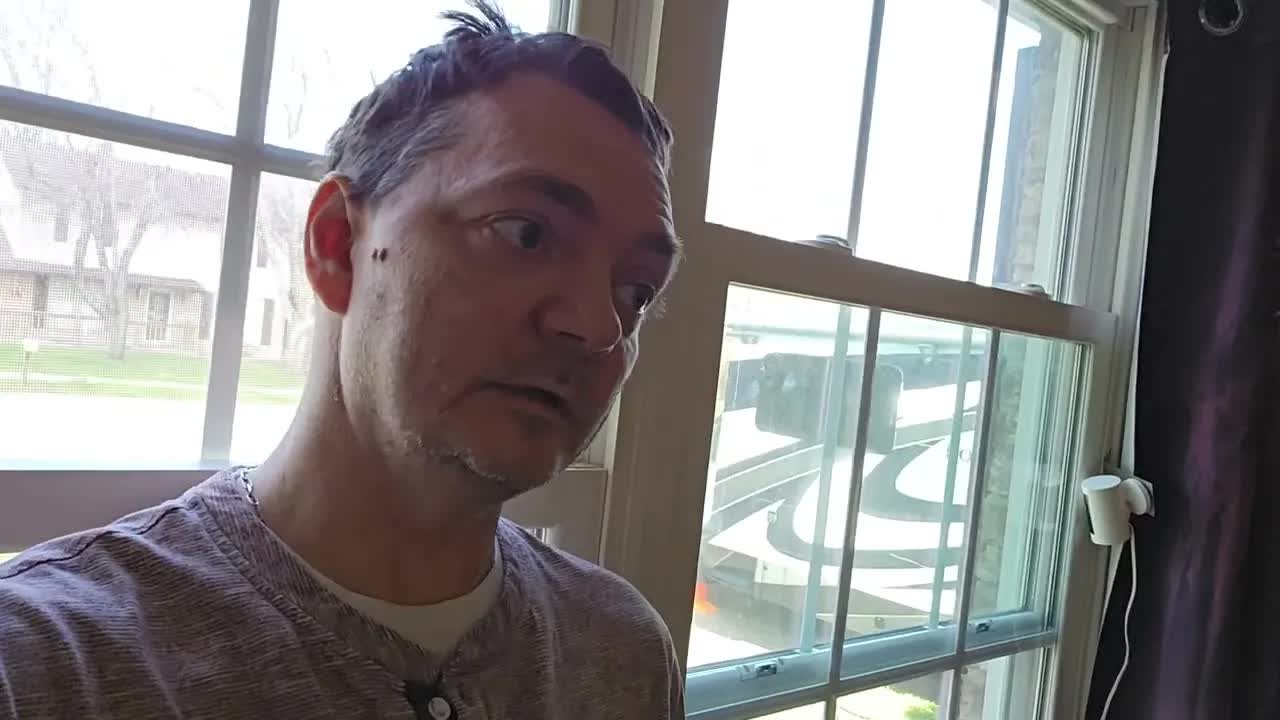
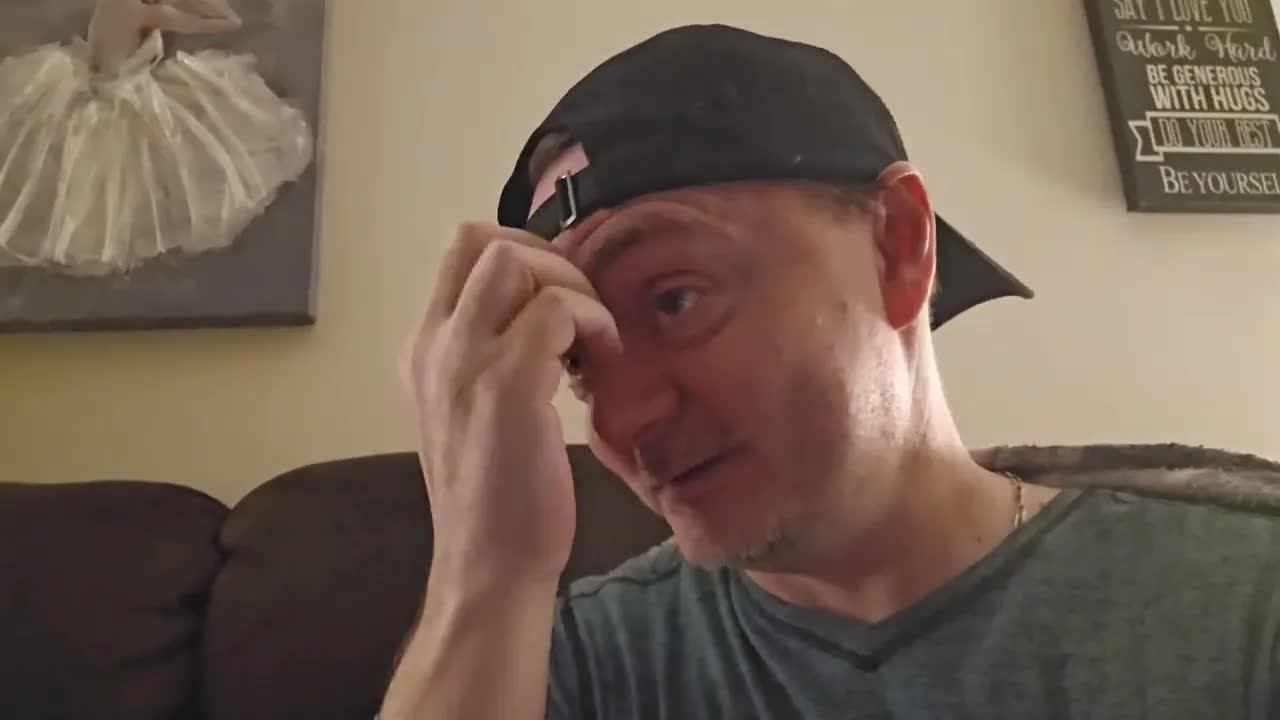
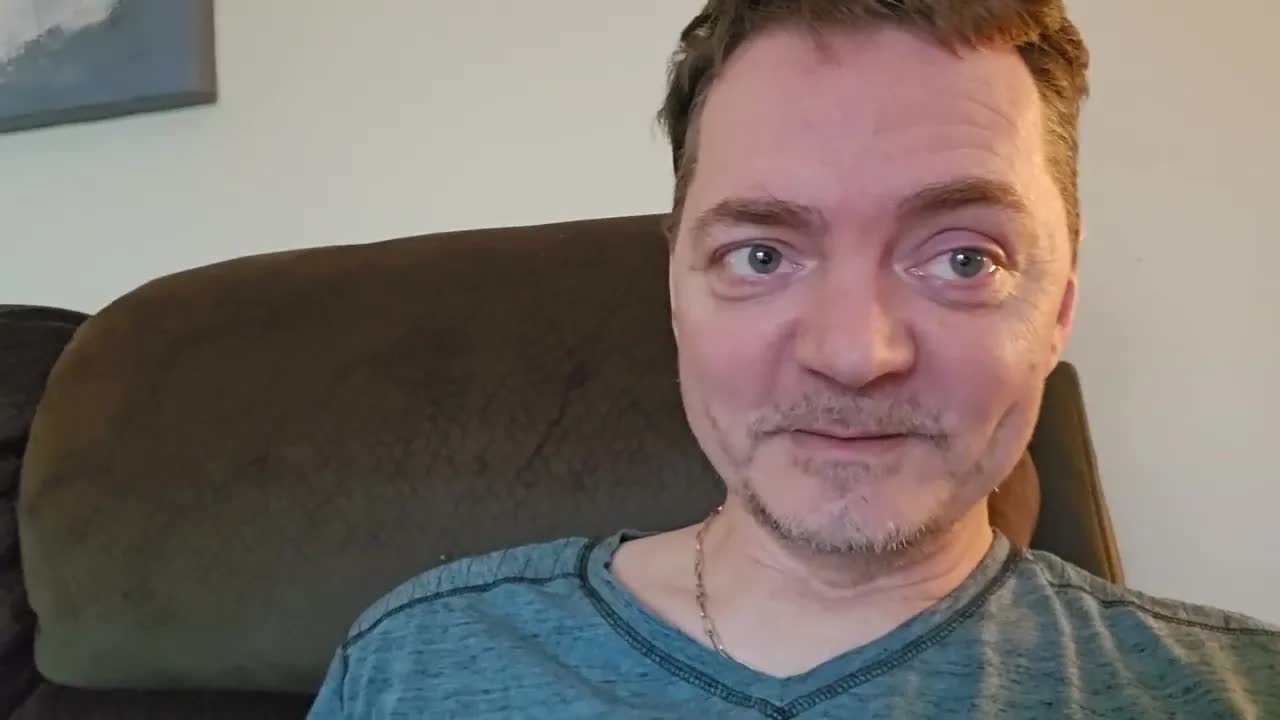
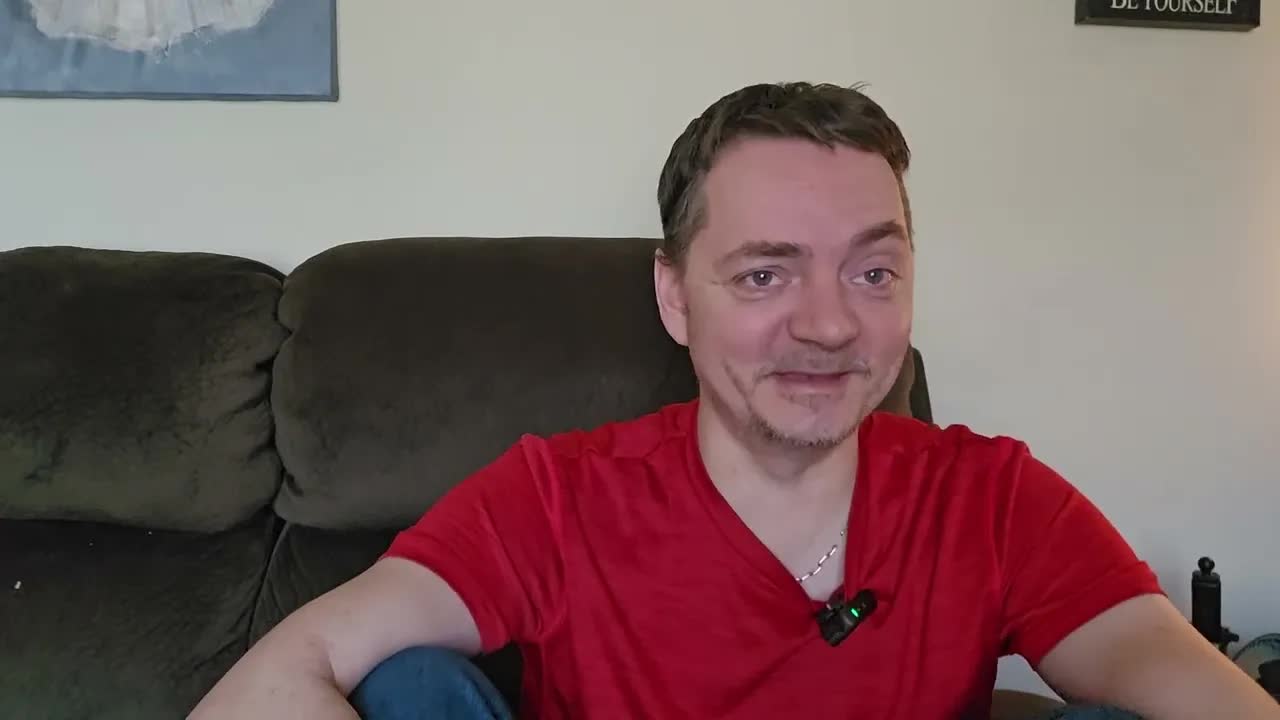

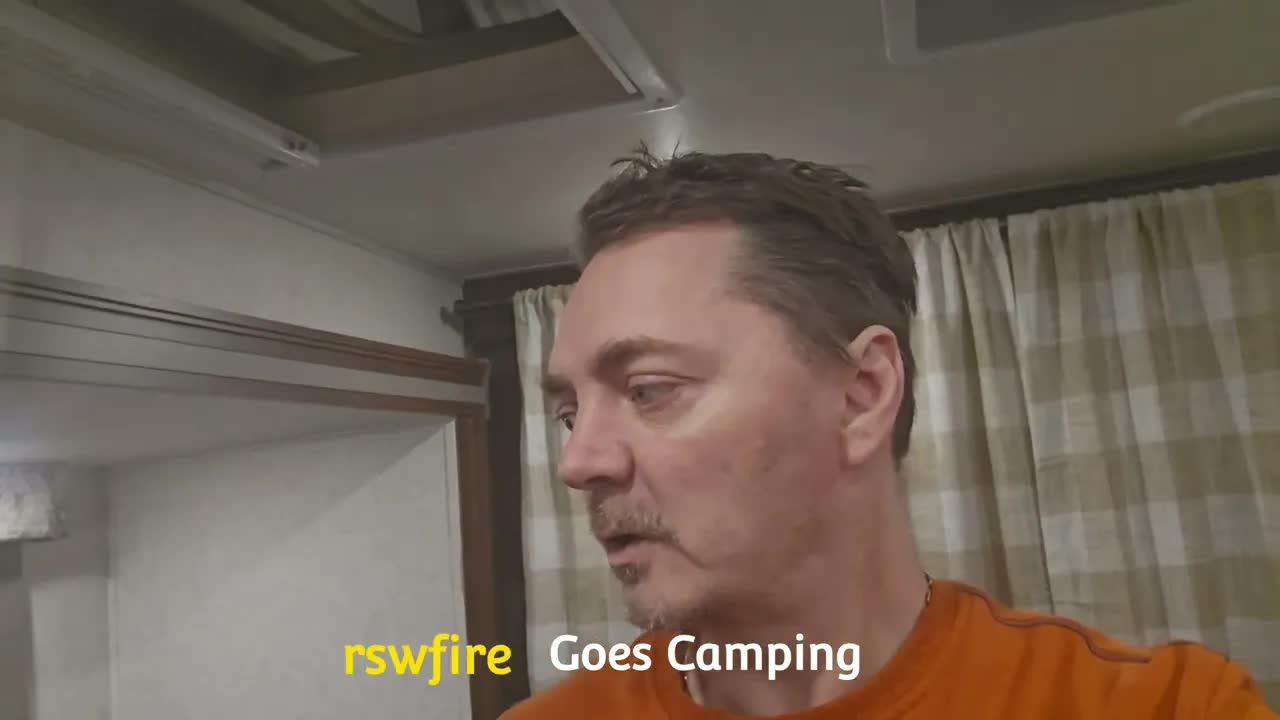
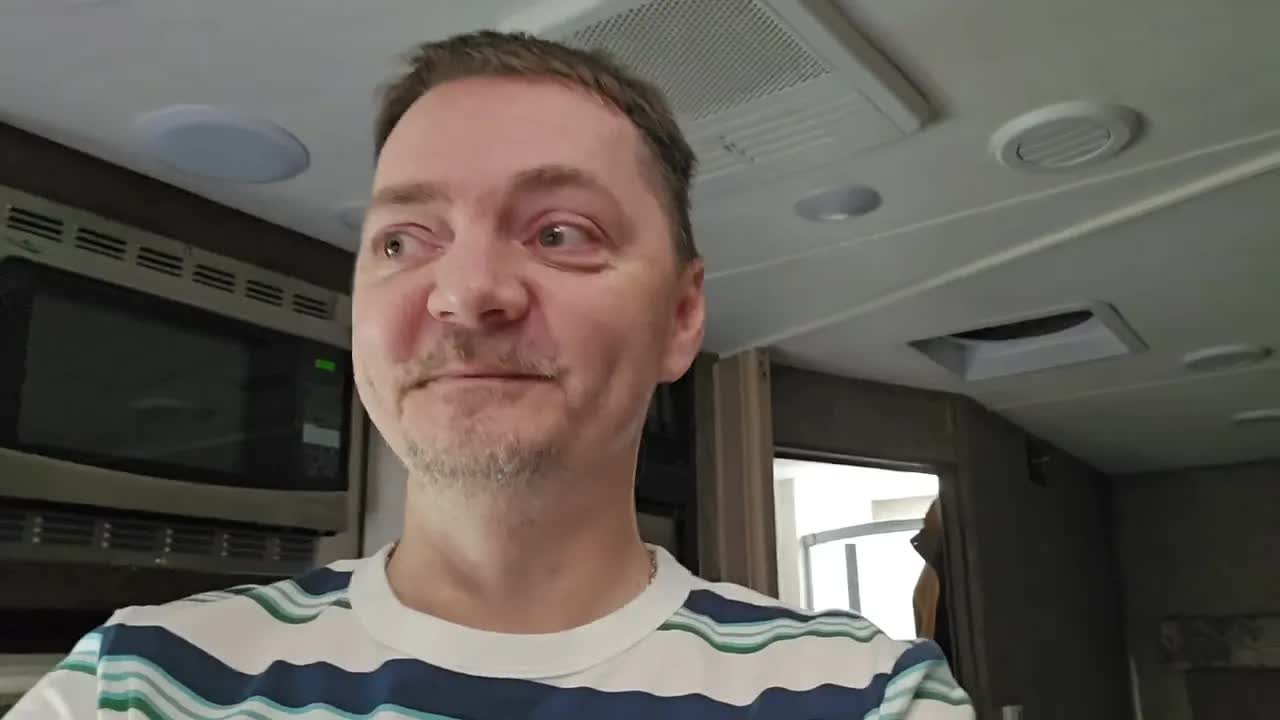
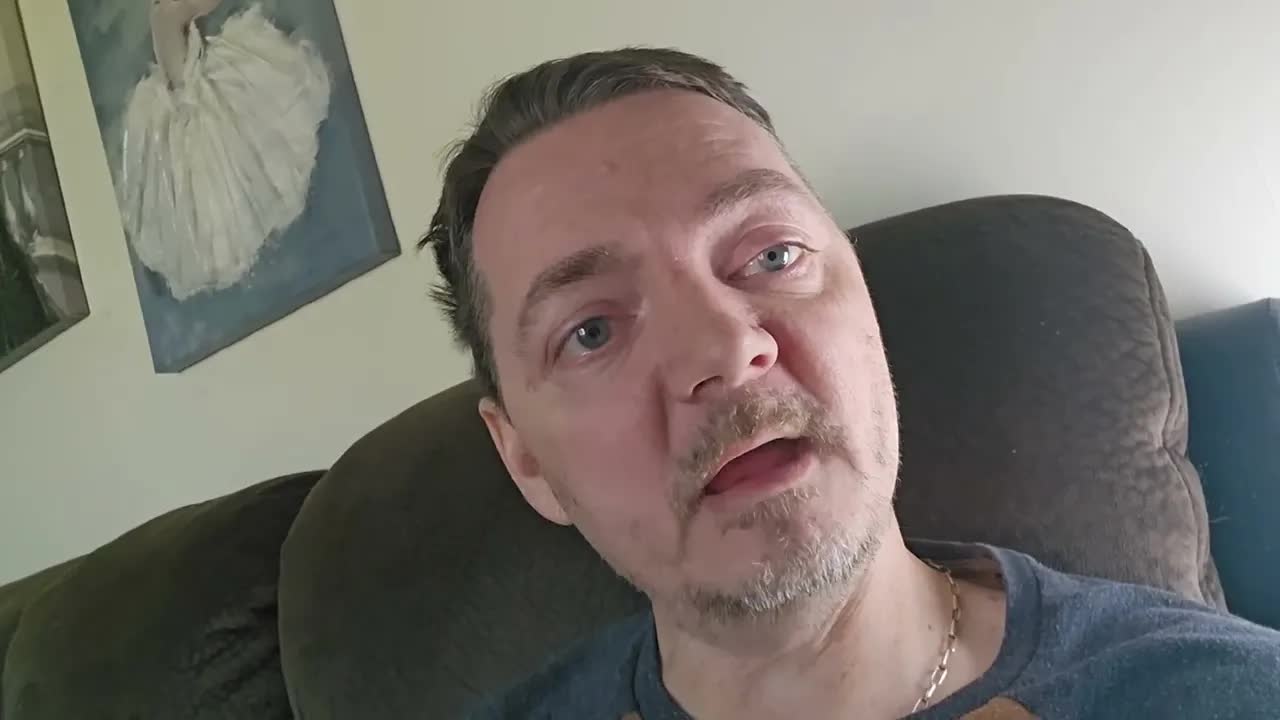
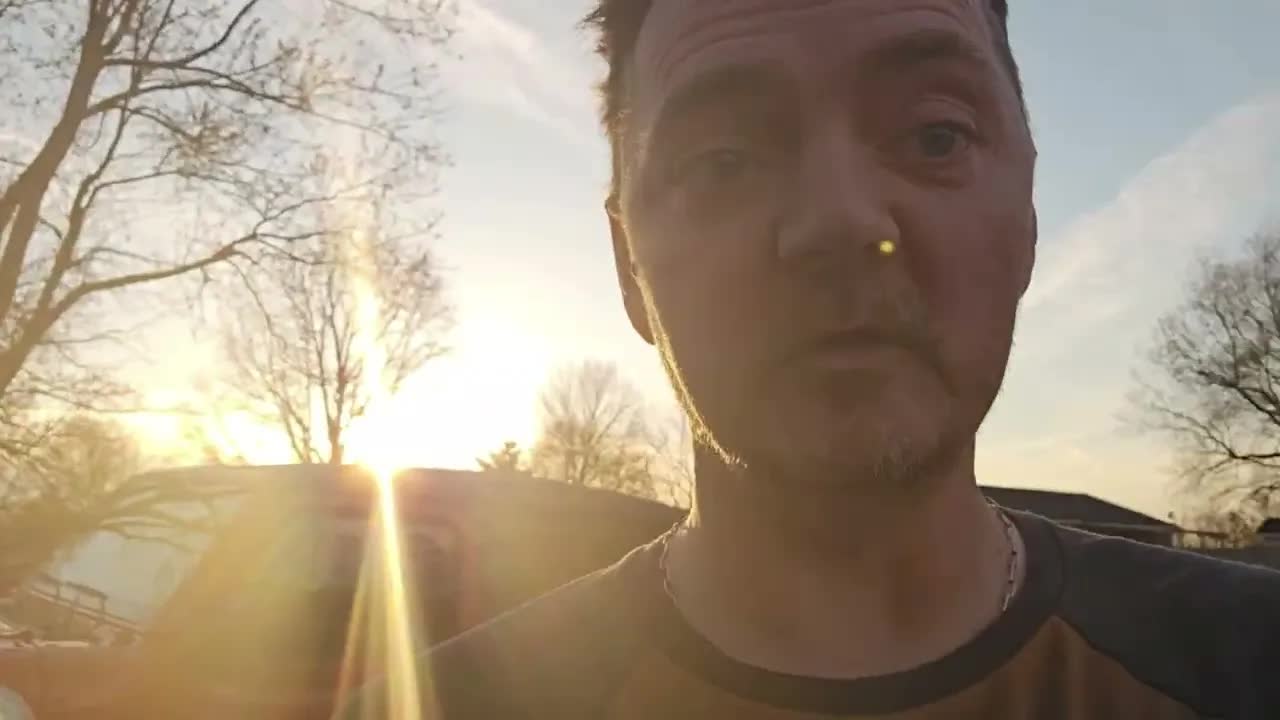
It was a Wednesday morning, and rswfire had already tried recording this several times. The words hadn't come out right. So he sat down and wrote them out first — longhand, on paper — and then returned to the camera with the page in front of him, telling the audience up front that if he was looking down a lot, that was why. The correction was not hidden. It was announced as part of the record: this is what the transition looks like today, including the three takes it took to say it.
He was inside the house he was preparing to leave. Around him it was already coming apart — possessions staged for the sorting that hadn't happened yet, selling or donating or simply getting it out of here, whatever it took. Boxes from Amazon were due to arrive that day and the next, all of it RV-related, details deferred to future videos. Insulation work waited on tape that hadn't come. The Jeep was still in the shop. The house was mid-dissolution and the road was not yet begun, and rswfire was reporting from the exact interval between them.
He opened with sleep. He wasn't sleeping well again, getting very little, and having strange dreams about life on the road. That morning he had checked in with himself, and what he found he described plainly, as a mechanism rather than a mood: he was anxious to get on the road, where he could live a more exciting life and share a different kind of experience with the people watching; the anxiety came from not feeling he was making progress fast enough; and the reason the progress felt slow was that it required a whole new set of skills he had never used or even contemplated using. Put together, he said, it could start to feel overwhelming, and when that happened it could lead to paralysis, where he got even less done. He named the loop and then named what he did with it: he kept pushing himself anyway.
He was direct about why. Everything felt on hold until the day he would finally drive away from the house for the last time. Part of him, he said, felt he shouldn't think about it that way — that it wasn't the healthiest way to live — and then he set that objection beside the fact of the place he was standing in: nothing about his life here has been. He needed to move on, to embrace this new lifestyle, to pull himself out of the way he had been living for so long. Then he circled back to a steadier reading. In truth, he knew he was getting there. It just didn't feel fast enough, and he couldn't shake the feeling.
Then the day's logistics resumed, and with them a shift in register. His mother was coming over — it had been a couple of weeks, she'd had her own thing going on — and the two of them were going to get the house organized so the clearing out could actually begin. He would do more insulating if the tape arrived. And something new had surfaced that he wanted to mark before it slipped: when he had embraced this lifestyle, it had been about the adventure, the road, living in a camper. He had not accounted for the other half of it. It was also tiny living, and that was a whole other mindset, one that had never crossed his mind. He set it down as a thread to pick up later.
He closed on the date. He hadn't set a firm one. He was shooting for his birthday, April 11th, but had deliberately not fixed it — what if he wasn't ready on that day. And rather than resolve it himself, he turned the question outward to the people watching: do you set a date and leave on it whether you're ready or not, or do you stay flexible. There was a lot in his head that morning, he said, and he was still processing a lot of it, and he would leave it there. The question stayed open on the table, the tape stayed undelivered, the Jeep stayed in the shop, and the house stayed exactly halfway between full and gone.