







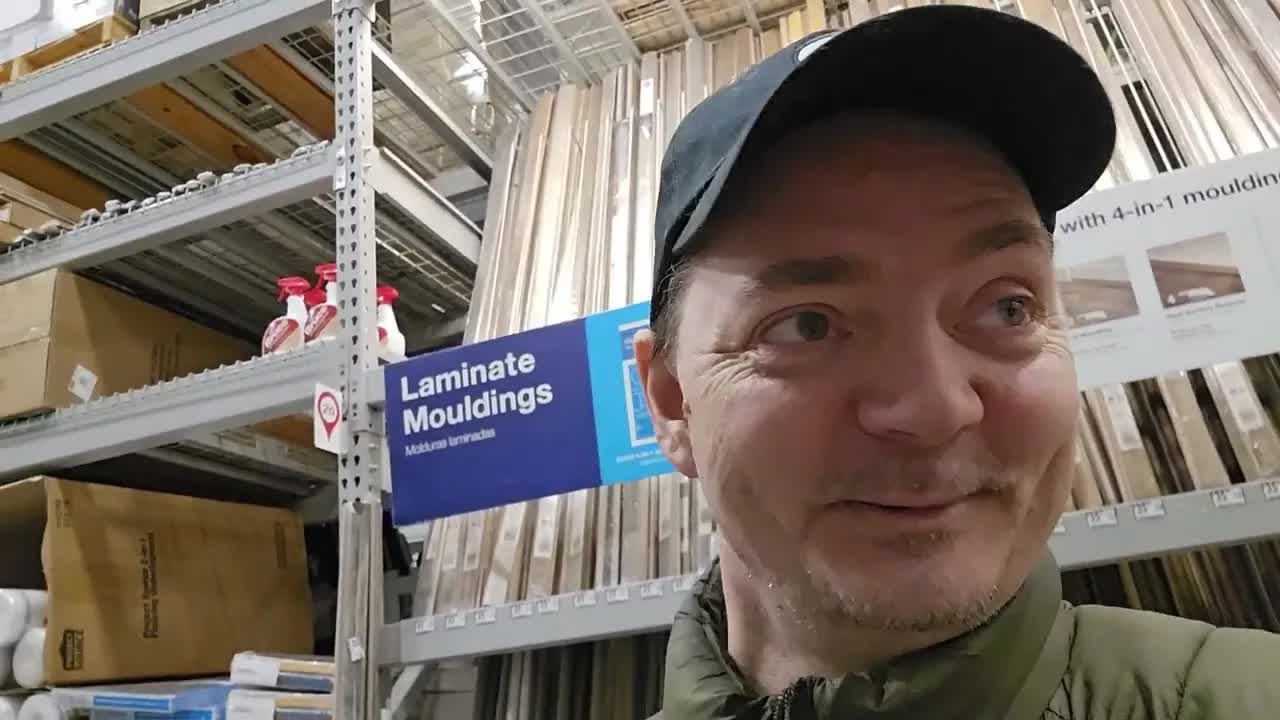












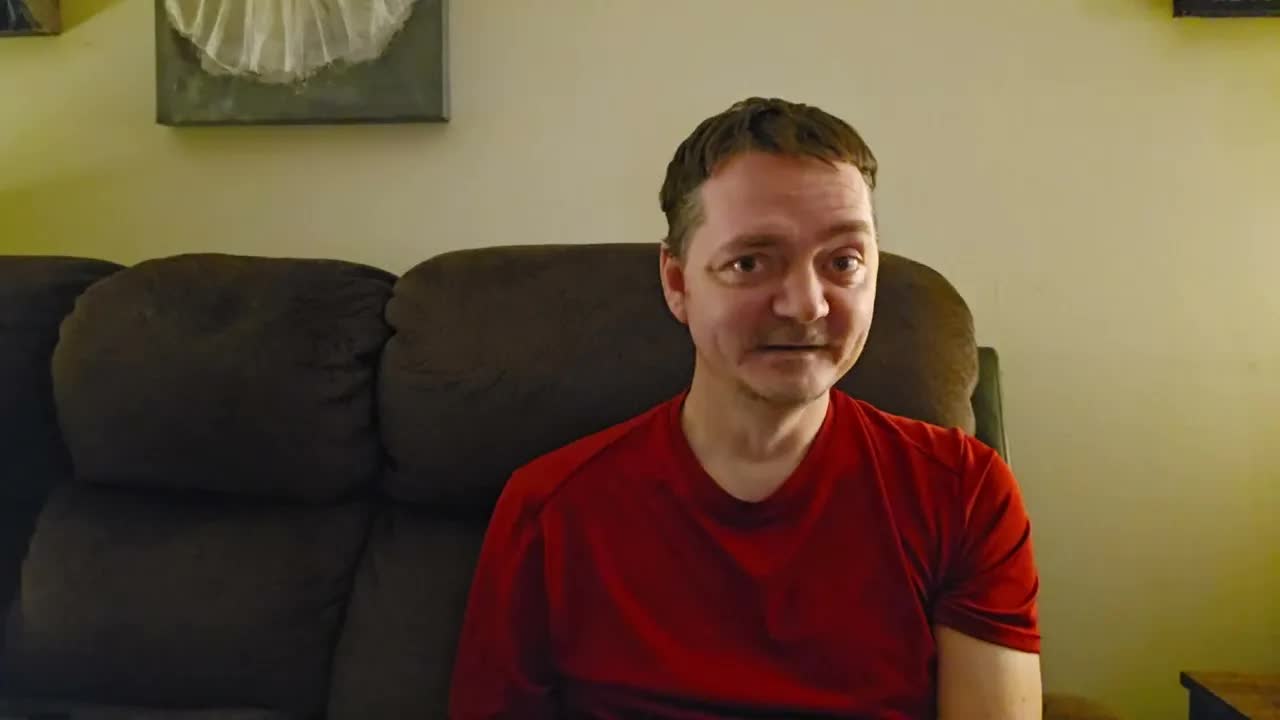
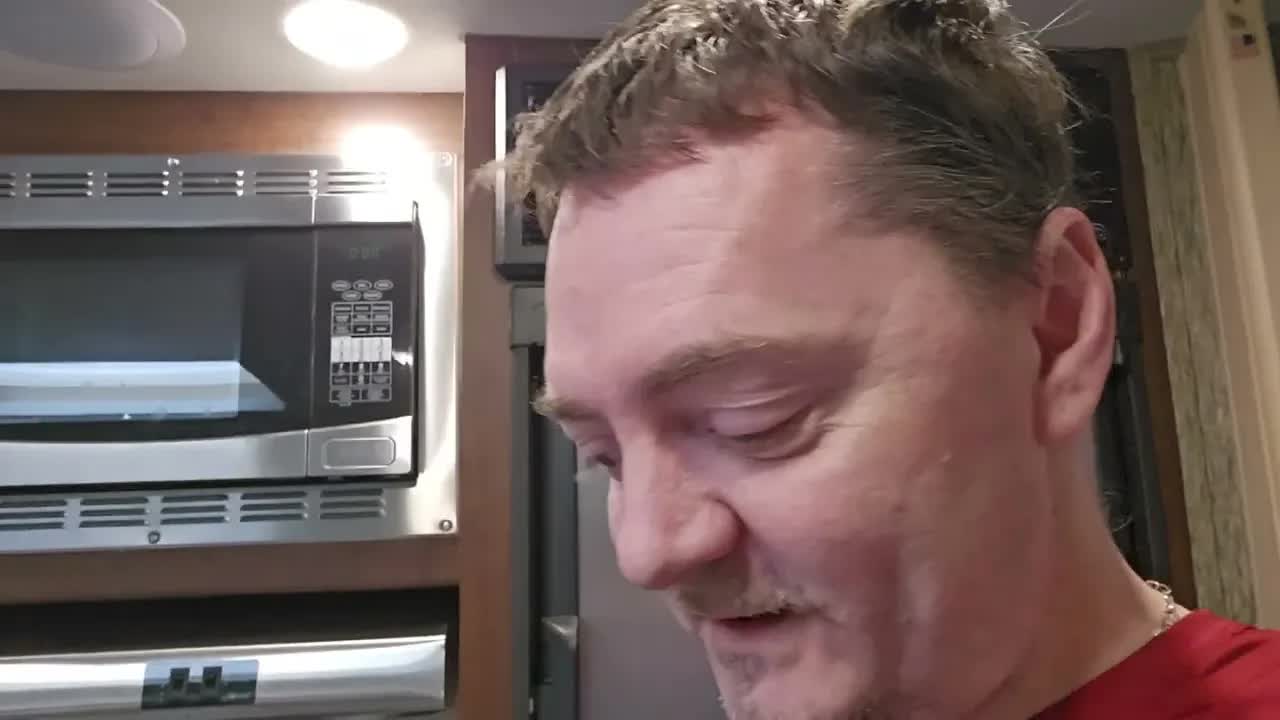

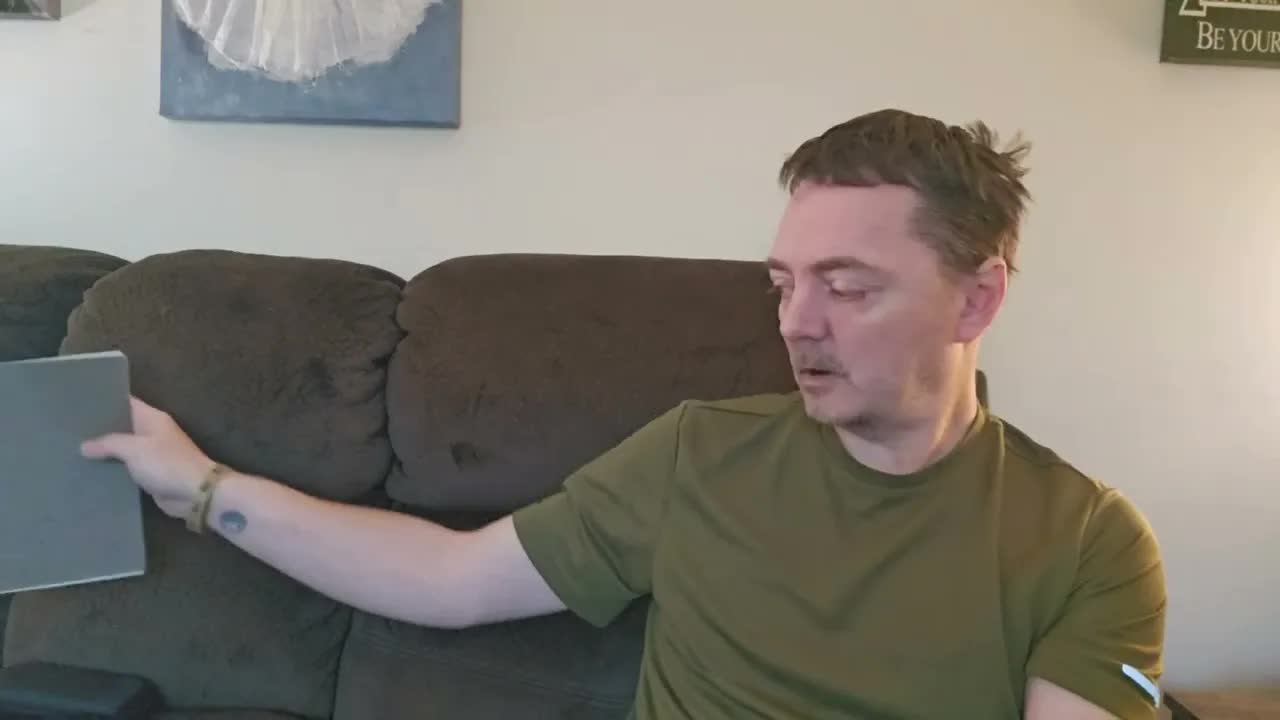

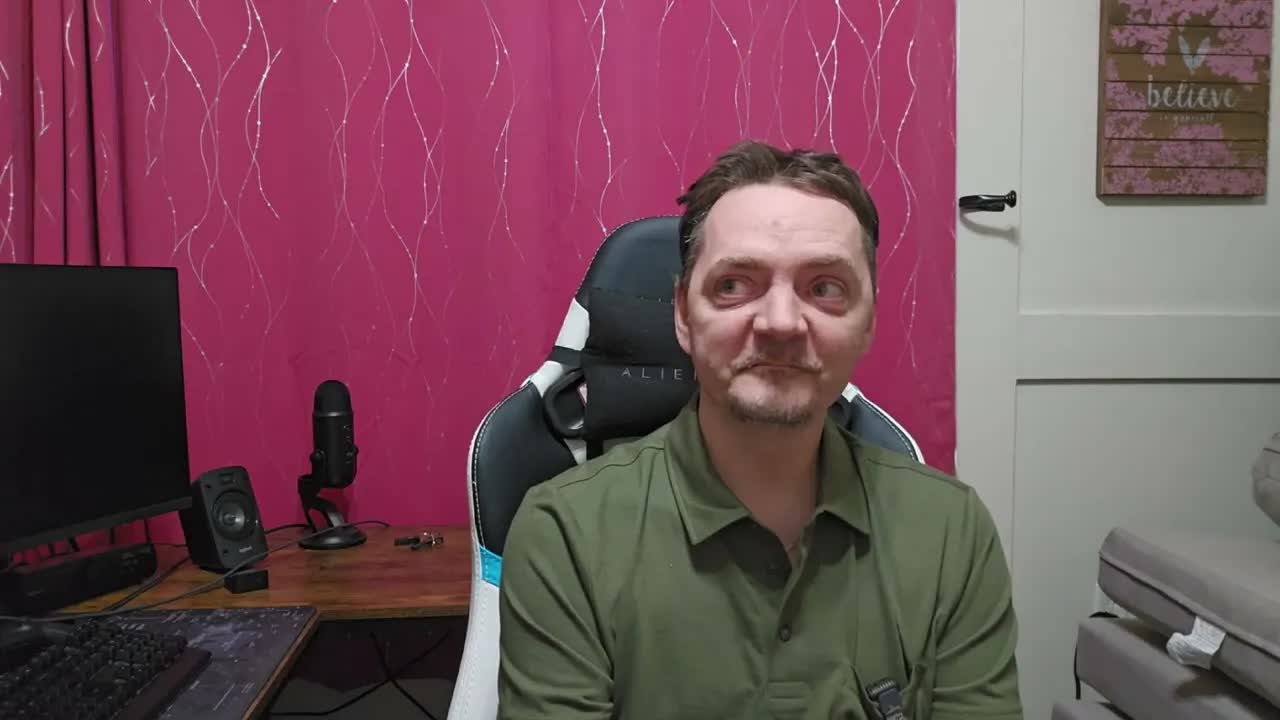











rswfire woke from a nap and turned on the camera before he'd done anything to himself. His hair was wild — he said so first, laughing at it, wishing for a hat and noting that the hats were inside, in another part of the space, far enough away that retrieving one wasn't worth the trip. So the hair stayed. The recording began with him exactly as he was.
He greeted whoever would watch, and then something in the frame stopped him. There was a problem. He tried an adjustment. It didn't resolve. He tried again — a second pass at the camera, at the placement, at whatever geometry wasn't cooperating — and that didn't work either. He said so out loud both times, plainly, without frustration: this is not going to work. The failed adjustments stayed in the recording. He didn't cut them out or start over.
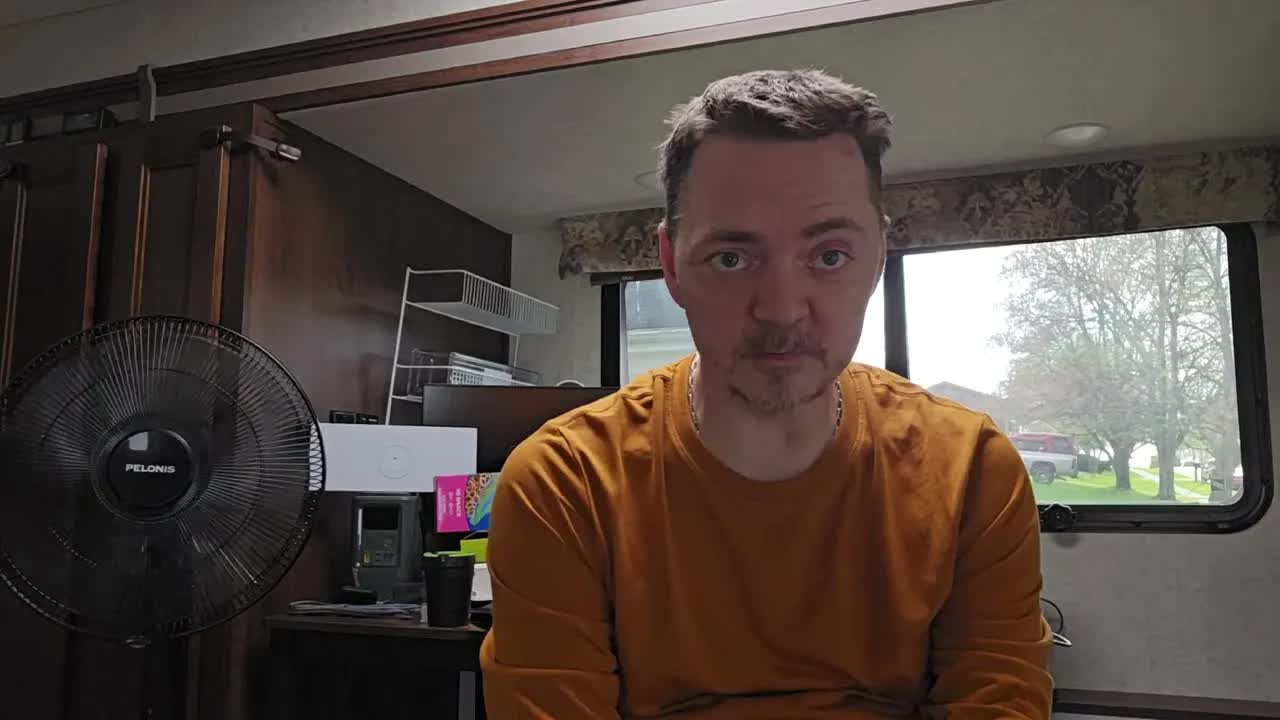
The camera moved across the zone he was standing in, and he named it as he went: his area, his social area, his living area, where he ate his meals, where general daily life happened. And then the thing that had been snagging him came into words — a monitor was sitting in that zone. It didn't belong there. The room had a definition, and the object was violating it, and the violation was visible on camera before he'd articulated why it mattered.
What it meant surfaced immediately after. He was having trouble giving up his things. That was what was happening, and he said it directly, without softening it into anything more dignified. Then he worked the problem out loud, sorting the inventory by a criterion he was constructing in real time: books were one thing, because books survive their objects — you can get those on Kindle. The 4K UHD movie discs, the prized ones, were also one thing, because those stream. The function outlives the disc. But game consoles, computers, monitors — those did not convert. For him, anyway. He added that qualifier himself. The category where dematerialization fails was the category he was standing in the middle of, holding a monitor that had no room to belong to.
He said he didn't know what to do. Then, in the same breath, he stated the terms: this is the reality, this is what it takes, you have to give up some things in order to gain some other things. He located himself precisely on that map — the tradeoff stage — and named the question it was asking him, which was what really matters to him. The exchange rate was still being worked out. He hadn't finished the calculation and didn't pretend to have.
He said he just had to share that, and left it where it stood. No decision was announced. No object was resolved. The monitor remained in the living area, out of place, and the last thing he offered was the open end of it: we'll see where I end up.