
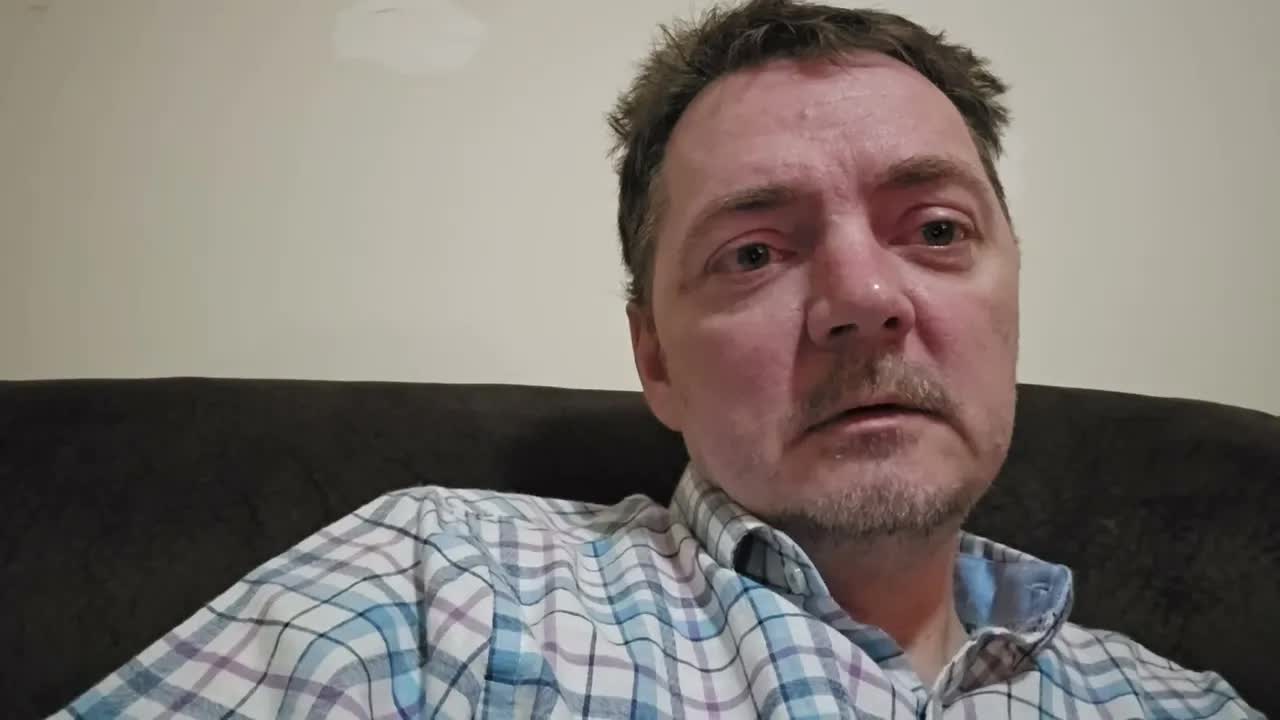
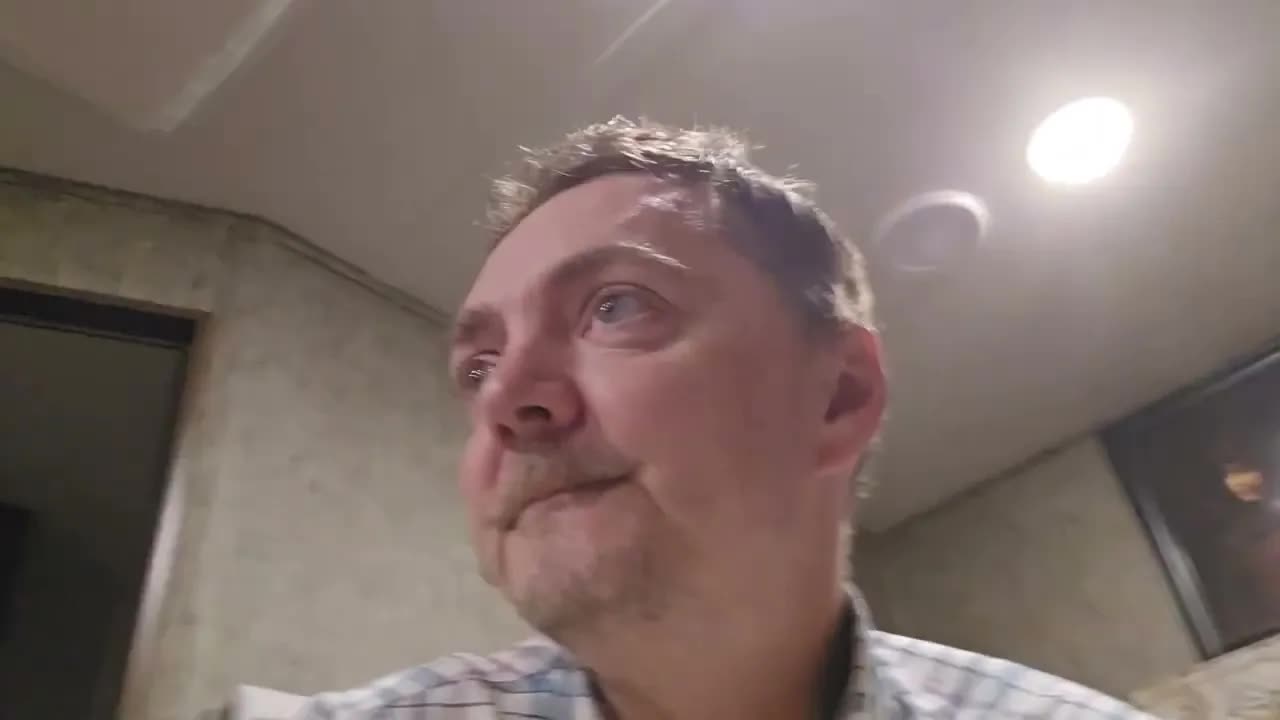
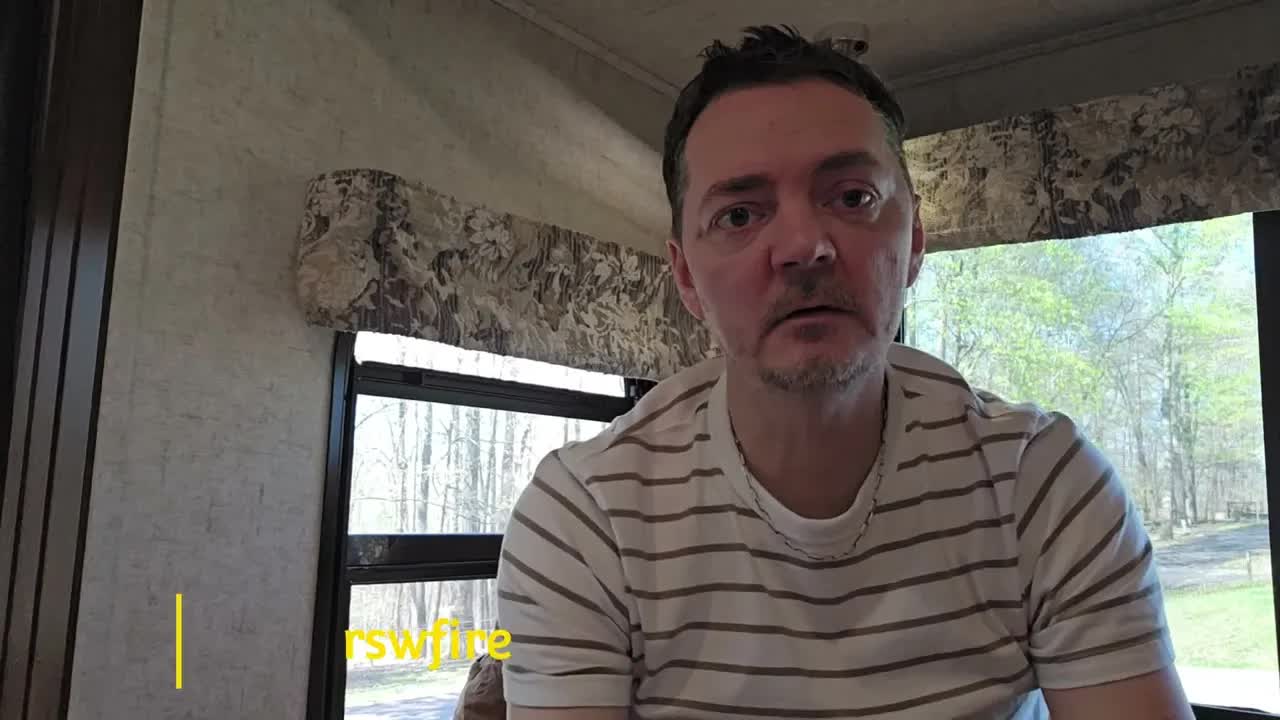
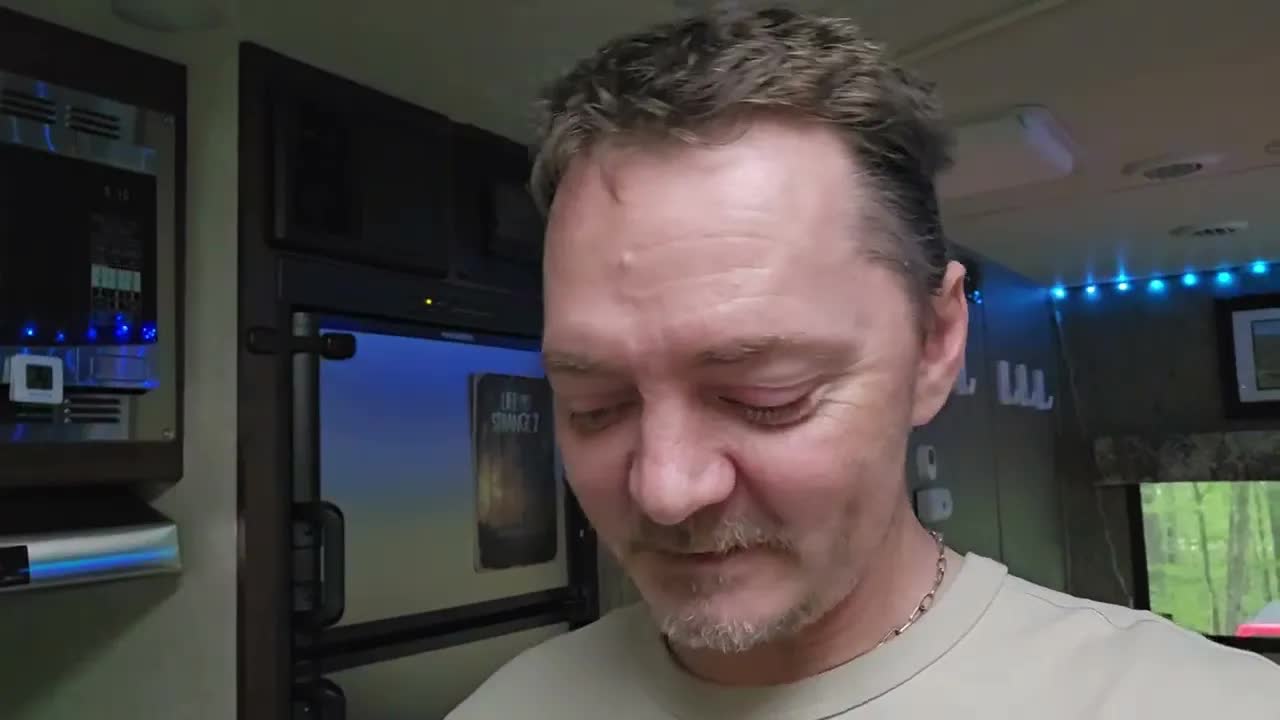
The music was already playing when the camera came on. It ran ahead of him through the rooms, filling the space he was in the middle of emptying, and rswfire moved into it — room to room, camera up, narrating in the intervals where the tracks let speech through. The residence was still a residence. Shelves still held what shelves hold. But the frame had already changed: he was not walking through a home, he was walking an inventory, and every object he lifted was being measured against a single number that had already been decided.
The game hardware came first, clustered and scattered at once — "got these things all over the place" — a Switch edition unit among them, controllers and consoles accumulated across years of buying. He held them up to the lens the way a person holds up evidence. Some of them, he said, had cost him a fortune, a hundred dollars used on Amazon, and he said the number out loud like it was part of the object's shape. Then the question arrived, the one that would keep returning through the whole walkthrough, addressed sideways to the camera and to the viewers he called guys: how do you give these things up. How do you do it. He did not answer it. He asked it again a few minutes later, and again after that, and it stayed open — not a plea, an operating question he was working inside of while he kept sorting.
The Alexa unit got a different treatment. He addressed it directly, told it to skip, watched it fail, and said what he thought of it — that he had hated her, that she was the one thing in the house that would have driven him insane if he had stayed, that he used to swear at the thing constantly. Then he moved on. Later he reached for his phone to skip a song himself and found it out of arm's reach, and caught himself almost going to look for it, and laughed about it into the camera. The soundtrack kept running on its own terms. He mentioned how he finds music at all — hears something in a movie, opens Shazam, keeps it. He named a film he had only recently discovered as his favorite in the world.
The Steam Deck he praised on technical grounds: amazing, and it requires a display port of its own, which he found genuinely good. Then, immediately after, flat and without transition: absolutely none of this can come with me. None of it. The praise and the divestment sat in the same breath. He crossed into the next zone and gave the status of both — one basically done over here, the other very much to do over here — and stood among what was left and said aloud that he did not know what to do now, what he was to do with all of these things.
Some things routed outward rather than away. He came to a set of pieces made by his ex-boyfriend Justin, held them for the camera, gave the credit — made these for me a long, long time ago — and said he was returning them to him, that they should be displayed somewhere. He called Justin an artist. The object did not go into the discard stream; it went back to its maker with instructions.
Then he reached what would not resolve. His maps, which he loves, and which were not coming — not a chance. His Fallout books. His Mass Effect books. He said he could not give them up, could not do it, could not give any of them off, and then he said the constraint back to himself twice, the way a person confirms a measurement: there is no room for them. There is no room. He said it was a very sad day. He signed off the way he signs off — life in the day of RSW fire — and the music, which had never stopped, carried the last of it out.