
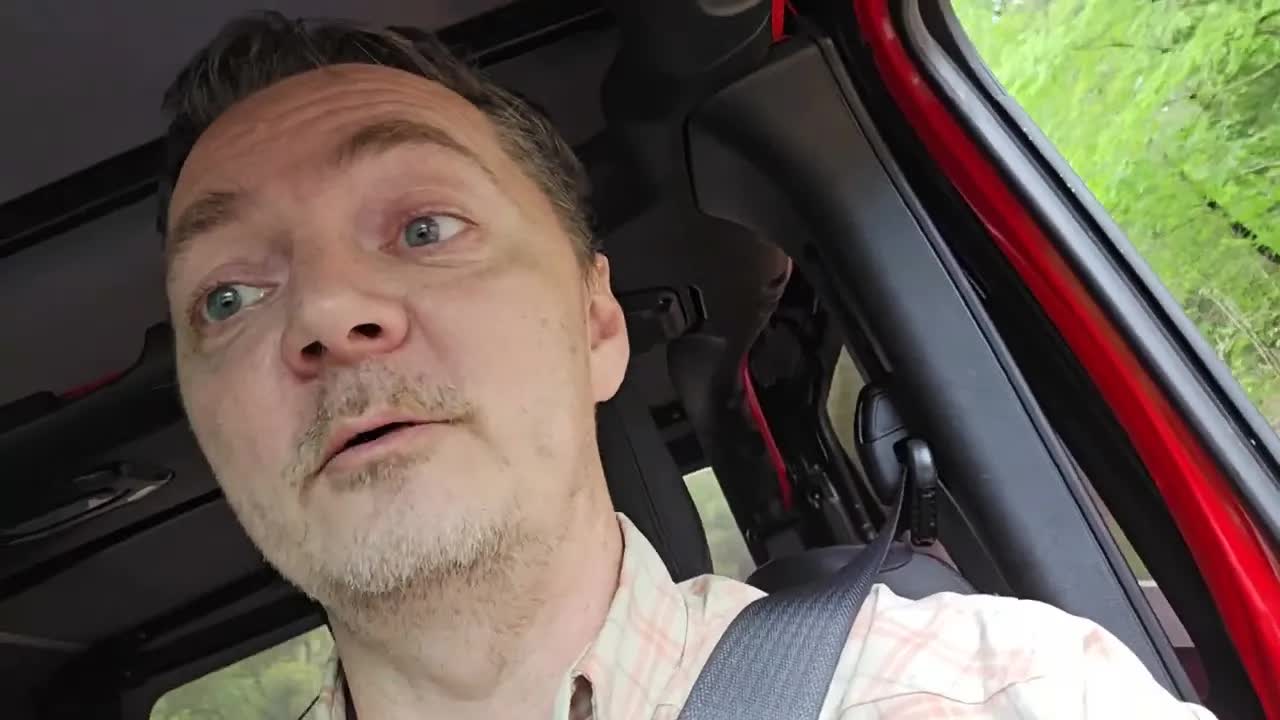

The road to Walmart ran the way it always runs — a stretch of pavement between where rswfire lives and where the things his camper needs are kept. He was going for supplies. He notes, in the recording that follows, that he was probably over the speed limit, and he notes it without softening: not something he does often, because traffic law exists for a reason and he thinks it should be respected. The admission arrives in the same breath as everything else, filed alongside the rest of the account rather than buried beneath it.
Then a squirrel came out in front of him.
The braking was fast. It had to be — the animal was in the lane and the interval was whatever interval a squirrel gives you, which is almost none. rswfire's attention was where he states it is always pointed: forward. What is in front of the vehicle governs the vehicle. Behind him, a truck was following close, and when he stopped hard, the truck's driver had to stop hard too, and laid on the horn. rswfire's read of that sequence is immediate and structural: the horn was the sound of a following distance that had never been adequate in the first place. That is why you don't tailgate. You put space between yourself and the driver ahead so that when the world requires a sudden stop, you have somewhere to put the deceleration.
The squirrel lived. It was close, he says, and he is glad. And the gladness is not sentiment attached after the fact — it is the same value that produced the braking. He states plainly that he was not going to kill a living thing so that someone else could arrive thirty seconds earlier, that the other driver had no right to be angry about a stop made to prevent a death, and that he did not want that death on his conscience or in his head for the rest of the day. The horn did not enter the calculation. It arrived after the decision was already complete.
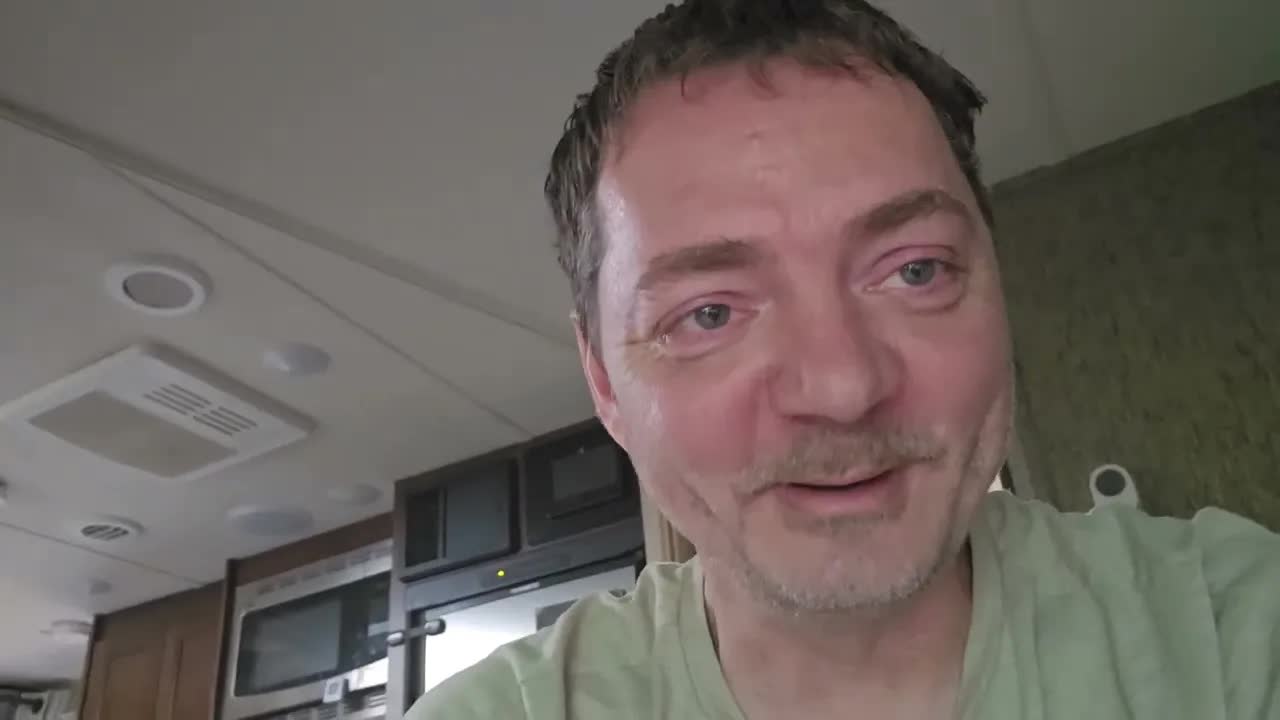
He pulled into the Walmart lot and, before going in for the camper supplies, turned on the camera. He opens by naming exactly what the recording is and is not: he does not think anything will come of it, does not believe minds and hearts change in this world, and says he is probably just venting. The frame is set before the story begins — this is not persuasion. It is a record of where he stands, spoken aloud with the drive still in the frame behind him, the errand still ahead of him, and the standard stated in the plainest available terms. Just drive respectfully.