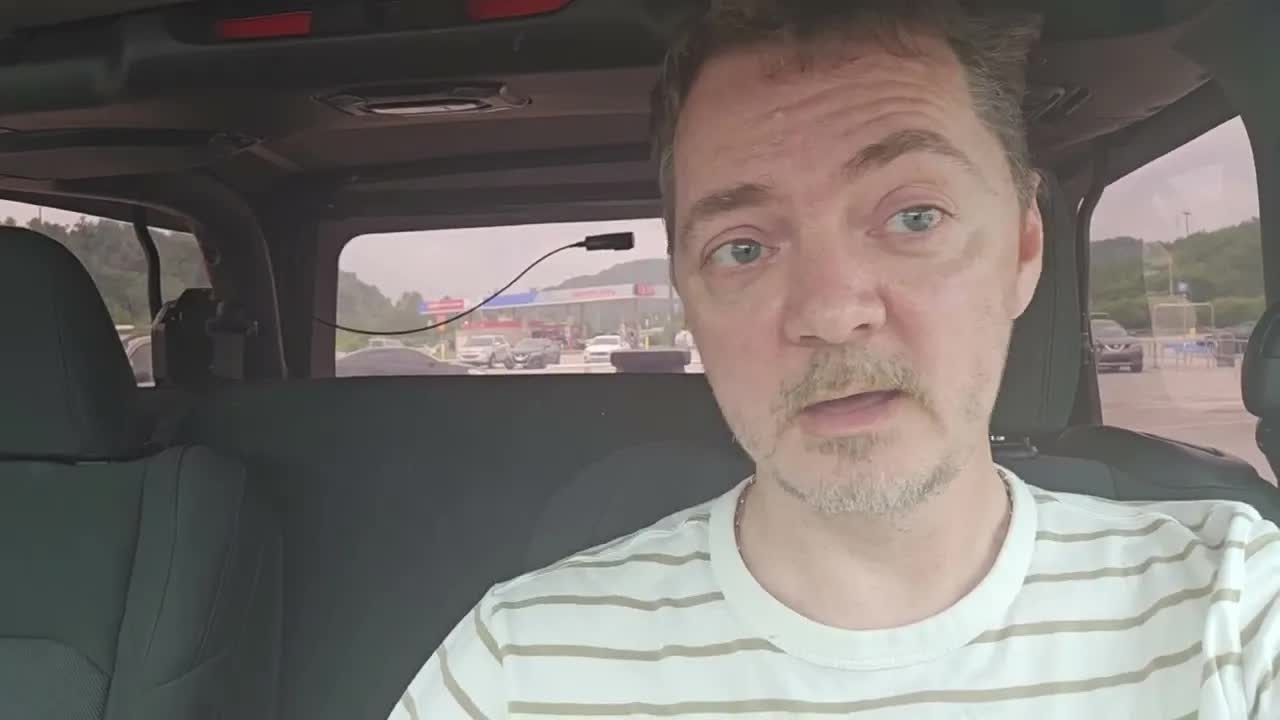
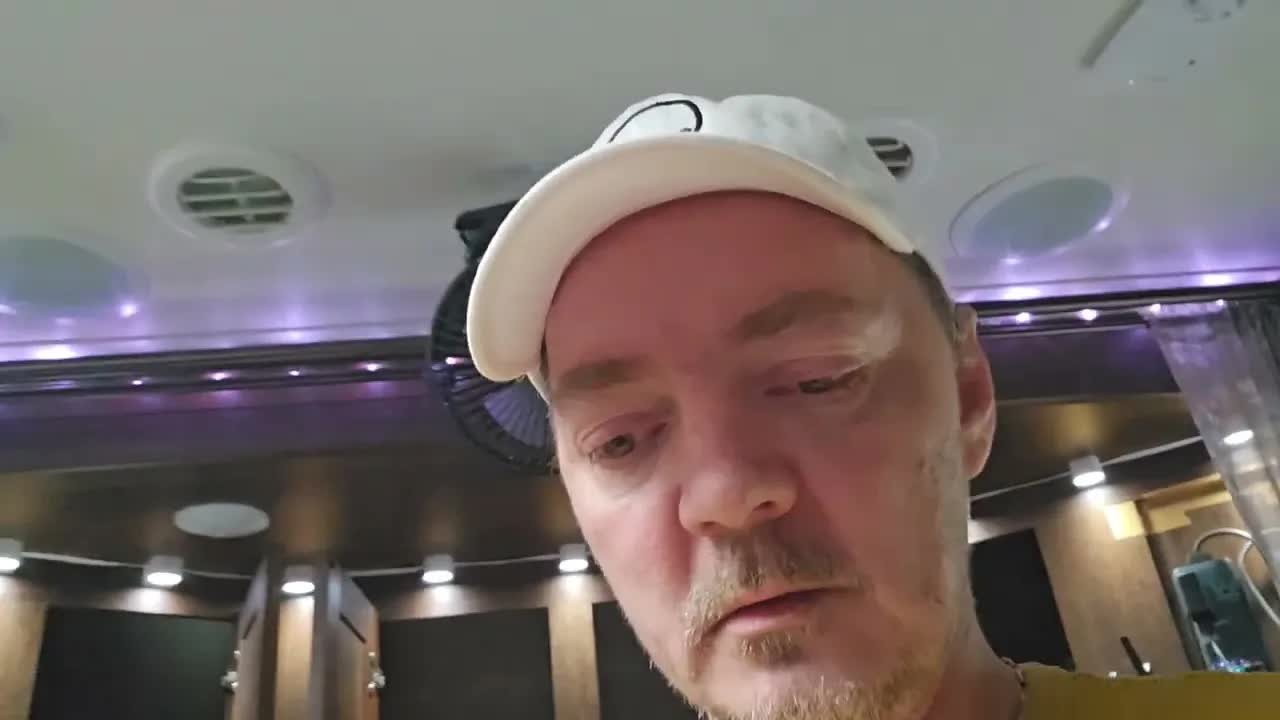
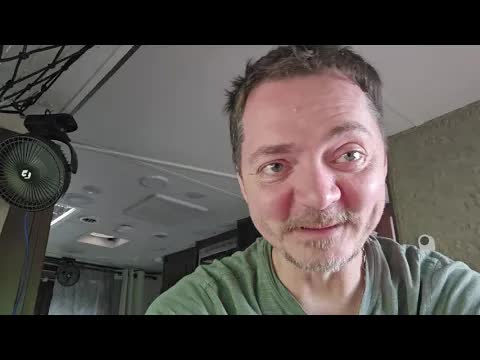
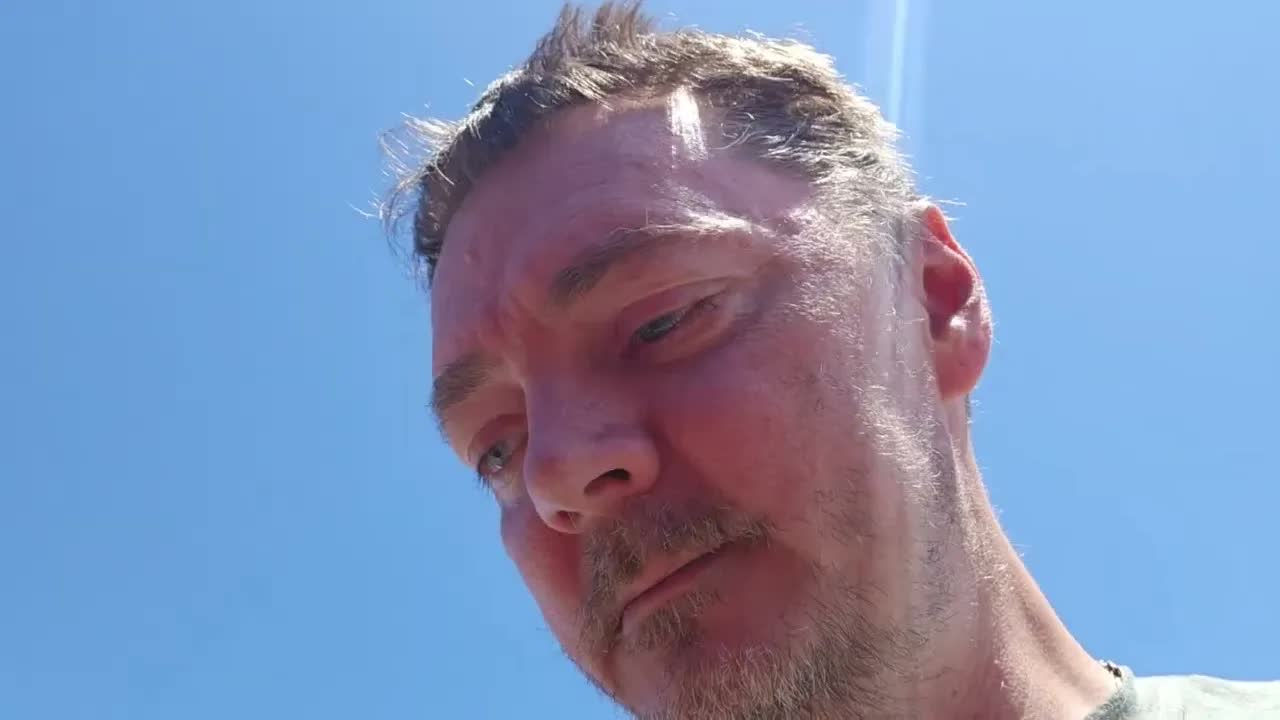
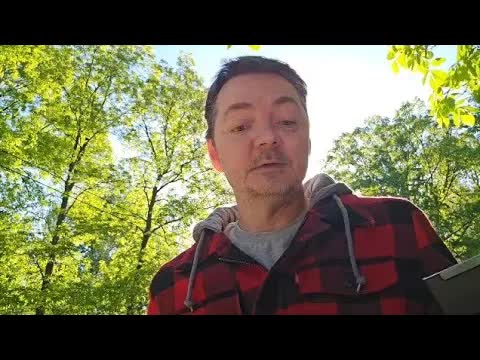
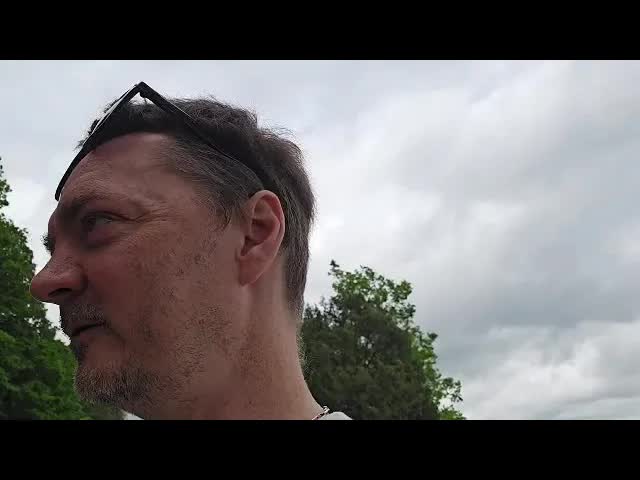
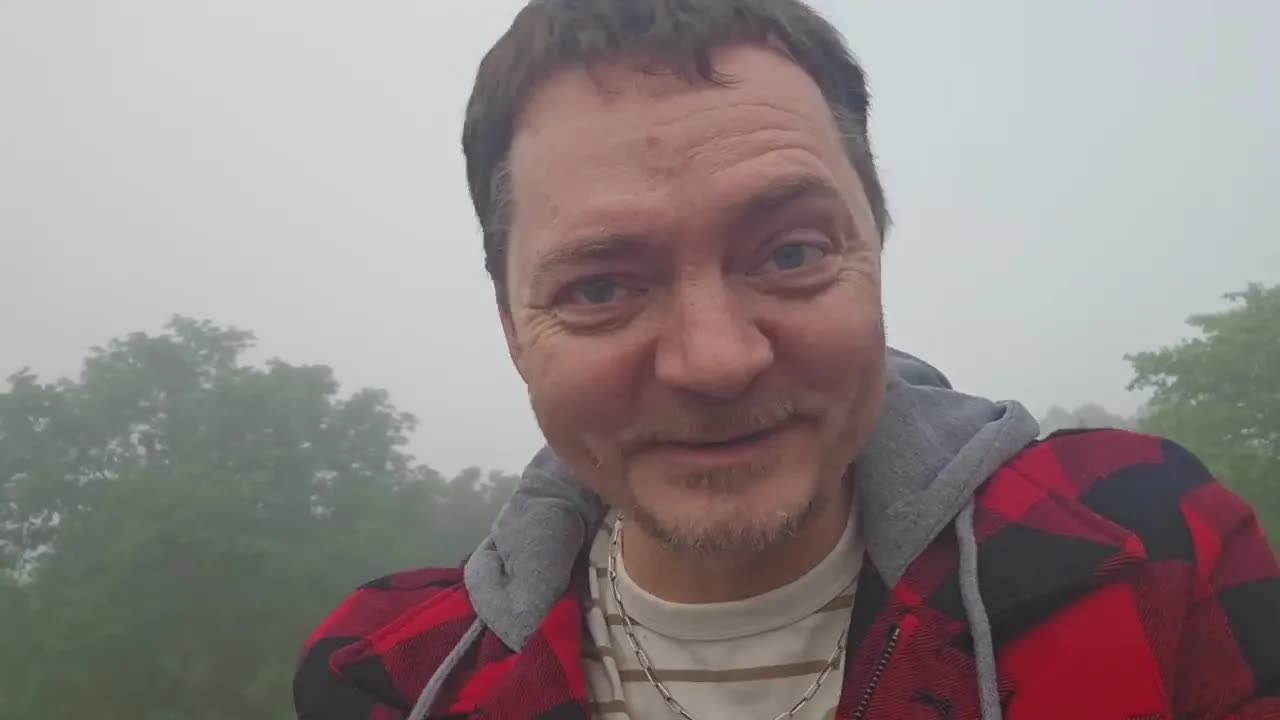
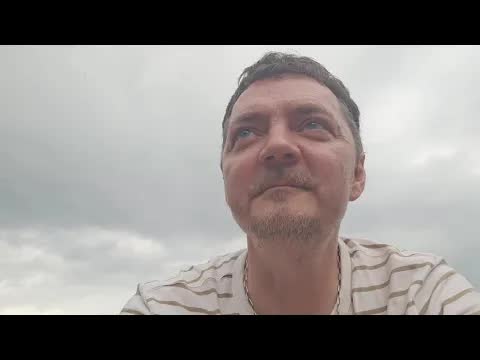
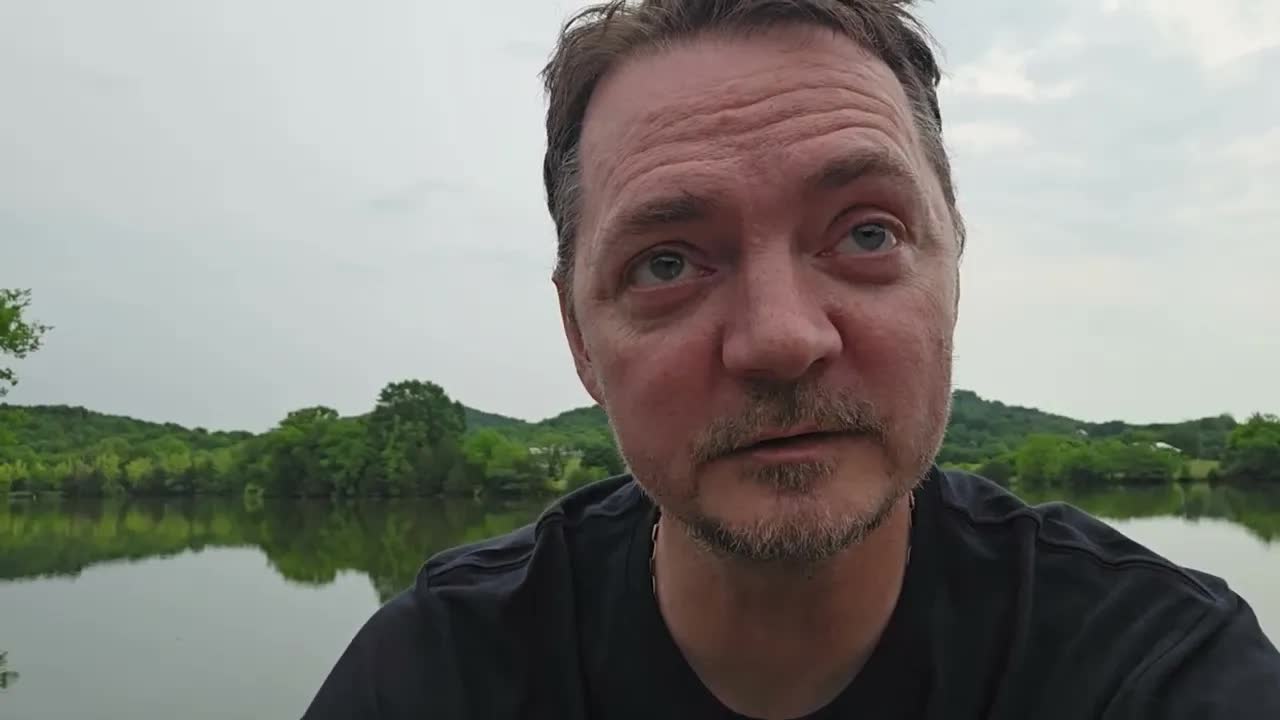
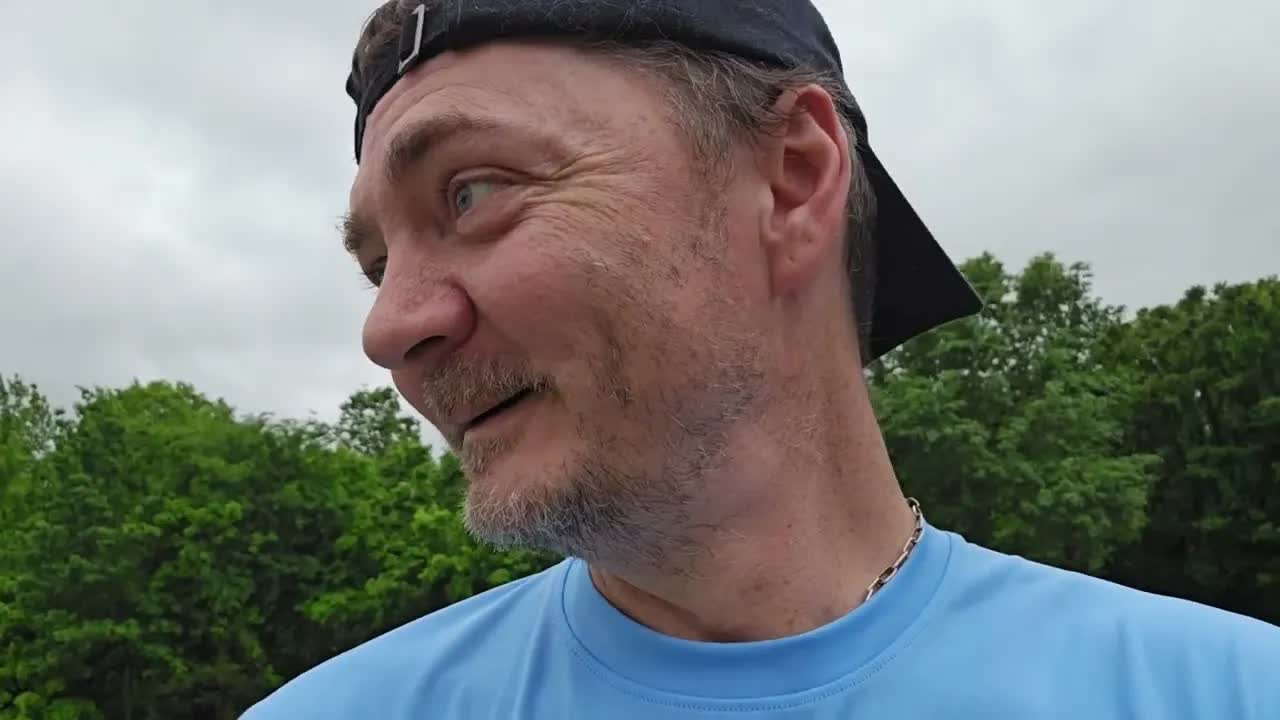
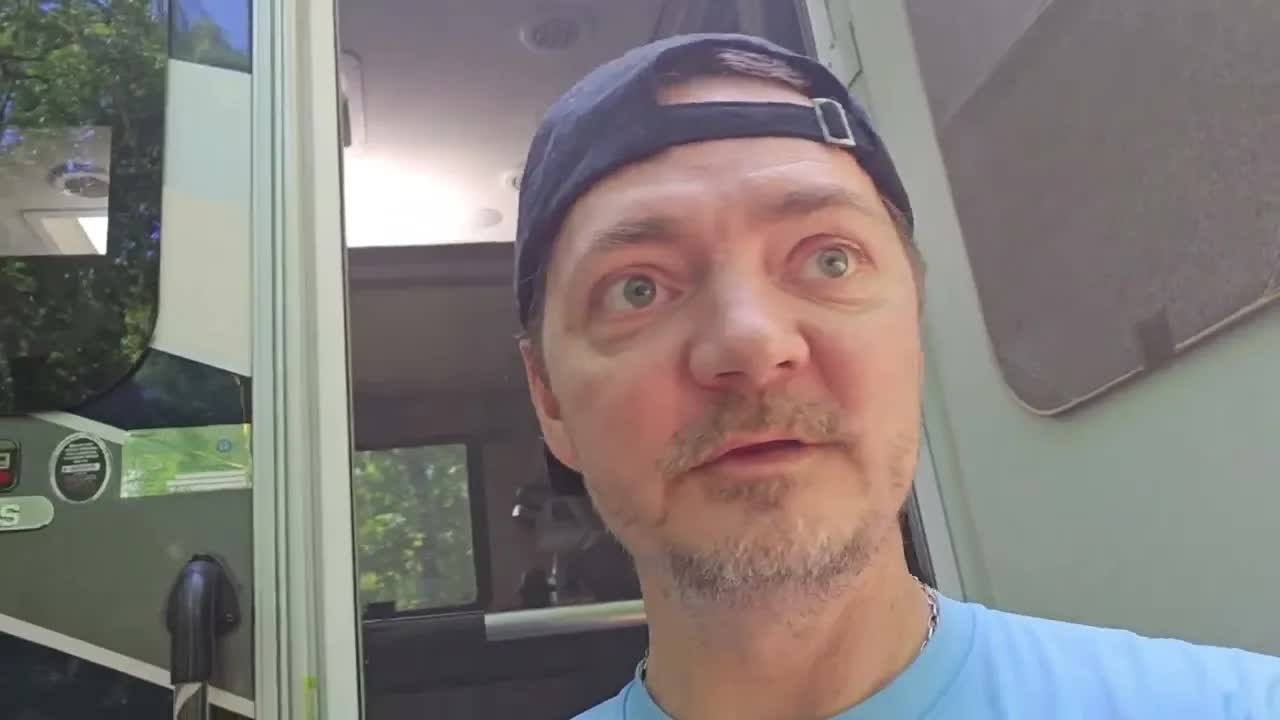
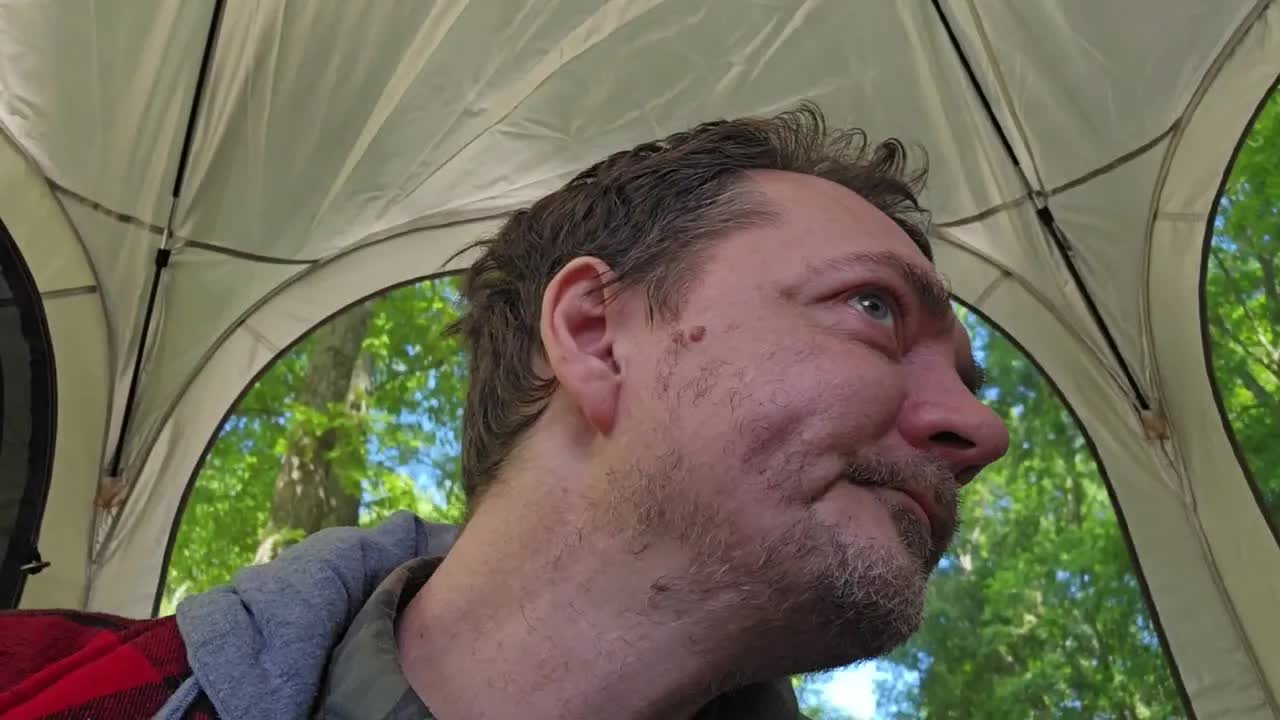
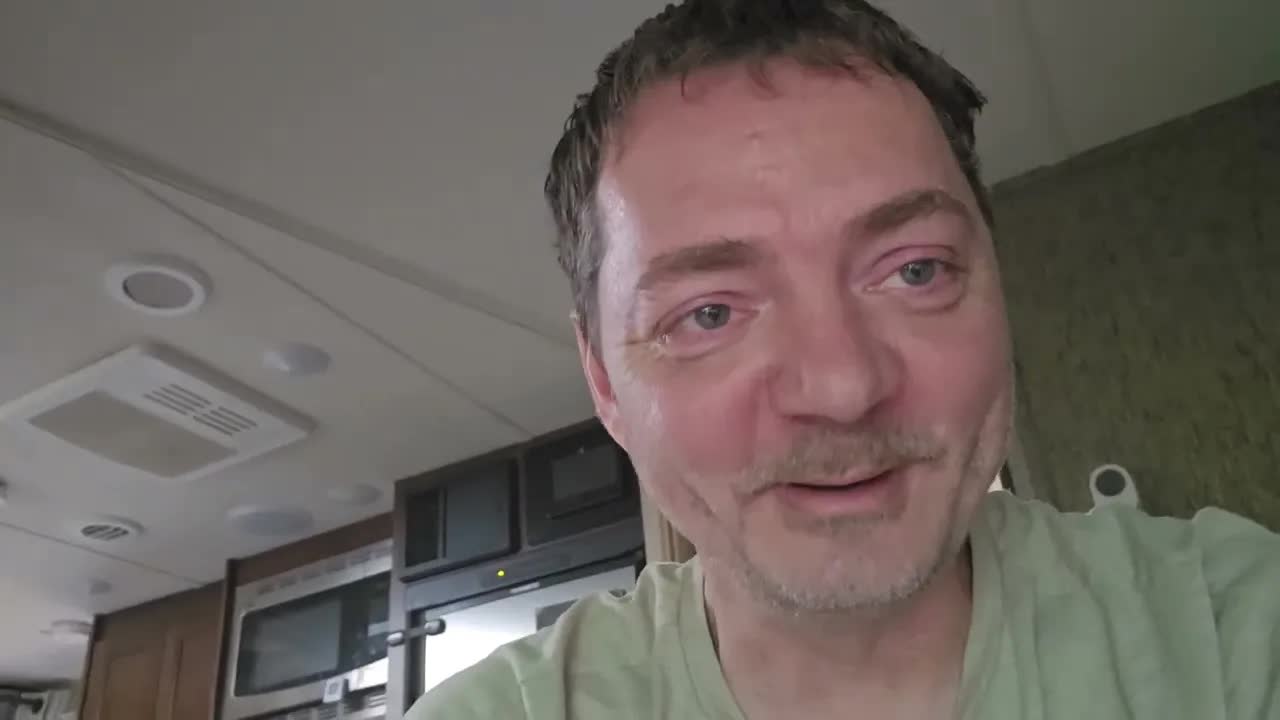
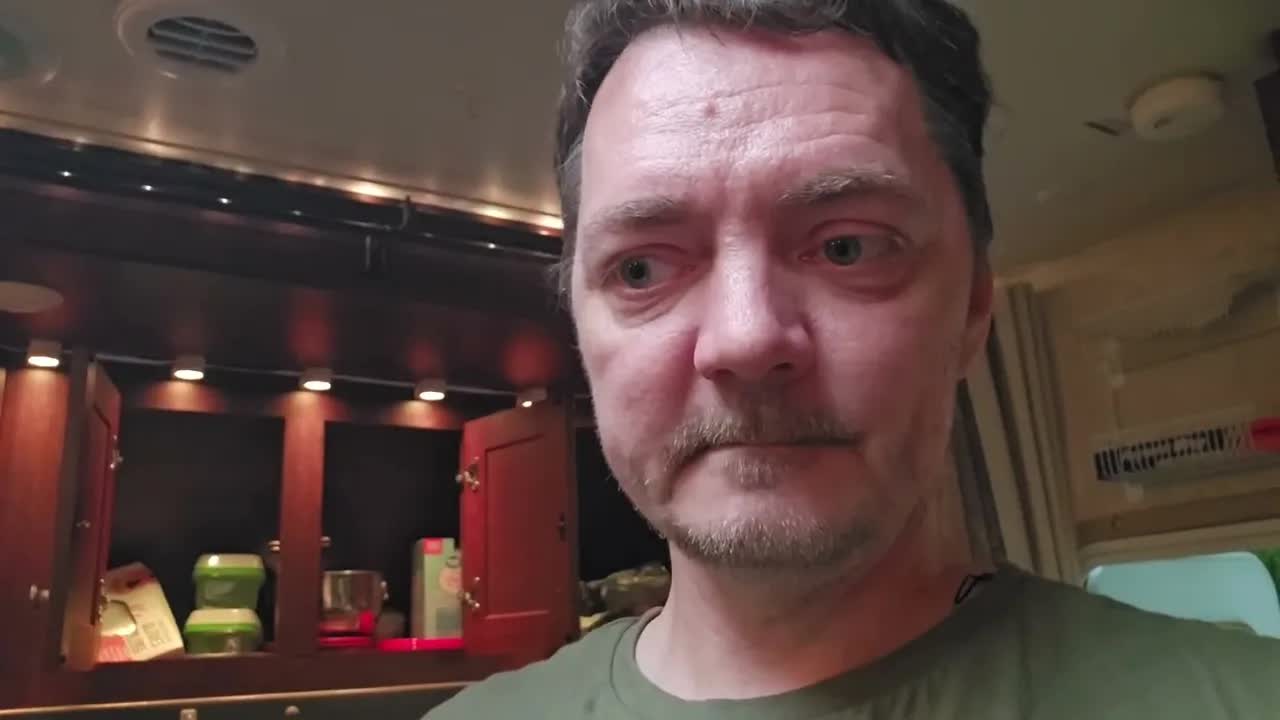
He spent nearly the whole day outside. The site behind him was empty of everyone else — occasionally a car passes through this stretch, occasionally a walker, but not today — and rswfire settled into a spot across from his own RV, where the lake sat in the background, visible to him if not quite to the camera. From there he could look at his site the way a person looks at something belonging to someone else. He describes the angle as a perspective he never had at the house, hard to put language around, still being processed. He states he may one day stop processing it, that it may one day simply read as normal life. What he does say plainly is that it feels good, despite the challenges. That it's pretty awesome, actually. That what it needs is more time, more practice, more healing. More everything, more time.
At some point in the day a deer came within about ten feet of him. He watched its tail flick, unbothered by his presence, and thought it probably had ticks, and kept his distance for that reason rather than any other. He notes it as a neat thing. The animal simply stood there, close, and then the day continued.
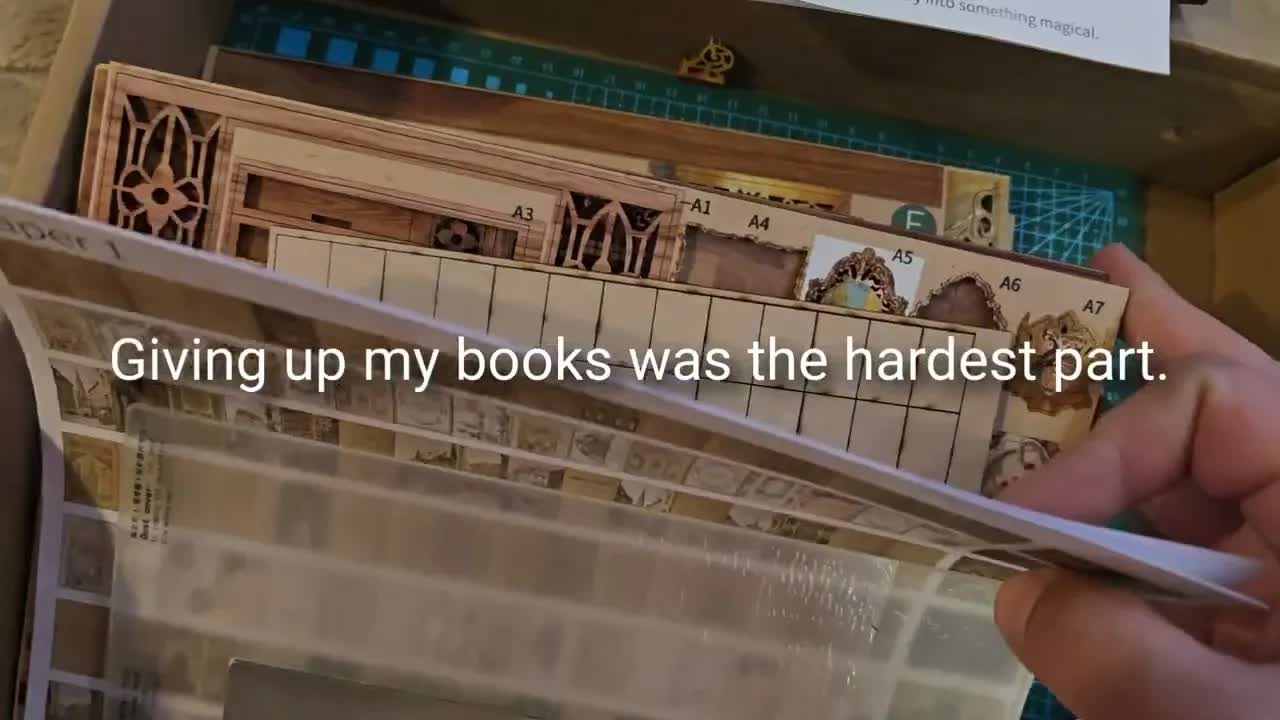
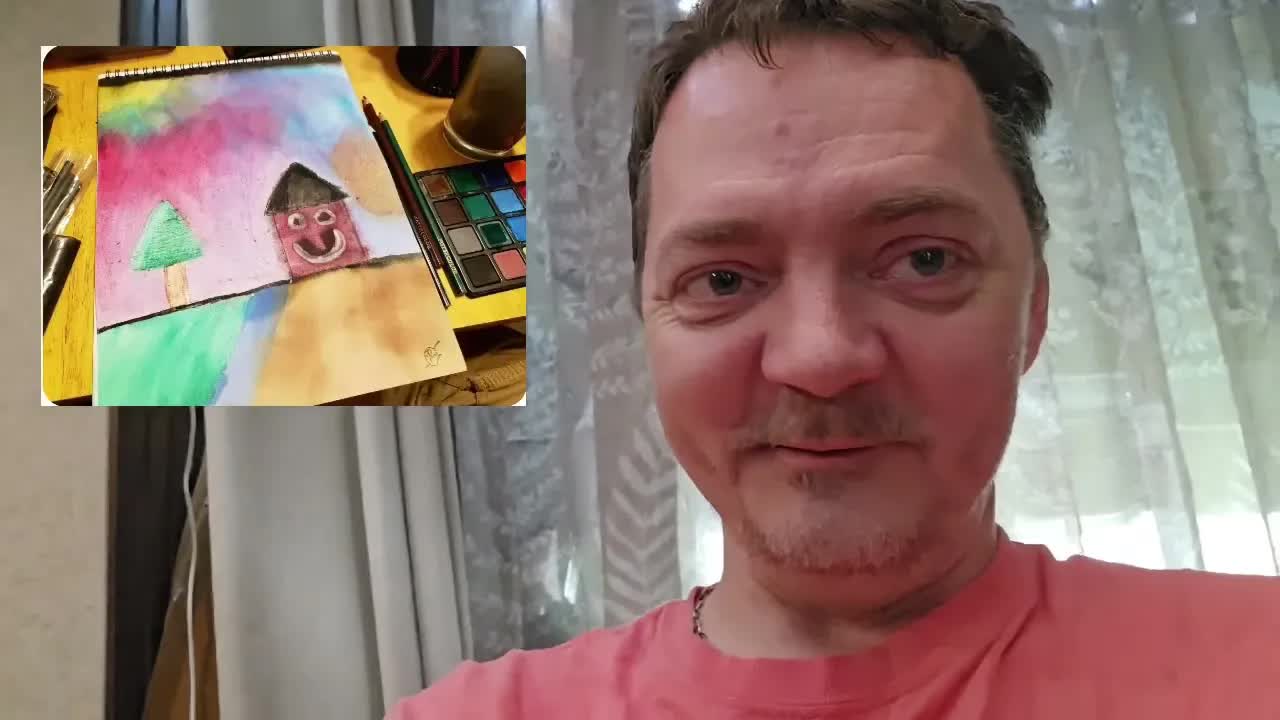
The organizing ran underneath all of it. He knows he'll be moving on before long and wants the camper in order before that happens, so he took inventory from where he sat — six storage bays, counted off one by one. One holds cleaning supplies and the propane for his grill. One is nothing but RV equipment, hoses and adapters, the mandatory kind you don't get to opt out of. One holds camping gear and the jacking equipment for lifting the vehicle if a tire has to come off. That leaves two. One of those is packed with gaming books, and sitting there looking at his site, he arrived at the thought that he might be ready to let them go — they don't fit this lifestyle. He turned over the alternative and found it thin: his parents' house doesn't really have the room, and the Jeep is a two-door with its entire cargo space consumed by towing gear and the braking system. Full of Jeep stuff. No room for anything else. The last bay holds two large waterproof blue bags with other bags stuffed inside them, disorganized, random. He states he hasn't reached that layer yet. He's still working through the initial chaos, and every trip to his parents' house returns him with something new — art supplies this time — for which there is no room.
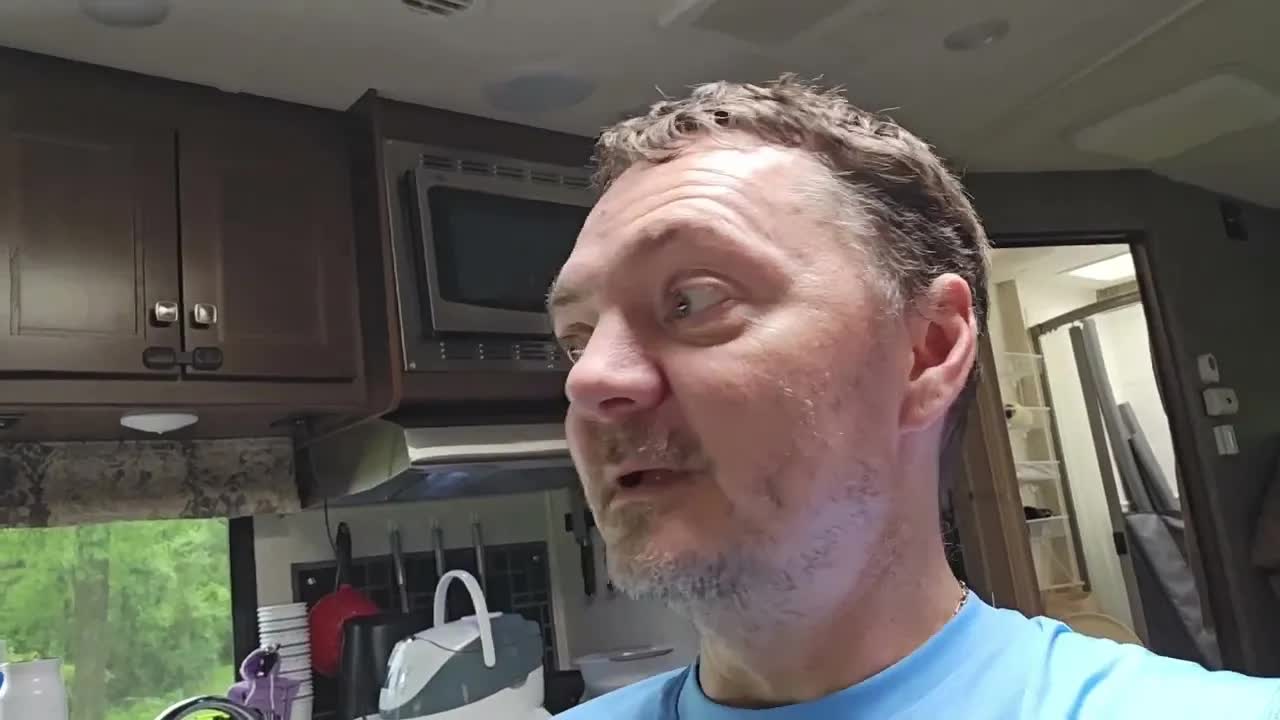
He named the thing directly. Living in a small space is hard, and harder when you are not an organized person, and he does not call himself one. What he used to say was that he was never good at the domestic stuff. Ever. And then the line that turns it: he has to get good at it, or this life will not work for him. The chaos makes the interior a place he doesn't want to be in. So he has been working on it slowly, and today it was the pantry, and he says he made progress there. The kitchen remains. The bathroom remains. His office area is very messy, and the art supplies still have nowhere at all to go.
So he laid out the plan: the second net, hung above the table, close to where his monitor sits, holding art supplies and office supplies because there is nowhere else in the camper for them to live. He is honest about the odds. It will probably fall down. He isn't good at installation — there are already holes in his camper that shouldn't be there, put in by someone who has never really done anything like this — and he expects it will take a few hours. But he has to try. After that it's just the cabinets above the cab, which aren't organized either. He has the room to work. He just has to do it. And he acknowledges what he's actually been doing instead: coming out here and relaxing, staring at the lake, trying to motivate himself back inside.
Then the day turned somewhere else. He addressed the people watching, noted he didn't want to spend every video reporting on withdrawal, said that's over but it's not, and left it there. Mostly, he says, he's been pretty okay today. And it really helps to just be outside. That thought opened into a longer one, something that had surfaced a couple of times during the day: how much time he spent outdoors as a kid, in the woods and the parks, exploring. He didn't lose it in childhood, either — he hiked well into adulthood. But there came a point where he stopped, and then never did it again, and sitting at his site he could not locate that point. He tried to date it. Not the three and a half years at the house. Not the two years in the apartment. Not the years before that at his parents'. Before that, in the different house, he was hiking — so that must have been where it ended. He estimates ten years, and states that number is shocking to him, and not something he'd particularly want to admit.
He was precise about what was lost with it. Nothing centered him more than hiking, than being out in nature — the most centering thing he knows of. He half-remembers what he used to call it, something like living proactively, and the rule was simple: as long as he did it every day, he felt centered. He says he uncentered himself. And then, without lingering there, he closed the loop: he's doing it now. It's never too late. You can always make new choices. He turned it outward as instruction — if there's something that centers you and you stopped doing it, try to do it again, don't let too much time go by, because it gets harder and harder to go back. Behind him the lake sat where it had been sitting all day, and the site across from him waited with its two unresolved bays and its net still uninstalled.