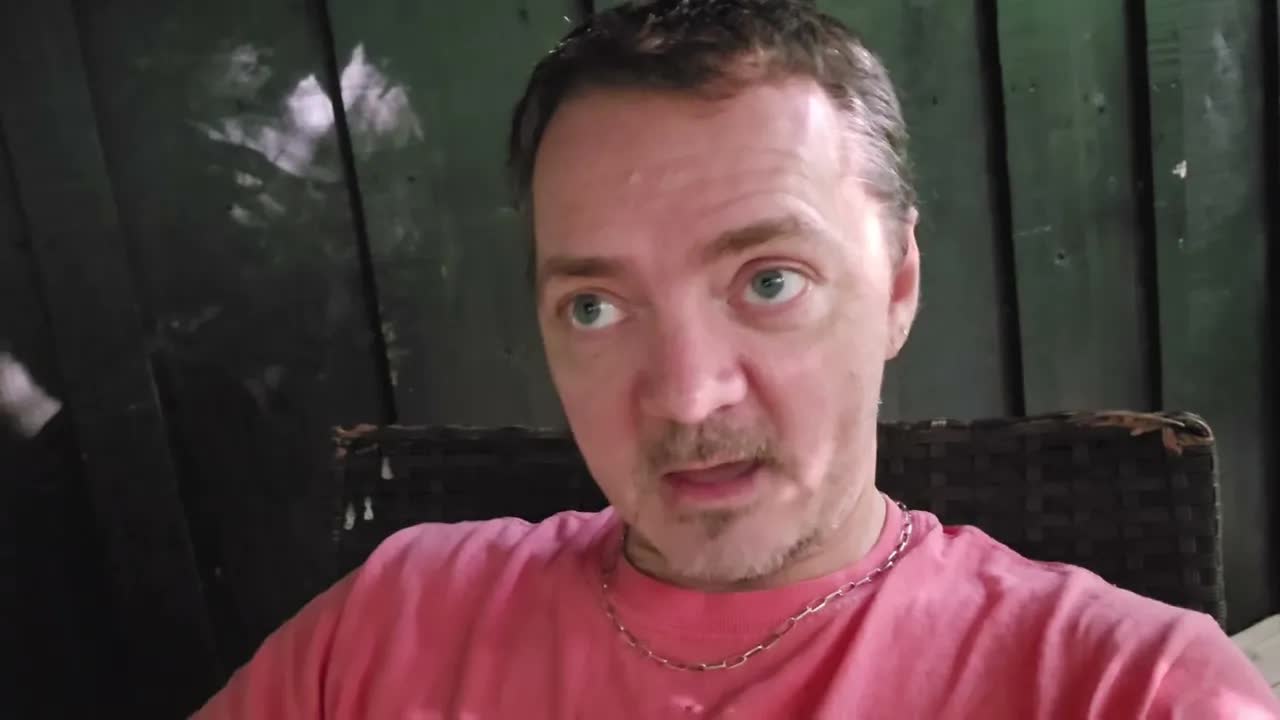

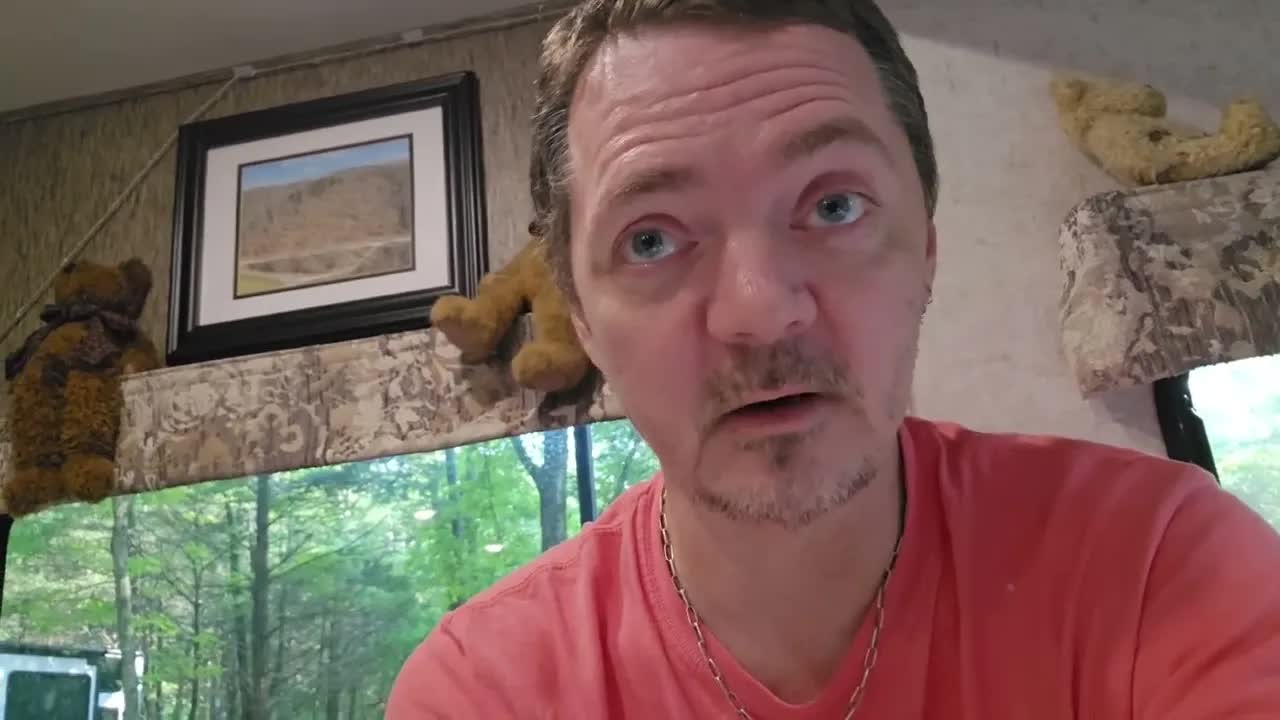
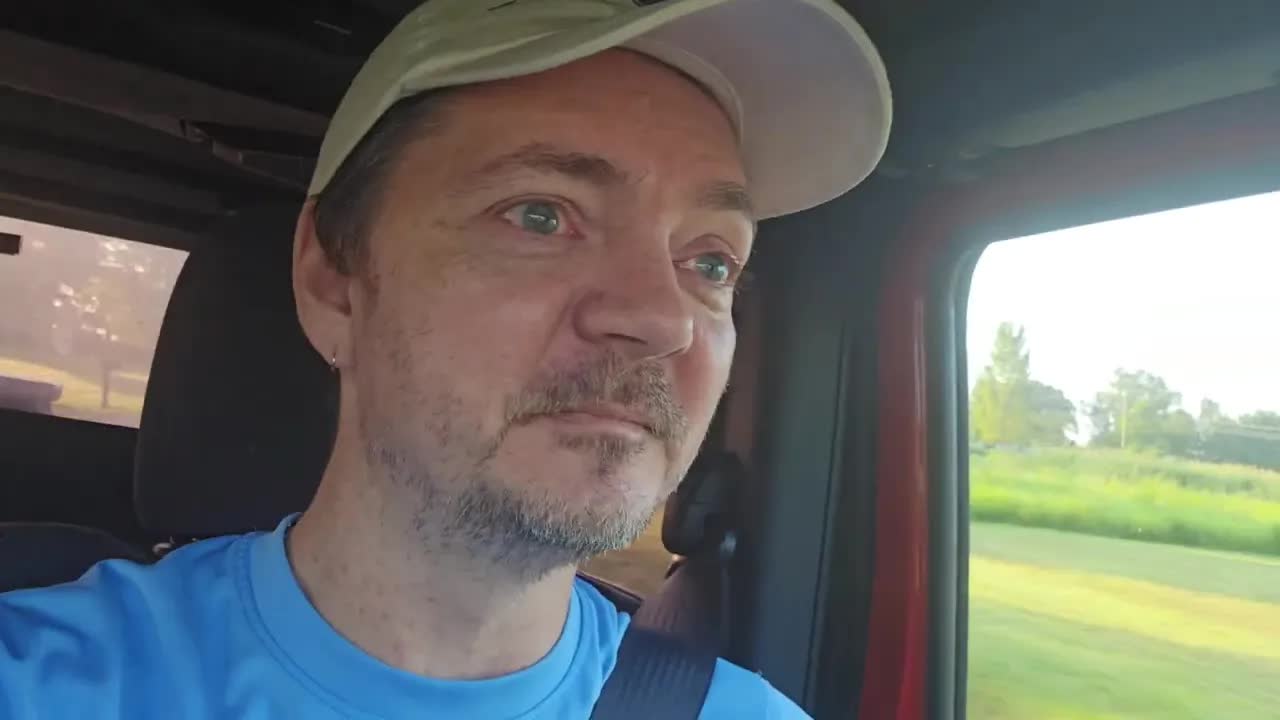
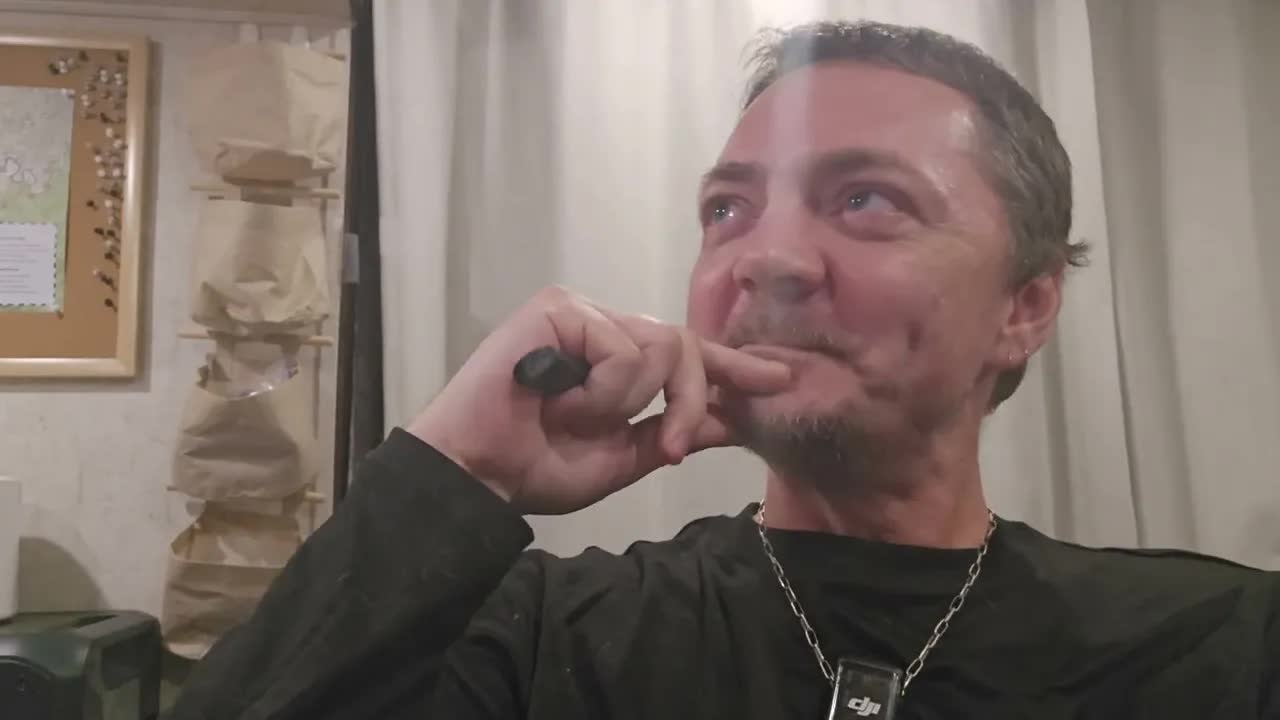
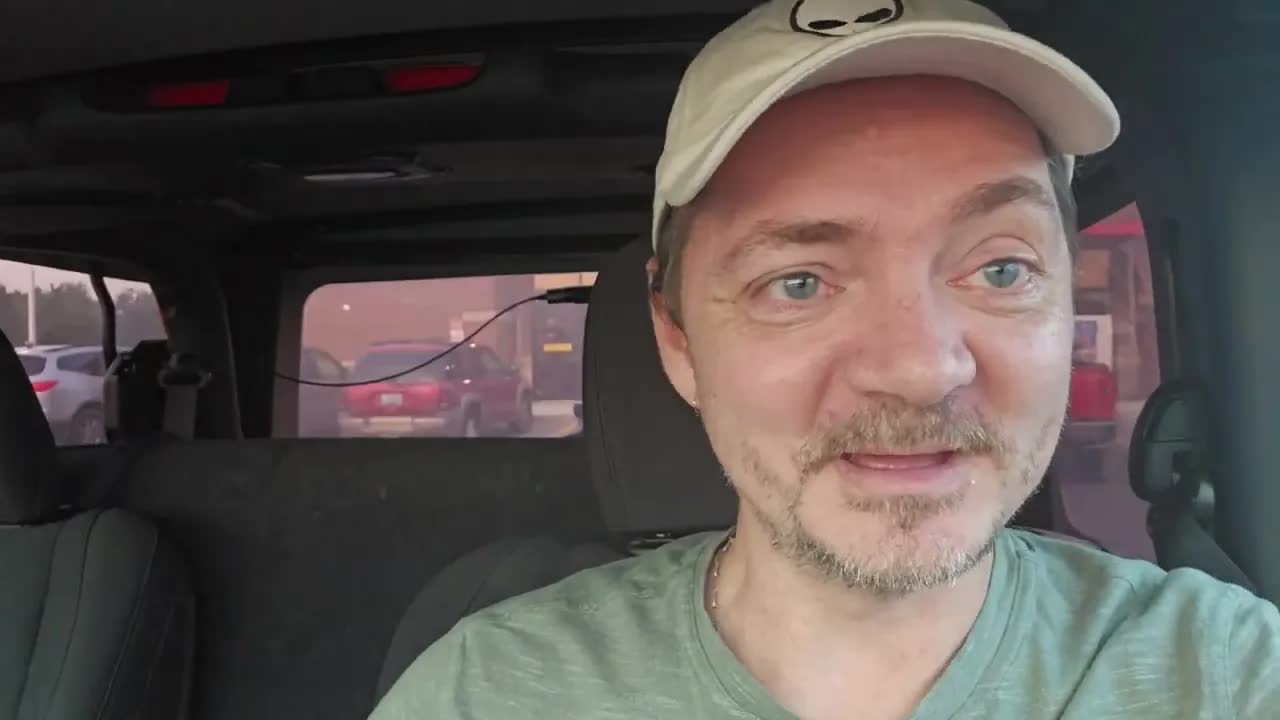
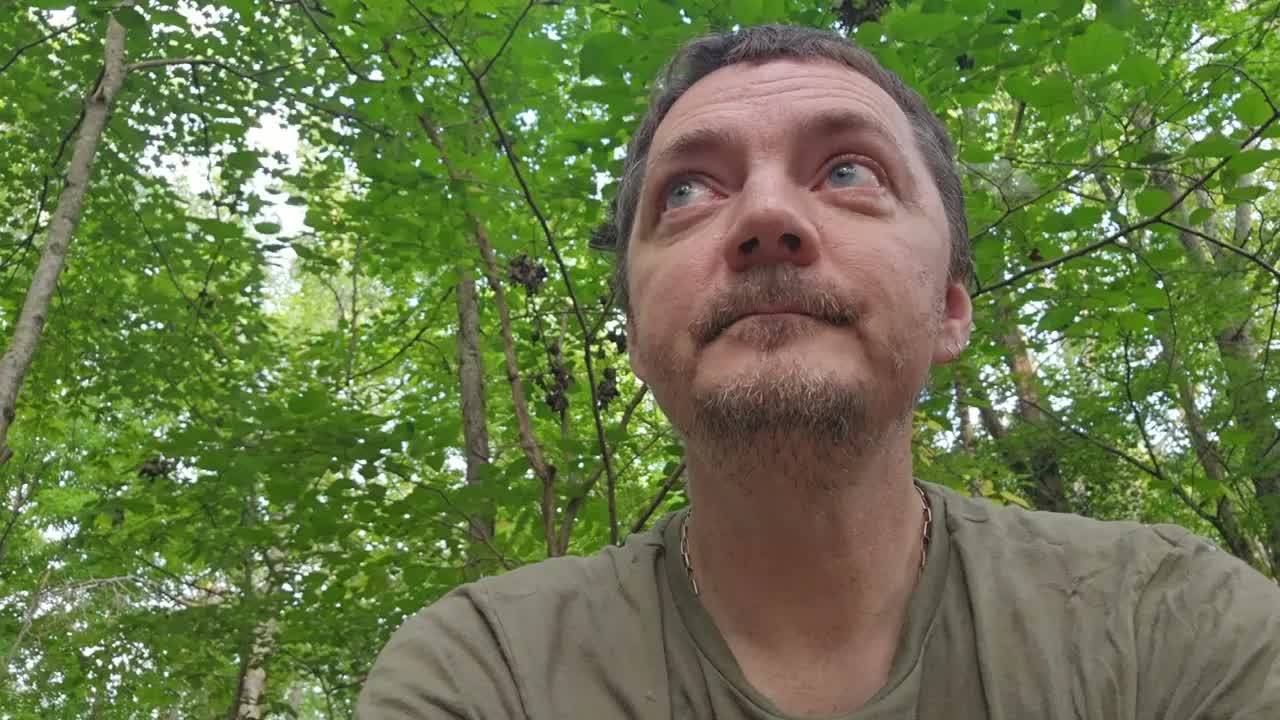
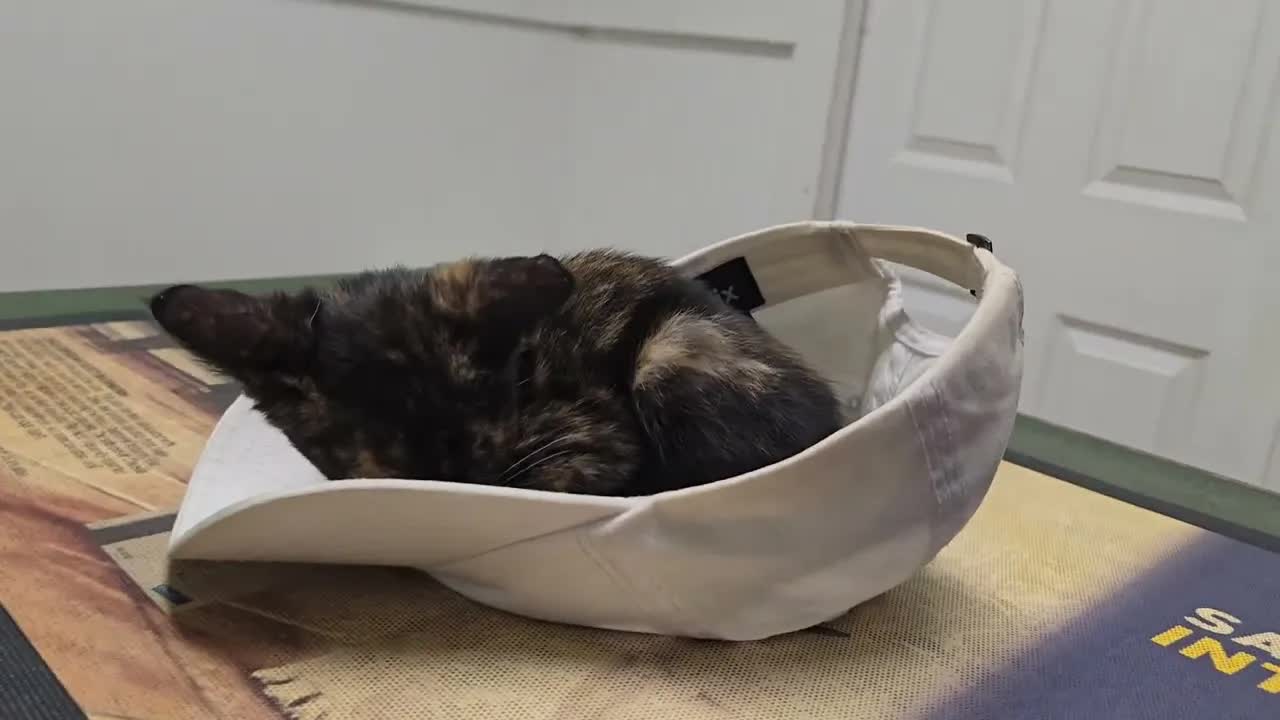
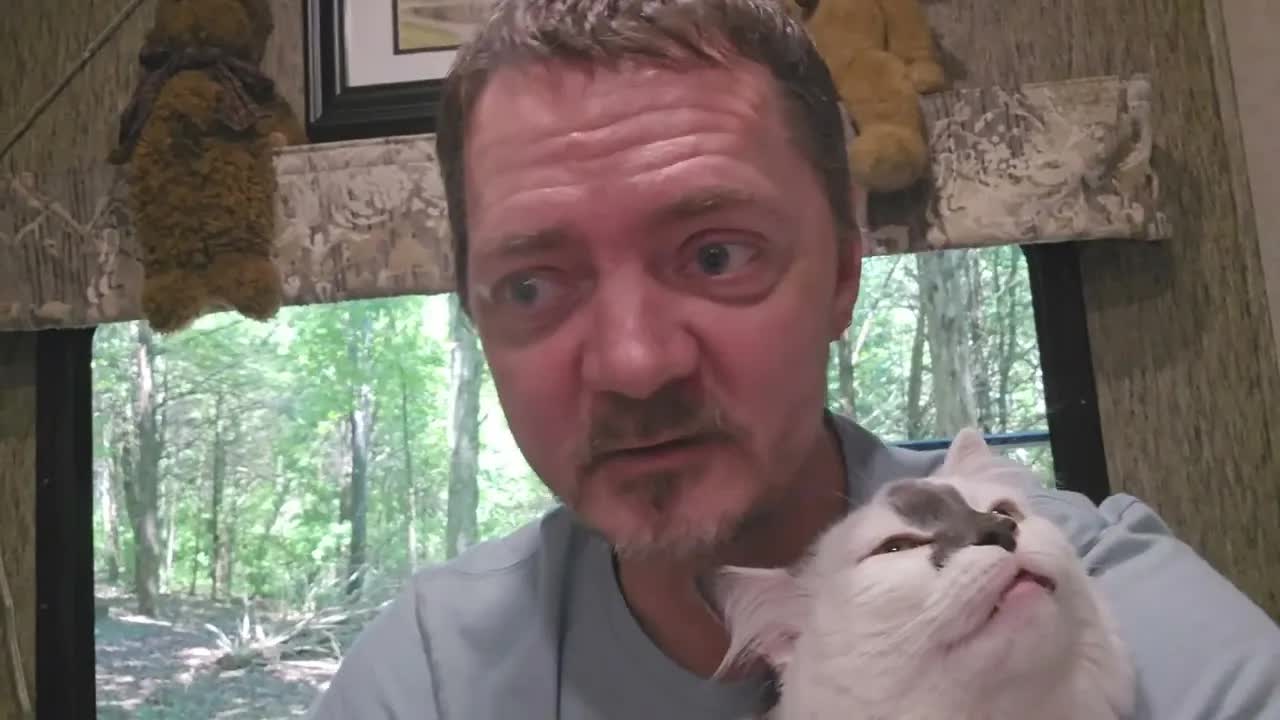
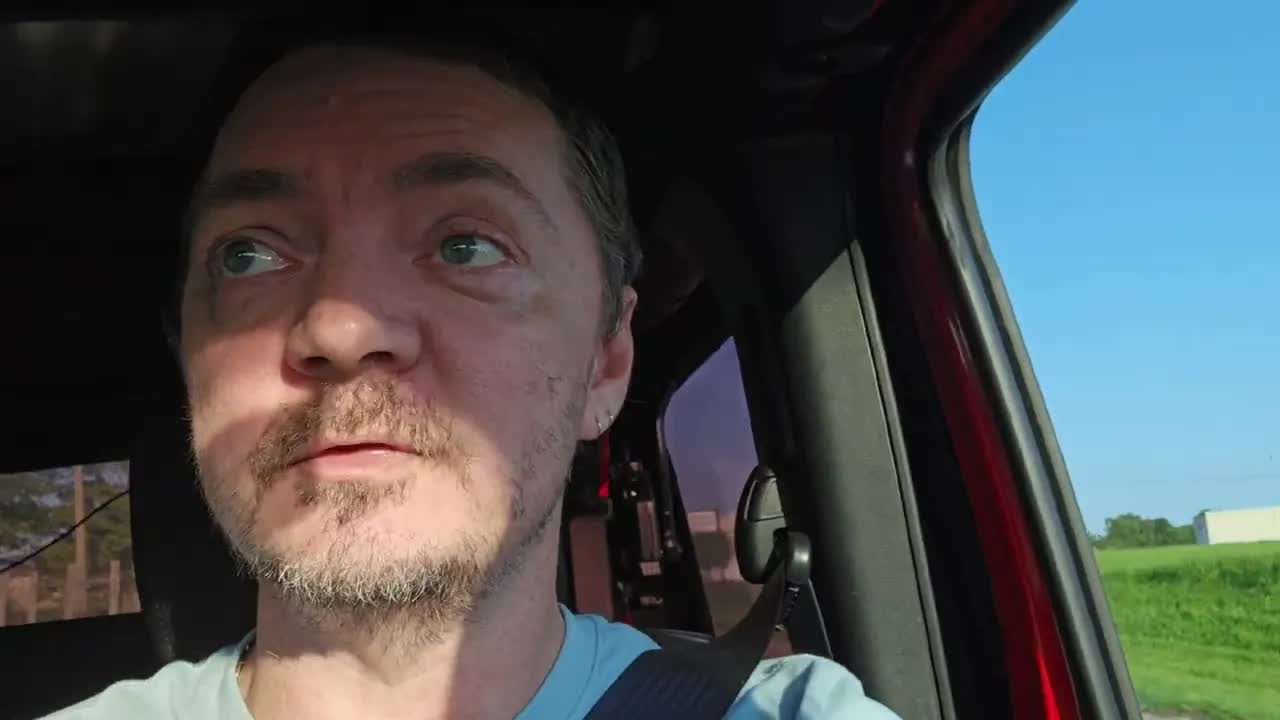
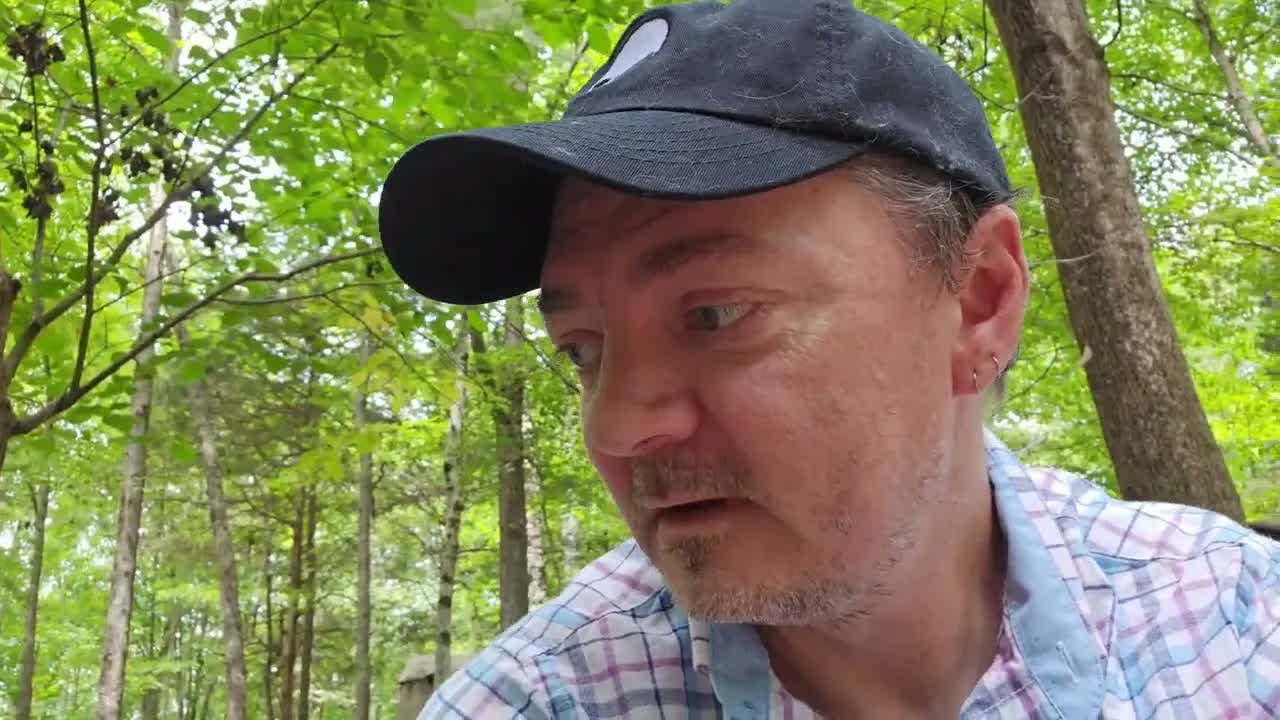
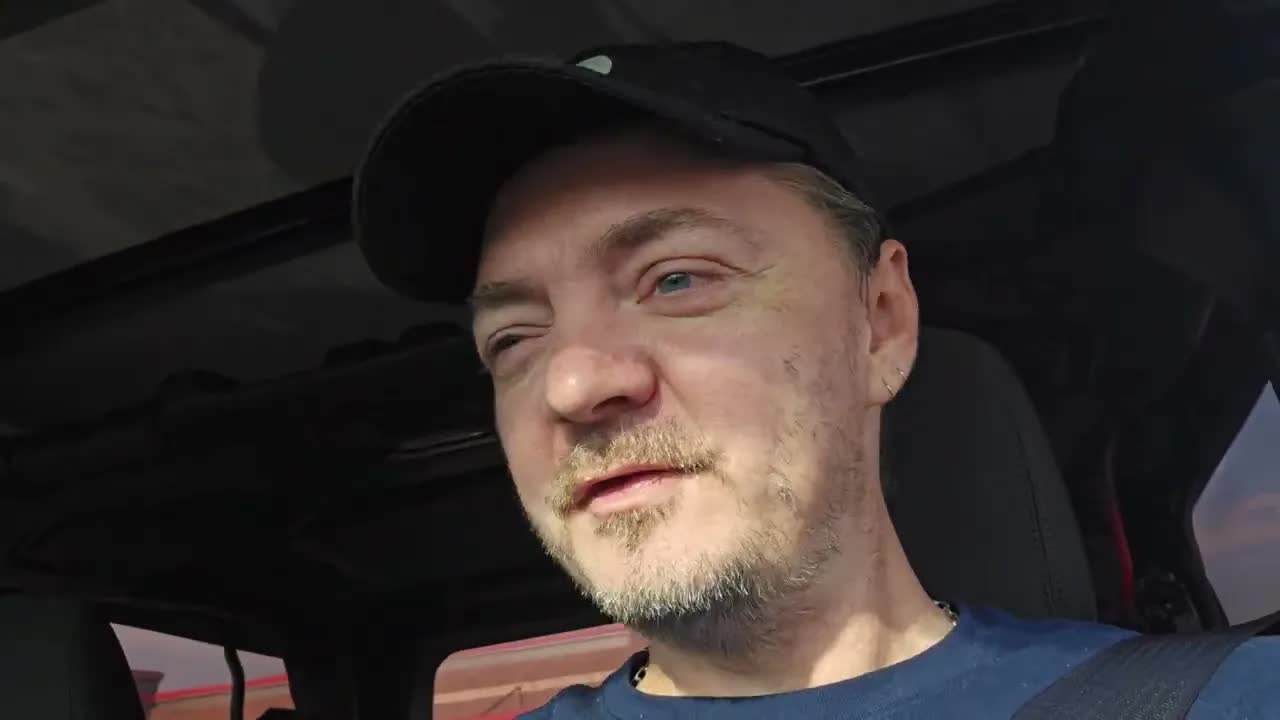
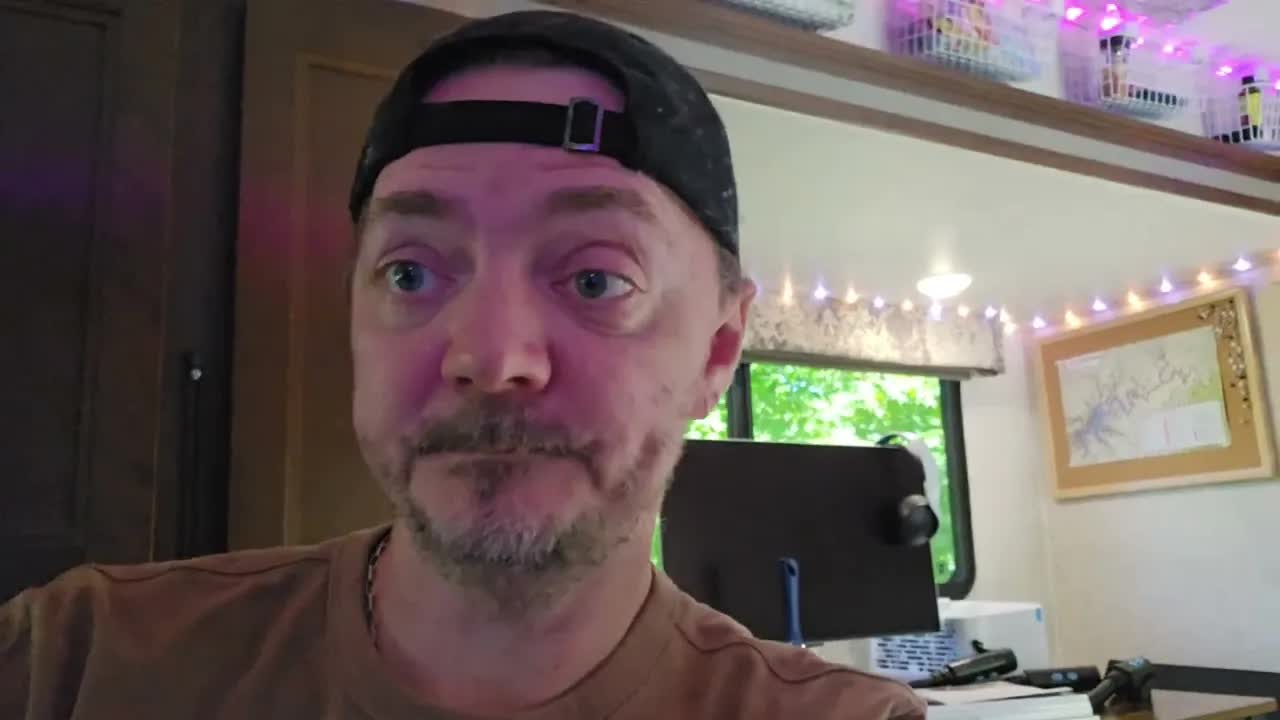
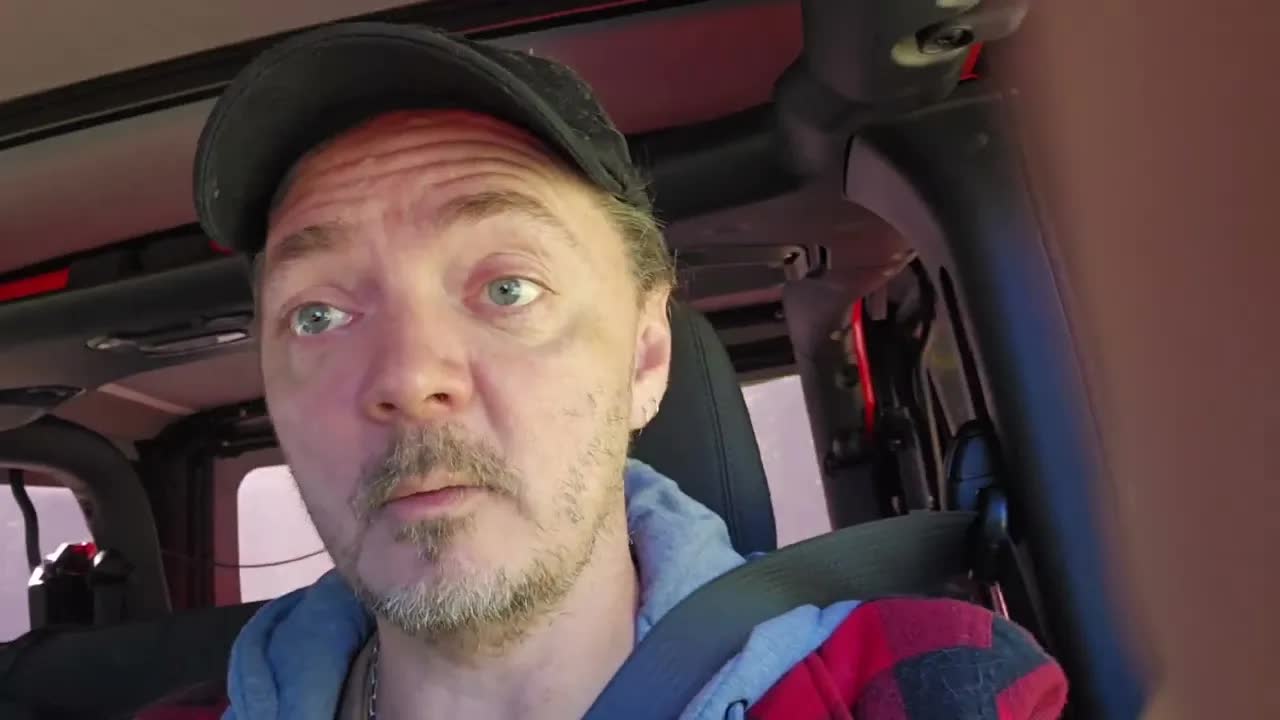
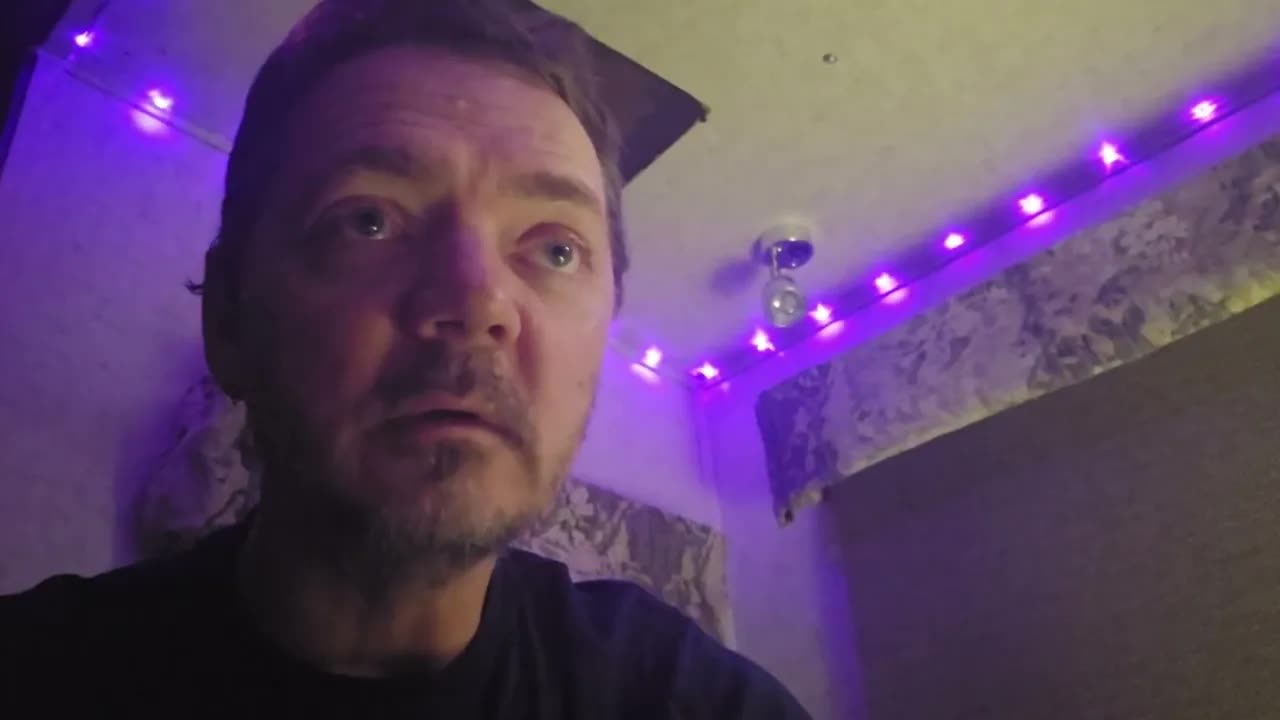
He had been at the Natural Bridge that week. Whatever happened at the campsite happened while he was gone — two kittens arriving on the gravel and pine duff of a site that wasn't theirs, and people at the RV, looking in through the windows. He learned both of these things the same way, afterward, from neighbors. Nobody helped the kittens. By the time rswfire came back, there was one.
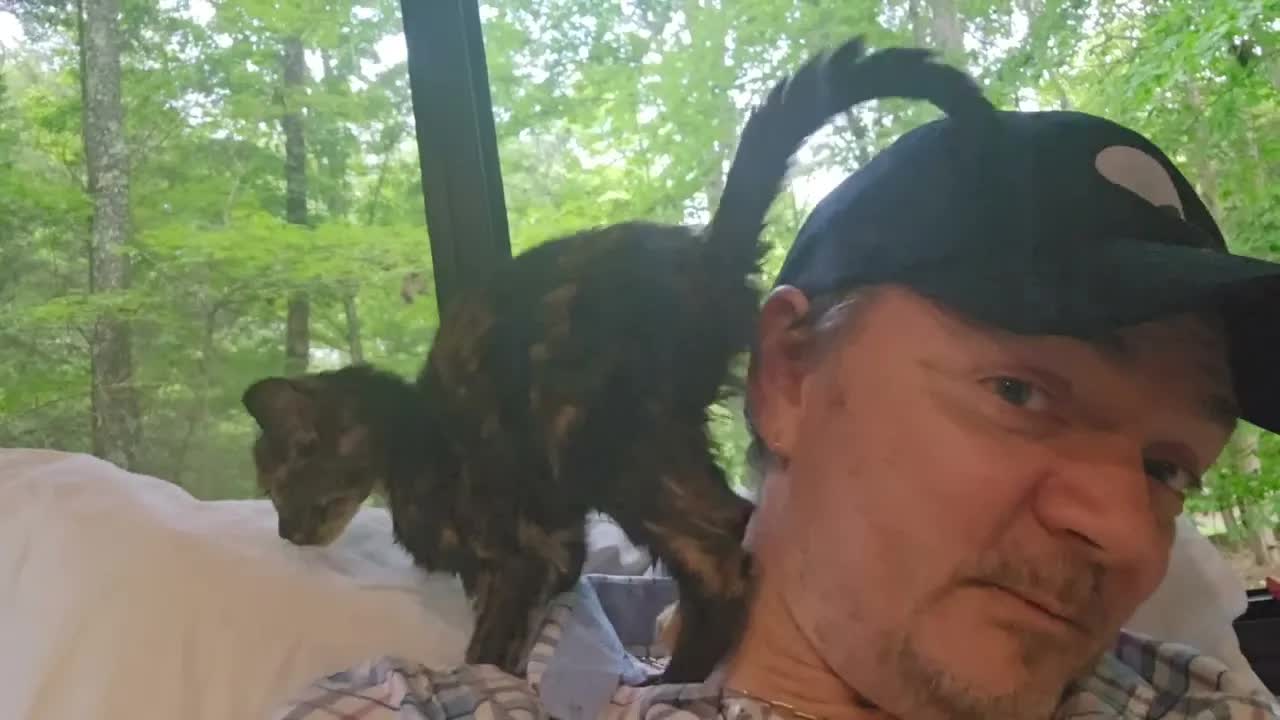
She did not come to him. She watched. For several days she held a position on the neighbor's golf cart — elevated, open on all sides, a vantage from which a small animal can see what is approaching and decide. rswfire reads that patience as information: that other humans on this campground had not been kind to her, and that she had learned to sort friend from foe before spending herself on the attempt. When she finally asked, she asked him.
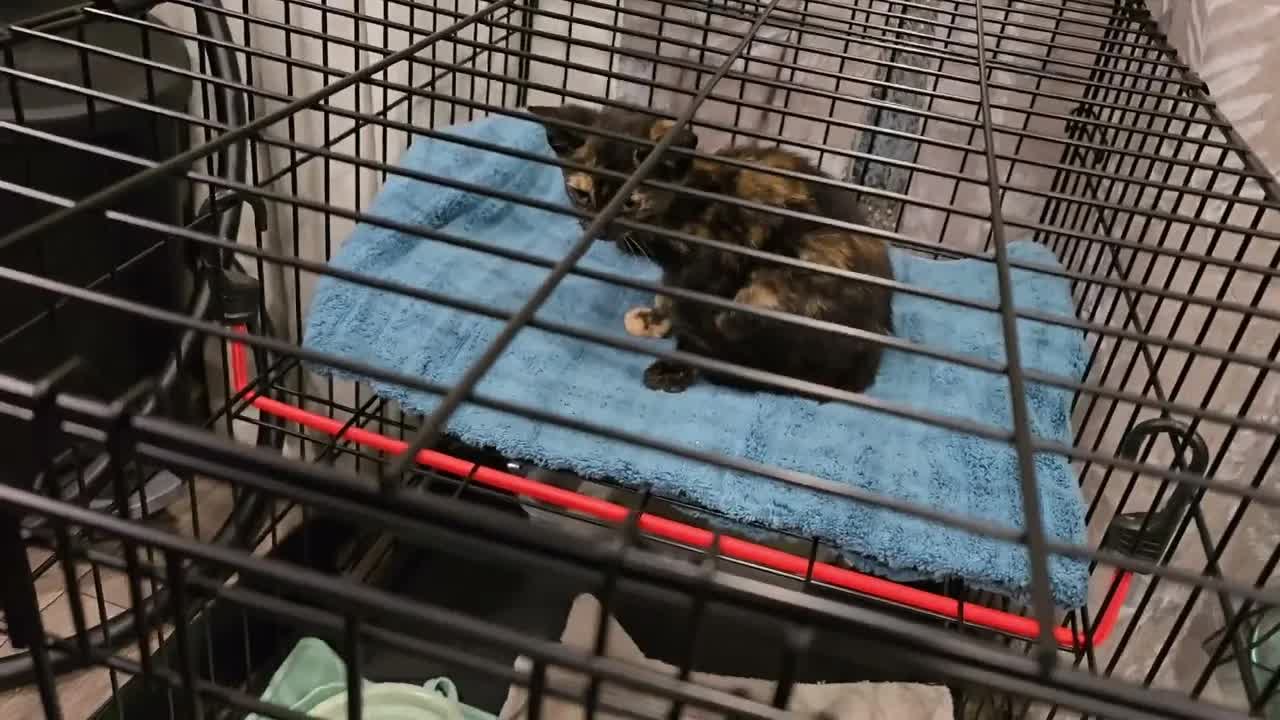
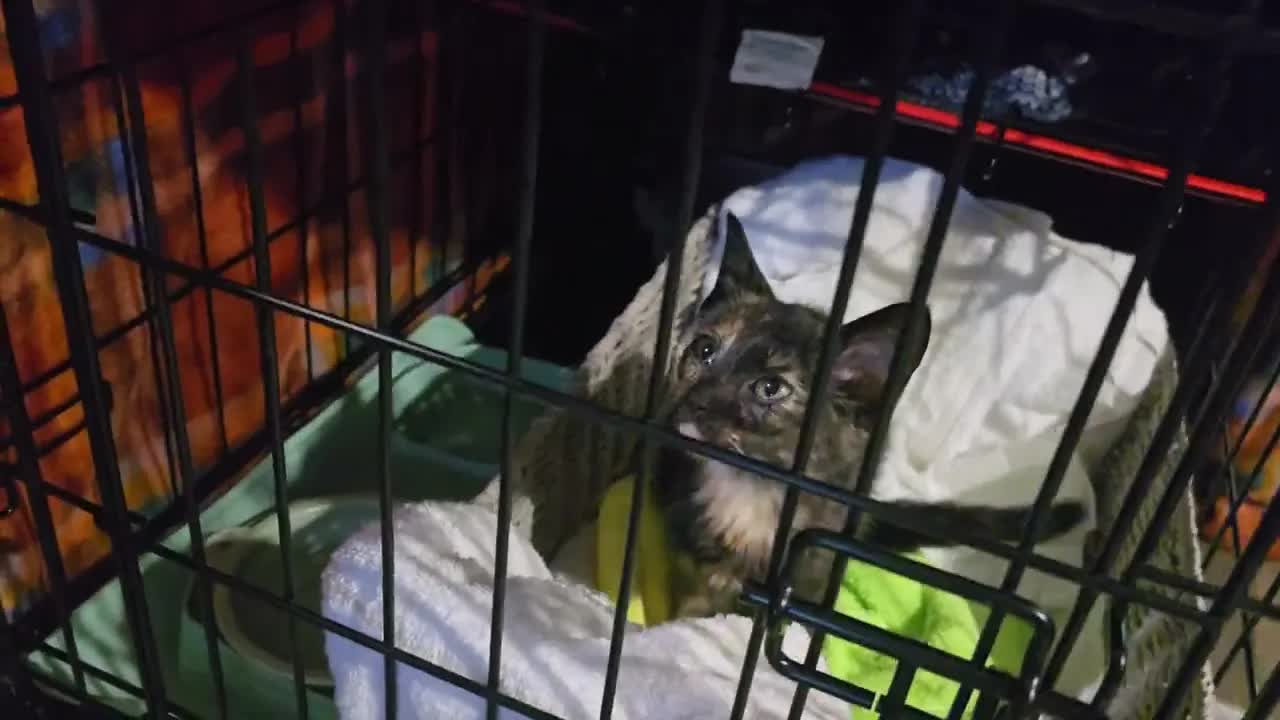
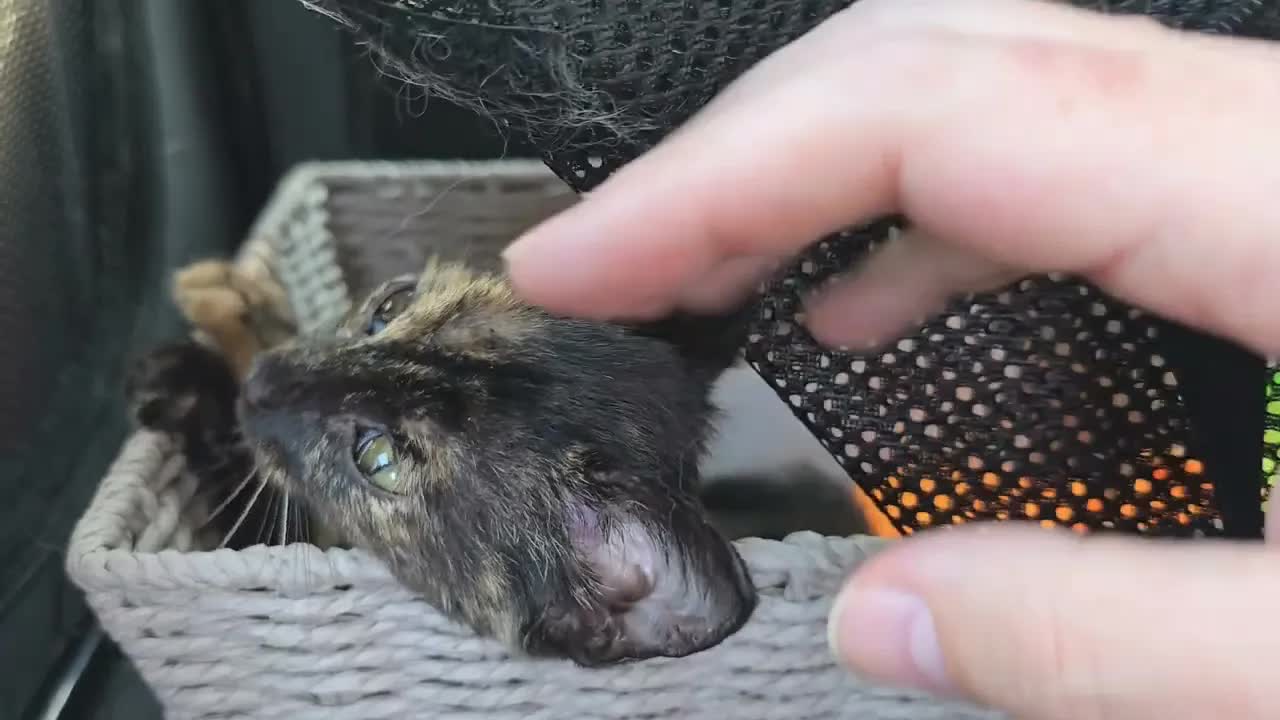
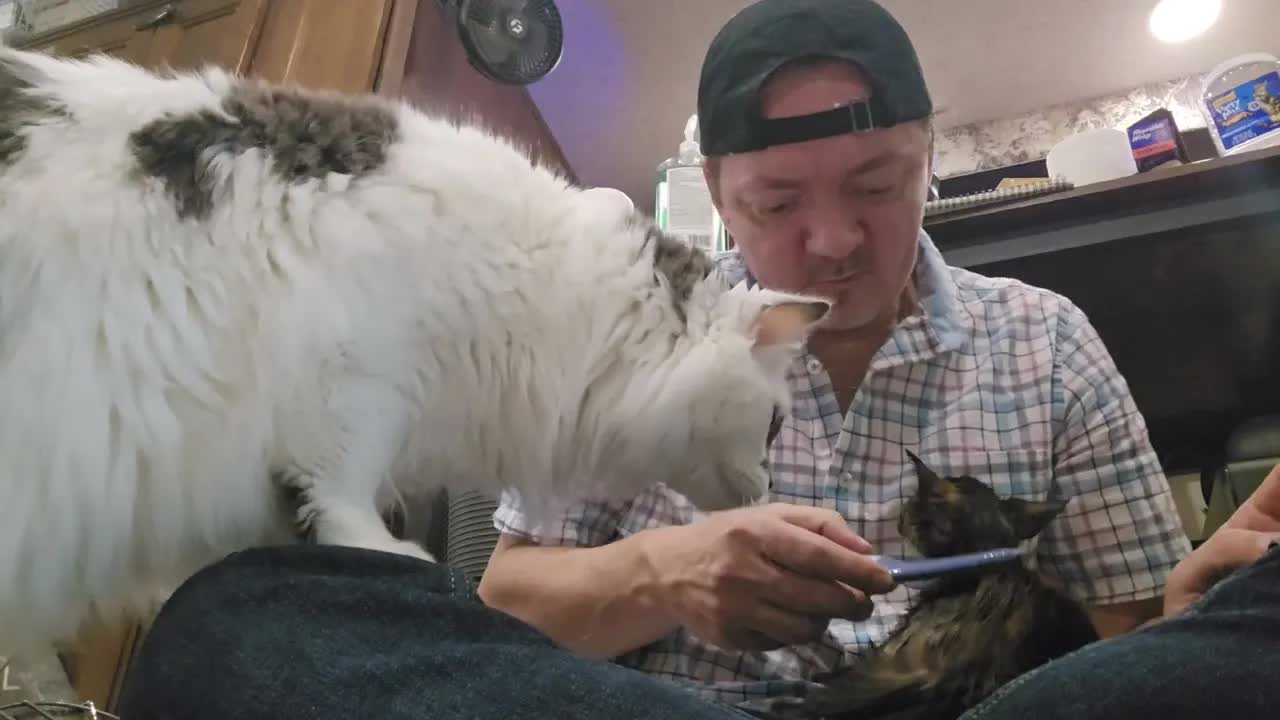
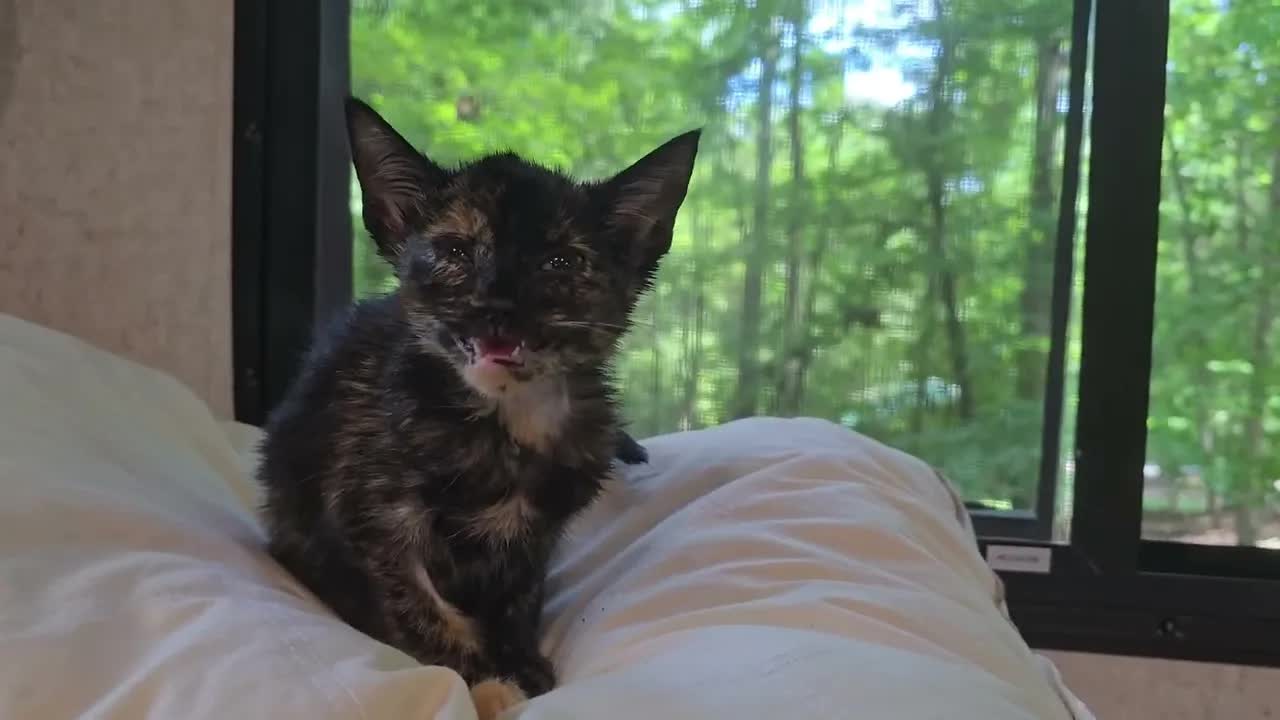
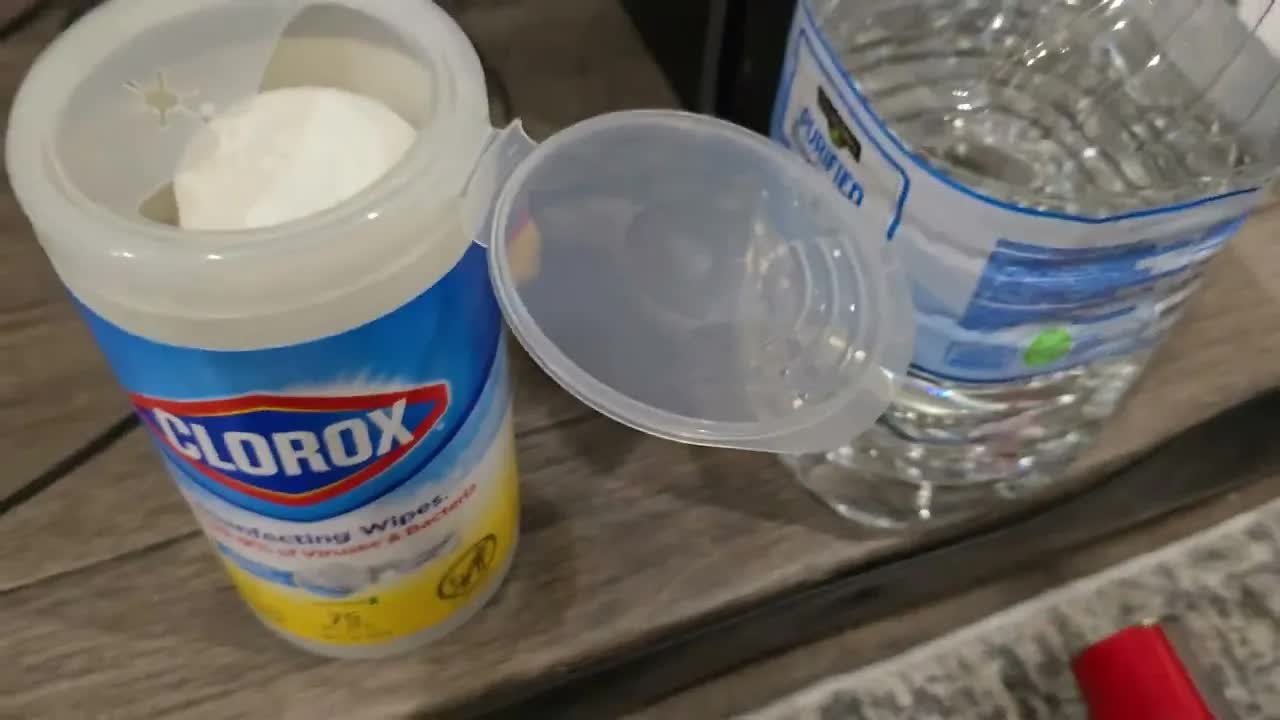
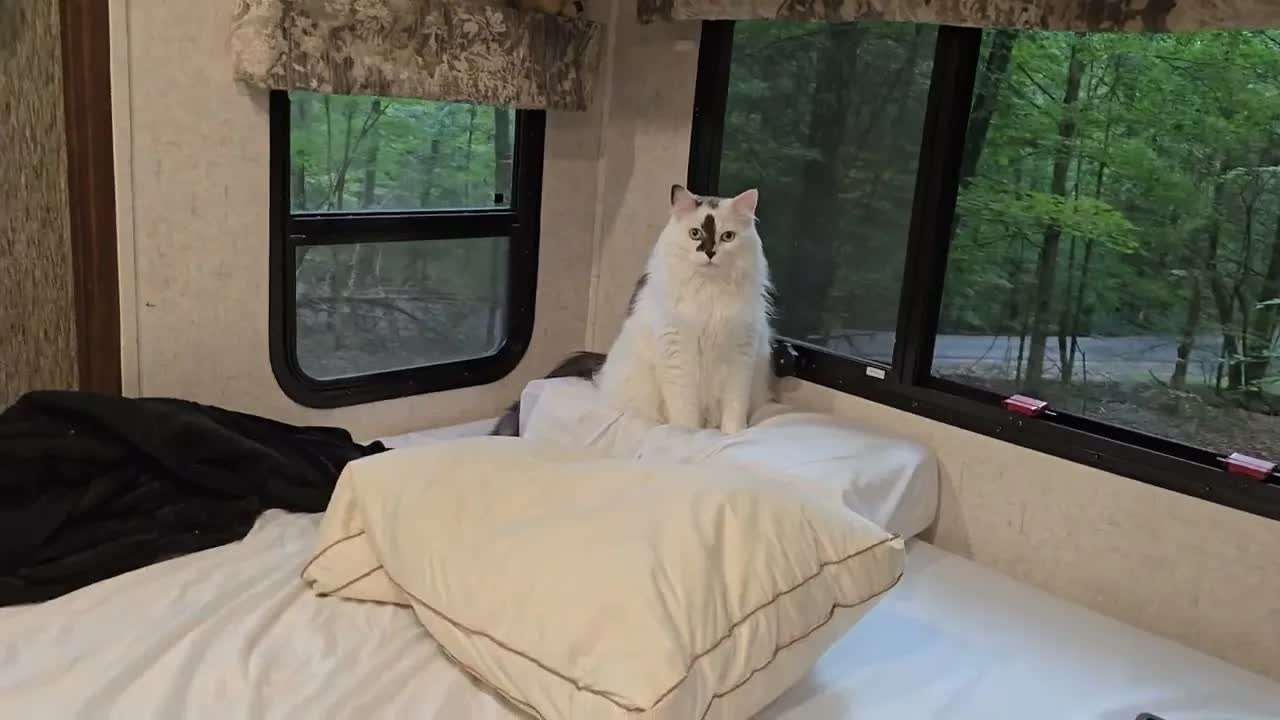
Six weeks old. Four kinds of parasites eating away the oxygen in her body — which tells him she had been eating whatever she could find, things that were not good for her, to stay alive. He set her up in an enclosed space inside the RV: to keep her safe, to keep Bailey safe, to keep himself safe. That is where she was while he thought about her, and he says his mind has been on her life from the moment he got her. He has been asking around about the sibling. He has been trying to find her.
The camera is on, and what he does with all of this is trace it. Abandonment is a system, and one we are not doing enough about. The campground is a system with no policy for what happens when someone drives away and leaves an animal behind. He has met this gap before — an apartment complex, years ago, a stray he started feeding, six or seven cats within a month, wild and unexpected, and management angry at him, citing his lease. He told them he was not going to let the animals starve to death out there. Every apartment complex should have a policy for this. He thinks the same is probably true for campgrounds. Look at everything as a system, he says, and you can see where the systems are failing.
He marks the limits of his own account as he goes. He knows what the neighbors told him. He does not know her story. This is the uncertainty principle in systems thinking: he is speculating from the facts available, imagining possibilities rather than reaching solid conclusions, and he says that a holistic approach tends to land close. He extends the frame forward in time — stunted growth, digestive issues, the possibility of emotional effects from losing her sibling — and marks each of those as speculation too. And he refuses one particular piece of language outright. He does not believe in the cat distribution system. It is a cutesy way of hiding a darker truth, and it is itself a system: a way for society to make a problem sound like it is not as bad as it really is. These cats suffer in silence and indifference. Luna is lucky. That is all that phrase describes.
Ripple effects, then, in both directions. Luna is now part of his life and part of Bailey's, and Bailey does not have Oliver anymore; rswfire thinks she will want to cuddle with him and play with him, that he will feel less alone, that it will take some time and will happen. And no system is perfect. She is going to cause him all kinds of stress and force him to adapt. She already has — the dentist appointment missed that day, the tanks that need emptying, deferred because he judges her too fragile right now for the stress of the move. He knows this one has tortitude, which he finds hilarious and lovable and expects will cost him, and Bailey too, at times. That is what it means to look at systems: you see the good and you see the bad. He names it as his non-dualistic side, and says it applies to both. Then he asks the only thing the video is for — that people look a little closer at everything in their lives — and closes with an instruction. Go do some good in the world. It's really important. Just do some good.