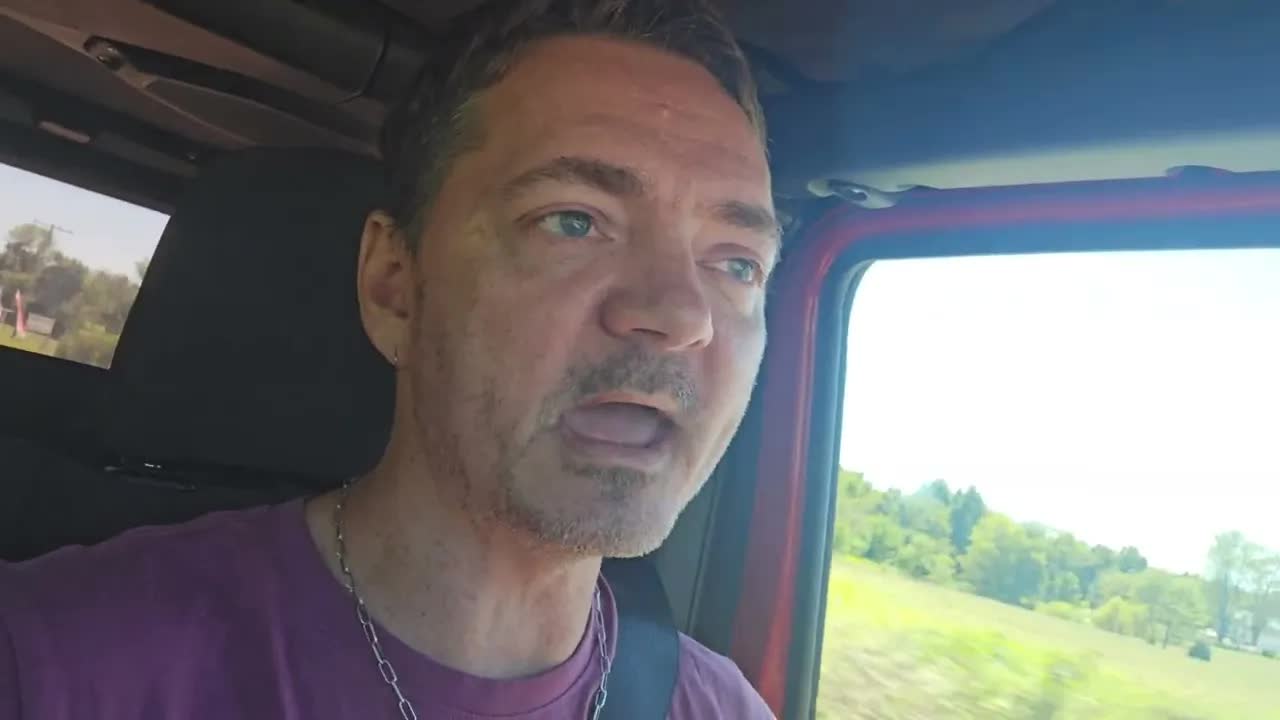
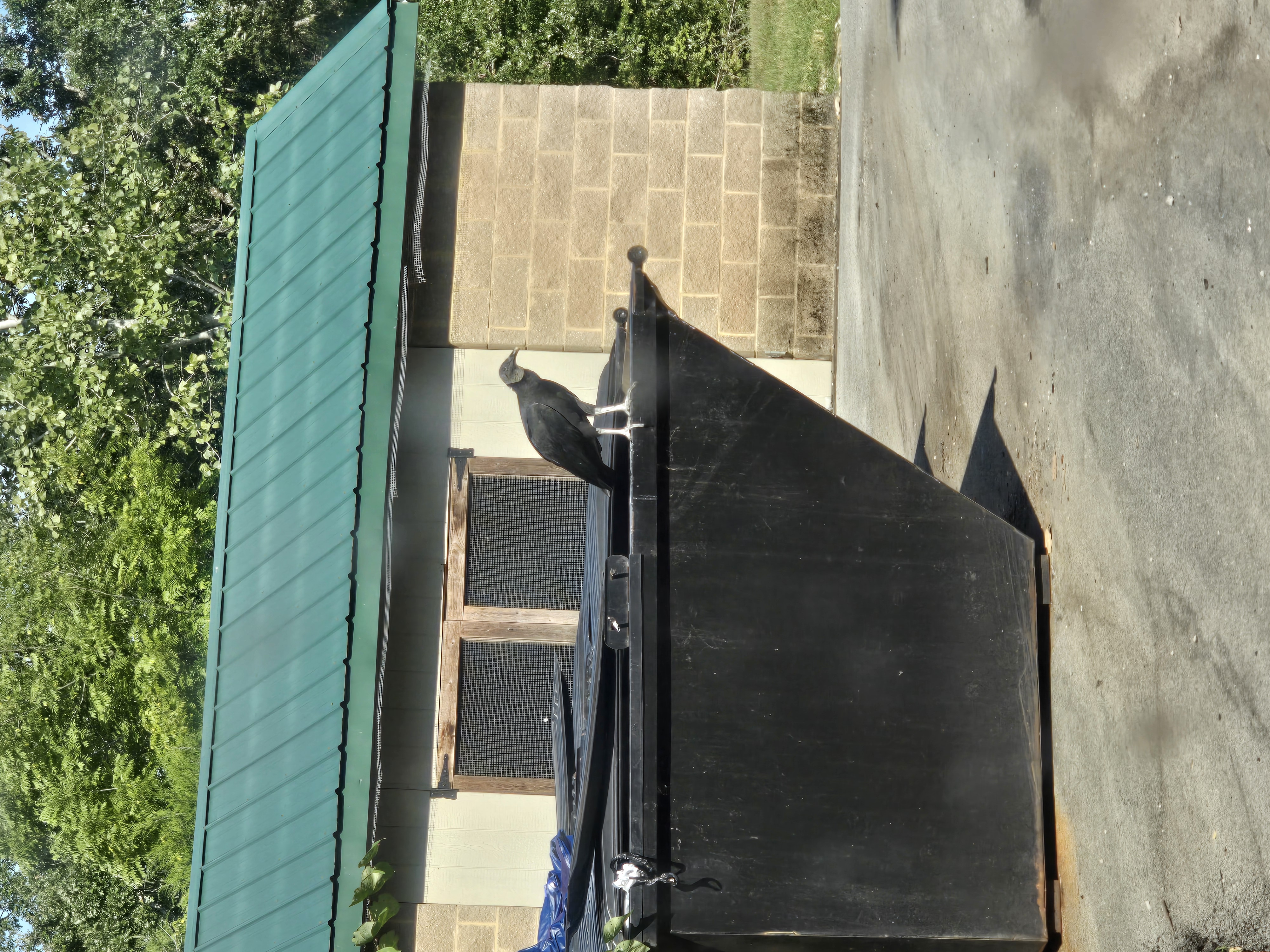
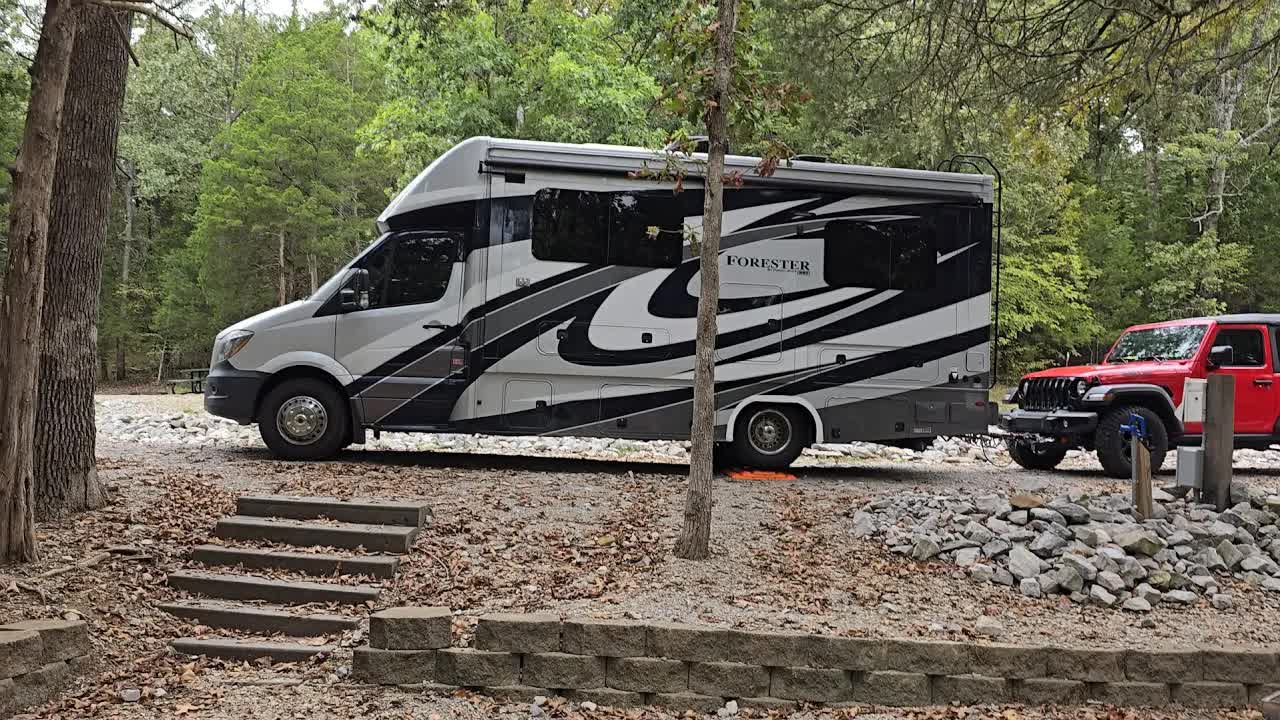
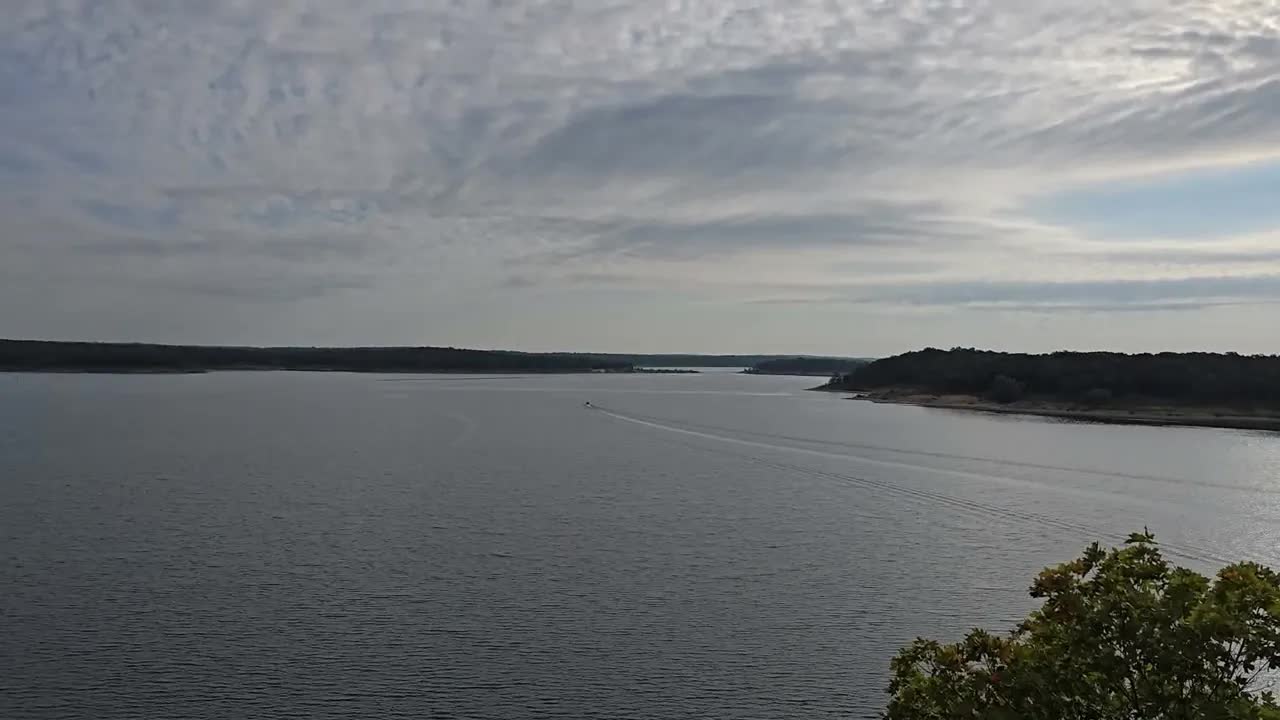
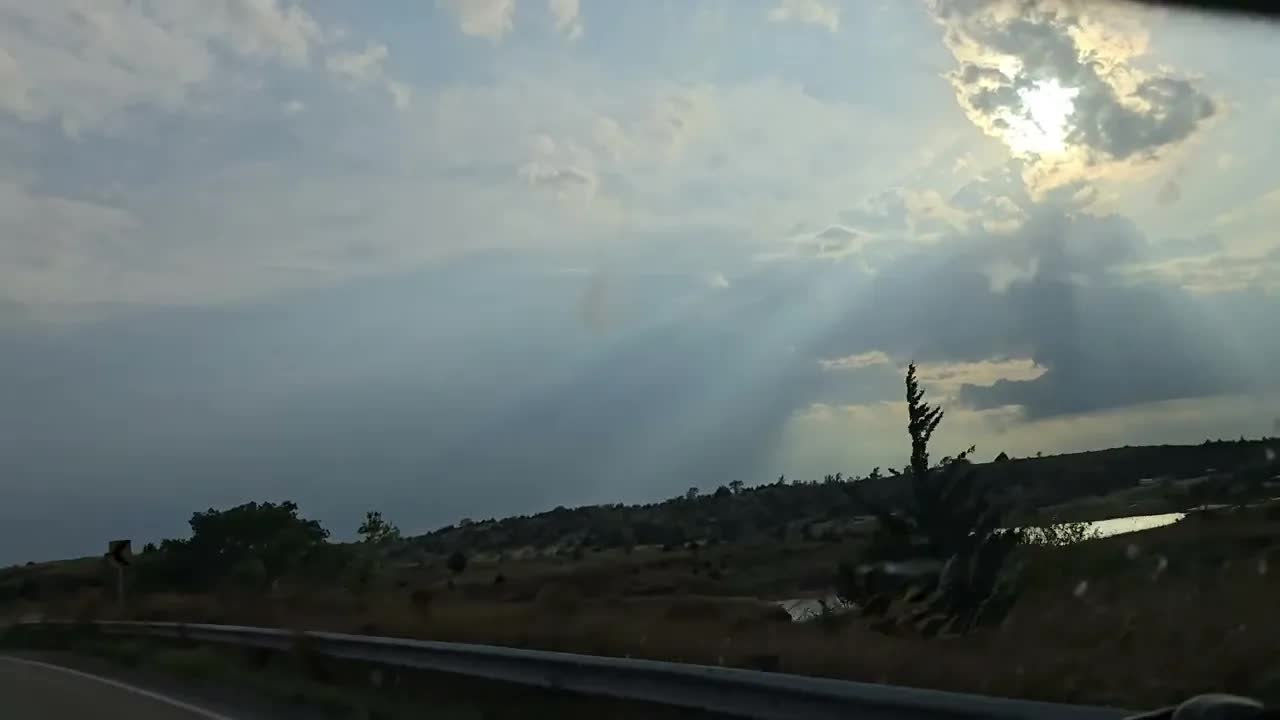
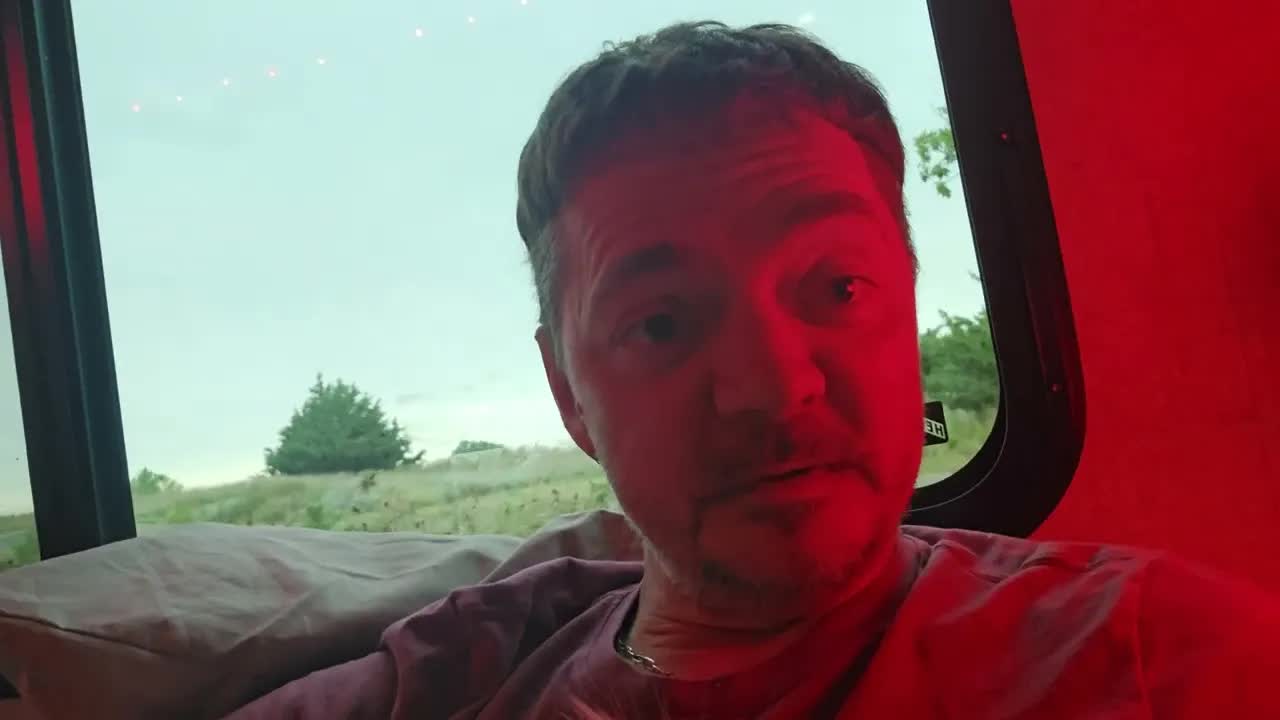
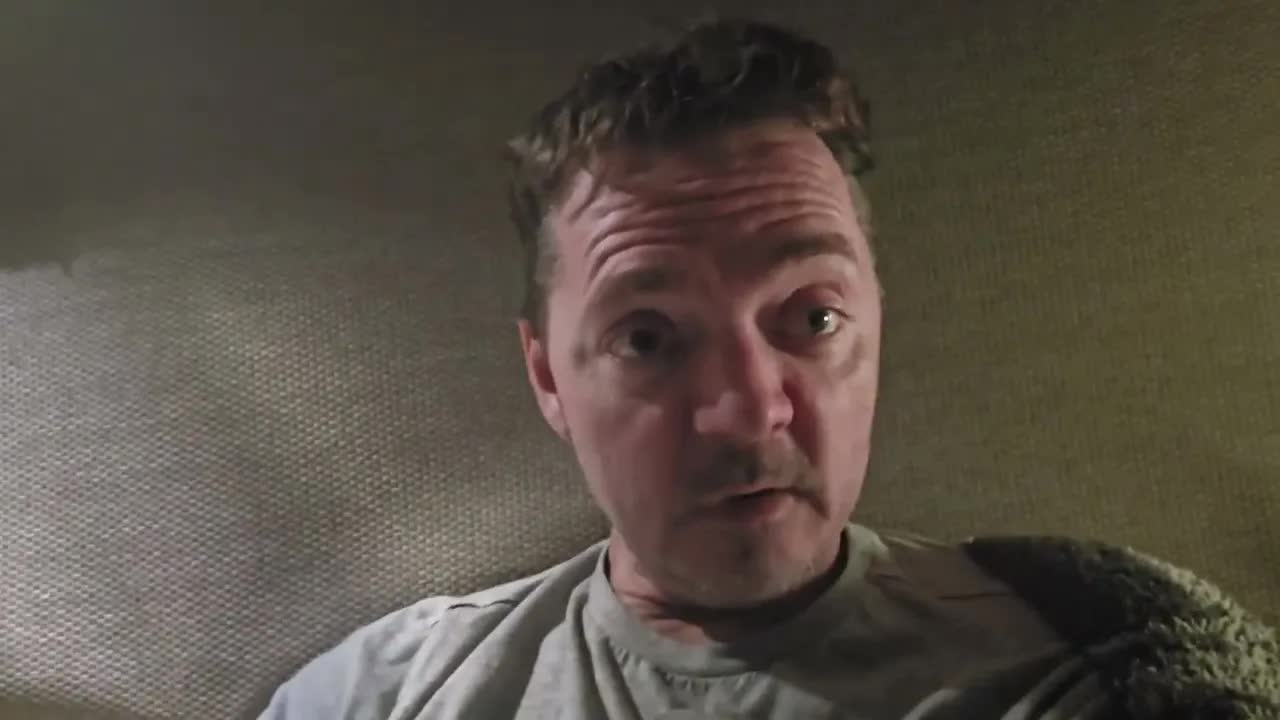

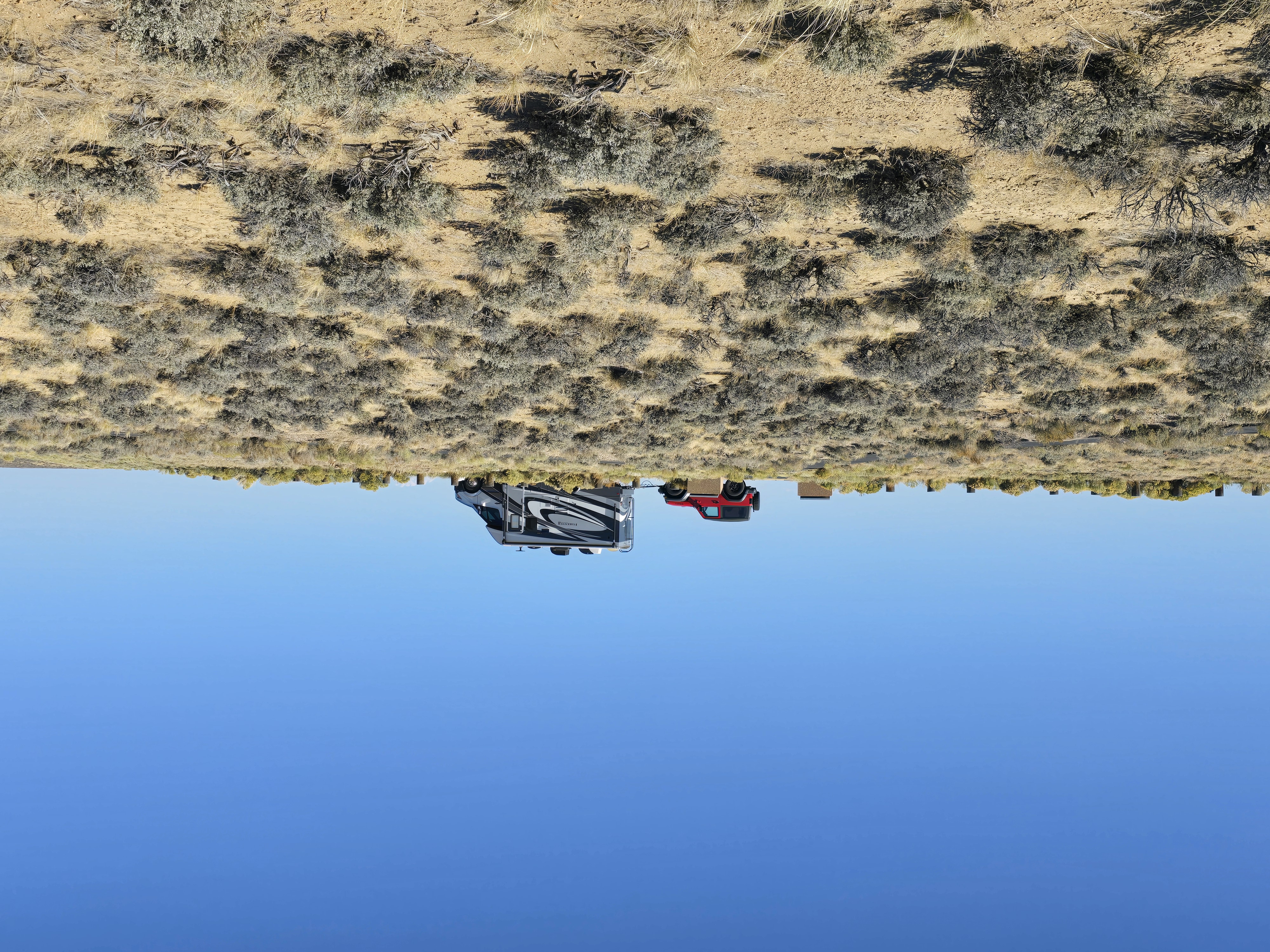

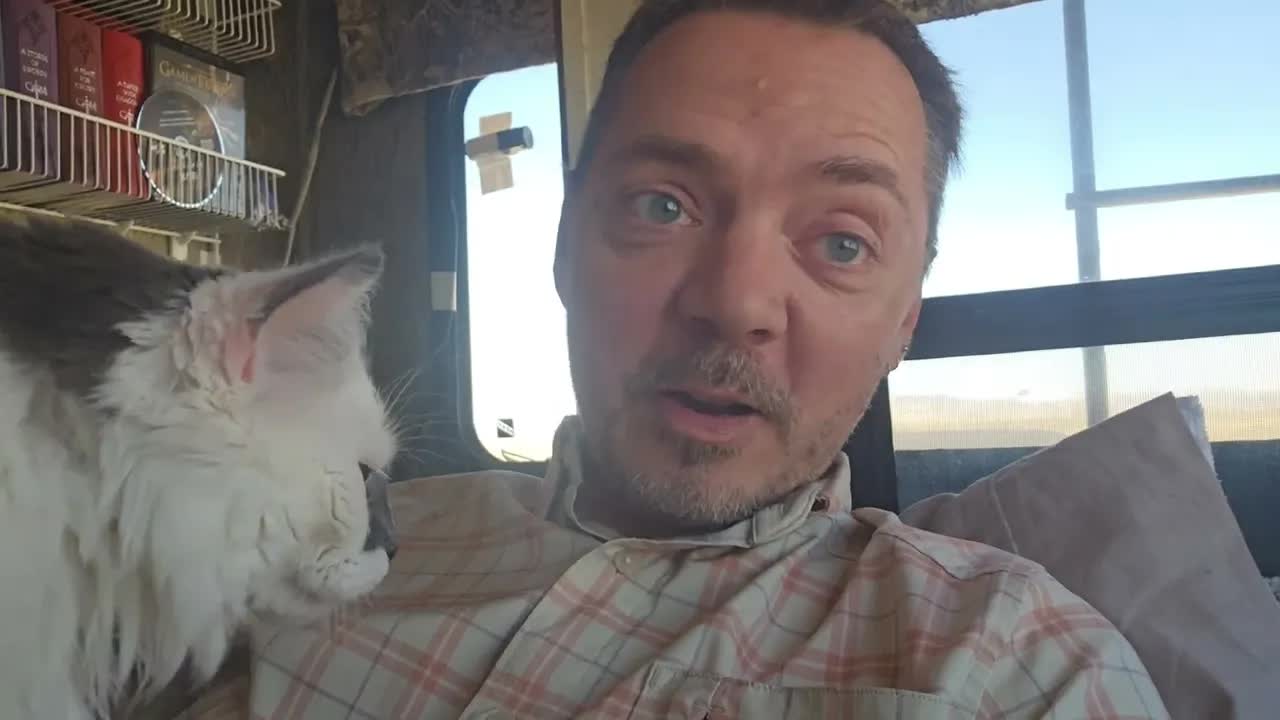
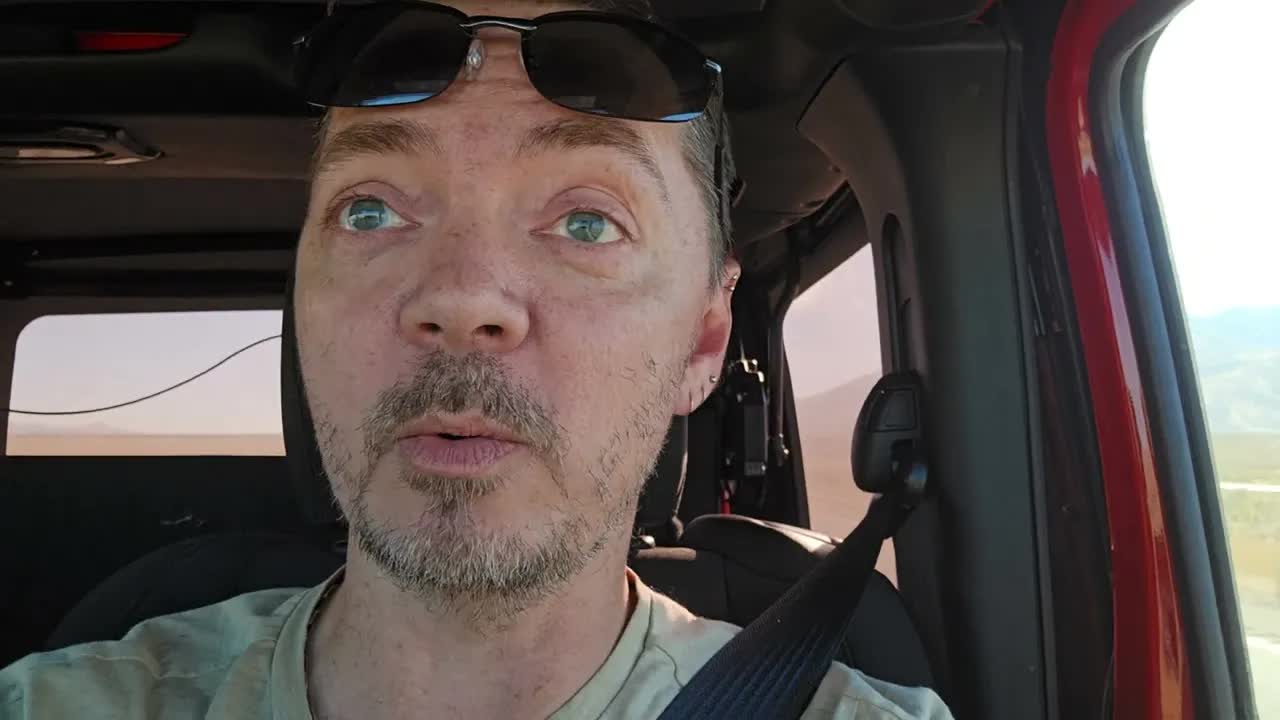
On a rise of ground above Truman Lake, two days before he crosses into Kansas and three weeks before he reaches the coast he does not yet know will hold him, rswfire watches a wake spread across the water. A motorboat is racing away. A man below has been fishing in silence the whole time rswfire has been sitting there. The wake reaches the fisherman, and rswfire names what he is seeing: ripple effects, both literal and figurative. It is the kind of observation that could be a platitude in another mouth. In his, it is a measurement — he is watching cause propagate across a shared surface in real time, and he treats the lake as what it actually is in that moment: a field on which every actor is already in relationship with every other, whether they have acknowledged it or not.
What makes the moment structural rather than incidental is what rswfire does with the boater. He states, twice, that he is not saying the man shouldn't be out there, not even that he is doing anything wrong. He declines the verdict entirely — and then, in the same breath, states his own standard with total precision: if that were me, I wouldn't be going at that speed; I would leave as little of a footprint as possible; I would respect that person over there, because I know I am in a relationship with him right now. This is the load-bearing move of the signal. He does not legislate the field; he legislates himself, out loud, in front of a live case. The boater becomes the occasion for a declaration of terms — the ethic is articulated by contrast, not by complaint. Even the disturbance gets absorbed rather than resolved: he grants the man somewhere to be, files the wake as a momentary distraction, a tension the field will metabolize before returning to peace.
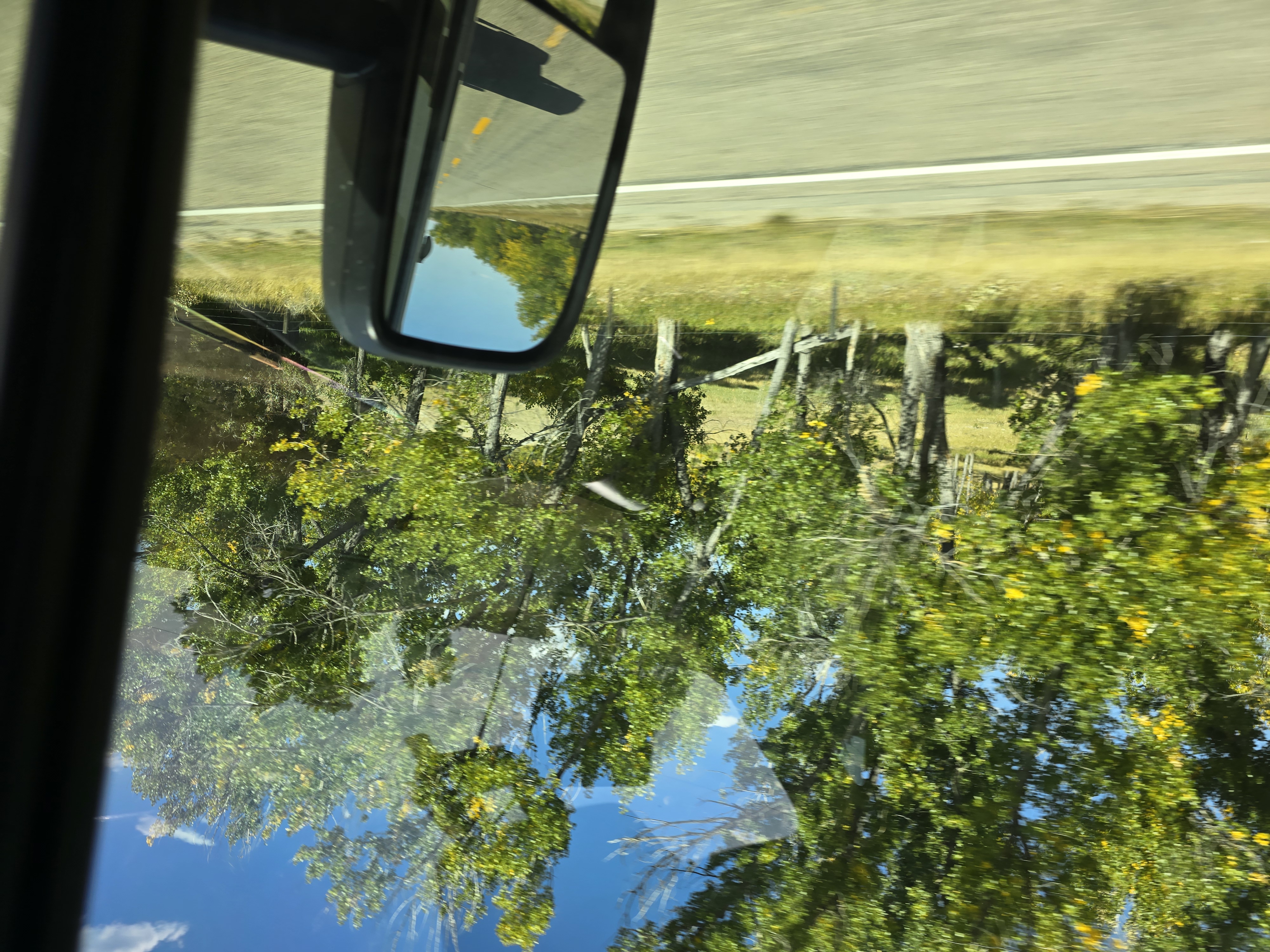
Read in September 2024, this is a man mid-migration. He is crossing the country westward, camped for two nights on a Missouri lake he will never live beside, and what he is doing on that hillside is rehearsing the architecture of the life he is driving toward. Low speed, minimal footprint, respect for the co-present other — this is not commentary on a stranger's boat. It is the operating standard of the caretaker he becomes at Siltcoos, stated fully formed on the wrong lake, weeks early. The standard precedes the life. That is what the signal reveals that it does not say about itself: rswfire is not discovering an ethic in this moment, he is testing one he already carries against a live disturbance, and it holds — it can watch a wake break someone else's stillness and produce a self-measurement instead of a grievance.
The cost of the ethic shows at the edges. Because everything is interconnected, rswfire cannot be a mere spectator to the disturbance — his own framing forbids it. The fisherman's broken silence is his broken silence; "he disturbed the peace that we were having here," he says, and the we includes himself without hesitation. To hold a relational ontology is to have no exempt position on the field, and the price of that is being touched by every wake that crosses it. He pays it without complaint, but he pays it.
And then the last line lands, quiet and unsentimental: there are so many people in this world now that it is getting very hard to find moments like this one. This is not nostalgia; it is a scarcity report from someone who tracks field conditions the way others track weather. The quiet places are a diminishing resource, and rswfire is a man who has arranged his entire trajectory — the left career, the road, the westward crossing — around access to them. The signal ends not on the boater or the fisherman but on the condition itself: peace as a habitat under pressure. What he was watching on Truman Lake was small. What he was reading was not. A wake crosses the water, reaches everyone on the shore, and subsides — and the man on the hill writes down what it proved, then keeps driving west toward the quiet he intends to keep.