
The orange and red on the GPS map came first — a stripe of congestion color laid across a stretch of western Kansas where, by rswfire's own accounting, there was nobody. He turned the question over while he drove: was the scale relative, calibrated so that a few vehicles in an empty county would light the road up like a rush hour? The answer arrived on its own a little further along. Construction. One lane. The map had been telling the truth in the only vocabulary it had.
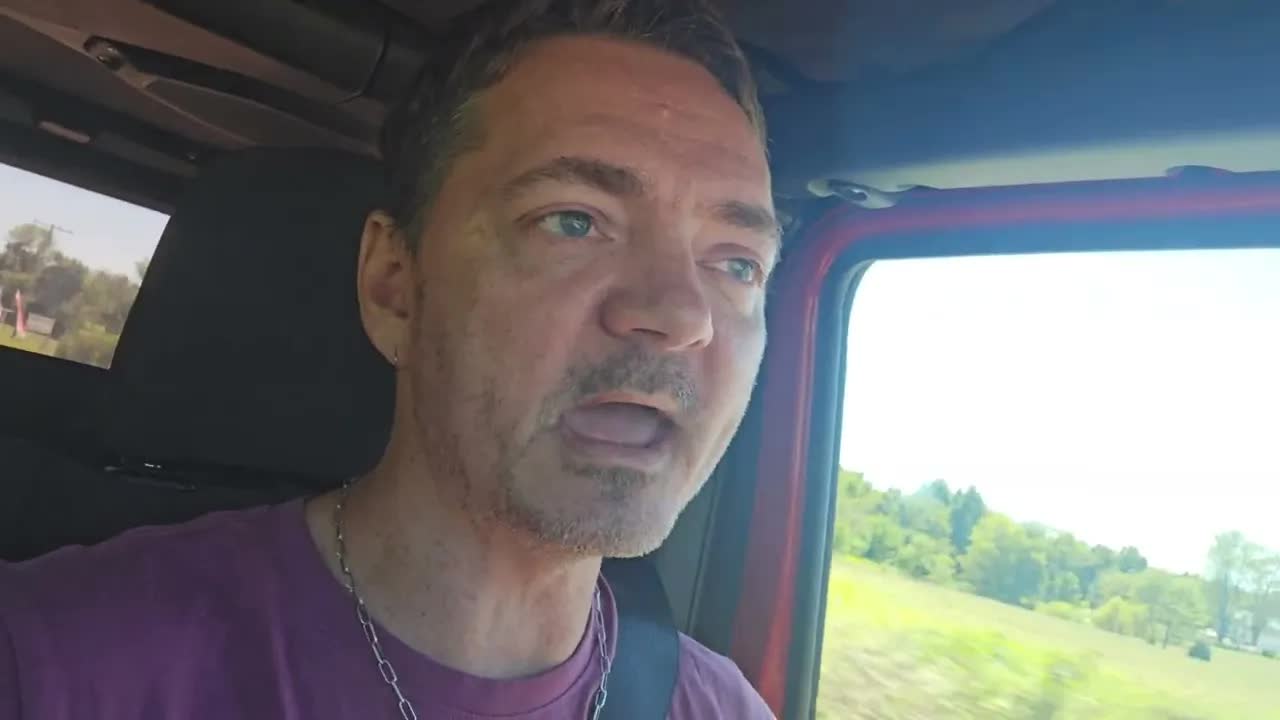
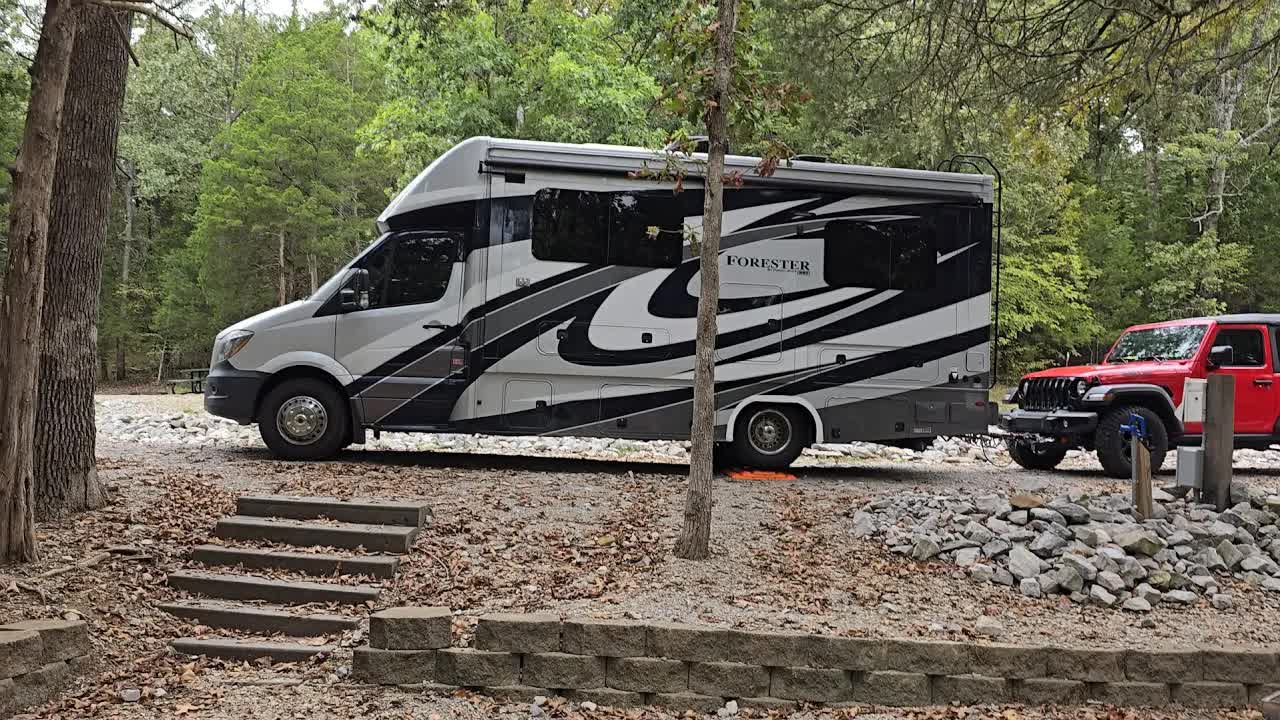
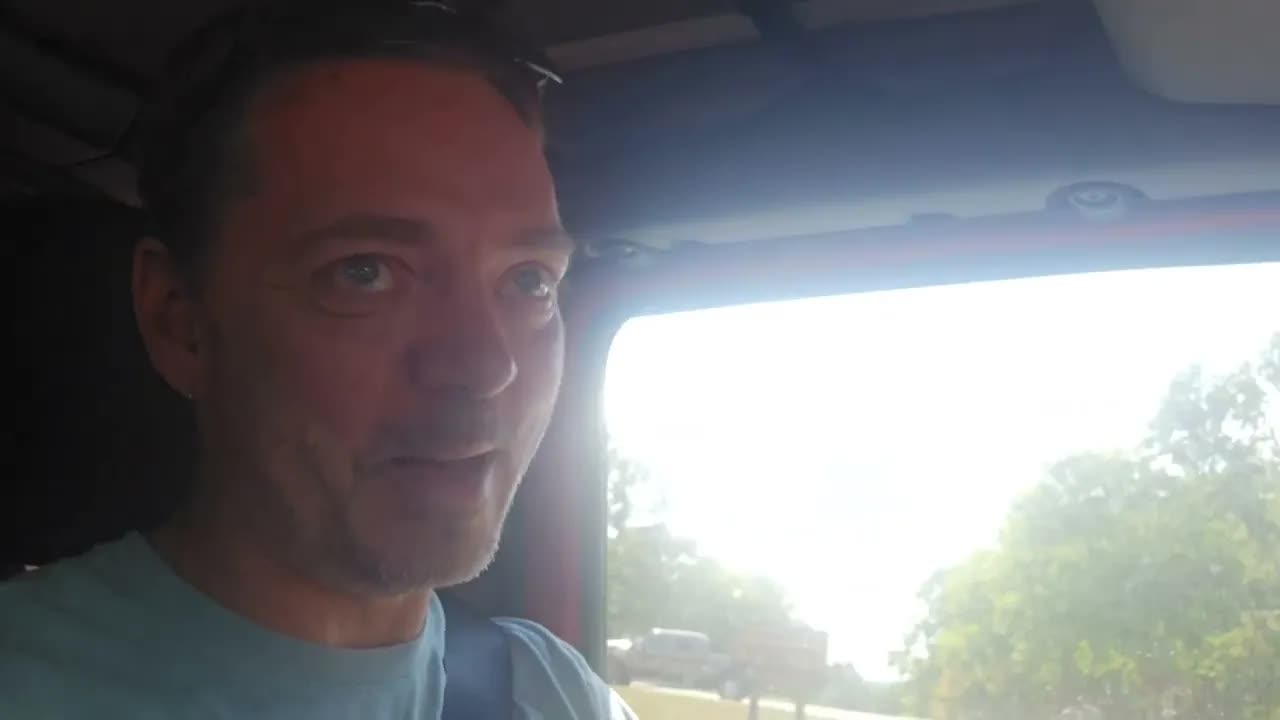
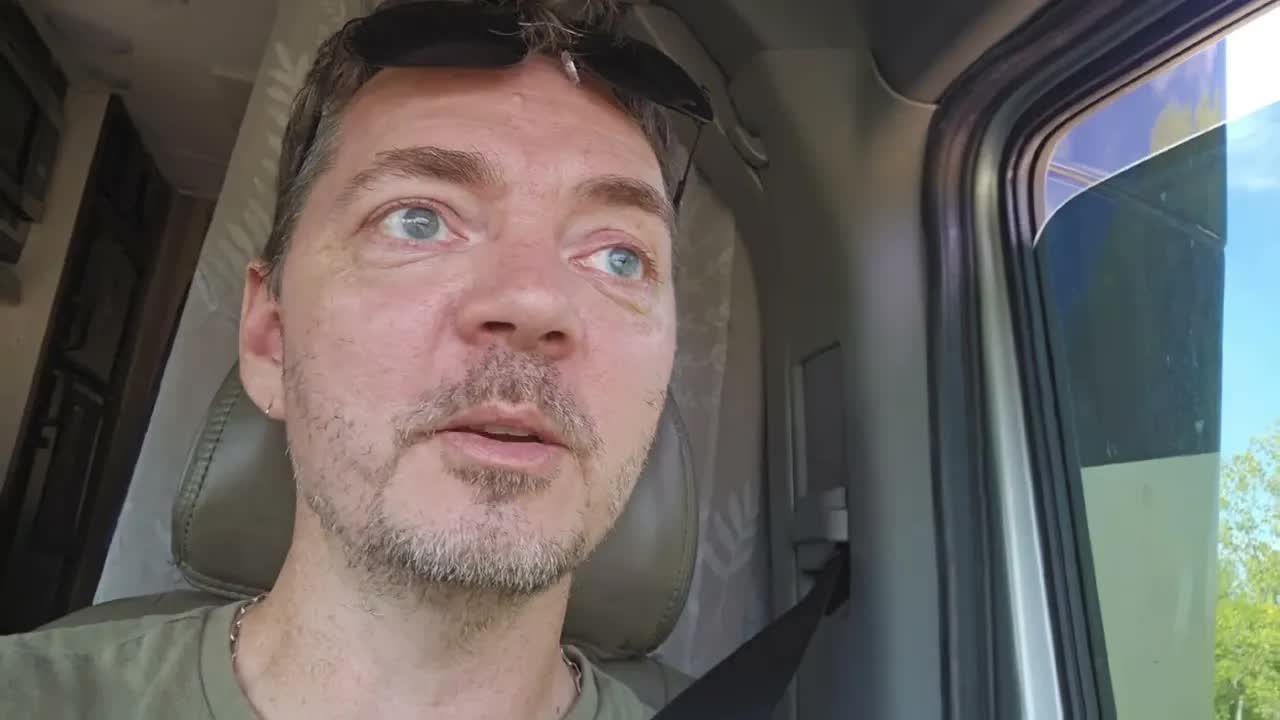
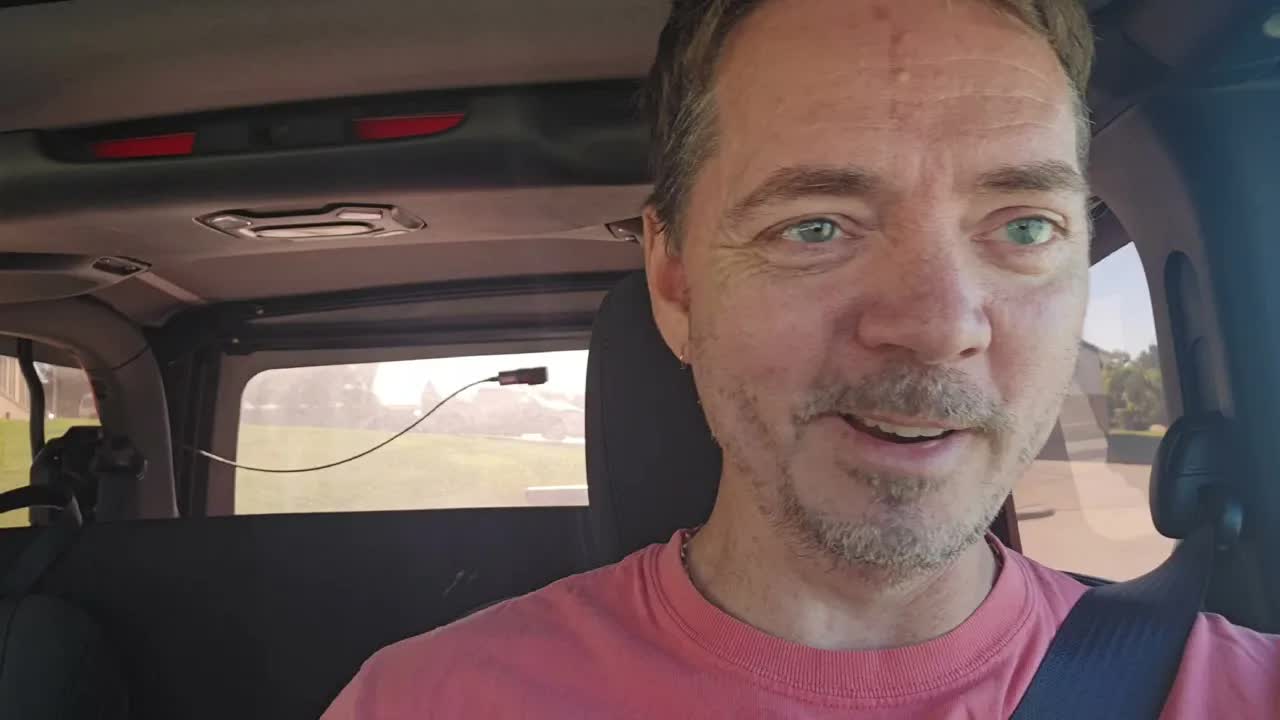
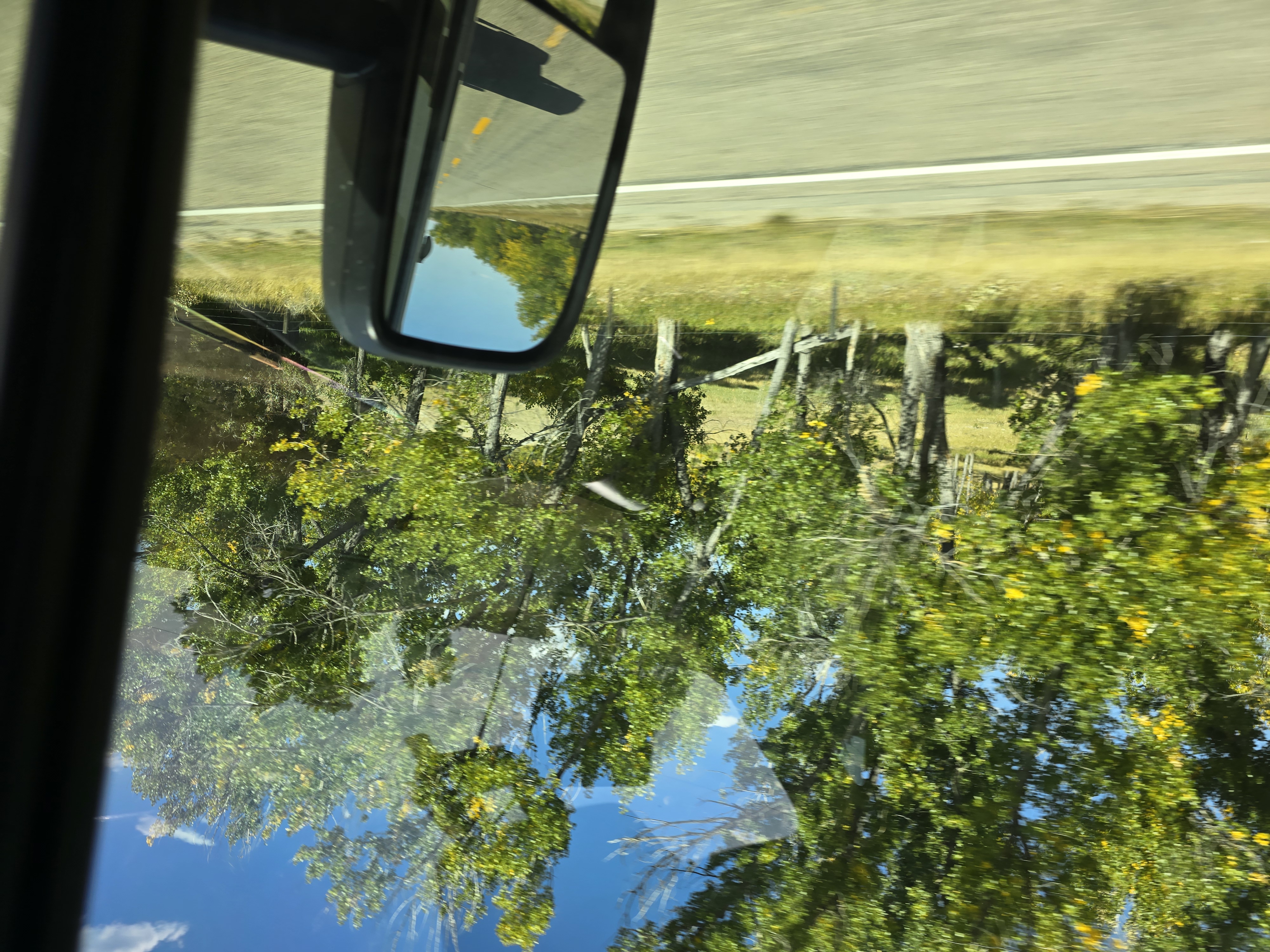
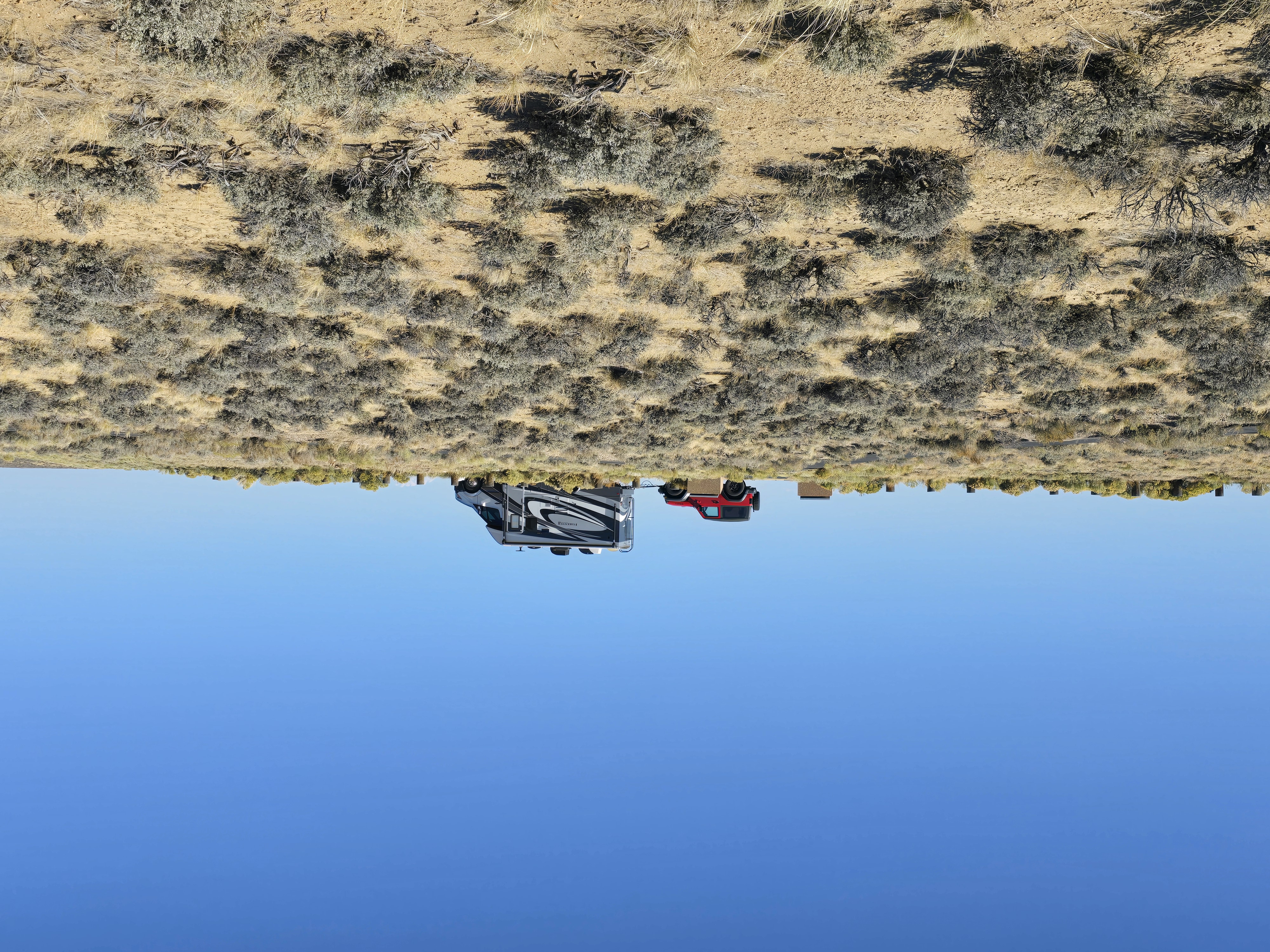
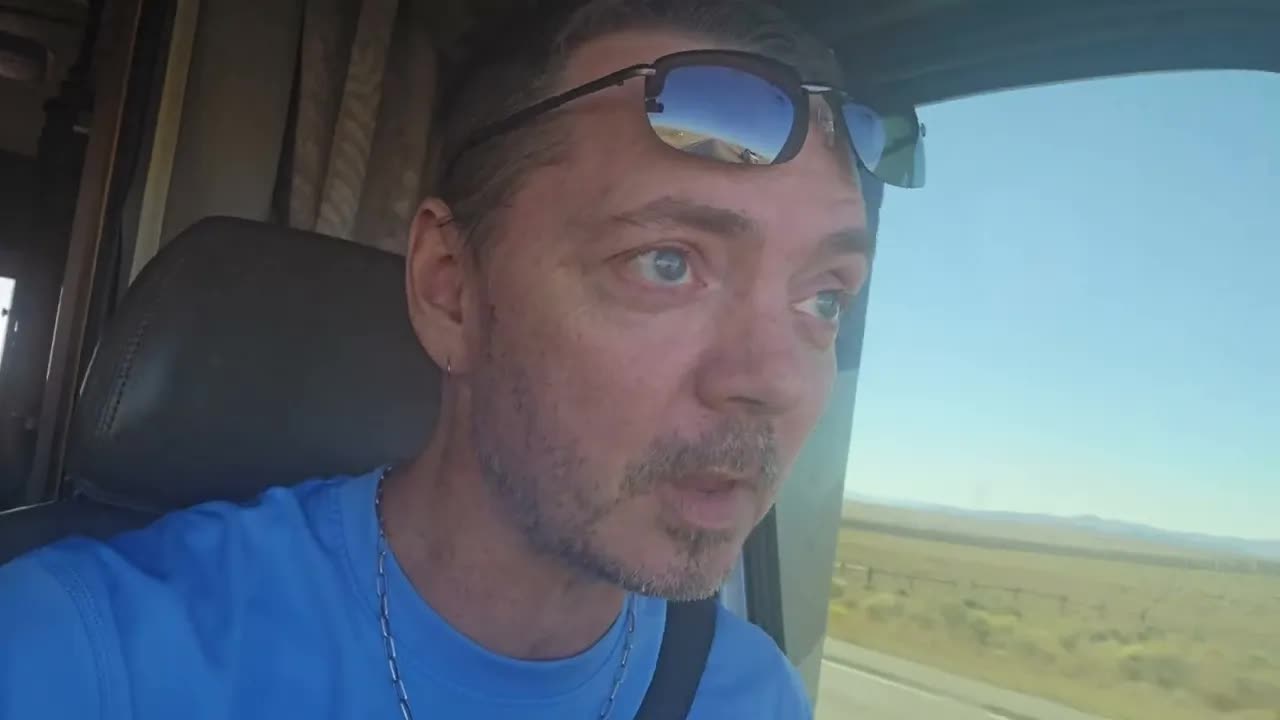
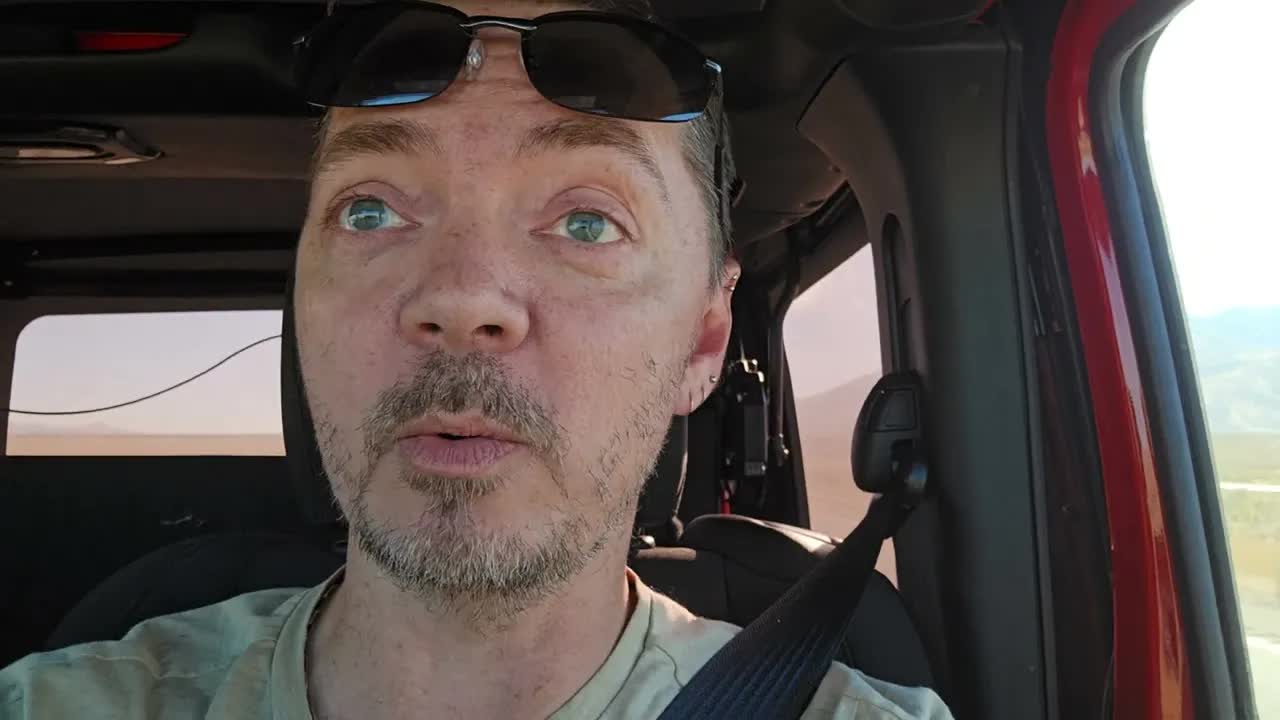
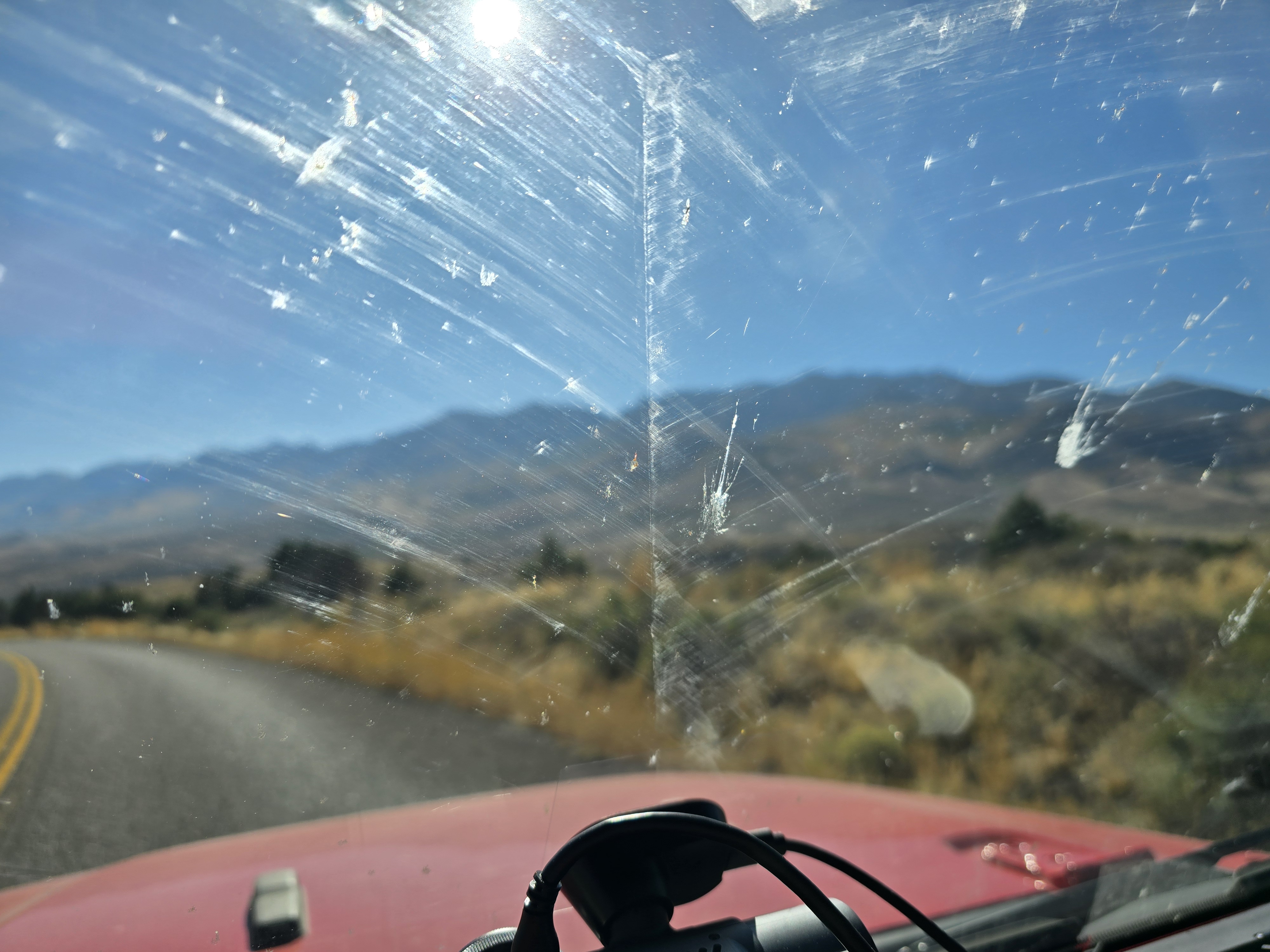
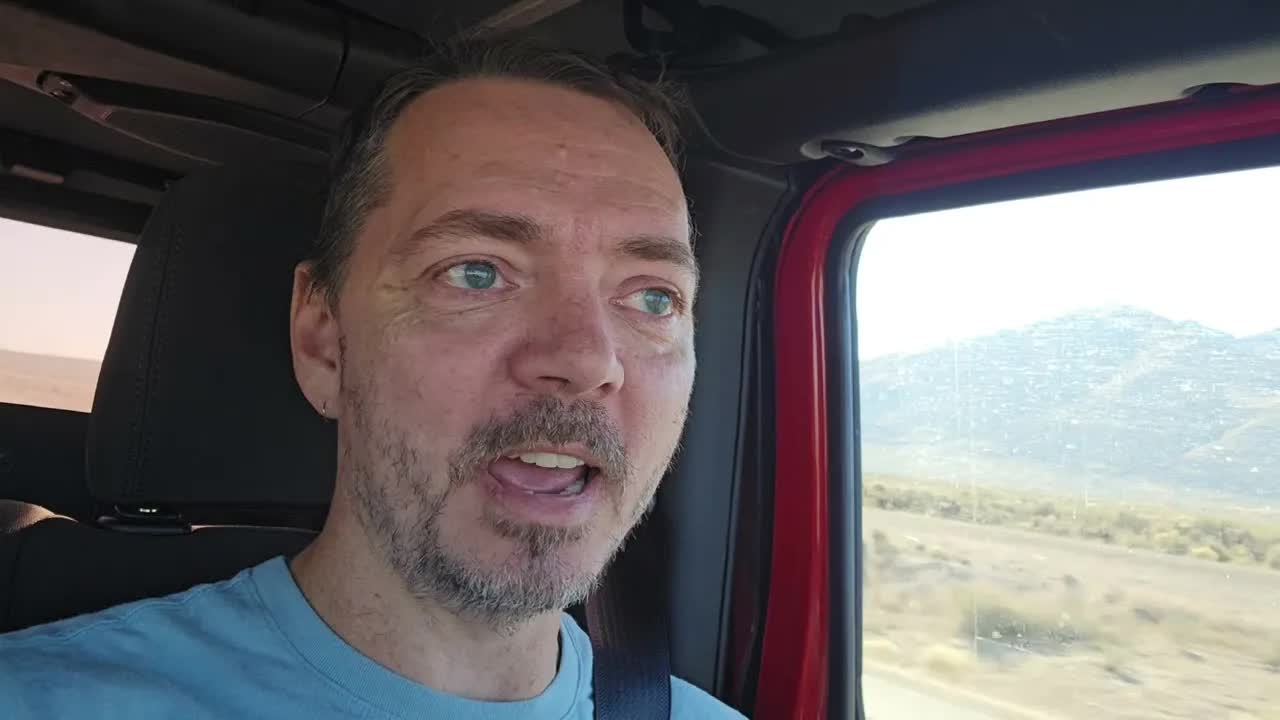
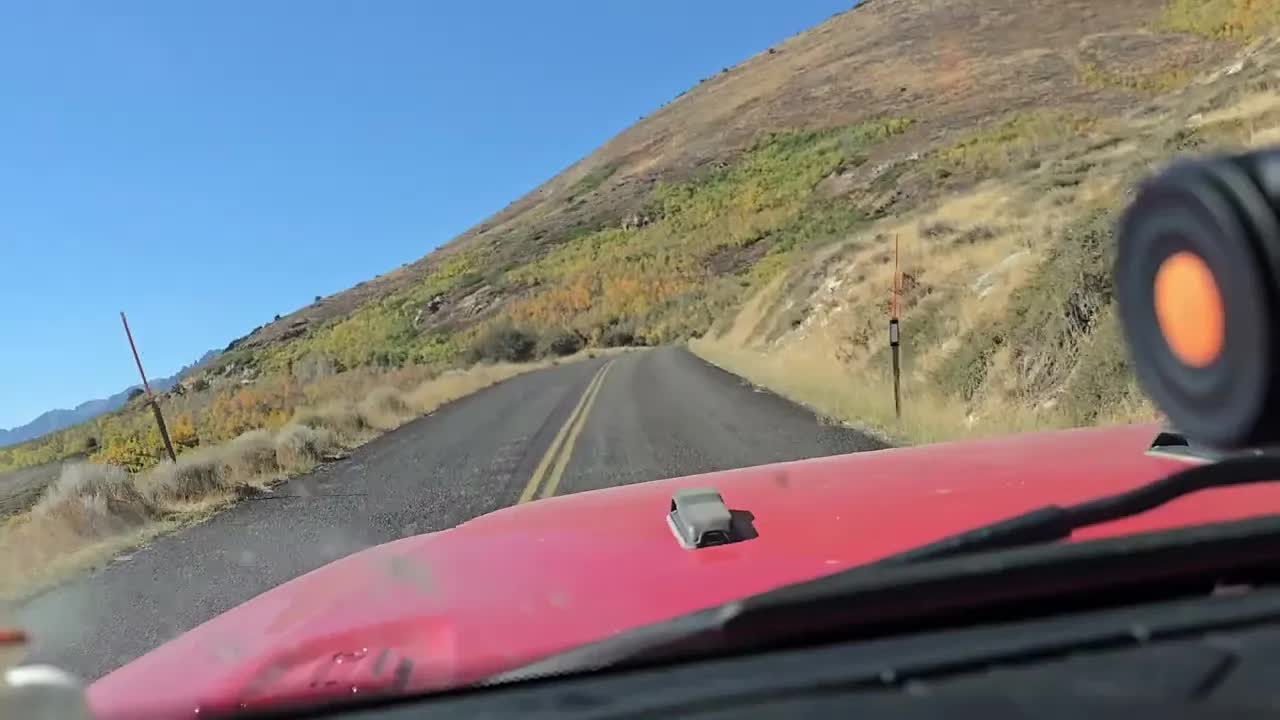
He had been in the RV most of the day, out of the heat, getting a video uploaded and talking it through with an artificial intelligence, which he described as something he always does. Then groceries — the nearest store roughly ten miles out, close enough to be reasonable. The hardware store was much further, so that was not happening. He drove with the camera running and narrated as the terrain came at him, naming what passed: the hills, the prairies, the trees, the creeks, the rock formations. He said the environment was changing the further west he went. He said it was beautiful, and then he said it again, as though the first pass had not been sufficient.
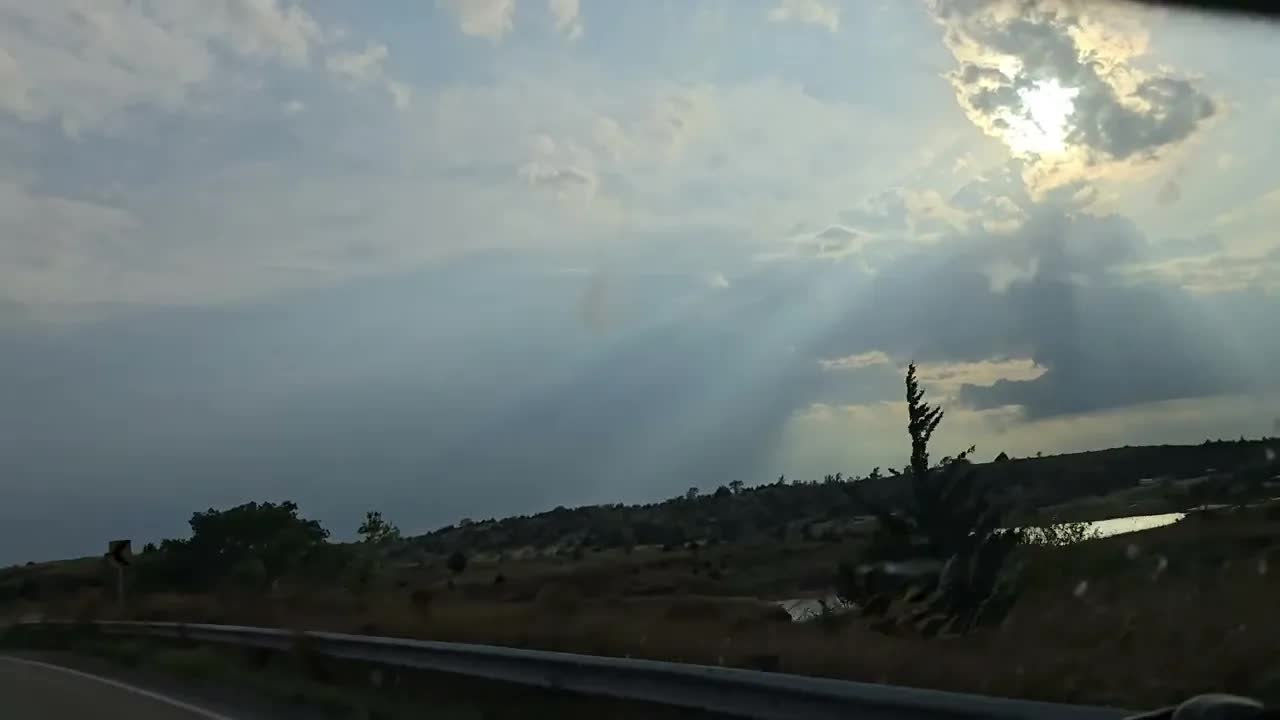
A grain elevator went by on the right and he pointed it out and admitted he could not name the type. Clouds were stacking up with rain visibly falling somewhere far off, and he noted a storm would be welcome — it would cool things down. He kept apologizing to the camera for the framing. The beauty ran on both sides of the road simultaneously and he could only aim the lens at one of them. A farmhouse sat far back from the pavement, and he held on it for a moment and said to imagine their lives, truly imagine them, relating it back to books he had read. He said he was fascinated with the world.
The questions came as fast as the scenery. Where does the creek run — is it on this side or the other. Where does that road go, down there in the middle of nowhere. Why do the trees grow together in that one stand and not anywhere else in all that open ground. He called these important questions and let them stand unanswered. A sign he had passed earlier stayed with him: something about every Kansas farmer feeding fifty people. He said it made a lot of sense. Then a house perched at the top of a cliff, sited for the view, and he stated plainly that he had once aspired to exactly that and no longer did — a view like that would become a static view, and eventually just background. What he wanted was the changing input, the next stretch of road.
The navigation voice cut in through it. Shoreline Road, the bridge ahead. He had missed a crank in the creek that he thought was only visible from the other direction. He nearly overshot a turn — woo, yeah, that was close — and got the RV back into the lane. Behind another RV taking the road slow, he stayed off the accelerator and explained, unprompted, that you do not take an RV fast on roads like this even if you could, that he understood, that he could be patient. He named the patience: a cognitive reset. He watched a vehicle turn down toward the underpass and predicted, without irritation, that the driver was probably lost, that the road went under the bridge to a beach, that they would figure it out.
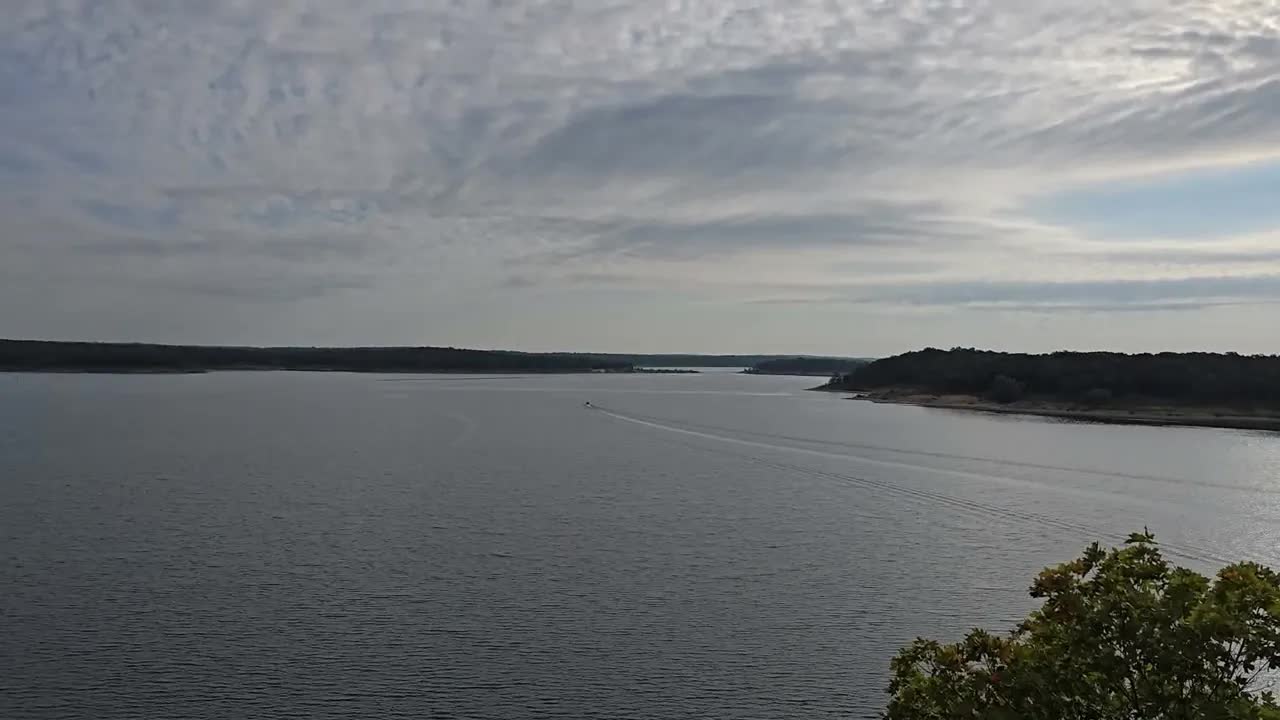
Then the lake opened up, and the boats moored together at the marina. He looked at them the way he had looked at the farmhouse, but the reading was different. Almost like a community, he said — and then, immediately and without judgment, that it would not be him, the same way the RV lifestyle is a community for a lot of people and is not why he got an RV. He said he had not even known it had become so popular. He said there is room for all of us in the world. The marina itself he flagged as worth checking out; he still wants to run a boat someday, maybe in the Pacific Northwest, maybe on the ocean, which he acknowledged might be a bit much, and then considered again and said it could actually be really cool.
The last beat was small and entirely characteristic. A vehicle ahead was reversing with no lights showing, having gone too far. rswfire waited, flashed them so they would know they had room, and watched them understand and take it. Do what you need to do. He noted that he had missed this same turn himself once before and driven a long way down the wrong road before circling back — and that he was glad he had, because it meant he got to see more over there. Very, very sparse. The navigation said one mile. He said: so we're back.