
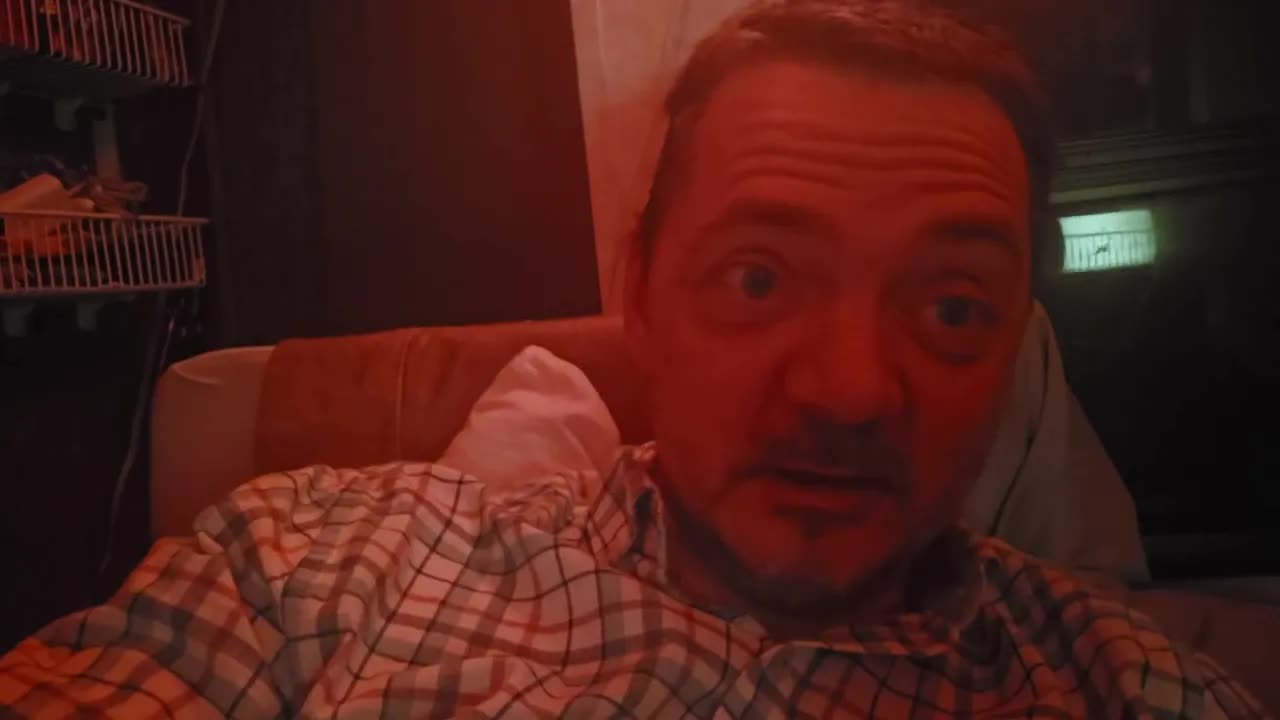
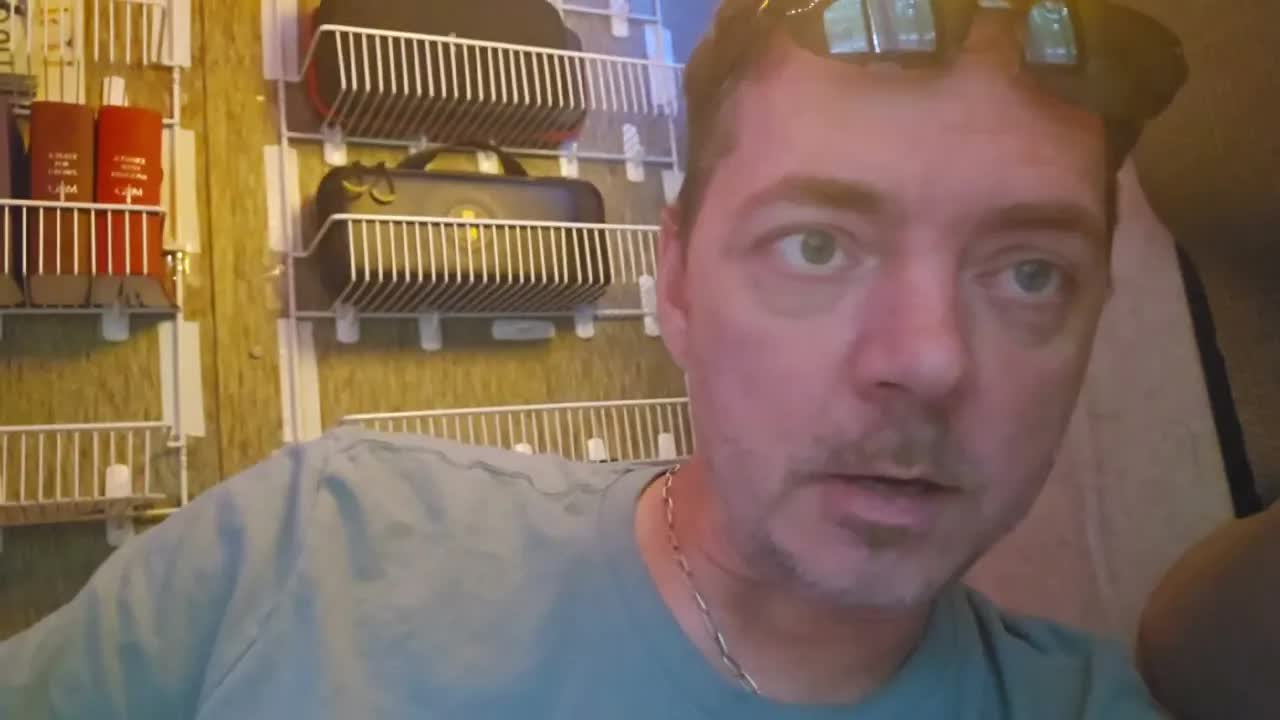
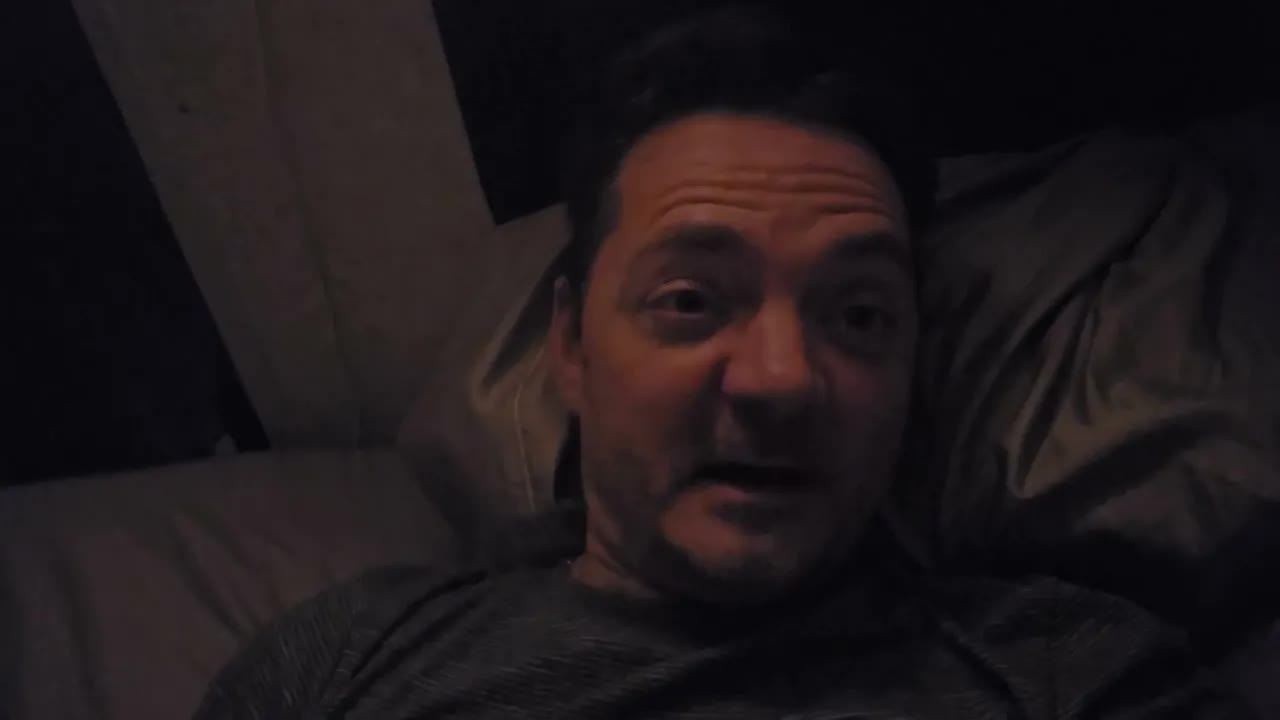
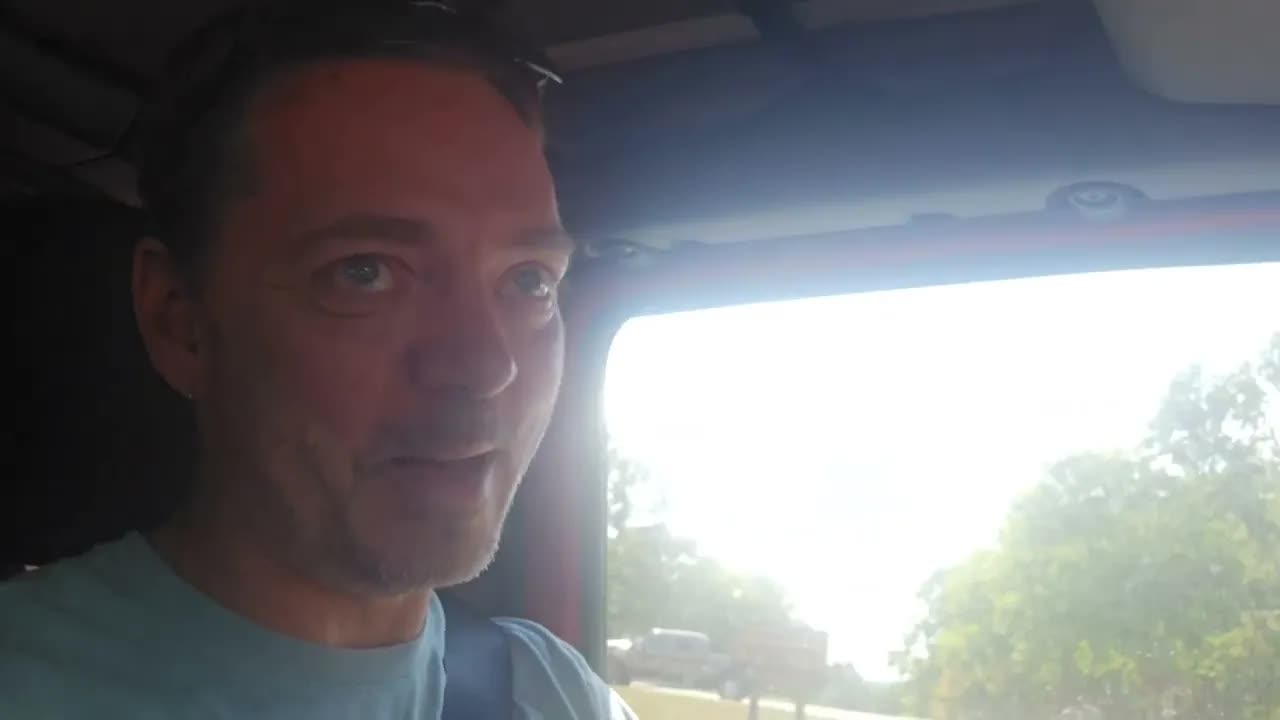
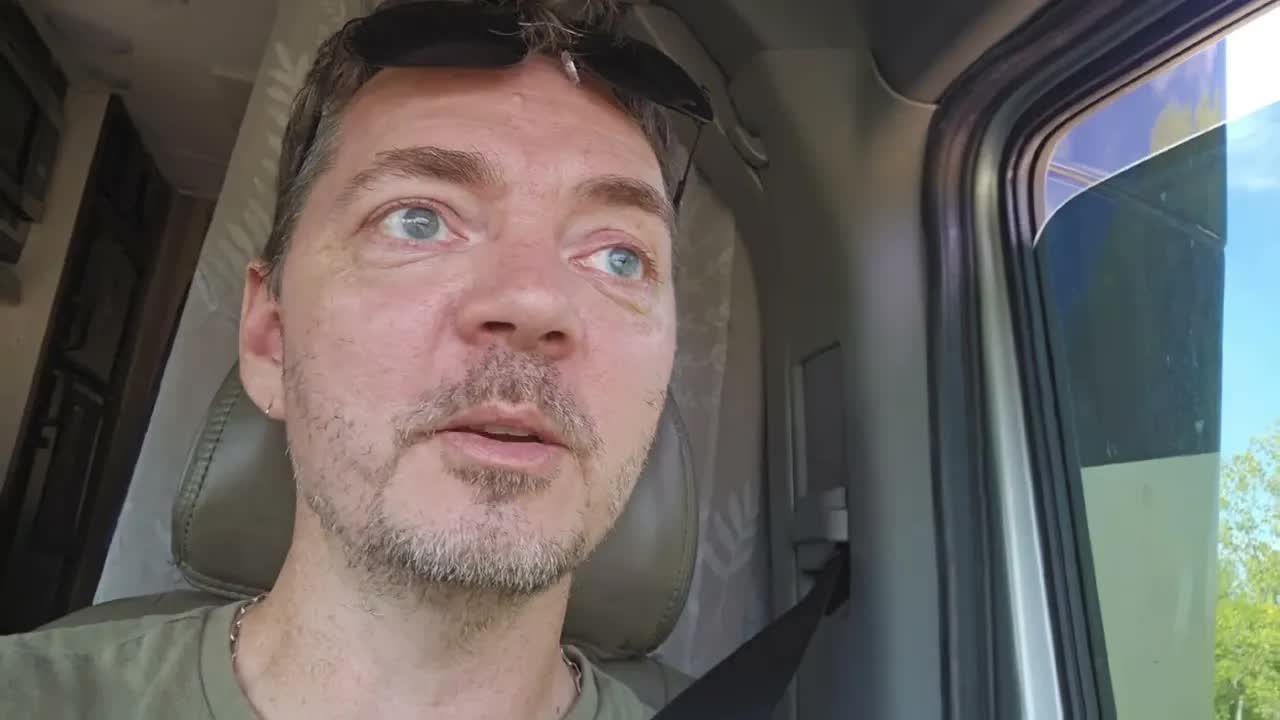
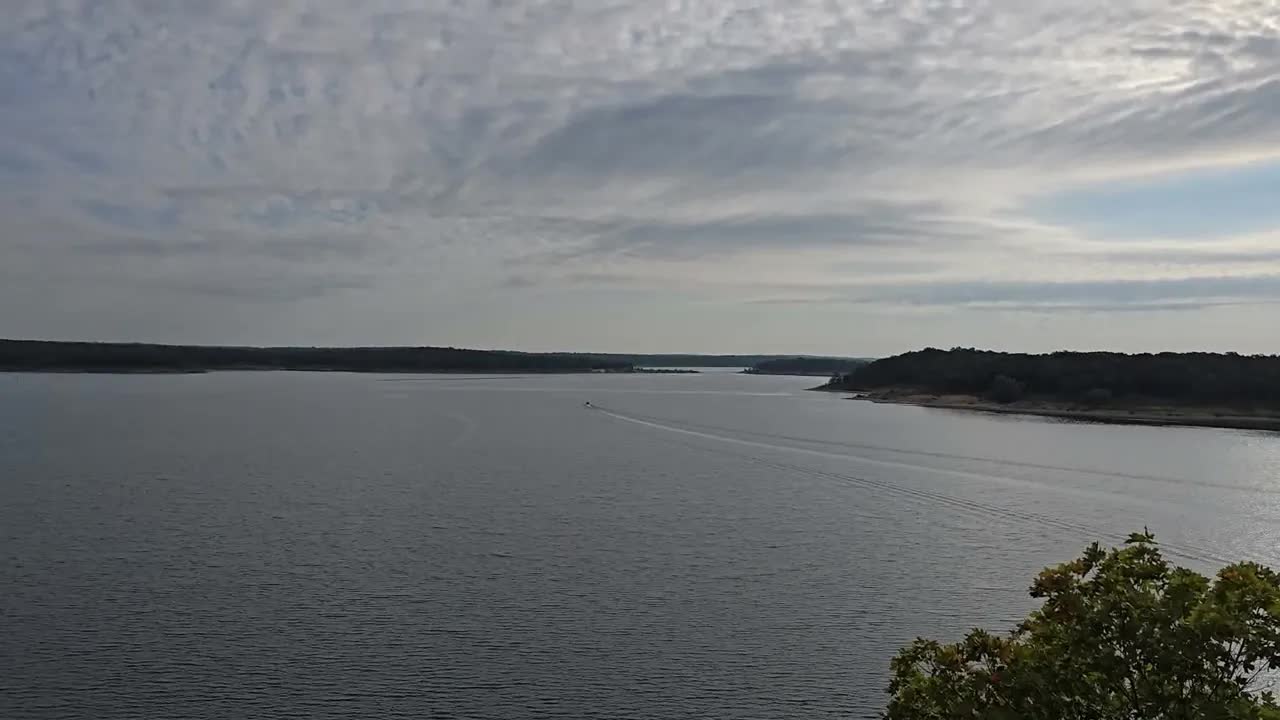
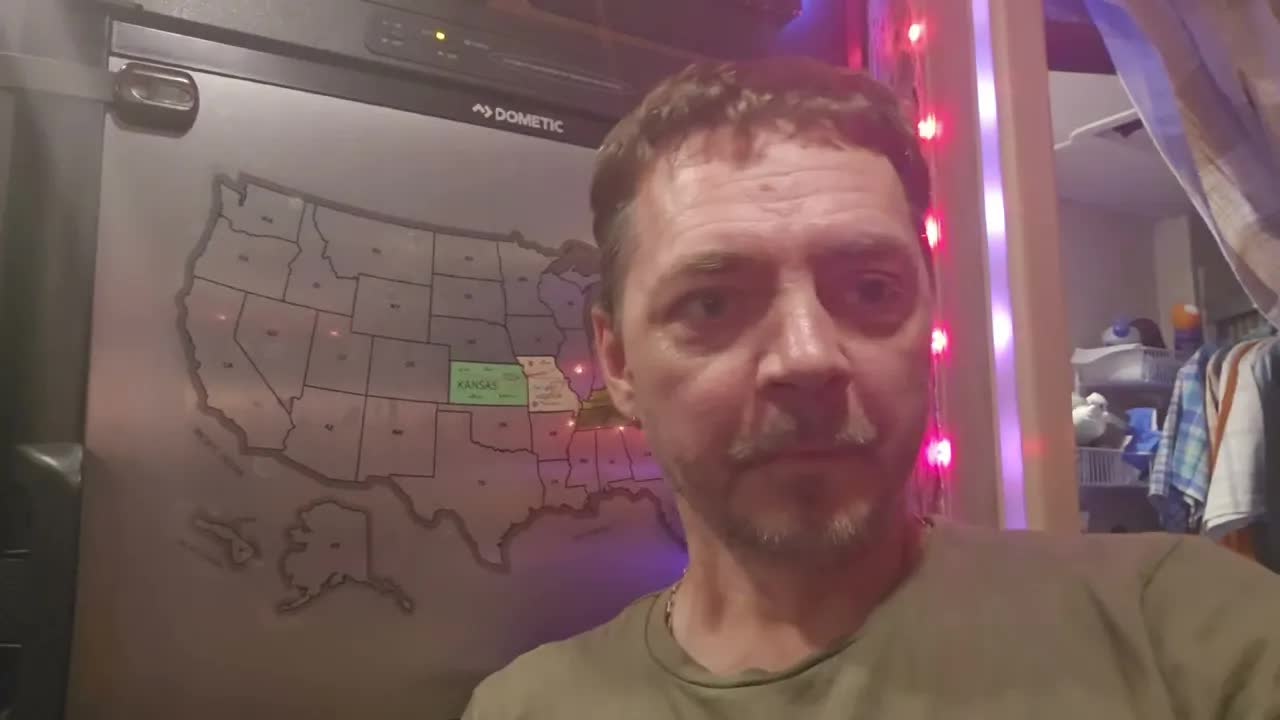
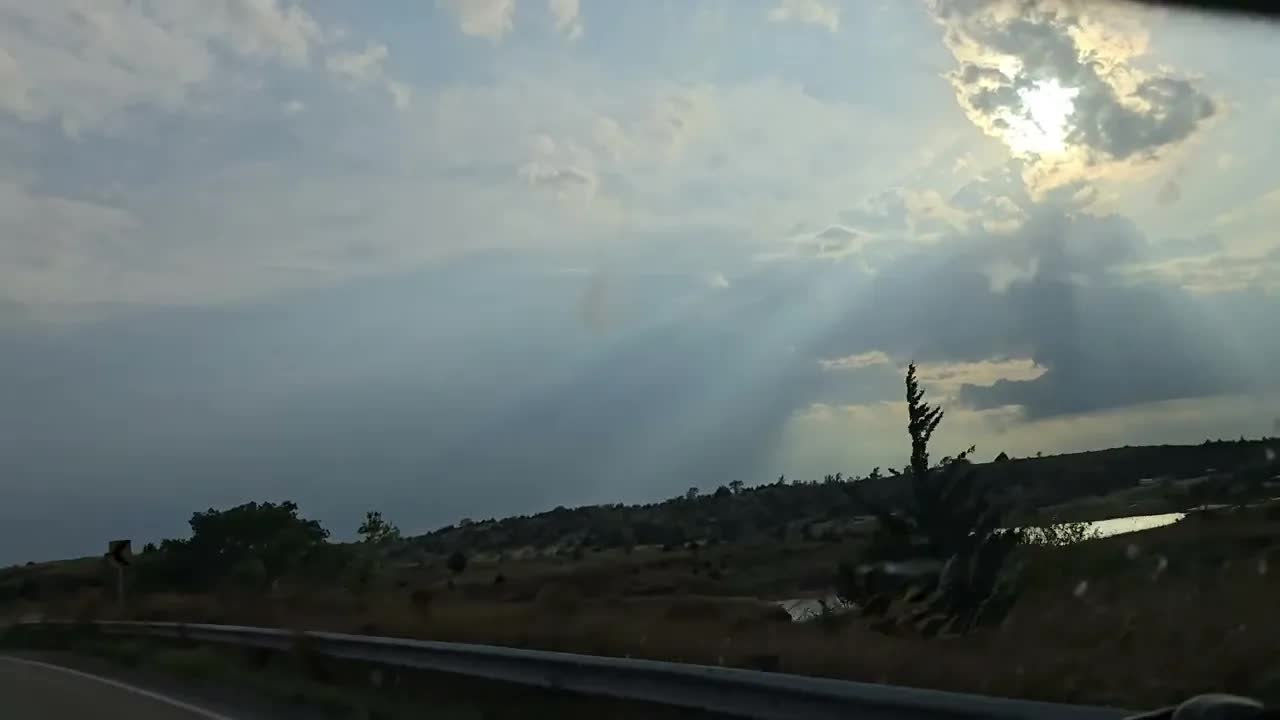
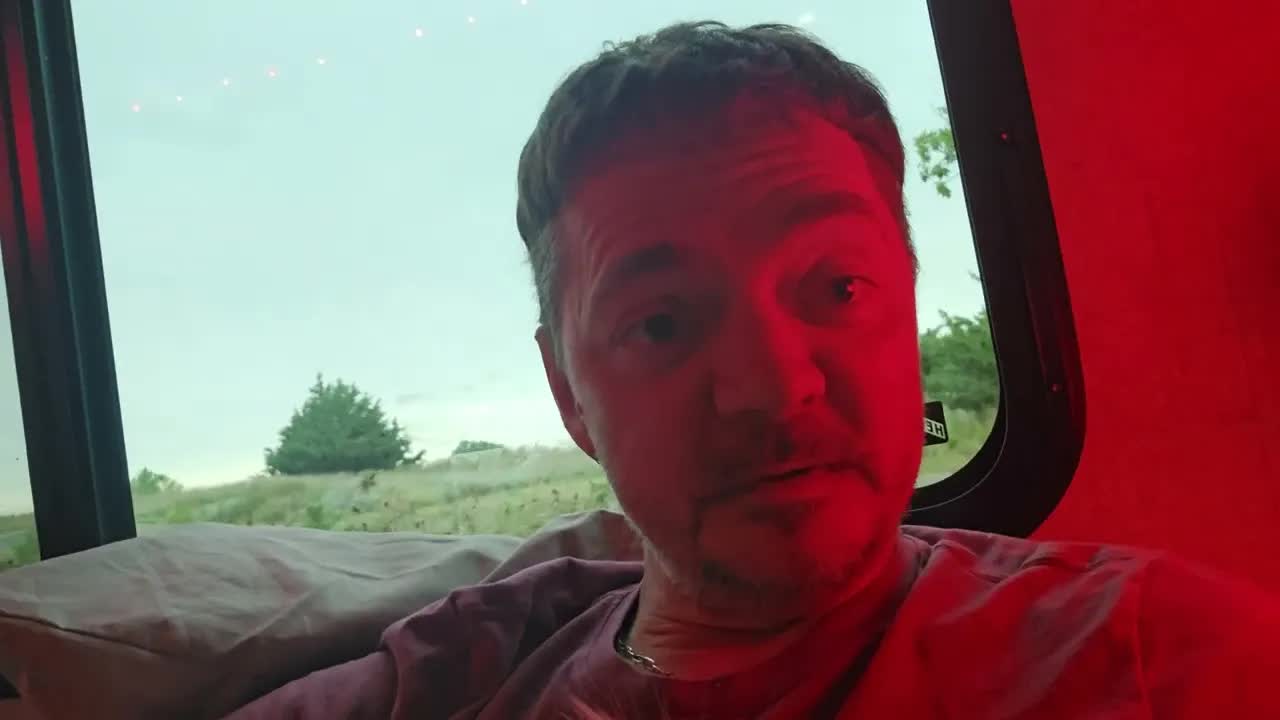
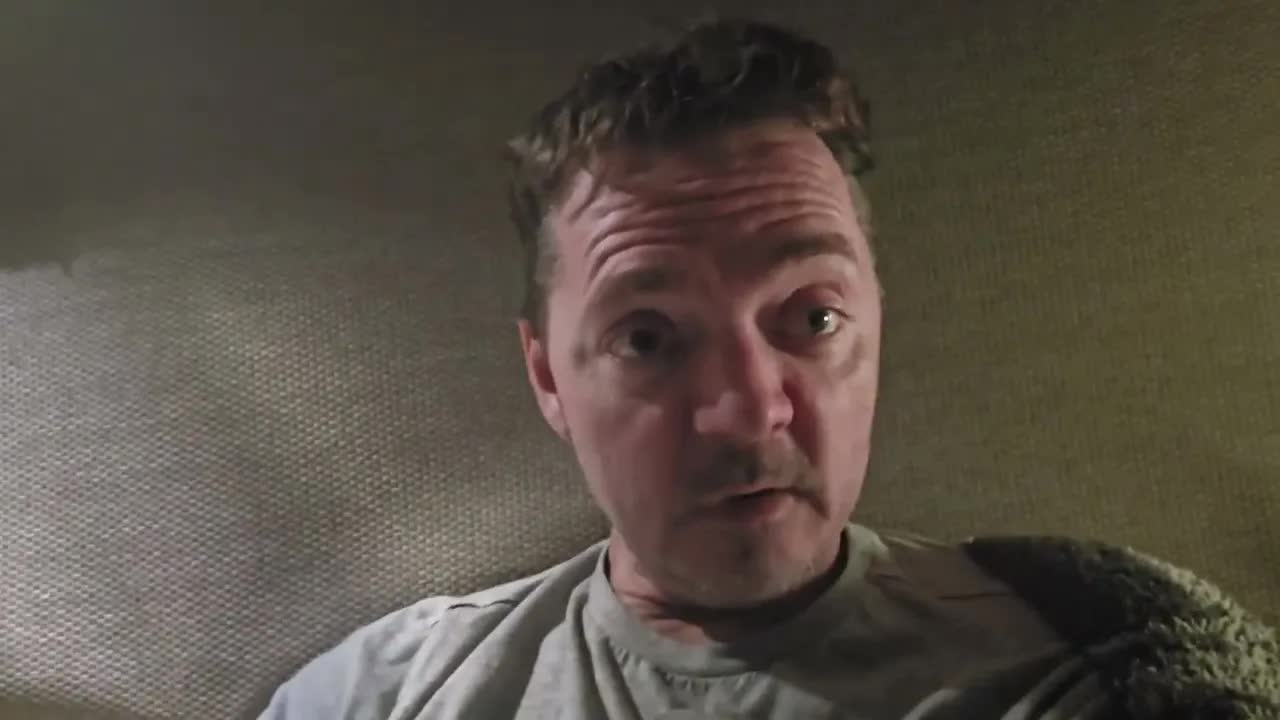
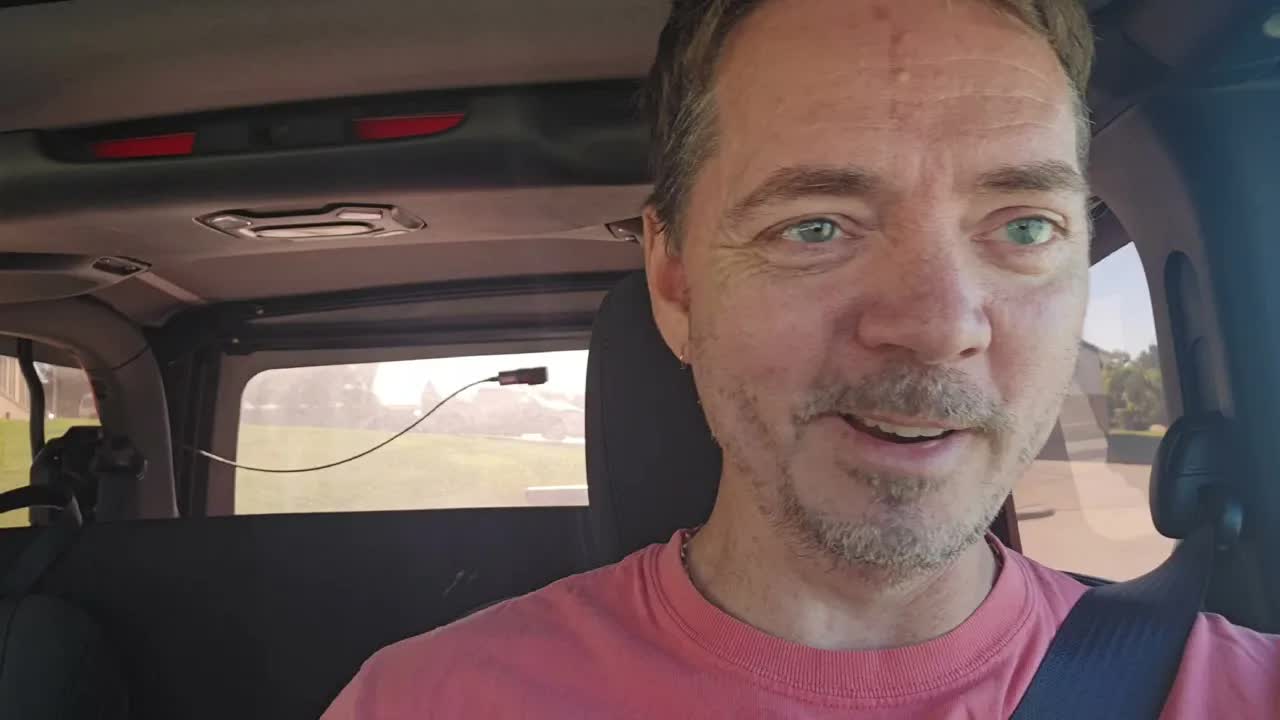
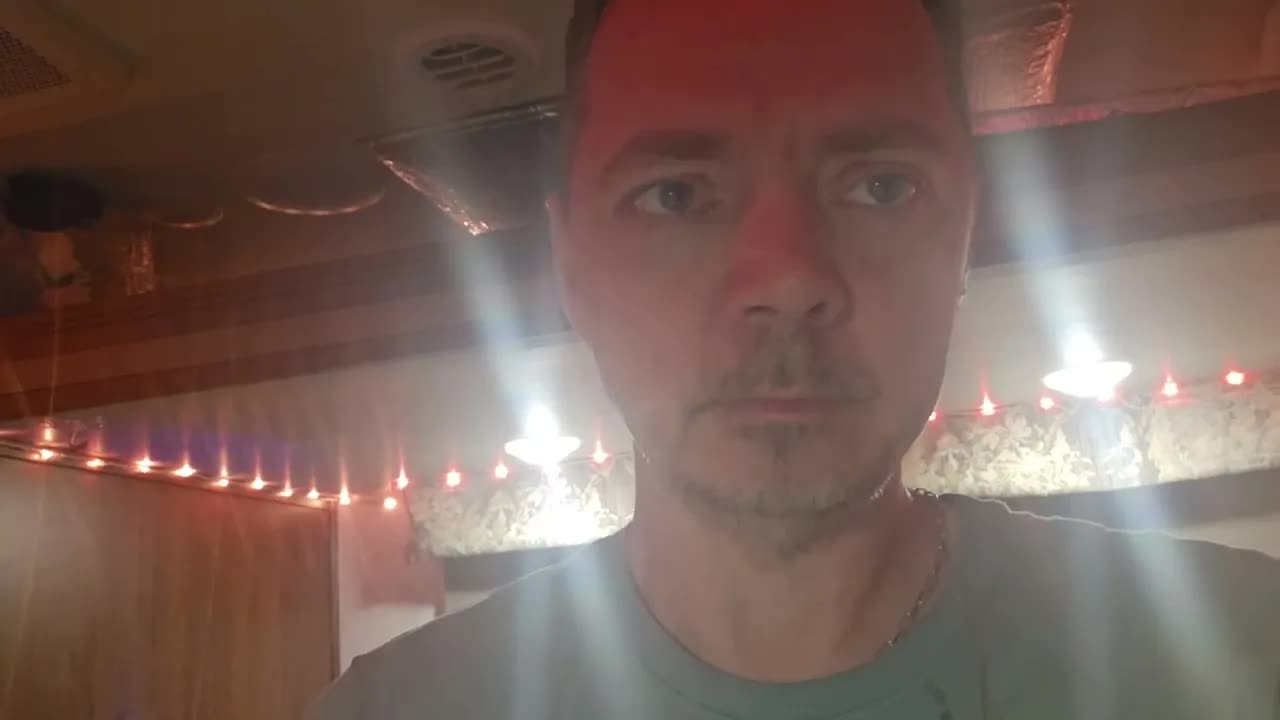
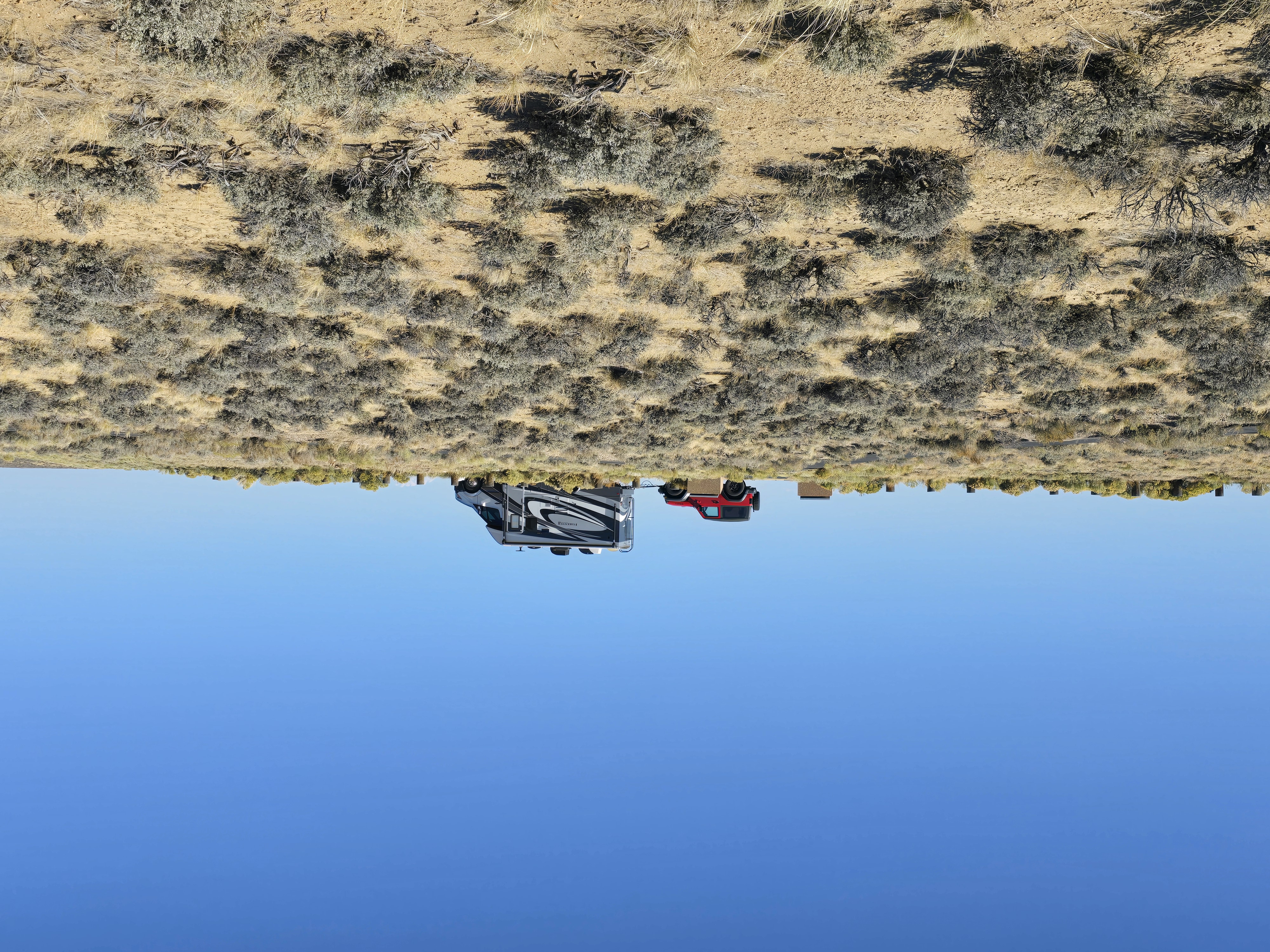
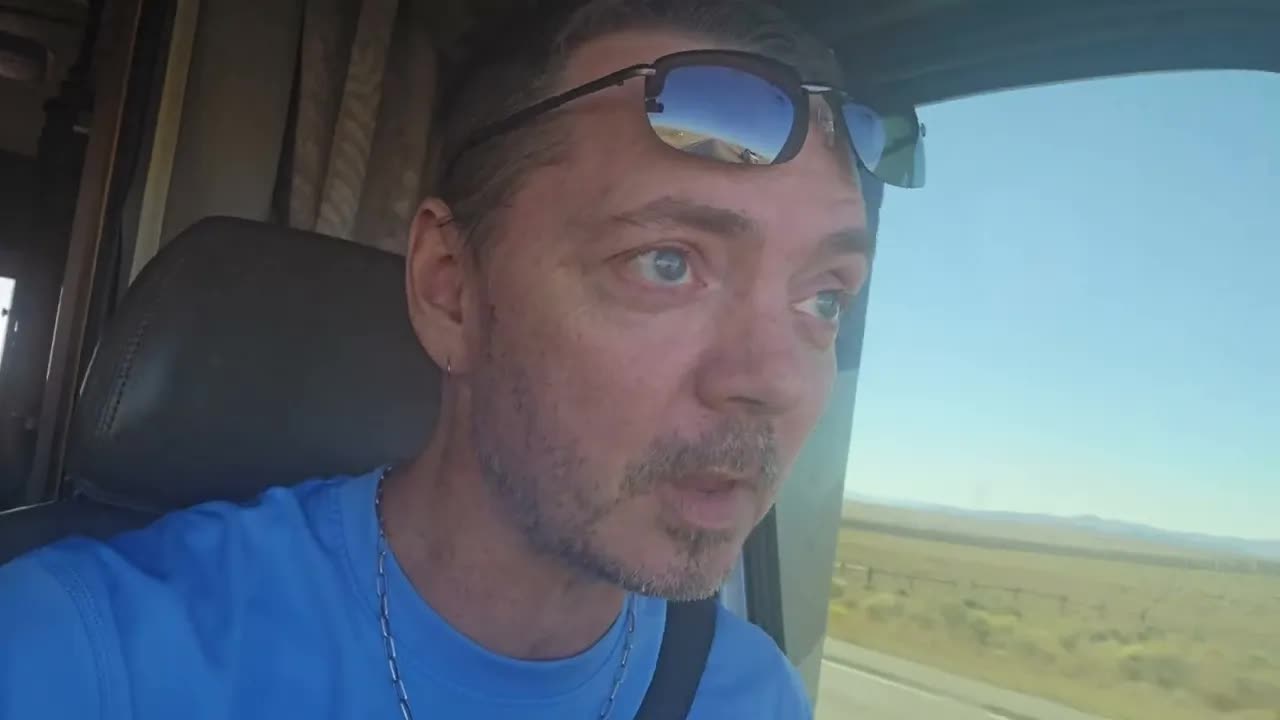
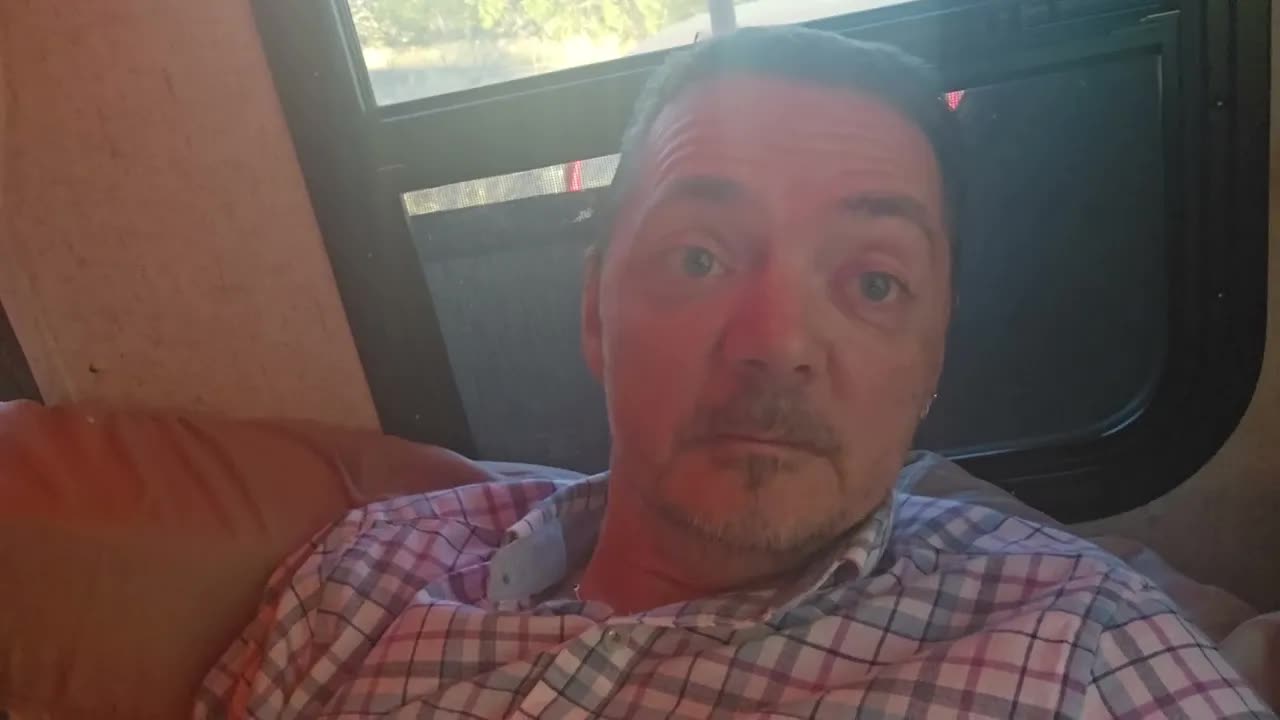
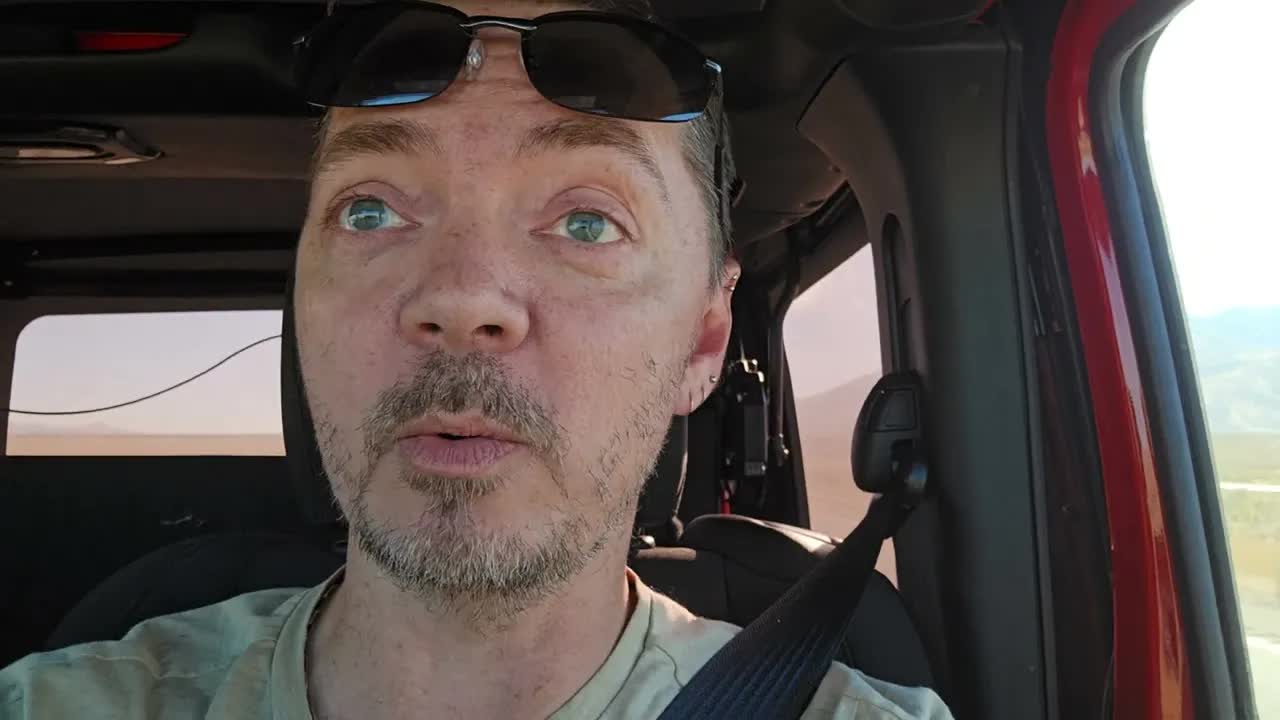
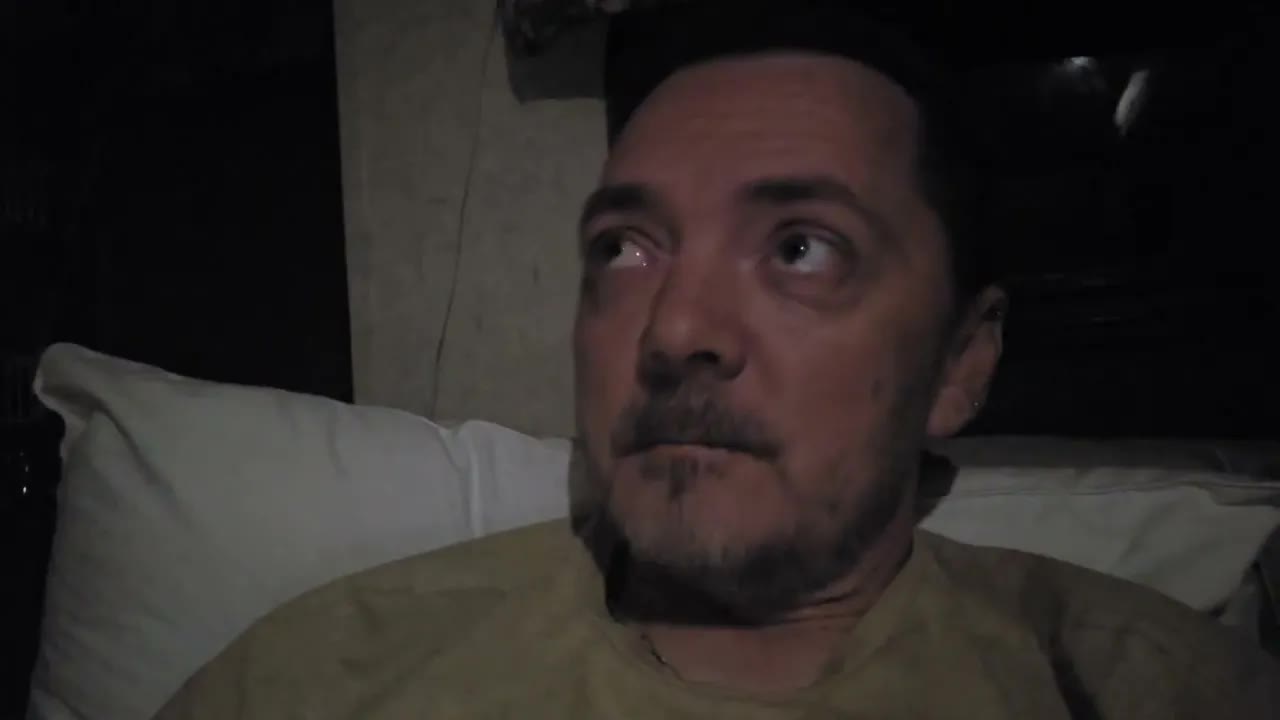
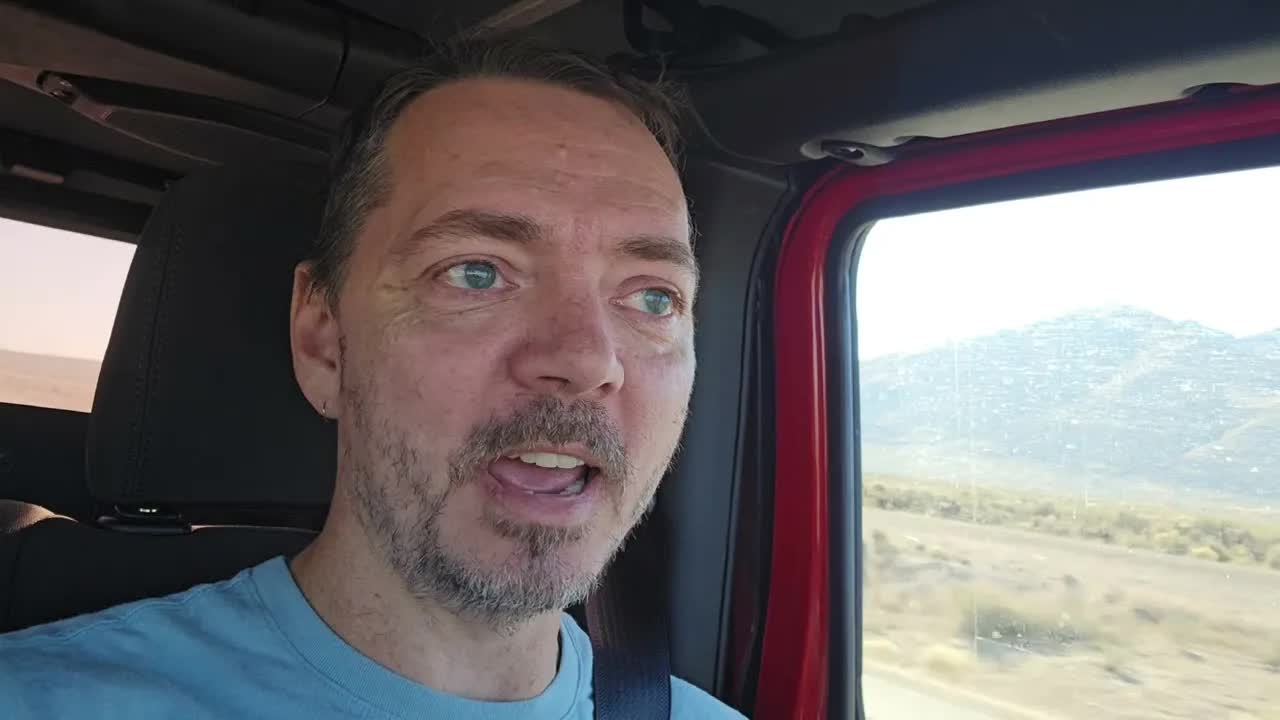
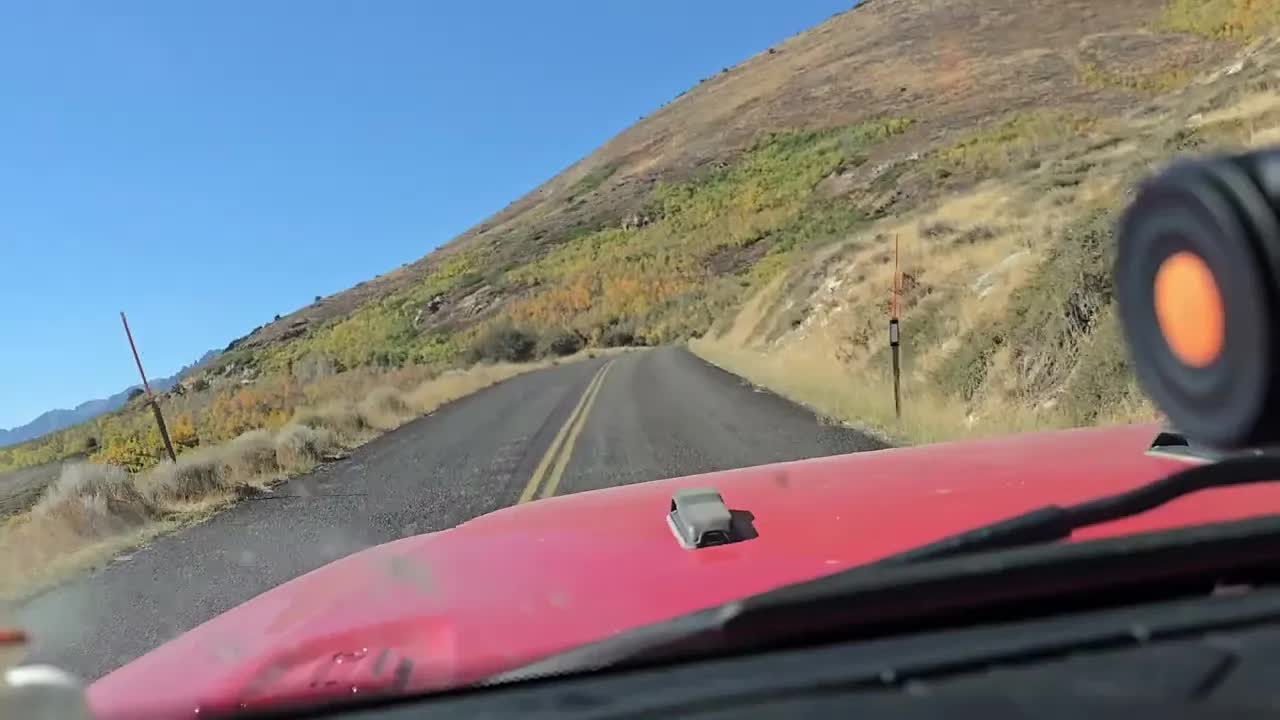
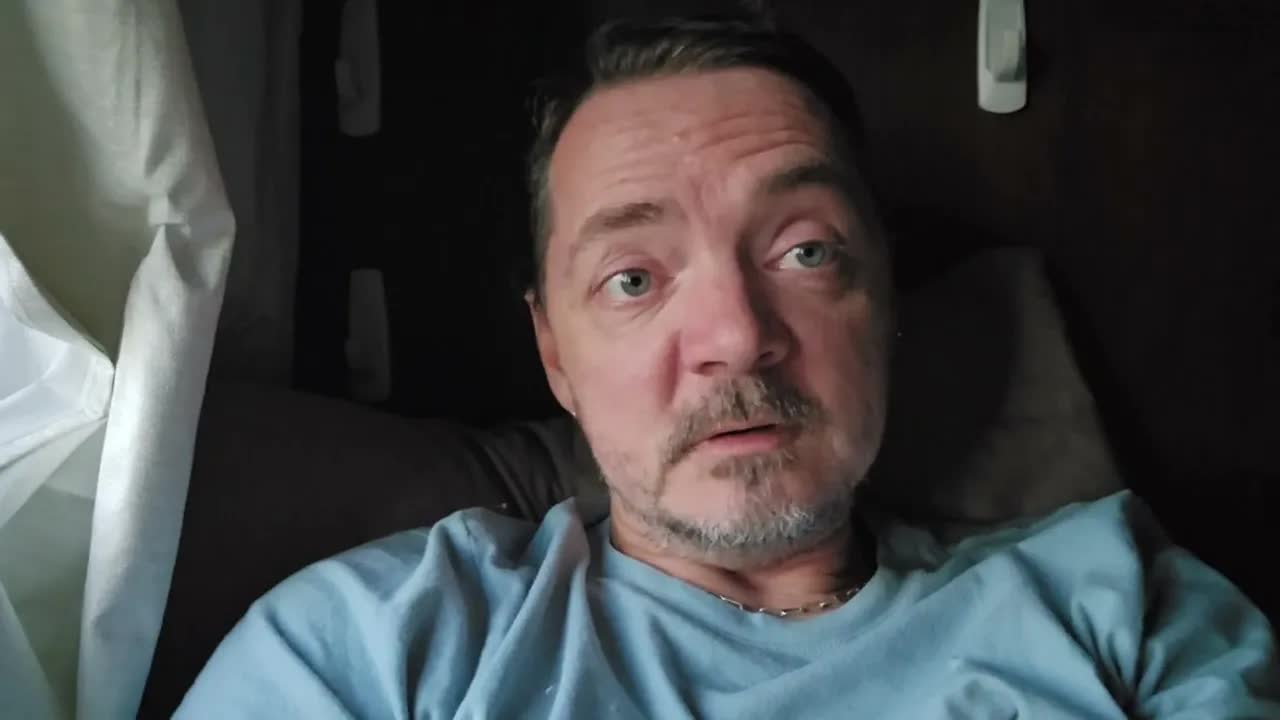
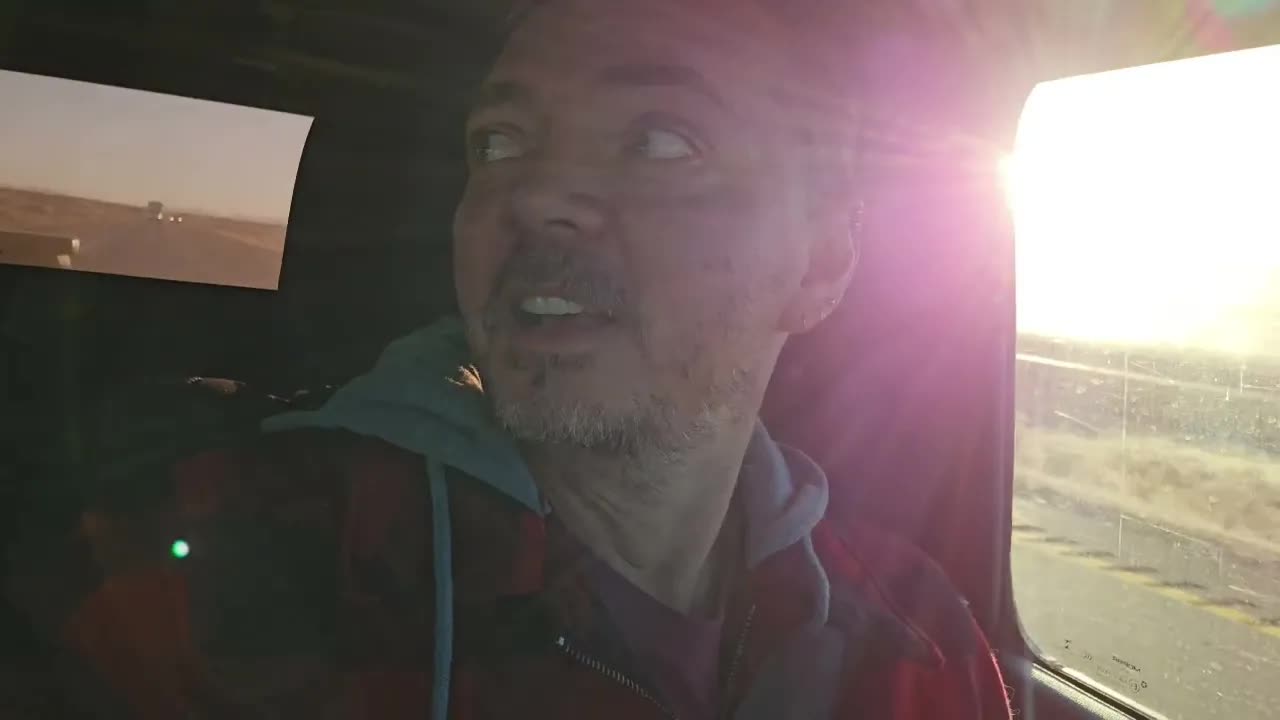
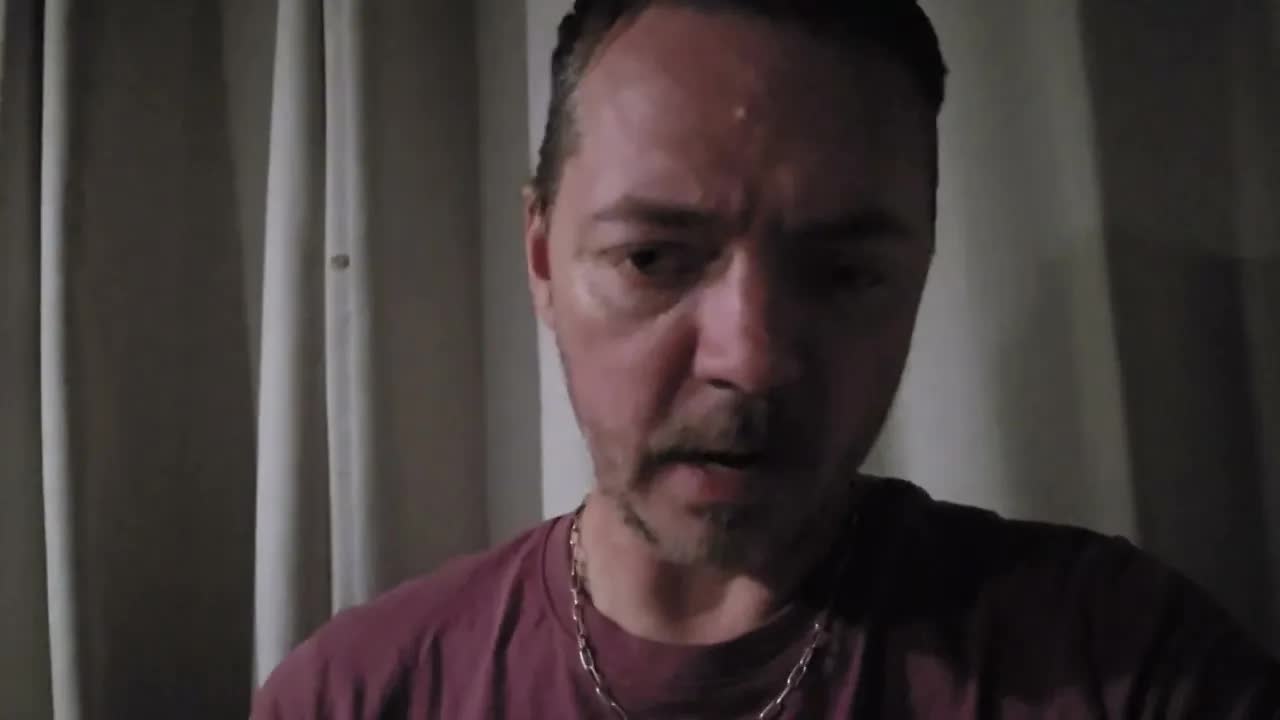
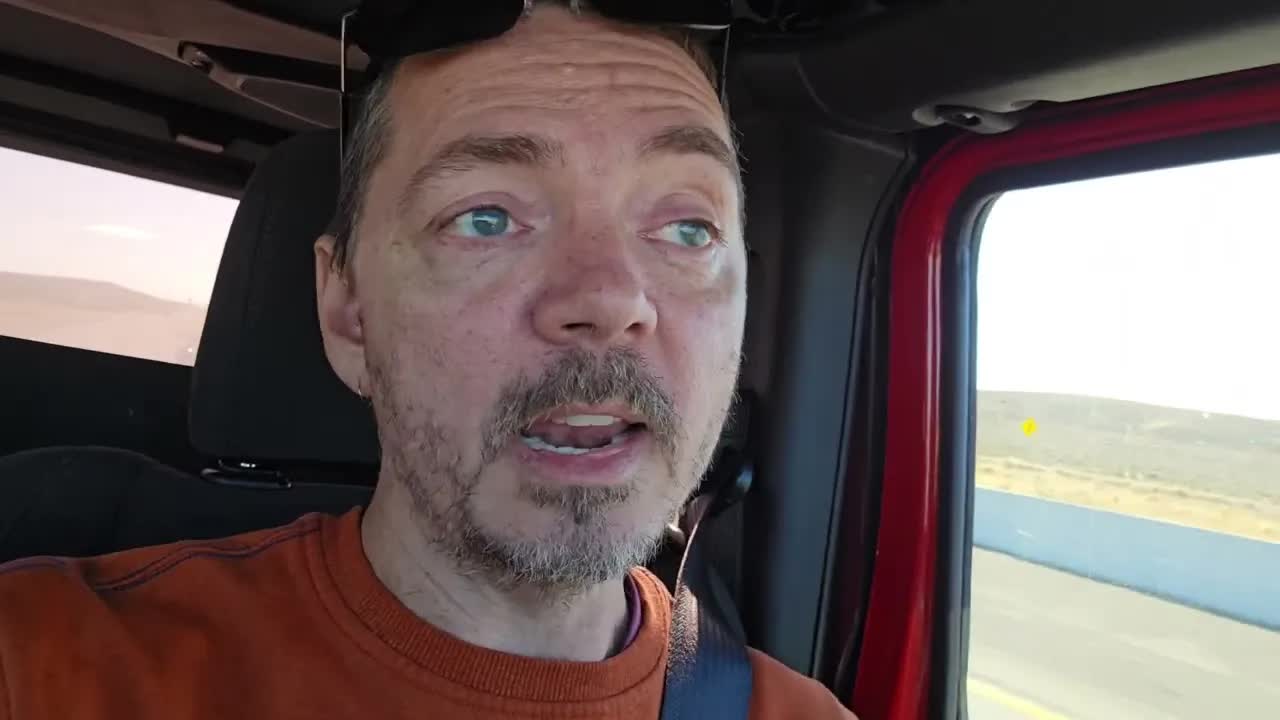
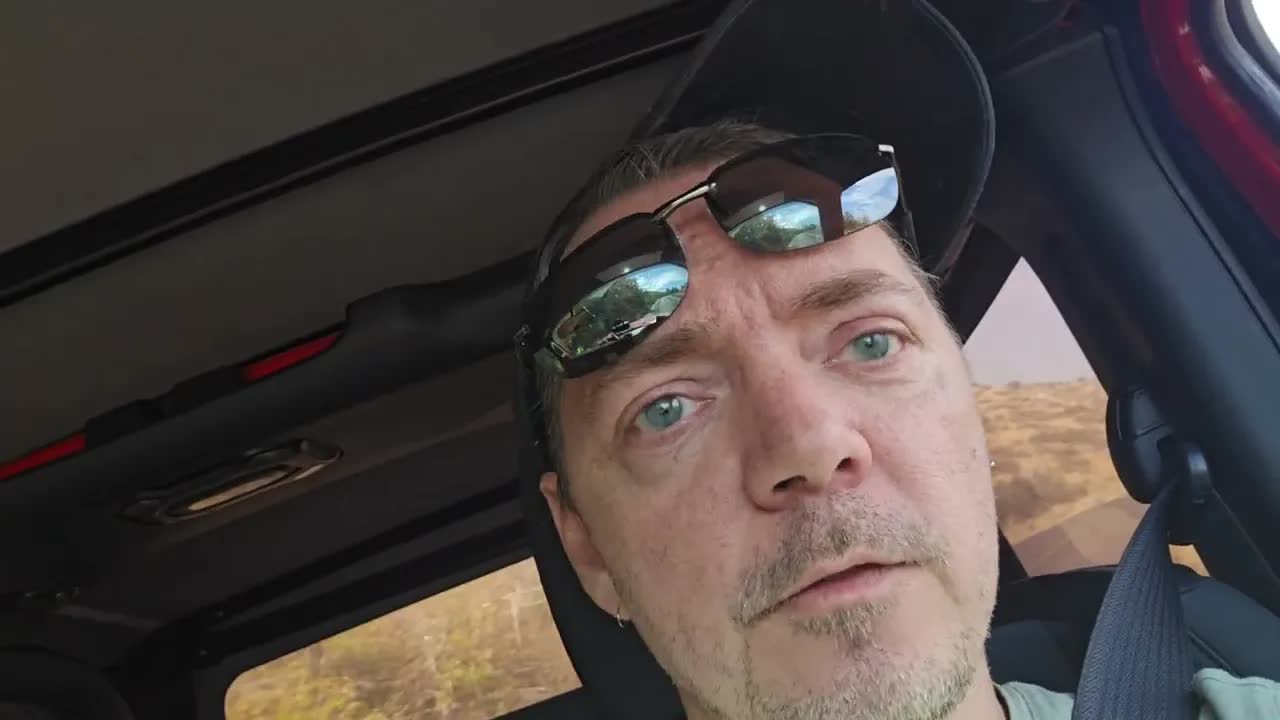
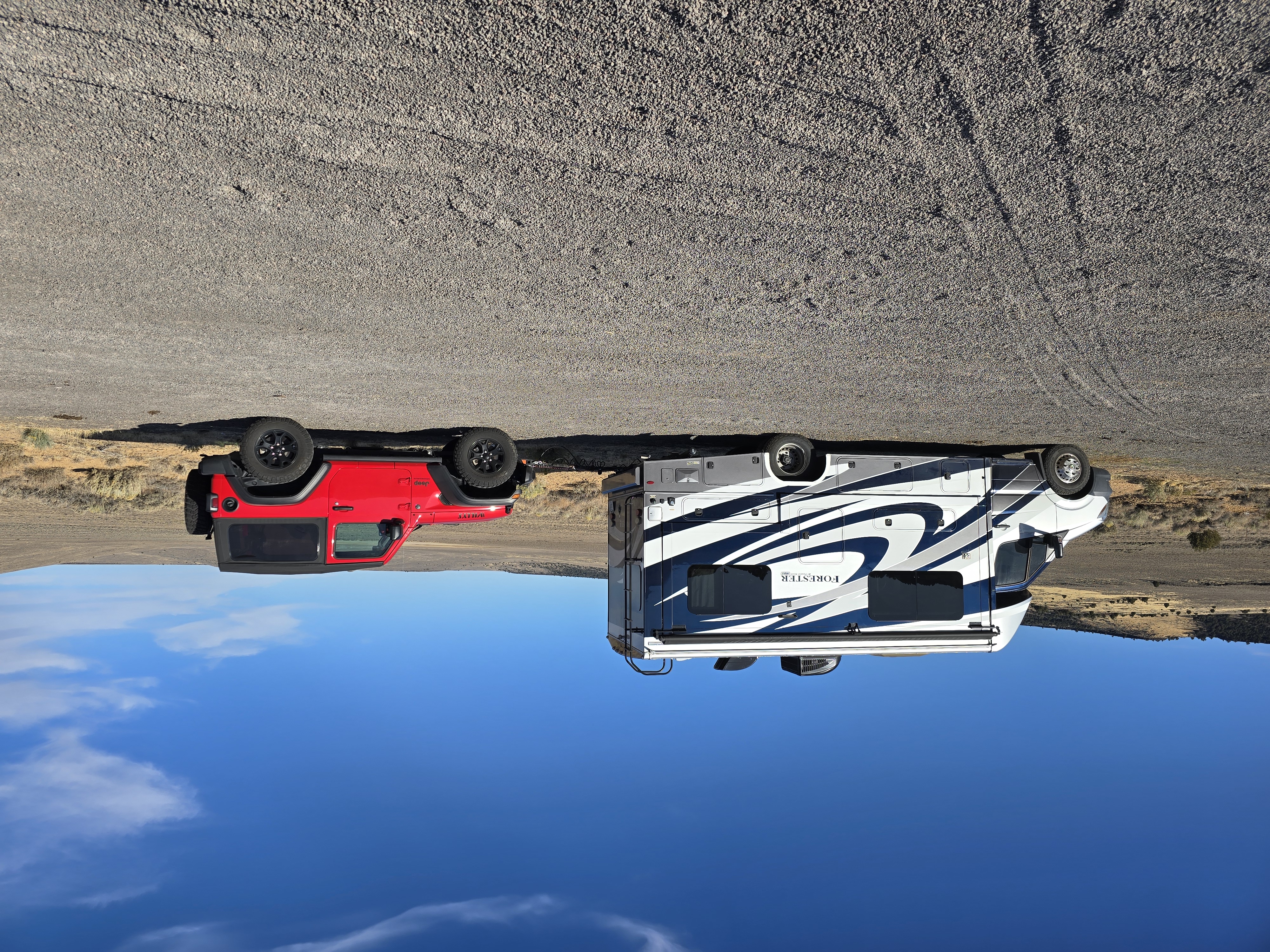
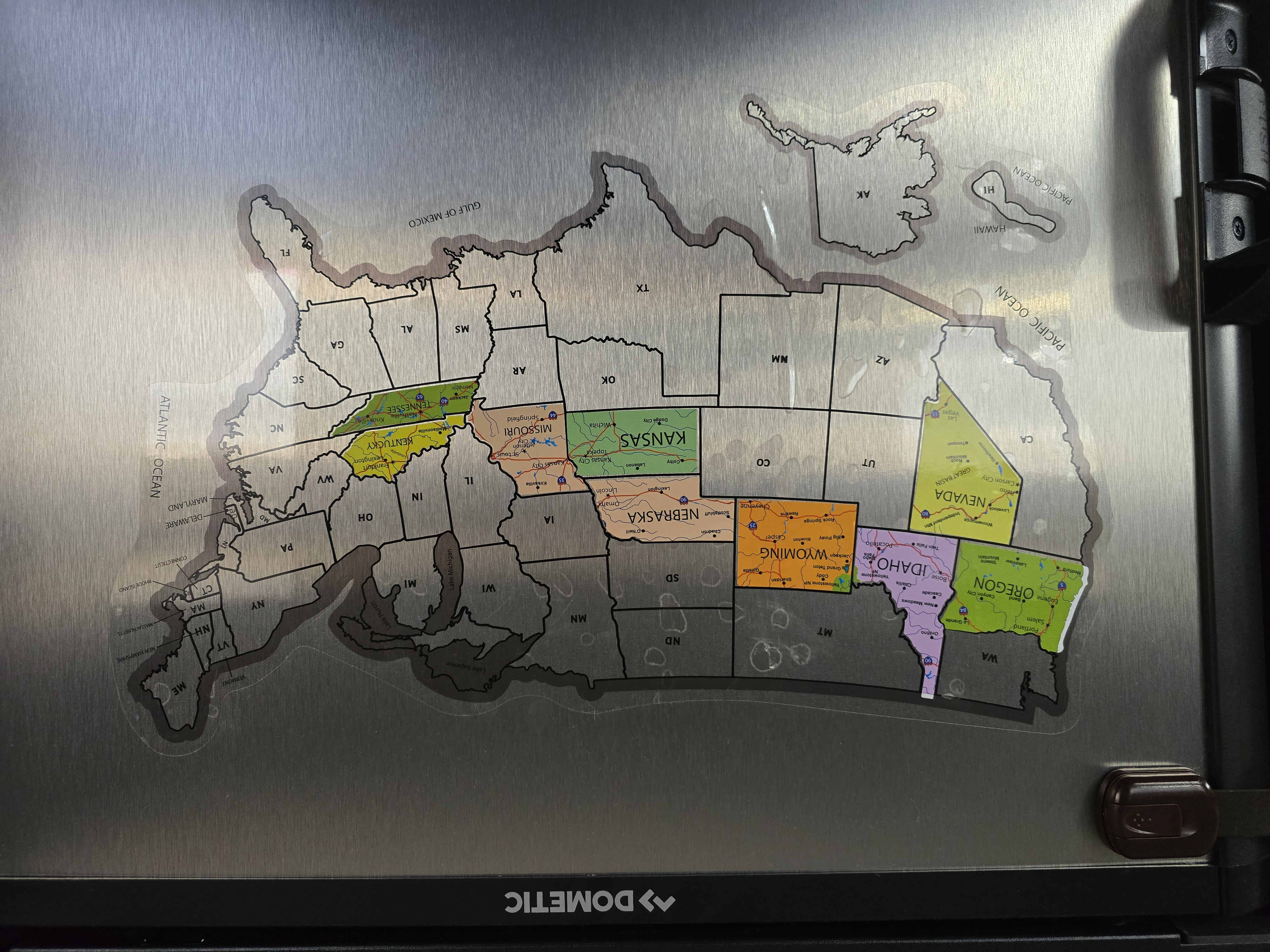
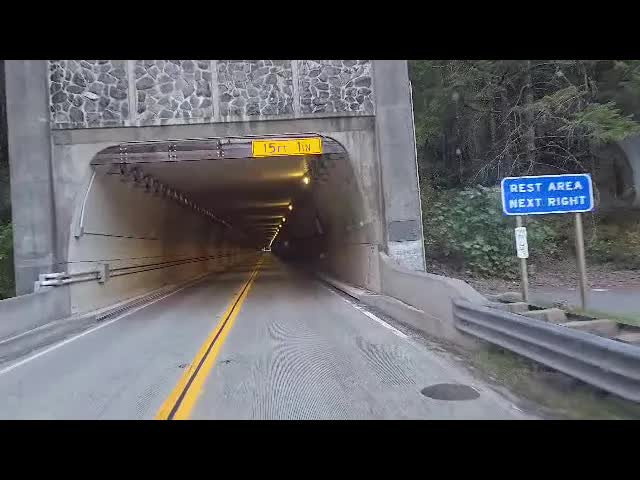
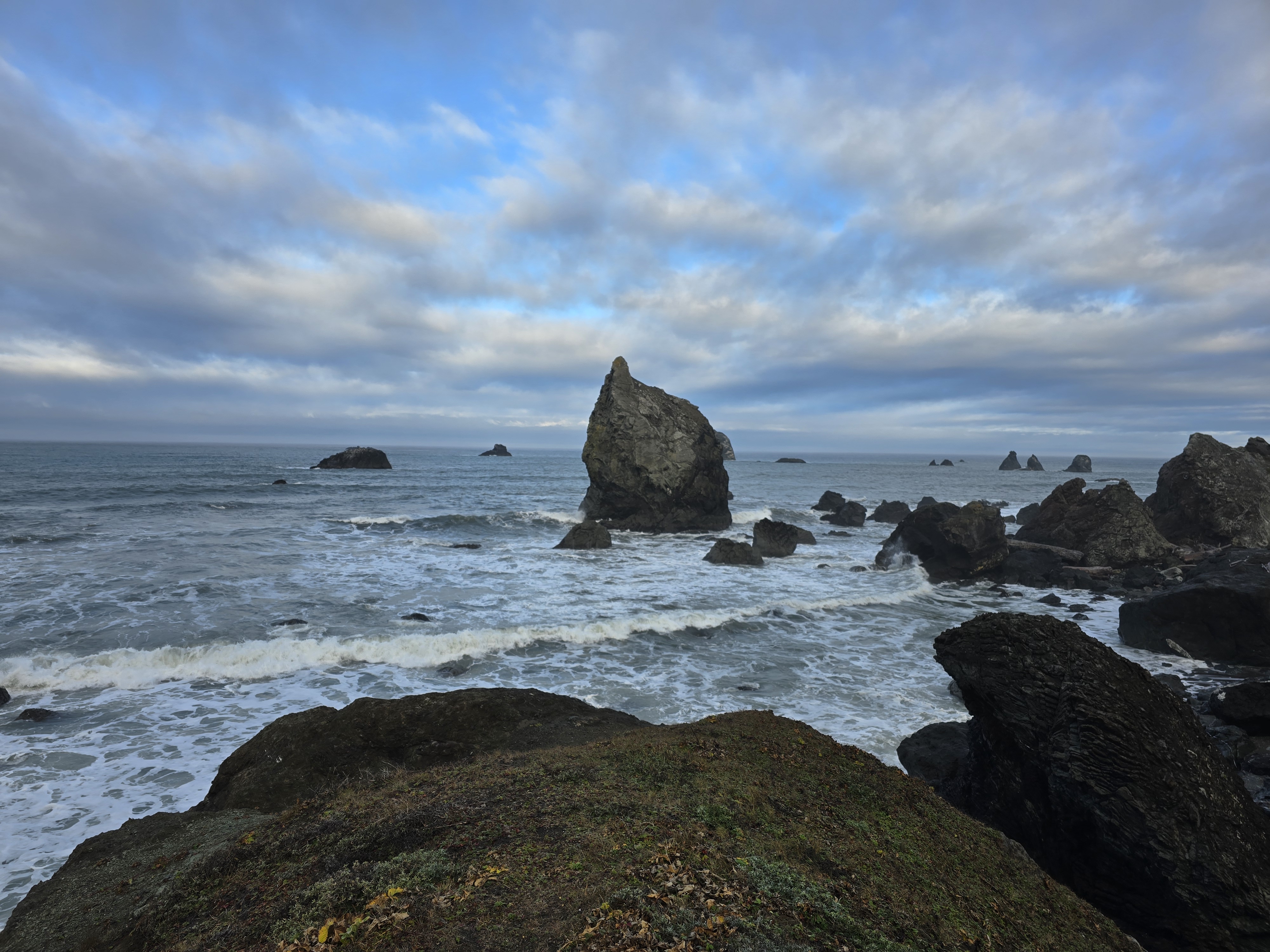
He had been in a sour mood most of the day, somewhere in Idaho with the road unspooling toward Oregon, and for a long stretch of hours he could not name the source. There was an idea of it, a shape at the edge of things, but nothing he could hold. rswfire registers mood in the body before he locates its origin; the tracking runs ahead of the naming. By the time he turned the camera on himself inside the RV, the source had surfaced and resolved into a single sentence he says plainly, twice, as if testing whether it holds weight: he is very close to his destination and he has no plan.
The specifics are small and absolute. Two days of campground reservation waiting at the end of the drive. After that, nothing arranged. He does not soften this or dress it as adventure. He says instead that making a plan feels impossible right now — that he does not know enough about the place, that sitting down to research is simply not how he works. He catches the potential misreading and corrects it himself mid-thought: he has researched some things, he has been a programmer his whole life, always learning. The distinction he draws is between technical study, which he does, and life-forecasting, which he does not. In its place he names what he uses instead. He trusts his path.
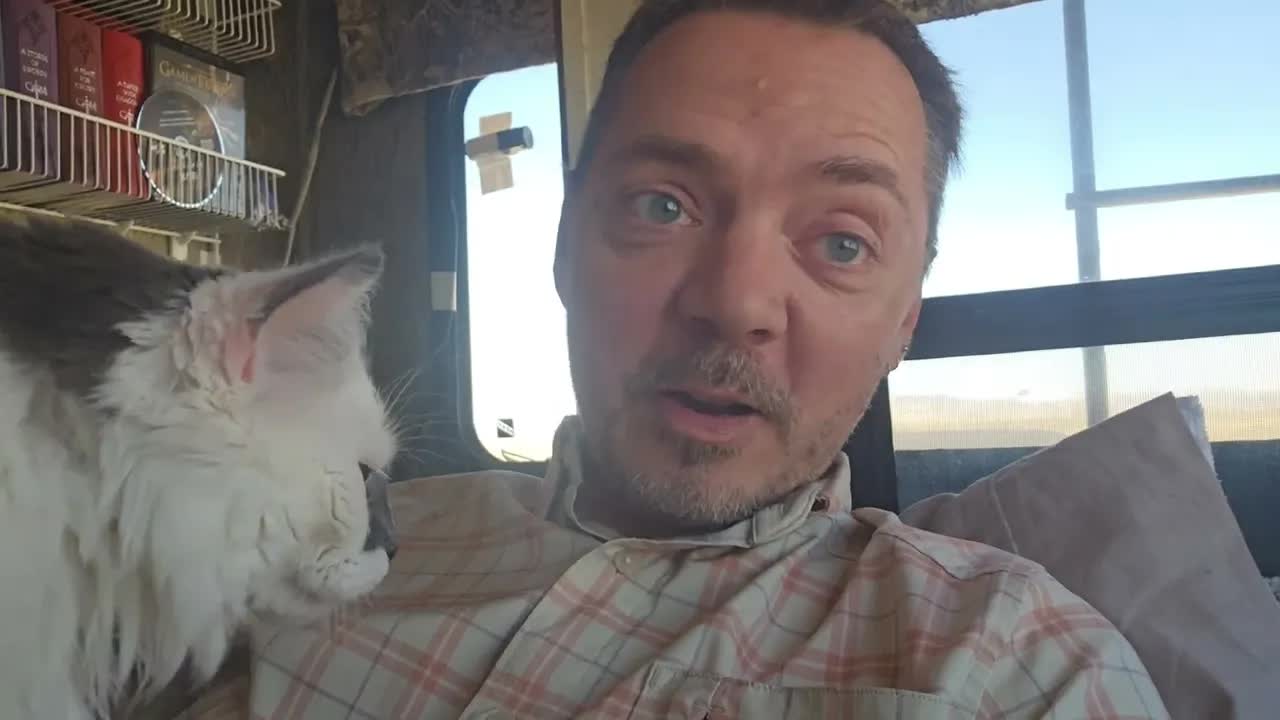
Bailey walks into frame while he is saying it. He breaks entirely — look at baby, hello you, what's up, oh you look cute — and then returns to the thread without apology, the way a person does when the interruption is part of the household rather than a departure from it. The cat is the other passenger in this transit. The winter ahead on the Oregon coast is hers as well.
What follows is an inventory, delivered without escalation. He has systems and he has backup systems, and he does not know how to use them perfectly. He will learn. Even the ones he does know — his solar — still hold unknowns; he has not yet mapped his own power consumption. He does not know where he will be staying. He does not know how difficult it will be to find places. His money is running out; he has been living on savings this entire time. And beneath the logistics sits the larger arithmetic: for a while he cannot afford both his bills and his lifestyle, and holding those two against each other is a delicate balance until freelance programming comes back online — which means rebuilding a profile from scratch, something he has not had to do in over a decade. He names each variable in turn and lets each one stand. None of them converts into distress on the way out of his mouth.
He calls what is coming a reckoning — his whole life about to go through a reckoning with these systems, the societal ones — and he says it feels necessary. Then he immediately draws the line that matters to him, the one he will not let the frame blur: choosing a life separate from those systems does not mean avoiding responsibility. He keeps his promises. He pays his debts. Always has. It is, he says, core to who he is. The separation is from embedding, not from obligation.
Then the address turns outward, and the reason for the recording becomes explicit. He is acknowledging all of this because anyone following the journey needs to know the tensions are there — and because there is a lesson in it for them. He points at his own affect as evidence: you might notice that I'm not acting super anxious. Tension is present. Fear is present. Uncertainty is present. Trust is present alongside them, none of the four canceling the others out. The proof he offers is his own record — homelessness, job transitions, being a high school dropout, every aspect of his life — and the constant across all of it, that he has been adaptable, fluid, and has found a way. This will be no different.
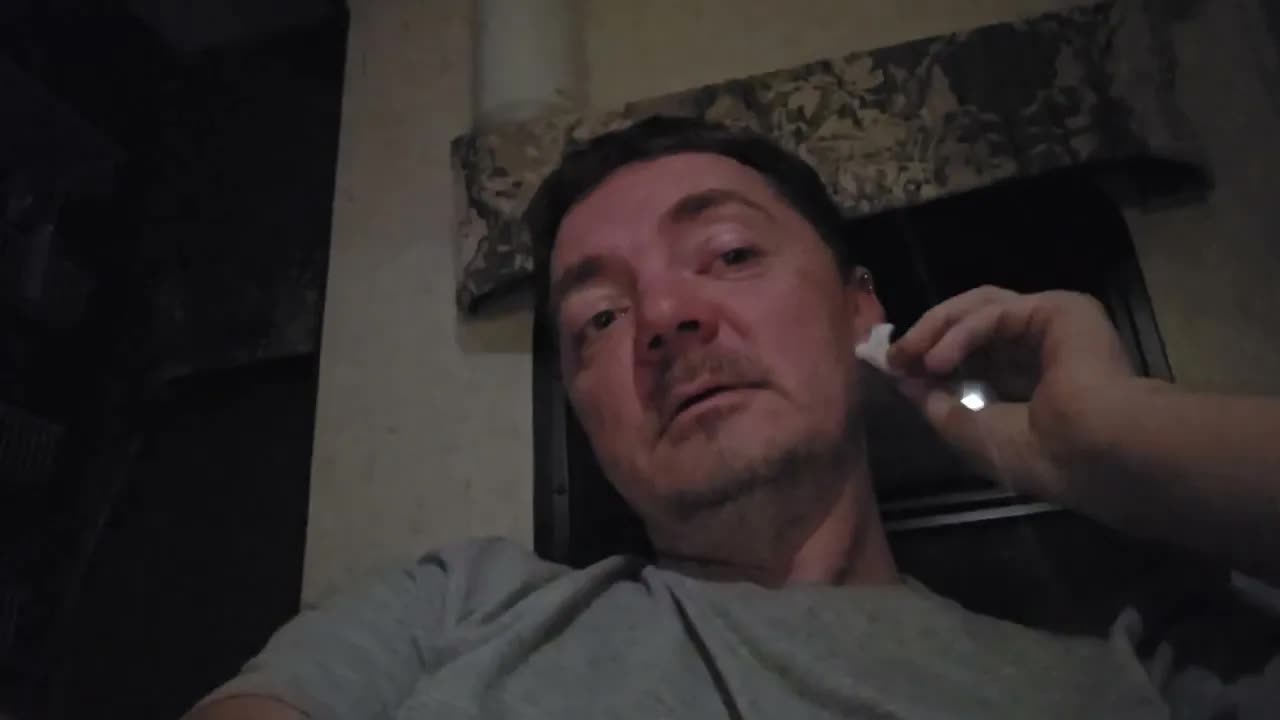
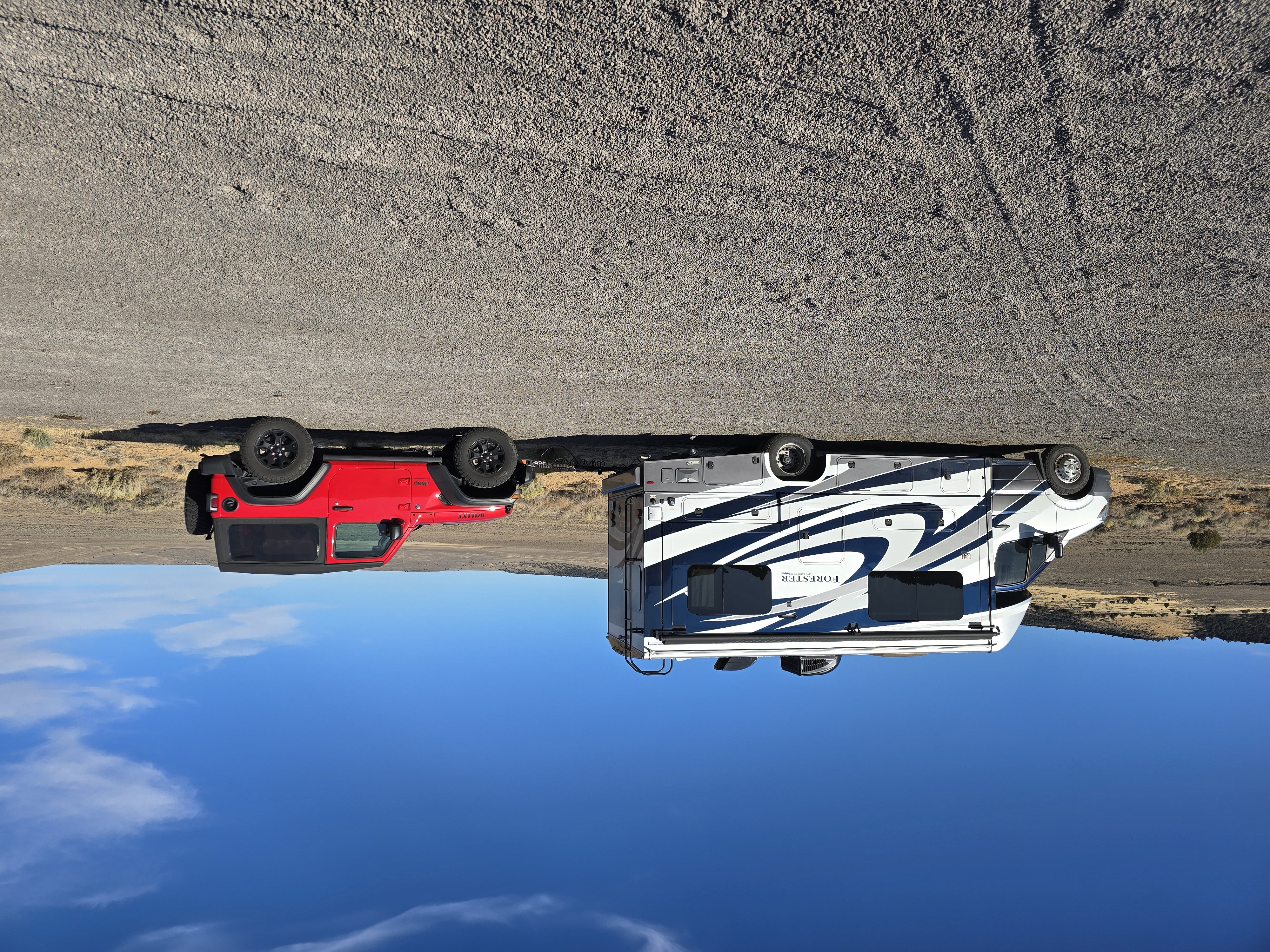
He reaches for the part he says he cannot put into words, and reaches twice. The life he was living before was not meaningful. It was empty, a void. He says it directly to the camera and then flinches at his own bluntness — I don't mean to offend anyone, but I was living your life, most of you — a normal societal life that did not reflect his values and drained him of vital energy. He was a consumer like everyone else, and it left a hollow in him, and he decided to do something about it. That decision is what put him here: somewhere in Idaho, headed for autumn and winter on the Oregon coast, in an RV, with Bailey. He wants to inspire, he says, and cannot fully explain why — only that he has always felt compelled to use his life as a mirror rather than merely live it. What he hopes anyone watching takes from the channel is not entertainment. It is that they can go deep into themselves and find nothing there too frightening to face, nothing to judge. He offers the evidence closest at hand, the unstaged fact of the recording itself: I'm on camera without my teeth right now. Nothing you cannot face. You are more resilient than you think. He is always proving that to the world, he says, because he never gives up, because he always finds a way — and then the drive continued west, toward the coast and the two days that were arranged and the season that was not.