










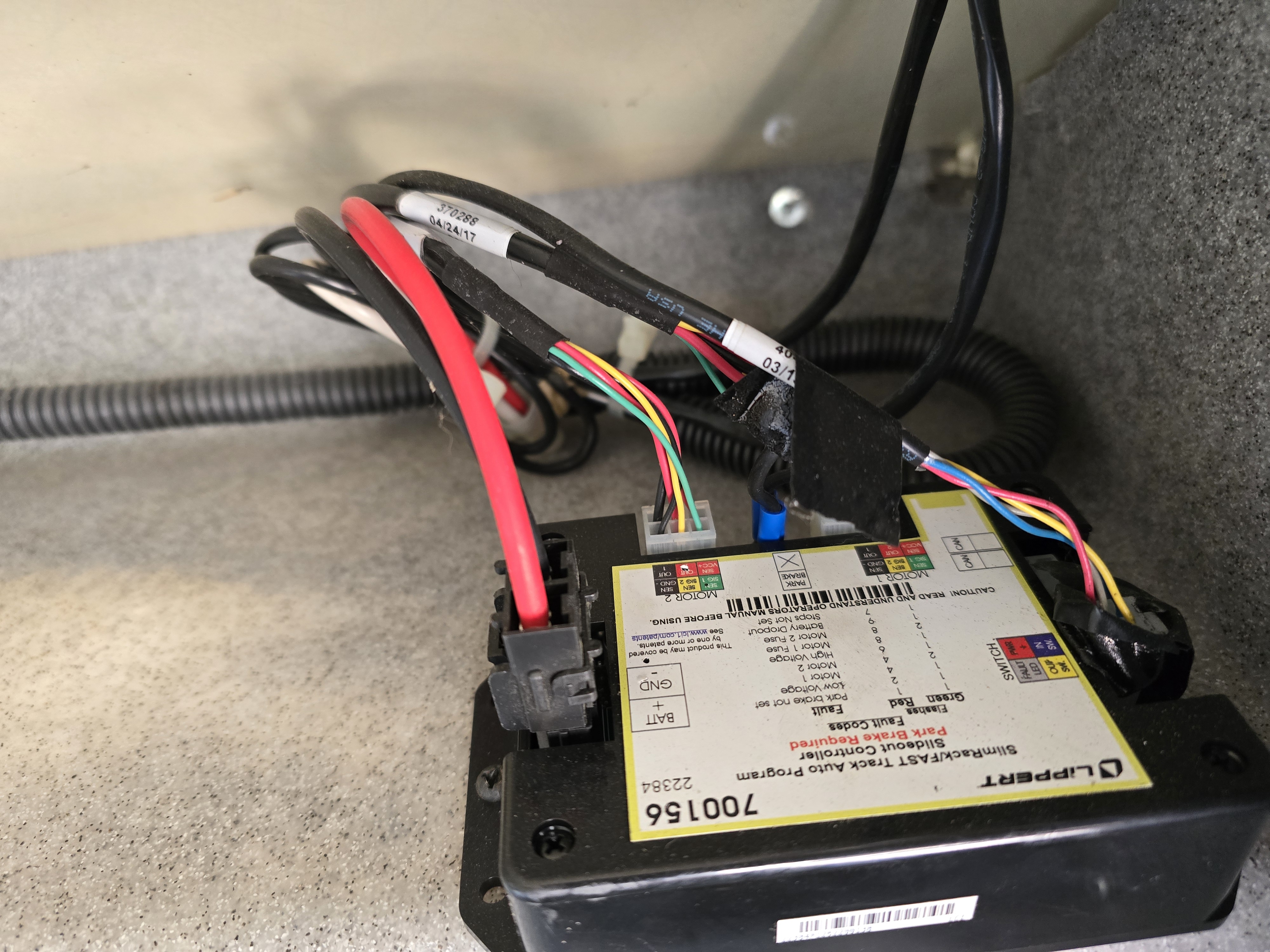




























The battery charger sat where he had set it down, still admirable as an object and useless as a solution. rswfire had opened the battery compartment expecting room and found none — the space already full, another component bolted in from outside, screwed through from somewhere underneath the RV by hands that were not his. Installing the new charger properly would mean a professional, and a professional would mean tomorrow at the earliest. That left tonight to be dealt with on its own terms. So he ran the generator.
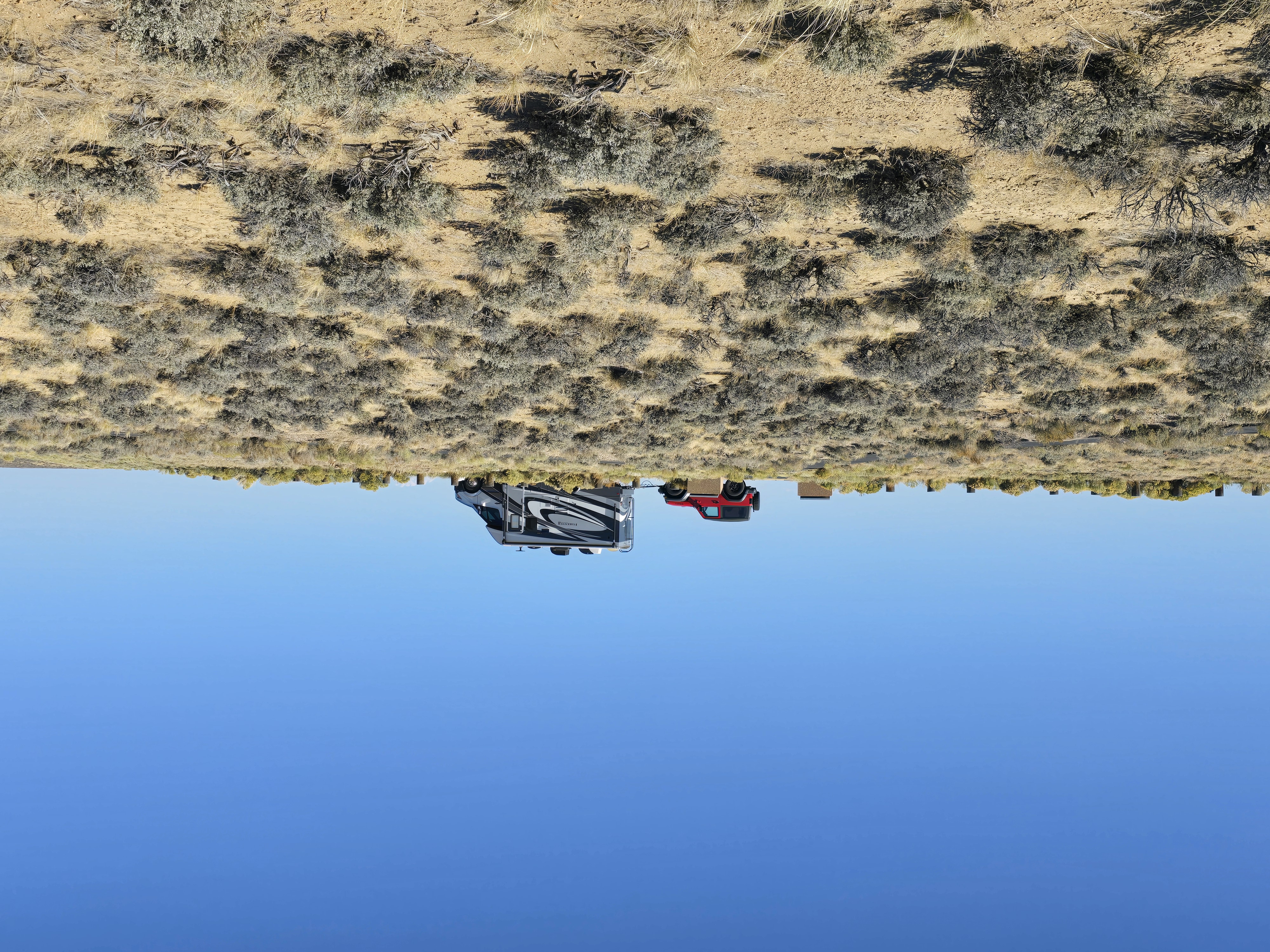
Generator noise carries at a dispersed site. The neighbors were parked close enough that the sound was theirs too, so he walked over to say so — an apology first, then the drift into conversation that happens between people camped within earshot of each other. The neighbor mentioned a neutral-ground plug, used for the same purpose rswfire had in mind. He said he'd tried that. It hadn't worked. The exchange ended there, and he walked back through the dark to his own RV.
But the sentence stayed with him. He went back to the device and opened it — not to try the method again, but to look at the thing itself. Inside: no wire from ground to neutral. Just a plug that had never been set up. The method had never failed. It had never been tested. What he had rejected weeks or months ago was not a wrong approach but an unfinished one, and the distance between those two facts was a single piece of copper.
He walked back over. The neighbor had the experience and the hands for it — put the wire in, made the bond, closed the device. rswfire plugged it into the solar inverter, ran the RV's shore-power cable outside to meet it, and connected. The inverter began simulating shore power. The house batteries began to charge. No hookup, no professional installation, no redundant device — a loop closed entirely inside equipment he already owned.
Inside, the RV at night, systems running, he recorded it. Chili was warming on the stove and he turned it off mid-sentence so the wattage reading would be clean of it — the domestic load subtracted so the electrical one could be read honestly. The number came back 657, up from around 300, and the jump surprised him enough to say so twice. He checked another reading, 1396, watched the small indicator that tells him where the batteries stand. He did not know yet why the draw had climbed that high. He said as much.
What he stated was probable, not concluded. The charge was running. If the solar was genuinely simulating shore power, the voltage should come down and the system should drop into float on its own, and he would see that in the volts, and then he would know. Until then he was monitoring — curious how much of his solar storage the transfer would take, glad in a way he repeated without embarrassment. Way simpler approach. I am so glad it works. This is so cool. The generator was off. The batteries were filling. He was watching the numbers, and he thought it just might.