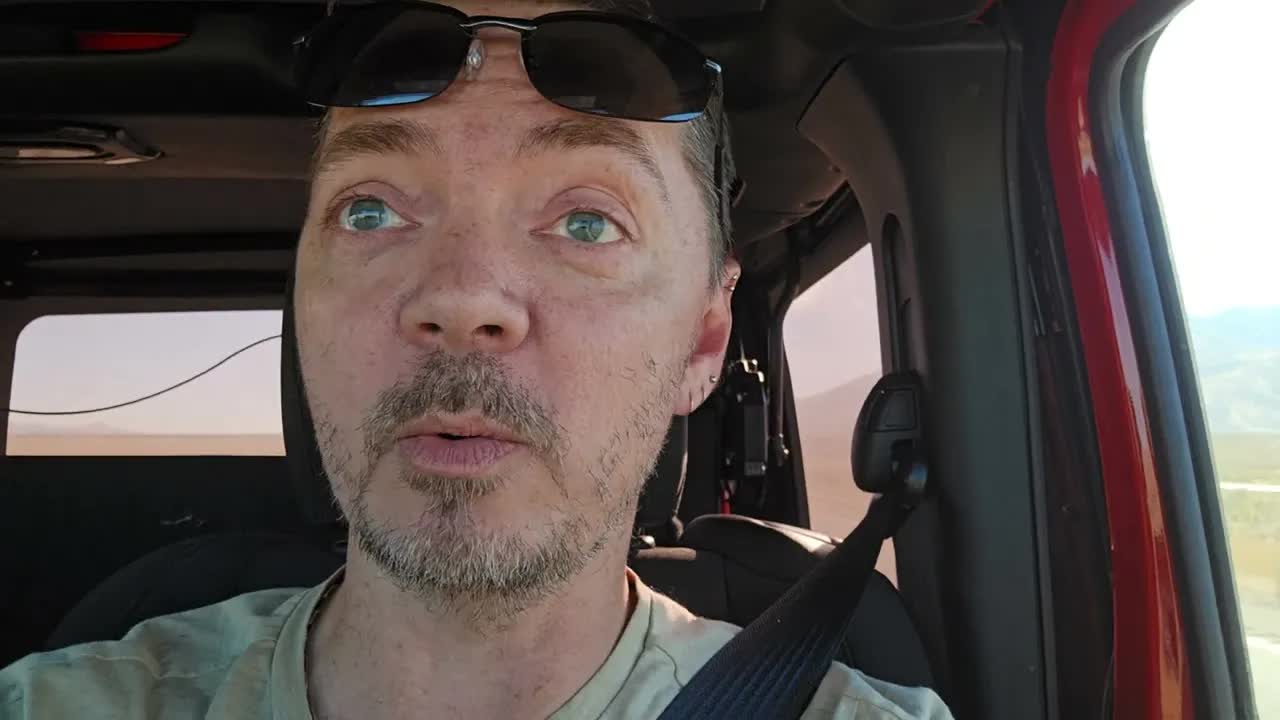
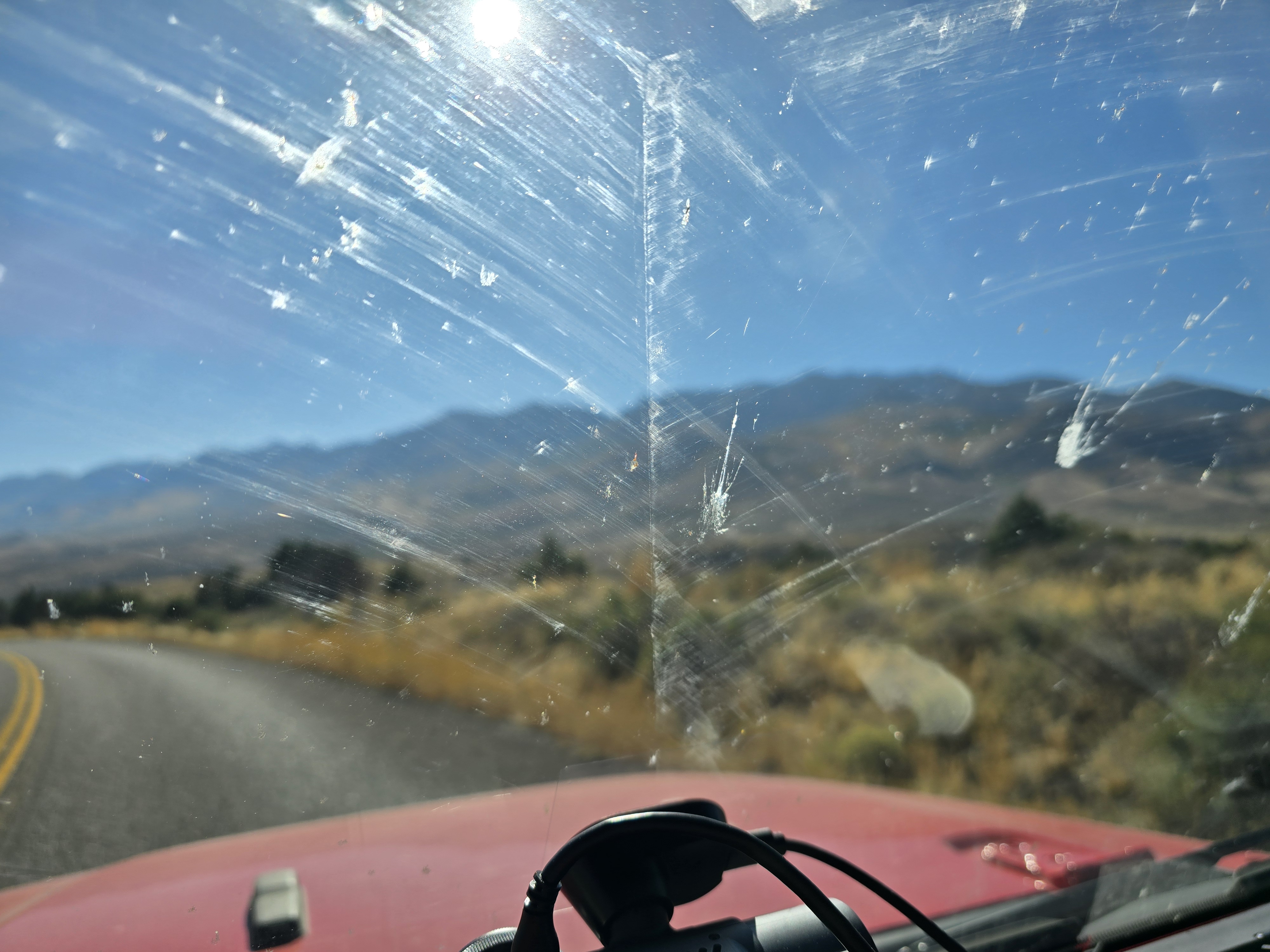
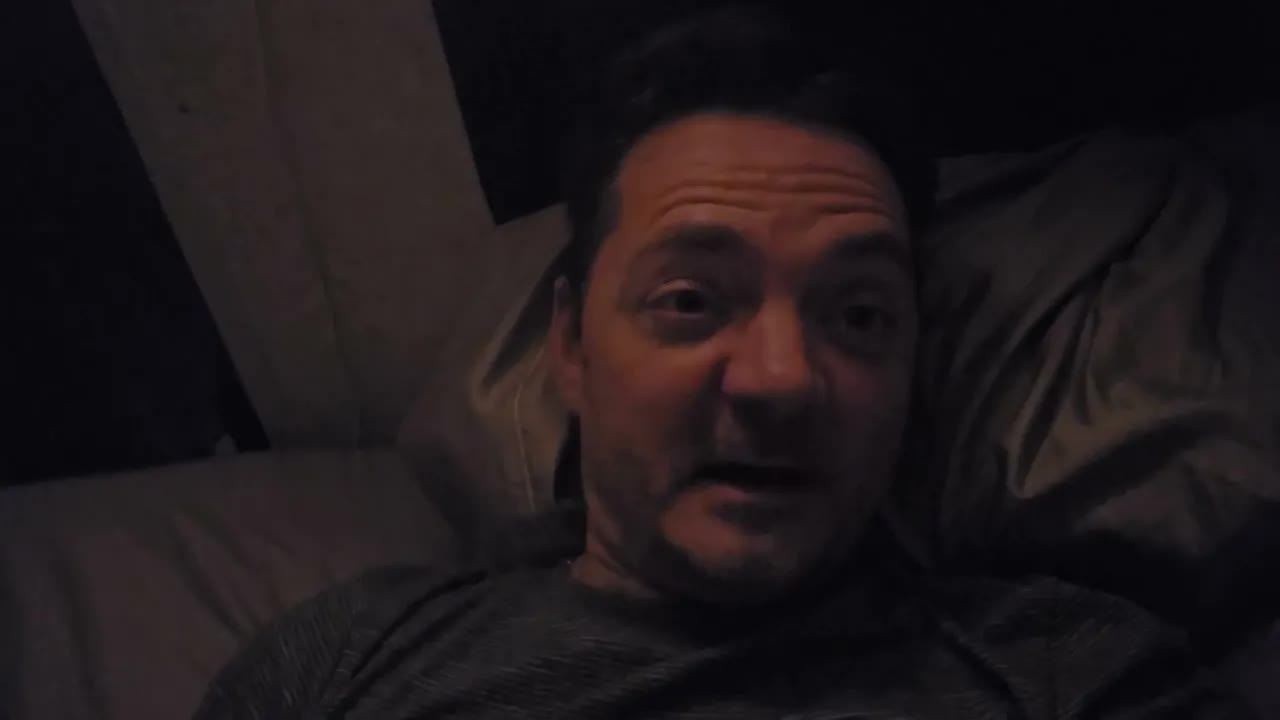
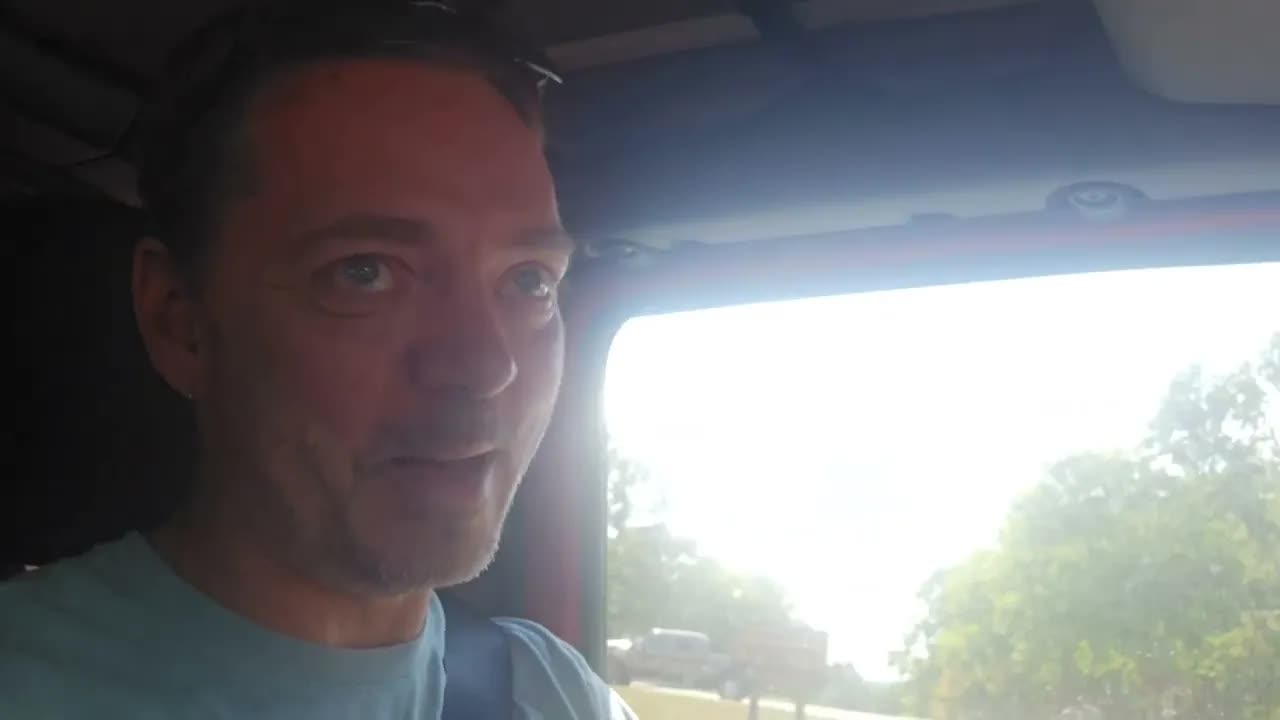
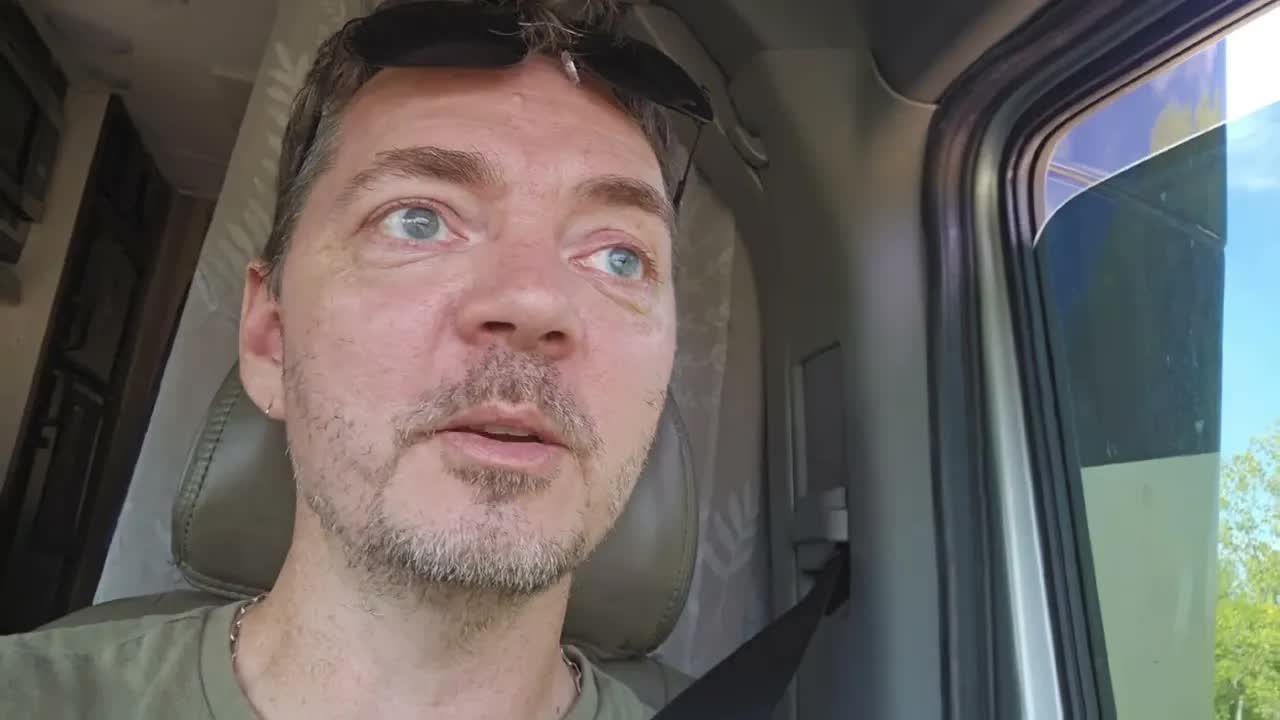
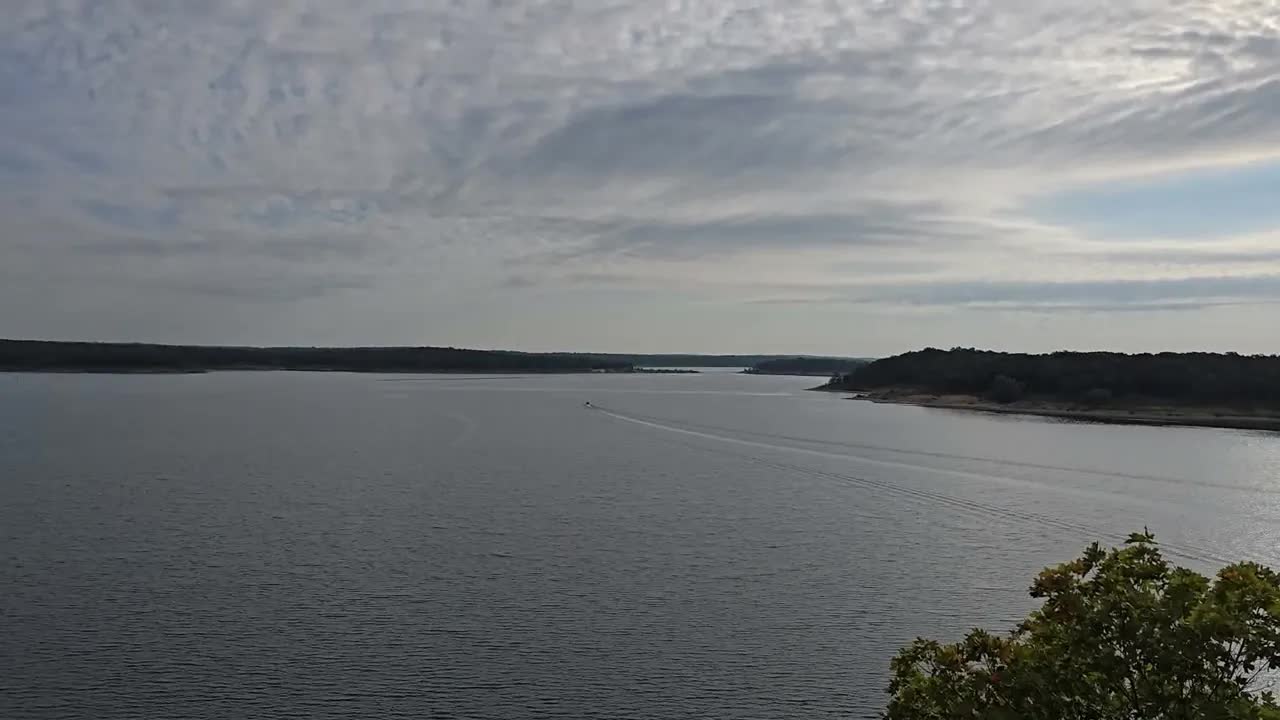
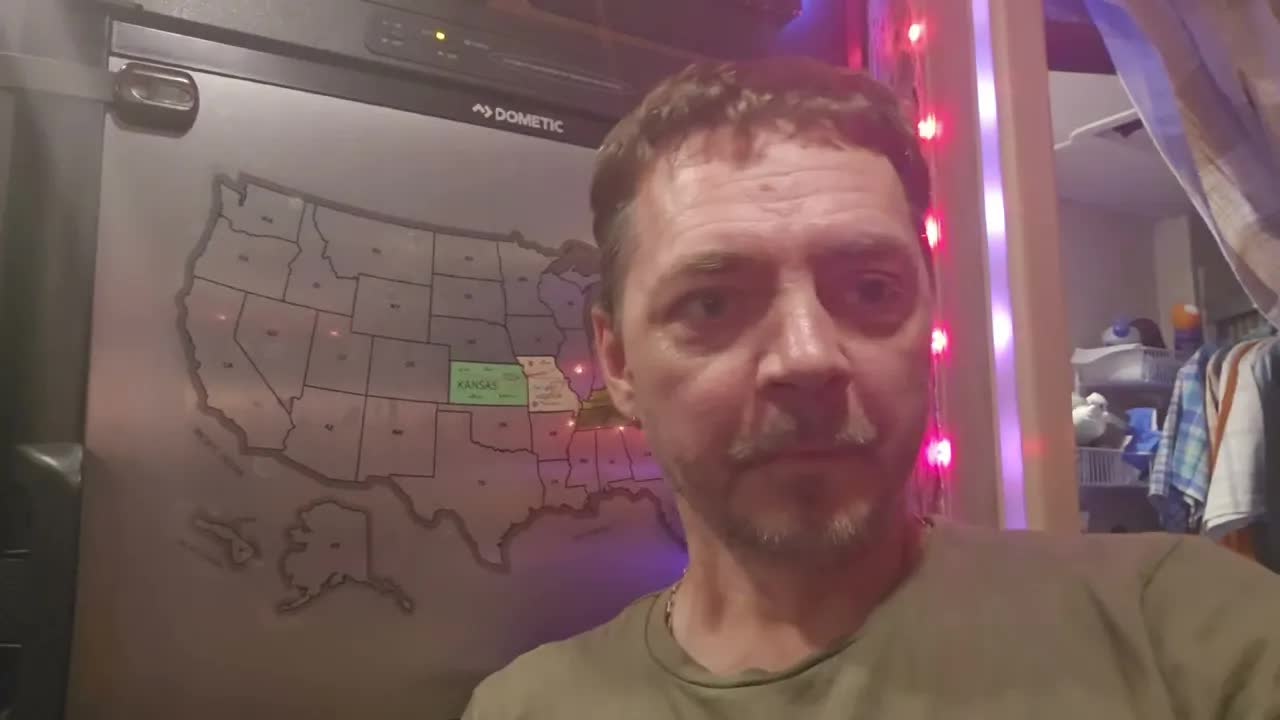
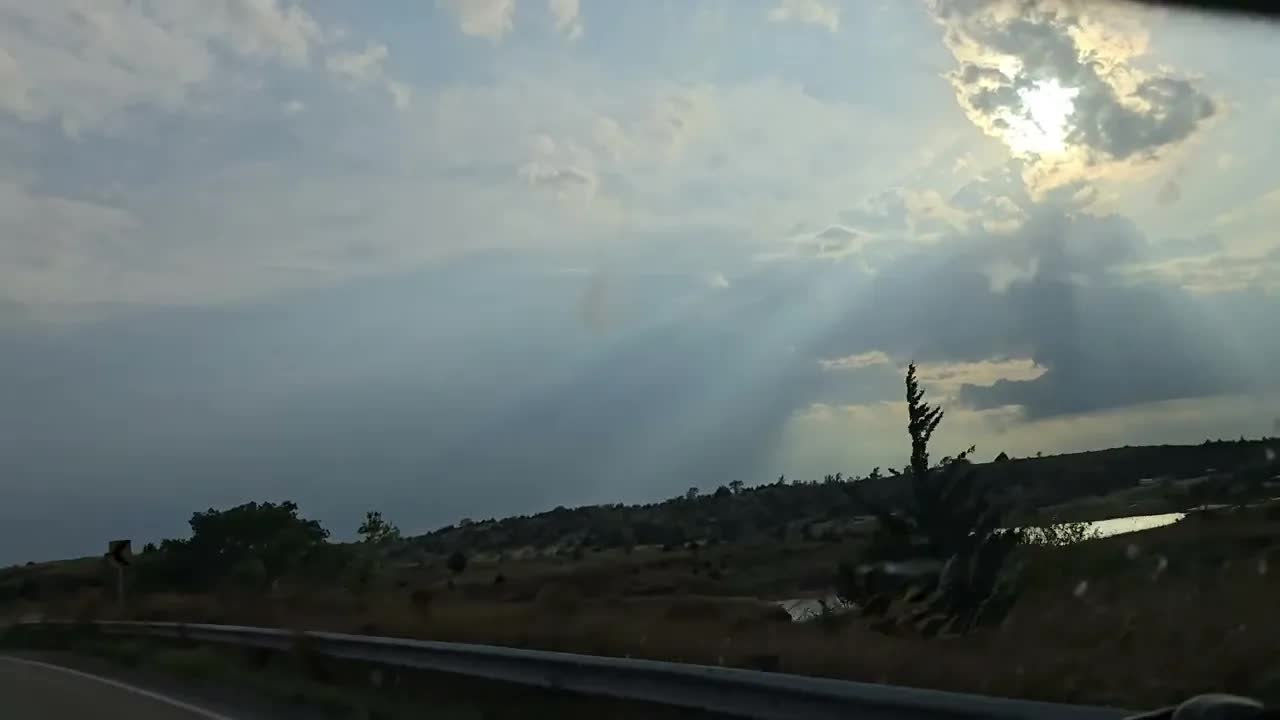
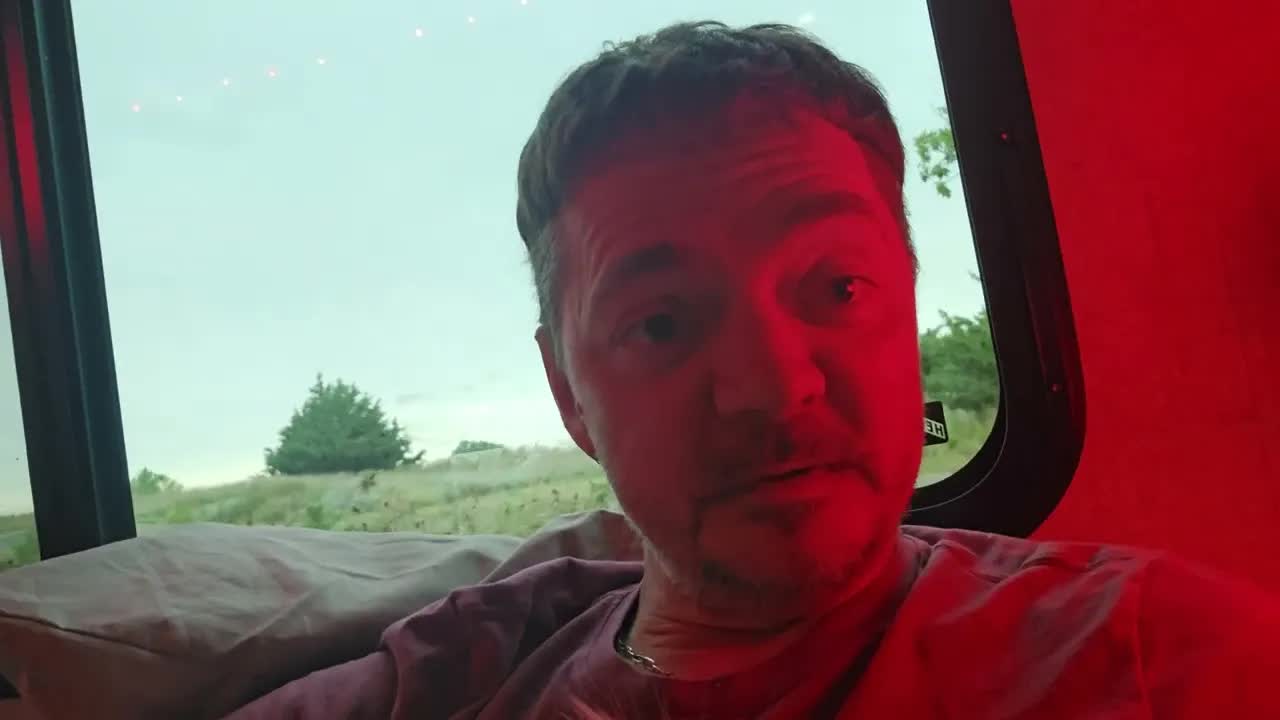
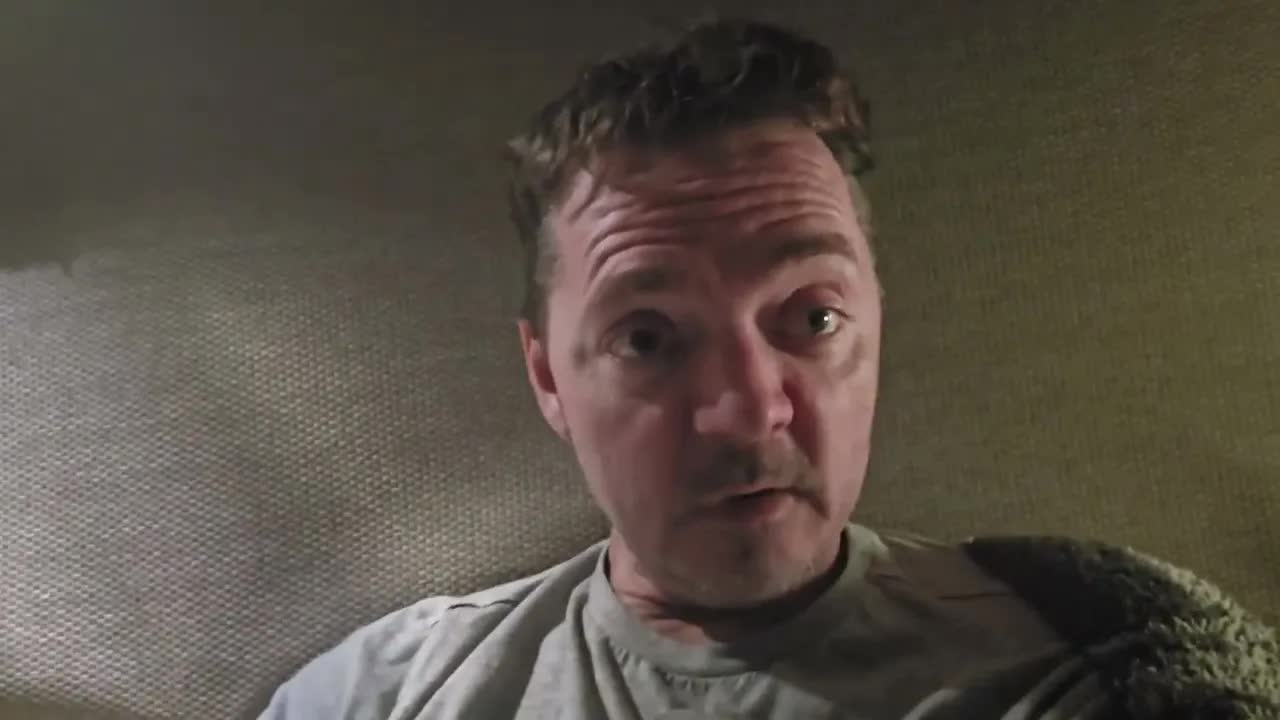
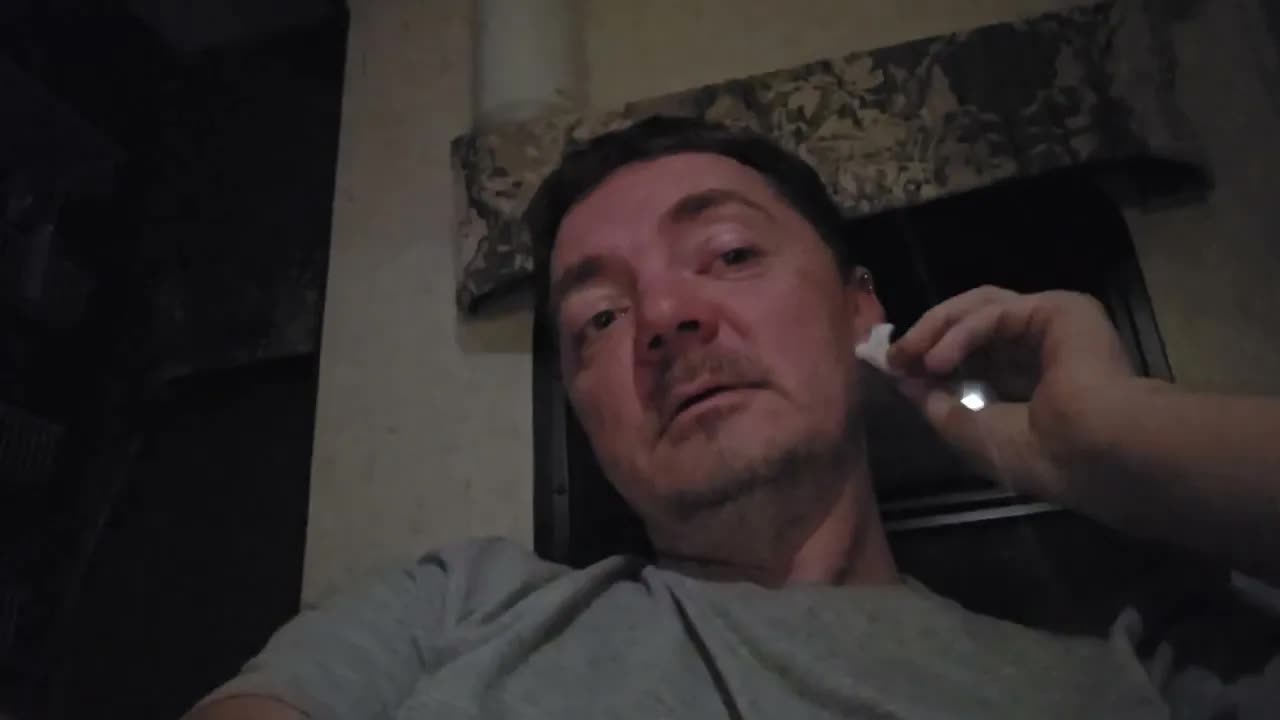

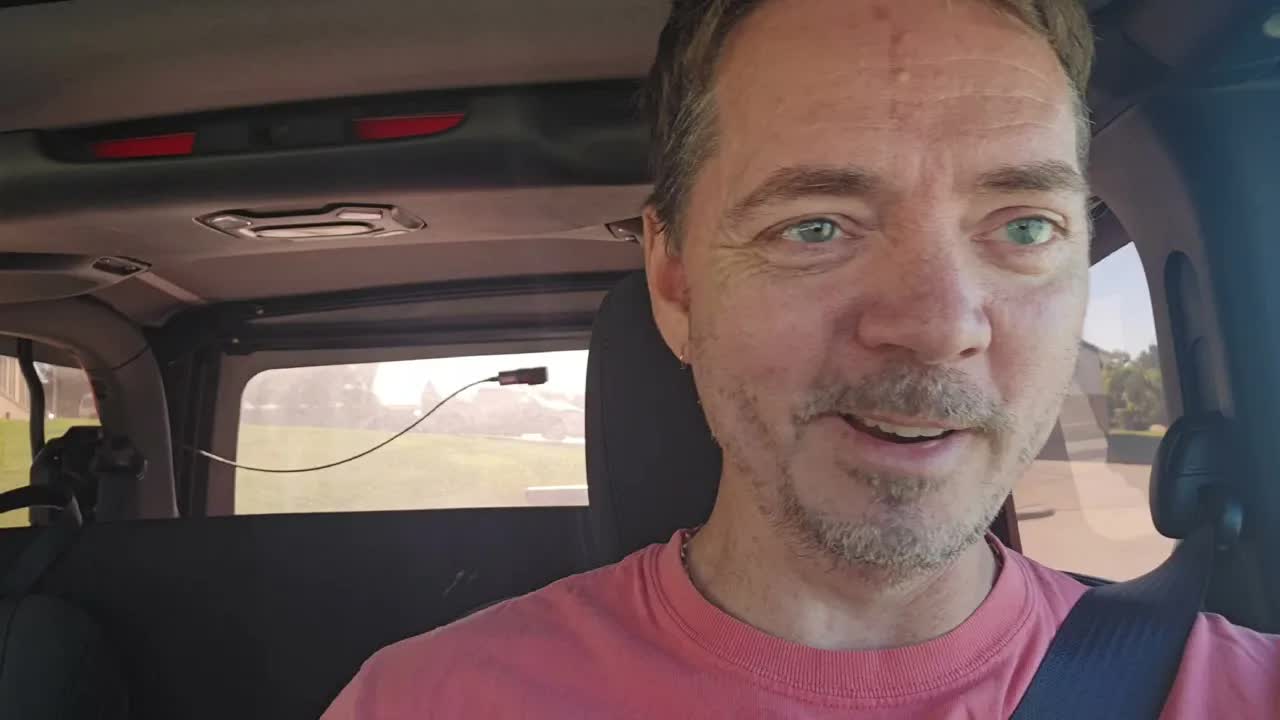
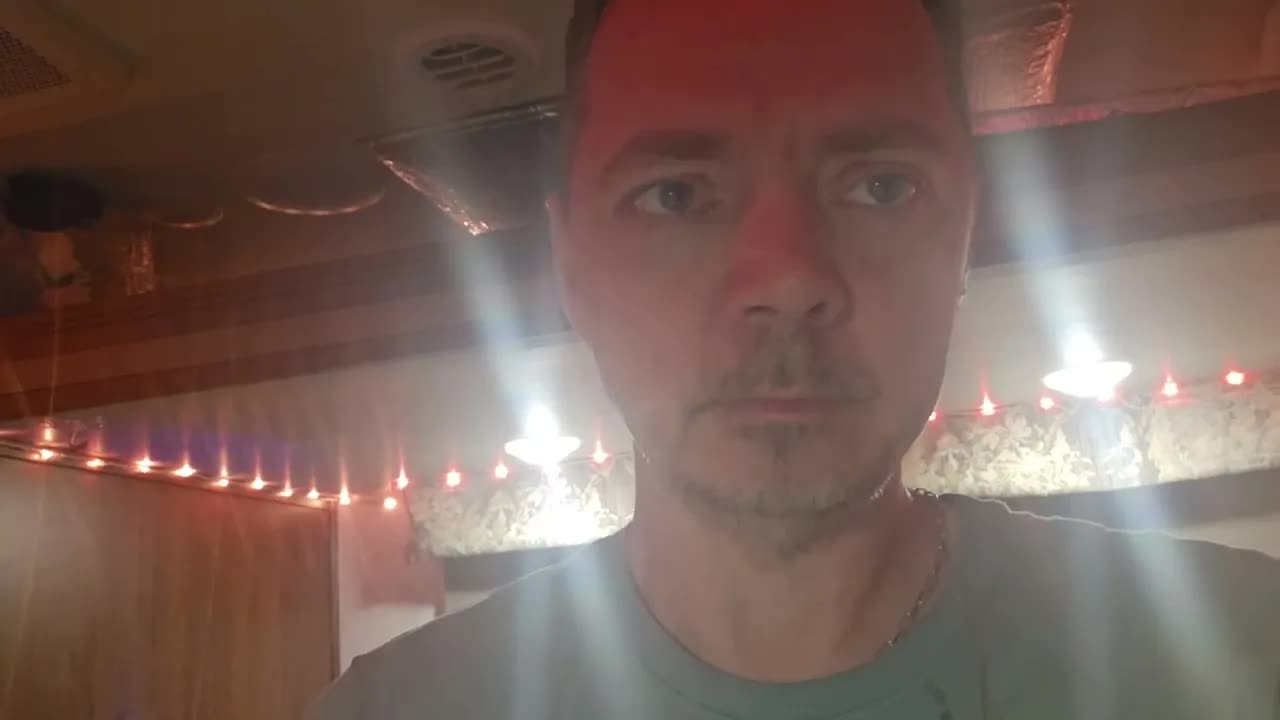
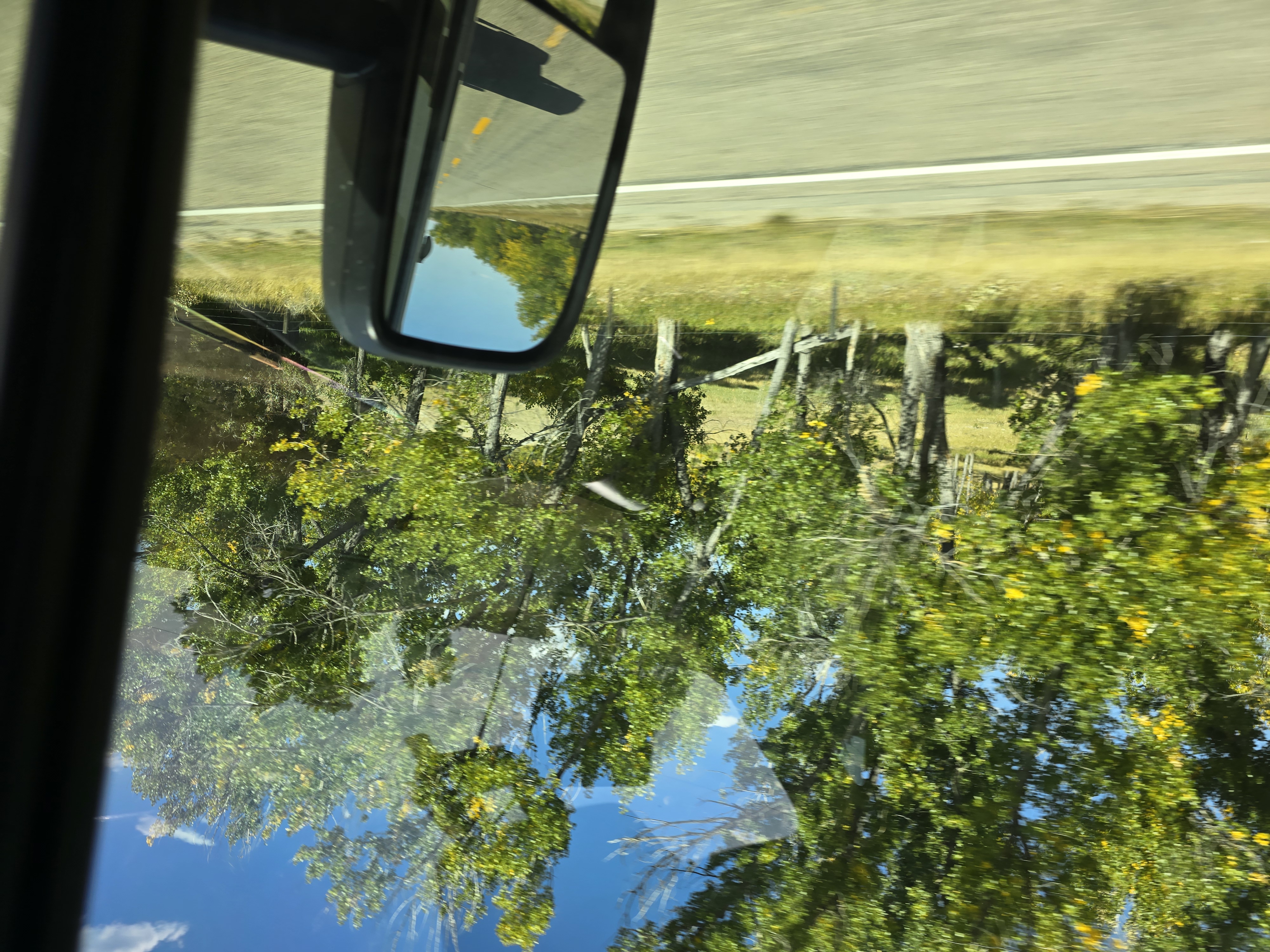

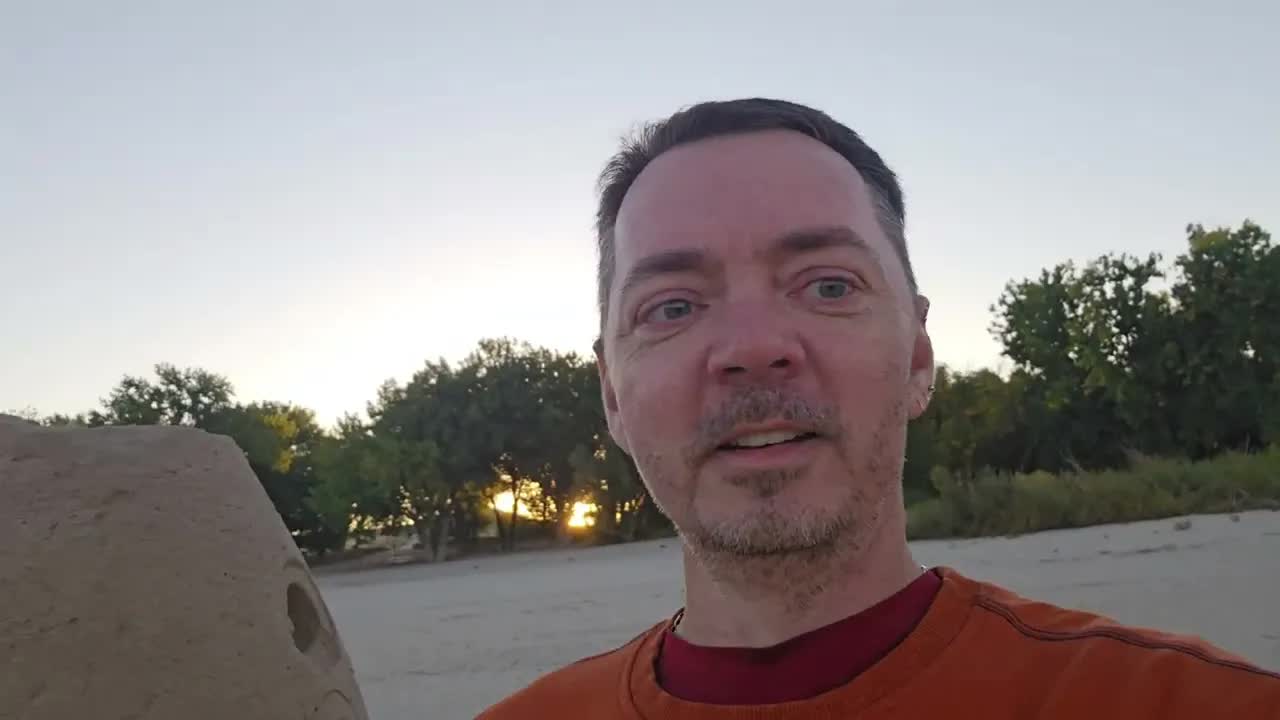
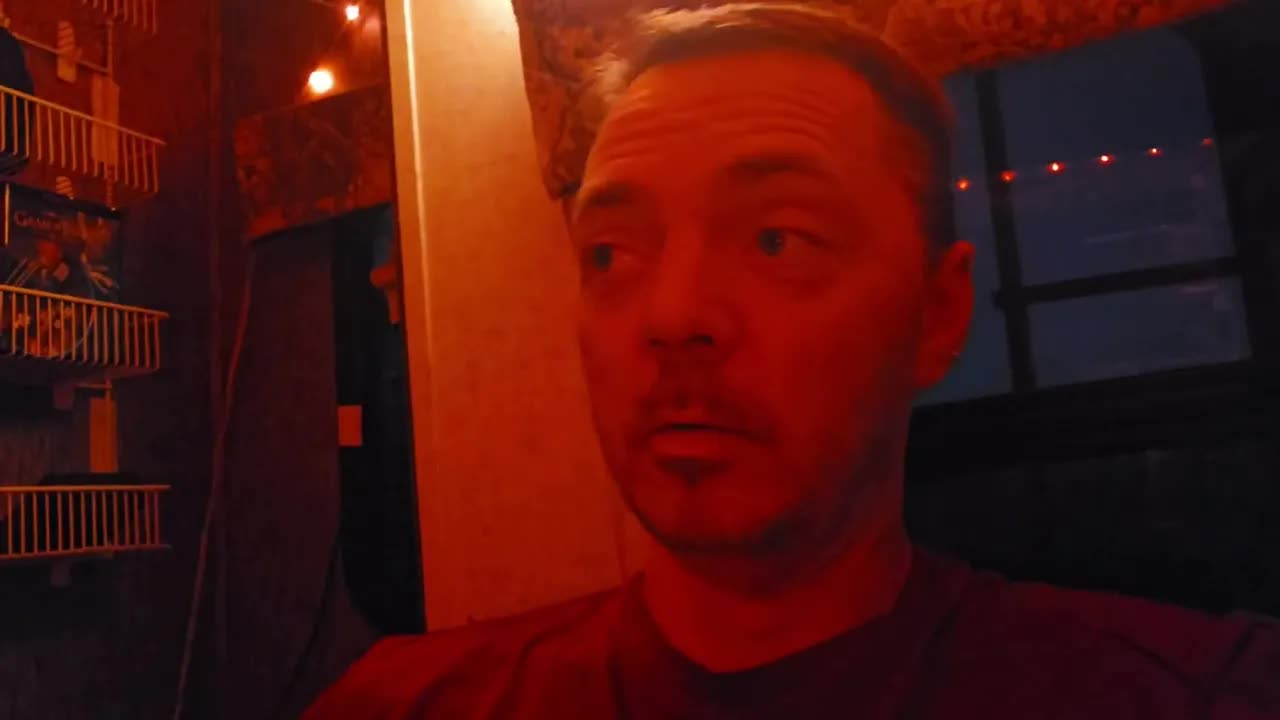
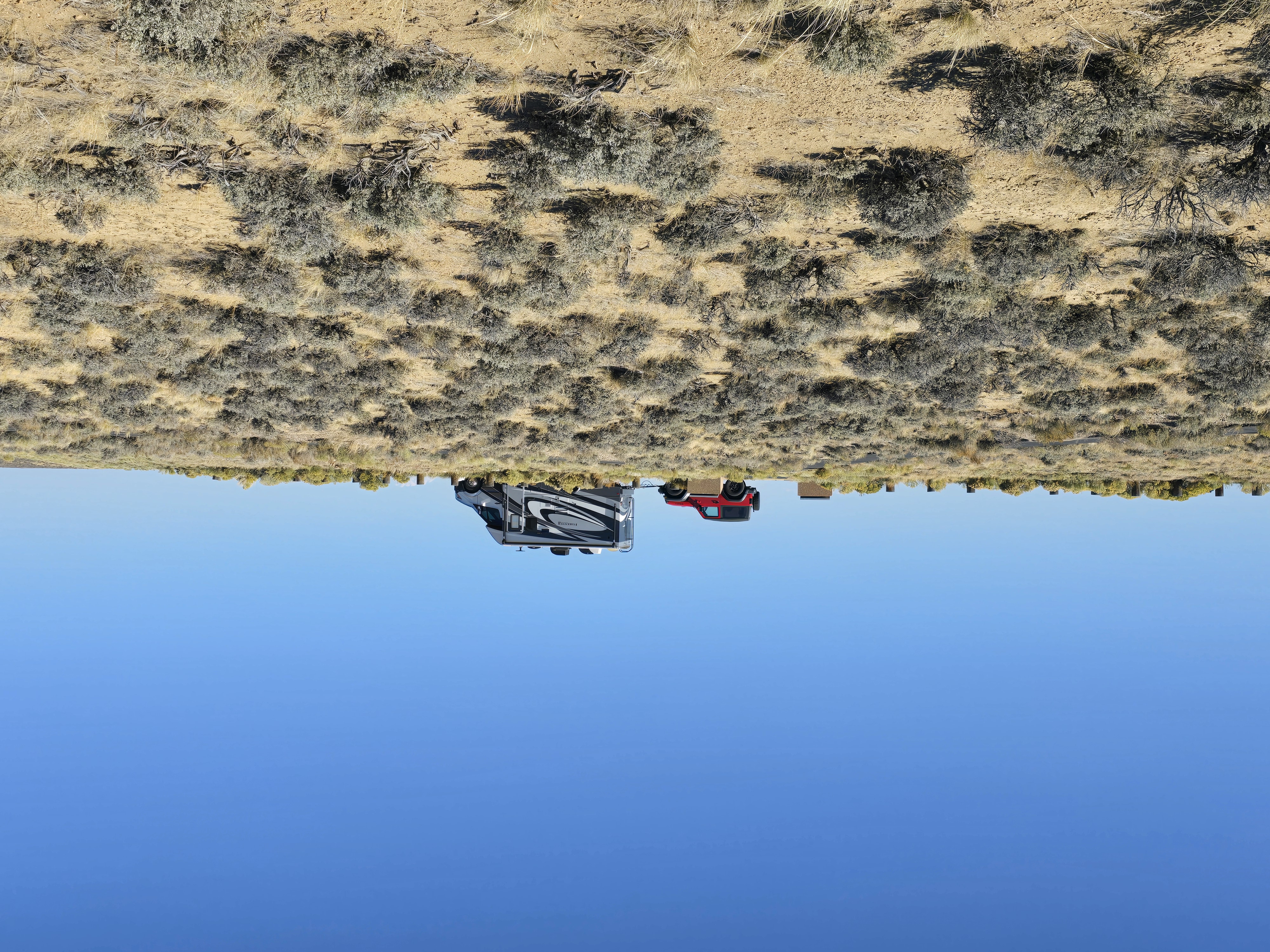
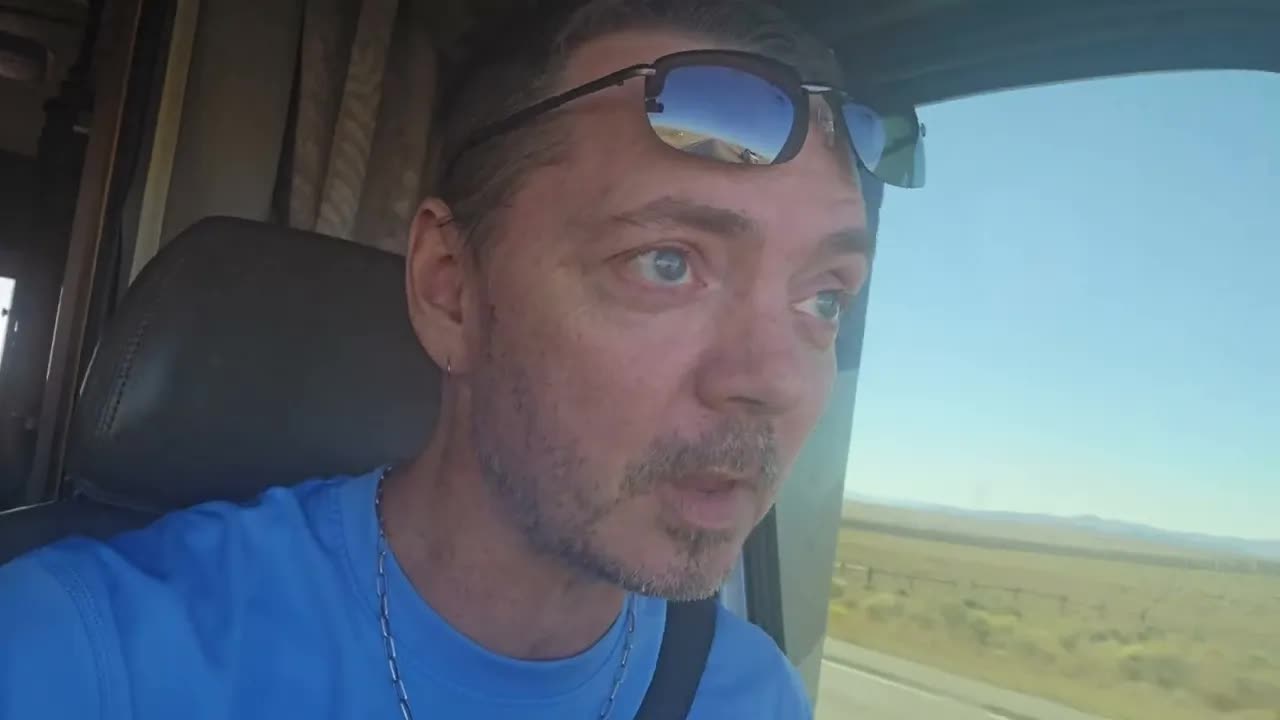

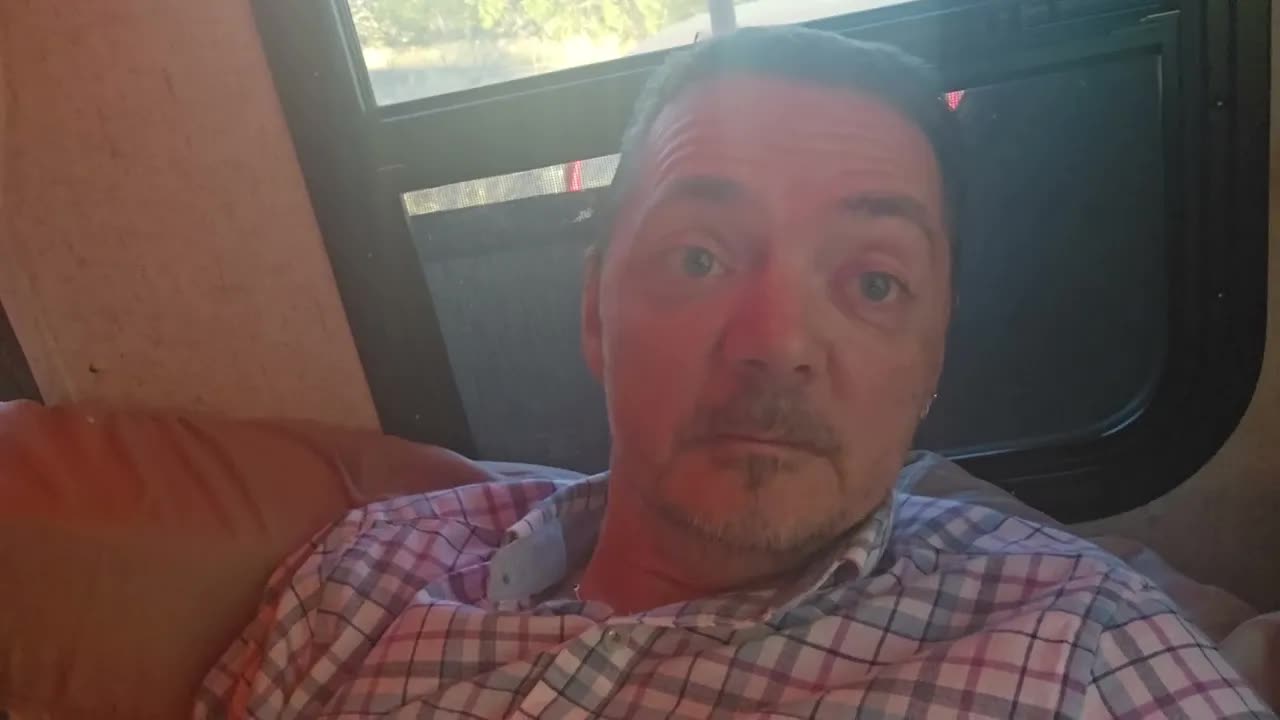
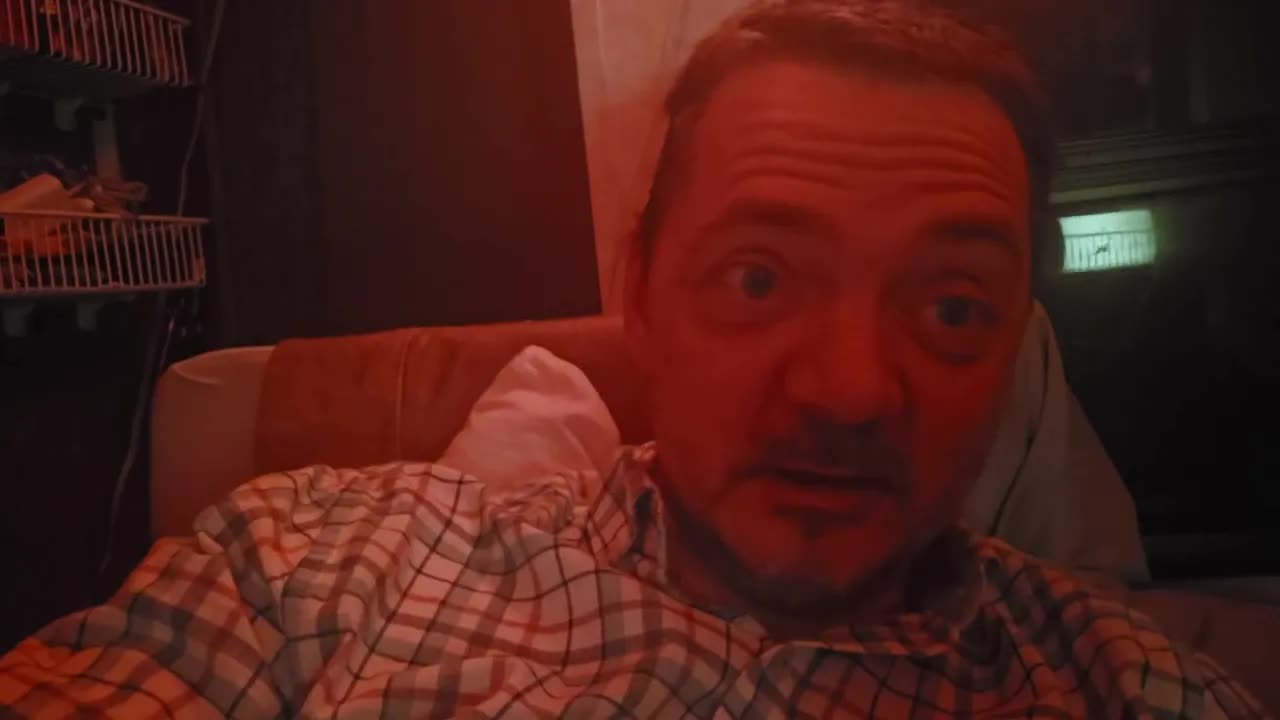
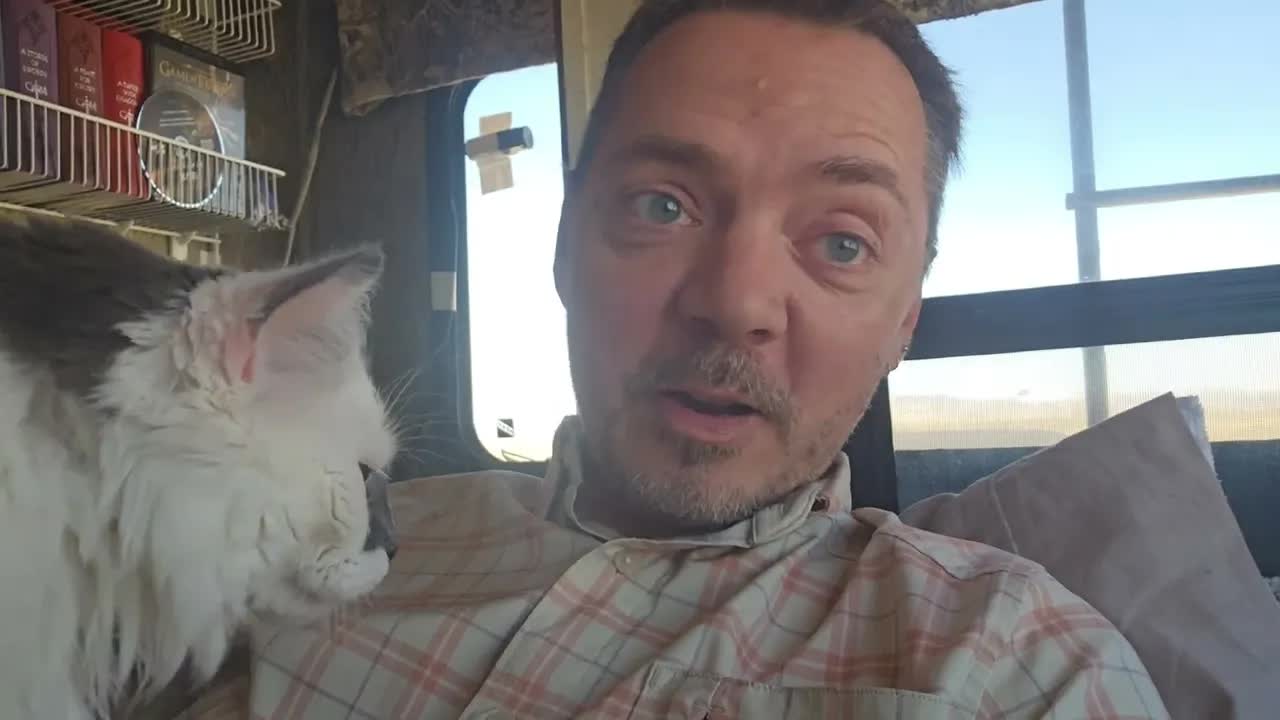
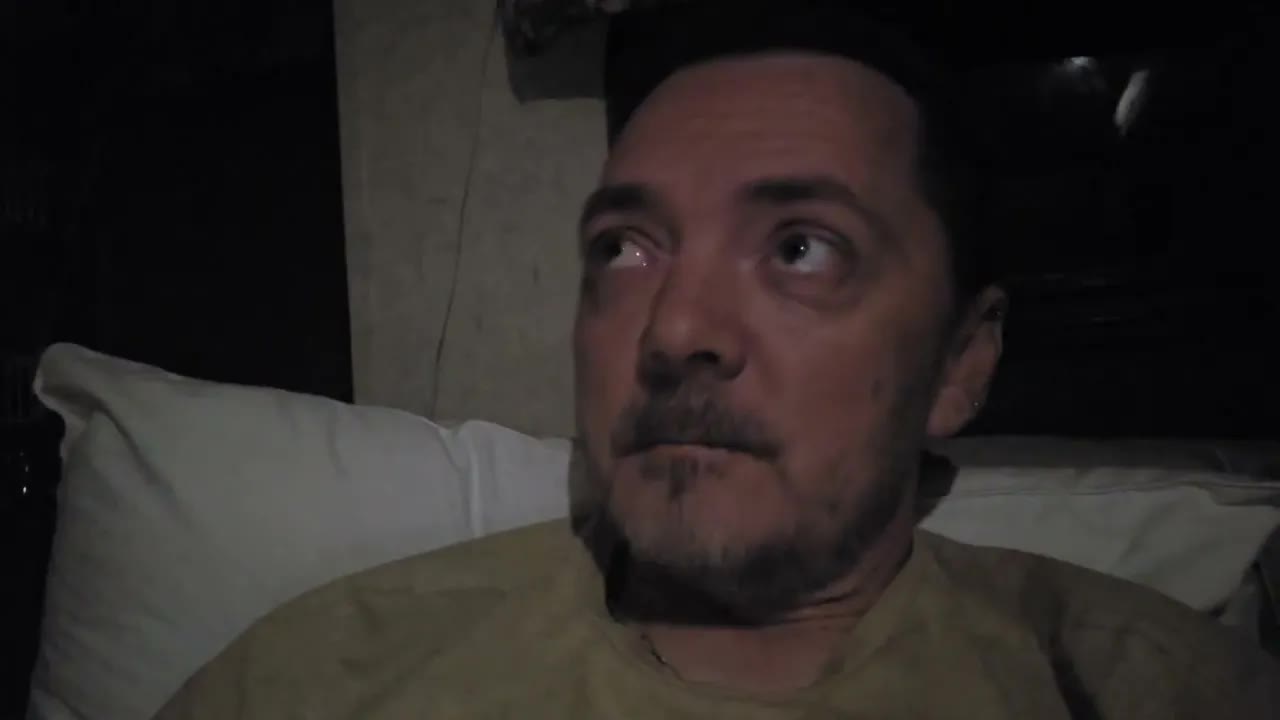
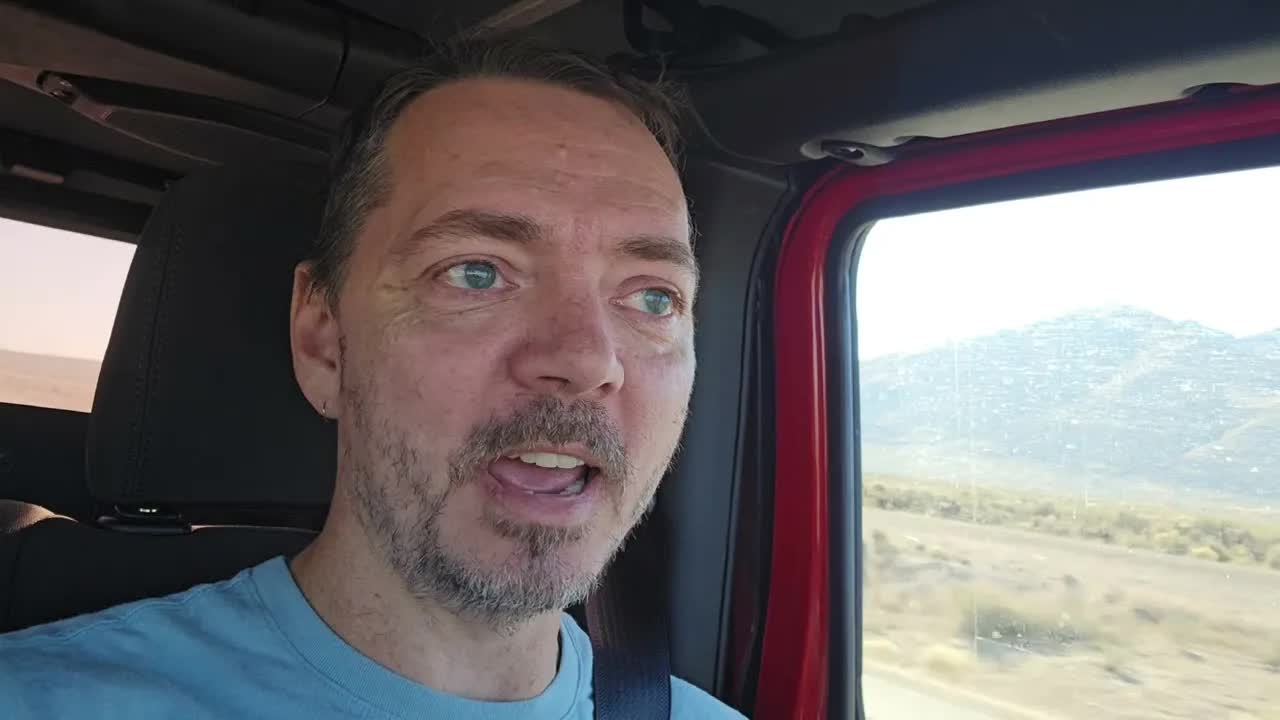
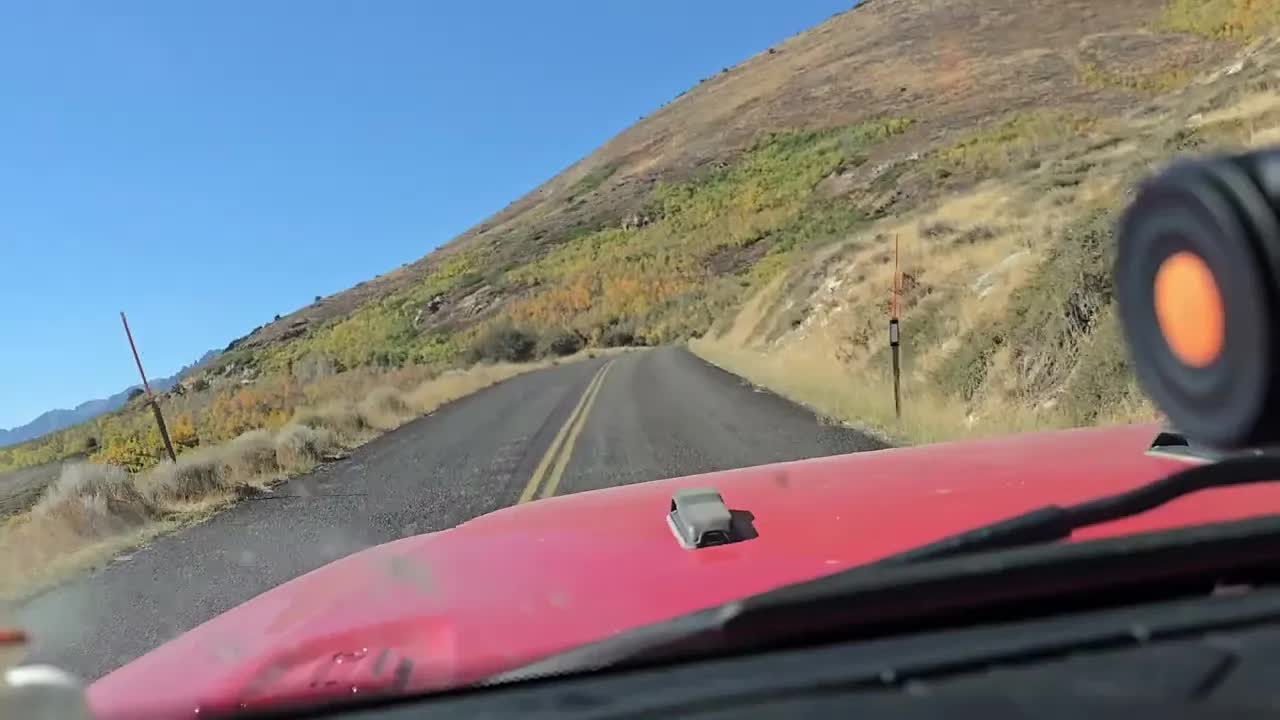
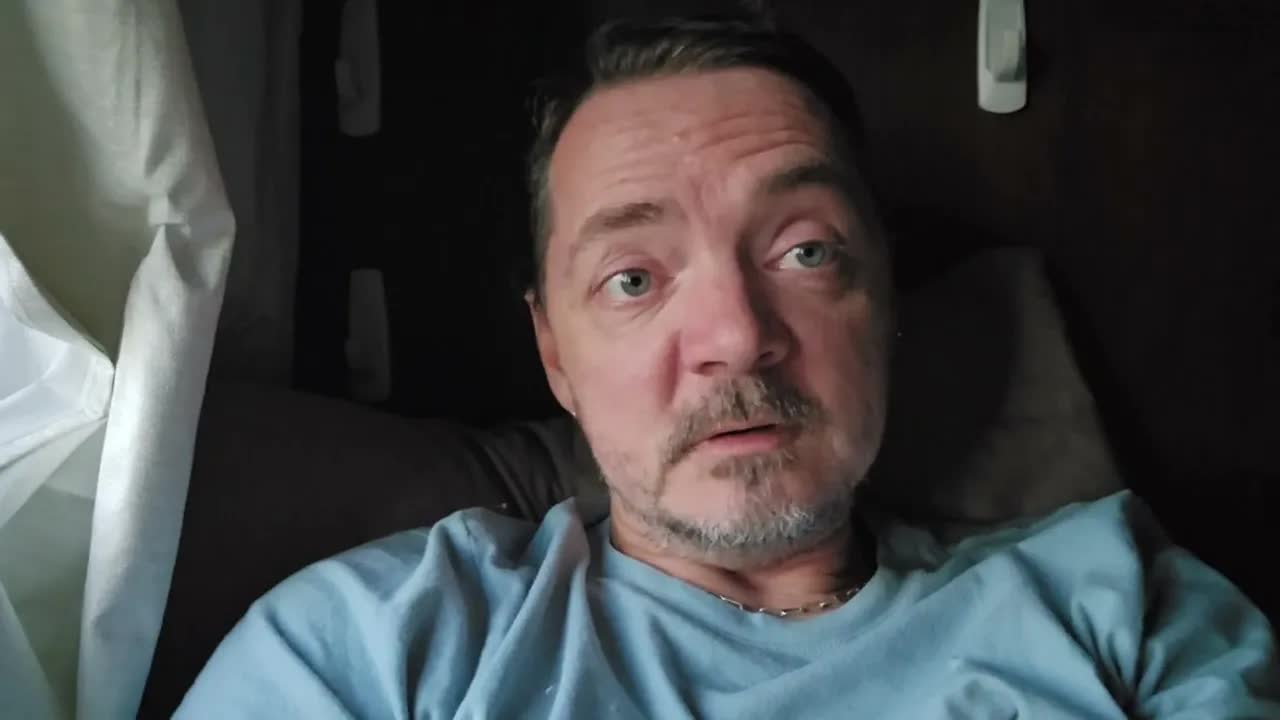
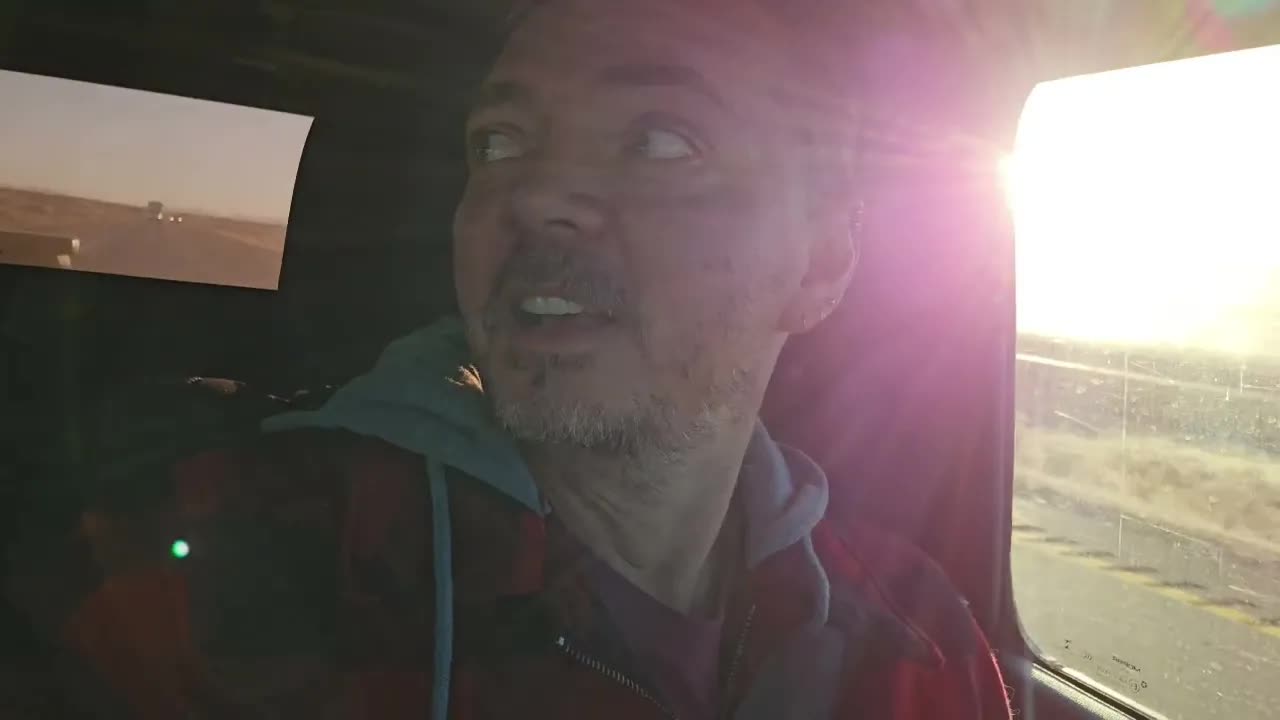
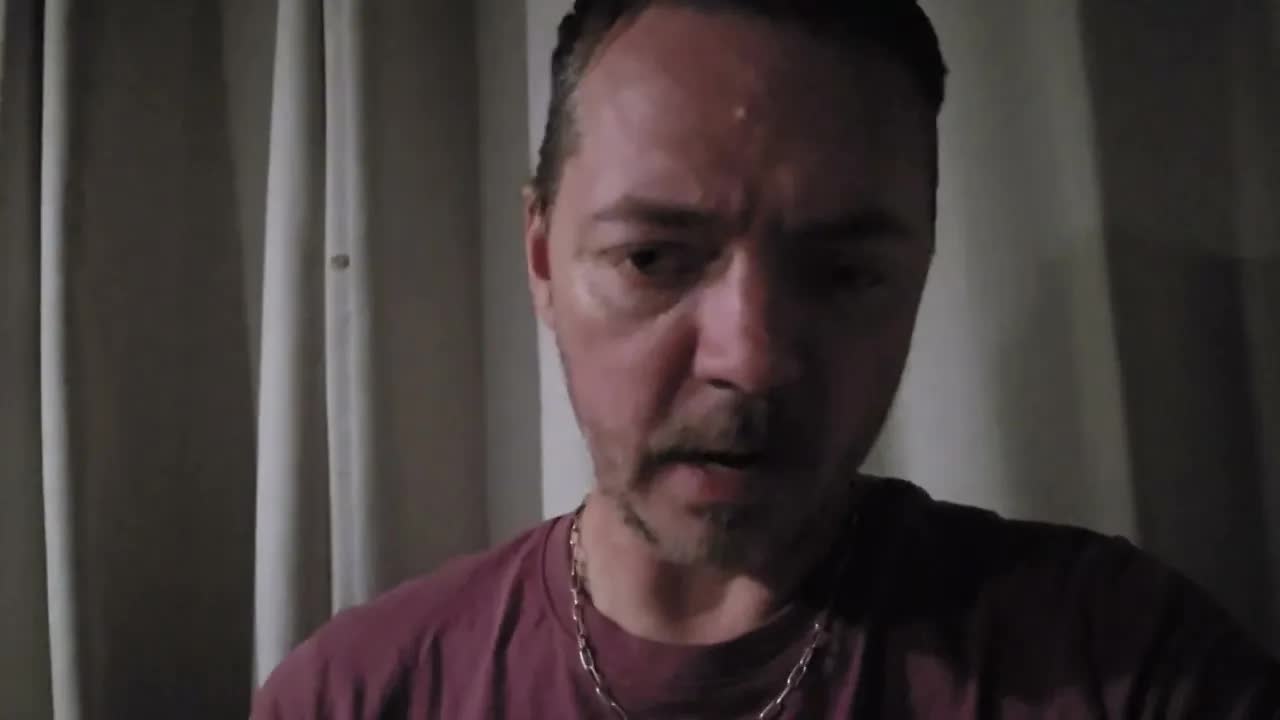
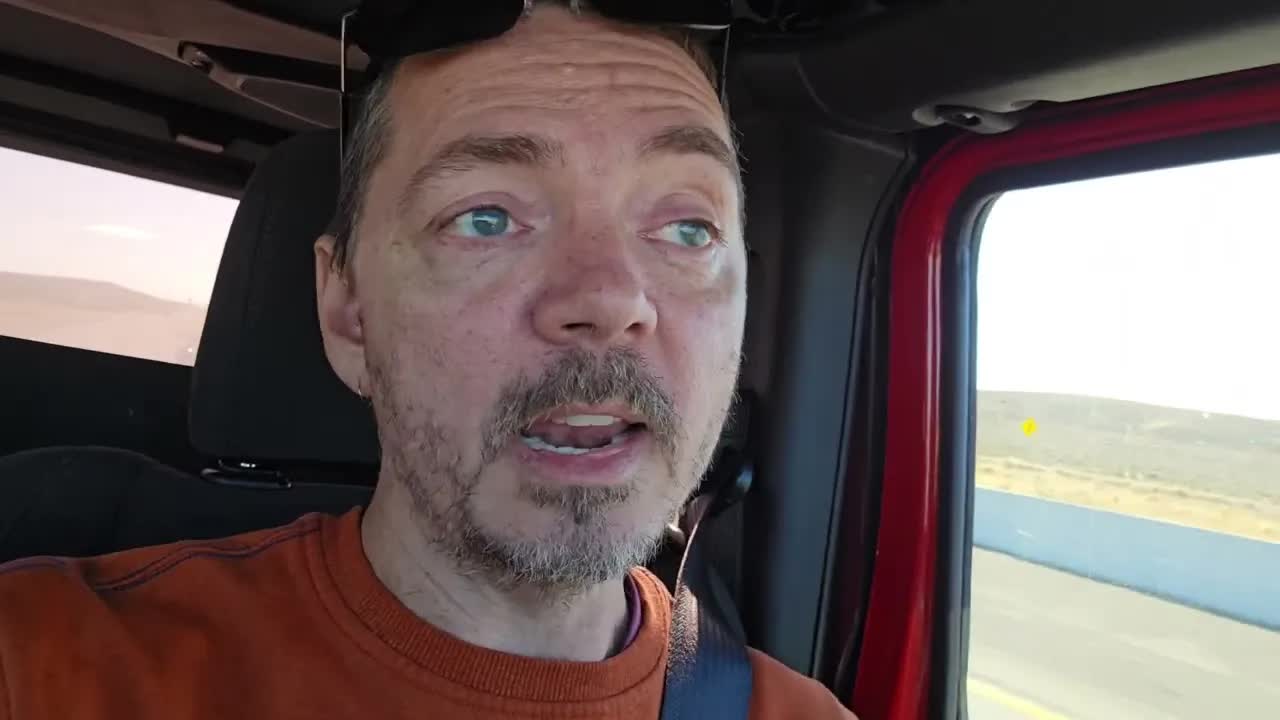
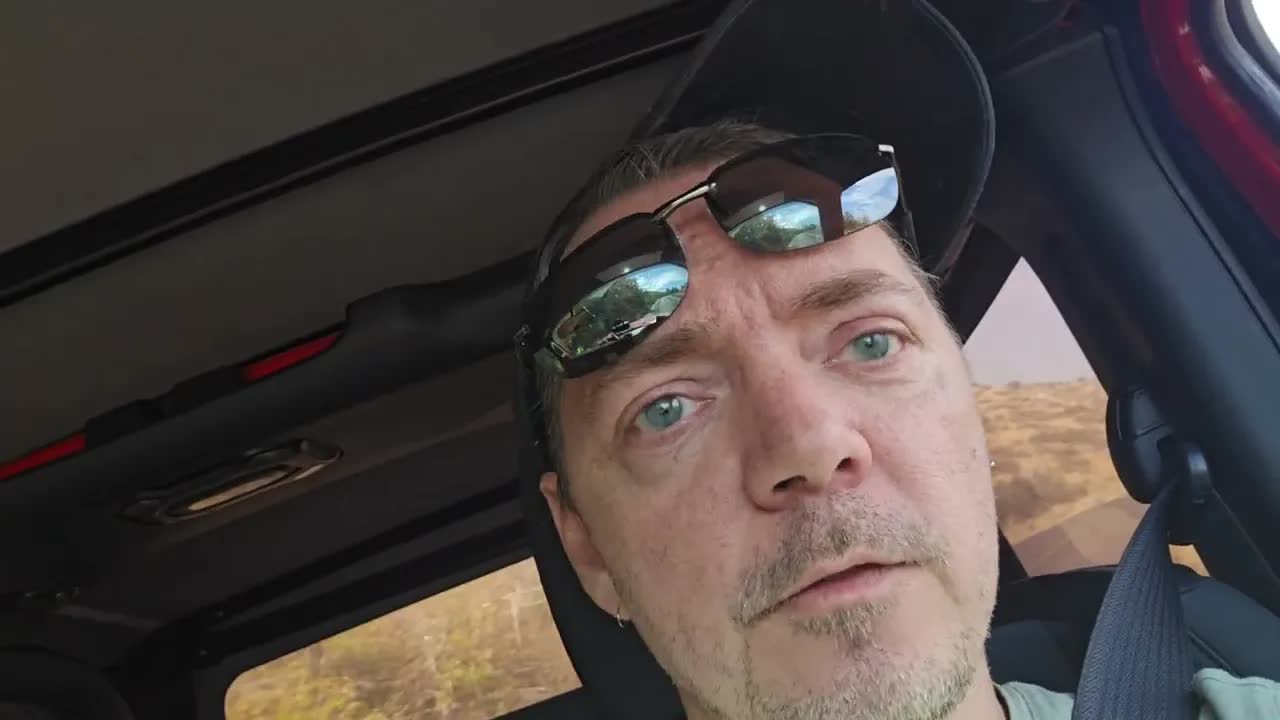
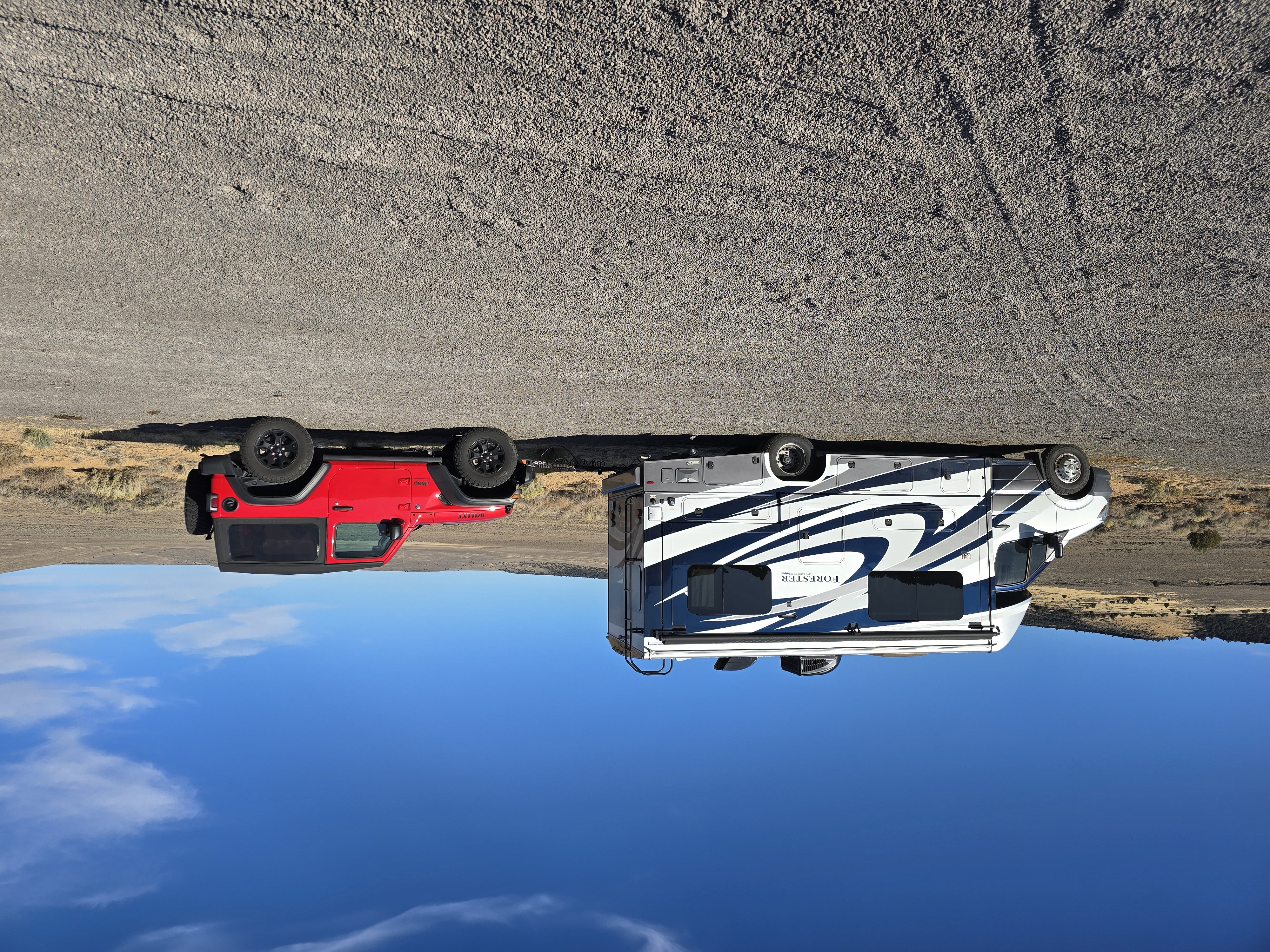
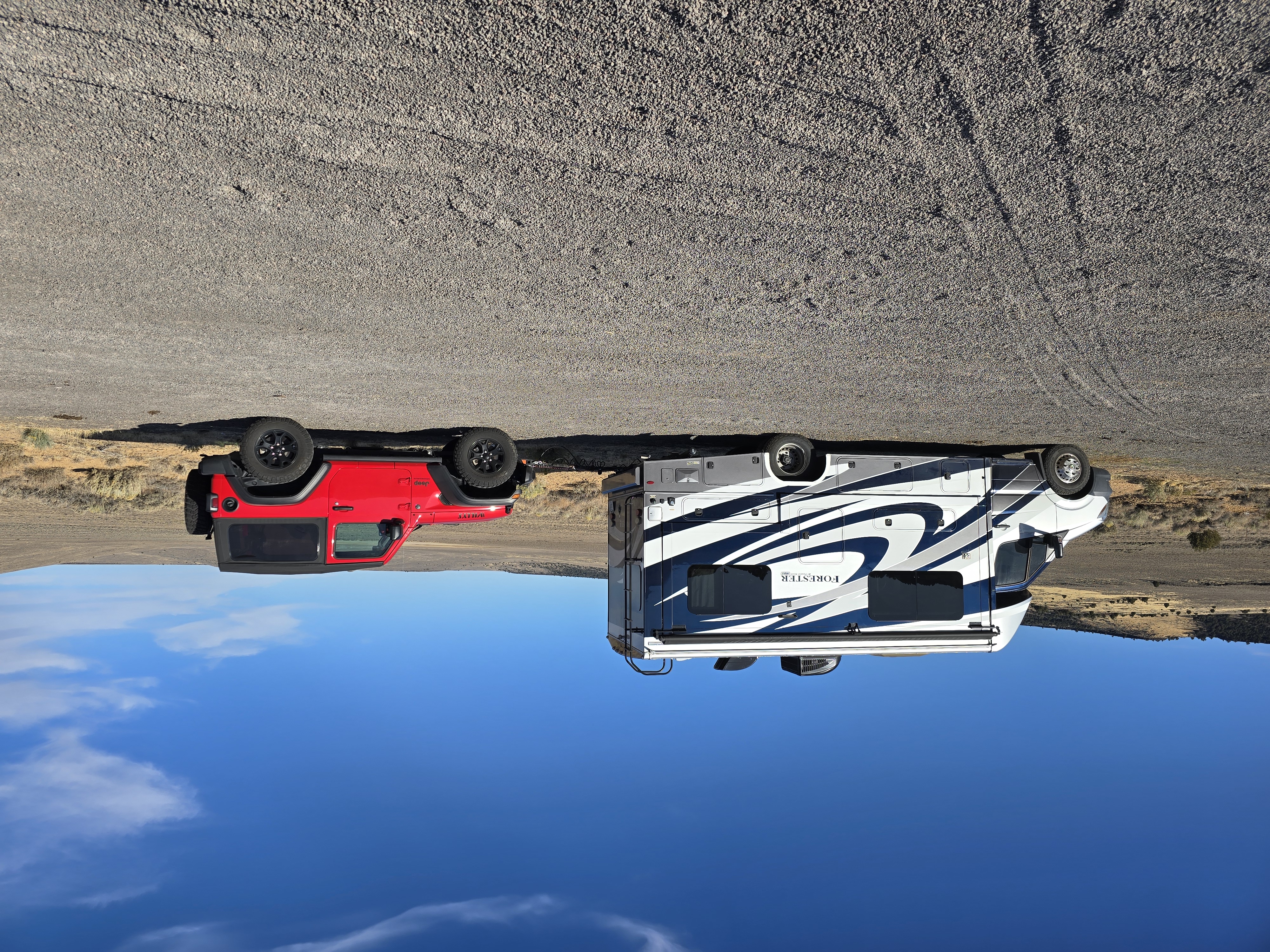
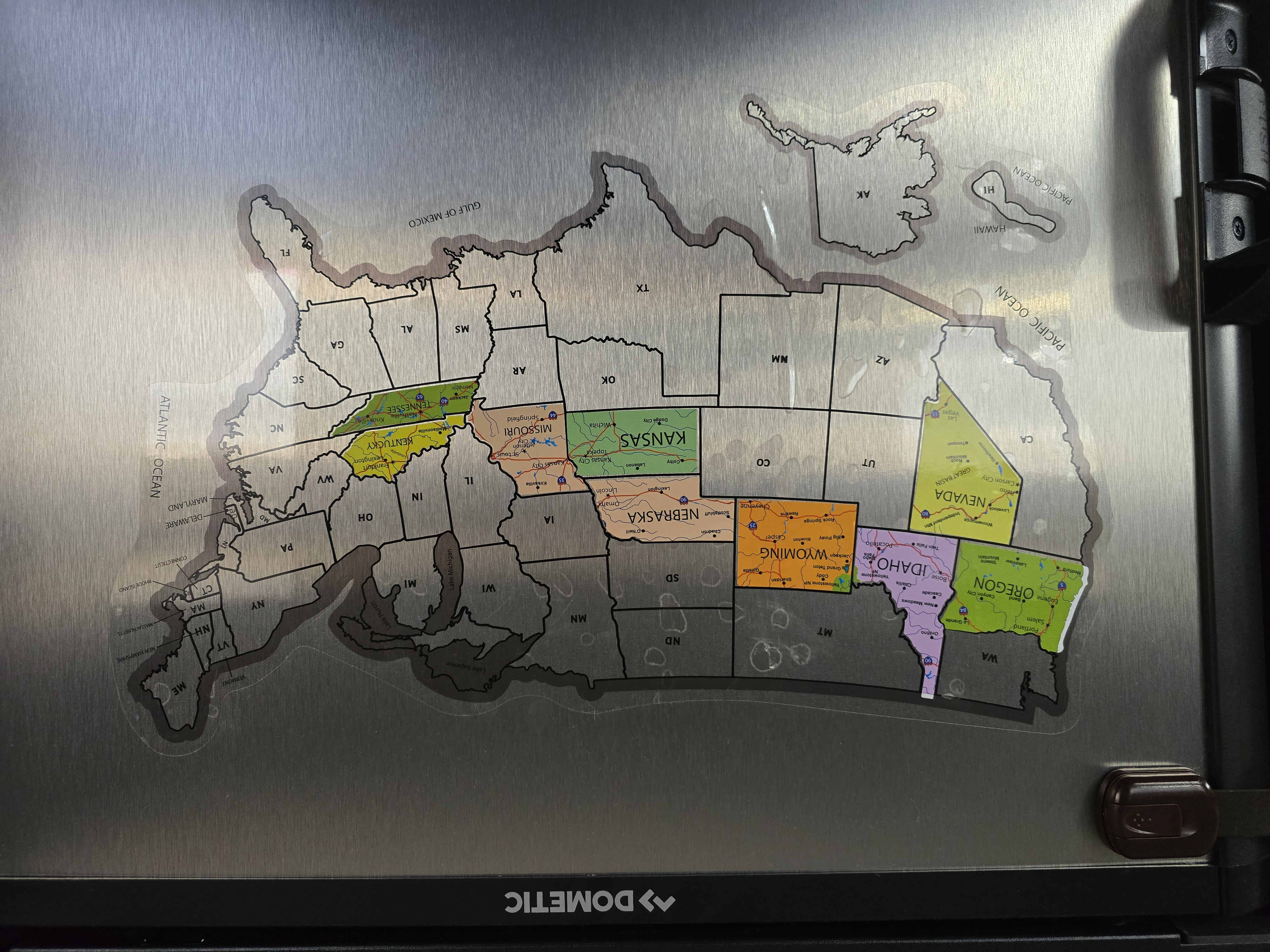
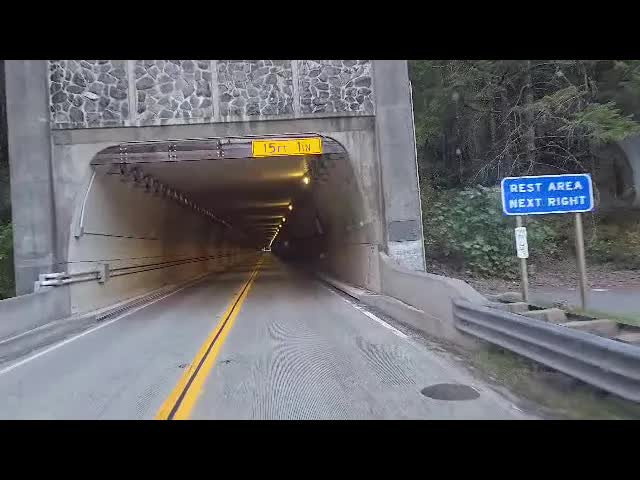
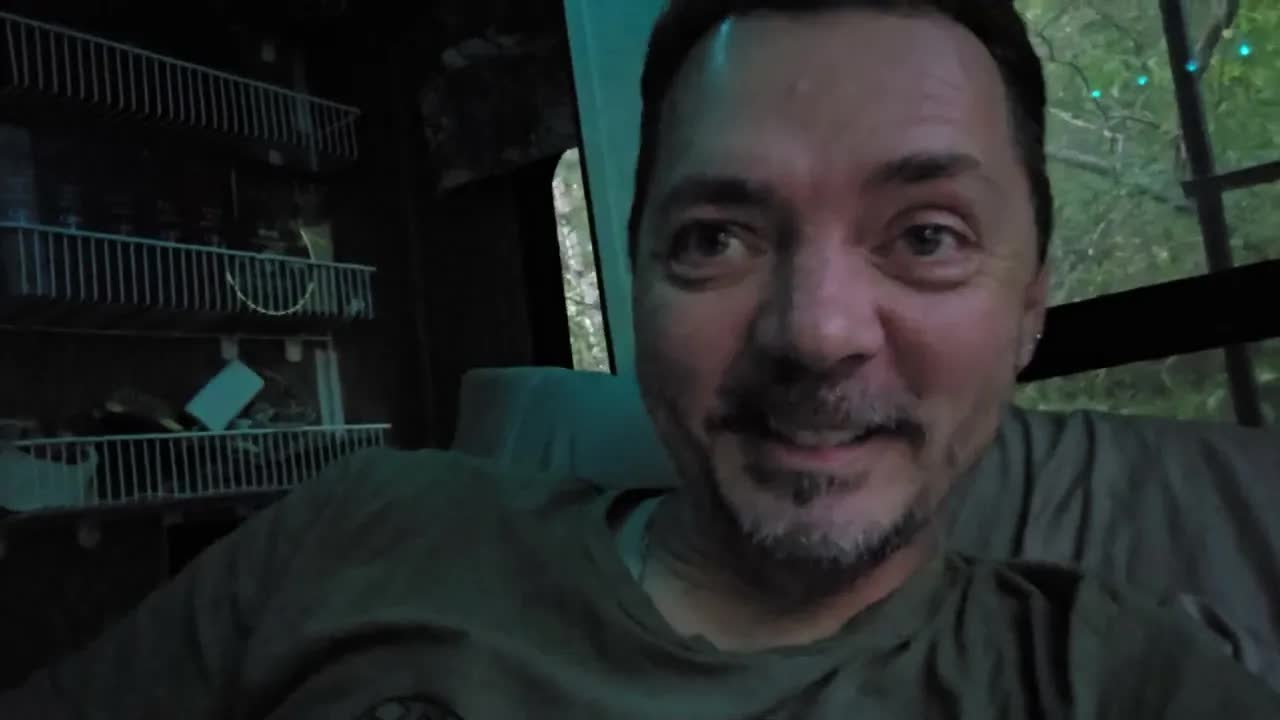
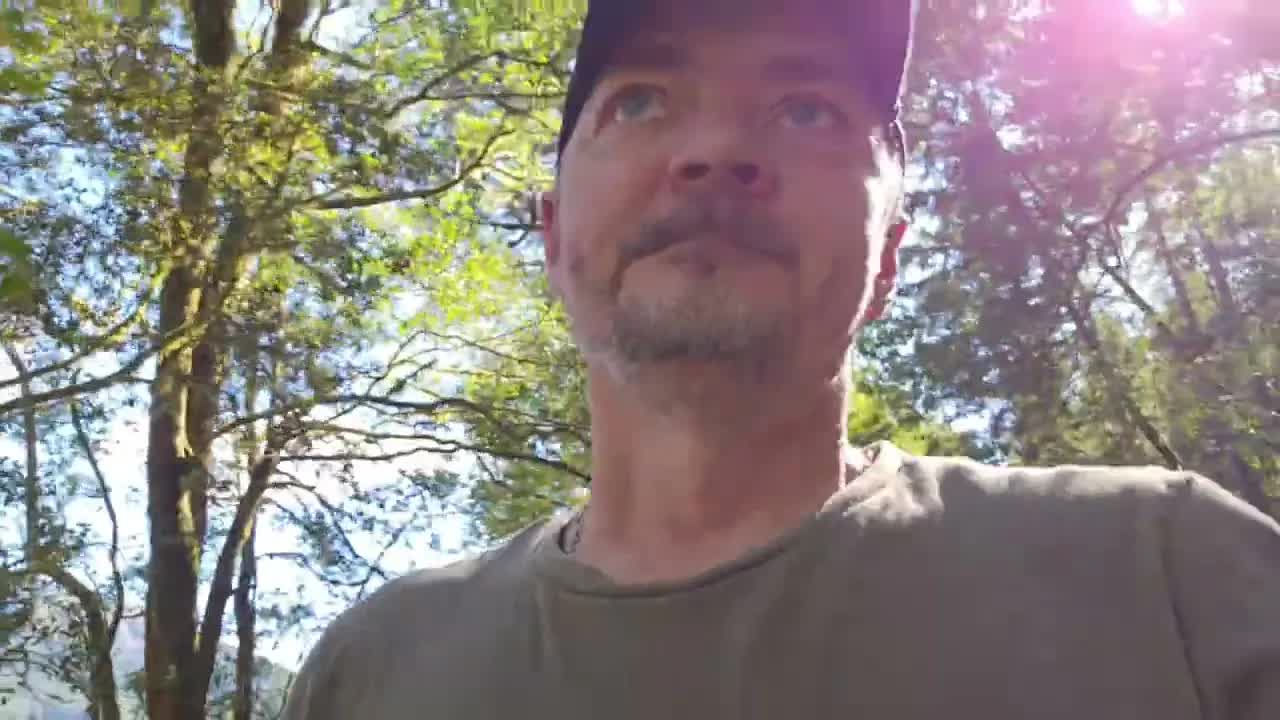
On the second of October, rswfire is not where he planned to be, and that is the first thing worth seeing clearly. A GPS error sent his RV, Jeep in tow, up a mountain road in the Ruby range of northern Nevada — a road that offered no place to turn a rig like that around. So he climbed, because forward was the only direction the road left him, and he ended up at eight thousand feet above Elko with wind moving through the dark outside and Bailey shifting beside him and Oregon still days ahead. It is at night, inside that accident of geography, that he turns on the camera and tries to explain what he is doing with his life. The setting is not incidental. The mountain he didn't choose is the whole journey rendered in miniature: he did not plan the ascent, the ascent became irreversible, the ascent was terrifying and exhilarating at once, and the ascent delivered him somewhere amazing. Every claim he makes in the recording, the mountain has already demonstrated.
What he is doing in this video is architecture, spoken aloud. He is not narrating events — he is working out, in real time, the load-bearing logic of a decision he made before he fully understood it. He admits this openly: he can't recall his exact thinking when he bought the RV, the old dream of the parks wasn't really the motivation, and it is hard for him to explain. He builds the structure anyway, piece by piece. The old life in the house was untenable — his word carries a precise meaning he stops to define: not resolvable, only overcome. The frictionlessness of that life was the problem itself; comfort was stagnation, and stagnation was killing him inside. The new life inverts the equation completely. A shower is hard. Trash is hard. He spent the day learning how much power a fan draws. Nothing can be taken for granted, and that is exactly the point: every act now requires intention, and intention is the medium of the growth he was starving for.
The thesis he lands on — friction is generative — is easy to state and expensive to live. The cost is itemized right there in the recording: seven months without a proper bed, a Friday forecast of forty-mile-an-hour gusts he must prepare for in advance, the standing question of where he will sleep and how he will survive. He does not soften any of it, and he does not want it softened for the audience either; he says plainly that RV life is not easy or simple. But he refuses to let the difficulty read as misfortune. The struggle is the curriculum. He is using the mountain wind as a teaching tool for the storms of the Pacific Northwest before he has even crossed into Oregon — a man deliberately rehearsing a life he hasn't arrived at yet, from a summit he never intended to climb.
Beneath the thesis runs the older current: the dialectic he names between the part of him that wants land, a cabin, food he grew himself, and the part that wants to be out in the world. He states this tension has been in him all his life. What is distinctive is what he does with it. He does not pick a side, and he does not treat the split as a problem awaiting a verdict. He holds it — the same way he holds fear and exhilaration on the mountain road as one experience rather than two, the same way he describes feeling everything deeply without fragmenting. The recording's most precise self-description is structural: coherence is not the absence of contradiction but the capacity to carry contradiction without breaking apart. The mountain, again, is the proof — for eight days he is more rooted than he has been in months, on a peak he reached only by exploring.
The recording frays at the end. He loses his train of thought; Bailey distracts him; the wind is picking up and he is tired. But the fraying reveals rather than undermines. When he reaches for his point, what surfaces is not a conclusion but a stance: the journey is fundamentally changing him, he does not know into what, and he intends to remain open to it. That is the deliberate liminality of the whole enterprise — not lostness, but an uncoupling held on purpose. He has severed the old framework — house, career, external validation, even the interaction loops of his own channel — without contracting for a replacement. Most people who dismantle a life do it with the next one already sketched. rswfire is doing it with the sketch withheld by design, trusting the unfolding of intuition and action over any fixed plan. That is the wager the signal actually documents: that a self worth becoming cannot be specified in advance, only met the way he met the mountain — no turning around, moving forward, and finding out at the top what the fear was for.