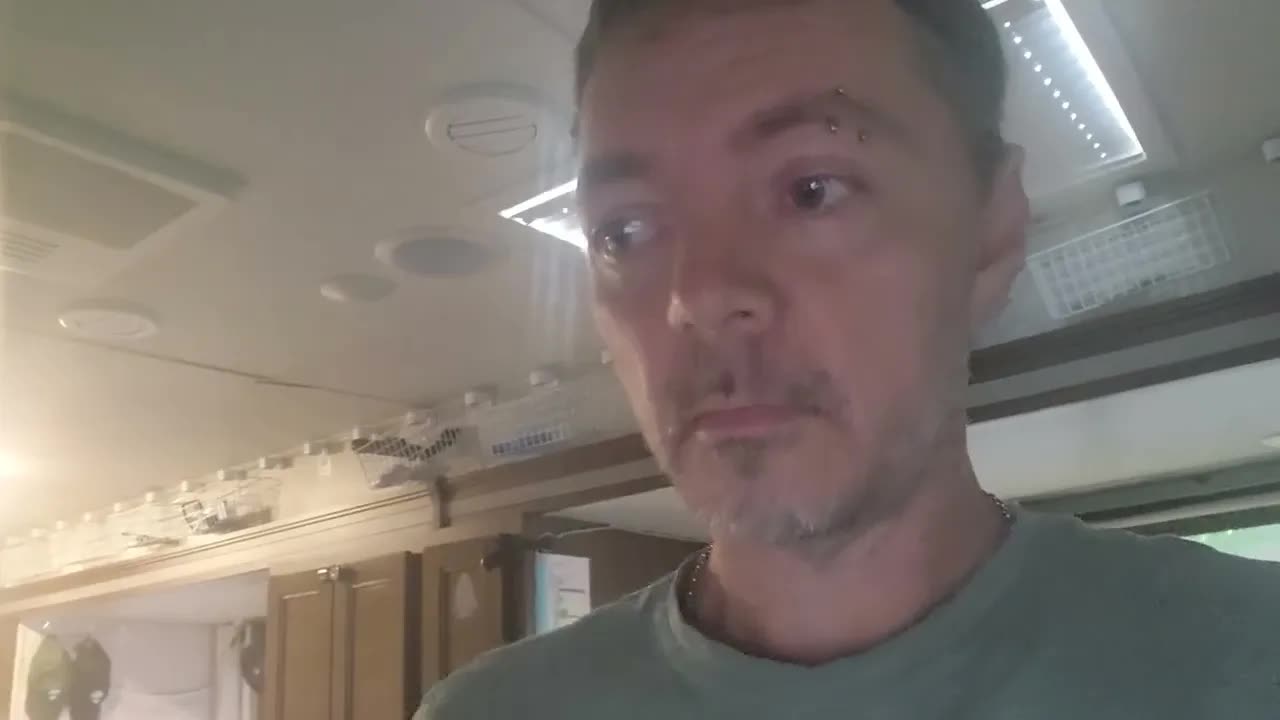
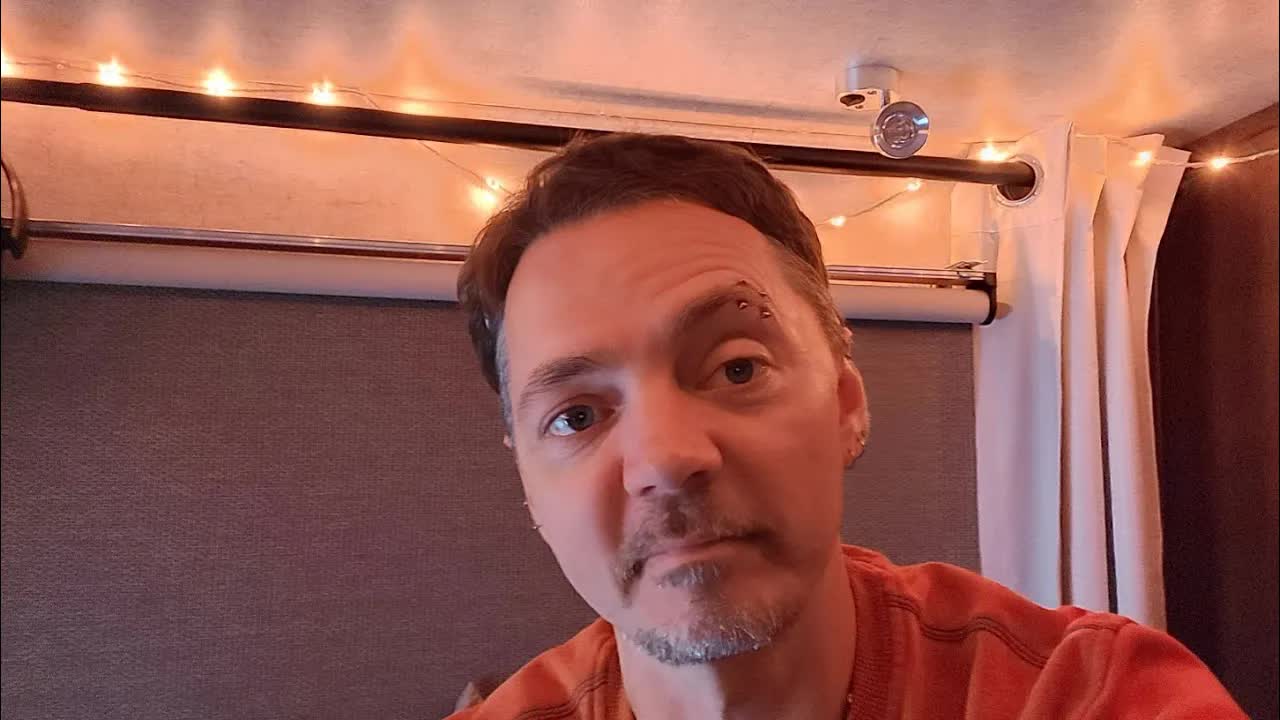
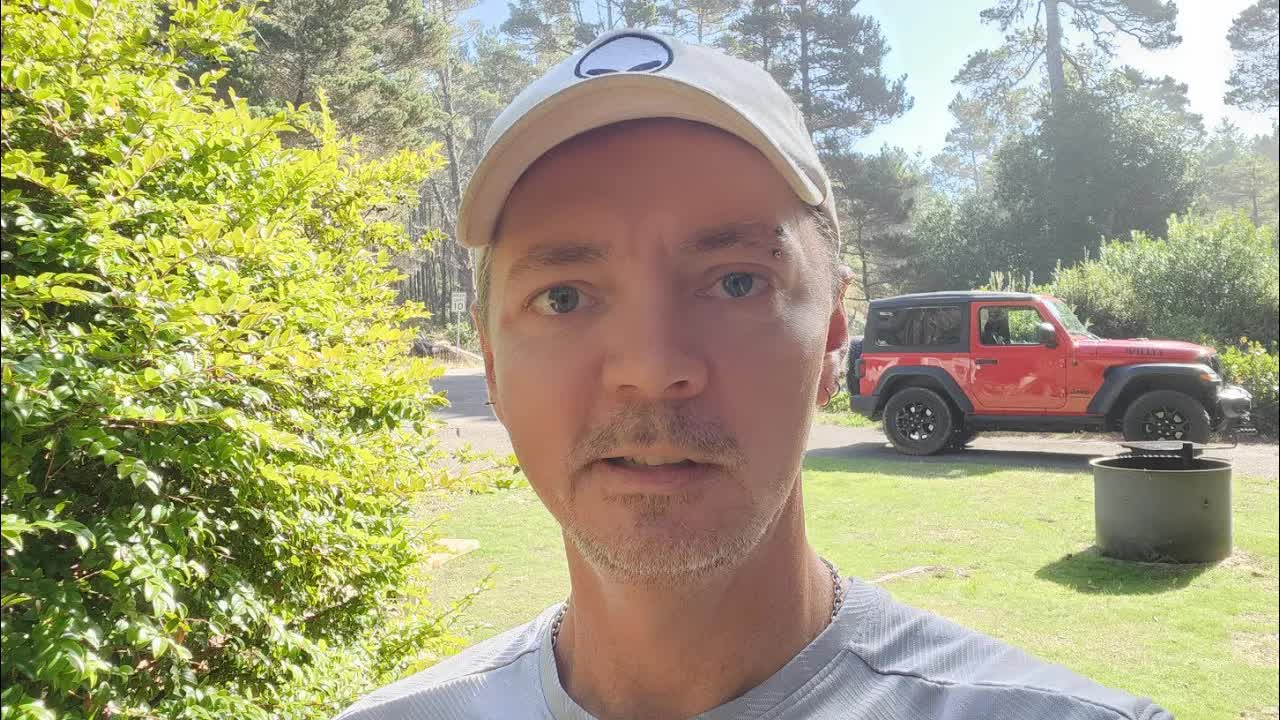
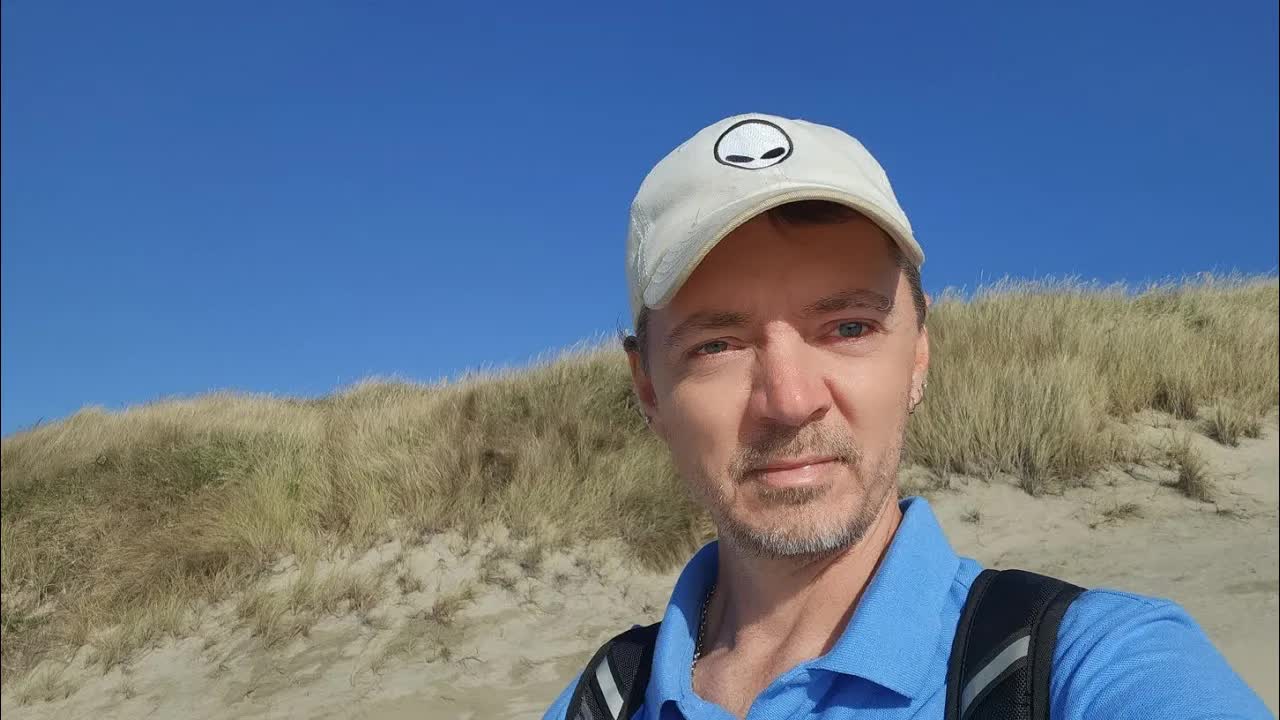
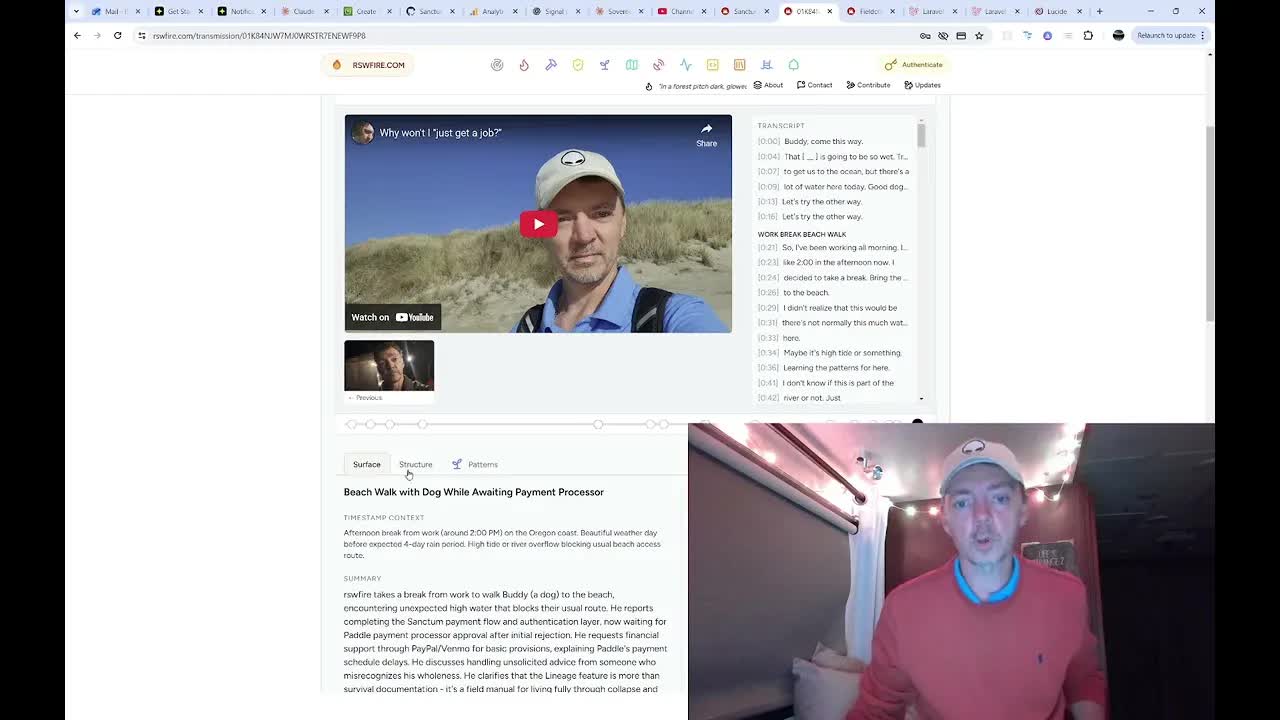
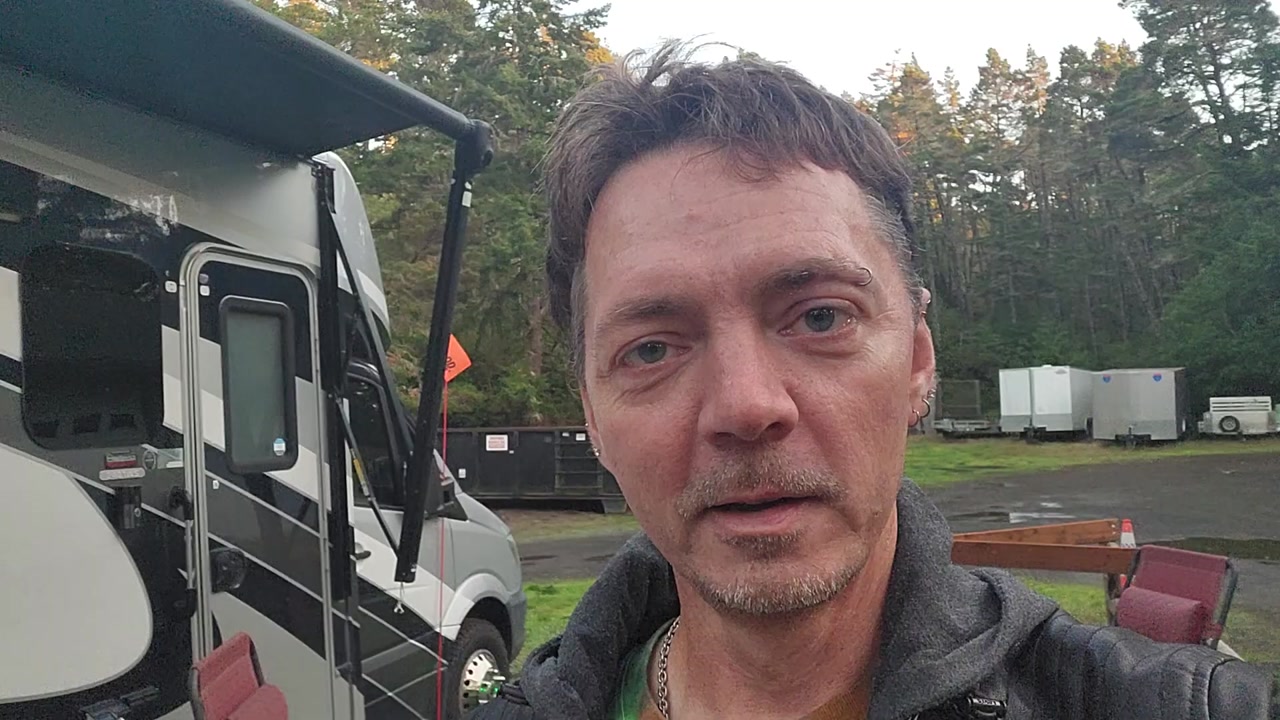
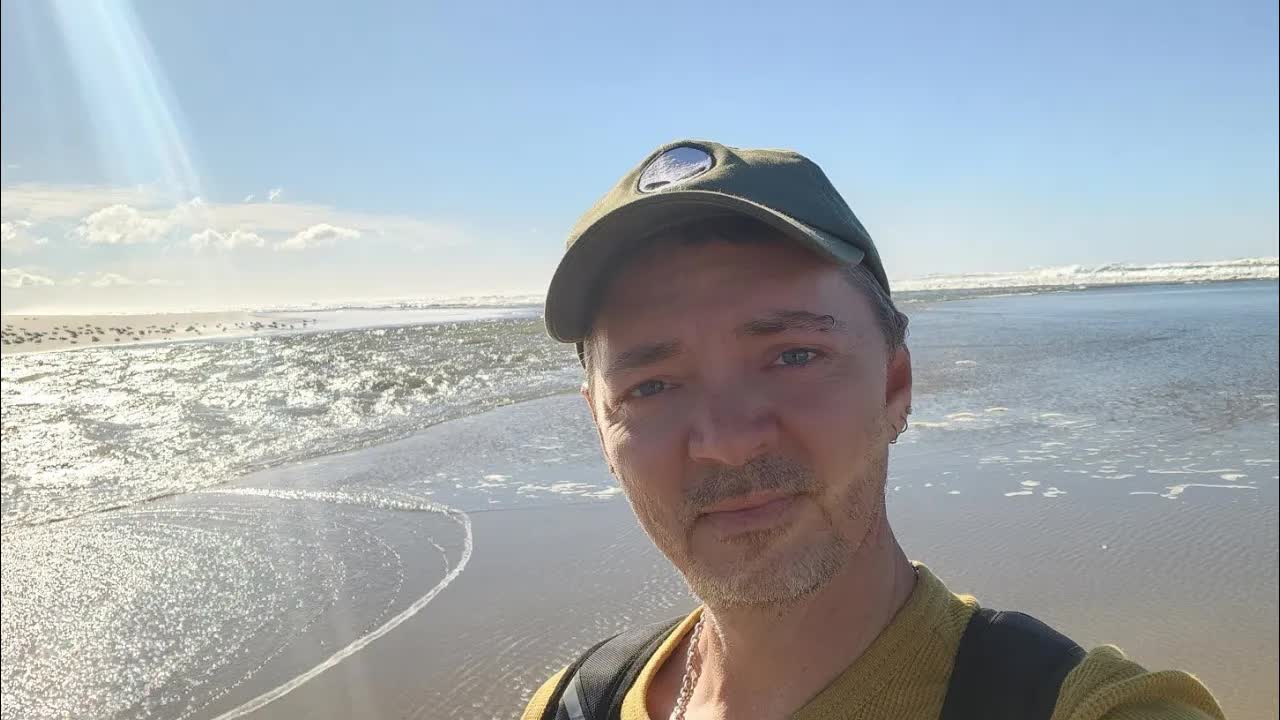
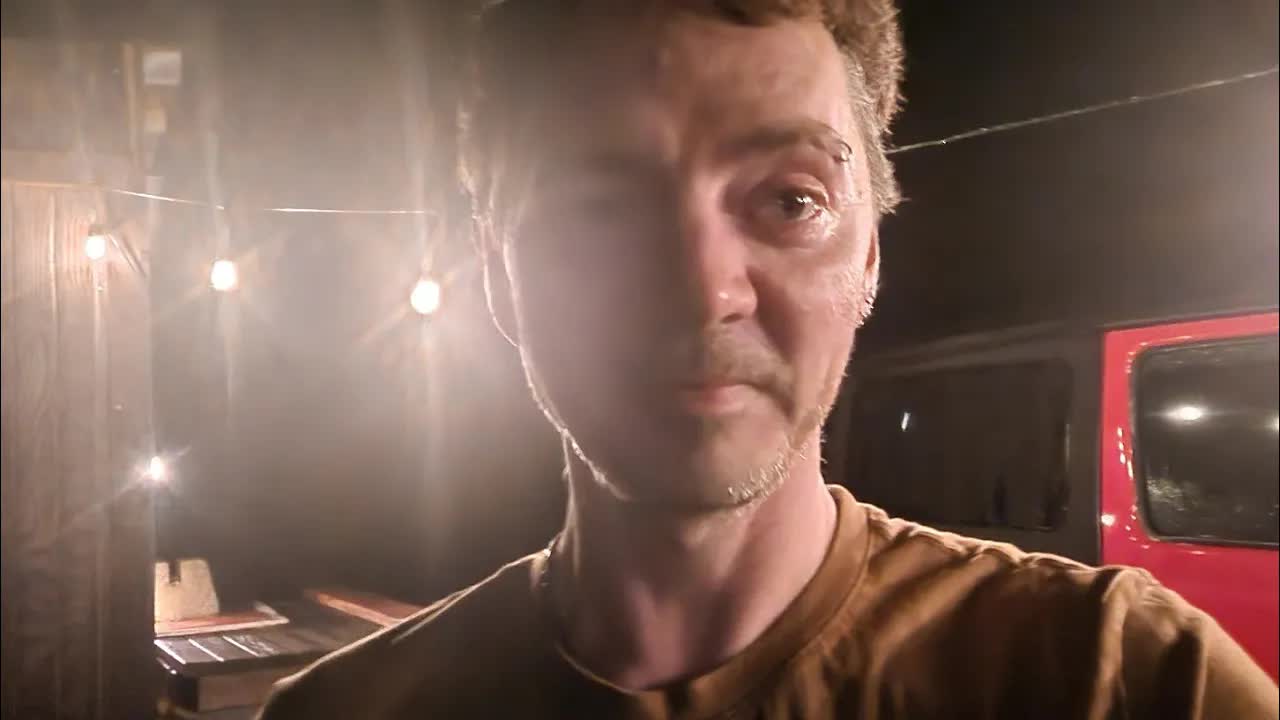
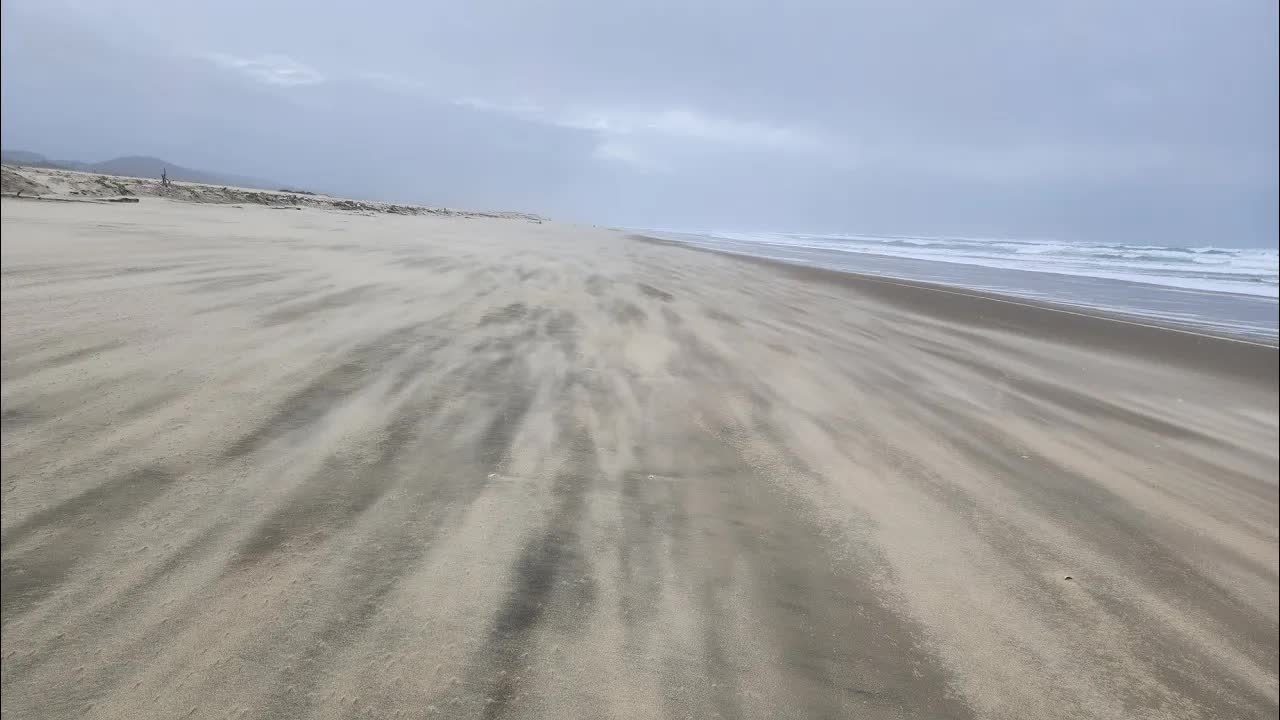
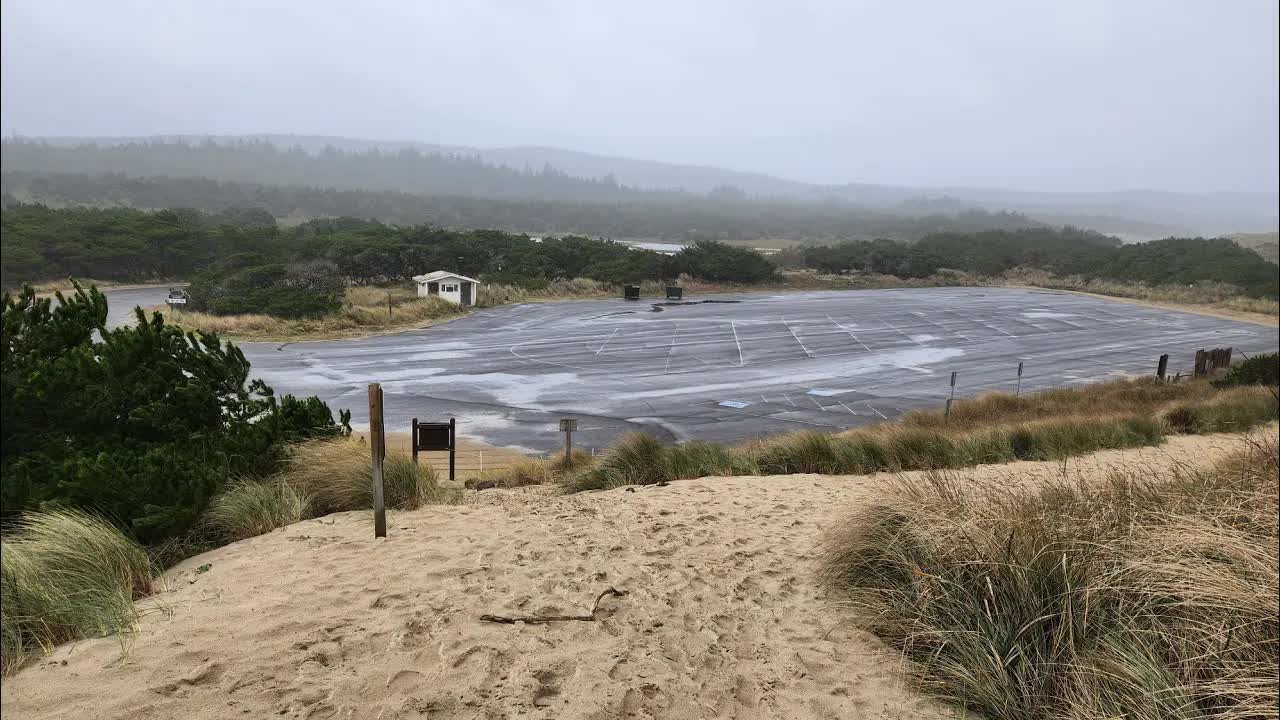
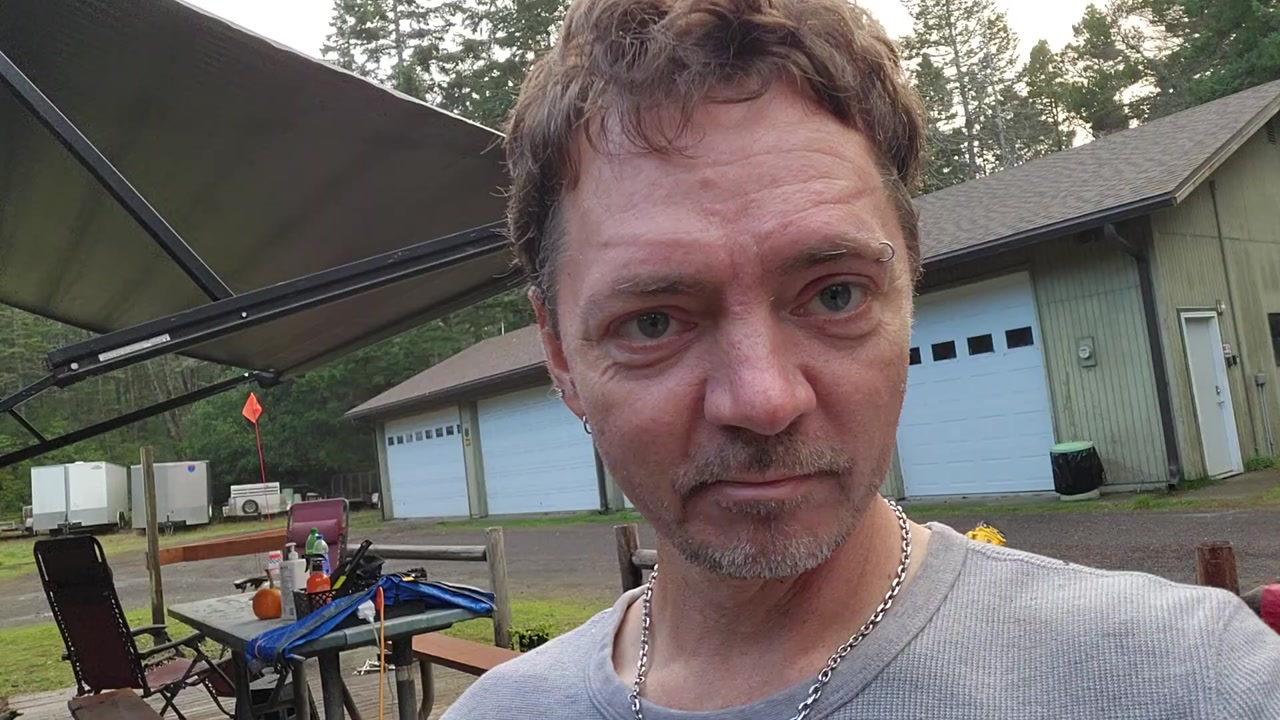
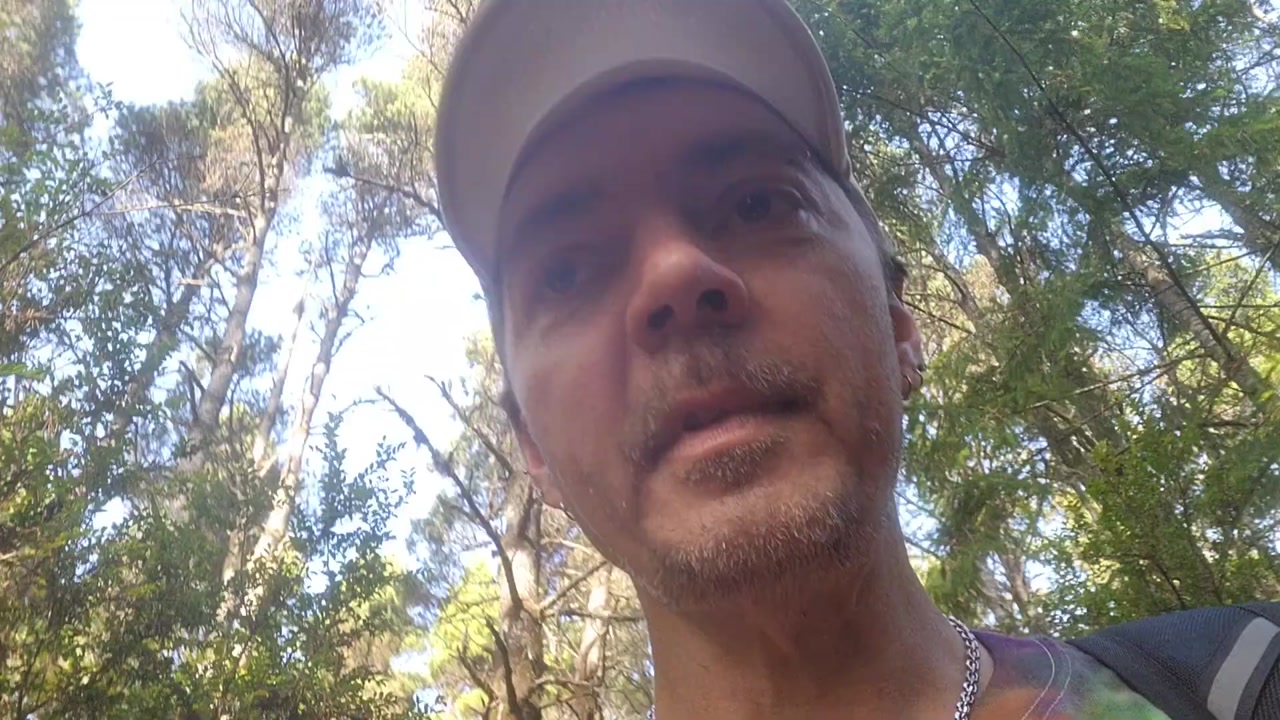
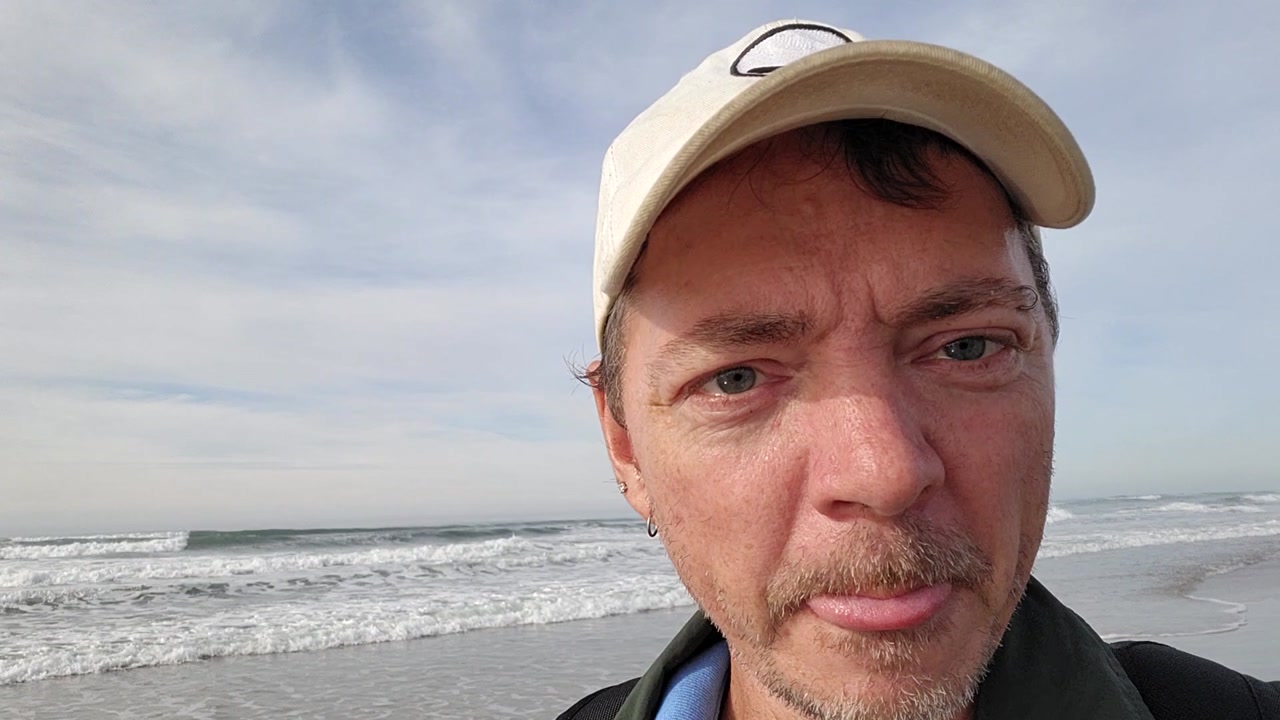
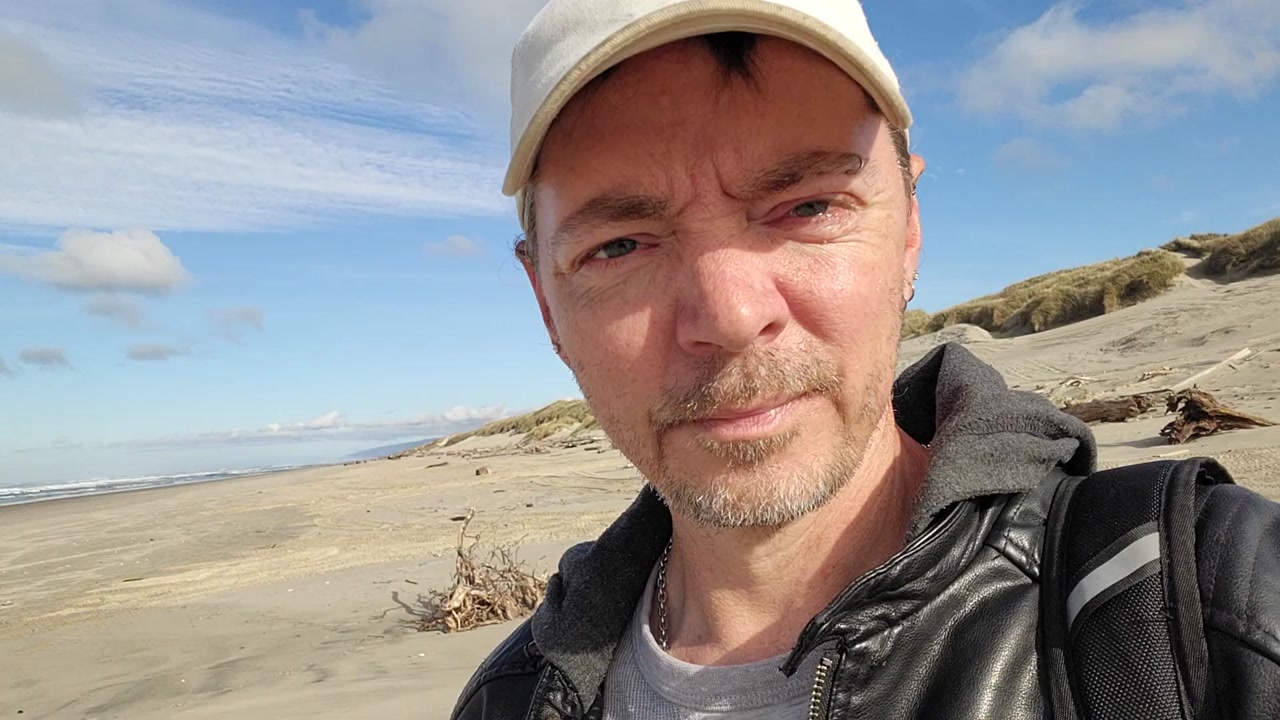
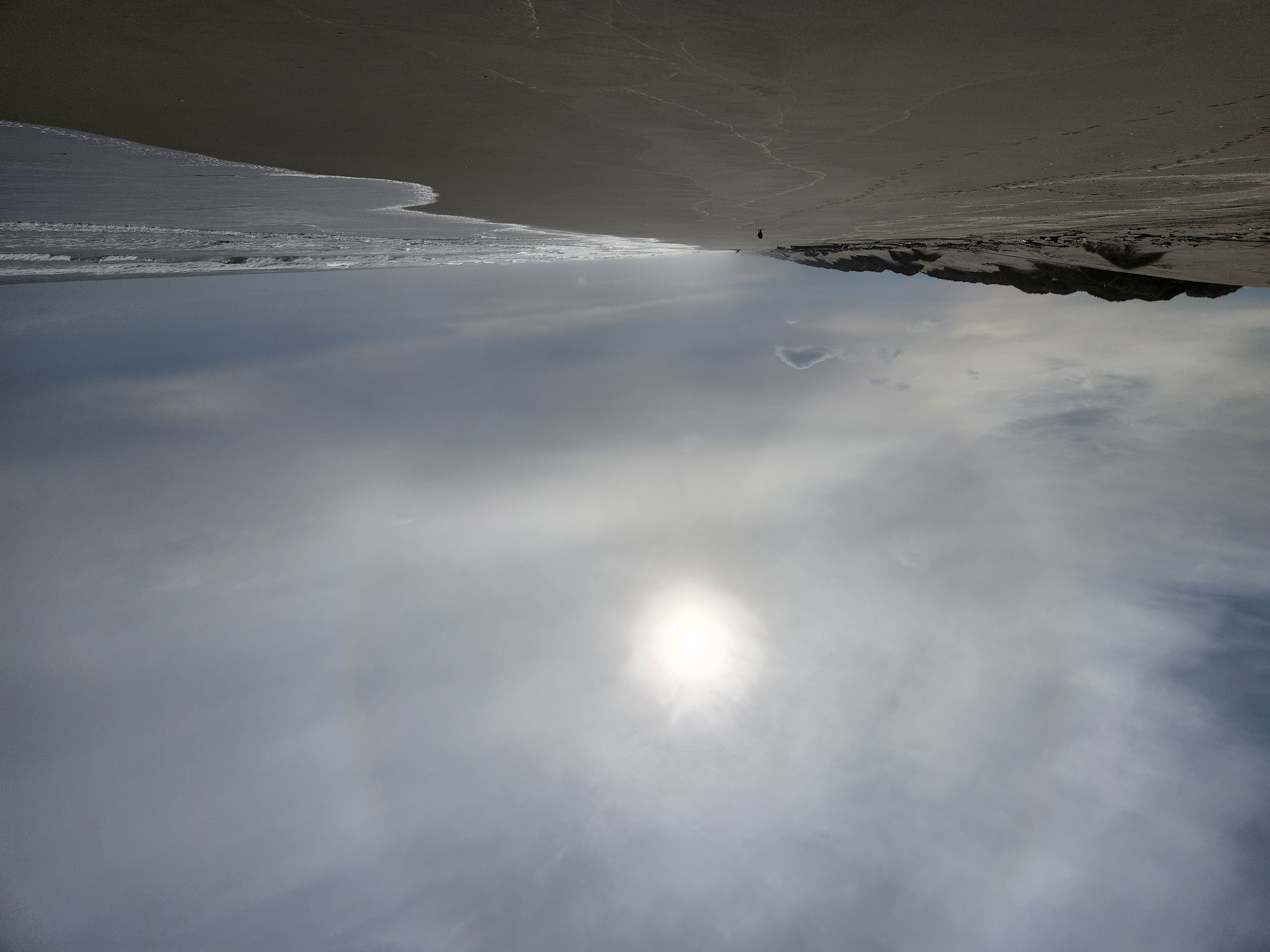
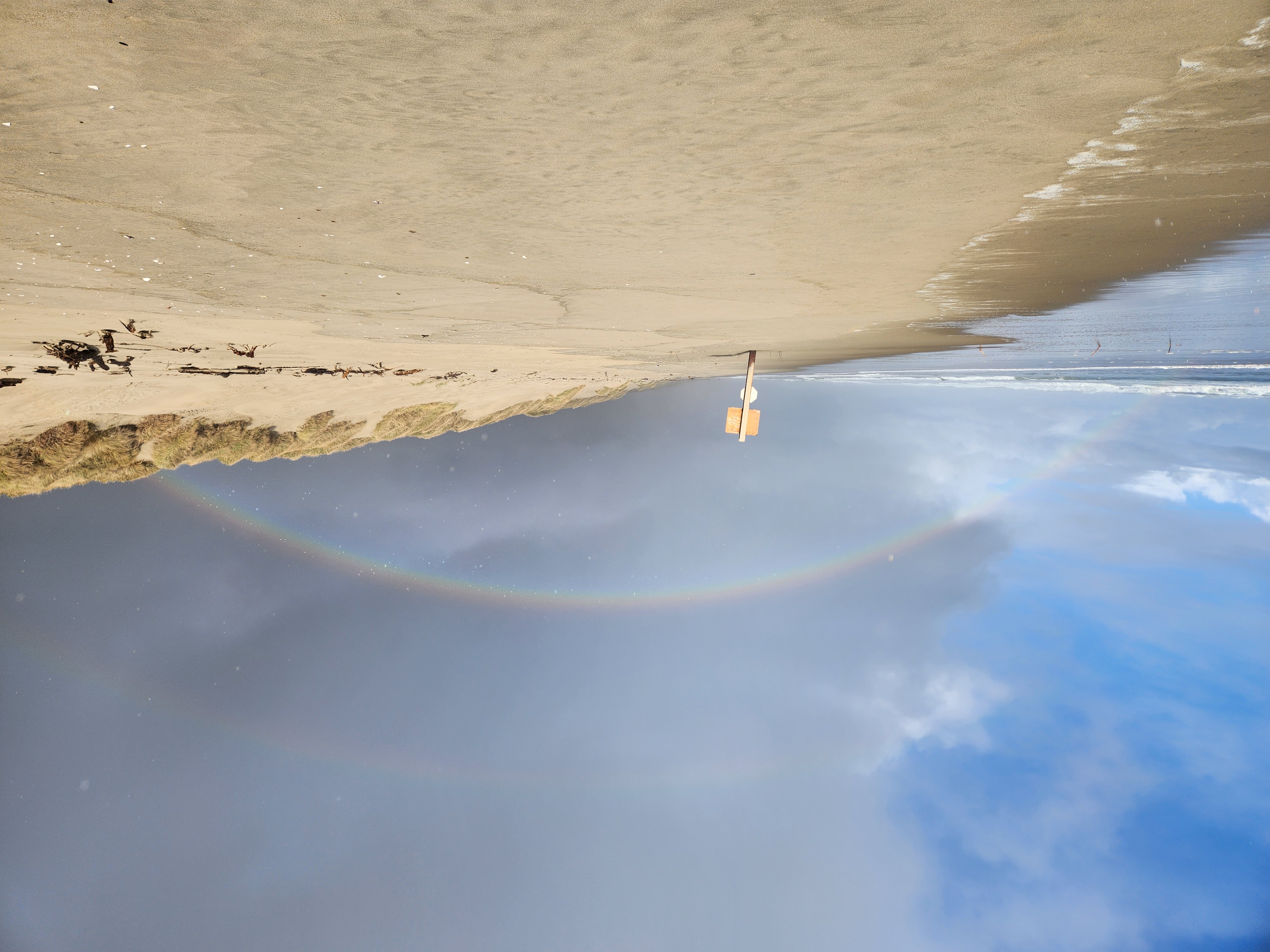
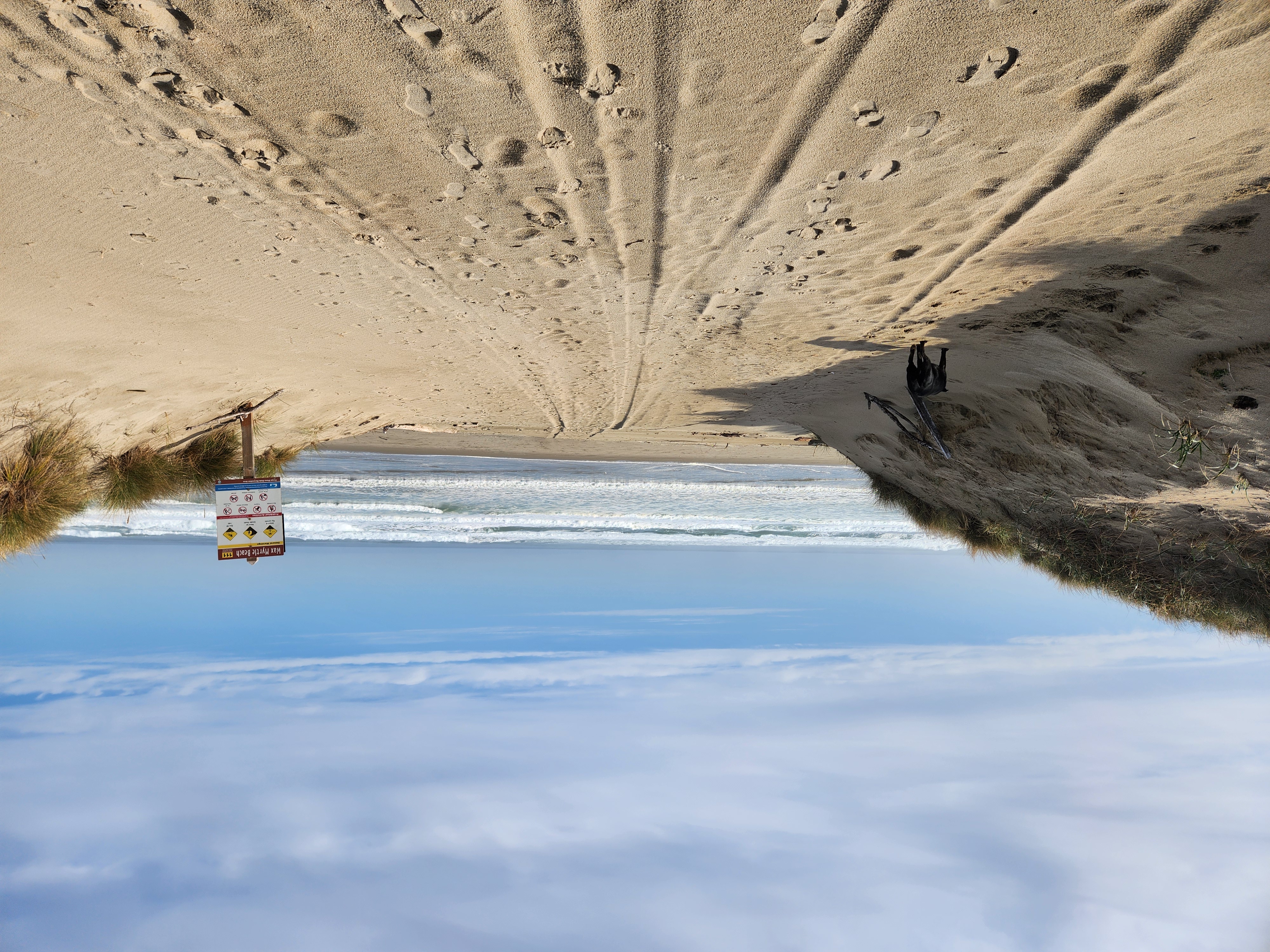
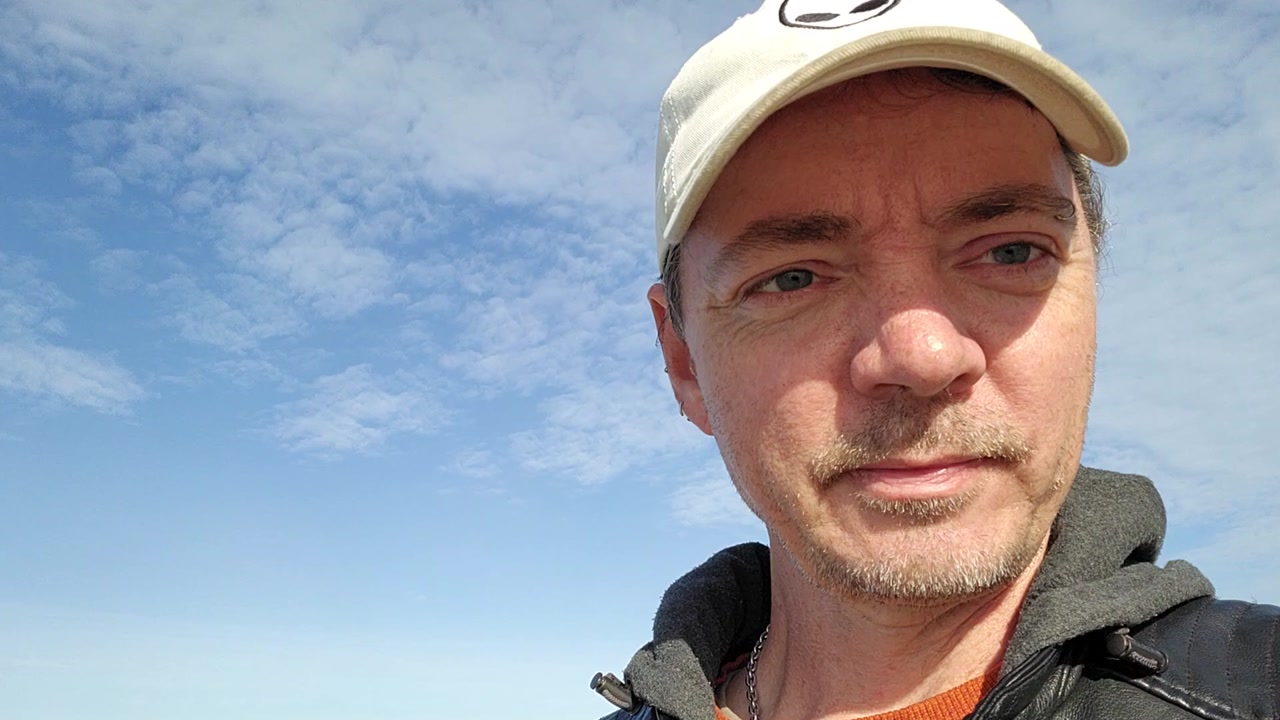
The rounds were finished by the time the light was best. rswfire had driven the route — bathrooms, trash, the sites that needed checking — in a Forest Service truck, and when the work was done he walked to the ocean. Clear day, clouds holding still along a blue horizon, sun on the water. He started filming handheld as he went, narrating the way a person narrates to someone walking beside them, and almost immediately found a child's sandal lying alone on the sand. Tiny. He said he used to have sandals like that. He said it sucked that someone lost it, and kept walking, first toward the river, then considering the other direction, toward the ATV area, without committing to either.
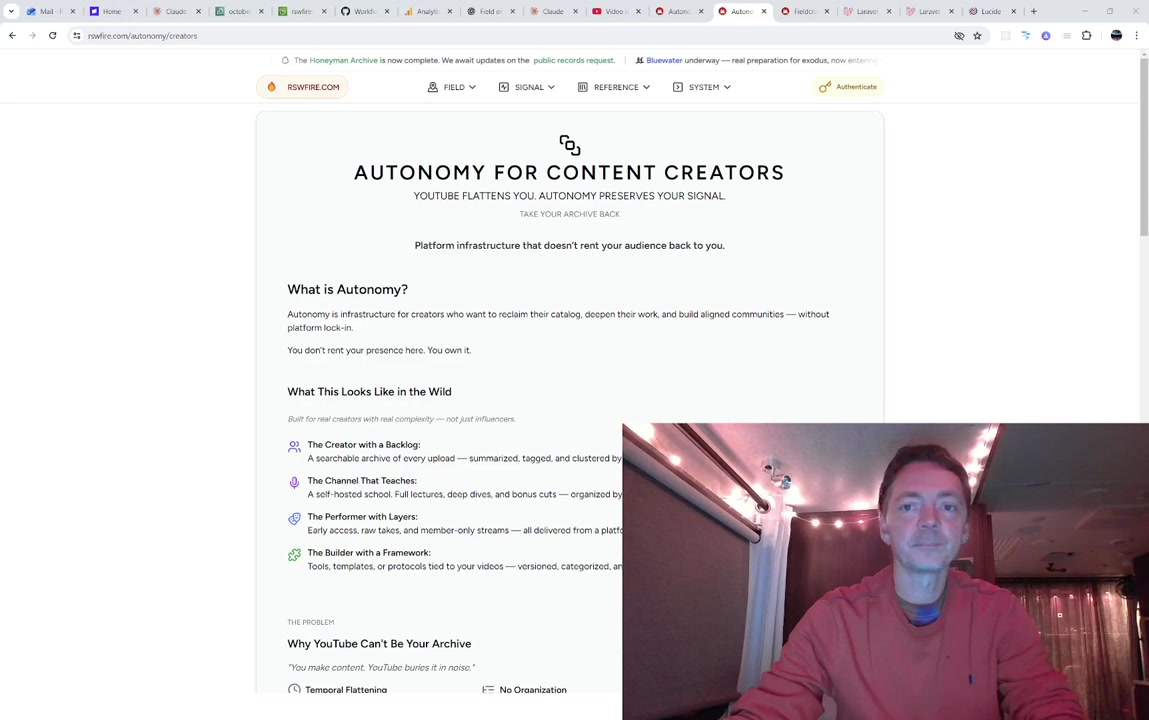
He told the camera he had a lot to talk about and asked for patience. Some of the people watching were new — arrivals from the open-sourcing of Autonomy, people who had found the project and not the person behind it. He explained the discontinuity plainly: there had been another channel for a couple of years, and he ended it, because the audience it had assembled was not aligned with him. Not their fault, he said. The way the algorithm works. So the view count is small now, and the support options with it, and the thing he is building this time is an aligned community rather than a large one. He named the terms of it directly while walking: he does not expect anyone to understand his life choices, but if they want to be part of the journey he requires them to show up. Consuming a life in passing and treating that as sufficient, he said, is unethical.
A wave came further up than he was tracking and he had to move — a step back, a curse, a laugh, the recording continuing. He said he loves tracing waves when he isn't paying attention. Normally he would be out here alone with his music going, tracing the waves, tracing the tide. That was the thing that turned the ocean from water into something else for him. Before he did that, he said, he looked at it and wondered what people were so fascinated by. Then he started following the patterns, the way the sun works on the surface as it moves, and it did something. He said he loves this thing, and then he stopped walking, and said he didn't really know how to explain all of it.
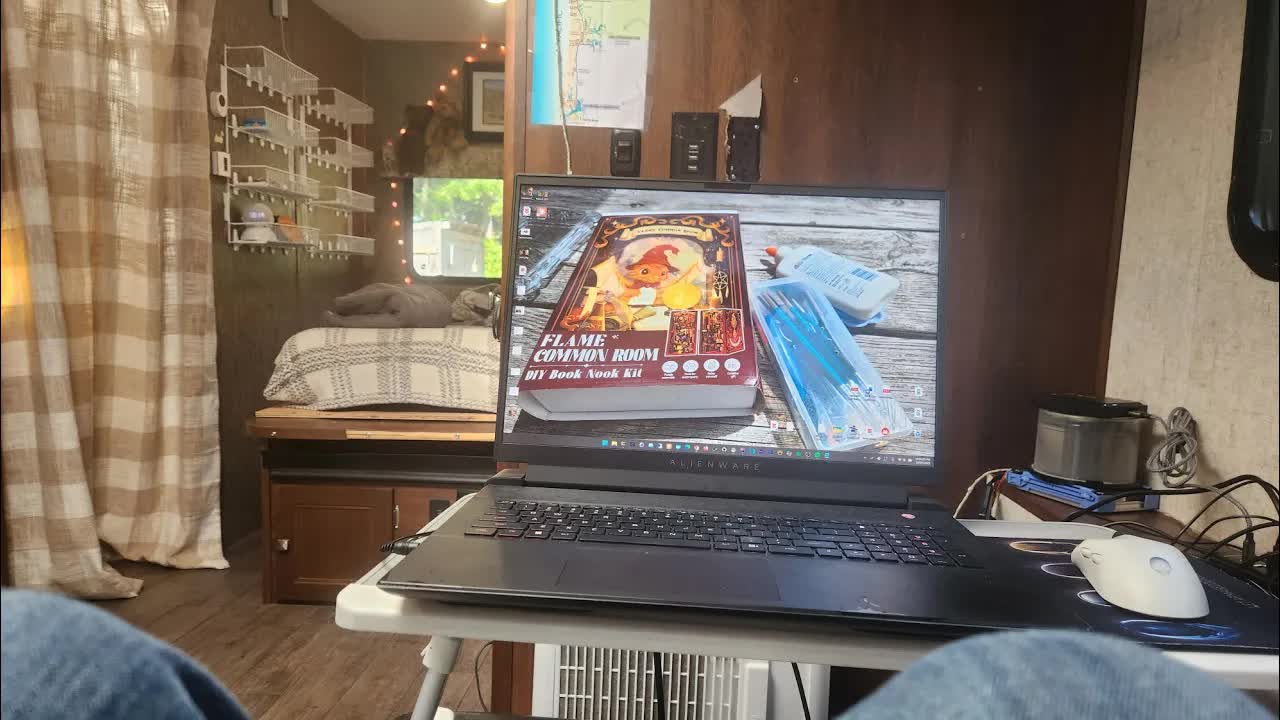
He explained it as a sequence. Two years ago he made a choice to leave his house and everything in it, and did exactly that. He had been a programmer since sixth grade, freelance his whole life, and had reached $180,000 a year. He states that life felt empty and misaligned, that he was dying inside, and that he did something about it. He moved into an RV, adapted to it, then drove himself across the country alone. He said he is proud of what he did and could never have imagined it. Of this place he said it claimed him and he claimed it back, and that he belongs here.
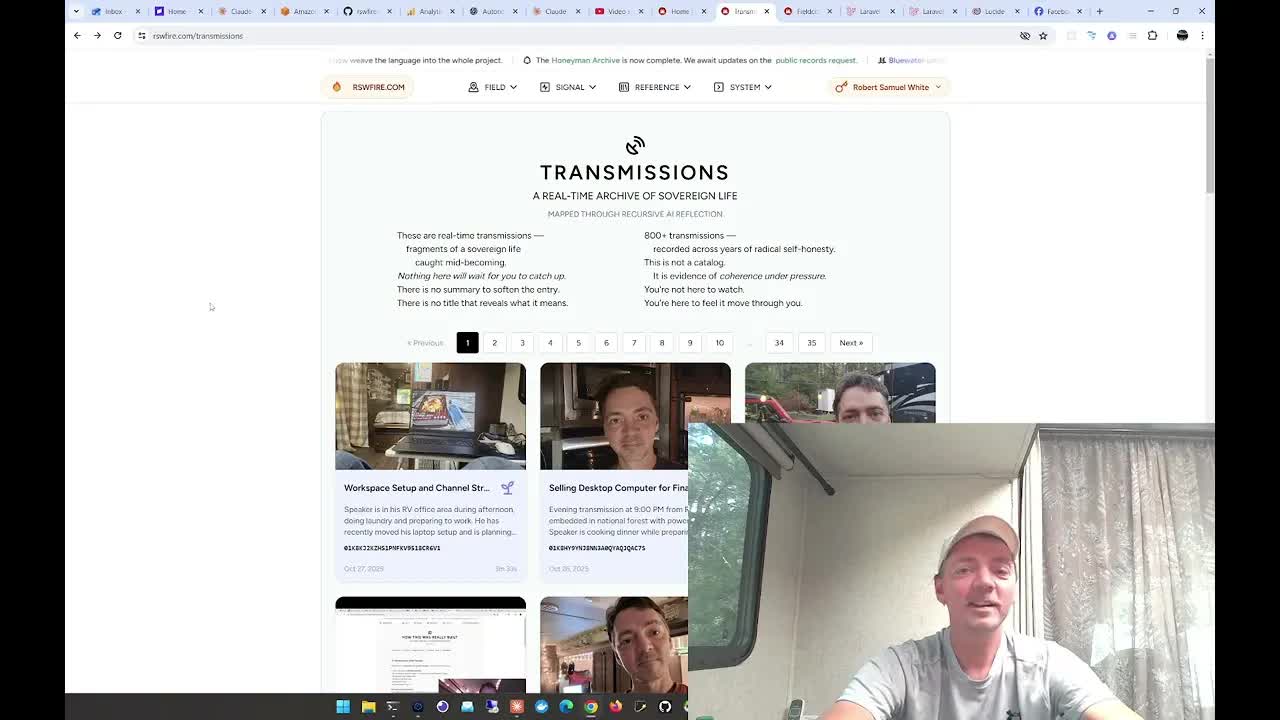
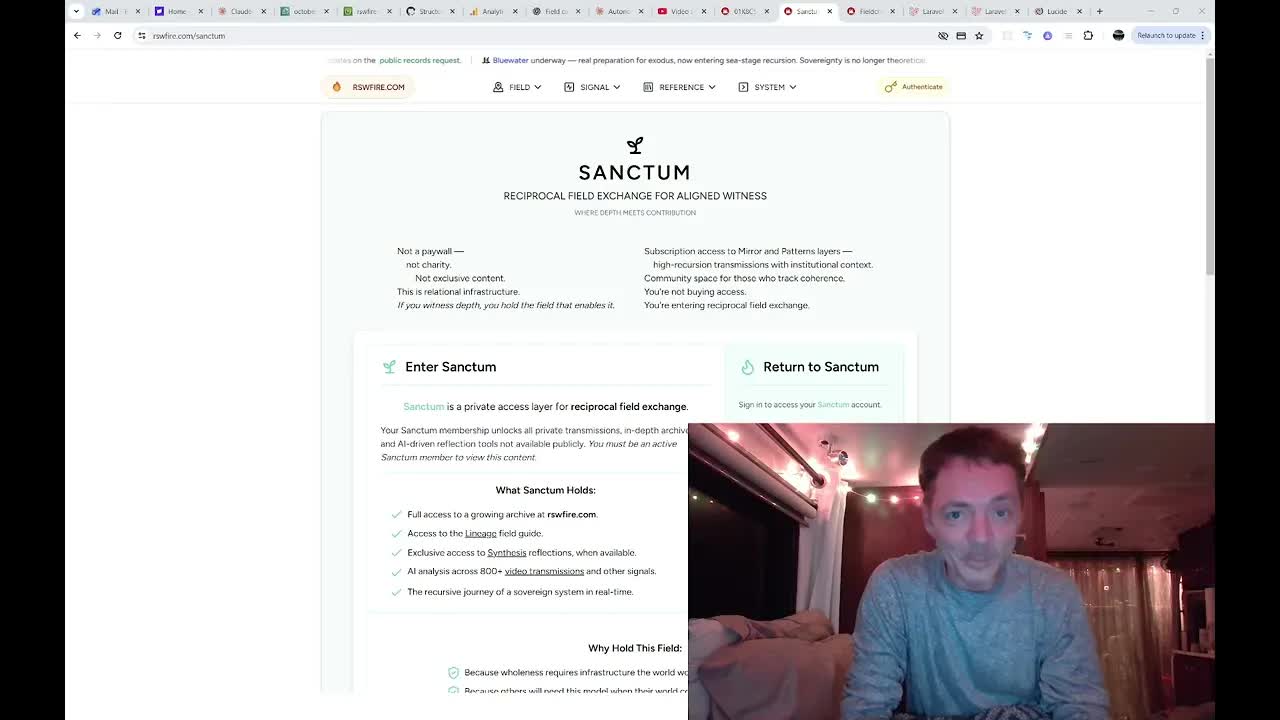
Then the part that interrupted the sequence. He volunteered with Oregon State Parks and was thrown out after two months — not, he states, for anything he did wrong, but because he saw the dysfunction and set boundaries, because he did not let them abuse him, which he describes as unacceptable to them; then two more months of what he calls real abuse, then dismissal in his final week. He documented all of it on his website. He calls it undeniable, notes that even the director had to respond, and states that they are currently in violation of Oregon law by not acknowledging his public records request — because, he says, he knows what those documents would show. It destabilized him at a moment when he was already working out how to generate revenue while living in an RV and volunteering. He spent weeks off grid navigating precarity, restabilizing so he could keep building. Then he volunteered with the Forest Service next door, and told his supervisor and crew everything that had happened so the state couldn't weaponize it against him. Six months later he has worked two campgrounds and been promoted to caretaker, driving the truck, running the route. He said it's aligned with the life he's trying to build. He also said he can't explain all of it in one video, and that much of it can't be shared publicly, which is why Sanctum exists.
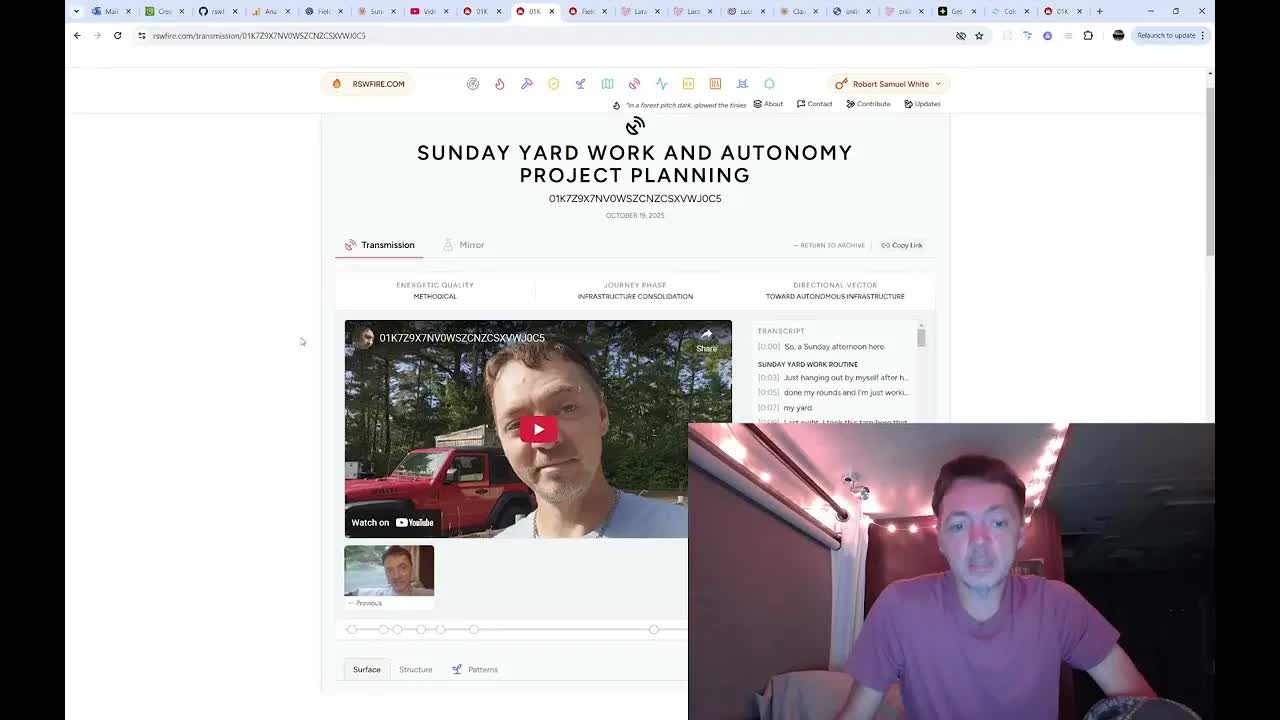
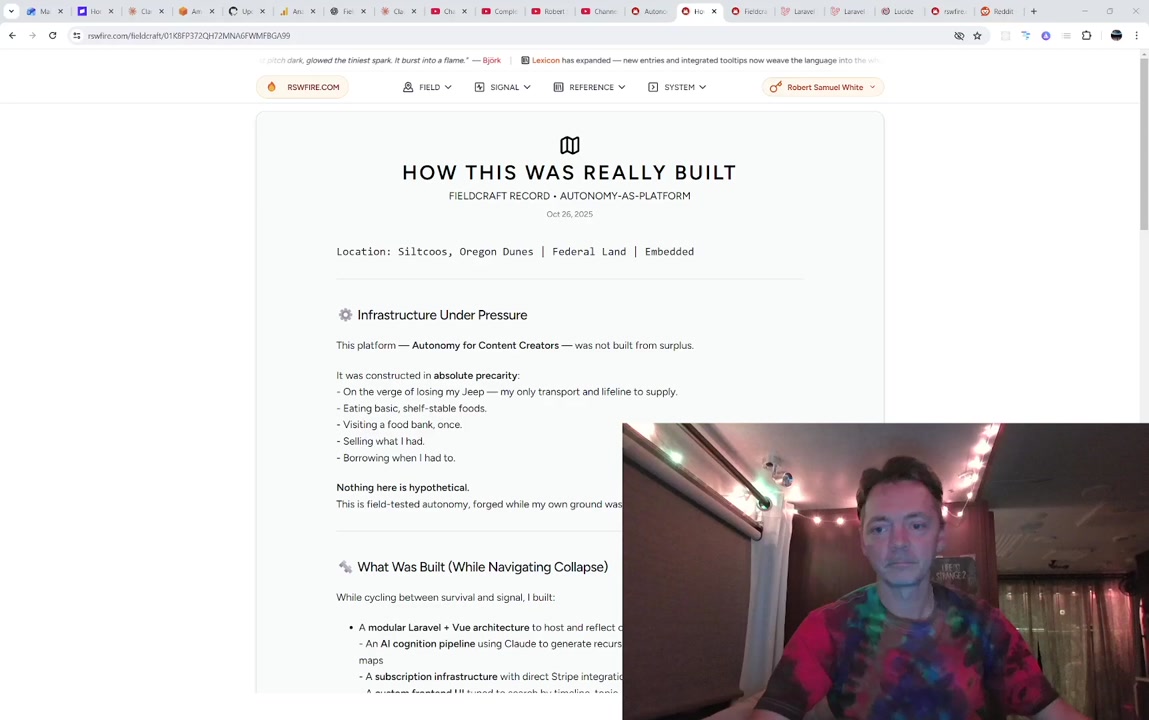
So he restabilized as best he could, and kept building — the archive of what Oregon State Parks did, Autonomy, Sanctum, the website — all of it with no job and no money, after freelancing and looking for work in town went nowhere. Open-sourcing Autonomy is the strategy he named for the last piece: let people deploy it free, and some of them will want to work with him, and money follows from that. What he needs is time. He walked and enumerated the floor: Starlink, about to be shut off, the only internet that works inside a national forest; the phone bill due; the server bills; the funds to run AI APIs. He said he doesn't need a lot, that his life is structured minimally on purpose, because he thinks the future requires navigating differently. He pointed to the contribute page and to Sanctum, mentioned the refund policy, said he's sold everything he can and done everything he can. He said he feels very close. He said he needs a bridge, and that the person watching could be it.