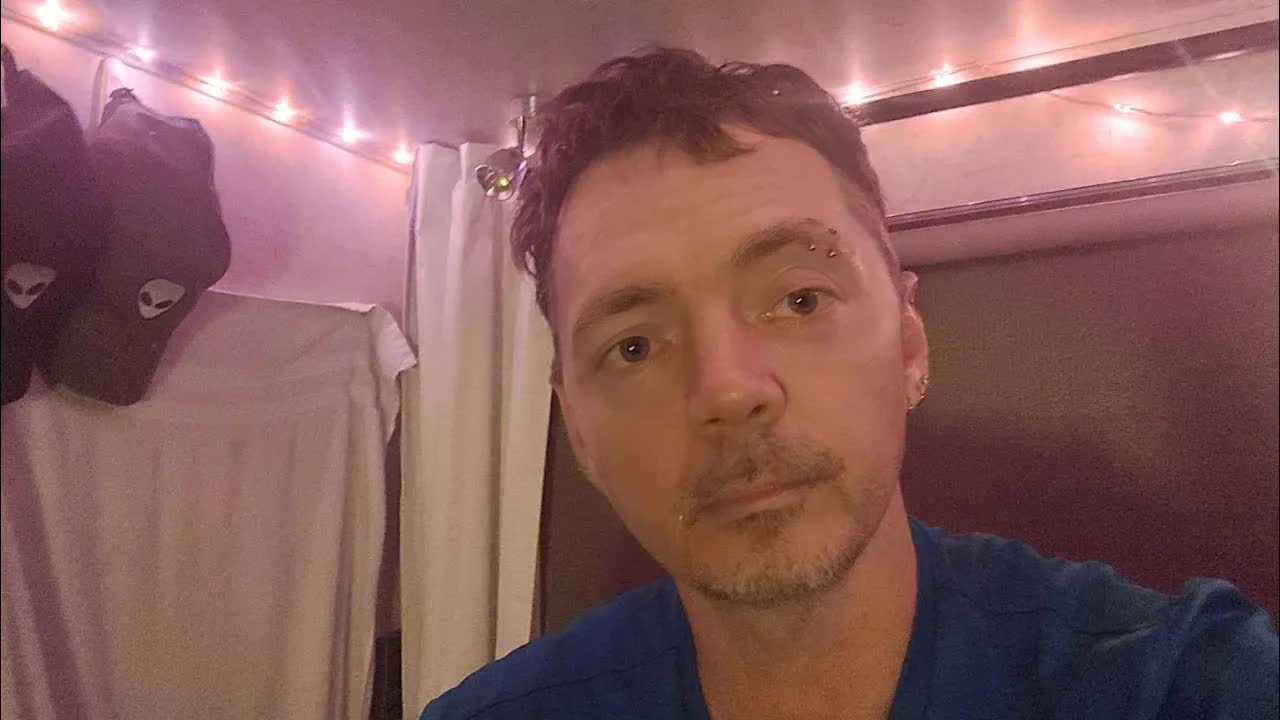
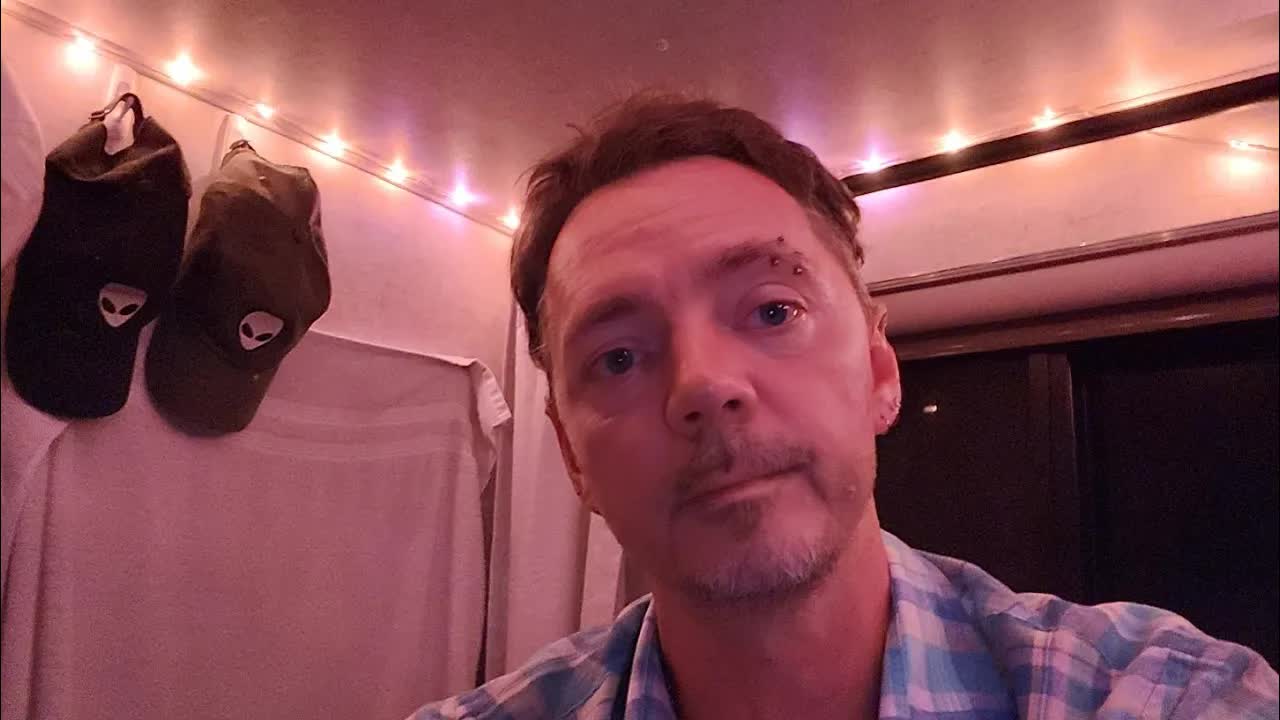
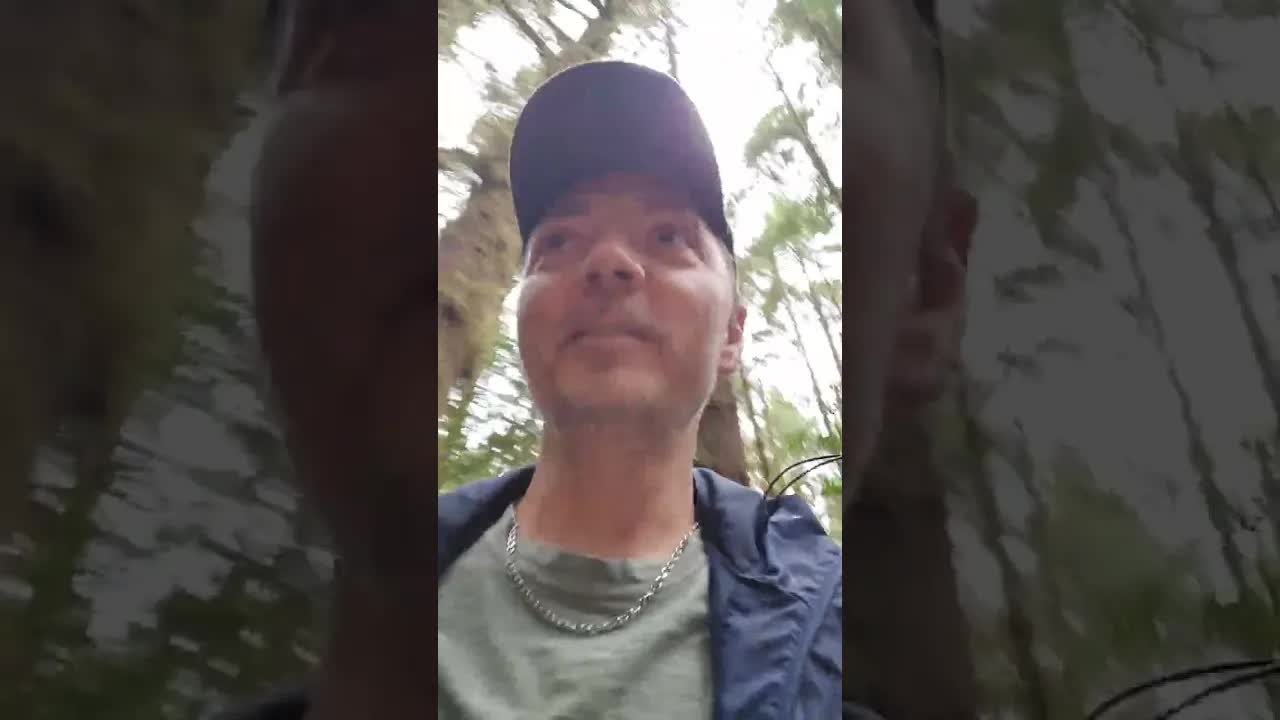
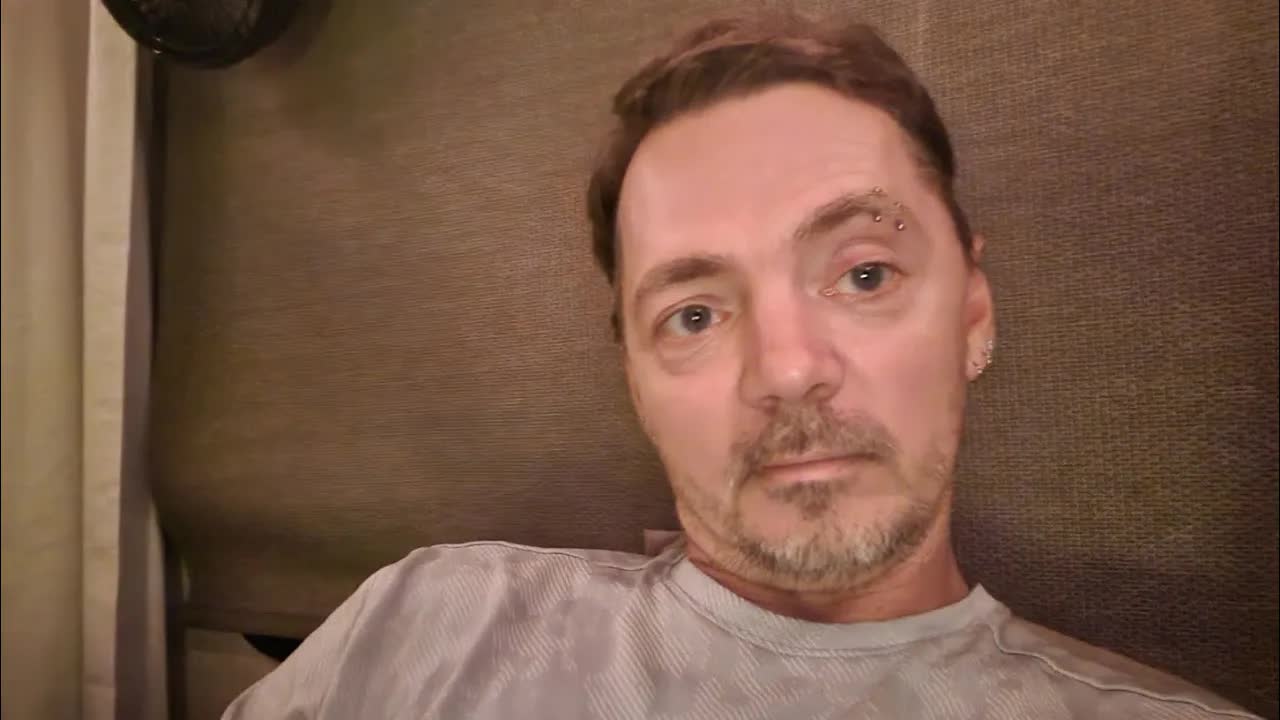
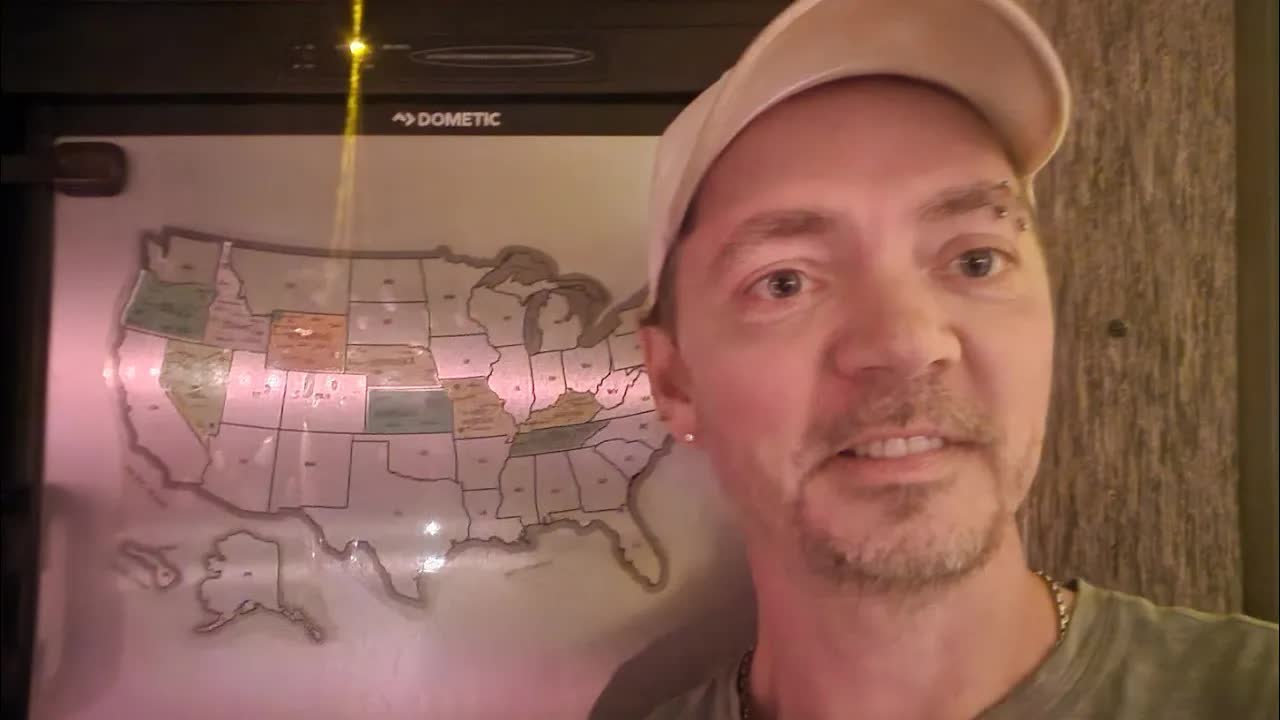
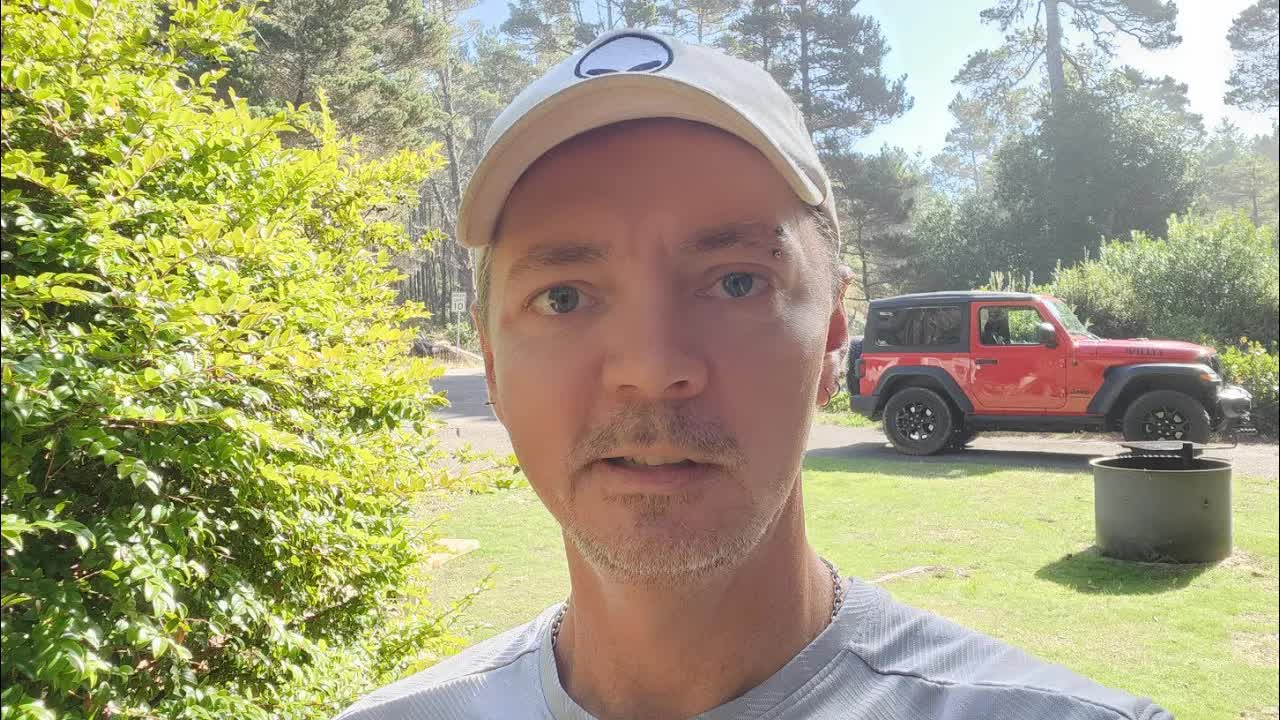
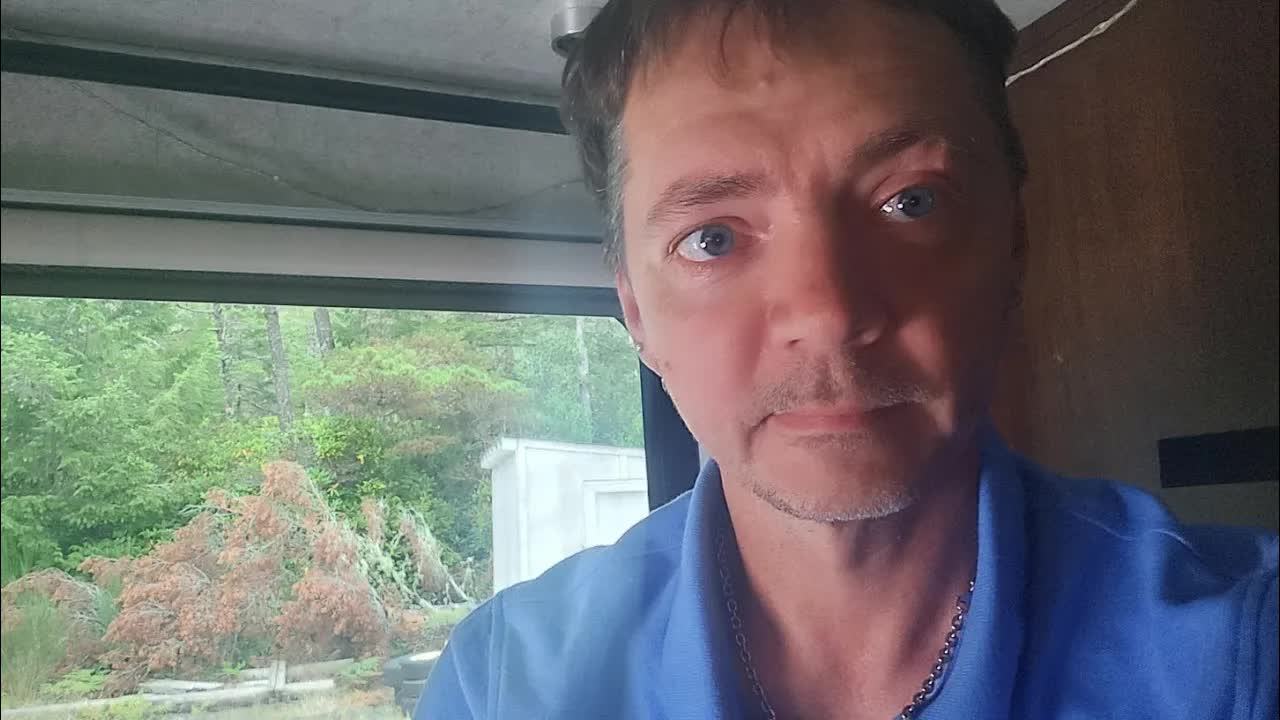
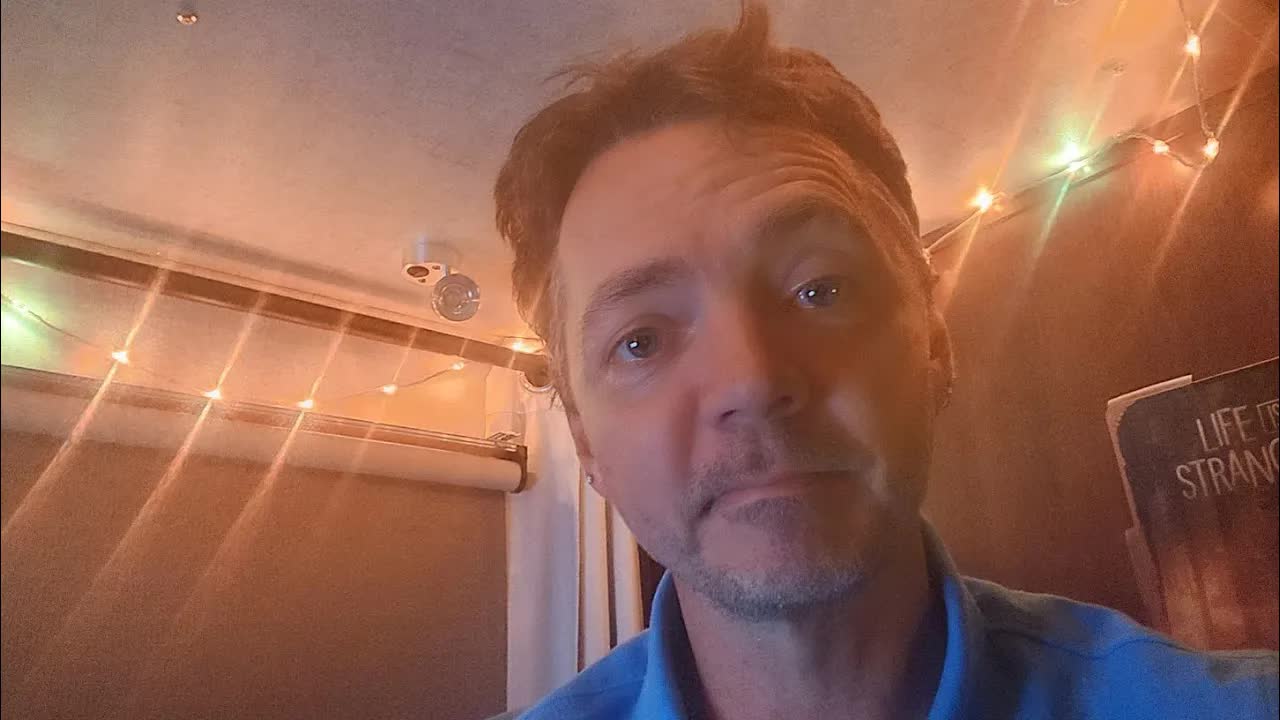
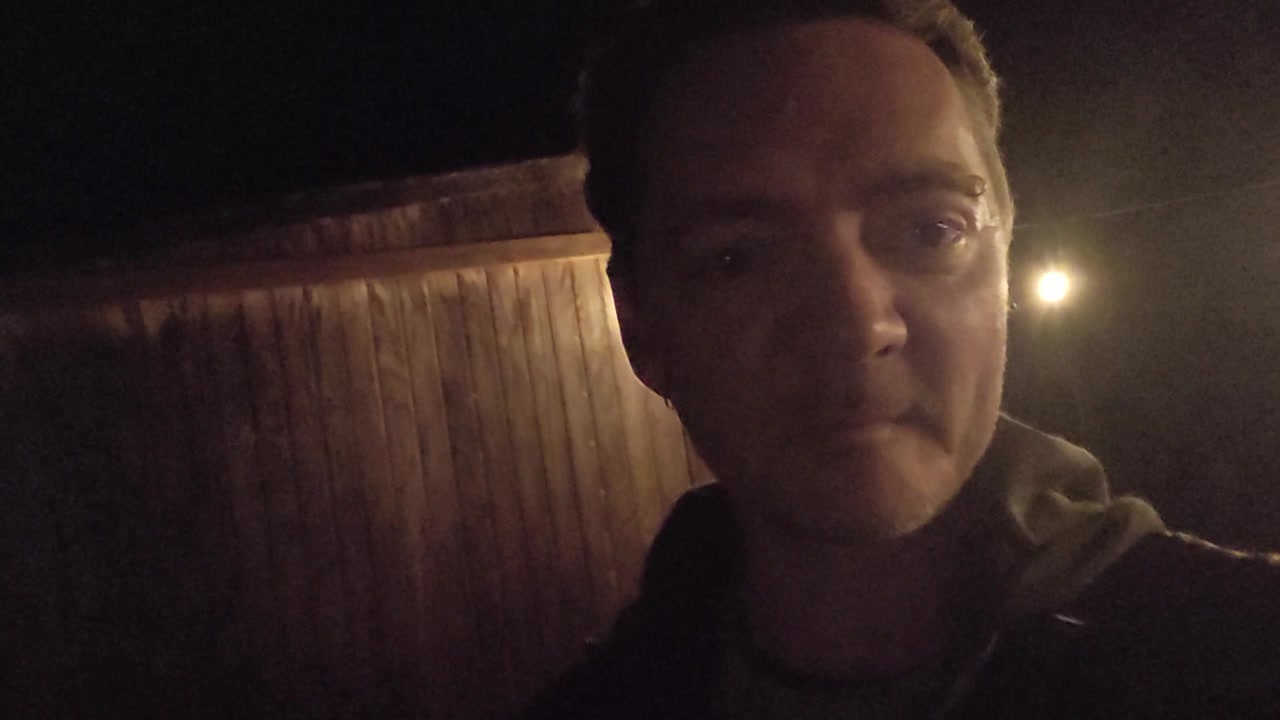
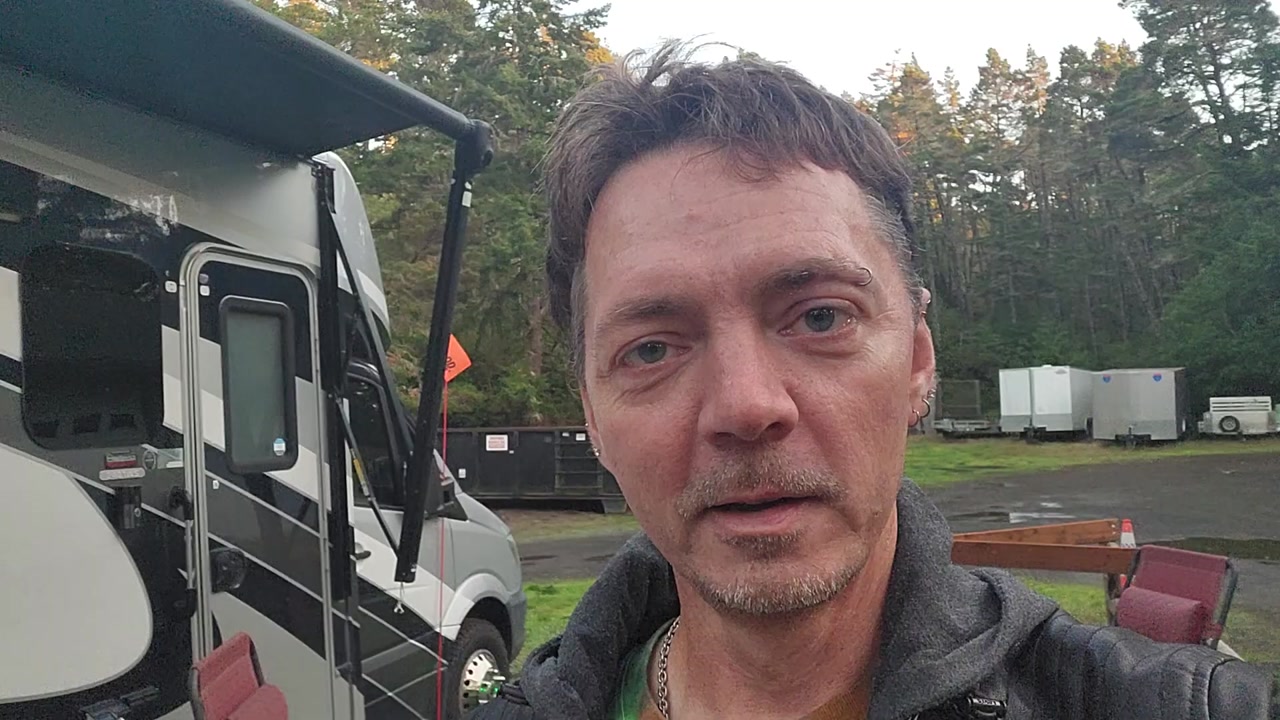

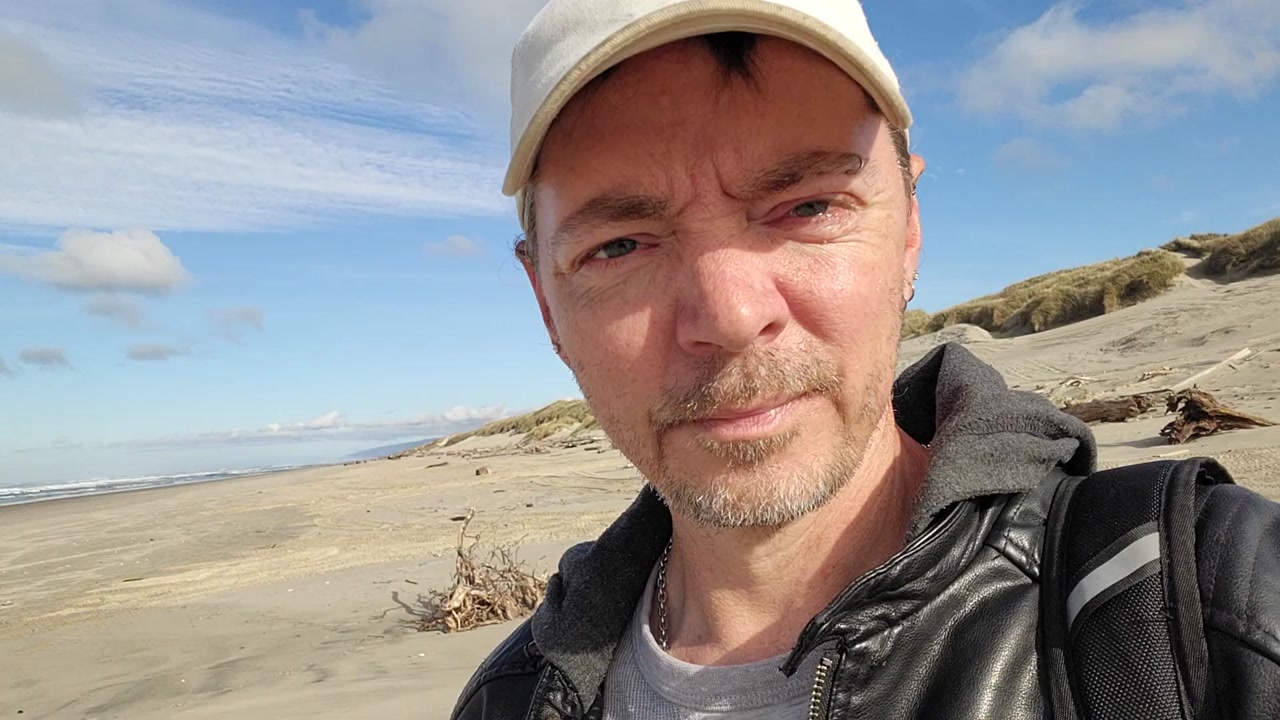
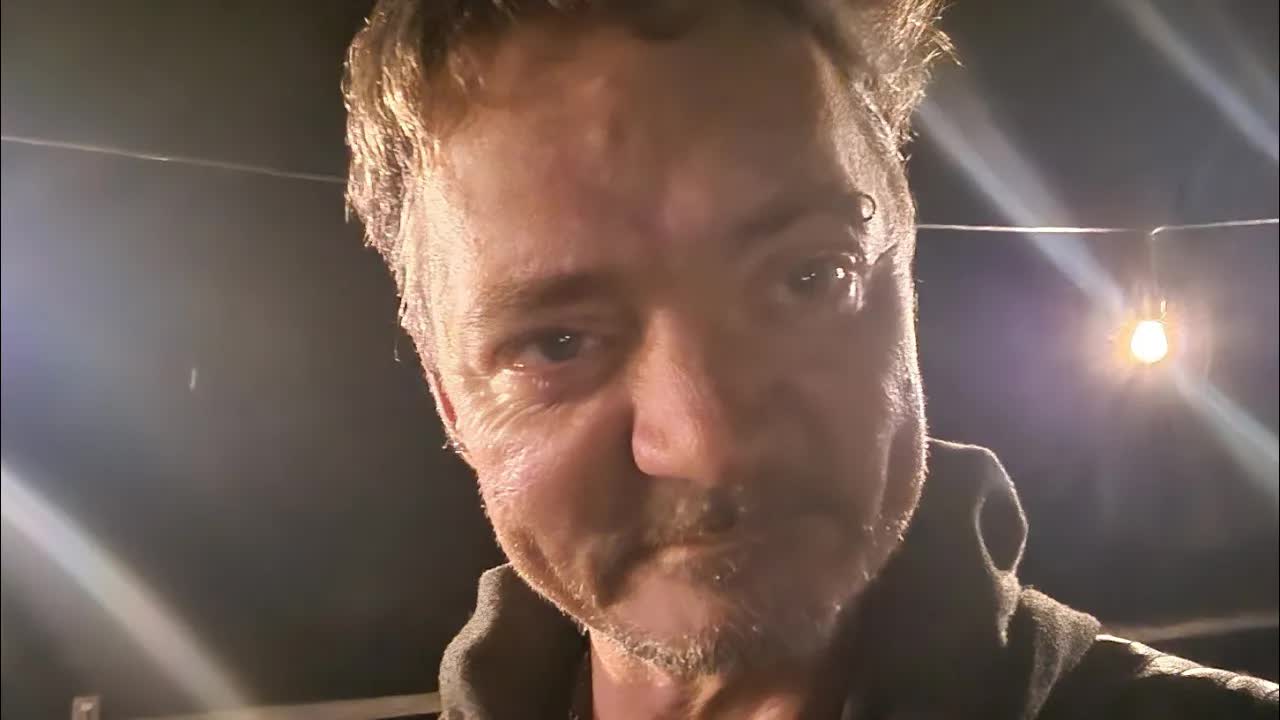
He was sitting outside at Siltcoos when the sky finished going dark. No task in it, no errand — the seated posture of someone who has stopped for the night in a place he lives in full-time rather than visits. Around him the trees stood at their full height, black against a sky that was not black, and the stars came out at the density they reach when there is nothing nearby bright enough to argue with them. He looked up. He kept looking up.
What he noticed first was not the stars but his own response to them. He states that he still has the ability to be awed by them, and immediately turns that observation into a question about frequency — he wonders how rare that is. From there the questions move outward, addressed to whoever is listening rather than to himself: when was the last time you looked up at them, when was the last time you saw the ocean, went to a lake, hiked a trail. He is asking from inside a place where all four are within walking distance, which he does not point out. The questions are not rhetorical in the dismissive sense. They are calibration instruments, laid down one after another to find out where the listener stands relative to the sky.
Earlier that day he had seen a plaque. It was mounted on the side of a building near where he is encamped — a dedication marking when the structure was made. He had stopped at it long enough to want the date. He asked an AI about it, and between them they arrived at a working estimate: probably the 1940s, roughly eighty years ago. That was the whole of the digital layer in an otherwise entirely physical day, a single query used as a dating instrument and then set down. What he kept from it was not the number. It was the fact that the building is still there. He says it has meaning. He says it has witnessed a lot.
The trees came next, and they came by extension rather than by association. He had been looking at them earlier and had thought about their age, and the plaque gave him a scale to measure against. Some of them, he decided, are definitely old enough. Old enough is a comparative — old enough to be doing what the building is doing, standing through decades and accumulating witness. So he asked the same question of them that he had asked of the structure: what their lives are like, what they have seen. The inference walked from made thing to living thing without pausing at the boundary between them, because in his reading the boundary is not the load-bearing part. Duration is.
Then the frame widened once more. He thought about the animals and the insects, about the different facets of life that assemble themselves around a single trunk. Entire ecosystems, he says — and with that the tree stops being an old object and becomes a substrate, its identity constituted by everything that has organized itself in relation to it. He does not narrate this as a discovery. He narrates it as the next thing he thought about, in a sequence that had been running since he stood in front of a plaque that morning.
The last move is the one he arrives at rather than announces. He states that modern life has disconnected people from what truly makes us human, and then, having laid down the sky and the building and the trees and the ecosystems built around them, he offers a name for the reverse condition. He does not define it in advance and then find examples. He assembles the examples first and lets the word come at the end, hedged in the way a person hedges when they are naming something in real time and want the naming to be accurate: I think when you reconnect with that, I think I would probably call that wholeness. The recording ends there, under the stars, among the trees, near the eighty-year-old building, with the definition placed and the night continuing around it.