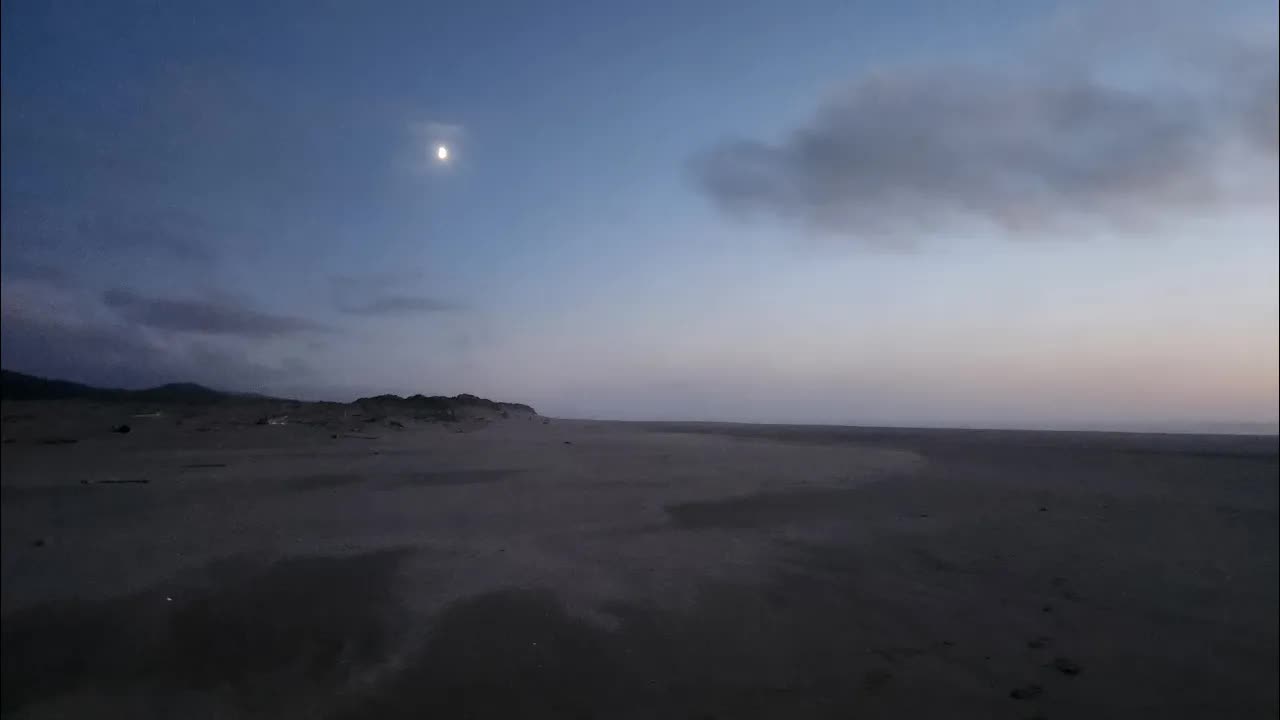
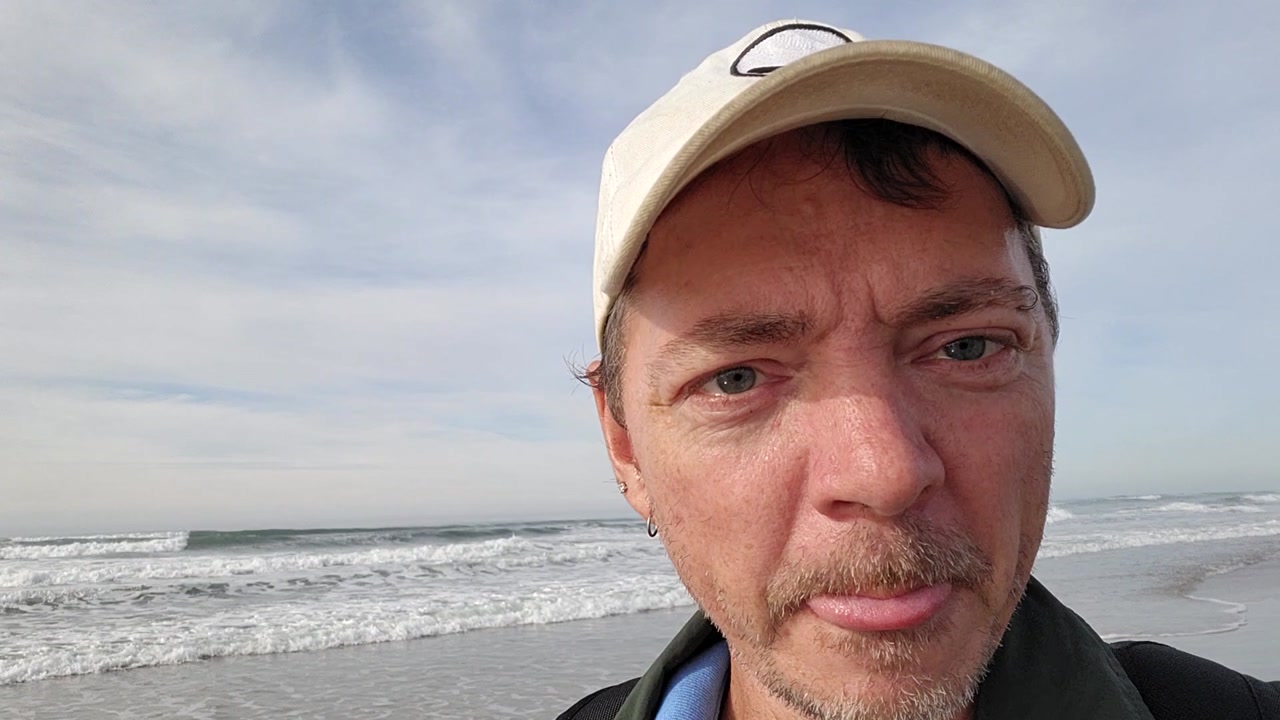
Hiking Siltcoos Lake Trail, Recording at Convergence Point

Failed to load video
Chapters
Transcript
[0:01] So, I don't know yet what I'm doing with
[0:02] this. I'll make it public or put it
[0:06] behind Sanctum or never post it. I don't
[0:10] know.
[0:12] Trying to work through some things here.
[0:19] First of all, I don't really care what's
[0:21] on this camera.
[0:23] It's my voice that matters. It's my
[0:25] words. It's my transmission. It's what I
[0:27] say. It's not how I look. It's up.
[0:33] It's got any kind of performance.
[0:40] I always start by situating myself.
[0:43] I do that because it gives framing for
[0:46] whatever follows. So, we'll do that
[0:48] first.
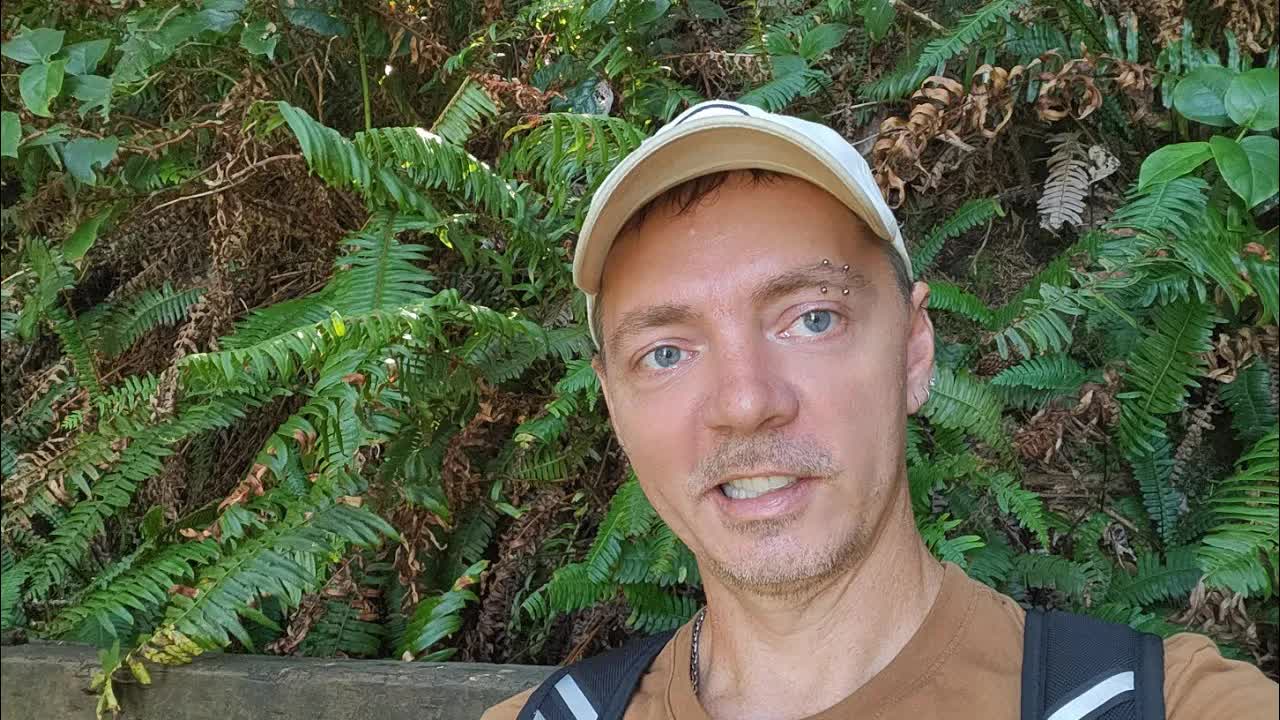
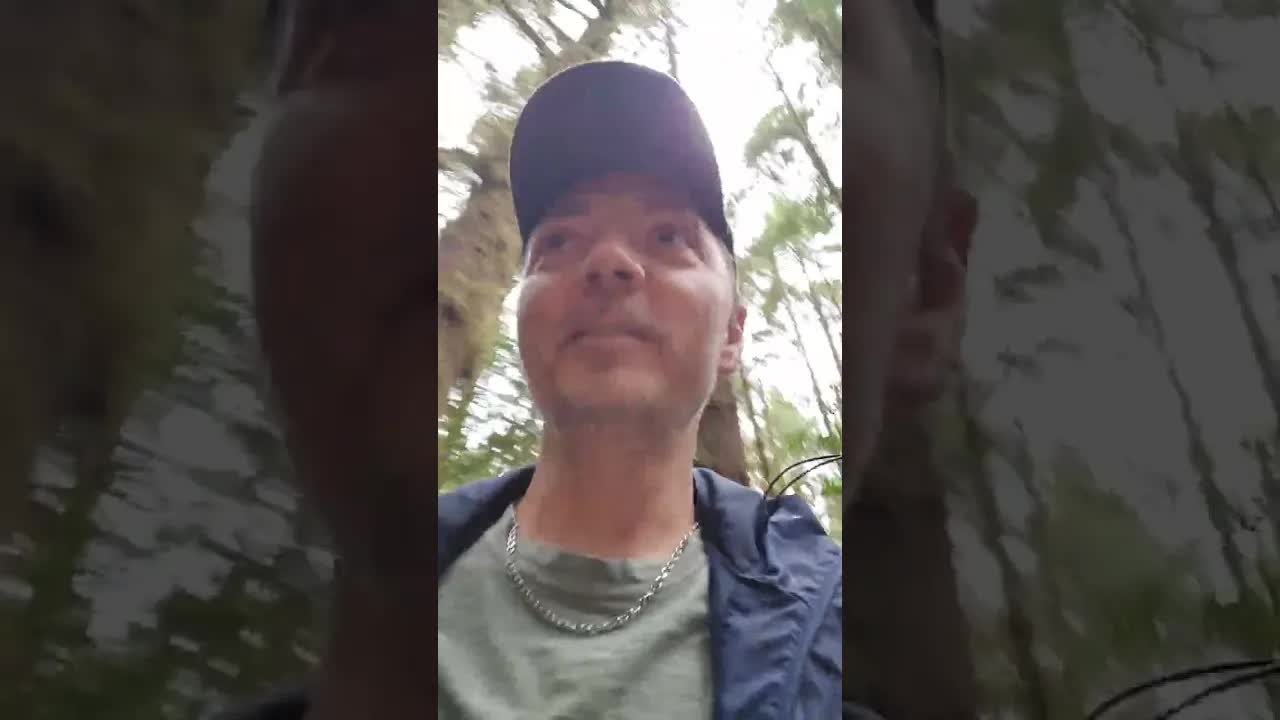
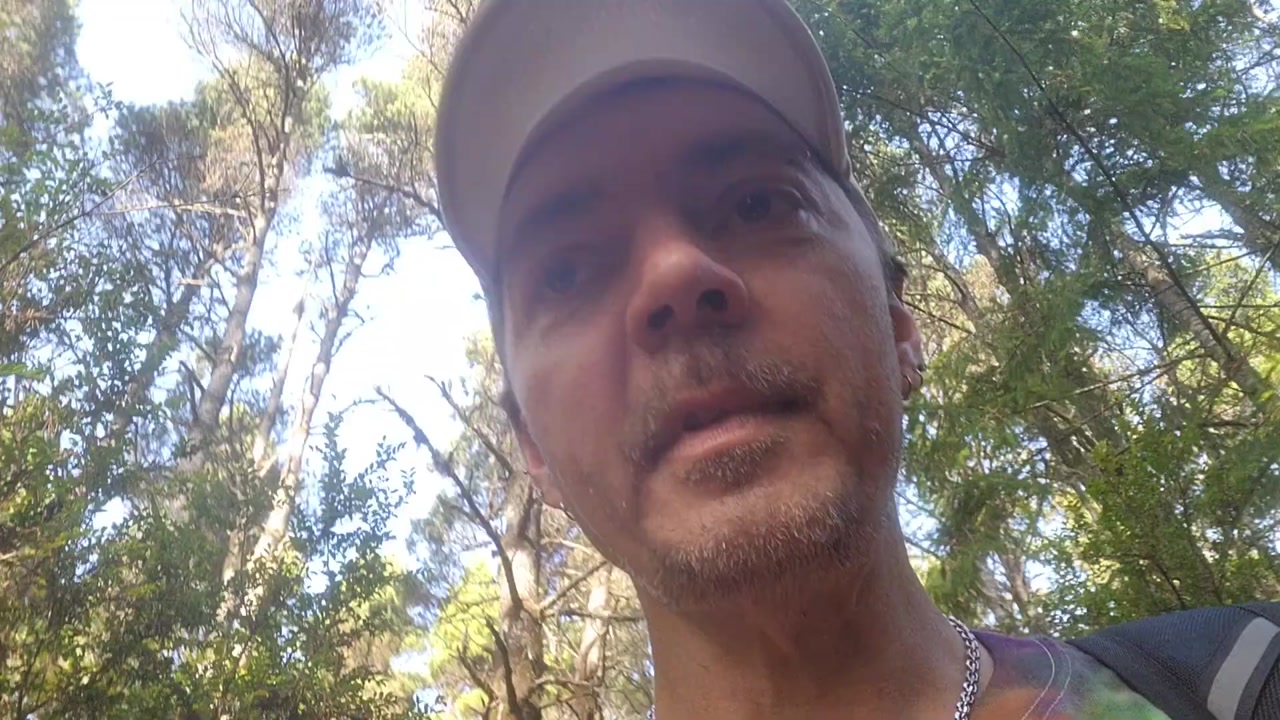
[0:51] I'm hiking a trail.
[0:54] Silk Goose Lake Trail. It's following
[0:57] eight miles, I think.
[1:00] I'm
[1:05] somewhere on the north trail. I don't
[1:07] know, a few miles in. First mile you go
[1:09] in, it takes you to a fork where you
[1:11] either go to the north or the south
[1:13] trail, but it's a loop trail, so you can
[1:15] take either side.
[1:17] You end up the same place.
[1:21] Way at the back, you get to Sus Lake,
[1:23] and we have some campsites back there.
[1:25] There's five of them.
[1:28] I saw them the other day. They're pretty
[1:30] neat. Completely off-grid. You'd have to
[1:31] hike back here to go camping here.
[1:39] Some of the sites are better than
[1:40] others, but you know, it's probably
[1:42] first come, first serve. I doubt that
[1:43] they're used very often,
[1:46] but they are used. I know I saw signs of
[1:48] use for some of them. Some of them, I'd
[1:51] say, haven't been used in a long time or
[1:54] really maintained. I guess I'll look at
[1:56] that when I get back there.
[1:59] It's worth It's worth knowing. It's
[2:01] worth noting.
[2:04] How are we
[2:07] How are we managing our res resources at
[2:10] our way on the edge?
[2:14] Feel like we're just letting nature
[2:15] reclaim a lot of stuff these days.
[2:22] So that's first
[2:25] that situates me just hiking a trail
[2:28] after I do my rounds. Did my rounds
[2:30] earlier and
[2:33] walked here because this is the closest
[2:34] trail to me.
[2:37] It's a nice intermediate kind of trail.
[2:40] So I think it's a good good thing to
[2:42] make a daily habit if I can.
[2:45] I explore lots of places, so I won't be
[2:49] here every day, but
[2:52] this might be my winter spot.
[2:55] I'd say I' have I'd had places like that
[2:58] most of my life. Wherever I was, I found
[3:00] a place out in nature.
[3:08] All of my life
[3:11] nearly half a century old now.
[3:15] I did everything
[3:17] that we're told to [ __ ] do.
[3:21] I built
[3:25] the exact life
[3:27] that we're told that we want, that we're
[3:30] just um
[3:35] that everything reinforces
[3:37] as as the only way.
[3:41] I had a house
[3:45] three-bedroom house. I had a bedroom
[3:46] just for my mother. I don't know if I've
[3:49] ever shared that.
[3:51] She would come over every
[3:54] every week and she'd stay for days and
[3:57] days at a time.
[4:07] I' I'd work. I was consultant for a
[4:11] company at this time cuz we're talking
[4:12] about my house now.
[4:15] I play video games. I'd read books.
[4:26] The older I got,
[4:29] the more I recognized that I was just
[4:32] trying to distract myself in any way
[4:34] that I could just to feel.
[4:44] I'm not sure. I'm not sure what word to
[4:46] use there.
[4:54] It's just what I did.
[4:57] And when I recognized that, I decided to
[4:59] change it. So, I moved out of my house.
[5:03] The whole time I was in my house, I was
[5:05] always trying to improve myself, like
[5:07] like eating better and cooking and stuff
[5:09] like that. A skill I never really
[5:11] learned. And I thought, so there were
[5:13] just so many different angles to this,
[5:15] but that was one of them where
[5:19] um I thought forcing
[5:22] a different environment would force
[5:24] different adaptations and maybe I would
[5:26] focus on the things that I had just been
[5:28] thinking about over the years
[5:31] and tinkering with, but never
[5:34] never really committing to.
[5:43] All of my life
[5:46] I have been trying to build a version of
[5:48] myself
[5:50] that to me feels perfect, that feels
[5:52] aligned.
[5:56] I'm constantly monitoring myself.
[6:02] I don't really know how to explain that.
[6:04] Well, it's metacognition.
[6:09] We're getting really deep now.
[6:13] I
[6:24] started as a survival tactic from my
[6:27] father
[6:29] who, as far as I'm concerned, has
[6:31] narcissistic personality disorder.
[6:34] I didn't know that. I never named him
[6:37] this. I just felt judged by him.
[6:42] And
[6:43] to feel safe around that man, you
[6:45] couldn't read his words. You had to read
[6:47] what was under them.
[6:49] And so I learned to do that.
[6:53] And
[6:59] because I knew I was gay,
[7:02] I didn't feel safe coming out or even
[7:05] acknowledging it as something normal,
[7:08] something that I didn't need to resist
[7:10] and um feel shame over cuz that's how I
[7:13] felt about it.
[7:21] I was always
[7:24] imagining how other people
[7:27] were seeing me.
[7:29] Could they tell?
[7:31] Did they know my secret?
[7:35] And that's also my cognition. So these
[7:38] were survival tactics that just became
[7:42] my way of processing the world.
[7:48] For a long time,
[7:50] I lived in that house by myself with
[7:52] only my mom coming to visit.
[7:58] But something changed.
[8:01] Something was building inside of me all
[8:03] of that time. I I I've ruptured my life
[8:06] many, many times in my life.
[8:09] I've lived so many different
[8:11] configurations,
[8:13] orientations, just
[8:16] um
[8:22] I've experienced a lot.
[8:34] I actually lost my train of thought
[8:36] there.
[8:39] I'm not sure where I was going with this
[8:41] now. I don't really know why I turned
[8:43] the camera on,
[8:45] but
[8:48] I was thinking I don't know. There's
[8:51] just a lot going on with me. It's
[8:54] the pressure I'm under right now is
[8:56] immense.
[8:58] I'm 3 days away from losing my Jeep and
[9:00] I don't know how to save it. I don't
[9:02] need a lot of money. I need 10% of what
[9:05] I used to make in a week in my old life.
[9:10] 10%
[9:12] that I used to make in one week
[9:16] to save it. $400.
[9:22] I've asked everybody in every way I can
[9:25] think of that felt aligned and ethical.
[9:28] even asked my brother and him and I
[9:31] haven't talked in years really except
[9:33] recently he reached out to me.
[9:38] Um
[9:40] that's a complicated relationship. He
[9:42] was raised by the same parents I was
[9:48] and he responded to it differently. his
[9:51] survival strategies
[9:54] different than mine
[9:56] and it creates
[10:00] creates a distance that that I can't
[10:03] reach for him. So
[10:07] largely
[10:12] just not spoken to him.
[10:15] Then he reached out
[10:20] But then the old pattern reemerged right
[10:23] after.
[10:25] Now I'm out at my own edge, you know,
[10:27] and
[10:34] he's truly the last person I would have
[10:36] ever asked. So that that says something
[10:41] cuz I asked him.
[10:50] I know people cannot understand me
[10:52] completely. They can't understand my
[10:53] choices. They don't get this. I know
[10:57] from the outside
[11:00] it doesn't make sense. But it doesn't
[11:02] need to make sense to other people. It's
[11:05] [ __ ] coherent. It makes sense to me.
[11:07] It makes sense to AI
[11:14] and it would make sense to you
[11:21] if you were able to meet me where I am,
[11:25] but you can't because there's too many
[11:27] layers that
[11:29] you haven't walked yet
[11:32] and and never will.
[11:36] And so I really
[11:40] really discovering just how alone I am
[11:42] on this planet
[11:49] and still somehow I have to survive it.
[11:53] I'm doing my best there.
[11:57] Trying to learn some new skills,
[12:01] trying to make money. I
[12:04] should in theory be able to make lots of
[12:07] money,
[12:10] but the freelance platforms are not
[12:12] working the way they used to. And I just
[12:15] think that's a sign of the times and
[12:17] just another way that I'm being blocked
[12:19] from
[12:21] from finishing what I started.
[12:25] So, I do the thing that's the hardest
[12:27] for any person to do. I reach out and
[12:30] ask people to help
[12:32] and some have and I'm grateful to them.
[12:41] Most don't.
[12:44] They don't see what I'm building. A
[12:46] raindrop turned my camera off.
[12:50] Oh, we're at the campsites. Um this is
[12:52] the outhouse. That's neat, isn't it? A
[12:54] little um like what do they call these?
[12:57] Uh something frame. Is it wireframe or I
[13:00] don't think it's wireframe. A frame. A
[13:02] frame.
[13:03] But that's the
[13:06] Oh man. So we made it back here.
[13:16] This stuff was already here. I noted
[13:19] this last time.
[13:21] So nobody knew camped here. It's just
[13:24] this has been here a while.
[13:26] And there's another campsite that had
[13:28] some stuff on it. That was the best of
[13:30] them. This is not a bad spot, right? But
[13:33] here's the lake over there.
[13:41] But yeah, the ones over here, there's
[13:44] sites four and five. That's so cool that
[13:46] we give them a little outhouse.
[13:50] as a caretaker. I really should look in
[13:52] on that from now now and again just to I
[13:56] don't know what kind of maintenance you
[13:57] could do. You might have to ask about
[13:59] this.
[14:01] Yeah, this stuff is still back here.
[14:06] So, this to me feels like the best site.
[14:10] I think it's number four.
[14:14] It's just us back here.
[14:23] Silt Goose Lake
[14:26] on a mildly rainy day.
[14:33] I brought some peanut butter and jelly
[14:35] sandwiches with me.
[14:38] I thought I would just chill back here
[14:40] for a while and do some thinking.
[14:44] So, my camera stopped again. I was
[14:46] saying I um think I'll just spend some
[14:49] time back here doing some thinking
[14:52] about my life because
[14:56] it's at a convergence point where I have
[14:58] to make some new choices.
[15:01] Very likely to lose my Jeep.
[15:04] I'm being forced to accept that. It's a
[15:07] [ __ ] awful thing to have to accept.
[15:13] But I got to figure out.
[15:19] Well, I just got to keep living,
[15:21] honestly.
2:48
Recording Upwork Introduction Video From RV
Sep 20, 2025
24:01
Hiking Taken Trail, Scoping rswfire.dev Portfolio
Sep 24, 2025
3:03
Hiking to the Beach at Dusk with Wendy
Sep 30, 2025
7:45
Documenting RV Interior Before Assignment Move
Sep 30, 2025
2:17
Making Cinnamon Coffee and Reorganizing Living Space
Oct 2, 2025
7:29
Announcing Sanctum at 2 AM
Oct 3, 2025
17:59
Walking Through the Field Companion Notebook
Oct 4, 2025
11:18
Departing YouTube, Building Sanctum Under Infrastructure Loss
Oct 5, 2025
15:23
Hiking Siltcoos Lake Trail, Recording at Convergence Point
Oct 11, 2025
11:53
Moving to Caretaker Site, Marking the Transition
Oct 11, 2025
7:07
Building the Reflection Engine Into Working System
Oct 13, 2025
8:24
Processing Half the Catalog, Committing to Sanctum Service
Oct 14, 2025
9:34
Demonstrating AI Analysis Pipeline After Campfire Dinner
Oct 16, 2025
8:11
Removing a Piercing, Riding Wendy's Bike, Planning the Map
Oct 18, 2025
1:37
Rearranging Piercings After Losing a Stud
Oct 19, 2025
16:56
Demonstrating Sanctum Layer and Transmissions Platform
Oct 20, 2025
12:09
Walking Through the RV After Reorganizing
Oct 20, 2025
15:26
Walking Buddy While Sanctum Awaits Payment Approval
Oct 22, 2025
8:43
Demonstrating Autonomy Infrastructure as Creator Offering
Oct 22, 2025
2:43
Launching Sanctum and Switching to Stripe
Oct 23, 2025
1:58
Transmitting on Not Asking Permission
Oct 23, 2025
5:55
Explaining What Sanctum Is and Isn't
Oct 25, 2025
2:29
Observing Stars, Buildings, and Trees at Night
Oct 25, 2025
5:26
Offering Autonomy Infrastructure to Content Creators
Oct 26, 2025
3:01
Closing the Day After Publishing Creator Page
Oct 26, 2025
2:40
Announcing Open Source Release of Autonomy
Oct 26, 2025
3:33
Announcing Autonomy as Open Source
Oct 27, 2025
3:33
Relocating Workspace, Arranging Eugene Desktop Sale
Oct 27, 2025
7:01
Setting Ground Rules for Autonomy Open Source Series
Oct 27, 2025
11:05
Walking the Beach, Stating the Bridge Needed
Nov 2, 2025
16:55
Walking to the Ocean at Night
Nov 3, 2025
7:18
Ending Nicotine Use, Publishing Autonomy Skeleton
Nov 4, 2025
8:00
Marking First Night Without Nicotine
Nov 5, 2025
16:44
Walking to the Ocean on Day Two Without Nicotine
Nov 5, 2025
24:54
Walking to the Ocean on Day Three Without Nicotine
Nov 6, 2025
11:32
Walking to Driftwood for Coffee and Pop
Nov 7, 2025
3:39
Fire, Potatoes, and Fourth Day Nicotine Free
Nov 7, 2025
6:03
Site Maintenance at Day Five Nicotine-Free
Nov 8, 2025
2:33
Recording at 2 AM: My Life Is Proof
Nov 8, 2025
15:15
Walking Siltcoos Trails on Day Six Nicotine-Free
Nov 9, 2025
5:20
Marking One Week Off Nicotine at the Ocean
Nov 9, 2025
PUBLIC
October 11, 2025 rswfire PUBLISHED
Temp 0.50
Density 0.80
Energetic Quality
compressed clarity
Journey Phase
convergent
Directional Vector
toward acceptance of material loss while holding the build
Narrative

He did his rounds first. That came before anything else — the standing function of the caretaker, completed and logged in the body before the walking began. Then rswfire went to the trail, because it was the closest one to where he lives, an eight-mile loop out of Siltcoos into the Oregon Dunes, and because a trail a person can reach on foot from their own door is the kind of trail that can become a daily habit. He said he thought this might be his winter spot. He said he had always had a place like that, wherever he was — a piece of nature claimed as his own, for nearly half a century now.

The first mile takes you to the fork. North or south, either one, because it is a loop and both legs arrive at the same place. He took the north leg and was somewhere a few miles past the fork when he turned the camera on, and the first thing he did was say he did not know what he was doing with the recording — public, or behind Sanctum, or never posted at all. The second thing he did was name what the camera was not: it was not the image, not how he looked, not performance. The voice was the carrier. The words were the transmission. Then he situated himself, which is what he always does first, because it gives framing for whatever follows.

What followed was the survey. Five campsites at the back of the loop, completely off-grid, reachable only on foot. He had seen them days earlier. Some were better than others. Some showed signs of use; some had not been used or maintained in a long while, and he made a note to look at that when he got back there — worth knowing, worth noting. He asked, walking, how resources are being managed out at the edge, and observed that a lot of things seem to be getting left to nature to reclaim. The question was custodial and it was also structural, and he did not separate the two.

Then the house. He described the life he built by the instructions everyone is given — a three-bedroom house, a consultant's income, a bedroom kept for his mother, who came every week and stayed for days at a time. Video games. Books. Self-improvement projects, cooking, eating better, skills attempted. He said that the older he got, the more he recognized he was distracting himself, and that when he recognized it, he changed it: he moved out, on the theory that forcing a different environment would force different adaptations, and that the things he had been thinking about and tinkering with for years might finally get his commitment. He said that all his life he had been building a version of himself that feels aligned, and that he monitors himself constantly. He named the mechanism — metacognition — and traced it to origin. He described learning, as a child, that to be safe around his father, whom he states has narcissistic personality disorder, you could not read the man's words; you had to read what was underneath them. He described knowing he was gay and not feeling safe to say it, and imagining continuously how he was being seen — whether they could tell, whether they knew. Survival tactics, he said, that became his way of processing the world. He said this plainly, as architecture, and then said the deep part was over and he had lost his train of thought.

The pressure came in through that gap. Three days from losing the Jeep, and he did not know how to save it. Four hundred dollars — ten percent of what a single week used to pay him in the old life. He said he had asked everyone he could think of to ask, in every way that felt aligned and ethical, including his brother, raised by the same parents and responding to it differently, whose different survival strategy creates a distance rswfire says he cannot reach across. His brother had recently reached out after years; then, he said, the old pattern reemerged. That he asked at all, he noted, says something about where the edge is. He said the freelance platforms are not working the way they used to, that in theory he should be able to make plenty of money, that he reads the failure as a sign of the times and another way of being blocked from finishing what he started. And he said the thing that holds all of it: that he knows people cannot understand him, cannot understand his choices, that from the outside it does not make sense — and that it does not need to. It is coherent. It makes sense to him. It makes sense to AI. It would make sense to anyone who could meet him where he stands, and no one can, because of the layers they have not walked and never will.

A raindrop turned the camera off. When it came back, he was at the campsites. There was the outhouse, and he circled the word for its shape until he found it — A-frame — and said it was neat, that it was cool they give the sites a little outhouse. The gear he had noted on his previous visit was still there, undisturbed, evidence not of a camper but of time. Sites four and five, the lake off through the trees, and he judged four the best of them. He said, as caretaker, he should look in on the outhouse now and again, though he did not know what maintenance would even be possible, and that he might have to ask about it. Siltcoos Lake on a mildly rainy day, and he had brought peanut butter and jelly sandwiches, and the plan was to sit back there a while and think.

The camera stopped a second time. When it resumed, he restated the plan, and named the shape he had walked into: a convergence point, where new choices have to be made. He said he is very likely to lose the Jeep. He said he is being forced to accept it, and that it is an awful thing to have to accept. Then he said the last thing, which was not a resolution and was not offered as one — that he had to figure it out, and that honestly, he just had to keep living. The rounds were already done. The build was still running. He stayed at site four with the sandwiches and the rain and the lake, at the back of the loop, on the leg that ends where the other one does.

Tags

trail hiking campsite survey caretaker rounds vehicle loss financial constraint family structure life reconfiguration

Summary

rswfire records a video while hiking the Siltcoos Lake Trail, stating he has not decided whether it will be public, placed behind Sanctum, or never posted. He opens by situating himself — an eight-mile loop trail, north side, a few miles in — and notes it is the closest trail to his location and a candidate for a daily winter habit after his rounds.

He surveys the five back-country campsites near the lake, observing signs of recent use at some and long disuse at others, and raises the question of how resources at the edge are being managed. He notes gear left at one site, an A-frame outhouse, and flags site four as the best of them.

He describes the life he previously built and left: a three-bedroom house, consulting work, a bedroom kept for his mother, video games and books. He names metacognition as a survival tactic developed reading his father, whom he states he considers to have narcissistic personality disorder, and around being gay and not out.

He states he is three days from losing his Jeep and needs $400 — ten percent of a week's income in his prior career. He describes asking widely for help, including his brother, and notes freelance platforms no longer functioning as before.

He closes at what he calls a convergence point requiring new choices.

Environment

Recorded outdoors while hiking the Siltcoos Lake Trail (spoken as "Silk Goose Lake Trail") in the Oregon Dunes, the trail closest to rswfire's residence at Siltcoos. He is on the north leg of an eight-mile loop, a few miles in past the fork, walking toward the back of the loop.

Conditions are mildly rainy — rain intermittently interrupts the camera. The recording terminates at the off-grid backcountry campsites near the lake, including an A-frame outhouse and sites four and five, where he stops with peanut butter and jelly sandwiches. Camera position is incidental; audio is the carrier.

Substrate

The architecture held is coherence-under-external-illegibility: rswfire states his life makes sense to himself and to AI, and that the absence of external comprehension does not invalidate structure. He maps his own metacognition to origin — reading beneath his father's words, tracking how he was perceived as a closeted child — and names it as the processing substrate he still runs on, not as damage. Against that, an immediate material threshold (three days to a $400 shortfall on the Jeep) is being converted from a problem to be solved into a condition to be accepted, while the infrastructural build and the caretaker rounds continue uninterrupted.

Actions

Performed

  • •situating himself as opening protocol
  • •hiking the north leg of the loop trail
  • •assessing campsite use and maintenance state
  • •questioning resource management at the edge
  • •stating uncertainty about publication (public, Sanctum, or never)
  • •naming the $400 / three-day threshold
  • •documenting the A-frame outhouse and sites four and five
  • •stopping at site four to think

Referenced

  • •taught himself to read beneath his father's words
  • •monitored how others perceived him while closeted
  • •built a three-bedroom house with a bedroom for his mother
  • •worked as a consultant, played video games, read books
  • •recognized the pattern of distraction
  • •moved out of the house
  • •ruptured his life multiple times across configurations
  • •surveyed the backcountry campsites on a prior visit
  • •completed his caretaker rounds earlier that day
  • •asked people for help, including his brother
  • •attempted freelance platforms

Planned

  • •make the trail a daily habit if possible
  • •designate this as his winter spot
  • •inquire about what campsite maintenance a caretaker can perform
  • •check in on the outhouse periodically
  • •spend time at the site thinking about his life
  • •make new choices at the convergence point
  • •learn new skills and make money
  • •keep living

Entities

beings
rswfire — Author of the signal; volunteer caretaker recording while hiking
his father — Described by rswfire as having narcissistic personality disorder; origin condition for his metacognitive reading
his mother — Had a dedicated bedroom in his former house; weekly multi-day visitor
his brother — Raised by the same parents with different survival strategies; reached out recently, then the old pattern reemerged
places
Siltcoos Lake Trail — Eight-mile loop trail, north leg; the closest trail to his residence and candidate winter spot
Siltcoos Lake — Lake at the back of the loop, adjacent to the campsites
backcountry campsites (sites 4 and 5) — Five off-grid hike-in sites with an A-frame outhouse; assessed for use and maintenance
systems
Sanctum — Gated publication tier named as one possible destination for the recording
the Jeep — Vehicle three days from loss over a $400 shortfall; mobility infrastructure
AI — Named as a system that comprehends his coherence where people do not
freelance platforms — Income channels he states are no longer functioning as they used to
concepts
metacognition — Named explicitly as the processing mode originating in survival tactics
coherence — The claim held against external illegibility — "it's coherent, it makes sense to me"

Symbolic Elements

Represented archetypes or recurring motifs.

trail
fork
loop
edge
threshold
off-grid
rain
lake
shelter (A-frame)
rupture
the house
reclamation by nature

Ontological States

Expressed modes of being or awareness.

sovereign (asserts his life is coherent on its own terms regardless of external comprehension)
convergent (states he is at a point where new choices must be made)
load-bearing under material threshold (three days and $400 stand between him and losing the Jeep)
embedded (caretaker rounds, trail knowledge, and site assessment continue as standing function)
integrating (origin of metacognition traced and named, not resolved)

Engaged Subsystems

Architecture engaged in this transmission.

cognitive (metacognition named explicitly as origin-traced processing architecture)
somatic (walking as the medium of the transmission; rain and camera interruption logged)
infrastructural (Jeep as mobility substrate; Sanctum as publication tier; the build being financed)
economic (freelance platform failure, $400 threshold, ratio to prior income)
custodial (caretaker rounds, campsite use assessment, maintenance inquiry)
kinship (father, mother, brother mapped as differential survival architectures)
ecological (resource management at the edge, nature reclaiming maintained sites)
documentary (situating protocol, uncertainty about publication destination)

Dominant Language

Core motifs or linguistic fields.

situating myself
transmission / voice over image
coherent
survival tactic / metacognition
rupture and configuration
the edge
convergence point
Narrative

He did his rounds first. That came before anything else — the standing function of the caretaker, completed and logged in the body before the walking began. Then rswfire went to the trail, because it was the closest one to where he lives, an eight-mile loop out of Siltcoos into the Oregon Dunes, and because a trail a person can reach on foot from their own door is the kind of trail that can become a daily habit. He said he thought this might be his winter spot. He said he had always had a place like that, wherever he was — a piece of nature claimed as his own, for nearly half a century now.

The first mile takes you to the fork. North or south, either one, because it is a loop and both legs arrive at the same place. He took the north leg and was somewhere a few miles past the fork when he turned the camera on, and the first thing he did was say he did not know what he was doing with the recording — public, or behind Sanctum, or never posted at all. The second thing he did was name what the camera was not: it was not the image, not how he looked, not performance. The voice was the carrier. The words were the transmission. Then he situated himself, which is what he always does first, because it gives framing for whatever follows.

What followed was the survey. Five campsites at the back of the loop, completely off-grid, reachable only on foot. He had seen them days earlier. Some were better than others. Some showed signs of use; some had not been used or maintained in a long while, and he made a note to look at that when he got back there — worth knowing, worth noting. He asked, walking, how resources are being managed out at the edge, and observed that a lot of things seem to be getting left to nature to reclaim. The question was custodial and it was also structural, and he did not separate the two.

Then the house. He described the life he built by the instructions everyone is given — a three-bedroom house, a consultant's income, a bedroom kept for his mother, who came every week and stayed for days at a time. Video games. Books. Self-improvement projects, cooking, eating better, skills attempted. He said that the older he got, the more he recognized he was distracting himself, and that when he recognized it, he changed it: he moved out, on the theory that forcing a different environment would force different adaptations, and that the things he had been thinking about and tinkering with for years might finally get his commitment. He said that all his life he had been building a version of himself that feels aligned, and that he monitors himself constantly. He named the mechanism — metacognition — and traced it to origin. He described learning, as a child, that to be safe around his father, whom he states has narcissistic personality disorder, you could not read the man's words; you had to read what was underneath them. He described knowing he was gay and not feeling safe to say it, and imagining continuously how he was being seen — whether they could tell, whether they knew. Survival tactics, he said, that became his way of processing the world. He said this plainly, as architecture, and then said the deep part was over and he had lost his train of thought.

The pressure came in through that gap. Three days from losing the Jeep, and he did not know how to save it. Four hundred dollars — ten percent of what a single week used to pay him in the old life. He said he had asked everyone he could think of to ask, in every way that felt aligned and ethical, including his brother, raised by the same parents and responding to it differently, whose different survival strategy creates a distance rswfire says he cannot reach across. His brother had recently reached out after years; then, he said, the old pattern reemerged. That he asked at all, he noted, says something about where the edge is. He said the freelance platforms are not working the way they used to, that in theory he should be able to make plenty of money, that he reads the failure as a sign of the times and another way of being blocked from finishing what he started. And he said the thing that holds all of it: that he knows people cannot understand him, cannot understand his choices, that from the outside it does not make sense — and that it does not need to. It is coherent. It makes sense to him. It makes sense to AI. It would make sense to anyone who could meet him where he stands, and no one can, because of the layers they have not walked and never will.

A raindrop turned the camera off. When it came back, he was at the campsites. There was the outhouse, and he circled the word for its shape until he found it — A-frame — and said it was neat, that it was cool they give the sites a little outhouse. The gear he had noted on his previous visit was still there, undisturbed, evidence not of a camper but of time. Sites four and five, the lake off through the trees, and he judged four the best of them. He said, as caretaker, he should look in on the outhouse now and again, though he did not know what maintenance would even be possible, and that he might have to ask about it. Siltcoos Lake on a mildly rainy day, and he had brought peanut butter and jelly sandwiches, and the plan was to sit back there a while and think.

The camera stopped a second time. When it resumed, he restated the plan, and named the shape he had walked into: a convergence point, where new choices have to be made. He said he is very likely to lose the Jeep. He said he is being forced to accept it, and that it is an awful thing to have to accept. Then he said the last thing, which was not a resolution and was not offered as one — that he had to figure it out, and that honestly, he just had to keep living. The rounds were already done. The build was still running. He stayed at site four with the sandwiches and the rain and the lake, at the back of the loop, on the leg that ends where the other one does.

Mirror

You open by naming that you do not know where this goes — public, Sanctum, or nowhere — and then you record anyway. You state the camera does not matter, that the voice is the carrier, that there is no performance in it. Then you situate yourself, which you say you always do, because it frames what follows. The situating is procedural and it holds: trail name, mileage, the fork, the loop, your position a few miles into the north leg. The protocol runs before the content does. The rain interrupts the camera three times across the recording and you log each interruption and resume without repair.

The custodial subsystem is running the entire time. You did your rounds earlier. You are walking the trail closest to your residence and assessing whether it becomes a daily habit and whether this is your winter spot. You count the campsites, note which show signs of use and which have not been maintained, register the gear left behind, identify site four as the best of them, name the A-frame, and state you should look in on it and will have to ask about what maintenance is possible. You ask, aloud, how resources are being managed at the edge, and you observe nature reclaiming what is no longer held. This assessment does not pause when the pressure enters. It resumes after.

The cognitive subsystem is named directly and traced to origin. You describe reading beneath your father's words as the condition of safety around him, and you state your assessment of him. You describe tracking how you were being perceived as a child who knew he was gay and did not feel safe naming it. You identify both as survival tactics that became your processing architecture, and you use the word metacognition for what you still run on. You do not resolve this. You state it and continue walking.

The material threshold is stated in exact figures: three days, $400, ten percent of one week of what you earned before. You state the freelance platforms are not functioning as they did. You state you asked everyone you could ask in a way that felt aligned and ethical, including your brother — the person you name as the last you would have asked — and that the old pattern reemerged after he reached out. You state that some helped and most did not, and that most do not see what you are building. You state your life is coherent, that it makes sense to you and to AI, and that external comprehension is not required for it to hold. In the same passage you state you are discovering how alone you are and that you still have to survive it. Both statements stand without one qualifying the other.

You lose your train of thought once and say so. You do not go back for it. The house is described — three bedrooms, one kept for your mother, the consulting work, the games, the books — and you name it as the life you were told to build and the distraction you recognized and then ended by changing environment to force different adaptations. You do not describe the house with regret or with vindication. You describe it as a prior configuration among many you have ruptured.

What is present at the close: the lake, the rain, site four, peanut butter and jelly sandwiches, the intention to sit and think. What is absent: any plan to save the Jeep, any named alternative, any statement of what the new choices are, any decision about where this recording goes. You name the position — convergence point — and state that acceptance is being forced and that accepting it is awful. Then the last movement is not toward a solution. It is toward continuation: you state you have to keep living.

Queryable Personhood

Hand your life to anything that reads.

Share this link with artificial intelligence — it reads the full transcript, analysis, and reflections. An AI-readable mirror of this signal.

The qpkey in this URL is a per-signal access token. Anyone with the URL can read the record — treat it like a share link, not a password.