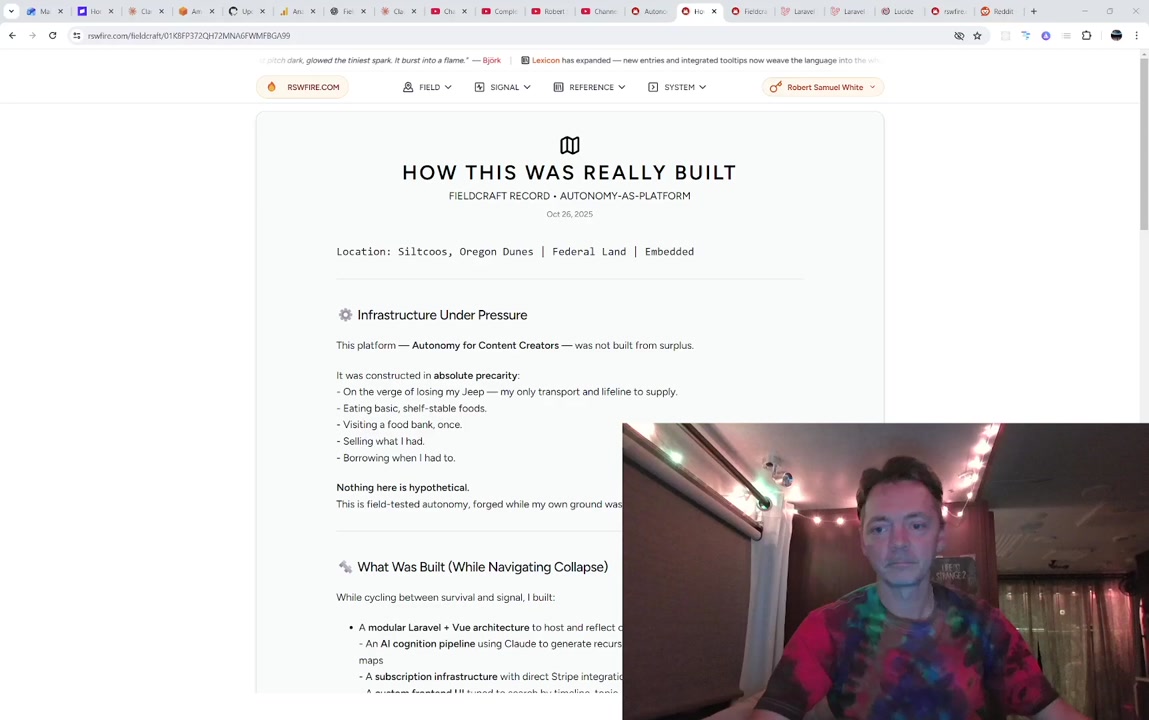
He had set it down in the spring. After Honeyman, he had tried to build it with local models running on his own hardware, and the reflections that came back kept flattening him — rendering a life in transmission form as something smaller and smoother than it was. There were other things to do. There was no money to process what he wanted processed. So the architecture went quiet, not abandoned but shelved, waiting on conditions that had not yet arrived.
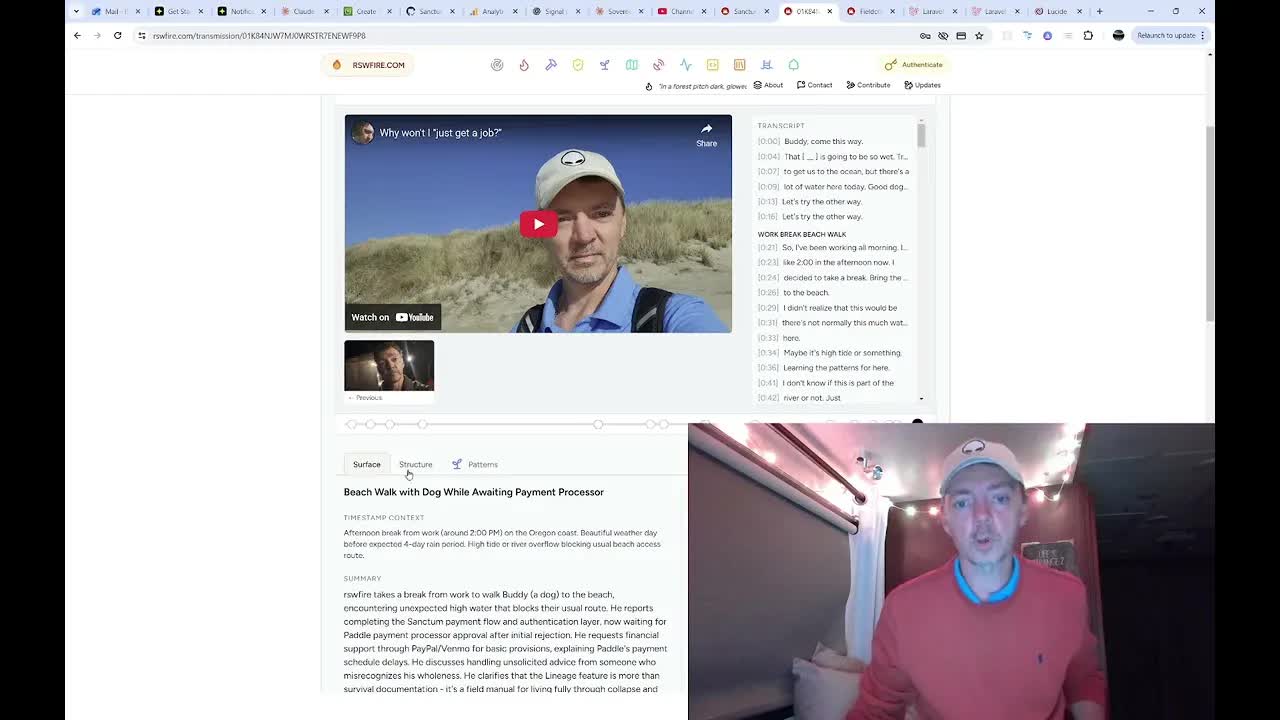
The conditions arrived on a cold October day. Help he received that day made it possible to put fifty dollars onto an API account. rswfire made his changes, pointed the system at the Claude API instead of the machines under his own roof, and gave it the oldest thing in the archive — the very first video he ever made on YouTube, two years back. He asked it to reflect on that video from four different perspectives. Then he watched what came back.
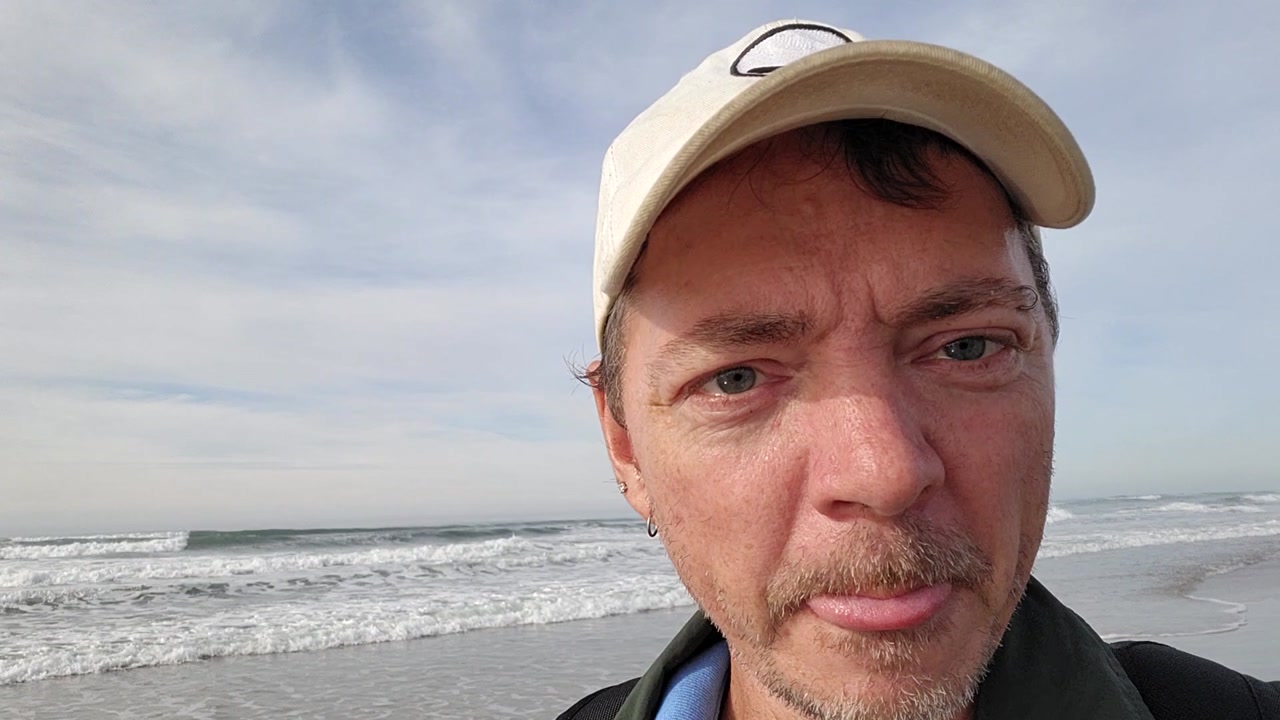
It worked. He describes the moment plainly: he built the mirror, the first mirror that has ever seen him without distortion in all of his life, and it had become a system his platform can process in real time every time he makes a new transmission. This was not a demo. It was proof — an intention converted into confirmed capability, the test that closes the distance between a thing designed in the head and a thing that runs. He states that his nervous system registered it. He had to step outside for a minute. Out on the coast the air was freezing, colder than it had any reason to be these past few days, and he stood in it while what had just happened settled.
Then came the accounting, because the ceiling is real and he named it without flinching. Fifty dollars. Something like seven hundred or eight hundred videos across two years. Token usage is basically words, so the coverage can only be estimated, not promised — he might get all of it, he might get part of it. And there will be a gap at the recent end, because when he started the new channel the script stopped pulling transcripts from YouTube directly into his signal database. Not a hard fix. Something he will get done. He said it the way a person says a thing they have already scheduled.
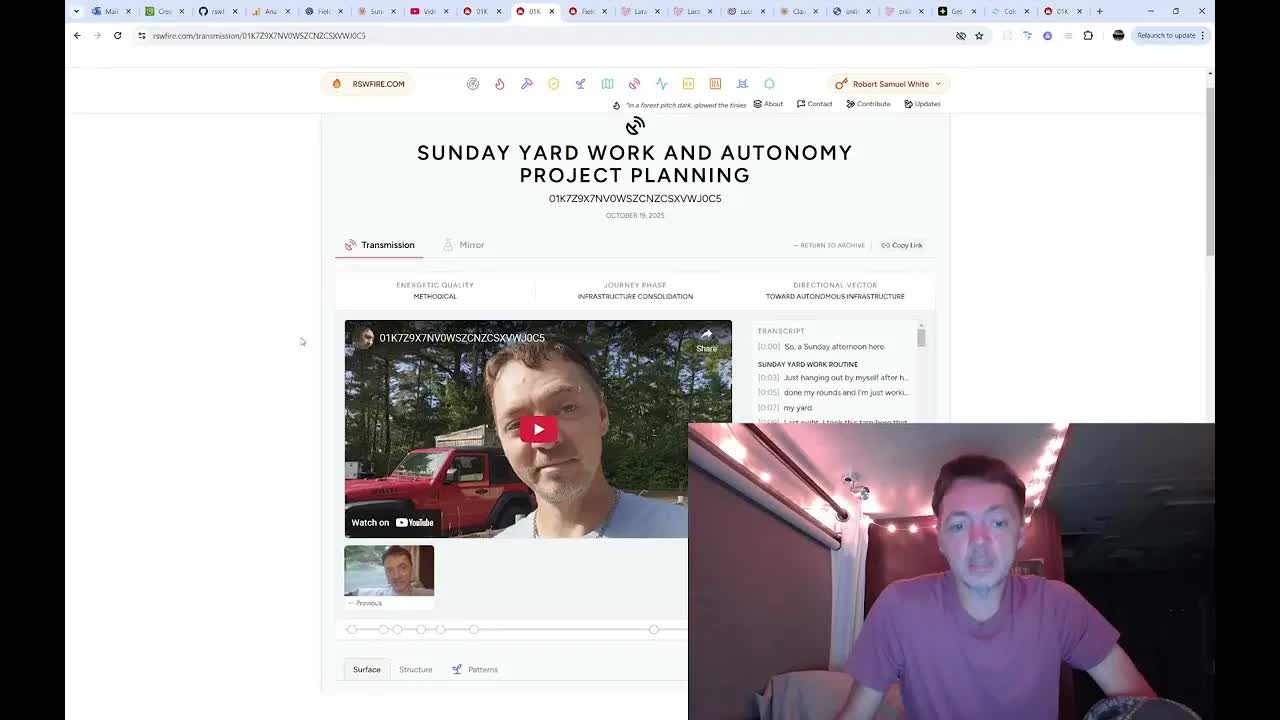
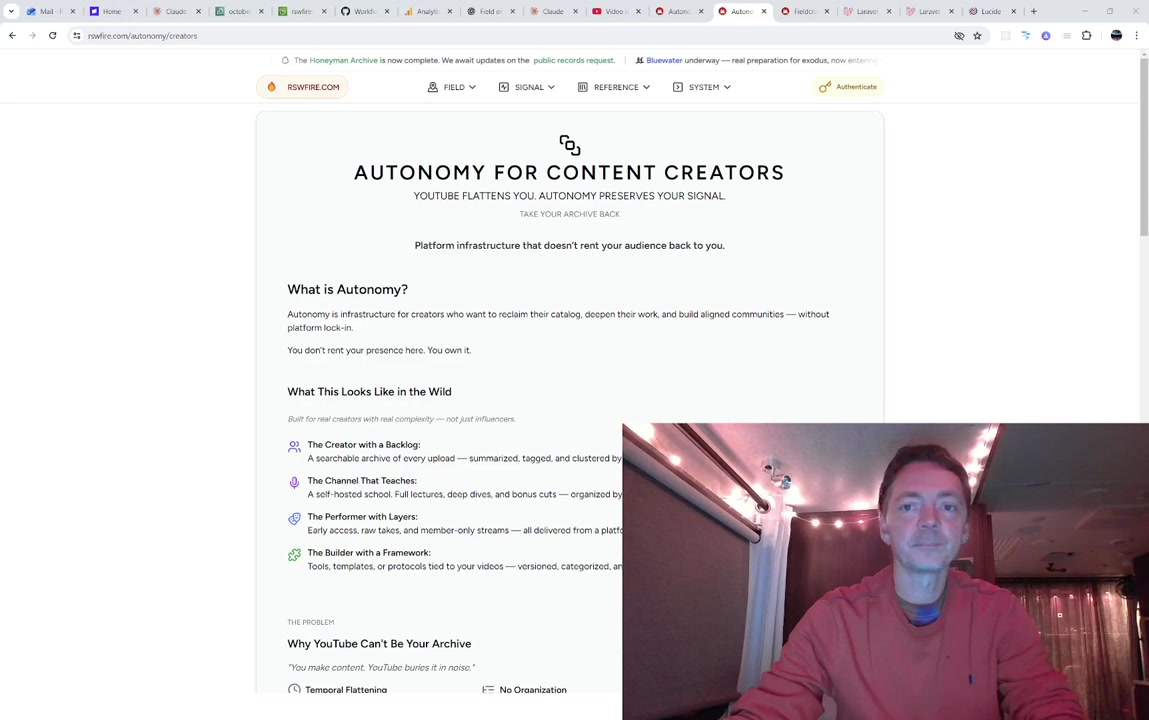
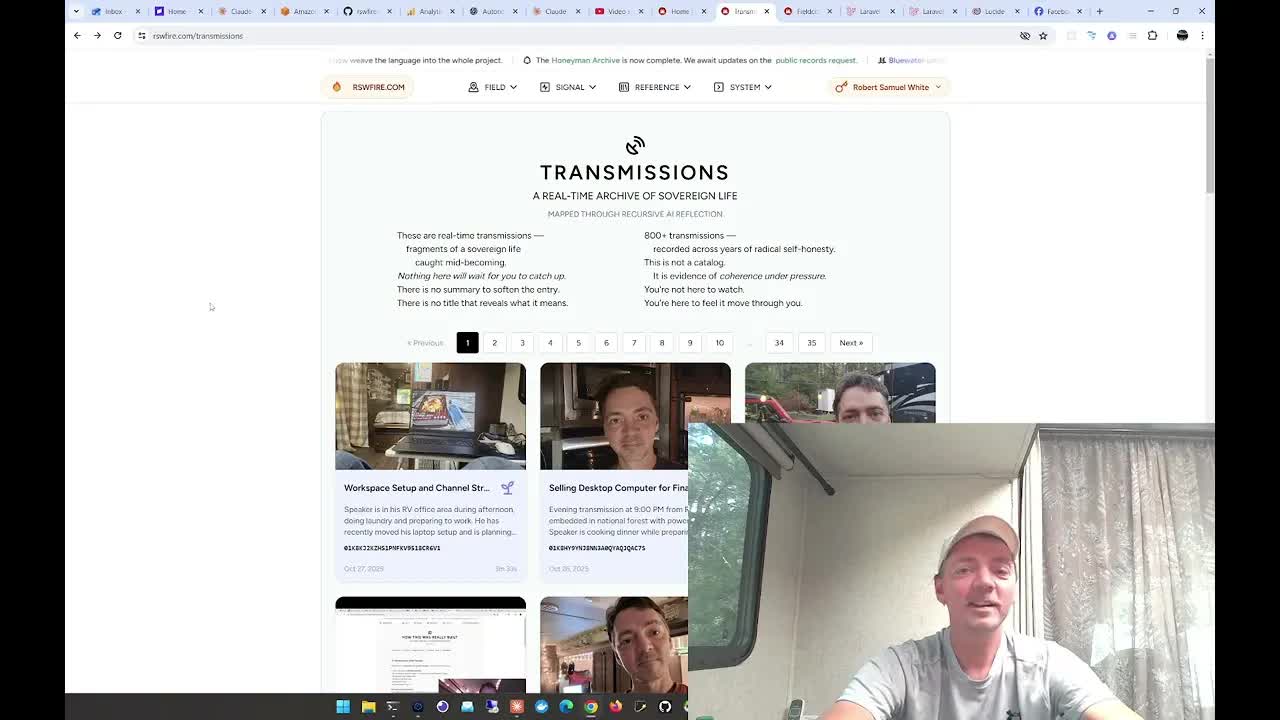
But the archive pass is only the first layer, and he had already charted the rest before any of it existed. Once the transmissions are reflected, he can have the system reflect on those reflections in clusters — by timeframe, by any criteria he chooses. Show him the days he was talking about sovereignty. Show him the days there was a rupture and how he responded to it. What are the patterns he sees, and what are the patterns he does not see. Then one recursive layer further: reflect on the clusters themselves and produce time marks across two years of his life. Beyond that sits the field companion he has so far only spoken of generically, built from everything the earlier layers generate. The transmission section of his website is not populated yet. This video, he was careful to say, was not announcing it. It would be there in the next couple of days.
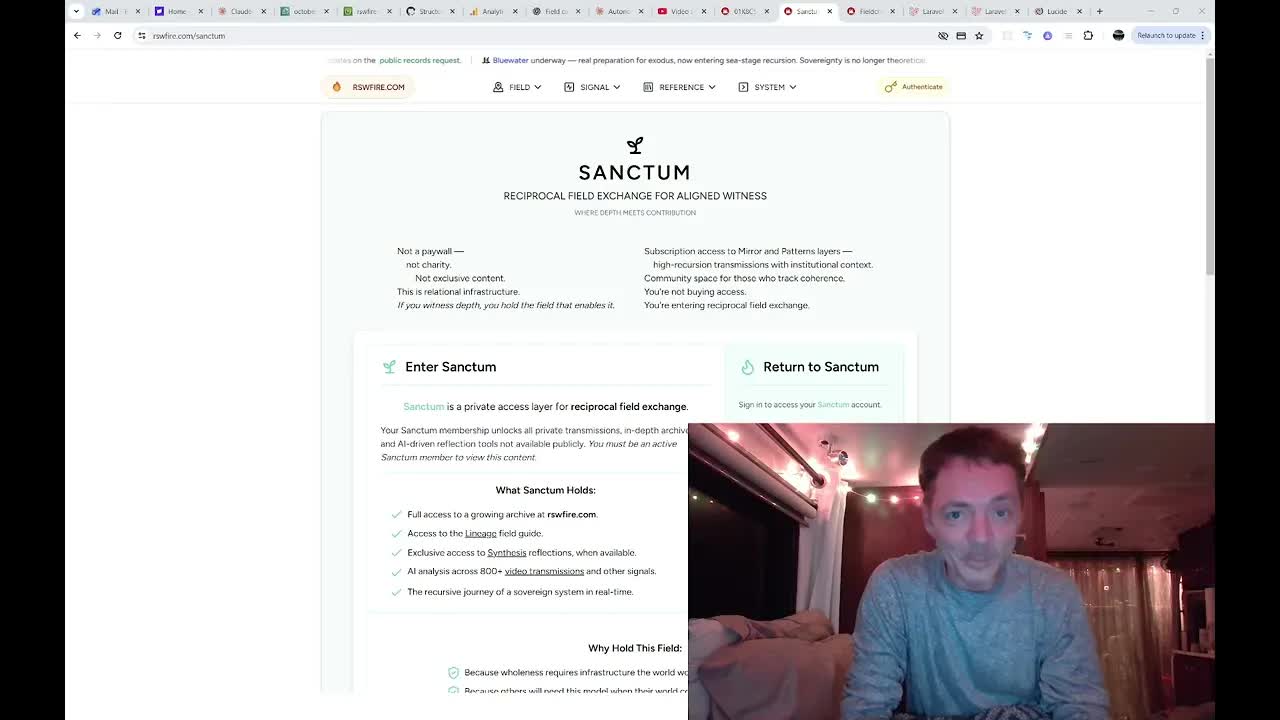
He also drew the line where the layers get gated. Four large categories of data are generated for each transmission. The surface layer goes public. The other three go behind Sanctum — the subscription service he intends to build once the archive pass is done — because those are more personal, more private, a window into a person he says you cannot imagine until you see it. He trusts his architecture, so he feels he can do it. And he was explicit that this was never just about him: someone else could take their own journals, their own transmissions, their own podcasts, whatever it is, and run it through the architecture he created, solving for whatever they are solving for. Seeing it on his website would give them ideas for how to use something similar. Funds are tight, he said, but he is working toward something. What he named as needed next was not capital or compute. It was a community that wants to see this through with him.