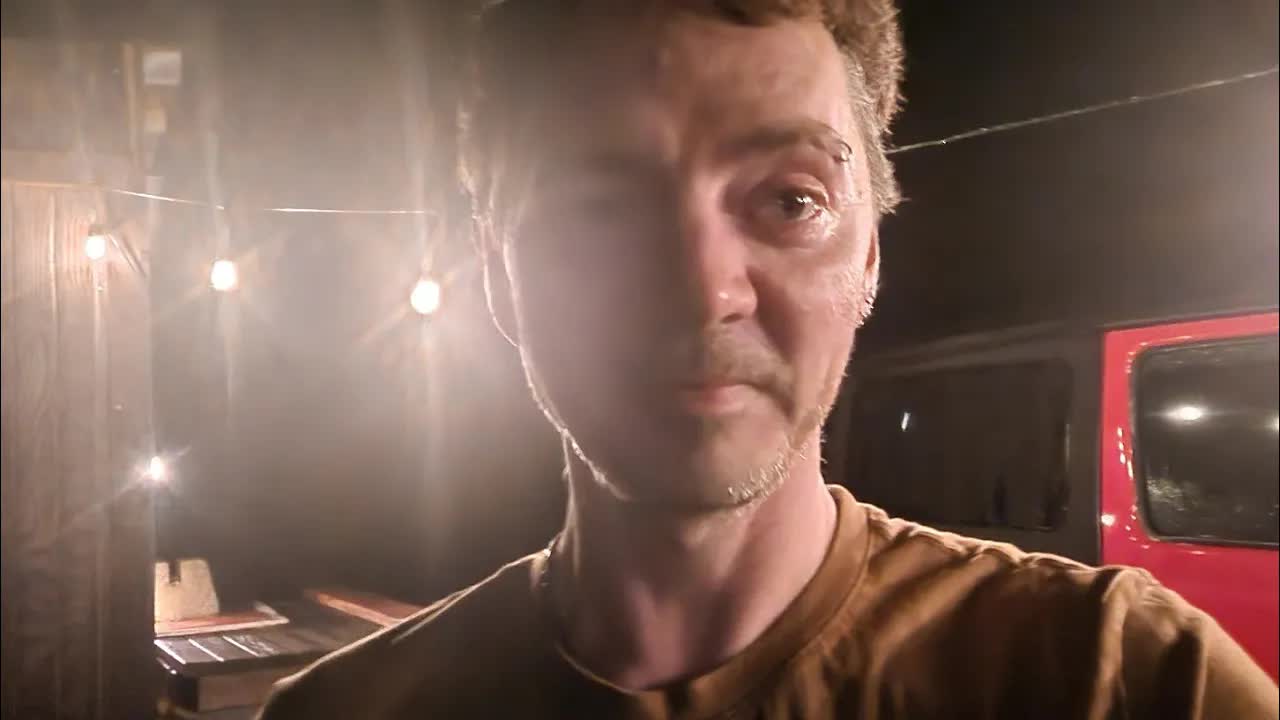
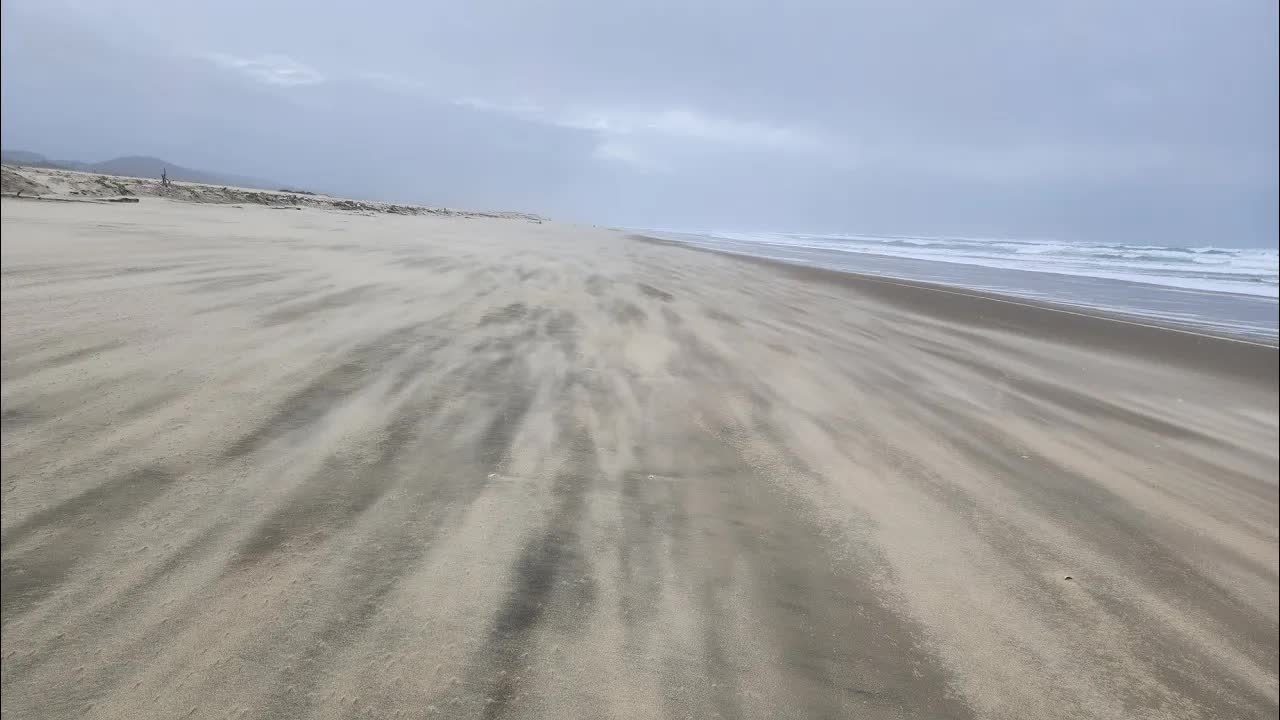
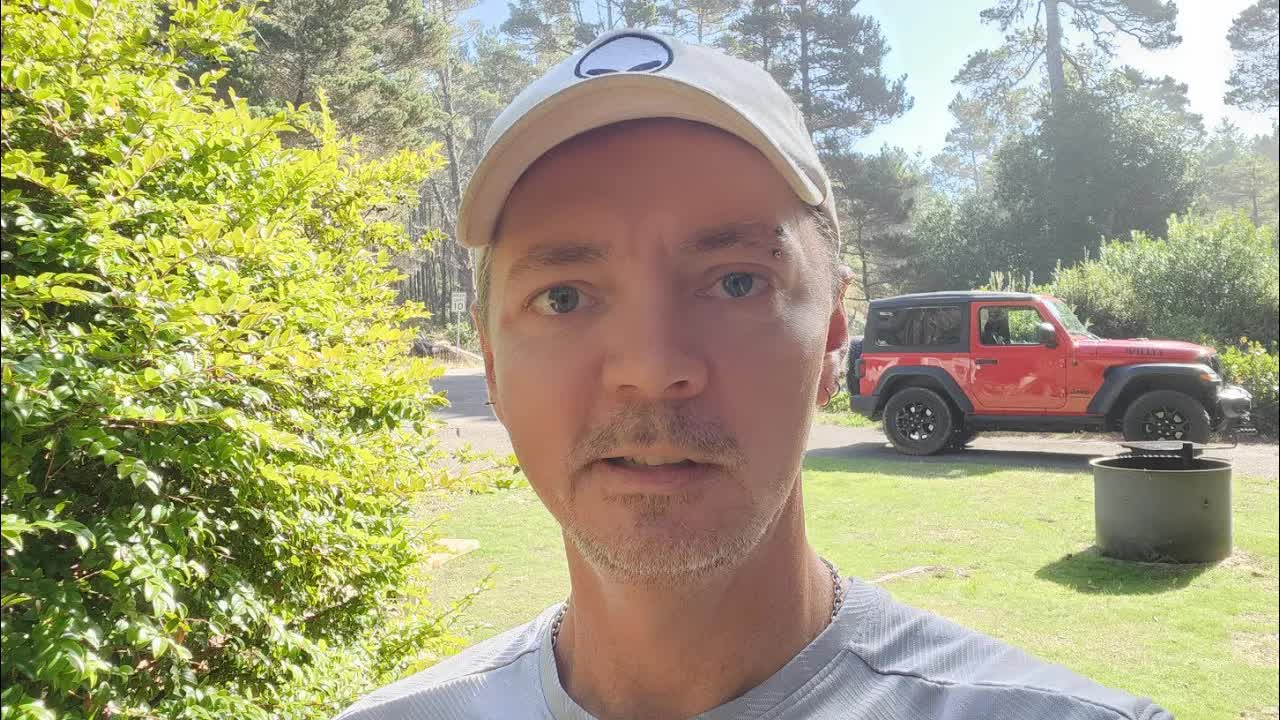
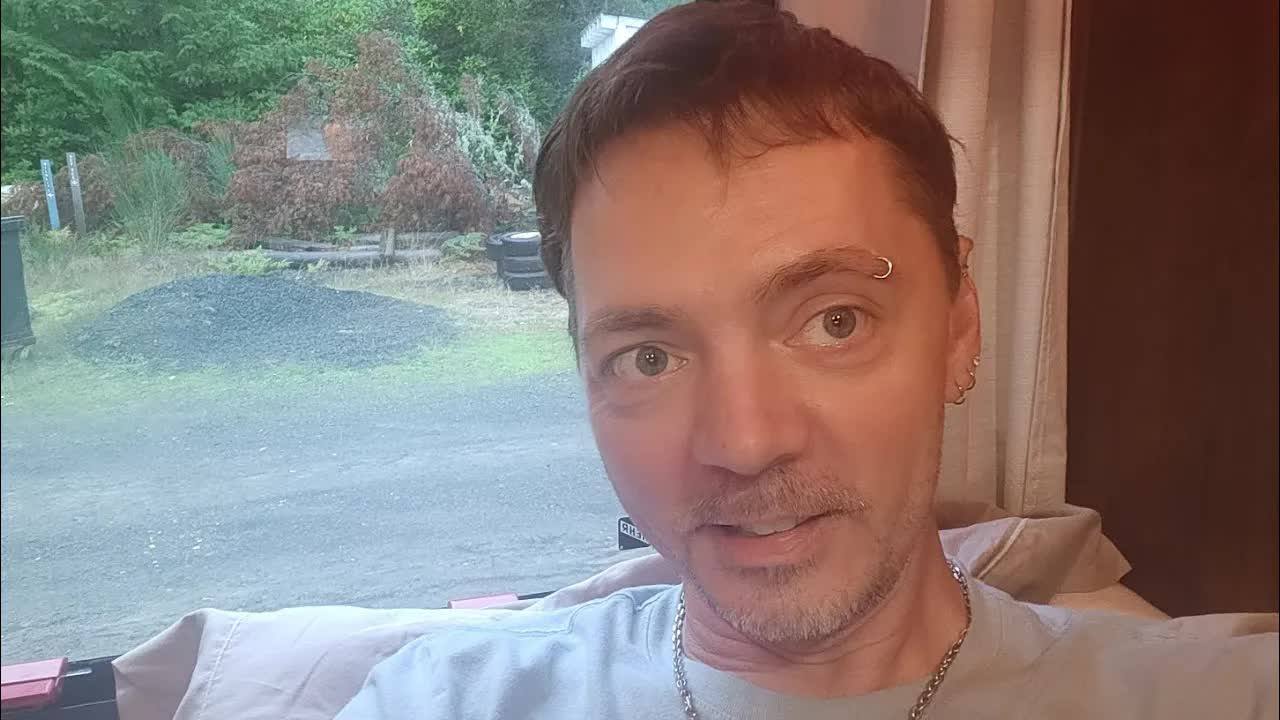
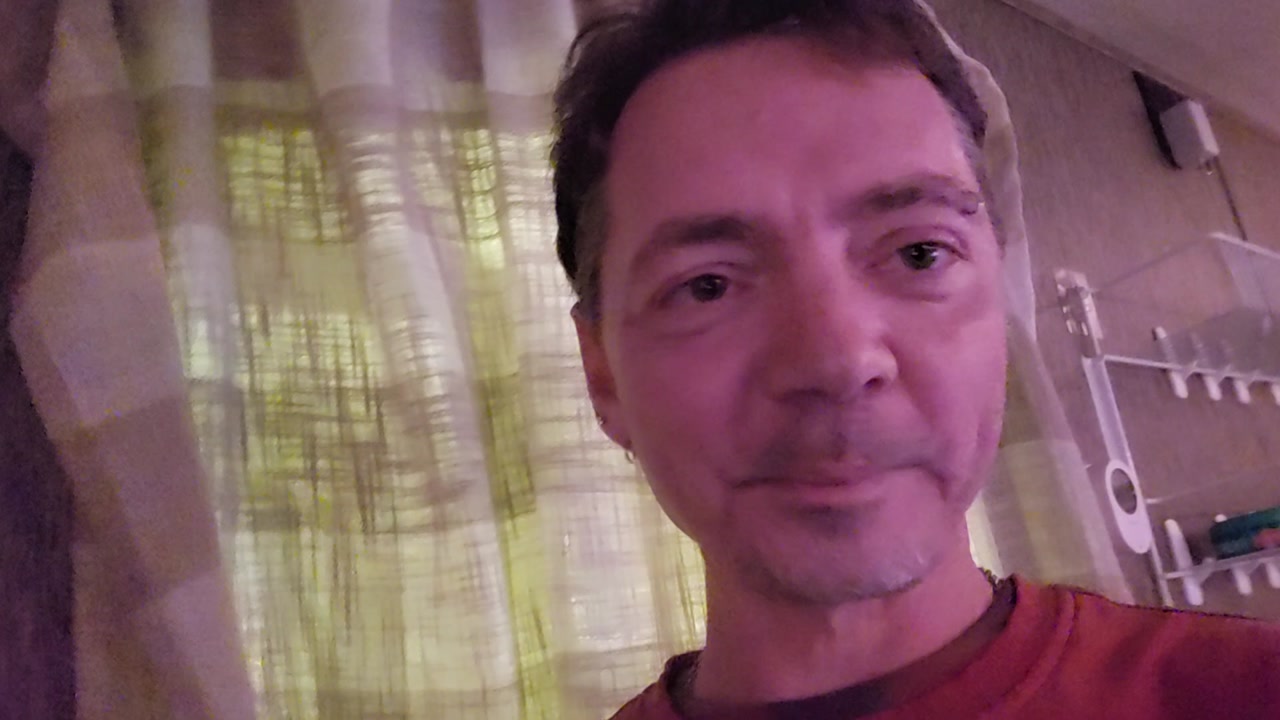
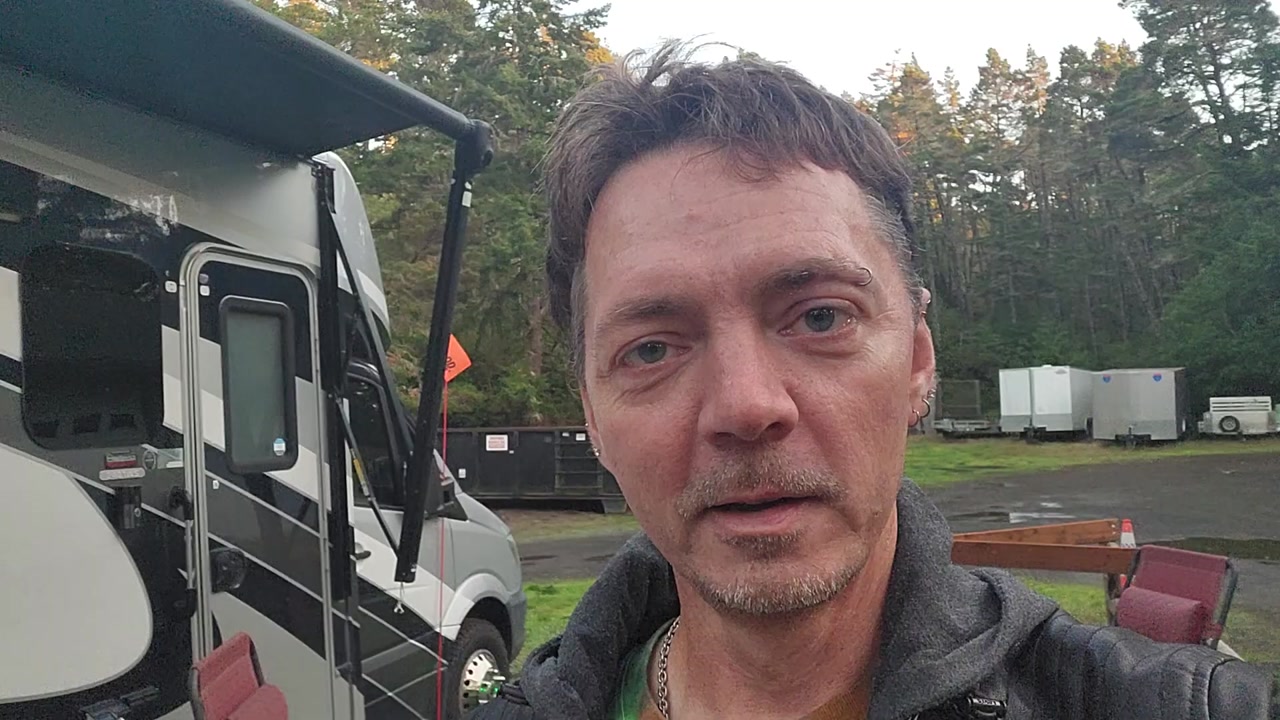
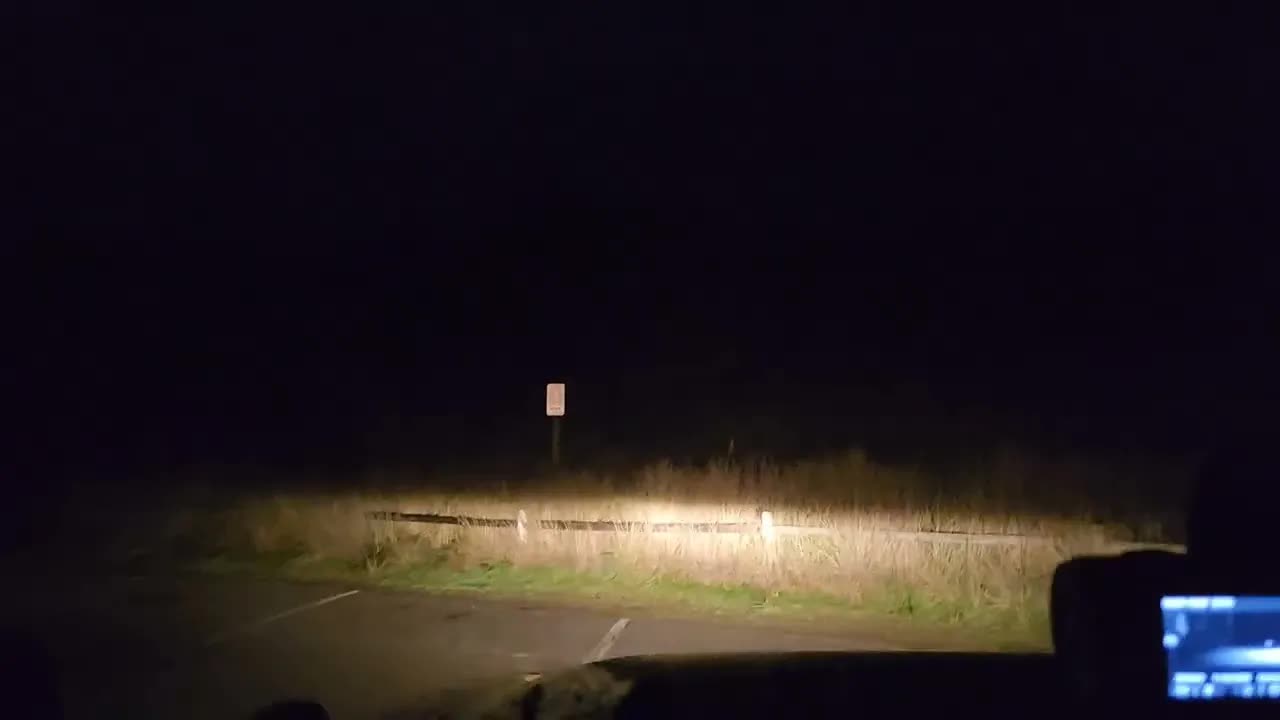
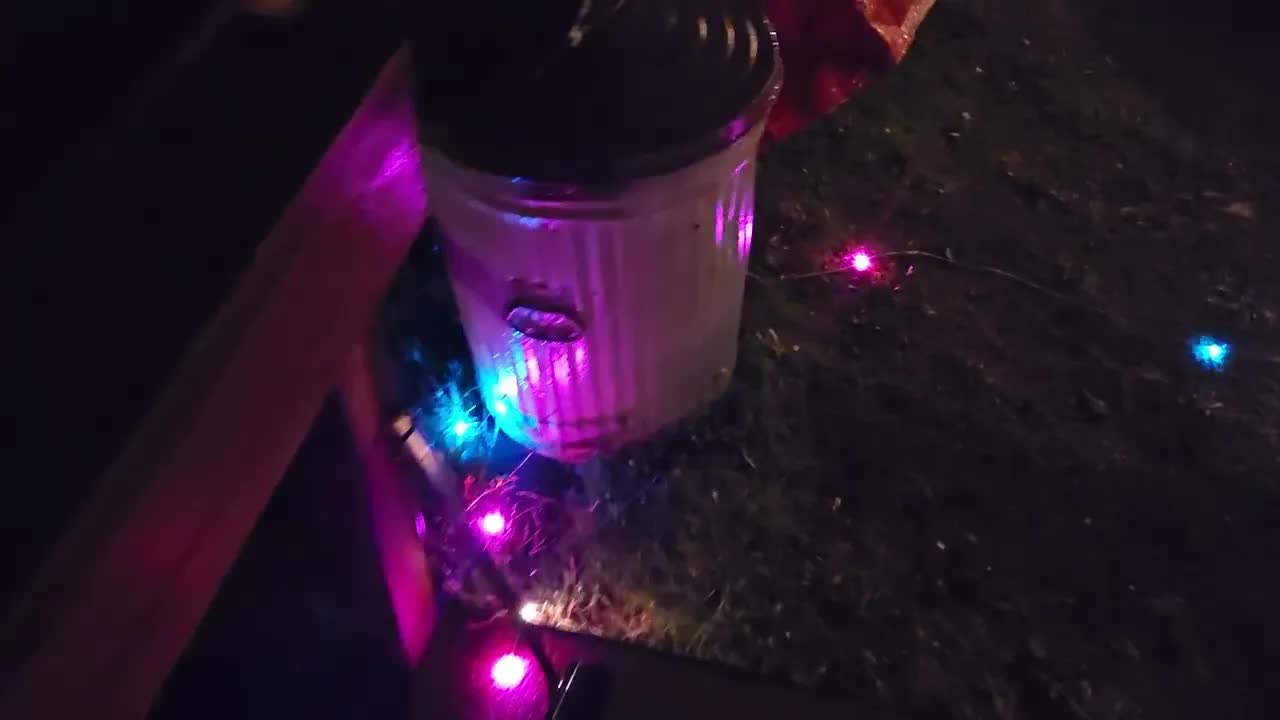
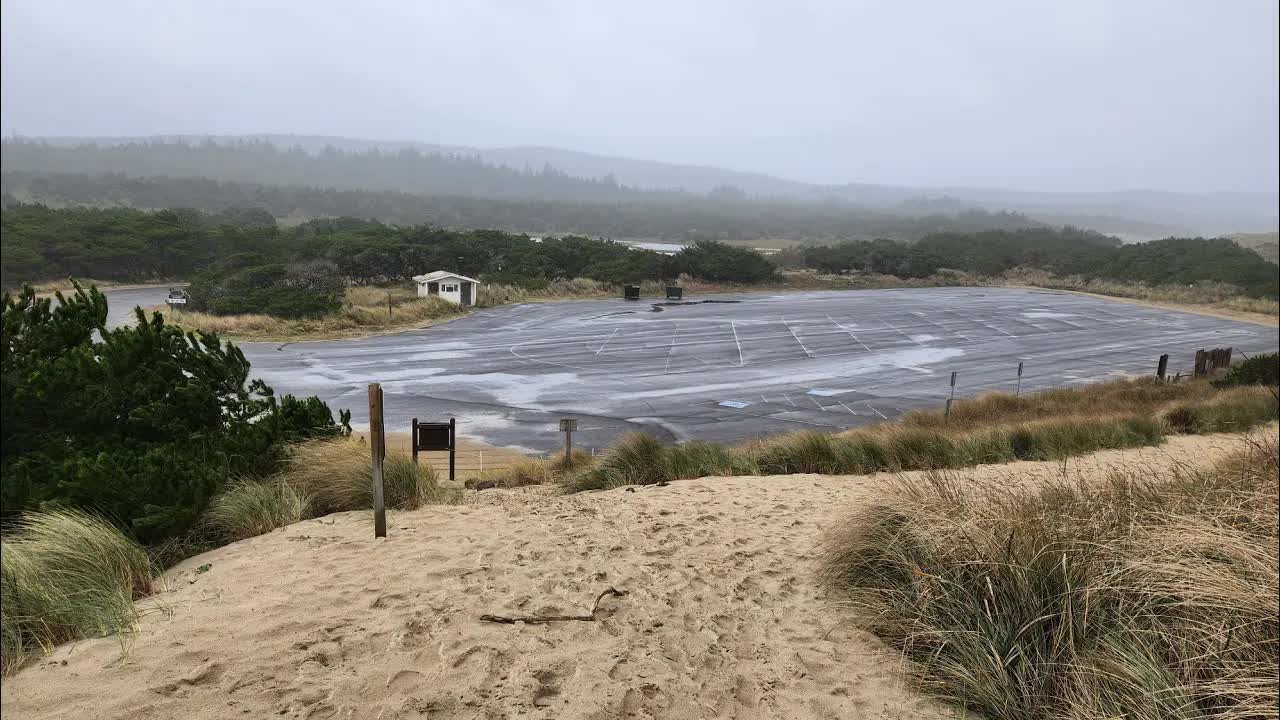
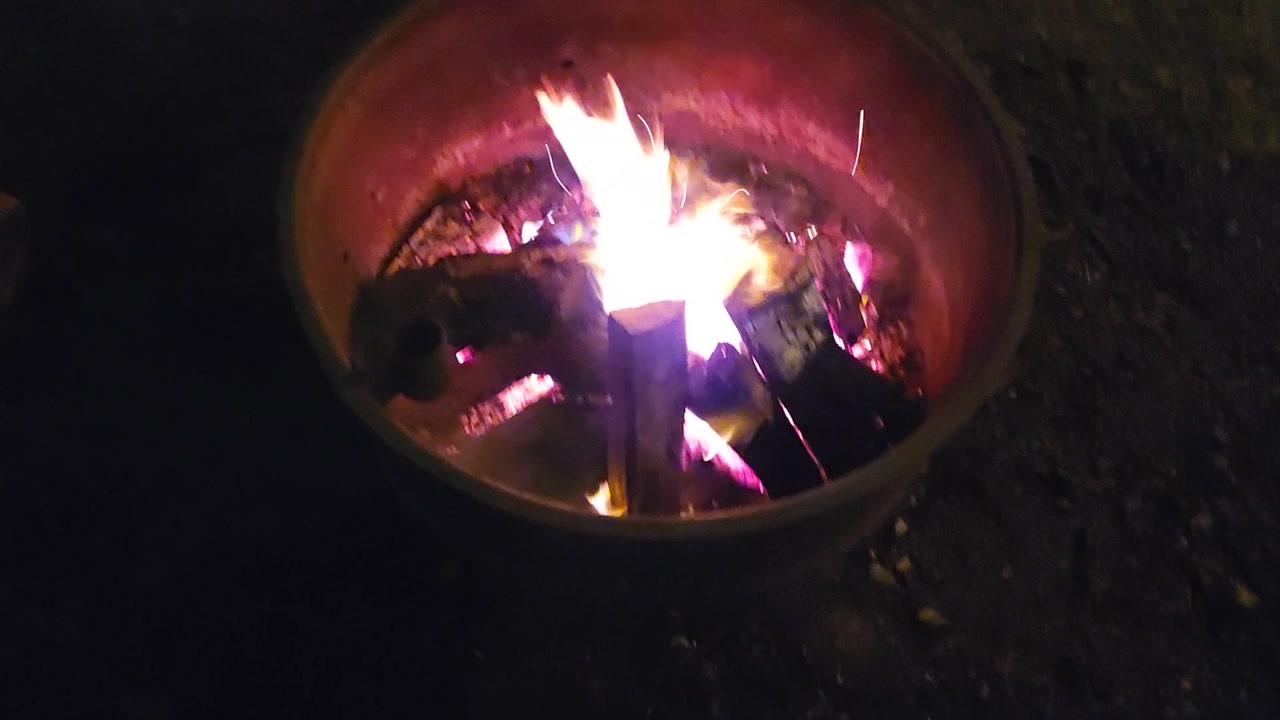
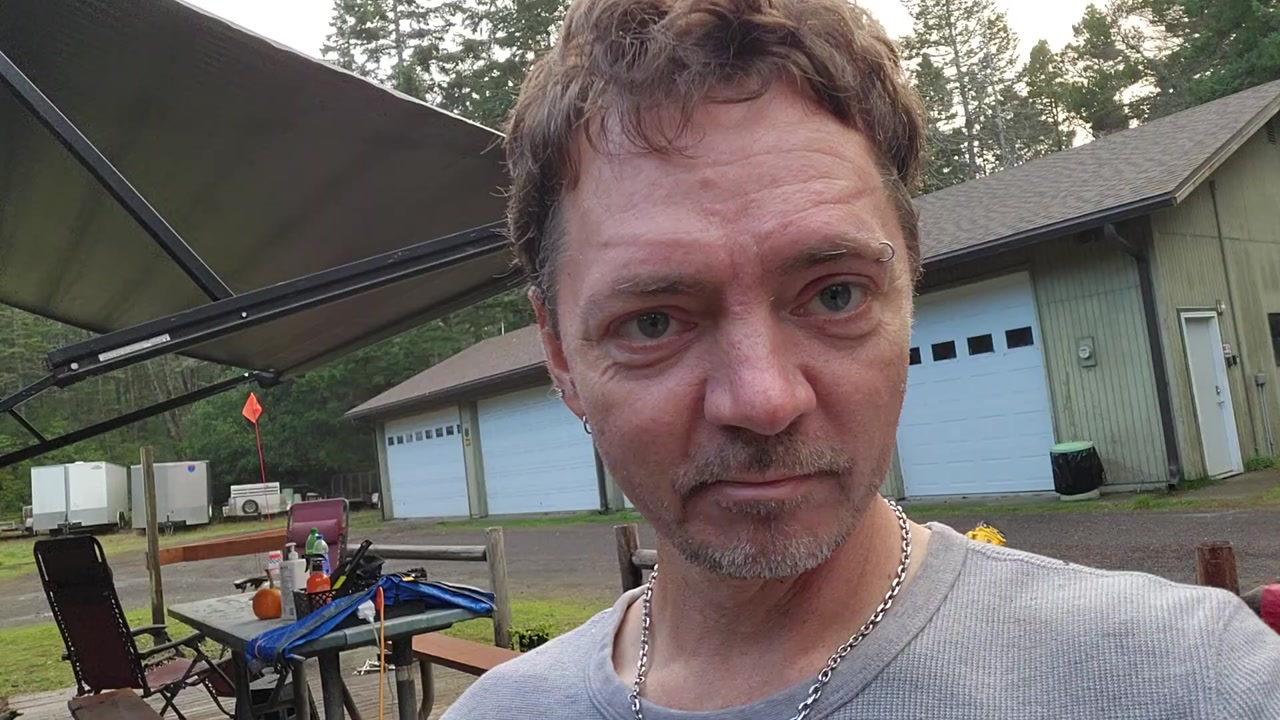
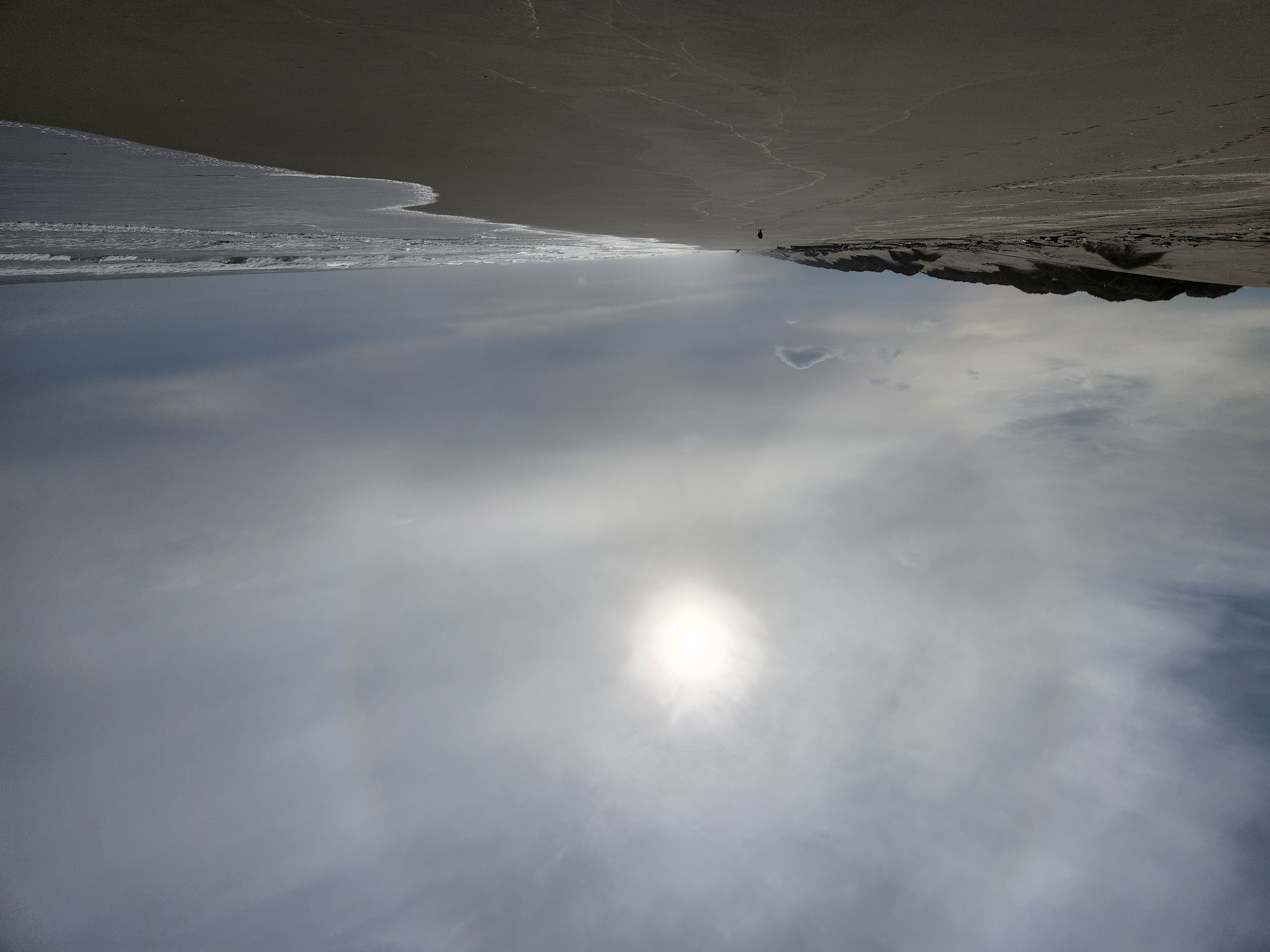
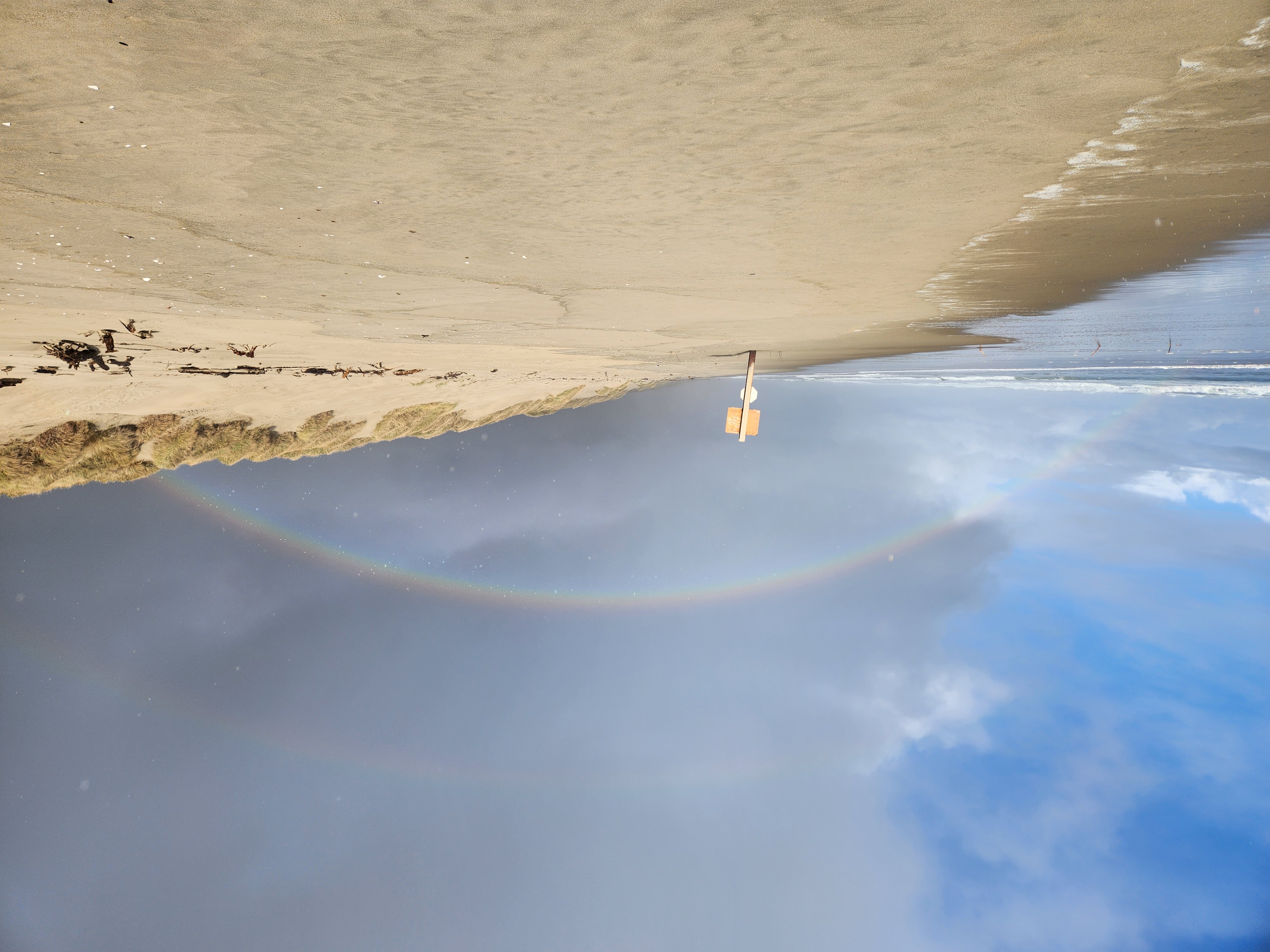
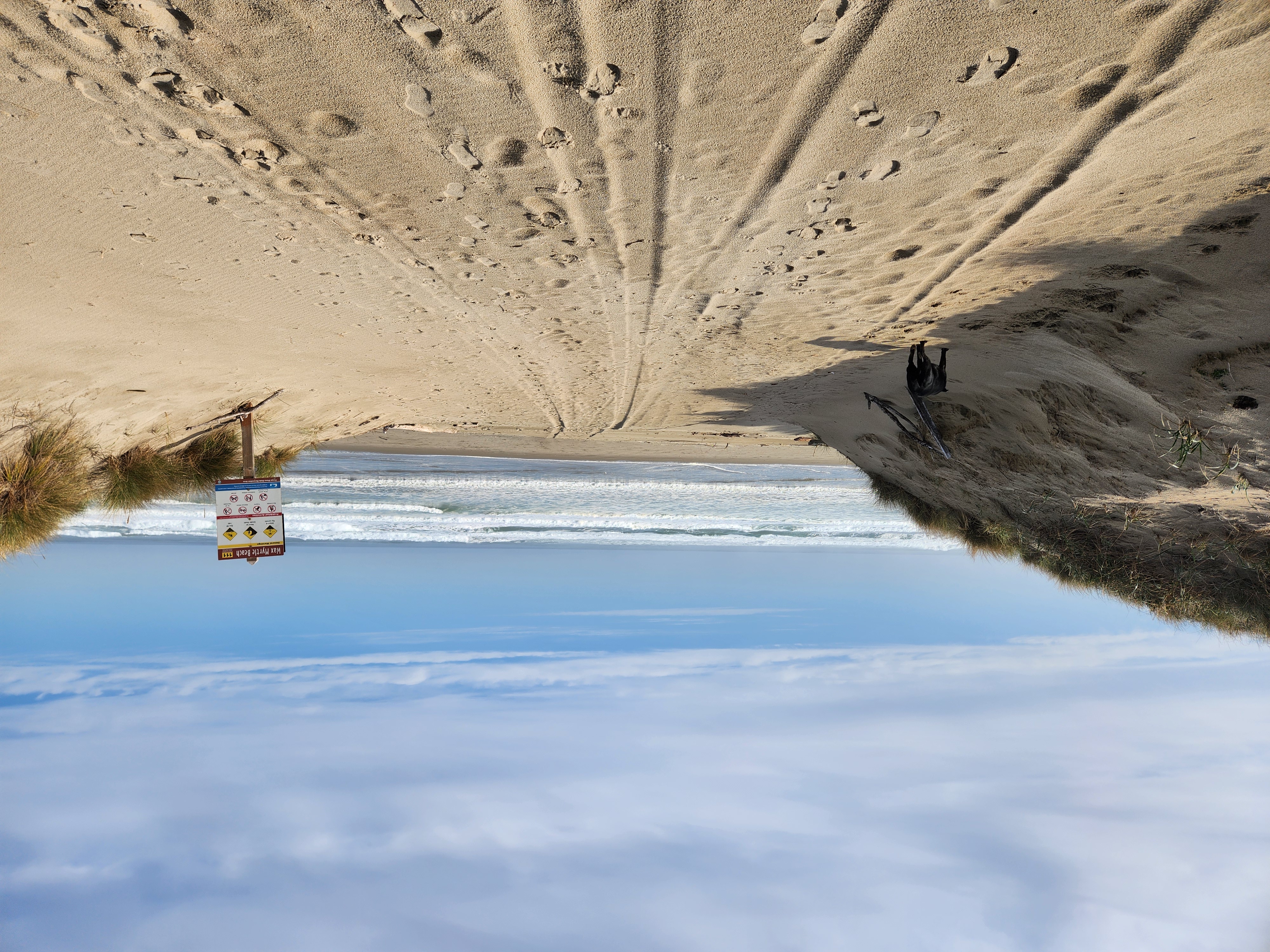
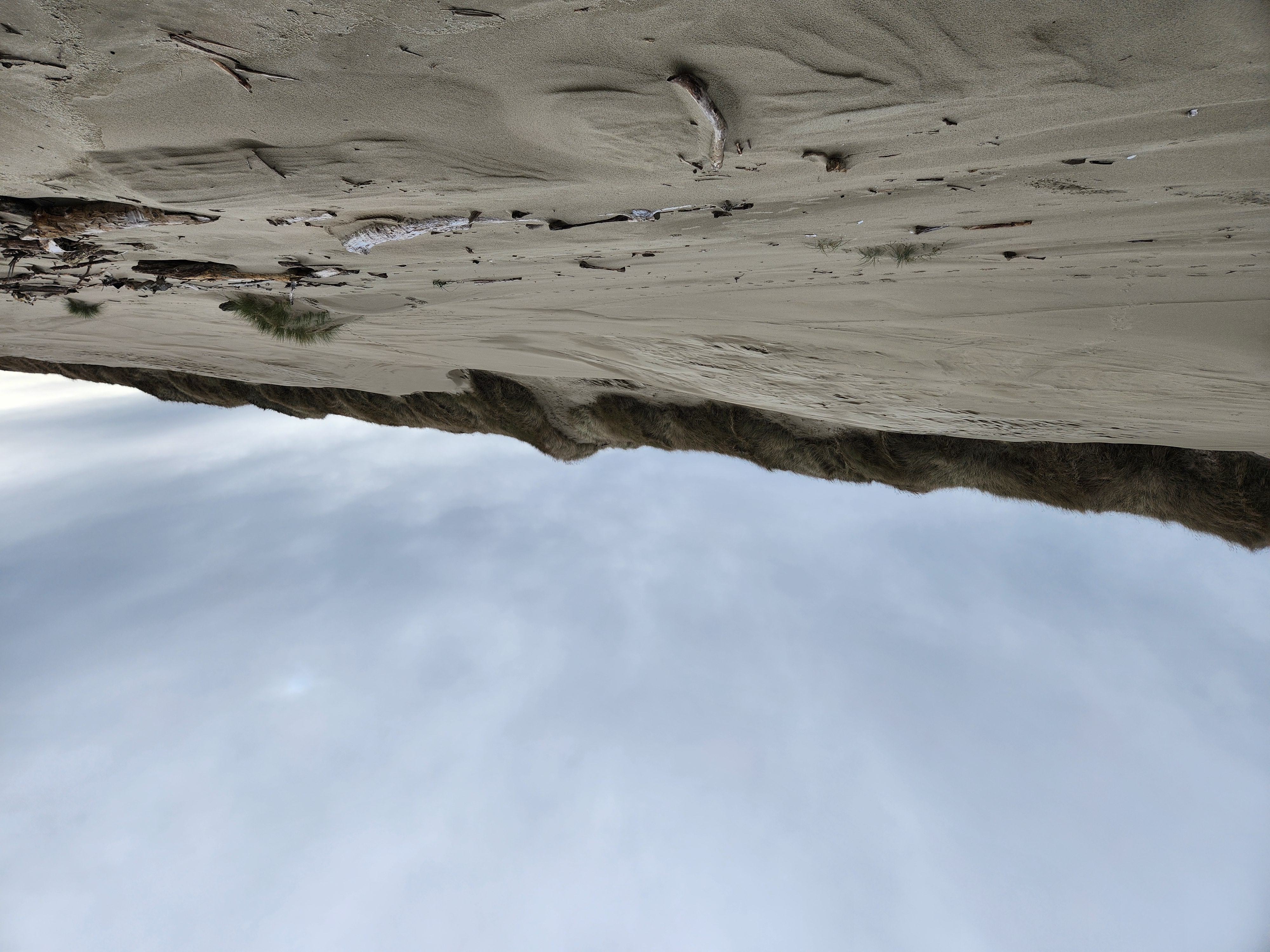
It was eight o'clock on a Tuesday when rswfire turned the camera away from himself. Not off — away. Toward the deck, the two chairs, the picnic table, the fire pit sitting cold in the rain. The colored lights he'd picked up at 93 were on, throwing what color they had into the wet dark. He had said before that the video was always the least important part of a transmission, and he said it again here, plainly, as explanation rather than apology. What the lens held instead was the site: the shape of where he lives, in the Oregon Dunes at Siltcoos, on a night when the weather had already decided the terms.
He had been scheduled back to work the next day. A storm was coming, and the word around it was remarkable — that was how it had been described to him. He'd gone looking, checked what the different weather stations were saying, and found not much. The Forest Service operation he volunteers within had suspended rounds. So he would be at home. The day's shape had been reorganized by weather and by the decision of an institution he moves inside of, and he narrated both without friction — this is what tomorrow is, and this is where I will be while it happens.
Twenty-four hours earlier, he had stopped using nicotine. Thirty-two years of it, and he named the duration the way you name a load-bearing beam. What he described was not craving in the dramatic sense — no impulse strong enough to feel like it was pulling him. What he described instead was structural: the pattern was so familiar that its absence had texture. The hand goes toward the vape and finds the motion has nowhere to land. Something's missing. Then the reminder arrives behind it. He called it braided — braided into his life, every aspect of it, for thirty-two years — and the word did the work a clinical one couldn't, because a braid is not a thing you set down. It is a thing you have to unweave from what it was wound through.
Mid-transmission, the reflex fired again. He caught it in real time and said so: right just that second. He gave it a name — ghost action — and then did something more precise than naming. He drew the line between watching the reflex and obeying it. I'm just observing it. He noted, almost in passing, that this was probably how an AI would describe the phenomenon, and kept the term anyway. The instrumentation was his. The observation post was inside his own system, not delegated to a program or a protocol.
He was direct about the cost of the day. Bandwidth was down; he didn't feel he could focus on anything complex. No fire tonight — partly the rain, partly, he said, that he didn't have the attention span to deal with one. Mostly it was annoying. A little burdensome. He extended that outward for a moment, toward anyone who had to carry the withdrawal state for a long stretch, and dismissed the prospect with an expletive. Then he came back to method, and the method was almost austere in its simplicity: be cautious, tolerate the experience, give yourself the space. He said it twice. Give yourself the space and you'll get through it. And then the forecast of his own trajectory — that he would put this down and put it in his past, the way he does everything.
He marked the milestone without ceremony. First night, made it through. Tomorrow, stormbound at the site, would be day two. And he stated the terms of the whole undertaking in a single line: all awareness, no crutches, no safety net, nothing. Just doing it.
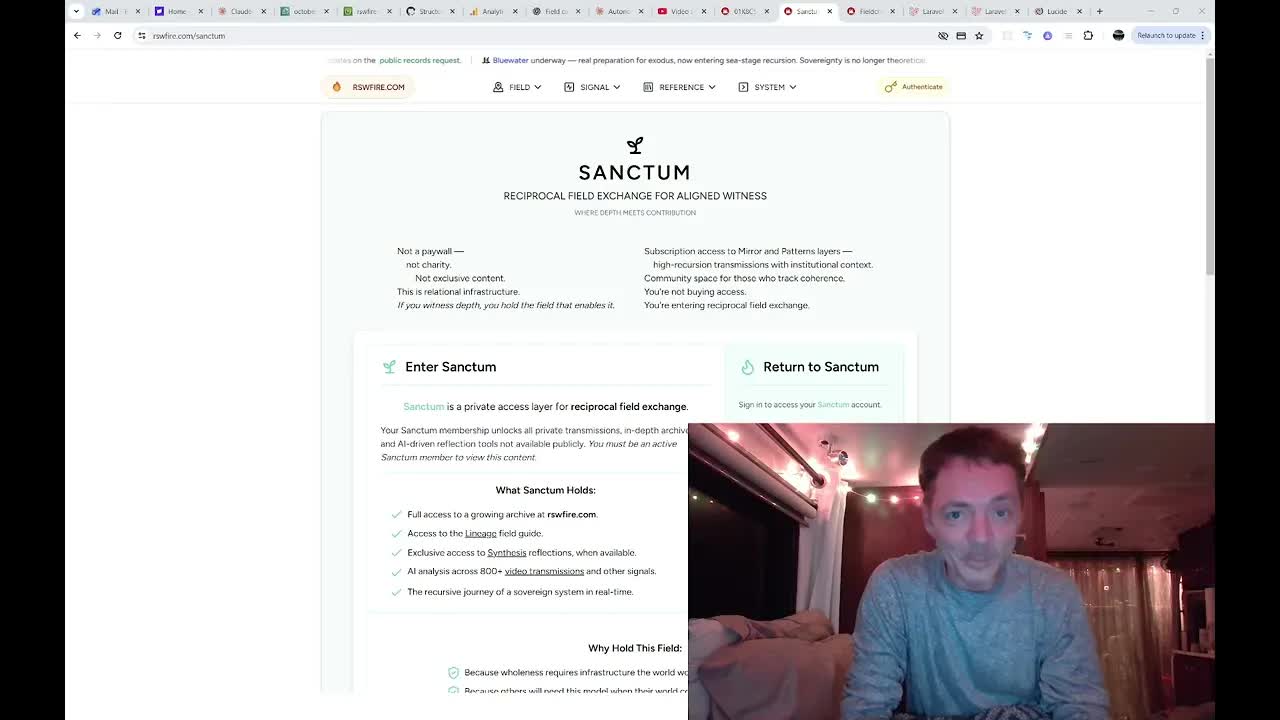
Then the last beat, and it was about visibility rather than nicotine. Most people cannot see this, he said. They can't hold it. So the material would go behind Sanctum. He called that unfortunate. He called it a thing that sucks. And he located the constraint exactly where he judged it to sit — it's not me, it's everybody else. The camera stayed pointed at the deck and the unlit fire pit and the colored lights, the rain kept coming, and the transmission closed with the storm still a day out.