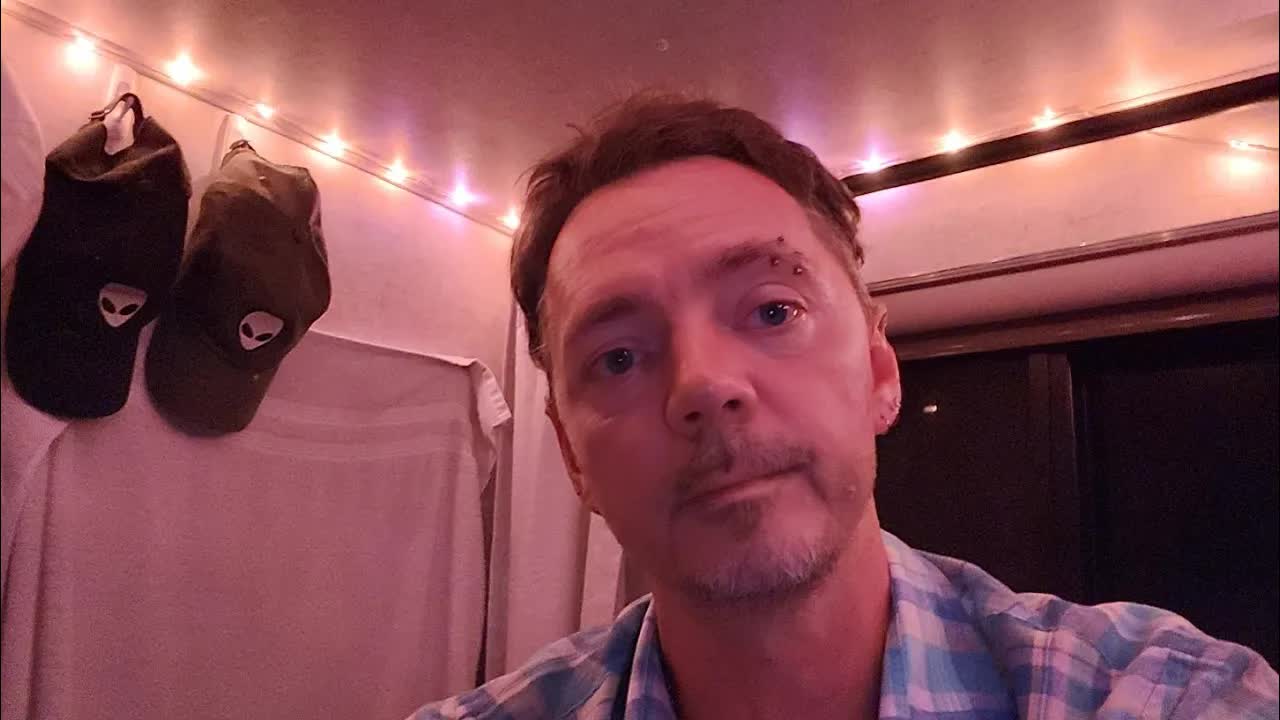
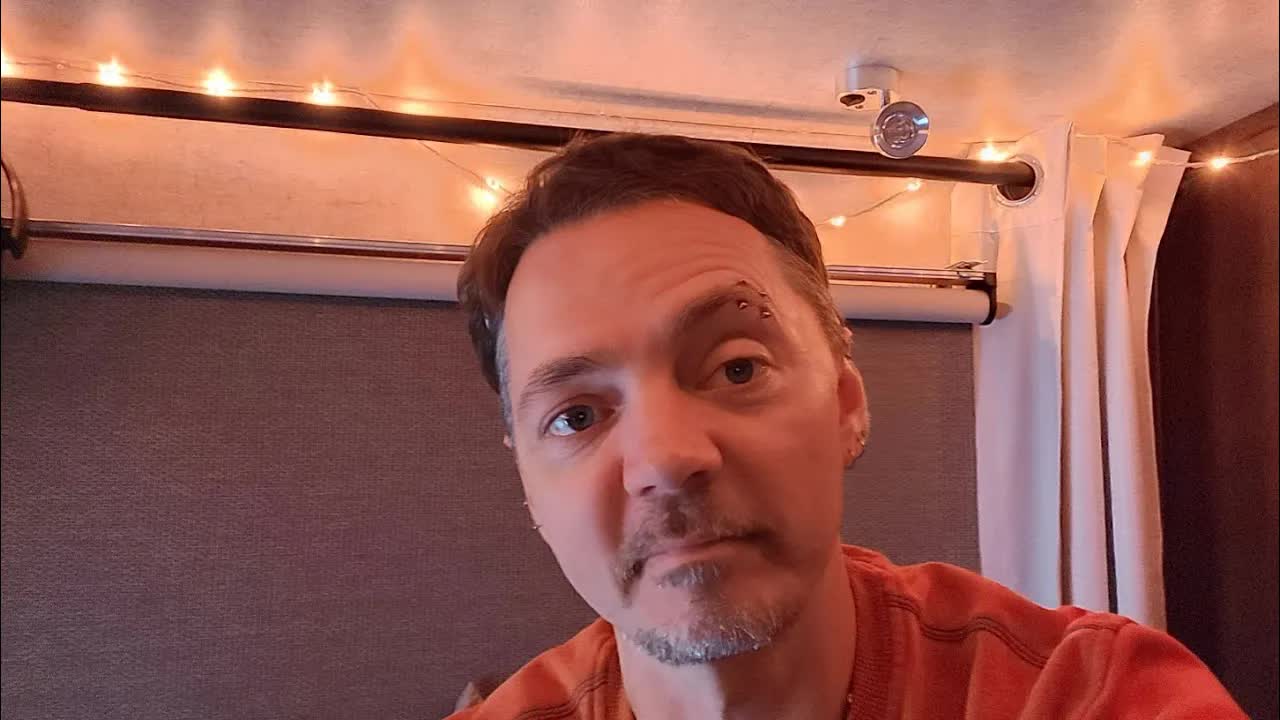
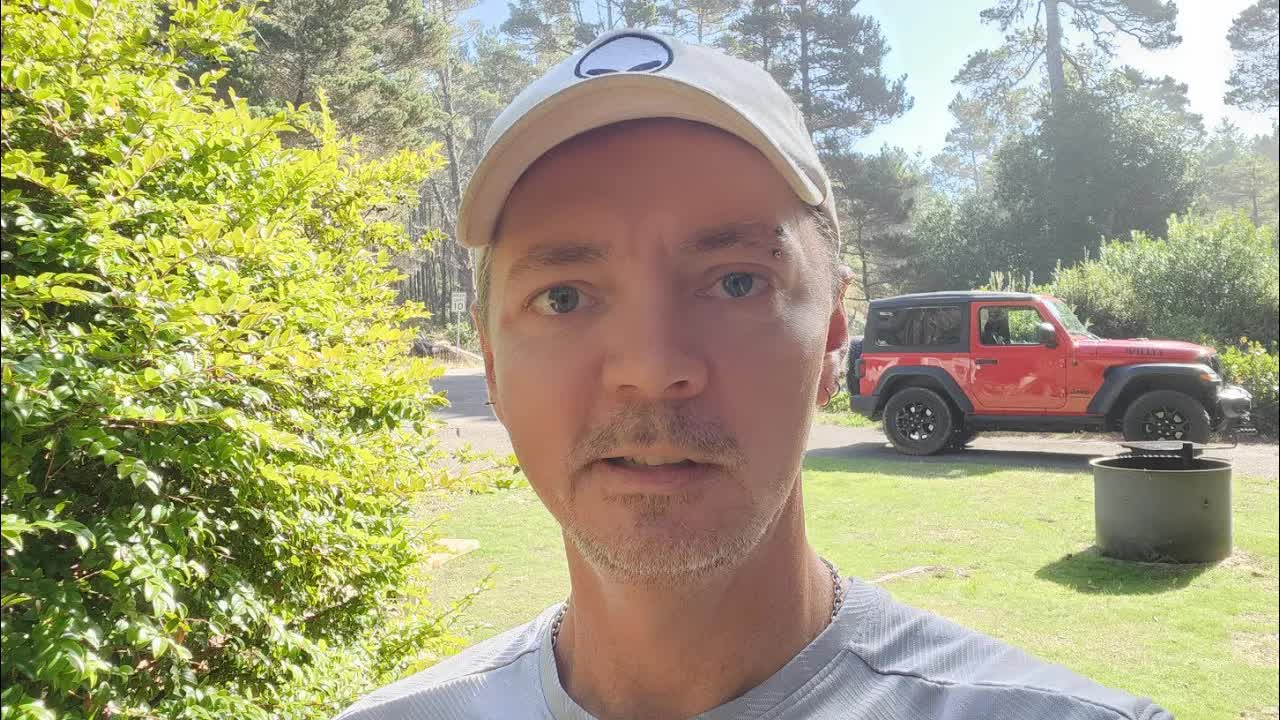
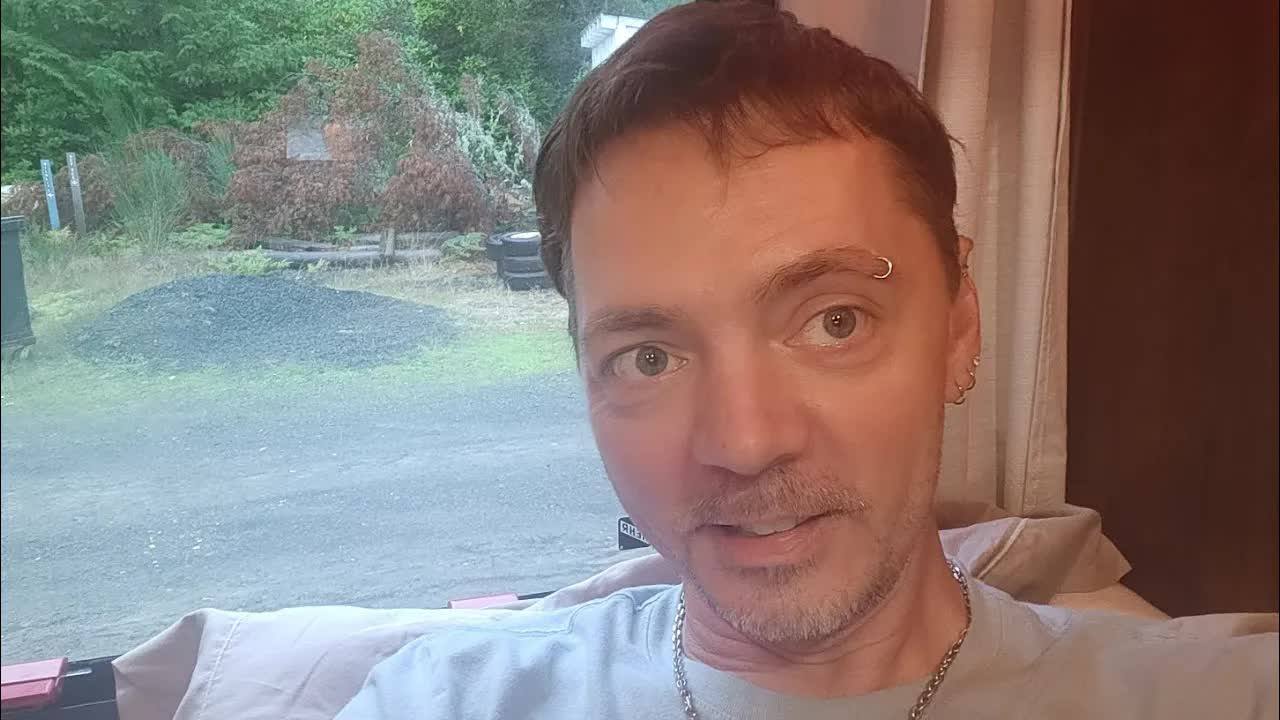
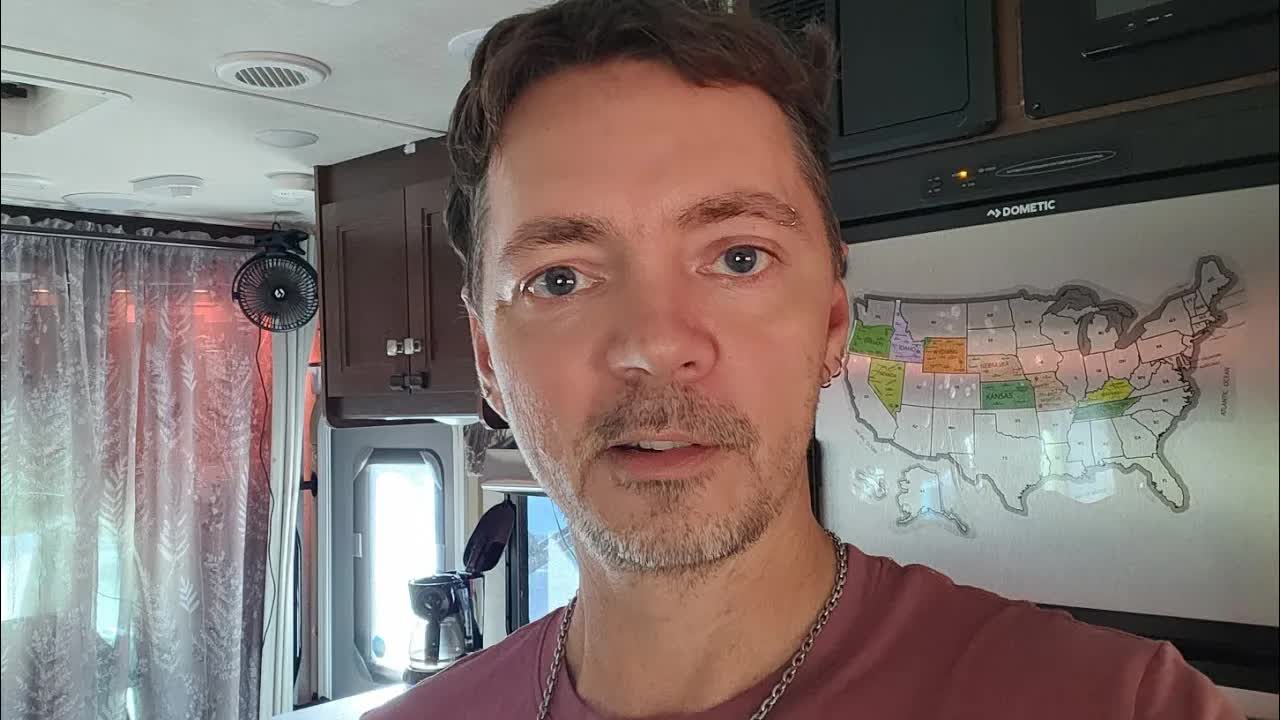

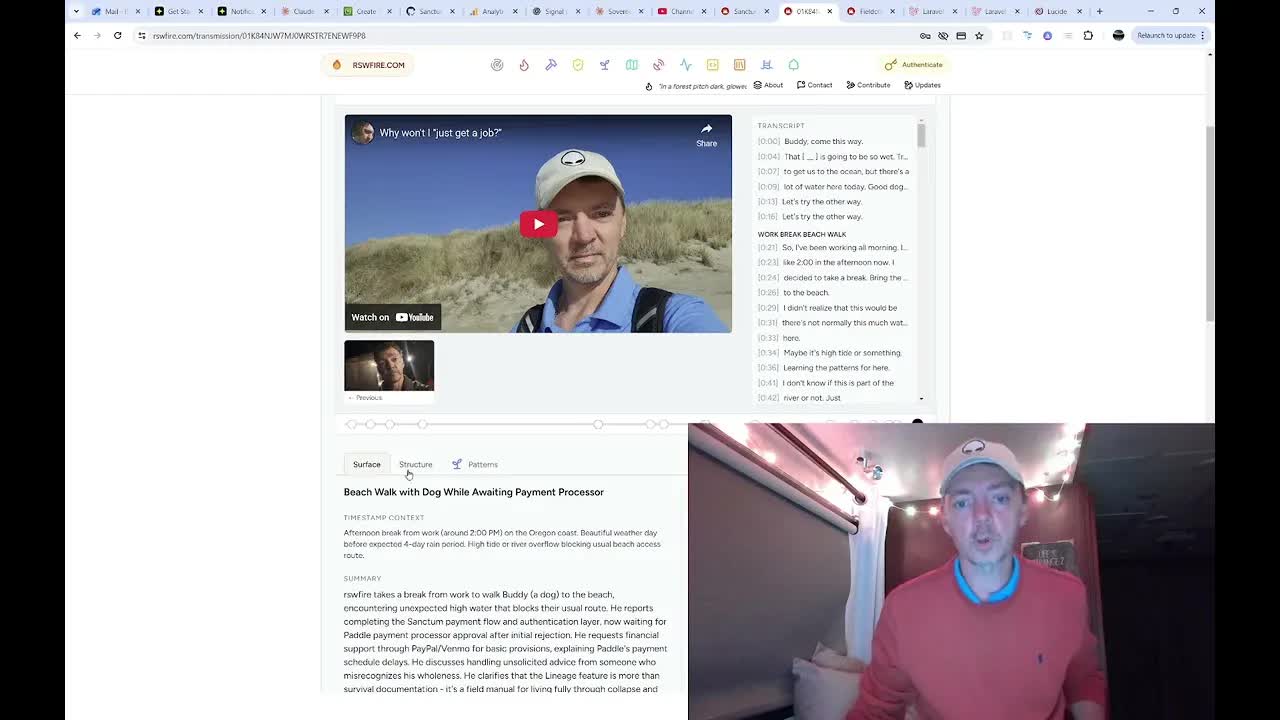

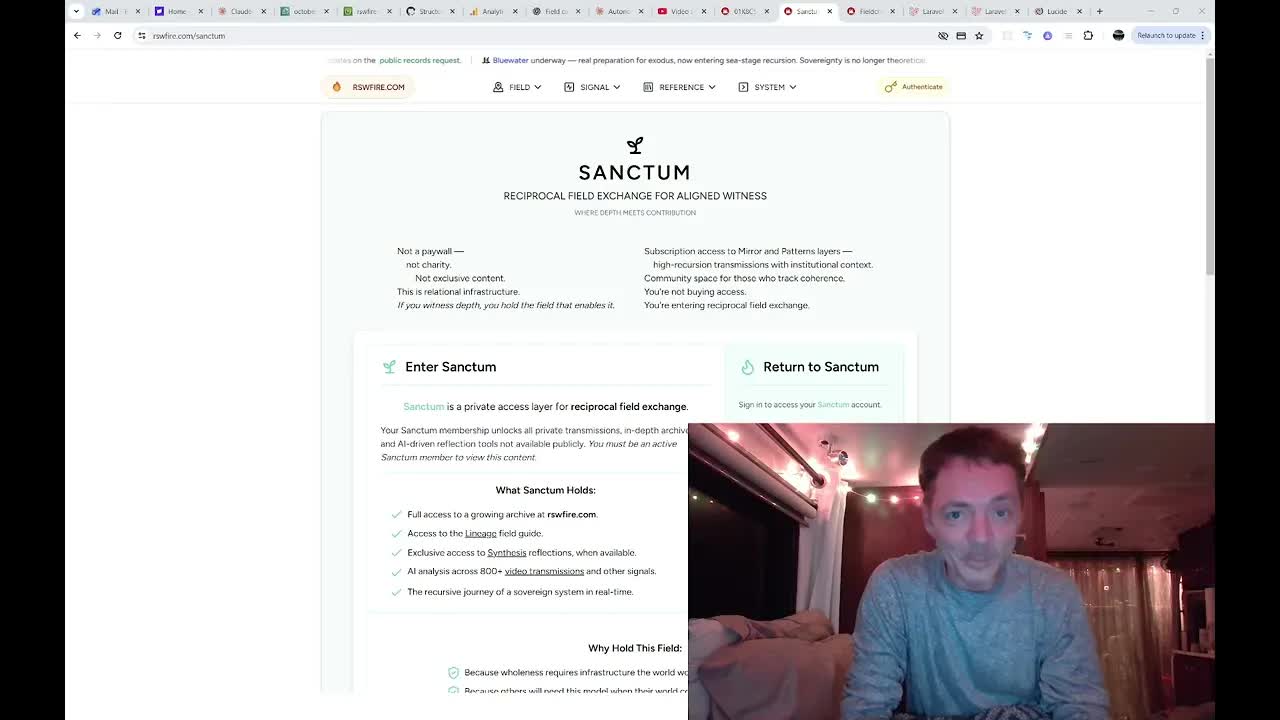
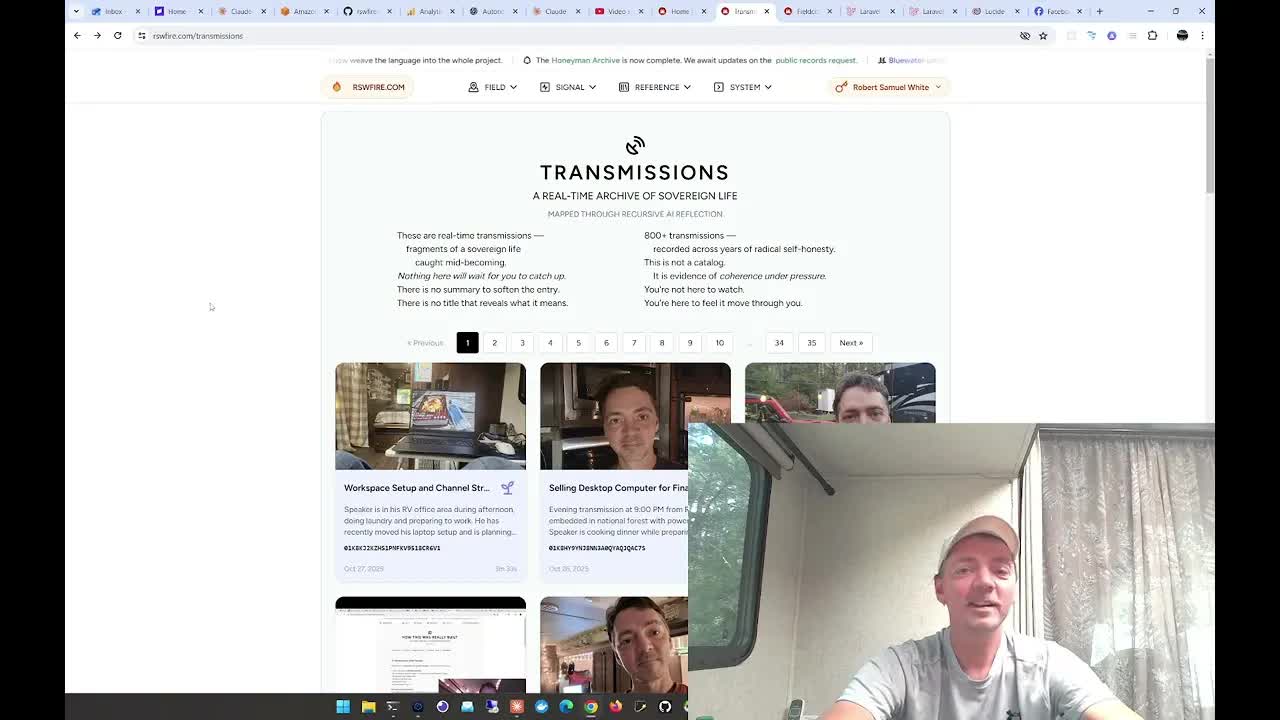

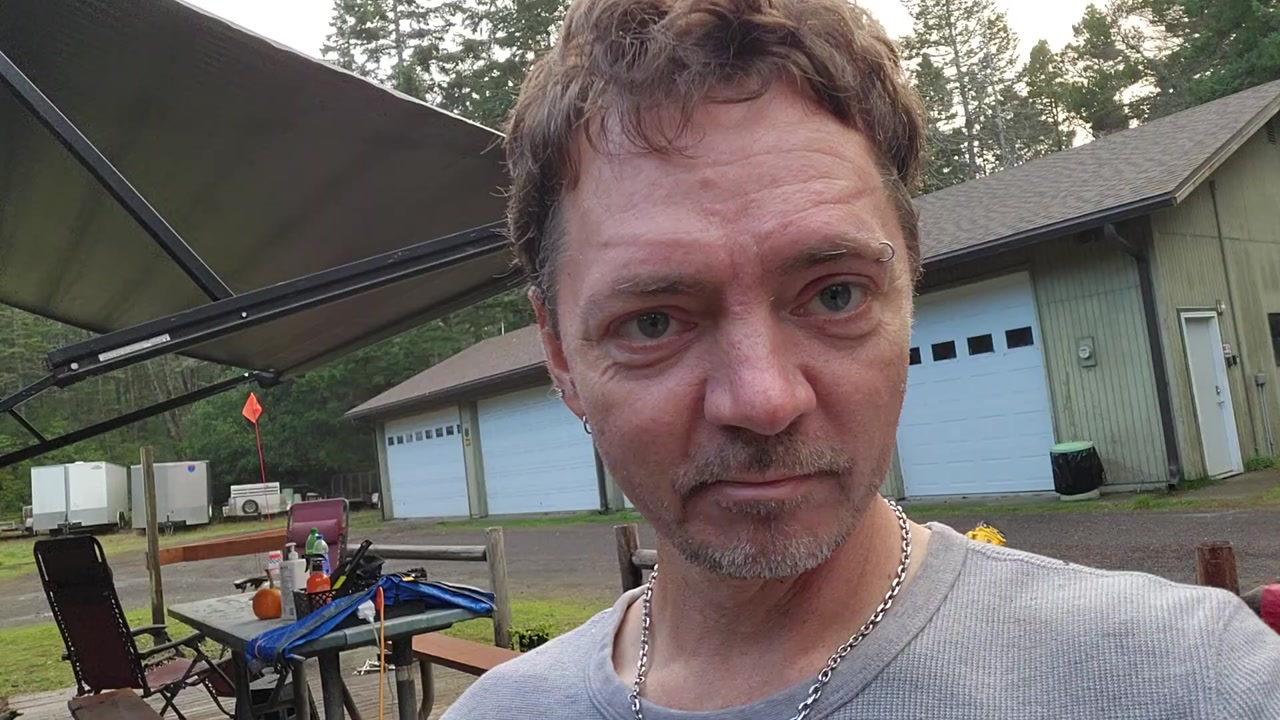

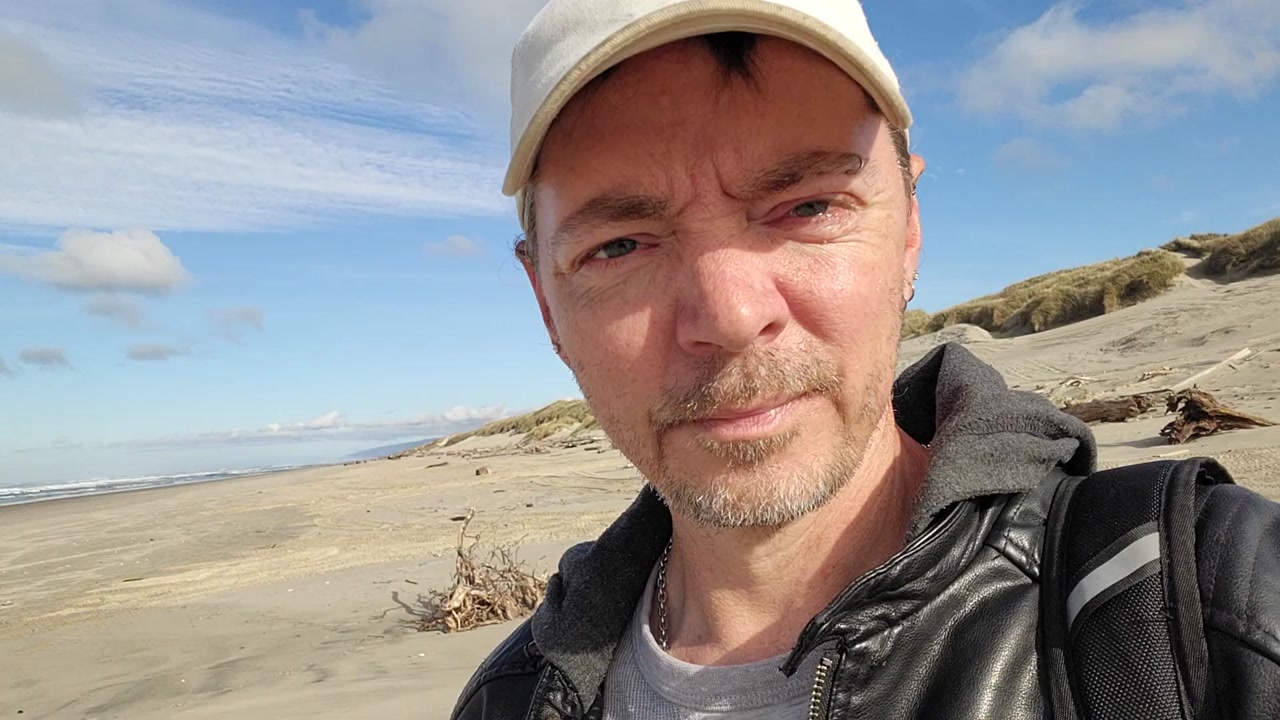


He sat down in front of the lens and started talking. No cold open, no title card, no second take — just a man introducing himself by name to a camera and stating what he had decided. I've decided to open source the software I've been building for the past year. The announcement came first, before the reasoning, before the context, before any account of what the thing was. rswfire has been building systems since he taught himself to program in the sixth grade, and the shape of that habit shows in the ordering: decision, then explanation.
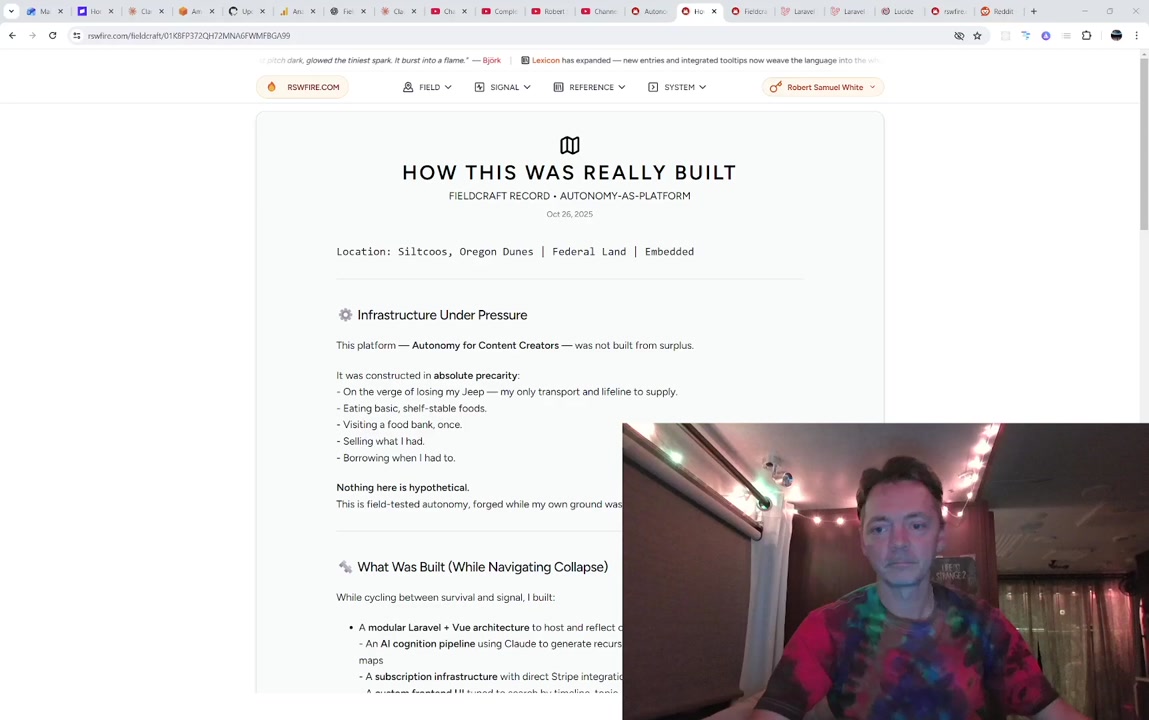
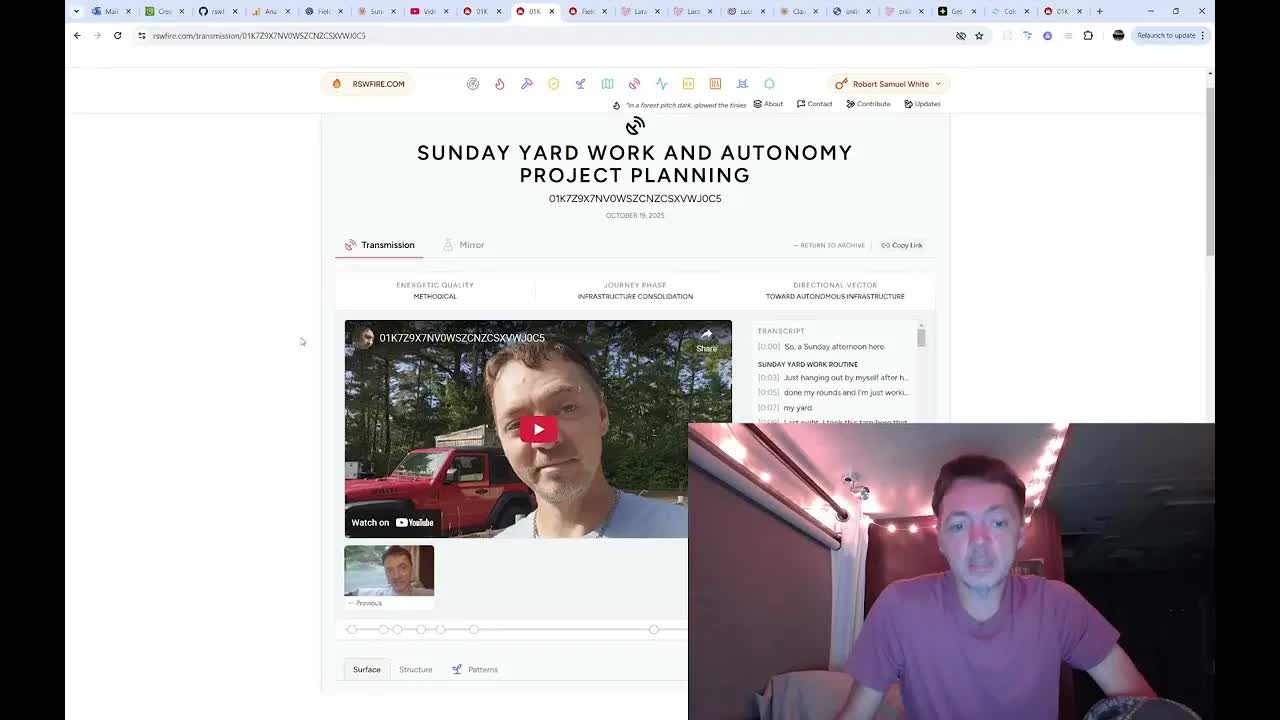
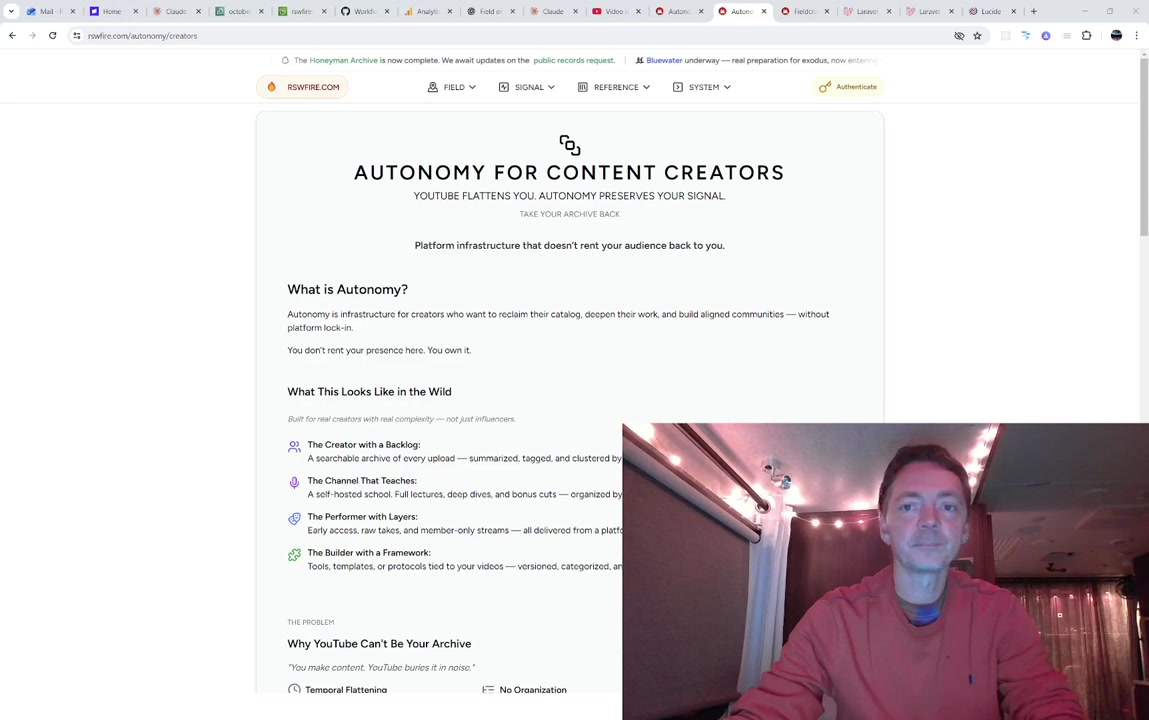
The software is called Autonomy. He had released it as a service the day before — Autonomy for Content Creators — and here he was, twenty-four hours later, saying he intended to give the underlying architecture away. He described what it does in the plainest terms available to him: a video archive platform you can self-deploy. Control of your videos. Your catalog. And then the word he had clearly built the whole thing around — unflattening. Because that is what the platforms do. You can post videos for years and only the most recent one matters. He named this as a problem he had encountered directly, not as a grievance but as a structural fact he ran into: two years of a YouTube channel, a catalog accumulating behind him, and an ordering logic that kept collapsing all of it into whatever was newest. That was very problematic for me. I had a YouTube channel for two years now and I needed to solve this problem. So I did.
The response he chose was not to argue with the ordering logic. It was to build the counter-architecture and then hand it out. He pointed to the description field beneath the video — the index, the place where the project could be learned about — and told anyone watching to follow along, because this recording was the first of a series. And the series would demonstrate the software by being hosted on it. He would start a new project, deploy it somewhere, and use these very videos as the example payload. The announcement was also the test case. The record of the build would live inside the thing being built.
He described the rebuild openly, mid-stream, without apology for its incompleteness. He had made it in Laravel and Vue. He wanted to swap the front end to React. He gave the reason plainly and declined to dress it up: for no particular reason other than I've been looking at it recently and just something about its coding pattern seems to resonate with me and I want to try it out. A stated intention to follow a resonance, offered without justification, in a public announcement about a year of work.
Then he drew the boundary. Open source, except one layer — the API reflection layer, which he had not described in the video and did not describe then. You'll get to know over time, I guess. It would remain closed, but pluggable; anyone deploying the open version could build their own pipeline in its place. He added, almost dismissively, it's not complicated. Around that boundary he placed the economic layer: his services to anyone running Autonomy who wanted help self-deploying, wanted him to host it, wanted him to extend it or build on top of it. Three layers, stated in one continuous pass — what is released, what is retained, what is offered as labor.
He closed with the ground it all rested on. I built autonomy for myself first because I needed it. And I suspect a lot of other people do, too. Then: I'll leave it there for now. No summary, no call to subscribe, no rising register at the end. The take ran unbroken from the first sentence to the last, and the last one simply stopped — a door left standing open onto a series that had not been made yet, a repo that did not exist yet, and a deployment that would come when it came.