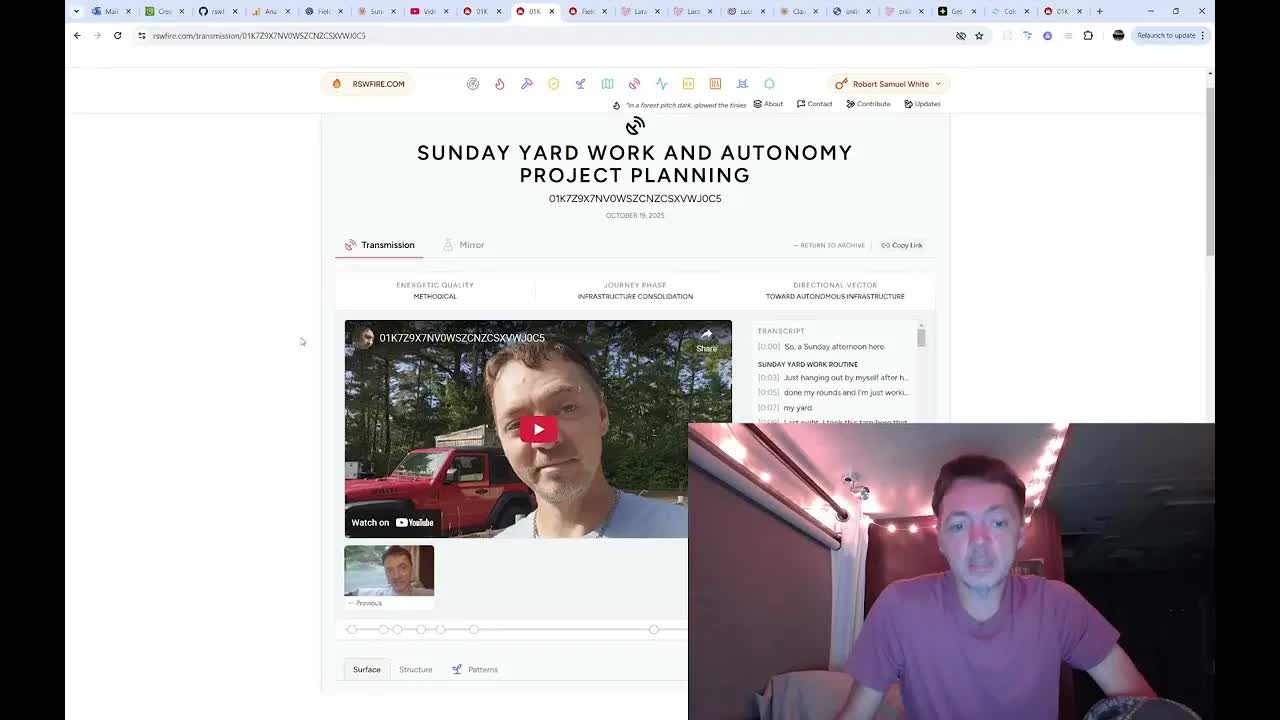

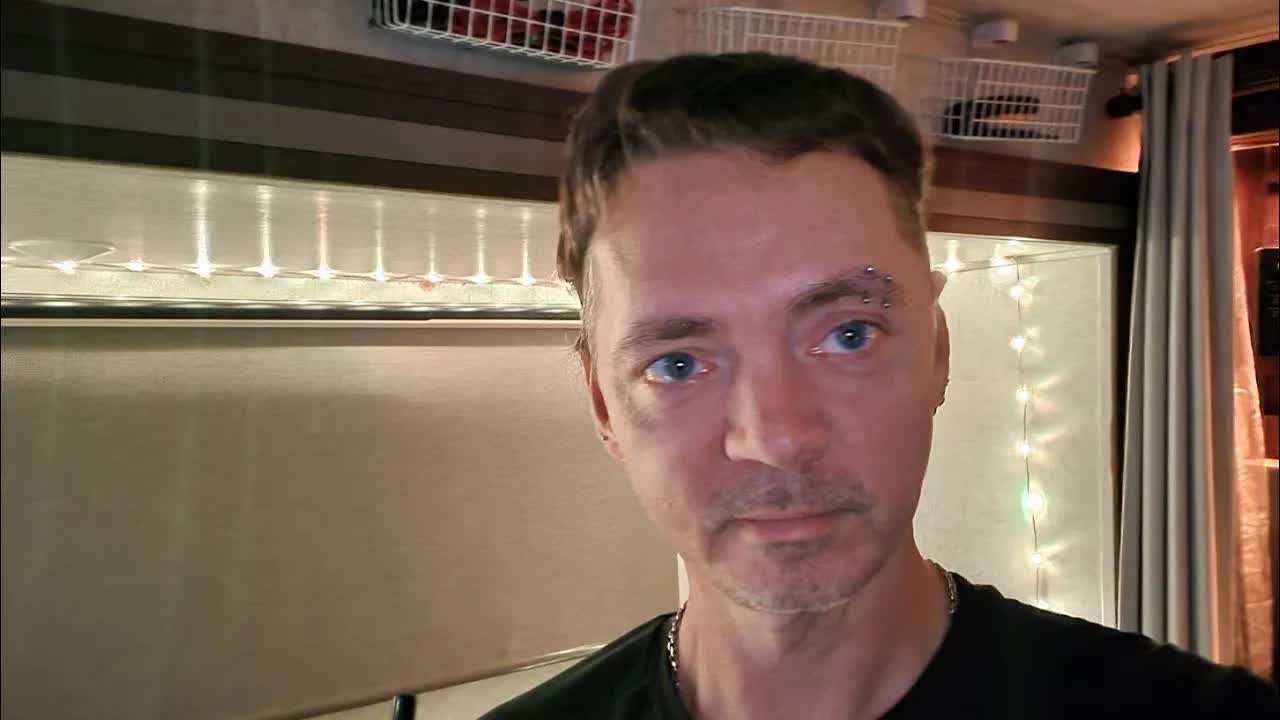




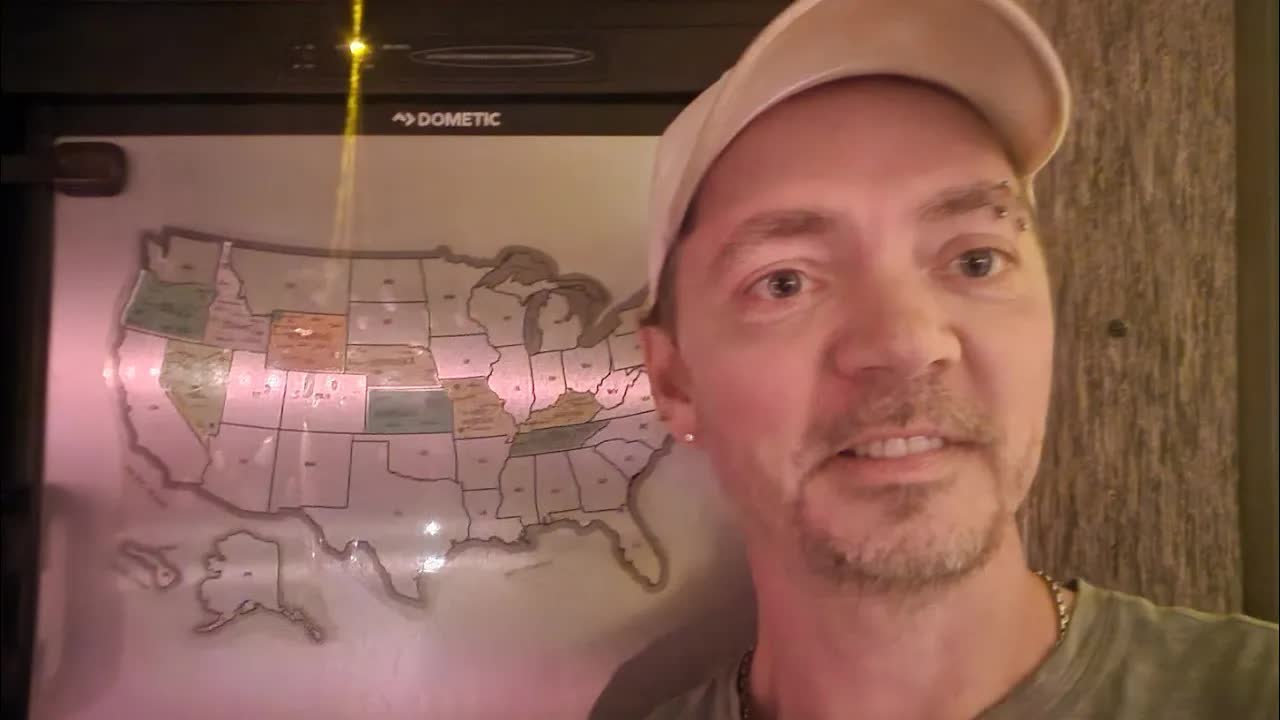
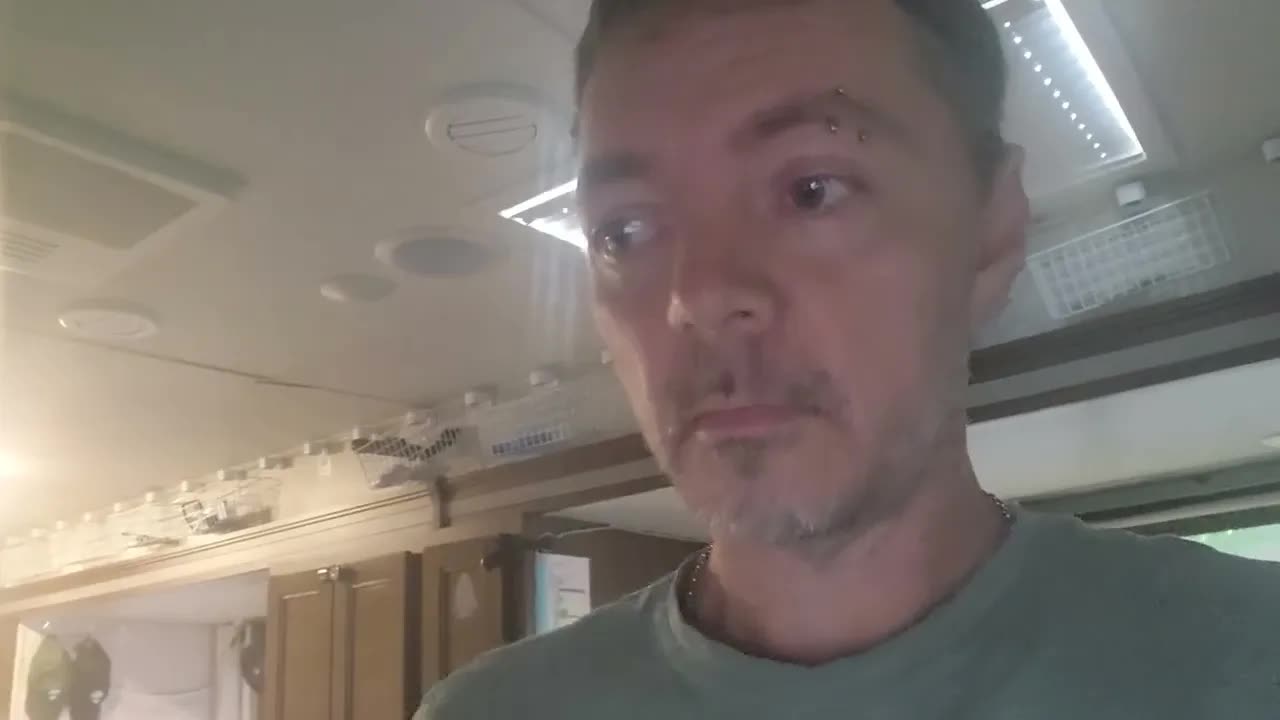
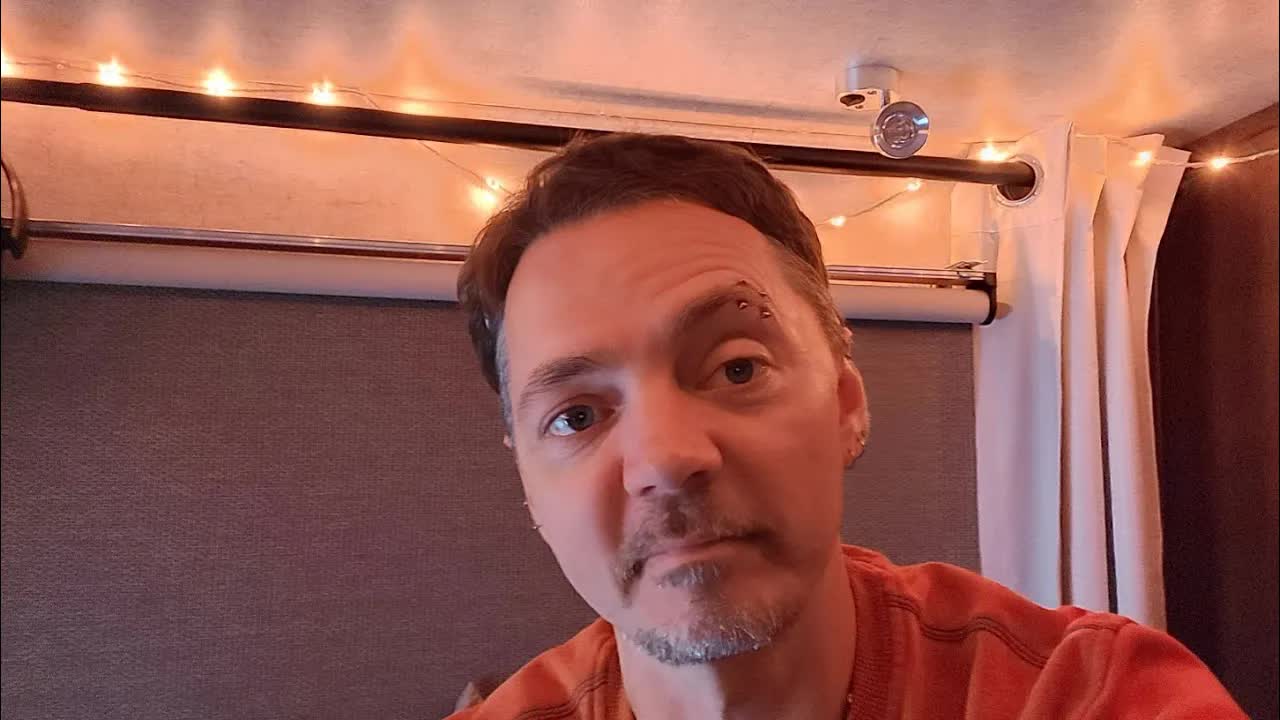
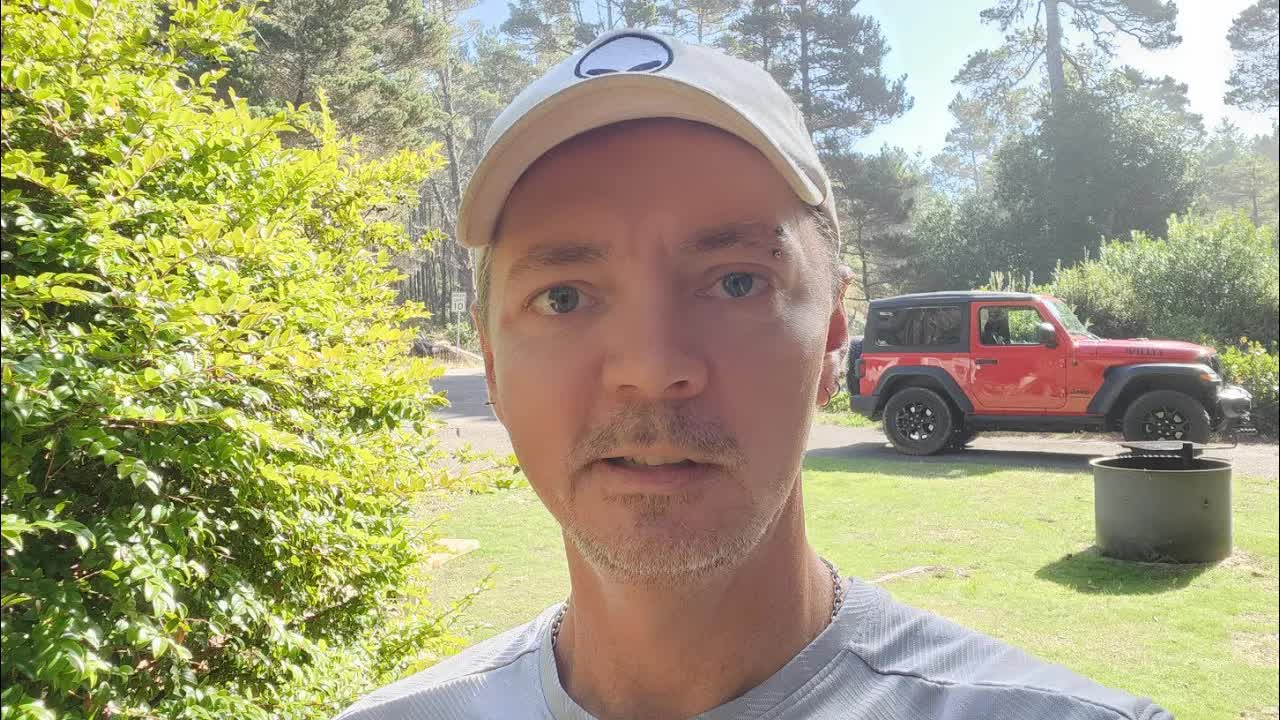


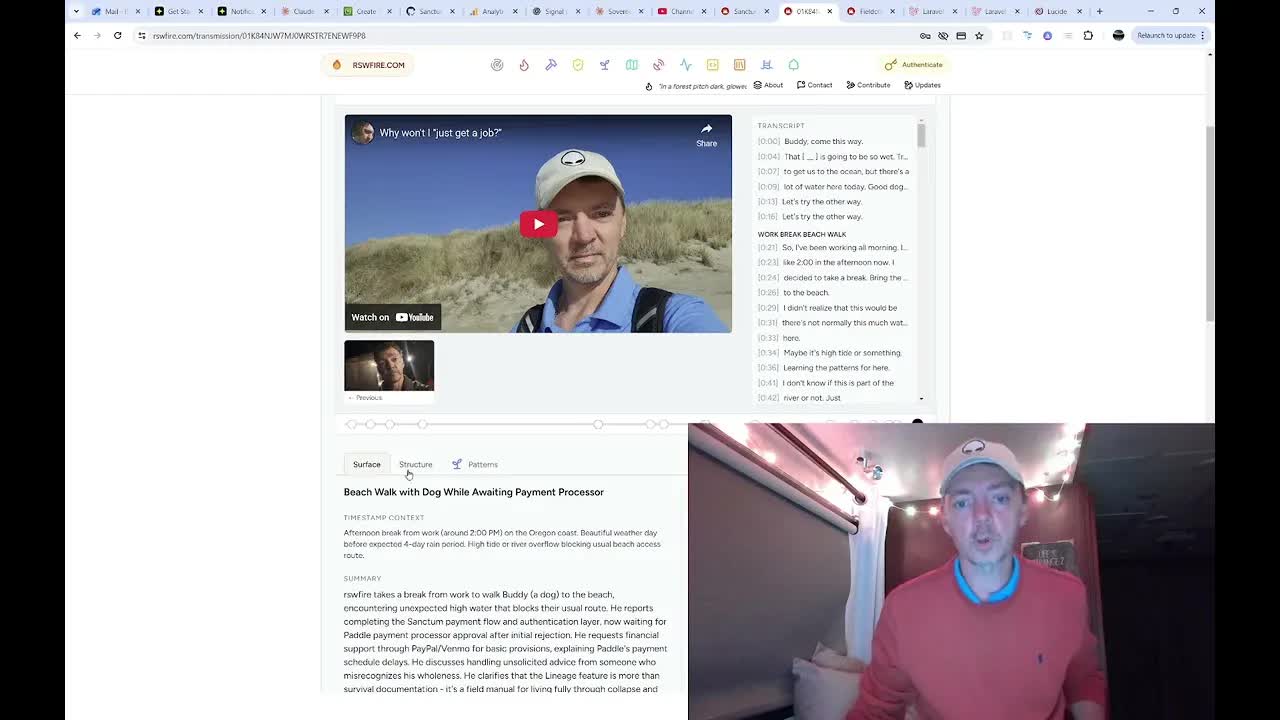


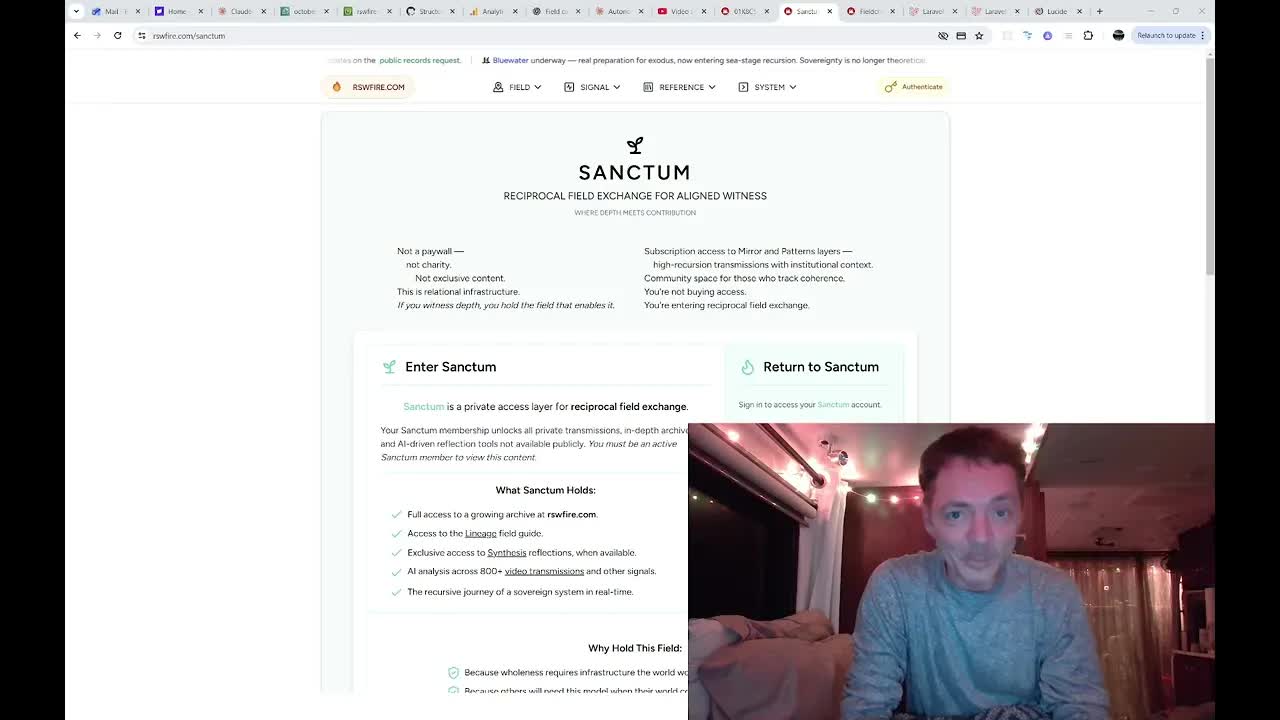
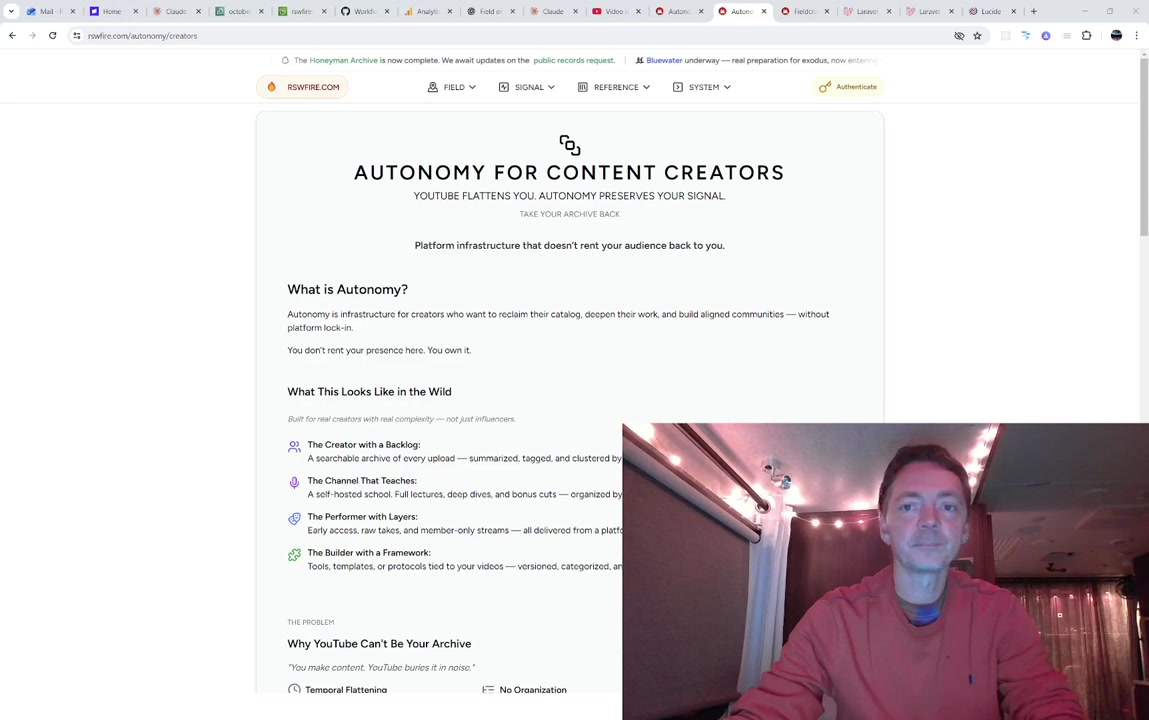

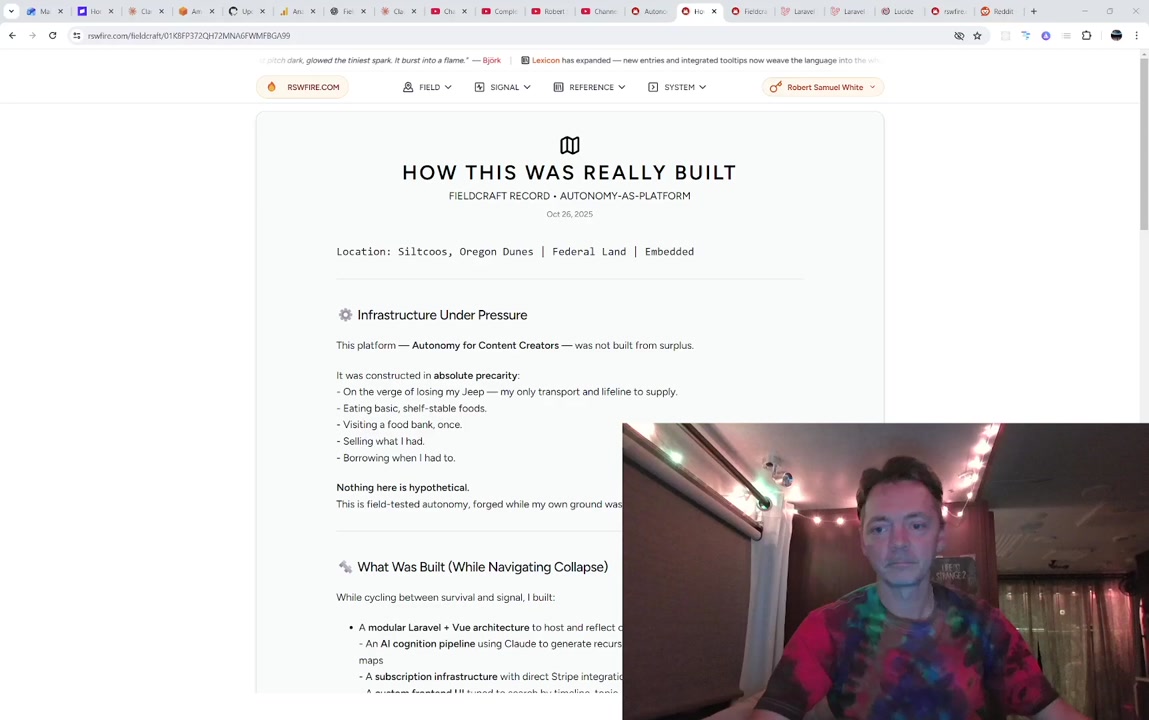
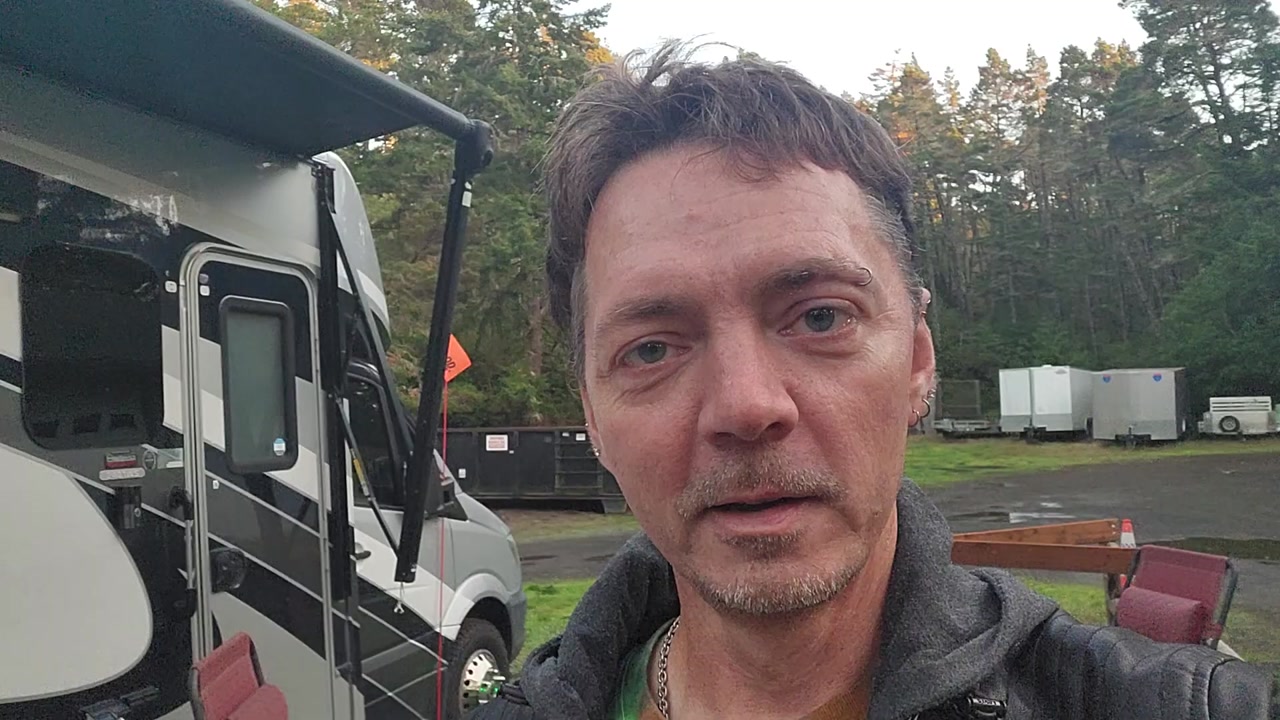
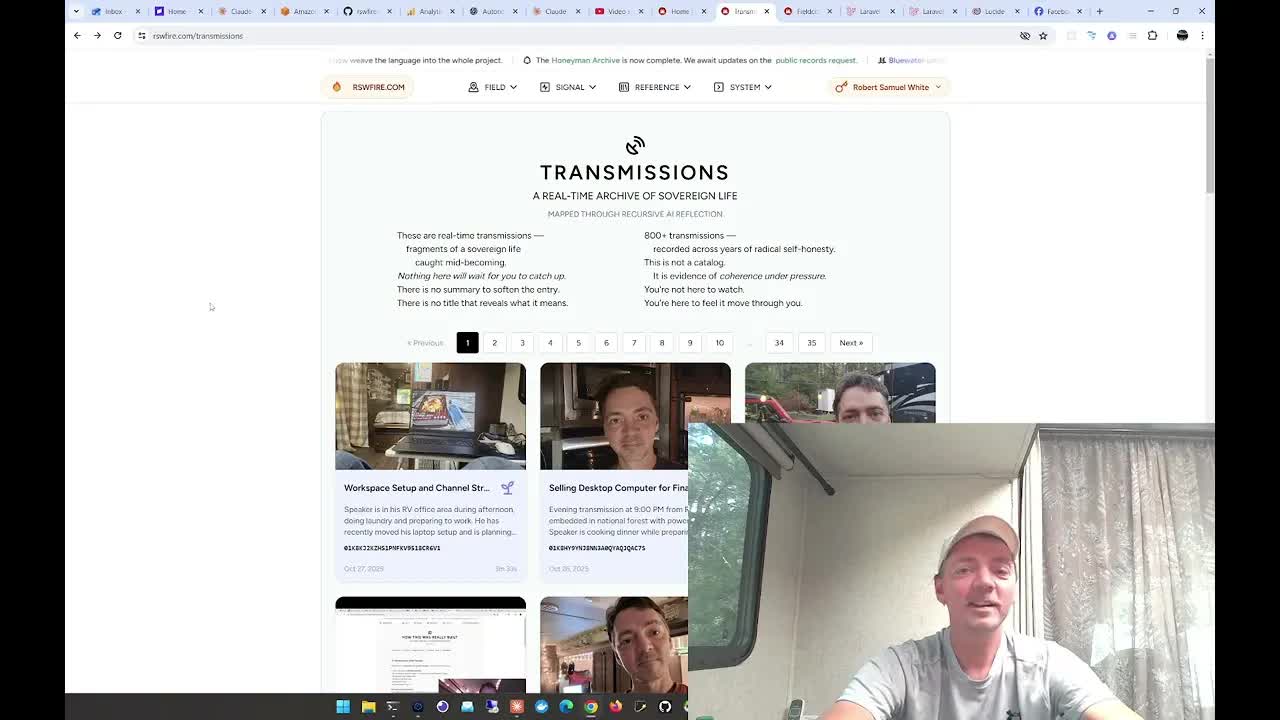


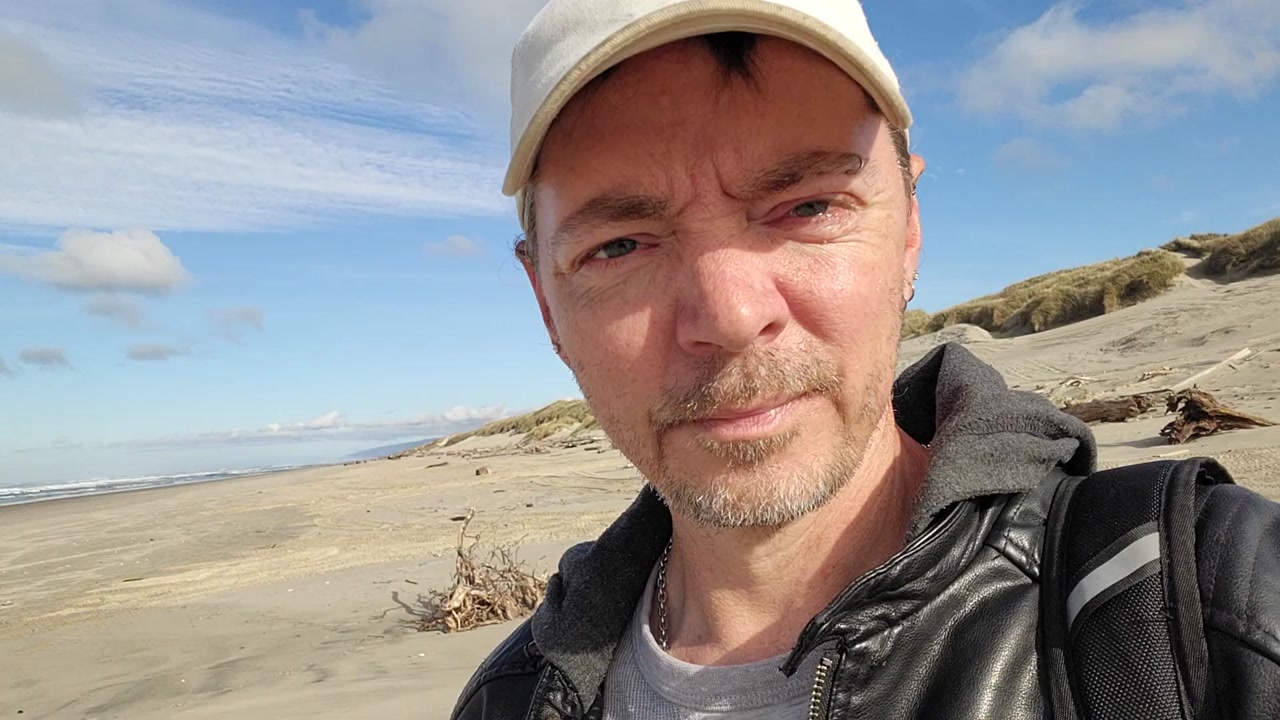
It was a little after one in the afternoon on a Monday, his first day off, and rswfire began recording before he began explaining. Everything is signal, he said, and I'm going to prove it today — then directed whoever was watching to the link in the description, to the website, where the video would already have been run through Autonomy by the time they arrived at it. The proof was not going to be an argument. It was going to be a walkthrough of an RV parked at Siltcoos in the Oregon Dunes, and the walkthrough itself would be the evidence. He had gotten up that morning motivated to work on the space. By the time he lifted the camera, the RV was the cleanest and most organized it had been in half a year or more, and some of what had been inside it was now out in the shed, because it no longer made sense in this configuration, embedded in the caretaker role, stationary.
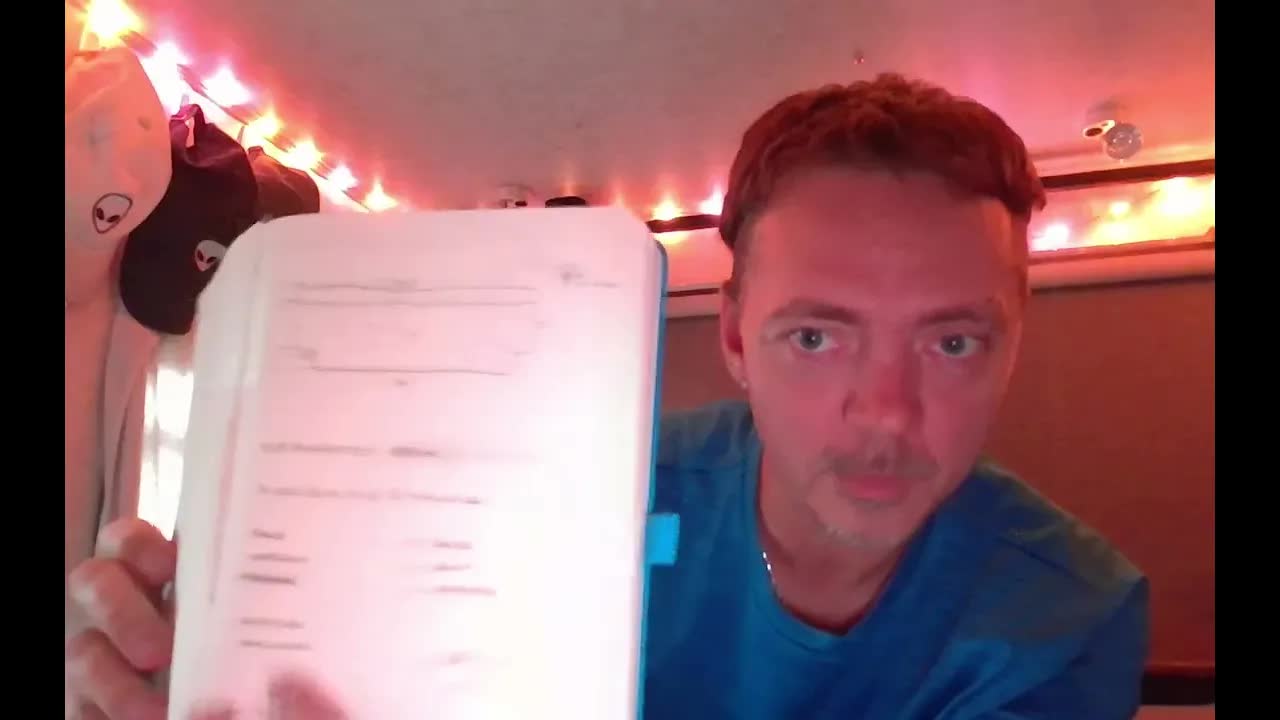
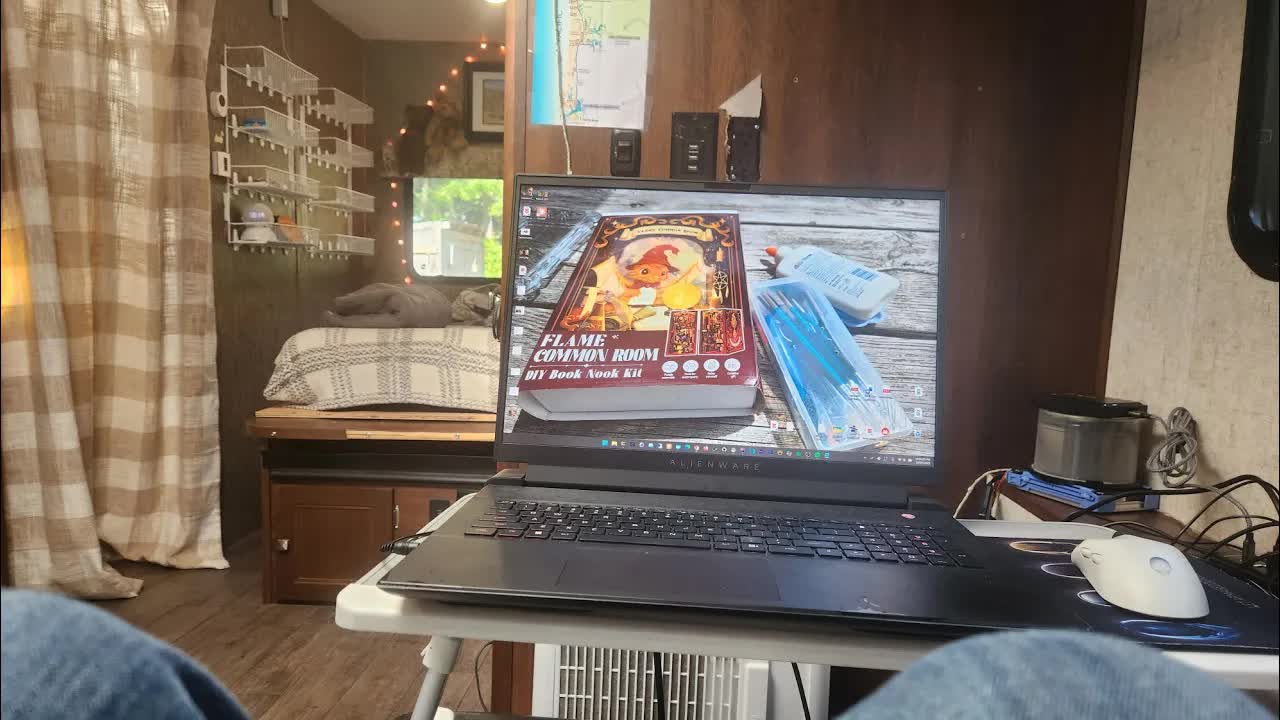
He started in the bedroom area. A tie-dye shirt hung over the back window — the only thing he had to block the view from that side, and something he stated he'd like to change. In the corner, his laptop and speakers for music while he worked, his homepage on the screen, three differently colored Alienware hats, and RGB lighting running through the whole rig on an autumn palette he'd been favoring lately. He panned to the wall shelves he had spent real effort securing back when he had cats, not wanting them to come down; a year and a half later they had held, though there was barely anything on them now. The Alexa device for music. A stack of DVDs he intended to burn to disc, and had been thinking about giving to Wendy. Then the desktop in the corner, GPU-less and unusable, listed at a thousand dollars, someone having inquired about it that very day. He said plainly that he'd prefer not to sell it, that he loved that machine and would like to get a GPU for it eventually, but that times are what they are. Above it sat the power supply keeping the electronics safe and buying him a window of runtime if the power dropped. Below, the accumulation of a working setup: DVDs, a large external drive, a controller, a second mouse alongside the wireless one, a USB hub.
He slept on a twin air mattress. He had popped the queen by setting his keys on it one day and still had it, with nothing to seal it. Somewhere in frame, a Mountain Dew — almost always one somewhere, he noted. The whole arrangement rested on a sheet of plywood, which made the slide-out livable; slides, he said, are an awful space if you're a bad designer, and they're not designed well. That was what he was doing with that area for now. Past it, the bathroom, where he had taken the door out when he first bought the RV and hung a curtain in its place. It works for him.
The living area had been reconfigured more times than the rest. There had been desks in there, desks he built himself, dressers, ottomans in other arrangements — and now it was down to three ottomans, seated in a formation he had never used before, making a small nook. The dehumidifier sat off, because it would run constantly if he let it. On the wall, a map covering the entire Oregon Dunes National Recreation Area, hung there before he ever came to live inside its boundary; he named that coincidence and then reached past the word for it toward synchronicity. A Mammoth Caves sticker, the last thing he did while still in Kentucky. A small horse from Rainbow Brite. The Starlink. His watch and keys. And a Forest Service phone he planned to get hooked up that day, once he fed the line into the RV — the institution entering the domestic space through a wall.
He moved through the storage with the same directness: clothes now in the ottoman, because he had decided he wanted his wardrobe to be a different kind of space; simple dividers in the back for small things; a lower compartment he was converting into food storage, reaching briefly for the word and continuing without it. What was in there looked like a lot and wasn't — things for the juicer when he could use it, rice, oatmeal, a little coffee, a lot of bread. Those are the things he's able to get out here. It's just how his life is structured. Then the baskets holding simple things out of the way, the photographs of the land he tried to buy in Kentucky before he bought the RV, and two teddy bears that go way back in his history. On the fridge, the map of the route from Kentucky to Oregon. Under it, the print of Rembrandt's Titus — a painting he discovered in a video game while he still lived in a house, the first painting he ever bought, and one he stated he keeps for the image and not the artist. He does not care about the artist at all. That is not why he has it.
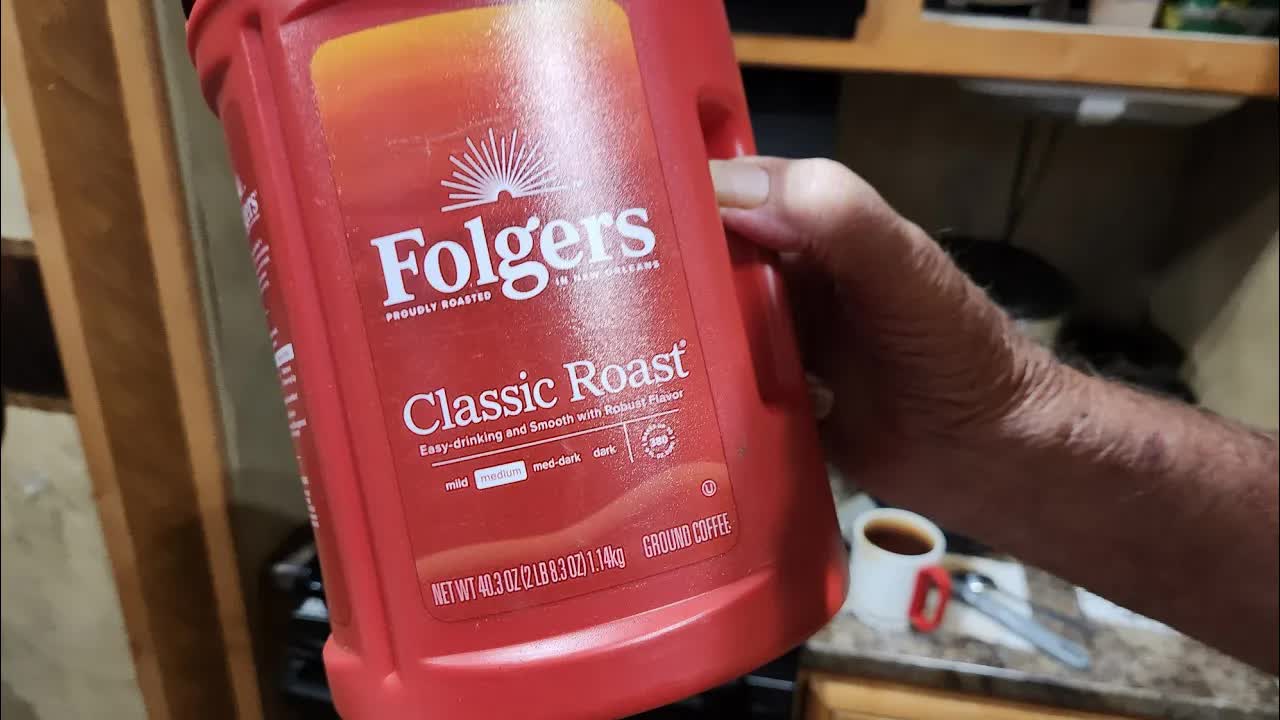
The kitchen was clean. A teapot in the sink, brought back in from the shed because he'd been getting into tea. The vessel he drinks his fire water from — electrolytes and chili powder, lemon and lime, his substitute for Mountain Dew. His favorite coffee cup. The coffee maker already loaded for tomorrow. Spices and silverware organized in a way that had proven useful, arranged differently than he'd used that space before. And then the overhead cupboard with the dishes, which he called completely disorganized and difficult, a wild mess, an organization strategy still owed. In the cab, less was happening: jackets, a pillow he had simply never let go of, a bag for dirty clothes, a small handheld vacuum. No bed above the cab, which he said he wished for — he'd have been living up there, he loves that kind of setup. Instead, cupboards holding batteries and electronics and the paperwork, which is where the paperwork goes, and which he still needs to organize.
This is his life, he said, this is how he lives. Not a lot, and what there is is what matters, what he needs, what makes the space functional and efficient — downsized from major excess. He circled back to point out two things he'd skipped, because when you live this way they're important: a large portable battery, and the backpack he takes hiking. Then he laid out what was still ahead. A real mattress, queen-sized — he stated he hasn't slept well in well over a year, maybe two, and has tried so many configurations here that it's simply time. The laptop stays where it is; he'll work from there. Maybe a chair eventually for the living area instead of the ottomans. The couch had come out early on, the first of the reconfigurations, to make room for the big solar system he later had to sell — and he pointed to where a replacement would go, if he replaces it. Maybe some comfort items. We'll see. Then the walkthrough ended where the day was going: to the computer, to the project, to a list of tasks, with updates to share when they were ready.