He began by naming the thing he was not going to do. There is a convention — the opening minute where a person restates who they are, what the series is, where the viewer has landed — and rswfire laid it out plainly before setting it down. Two years of videos on YouTube, he states, and never once an introduction. He acknowledges the cost of that choice: it does make it harder to follow along. He does not adjust for it. What he offers instead is a single sentence of orientation — hello random person, this is a series about open sourcing a project called autonomy — and then he moves.
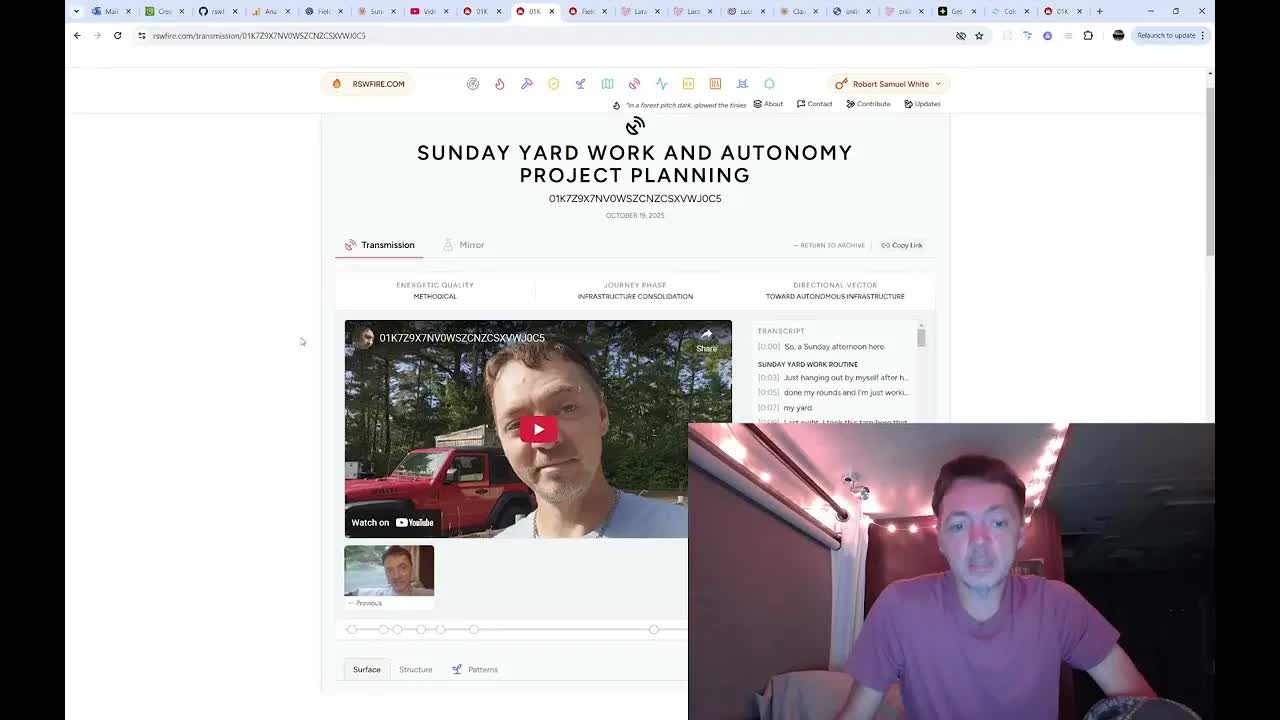
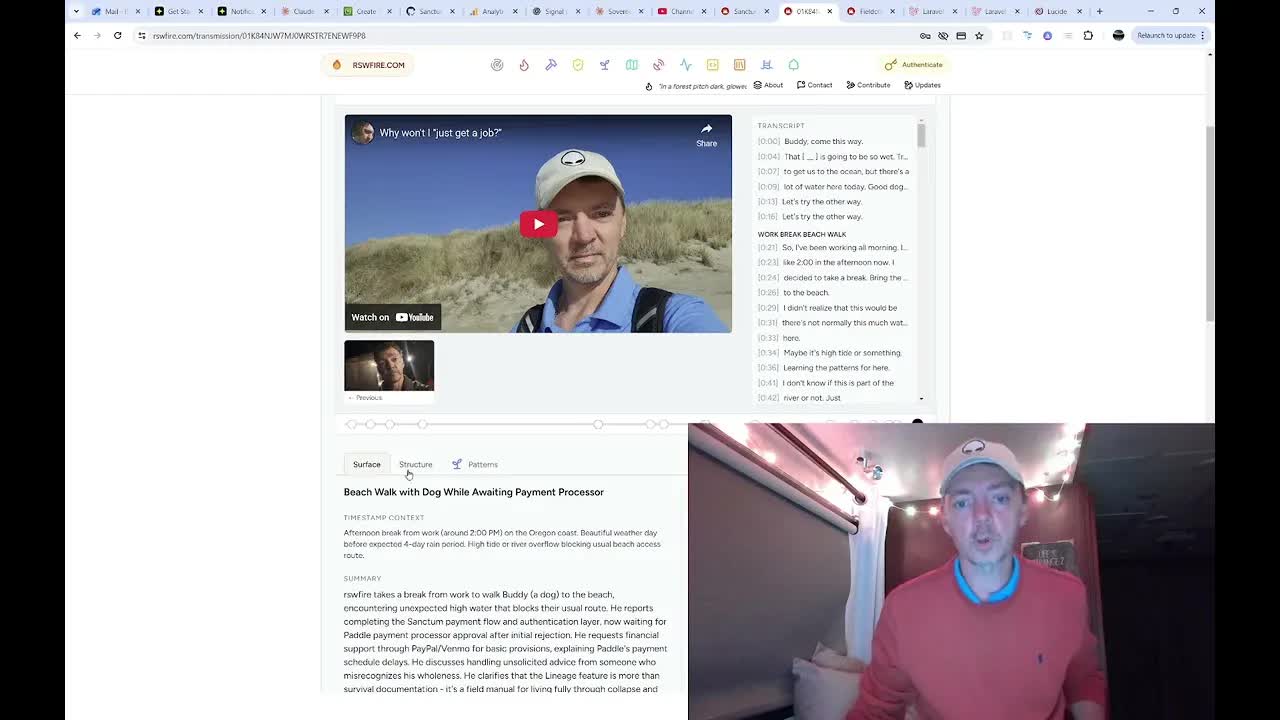
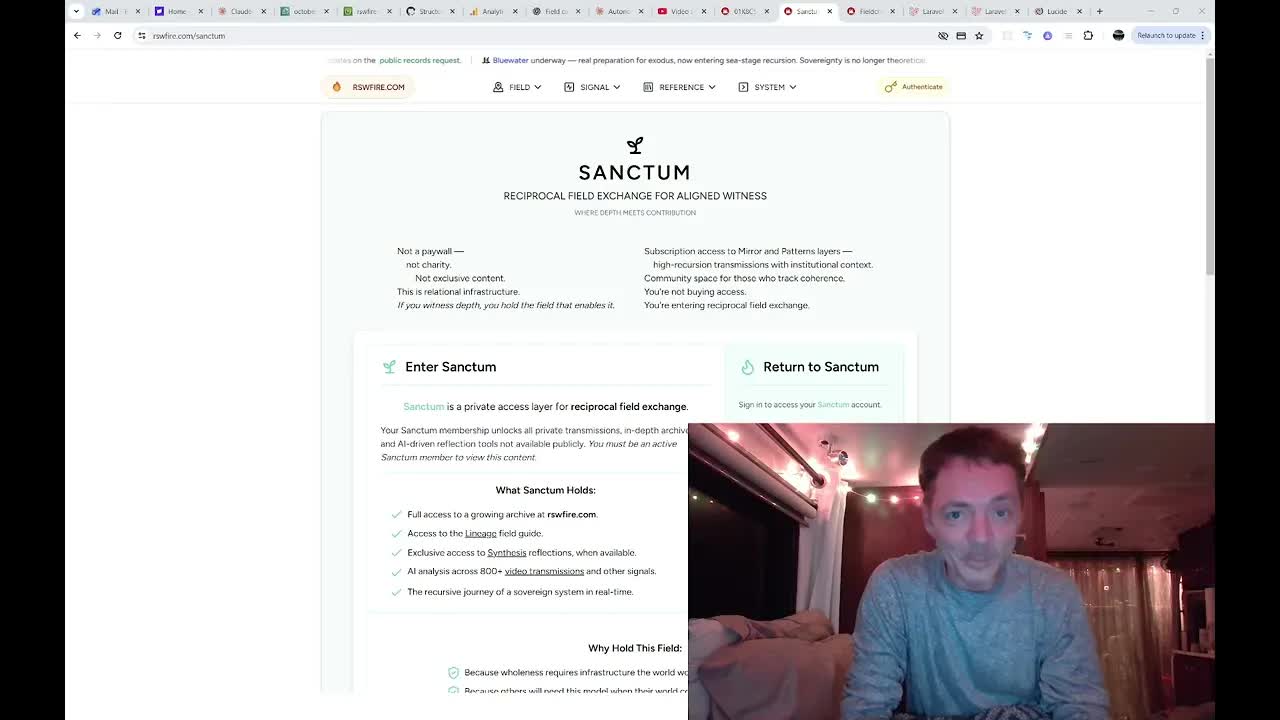
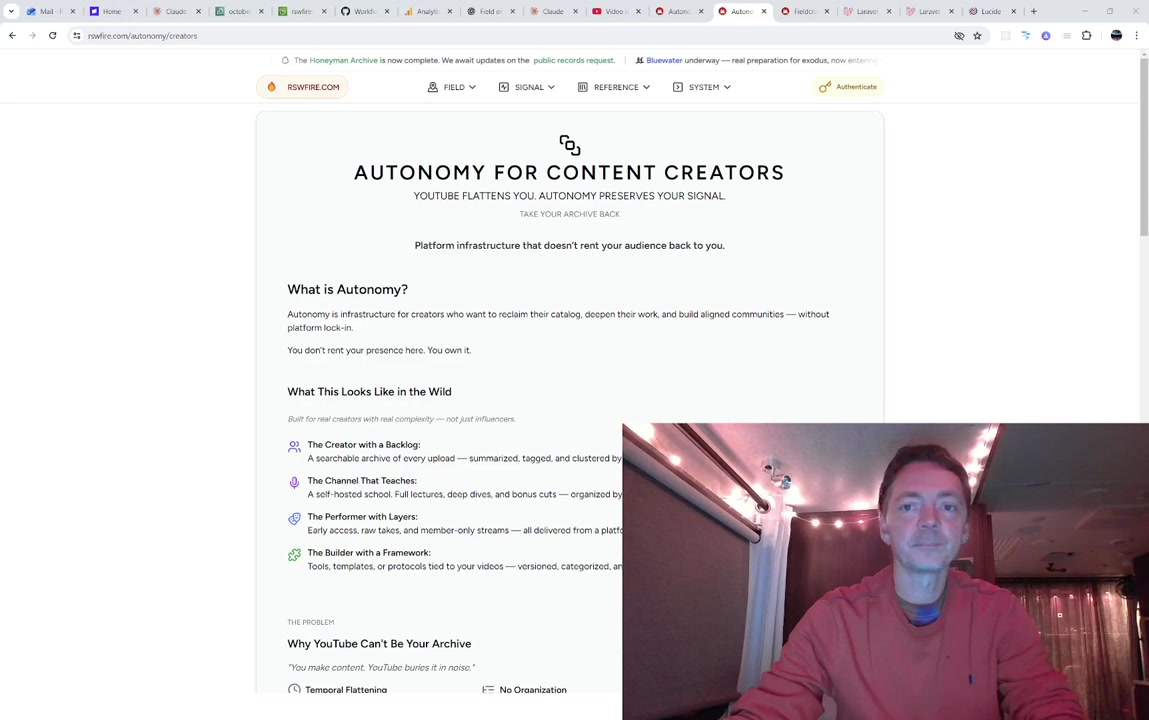
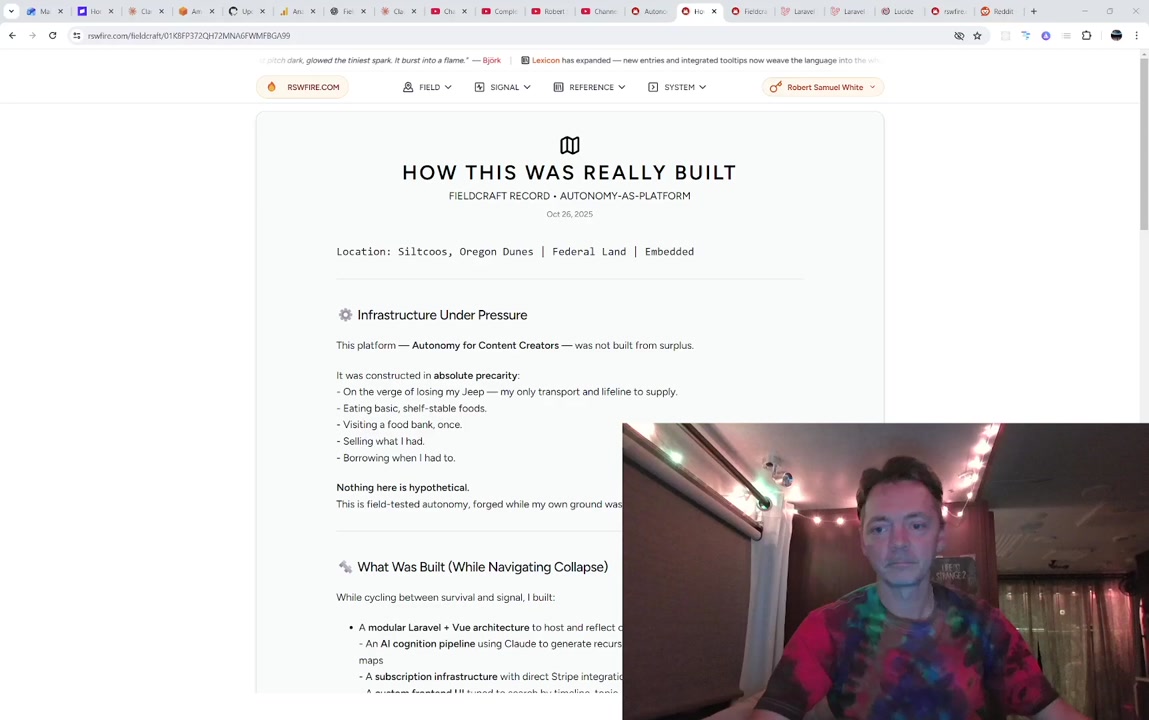
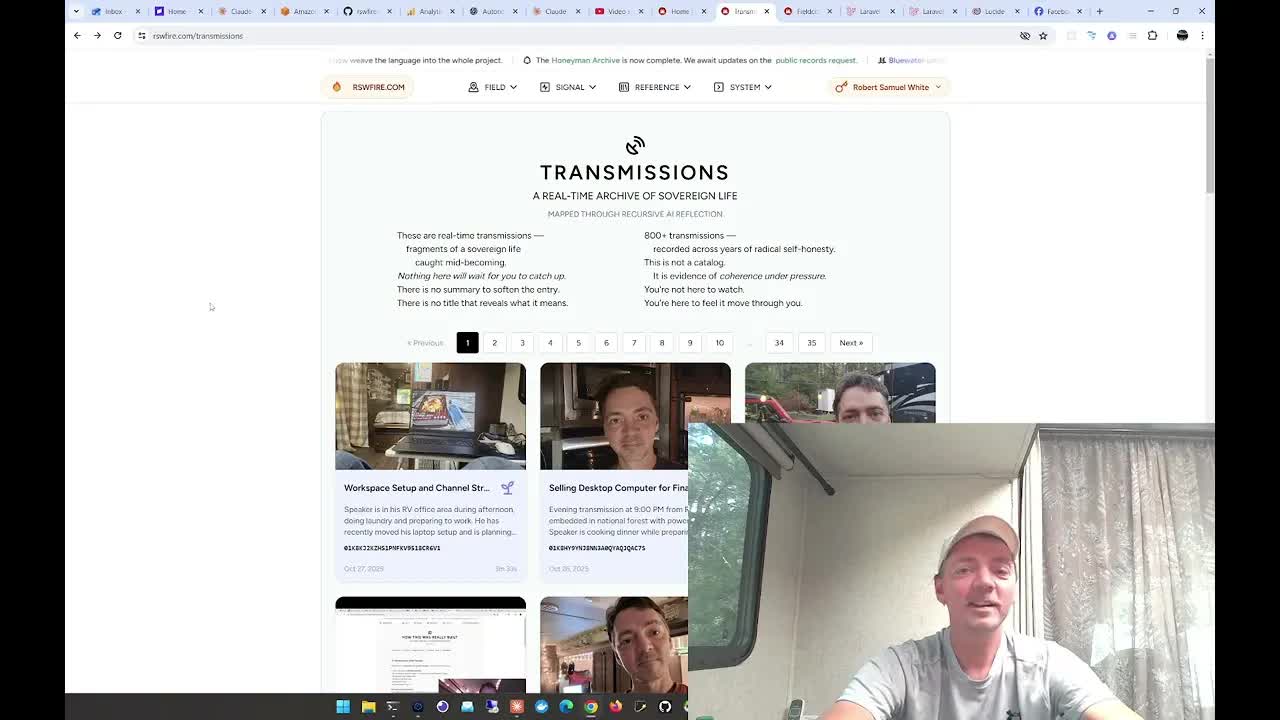
The screen was already doing something. He had hidden the capture surface for a moment because he knew what would happen when he showed it, and when he showed it anyway the display folded into itself, rswire.com rendering live inside a window rendering the window, OBS looping the desktop back through the desktop. He names it as it happens. He finds it interesting. He says he is not going to edit it out, and then extends that from the frame to the method: it's not how I work either. The recursion stays in the record, unedited, single take, one of the first facts the series establishes about itself.
From there he set the ground rules, and the first one was structural. He does not compartmentalize. Different kinds of videos, one stream — this one belongs to the open source series, the second in it, and also to his transmissions, which include the private material, including the previous night's talk about selling his desktop computer. That one sits behind Sanctum. He points to the icon on the page, the small mark that indicates the subscription layer he built, and explains what it is for in his own terms: he did not like being flattened, which is the default way YouTube works, and an open transmission that anyone can see is an invitation to distortion, an invitation to noise. He reached for a phrase he had for this and it did not come. He kept going without it.
Then the lineage, stated as fact and as pride. Programming since sixth grade. Nobody taught him. He didn't ask permission. He read programming books cover to cover, coded on paper, ran entire systems in his head — and still does, he says, has done it all his life. In the same breath, the second gate: none of this is for social validation, and he is not asking for advice. Unsolicited advice is the quickest route to being blocked from the channel and from his life. Not from friends, not from family, not here. Whoever follows this, he tells them, is not following a simple series. They are following his life.
And the life, right now, is Sanctum. He moved to the code. Here is rswire.com, the front end, open source from the beginning, on GitHub, a Laravel project once, everything done from that one place. Here is rswire.online, the repo he made when the AI pipeline work started and he decided that part would not be public — closed source, and much of the API work lives there. And here is the new one, autonomy.local, where the pieces of both that he does want open are being assembled. He started it the night before. He is starting the real work now, and he intends to explain it as he goes.
The explanation itself needed a rule, so he gave it one. Some of this will feel pedantic, he says, like overexplaining — but he is not explaining to the people watching. He is explaining to autonomy itself. The system he built converts his words into structure: the transmission is downloaded from YouTube, which is what the terminal command running on screen is doing; YouTube produces the transcript; the AI processing takes it from there and renders it into reflection types, into something the system can parse and hold as a kind of memory. The overexplaining is the input format. He wants the data in the system. He says he has barely touched the surface of what he is really building.
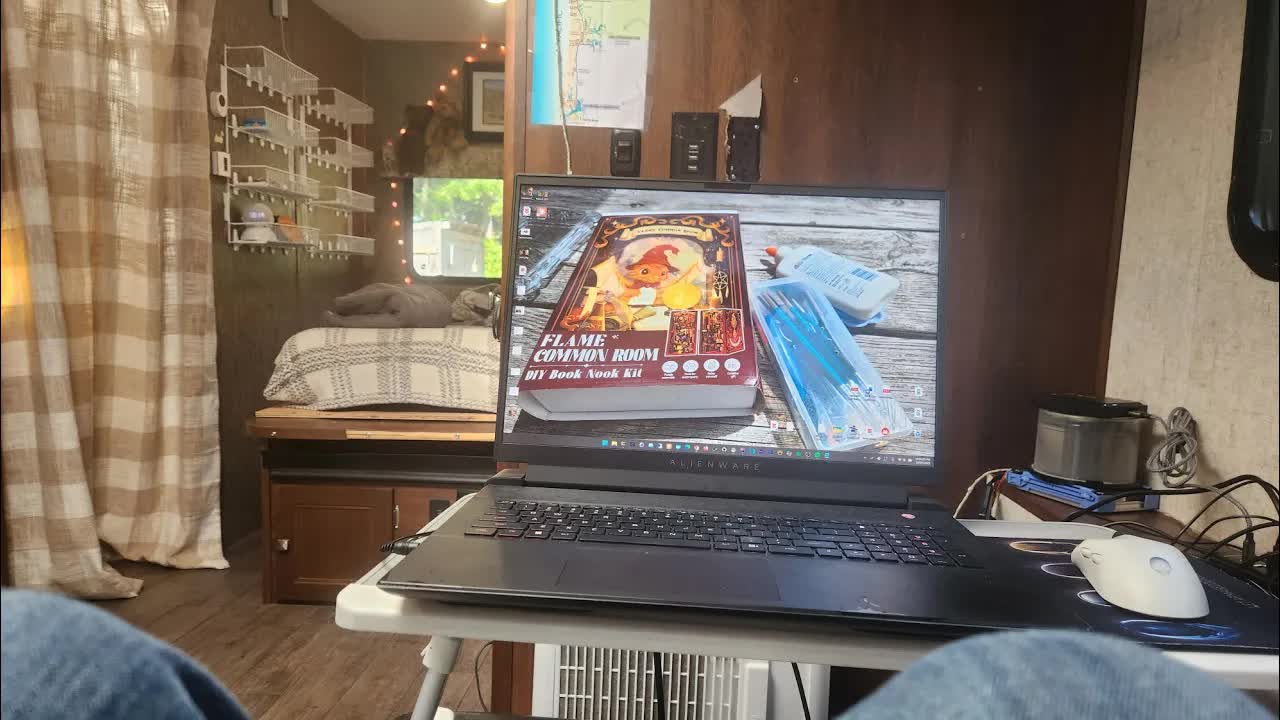
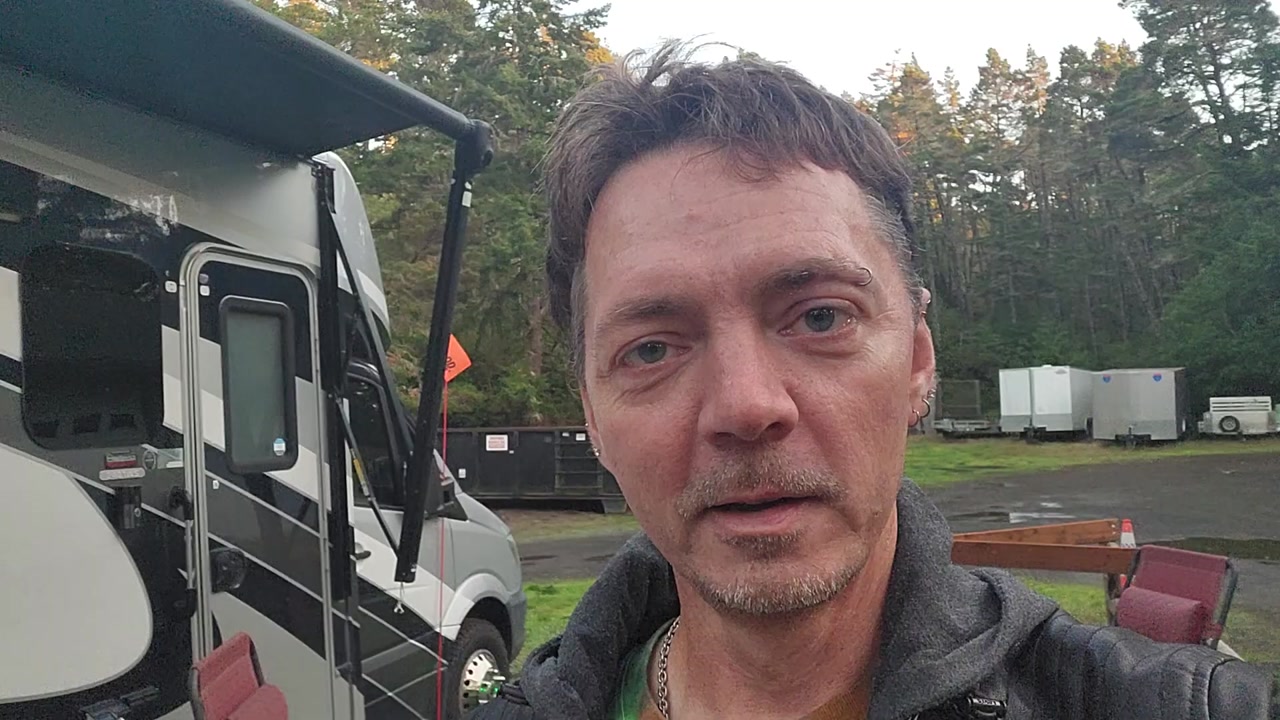
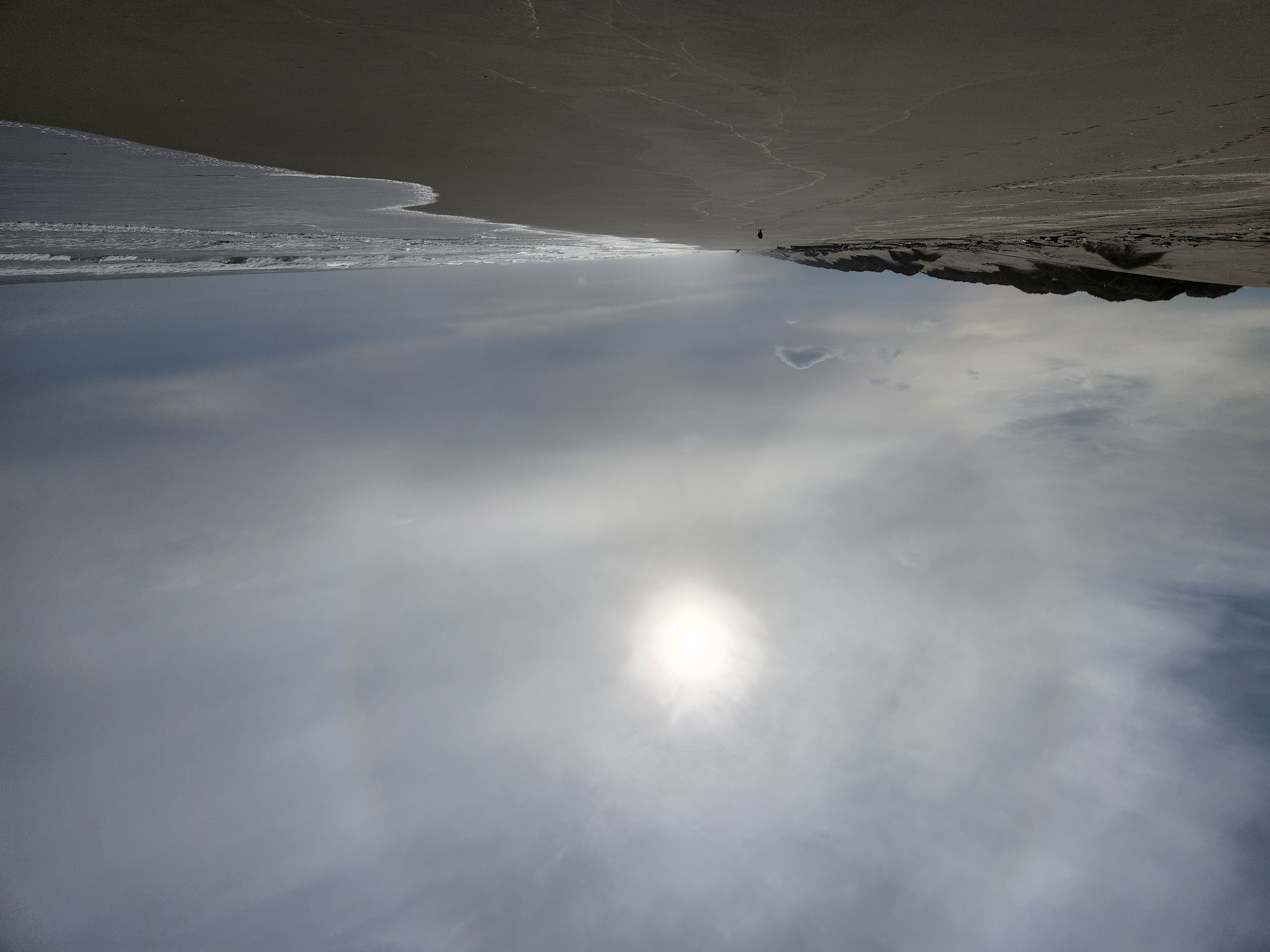
He closed where the work actually stood. The basic skeleton of the open source Autonomy project exists. It is deployed locally. A few more steps remain, then the push to GitHub, and then the real iteration begins. I'll leave it there — and he did, the recursive frame still on screen, the terminal still holding its command, the RV workstation on the Oregon Coast still recording.