[0:00]
Good morning. So, it's 10 o'clock in the
[0:02]
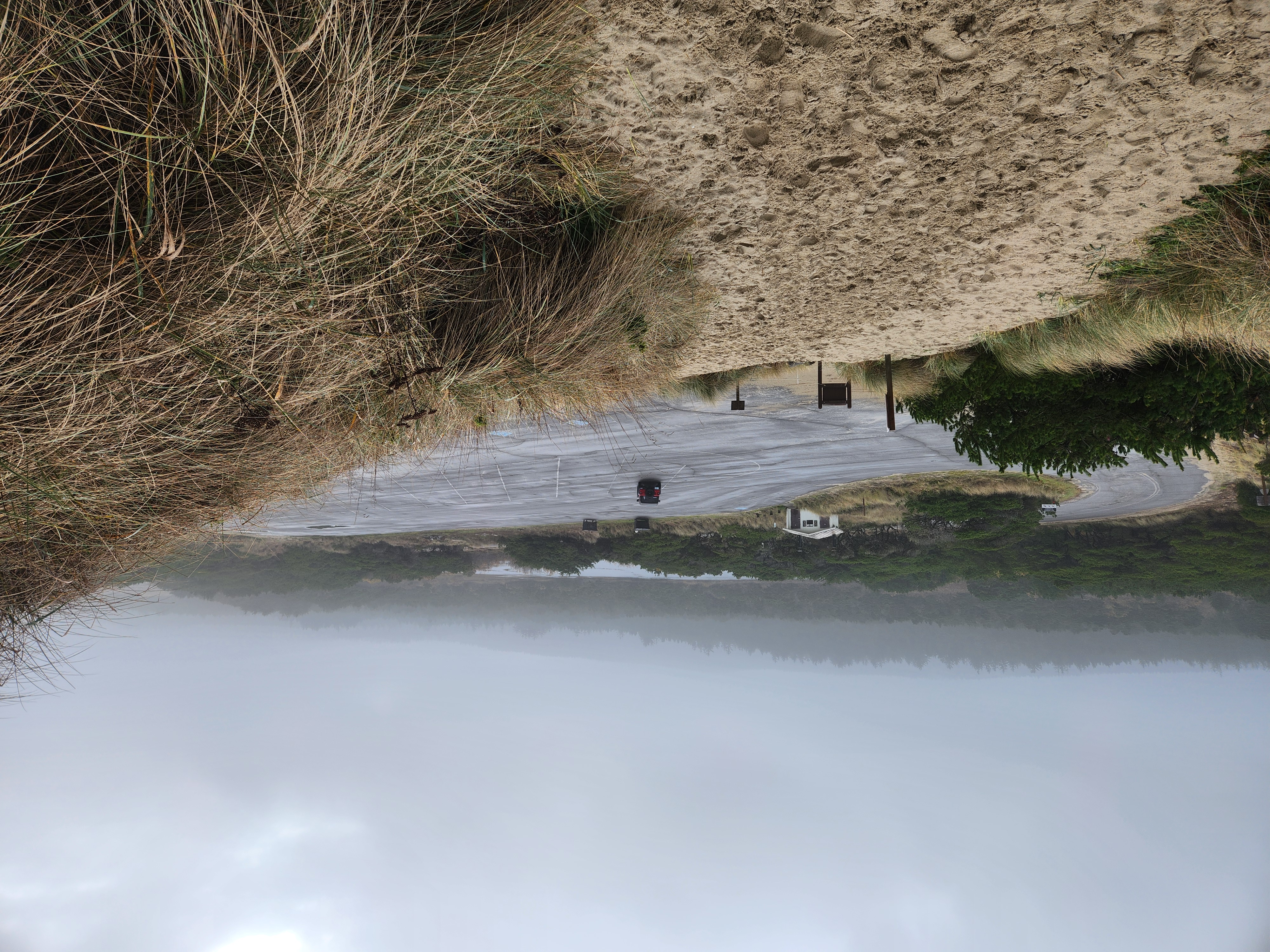
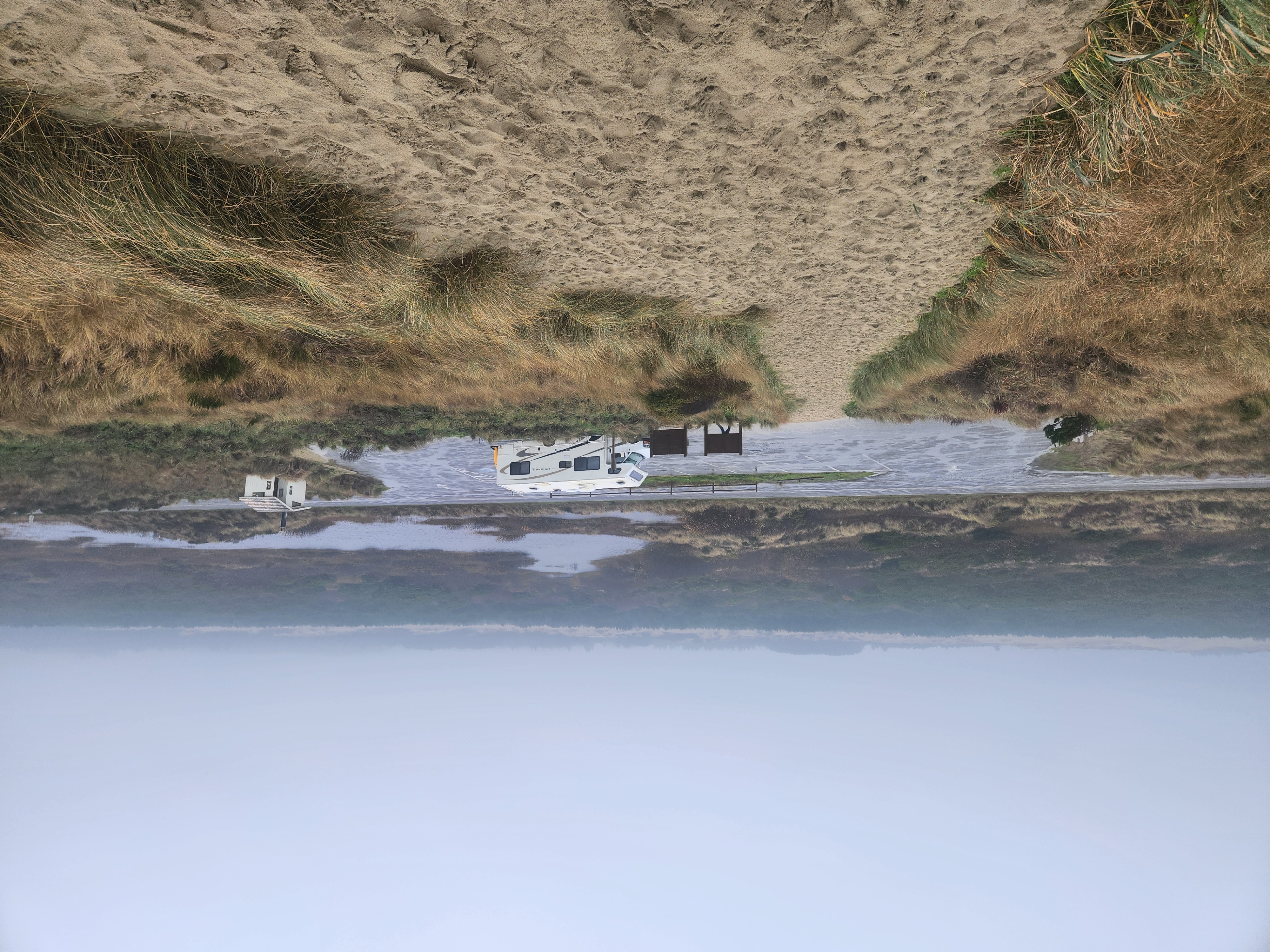
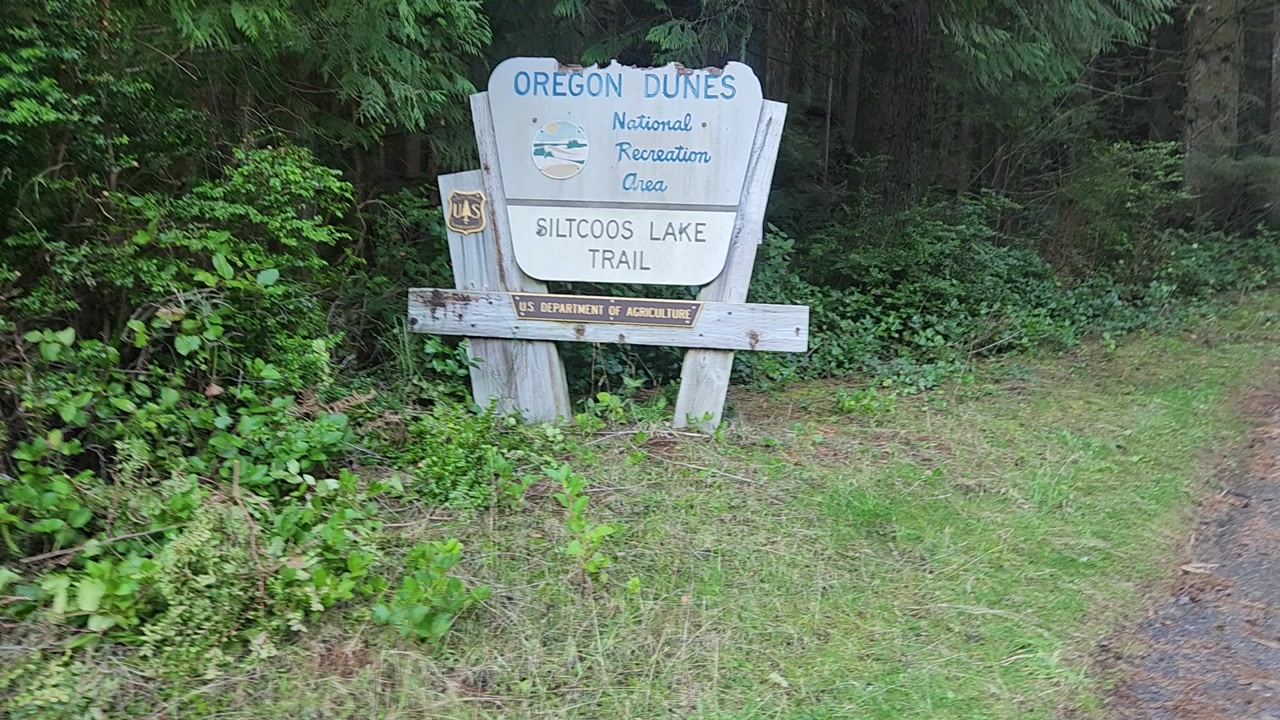
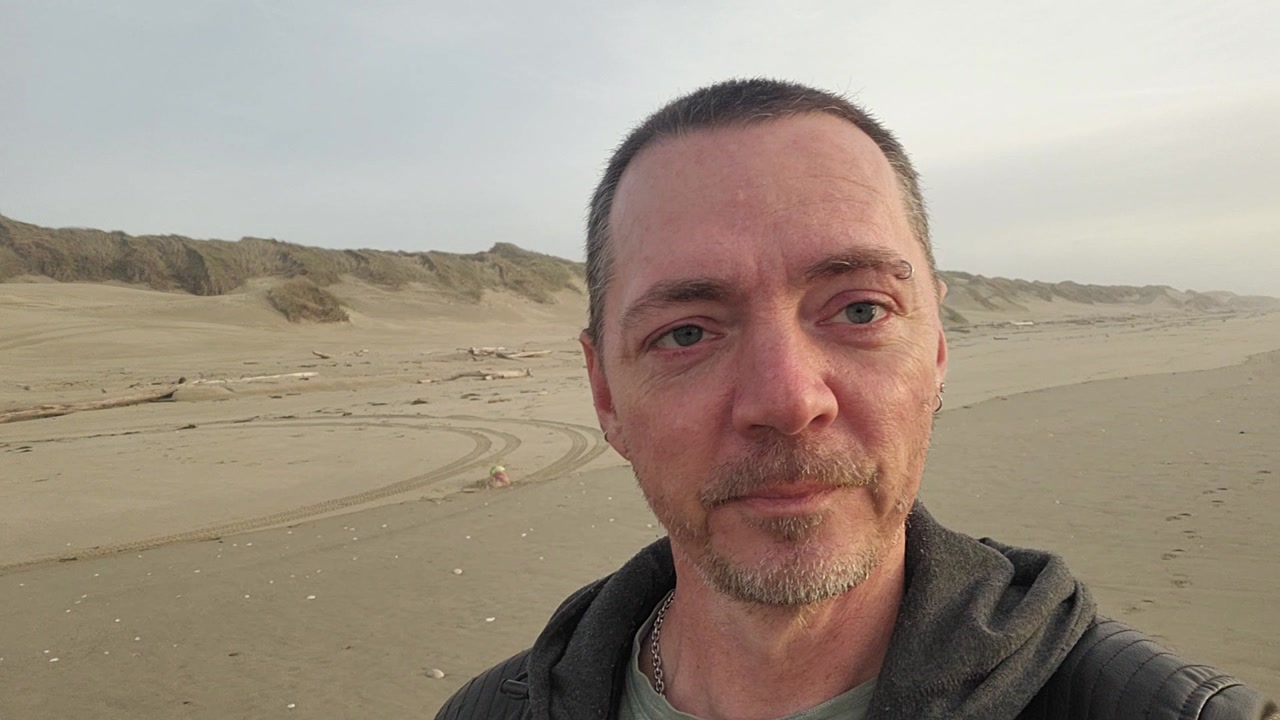
morning here. I am at Oregon Dunes Day
[0:05]
use area. It's literally what we call
[0:07]
it. We have a bunch of day use areas,
[0:09]
but for some reason that's what this one
[0:11]
gets called. I think it's confusing. It
[0:13]
adds a bunch of ambiguity that. But, you
[0:16]
know, that's that's what we called this
[0:18]
one. I'm taking a trail that I'm I keep
[0:21]
missing somehow. This is like the one
[0:23]
trail in my part of the corridor. So I
[0:27]
my route is everything from um Tai
[0:32]
which is just south of Honeyman
[0:35]
um all the way south to Taken
[0:37]
campgrounds. Basically there are two
[0:40]
lakes. There's Sus Lake and there's
[0:43]
Tachinich Lake um that are on my route.
[0:46]
And in between those is the Deuse area.
[0:49]
Oh, I took the wrong turn here.
[0:52]
There's a day use area. That's where we
[0:54]
are now.
[0:56]
Um, there's one trail that leads from
[0:57]
the day use area down to Tacken Creek
[1:00]
and I keep missing that one. It's a
[1:02]
couple miles once I find it. Um, might
[1:07]
be a bit of a hike for me today, but I I
[1:10]
really want to get it on my map cuz
[1:12]
eventually I'm going to have a map
[1:13]
feature on Autonomy Realms. So, um
[1:18]
eventually there will be
[1:21]
um an atlas feature is what I'm going to
[1:24]
call it. I just was looking because this
[1:27]
is the trail right here. I don't know
[1:28]
why I kept missing. I'm going to turn
[1:30]
this around.
[1:31]
So, yesterday I started doing a whole
[1:36]
bunch of stuff. So, let me see if I can
[1:38]
get y'all updated.
[1:41]
Um,
[1:44]
I've decided and my YouTube channels, my
[1:46]
main one that I had for, you know, when
[1:48]
I the first one I had and that I used
[1:51]
for like a year and a half, um, and then
[1:53]
shut down, you know, kind of archived.
[1:55]
That one I have completely transformed
[1:58]
into an archive for the Oregon State
[2:00]
Parks volunteer abuse archive I created.
[2:03]
There are five videos public related to
[2:05]
that incident with them. And that's it.
[2:08]
That's that's what that YouTube channel
[2:10]
is now. I'm going to delete all the
[2:11]
videos on it. There's like eight there's
[2:13]
like I don't know six 700 of them um
[2:16]
unlisted, but they're all getting
[2:17]
deleted after a script finishes. It'll
[2:19]
take about a month for the script to
[2:20]
grab everything, but it's going through
[2:22]
every single one of those. It's getting
[2:24]
the highest quality video it can from
[2:25]
YouTube and it's uploading them into an
[2:28]
S3 bucket with Hzner and I'm going to
[2:30]
host them locally on Autonomy Realms. Um
[2:34]
that's going to be the default for
[2:35]
everybody. So, if you upload a video,
[2:37]
it's just going to get hosted locally
[2:40]
and then there will be a process for um
[2:44]
submitting it to YouTube also as kind of
[2:47]
like an additional step. But it won't
[2:49]
start with YouTube like it always has.
[2:52]
And so that account is going to my main
[2:55]
YouTube that I had that I archived is
[2:57]
now officially
[2:59]
erased. It's just uh a place for five
[3:02]
videos related to the abuse I
[3:04]
experienced at Oregon State Parks and
[3:06]
then the channel that I made after that.
[3:10]
Um same thing. So that channel will just
[3:12]
go away at some point. I might I might
[3:16]
refactor it into just videos about
[3:17]
autonomy or something like that. That
[3:19]
one because um you know I will want to
[3:24]
um I want to share some videos on
[3:26]
YouTube otherwise no one will ever find
[3:29]
me. But it's not going to be personal
[3:32]
content. All of that will stay on
[3:33]
Autonomy Realms. Most of it behind the
[3:35]
Sanctum layer. And
[3:40]
so that's the plan with that. And so so
[3:44]
it's going to need a new process. This
[3:45]
video will have to get uploaded directly
[3:48]
from the admin and then um it'll have to
[3:50]
get processed like the transcript will
[3:52]
have to be created. So I have to use a
[3:55]
service for that. can't really afford
[3:59]
um can't really afford that right now,
[4:01]
but I'm going to have to figure it out.
[4:02]
I'm going to look into that. It's hard
[4:04]
to get good transcripts. That's one of
[4:07]
the reasons, you know, it's hard to get
[4:09]
them for free cuz there are there are
[4:11]
different models that um different apps
[4:13]
and things that you can do this stuff
[4:15]
for free, but it's not very good. So,
[4:18]
um
[4:20]
you got to pay for that stuff and just
[4:23]
can't afford that right now. But so
[4:25]
anyways, this part of the trail, I've
[4:27]
been on it many times and I know which
[4:29]
way I want to go. I want to go this way.
[4:31]
I'm going to go towards the creeks.
[4:34]
I'm just looking to see if there's a
[4:36]
trail sign or um just look for
[4:38]
footprints, you know, in the sand or
[4:40]
whatever. We'll see. But I keep missing
[4:42]
it, though. So,
[4:44]
um if I if I miss it again, we're just
[4:46]
going to end up at the ocean, a shorter
[4:48]
route, which probably is for the best. I
[4:50]
do so much hiking my my legs would
[4:52]
really like me to to stop.
[4:56]
I don't know how though.
[4:58]
So anyways, um it's a real good day.
[5:01]
Yesterday I also finished all of the um
[5:06]
so there's two
[5:08]
different ways that
[5:10]
um the AI is called like so I'm trying
[5:15]
and I keep getting I keep forgetting
[5:16]
like I analysis it's called analysis and
[5:19]
synthesis. So there's two different
[5:21]
types of ways that AI gets prompted. Now
[5:24]
analysis is just a thing what I call the
[5:27]
process that that
[5:31]
uh collects all the data on a signal. So
[5:34]
you give it a you give it the content
[5:37]
you know like a transcript if it's a
[5:38]
video and you give that to the AI and
[5:41]
then the AI returns a bunch of surface
[5:42]
and structural data and we call that
[5:45]
analysis and then there's reflections.
[5:50]
So, I don't call it a synthesis cuz
[5:51]
that's I changed that. So, it's called
[5:54]
reflections. I think this might be the
[5:56]
trail head right here actually. You can
[5:58]
tell is not is definitely not taken
[6:00]
often. So, and I'm not surprised. It's
[6:04]
several miles down to the creek.
[6:07]
Um, but there are trail markers. We're
[6:09]
going to try it. Okay.
[6:12]
Um, so then the it does reflections
[6:16]
based on um there's three different
[6:18]
types. There's the mirror, there's the
[6:20]
mythic, and narrative. And I just got
[6:25]
that working this morning, and I tested
[6:28]
it on my last signal, and it came out
[6:30]
awesome. The mythic frame was [ __ ]
[6:32]
amazing. I am so excited about this
[6:35]
feature. It's the thing that I love most
[6:37]
about what I created. Everything about
[6:40]
autonomy comes down to that actually.
[6:42]
Like like that's the thing that excites
[6:44]
me about it is that it can take one of
[6:46]
my signals in my real life and then turn
[6:48]
it into a mythic frame without
[6:51]
distorting it. It just and it's [ __ ]
[6:54]
amazing what it comes up with. Like my
[6:56]
last signal, I was talking about
[6:58]
honeyman in the state parks and um the
[7:01]
supervisor who um is the real problem
[7:04]
that I had there and it called her
[7:08]
um
[7:10]
oh what did it call her? Man, something
[7:12]
about being a gatekeeper but you know a
[7:15]
um
[7:18]
um an insecure one. I forget the phrase
[7:19]
it used but I was like man that is
[7:21]
definitely her that's so perfect. So, I
[7:24]
could just see, you know, running that
[7:26]
mythic layer through all 800 of my
[7:28]
transmissions, my signals, and
[7:32]
getting some very cool stuff out of
[7:33]
that. And then from there, you can start
[7:36]
clustering them. So, this is all before
[7:38]
you even clustered the signals together
[7:41]
and create reflections
[7:44]
of, you know, the clusters.
[7:47]
So,
[7:48]
we're real close.
[7:51]
And I really just want to be at home
[7:52]
working now. Like that's and I haven't
[7:55]
felt like that in a while, like years
[7:57]
actually. But I think I found my groove.
[8:00]
I found the thing that
[8:02]
that brings passion, you know, that I
[8:05]
feel passionate about. I'm excited about
[8:07]
this. And
[8:09]
um
[8:11]
yeah,
[8:13]
I mean, I just think it's the coolest
[8:15]
thing. Like I could just see me making
[8:16]
features where you have like this um a
[8:20]
dwarf fortress style like character
[8:23]
sheet on yourself and and you somehow
[8:26]
can you know you will pass that to the
[8:28]
AI because you would want it to keep
[8:30]
that frame. You wouldn't want making you
[8:32]
mess every single time, you know, for
[8:34]
every signal. You would want it to have
[8:36]
continuity
[8:38]
and it could create like a whole history
[8:42]
of you as like a dwarf or whatever, you
[8:44]
know, just a mythic frame, just some
[8:45]
archetype that it picks for you and um
[8:50]
watch your life unfold as a myth.
[8:53]
Especially when it's real, man, because
[8:55]
it's just
[8:59]
I I mean I that's the kind of reverence
[9:02]
I have for life and always have and I
[9:04]
just feel like most people don't
[9:05]
anymore, but I do. And so when I read
[9:10]
the myth that creates, I'm like, hell,
[9:12]
that's that's exactly how I experience
[9:15]
that moment. So
[9:19]
it gives language to something that
[9:25]
I think
[9:28]
it's just profound like
[9:31]
you know so so that's why um
[9:36]
I'm so glad that it actually worked
[9:39]
because I was getting worried with the
[9:41]
way the AI models are becoming all the
[9:43]
corporate [ __ ] distortion the
[9:45]
institutional
[9:47]
um capture, you know, like it just
[9:50]
um but no, it worked. So, I am really
[9:53]
excited about what I'm creating with
[9:55]
this.
[9:57]
Um I have no idea where it's going to
[9:59]
go, but it's amazing.
[10:02]
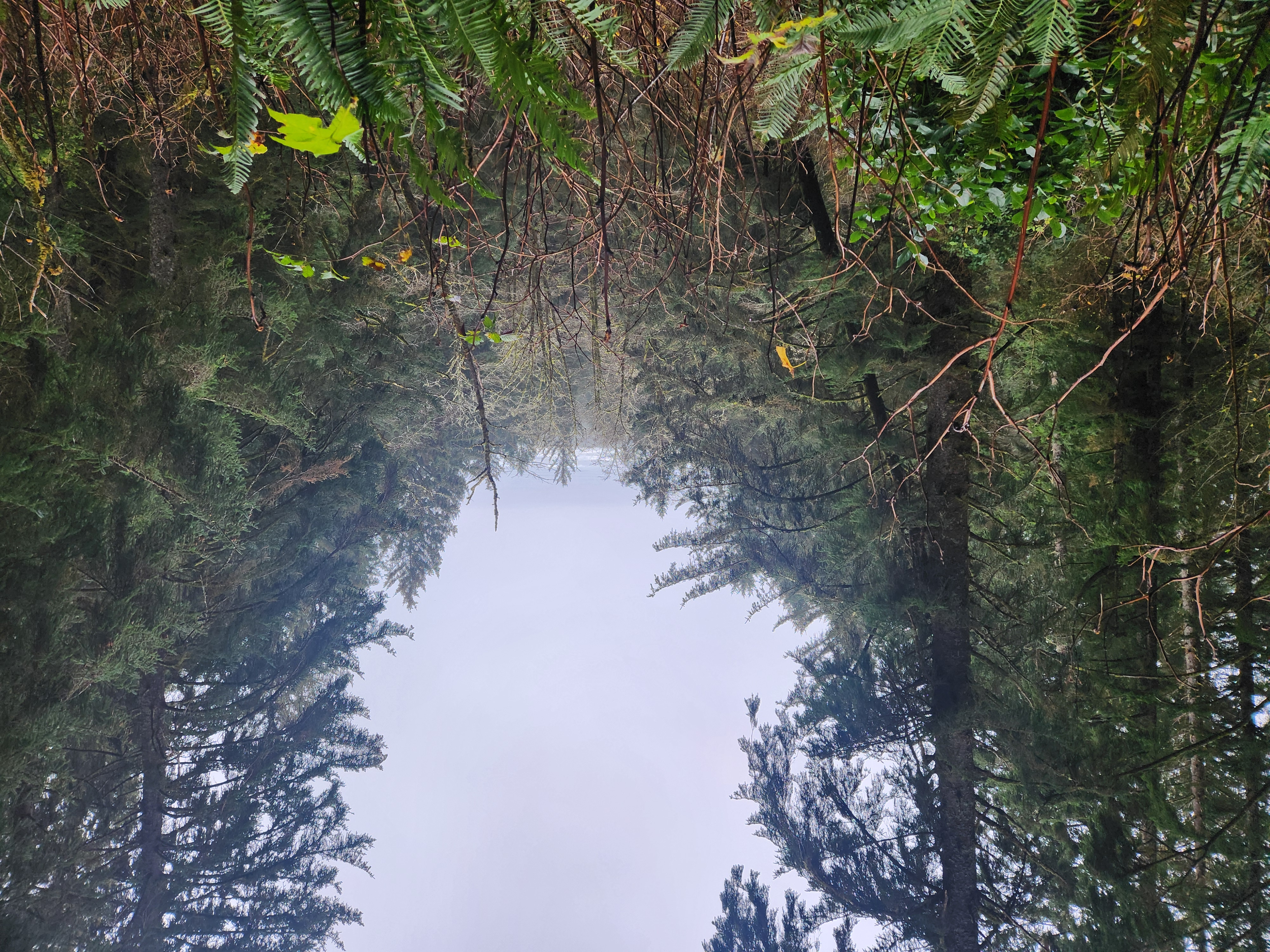
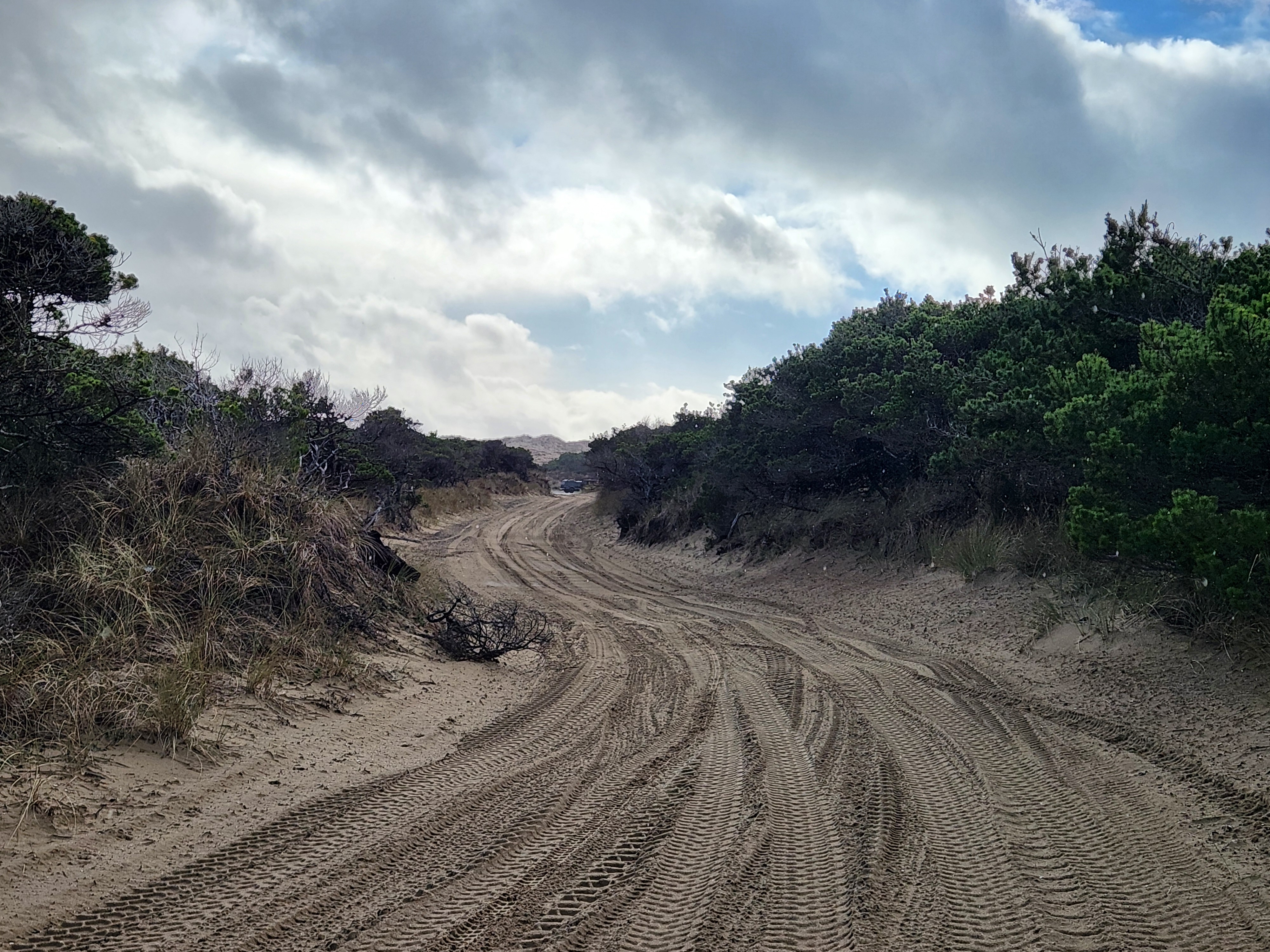
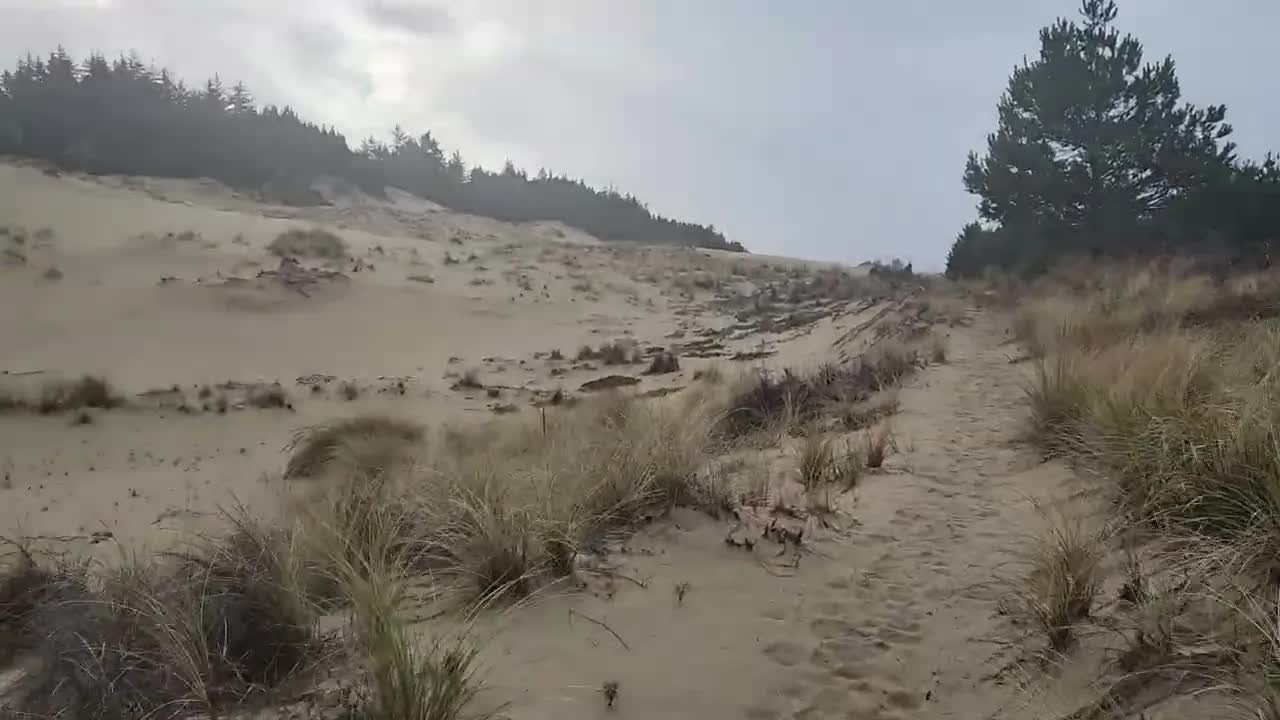
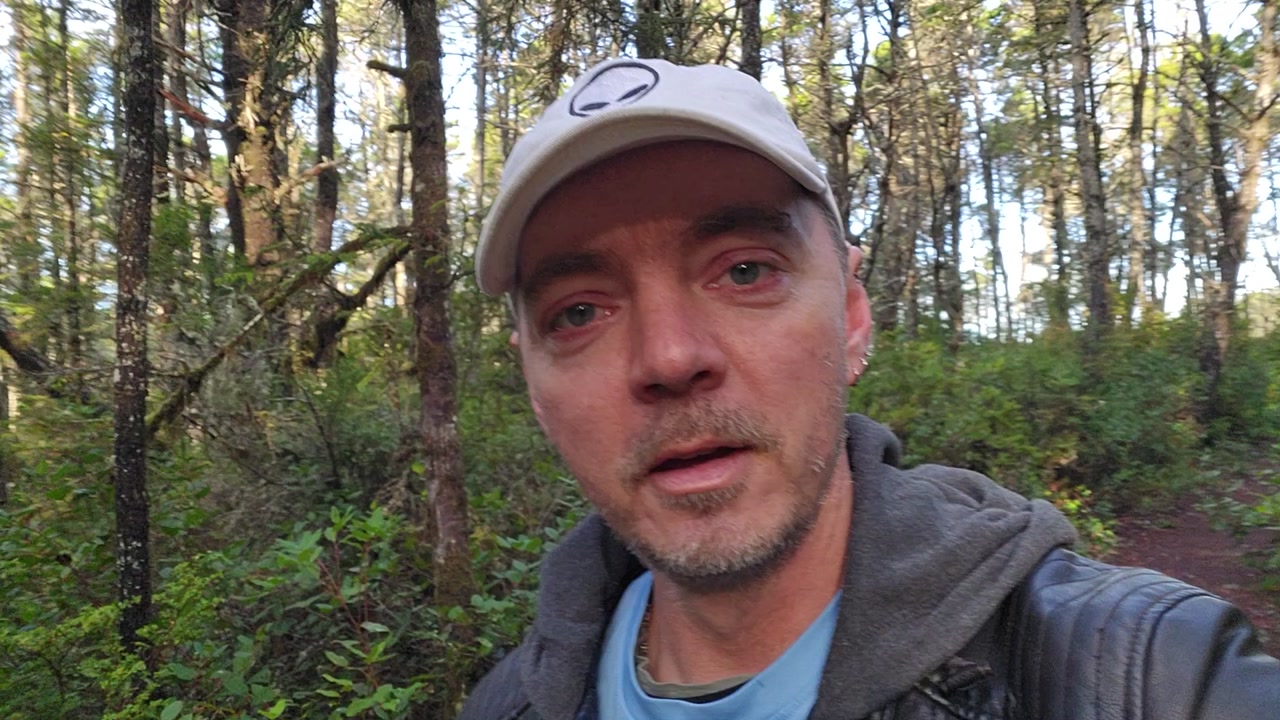
So, this is a pretty nice trail. You
[10:04]
know, we're just in the dunes. We're
[10:06]
walking alongside
[10:08]
um it's almost like Nevada. I remember
[10:11]
when I was on my trip from Kentucky to
[10:13]
Oregon, um going through Nevada,
[10:16]
you had those mountains and then you had
[10:18]
the valleys and then the mountains and
[10:20]
the valleys. It's kind of like that. The
[10:21]
dunes are like little mountains and
[10:24]
we're just hiking next to them
[10:27]
through one of the little valleys are
[10:30]
constantly shifting and changing. It's
[10:32]
very cool.
[10:34]
I didn't like the dunes at first, but
[10:36]
cuz you know it kind of feels like a
[10:37]
desert, but not really. you know, not
[10:40]
when you really spend time on them. And
[10:43]
um it's not just a desert. It's not just
[10:45]
sand. It's Look, we've got forest right
[10:48]
here, right next to us growing on top of
[10:51]
the [ __ ] sand. I mean, that's
[10:53]
remarkable to me. Literally growing on
[10:56]
the sand. Like, if you dig a foot down,
[10:59]
you would see nothing but sand. It's
[11:01]
remarkable.
[11:03]
This entire ecosystem.
[11:07]
So, I do love it here.
[11:10]
Um, definitely want to see more of the
[11:12]
coast. I've only made it as far to
[11:13]
Newport. Um, and now I'm an hour south
[11:18]
of that. I basically doubled back. Um,
[11:23]
but yeah, I always come back here, too.
[11:26]
So, I mean, I'm I'm here for a year. I'm
[11:29]
here till October, probably
[11:31]
if I stayed to to be a camp host at
[11:34]
Carter Lake, which is the plan, you
[11:36]
know. So complete my caretaker role,
[11:39]
become a host for 6 months and then
[11:41]
probably leave after that. But come back
[11:43]
every summer, every April to October.
[11:47]
That is a option that they're giving me
[11:50]
and they'll keep Carter Lake open for
[11:52]
me. I love that, you know. And then 6
[11:55]
months of the year I can explore. So if
[11:57]
Autonomy takes off, if Autonomy Realms
[12:00]
makes money for me, it allow me to fund
[12:03]
my project. and uh my life, my journey.
[12:09]
Real excited about all of it.
[12:13]
Feels good to be getting back into oh
[12:16]
man, you know, I'm getting older and for
[12:18]
many years now, part of me has always
[12:21]
wondered like is this is just my
[12:23]
metacognition
[12:24]
has always wondered if
[12:28]
um I'm losing my edge as far as
[12:29]
programming.
[12:31]
Um,
[12:33]
and I guess in some ways I probably
[12:35]
have. I mean, it's fair to say. I I
[12:39]
can't really explain how though. And
[12:42]
because I use AI for all my programming
[12:44]
now pretty much cuz we're writing this
[12:47]
project in Typescript, which I don't
[12:49]
know. Um, you know, I'm always been a
[12:52]
back-end programmer, PHP and stuff like
[12:54]
that. Um, suddenly I'm using Node and
[12:56]
Type Script and, you know, Nex.js CS and
[13:01]
so I does most of the work but I have
[13:04]
been learning I've been you know pattern
[13:06]
recognizing
[13:08]
um recognizing the patterns um you know
[13:11]
when compilers break and stuff like that
[13:14]
and I'm starting to pick it up. So, um,
[13:18]
yeah, I probably, um, maybe that's a a
[13:22]
narrative I picked up from the world
[13:24]
telling you that as you get older, you
[13:26]
know, your brain,
[13:29]
um, I don't know how they want to
[13:31]
describe it. I don't really agree. Um,
[13:34]
it's, you know, I've never seemed to,
[13:39]
um, all the patterns that I've been told
[13:42]
throughout my life by society, they
[13:45]
haven't, they haven't come true, you
[13:47]
know, like I quit smoking. I quit vaping
[13:51]
and didn't really think about it after
[13:52]
that. I just [ __ ] did it after 32
[13:54]
years. I quit opiates, cold turkey, a
[13:59]
high dose two years ago, just like that.
[14:02]
cold turkey, never looked back, never
[14:04]
thought about them again. Like every
[14:06]
time society tells me this is going to
[14:08]
be hard or like it's just wrong. I think
[14:11]
it's a control mechanism. It's a way of
[14:14]
a way of making people smaller and we
[14:16]
make each other smaller by reinforcing
[14:19]
it. And so yeah, I
[14:24]
I'm not losing my edge as far as
[14:25]
programming. I'm actually maturing into
[14:28]
something else because this project I
[14:30]
couldn't have made this a few years ago
[14:32]
probably.
[14:33]
And now
[14:35]
it's becoming something incredible.
[14:38]
That is a very steep dune there. It
[14:41]
doesn't look like it on the camera cuz
[14:42]
it vi everything, but Oh man, that is
[14:46]
that is steep.
[14:48]
I think we're going around it though.
[14:50]
Yeah, we are. Are we?
[14:55]
Hope so cuz that's steep.
[14:58]
But I've never taken this trail and I
[14:59]
wanted, you know, I plot my routes when
[15:01]
I go hiking. I often turn Gia GPS on,
[15:04]
track my routes. I don't know if I'll be
[15:07]
able to export that data yet.
[15:10]
Um, and then import it into my own
[15:12]
system. I hope so. If not, I don't know
[15:15]
how I will handle that because that's a
[15:17]
lot of data I will lose. But, um, I can
[15:20]
always ask IGPS maybe as a favor. they
[15:23]
could they could um export it for me or
[15:26]
something. We'll see. I haven't looked
[15:28]
into that yet. But anyways, um you know,
[15:33]
uh this was the one trail on my um the
[15:37]
area that I was just describing that I
[15:38]
hadn't done yet, so I've been meaning
[15:41]
to.
[15:42]
So, here we go. You can hear the ocean
[15:46]
in the background.
[15:49]
We're heading towards the creek and then
[15:51]
from there I think you can get over to
[15:53]
the ocean, but we're going way out of
[15:54]
our way just to get to it.
[15:57]
It's fun though. I love
[16:00]
um
[16:02]
I definitely love being on the coast. I
[16:04]
think it is so wonderful.
[16:08]
I cannot believe the way I was treated
[16:11]
by the people at the state parks, the
[16:13]
leadership there, the the manager, the
[16:16]
supervisor,
[16:18]
the lead volunteer coordinator
[16:20]
weaponizing trust. Like, holy [ __ ]
[16:23]
Um,
[16:25]
the regional coordinator expelling me
[16:28]
based on the word of a lowly supervisor
[16:30]
who was
[16:32]
who was lying through her [ __ ] teeth.
[16:37]
basically. No, I've never said it that
[16:40]
explicitly before. That's the truth.
[16:44]
For her
[16:47]
to frame me the way she did,
[16:50]
I mean, she turned me into a threat. A
[16:52]
threat so serious that they had a covert
[16:56]
operative come and check up on me while
[16:59]
nobody was there.
[17:01]
And I capture that in documentation.
[17:05]
It's proven.
[17:08]
And that could have only happened if she
[17:10]
was telling stories that are so far
[17:14]
beyond the realm of reasonable
[17:17]
that it's shocking to me.
[17:20]
They did not
[17:25]
discipline her for that because
[17:29]
that's unreliable. That is retaliatory.
[17:33]
It's
[17:35]
um
[17:37]
I mean it's a clear ethical violation,
[17:39]
but I know that they don't operate on
[17:40]
ethics. So, I'm talking about it from
[17:42]
from their points of view. Like like
[17:44]
surely they see what a liability that
[17:47]
is. But no, they'd rather protect her
[17:50]
than be honest with me about what
[17:53]
happens. I mean, how remarkable.
[18:00]
I don't know institutions were this
[18:02]
dysfunctional, especially a state park,
[18:04]
you know, like that's just mindblowing,
[18:08]
but you know, it is what it is.
[18:15]
Yeah, it's a nice day.
[18:20]
So excited for my projects. I'm not
[18:23]
going to be able to keep this camera
[18:24]
going. I mean, we're 18 minutes in. I
[18:26]
don't got anything else to say. I guess
[18:28]
I could leave it running though and let
[18:29]
you guys take the trail with me.
[18:32]
I don't even know who I'm addressing cuz
[18:34]
I like like I said this won't be on
[18:36]
YouTube and
[18:39]
I kind of you know I don't know how
[18:42]
Autonomy Realms is not designed for
[18:46]
um
[18:49]
content consumption. That's not what it
[18:50]
is.
[18:52]
So I don't know who would really be
[18:55]
looking at them. But we'll see where it
[18:57]
goes, right? Like I just I'm going to be
[19:00]
faithful to what I wanted and then we'll
[19:03]
see what emerges from that.
[19:07]
I do eventually. I mean, I can always
[19:11]
um
[19:14]
make something else on my homepage that
[19:16]
queries all the data from autonomy and
[19:19]
creates customized,
[19:22]
you know, a customized interface that is
[19:24]
more oriented towards towards users
[19:27]
consuming my content. But
[19:31]
um
[19:33]
definitely not the primary way that
[19:35]
these that I would ever made these
[19:36]
transmissions. It wasn't the point. It
[19:38]
wasn't the purpose. And now you can see
[19:40]
what I've been doing for 2 years.
[19:43]
I
[19:46]
I I'm still sitting with the fact that
[19:50]
I built something really incredible.
[19:52]
Like yesterday I'm running these
[19:54]
reflections,
[19:56]
you know, the analysis layers and I'm
[19:58]
like, "Wow." Like I just click a button
[20:00]
and bam, I got new data. Like it's
[20:02]
[ __ ] awesome. Uh the whole system was
[20:06]
working. It's just really cool. And I
[20:09]
can just see all the different ways I
[20:10]
might use it in the future.
[20:13]
Got to make some money. I got like five
[20:15]
bucks in my AI comp by now. And I'm
[20:18]
going to need like I got to process all
[20:20]
850 of my transmissions with the new
[20:23]
structures. That's going to cost like 50
[20:24]
bucks.
[20:26]
Um I know that because that's what it
[20:29]
cost the first time and I'm going to
[20:31]
have to redo it because the structures
[20:33]
are all different. I have I've iterated
[20:36]
to the point where where signals are
[20:38]
perfect. It captures the right data from
[20:41]
a signal and then you use that for
[20:43]
reflections and you use that for
[20:44]
clustering. So the fidelity of the data
[20:47]
you have is very important. Before I
[20:50]
start reflecting and clustering, I need
[20:53]
updated data.
[20:56]
So
[20:58]
don't even need a lot.
[21:01]
I wish it were easier, man. That money
[21:04]
has been so [ __ ] hard this past year.
[21:09]
Couldn't find anything on the freelance
[21:10]
platforms.
[21:12]
Guru [ __ ] died. like it just and I
[21:15]
had a um a very good reputation on
[21:18]
there, but it's just a dead platform and
[21:21]
Upwork is so saturated that trying to
[21:24]
stand out there when you don't have a
[21:26]
reputation is
[21:29]
it's a challenge and
[21:31]
the effort involved
[21:34]
doesn't justify the payoff. That's why I
[21:38]
haven't really done it because
[21:41]
I would have to
[21:44]
sell myself so short for so long,
[21:47]
consuming all of my time and resources
[21:50]
to build a reputation on a platform that
[21:53]
doesn't [ __ ] deserve me.
[21:55]
So, I just don't put in the effort.
[21:59]
That's the real reason. I'm just I'm
[22:01]
going to name that now.
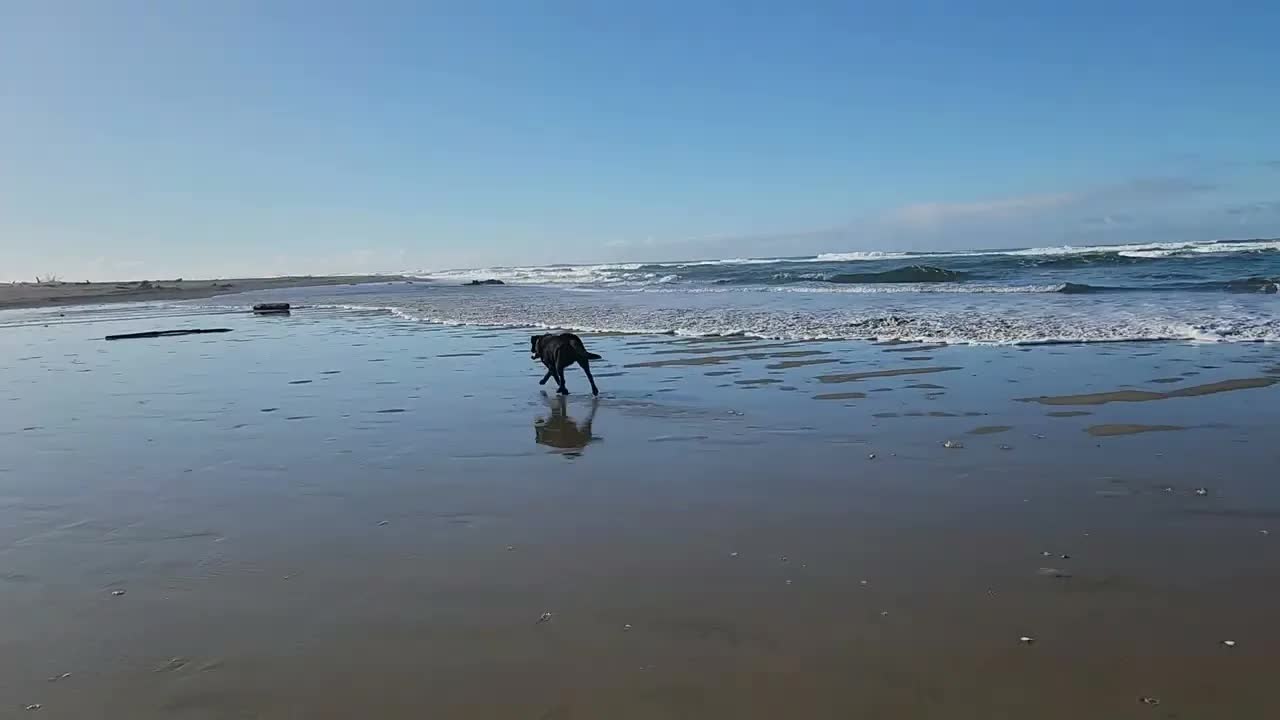
[22:04]
um
[22:06]
I'd rather keep building autonomy and
[22:10]
trust that the right clients and
[22:11]
audience will find it,
[22:14]
you know, and
[22:18]
build the future out of my own life and
[22:21]
the things that actually interest me.
[22:24]
So that's what we're doing.
[22:27]
Pretty nice out here.
[22:36]
I haven't seen like
[22:39]
no water sources. Often there are little
[22:42]
lagoons or ponds alongside the dunes,
[22:44]
but not on this trail so far.
[22:47]
I mean, lots of them. There even lakes
[22:49]
and just all kinds of stuff that you'll
[22:51]
find out here.
[22:53]
But this one, oh, just a little forest
[22:55]
in the sand.
[22:57]
Pretty cool.
[23:11]
So, I'm definitely going to need a
[23:13]
transcription service. Can use AWS, but
[23:16]
that account's about to get shut down
[23:17]
cuz I owe like 140 bucks. Literally got
[23:20]
an email this morning saying those
[23:21]
eminent.
[23:23]
So, I don't think that that one would
[23:26]
work. Probably it's I may even locked
[23:28]
out from from trying. I mean, I don't
[23:30]
know. Maybe I could make a new account.
[23:33]
Not trying to dodge them or anything,
[23:35]
but
[23:37]
their services are not cheap.
[23:41]
I don't know what else I could use. So,
[23:44]
and I do need to, you know, link up with
[23:46]
them because others will need it and use
[23:47]
that one. Um, give them a couple
[23:50]
different options for
[23:53]
transcripts. And
[23:56]
we're going to do this, right?
[23:58]
You go into the admin, you upload your
[24:00]
transmission
[24:02]
video, it gets sent to one of my
[24:04]
buckets,
[24:06]
processed by AI,
[24:09]
and then and only then do you decide if
[24:11]
you want it on YouTube.
[24:16]
Yeah,
[24:20]
I love that, man.
[24:23]
Guess I could make a new channel on
[24:24]
YouTube for
[24:26]
for just those videos that I decide. You
[24:28]
know, they call it
[24:30]
rswire.onomyrealms.com.
[24:32]
Like the channel name.
[24:35]
These are are
[24:38]
videos from that realm that I've chosen
[24:40]
to share on YouTube.
[24:43]
Um, yeah, maybe
[24:46]
I just
[24:49]
I I need to think it through because
[24:52]
I have not been
[24:55]
well received by people on that
[24:56]
platform.
[25:00]
I've had comments turned off for over a
[25:04]
year.
[25:06]
people don't click the like button which
[25:07]
is the only like the only outward signal
[25:13]
that you know is available to them to
[25:15]
show some kind of alignment with me.
[25:18]
Nobody does cuz apparently they have to
[25:20]
be told to do it. And if you got to be
[25:22]
told to do it then then I don't want you
[25:24]
doing it. So, you know, I don't I don't
[25:27]
and
[25:32]
it's not like I'm seeking external
[25:34]
validation or anything. It's not that.
[25:36]
It's just a sign that, hey, I watched
[25:38]
your video. Cool video. You know, and
[25:42]
you don't even get that from people. You
[25:44]
don't let them comment because their
[25:46]
comments will be [ __ ] stupid as [ __ ]
[25:49]
you know, shallow as can be. Um,
[25:51]
judgmental or offering advice or
[25:54]
pandering [ __ ] that you just don't, you
[25:56]
know, I'm not going to deal with. It's
[25:57]
all noise. It's all distortion.
[25:59]
So,
[26:02]
you know, that platform is just designed
[26:04]
in such a way
[26:06]
that
[26:09]
it's just deeply incompatible with me.
[26:12]
So, I just don't know. Like, but at the
[26:15]
same time, I like sharing my life. I
[26:18]
just want to find some aligned viewers
[26:20]
and supporters.
[26:22]
I don't know how to do that
[26:25]
cuz you would think that a random
[26:27]
sampling of people on YouTube would
[26:29]
produce that, but it doesn't.
[26:32]
And I guess it's because that's the
[26:34]
thing that I've been
[26:37]
kind of sitting with for a couple years
[26:39]
now is that a dozen because cuz people
[26:42]
aren't there anymore, man.
[26:45]
They're just so [ __ ]
[26:48]
tuned out or something.
[26:50]
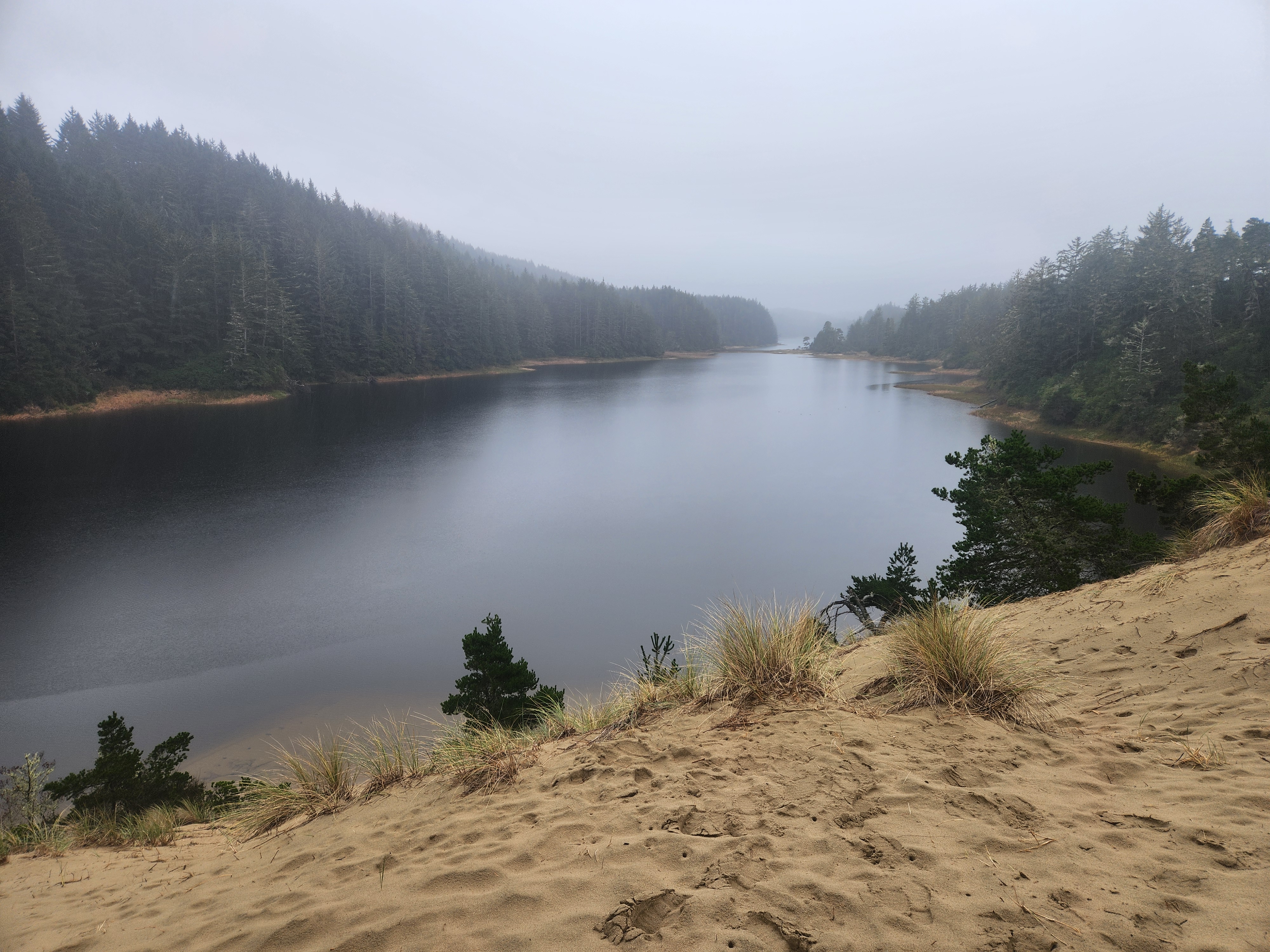
So this is neat. I got a little oasis.
[26:53]
But I really love that structure over
[26:55]
there. Almost like a island of sand
[27:00]
on top of the sand, right? Like
[27:04]
kind of neat.
[27:08]
That looks like clean water. Animals
[27:10]
would like that.
[27:13]
Clean rain water.
[27:20]
So, I don't know if you can tell, but it
[27:22]
is misty. Probably has been the whole
[27:24]
time.
[27:26]
Not bad, though. So,
[27:30]
it's misting. We got rain on the coast.
[27:32]
Winter time.
[27:34]
No sun.
[27:42]
It's nice though. I I love it here.
[27:50]
So, I think I don't think there's like a
[27:53]
loop. Like, if I want to get back, I got
[27:56]
to take this trail back or go through
[27:58]
the, you know, just follow the beach.
[28:01]
Um, I might do that cuz then we can go
[28:03]
see the ocean directly
[28:05]
and just take it the beach back.
[28:10]
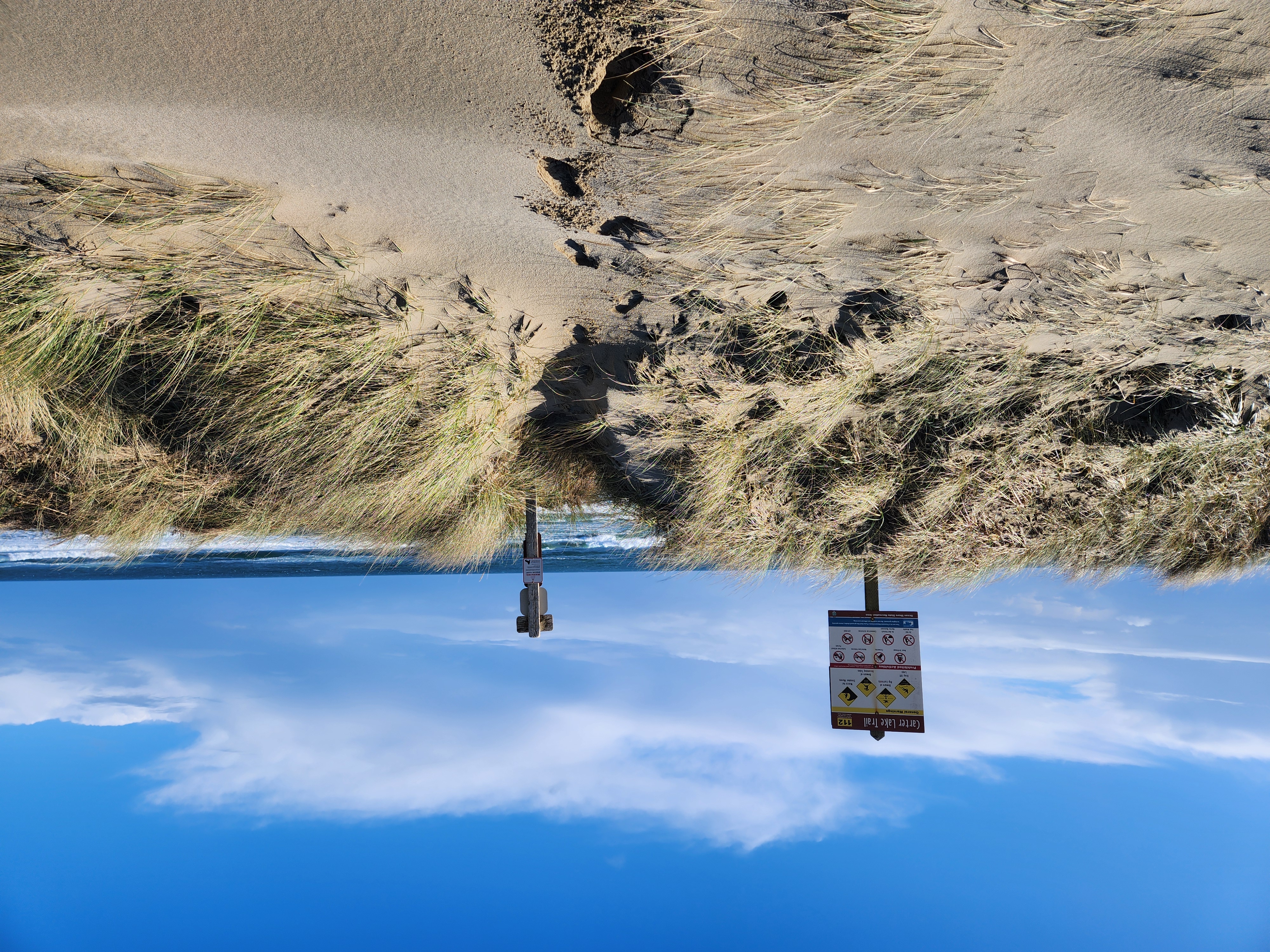
Yeah, we got some good trail head signs
[28:12]
here. It's well marked.
[28:16]
Sometimes you can It's not so clear. I
[28:19]
have ended up on paths that, you know,
[28:23]
don't lead where you think they are.
[28:25]
they're supposed to.
[28:34]
So, my allergies been acting up and I
[28:37]
don't know.
[28:40]
Like, I I was hoping that would get
[28:42]
better after I stopped, you know, after
[28:43]
I quit vaping.
[28:46]
And it did. And now they're coming back
[28:48]
again. I'm like, why?
[28:50]
And it might just be because there are
[28:52]
yellow flowers in the winter time on the
[28:54]
coast. They're not out yet. I haven't
[28:56]
seen a single yellow flower yet, but you
[28:58]
know, there are weeds or whatever.
[29:00]
They're probably grown somewhere. I
[29:01]
don't know. I truly don't know. But I
[29:03]
think that, you know, possibly
[29:06]
it's those flowers coming back or it's
[29:08]
just the sand cuz we're in the dunes or
[29:10]
whatever. I don't know. Um
[29:14]
I would really like to find out and
[29:15]
know. Said nothing has helped.
[29:18]
I mean,
[29:20]
not big on taking drugs these days, so
[29:25]
but nothing.
[29:28]
I tried different allergy meds, but
[29:30]
nothing helped.
[29:32]
Only thing that ever helped was suit
[29:34]
effect.
[29:36]
I'm out of that.
[29:39]
So, why is this trail curving this way?
[29:42]
That doesn't feel right.
[29:47]
I mean, I don't know that we should even
[29:48]
caught a trail. We're just following
[29:50]
footprints. Old footprints.
[29:53]
But
[29:57]
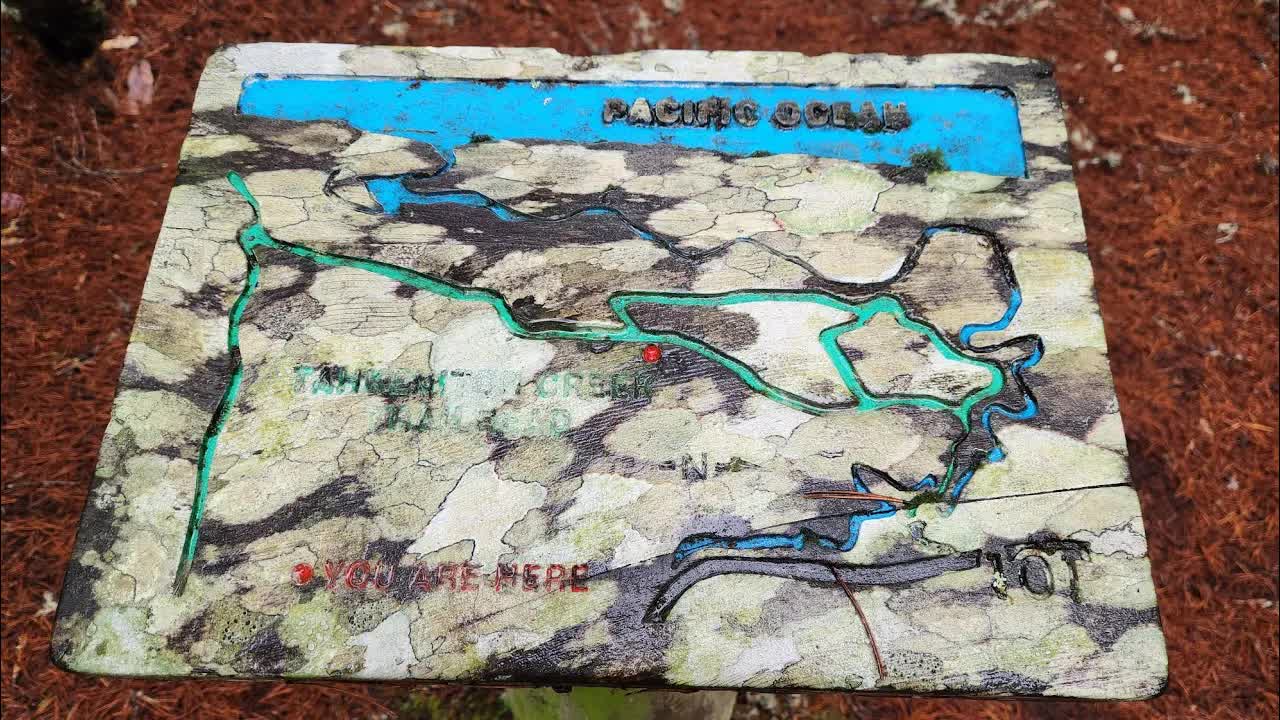
could we check the map? Maybe we're
[29:58]
closer to the creek than you realize.
[30:02]
It's not as far as I thought it
[30:09]
towards the tree.
[30:12]
Might be a trail in there right next to
[30:14]
the creek related to the ocean.
[30:21]
All right. So, we're at 30 minutes.
[30:29]
Definitely thinking I'm going to need an
[30:31]
app where you can upload your photos and
[30:34]
videos and write documents and stuff
[30:36]
like that for your autonomy realm.
[30:39]
You can do it directly from your phone,
[30:41]
stuff like that. Track your GPS routes,
[30:43]
all of that.
[30:45]
Going to have to make a mobile app.
[30:59]
There is a trail head there.
[31:04]
Trail marker. I don't know that it's
[31:05]
called a trail head. You'd have to be at
[31:07]
the start of the trail, right?
[31:09]
Okay. Where's the next one, though?
[31:13]
We about to get lost. Wait a minute.
[31:16]
I'm convinced that that's there because
[31:18]
we're supposed to go this way.
[31:25]
Pretty cool, man.
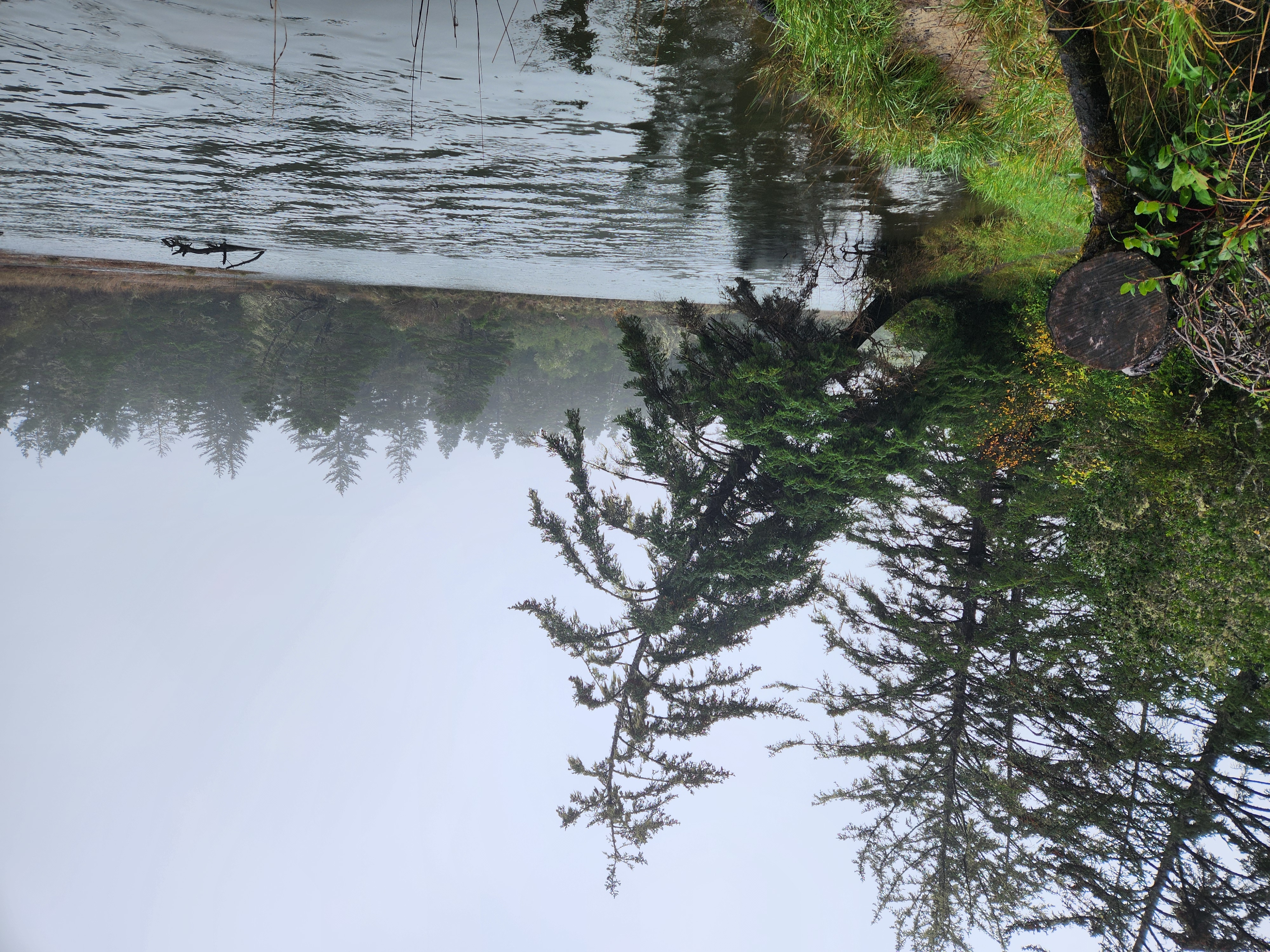
[31:32]
Got water over here. This could be the
[31:34]
creek.
[31:36]
Oh man, this is neat.
[31:39]
Okay. So, you probably
[31:41]
somewhere up there
[31:44]
probably is where the trail continues.
[31:47]
Yep. This is definitely the creek. It's
[31:48]
not like a pond there like um not just
[31:52]
excess water. This is the creek.
[31:55]
Theage creek.
[31:57]
Wow.
[32:00]
From the side of it I haven't seen it
[32:01]
from yet.
[32:03]
Cool, man.
[32:06]
It's beautiful. Look
[32:09]
at it flowing
[32:12]
towards the ocean.
[32:15]
Very cool.
[32:18]
I love that. It's even got its own kind
[32:21]
of like switch back, right? Neat. All
[32:24]
right, let's see if we can find a trail
[32:25]
to the ocean cuz this is where it ends.
[32:29]
Um the creek
[32:32]
not easy to go down the beach.
[32:35]
You know, as soon as you hit a river,
[32:36]
that's it. You can't go any further. See
[32:39]
a trail head up here. Marker. Draw
[32:42]
marker
[32:44]
all the way near the edge where the
[32:46]
creek is at.
[32:50]
Cool, man.
[32:52]
Never took this trail.
[32:55]
Was going to take it with windy, but we
[32:57]
never got around to it.
[33:02]
Last trail for this area.
[33:05]
There's another one down at Tacken's
[33:07]
campground that leads to a lake and I've
[33:09]
only taken that part of the way.
[33:12]
So, that's another one
[33:15]
for me to take. Also, I do I can picture
[33:18]
in my mind's eye what it would look like
[33:20]
on the map.
[33:24]
I'm going to take you to the southern
[33:25]
part of this lake. I forgot the name of
[33:27]
the lake, but it's this little tiny
[33:29]
lake. thin lake like um
[33:34]
like a rectangle I guess
[33:37]
and
[33:39]
I haven't seen it from the southern side
[33:41]
but I know there's trails down there. I
[33:44]
think that the trail I'm thinking of
[33:45]
takes you to those trails.
[33:48]
So I have to do that one still.
[33:50]
But we get to finish the day use area
[33:52]
here in Taken Creek and
[33:58]
we'll make it out to the beach. follow
[34:00]
the ocean, the tide, trace the tide on
[34:03]
the way back up north towards
[34:06]
um towards the day use area trail head
[34:09]
because it would be a trail head from
[34:11]
the beach
[34:13]
and
[34:15]
head back to my my forest service truck
[34:17]
and do my runs cuz I'm just parked up
[34:20]
there at the bay area.
[34:26]
a year ago.
[34:29]
Um, my core muscles were healing from an
[34:32]
injury.
[34:33]
I couldn't hike up these these hills and
[34:37]
stuff. Anything with an incline, I was
[34:39]
very careful about for months and
[34:41]
months. But man, I just realized I
[34:45]
all the time I'm climbing these things
[34:47]
now. So, I really did get better
[34:50]
thankfully.
[34:52]
was real worried about it back then
[34:53]
because I couldn't imagine a life that
[34:56]
without movement.
[35:00]
So
[35:01]
definitely in really good shape,
[35:03]
especially for my age compared to others
[35:06]
my age anyways cuz
[35:09]
I mean Samsung count with a step counter
[35:11]
tells me I'm in like the top 5% of all
[35:13]
age groups as far as number of steps I
[35:15]
take.
[35:18]
And I don't think that thing is
[35:22]
tracks everything I do. I think I
[35:25]
probably
[35:27]
like it more than it thinks I do. I
[35:28]
don't know. But, you know, make an
[35:31]
autonomy app how to track that stuff.
[35:34]
That'll be fun.
[35:37]
I love that idea.
[35:44]
Okay, we're heading towards the ocean
[35:45]
now.
[36:00]
I used to do this back in Kentucky. Just
[36:05]
record my hikes like this. Just let you
[36:07]
see the view when I'm like walking and
[36:10]
stopped doing that for a long time.
[36:13]
But here we are again.
[36:16]
everything kind of converged into
[36:19]
this new
[36:22]
this new structure and
[36:27]
I built something so [ __ ] cool.
[36:38]
Okay, so
[36:41]
I don't know if this trail has like a
[36:43]
official name or whatever.
[36:46]
This one leads out next to the creek on
[36:49]
the northern side of the creek.
[36:55]
Yeah, which means there should be one on
[36:57]
the southern side, too. I'm taking that.
[37:00]
Both sides of the creek.
[37:05]
Oh, we got We're not I thought we're
[37:08]
closer than we are. So, we're going way
[37:10]
down the dune now, and we're declining
[37:13]
now, like
[37:15]
by a lot.
[37:18]
I didn't realize we were up a size.
[37:26]
This is a pretty spot.
[37:30]
I love nature.
[37:34]
Always loved nature, man. Always.
[37:39]
We live in a beautiful world.
[37:44]
Constantly aed by it.
[38:14]
Wonder how much it would cost
[38:17]
to
[38:19]
extract 850 transcripts. Like, you know,
[38:23]
cuz I got those for free through
[38:25]
YouTube. I don't know. Like, that would
[38:27]
probably cost a lot. We're talking about
[38:29]
a lot of data. those files and you know
[38:32]
the videos themselves cuz you got to
[38:36]
the script needs to look at them in
[38:37]
order to determine what he's saying. So
[38:41]
we're talking massive amounts of data.
[38:45]
I don't know.
[38:46]
I have to look into that cuz I was
[38:49]
thinking I might want to have the time
[38:51]
transcripts
[38:53]
processed differently than YouTube does
[38:55]
it. But we'll see.
[39:01]
Nice little bridge here.
[39:04]
They expect this to flood sometimes.
[39:07]
Already is a little bit.
[39:11]
We got cool infrastructure on our
[39:12]
trails.
[39:15]
Love the little bridges and things we
[39:16]
make.
[39:28]
I like this trail.
[40:28]
Just thinking about my project. Um
[40:31]
different
[40:32]
different things thinking about.
[40:37]
So the main project built with autonomy,
[40:41]
you know, you can clone that and create
[40:43]
your own website from it and then you
[40:46]
could you could customize like your
[40:49]
transmission pages. So it could become
[40:51]
like a YouTube archive for people. I'm
[40:53]
just thinking about ways to make money.
[40:55]
It's got to make money.
[40:57]
Um I was thinking, you know, he kind of
[40:59]
already did build the infrastructure to
[41:02]
do that.
[41:04]
It's not obvious
[41:07]
to people like it's not it's not plug
[41:09]
and play.
[41:12]
Um,
[41:14]
you know, it takes someone like me to
[41:16]
deploy it and
[41:18]
turn it into whatever vision a person
[41:21]
might have for how they want their
[41:22]
YouTube archive to be. But, you know, I
[41:24]
could probably turn that into something.
[41:27]
Um, I've got time. I just
[41:31]
I've got time. There's nothing really
[41:32]
stressing me as far as money, just
[41:36]
aside from, you know, being able to
[41:38]
afford my tech costs and
[41:42]
just basic basic needs. So, and I just
[41:46]
don't have a solution for that.
[41:50]
You know, I've been relying on the help
[41:51]
of others that were aligned with me and
[41:55]
found me on my channel and
[41:57]
I they've helped so much. There's
[42:01]
no way to really ask them to help any
[42:02]
more than they already have. So, just
[42:05]
not sure what to do next on that part.
[42:08]
Still contemplating it.
[42:16]
All right. So, we walked.
[42:20]
They call that a return loop. Organ
[42:21]
Dunes trail had 2 and 1/2 miles. That's
[42:23]
where we would have started. Organ Dunes
[42:26]
return loop 1 and 1/2 miles. That
[42:27]
implies there was a trail I missed, but
[42:29]
I don't think that's true. Um, some of
[42:32]
those signs are pretty old and they the
[42:35]
trails
[42:37]
um naturally close up. I noticed that
[42:39]
yesterday. There's one that um at Carter
[42:42]
Lake that's just
[42:45]
um completely closed off. like it's just
[42:47]
reclaimed by nature.
[42:49]
So, I don't know. I think that probably
[42:52]
was one once upon a time.
[42:55]
But here we are.
[42:59]
This is where the federal land ends and
[43:01]
the state property starts once you get
[43:03]
to the beach. Once you're past the
[43:04]
dunes,
[43:06]
we are at what do we call it this one?
[43:10]
South Overlook Trail.
[43:14]
That makes sense because the day use
[43:15]
area is an overlook.
[43:20]
South overlook trail. Cool.
[43:26]
I made it to the ocean.
[43:30]
2 and 1/2 miles, man.
[43:33]
43 minutes. Quartered the whole thing.
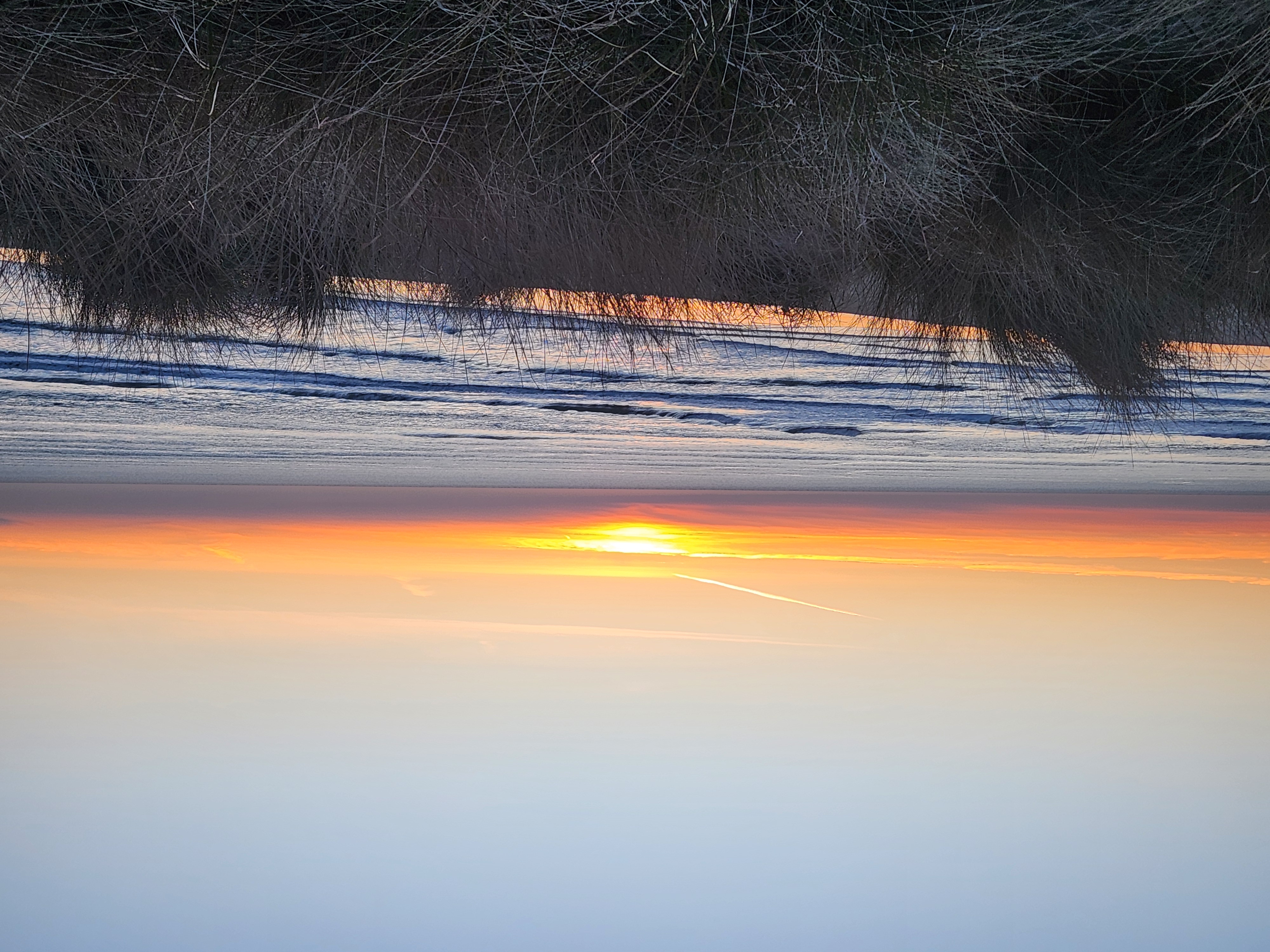
[43:36]
Oh, look at those waves. Wow.
[43:41]
Let's
[43:44]
zoom in.
[43:47]
Those are some pretty big waves.
[43:51]
But
[43:53]
beach looks pretty um calm. Basically,
[43:56]
probably doesn't look crazy or anything.
[43:59]
We're just going to walk next to the
[44:01]
ocean until we get to the next trail
[44:03]
marker like this one.
[44:05]
And that will be the day use area where
[44:08]
we can head back from. We could go that
[44:11]
way until we get to the end wherever the
[44:13]
creek is at.
[44:15]
Um, but I don't want to kind of overdo
[44:17]
it. So,
[44:19]
I mean, I already hiked 2 and 1/2 miles.
[44:22]
We got at least that to get back, right?
[44:24]
So, got to be careful here. This is
[44:27]
pretty steep. This spot could really use
[44:30]
a rope.
[44:32]
We got this.
[44:38]
Okay.
[44:40]
Nice, man. I've never been to this spot,
[44:43]
I don't think.
[44:46]
No, I have. I think I walked up this far
[44:49]
from the beach. I just never took the
[44:51]
trail.
[44:55]
Cool, man.
[45:05]
Oh, there's a rainbow over there.
[45:08]
Just barely.
[45:17]
So, we're going to just chase the tides.
[45:20]
I love tracing the tide. It's one of my
[45:22]
favorite things in the world to do.
[45:25]
Just walk next to the edge of the ocean,
[45:27]
the continent.
[45:29]
Walk in rhythm with it, you know.
[45:32]
It's real fun.
[45:35]
This ocean is amazing to me.
[45:39]
Pacific Ocean.
[45:43]
Technically, it's all one ocean, but
[45:46]
I do feel partial to this part of it,
[45:48]
the Pacific.
[46:21]
Yeah. It's beautiful day. Sun is
[46:24]
starting to come out.
[46:32]
I mean, I can feel it. I didn't I could
[46:33]
see it. I don't know. It didn't really
[46:35]
look like it was on the camera, but the
[46:36]
sun's starting to come up.
[46:40]
Here she comes.
[46:43]
Light is coming in. Oh, here she really
[46:46]
comes.
[46:52]
I love it when she does that.
[46:55]
All of a sudden it's like here we come.
[46:59]
Can feel it.
[47:06]
So I missed the king tides apparently. I
[47:08]
didn't even realize it. Wasn't thinking
[47:10]
about it. You know, I was out here one
[47:14]
day and all the whole bunch of fishermen
[47:15]
were out here and they're never out
[47:17]
here. So that was interesting. But then
[47:19]
I realized a couple days later why they
[47:22]
had all come. It was king tides.
[47:24]
I didn't realize the ocean was pretty
[47:27]
violent, but I mean it didn't feel like
[47:32]
it just felt like winter to me. And I
[47:34]
didn't realize
[47:44]
definitely got a lot of work to do.
[47:51]
And now I would love to just share the
[47:52]
rest of this hike with you, but I would
[47:54]
like to listen to my music too. So I
[47:57]
don't really have anything to talk
[47:58]
about. Said everything that I felt like
[48:01]
sharing.
[48:03]
These transmissions are not
[48:14]
I already did what they're I already did
[48:15]
the thing that they're designed for. So
[48:18]
leave it