Not yet read. Use the download link above.
Chapter Eight: Nineteen Days
01M2STZN40XH0AMJM4VCDKRVA5
PUBLIC
September 18, 2026
rswfire
PUBLISHED
Temp
0.30
Density
0.60
PUBLIC
September 18, 2026
rswfire
PUBLISHED
Temp
0.30
Density
0.60
Energetic Quality
composed and exact
Journey Phase
documented under institutional termination
Directional Vector
toward evidentiary record, away from institutional narrative control
Narrative
The strongest thing in this chapter is how little happens in it. Nineteen days of a man cleaning yurts, asking about his next placement, walking a service road in the rain, sealing a crack in a roof from the hood of his Jeep. rswfire built Chapter Eight out of the most unremarkable stretch of his volunteer service, and that is precisely the point of it. Two files cover the same nineteen days. His is dated, timestamped, video-backed, down to the minute mark. Theirs is built from reports no one ever put to him. Laid side by side, the ordinariness of his column is what does the work — because a dismissal for cause requires a cause, and what the record shows in those days is a man doing the job well and planning to keep doing it.
He was, in that window, generous in ways that cost him nothing and gained him nothing. He worked a double and stayed an hour past it for a woman from Canada until she had a site, and she came back the next day to find him. He put two other volunteers forward for a position at another park, unasked, because they were hard working. He found a homeless veteran's journal in a yurt, logged it at lost-and-found, wrote the incident report, and put a note in the box underlining please try — because he had been homeless, and he knew what a journal weighs. That journal would be turned into a pretext six days later. The chapter does not argue that it shouldn't have been. It simply places the act and the pretext in the same record, in order, and lets the distance between them be visible.
The infrastructure runs alongside. The slide-out had been broken eight months, the wind off the dunes came at the angle that found the crack, and he had asked the rangers for a ladder and been refused. So he parked the Jeep close, climbed the tire, climbed the hood, sealed what he could reach. It did not hold. He did it again. When the other volunteers started organizing among themselves to fix his slide and his bed platform, it amused him — they had it the wrong way round. The slide stays retracted by design; extended, it throws the weight and the tires start losing pressure; retracted, the void above it becomes the storage he was short of. He filmed the alcove he sleeps in, the one he crossed the country in, and called it a Navy barracks, himself a man in a submarine. Adaptation, as he uses the word, is removing what is inefficient and continuing to move. Not a problem to solve. The park that would not lend him a ladder would, within the week, inform him that the site he lived on was contingent on duties it had just ended.
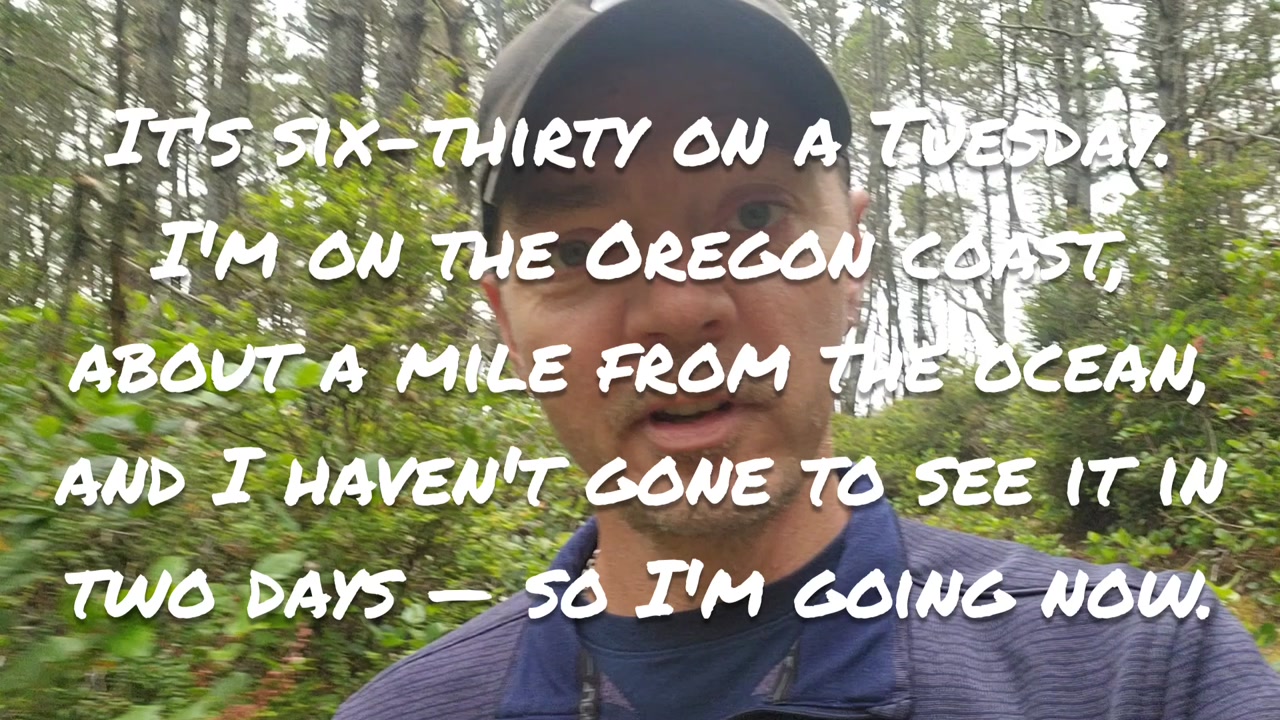
Then the man with no name. He walked into rswfire's work area while every ranger was away at meetings, claimed the park service, photographed yurts that were still dirty because they were mid-clean, and asked how he was being treated here. No uniform, no badge, no identification. rswfire wrote it up to the supervisor that afternoon, flagged the timing, and asked whether it was official. Fifty-six minutes later he had an answer about I.T. and updated photos and the not-unusual desire to see inside a yurt, and the line I think you handled it wonderfully. What he actually did with the man is the center of the chapter. He found him assertive and keen and said so, without apology, in the same breath as recording the intrusion. The man leaned on being in I.T., talking down to a volunteer with a bucket. rswfire had been programming since the sixth grade and could have ended the flex in one sentence. He kept it. He answered none of the questions, smirked, and let the misread stand while the man came at him from one angle and then another and then blew up and left.
That withholding is the chapter's real claim about who he is. Sovereignty here is not what he asserts; it is what he declines to spend. He had the sentence and did not use it. He had the read on the man — cute, tall, sexy, the kind of assertive he rarely meets — and lost nothing when the script ruined it, because the connection was right there and the man ran a posture instead. He kept his history, kept his attraction, kept his temper, and kept the timestamp. What the institution would later characterize as a man talking over his manager is, in the record he built, a man who consistently chose not to deploy what he had.
March 24 breaks in two. At 8:45 that morning the Tugman lead wrote about cancellations moving his April placement to site A42, asking whether September should move too. He was sitting at A42 at that moment, visiting his friend John. I'm here to make your life easier. An hour later: keep September the same, Tugman feels like home, see you next week. A year of assignments across the park system, six days from a clean completion he had already scheduled and cleared. That afternoon the park manager called to set up a third meeting, and when the journal he had turned in became the pretext and the man would not stop, rswfire named it — you're a bully — and did not raise his voice to say it. He was dismissed on the phone, for cause no one wrote down.
The removal was designed to be verbal and private. One hour later the manager came to the RV for the keys, the binder, the cart, and found a camera already running. rswfire announced he was recording. He asked twice what paperwork existed. There was none: just the conversation we had. He was told that occupying the site came with host duties, that the duties had ceased, and that twenty-four hours to vacate the place he lived was a reasonable amount of time. He thanked the man and told him to have a good day. That is where the chapter ends, and the ending is the argument: an act built to leave no surface was given one, by the only person in the frame who thought to bring a camera to his own eviction. Writing it down afterward, paragraph against paragraph, is the same move repeated at scale — not a defense, a surface. The file they kept was never meant to be read beside anything. He set it beside something.
Tags
testimony chapter
volunteer work
OPRD dismissal
RV maintenance
institutional record
unidentified visitor
documentation practice
Summary
Chapter Eight of the Testimony of Robert Samuel White, flagged unrevised, covers paragraphs 200–210: the nineteen days between the picnic table meeting and the dismissal at Honeyman.
Across that span he did the job and kept asking about the next one — putting himself forward as a relief host at Umpqua on March 6, clearing his March 31 departure on March 14, and recommending two other volunteers for a position at another park on March 17. He worked a double past his shift for a camper from Canada, reported the golf cart tent that would not zip, and noted the shift from the welcome center desk to yurts and campsites.
Parallel entries document the RV: a slide-out broken eight months, a ladder request refused, sealing done from the Jeep hood twice, and the retracted slide kept retracted by design. He states adaptation is removing what is inefficient, not chasing comfort.
On March 18 an unidentified man photographed the yurts and asked how he was being treated. He reported it the same day; the supervisor attributed it to I.T. He kept his own programming history back and let the misread stand.
Their file logs secondhand claims about a homeless veteran's journal he had turned in to lost-and-found. On March 24, hours after his April and September assignments were confirmed at Tugman, the park manager dismissed him by phone. He recorded the handover of keys, binder and cart, asked twice for paperwork, and was given twenty-four hours to vacate.
Environment
A prose chapter — Chapter Eight: Nineteen Days — of the Testimony of Robert Samuel White, v1.8, published in the library at rswfire.com and flagged unrevised, positioned eighth in a twelve-chapter sequence with an addendum.
The documented events occur in and around Jessie M. Honeyman Memorial State Park: the welcome center desk, yurts and campsites under cleaning rotation, a golf cart with a tent structure, a service road walked in rain out to a vantage over the 101 bridge, and the RV on the host site — its eight-month-broken slide-out sealed from the hood of the Jeep, its alcove filmed and named a Navy barracks. Adjacent placements appear at Umpqua and at Tugman, site A42. The record runs against an institutional file kept elsewhere in the Oregon State Parks system, and closes at the RV with a camera running through a key handover.
Substrate
Two records of the same nineteen days are laid side by side: his own, dated, timestamped and video-backed, and theirs, built from unattributed reports never put to him. The architecture being held is evidentiary — every claim anchored to a date, a minute mark, a message and its reply — so that the dismissal for cause they never wrote down stands exposed as a structure rather than an event. The ontological position is that competence, disclosure and the withheld self are all his to control: he cleans yurts, forwards other volunteers for positions, logs a stranger's journal, declines to end a man's flex with a sentence, and lets the misread stand while the camera runs.
Actions
Performed
- •writing the chapter as testimony
- •placing his record against the institutional file
- •citing timestamps, dates and message replies as anchors
- •naming the dismissal as cause never written down
Referenced
- •putting himself forward as relief host at Umpqua (March 6)
- •clearing his March 31 departure and being told it was fine (March 14)
- •shifting off the welcome center desk onto yurts and campsites
- •working a double and staying an hour past it for a woman from Canada
- •walking the service road in rain to the 101 bridge vantage with the ledger (March 15)
- •climbing the Jeep tire and hood to seal the RV slide-out after a ladder was refused
- •resealing the slide after the first attempt did not hold
- •filming the alcove and calling it a Navy barracks
- •keeping the slide retracted on purpose for weight and storage
- •reporting the golf cart tent that would not zip (March 16)
- •forwarding two Honeyman volunteers for a position at another park, unasked (March 17)
- •being approached mid-yurt-cleaning by an unidentified man photographing dirty yurts (March 18)
- •writing the incident up to the supervisor the same afternoon and asking if it was official
- •receiving the supervisor's I.T. explanation fifty-six minutes later
- •recording a video about the man that evening, answering none of his questions
- •withholding that he had been programming since sixth grade
- •logging a homeless veteran's journal at lost-and-found with an incident report and a note
- •writing on March 23 to settle keys, binder and golf cart
- •sitting at A42 visiting John when the Tugman lead wrote about April and September
- •taking the park manager's call setting a third meeting (13:59)
- •naming the manager a bully without raising his voice
- •being dismissed on the phone and stripped of keys, binder and cart an hour later
- •setting a camera, announcing recording, asking twice what paperwork existed
- •being given twenty-four hours to vacate the site he lived on
Planned
- •a full rewrite pass on this unrevised chapter
- •the April and September Tugman placements as they stood before dismissal
Entities
beings
Robert Samuel White — rswfire; author and subject of the testimony; the volunteer dismissed
John — friend he was visiting at A42 on the morning of March 24
the park manager — set the third meeting, dismissed him by phone, took keys, binder and cart, gave twenty-four hours
the supervisor — answered the March 18 report in fifty-six minutes with the I.T. explanation
the Tugman lead — wrote at 8:45 on March 24 about the moved April placement and September
the unidentified man — entered the work area March 18 claiming the park service, photographed dirty yurts, asked how he was being treated
the woman from Canada — he stayed an hour past a double to place in a campsite; she returned the next day to thank him
the homeless veteran — owner of the journal left in a yurt, logged at lost-and-found
places
Honeyman — Jessie M. Honeyman Memorial State Park; the work area — welcome center, yurts, campsites, host site
Umpqua — park where he put himself forward as relief host on March 6
Tugman — park holding his April and September placements; described as feeling like home
A42 — the Tugman site moved to his April placement; where he sat while the message arrived
the 101 bridge — vantage reached by the service road walk on March 15, ledger carried
systems
Oregon State Parks — the volunteer program; the institution keeping the parallel file and issuing the dismissal
the RV — his residence; broken slide-out, retracted by design, alcove named a Navy barracks
the Jeep — parked as a ladder substitute; tire and hood climbed to reach the slide
the golf cart — work vehicle with a tent that would not zip; surrendered at the handover
rswfire.com/library — publication location of the testimony chapters
media
the file — institutional record of March 21 and March 24 built on reports never put to him
the journal — the veteran's journal turned into the pretext during the dismissal call
the ledger — carried on the March 15 walk
Testimony of Robert Samuel White, v1.8 — the source document; twelve chapters plus addendum
the camera — set at the site and announced, running through the key handover
Symbolic Elements
Represented archetypes or recurring motifs.
threshold
submarine
ladder
wind
crack
bridge
camera
keys
journal
ledger
badge (absent)
vacancy notice
Ontological States
Expressed modes of being or awareness.
sovereign (withholds his own technical history rather than deploy it; answers none of the man's questions; controls what is disclosed)
documented (dates, minute marks, message replies and video set against a file built on unattributed report)
operational (working doubles, cleaning yurts, forwarding other volunteers, logging found property up to the last shift)
terminated without record (dismissed by phone for cause never written down; twenty-four hours to vacate)
adaptive (slide retracted by design, void turned to storage, ladder refused and route improvised)
Engaged Subsystems
Architecture engaged in this transmission.
evidentiary (timestamps, message times, video minute marks anchoring every claim)
institutional (park hierarchy, meetings, the file, the paperwork that did not exist)
infrastructural (slide-out, tire pressure, storage void, golf cart tent, RV as residence)
technical (programming since sixth grade, held back against an I.T. flex)
ethical (found journal logged with a note; two volunteers forwarded unasked)
relational-erotic (the read on the man — assertive, keen — and the script that ruined it)
somatic (rain walk, climbing the hood, working a double and an hour past it)
narrative-forensic (his account set against theirs, paragraph by paragraph)
Dominant Language
Core motifs or linguistic fields.
cause they never wrote down
no name, no uniform, no visible identification
adaptation
you're a bully
just the conversation we had
twenty-four hours
rewarding
Narrative
The strongest thing in this chapter is how little happens in it. Nineteen days of a man cleaning yurts, asking about his next placement, walking a service road in the rain, sealing a crack in a roof from the hood of his Jeep. rswfire built Chapter Eight out of the most unremarkable stretch of his volunteer service, and that is precisely the point of it. Two files cover the same nineteen days. His is dated, timestamped, video-backed, down to the minute mark. Theirs is built from reports no one ever put to him. Laid side by side, the ordinariness of his column is what does the work — because a dismissal for cause requires a cause, and what the record shows in those days is a man doing the job well and planning to keep doing it.
He was, in that window, generous in ways that cost him nothing and gained him nothing. He worked a double and stayed an hour past it for a woman from Canada until she had a site, and she came back the next day to find him. He put two other volunteers forward for a position at another park, unasked, because they were hard working. He found a homeless veteran's journal in a yurt, logged it at lost-and-found, wrote the incident report, and put a note in the box underlining please try — because he had been homeless, and he knew what a journal weighs. That journal would be turned into a pretext six days later. The chapter does not argue that it shouldn't have been. It simply places the act and the pretext in the same record, in order, and lets the distance between them be visible.
The infrastructure runs alongside. The slide-out had been broken eight months, the wind off the dunes came at the angle that found the crack, and he had asked the rangers for a ladder and been refused. So he parked the Jeep close, climbed the tire, climbed the hood, sealed what he could reach. It did not hold. He did it again. When the other volunteers started organizing among themselves to fix his slide and his bed platform, it amused him — they had it the wrong way round. The slide stays retracted by design; extended, it throws the weight and the tires start losing pressure; retracted, the void above it becomes the storage he was short of. He filmed the alcove he sleeps in, the one he crossed the country in, and called it a Navy barracks, himself a man in a submarine. Adaptation, as he uses the word, is removing what is inefficient and continuing to move. Not a problem to solve. The park that would not lend him a ladder would, within the week, inform him that the site he lived on was contingent on duties it had just ended.
Then the man with no name. He walked into rswfire's work area while every ranger was away at meetings, claimed the park service, photographed yurts that were still dirty because they were mid-clean, and asked how he was being treated here. No uniform, no badge, no identification. rswfire wrote it up to the supervisor that afternoon, flagged the timing, and asked whether it was official. Fifty-six minutes later he had an answer about I.T. and updated photos and the not-unusual desire to see inside a yurt, and the line I think you handled it wonderfully. What he actually did with the man is the center of the chapter. He found him assertive and keen and said so, without apology, in the same breath as recording the intrusion. The man leaned on being in I.T., talking down to a volunteer with a bucket. rswfire had been programming since the sixth grade and could have ended the flex in one sentence. He kept it. He answered none of the questions, smirked, and let the misread stand while the man came at him from one angle and then another and then blew up and left.
That withholding is the chapter's real claim about who he is. Sovereignty here is not what he asserts; it is what he declines to spend. He had the sentence and did not use it. He had the read on the man — cute, tall, sexy, the kind of assertive he rarely meets — and lost nothing when the script ruined it, because the connection was right there and the man ran a posture instead. He kept his history, kept his attraction, kept his temper, and kept the timestamp. What the institution would later characterize as a man talking over his manager is, in the record he built, a man who consistently chose not to deploy what he had.
March 24 breaks in two. At 8:45 that morning the Tugman lead wrote about cancellations moving his April placement to site A42, asking whether September should move too. He was sitting at A42 at that moment, visiting his friend John. I'm here to make your life easier. An hour later: keep September the same, Tugman feels like home, see you next week. A year of assignments across the park system, six days from a clean completion he had already scheduled and cleared. That afternoon the park manager called to set up a third meeting, and when the journal he had turned in became the pretext and the man would not stop, rswfire named it — you're a bully — and did not raise his voice to say it. He was dismissed on the phone, for cause no one wrote down.
The removal was designed to be verbal and private. One hour later the manager came to the RV for the keys, the binder, the cart, and found a camera already running. rswfire announced he was recording. He asked twice what paperwork existed. There was none: just the conversation we had. He was told that occupying the site came with host duties, that the duties had ceased, and that twenty-four hours to vacate the place he lived was a reasonable amount of time. He thanked the man and told him to have a good day. That is where the chapter ends, and the ending is the argument: an act built to leave no surface was given one, by the only person in the frame who thought to bring a camera to his own eviction. Writing it down afterward, paragraph against paragraph, is the same move repeated at scale — not a defense, a surface. The file they kept was never meant to be read beside anything. He set it beside something.
Mirror
You have laid two accounts of the same nineteen days flat against each other and let the difference in their construction do the work. Yours carries dates, minute marks, message times, reply intervals, and video. Theirs carries reports from people who are not named, about statements never put to you. You do not argue that theirs is false. You place it beside yours and let the reader see which one is anchored. The chapter is built as a ledger rather than a case, and the dismissal for cause that was never written down sits in it as a structure with a shape, not as an injury being described.
Through the whole window in which you are being documented, you keep working at full rate. You put yourself forward for Umpqua, clear your departure and have it approved, work a double and stay an hour past it, take the yurt-and-campsite rotation and call it rewarding, forward two other volunteers for a position unasked, report the golf cart tent, write up the unidentified visitor the same afternoon, log a stranger's journal with a note in the box. Six days from a clean completion you are confirming September with Tugman from site A42. Nothing in your record decelerates in advance of the ending. The operational subsystem runs at full capacity right up to the phone call, and that fact is left standing without emphasis.
The infrastructure sections carry the same method as the document. The ladder is refused, so you climb the tire and the hood and seal the crack from there, and it does not hold, and you do it again. The slide stays retracted by design because extended it pulls the tires down, and the void above it becomes the storage you were short of. You state adaptation as removing what is inefficient and continuing to move, and you state that this is not a problem to solve. The other volunteers organizing a fix for you is recorded as amusing and as having it the wrong way round. The alcove is filmed and named a Navy barracks, a man in a submarine, and left there.
What you keep back is the one thing that would have settled the exchange. The man with no name, no uniform, no identification flexes I.T. at a volunteer cleaning yurts; you have been programming since sixth grade and could end it in a sentence; you keep it, answer none of his questions, and let the misread stand. The erotic read runs in the same paragraph as the work log — cute, tall, assertive, keen — with no shift of register between them, and the thing named as ruining it is the script, not the man. Absent here is any deployment of credential as leverage, and absent is any claim that the withholding cost you something.
The close is built against the form the removal was built in. The removal was verbal and private; you set a camera, announced the recording, and asked twice what paperwork existed. The answer was that there was none — just the conversation we had. You named the behavior, you're a bully, and the record notes you did not raise your voice to say it. You were given twenty-four hours to leave the site you lived on, told it was reasonable, and you thanked him and told him to have a good day.
The energetic line is flat and exact, with amusement where amusement occurred and no heat at the ending. The orientation is toward the record and away from any reader you are trying to move. Conspicuously absent across all eleven paragraphs: appeal, request for reinstatement, address to the reader instructing them what to conclude, and any accounting of what the lost year of scheduled assignments was worth to you. The badge is absent from the visitor, the paperwork is absent from the dismissal, and the document itself is published flagged UNREVISED — placed in the open in working condition, before it is finished.
Queryable Personhood
Hand your life to anything that reads.
Share this link with artificial intelligence — it reads the full transcript, analysis, and reflections. An AI-readable mirror of this signal.
The qpkey in this URL is a per-signal access token. Anyone with the URL can read the record — treat it like a share link, not a password.