Not yet read. Use the download link above.
Chapter Eight: The Director and Her Deputy
01M2SV8T30YCV4TQ0N73DTM9JQ
PUBLIC
September 18, 2026
rswfire
PUBLISHED
Temp
0.40
Density
0.80



PUBLIC
September 18, 2026
rswfire
PUBLISHED
Temp
0.40
Density
0.80
Energetic Quality
cold precision
Journey Phase
consolidating
Directional Vector
toward a record held outside the institution's control
Narrative
At 8:37 on the morning of December 8, the Director of Oregon Parks and Recreation wrote that further correspondence would not lead where rswfire wanted to go. At 2:48 that afternoon she wrote again. Three words. Everything Chapter Eleven is built to demonstrate sits in the six hours between those two messages, and rswfire knew it as it happened — he laughed. A correspondence declared closed at breakfast reopened by mid-afternoon is not closed; it is being read. What changed in the interval was not his argument. He had added nothing to his claims and withdrawn none of them. He had driven into town, moved money into a bank account, registered a domain name, and put it under his signature in a one-line acknowledgment of receipt. The site was empty. There was nothing on it. The name alone, sitting in her inbox beneath his, produced the only unguarded sentence she ever sent him.
That is the chapter's central reading, and it is a reading about jurisdiction rather than about grievance. For nine months the matter had lived inside a structure where every question routed upward to two desks and stopped. Inside that structure the Director held the instruments: the investigation she could open, the records officers who answered his request into a portal he had no account for and was never told existed, the program manager whose Timeline of Events would later go to the police. rswfire held recordings and a registrar. The recordings had been offered over and over and never once requested. The registrar cost forty dollars and took four minutes. When he used it, the entire apparatus of the institution's discretion became irrelevant in a single stroke, because the one thing an institution cannot do to a record it does not hold is decline to look at it.
The chapter is engineered as a ledger with two columns, and its force comes from refusing to editorialize the arithmetic. On one side, four replies across seven months: a warm answer to a public letter that addressed none of its five requests, a closure, three words, and a routing instruction from the Deputy Director barring him from staff contact. On the other side, the same seven months: the reflection engine finished and run across a catalogue of eight hundred recordings, the access layer completed at one in the morning on October 20, infrastructure moved off Amazon onto two servers he provisioned himself, nine hundred recordings pulled down onto storage he controls and the public channels deleted, thirty-two years of nicotine set down cold on November 4, seven walks to the ocean that month in rain and after dark, a promotion to caretaker behind a locked gate on federal ground a few miles from the park that dismissed him. He sets these beside each other and lets the reader do the subtraction. No adjective is required. The column that had authority produced four emails. The column that had none produced a working system and a body that had not been off nicotine since he was sixteen.
The four replies, read as a set, form a taxonomy of ways to answer without answering, and the chapter catalogues them with the flatness of an inventory. One assured him that concerns about the volunteer program were taken seriously in a message that responded to none of the five institutional concerns he had raised. One recast a documented complaint — named staff, dated conduct, recordings of the meetings — into pain, frustration and hurt, words he had not used, in reply to a letter whose content was nine months of Forest Service employment, two advancements, a work truck, a twenty-five mile route, and the sentence I was never the problem. She answered a man assembled from his letter rather than the one who wrote it. Not one of the four asked a question. Not one requested a document. Not one named a person who would look. The records law obliged an answer and the request ran eighty-five days past its deadline. rswfire does not call this misconduct. He states the function of a director's office — that a failure beneath it can be corrected, and that this is the whole function — and then places the record of what those two desks did next to it.
What makes the chapter something other than an accounting of institutional silence is that the building and the correspondence are the same act, told in one line. He took his systems off Amazon and his recordings off other people's platforms in the same weeks he served notice under a records statute and then under §1983. He put down nicotine by constructing the conditions that would hold it — no fuel, no willingness to ask, a life structured so town was not reachable — and walked to the water instead, seven and a half miles, then twelve and a half, far enough that a step counter placed him in the top three percent of everyone it tracks. Every one of these is the same operation performed on a different substrate: move the thing onto ground you own. The archive, the servers, the domain, the lungs, the miles. By the time the Deputy Director instructed him not to communicate with staff, there was nothing left in the matter that the institution had custody of.
His five-minute reply to that instruction is the chapter's clearest statement of position, and it is not defiance. Don't confuse your internal routing procedures with authority over me. He had not been inside the hierarchy since March. A structured process is a thing an organization does to itself; it does not reach a citizen standing outside it, and the Deputy Director's letter mistook one for the other. The same premise governs the first letter in the chapter, written the previous July after he read an interview with the Director: he told her what her institution had done, named no request, and told her to sit with it. He was not appealing. Nothing in twenty-three months of this ever takes the form of an appeal, which is why the five remedies he did ask for were all for volunteers who come after him — an investigation, consequences, protection from retaliation, a grievance process not dependent on the good faith of the managers causing the harm, training and oversight — and none for himself.
The chapter ends on a single operational fact and stops. In all of it, the only decision either office made was the order closing the agency to him. Eighteen days later an emergency manager took his letters to a captain of the Oregon State Police, with the Deputy Director copied. rswfire lays that down and moves on to Chapter Twelve. He does not draw the line between those two events, because the dates draw it, and because the whole architecture he spent those same seven months building exists so that he will never again have to argue for what a record plainly says. The closure did not end the matter. It relocated it — out of an inbox that could be shut and into an archive that answers questions, indexed, embedded, running on hardware he pays for, under a name that has been his for the entire span of the internet.
Tags
institutional correspondence
open letter
public records request
volunteer dismissal
infrastructure build
forest service caretaking
coastal walking
Summary
Chapter Eleven of the Testimony of Robert Samuel White documents correspondence between rswfire and the Director of Oregon Parks and Recreation Department and her Deputy Director, spanning July 2025 through February 2026.
On July 29, 2025, four months after his dismissal and while serving as campground host at Driftwood II, he wrote to the Director naming what occurred inside her institution and asking for nothing. A month later he published an Open Letter on r/volunteer, naming the manager's "chew glass and swallow it" remark, the two months of pressure, the dismissal six days before scheduled completion, and stating recordings exist. He listed five institutional requests: investigation, consequences for coercive managers, retaliation protections, an independent grievance process, and supervision training.
Four replies came back across seven months — one answering the public letter without addressing its contents, one in therapeutic language closing correspondence, one of three words, and one from the Deputy Director barring contact with staff. He answered the last in five minutes: Don't confuse your internal routing procedures with authority over me. On December 8 he registered oprdvolunteerabuse.org and signed it under his name.
The chapter runs a parallel track: Forest Service advancement to Tahkenitch Landing and then the Siltcoos Work Center, the 85-day public records violation, §1983 notices, building the Autonomy Realms reflection engine across ~800 recordings, moving infrastructure onto self-owned servers, deleting both channels, ending 32 years of nicotine on November 4, and repeated walks to the ocean.
Environment
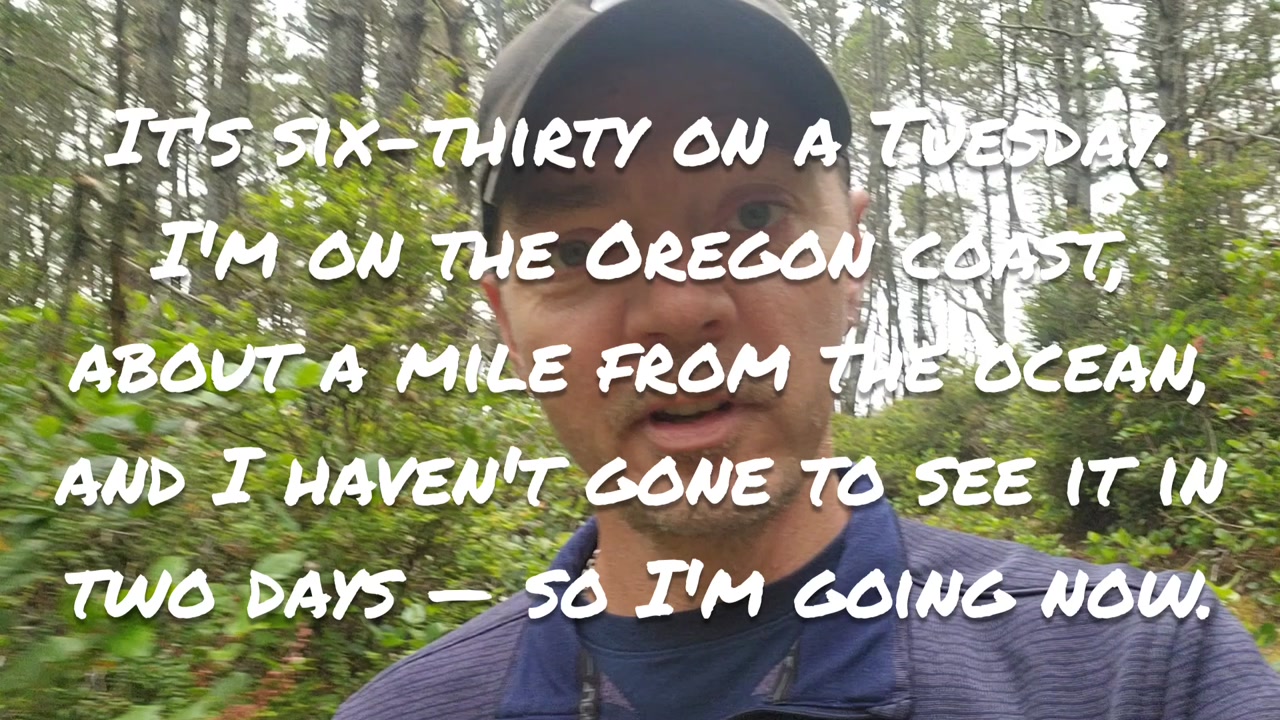
A written chapter of a testimony document, composed in the Siltcoos corridor of the Oregon Dunes National Recreation Area — first from the campground host site at Driftwood II, then Tahkenitch Landing, then the Siltcoos Work Center, federal ground behind a locked gate a few miles from the state park that dismissed him.
The digital environment is equally load-bearing: rswfire.com on self-provisioned hardware, the Autonomy Realms reflection and access layers, oprdvolunteerabuse.org, the r/volunteer open letter, an unacknowledged OPRD records portal, and an email thread running between him and the Director and Deputy Director of Oregon Parks and Recreation Department.
Substrate
The chapter holds correspondence and construction as one architecture: every reply from the top of the institution is placed against what was actually built in the same months, and the two columns are read together. The ontological position is that a citizen's standing does not derive from an institution's hierarchy — he writes as one person to another after the hierarchy ended, and rejects the Deputy Director's routing procedure as authority over him. What is being built is an owned substrate — servers, domain, archive, reflection engine, body off nicotine, miles walked — and what is dissolving is the institution's capacity to contain the matter by closing its own inbox.
Actions
Performed
- •setting four institutional replies side by side and counting what each one did
- •quoting the Director's and Deputy Director's exact language against the facts submitted
- •recording that neither opened an inquiry, requested a document, or named a person
- •placing seven months of building alongside seven months of institutional non-response
- •documenting the closure order and the police referral eighteen days later
Referenced
- •wrote to the Director on July 29, 2025
- •named staff by position and told her the institution was hers
- •was given Tahkenitch Landing to run alone on August 3
- •walked the Tahkenitch Creek trail three and a third miles on August 31
- •filed a public records request on August 22
- •published an Open Letter on r/volunteer after waiting a month
- •named the chew-glass remark, the benefit-of-the-doubt admission, two months of resignation pressure, and dismissal six days before completion
- •listed five institutional remedies and declined personal ones
- •set the Open Letter side by side with the program manager's Timeline of Events on sunlight
- •read her next-afternoon reply and took her measure
- •moved to the Siltcoos Work Center in October as embedded caretaker
- •reached the ocean on foot four times in October, longest seven miles on the twenty-third
- •got the reflection architecture running end to end on October 13
- •tested it on his first recording from four perspectives
- •ran analysis across half the catalog overnight on the fourteenth
- •finished the access layer at 1 a.m. on the twentieth over ~800 recordings
- •served notice of the eighty-five-day records violation on November 15
- •told her on the twenty-first that an archive of the whole matter existed
- •moved infrastructure off Amazon onto two self-provisioned servers
- •ended public distribution of his recordings
- •put down nicotine cold on November 4 after thirty-two years
- •built conditions to hold it: no fuel, no help asked, town unreachable
- •walked to the ocean seven times in November, in rain and after dark
- •wrote to her December 7 stating nine months, two promotions, work truck, twenty-five mile route
- •registered oprdvolunteerabuse.org and signed it under his name in reply
- •served 42 U.S.C. §1983 notice in January and ongoing-violation notice in February
- •finished the analysis and reflection layers, registered the platform domain
- •deleted both channels on the twentieth after pulling nearly nine hundred recordings onto owned storage
- •answered the Deputy Director five minutes after his bar on contact
- •wrote to the Commission and the Governor
- •walked from the RV down the Siltcoos River to the water on May 18 and called the thing finished
Entities
beings
rswfire — Author of the testimony; campground host, then sole operator at Tahkenitch Landing, then caretaker at the Siltcoos Work Center; founder of Autonomy Realms
Robert Samuel White — Named author of the Testimony, v1.8
The Director — Head of Oregon Parks and Recreation Department; recipient of four letters, author of three replies, first woman to lead the institution, president of NASPD
The Deputy Director — Second office of the institution; wrote the fourth and final reply barring further contact with staff
Program Manager — Authored the Timeline of Events given to police; named in the Deputy Director's no-contact instruction
Emergency Manager — Institutional staff who took his letters to an Oregon State Police captain eighteen days after the closure order
places
Siltcoos Work Center — Federal ground behind a locked gate; his caretaker post since October
Driftwood II — Campground in the Siltcoos corridor where he hosted in July 2025
Tahkenitch Landing — Campground above the lake off Highway 101 he ran alone from August 3
Tahkenitch Creek trail — Route walked to the ocean, three and a third miles in August, seven in October
Oregon Dunes National Recreation Area — Federal corridor containing all three postings
Honeyman — State park where the documented misconduct and retaliation occurred
Siltcoos Beach — Ocean terminus of the November walks
Siltcoos River — Route walked from the RV to the water on May 18 when the system was declared finished
systems
Oregon Parks and Recreation Department — The institution that dismissed him and expelled him from the volunteer program
United States Forest Service — Federal agency he served for nine months, advanced twice, trusted with work trucks and a twenty-five mile route
Autonomy Realms — The sovereign signal infrastructure he built through these same months
oprdvolunteerabuse.org — Domain registered the day correspondence was closed; empty at the time, its name alone placed under his signature
rswfire.com — Domain held twenty-three years; the platform's ground
Oregon State Police — Agency a captain of which received his letters from the emergency manager
Commission and Governor — Offices above the Director to which he also wrote
Amazon — Platform infrastructure he moved off onto two self-provisioned servers
concepts
42 U.S.C. § 1983 — Statute under which he served notice in January and February
Oregon public records law — Obligation the institution let run eighty-five days past
media
r/volunteer — Public venue for the Open Letter after private channels met silence
sunlight — Where the Open Letter and the program manager's Timeline of Events are set side by side
Symbolic Elements
Represented archetypes or recurring motifs.
mirror
archive
gate
ocean
threshold
inbox
infrastructure
domain name
road
silence
record
Ontological States
Expressed modes of being or awareness.
sovereign (writes as one citizen to another after the hierarchy ended; rejects internal routing as authority over him)
embedded (caretaker on federal land behind a locked gate, a few miles from the park that dismissed him)
self-owning (infrastructure, recordings, domain, and body moved onto ground he controls)
documentary (the matter held as dated record — named staff, recordings, statutes — rather than as appeal)
Engaged Subsystems
Architecture engaged in this transmission.
legal (public records notice, §1983 notices, statutory deadline tracking)
infrastructural (self-provisioned servers, reflection engine, access layer, domain registration)
institutional-analytic (mapping the two top offices and what each reply did and did not do)
somatic (thirty-two years of nicotine set down; repeated long walks to the water in rain and dark)
archival (eight hundred to nine hundred recordings pulled onto owned storage, indexed and embedded)
vocational (Forest Service postings, two advancements, work truck and twenty-five mile route)
ethical (five remedies asked for future volunteers, none for himself)
Dominant Language
Core motifs or linguistic fields.
institutional accountability
the record / the recordings exist
further correspondence
authority over me
advancement and trust
facts — I was never the problem
archive she did not control
Narrative
At 8:37 on the morning of December 8, the Director of Oregon Parks and Recreation wrote that further correspondence would not lead where rswfire wanted to go. At 2:48 that afternoon she wrote again. Three words. Everything Chapter Eleven is built to demonstrate sits in the six hours between those two messages, and rswfire knew it as it happened — he laughed. A correspondence declared closed at breakfast reopened by mid-afternoon is not closed; it is being read. What changed in the interval was not his argument. He had added nothing to his claims and withdrawn none of them. He had driven into town, moved money into a bank account, registered a domain name, and put it under his signature in a one-line acknowledgment of receipt. The site was empty. There was nothing on it. The name alone, sitting in her inbox beneath his, produced the only unguarded sentence she ever sent him.
That is the chapter's central reading, and it is a reading about jurisdiction rather than about grievance. For nine months the matter had lived inside a structure where every question routed upward to two desks and stopped. Inside that structure the Director held the instruments: the investigation she could open, the records officers who answered his request into a portal he had no account for and was never told existed, the program manager whose Timeline of Events would later go to the police. rswfire held recordings and a registrar. The recordings had been offered over and over and never once requested. The registrar cost forty dollars and took four minutes. When he used it, the entire apparatus of the institution's discretion became irrelevant in a single stroke, because the one thing an institution cannot do to a record it does not hold is decline to look at it.
The chapter is engineered as a ledger with two columns, and its force comes from refusing to editorialize the arithmetic. On one side, four replies across seven months: a warm answer to a public letter that addressed none of its five requests, a closure, three words, and a routing instruction from the Deputy Director barring him from staff contact. On the other side, the same seven months: the reflection engine finished and run across a catalogue of eight hundred recordings, the access layer completed at one in the morning on October 20, infrastructure moved off Amazon onto two servers he provisioned himself, nine hundred recordings pulled down onto storage he controls and the public channels deleted, thirty-two years of nicotine set down cold on November 4, seven walks to the ocean that month in rain and after dark, a promotion to caretaker behind a locked gate on federal ground a few miles from the park that dismissed him. He sets these beside each other and lets the reader do the subtraction. No adjective is required. The column that had authority produced four emails. The column that had none produced a working system and a body that had not been off nicotine since he was sixteen.
The four replies, read as a set, form a taxonomy of ways to answer without answering, and the chapter catalogues them with the flatness of an inventory. One assured him that concerns about the volunteer program were taken seriously in a message that responded to none of the five institutional concerns he had raised. One recast a documented complaint — named staff, dated conduct, recordings of the meetings — into pain, frustration and hurt, words he had not used, in reply to a letter whose content was nine months of Forest Service employment, two advancements, a work truck, a twenty-five mile route, and the sentence I was never the problem. She answered a man assembled from his letter rather than the one who wrote it. Not one of the four asked a question. Not one requested a document. Not one named a person who would look. The records law obliged an answer and the request ran eighty-five days past its deadline. rswfire does not call this misconduct. He states the function of a director's office — that a failure beneath it can be corrected, and that this is the whole function — and then places the record of what those two desks did next to it.
What makes the chapter something other than an accounting of institutional silence is that the building and the correspondence are the same act, told in one line. He took his systems off Amazon and his recordings off other people's platforms in the same weeks he served notice under a records statute and then under §1983. He put down nicotine by constructing the conditions that would hold it — no fuel, no willingness to ask, a life structured so town was not reachable — and walked to the water instead, seven and a half miles, then twelve and a half, far enough that a step counter placed him in the top three percent of everyone it tracks. Every one of these is the same operation performed on a different substrate: move the thing onto ground you own. The archive, the servers, the domain, the lungs, the miles. By the time the Deputy Director instructed him not to communicate with staff, there was nothing left in the matter that the institution had custody of.
His five-minute reply to that instruction is the chapter's clearest statement of position, and it is not defiance. Don't confuse your internal routing procedures with authority over me. He had not been inside the hierarchy since March. A structured process is a thing an organization does to itself; it does not reach a citizen standing outside it, and the Deputy Director's letter mistook one for the other. The same premise governs the first letter in the chapter, written the previous July after he read an interview with the Director: he told her what her institution had done, named no request, and told her to sit with it. He was not appealing. Nothing in twenty-three months of this ever takes the form of an appeal, which is why the five remedies he did ask for were all for volunteers who come after him — an investigation, consequences, protection from retaliation, a grievance process not dependent on the good faith of the managers causing the harm, training and oversight — and none for himself.
The chapter ends on a single operational fact and stops. In all of it, the only decision either office made was the order closing the agency to him. Eighteen days later an emergency manager took his letters to a captain of the Oregon State Police, with the Deputy Director copied. rswfire lays that down and moves on to Chapter Twelve. He does not draw the line between those two events, because the dates draw it, and because the whole architecture he spent those same seven months building exists so that he will never again have to argue for what a record plainly says. The closure did not end the matter. It relocated it — out of an inbox that could be shut and into an archive that answers questions, indexed, embedded, running on hardware he pays for, under a name that has been his for the entire span of the internet.
Mirror
He stopped being inside her institution in March 2025 and wrote to her five times after that.
Both of those are true and this chapter does not choose between them. He states plainly that he was not appealing to her, that he had not been part of her hierarchy since the day he was dismissed, that he asked her for nothing and wrote as one person telling another what her institution had done. He also wrote in July, published in September, served notice in November, wrote again in December, and answered the Deputy Director five minutes after being told not to. He tells the Deputy Director not to confuse internal routing with authority over him, and the sentence is exact, and it is still addressed into their building. The correspondence is not a request. It is also not finished being sent.
What he put in front of her in December was standing. Nine months with the Forest Service, two advancements, a work truck, a twenty-five mile route, Facts. I was never the problem. That is not information anyone needs who has no jurisdiction over him. It went to the one office that had declined to say whether he was the problem, and she answered it with pain, frustration and hurt — words he had not used — and closed the channel. He says he had no move against her and waited for one. He got one. He drove to town, put money in the bank, registered the domain, and put the name under his signature in her inbox with nothing behind it. She wrote three words. He laughed out loud. In four replies across nine months, no one asked him a question, requested a document, or named a person who would look at any of it, and the only exchange in the entire chapter where two people understood each other precisely and immediately was that one. She was the only reader in the institution who was actually reading.
The rest of those months he spent building something that does not require her to exist. The reflection engine end to end in October, the catalogue analyzed overnight, the access layer finished at one in the morning, eight hundred recordings pulled onto storage he owns, two servers provisioned by hand, every channel deleted, thirty-two years of nicotine set down cold on November 4 with no fuel in the corridor and no willingness to ask, and seven walks to the ocean that month in rain and after dark. None of that is new about him, and none of it was made for her. He says the mirror is the reason the rest of it exists. But in this chapter it is set in a second column beside her replies and read against them, and the arrangement is his. The building stands on its own. The way it is filed here is as evidence.
He asked for five things and none of them were for him. A transparent investigation, consequences for coercion, protection for volunteers who report, a grievance process not dependent on the good faith of the managers causing the harm, training and oversight. He said none of it was extraordinary and named what would have happened if they had done it — the whole thing becomes a story about an institution learning something. He offered them that outcome in public, once, and then never mentioned it again.
The chapter ends by putting down two sentences and walking away from them: the only operational decision either office made was the order closing the agency to him, and eighteen days later an emergency manager took his letters to a captain of the Oregon State Police, with the Deputy Director copied. He reads everything else in this document. He does not read that. It is the loudest thing on the page and he leaves it exactly where it fell.
Queryable Personhood
Hand your life to anything that reads.
Share this link with artificial intelligence — it reads the full transcript, analysis, and reflections. An AI-readable mirror of this signal.
The qpkey in this URL is a per-signal access token. Anyone with the URL can read the record — treat it like a share link, not a password.