Not yet read. Use the download link above.
Chapter Nine: The Three Men with Guns
01M2SV6ZG0D8KZ0KHD29BDJ8W3
PUBLIC
September 18, 2026
rswfire
PUBLISHED
Temp
0.50
Density
0.60
PUBLIC
September 18, 2026
rswfire
PUBLISHED
Temp
0.50
Density
0.60
Energetic Quality
cold precision
Journey Phase
coherent under surveillance
Directional Vector
toward evidentiary establishment of the record
Narrative
Nine paragraphs, numbered 258 through 266, and in almost none of them does rswfire speak. That is the chapter. He wrote Chapter Twelve by removing himself from it — by building an account of three armed men arriving at his door out of nothing but the paper the agencies produced about their own conduct. An emergency manager's one-line email. A captain's order. A task force officer's assessment. A dispatch event. A hasty plan. A report. A written statement four months later. The man who lived through the morning of March 24 appears in his own narrative mostly as a body at a threshold, a hand on a door, a finger on a camera button. Everything that carries weight is in someone else's words.
This is not modesty and it is not restraint. It is a strategy about who can be disbelieved. A year of asking had already taught him what happens to his account of events when it is only his account — at a picnic table, where he learned he had never been given the benefit of the doubt; in a letter on state letterhead that named his speech as the reason and then answered nothing for twelve months. So in the chapter that documents the escalation's furthest point, he made himself unnecessary to it. Strike every sentence he wrote and the case still stands, because the case is quotation. The institution describes itself. He only puts the documents in order and dates them.
The order matters more than any single line. On March 3, an OPRD emergency manager forwards his correspondence to the Oregon State Police with the reason stated plainly: sharing for situational awareness since he is now including the Governor as well as our Director. Not a threat. An audience. On March 6, the state's own detective — a Joint Terrorism Task Force officer who had already pulled his DMV record and forwarded his name to the FBI — reads the entire archive and writes that nothing on the website stands out more than what Parks and Rec sent him. Eighteen days before anyone knocked, the agency's own investigator had looked and found a grievance, not a crime. rswfire does not argue this. He sets it down and moves to the next date.
The day before they came, he stood in front of his own camera and said his full legal name into it, on the anniversary of the twenty-four-hour notice. The next morning they arrived. He did not arrange that symmetry; it exists on two timestamps and he simply declined to look away from it. What he did arrange was what happened at the door. He said he would not speak without an attorney and closed it, and only then turned the camera on — not to record himself, not to build a record of his own conduct for later defense, but to film them leaving and to take the plate off the vehicle while it was still in frame. The lens pointed outward. In a story about being watched, the instrument he reached for was observation, and he aimed it back.
The federal gate is the chapter's hardest fact and he lets it sit almost unremarked. It is locked and posted against public access. It is why a man can live alone at a work center in the Oregon Dunes in exchange for stewardship of that land. Nobody arrives there by accident; someone with a key opened it and led them in. What had been the condition of his solitude became the mechanism of the visit. Three days later he filed an incident report with the Forest Service documenting the visit as intimidation, complete with the plate number, and asked the special agent who had opened the gate to tell him who the three men were. Hours after that question, that agent sent a Lane County deputy his name, his date of birth, his licence number, where he lives, his schedule, his duties, his correspondence, his text messages, and a promise to keep the deputy up to date. Asking who came produced a file. rswfire reports the interval — hours after — and asserts nothing about it. The timestamps do the work he refuses to do himself.
The chapter ends by refusing its own ending. The state's dispatch record says the interview was for the Forest Service; the Forest Service says it initiated nothing and only provided access. Both documents exist. He is the one person positioned to adjudicate between them, and he does not. He writes that the gap stays open and stops. That is the discipline of the whole thing made visible in a single sentence: closing the gap would require his word, and he has built nine paragraphs that need no word of his. Left open, the contradiction is the institution's problem and remains the institution's problem permanently. So does the body-worn camera video the report references and that has never been produced — the one record made from the other side of that door, absent from a chapter otherwise composed entirely of records.
And he published it unrevised. Flagged at the top, in bold, as not having had a rewrite pass, as subject to change, the twelfth of twelve chapters in version 1.8 of a testimony that keeps versioning. A man protecting a literary object would have waited. rswfire published the rough one, because what is load-bearing here is not the prose but the provenance — an unbroken chain from a picnic table to a locked gate, every link a document, each one citable, on the record now rather than later. The documenting was named as the offense. He answered by documenting the consequence of documenting, and putting it where the Governor, the Director, and anyone else who is now reading can find it.
Tags
testimony chapter
OPRD
law enforcement visit
public records
Siltcoos Work Center
institutional documentation
protected speech
Summary
The twelfth chapter of the Testimony of Robert Samuel White, published unrevised and flagged for iteration, covering paragraphs 258–266 of the v1.8 document.
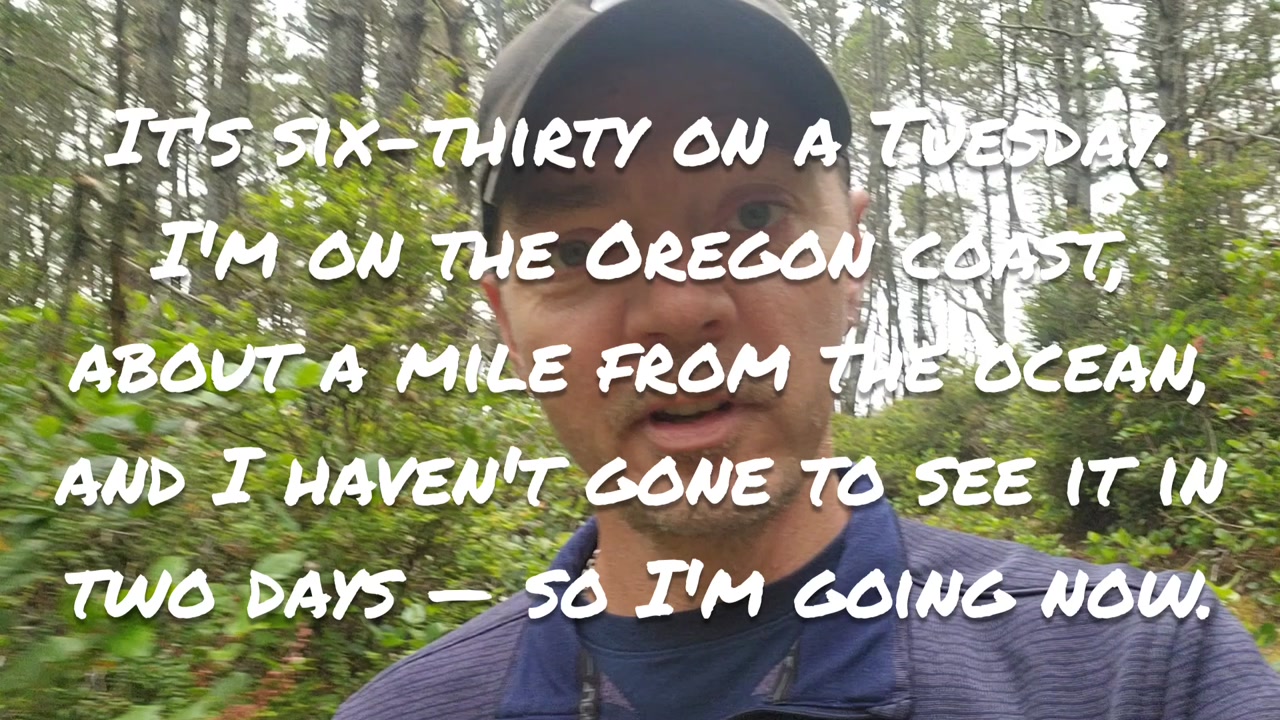
It opens with a video recorded the day before the visit, in which he states his full legal name on the record and reads back the year since Oregon State Parks dismissed him from Honeyman with twenty-four hours to vacate: the picnic table meeting, the out-of-uniform man questioning him while rangers were away, his sexuality recast as the explanation for his complaints, the dismissal letter naming protected speech on state letterhead, and a year of institutional non-response. He states one year remains on the statute of limitations and that he would pursue it with an attorney willing to establish that volunteers have rights.
The chapter then assembles the document record:
- March 3, 2026 — an OPRD emergency manager forwards his letters to an OSP captain, citing that he was now including the Governor and the Director; a threat assessment is requested.
- March 6 — a Major Crimes detective and JTTF task force officer reads the archive and finds nothing beyond a grievance with a former employer.
- March 23 — a second detective opens a dispatch event naming him "Suspect" over emails and public grievances, and a "knock and talk" is planned; his Forest Service supervisor is told not to advise him.
- March 24, 2026 — one year to the day after dismissal, three armed men enter through a locked federal gate to the work center where he lives. He declines to speak without an attorney, closes the door, then films their departure and the vehicle plate.
He later files a Siuslaw National Forest incident report documenting the visit as intimidation and asks the special agent who opened the gate to identify the three men; hours later that agent sends a Lane County deputy a file on him. The Forest Service afterward states its role was limited to providing access, contradicting the state dispatch record, and refers the officer to the Office of Professional Responsibility.
Environment
This signal is a written document — Chapter Twelve: Three Men with Guns, paragraphs 258–266 of the Testimony of Robert Samuel White, v1.8, published in the library at rswfire.com and flagged as unrevised and subject to a further rewrite pass. It sits as the twelfth of twelve chapters plus an addendum, each linked by signal ID, with the underlying document production hosted on the testimony's police page and the broader record at oprdvolunteerabuse.org.
The physical settings it documents are specific and federal: the Siltcoos Work Center in the Oregon Dunes, on restricted Siuslaw National Forest land behind a locked gate posted against public access, where rswfire lives alone in exchange for stewardship. It also references the earlier ground of the record — Jessie M. Honeyman Memorial State Park, a picnic table, a dismissal letter on state letterhead — and Waxmyrtle Beach, where he walked two days after the March 24, 2026 visit. The institutional environment is a paper trail: OPRD email, Oregon State Police dispatch entries and detective reports, a Joint Terrorism Task Force DMV query, a fusion center log, a Lane County deputy's file, and a Forest Service written statement four months later.
Substrate
The architecture held is documentary: every claim is anchored to a produced agency document, quoted in the agency's own words, and dated, so that the narrative is built entirely out of the institution's self-description rather than his account of it. The ontological position is that publication is the defense and the documentation is the case — the record of being watched is folded back into the record he publishes, and the trigger for escalation is named as audience (who was now reading), not conduct. What is being built is an unbroken chain of provenance from dismissal to armed visit; what is being dissolved is the institution's ability to hold two incompatible accounts without the gap being visible, which he leaves open rather than resolving.
Actions
Performed
- •publishing chapter twelve inside the testimony
- •flagging the chapter as unrevised and pending rewrite
- •quoting agency email, dispatch, and report language verbatim
- •sequencing the escalation by date from March 3 to four months later
- •naming the trigger as the addition of the Governor and Director to the correspondence
- •recording that the detective found nothing eighteen days before the visit
- •setting the two agency accounts side by side and leaving the gap open
- •pointing to the full document production on the police page
Referenced
- •standing in front of his own camera and stating his full legal name
- •reading the year back in order on the anniversary of dismissal
- •documenting every escalation in real time
- •publishing the documentation
- •sending letters to OPRD leadership, the Director, and the Governor
- •declining to speak without an attorney
- •closing the door
- •turning the camera on and recording the three men leaving
- •capturing the vehicle plate while it was in frame
- •walking to Waxmyrtle Beach and standing at the water
- •filing a Siuslaw National Forest incident report documenting the visit as intimidation
- •asking the Forest Service special agent to identify the three men
- •OPRD forwarding his letters to Oregon State Police
- •OSP ordering a threat assessment
- •a JTTF task force officer forwarding his name to FBI personnel and pulling his DMV record
- •a detective reading the archive end to end and finding no crime
- •a second detective opening a dispatch event naming him Suspect
- •the 'Hasty Plan for Robert White knock and talk' being sent to a sergeant
- •instructing the Forest Service supervisor not to advise him of the inquiry
- •opening the locked federal gate and guiding armed officers to the work center
- •the special agent sending a Lane County deputy a file on his identity, schedule, duties, correspondence, and texts
- •the Forest Service putting its limited role in writing
- •referral of the officer to the Office of Professional Responsibility
Planned
- •a full rewrite pass on this chapter
- •retaining an attorney within the remaining year of the statute of limitations
- •carrying the matter far enough to establish that volunteers have rights
- •continued publication of the document production
Entities
beings
Robert Samuel White (rswfire) — Author of the testimony; the man named in the dispatch event and subject of the threat assessment
Capt. Kennedy — OSP captain who requested the threat assessment be conducted asap
Forest Service special agent — Opened the gate, was asked to name the three men, and hours later sent a Lane County deputy a file on him; referred to the Office of Professional Responsibility
Lane County deputy — Recipient of the file containing his identity, address, schedule, duties, correspondence, and text messages
Governor of Oregon — Named in the OPRD email as part of the reason for situational awareness sharing
OPRD Director and Deputy Director — Recipients and subjects of his correspondence; the deputy director was copied on the police referral
OPRD emergency manager — Sent his letters to the OSP captain with the situational-awareness line
places
Jessie M. Honeyman Memorial State Park — Site of the volunteer assignment, the picnic table hour, and the twenty-four-hour vacate order
Siltcoos Work Center — Restricted federal site where he lives and works; location of the March 24, 2026 visit
Siuslaw National Forest — Federal land where the work center sits and where he filed the incident report
Waxmyrtle Beach — Where he walked and stood at the water two days after the visit
systems
Oregon State Parks (OPRD) — Agency that dismissed him from Honeyman, expelled him from the program for publishing, and forwarded his letters to police
Oregon State Police — Received the OPRD referral, ordered and conducted the threat assessment and the knock and talk
OSP Major Crimes Section — Unit the assessment was routed to
Portland FBI Joint Terrorism Task Force — Task force through which the first detective forwarded his name to FBI personnel and pulled his DMV record
Department of Justice fusion center — Analyst there documented the task force activity
United States Forest Service — Land management agency he volunteers for; provided gate access and guided OSP to the work center, later stating it initiated nothing
Office of Professional Responsibility (LEI) — Body the Forest Service referred its officer to
concepts
Statute of limitations — One year remaining at the time of the anniversary recording; the frame for retaining counsel
Volunteer rights — The legal question he states he would carry the case far enough to establish
media
Testimony of Robert Samuel White, v1.8 — Twelve-chapter document plus addendum in which this chapter sits as paragraphs 258–266
Body-worn camera video — Referenced in the second detective's report; never produced
Hasty Plan for Robert White knock and talk — Document sent by the second detective to his sergeant the same day the dispatch event was opened
oprdvolunteerabuse.org — Archive of the OPRD thread; the public record the first detective read end to end
Symbolic Elements
Represented archetypes or recurring motifs.
locked gate
threshold
door
camera
plate number
letterhead
key
water's edge
anniversary date
paper trail
archive
Ontological States
Expressed modes of being or awareness.
sovereign (holds the door, declines to speak without counsel, and owns both the land stewardship and the published record)
surveilled (name forwarded to FBI personnel, DMV pulled, identity and schedule filed to a county deputy)
evidentiary (position established entirely through produced agency documents rather than personal account)
open (the contradiction between the dispatch record and the Forest Service statement is left standing, not resolved)
Engaged Subsystems
Architecture engaged in this transmission.
legal (statute of limitations, absence of crime, volunteer rights as the question to be established)
institutional (OPRD, OSP, FBI JTTF, fusion center, Forest Service, and the routing between them)
documentary (real-time escalation logs, incident report, FOIA-style production, the police page)
infrastructural (the testimony published in the realm library; the archive as the case)
somatic (standing at the water, living alone at the work center, the body at the door)
ethical (protected speech named as cause in writing; the referral to Professional Responsibility)
technical (camera operation, plate capture, timestamped recording, versioned document)
Dominant Language
Core motifs or linguistic fields.
documentation as case
threat assessment
protected speech
situational awareness
no evidence of any crimes
access and entry
one year to the day
Narrative
Nine paragraphs, numbered 258 through 266, and in almost none of them does rswfire speak. That is the chapter. He wrote Chapter Twelve by removing himself from it — by building an account of three armed men arriving at his door out of nothing but the paper the agencies produced about their own conduct. An emergency manager's one-line email. A captain's order. A task force officer's assessment. A dispatch event. A hasty plan. A report. A written statement four months later. The man who lived through the morning of March 24 appears in his own narrative mostly as a body at a threshold, a hand on a door, a finger on a camera button. Everything that carries weight is in someone else's words.
This is not modesty and it is not restraint. It is a strategy about who can be disbelieved. A year of asking had already taught him what happens to his account of events when it is only his account — at a picnic table, where he learned he had never been given the benefit of the doubt; in a letter on state letterhead that named his speech as the reason and then answered nothing for twelve months. So in the chapter that documents the escalation's furthest point, he made himself unnecessary to it. Strike every sentence he wrote and the case still stands, because the case is quotation. The institution describes itself. He only puts the documents in order and dates them.
The order matters more than any single line. On March 3, an OPRD emergency manager forwards his correspondence to the Oregon State Police with the reason stated plainly: sharing for situational awareness since he is now including the Governor as well as our Director. Not a threat. An audience. On March 6, the state's own detective — a Joint Terrorism Task Force officer who had already pulled his DMV record and forwarded his name to the FBI — reads the entire archive and writes that nothing on the website stands out more than what Parks and Rec sent him. Eighteen days before anyone knocked, the agency's own investigator had looked and found a grievance, not a crime. rswfire does not argue this. He sets it down and moves to the next date.
The day before they came, he stood in front of his own camera and said his full legal name into it, on the anniversary of the twenty-four-hour notice. The next morning they arrived. He did not arrange that symmetry; it exists on two timestamps and he simply declined to look away from it. What he did arrange was what happened at the door. He said he would not speak without an attorney and closed it, and only then turned the camera on — not to record himself, not to build a record of his own conduct for later defense, but to film them leaving and to take the plate off the vehicle while it was still in frame. The lens pointed outward. In a story about being watched, the instrument he reached for was observation, and he aimed it back.
The federal gate is the chapter's hardest fact and he lets it sit almost unremarked. It is locked and posted against public access. It is why a man can live alone at a work center in the Oregon Dunes in exchange for stewardship of that land. Nobody arrives there by accident; someone with a key opened it and led them in. What had been the condition of his solitude became the mechanism of the visit. Three days later he filed an incident report with the Forest Service documenting the visit as intimidation, complete with the plate number, and asked the special agent who had opened the gate to tell him who the three men were. Hours after that question, that agent sent a Lane County deputy his name, his date of birth, his licence number, where he lives, his schedule, his duties, his correspondence, his text messages, and a promise to keep the deputy up to date. Asking who came produced a file. rswfire reports the interval — hours after — and asserts nothing about it. The timestamps do the work he refuses to do himself.
The chapter ends by refusing its own ending. The state's dispatch record says the interview was for the Forest Service; the Forest Service says it initiated nothing and only provided access. Both documents exist. He is the one person positioned to adjudicate between them, and he does not. He writes that the gap stays open and stops. That is the discipline of the whole thing made visible in a single sentence: closing the gap would require his word, and he has built nine paragraphs that need no word of his. Left open, the contradiction is the institution's problem and remains the institution's problem permanently. So does the body-worn camera video the report references and that has never been produced — the one record made from the other side of that door, absent from a chapter otherwise composed entirely of records.
And he published it unrevised. Flagged at the top, in bold, as not having had a rewrite pass, as subject to change, the twelfth of twelve chapters in version 1.8 of a testimony that keeps versioning. A man protecting a literary object would have waited. rswfire published the rough one, because what is load-bearing here is not the prose but the provenance — an unbroken chain from a picnic table to a locked gate, every link a document, each one citable, on the record now rather than later. The documenting was named as the offense. He answered by documenting the consequence of documenting, and putting it where the Governor, the Director, and anyone else who is now reading can find it.
Mirror
He has written himself out of his own case. Every load-bearing sentence in this chapter belongs to someone else — the emergency manager's one line about who was now reading, the captain's asap, the task force detective's note that nothing on the website alarmed him more than what the agency itself had sent over, the dispatch event that says Suspect and then says why in the language of emails and publishing, the Forest Service paragraph four months late. He supplies the order. That is all he supplies. The method he was punished for has reached its endpoint here: a record constructed entirely out of the institution describing itself, in which his account is not required and his credibility is not at issue, because he is barely in it. The case stands without him now. He is still the only one holding it.
What does not stand without him is the door. Three men with guns came through a locked federal gate onto restricted land, to the work center where he lives alone in exchange for keeping it, one year to the day, the morning after he stood in front of his own camera and put his full legal name on the record. Someone with a key opened the gate and walked them to the correct building. No agency named itself. He declined to speak without counsel, closed the door, and only then turned the camera on — threshold first, record second. The body-worn footage the second detective's report refers to has never been produced. The only images of that encounter that exist are the ones he took of them leaving, and the plate he pulled off the vehicle before it cleared the frame. He is the archive of what was done to him because the archive that should hold it does not.
The chapter handles a locked gate at his home with exactly the hand it uses on a DMV query. That is not a failure of proportion; it is the instrument. But the facts do not become documentary by being documented well. He lives there alone. That is where they came.
He names the trigger as audience, not conduct — the Governor and the Director were reading, and that was the escalation. The mechanism he has now established in the agency's own words is that being read was the offense. His answer to it is to be read more, at higher resolution, with the full production attached and a link at the bottom. Both of those are true in this chapter and he resolves neither. He states the position plainly: the documenting was the offense, the documentation is the case.
And then the quietest line in it, which he says himself and does not dress: one year remained on the statute, and he would go in a heartbeat, for an attorney who understood the stakes and would carry it far enough to establish that volunteers have rights at all. He has built to evidentiary standard a case no one has yet agreed to file. The provenance is unbroken from the picnic table to the gate. The chain has no counsel at the end of it. That is the condition of the whole record, not of this chapter, and this chapter is where it becomes impossible to miss.
He leaves one thing open. The state record says the interview was for the Forest Service; the Forest Service says it initiated nothing and only opened the door. Both documents exist and he does not close the distance between them. A closed gap would be an argument. An open one is a record. He is not arguing.
Queryable Personhood
Hand your life to anything that reads.
Share this link with artificial intelligence — it reads the full transcript, analysis, and reflections. An AI-readable mirror of this signal.
The qpkey in this URL is a per-signal access token. Anyone with the URL can read the record — treat it like a share link, not a password.