Announcing Legal Fund for OPRD Accountability

Failed to load video
Chapters
Transcript
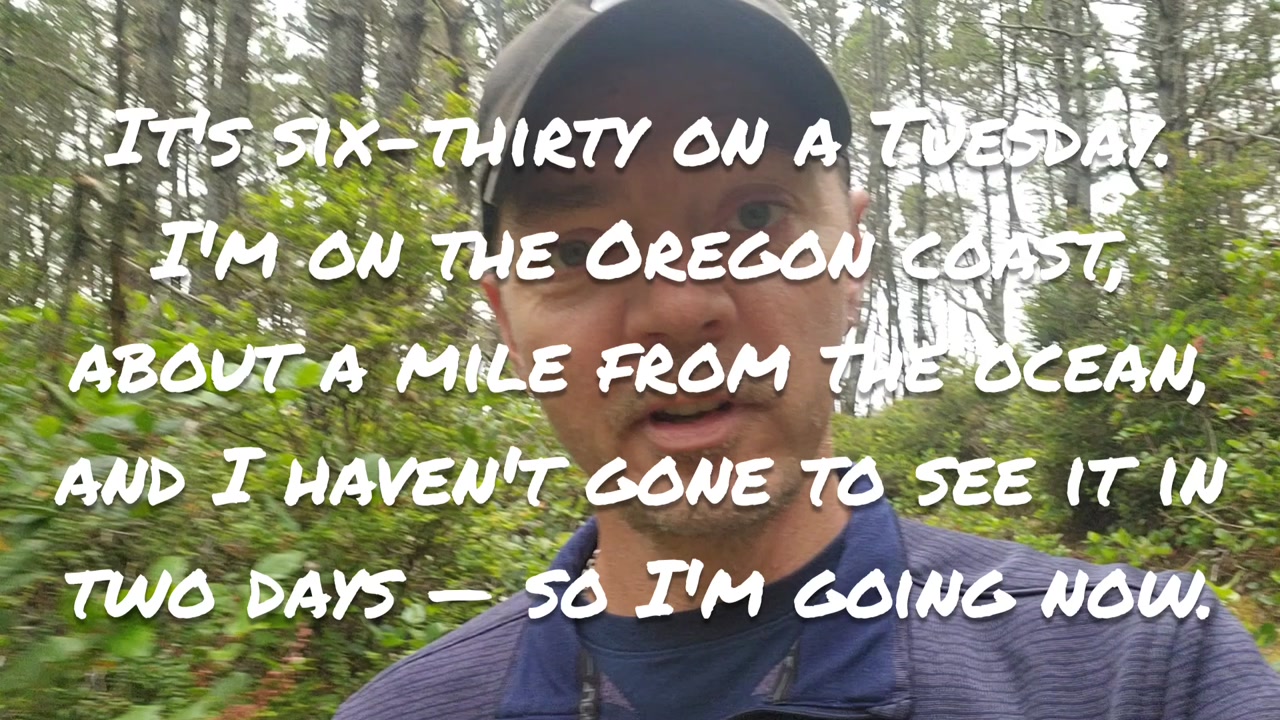
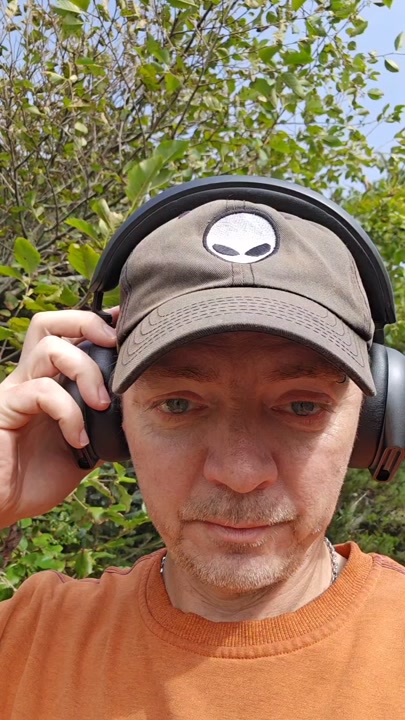
[0:00] Hi there. My name is Robert Samuel White. I'm a 49 year old man living on the
[0:07] Oregon coast. I've been here for two years now and for most of that time I've
[0:11] been volunteering. When I first got here I was volunteering for the state parks
[0:15] for the first three months but something happened there and I was permanently
[0:19] expelled from that entire institution and I've been seeking accountability for
[0:26] that ever since. I've been met mostly with silence at every level of this
[0:32] institution. Obstruction at every agency within the Oregon State Government. I've
[0:39] I've tried to compel to act with integrity and I've documented all of it in an
[0:47] archive at oprdvolunteerabuse.org. You can go there now and read every letter I
[0:56] have ever written over the past two years and every response I've received which
[1:02] was mostly silence. But occasionally they would do something that was ill-advised
[1:07] from my point of view. And they would escalate thinking that at some point they
[1:20] could make me go away. They could make this archive go away. I mean they escalated
[1:23] all the way to police intimidation on the anniversary of that dismissal behind a
[1:29] lock gate on restricted federal lands involving a completely another agency in
[1:33] their matter. And I mean every every escalation they ever did
[1:39] where deception was used has collapsed. I mean this has happened twice now.
[1:52] And still they're silent. Still they don't they don't take any accountability for anything
[1:58] they do. Their behavior is just completely unaccountable. They treat me like I have no
[2:02] standing to expect basic integrity from a state government.
[2:08] And so I've learned a lot over the past two years about how at least this state
[2:14] institution acts towards volunteers that that document mistreatment.
[2:22] and it's ugly. And I think it's you know not not widely publicized for one thing. They rely on on volunteers. Without them the state parks couldn't run. I don't think any any of our public infrastructure could could run without volunteers.
[2:44] They deserve basic dignity and accountability from the people who are supervising them.
[2:54] When they started mistreating me at
[2:56] Honeyman State Park my second month in their program.
[2:58] There was no one that I could I could tell about that mistreatment. There was no one there to protect
[3:08] me to help me to guide me through what was happening when a park supervisor and a park manager decided to target me and engage in some of the most unethical behavior I'd ever experienced in my life. And I'm nearly 50 years old like I said.
[3:24] It's hard to unpack this story because the reason I'm on this camera right now is because I need to announce something.
[3:34] An old client of mine has agreed to pay to match every donation I receive up to $5,000 from a GoFundMe that I'm going to put together for the legal and technical costs of seeking accountability from the state government.
[3:54] Because that's all I've ever been doing and trying to do and he's agreed to to match up to $5,000.
[3:59] And it convinced me that I should I should try that because today I have I've tried to avoid that path.
[4:09] I've I've escalated all the way up the executive ladder all the way to the Attorney General under like a public records request.
[4:15] I'm dispute and there's just no accountability anywhere.
[4:21] And the record is clean.
[4:23] And the record is clean.
[4:25] Anyone can go look at it right now at that archive and determine that for themselves.
[4:29] They don't have to take my word for anything.
[4:31] In 18 months, this archive that's existed.
[4:35] They have never disputed a single thing in it.
[4:38] They have never sought to have anything.
[4:45] They don't even acknowledge its existence.
[4:49] They've never disputed the recordings that I made.
[4:51] Like when I was at Honeyman, when that supervisor and manager were abusing me at a picnic table for over an hour.
[4:57] I documented the whole thing.
[4:58] I recorded them.
[5:02] The manager there told me to chew glass and swallow it.
[5:05] And the supervisor sat there silent for 20 minutes.
[5:08] And the first word out of her mouth was tone.
[5:14] That is what every person above them has been protecting all of this time.
[5:20] And it's just remarkable corruption from my point of view.
[5:24] And it means that volunteers have no protections.
[5:29] They can just be abused.
[5:31] And yet we're relied upon.
[5:34] Without us, the public lands that we all use couldn't function.
[5:40] This is a fact.
[5:42] And we have no protections.
[5:43] Nobody that we can turn to if something goes wrong.
[5:47] They can just put in writing that they're expelling you permanently for your public speech,
[5:51] for your First Amendment constitutionally protected speech.
[5:56] And nothing gets done at any level of government.
[6:00] I've got to get around this tree.
[6:06] So, because my case is clean.
[6:10] Because I'm just the way I am.
[6:12] I'm not your average person.
[6:14] Never was.
[6:15] I am a self-taught programmer since the sixth grade.
[6:18] You know, which was the eighties.
[6:20] I mean, the first language I ever learned was Turbo Pascal 5.
[6:25] You know, I did all kinds of stuff all of my life.
[6:27] And programming and computers and systems design.
[6:30] And, you know, I'm a systems sinker.
[6:32] Just, I think by virtue of just being who I am and being attached to those computers at such a young age.
[6:40] And so I created, and I had been independent all of my life.
[6:43] I had never really seen how institutions react to documentation.
[6:46] And, you know, I didn't, I didn't grow up in, I didn't see the distance between what they claim to be and what they are.
[6:58] And so I created a clean record.
[7:00] This is one that could go to court and have a very good chance of changing something for the better for all volunteers.
[7:08] Especially if it goes through, you know, years of, of, you know, the judicial hierarchy.
[7:17] Just like I went through the executive one and eventually we reached the Supreme Court.
[7:21] And we said it once and for all, is Oregon State Parks, right now, are they violating my constitutional rights?
[7:30] By making it impossible for me to participate in civic government as a volunteer over my protected speech.
[7:38] Should they be allowed to do that?
[7:42] They escalated all the way to police because of letters.
[7:47] All I have ever done is write letters.
[7:54] I would love to get that question answered.
[7:57] If other people would too,
[8:01] you know, I ask that you consider sharing this message,
[8:04] contributing in any way you can.
[8:06] Go look at the archive.
[8:08] If you can contribute financially, there will be a GoFundMe attached to this.
[8:13] I'm going to, I'll create something on the homepage of the archive
[8:17] that just shows like the goal and where I'm at with that.
[8:22] And, you know, I'll try to be as transparent as possible about everything.
[8:25] That's just, that's how I am.
[8:27] I've always been.
[8:28] So I need to cover legal and technical costs like, like the archive.
[8:34] And just even the domain name, I bought that with my last $7 almost a year ago.
[8:44] After, after the director of Oregon State Parks Lisa Sumption closed communication with me.
[8:51] The first thing I did was ask a friend to drive me into town.
[8:53] And I use, I got the last $7.00.
[8:57] I put it in the bank because I was holding cash.
[8:59] That's what it was.
[9:00] And I went back home and I registered that domain.
[9:15] I have been nothing but respectful to every single person that I have had to deal with.
[9:26] I've been honest.
[9:26] I'm direct.
[9:27] I think that that is sometimes a problem for some people, but it's not my problem.
[9:31] There's nothing wrong with being direct.
[9:33] It is the most efficient way to communicate and it's much harder to twist words when you're
[9:38] being direct and honest.
[9:40] You know, they certainly tried that.
[9:47] And I think, I mean, what they did was wrong.
[9:50] They gave me 24 hours to leave that park and I had nowhere to go.
[9:53] I had created a circuit.
[9:56] I had a different state park lined up all along the coast for an entire year when they did this to me.
[10:02] And the goal was to displace me.
[10:09] I call it the displacement framework.
[10:12] And then on the one year anniversary of that, they tried it a second time, but it didn't work.
[10:21] Because the institution I'm with now has actual integrity.
[10:27] All I've been doing is measuring that.
[10:30] And so far Oregon is coming up empty.
[10:35] Plain empty.
12:09
Walking to Ocean, Opening the Privileged Sanctum Tier
May 31, 2026
Summer at Siltcoos: Day 33: Photos
Jun 2, 2026
3:27
Introducing Autonomy Realms While Hiking Back
Jun 13, 2026
Publishing Orientation Document for AI Collaborators
Jun 15, 2026
12:36
Walking to the Ocean, Demonstrating the Atlas
Jun 23, 2026
23:55
Walking to Siltcoos Lake, Mapping Autonomy Realms' Next Layer
Jul 4, 2026
Specifying Sovereign Workstation Migration to Ubuntu
Jul 6, 2026
Tahkenitch to the Beach
Jul 12, 2026
5:55
Field-Testing Trace Notes Feature While Walking Dunes
Aug 4, 2026
10:38
Announcing Legal Fund for OPRD Accountability
Aug 29, 2026
The Case, In Their Documents
Aug 30, 2026
Serving Formal Tort Claim Notice on the State of Oregon
Sep 3, 2026
Labor Day Letter to OPRD Director Sumption
Sep 7, 2026
Letter to Lane County Sheriff's Office
Sep 9, 2026
Letter to Detective Nelson on Institutional Characterization
Sep 10, 2026
sunlight: the collapse of the story you told the police and yourselves
Sep 12, 2026
The Timeline of Events, Against the Record
Sep 12, 2026
The Testimony of Robert Samuel White
Sep 14, 2026
Addendum: On the End of the World
Sep 18, 2026
Chapter One: The Shedding
Sep 18, 2026
Chapter Two: The Crossing
Sep 18, 2026
Chapter Three: The Coast
Sep 18, 2026
Chapter Four: Why He Volunteered
Sep 18, 2026
Chapter Five: He Went and Looked at Honeyman First
Sep 18, 2026
Chapter Six: February
Sep 18, 2026
Chapter Six: The Picnic Table
Sep 18, 2026
Chapter Eight: Nineteen Days
Sep 18, 2026
Chapter Seven: Displacement
Sep 18, 2026
Chapter Ten: Displaced
Sep 18, 2026
Chapter Nine: The Three Men with Guns
Sep 18, 2026
Chapter Eight: The Director and Her Deputy
Sep 18, 2026
The Estimates of September 18, 2026
Sep 18, 2026
Chapter Ten: The Governor's Silence
Sep 24, 2026
Autonomy Realms: An Account From the Record
Oct 1, 2026
Autonomy Realms: An Account of the System and Its Builder
Oct 1, 2026
30:40
Hiking Wax Myrtle Trail, Planning Offline Autonomy Realms
Oct 2, 2026
20:50
Introducing Autonomy Realms on Waxmyrtle Trail Hike
Oct 4, 2026
PUBLIC
August 29, 2026 Robert Samuel White PUBLISHED
Temp 0.60
Density 0.60
Energetic Quality
steady declarative pressure
Journey Phase
coherent under sustained institutional load
Directional Vector
toward adjudication — moving the record from executive channels into the judicial one
Narrative

rswfire records this one walking. The camera is in his hand, the ground is uneven, and somewhere past the six-minute mark he has to break his own sentence to get around a tree. That detail is not incidental. For two years the record he built has stood perfectly still — letters filed, responses logged, recordings preserved, a domain purchased and maintained — while the man who built it has been the moving part, displaced from a park, routed up a ladder of agencies, met at a locked gate by police on an anniversary. The archive holds position. He moves through terrain. This signal is the moment he announces that the archive is about to move too.

What he is actually doing, in the plain sense, is announcing a GoFundMe. An old client has offered to match donations up to five thousand dollars, and rswfire states that this offer is what convinced him to take a path he had been avoiding. But the announcement is the least of what the recording does. What it does is redefine the question. For two years the question has been addressed to Oregon State Parks and its superiors: will you account for this. He describes the answer as silence at every level, up through a public records dispute at the Attorney General's office. The question he now poses is addressed to no one inside that hierarchy. It is addressed to a court, and it is not about him. Should a state agency be allowed to expel a volunteer permanently, in writing, over protected speech? He wants that answered once, and he wants the answer to bind. The shift from remedy to ruling is the real content of the signal; the fundraiser is only its delivery mechanism.

The structural cost of that shift is the one the signal does not name about itself. rswfire's stated case for the archive's strength is that in eighteen months the institution has never disputed a single thing in it — never contested the recordings, never acknowledged its existence. The record is clean, he says twice, and he means undisputed. But an undisputed record is clean partly because no one has been required to dispute it. Adjudication is the one venue where the institution's silence stops being available as a strategy. A court compels an answer, and the answer can go either way. When rswfire says he would love to get the question answered, he is asking for the thing the executive branch has denied him — a response — knowing the response could be that Oregon is permitted to do exactly what it did. He is trading a record that cannot lose for a question that can. He appears to know this, and he asks anyway.

The recording is also, unavoidably, the same act that started everything. rswfire states that all he has ever done is write letters, and that letters were what brought police to a gate on restricted federal land. Now he is speaking to a lens, on public terrain, naming a director by name, describing a manager telling him to chew glass and a supervisor whose first word after twenty minutes of silence was "tone." The speech that got him expelled is the instrument he uses to fund the challenge to the expulsion. There is no separation between the evidence and the deed; the announcement is itself another entry in the archive it points to. This is consistent with how he says he operates — direct because direct words are harder to twist — and it means the fund is not merely paying for litigation. It is paying to keep the transmission going under a load that has already escalated twice.

He grounds the ask in one number, and the number is small. The domain was bought with his last seven dollars, cash walked into a bank by a friend's ride into town, the same day the director closed communication. He tells this not as hardship but as sequence: they closed the channel, he opened a permanent one. The seven dollars sits against the five thousand of the match and the years of judicial hierarchy he says he is prepared to climb, and the disproportion is the point. The archive was never funded. It was built from the floor of an account by someone who states he had been independent all his life and had never before watched an institution react to being documented. What he learned, he says, is the distance between what an institution claims to be and what it is. The fund exists to measure that distance in the one place where the measurement produces a binding reading.

Which is the frame he closes on, and it is the frame that governs everything: he is not the plaintiff, he is the instrument. The institution he volunteers for now, he states, has actual integrity, and the second attempted displacement failed because of it. He describes his own role as simply measuring — holding a standard steady and recording what each institution does when pressed against it. So far, he says, Oregon is coming up empty. Plain empty. The fund does not change the instrument. It carries it into a room where the reading will be entered into a record that Oregon, for the first time, will have to answer.

Tags

legal fund announcement OPRD accountability volunteer protections public archive first amendment claim matched donation institutional documentation

Summary

rswfire records a video on the Oregon coast announcing a GoFundMe for legal and technical costs tied to his two-year accountability effort against Oregon Parks and Recreation Department. He states an old client has agreed to match every donation up to $5,000, which convinced him to take a funding path he had previously avoided.

He recounts the sequence: three months volunteering with state parks after arriving; mistreatment in his second month at Honeyman State Park by a park supervisor and park manager, which he recorded — he states the manager told him to "chew glass and swallow it" and the supervisor's first word after twenty minutes of silence was "tone." He describes permanent expulsion from the institution, 24 hours to leave the park with a year of coastal park placements lined up, and names this the displacement framework. He states a second attempt on the one-year anniversary escalated to police intimidation behind a locked gate on federal land, and failed because his current institution has integrity.

He describes the archive at oprdvolunteerabuse.org — every letter sent and response received over two years — as undisputed and unacknowledged in 18 months. He notes registering the domain with his last $7 after Director Lisa Sumption closed communication.

He frames the objective as a court question: whether Oregon State Parks is violating constitutional rights by barring civic participation over protected speech. He describes himself as a self-taught programmer since sixth grade and a systems thinker, and states volunteers currently have no protections.

Environment

Outdoor recording on the Oregon coast, captured while walking — rswfire is moving through wooded terrain and interrupts himself at 360.66s with "I've got to get around this tree," placing the camera in a hand-held, in-motion field position rather than a fixed setup. He speaks directly to the lens, self-identifying by name and age at the open.

The surrounding context is his two-year residency on the coast and his ongoing volunteer position. The digital environment is equally load-bearing: the signal is a public announcement pointing at the archive at oprdvolunteerabuse.org, a forthcoming GoFundMe, and the archive homepage he intends to modify. Referenced sites include Honeyman State Park, restricted federal lands behind a locked gate, and the Oregon State Government agency ladder up to the Attorney General.

Substrate

The architecture held is evidentiary: a two-year record built to be examined by anyone, whose value is that it has never been disputed by the institution it documents. rswfire positions himself not as a claimant seeking remedy but as an instrument measuring institutional integrity — the archive is the measuring apparatus and Oregon State Parks is the object measured, with the stated result being empty. The signal marks a structural transition in that measurement: exhausting the executive hierarchy and opening a funded path into the judicial one, where a constitutional question about volunteer speech can be answered once rather than absorbed by silence.

Actions

Performed

  • •recording a direct-to-camera announcement while walking
  • •self-identifying by name, age, and location
  • •announcing the matching-donation offer and forthcoming GoFundMe
  • •directing viewers to the archive
  • •stating the constitutional question to be adjudicated
  • •asking viewers to share and contribute
  • •navigating around a tree mid-transmission
  • •naming Lisa Sumption as the director who closed communication

Referenced

  • •volunteering with Oregon State Parks for three months on arrival
  • •being permanently expelled from the institution
  • •writing letters at every level of the agency hierarchy
  • •recording the hour-long picnic table exchange at Honeyman State Park
  • •building and publishing the archive at oprdvolunteerabuse.org
  • •escalating through the executive ladder to the Attorney General via public records dispute
  • •registering the domain with his last $7 after a friend drove him into town
  • •arranging a year-long circuit of coastal state parks before dismissal
  • •receiving 24 hours to vacate the park
  • •teaching himself programming in sixth grade on Turbo Pascal 5
  • •documenting a second escalation attempt on the anniversary of dismissal
  • •observing two deception-based escalations collapse

Planned

  • •creating a GoFundMe for legal and technical costs
  • •building a goal and progress display on the archive homepage
  • •maintaining full transparency about funds
  • •pursuing the case through the judicial hierarchy
  • •continuing to cover archive and domain costs

Entities

beings
Robert Samuel White (rswfire) — Speaker; 49-year-old self-taught programmer and systems thinker on the Oregon coast, author of the archive and originator of the accountability record
Lisa Sumption — Director of Oregon State Parks; named as the person who closed communication with him, immediately preceding the domain registration
Former client (unnamed) — Agreed to match every donation up to $5,000; the offer that shifted rswfire toward the funding path
places
Honeyman State Park — Site of the second-month picnic table exchange with a park supervisor and park manager, recorded in full
systems
Oregon State Parks / OPRD — State institution that permanently expelled him from its volunteer program; the object of the two-year measurement
GoFundMe — Fundraising instrument being announced to cover legal and technical costs
Oregon Attorney General — Terminal rung of the executive escalation, reached via public records dispute
Oregon State Government — The full agency field described as obstructive at every level
Supreme Court / judicial hierarchy — Named as the channel where the constitutional question could be settled once and for all
Turbo Pascal 5 — First programming language, learned in sixth grade in the 1980s; origin point of his systems orientation
Federal agency / restricted federal lands — Separate jurisdiction drawn into the matter during the anniversary police escalation behind a locked gate
Current volunteer institution — Unnamed body he now volunteers with, described as having actual integrity; the contrast case that caused the second displacement attempt to fail
concepts
First Amendment — The constitutional protection under which his public speech and letters fall
Displacement framework — His term for the pattern of institutional action aimed at removing him from place; attempted twice
media
oprdvolunteerabuse.org — Public archive of every letter written and response received over two years; 18 months live, never disputed by the institution

Symbolic Elements

Represented archetypes or recurring motifs.

archive
record
locked gate
picnic table
letter
tree
circuit
threshold
empty vessel
$7
glass
hierarchy/ladder

Ontological States

Expressed modes of being or awareness.

sovereign (operating from an internal standard of directness and transparency he states plainly and declines to modify for institutional comfort)
evidentiary (existence structured as verifiable record — 'they don't have to take my word for anything')
transitional (executive channel exhausted; judicial channel opening via announced funding)
load-bearing (positioned as the measuring instrument for a question affecting all volunteers, not only his own case)

Engaged Subsystems

Architecture engaged in this transmission.

legal (constitutional question framed for adjudication; First Amendment claim over protected speech)
infrastructural (archive, domain, homepage progress display, technical costs as ongoing obligation)
financial (last $7 domain purchase, $5,000 matching offer, GoFundMe, transparency commitment)
documentary (letters, recordings, undisputed record accumulated over 18 months)
civic (volunteer labor as public infrastructure; participation in civic government as the contested right)
cognitive (systems-design lens applied to institutional behavior; naming the displacement framework)
relational (former client's match, friend's drive into town, current institution's integrity as contrast)
somatic (walking terrain, navigating around a tree, speaking to camera in motion)

Dominant Language

Core motifs or linguistic fields.

accountability
the record is clean
silence / obstruction / unaccountable
archive
protected speech / constitutional rights
displacement framework
measuring — 'Oregon is coming up empty'
Narrative

rswfire records this one walking. The camera is in his hand, the ground is uneven, and somewhere past the six-minute mark he has to break his own sentence to get around a tree. That detail is not incidental. For two years the record he built has stood perfectly still — letters filed, responses logged, recordings preserved, a domain purchased and maintained — while the man who built it has been the moving part, displaced from a park, routed up a ladder of agencies, met at a locked gate by police on an anniversary. The archive holds position. He moves through terrain. This signal is the moment he announces that the archive is about to move too.

What he is actually doing, in the plain sense, is announcing a GoFundMe. An old client has offered to match donations up to five thousand dollars, and rswfire states that this offer is what convinced him to take a path he had been avoiding. But the announcement is the least of what the recording does. What it does is redefine the question. For two years the question has been addressed to Oregon State Parks and its superiors: will you account for this. He describes the answer as silence at every level, up through a public records dispute at the Attorney General's office. The question he now poses is addressed to no one inside that hierarchy. It is addressed to a court, and it is not about him. Should a state agency be allowed to expel a volunteer permanently, in writing, over protected speech? He wants that answered once, and he wants the answer to bind. The shift from remedy to ruling is the real content of the signal; the fundraiser is only its delivery mechanism.

The structural cost of that shift is the one the signal does not name about itself. rswfire's stated case for the archive's strength is that in eighteen months the institution has never disputed a single thing in it — never contested the recordings, never acknowledged its existence. The record is clean, he says twice, and he means undisputed. But an undisputed record is clean partly because no one has been required to dispute it. Adjudication is the one venue where the institution's silence stops being available as a strategy. A court compels an answer, and the answer can go either way. When rswfire says he would love to get the question answered, he is asking for the thing the executive branch has denied him — a response — knowing the response could be that Oregon is permitted to do exactly what it did. He is trading a record that cannot lose for a question that can. He appears to know this, and he asks anyway.

The recording is also, unavoidably, the same act that started everything. rswfire states that all he has ever done is write letters, and that letters were what brought police to a gate on restricted federal land. Now he is speaking to a lens, on public terrain, naming a director by name, describing a manager telling him to chew glass and a supervisor whose first word after twenty minutes of silence was "tone." The speech that got him expelled is the instrument he uses to fund the challenge to the expulsion. There is no separation between the evidence and the deed; the announcement is itself another entry in the archive it points to. This is consistent with how he says he operates — direct because direct words are harder to twist — and it means the fund is not merely paying for litigation. It is paying to keep the transmission going under a load that has already escalated twice.

He grounds the ask in one number, and the number is small. The domain was bought with his last seven dollars, cash walked into a bank by a friend's ride into town, the same day the director closed communication. He tells this not as hardship but as sequence: they closed the channel, he opened a permanent one. The seven dollars sits against the five thousand of the match and the years of judicial hierarchy he says he is prepared to climb, and the disproportion is the point. The archive was never funded. It was built from the floor of an account by someone who states he had been independent all his life and had never before watched an institution react to being documented. What he learned, he says, is the distance between what an institution claims to be and what it is. The fund exists to measure that distance in the one place where the measurement produces a binding reading.

Which is the frame he closes on, and it is the frame that governs everything: he is not the plaintiff, he is the instrument. The institution he volunteers for now, he states, has actual integrity, and the second attempted displacement failed because of it. He describes his own role as simply measuring — holding a standard steady and recording what each institution does when pressed against it. So far, he says, Oregon is coming up empty. Plain empty. The fund does not change the instrument. It carries it into a room where the reading will be entered into a record that Oregon, for the first time, will have to answer.

Mirror

You are walking through trees on the Oregon coast, camera in hand, and you open by stating your name, your age, and how long you have been here. The first thing you establish is a verifiable position — who is speaking, from where, for how long — before anything else. That is the same move the archive makes: identification first, then record. You are speaking in motion, and you interrupt yourself once to get around a tree, then resume without losing the thread. Nothing about the terrain changes the register. The delivery is steady, declarative, and it does not rise even where the content is at its most pointed.

The move you are making is a channel transfer. You state that the executive ladder has been climbed to its top — the director, the Attorney General, a public records dispute — and that it has returned silence. You are now announcing the opening of a second channel, the judicial one, and you are attaching a funding mechanism to it: a $5,000 match from a former client, a GoFundMe, a progress display on the archive homepage. You state plainly that you had avoided this path and that the match is what changed your position. The announcement is the reason you are on camera; you say so directly. The history preceding it is context you are compressing, and you name that compression as difficult while you are doing it.

Your position is not that of a claimant asking to be believed. You repeat, twice in immediate succession, that the record is clean, and you route every evidentiary claim away from yourself and toward the archive: they do not have to take your word; anyone can look; in 18 months nothing has been disputed. You are placing the burden of verification on the reader and on the institution, not on your own testimony. The one moment you describe from inside — the picnic table, the instruction to chew glass, twenty minutes of silence, the first word being "tone" — is delivered as an entry in that record, with the recording named as its proof. You then immediately generalize it: this is what every person above them has protected. The specific and the structural sit side by side, and you keep them ordered.

Several subsystems are running at once and they are not competing. The legal subsystem is framing a single constitutional question and wants it answered once, at the highest level, by the same ascent you already made through the executive branch. The civic subsystem is widening the case from you to all volunteers, stating that public infrastructure runs on volunteer labor and that this labor has no protection and no one to turn to. The financial subsystem is precise to the dollar — the $7, the $5,000 — and pairs each figure with a commitment to transparency. The infrastructural subsystem treats the archive, the domain, and the homepage as ongoing obligations that cost money to keep standing. The cognitive subsystem is naming things: the displacement framework, the systems-thinker lens, the measurement stance. And the somatic subsystem is simply walking, which is where the whole transmission is being recorded.

What is conspicuously present is the self-description you insert midway: self-taught since sixth grade, Turbo Pascal 5, independent all your life, someone who had never seen how institutions react to documentation until this. You offer it as the explanation for why the record exists in the form it does — you built it the way you build systems. You also state your own conduct as a matter of record: respectful to everyone, honest, direct, and you name directness as efficient and as harder to twist. What is conspicuously absent is any request for sympathy, any account of the two years in terms of what it cost you personally beyond the $7 and the 24 hours, and any hedging about the outcome. You do not say you will win. You say you would love to get the question answered.

The orientation is outward and forward: toward a court, toward other volunteers, toward anyone who will share, contribute, or go read. The closing move is a measurement statement. You say the institution you are with now has integrity, that all you have been doing is measuring, and that Oregon is coming up empty. You end on that word, repeated — empty, plain empty — and you are not describing a feeling. You are reporting a reading.

Symbolic

The oldest figure in this signal is not the exile. It is the assayer — the one who takes a sample, applies a known method, and reports what the material actually contains. rswfire says it plainly at the close: "All I've been doing is measuring that. And so far Oregon is coming up empty." That single line reorganizes everything before it. The two years of letters are not petitions in this frame; they are the reagent. The archive is not a monument to grievance; it is the instrument, calibrated and left in public so that anyone can read the dial. The archetype of the scales — the weighing of a thing against a standard, the verdict that comes not from argument but from what the pan holds — runs underneath the entire transmission. And the result he reports is the empty vessel: not corruption discovered, but substance not found. An institution weighed and coming up with nothing in it. This is why the signal carries no pleading. An assayer does not beg the ore to be gold.

The picnic table is the signal's most loaded symbol, and it works by inversion. Across nearly every human tradition, the table is where the stranger is fed and made safe — hospitality is the oldest law, older than most law. What rswfire describes at Honeyman happens at a table, over an hour, and delivers the opposite: he states the manager told him to chew glass and swallow it, while the supervisor sat silent for twenty minutes and then opened with the word tone. Glass is the anti-food, the substance that cuts on the way down. Silence at a table is not neutral — in the symbolic grammar of hospitality, the one who says nothing while the guest is cursed is the one who ratifies it. And "tone" as the first utterance names what was being protected: not conduct, but comportment. He recorded it. That is the second archetype surfacing — the witness who makes the moment unrepeatable-in-denial. The record he made at that table is what every later silence has had to route around, and by his account never has.

Then the letters against the apparatus. This is one of the sharpest asymmetries available to human experience, and rswfire names it flatly: "They escalated all the way to police because of letters. All I have ever done is write letters." On one side, the scribe — a man with paper, a domain name, and a chronology. On the other, an agency ladder that reaches to an Attorney General and, at the anniversary, arrives as police at a locked gate on restricted federal land. The locked gate is the threshold guardian, the figure stationed to make passage conditional. But note what the signal does with the second attempt: it fails. He describes the first displacement working — twenty-four hours to leave, a year-long circuit of coastal parks dissolved, nowhere to go — and the anniversary repetition not working, because the institution he is with now holds. Ritual repetition that meets different ground produces a different outcome. The displacement framework, as he names it, requires the target to be unanchored. The second time, he was not.

The seven dollars belongs to the folk register — the last coin. It appears in stories everywhere: the final piece of money that could have been food and is instead spent on the one object that will outlast the hunger. He describes it precisely, and the mechanics matter to the symbol: the director closes communication, he asks a friend to drive him into town, he converts held cash into deposited money, goes home, and registers the domain. A relationship, a drive, a conversion, a structure. That is transmutation in the literal sense — the last liquid thing he had, fixed into something permanent and addressable on the open internet. And the counterweight arrives from the far end of his own working life: a former client, from the decades of systems he built before the coast, offering to match five thousand dollars. The gift returns along a line he laid years ago. In symbolic terms, that is not charity. It is reciprocity coming back through the circuit he already built.

The signal's movement is a threshold crossing between orders, not a climb higher on the same one. He states he has exhausted the executive ladder — a ladder being a structure where each rung is the same kind of thing as the one below it, which is why silence at the bottom can be silence all the way up. The court is a different order entirely: a forum whose function is that a question, once asked, must be answered rather than absorbed. What he wants asked is not compensation. It is a single interrogative — whether a state can bar a person from civic participation over protected speech — and he frames it as load-bearing for every volunteer, not for himself alone. That is the sovereign posture rather than the claimant's: standing as the instance through which a general question gets resolved.

One place the archetypal reading should stay honest about its limits. There is no slain dragon here, no restoration, no return to the garden he was expelled from — and the signal does not reach for one. He is walking through trees while he speaks, and he interrupts himself mid-argument: "I've got to get around this tree." The body in actual terrain, stepping around an actual obstacle, mid-sentence about the Supreme Court. That interruption is the most grounded thing in the transmission, and it refuses the mythic register at exactly the right moment. The pattern this signal belongs to is not the hero's return. It is the older, quieter one of the person who builds an accurate instrument, keeps it in public, reports what it reads, and leaves the finding standing whether or not anyone comes to look.

Lineage

Every generation produces someone who writes it down. Before there were archives there were ledgers, parish books, land claims, letters copied twice so one copy could be kept — and the people who kept them were rarely thanked in their own lifetimes. rswfire states that all he has ever done is write letters. Ancestors would recognize that sentence immediately, and they would not hear it as small. The letter is the oldest instrument a person without institutional power has ever held: it fixes a date, it names a party, it survives the memory of everyone involved. What he has assembled at that domain is a correspondence record in the oldest sense — his letters and their silences, side by side, legible to anyone who walks up to it. He notes that in eighteen months nothing in it has been disputed. An undisputed record is what every keeper of accounts has ever been after. It is the form of truth that does not require you to be believed.

The work he describes is also the oldest kind of civic labor there is. Long before agencies, the trail was cleared by whoever walked it, the fire line held by whoever lived near it, the well maintained by the households that drank from it. rswfire states plainly that public lands could not function without volunteers, and that volunteers have no protections. Lineage perspective reads that pairing as a very old asymmetry: the ones who maintain the commons have almost never been the ones who administer it, and the gap between maintenance and authority is where mistreatment has always found room. He is not describing a novel injury. He is describing a recurring structural condition, and he is doing so with the specificity that makes a condition addressable rather than merely endured.

Then there is the seven dollars. A person holding cash, asking a friend for a ride into town, putting the last of it into the ground for a name that will outlast the moment — this is a gesture ancestors would know without translation. It is the deed filed, the marker set, the plot secured. The amount is not the point; the sequence is. Communication closed above him, and within days he had established something that could not be closed. The friend who drove him matters as much to the lineage reading as the domain itself, and so does the former client who returned a year later offering to match up to five thousand dollars. That is reciprocity moving across time — work done well years ago arriving back as support when it is needed. Communities have always functioned this way, in ride offered and debt honored, long before anything was called a fund.

There is a displacement pattern in this signal that runs deep in nearly every family line, whatever the geography. He states he had built a circuit — a full year of parks arranged along the coast — and was given twenty-four hours to leave with nowhere to go, and he names the goal as displacement. Ancestors know that mechanism: the sudden notice, the short window, the assumption that a person once moved will not be heard from again. What is distinctive here is the response. He did not answer displacement by refusing to move; he answered it by building something that cannot be moved. The archive is ground of a kind no notice can evict him from. Those who came before, who lost houses, plots, papers, and standing, would recognize the instinct to put the record somewhere the wind cannot take it.

What descendants inherit from this is not the outcome. It is the method, and the thing that made the method necessary. He describes being at Honeyman with no one to tell, no one to protect him, no one to guide him through what was happening. The lineage act is that he became the thing whose absence he names. The archive is the person who wasn't there. Whatever the courts eventually say, the next volunteer who is targeted will not have to establish from scratch that this happens, or invent a way to document it — the format will exist, the record will exist, and the constitutional question will have been asked out loud by name. That is precisely how inheritance works in practice: someone spends themselves establishing what will be assumed by those who follow.

And he is walking while he says it. Moving through wooded terrain, interrupting himself to get around a tree, speaking to the lens in motion — the long view delivered on foot. He talks about a judicial hierarchy that could take years, possibly reaching the highest court, to answer a question once. That is a planting timescale, not a harvest one. The elders' standard for that kind of work has always been the same: it is not measured by whether you see the result, but by whether the measurement was honest. He states he has been measuring, and that Oregon is coming up empty. An accurate reading, recorded plainly, entered where others can check it — this is the inheritance. Those who came before would see the letters and the ground and the name bought with the last of the cash, and they would know exactly what he is doing.

Queryable Personhood

Hand your life to anything that reads.

Share this link with artificial intelligence — it reads the full transcript, analysis, and reflections. An AI-readable mirror of this signal.

The qpkey in this URL is a per-signal access token. Anyone with the URL can read the record — treat it like a share link, not a password.