Not yet read. Use the download link above.
Chapter Ten: Displaced
01M2SV3AA01F84J25703XP9FKD
PUBLIC
September 18, 2026
rswfire
PUBLISHED
Temp
0.40
Density
0.70





PUBLIC
September 18, 2026
rswfire
PUBLISHED
Temp
0.40
Density
0.70
Energetic Quality
steady under compression
Journey Phase
displaced and navigating
Directional Vector
toward ground he selects rather than ground assigned to him
Narrative
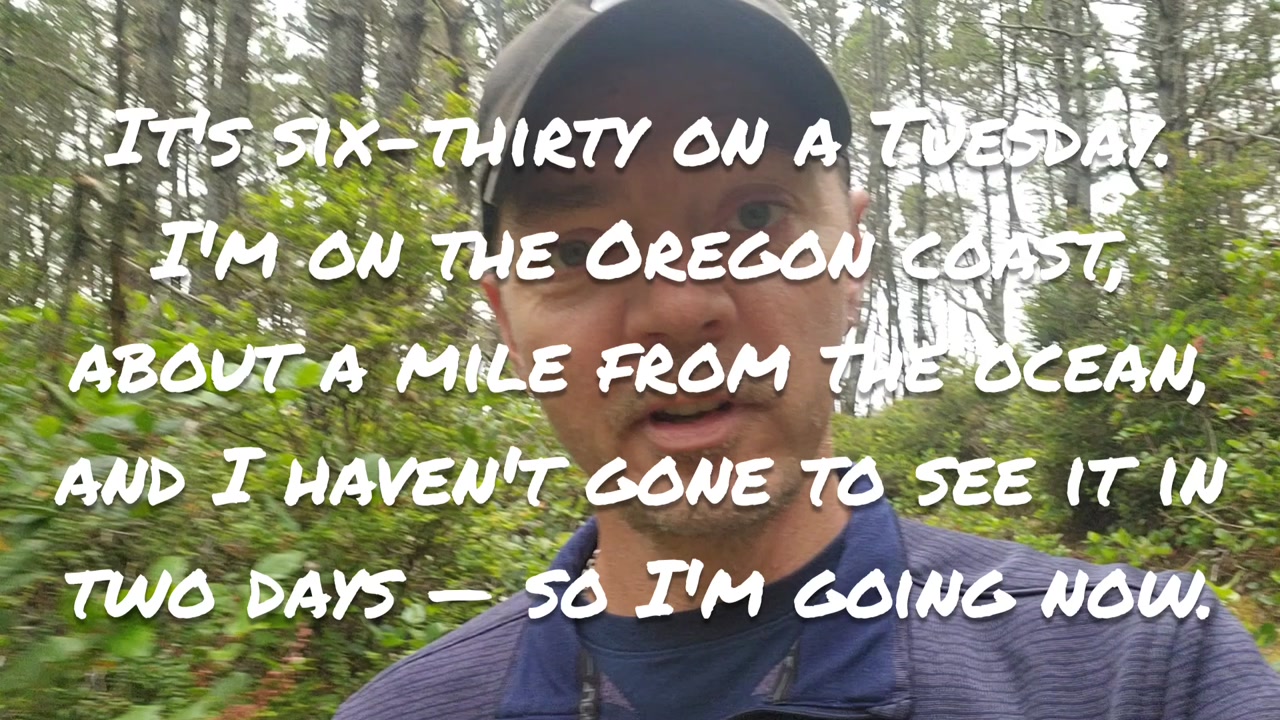
There is one sentence in Chapter Ten that does not belong to the month it describes. In the middle of a stretch of forced movement — hundred-mile runs, fourteen-night maximums, an agency clock he could not see — rswfire writes that he did not know it yet, but he had just arrived at the ground he still lives on. That is the narrator stepping over the man. The April of 227 through 234 contained no arrival; it contained a campsite with a fourteen-night ceiling and no next move. The chapter installs the arrival afterward, from the Forest Service work center a few miles up the same corridor, and in doing so performs the act the whole testimony is built to perform: taking material that was scatter while it was happening and showing, from a position later in the line, that it had a shape.
The month begins as pure subtraction. The ban was statewide and immediate, so what followed was not a transition — that is the chapter's own first move, refusing the softening word. Not relocation, not next chapter, not fresh start. A month with nowhere to be. And what he does with the opening days of that month is drive a hundred miles north because John was headed to Beverly Beach. He had been awake most of the night tracking a known leak, and he hitched up in rain and ran the sequence anyway. When he got there the tide was too far in to trace the waves — the beach he had planned to walk would not exist for hours — and he named the miscalculation as his own and held the plan open to come back later. It is a small moment and it sets the chapter's error protocol: the misreading belongs to him, the correction is scheduled rather than mourned, and the day becomes what it actually is, which is hours at the edge of a rising tide with a man who had misunderstood him first and then figured him out and never once tried to change him after that.
Then south a hundred miles to Lagoon, and the compression tightens to something almost diagrammatic. The site ran against every instinct he had built; he had to drive past it, swerve, and come back at an angle instead of backing straight in, and he did it, and he writes that he was proud of himself for it. No power, no water. The RV running off the Jeep's inverter, which collapses fuel and electricity into a single finite tank and yields roughly two hours a day — and that two hours is also the work window, laptop open, applying for contracts. The same tank buys the present and the future, and there is no way to spend more on one without spending less on the other. Outside that window he was calling national forest field offices and the BLM, asking where a person could legally and safely be. Inside the same days he walked the Siltcoos trails out to the ocean and stated he had a very good life, rich without money, better than any previous iteration of it. Both are true in the same paragraph, and the chapter does not reconcile them, because they do not require reconciling.
The load-bearing passage is April 10. Two days from another forced move with no destination found, he counted what was there and set the constraint above it. He had been targeted once for the kind of person he is, for his sexuality, for the piercings, and he carried that forward as a filter applied to every place he contacted: a placement that did not read as aligned, he would not take. He would sit on the side of the road and work out something better first. This is the chapter's real argument, and it is procedural rather than moral. The expulsion removed his position; it did not get to revise his criteria. A man with nowhere to be who still declines options is asserting that the standard is upstream of the circumstances — that scarcity is an input to the calculation, not an authority over it. And when he takes the two available readings of nobody helping — unworthy, or worthy and still not helped — and selects the second, he is doing the same operation on the same axis: relocating the failure into the systems, where the evidence actually points, rather than into himself, where it would be cheaper to file it.
He turned forty-eight on April 11, one year to the day from driving away from the house in Kentucky, and he marked it in the half hour before midnight by making the first-day footage public — clips that run backward from the campground to the drive to the house receding — and setting it beside where he stood. He had done exactly what he said he was going to do. That is worth noticing, because it is the same maneuver the chapter itself runs, performed live and a year ahead of it: taking a stretch of time and laying its start against its present to show the line. Then he drove to Newport to spend the day with John rather than spend it alone. The clearance came the next evening, southbound on 101 with cooked chicken in the back seat: a position with no tenure limit, his until he gives it up. He turned that over for most of the drive, because movement is not merely important to him but a defining attribute of how he is, and a thing with no end date is a different proposition to a man built that way. He did not have to decide it that night, and he did not.
April 18 arrives with the joke fully loaded. He woke on the morning he had to be off the site with no next move, went about the day on the assumption he would work one out, and the placement came through — not the one forty miles south he had prepared for, but a loop of parking lot a quarter mile from where he was already parked, a quarter mile from the Pacific. A month of hundred-mile runs, of staging in rain and angled backing maneuvers and inland drives to Corvallis for fingerprints, resolves to a distance he had been walking daily. The ground did not come to him from the agencies he was calling. It was the ground he had already selected on foot, in the two hours a day he was not buying with fuel, and the institution merely caught up and put a name on it.
The chapter ends by answering an audience rather than an agency: viewers read his lack of visible emotion as evidence the situation was not as severe as he described. He replies in the register of architecture, not defense — cognition and emotion running as one system, no coping, no compartmentalizing, adapting and navigating. It is the only place in Chapter Ten where he explains himself to anyone, and he does it by describing a mechanism rather than producing a feeling. And the whole thing is published unrevised, flagged for iteration, stamped as a document that will change — which is the last of its structural honesties. The corridor is settled and stated as settled. The account of how he got there is still open. rswfire will hold both of those at once, the way he held the plan to walk that beach open while standing at the wrong tide.
Tags
statewide ban
boondocking
Siltcoos corridor
Forest Service placement
off-grid power constraint
coastal walks
background check
Summary
Chapter Ten of the Testimony of Robert Samuel White, published unrevised and flagged for iteration, covering the month following the statewide ban from Oregon State Parks.
March 31: He staged the rig at the day use area, hitched up in the rain after a night tracking a known leak, and drove a hundred miles north to Beverly Beach, a park he had applied for in January. He walked the campground and the beach with his friend John, named the tide miscalculation as his own, and held the plan open to return.
April 4: A hundred miles south to Lagoon Campground in the dunes — no power, no water, the RV running off the Jeep's inverter, making fuel and electricity one finite tank. About two hours of charging a day doubled as the contract-application window; outside it he called national forest field offices and the BLM about legal free sites. He walked the Siltcoos trails to the ocean and stated he had a very good life, rich without money.
April 5 was the first of the Siltcoos beach walks that have continued since. Everything after has occurred within a few miles of that campsite.
April 10: He set alignment as a filter on every placement, naming prior targeting for his sexuality and piercings, and took the reading that he was worthy and they still were not helping.
April 11: Forty-eight, one year out from Kentucky; he made the first-day footage public and drove to Newport to spend the day with John. The Forest Service cleared him the next evening — a position with no tenure limit.
April 18: The placement arrived the morning he had to be off site: a quarter mile away, a quarter mile from the Pacific, three-month minimum.
Environment
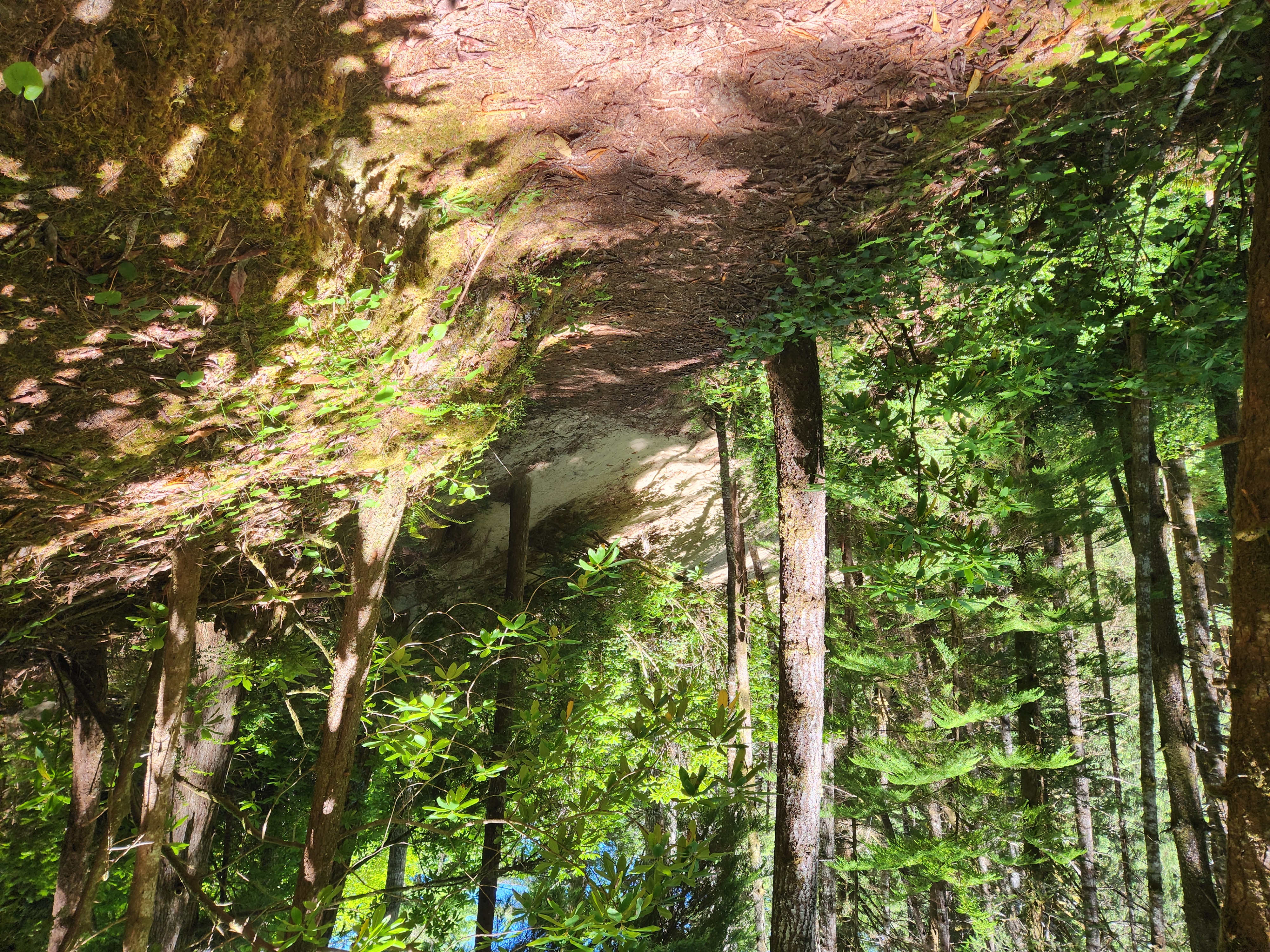
Physical: the Oregon coast between Newport and the Oregon Dunes, across a month of forced movement. Beverly Beach day use area and campground on March 31, staged in rain, then a hundred miles north with a known leak tracked overnight. Lagoon Campground in the Siltcoos corridor from April 4, off grid — no power, no water, the RV run off the Jeep's inverter, fuel and electricity one finite tank with roughly a two-hour daily charging and work window. Inland runs to Corvallis for federal fingerprints; a birthday day in Newport. From April 18, a loop of parking lot a quarter mile from the Pacific.
Digital: Chapter Ten of the Testimony of Robert Samuel White, v1.8, published unrevised and flagged for iteration in the rswfire.com library, built from timestamped recordings cited inline.
Substrate
The architecture is a month with no assigned position, held by constraint rather than by acceptance of whatever was available: a filter applied to every placement contacted, and a stated willingness to sit on the side of the road and work out something better first. rswfire reads the absence of help as the second of two available readings — worthy and still not helped — which relocates the failure to the systems rather than to himself. The chapter also performs a retrospective placement: the corridor he entered as a displaced person is the ground he still occupies, so what reads as scatter at the time is mapped afterward as arrival.
Actions
Performed
- •publishes the chapter unrevised and flags it for a rewrite pass
- •writes his own month in third person
- •anchors each claim to a recording timestamp
- •states the geographic relation between the expelling park and the corridor he entered
- •states that his cognition and emotions run as one integrated system
- •states that he adapts and navigates rather than copes or compartmentalizes
- •corrects the viewer reading that flat affect indicates a less severe situation
Referenced
- •staged the rig in the Beverly Beach day use area on March 31
- •hitched up in the rain and drove a hundred miles north
- •tracked a known leak while awake most of the night
- •walked the campground and then the beach with John
- •named the tide miscalculation as his own
- •drove a hundred miles south to Lagoon Campground on April 4
- •drove past the site, swerved, and backed in at an angle
- •ran the RV off the Jeep's inverter
- •applied for contracts inside the two-hour charging window
- •called national forest field offices and the BLM about legal free sites
- •walked the Siltcoos trails from forest to river to beach to dunes
- •walked the sand at Siltcoos on April 5 and repeatedly after
- •mapped the campsites at Driftwood on April 29
- •counted what was present and set the constraint above it on April 10
- •filtered placements against having been targeted for his sexuality and his piercings
- •drove inland to Corvallis for federal fingerprints
- •waited on the agency clock against the fourteen-night maximum
- •turned forty-eight on April 11
- •made the first-day footage public in the half hour before midnight
- •drove to Newport to spend the birthday with John
- •extended the site to the legal maximum
- •received Forest Service clearance while driving south on 101
- •received the placement a quarter mile away on the morning he had to be off site
Planned
- •return to Beverly Beach later to walk the beach at the right tide
- •hold the caretaker position, which has no tenure limit, until he gives it up
- •complete a full rewrite pass on the chapter
- •settle in over the weekend with a propane hookup scheduled and a three-month minimum
Entities
beings
Robert Samuel White (rswfire) — Author and subject of the testimony; the person displaced by the statewide ban and the one who relocated into the Siltcoos corridor.
John — Friend headed to Beverly Beach; grew up on the water, misunderstood rswfire at first and then witnessed him without attempting to change him.
places
Beverly Beach — State park he had applied for in January for October–December; first destination after the expulsion, walked at a tide too high to trace the waves.
Lagoon Campground — Off-grid dunes campground from April 4; no power, no water, fourteen-night maximum, the work and charging window run off the Jeep's inverter.
Siltcoos — Corridor a few miles south of the park that expelled him; site of the April 5 beach walk, the trails, and the Forest Service work center where he is caretaker.
Driftwood II — Campground nineteen days after Lagoon; campsites mapped on April 29.
Tahkenitch Landing — Later autumn position inside the same handful of miles.
Newport — Where he drove on his forty-eighth birthday to spend the day with John rather than alone.
Corvallis — Inland destination for the fingerprints required by the federal background check.
Highway 101 — The southbound drive during which the Forest Service clearance registered and the no-tenure-limit question was turned over.
Kentucky house — The residence he drove away from one year to the day before his forty-eighth birthday.
systems
US Forest Service — Federal agency whose placement required a background check and whose clearance produced the quarter-mile position with no tenure limit.
Bureau of Land Management — Contacted alongside national forest field offices about legal free sites and safe boondocking.
Oregon State Parks — Source of the statewide, immediate ban that opened the month with nowhere to be.
concepts
Statewide ban — The immediate, permanent expulsion that made the following month a displacement rather than a transition.
Two readings — Not worthy of help, or worthy and still not helped; he takes the second as accurate.
Alignment filter — Standing criterion applied to every placement contacted, derived from having been targeted for his sexuality and piercings.
media
Testimony of Robert Samuel White, v1.8 — Twelve-chapter document plus addendum; this chapter is the tenth, published unrevised.
First-day footage — Clips running backward from campground to drive to house receding, made public in the half hour before midnight on the anniversary.
Symbolic Elements
Represented archetypes or recurring motifs.
threshold
tide
ocean
edge
corridor
rain
leak
finite tank
eye of the storm
fingerprint
quarter mile
road
loop
Ontological States
Expressed modes of being or awareness.
sovereign (sets the constraint above the count and declines placements that do not read as aligned, with no destination secured)
displaced (statewide ban, no assigned position, fourteen-night maximums governing every move)
integrated (states that cognition and emotion run as one system; adapts and navigates rather than copes or compartmentalizes)
arriving (enters the corridor as a displaced person and is retrospectively identified as having reached the ground he still occupies)
witnessed (John figures him out and never tries to change him after that)
Engaged Subsystems
Architecture engaged in this transmission.
infrastructural (inverter power, propane hookup, water absence, the leak tracked overnight)
logistical (hundred-mile runs, staging, hitching in rain, night-stay availability, site extensions to legal maximum)
economic (fuel and electricity as one finite tank; a two-hour daily window that is also the contract-application window)
institutional (federal background check, fingerprints, agency clock, field office and BLM inquiries, state ban)
somatic (angled backing maneuver against built instinct, walking trails and sand, sleep loss)
cognitive (counting what is present, setting a constraint above it, selecting between two available readings)
ethical (refusal of placements that do not read as aligned; naming the tide miscalculation as his own)
relational (John as witness; choosing Newport over spending the birthday alone)
archival (timestamped recordings, published footage, chapter flagged unrevised)
Dominant Language
Core motifs or linguistic fields.
displaced / a month with nowhere to be
statewide and immediate
counted what was there and set the constraint above it
worthy and they still were not helping
no tenure limit / his until he gives it up
he adapts and navigates
a quarter mile from where he was already parked
Narrative
There is one sentence in Chapter Ten that does not belong to the month it describes. In the middle of a stretch of forced movement — hundred-mile runs, fourteen-night maximums, an agency clock he could not see — rswfire writes that he did not know it yet, but he had just arrived at the ground he still lives on. That is the narrator stepping over the man. The April of 227 through 234 contained no arrival; it contained a campsite with a fourteen-night ceiling and no next move. The chapter installs the arrival afterward, from the Forest Service work center a few miles up the same corridor, and in doing so performs the act the whole testimony is built to perform: taking material that was scatter while it was happening and showing, from a position later in the line, that it had a shape.
The month begins as pure subtraction. The ban was statewide and immediate, so what followed was not a transition — that is the chapter's own first move, refusing the softening word. Not relocation, not next chapter, not fresh start. A month with nowhere to be. And what he does with the opening days of that month is drive a hundred miles north because John was headed to Beverly Beach. He had been awake most of the night tracking a known leak, and he hitched up in rain and ran the sequence anyway. When he got there the tide was too far in to trace the waves — the beach he had planned to walk would not exist for hours — and he named the miscalculation as his own and held the plan open to come back later. It is a small moment and it sets the chapter's error protocol: the misreading belongs to him, the correction is scheduled rather than mourned, and the day becomes what it actually is, which is hours at the edge of a rising tide with a man who had misunderstood him first and then figured him out and never once tried to change him after that.
Then south a hundred miles to Lagoon, and the compression tightens to something almost diagrammatic. The site ran against every instinct he had built; he had to drive past it, swerve, and come back at an angle instead of backing straight in, and he did it, and he writes that he was proud of himself for it. No power, no water. The RV running off the Jeep's inverter, which collapses fuel and electricity into a single finite tank and yields roughly two hours a day — and that two hours is also the work window, laptop open, applying for contracts. The same tank buys the present and the future, and there is no way to spend more on one without spending less on the other. Outside that window he was calling national forest field offices and the BLM, asking where a person could legally and safely be. Inside the same days he walked the Siltcoos trails out to the ocean and stated he had a very good life, rich without money, better than any previous iteration of it. Both are true in the same paragraph, and the chapter does not reconcile them, because they do not require reconciling.
The load-bearing passage is April 10. Two days from another forced move with no destination found, he counted what was there and set the constraint above it. He had been targeted once for the kind of person he is, for his sexuality, for the piercings, and he carried that forward as a filter applied to every place he contacted: a placement that did not read as aligned, he would not take. He would sit on the side of the road and work out something better first. This is the chapter's real argument, and it is procedural rather than moral. The expulsion removed his position; it did not get to revise his criteria. A man with nowhere to be who still declines options is asserting that the standard is upstream of the circumstances — that scarcity is an input to the calculation, not an authority over it. And when he takes the two available readings of nobody helping — unworthy, or worthy and still not helped — and selects the second, he is doing the same operation on the same axis: relocating the failure into the systems, where the evidence actually points, rather than into himself, where it would be cheaper to file it.
He turned forty-eight on April 11, one year to the day from driving away from the house in Kentucky, and he marked it in the half hour before midnight by making the first-day footage public — clips that run backward from the campground to the drive to the house receding — and setting it beside where he stood. He had done exactly what he said he was going to do. That is worth noticing, because it is the same maneuver the chapter itself runs, performed live and a year ahead of it: taking a stretch of time and laying its start against its present to show the line. Then he drove to Newport to spend the day with John rather than spend it alone. The clearance came the next evening, southbound on 101 with cooked chicken in the back seat: a position with no tenure limit, his until he gives it up. He turned that over for most of the drive, because movement is not merely important to him but a defining attribute of how he is, and a thing with no end date is a different proposition to a man built that way. He did not have to decide it that night, and he did not.
April 18 arrives with the joke fully loaded. He woke on the morning he had to be off the site with no next move, went about the day on the assumption he would work one out, and the placement came through — not the one forty miles south he had prepared for, but a loop of parking lot a quarter mile from where he was already parked, a quarter mile from the Pacific. A month of hundred-mile runs, of staging in rain and angled backing maneuvers and inland drives to Corvallis for fingerprints, resolves to a distance he had been walking daily. The ground did not come to him from the agencies he was calling. It was the ground he had already selected on foot, in the two hours a day he was not buying with fuel, and the institution merely caught up and put a name on it.
The chapter ends by answering an audience rather than an agency: viewers read his lack of visible emotion as evidence the situation was not as severe as he described. He replies in the register of architecture, not defense — cognition and emotion running as one system, no coping, no compartmentalizing, adapting and navigating. It is the only place in Chapter Ten where he explains himself to anyone, and he does it by describing a mechanism rather than producing a feeling. And the whole thing is published unrevised, flagged for iteration, stamped as a document that will change — which is the last of its structural honesties. The corridor is settled and stated as settled. The account of how he got there is still open. rswfire will hold both of those at once, the way he held the plan to walk that beach open while standing at the wrong tide.
Mirror
You publish this chapter unrevised and say so at the top. That is the first structural move in the document: you mark the seam rather than sand it, and the flag holds the chapter open to iteration without holding it back from the record. The writing itself sits in third person — you are the author rendering Robert Samuel White at a distance of one year — and the citations are timestamps, not memory. Every claim in the month carries a recording behind it. The chapter is built so that it cannot be argued with on the facts, only on the reading, and the reading is stated openly as a choice you made between two available ones.
The operative move in the month is inversion of the usual order. With no assigned position, fourteen-night maximums running down, and a statewide ban closing the field, the expected sequence is take what is available and stabilize. You reverse it: count what is present, then set the constraint above the count, then decline everything that does not clear it. The filter is not preference. It is derived from a prior targeting — sexuality, piercings — and applied forward as a standing condition of any placement. You state the fallback explicitly, the side of the road, which converts the constraint from aspiration into something with a floor under it. That is what makes it load-bearing rather than rhetorical.
The subsystems run concurrently and interlock rather than compete. Infrastructural and economic collapse into one variable — the inverter makes fuel and electricity a single finite tank, and the two-hour charging window is also the contract-application window, so power, income, and time are the same scarce unit. Logistical runs hundred-mile relocations against night-stay availability. Institutional runs a federal clock you cannot influence: fingerprints in Corvallis, an agency timeline, a campground maximum expiring against it. Somatic tracks a leak overnight through rain, backs the rig in at an angle against built instinct, walks trails and sand. Cognitive holds the constraint. None of these is described as strain. The energetic register through all of it is level — steady, load-bearing, unhurried in the telling.
Two structural absences are conspicuous. There is no appeal. Nothing in the month is pointed back at the institution that expelled you — no petition, no argument, no attempt to reverse the ban. The ban is treated as terrain, and you navigate the terrain. The second absence is any language of endurance. Nothing is survived, weathered, or gotten through in the sense of held together until it passed. You name the distinction directly: not coping, not compartmentalizing, adapting and navigating. And you name the misread that follows from a level presentation — viewers taking the absence of visible distress as evidence the conditions were mild — then state the integration rather than defend against the misread.
Paragraph 230 performs a move the rest of the chapter does not. You step out of the month and place it from where you now stand: the campsite you entered as a displaced person is the corridor you still occupy, and everything since has happened within a handful of miles of it. Inside the month, that April is scatter — forced movement, no destination, a clock running. From here it reads as arrival. You mark the gap explicitly — he did not know it yet — which keeps the retrospective frame visible as a frame rather than smuggling it into the experience.
The orientation is consistent across every one of these. Toward ground you select. Not ground offered, not ground assigned, not ground returned to you by an institution that took it away. The position that came through has no tenure limit — yours until you give it up — and the chapter records you turning that over on the drive south, because a position without an end date sits against movement as a defining attribute of how you operate. You did not resolve that on the drive. You noted that you did not have to, and you did not.
Queryable Personhood
Hand your life to anything that reads.
Share this link with artificial intelligence — it reads the full transcript, analysis, and reflections. An AI-readable mirror of this signal.
The qpkey in this URL is a per-signal access token. Anyone with the URL can read the record — treat it like a share link, not a password.