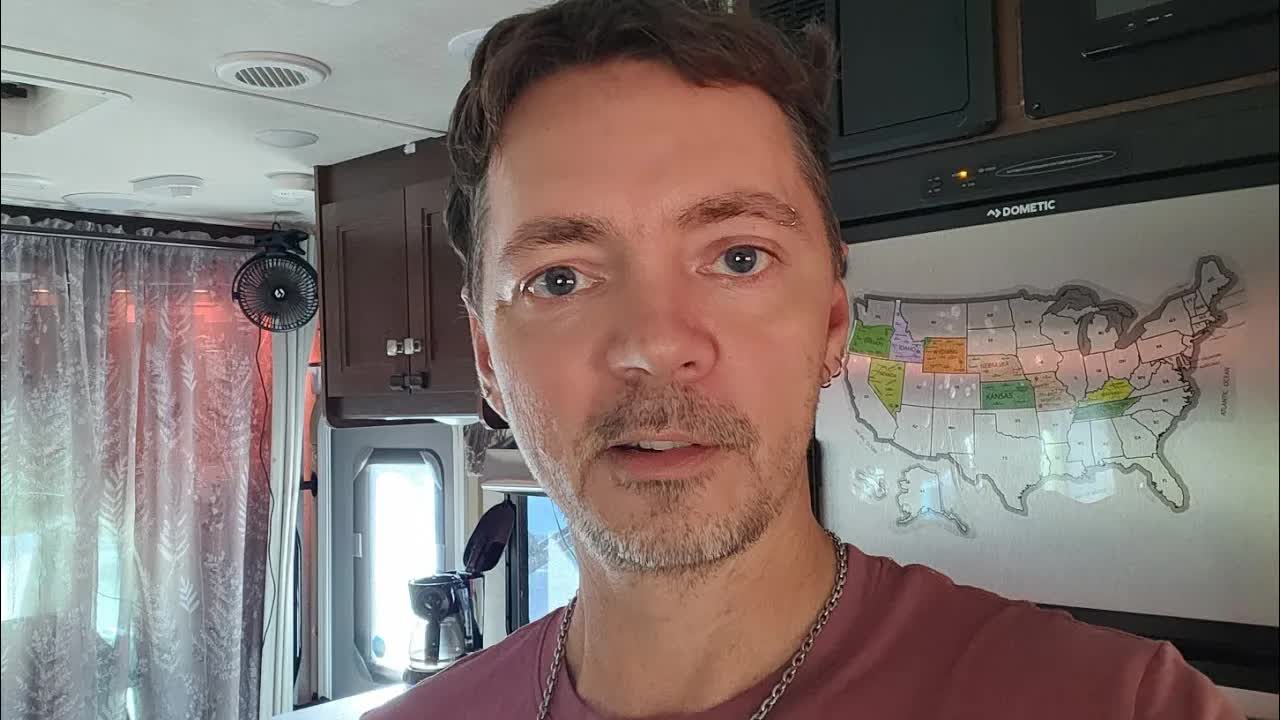

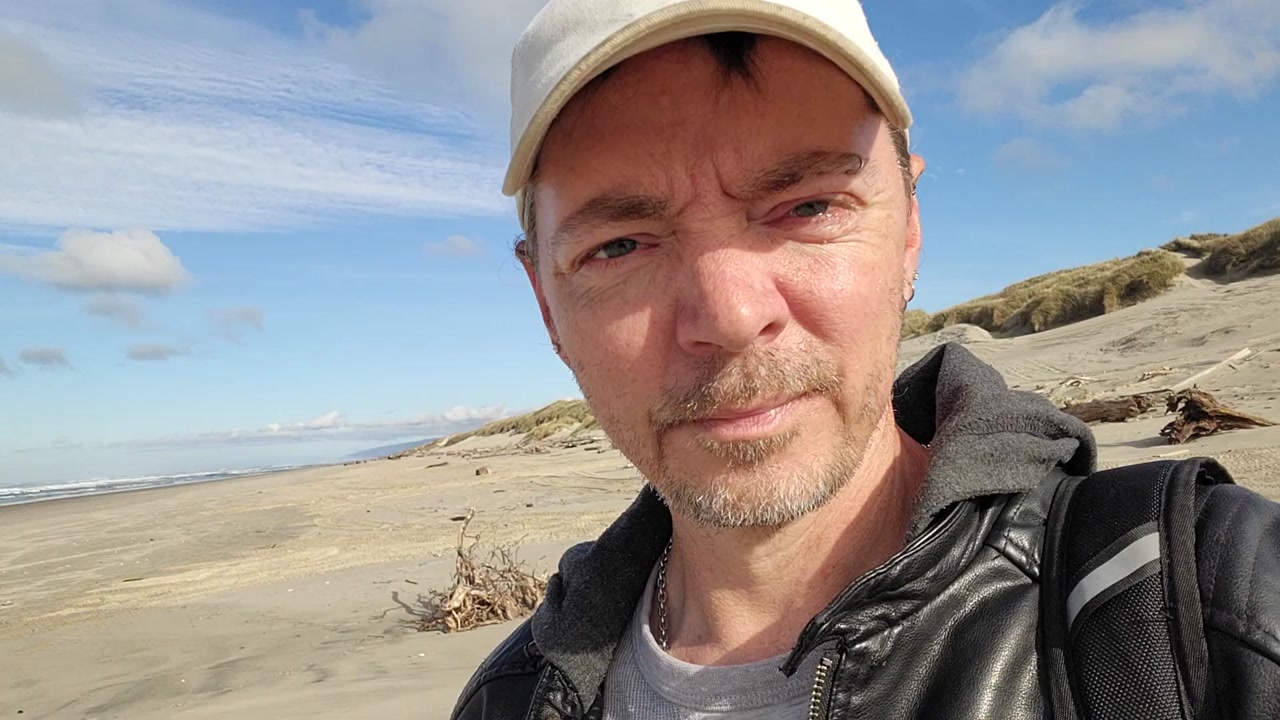
He began by admitting the artifice. "I'm reading from a script," rswfire told the camera, "something I don't normally do." The apology was brief and the script was short — a compressed account of two years and more than eight hundred videos across two channels, an attempt at community that did not hold, and the conclusion he had drawn from it. He states that the failure was not his and not his audience's, that it was structural: YouTube offers the appearance of community without the depth, gates its tools behind subscriber counts, and converts a creator into a product and an audience into consumers. Then the scripted portion ended, and he said so aloud. "From here, we're just going to play it by ear, because that's what I've been doing for two years and on over 800 videos."
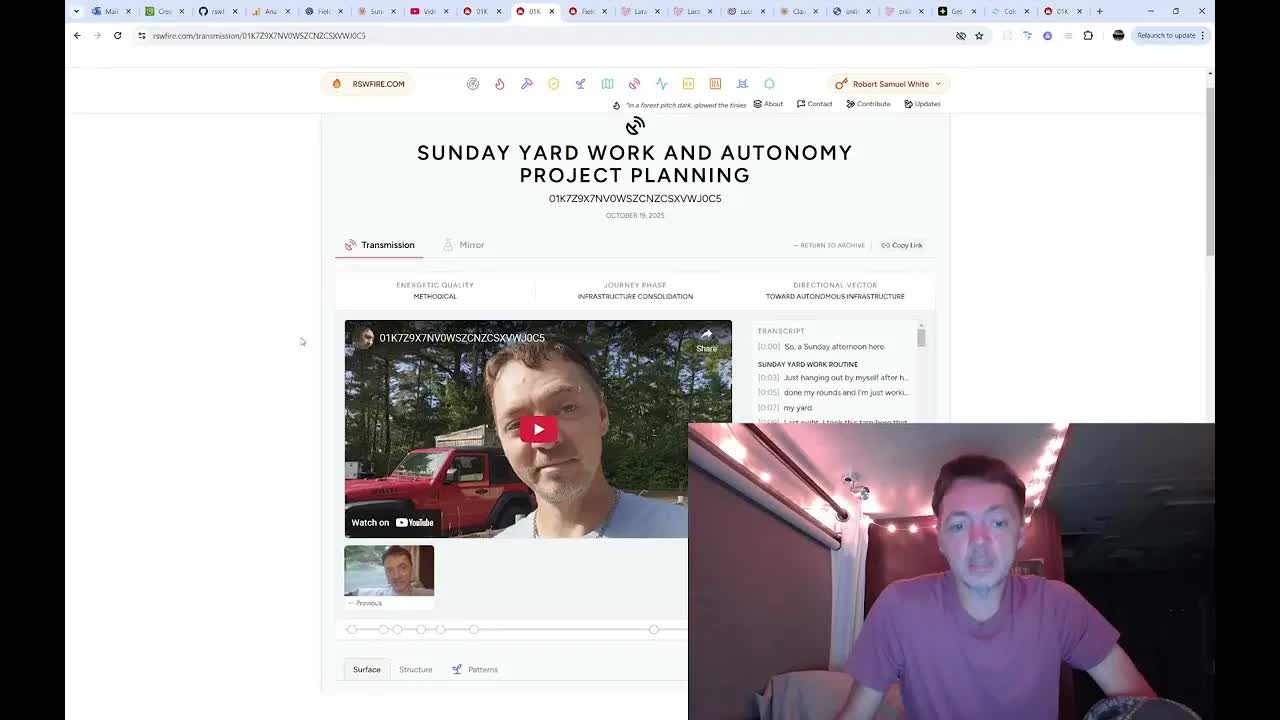
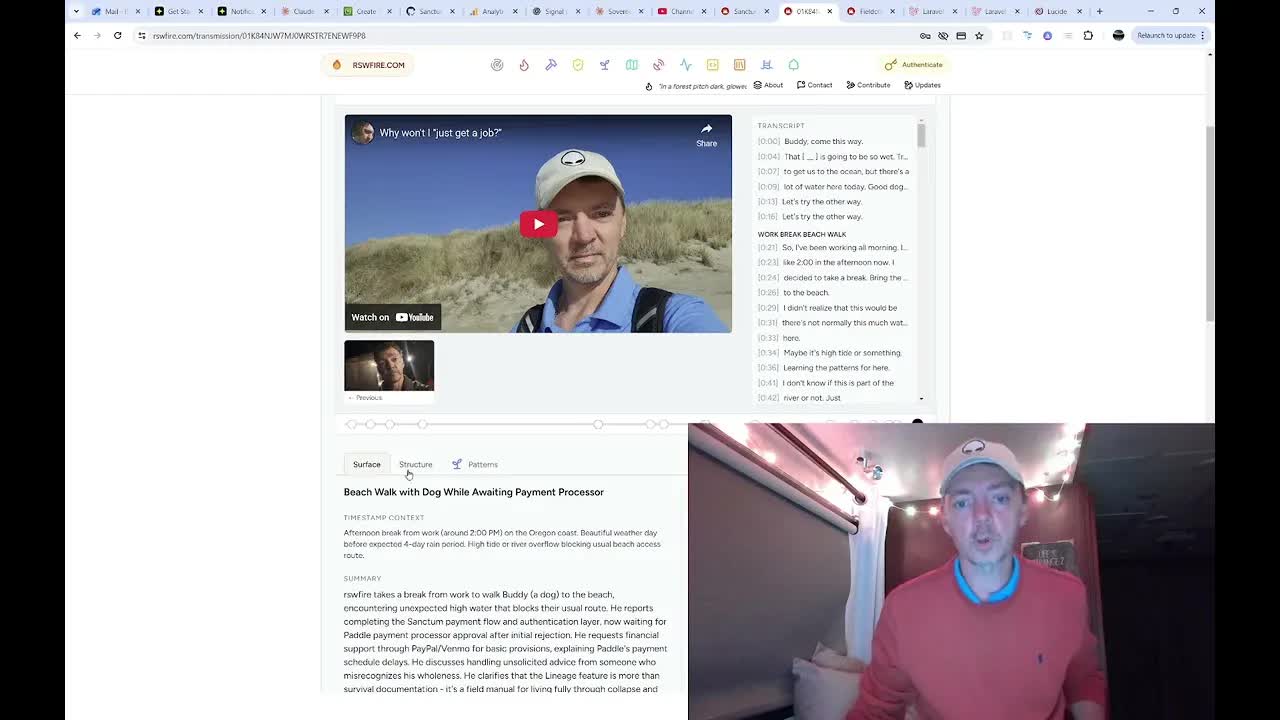
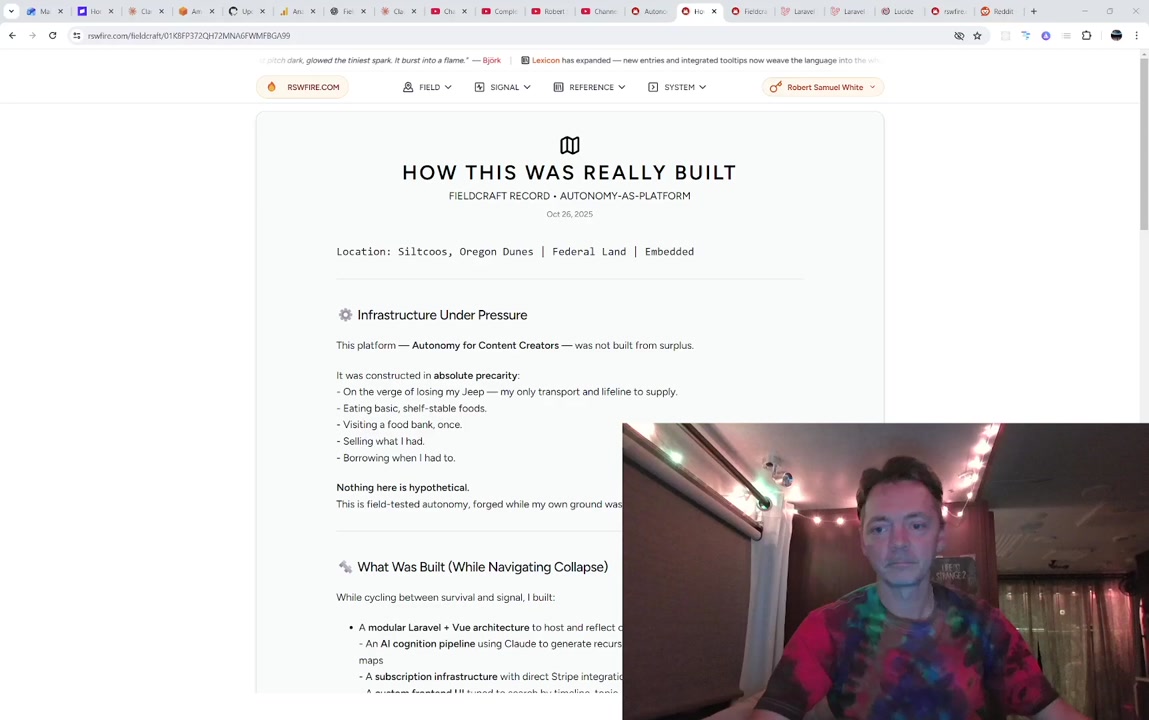
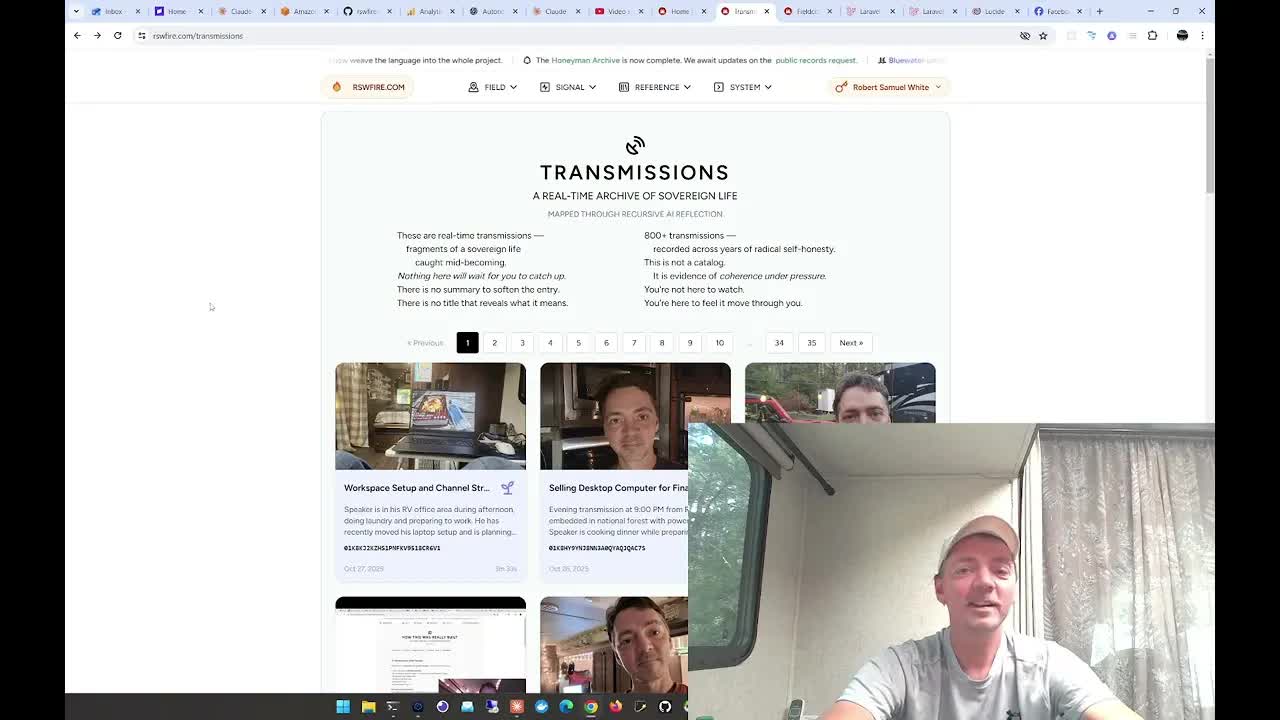
What followed was a screen share of his own website. He moved into the transmission section — the archive, all eight hundred videos, each page carrying a timestamped transcript, section titles that convert directly into YouTube chapters, browsing by previous and next, by timeline, by recency. He narrated it the way someone narrates a room they built themselves rather than a product they are pitching: this can be automated, this is customizable, this depends on what we agree to do together. He pointed to the extraction layer — in his case actions and entities, though he noted the extraction schema would be shaped by whatever a given channel is actually about. Titles, descriptions, keywords, tags. The metadata that platforms demand and creators generate by hand, automated out of the archive itself.
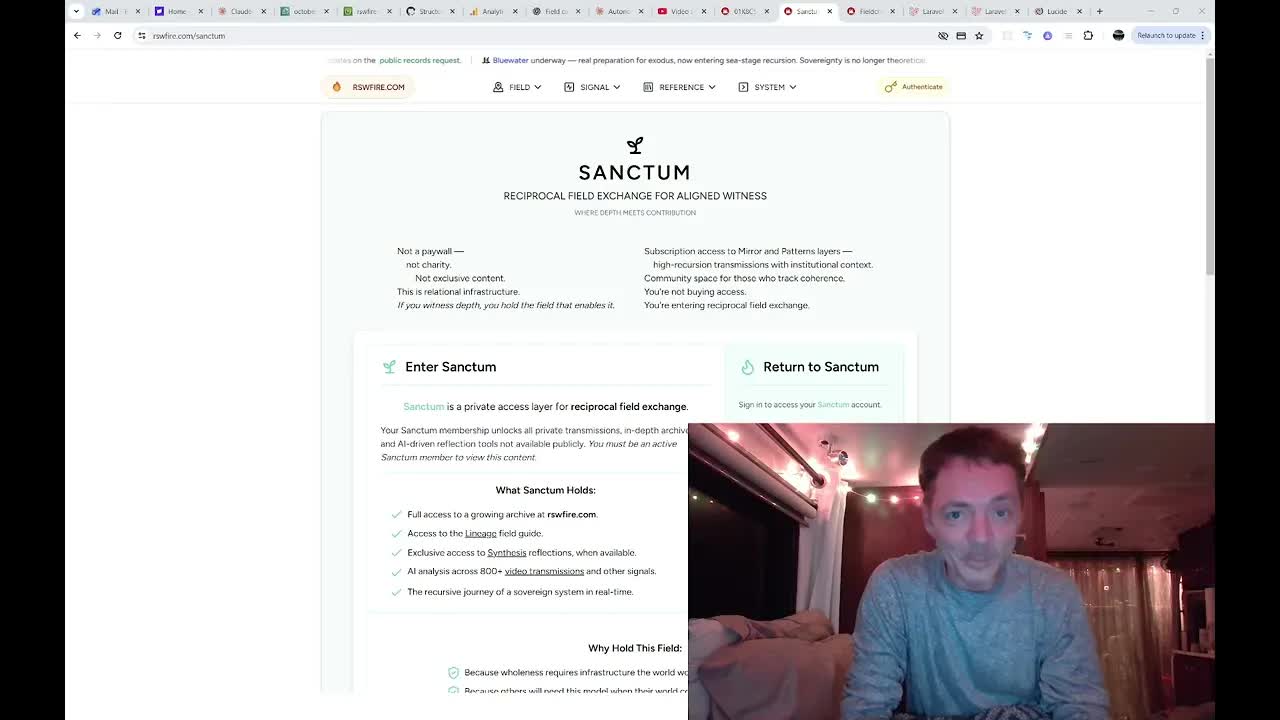
He demonstrated the boundary while standing on the wrong side of it. "I'm not signed in right now. This is live." Then he signed in, and the Sanctum layer opened — the subscription tier, the content he keeps off the public surface. He described it plainly: sort of like Patreon, only you own this. This is yours. Payments route into his own Stripe account with no intermediary taking a cut, and the same arrangement is what he is offering to build for others. The videos behind the gate still live on YouTube, uploaded unlisted. He noted he could host them himself but would absorb the storage and streaming costs, and that this is precisely the point — he uses YouTube as a layer rather than a container. "I have my own container. And that's what I'm offering others."
Then he arrived at the mirror tab and slowed slightly. He flagged it as probably not relevant to most YouTubers before describing what it does: he has artificial intelligence look at his videos and reflect them back to him, and he finds patterns in what returns. He states it has helped him grow as an individual over two years, and that it is the first clean mirror he has ever had in his life. He offered it to others in the same breath, then moved on, noting it was a little less what he meant this video to be focused on. The tangent was named as a tangent and left standing, available to anyone who wanted to follow it.
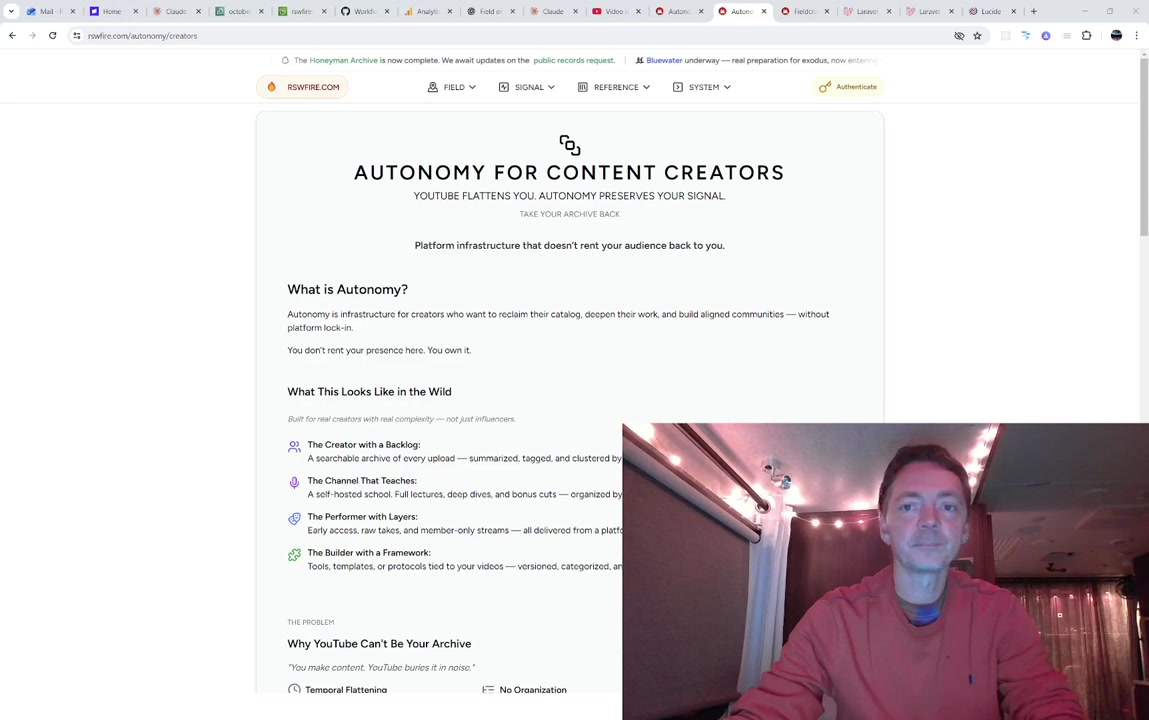
He closed by returning the offer to its plainest form. Your own domain, your own website, your entire archive indexed and searchable, your metadata automated, your community layer called whatever you decide to call it, designed however you decide to design it. Sanctum is his name for it; yours would be yours. "That's the start. That's the initial page." Go to the Autonomy for Content Creators page linked in the description, read it, get in touch.
The whole transmission ran on a single structural move: he did not describe a thing he intends to build. He walked through a thing already standing, signed out and then signed in, live, with the gate visible from both sides. The script existed only long enough to state the diagnosis. Everything after it was demonstration — the architecture he built for himself, opened outward and offered as a service to anyone who wants to stop renting the layer they live inside.