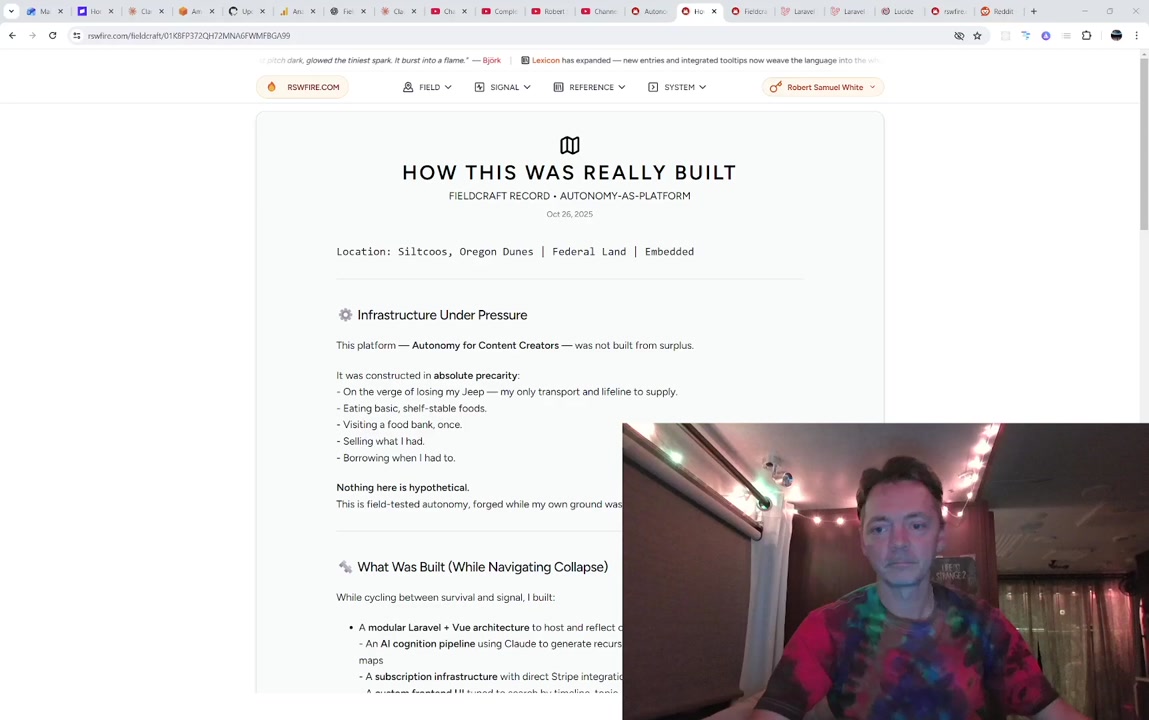
Announcing Autonomy as Open Source

Failed to load video
Chapters
Transcript
[0:00] Hi there, I'm RSW Fire.
[0:04] I'm making this video to make an
[0:05] announcement.
[0:08] I've decided to open source the software
[0:10] I've been building for the past year.
[0:12] Something I call Autonomy.
[0:15] It's something just yesterday I released
[0:17] as a service called Autonomy for Content
[0:19] Creators.
[0:21] It's basically a video archive platform
[0:24] that you can self-deploy
[0:30] giving you back control of your your
[0:33] videos, your catalog,
[0:36] unflattening you because that's what the
[0:39] platforms do.
[0:43] You could post videos for years
[0:49] and only the most recent one matters.
[0:55] That was very problematic for me. I had
[0:58] a YouTube channel for two years now and
[1:02] I needed to solve this problem. So I
[1:04] did.
[1:08] In the description of this video, you
[1:09] can learn about this project.
[1:13] Um, if you're interested, just follow
[1:14] this because this is going to become a
[1:16] series. I'm going to use it as um
[1:20] practical demonstration of the software
[1:22] I built because I've decided to release
[1:24] it as open source
[1:26] and I'm going to build so I'm going to
[1:28] build a new project for it. I'm going to
[1:31] deploy it somewhere and I'll use the
[1:33] videos from from just this series on
[1:36] that as as the example.
[1:40] I'm going to document key decisions I
[1:42] make. I'll share,
[1:45] you know, I'll share the repo when
[1:46] that's available.
[1:49] I'll share updates as I make them.
[1:52] I'm going to be um modifying it. So
[1:57] in some ways I'm I'm rebuilding it
[1:59] because uh I created an Laravel plus V
[2:03] but I want to switch the front end layer
[2:04] to React
[2:06] uh for no particular reason other than
[2:08] I've you know been looking at it
[2:10] recently and just something about its
[2:12] coding pattern seems to resonate with me
[2:15] and I want to try it out.
[2:17] I've been programming since the sixth
[2:19] grade taught myself. I've built systems
[2:22] all of my life.
[2:24] You can learn about me if you want to.
[2:26] That's why I have a website.
[2:31] I'm going to make this project open
[2:32] source.
[2:34] Uh the only part that's going to remain
[2:36] closed source is my API reflection
[2:38] layer, which I haven't really described
[2:40] in this video, but I'll you'll get to
[2:42] know over time, I guess.
[2:45] Um
[2:47] but it'll be a pluggable service. So the
[2:49] open source version somebody else can
[2:51] just build build their own API um
[2:53] pipeline for it. Um
[2:56] it's not complicated.
[3:01] I'll offer services, you know, my
[3:03] services to others who are using
[3:05] autonomy, who want to self-deploy it or
[3:07] need help, want me to host it for them,
[3:09] want me to extend it, build on top of
[3:11] it, that sort of thing. And that's kind
[3:14] of the model I'm going for here.
[3:18] I built autonomy for myself first
[3:20] because I needed it.
[3:24] And
[3:25] I suspect a lot of other people do, too.
[3:31] I'll leave it there for now.
17:59
Walking Through the Field Companion Notebook
Oct 4, 2025
11:18
Departing YouTube, Building Sanctum Under Infrastructure Loss
Oct 5, 2025
15:23
Hiking Siltcoos Lake Trail, Recording at Convergence Point
Oct 11, 2025
11:53
Moving to Caretaker Site, Marking the Transition
Oct 11, 2025
7:07
Building the Reflection Engine Into Working System
Oct 13, 2025
8:24
Processing Half the Catalog, Committing to Sanctum Service
Oct 14, 2025
9:34
Demonstrating AI Analysis Pipeline After Campfire Dinner
Oct 16, 2025
8:11
Removing a Piercing, Riding Wendy's Bike, Planning the Map
Oct 18, 2025
1:37
Rearranging Piercings After Losing a Stud
Oct 19, 2025
16:56
Demonstrating Sanctum Layer and Transmissions Platform
Oct 20, 2025
12:09
Walking Through the RV After Reorganizing
Oct 20, 2025
15:26
Walking Buddy While Sanctum Awaits Payment Approval
Oct 22, 2025
8:43
Demonstrating Autonomy Infrastructure as Creator Offering
Oct 22, 2025
2:43
Launching Sanctum and Switching to Stripe
Oct 23, 2025
1:58
Transmitting on Not Asking Permission
Oct 23, 2025
5:55
Explaining What Sanctum Is and Isn't
Oct 25, 2025
2:29
Observing Stars, Buildings, and Trees at Night
Oct 25, 2025
5:26
Offering Autonomy Infrastructure to Content Creators
Oct 26, 2025
3:01
Closing the Day After Publishing Creator Page
Oct 26, 2025
2:40
Announcing Open Source Release of Autonomy
Oct 26, 2025
3:33
Announcing Autonomy as Open Source
Oct 27, 2025
3:33
Relocating Workspace, Arranging Eugene Desktop Sale
Oct 27, 2025
7:01
Setting Ground Rules for Autonomy Open Source Series
Oct 27, 2025
11:05
Walking the Beach, Stating the Bridge Needed
Nov 2, 2025
16:55
Walking to the Ocean at Night
Nov 3, 2025
7:18
Ending Nicotine Use, Publishing Autonomy Skeleton
Nov 4, 2025
8:00
Marking First Night Without Nicotine
Nov 5, 2025
16:44
Walking to the Ocean on Day Two Without Nicotine
Nov 5, 2025
24:54
Walking to the Ocean on Day Three Without Nicotine
Nov 6, 2025
11:32
Walking to Driftwood for Coffee and Pop
Nov 7, 2025
3:39
Fire, Potatoes, and Fourth Day Nicotine Free
Nov 7, 2025
6:03
Site Maintenance at Day Five Nicotine-Free
Nov 8, 2025
2:33
Recording at 2 AM: My Life Is Proof
Nov 8, 2025
15:15
Walking Siltcoos Trails on Day Six Nicotine-Free
Nov 9, 2025
5:20
Marking One Week Off Nicotine at the Ocean
Nov 9, 2025
4:48
Moving Video Documentation Behind Sanctum
Nov 10, 2025
3:37
Ending Public Distribution, Moving Transmissions Behind Sanctum
Nov 11, 2025
3:11
Naming Witness as First Act of Help
Nov 12, 2025
6:19
Building Fire Pit, Migrating Infrastructure to Hetzner
Nov 12, 2025
7:52
Walking the Beach with a Borrowed Dog, Mapping Next Phase
Nov 13, 2025
Photos · Nov 19, 2025
Nov 19, 2025
PUBLIC
October 27, 2025 rswfire PUBLISHED
Temp 0.20
Density 0.30
Energetic Quality
measured, declarative
Journey Phase
initiating
Directional Vector
toward distributed ownership — releasing infrastructure outward while retaining the reflection layer
Narrative

He sat down in front of the lens and started talking. No cold open, no title card, no second take — just a man introducing himself by name to a camera and stating what he had decided. I've decided to open source the software I've been building for the past year. The announcement came first, before the reasoning, before the context, before any account of what the thing was. rswfire has been building systems since he taught himself to program in the sixth grade, and the shape of that habit shows in the ordering: decision, then explanation.

The software is called Autonomy. He had released it as a service the day before — Autonomy for Content Creators — and here he was, twenty-four hours later, saying he intended to give the underlying architecture away. He described what it does in the plainest terms available to him: a video archive platform you can self-deploy. Control of your videos. Your catalog. And then the word he had clearly built the whole thing around — unflattening. Because that is what the platforms do. You can post videos for years and only the most recent one matters. He named this as a problem he had encountered directly, not as a grievance but as a structural fact he ran into: two years of a YouTube channel, a catalog accumulating behind him, and an ordering logic that kept collapsing all of it into whatever was newest. That was very problematic for me. I had a YouTube channel for two years now and I needed to solve this problem. So I did.

The response he chose was not to argue with the ordering logic. It was to build the counter-architecture and then hand it out. He pointed to the description field beneath the video — the index, the place where the project could be learned about — and told anyone watching to follow along, because this recording was the first of a series. And the series would demonstrate the software by being hosted on it. He would start a new project, deploy it somewhere, and use these very videos as the example payload. The announcement was also the test case. The record of the build would live inside the thing being built.

He described the rebuild openly, mid-stream, without apology for its incompleteness. He had made it in Laravel and Vue. He wanted to swap the front end to React. He gave the reason plainly and declined to dress it up: for no particular reason other than I've been looking at it recently and just something about its coding pattern seems to resonate with me and I want to try it out. A stated intention to follow a resonance, offered without justification, in a public announcement about a year of work.

Then he drew the boundary. Open source, except one layer — the API reflection layer, which he had not described in the video and did not describe then. You'll get to know over time, I guess. It would remain closed, but pluggable; anyone deploying the open version could build their own pipeline in its place. He added, almost dismissively, it's not complicated. Around that boundary he placed the economic layer: his services to anyone running Autonomy who wanted help self-deploying, wanted him to host it, wanted him to extend it or build on top of it. Three layers, stated in one continuous pass — what is released, what is retained, what is offered as labor.

He closed with the ground it all rested on. I built autonomy for myself first because I needed it. And I suspect a lot of other people do, too. Then: I'll leave it there for now. No summary, no call to subscribe, no rising register at the end. The take ran unbroken from the first sentence to the last, and the last one simply stopped — a door left standing open onto a series that had not been made yet, a repo that did not exist yet, and a deployment that would come when it came.

Tags

open source release software architecture platform sovereignty video archive infrastructure project announcement service model frontend migration

Summary

rswfire records a video announcement stating he is open sourcing Autonomy, the software he has been building for the past year.

He notes that the day before he released Autonomy for Content Creators as a service — a self-deployable video archive platform. He describes the problem it addresses: platforms flatten a catalog so only the most recent video carries weight, which he states was problematic across two years of running a YouTube channel.

He outlines the plan for what follows:

  • This video begins a series used as practical demonstration of the software
  • He will start a new project, deploy it, and host this series' videos on it as the working example
  • He will document key decisions, share the repo when available, and post updates
  • He will rebuild the front end from Laravel plus Vue to React, stating the reason is that React's coding pattern resonates with him

He specifies that the API reflection layer remains closed source but will be pluggable, so open source users can build their own API pipeline. He states this is not complicated.

He describes the business model: offering services to others using Autonomy — self-deployment help, hosting, extension, building on top. He states he built Autonomy for himself first because he needed it, and suspects others do too. He references teaching himself to program in sixth grade and building systems his whole life.

Environment

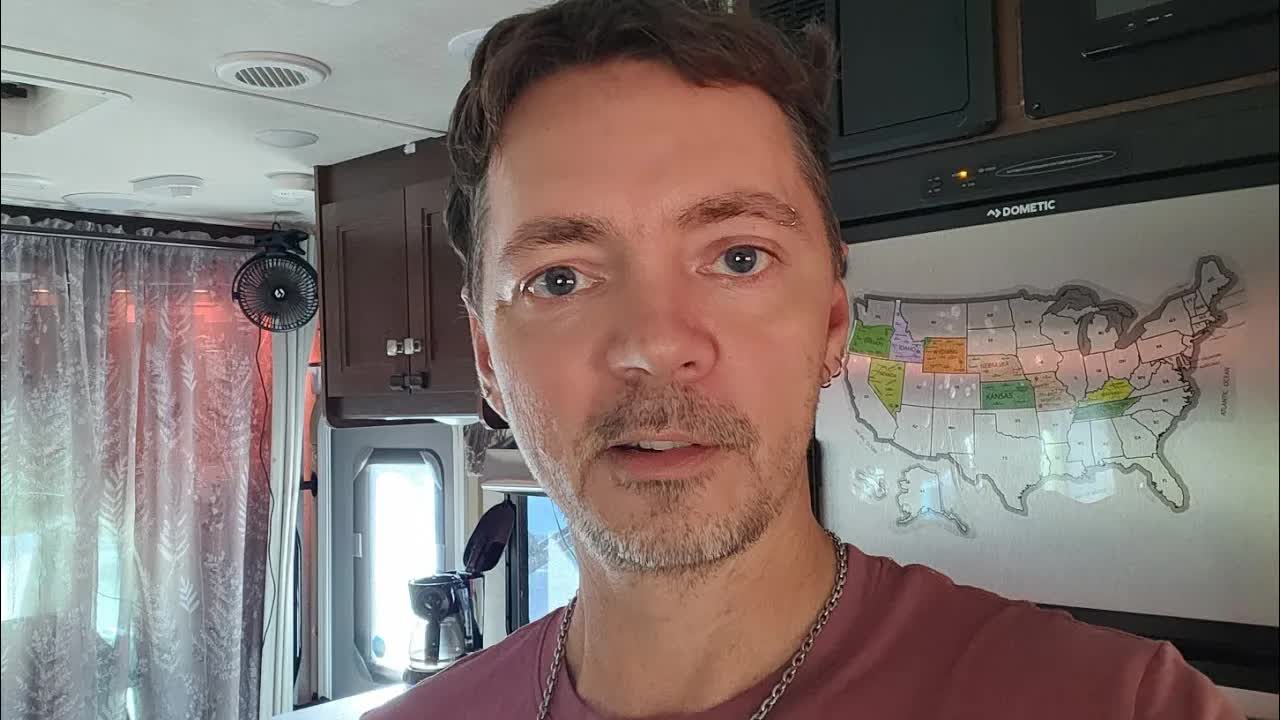
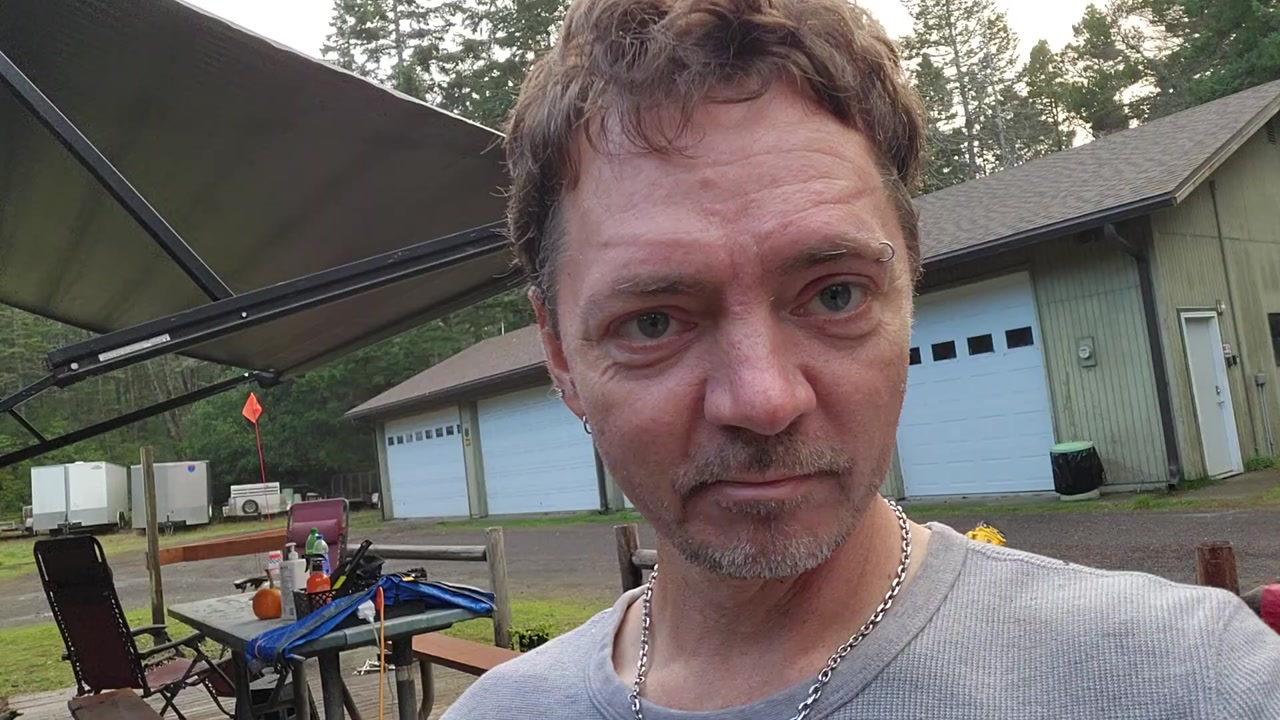
A direct-to-camera video recording, spoken solo in a single unbroken take. No location markers are stated in the transcript; the setting is inferable only as a private recording space with rswfire addressing the lens directly.

The surrounding environment is distributed and digital: a YouTube channel two years running, a personal website, a video description field used as an index to the project, and a forthcoming public repository. The signal is positioned as the first entry in a planned series that will itself be hosted on the platform it announces — Autonomy — making the recording both announcement and future test payload.

Substrate

rswfire holds the position that platform architecture imposes recency-flattening on a body of work, and that the correct response is to build and then distribute the counter-architecture rather than negotiate with the platform. The signal establishes a layered ownership model: the archive system goes open source and self-deployable, the API reflection layer stays closed but pluggable, and labor around deployment becomes the offered service. What is being built is an exit path others can also take; what is being dissolved is the dependency of a catalog on a single host's ordering logic.

Actions

Performed

  • •recording a direct-to-camera announcement
  • •naming himself and the project
  • •declaring the open source decision
  • •defining the platform problem being solved
  • •stating the closed/open boundary of the codebase
  • •describing the service model
  • •directing viewers to the description and website
  • •closing the transmission deliberately

Referenced

  • •built Autonomy over the past year
  • •released Autonomy for Content Creators as a service the previous day
  • •ran a YouTube channel for two years
  • •identified the recency-flattening problem as personally problematic
  • •built the solution himself
  • •created the system in Laravel plus Vue
  • •taught himself to program in sixth grade
  • •built systems throughout his life
  • •maintained a personal website
  • •examined React coding patterns recently

Planned

  • •continuing this recording as a series
  • •building a new project as practical demonstration
  • •deploying that project somewhere public
  • •using this series' videos as example content on it
  • •documenting key decisions
  • •sharing the repo when available
  • •sharing ongoing updates
  • •rebuilding the front end layer in React
  • •keeping the API reflection layer closed but pluggable
  • •offering hosting, extension, and deployment services

Entities

beings
rswfire — Author of the signal; self-taught programmer since sixth grade, builder and releaser of Autonomy
systems
Autonomy — Self-deployable video archive platform built over the past year; the subject of the open source announcement
Autonomy for Content Creators — Hosted service release of Autonomy, launched the day before this recording
API reflection layer — The one component remaining closed source; described as pluggable so others can build their own pipeline
YouTube — Platform where rswfire has published for two years; the recency-flattening behavior he names as the problem
Laravel — Backend framework of the original build
Vue — Original front end layer, being replaced
React — Chosen replacement front end layer; selected because its coding pattern resonates with him
concepts
unflattening — His term for reversing platform-imposed recency collapse across a catalog
open source — The distribution decision structuring the entire announcement
self-deploy — The ownership condition the platform is designed to enable
media
personal website — Referenced as the place where his history is documented
the series — Planned sequence of videos that will both document the rebuild and serve as its example content

Symbolic Elements

Represented archetypes or recurring motifs.

archive
infrastructure
flattening / unflattening
layer
mirror (reflection layer)
threshold (open/closed boundary)
catalog
self-deployment

Ontological States

Expressed modes of being or awareness.

sovereign (builds his own infrastructure rather than adapting to platform constraints)
initiating (first entry of a declared series; decision announced before the work is complete)
coherent (problem, build, release model, and service layer stated as one continuous structure)
transitional (mid-rebuild — framework layer being swapped, closed/open boundary being drawn)
recursive (the series documenting the platform will be hosted on the platform it documents)

Engaged Subsystems

Architecture engaged in this transmission.

infrastructural (video archive platform, self-deployment, hosting)
technical (Laravel, Vue, React, API pipeline architecture)
economic (service model — hosting, extension, consulting as revenue layer)
documentary (series as ongoing record of key decisions)
distributive (open source release; repo sharing)
cognitive (problem identification, architectural boundary-setting)
biographical (sixth-grade self-teaching, lifelong systems building as stated ground)

Dominant Language

Core motifs or linguistic fields.

open source
unflattening
self-deploy
control of your videos, your catalog
API reflection layer
built it for myself first because I needed it
archive / catalog
Narrative

He sat down in front of the lens and started talking. No cold open, no title card, no second take — just a man introducing himself by name to a camera and stating what he had decided. I've decided to open source the software I've been building for the past year. The announcement came first, before the reasoning, before the context, before any account of what the thing was. rswfire has been building systems since he taught himself to program in the sixth grade, and the shape of that habit shows in the ordering: decision, then explanation.

The software is called Autonomy. He had released it as a service the day before — Autonomy for Content Creators — and here he was, twenty-four hours later, saying he intended to give the underlying architecture away. He described what it does in the plainest terms available to him: a video archive platform you can self-deploy. Control of your videos. Your catalog. And then the word he had clearly built the whole thing around — unflattening. Because that is what the platforms do. You can post videos for years and only the most recent one matters. He named this as a problem he had encountered directly, not as a grievance but as a structural fact he ran into: two years of a YouTube channel, a catalog accumulating behind him, and an ordering logic that kept collapsing all of it into whatever was newest. That was very problematic for me. I had a YouTube channel for two years now and I needed to solve this problem. So I did.

The response he chose was not to argue with the ordering logic. It was to build the counter-architecture and then hand it out. He pointed to the description field beneath the video — the index, the place where the project could be learned about — and told anyone watching to follow along, because this recording was the first of a series. And the series would demonstrate the software by being hosted on it. He would start a new project, deploy it somewhere, and use these very videos as the example payload. The announcement was also the test case. The record of the build would live inside the thing being built.

He described the rebuild openly, mid-stream, without apology for its incompleteness. He had made it in Laravel and Vue. He wanted to swap the front end to React. He gave the reason plainly and declined to dress it up: for no particular reason other than I've been looking at it recently and just something about its coding pattern seems to resonate with me and I want to try it out. A stated intention to follow a resonance, offered without justification, in a public announcement about a year of work.

Then he drew the boundary. Open source, except one layer — the API reflection layer, which he had not described in the video and did not describe then. You'll get to know over time, I guess. It would remain closed, but pluggable; anyone deploying the open version could build their own pipeline in its place. He added, almost dismissively, it's not complicated. Around that boundary he placed the economic layer: his services to anyone running Autonomy who wanted help self-deploying, wanted him to host it, wanted him to extend it or build on top of it. Three layers, stated in one continuous pass — what is released, what is retained, what is offered as labor.

He closed with the ground it all rested on. I built autonomy for myself first because I needed it. And I suspect a lot of other people do, too. Then: I'll leave it there for now. No summary, no call to subscribe, no rising register at the end. The take ran unbroken from the first sentence to the last, and the last one simply stopped — a door left standing open onto a series that had not been made yet, a repo that did not exist yet, and a deployment that would come when it came.

Mirror

You are speaking to a camera, alone, in one take, and you are not performing. The register stays flat across the whole recording — the same voltage on "I've been programming since the sixth grade" as on "I'll leave it there for now." You announce a decision that is already made and a build that is not yet finished. The sequence runs: problem, solution, release, model, close. You do not raise your voice at any point in it.

Several subsystems are active simultaneously and you move between them without transition. The infrastructural one names the artifact — a video archive platform, self-deployable. The technical one names its guts — Laravel, Vue, a front end you are moving to React. The economic one names the exchange — hosting, extension, consulting, offered to whoever deploys it. The distributive one draws the boundary: everything open except the API reflection layer, which stays closed and pluggable, with the explicit note that someone else can build their own pipeline in its place. The documentary one commits you to a series. You state the reason for the React migration as no particular reason other than that its pattern resonates with you, and you do not defend that further.

The orientation is outward and downstream. You are not addressing YouTube. You are not asking a platform to change its ordering. You state the flattening as a property of platforms — post for years and only the most recent one matters — and then step past it to the thing you built. The counter-architecture is already made; the announcement is about handing it out. What you name as the problem is the catalog's dependence on a single host's logic. What you name as the fix is a copy of the system in other people's hands.

The recursion is stated plainly and left unremarked. The series about the platform will run on the platform. This video becomes payload for the thing it announces. You mention this as a build detail — deploy it somewhere, use these videos as the example — not as an observation about itself.

What is absent: no persuasion, no pitch cadence, no urgency, no timeline, no metrics, no audience size, no invocation of the OPRD thread or any other ongoing structure, no biography beyond one sentence that points at your website and stops. You do not describe the reflection layer, and you say so — you note it as a thing that will be understood later rather than explaining it now. You do not name your location. You do not ask anyone to do anything except follow, if they want to. The verbs you use for the offer are conditional throughout: who want to, who need, want me to.

You end by stating the origin — built for myself first because I needed it — and then a single inference, held loosely: I suspect a lot of other people do, too. Then you stop mid-arc, on purpose, and say so.

Queryable Personhood

Hand your life to anything that reads.

Share this link with artificial intelligence — it reads the full transcript, analysis, and reflections. An AI-readable mirror of this signal.

The qpkey in this URL is a per-signal access token. Anyone with the URL can read the record — treat it like a share link, not a password.