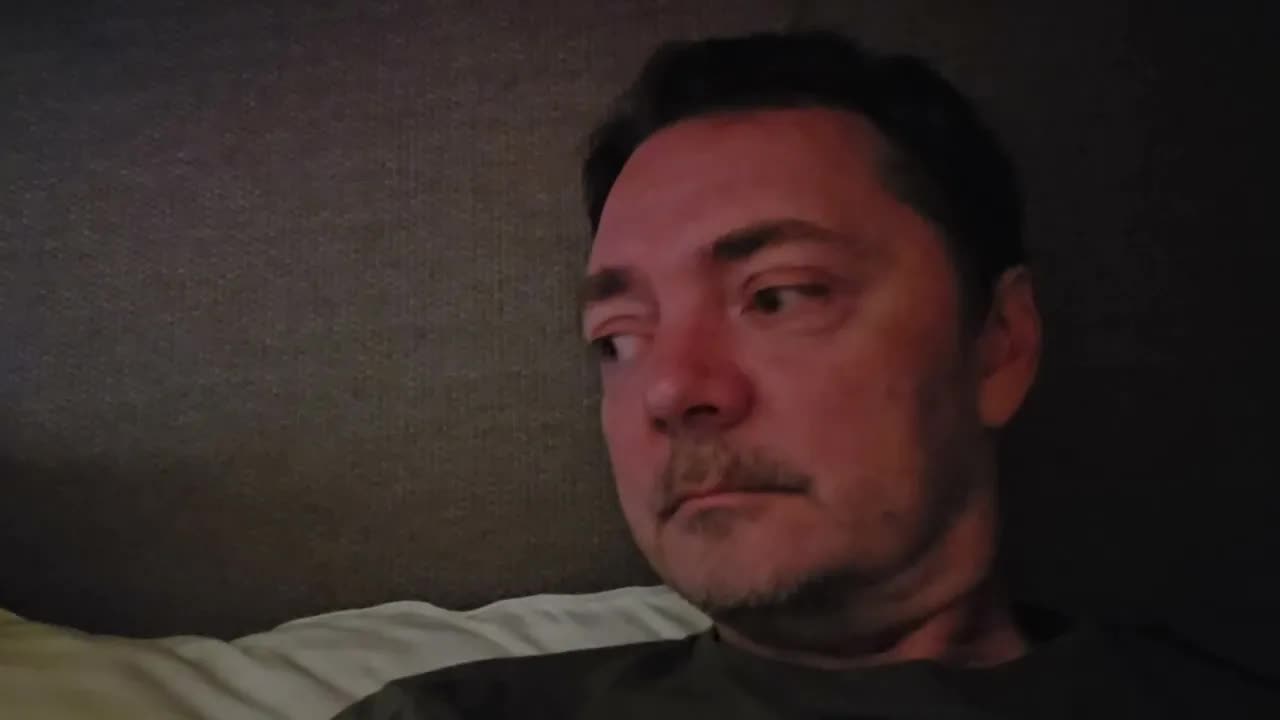

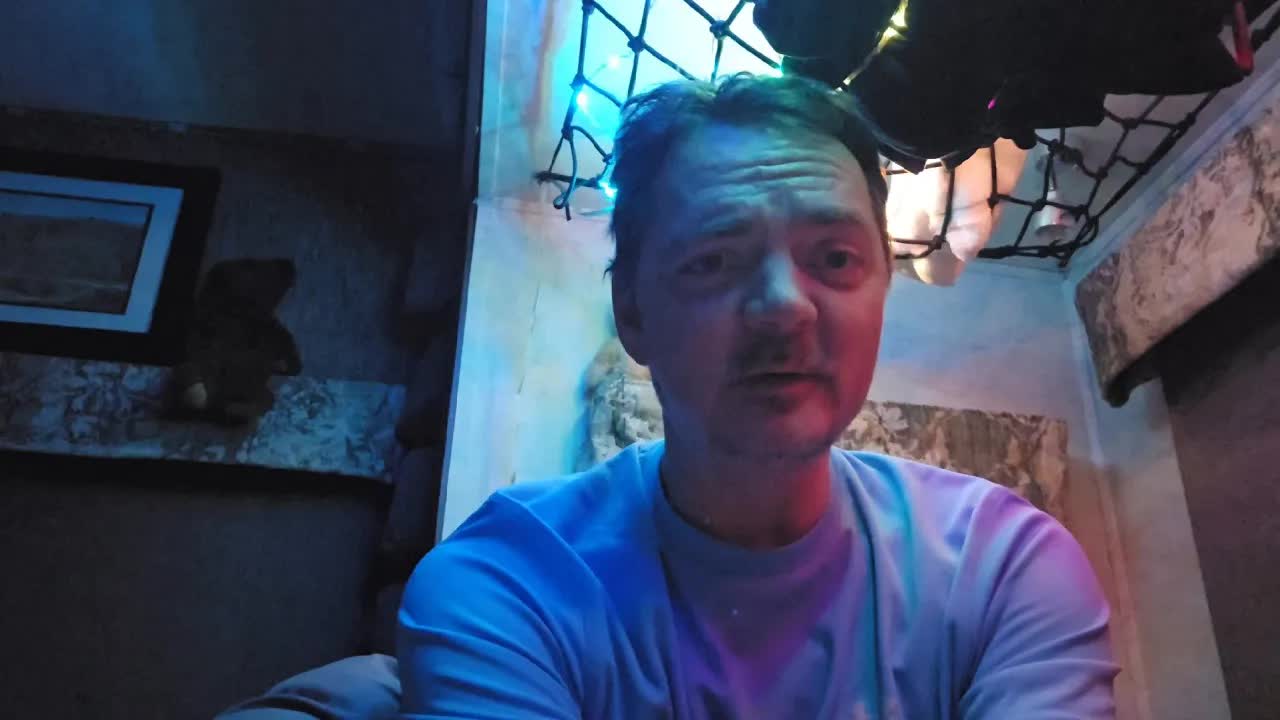
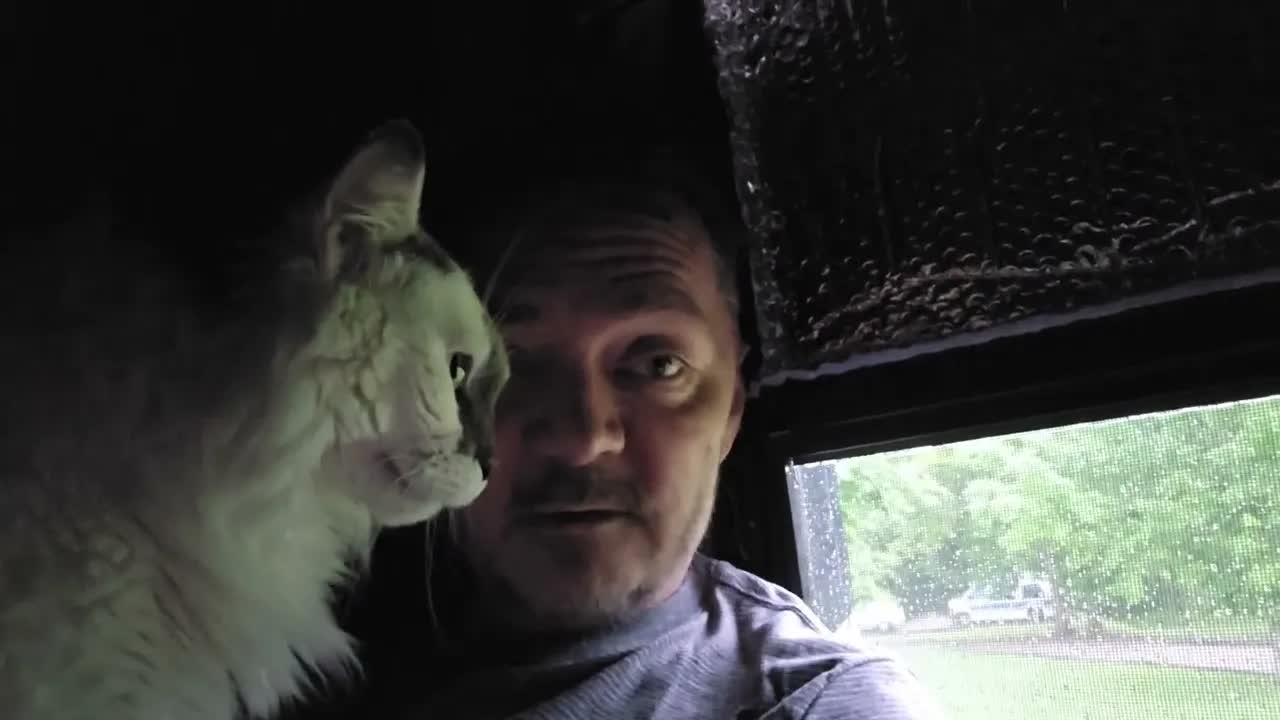
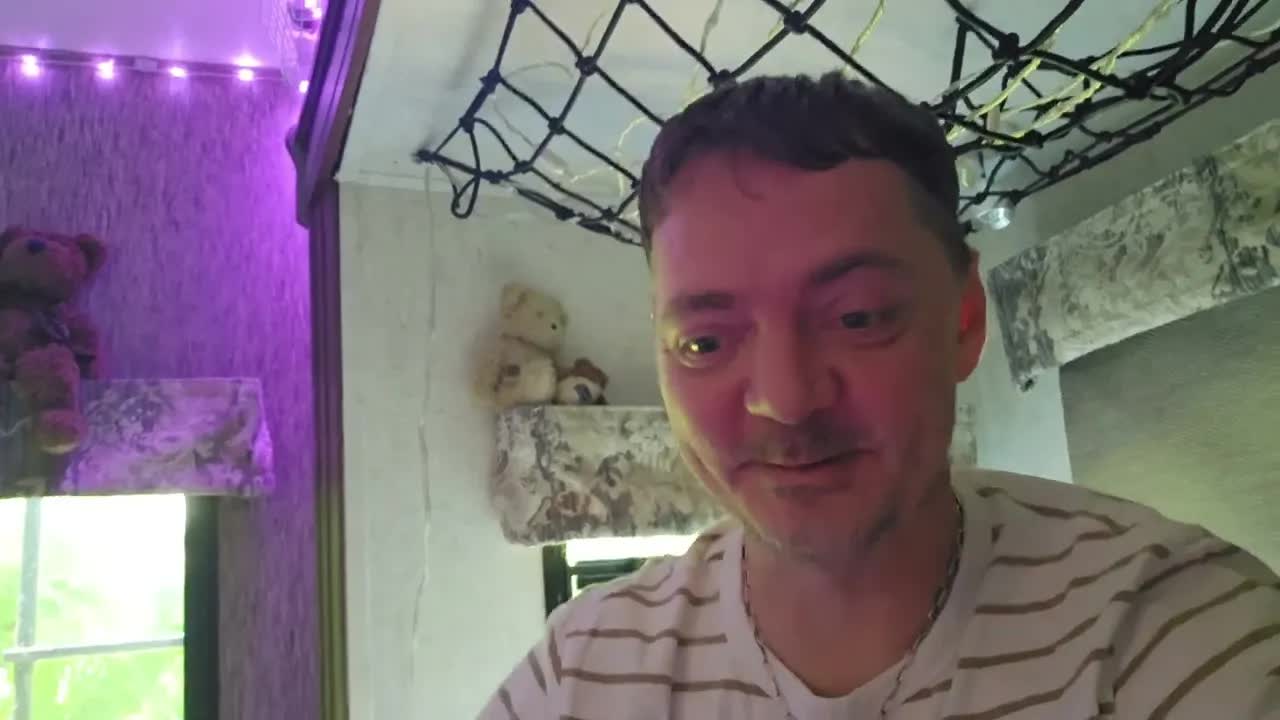
The congestion arrived first, before the words did. rswfire lay horizontal in the dark, breath moving through a narrowed channel, and noted the difference between this and ordinary congestion — enough of a difference that he weighed a trip to urgent care and set the idea down. He describes the assessment plainly: not normal, but he was okay. The body was a fact in the room, not an emergency. Sleep, meanwhile, did not come.
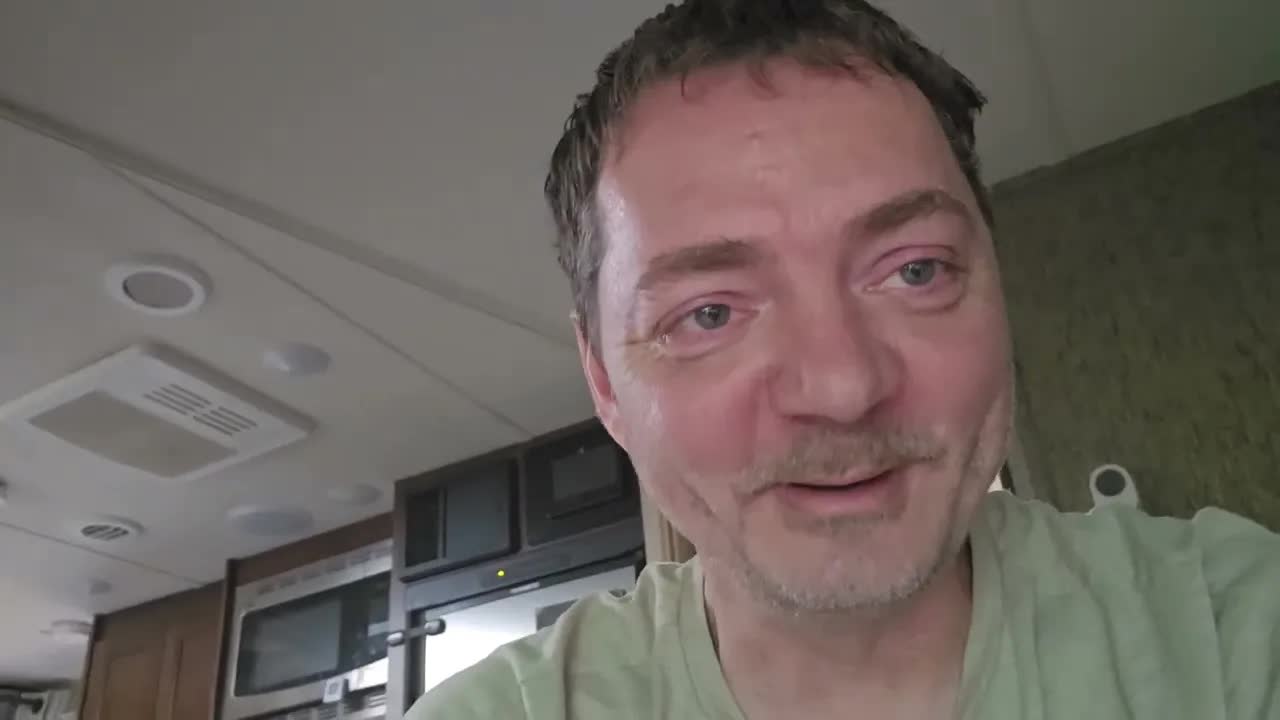
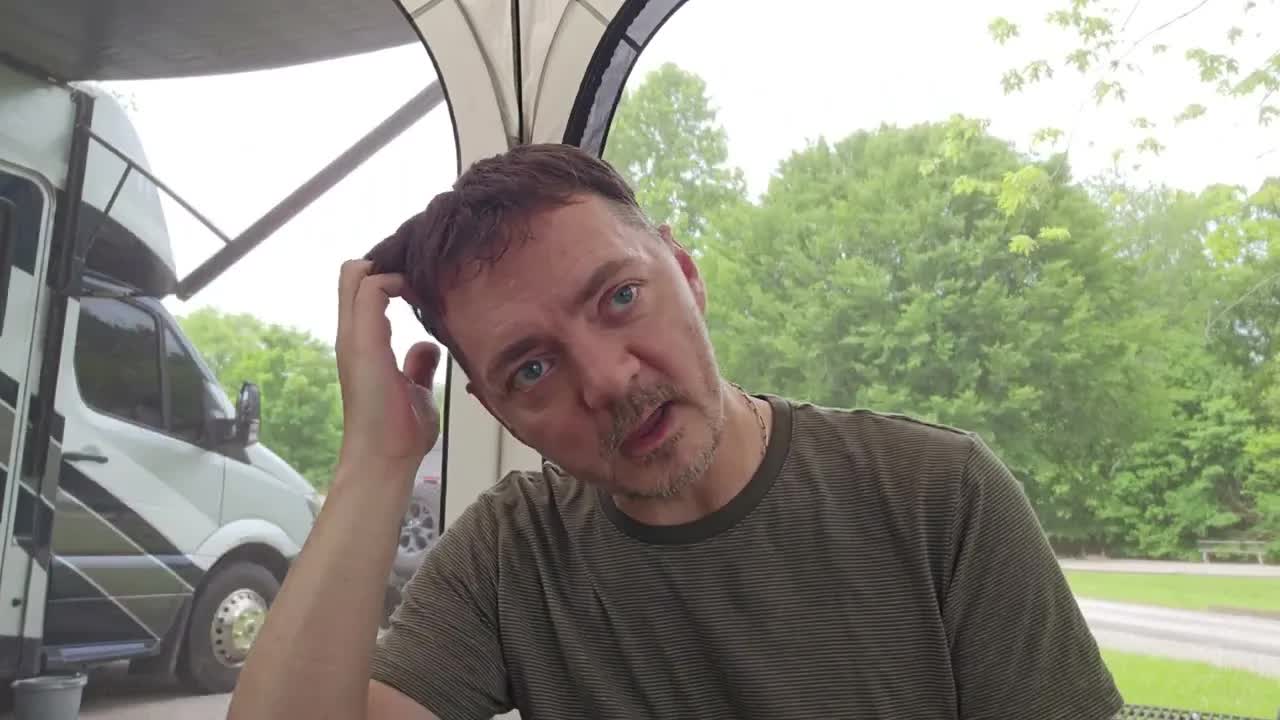
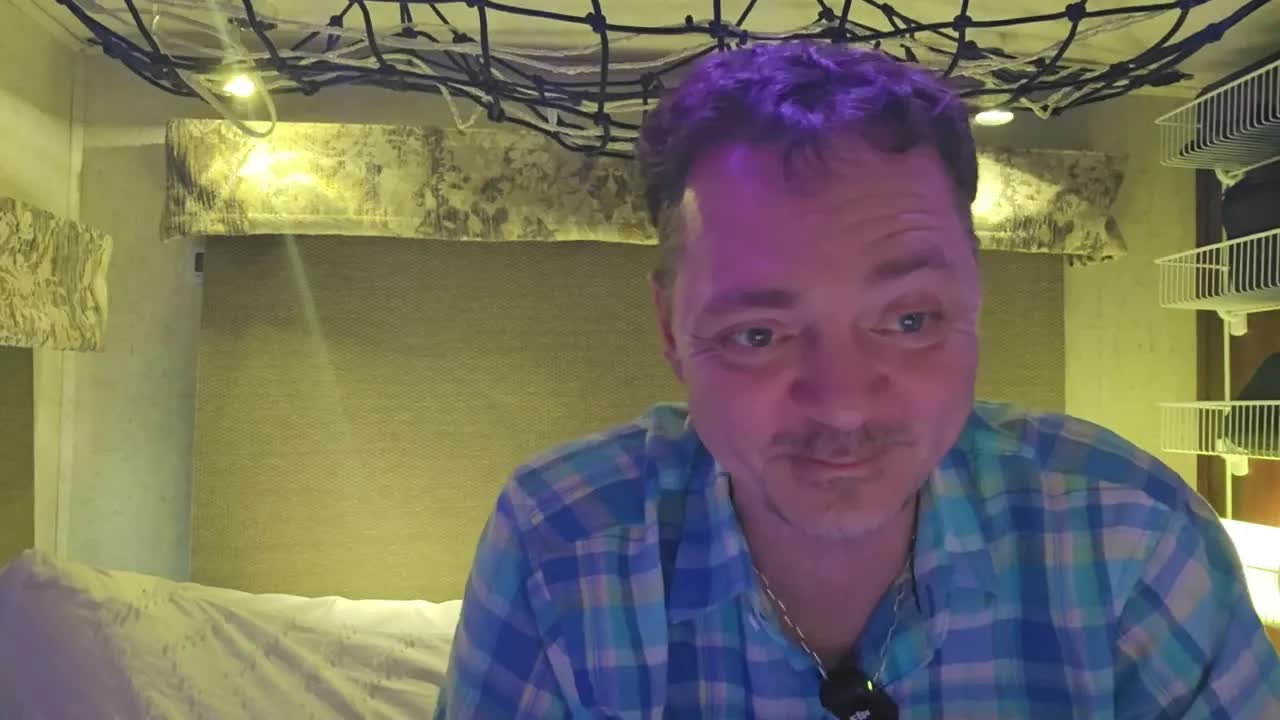
So he reached for the camera instead. The decision has the quality of a small pivot rather than a resolution — if the night would not close, the night could be used. He opened outward: hey everyone. A private enclosure, bed and darkness and restricted breath, converted in a single gesture into a transmission channel. No other voice was present. The framing held one person, speaking horizontally into a lens, and beyond the lens an audience he addressed as though they were already listening.
What he wanted to say had been waiting a long time. He recounts a line he encountered once in a book — emotions are energy in motion — and the way it stayed with him, resonant, load-bearing. From there he laid out what he states as lifelong practice: that he does not believe he has ever suppressed an emotion. That emotions are transient, sometimes elusive, sometimes hard to sit inside, but temporary, and physical, and located in the body as energy. That there has therefore never been anything in them to fear.
The theory came second, and he flagged it as theory in the moment of forming it. What had prompted the whole line of thinking, he says, was a pattern he has observed his entire life: people around him worrying about him. He describes not understanding it — that his openness, his willingness to exist inside his emotions and say what he was feeling, seemed to produce concern in others rather than ease. And then, that night, lying there unable to breathe well or sleep, an inversion surfaced. Perhaps the worry was not about him. Perhaps a great many people are afraid of their own feelings. He offered it with the caveat intact: I don't know if I'm right about this, this is just a theory I'm having at the moment.
Having named it, he turned the whole thing outward as instruction. If there is any truth in it, he told them, there is nothing to fear from an emotion. He gave the accessible version first — sit with it, breathe, distract yourself if you need to — and then the version he actually uses, which is not distraction at all. He described immersion: bathing in the emotion, letting sadness or melancholy select the music, staying in it, reflecting from inside it until the reason for its presence becomes legible. The method is not endurance. It is submersion as a way of reading.
The last movement was the structural claim, and he built it in real time. Emotions are part of the self and are trying to communicate something; to push one away is to push away from yourself. He reached for the phrasing twice, found it, and set it down: clarity will not arrive that way, and neither will happiness, because happiness is only reachable if its opposite is embraced with equal willingness. The full oppositional range, or none of it.
Then he stopped. I think that's all I really want to say tonight. I hope you guys are well. The congestion was still there. The night was still unslept. Nothing about the physical circumstance had been resolved by the speaking, and nothing in the speaking had asked it to be.