


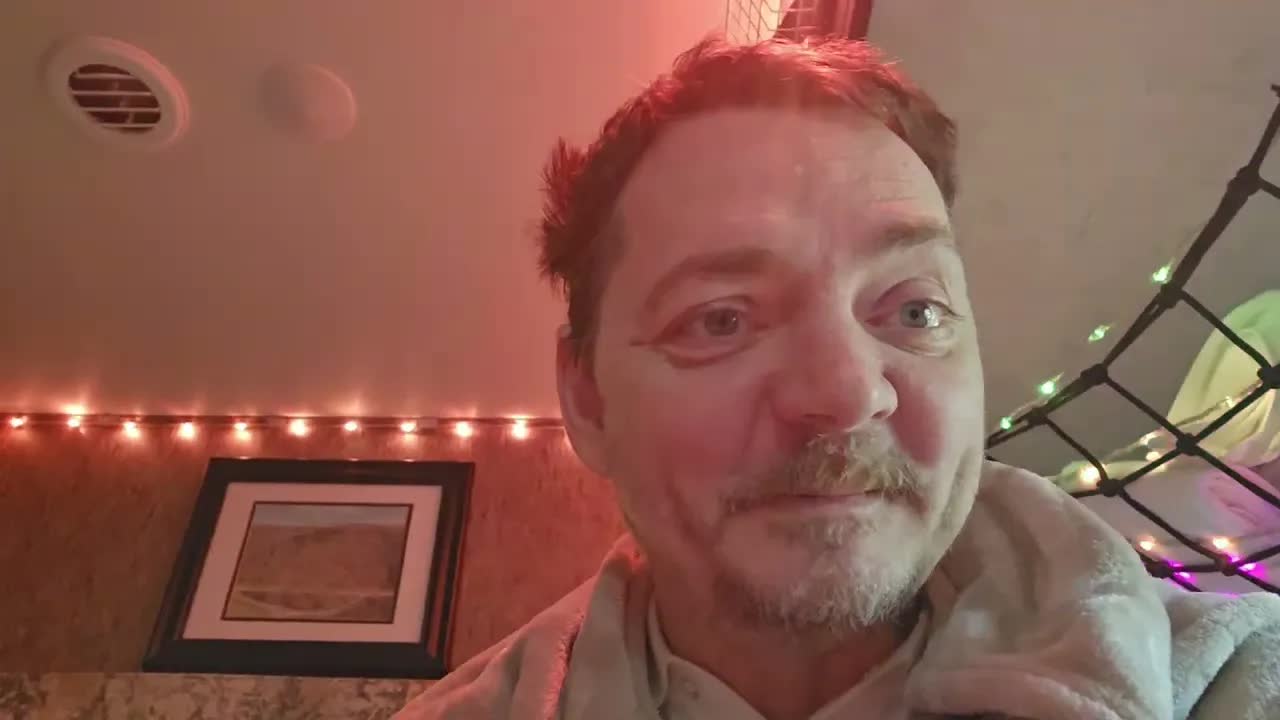

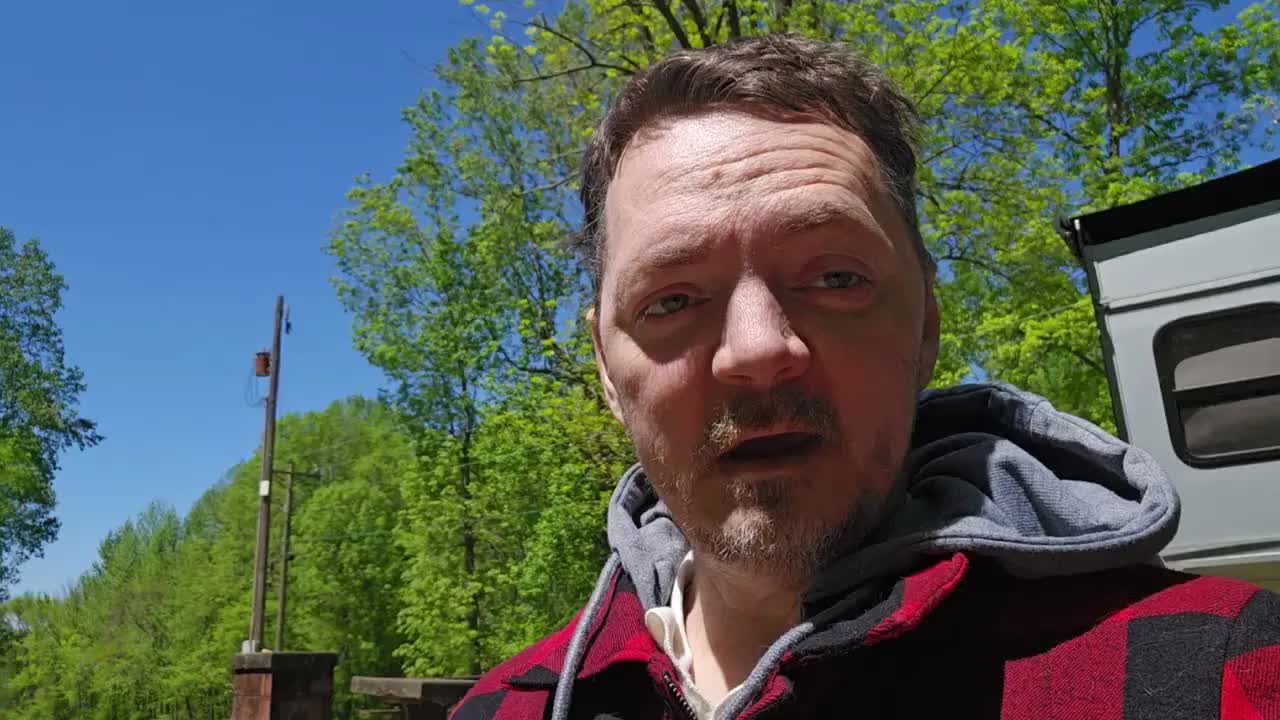



Day twelve arrived without much sleep behind it. rswfire notes that plainly and moves past it — the shortage registered, the day begun regardless. By the time he records, it is around eleven in the morning, and the morning has already been in motion: a text thread with his mother, his plans laid out to her, her account coming back the other direction of what she had done at his house the day before, working alongside one of his friends. The house is being cleared. That work happened in his absence, and its results reach him now as a message rather than as a room he stood in.
The news is not all good, and he says so before he says what it is. There is a pause built into the way he approaches it — I don't really know what to say about it yet — and then the fact itself, stated without ornament: his journals are missing. He has been looking. He does not know what happened to them. Over a decade of written record, and they are not anywhere he has thought to search. The sentence lands twice in the transcript, once as report and once as weight, and between those two statements is the whole of what the loss is.
What he does with it next is the movement of the signal. He names the frame he is reaching for — that the journals are something that doesn't fit into his new life, that perhaps it was time to let them go — and he names it as an attempt rather than a conclusion. I'm just trying to accept it. Then, without abandoning that frame, he sets the other truth beside it: it's sad though. If you write a journal for over a decade and you lose those, you're losing a part of yourself. Neither statement cancels the other. Both stay on the page. The ledger remains open.
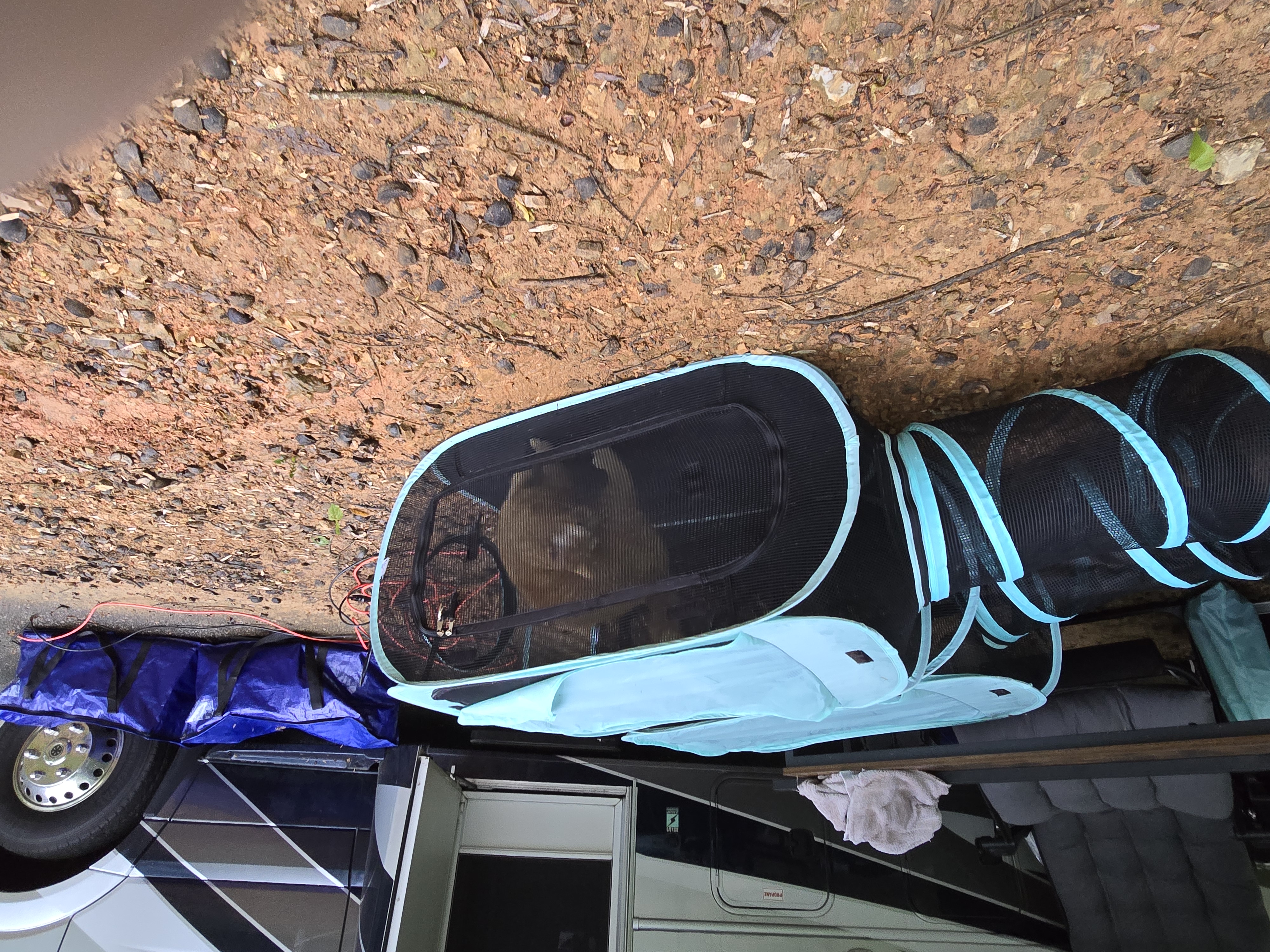
The rest of the day is already sequenced. He will get ready. He will go to his house, which he describes as pretty much empty now, and he will go to his parents' house, where his cats have been staying, and he will bring them back. Two addresses, one route, animals retrieved at the end of it. The recording is made in the gap between those places — not at either site, but in the interval where the plan exists and the driving has not yet started.
He closes on the accounting. This is his new life, and the focus goes there, toward it, and toward the good and the bad of what came out of all of this. In the end, he states, it did free him of a lot of things. And then the qualifier he attaches himself, unasked: that's how I'm trying to look at it. The frame is offered as a working position, held deliberately, on day twelve, at eleven in the morning, with a decade of pages unaccounted for and two cats waiting to be picked up.