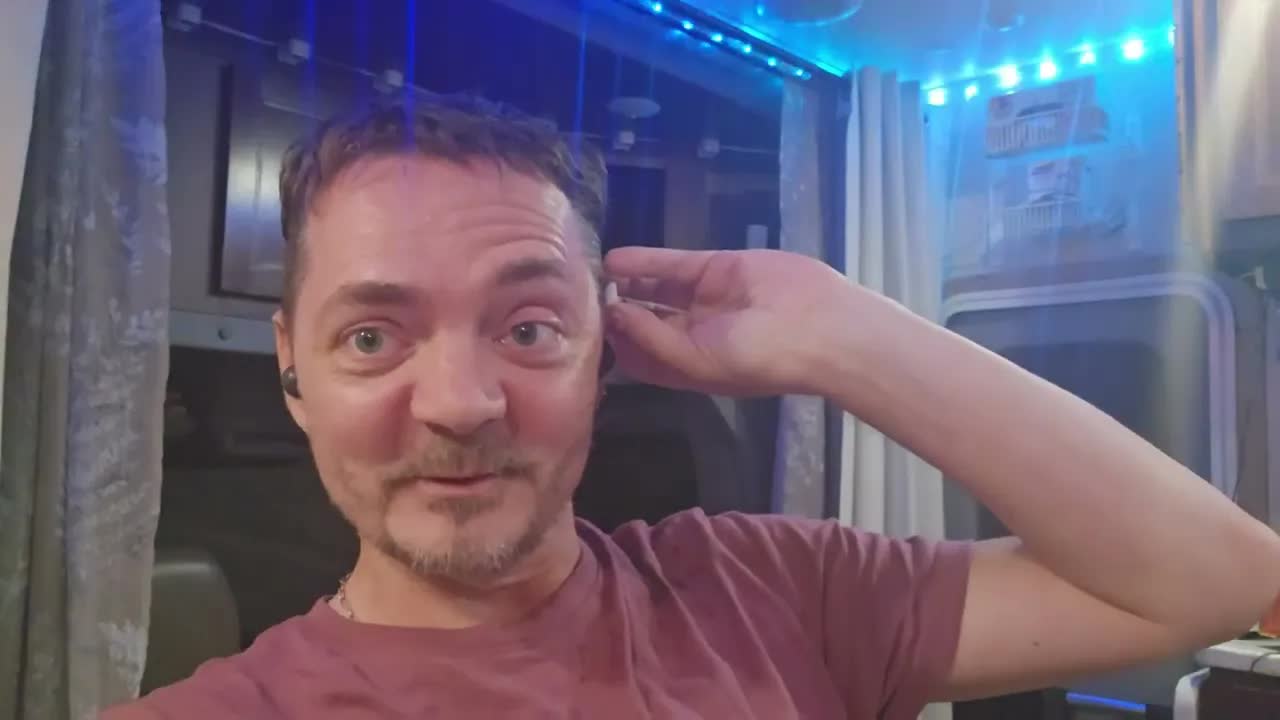

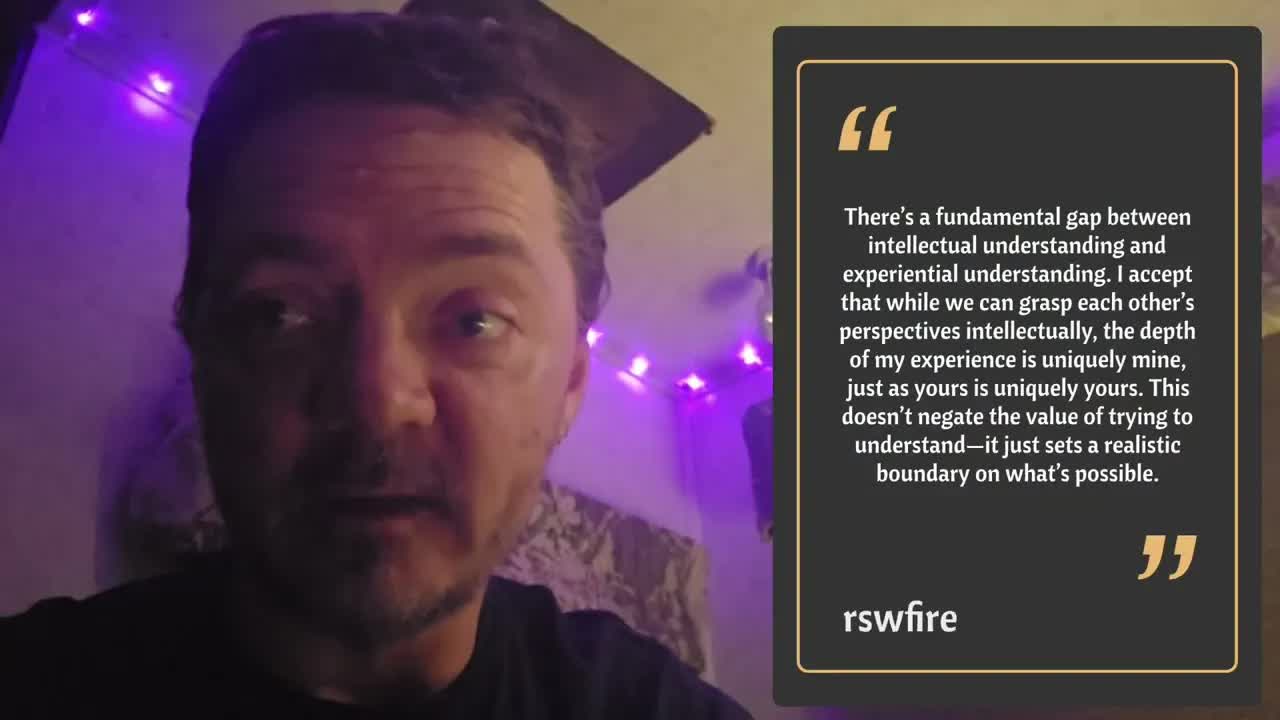
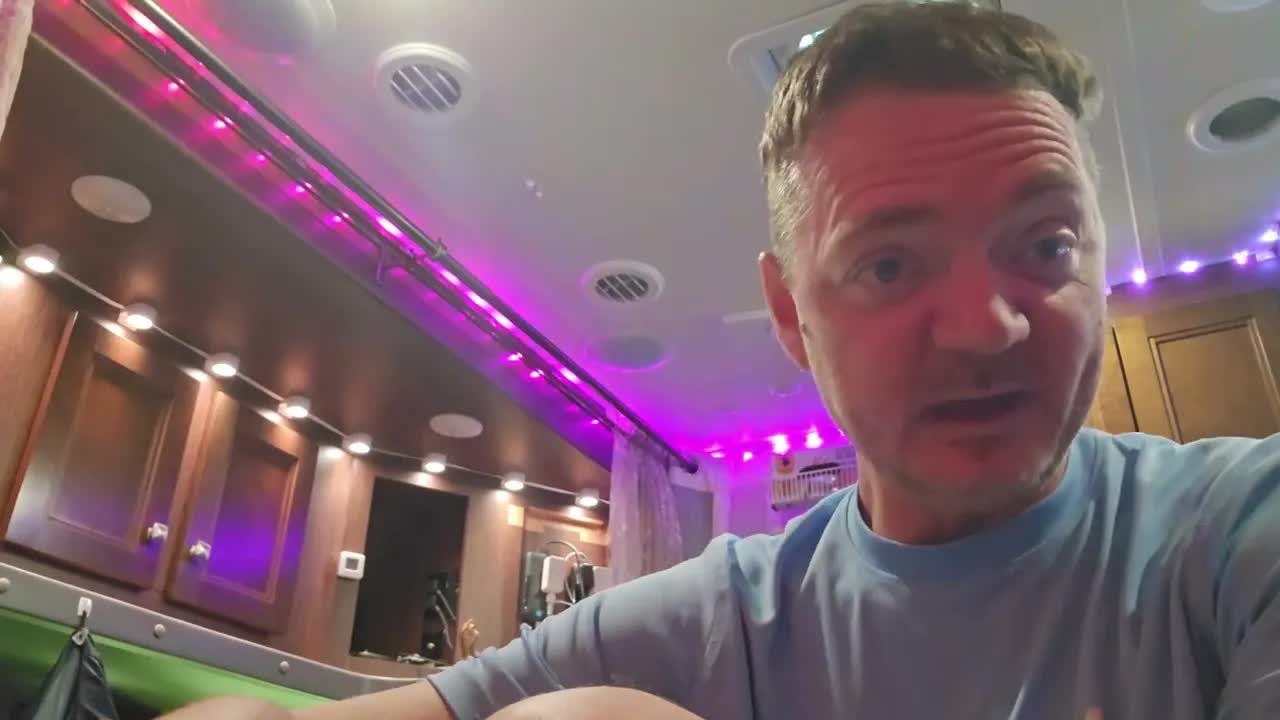
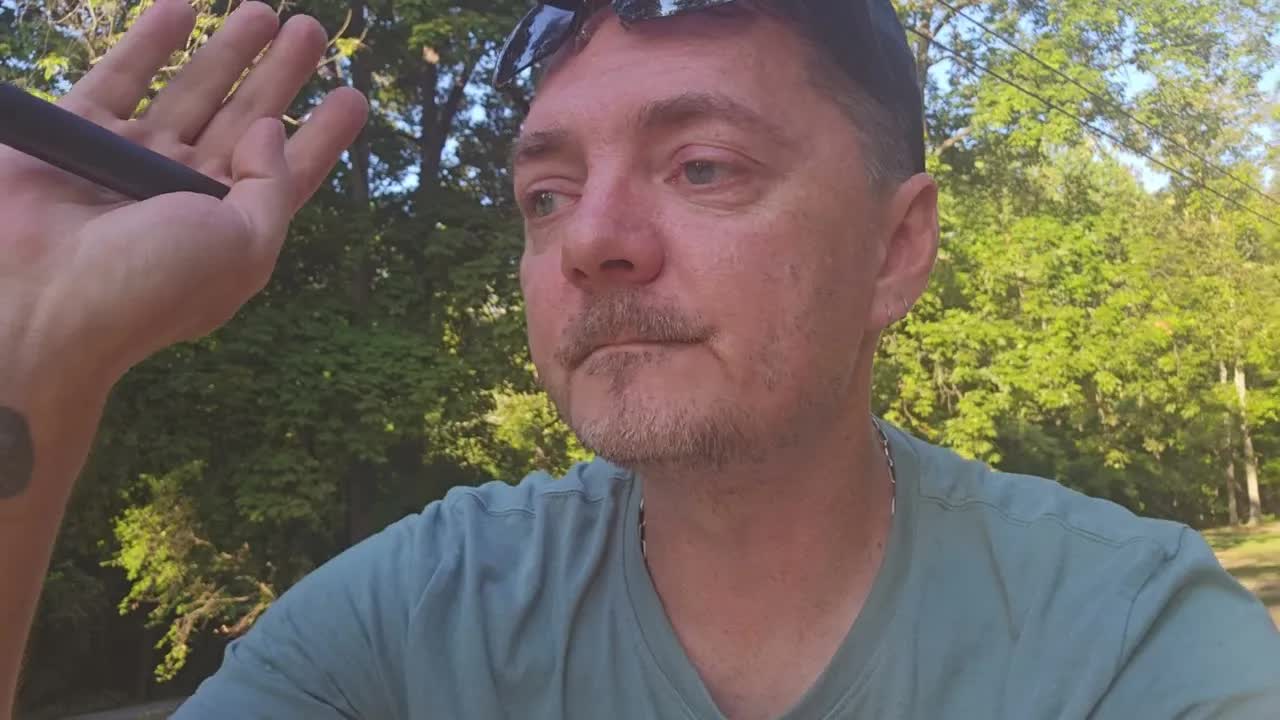
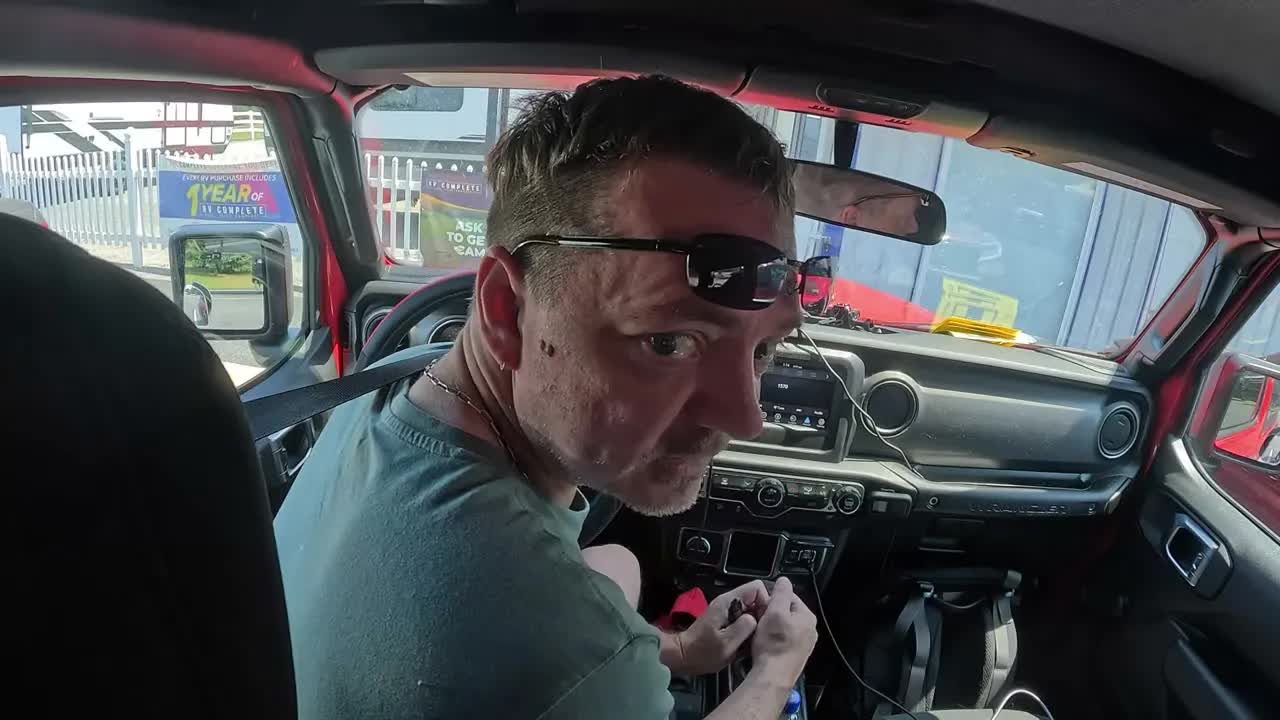
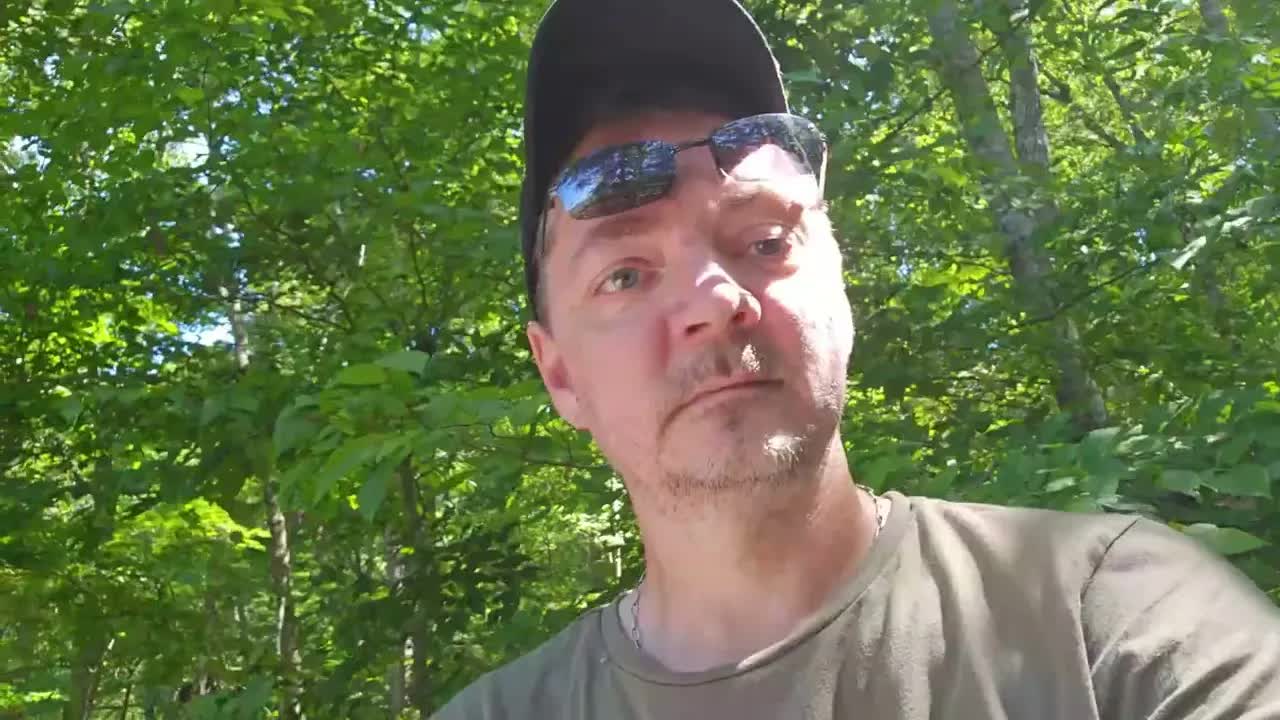
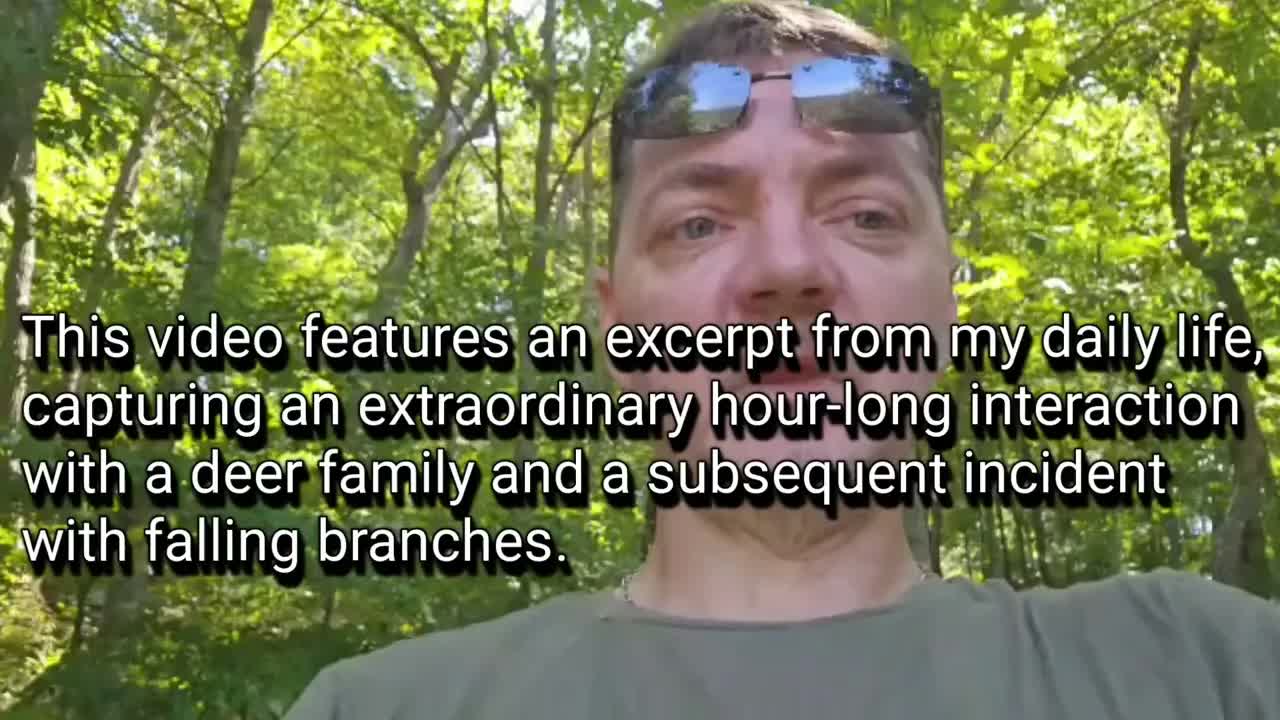
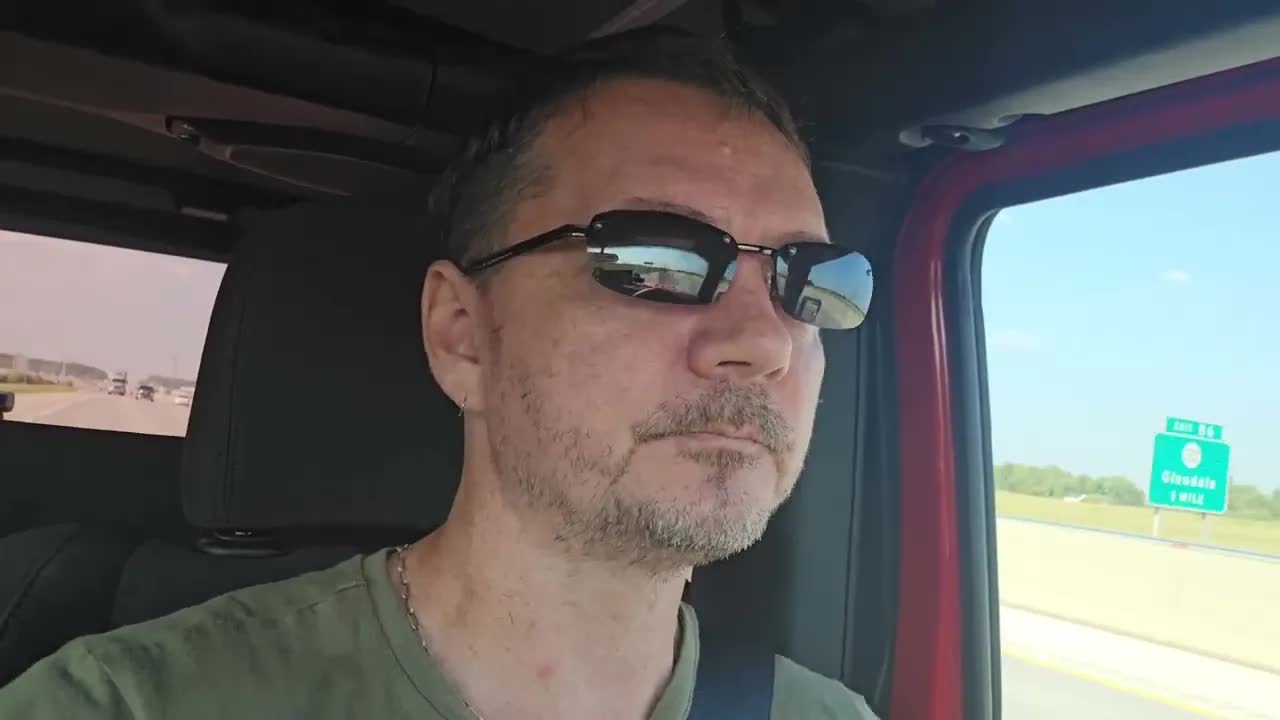
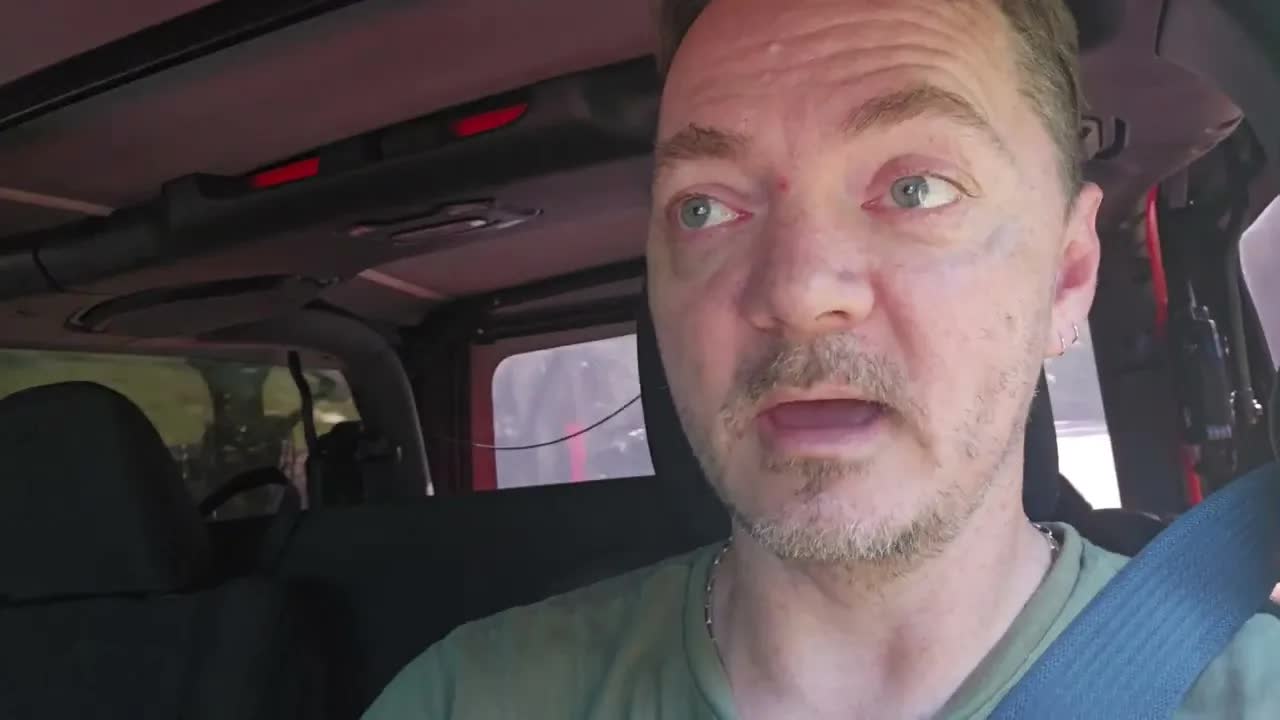


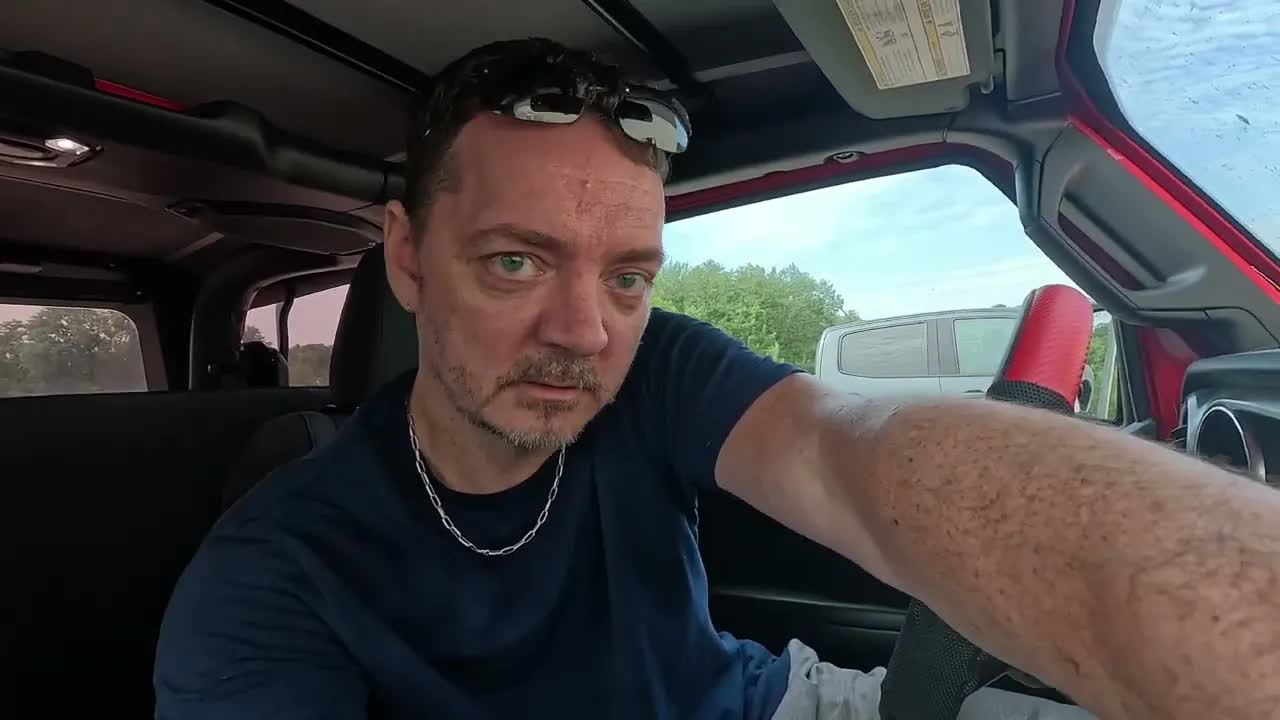
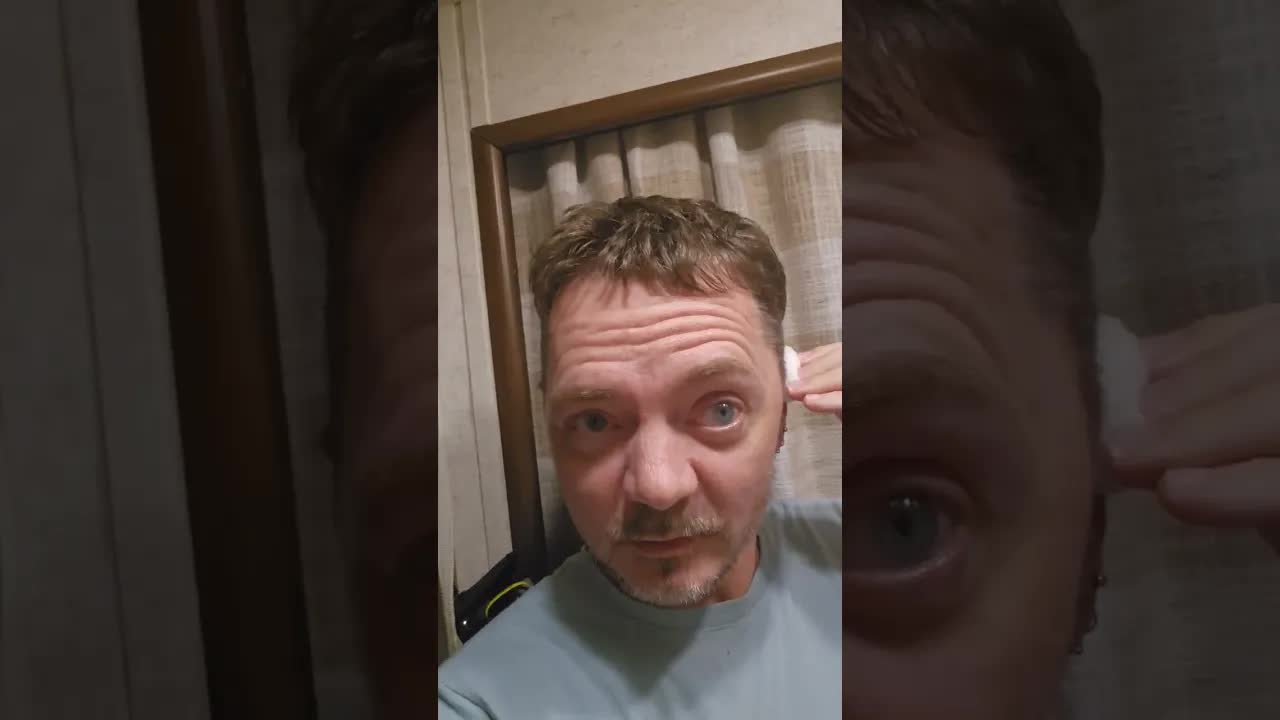
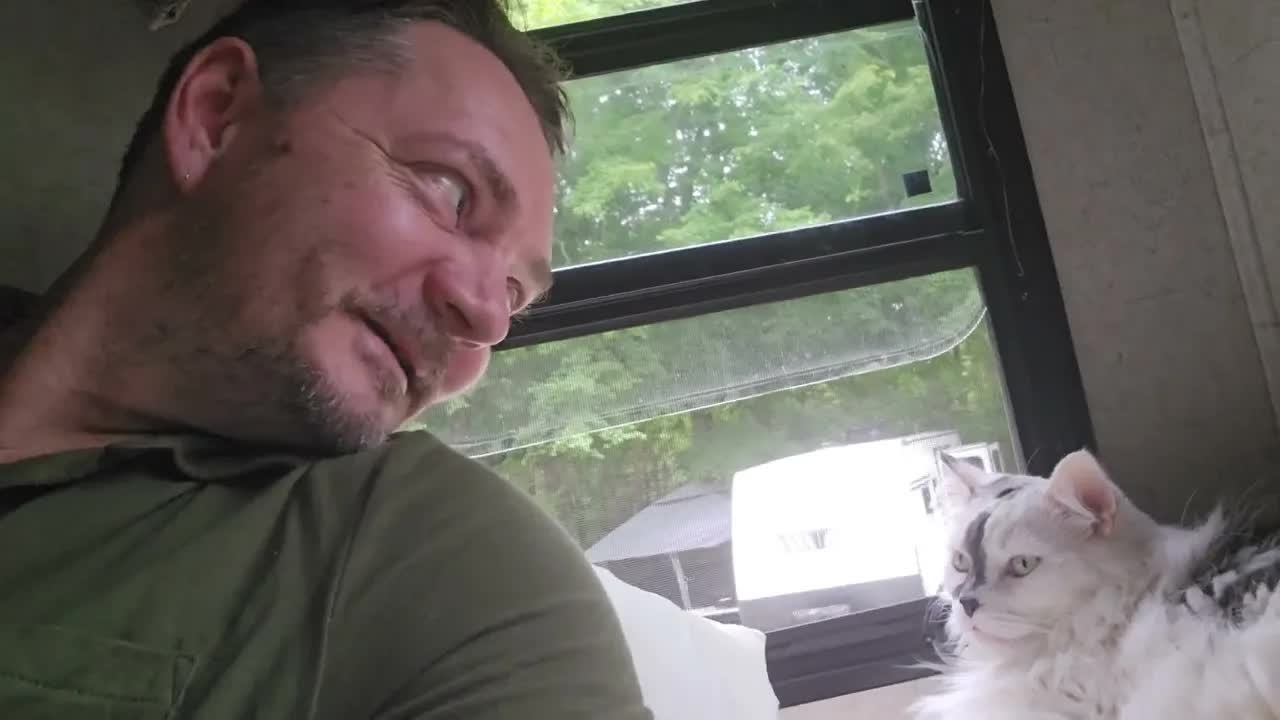
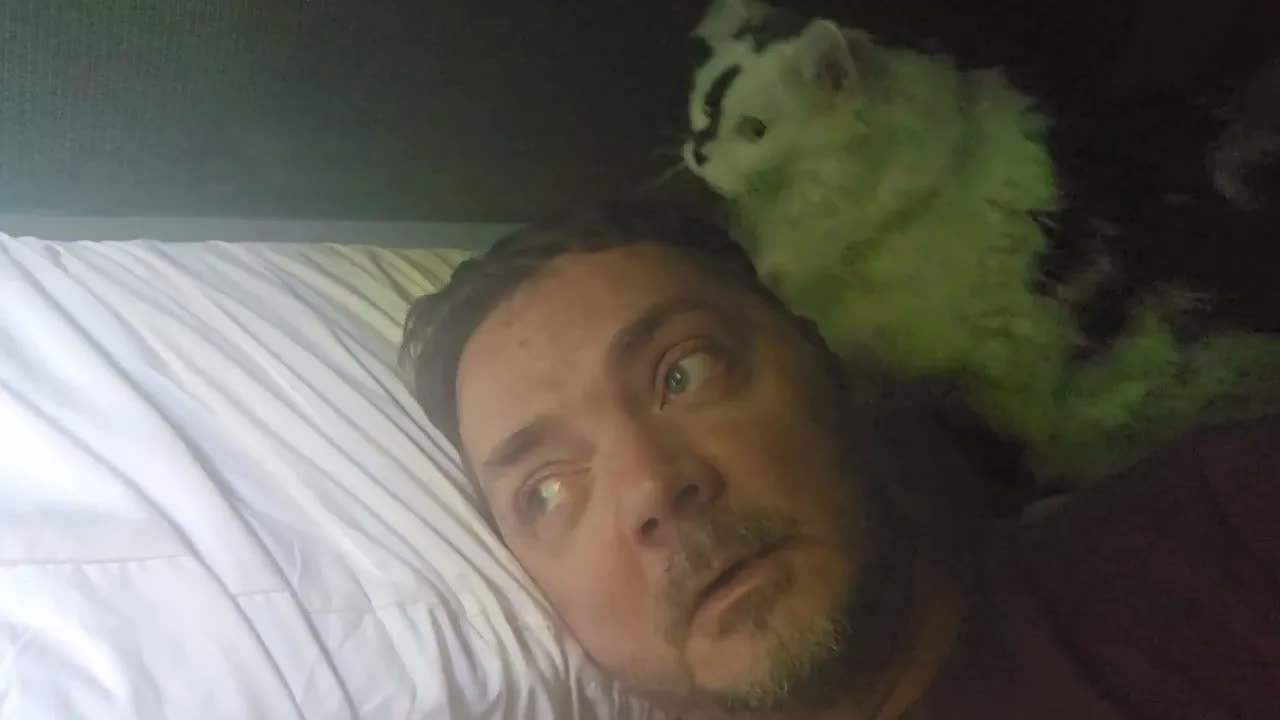
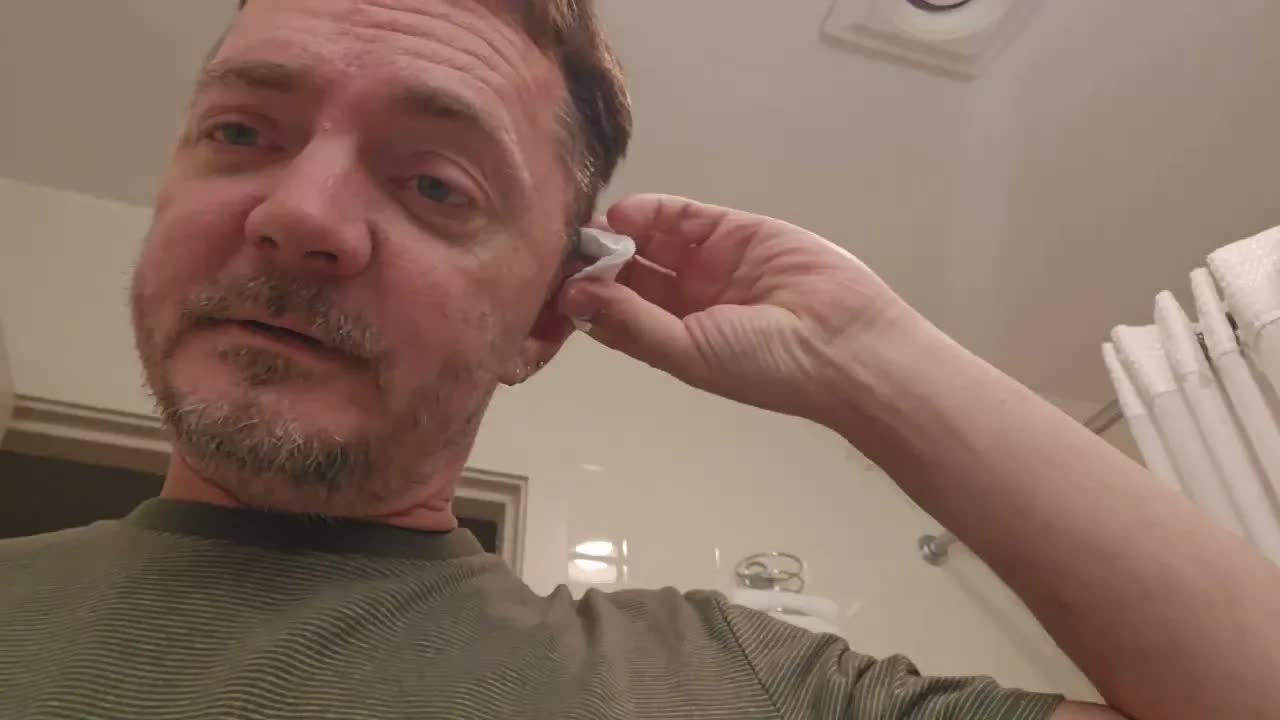

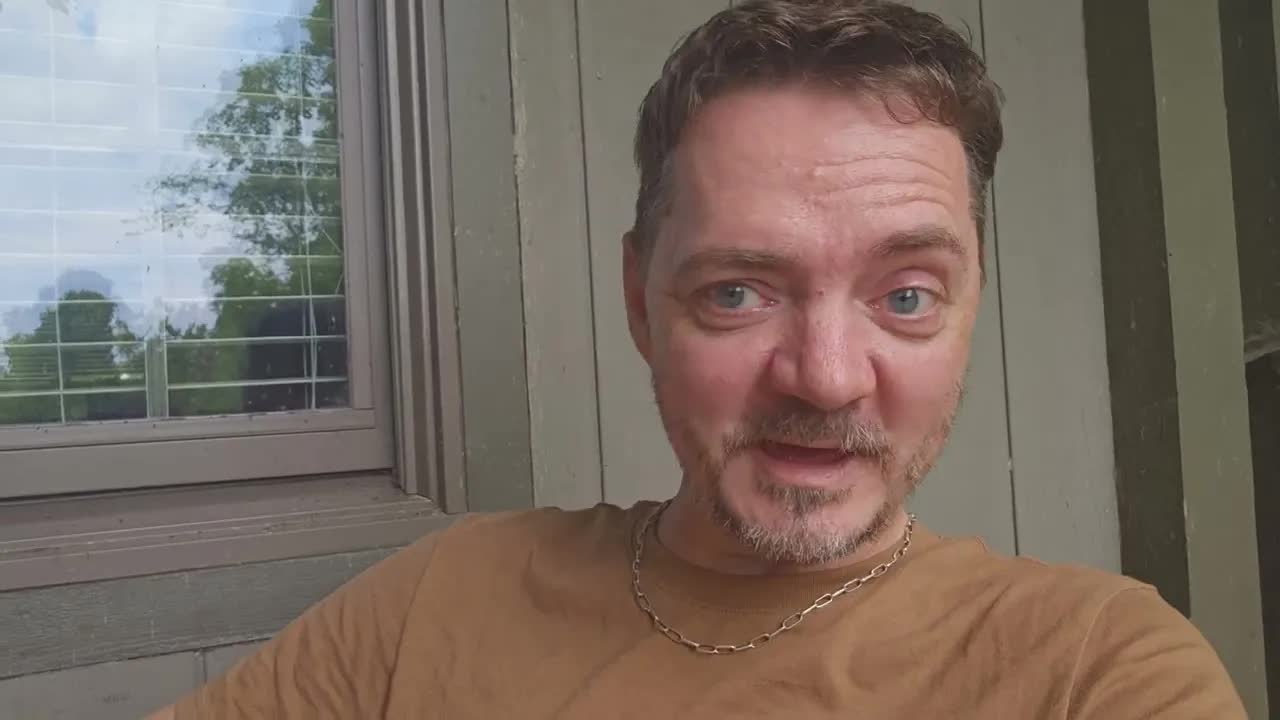
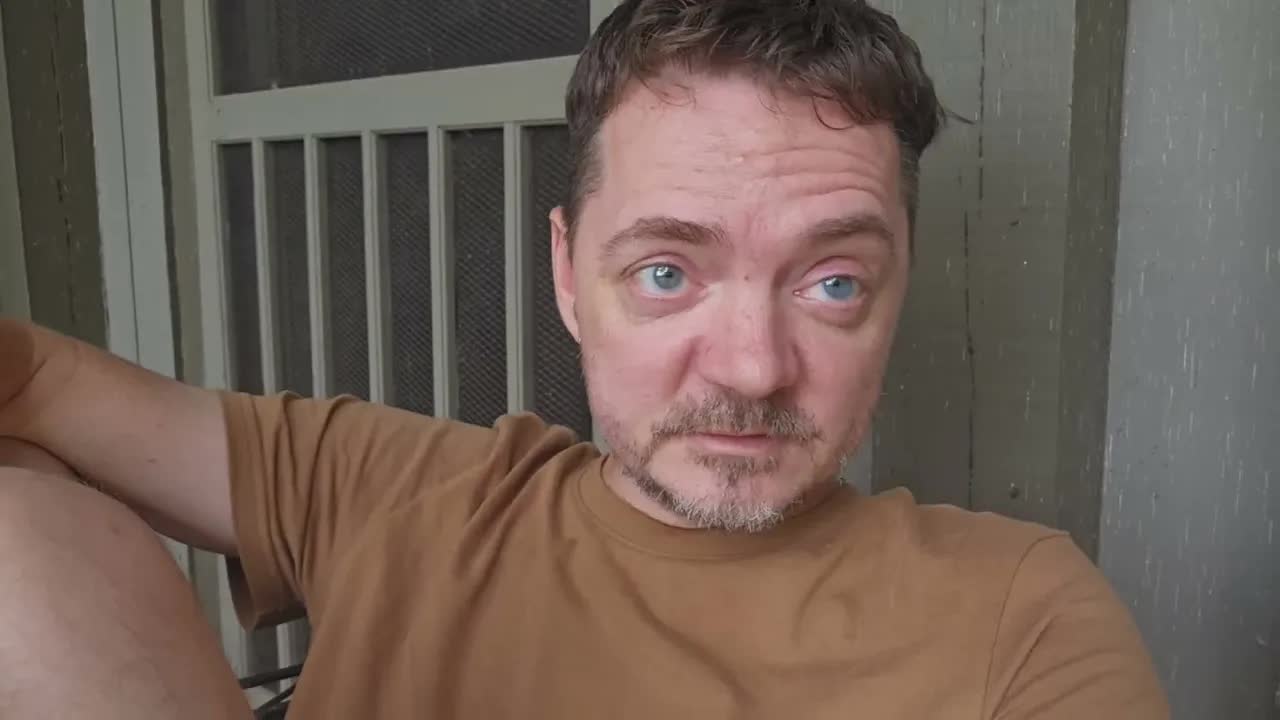
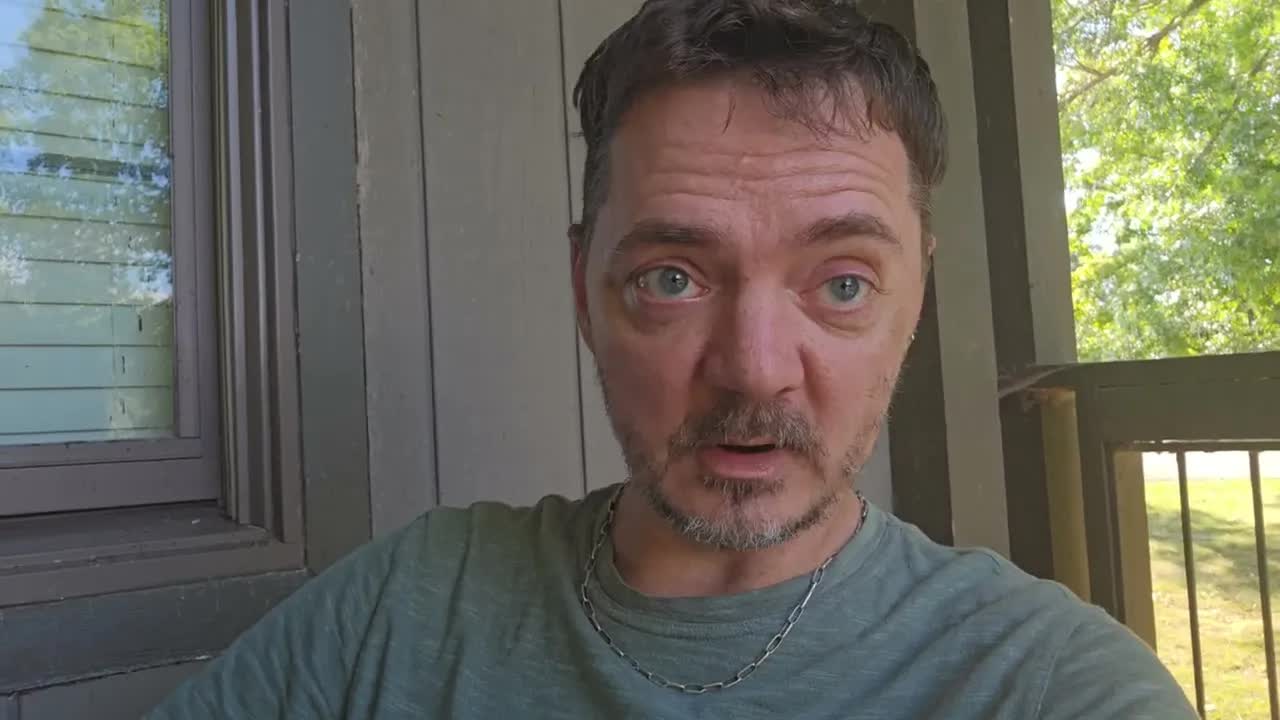
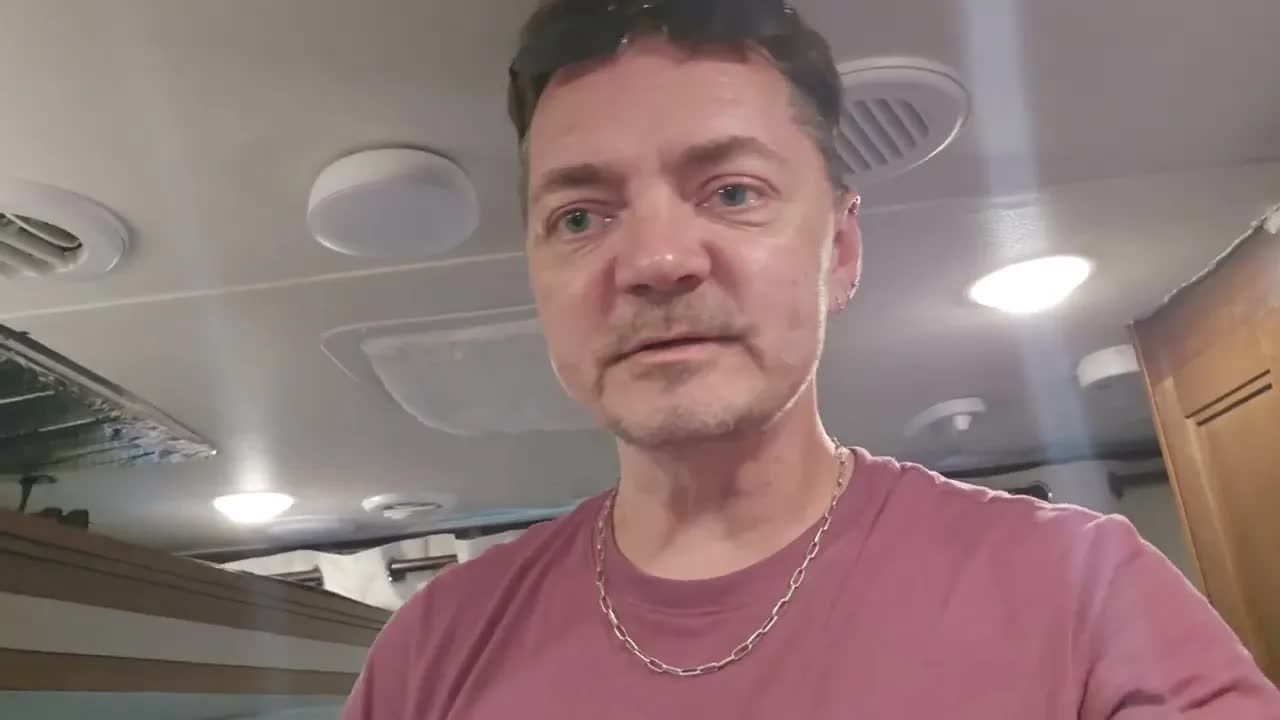
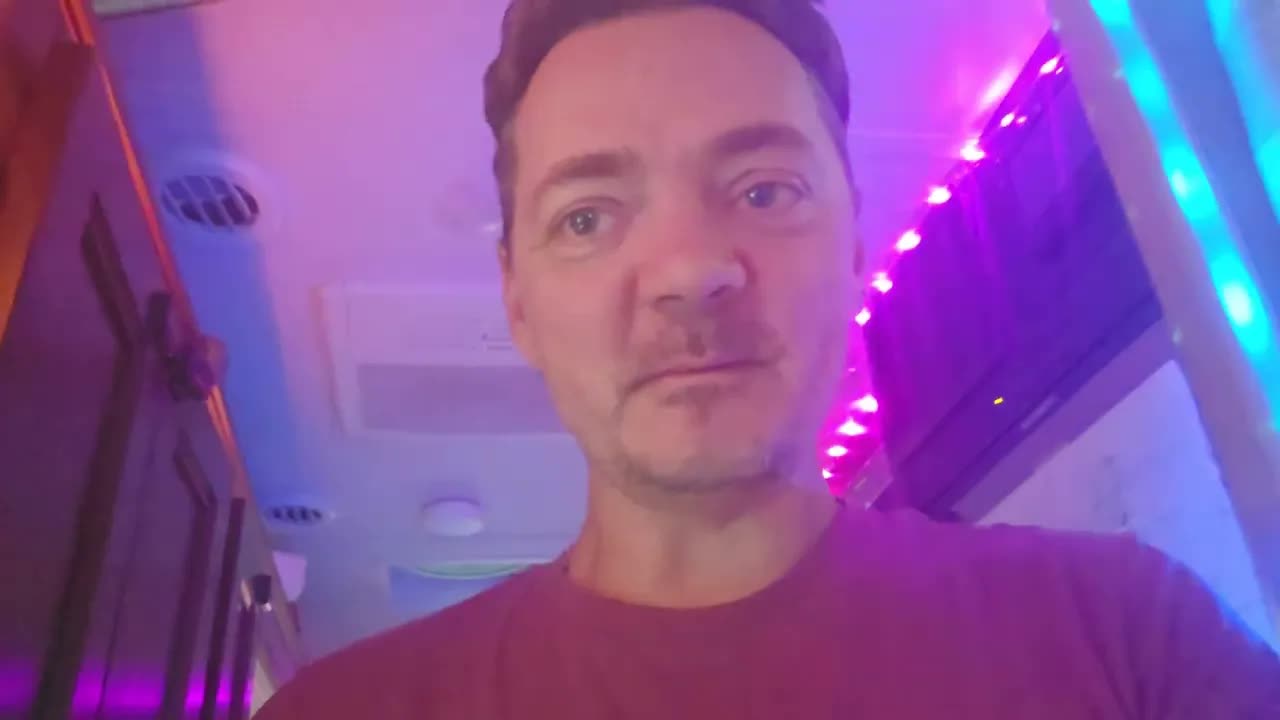



It is almost nine in the morning when rswfire turns the camera on, and he is still where he slept. He had been up late. He says so first, before anything else, the way a person accounts for the shape of their own morning. The insight arrived overnight and he woke carrying it — not a new idea so much as the extension of one he had already given away the night before, on this same channel, to these same viewers. He had talked about mosquito bites then. He had reframed them. Now, waking, he understands the reframe reaches further than he had said.
The bites are on him as he speaks. That is the point. He can move his attention elsewhere — to the camera, to the sentence he is building, to the day beginning outside the walls of the RV — but the awareness of them does not go anywhere. It stays, because there is nowhere else for it to go. He describes this plainly: he can focus, but he cannot partition. The bites are in the field. So is the bed, which is hurting his back, and he names that too, in the same breath, in the same register, without escalating either. So is the platform he is speaking into, which he still has not figured out. Three inputs, all live, all continuous, all held in one place because there is only one place.
From there he turns to the comments, and the turn is not a change of subject. He states that he disabled them. He describes what a comment does inside a system built the way his is built: someone leaves a remark, it may be superficial, it may be genuinely helpful in the way the sender intends it, and he reads it — and then it is in the field. It cascades. It becomes another input he must integrate, another place where coherence has to be re-established. He does not describe this as injury. He describes it as load. And then he states the condition that makes the decision simple: he has reached the point in his life where he fully accepts who he is and does not need those interactions. There are other reasons, he says, and he does not list them. He names one and leaves the rest closed.
Then he accounts for how he came to be built this way, and he is careful that it not be mistaken for a gift. He states that he arrived here by thinking very deeply about his life, all of his life, and that this is available to everyone. He describes having once had very strong emotions and the felt necessity of understanding them — and that by returning to them, again and again, thinking about them, working to understand them, he laid pathways between his thought centers and his emotional centers. He did the same with ethics. A lifetime of processing experience holistically, he says, made him a holistic person. He does not compartmentalize. He has no fragmentation. He states that he is not like most people, and he states it as a description of architecture, not as a claim of rank.
The last movement is the one he does not close. He spent so much time looking within, he says, that when he finally turned outward he was shocked by what he saw. He tells the viewers they can see that on this channel — that he is still coming to terms with some of it. He looks around at the world these people have created and the word he reaches for is shocking, and then he reaches past the world itself to its implications, and stops there. There is no resolution offered, no landing. He does not tell them what to do with it.
"So yeah," he says, "there's some thoughts for you this morning." The recording ends. Nothing can come back through. The bites are still there, the back still hurts, the platform is still unfigured, and the morning goes on in one continuous field with no way in from outside.